Milton Kirby
By Milton Kirby | Birmingham, AL | November 3, 2025
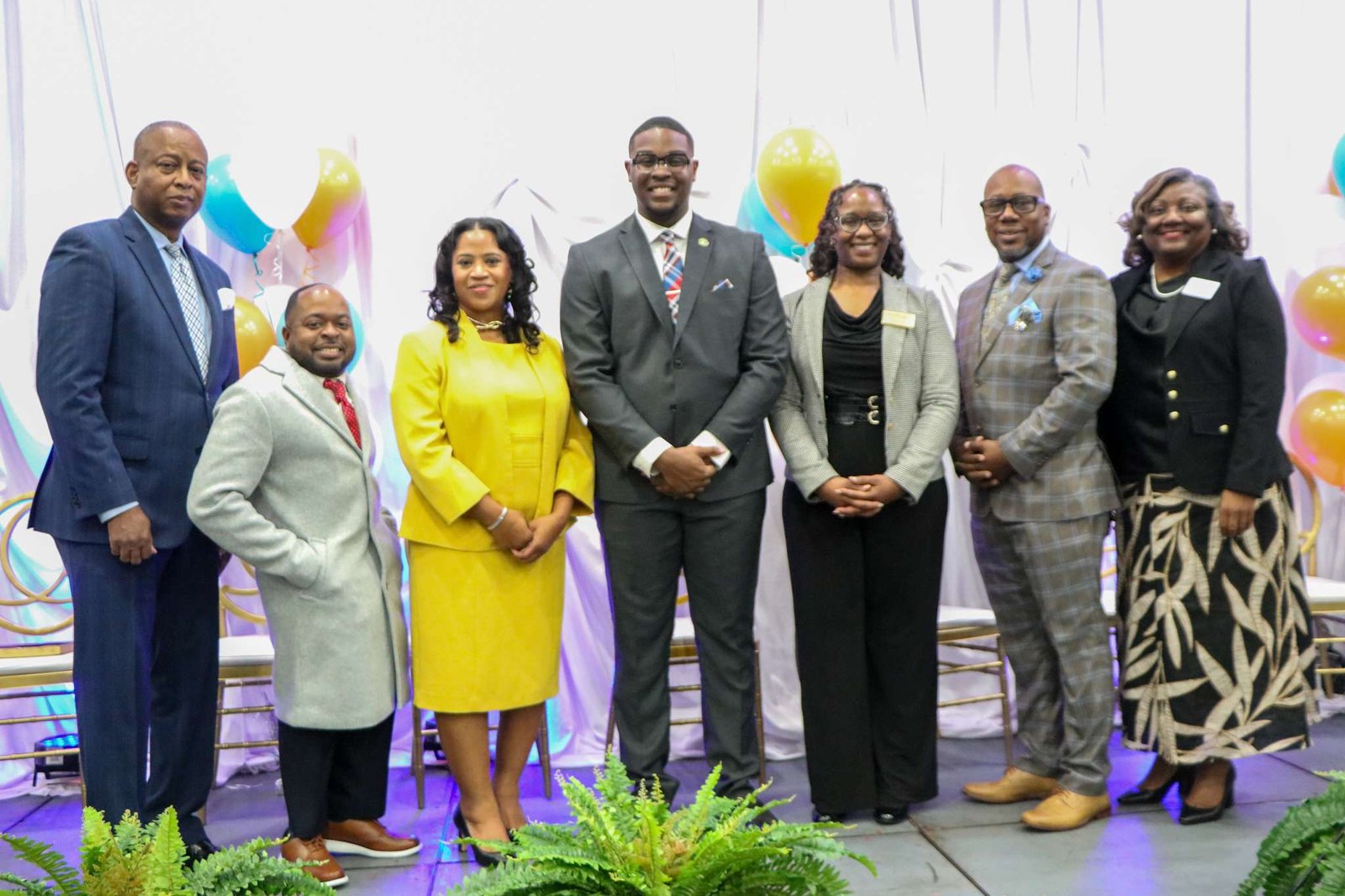
The air in Birmingham felt like history turning its own soil—just right for a gathering of people who understand the language of the land. Inside the conference hall, rows of worn cowboy hats, Sunday dresses, and seed-company caps filled the seats. Farmers came from every corner of the country—Alabama, West Virginia, Maryland, Mississippi, Montana, Virginia, Oklahoma, and Texas. Some arrived by pickup, others by bus or plane, but all came for one reason: to celebrate 35 years of the National Black Farmers Association and the man who has never stopped fighting for them, Dr. John W. Boyd Jr.

The theme for the two-day gathering said it plain: “ReClaiming, ReGaining & ReGenerating Our Farms.” But what unfolded in those rooms was more than a conference. It was a reunion of faith and endurance—an unbroken line stretching from the sharecroppers of yesterday to the land stewards of today. It was family—farm boots and Sunday shoes, handshakes that turned into hugs, stories that started with the weather and ended with survival.
Grounded in the Work
Across two full days, the energy never dipped. Workshops buzzed with talk of farm loans, USDA programs, and the fine print that too often traps small farmers. Between sessions on farm credit, USDA programs, and cooperative models, farmers swapped lessons about soil testing, irrigation, and the art of keeping a small operation alive when fuel costs rise faster than the price of corn, cotton, beef, or soybeans.
At one table, a USDA outreach officer explained disaster-relief programs to a group of farmers. At another, a veteran rancher shared tips on protecting heirs’ property and forming family LLCs. Every conversation echoed one unspoken truth—knowledge is the new harvest.
Dr. Trina D. Brown, a health and wellness strategist, emphasized that the message was just as much about the people as the land. “We have to heal ourselves while we heal our soil,” she said, urging farmers to protect their mental health as fiercely as their crops.
Chaplain Eve Priester delivered a spirit-filled, inspirational prayer unlike any other. “Farming is God’s ministry in real time,” she said. “We plant, we nurture, and we believe in the harvest.” You could feel the amen in the air.
The Boyd Legacy

When John W. Boyd Jr. stepped to the podium, applause broke like thunder. Some rose to their feet; others simply bowed their heads in respect. Boyd, a fourth-generation farmer from Baskerville, Virginia, has carried this fight for decades—from the long legal battles of Pigford v. Glickman to more recent struggles for debt relief and USDA reform.
“Black farmers, we’ve got to get to know one another,” he said. “Do business with each other. Build something together.”
His words landed heavy because everyone knew what he’s carried. Boyd reminded the audience that more than 12 million acres once owned by Black families have been lost—taken by discrimination, bureaucracy, or sheer exhaustion.
Behind the quiet strength of his voice was the memory of his father, John Wesley Boyd Sr., who taught him the oldest truth in farming: “Be good to the land, and the land will be good to you.”
That lesson has guided the NBFA since its founding in the early 1990s—through courtrooms, congressional hearings, and countless farm visits across America.
Faces of the Movement
The conference lineup reflected the diversity and endurance of Black and Native farmers.
Kara Brewer Boyd, NBFA Program Director, President of the Association of American Indian Farmers, and wife of John Boyd, spoke about cross-cultural solidarity and the shared struggle of land-based people. An enrolled member of the Lumbee Tribe, she reminded the audience that “land is identity—and identity is power.”
Boyd offered tips and techniques so practical and powerful that attendees described them as “nuggets of gold,” carefully pocketed to take home and put to work.
Nick and Tonya Dangerfield, dedicated Realtors serving the Dallas–Fort Worth area, focus on empowering underserved clients in Texas and Oklahoma to purchase, retain, and sell property with confidence. The couple is also cultivating a family farm in East Texas, building legacy wealth for their children.
Jolene Beaumont Whiteclay, with 46 years of experience as a dedicated farmer and rancher, is deeply rooted in her community and heritage. Currently serving as a Health Systems Specialist with the Bureau of Indian Affairs’ Indian Health Service, she balances professional commitments with managing a thriving 3,000-acre ranch alongside her three sons. A proud member of the Crow Tribe of Montana, Jolene is a third-generation rancher continuing her family’s legacy.
Charles “Chuck” Baldwin has dedicated more than 40 years to cross-cultural work, primarily in Western and Central Africa. His career has included public speaking, fundraising, teaching, leadership development, mentoring, and building relationships across national and ethnic lines. For the past twelve years, Baldwin has served as the Special Populations Outreach Coordinator (SPOC) for the National AgrAbility Project at Purdue University. He collaborates closely with Extension professionals from 1890 and 1994 land-grant universities to expand support for diverse farming communities.
Every speaker’s story carried the same rhythm—loss, endurance, renewal. Through it all, the NBFA banner hung behind them, bold in green and gold, a reminder of how far they’ve come.

Honoring the Struggle
During the awards ceremony, Boyd presented special honors to those whose service has strengthened the movement.
Lifetime Achievement Award – Adrian Boyd, a decorated Army veteran of Operation Desert Storm and brother of John W. Boyd Jr., was recognized for his advocacy in the In Re Black Farmers Class Action Lawsuit. He played an instrumental role in securing passage of the 2010 Reclamation Act, signed into law by President Barack Obama—a beacon of hope for Black farmers who had suffered from systemic discrimination at the U.S. Department of Agriculture (USDA). The act awarded $1.25 billion in restitution to those farmers.
Chairman’s Award – Andre P. Barlow, Esq., longtime NBFA legal counsel and former U.S. Department of Justice attorney, was honored for his unwavering commitment to justice. A former trial attorney with the Justice Department’s Antitrust Division, Barlow has spent years working to ensure fairness in the very systems that once failed Black farmers. His partnership with the NBFA reflects a deep commitment to civil rights, economic opportunity, and the belief that every farmer deserves a fair chance to thrive.
Family Farmer of the Year – George C. Roberts Jr., founder of Circle R Ranch in Oklahoma and a proud Seminole Freedman, spoke of stewardship, heritage, and the sacred duty to honor ancestors through the soil they once worked. Roberts was recognized for decades of ethical farming and for his advocacy for children with disabilities through his community foundation.
Farmer of the Year – Zachary Morse, a cattleman from Nelson County, Virginia, brought the crowd to its feet. He shared how his family’s Roundhouse Farm has grown into a 200-acre operation that now provides 80/20 processed beef for hamburgers and meals served at the University of Virginia in Charlottesville. His pride was quiet but steady.
As each name was called, the applause felt like gratitude paid forward. These were not just honorees—they were field generals in a long campaign for dignity and fairness.
The Work Continues
The closing session turned toward what’s next: youth engagement, policy reform, and land reclamation. Plans were laid for new training partnerships with universities and 1890 land-grant institutions, along with continued outreach through the NBFA’s women’s and Native farmer networks.
Boyd called for unity over rivalry. “We can’t do this work divided,” he said. “The future of Black farming depends on us doing business with one another—buying from, selling to, and standing up for each other.”
For two days, Birmingham became more than a meeting place. It became a crossroads of memory and mission. Farmers traded phone numbers and promised to stay in touch. Some left with new tools and grant information; others left with something even deeper—a sense that they were part of a living legacy.
The land is still rich. The people are still here. And the fight—for dignity, for ownership, for the soul of Black agriculture—is far from over.
Related articles
The National Black Farmers Association Sets Course for 2025 Birmingham Conference
“Our Soul Is Not for Sale” – Big Bethel Rally Draws Atlanta Together
Please consider supporting open, independent journalism – no contribution is too small!