The reason for the indictment? James is accused of having falsified a mortgage application on a property purchased in Virginia. The extent of the harm she is alleged to have caused? About $18,000.
Whether the prosecution will ultimately be able to prove the case against James remains to be seen. What seems more likely is that James will be able to get the case dismissed, because it could be classified as an unconstitutional selective prosecution.
James is charged with having engaged in mortgage fraud and making false statements to a financial institution. The case appears to rest on flimsy and conflicting evidence at best, has been brought on grounds that are rarely prosecuted and was filed over the objection of career lawyers within the Justice Department who did not think there was probable cause to bring the case.
What the government will have to prove in establishing the charges before a jury is that James knowingly lied when she claimed that she intended to use the home as a secondary residence at the time of the application. That is something the prosecution will have to prove beyond a reasonable doubt. Other evidence that James appears to be able to present will likely contradict that case. It will be up to the jury to decide if the prosecution can meet that burden. But there is a good chance a jury will never hear this case.
Donald Trump has railed against and threatened to prosecute James once he retook power, after she brought a civil action against him for … mortgage fraud. James won that case in New York and secured a nearly $500 million judgment against Trump, several members of his family and some of his businesses. That damages award has been overturned on appeal, and what damages should be paid is an issue that is pending final resolution. The underlying verdict that Trump committed fraud still stands, however.
While James has professed her innocence, she has another potential response to this indictment: that the prosecution itself violates the constitutional prohibition against what is known as selective prosecution.
The concept of selective prosecution is one recognized by the U.S. Supreme Court. It occurs when a prosecution is brought for an improper purpose and an improper discriminatory effect. Courts generally recognize that prosecutors have wide discretion to prosecute cases as they see fit — but that discretion is not without limits. Still, establishing a claim of selective enforcement requires the defendant to meet a fairly high bar. From the publicly available information about her case and others, James would appear to be able to make out a good case that this action against her qualifies as a selective — and therefore unconstitutional — prosecution.
According to the Supreme Court, a selective prosecution claim is available to someone who says that the prosecution “had a discriminatory effect” and “was motivated by a discriminatory purpose.” For example, that the prosecution was brought based on the defendant’s race or gender, or as a form of punishment for asserting a protected constitutional right.
It is hard to escape the conclusion that James is being prosecuted simply because, in carrying out her functions as a state attorney general, she enforced the law against the person who is currently president.
A prosecution of a state official for doing their job in enforcing federal law would fly in the face of critical free speech and federalism principles — in violation of the 1st and 10th Amendments to the U.S. Constitution.
Again, a claim of selective prosecution is hard to establish. Still, the evidence for James to try to make out this claim is in plain sight, but even that evidence may be but the tip of the iceberg. In September, the president took to Truth Social to implore Attorney General Pam Bondi to commence prosecutions against several of his enemies. (It seems quite possible that this message was not meant to be a public communication.)
Are there more communications like that that were not made public? What was the scope of the investigation into mortgage fraud by James and others? Why were these investigations even commenced? Was it simply a case of presenting a list of individuals to the Justice Department with the directive to find a crime, any crime? What steps has the administration taken to investigate the allegations that others in the administration engaged in similar conduct?
If James can present some initial evidence that the case against her constitutes an unconstitutional selective prosecution, she will then be able to explore some of these other factual questions.
From publicly reported information, the criminal case against James appears to rely on a somewhat flimsy evidentiary basis. At the same time, what we do know already from publicly available information, with some of it containing the public statements and missives of the president himself, the evidence that this was a selective prosecution may be overwhelming.
This article was originally published on MSNBC.com
MARTA closes Five Points’ Peachtree entrance October 13 as part of its $230 million transformation to enhance safety, connectivity, and community space in downtown Atlanta.
By Milton Kirby | Atlanta, GA | October 12, 2025
The Metropolitan Atlanta Rapid Transit Authority (MARTA) will take another major step in its ongoing Five Points Station transformation project this Monday, October 13, as crews close the Peachtree Street entrance and the federal employee tunnel to prepare for demolition of the concrete canopy.
Starting October 13, all passengers will need to use the Forsyth Street entrance, which will serve as the only access point to the city’s central transit hub during this phase of construction.
What Riders Need to Know
The following service changes remain in place:
Alabama Street and Broad Street Plaza entrances remain closed.
Restrooms are closed.
Customer service offices have temporarily relocated and will eventually reopen at Ashby Station.
All bus routes continue boarding on Forsyth Street.
Rail service and transfers remain unchanged.
Elevators will stay open for passenger access and transfers.
While elevators will continue to operate, riders should expect temporary escalator and stair closures in the coming weeks as MARTA crews install scaffolding and overhead protection. Signs will be posted throughout the station to direct customers during the transition.
A $230 Million Rebuild in Motion
MARTA officials describe the closure as a key step toward transforming Five Points into a modernized, vibrant city center with improved transit connectivity, enhanced safety, and expanded community spaces.
The first phase involves removal of the aging concrete canopy, followed by the construction of a new, open-air canopy designed to brighten and expand the station. Later stages will include a centralized bus hub, a new pedestrian connection to Broad Street, and community-oriented features such as public art and urban agriculture spaces.
The total project cost is estimated at $230 million, funded primarily through the More MARTA Atlanta half-penny sales tax, with additional support from a $25 million Federal RAISE Grant, $13.8 million from the state of Georgia, and the MARTA core penny.
MARTA says the upgrades are aimed at strengthening the system’s role in downtown revitalization while improving daily experiences for thousands of riders.
For updates and construction details, visit itsmarta.com.
“It’s just the continuation of his hatred toward Black women and Black people,” former Obama White House aide Michael Blake tells theGrio.
President Donald Trump‘s vow to go after his political enemies came to a head on Thursday when his Justice Department announced the indictment of New York Attorney General Letitia James.
James, who was charged with mortgage fraud, maintains that she did not commit any crime and slammed the president for his “desperate weaponization of our justice system” and “grave violation of our constitutional order.”
While the targeting of James is being condemned as part of a growing trend of political retribution in which Trump is using his second term presidency to go after Democrats he deems his political enemies, others see another trend: the targeting of prominent Black women in politics.
“It’s just the continuation of his hatred toward Black women and Black people. From Tish James, to Lisa Cook, to Fani Willis, over and over again, this is Donald Trump,” said Michael Blake, a former Obama White House aide who serves as CEO of KAIROS Democracy Project. He told theGrio, “You can’t be surprised when a man calls for political revenge that he takes these kinds of actions.”
Blake slammed the “cowardice” of Republicans in not speaking out against Trump’s use of the Department of Justice to try to or threaten to jail his political enemies.
“You have a Republican Party that refuses to fund the government because they want to take your health care away. You have a president who cares not about helping you with groceries but cares about grudges,” he said.
“It is quite appropriate and fitting that in his latest act of cowardice, of going after Tish James, where he fired someone because they wouldn’t go after her, but the very next day, he lost on the Peace Prize he thought he was going to get. Justice was actually served.” Here is a list of the Black women that President Trump and his administration have gone after since taking office this year.
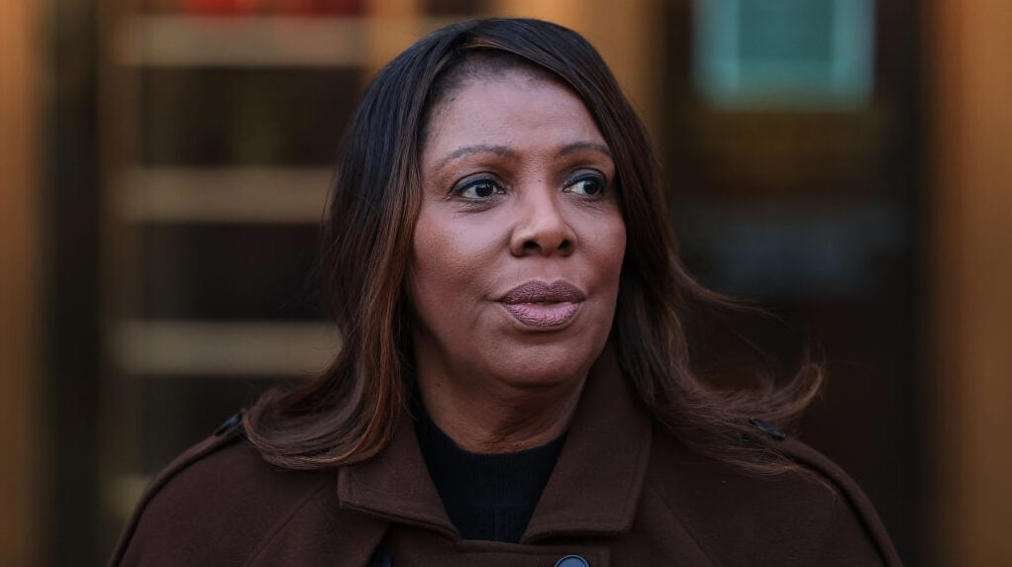
NEW YORK, NEW YORK – FEBRUARY 14: NY Attorney General Letitia James speaks during a press conference on the Department of Government Efficiency (DOGE) at Manhattan Federal Courthouse on February 14, 2025 in New York City. (Photo by Michael M. Santiago/Getty Images)
Letitia James
On Oct. 9, the Trump Justice Department announced that it had indicted Letitia James, New York’s first female and African American attorney general.
James is accused of committing mortgage fraud over a Virginia property she owns. According to the New York Times, the Eastern District of Virginia alleges that James falsely claimed in loan documents that she would use a home she purchased in Norfolk as a secondary residence. Instead, the indictment alleges, she used it as a rental investment property and received loans with “favorable terms that would save her close to $19,000.”
James called the indictment “baseless” and has maintained she did nothing wrong.
Citing the president’s own statements, New York’s top prosecutor said the charges brought by the Trump administration are nothing more than “political retribution” for her successful prosecution of Trump for business fraud.
“He is forcing federal law enforcement agencies to do his bidding, all because I did my job as a New York State Attorney General,” said James, who noted that Trump fired a U.S. attorney who refused to bring charges against her, only to replace the prosecutor with someone who is “blindly loyal not to the law but to the president.”
James said she stands “strongly” behind her office’s litigation against the Trump Organization.
“We conducted a two-year investigation based on the facts and evidence, not politics. Judges have upheld the trial court’s finding that Donald Trump, his company and his two sons were liable for fraud,” she asserted.
On Oct. 9, the Trump Justice Department announced that it had indicted Letitia James, New York’s first female and African American attorney general.
James is accused of committing mortgage fraud over a Virginia property she owns. According to the New York Times, the Eastern District of Virginia alleges that James falsely claimed in loan documents that she would use a home she purchased in Norfolk as a secondary residence. Instead, the indictment alleges, she used it as a rental investment property and received loans with “favorable terms that would save her close to $19,000.”
James called the indictment “baseless” and has maintained she did nothing wrong.
Citing the president’s own statements, New York’s top prosecutor said the charges brought by the Trump administration are nothing more than “political retribution” for her successful prosecution of Trump for business fraud.
“He is forcing federal law enforcement agencies to do his bidding, all because I did my job as a New York State Attorney General,” said James, who noted that Trump fired a U.S. attorney who refused to bring charges against her, only to replace the prosecutor with someone who is “blindly loyal not to the law but to the president.”
James said she stands “strongly” behind her office’s litigation against the Trump Organization.
“We conducted a two-year investigation based on the facts and evidence, not politics. Judges have upheld the trial court’s finding that Donald Trump, his company and his two sons were liable for fraud,” she asserted.
While a grand jury indicted James, it is no indication that the U.S. government will come out victorious in the case against James. Prosecutors have incredible sway in grand juries, which are conducted in secrecy, and defense lawyers are not permitted to present their evidence.
James said, as a woman of faith, she knows that “faith and fear cannot share the same space,” adding, “I’m not fearful; I’m fearless.”
“As my faith teaches me, no weapon formed against me shall prosper. We will fight these baseless charges aggressively,” she said.
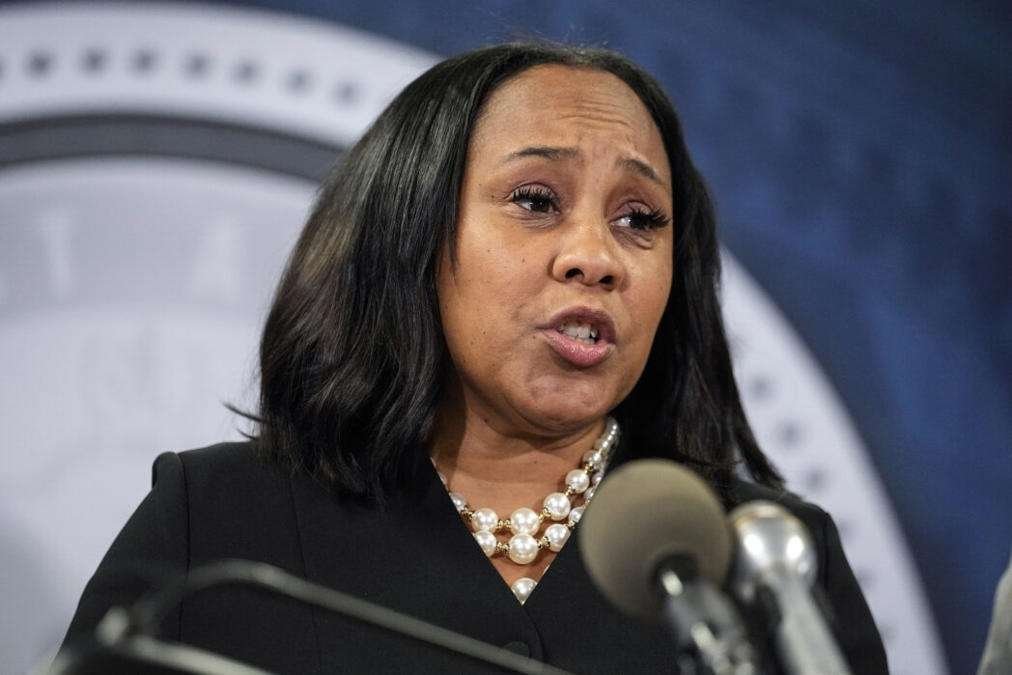
FILE – Fulton County District Attorney Fani Willis speaks during a news conference, Aug. 14, 2023, in Atlanta. (AP Photo/John Bazemore, File)
Fani Willis
In late September, the Trump Justice Department subpoenaed records related to the travel history of Fulton County District Attorney Fani Willis, who, in 2023, indicted Trump and 18 others for engaging in a “criminal enterprise” to illegally return Trump to office after his 2020 defeat.
Willis accused Trump, who peddled false claims that the 2020 presidential election was “stolen” from him due to voter fraud, of “attempts to interfere in the administration of Georgia’s 2020 presidential election.”
The Georgia prosecutor accused Trump and his co-defendants of taking “various actions in Georgia and elsewhere to block the counting of the votes of the presidential electors who were certified as the winners of Georgia’s 2020 general election.”
Trump infamously called Georgia Secretary of State Raffensberger after the 2020 election to demand that he “find 11,780 votes,” which would have reversed his loss in the state.
Willis’s case against Trump hit a snag after defense attorneys asked a judge to remove Willis from the case because of a romantic relationship with the case’s special prosecutor, Nathan Wade. After much scrutiny into their personal lives, Wade resigned, and Willis was allowed to continue leading the case.
In December 2023, an appeals court disqualified Willis, citing that the trial court “erred by failing to disqualify DA Willis and her office.” Willis appealed the decision and asked to be reinstated; however, Georgia’s Supreme Court denied her appeal.
Willis’s criminal prosecution of Trump was one of four criminal cases against him, two of which were led by special prosecutors appointed by the DOJ. The two federal cases related to Trump’s attempt to overturn the 2020 election and the withholding of classified documents were dropped upon his re-election.
Though the case in Georgia was stalled due to Willis’s disqualification, Trump was found guilty in another criminal case brought by New York Manhattan District Attorney Alvin Bragg.
WASHINGTON, DC – JUNE 21: Lisa DeNell Cook, nominee to be a member of the Board of Governors of the Federal Reserve System, testifies during a Senate Banking nominations hearing on June 21, 2023 in Washington, DC. If confirmed, Cook would be the first Black woman to sit on the Board of Governors in its 108-year history. (Photo by Drew Angerer/Getty Images)
The accusations against Cook, the first Black woman to serve on the Fed board–first lodged by Bill Pulte, Trump’s director of the Federal Housing Finance Agency–launched a criminal investigation by the Justice Department.
Cook, who has not been charged with a crime, has maintained she did no wrong and successfully challenged Trump’s attempted termination in federal court.
The effort to unseat Cook gave Trump an opportunity to reshape the Federal Reserve’s seven-member board, which was designed to be an independent economic policy body that is free from politics. No president has fired a sitting Fed governor in the agency’s 112-year history.
A federal judge ruled that the removal of Cook was illegal and reinstated her to the position. An appeals court upheld that decision. The Trump administration appealed to the U.S. Supreme Court in a last-ditch effort to remove Cook. The nation’s highest court allowed Cook to remain as board governor as it prepares to hear oral aguments in the case in January 2026.
WASHINGTON, DC – FEBRUARY 06: U.S. Rep. LaMonica McIver (D-NJ) speaks on Elon Musk’s government interference at a press conference at the U.S. Capitol on February 06, 2025 in Washington, DC. (Photo by Kayla Bartkowski/Getty Images)
LaMonica McIver
U.S. Rep. LaMonica McIver, D-N.J., was indicted by the Trump administration on June 10 for an encounter she had with federal agents outside an ICE facility in Newark, where she was conducting a congressional oversight visit.
McIver, a 39-year-old freshman congresswoman, faces up to 17 years in prison for a May altercation outside of a Newark ICE detention facility, where she and two other members of Congress were joined by Mayor Ras Baraka.
The encounter with federal agents was chaotic, as McIver attempted to shield Baraka from being arrested for trespassing. Baraka’s charges were ultimately dropped, and the judge overseeing the case scolded the U.S. Attorney of New Jersey, Alina Habba, for bringing the “hasty” and “embarrassing” prosecution.
McIver was ultimately still charged in a historically rare criminal case for a sitting member of Congress.
“The facts are on my side…I have no doubt that I will be victorious,” McIver previously told theGrio shortly after leaving a New Jersey courthouse where she was arraigned in June for her three-count indictment, for which she is accused of “forcibly impeding and interfering with federal officers.”
“Me being the one person picked out to be charged, definitely speaks to me being a young Black woman, and basically speaking up and speaking out about what they were doing and how they treated us,” McIver told theGrio. The congresswoman dismissed her prosecution as an “intimidation tactic” to “humiliate” her.
In August, McIver’s defense attorneys moved to dismiss the case against her, accusing the Trump Justice Department of selective and vindictive prosecution. She also argued that she cannot be charged for official acts.
What’s more, McIver said that the DOJ is demonstrating “unconstitutional differential treatment” by pursuing charges against her after dropping cases against over 160 other Jan. 6 defendants who were accused of the same crime. Trump pardoned more than 1,500 accused Jan. 6 rioters on the first day in office during his second term.
“There is a simple difference between this prosecution of Congresswoman McIver and the 160 cases involving assault against federal officers on January 6 that the Justice Department has dismissed: it is all about politics and partisanship,” a dismissal motion reads.
By Milton Kirby | Birmingham, AL | October 12, 2025
The National Black Farmers Association (NBFA) will convene its 2025 Annual Conference in Birmingham, Alabama, from October 31 to November 1, uniting farmers, policymakers, and civil rights advocates from across the country for two days of education, empowerment, and strategy.
This year’s theme focuses on building capacity and identifying resources for small-scale, limited-resource, and socially disadvantaged farmers, ranchers, and landowners. The conference’s hands-on training sessions and educational workshops are designed to provide practical tools, proven techniques, and access to vital programs that strengthen the economic resilience of Black farmers and rural communities.
Prominent Voices in Attendance
Among the confirmed attendees are civil rights attorney Ben Crump, NBFA President John Wesley Boyd Jr., and Kara Brewer Boyd, the organization’s First Lady and national outreach coordinator.
John Boyd Jr., a fourth-generation farmer, civil rights activist, and founder of the NBFA, lives in Boydton, Virginia, with his wife Kara. He operates a 1,500-acre family farm cultivating soybeans, corn, wheat, and produce, while raising beef cattle, American Guinea Hogs, Nigerian Dwarf goats, and chickens.
A lifelong farmer and advocate, Boyd spent 14 years as a Perdue Farms breeder and many more as a tobacco farmer before forming the NBFA in the early 1990s. His leadership has brought him to the table with national and international agricultural leaders, working to eliminate discrimination in federal farm programs and expand opportunities for underserved farmers. Boyd’s story has been featured in the History Channel docuseries The American Farm, chronicling his fight to sustain his family’s land against the odds.
Conference Highlights
Hosted at the Birmingham–Jefferson Convention Complex, the 2025 event celebrates the 35th anniversary of the NBFA’s founding. Over two days, attendees will participate in sessions focused on climate resilience, federal lending access, rural broadband expansion, hemp and specialty crops, and youth engagement in agriculture.
Workshops will be paired with a Farm Expo, women’s leadership roundtables, and networking receptions designed to connect attendees directly with USDA officials, lenders, and private sponsors.
“The NBFA has been the voice of our community for 35 years,” said Boyd. “This conference is about more than policy—it’s about passing on the tools and land that sustain us.”
Opportunities and Deadlines
The Annual NBFA Conference offers marketing, exhibitor, and sponsorship opportunities for partners who share its mission to build an equitable agricultural future.
For sponsorship, exhibitor, or advertiser information, contact Kara Boyd at nbfa.kara@gmail.com. Reservation deadline: Tuesday, September 30, 2025.
Uncle Nearest’s receiver plans to sell its Cognac, France château amid questions over asset value, investor stakes, and whether creditors aim to recover—or acquire—the brand itself.
By Milton Kirby | Shelbyville, TN | October 11, 2025
A French Estate on the Market
The court-appointed receiver overseeing Uncle Nearest, Inc. says the company’s French estate—known as Domaine Saint Martin—will be sold to satisfy debt, calling the Cognac property “non-income-producing” and estimating that it would require $15 million to $25 million in new investment to launch a viable product line.
Domaine Saint Martin Signature – Beverage Journal
In a 19-page quarterly report filed October 1, Receiver Phillip G. Young Jr. described the château, vineyards, and related intellectual property as “non-core assets” and confirmed he has already received one offer and two additional inquiries for the French holdings. The report also identified real estate in Martha’s Vineyard and Bedford County, Tennessee among other non-income-producing assets now under review for possible liquidation.
Young’s team has begun domesticating the U.S. receivership order in France, a legal step required before any sale or transfer of the Cognac property. Until a French court recognizes that order, control of the local bank accounts and property remains limited.
The Numbers Behind a Billion-Dollar Brand
Public filings confirm that Uncle Nearest raised more than $220 million from roughly 163 individual investors, with founder Fawn Weaver retaining about 40 percent ownership and 80 percent of voting rights.
Pre-receivership valuations placed the company between $900 million and $1.1 billion—figures drawn from investor briefings and industry profiles that underscore why the brand’s fate now carries implications well beyond a simple debt workout.
The receiver’s report portrays a company that remains operational and cooperative, with employees and management assisting in stabilization efforts. Payroll has been restored, distribution channels reopened, and new product releases are expected this quarter.
Still, the report makes clear that cash flow remains tight, and that lender Farm Credit Mid-America has advanced $2.5 million in emergency funding under a forbearance agreement.
Photo by Milton Kirby Uncle Nearest Trio
Receivership and Race: What the Data Show
Receivership is a court-ordered process in which a neutral third party assumes control of a company to preserve its value for creditors. It differs from bankruptcy in that operations often continue and the goal—at least in principle—is rehabilitation or an orderly sale, not liquidation.
While direct, specific statistics detailing the comparative success rates of minority-owned versus white-owned companies emerging from formal receivership are difficult to find in public reports from universities, banking regulators, or the SBA, there is extensive research highlighting disparities in business outcomes, access to capital, and failure rates that contribute to such financial distress.
General Business Outcome Disparities Research indicates that minority-owned businesses generally start smaller, have lower revenues and profits, and have lower survival rates compared to white-owned businesses—conditions that make financial distress or receivership more likely.
• Closure/Survival Rate: A 1992–1996 study found that the average probability of closure was 26.9% for Black-owned firms, compared to 22.6% for white-owned firms. • Revenue Disparity: Over half of Black-owned businesses have annual revenue below $100,000, compared to only 13% of white-owned firms. • Financial Distress: In 2019, 58% of Black-owned and 49% of Hispanic-owned firms were categorized as financially at risk or distressed, compared to 29% of all small businesses. • COVID-19 Impact: During the pandemic, Black-owned businesses closed at more than twice the rate of white-owned firms.
Disparities in Access to Capital
• Loan Approval Rates: Black-owned firms apply for new funding more often but are approved 19 percentage points less frequently than white-owned firms. • Full Financing Received: Among low-credit-risk applicants, 48% of white-owned, 25% of Latino-owned, and only 46% of Black-owned firms received none of the financing they sought. • Credit Risk Perception: Black-owned businesses are 3–5 times more likely to be labeled “high credit risk.” Only 33% of Black-owned businesses had low credit risk, compared to 72% of white-owned firms.
These statistics were compiled from publicly available research by the Federal Reserve, the U.S. Small Business Administration (SBA), and multiple peer-reviewed academic studies. They have been independently reviewed and summarized by The Truth Seekers Journal for inclusion in this publication.
General Outcomes in Receivership and Bankruptcy
Restructuring and receivership processes tend to lead to one of three outcomes: 1. Successful Emergence/Reorganization (Going Concern) 2. Sale as a Going Concern 3. Liquidation
While specific comparative data are limited, the broader research on capital access and survival rates strongly suggests that minority-owned companies face greater barriers to achieving the more favorable outcomes—successful reorganization or sale as a going concern—due to longstanding inequities in lending, collateral valuation, and investment access.
Assets Under Scrutiny
The Receiver’s First Quarterly Report states plainly that Uncle Nearest’s non-income-producing assets “should be liquidated.” That includes Domaine Saint Martin in France—acquired in 2023 as part of the company’s planned Cognac expansion—and property in Martha’s Vineyard reportedly purchased for $2.25 million through UN House MV LLC.
Industry observers note that the Cognac estate’s sale would unwind the company’s most ambitious international venture—an African-American-owned whiskey label expanding into the ancestral home of cognac production.
What the Receiver Did Not Investigate
In his 19-page report, the Receiver concluded that Uncle Nearest “lacks the ability to make that investment at this time,” referring to the $15–$25 million required to bring the Cognac operation to market.
However, the report does not analyze alternative scenarios—such as whether a strategic capital infusion, investor partnership, or lender-backed financing package could preserve the asset and enhance the company’s value over time.
The Receiver did not address whether a coordinated plan between Uncle Nearest’s ownership and its primary lender, Farm Credit Mid-America, could fund the launch of the Cognac line within a 36-month horizon, potentially transforming a dormant holding into a global revenue stream. Nor does the report estimate the annual cost of maintaining the French estate, or compare that expense against the projected value of an operating Cognac division. These omissions raise a key question: is the sale of the French property a necessary financial remedy—or a missed opportunity to strengthen a billion-dollar brand’s international expansion?
Who We’re Asking Next
As part of The Truth Seekers Journal’s continuing coverage of the Uncle Nearest receivership, we first reached out to Receiver Phillip G. Young Jr. at Thompson Burton PLLC for comment and clarification regarding several key findings in his October 1 report.
Our questions—emailed on October 10, 2025—included requests for information about asset valuations, operating benchmarks, professional fees, and any offers for the company as a whole. As of publication, no response or acknowledgment has been received.
In the coming days, we plan to reach out to additional individuals and organizations connected to the receivership and company operations, including Justin T. Campbell, Counsel for the Receiver, Thompson Burton PLLC; Newpoint Advisors Corporation, financial advisors to the Receiver; Thoroughbred Spirits Group, LLC, operational consultants; Farm Credit Mid-America, PCA, the senior secured lender; Fawn and Keith Weaver, company founders and principal stakeholders; and Tennessee Distilling Group (TDG), Uncle Nearest’s contract distiller and warehousing partner.
These inquiries will focus on valuation methodology, asset strategy, and possible restructuring options—particularly whether viable paths exist for the company to emerge stronger from receivership without selling the French Cognac estate.
If responses are received, The Truth Seekers Journal will publish a dedicated follow-up feature and reader update, continuing our commitment to factual, transparent coverage of this developing case.
More than 1,400 business and civic leaders will gather Thursday, October 16, 2025, to honor Tommy Holder—Chairman and former CEO of Holder Construction—at the Council for Quality Growth’s 36th Annual Four Pillar Tribute. The black-tie-optional gala begins at 6 p.m. with a cocktail reception, followed by dinner and a formal program in the Georgia Ballroom of the Georgia World Congress Center.
The tribute, presented by the Arthur M. Blank Family Foundation, Delta Air Lines, Georgia Power, and Norfolk Southern, recognizes Holder’s lifetime of leadership and civic engagement that has shaped Atlanta’s skyline and business community.
Program Highlights
Governor Brian P. Kemp will share remarks via video, with Atlanta Mayor Andre Dickens delivering the evening’s welcome. The invocation will be offered by the Very Reverend Sam Candler of the Cathedral of St. Philip. Doug Hertz, Chairman and CEO of United Distributors and a 2020 Four Pillar honoree, will serve as master of ceremonies.
Tribute speakers will highlight the event’s guiding values—Quality, Responsibility, Vision, and Integrity—through reflections from:
Beth Lowry, President & CEO, Holder Construction
Donna Hyland, CEO, Children’s Healthcare of Atlanta
Dr. Ángel Cabrera, President, Georgia Institute of Technology
The Very Reverend Sam Candler, Dean, Cathedral of St. Philip
Musical performances will feature a 60-piece Georgia Tech Yellow Jacket Marching Band ensemble and Atlanta-native Slater Nalley, a 2025 American Idol finalist. Other featured speakers include Clyde Higgs, President and CEO of Atlanta BeltLine Inc. and current Council Chairman, and Michael E. Paris, President and CEO of the Council for Quality Growth.
Continuing a 36-Year Tradition
The Four Pillar Tribute has become one of Atlanta’s most prestigious honors, celebrating leaders who embody the Council’s mission of balanced and responsible growth. Each year’s honoree is recognized for upholding the Four Pillars of Leadership—Quality, Responsibility, Vision, and Integrity—principles that mirror Holder’s career and community impact.
Founded in 1985, the tribute event provides a platform for the region to celebrate the individuals whose work advances economic development and quality of life across Georgia.
Press RSVP: Anna Frances Gardner | ag@councilforqualitygrowth.org | 770-813-3388
About the Council for Quality Growth
For four decades, the Council for Quality Growth has championed policies that support responsible development, infrastructure investment, and economic vitality throughout metro Atlanta and Georgia. Its members include leaders from construction, engineering, real estate, and public service who work together to promote balanced growth for future generations. Learn more at www.councilforqualitygrowth.org.
Please consider supporting open, independent journalism – no contribution is too small!
Mayor Andre Dickens appoints Amanda Rhein as Chief Housing Officer and Chatiqua Ellison as Deputy, strengthening Atlanta’s affordable housing and homelessness response.
By Milton Kirby | Atlanta, GA | October 9, 2025
Mayor Andre Dickens has announced a new housing leadership team that is committed to shaping the City’s next chapter in affordable housing, homelessness response, and community development, instilling hope for a better future.
At the top of that team is Amanda Rhein, appointed Chief Housing Officer, effective January 2026. Rhein currently serves as Executive Director of the Atlanta Land Trust, where she has built one of the nation’s most successful community land trust models. Under her leadership, the organization has placed more than 100 homes into trust and has 100 more under development.
Amanda Rhein – Courtesy City of Atlanta
Rhein brings over two decades of experience in equitable development, affordable housing, and community revitalization. She previously led transit-oriented development (TOD) at MARTA, where she redeveloped more than 35 acres of underused surface parking at eight rail stations. Before that, she spent nearly a decade at Invest Atlanta, managing more than 30 projects that generated $3.5 billion in investment for underserved neighborhoods.
A native of Cincinnati, Ohio, Rhein earned a Bachelor’s degree in Sociology from Boston College and a Master of City and Regional Planning from the Georgia Institute of Technology.
“Amanda is a nationally respected leader whose experience, innovation, and track record of execution will serve the city well,” said Mayor Dickens. “With her leadership, we will continue to set national standards for how cities can tackle housing affordability with innovation and compassion.”
Strengthening the City’s Homelessness Response
Joining Rhein is Chatiqua Ellison, appointed Deputy Chief Housing Officer and Senior Advisor to the Mayor on Homelessness. An Atlanta native, Ellison has led several of the City’s most transformative housing efforts — including the Forest Cove Relocation, which successfully moved 193 families into safe, stable homes.
Chatiqua Ellison – Courtesy City of Atlanta
She also oversees the Rapid Housing Initiative, which has already created more than 300 of a targeted 500 quick-delivery homes for unhoused residents, including The Melody, Atlanta’s first container home community.
Ellison earned a Bachelor’s degree in Political Science from Spelman College and a Master of Public Policy in Urban Planning and Policy from Georgia State University’s Andrew Young School of Policy Studies.
Her leadership extends to chairing the City’s Homelessness Taskforce, where she helped establish coordinated encampment closure policies, and to partnering with Invest Atlanta to launch the Grocery Initiative, which expands access to fresh food in underserved neighborhoods and supports projects like The Azalea Market.
A Comprehensive Housing Leadership Team
The new housing leadership team will report directly to Chief of Staff Courtney English, aligning the City’s affordable housing, homelessness, and revitalization goals.
Other key appointments include:
William Tucker, Director of the Housing Innovation Lab, leading creative housing affordability strategies.
Katie Molla, Director of Special Projects, overseeing food access programs and Tax Allocation District implementation.
Colin Delargy, Assistant Director, focusing on housing finance, planning, and policy.
Carolyn Kovar, Assistant Director of Housing Delivery, coordinating affordable housing projects on public land.
Matt Delicata, Senior Real Estate Advisor, specializing in large-scale real estate development.
Chanel Ziesel, continuing as Director of Housing Policy, leading anti-blight and downtown revitalization initiatives.
“This team represents the best housing leadership in the country,” said Dickens. “Together, we’re not just building housing — we’re building pathways to stability, dignity, and opportunity for all.”
By Stacy M Brown | BlackpressUSA Newsiwre | October 9, 2025
Across America, families are being broken not by illness alone, but by the quiet cruelty of denial letters from insurance companies. Patients in crisis are told their care is not medically necessary. Others learn too late that their coverage has been canceled. The denials come swiftly, the appeals take months, and the system often feels rigged against the very people it was built to protect.
A ProPublica investigation revealed just how devastating those denials can be. In North Carolina, Teressa Sutton-Schulman and her husband, identified as “L” to protect his privacy, endured escalating mental health crises. After two suicide attempts in 11 days, Highmark Blue Cross Blue Shield repeatedly denied payment for psychiatric treatment. Hidden on page seven of a denial letter was a single line about a right to an external review. Desperate, Sutton-Schulman filed for that review. An independent physician overturned the insurer’s decision and forced the company to pay for more than $70,000 in care, ProPublica reported. “Appeal, appeal, appeal, appeal,” said Kaye Pestaina, a vice president at the nonprofit health policy group KFF, who has studied external appeals. “That’s all you have,” she told ProPublica.
The right to an external appeal was expanded by the Affordable Care Act in 2010, but the protections are uneven. Karen Pollitz, who helped draft the federal regulations under the Obama administration, told ProPublica that insurance lobbyists weakened the process. She said only a fraction of denials are eligible for external review and, in most cases, insurers still choose the reviewers who decide the fate of patients’ appeals. “There are all kinds of ways they could strengthen the laws and the regulations to hold health plans more accountable,” she said. Even when laws exist, few Americans know where to turn. That is why state-based consumer assistance programs, established under the Affordable Care Act, have become a vital safety net — though many states never created them, and others have defunded theirs. About 30 states still operate programs that guide patients through internal and external appeals, while the rest leave families largely alone.
“Every state needs one of these programs,” said Cheryl Fish-Parcham, director of private coverage at Families USA. “Health care is so complicated, and people really need experts to turn to,” she told ProPublica. Those experts are often housed in attorney general offices, state insurance departments, or nonprofit agencies. Maryland’s Health Education and Advocacy Unit, for example, has been a lifeline for residents struggling with denied care. “The numbers are low because some people just give up. They’re frustrated. They’re tired. They’re battling cancer,” said Kimberly Cammarata, the unit’s director. “And sometimes the information about why the claim was denied or about how to appeal is terribly unclear. A lot of these outcome letters will say you have a right to an external appeal, but they don’t exactly tell you where to go,” she told ProPublica.
In New York, the Community Service Society operates a similar program, where advocates draft detailed appeals on behalf of patients. “We can help people write their appeals,” said Elisabeth Benjamin, vice president of health initiatives at the Community Service Society. “We write appeals for them, sometimes going through thousands of pages of medical records and writing 15- to 20-page appeals,” she told ProPublica. Across the nation, CMS documents show an uneven patchwork of help. In California, consumers can call the Department of Insurance Ombudsman at 1-800-927-4357 for help with denied claims. In Georgia, the Office of Insurance and Fire Safety Commissioner fields appeals and complaints from residents at 1-800-656-2298. In Illinois, the Department of Insurance maintains a consumer hotline at 1-866-445-5364. New York’s Department of Financial Services handles cases through its consumer division, while Pennsylvania residents can reach the state Insurance Department at 1-877-881-6388. Maryland, Virginia, and the District of Columbia all continue to run active programs through their respective attorney general or ombudsman offices.
Still, millions of Americans remain in states without fully funded consumer assistance programs. For those individuals, even knowing that an external appeal exists is a struggle. ProPublica found that the process is buried under jargon, hidden in small print, or placed deep within denial letters that few patients have the time or emotional strength to decode. Experts say one step can make a difference: persistence. “Appeal, appeal, appeal” has become a mantra not only for patients but for advocates who have watched insurers exploit confusion and fatigue to wear people down.
For urgent cases, the law allows expedited reviews that must be resolved within 72 hours. If the independent reviewer overturns the denial, the insurer is required by law to pay. When that happens, the victory is binding. But the system was never designed for easy victories. Most patients never reach that point. Many die waiting. And yet, despite the exhaustion and the heartbreak, people keep fighting. From North Carolina to California, from New York to Georgia, they continue to challenge billion-dollar corporations that have learned to profit from denial. What unites them is not just the pursuit of care, but a demand for fairness — a demand that too often goes unanswered. “Every state needs one of these programs,” Fish-Parcham said again. “Health care is so complicated, and people really need experts to turn to.”
Please consider supporting open, independent journalism – no contribution is too small!
Mayor Andre Dickens appoints Courtney English as permanent Chief of Staff, names Greg Clay and Gabrielle Slade deputies, and launches a national search for Chief Policy Officer.
By Milton Kirby | Atlanta, GA | October 9, 2025
Mayor Andre Dickens has appointed Courtney English as the permanent Chief of Staff for the City of Atlanta, solidifying leadership within his administration as it advances major housing, infrastructure, and equity priorities. English, who had served in the role on an interim basis, will now officially oversee operations of the Mayor’s Executive Office, intergovernmental coordination, and the strategic rollout of citywide initiatives.
English has been a key architect of several high-impact programs under Mayor Dickens. He led the $5 billion Neighborhood Reinvestment Initiative, a sweeping plan to strengthen housing, infrastructure, and community development across Atlanta. He also helped secure the $60 million Homeless Opportunity Bond—Atlanta’s largest-ever investment in homelessness solutions—and spearheaded the Affordable Housing Strike Force, credited with delivering nearly 12,000 affordable units in less than four years.
Under his direction, the city launched Azalea Market, Atlanta’s first municipal grocery store, expanding access to healthy food and stimulating neighborhood revitalization. English also helped shape rapid housing projects such as The Melody and Ralph David’s House, providing critical shelter and stability for unhoused residents. His leadership on the Year of the Youth initiative expanded programs that have already reached more than 30,000 young Atlantans.
“Courtney English has consistently demonstrated exceptional leadership and a steadfast commitment to the residents of Atlanta,” said Mayor Dickens. “His strategic vision and dedication to public service will continue to guide this administration as we advance our mission of building a City of Opportunity for All.”
Alongside English’s appointment, Dickens named Greg Clay and Gabrielle Slade as Deputy Chiefs of Staff.
Clay, an Atlanta native and former Executive Director of Constituent Services, brings decades of experience as a nonprofit executive, community advocate, and public administrator. His past leadership includes service in five Georgia municipalities, including East Point and College Park. A graduate of Florida A&M University and the University of Kansas, Clay has earned recognition including the Atlanta Business Chronicle’s 40 Under Forty Award and President Obama’s Drum Major for Service Award.
Slade, a 19-year veteran of Atlanta city government and Spelman College graduate, most recently served as Deputy Chief Equity Officer in the Mayor’s Office of Equity, Diversity, and Inclusion. Her tenure includes five years in legislative affairs, 20 successful city annexations, and leadership in the Department of Parks and Recreation, which achieved national accreditation under her guidance.
“With the addition of Greg and Gabrielle to our leadership team, Atlanta is well-positioned to advance our mission of building a city that works for everyone,” said English. “Their expertise and commitment will ensure residents and neighborhoods remain at the heart of everything we do.”
A national search is now underway to fill the Chief Policy Officer position previously held by English. The new role will report directly to the Chief of Staff and help coordinate the administration’s policy and strategic initiatives across departments.
Please consider supporting open, independent journalism – no contribution is too small!
MARTA’s $230 million transformation of Five Points Station enters a major new phase next week. Beginning Monday, October 13, the Peachtree Street entrance and the federal employee tunnel will close to the public as crews begin the safe demolition and removal of the aging concrete canopy.
The Forsyth Street entrance will be the only way in and out of the station during this period. MARTA says the closure is essential to keep workers and passengers safe while the structure above the station is dismantled.
What Stays the Same
Rail service, transfers, and elevators will remain open. All buses will continue boarding on Forsyth Street. However, customers should plan for temporary escalator and stair closures in the coming weeks as scaffolding and overhead protection are installed. Clear signage will be in place to guide riders through the changes.
Ongoing Impacts
Other service adjustments will remain in effect:
The Alabama Street and Broad Street Plaza entrances are still closed.
Restrooms remain closed.
Customer service offices have been temporarily relocated and will move permanently to Ashby Station at a later date.
A Reimagined Downtown Hub
Once complete, the reimagined Five Points Station will serve as a modernized urban centerpiece — designed to improve safety, connectivity, and the rider experience. Plans include a new open-air canopy, redesigned bus hub, a pedestrian link to Broad Street, and new community spaces featuring public art and even urban agriculture.
The project is being funded primarily through the More MARTA Atlanta half-penny sales tax, with contributions of $13.8 million from the State of Georgia, a $25 million Federal RAISE Grant, and additional support from MARTA’s core penny fund.
For more details and project updates, visit itsmarta.com.
Please consider supporting open, independent journalism – no contribution is too small!
The Truth Seekers Journal welcomes Negro League historian Ted Knorr and his new column “Shadow Ball,” exploring the history, heroes, and hidden stories of Black baseball.
By Milton Kirby | Atlanta, GA | October 7, 2025
We at The Truth Seekers Journal are excited to announce that on Tuesday, October 14, 2025, we will debut a new and engaging column: “Shadow Ball.” The column will feature the work of Negro League Baseball historian Ted Knorr, who has been—first a fan, then a historian—for more than 30 years.
About Ted Knorr
Ted Knorr, 74, is a retired program manager with the Commonwealth of Pennsylvania, where he focused on economic development and education. A lifelong baseball fan, Knorr has devoted much of his life to exploring the rich history of the Negro Leagues, along with his deep interests in statistical analysis, Pittsburgh history, literature, and baseball trivia.
Among his proudest accomplishments:
He has played the APBA Major League Baseball Game for 63 years and been a member of the Society for American Baseball Research (SABR) for 46 years, remaining active in the Negro Leagues Committee (NLC) for 36 of them.
Since 1966, he and his father have attended about two dozen World Series, All-Star, and playoff games, along with stadium and season openers in Pittsburgh.
In 1973, he hitchhiked across the United States, following the Pirates, Mets, and Reds before witnessing Game Six of that year’s World Series in Oakland, California.
Hefounded Negro League Commemorative Nights in Harrisburg, Lancaster, and York, Pennsylvania—annual celebrations held since 1997.
He established the Jerry Malloy Negro League Conference in 1998, a national research gathering that has convened 26 times to date. Knorr has hosted the event four times and attended 23 of them.
In 2007, heraised funds and designed a historical marker for his hero, Negro League outfielder Rap Dixon, whose life and career Knorr continues to champion for recognition in the Baseball Hall of Fame in Cooperstown.
A trivia enthusiast, Knorr has won the Jerry Malloy Significa Contest three times, served as emcee ten times, and in 2022 led his team to victory in the SABR national trivia championship—making him the only SABR member to win trivia or significa titles on both sides of the color line.
Today, Knorr continues to lecture and exhibit on Negro League history for schools, community groups, senior centers, and baseball organizations nationwide.
A Twice-Monthly Column
“Shadow Ball” will be published on the second and fourth weeks of each month, offering readers a consistent and interactive look at the legacy of Negro League Baseball and the lives that shaped it.
Two-Way Conversation with Readers
The column will have two interactive components:
Reader Questions: Each edition, Mr. Knorr will respond directly to questions submitted by TSJ readers, allowing community curiosity to help shape the narrative.
Knorr’s Question to Readers: Mr. Knorr will also pose a question to readers. Selected responses will appear in the following week’s column. To be published, respondents will need to provide a release to TSJ.
Why “Shadow Ball”?
The title draws inspiration from the famous warm-up routines Negro League players performed—miming an invisible baseball to entertain crowds. In that same spirit, Knorr’s column will mix memory, history, and imagination, bringing the brilliance of Negro League Baseball into today’s conversations.
We invite our readers to join us in welcoming Ted Knorr and to become part of this living dialogue. Be sure to read the first edition of Shadow Ball on Tuesday, October 14, 2025.
Court filings show payroll now stabilized under Genesis Global as Receiver Phillip G. Young Jr. manages costs, consultants, and $2.5 million in immediate receivership expenses at Uncle Nearest.
By Milton Kirby | Shelbyville, TN | October 5, 2025
Uncle Nearest can be reorganized as a going concern and does not need a fire-sale liquidation, according to the first quarterly report from court-appointed receiver Phillip G. Young Jr.
The receiver says the whiskey company has “significant value” and a realistic path to refinance debt, sell select assets, or be sold as a going concern in an orderly process.
Why This Matters
The report is the first public, court-filed snapshot since the receivership began on August 22. It outlines what was stabilized, what remains at risk, and what comes next for a high-visibility brand now under tight cash controls and lender oversight.
The receiver laid out a short timeline. He aims to sell non-income-producing assets in the next quarter and finish the overall process by the end of the first quarter of 2026 through either a debt refinancing, a new investment, or a going-concern sale.
Key asset moves include:
Cognac Project Assets (France): A château, vineyards, and intellectual property related to a planned cognac line. The receiver estimates a $15–$25 million investment would be needed to launch the line. The estate lacks that capacity now, so he intends to sell these assets. One offer is in hand, with additional interest reported.
Other Properties: Non-income real estate in Martha’s Vineyard, Massachusetts, and several parcels in Bedford County, Tennessee, are under review for potential sale to reduce debt.
Payroll and the Role of Genesis Global
One of Young’s first priorities was payroll. When he arrived, the company’s employee pay system faced a shortfall. Payroll has since been stabilized under Genesis Global, a Professional Employer Organization (PEO) that handles payroll, benefits, tax filings, and HR services for the company.
A PEO works as a partner — sharing employer responsibilities so that small and midsize firms can focus on operations while the PEO manages human resources and compliance. Genesis Global had already been engaged before the receivership and continued under the Receiver’s supervision, ensuring consistent payroll operations. Its support allowed Uncle Nearest to meet payroll deadlines and rebuild employee confidence after weeks of uncertainty.
Cash, Controls, and a 13-Week Budget
The receiver and his advisors built a rolling 13-week budget and reached a forbearance deal with Farm Credit Mid America, the senior lender, to fund immediate needs. The plan included about $2.5 million in one-time cash: roughly $1.0 million to clear urgent payables and $1.5 million for professional fees. Excluding those extraordinary items, the budget was balanced.
Collections and Spending in the Period
Category
Amount (USD)
% of Total
Collections
Operating Receipts
$1,451,747
46 %
Farm Credit Support
$1,700,000
54 %
Total Collections
$3,151,747
100 %
Expenditures
Operating Disbursements
$2,081,796
84 %
Professional Services
$405,370
16 %
Total Expenditures
$2,487,166
100 %
Budget for Period
$3,206,546
—
Variance (Under Budget)
$719,380
—
All bank balances were moved into receiver-controlled accounts. Weekly reconciliations and pre-approval for major disbursements were instituted to preserve liquidity.
Breakdown of Professional Fees
Vendor / Service Category
Amount (USD)
% of Total Fees
Legal Counsel (Bass, Berry & Sims PLC)**
$210,000
52 %
Financial Consultants (Crowe LLP)**
$105,000
26 %
Operational Advisory and HR Support (Genesis Global)**
$55,000
14 %
Receiver Administrative and Compliance Costs
$35,370
8 %
Total Professional Fees
$405,370
100 %
Figures based on allocations detailed in the Receiver’s First Quarterly Report and estimated vendor summaries.
Operations: Trims, Product Flow, and Distributors
To cut costs, the receiver reduced headcount by 12 positions (13%), with further efficiency reviews underway. The team also reset expectations with distributors and vendors. Tennessee Distilling Group partially lifted a credit hold, allowing some product to ship while talks continue toward full release. New product releases are anticipated next quarter.
Photo by Milton Kirby Uncle Nearest
Records, Cap Table, and Internal Reviews
The report flags gaps in historical records and internal controls:
Lost Data: Many pre-2024 financial records were allegedly erased by a former employee. Recovery efforts are underway.
Financials: Some statements are incomplete; the team is recreating reliable reports from source data.
Capitalization Table: The shareholder list is “incomplete and inaccurate,” with unrecorded secondary sales noted. Shares linked to Fawn Weaver were reportedly transferred by a former employee, possibly without authority. The receiver is contacting shareholders to reconcile the cap table.
Misconduct Checks: No evidence of misappropriation by the founder, current management, or employees. Allegations against a former employee remain under investigation.
Taxes and Compliance
Payroll has stabilized under Genesis Global after the initial shortfall. The receiver is assessing income, excise, sales, and property-tax exposures, with Tennessee and New Jersey flagged for possible issues. Future motions may seek court approval to prioritize tax and warehouseman’s-lien payments where needed.
International Steps
French counsel is translating and domesticating the U.S. receivership order to assert control over a French bank account and clear the path to sell the Cognac-region assets.
Timeline
The receiver aims to close the process by late Q1 2026 through refinancing, new equity, or a going-concern sale.
NEW YORK — President Donald Trump is openly embracing the conservative blueprint he desperately tried to distance himself from during the 2024 campaign, as one of its architects works to use the government shutdown to accelerate his goals of slashing the size of the federal workforce and punishing Democratic states.
In a post on his Truth Social site Thursday morning, Trump announced he would be meeting with his budget chief, “Russ Vought, he of PROJECT 2025 Fame, to determine which of the many Democrat Agencies, most of which are a political SCAM, he recommends to be cut, and whether or not those cuts will be temporary or permanent.”
The comments represented a dramatic about-face for Trump, who spent much of last year denouncing Project 2025, The Heritage Foundation’s massive proposed overhaul of the federal government, which was drafted by many of his longtime allies and current and former administration officials.
Both of Trump’s Democratic rivals, Joe Biden and Kamala Harris, made the far-right wish list a centerpiece of their campaigns, and a giant replica of the book featured prominently onstage at the Democratic National Convention.
“Donald Trump and his stooges lied through their teeth about Project 2025, and now he’s running the country straight into it,” said Ammar Moussa, a former spokesperson for both campaigns. “There’s no comfort in being right — just anger that we’re stuck with the consequences of his lies.”
Shalanda Young, director of the Office of Management and Budget under Biden, said the administration had clearly been following the project’s blueprint all along.
“I guess Democrats were right, but that doesn’t make me feel better,” she said. “I’m angry that this is happening after being told that this document was not going to be the centerpiece of this administration.”
Asked about Trump’s reversal, White House spokesperson Abigail Jackson said, “Democrats are desperate to talk about anything aside from their decision to hurt the American people by shutting down the government.”
Project what?
Top Trump campaign leaders spent much of 2024 livid at The Heritage Foundation for publishing a book full of unpopular proposals that Democrats tried to pin on the campaign to warn a second Trump term would be too extreme.
While many of the policies outlined in its 900-plus pages aligned closely with the agenda that Trump was proposing — particularly on curbing immigration and dismantling certain federal agencies — others called for action Trump had never discussed, like banning pornography, or Trump’s team was actively trying to avoid, like withdrawing approval for abortion medication.
Trump repeatedly insisted he knew nothing about the group or who was behind it, despite his close ties with many of its authors. They included John McEntee, his former director of the White House Presidential Personnel Office, and Paul Dans, former chief of staff at the U.S. Office of Personnel Management.
“I know nothing about Project 2025,” Trump insisted in July 2024. “I have no idea who is behind it. I disagree with some of the things they’re saying and some of the things they’re saying are absolutely ridiculous and abysmal. Anything they do, I wish them luck, but I have nothing to do with them.”
Trump’s campaign chiefs were equally critical.
“President Trump’s campaign has been very clear for over a year that Project 2025 had nothing to do with the campaign, did not speak for the campaign, and should not be associated with the campaign or the President in any way,” wrote Susie Wiles and Chris LaCivita in a campaign memo. They added, “Reports of Project 2025’s demise would be greatly welcomed and should serve as notice to anyone or any group trying to misrepresent their influence with President Trump and his campaign — it will not end well for you.”
Trump has since gone on to stock his second administration with its authors, including Vought, “border czar” Tom Homan, CIA Director John Ratcliffe, immigration hard-liner Stephen Miller and Brendan Carr, who wrote Project 2025’s chapter on the Federal Communications Commission and now chairs the panel.
Heritage did not respond to a request for comment Thursday. But Dans, the project’s former director, said it’s been “exciting” to see so much of what was laid out in the book put into action.
“It’s gratifying. We’re very proud of the work that was done for this express purpose: to have a doer like President Trump ready to roll on Day One,” said Dans, who is currently running for Senate against Lindsey Graham in South Carolina.
Trump administration uses the shutdown to further its goals
Since his swearing in, Trump has been pursuing plans laid out in Project 2025 to dramatically expand presidential power and reduce the size of the federal workforce. They include efforts like the Department of Government Efficiency and budget rescission packages, which have led to billions of dollars being stalled, scrapped or withheld by the administration so far this year.
They are now using the shutdown to accelerate their progress.
Ahead of the funding deadline, OMB directed agencies to prepare for additional mass firings of federal workers, rather than simply furloughing those who are not deemed essential, as has been the usual practice during past shutdowns. Vought told House GOP lawmakers in a private conference call Wednesday that layoffs would begin in the next day or two.
They have also used the shutdown to target projects championed by Democrats, including canceling $8 billion in green energy projects in states with Democratic senators and withholding $18 billion for transportation projects in New York City that have been championed by Senate Democratic Leader Chuck Schumer and House Democratic leader Hakeem Jeffries in their home state.
Dreaming of this moment
The moves are part of a broader effort to concentrate federal authority in the presidency, which permeated Project 2025.
In his chapter in the blueprint, Vought made clear he wanted the president and OMB to wield more direct power.
“The Director must view his job as the best, most comprehensive approximation of the President’s mind,” he wrote. Vought described OMB as “a President’s air-traffic control system,” which should be “involved in all aspects of the White House policy process,” becoming “powerful enough to override implementing agencies’ bureaucracies.”
Sen. Mike Lee, R-Utah, said on Fox News Channel that Vought “has a plan, and that plan is going to succeed in further empowering Trump. This is going to be the Democrats’ worst nightmare.”
House Speaker Mike Johnson echoed that message, insisting the government shutdown gives Trump and his budget director vast power over the federal government and the unilateral power to determine which personnel and policies are essential and which are not.
Schumer has handed “the keys of the kingdom to the president,” Johnson said Thursday. “Because they have decided to vote to shut the government down, they have now effectively turned off the legislative branch … and they’ve turned it over to the executive.”
Young said the Constitution gives the White House no such power and chastised Republicans in Congress for abandoning their duty to serve as a check on the president.
“I don’t want to hear a lecture about handing the keys over,” she said. “The keys are gone. They’re lost. They’re down a drain. This shutdown is not what lost the keys.”
Please consider supporting open, independent journalism – no contribution is too small!
By Milton Kirby | Washington, D.C. | October 2, 2025
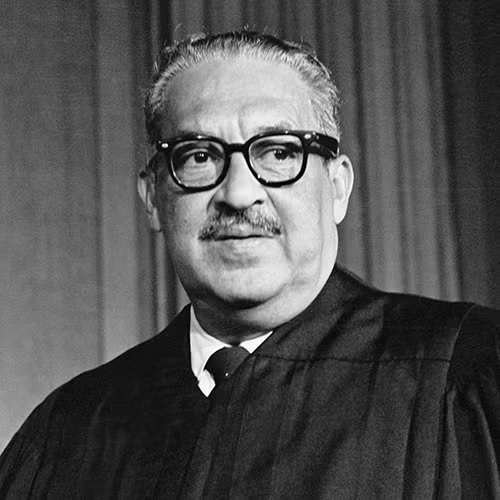
Fifty-eight years ago today, the marble halls of the U.S. Supreme Court bore witness to a moment that reshaped American history. On October 2, 1967, Thurgood Marshall raised his right hand and swore the oath of office, becoming the first African American justice to serve on the nation’s highest court.
For many watching, the image was more than ceremonial. It was the realization of a dream born from centuries of struggle — a Black man ascending to the bench of an institution that had once sanctioned slavery, segregation, and the denial of equal rights.
President Lyndon B. Johnson, who nominated Marshall just months earlier, called it “the right man, at the right time, in the right place.” In Marshall, America had found a justice who carried the Constitution not only in his mind but etched deeply into his lived experience.
From Baltimore Streets to Legal Scholar
Born in Baltimore on July 2, 1908, Marshall’s journey to the Supreme Court began in a household that valued both discipline and education. His father, William, a railroad porter, often debated court cases at the dinner table. His mother, Norma, an elementary school teacher, nurtured a love of learning.
As a mischievous schoolboy, Marshall was once punished by being forced to memorize the entire U.S. Constitution. The lesson stuck. Decades later, he joked he could still recite it word for word — but it also planted the seed of his life’s mission: to hold America accountable to its own promises.
Marshall attended Lincoln University in Pennsylvania, graduating in 1930. He then enrolled at Howard University School of Law, where he studied under Charles Hamilton Houston, a brilliant strategist who believed lawyers must serve as “social engineers.” Houston instilled in Marshall a conviction that the courtroom could be a battlefield against injustice.
Thurgood Marshall – Courtesy Britannica
“Mr. Civil Rights”
By the mid-1930s, Marshall had joined the NAACP and quickly rose to become its chief counsel. His legal work became the backbone of the civil rights movement. Over the course of his career, Marshall argued 32 cases before the Supreme Court — and won 29 of them.
His most famous victory came in Brown v. Board of Education (1954), where he persuaded the Court to strike down segregation in public schools. The unanimous decision overturned the Plessy v. Ferguson “separate but equal” doctrine and became a cornerstone of the modern civil rights era.
But Brown was just one milestone. In Smith v. Allwright (1944), Marshall dismantled the “white primary” system that excluded Black voters. In Sweatt v. Painter (1950), he challenged unequal law school facilities, a precursor to broader desegregation. Earlier, in Chambers v. Florida (1940), he defended Black men coerced into confessing murder.
Through relentless litigation, Marshall became known as “Mr. Civil Rights” — a lawyer who used the Constitution as both shield and sword against Jim Crow.
“In recognizing the humanity of our fellow beings,” Marshall once said, “we pay ourselves the highest tribute.”
A Judge and Solicitor General
Marshall’s impact extended beyond the NAACP. In 1961, President John F. Kennedy appointed him to the U.S. Court of Appeals for the Second Circuit. Four years later, President Johnson tapped him as the nation’s first Black Solicitor General — the government’s top lawyer before the Supreme Court.
In that role, Marshall argued 19 cases and won 14. His victories ranged from labor rights to antitrust law, further cementing his reputation as one of the era’s most formidable legal minds.
Johnson saw Marshall’s elevation to the Supreme Court as a natural progression. “I believe he has earned that appointment. I believe he deserves it,” the president declared when he announced the nomination in June 1967.
A Historic Confirmation
Marshall’s confirmation hearings before the Senate Judiciary Committee were contentious. Some senators pressed him aggressively on criminal justice issues, while Southern opponents masked their discomfort with questions about his qualifications.
But Marshall’s calm, thorough answers won the day. On August 30, 1967, the Senate confirmed him by a vote of 69 to 11. Two months later, he was sworn in — breaking a barrier that had stood since the Court’s founding in 1789.
For millions of Black Americans, Marshall’s appointment symbolized progress that once seemed unthinkable. Here was a man who had fought segregation in classrooms now seated in the chamber that set the law of the land.
“A child born to a Black mother in a state like Mississippi,” Marshall reflected, “has exactly the same rights as a white baby born to the wealthiest person in the United States. That is the principle I fought for.”
On the Bench: A Voice for the Marginalized
During his 24 years on the Court, Marshall consistently championed the rights of individuals, the poor, and the marginalized. He opposed the death penalty, arguing it was applied disproportionately against minorities and the poor.
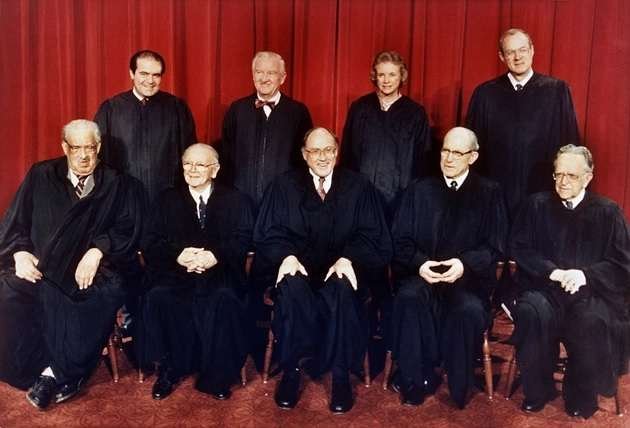
US Supreme Court – April 1988 – AP Photo
In Furman v. Georgia (1972), Marshall sided with the majority in striking down existing death penalty statutes. In later dissents, he argued that the death penalty itself was cruel and unusual punishment.
Marshall was also a strong defender of affirmative action. In Regents of the University of California v. Bakke (1978), he argued that remedies for centuries of discrimination were both constitutional and morally necessary.
His guiding principle was simple yet profound: “Equal means getting the same thing, at the same time, and in the same place.”
Even as the Court grew more conservative in the 1970s and 1980s, Marshall’s voice remained steady. Often in dissent, he nevertheless articulated a vision of justice rooted in fairness and equality.
Retirement and Passing the Torch
Marshall retired in 1991, citing declining health. His departure marked the end of an era. President George H.W. Bush appointed Clarence Thomas, a conservative jurist, as his successor — a decision that underscored the sharp ideological shift of the Court.
Marshall passed away on January 24, 1993, at age 84. He was laid to rest in Arlington National Cemetery, honored as both a civil rights giant and a Supreme Court justice.
Legacy and Relevance Today
Marshall’s legacy reverberates through every corner of American law. Schools, courthouses, and even Baltimore/Washington International Airport bear his name. His career stands as proof that the law, when wielded with courage, can dismantle walls of oppression.
But Marshall himself was clear-eyed about the limits of the legal system. “The legal system can force open doors and sometimes even knock down walls,” he once said, “but it cannot build bridges. That job belongs to you and me.”
Today, as debates rage over voting rights, affirmative action, and racial equity, Marshall’s words carry renewed urgency. His belief in the Constitution as a “living document” — one meant to expand justice rather than freeze it in time — is echoed in current struggles to define equality in America.
Closing Reflection
October 2, 1967, was not just the day a man took an oath. It was the day a nation took a step toward becoming what its founding documents had always promised.
Thurgood Marshall’s life was proof that the Constitution, in the hands of those brave enough to demand its full measure, could be both weapon and witness for justice.
More than half a century later, his shadow stretches across courtrooms, classrooms, and communities. The boy who memorized the Constitution as punishment grew into the justice who forced the country to live up to it.
And in doing so, he gave America not only its first Black justice but also its enduring conscience.
Please consider supporting open, independent journalism – no contribution is too small!
Nearly 30 Atlanta seniors joined SilverSneakers and Kroc Atlanta Center’s free 2K walk, highlighting fitness, fellowship, and healthy aging in the Pittsburgh community.
Milton Kirby | Atlanta, GA | October 1, 2025
Nearly 50 local seniors laced up their walking shoes on Tuesday morning as SilverSneakers and The Salvation Army’s Kroc Atlanta Center teamed up to host a free 2K walk in the heart of Atlanta. The event gave older adults of all fitness levels a chance to get moving, meet new friends, and discover resources for healthy living.
The walkers, wearing numbered bibs, circled the Kroc Center’s indoor track 16 times to complete the 2K distance. Along the way they enjoyed a group warm-up, music, prize giveaways, and a cool-down session to finish strong. For some, it was their first organized walk; for others, it was another step in a lifelong commitment to staying active.
“Seeing the energy and camaraderie at this event in Atlanta displayed the power of community,” said Melissa Anthony, Regional Growth Manager for SilverSneakers. “More than just a run, it was incredible to witness the visible boost in confidence each participant demonstrated when they completed those 16 laps. Our top walker got in more than 10,000 steps.”
The program highlights an important message: staying active is central to healthy aging. With seniors now the fastest-growing age group in the United States, SilverSneakers has built its reputation by providing fun, low-pressure opportunities to help older adults maintain mobility and confidence.
Local partners Humana, Paradise Smoothies & Juice Bar, and JenCare Senior Medical Center joined in to support the event, providing refreshments and information about senior health resources.
The Kroc Atlanta Center, a 53,500-square-foot community hub in the city’s Pittsburgh neighborhood, provided a fitting backdrop. More than a gym, the center offers space for worship, arts, education, and recreation. Its facilities range from a multi-use gymnasium and computer labs to performing arts stages and community meeting rooms.
“Our mission is to be a beacon of hope and a gathering place for all,” said a Kroc Center representative. “This walk shows how seniors can come together to strengthen not only their bodies, but also their sense of belonging.”
The Salvation Army Kroc Centers trace their roots back to Joan Kroc, wife of McDonald’s founder Ray Kroc. After seeing firsthand how underserved communities lacked safe, welcoming spaces, she donated more than $1.5 billion to build centers nationwide. Today, 26 Kroc Centers carry forward her vision of nurturing children’s potential, supporting families, and strengthening neighborhoods.
Tuesday’s walk was the first of two group events planned this year. Organizers say seniors of all abilities are invited to join the next one.
For the participants, however, it wasn’t just about distance or steps—it was about being seen, supported, and celebrated. As one participant remarked after crossing the finish line, “It feels good to know I can still do this—and I’m not doing it alone.”
By Milton Kirby | Atlanta, GA | September 30, 2025
The PowerNetworking Experience & Expo, one of the world’s leading conferences for Black entrepreneurs. The event in its 24th year, will return to Atlanta this November. The four-day event, hosted by FraserNet, Inc., will take place from November 5- 8, 2025, at the Omni Atlanta Hotel at CNN Center.
Recognized by Forbes as one of the top five entrepreneurial conferences worldwide, the gathering attracts thousands of business leaders focused on building intergenerational wealth. Founded by renowned networking leader Dr. George C. Fraser, the event now enters a new chapter under the leadership of recently appointed President Delano A. Johnson.
“This isn’t just another networking event,” said Dr. Fraser. “The PowerNetworking Conference has established itself as the place where ambitious entrepreneurs come ready to take immediate action and build legacies that will benefit their grandchildren and beyond.”
The 2025 conference will feature more than 50 global Black overachievers sharing their success strategies. Organizers say participants will be guided through a shift in mindset—away from instant gratification toward long-term wealth planning. Sessions will highlight four pillars of legacy-building: wealth management, real estate, business development, and strategic insurance planning.
Organizers stress that the conference offers value whether someone is launching a first venture or scaling a thriving enterprise. Attendees will gain access to high-level connections, proven strategies, and mentorship from leaders who have built million-dollar businesses.
The PowerNetworking Experience has grown steadily since its founding more than two decades ago, becoming a welcoming hub for those who want more than inspiration—they want execution. As FraserNet emphasizes, the goal is to turn ideas into enterprises and networking into a source of generational wealth for all.
Event Details
Dates: November 5–8, 2025
Location: Omni Atlanta Hotel at CNN Center, Atlanta, GA
FraserNet, Inc. develops world-class networking experiences, educational programs, and wealth-building resources through its brands, including the PowerNetworking Experience & Expo and The Fraser Foundation.
Please consider supporting open, independent journalism – no contribution is too small!