MARTA opened a new pedestrian bridge and renovated Indian Creek Station, improving transit access, safety, lighting, and infrastructure for thousands of DeKalb riders daily.
By Milton Kirby | Stone Mountain, GA. | May 19, 2026
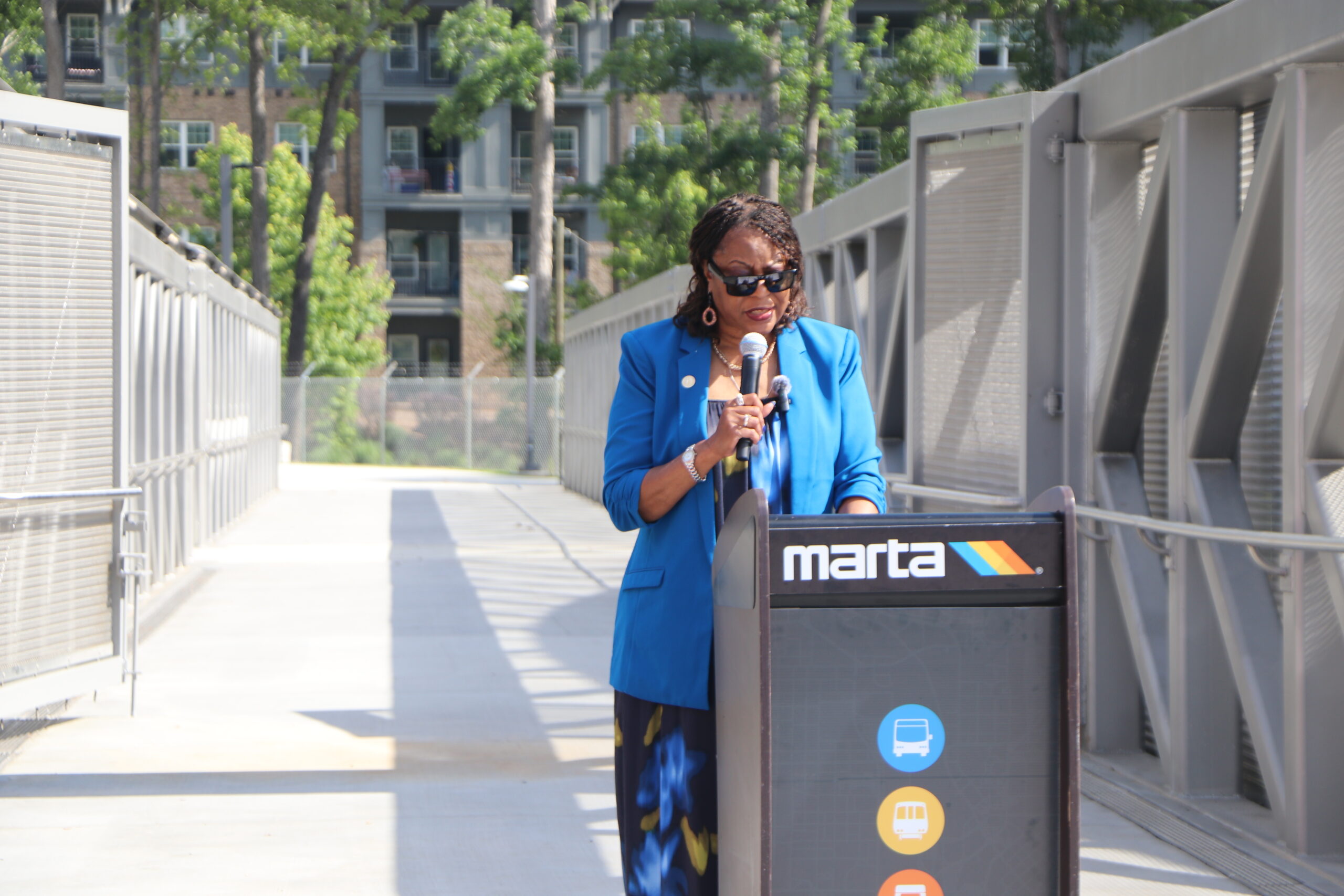
The Metropolitan Atlanta Rapid Transit Authority (MARTA) officially opened a new pedestrian bridge and renovated west plaza at Indian Creek Station on Monday, unveiling what agency leaders described as a transformational investment for eastern DeKalb County and a major milestone in MARTA’s long-term station rehabilitation program.
The ribbon-cutting ceremony celebrated the completion of the pedestrian bridge connecting Durham Park Road to the station, providing residents in nearby Manor at Indian Creek and other neighborhoods with a safer and more direct route into the transit system. The project is part of MARTA’s multi-decade Station Rehabilitation Program, which aims to modernize all 38 rail stations across the system.
“This bridge is transformational,” Interim MARTA General Manager and CEO Jonathan Hunt said during the ceremony. “It provides a safe, accessible route that significantly reduces travel time to the station and removes barriers that once made transit near to their home less convenient to use.”
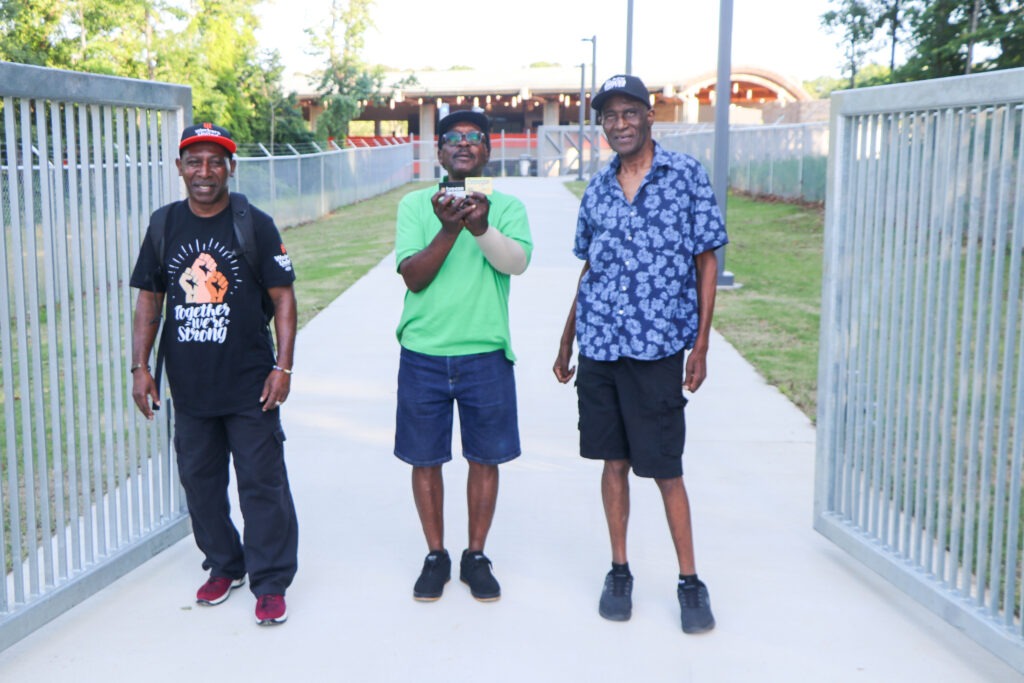
For residents of Manor at Indian Creek, the new bridge represents more than infrastructure. Terry Ross, Jerry Johnson, and Al Mitchell — all regular MARTA riders — said the bridge will shorten their daily trips to the station by 15 to 20 minutes while also making the journey significantly safer.
Indian Creek Station serves as the easternmost terminus of MARTA’s Blue Line and handles approximately 3,000 passengers each weekday, according to MARTA officials.
Hunt described the station as “one of our major stations within MARTA and into DeKalb County,” emphasizing the role public transportation plays in connecting residents to work, schools, medical appointments, and daily necessities.
Manor at Indian Creek Residents – L to R Jerry Johnson, Terry Ross & Al Mitchell
The improvements extend well beyond the new bridge.
The project included resurfacing the station’s bus loop, installing upgraded lighting throughout the station, adding new benches and trash receptacles, enhancing landscaping, modernizing fare gates, and performing deep cleaning and restoration work inside the facility. MARTA also installed new wall panels and architectural concrete features designed to improve long-term durability and reduce maintenance costs.
One of the most visible upgrades inside the station involved restoration of the station’s natural wood ceiling through dry ice cleaning.
“We’ve modernized our customer touch points,” Hunt said, noting the installation of MARTA’s new Better Breeze fare gates and updated ticket vending technology.
The west-side fare gates remain under construction and are expected to open within the next several weeks.
Pedestrian bridge to Indian Creek MARTA Station – Photo by Milton Kirby
The station rehabilitation also included improvements to the traction power substation, which powers MARTA’s third rail system. Hunt said the new exterior wall paneling was designed to be more durable, easier to maintain, and visually appealing.
DeKalb County Commissioner Mereda Davis Johnson praised the project as an important investment in mobility and quality of life for county residents.
“As commissioner of this district, I understand how important public transportation is to the residents I serve,” Davis Johnson said during the ceremony.
“MARTA is more than just a transit system. It is a vital connection to jobs, schools, medical appointments, shopping, and countless opportunities that improve the quality of life for our citizens.”
She called Indian Creek Station “a critical transportation hub” for eastern DeKalb County and said the pedestrian bridge would provide “safer and more convenient access” for residents living near Durham Park Road.
“This project represents a significant investment in infrastructure and community,” she said. “When we invest in transportation, we are investing in our people.”
Construction leaders also emphasized the local significance of the project.
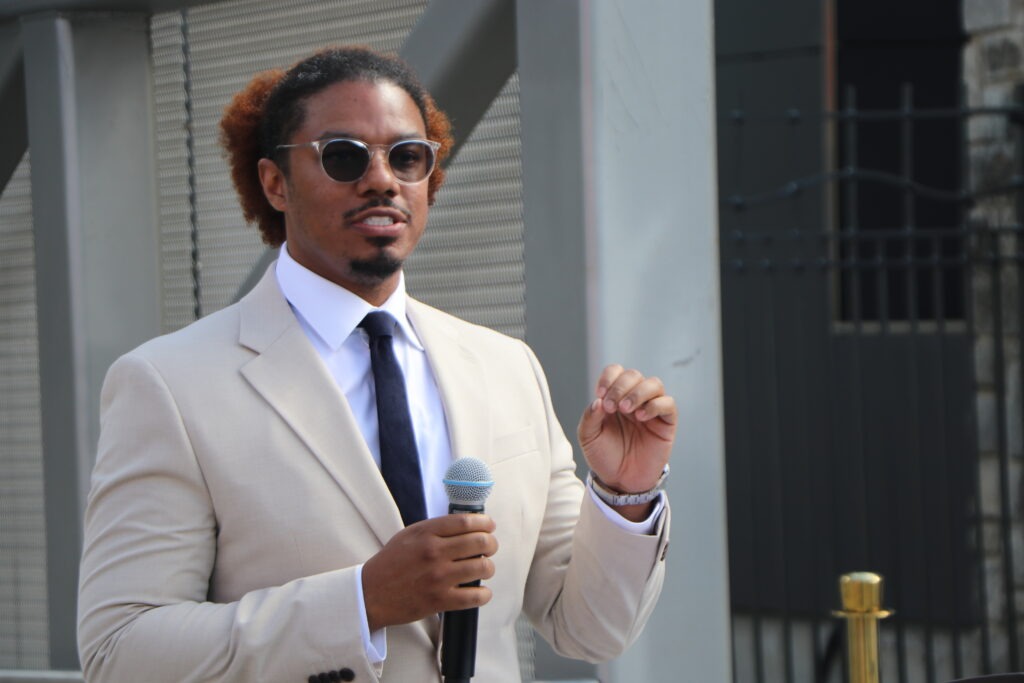
Charles Moody – Photo by Milton Kirby
Representatives from Carroll Daniel Construction Company and C.D. Moody Construction Company highlighted the collaborative effort behind the renovation and the importance of reinvesting in communities connected to MARTA’s transit system.
Charles Moody from C.D. Moody Construction noted the company’s long relationship with MARTA and reflected on growing up in DeKalb County and using Indian Creek Station throughout childhood and adulthood.
“I remember when the station was new,” he said. “I remember the ups and downs. And I love to see when we are revitalizing and putting back in our community because it means so much to someone like me who grew up here.”
The Indian Creek project represents one of MARTA’s earliest major station rehabilitation efforts under a broader modernization strategy that includes station upgrades, new rail cars, improved lighting, upgraded fare technology, and preparations for increased regional activity leading into the 2026 FIFA World Cup.
The ceremony concluded with a ribbon cutting in front of the new bridge as MARTA officials, construction partners, elected leaders, and community members gathered to celebrate the reopening.
“Thank you for staying focused on the vision for this station and taking a moment to take this station from good to great,” Hunt told MARTA employees and project partners.
Support open, independent journalism. Your contribution helps us tell the stories that matter most.
The Obama Foundation announced a free June 18 watch party on Chicago’s Midway Plaisance for the Obama Presidential Center grand opening ceremony.
By Milton Kirby | Chicago, IL | May 19, 2026
The Obama Foundation announced Tuesday that a free public watch party for the grand opening ceremony of the Obama Presidential Center will be held June 18 on Chicago’s historic Midway Plaisance, inviting residents and visitors to celebrate what organizers describe as a landmark moment for the city’s South Side.
The official watch party will feature a livestream of the Center’s Grand Opening Ceremony in a “picnic-style atmosphere,” along with an art market showcasing local vendors and community organizations.
“This is an historic day for Chicago’s South Side as we welcome the world into our neighborhood,” said Valerie Jarrett in a statement released Tuesday. “We are excited to share this celebration with our extraordinary community and city, who are such an integral part of President and Mrs. Obama’s story, and where they will always call home.”
According to the Foundation, attendees interested in joining the free event must submit a ticket request form through the Foundation’s website by May 26. Requests may include up to 4 tickets, though organizers emphasized that submitting a form does not guarantee admission due to limited space.
The watch party will open at 9 a.m. with a live DJ and pre-ceremony activities ahead of the 11 a.m. Grand Opening Ceremony. Organizers said the event will include accessible viewing areas and ADA-compliant restroom facilities.
The Foundation encourages attendees to use public transportation through the Chicago Transit Authority and Metra systems, as parking will not be available on site.
The June 18 ceremony will officially dedicate the Obama Presidential Center campus through performances, storytelling, and presentations centered on civic engagement and community leadership. The Foundation said the event will feature “global icons” and highlight its broader mission to inspire and connect communities worldwide.
The Center itself officially opens to the public on June 19. While museum tickets for opening weekend have already sold out, the remainder of the campus will remain free and open to visitors.
Located on Chicago’s South Side, the Obama Presidential Center has been envisioned as more than a traditional presidential library. Foundation leaders have described it as a civic and cultural hub designed to encourage community engagement, leadership development, and public participation.
The Foundation also announced that celebratory programming surrounding the opening will continue throughout the weekend.
Sponsors supporting the Grand Opening Ceremony and weekend events include GCM Grosvenor, Abbott, ITW, and Northern Trust.
Artificial intelligence is quietly reshaping everyday decisions through search, recommendations, education, healthcare, and work — influencing how people think, choose, trust, and navigate modern life.
By Florita Bell Griffin | Houston, TX | May 19, 2026
Artificial intelligence has spread through ordinary life in a way that often feels subtle at first and significant only later. Many people still imagine AI as a dramatic technology tied to robots, laboratories, or futuristic machines. In reality, much of its growth has been quieter than that. It has entered daily routines through systems people already use, trust, and depend upon. It appears in search engines, banking alerts, customer service platforms, navigation tools, hiring software, recommendation engines, health systems, fraud detection, school tools, and social media feeds. The expansion feels quiet because it often arrives inside familiar environments. The decision-shaping power becomes visible only after people realize how many ordinary moments are being influenced by systems they rarely see directly.
This is why AI deserves closer public attention. Its importance does not rest only in what it can generate or automate. Its importance rests in how it increasingly enters decisions that shape daily life. Some of those decisions are small. Others carry real consequence. A person may notice which information appears first in a search, which route is recommended on a map, which product is pushed forward on a shopping page, or which customer service answer appears most quickly. Those moments may seem routine. Yet they reveal something larger. AI is moving into the spaces where attention is directed, choices are framed, and outcomes are quietly influenced.
The word decision can sound formal, though daily life is filled with them. People make decisions about what to read, what to trust, where to go, what to buy, how to respond, whom to contact, what medical advice to explore, what financial action to take, how to help a child with schoolwork, or whether a message feels credible. AI now enters many of those moments before a human being fully notices its role. That is what makes the expansion quiet. The technology does not always announce itself with force. It often works through ranking, sorting, summarizing, recommending, predicting, and flagging. These functions can feel helpful because they reduce effort. They can also shape the environment in which a person makes up their mind.
Search is one of the clearest examples. In earlier digital life, people often received a page of links and had to decide what to open, compare, and trust. Increasingly, AI now offers summaries and direct responses that seem ready for immediate use. That convenience can save time, and in many cases it does. Yet the deeper change lies in what happens when the route to an answer becomes narrower and more pre-shaped. A person may accept a polished explanation without asking where it came from, what it left out, or how confidently the system should be trusted. The decision has already been influenced at the point of presentation. AI does not need to force a conclusion in order to shape one. It can simply make one path seem easier, cleaner, and more complete than the alternatives.
Consumer life works in much the same way. Recommendation systems increasingly help determine what people notice first, what they are encouraged to purchase, what entertainment feels most relevant, and what items stay in front of their attention. A shopping platform may suggest products. A streaming service may suggest films. A news feed may suggest stories. A music service may suggest songs. Each recommendation may appear small, though repeated suggestions quietly organize preference and habit over time. The person still experiences the choice as their own, yet the field of visible options has already been shaped. This is one of the most practical ways AI enters everyday decisions. It reduces friction while increasing influence.
Navigation tools provide another familiar example. Many people now rely on digital routing without much second thought. A system suggests the quickest route, warns of delays, and updates conditions in real time. That kind of assistance is useful. It saves time and can reduce stress. Yet even here, AI influences daily decisions by directing movement, prioritizing certain paths, and shaping how people understand efficiency. The recommended route becomes the obvious route. A person may follow it almost automatically because it appears objective, timely, and informed. The decision feels personal, though much of its structure has already been provided.
Workplaces are also experiencing this quiet expansion. AI now helps summarize meetings, organize documents, sort applications, draft communications, analyze patterns, monitor activity, and support customer interaction. For workers and employers, these tools may improve speed and efficiency. At the same time, they enter decisions about hiring, evaluation, workload, communication, and opportunity. A resume may be screened before a person reviews it. A meeting summary may shape what leadership remembers as most important. A productivity system may influence assumptions about effort or value. A draft created by AI may frame the first version of an idea before a human being has fully thought it through. The expansion is quiet because these shifts often occur inside routine processes, though their effects can shape careers and livelihoods.
Education presents a similar pattern. Students can use AI to explain concepts, summarize material, solve problems, and draft assignments. Teachers can use it to assist with planning, organization, and communication. Families can use it to help children with homework or research. These tools can offer genuine support, especially when confusion or time pressure is high. Yet AI also enters educational decisions in less obvious ways. It may shape what a student reads first, how a teacher approaches material, what kind of answer feels sufficient, or how much struggle a child endures before receiving help. Human learning depends on more than arriving at the answer. It depends on memory, reflection, concentration, error, correction, and the slow building of judgment. When AI reduces friction too early, it can influence the decision to stop thinking before understanding has matured.
Trust and public understanding may be the most serious areas of all. AI-generated text, images, and audio can now enter ordinary conversation with great speed and increasing realism. A message may sound authoritative. A voice may sound authentic. An image may look convincing. A video clip may appear emotionally powerful. Ordinary people often make quick decisions about what to believe based on coherence, familiarity, and presentation. AI changes that environment by making persuasive material easier to produce at scale. The decision to trust becomes more difficult because polished surfaces no longer guarantee reliable substance. This means discernment must grow stronger precisely as the informational environment grows more fluid.
Healthcare, finance, insurance, and public services also show how quietly AI enters consequential decisions. Systems may be used to flag transactions, prioritize cases, process requests, identify patterns, or support internal review. These functions may increase speed and reduce administrative burden. Yet ordinary people experience them through outcomes. A family wonders why a request moved slowly. A patient wants to know whether a case received careful attention. A worker worries whether a flagged transaction or automated rating carries lasting implications. A resident navigating a public service wants a clear path to human review if the system falls short. In each case, AI enters the decision environment before the person sees the full logic behind it.
What makes this moment so important is that the quiet expansion of AI can easily be mistaken for neutral modernization. A new feature appears. A system becomes faster. A platform feels more responsive. A workflow becomes smoother. Those changes may indeed reflect progress in some settings. Yet speed alone does not settle the deeper question. The real issue is how many areas of ordinary life are beginning to rely on systems that shape choices without always making their influence visible. Convenience can coexist with loss of transparency. Efficiency can coexist with distorted judgment. Helpfulness can coexist with subtle dependence.
That is why the public needs clear language about AI and decisions. People do not need advanced technical training to recognize what is happening. They need the confidence to ask better questions. What is this system doing. What options is it placing in front of me. What does it reward. What might it be leaving out. Where does human review still matter. How can a person challenge an outcome when the process feels distant or automated. Those are everyday questions because the consequences of AI now belong to everyday life.
The quiet expansion of AI is one of the defining changes of this era. It is quiet because it enters familiar systems rather than arriving as a single dramatic event. It expands through convenience, speed, and helpfulness. It grows through recommendation, ranking, prediction, and automation. And it matters because it increasingly shapes the decisions people make at home, at work, in school, in markets, in institutions, and in public life. The task ahead is not to reject technology. It is to remain clear-minded about where it is entering judgment, how it influences choices, and why human beings must stay awake inside the systems they now depend upon.
Bill Pickett Invitational Rodeo in Memphis showcases Black cowboy culture, Soul Country music, youth programs, and community legacy in a powerful, immersive weekend experience.
More Than a Rodeo: Inside the Enduring Legacy of the Bill Pickett Invitational Rodeo
By Milton Kirby | Atlanta, GA | May 18, 2026
There are stories we tell, and then there are stories we inherit. The Bill Pickett Invitational Rodeo (BPIR) is both. It is an enduring institution, a cultural archive, a family reunion, and a proving ground stitched together by memory, muscle, and music. Over the course of this series, I have walked the dirt, listened to the voices, watched the riders, and felt the pulse of a tradition that refuses to fade. What began as an attempt to document a rodeo became something far deeper, a journey into a tradition that continues to evolve.
The BPIR is not simply an event. It is a record of who we are, who we’ve been, and who we’re becoming. And as this chapter closes, another one opens, a road that leads from Memphis to Los Angeles, where the Soul Country Music Star National Champion will be crowned at the Soul Country Music Festival. But before we get there, we must return to the ground beneath our boots, because that is where it all begins.
I. The Rodeo That Became a Record of Us
Every rodeo has its own rhythm, but the Bill Pickett Invitational Rodeo has a heartbeat. It beats in the laughter of children seeing a horse for the first time. It beats in the confidence of champion riders who carry decades of history in their posture. It beats in the music, the dust, the hoofbeats, and the voices that echo across the arena.
When I arrived in Memphis, I expected a show. What I found was a community, a village built on heritage, discipline, and joy. As I wrote in my field notes, “A great rodeo doesn’t just happen. It’s built piece by piece, decision by decision, tradition by tradition.”
“It begins with the land beneath your boots and ends with the people who carry the tradition forward.”
Memphis, with its perfect dirt and perfect energy, became the lens through which the entire BPIR experience came into focus.
II. Bill Pickett’s Enduring Shadow
To understand the significance of the BPIR, you first have to understand the man whose name stands above the arena gates. Bill Pickett was more than a cowboy. He was an innovator, a showman, and a cultural force. His technique, bulldogging known now as Steer Wrestling, changed rodeo forever. His daring athleticism eventually earned him national recognition and a place among the legends of the Wild West.
His presence changed the way America saw Black cowboys, even when America tried not to see them at all.
But what struck me most over the course of this series is not how often Pickett’s name is spoken. It is how deeply his spirit is lived. The BPIR does not treat him as a relic. It treats him as a foundation.
His influence is not a statue or a plaque. It is the confidence of a Pee Wee rider gripping the reins. It is the precision of a champion entering the chute. It is the courage of a bullfighter stepping between danger and safety. It is the music of Soul Country Music Star artists reclaiming a sound that has always been theirs.
Bill Pickett is not remembered at the BPIR.
He is embodied.
III. The Stewardship of Valeria Howard Cunningham
Valeria Howard Cunningham – Photo by Milton Kirby
Founded in 1984 by the late Lu Vason, the rodeo was created not only to showcase Black rodeo talent, but to reclaim historical visibility for Black Western culture itself.
“At the time, Black cowboys remained largely invisible in mainstream rodeo, even though historians estimate they made up nearly one in four working cowboys in the late 19th century.”
Vason saw both the absence and the opportunity. What he built became far more than a single event.
Every enduring tradition needs a steward, someone who understands the weight of history and the necessity of evolution. For the BPIR, that steward is Valeria Howard Cunningham, Producer and CEO.
For more than four decades, the BPIR has grown into the nation’s longest running Black owned touring rodeo association, introducing generations of children to rodeo culture while creating a national gathering place rooted in heritage, competition, education, and celebration.
Valeria’s gift is balance. She protects the heritage while opening the door to the future.
Under her guidance, the BPIR has remained rooted in tradition while embracing new cultural expressions. She has preserved the Lu Vason vision without freezing it in time. She has expanded the rodeo’s reach, deepened its cultural footprint, and ensured that every stop, from Memphis to Los Angeles, carries the same intentionality, extending the BPIR’s presence into community spaces through education, outreach, and engagement.
Valeria understands something essential:
A tradition that refuses to evolve becomes a museum.
A tradition that evolves with integrity becomes a force.
The BPIR has become something larger than sport.
IV. More Than Competition
Spend enough time around the BPIR, whether in Memphis, Atlanta, or Upper Marlboro, and you begin to realize that the rodeo itself is only part of the experience. Yes, there are champions. There are bronc riders, steer wrestlers, barrel racers, bull riders, team ropers and Pee Wee competitors stepping nervously into the arena dirt for the first time.
But surrounding the competition is something larger: a traveling city of culture and community that recreates itself at every stop on the tour.
In Memphis, that ecosystem unfolded across the Agricenter grounds just as vividly as it had in Atlanta and Upper Marlboro. Food vendors sent familiar aromas drifting through the air. Families browsed apparel booths and handcrafted merchandise. Music floated between events. Children wove through crowds dressed in boots, fringe, denim, and cowboy hats, the same joyful choreography I’ve seen repeat itself city after city.
The atmosphere is always the same blend: part sporting event, part family reunion, part cultural festival. People do not come only to watch. They come to reconnect. Again and again, conversations return to memory.
Parents talk about attending the rodeo as children themselves. Grandparents introduce grandchildren to traditions they hope will outlive them. Old friends reunite beside arena rails. Riders greet former competitors like extended family.
What stands out most, no matter the city, is how deeply the rodeo lives inside people’s personal histories. For many families, the BPIR is not an occasional attraction. It is an annual tradition woven into the rhythm of life itself.
BPIR brings sparkles to the eyes of kids in Memphis, TN – photo by Milton Kirby
V. “For Kidz Sake” and the Power of Representation
Perhaps nowhere is the BPIR’s cultural mission more visible than during the “For Kidz Sake” rodeo program.
On Friday morning in Memphis, more than 4,000 children filled the arena. Some had never attended a rodeo before. Some had never touched a horse. Many were encountering the history of Black cowboys for the first time. But inside the arena, history stopped feeling distant. It became visible.
Children watched riders who looked like them compete with confidence and skill. They learned about horsemanship, agriculture, discipline, and Western heritage. They laughed, pointed, cheered, danced and asked questions.
Most importantly, they saw themselves reflected in the tradition. Representation is often discussed in abstract political language. At the BPIR, it felt tangible.
A child watching a Black cowboy ride into the arena is not simply watching entertainment. They are witnessing possibility.
That may be one of the rodeo’s greatest forms of cultural preservation: not simply remembering the past, but making sure the next generation can imagine themselves inside the future.
VI. The Dirt Matters
One of the most unexpected lessons of the series came from something most spectators never think about: the dirt itself.
Champion rider Tim Walker explained it beside the Memphis arena rail with the seriousness of a craftsman discussing tools. Proper rodeo dirt matters.
“Too dry, and it becomes dangerous. Too slick, and horses or riders can lose footing. Proper moisture and texture help animals turn, stop, and run safely while giving competitors confidence beneath their boots.”
Barrel racing – Photo by Milton Kirby
Until that moment, dirt had seemed incidental.
Instead, it revealed itself as foundational.
That realization became symbolic of the BPIR itself.
Much of what makes the rodeo work happens quietly beneath the surface.
The labor.
The planning.
The preparation.
The mentorship.
The institutional memory.
Like the arena dirt, those invisible layers support everything above them.
VII. The Guardians: Bullfighters and Barrelmen
That same principle applies to another group often overlooked by casual fans: the rodeo clowns, barrel men, and bullfighters.
Their role combines athleticism, timing, courage, and instinct.
Bullfighter’s protecting a dismounted rider – photo by Milton Kirby
“Their work is not just theatrical. It is tactical.”
Historically, rodeo clowns began primarily as entertainers. But as bull riding evolved into one of rodeo’s most dangerous events, their responsibilities transformed into something far more serious.
Today’s bullfighters routinely place themselves between riders and charging bulls, protecting competitors during the most dangerous seconds after a fall.
At the BPIR, their presence carries additional historical significance.
According to Valeria Howard Cunningham, BPIR became the first, and remains the only, traveling Black owned rodeo to feature professional arena entertainers.
Even within rodeo culture, representation matters.
The BPIR’s commitment to visibility extends beyond champions and headliners. It includes the workers, performers, and protectors whose contributions are often forgotten yet are essential to the show itself.
BPIR professional entertainer engages the audience – photo by Milton Kirby
Every role matters inside the arena. That truth mirrors the larger BPIR experience.
VIII. The Cultural Evolution: Soul Country Music Star
One of the most powerful evolutions under Valeria’s leadership is the integration of Soul Country Music Star, a showcase that blends Black country artistry with the rodeo’s vibrant atmosphere.
“It wasn’t an add on. It was a natural extension of the culture BPIR has always celebrated.”
Black country music is not new. It is foundational. It is lineage. It is the sound of migration, resilience, and rural memory. The Soul Country Music Star competition does not introduce something foreign to the rodeo; it reveals something that has always been there.
In Memphis, the artists brought grit, melody, and storytelling that echoed the same themes the rodeo embodies: resilience, heritage, and pride. Their performances were not intermissions. They were continuations, another expression of who we are.
The competition itself has also become a reflection of perseverance and artistic growth. Season One elevated Kirk Jay to the national spotlight, while Season Two crowned Nathaniel “Mr. Bow Leggs” Dansby, whose journey embodied the resilience celebrated throughout the BPIR itself.
Dansby did not win during the competition’s inaugural season. Instead, he returned. He refined his craft, sharpened his stage presence, and continued building his connection with audiences across the BPIR tour before emerging as the Season Two champion.
That reality speaks to the depth of talent within Soul Country Music Star. The difference between winning and not winning often has less to do with ability than timing, growth, and the simple fact that only one artist can ultimately claim the title each season.
Like the rodeo itself, the competition rewards endurance as much as talent.
IX. The Road to Los Angeles: Crowning the Soul Country Music Star National Champion
And now, the road leads west.
After traveling city to city alongside the Bill Pickett Invitational Rodeo, the Soul Country Music Star competition will arrive in Los Angeles in October, where one artist will be crowned the National Champion at the Soul Country Music Finals and Festival.
But the journey to Los Angeles has never been only about winning.
Over the course of the season, these artists have performed in rodeo arenas, clubs, theaters, and community spaces filled with audiences who understand the culture they carry. They have traveled long hours between cities, performed night after night, and learned how to connect not only through talent, but through storytelling, authenticity, and resilience.
Like the riders inside the arena, they have had to earn every moment.
Some arrived with polished voices. Others grew stronger with every performance. Some learned how to command a crowd for the first time. Others discovered that the competition was pushing them beyond music into something more personal: confidence, identity, and purpose.
That evolution may be the real story of Soul Country Music Star.
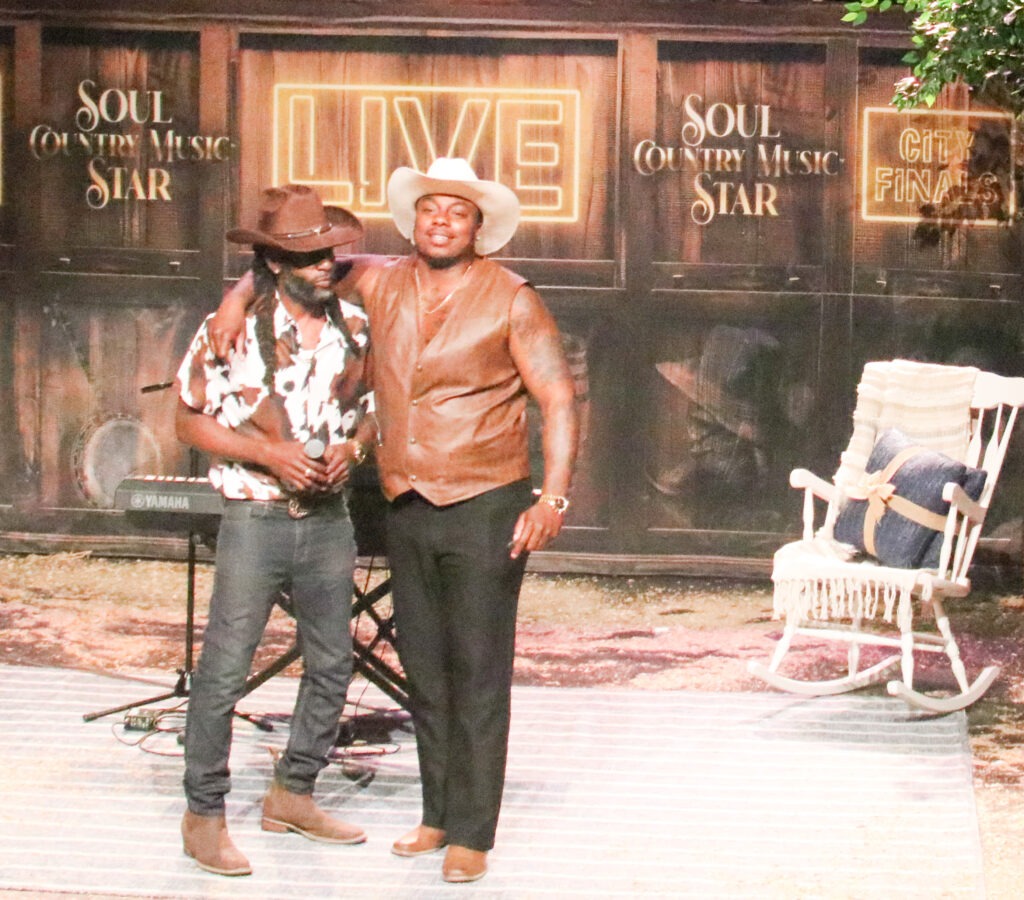
Nathaniel “Bow Leggs” Dansby & Kirk Jay – Photo by Milton Kirby
The competition has become more than a showcase for emerging Black country artists. It has become a space where artists reconnect with a musical tradition that has always belonged to them, even when history and the industry often failed to acknowledge it.
When that journey reaches its final stage in Los Angeles, the crowning of the National Champion will celebrate more than a single performance. It will honor the artists, histories, and cultural influences that helped shape country music long before many of those contributions were fully recognized.
And while one artist will leave Los Angeles with the title, the larger story will continue long after the competition ends.
Because what Soul Country Music Star is building, much like the BPIR itself, is not simply entertainment.
It is visibility. It is opportunity. It is cultural continuity carried forward by a new generation.
Los Angeles is not the end of the road.
It is the beginning of the next chapter.
X. Closing: What the Dirt Remembers
When the last rider leaves the arena and the dust settles, the dirt tells the story.
“It holds the hoofprints of bulls and horses.
It holds the footprints of Pee Wee riders and champions.”
It holds the echoes of children cheering, families laughing, and communities gathering.
It holds the legacy of Bill Pickett and the vision of those who carry his name forward.
The greatest show on dirt is not just a rodeo.
It is a cultural inheritance.
A record carried across generations.
A celebration of who we are and who we’re becoming.
The Bill Pickett Invitational Rodeo is not preserving a dead past. It is shaping the future in real time.
The road ahead will carry that legacy even further as the BPIR and SCMS seasons continue toward two major championship moments celebrating the future of Black rodeo and Soul Country music culture.
In September, the BPIR National Finals will bring top competitors from across the tour to Upper Marlboro, Maryland, where riders will compete for championship titles, prize money, trophy saddles, and honors recognizing excellence throughout the season.
Then, in October, in Los Angeles, regional competition winners from across the country will gather for the Soul Country Music Star National Finals and Music Festival, competing for the national title, $10,000 in cash and prizes, and the opportunity to tour with the BPIR during the 2027 season.
Together, these events represent more than championship weekends. They reflect a growing movement rooted in heritage, resilience, fellowship, visibility, and the next generation carrying these traditions forward.
And as I close this series, what has stood out most throughout this reporting process is how deeply the rodeo remains embedded in people’s memories, the way families organize reunions around it, the way generations return year after year, and the way even a single image, jacket, or song can reopen memories decades later.
That kind of cultural continuity is rare.
And it deserves to be documented with care.
When I began this series, I believed I was covering a rodeo.
What I found instead was an enduring institution built on resilience, creativity, family, and cultural inheritance.
More than anything else, I found evidence that this tradition continues to grow, not as a memory, but as a living force being carried into the future.
The Obama Foundation announced the Nancy Pelosi Garden Pavilion at the Obama Presidential Center, honoring Pelosi’s historic leadership ahead of the Center’s June 2026 opening.
By Milton Kirby | Chicago, IL | May 12, 2026
The Obama Foundation announced Tuesday that the Garden Pavilion at the forthcoming Obama Presidential Center will be named in honor of Nancy Pelosi, recognizing the historic legacy of the first woman to serve as Speaker of the House and her decades-long influence on American public life.
The announcement is part of a broader unveiling of named spaces throughout the Center honoring civil rights leaders, educators, activists, and public servants whose work helped shape American democracy and civic engagement.
Located along the eastern edge of the Center’s Fruit & Vegetable Garden, the Nancy Pelosi Garden Pavilion will include a garden classroom, workroom, and public restrooms designed to support community programming and public gathering spaces. The pavilion was made possible through a gift from philanthropist and business leader Ron Conway.
Former President Barack Obama praised Pelosi’s role in shaping major legislative victories during his administration, including passage of the Affordable Care Act.
“For almost four decades, Nancy Pelosi served the American people and worked to make our country better,” Obama said. “No one was more skilled at bringing people together and getting legislation passed – and I will always be grateful for her support of the Affordable Care Act.”
Obama said the pavilion will serve not only as a tribute to Pelosi’s leadership, but also as an inspiration for future generations to engage in public service and civic life.
Conway, whose donation funded the pavilion, described the Obama-Pelosi partnership as one of the most consequential political relationships in modern American history.
“In our nation’s entire history, no President and Speaker of the House got more done for our country working together than President Barack Obama and Speaker Nancy Pelosi,” Conway said.
Valerie Jarrett said Pelosi’s career reflects the broader mission of the Presidential Center to encourage civic participation and leadership across generations.
“Nancy Pelosi is one of the foremost leaders of our time,” Jarrett said. “She showed people of any party or background the power of increased involvement of women in our democracy.”
Honoring Leaders Across the Campus
The Pelosi Pavilion is one of several named spaces announced as the Obama Presidential Center prepares for its June 19, 2026 public opening.
Among the newly announced spaces is the Democracy 101 Exhibit honoring Timuel Black, the longtime Chicago educator and civil rights activist who fought segregation in schools and housing.
The Center’s auditorium will bear the name of Holocaust survivor and Nobel laureate Elie Wiesel through support from philanthropists Penny Pritzker and Dr. Bryan Traubert. Foundation leaders said the auditorium will host speakers, performances, and public discussions inspired by the arts and humanities traditions of the Obama White House.
The Fruit & Vegetable Garden itself will honor former First Lady Eleanor Roosevelt, recognizing her advocacy for civil rights and her creation of the White House Victory Garden during World War II.
Other named spaces include the John W. Rogers Jr. Exhibition Gallery honoring the founder of Ariel Investments, the “Imagine Your Impact” exhibit honoring astronaut Mae Jemison, and the Harold Washington Overlook commemorating Chicago’s first Black mayor, Harold Washington.
A Civic Campus Beyond a Museum
Located on Chicago’s South Side near Jackson Park, the Obama Presidential Center is designed as more than a traditional presidential museum. Foundation leaders describe it as a civic campus intended to bring together culture, community, education, and public engagement.
The Foundation said the named spaces are meant to honor what President Obama has often called the “giants” on whose shoulders future generations stand.
“These tributes remind every visitor that they, too, have the power to leave a lasting mark on the world,” the Foundation said.
The Obama Presidential Center officially opens to the public on June 19, 2026, with exhibitions, gardens, educational programming, and community gathering spaces aimed at inspiring the next generation of civic leaders.
Atlanta leaders celebrated the fifth Summer Youth Employment Program Signing Day as nearly 20,000 youth have now been connected to paid work opportunities citywide.
By Milton Kirby | Atlanta, GA | May 12, 2026
Standing inside the historic Fox Theatre, Atlanta leaders, business executives, educators, and students gathered Monday for Mayor Andre Dickens’ fifth annual Summer Youth Employment Program (SYEP) “Signing Day,” celebrating one of the city’s fastest-growing workforce initiatives for young people.
The event brought together employers from across Metro Atlanta who pledged to provide jobs, internships, mentorships, and career exposure opportunities for Atlanta youth this summer.
What began during the Dickens administration as an ambitious workforce initiative has now grown into a citywide program that officials say has connected nearly 20,000 young people to paid work opportunities over the last four years.
“This has truly been a group project,” Dickens told the audience. “Nearly 20,000 young people have been connected to paid work in the city of Atlanta over the past four years.”
The mayor said the city invested more than $23 million in wages through the program during that period, calling it both an economic investment and a public safety strategy.
“We are seeing what happens when we are intentional about our investments in young people,” Dickens said. “When young people are filled with opportunities and busy learning while they earn, they are committed to their future.”
The annual event also highlighted the growing role businesses, nonprofits, cultural institutions, and city agencies are playing in preparing young Atlantans for the workforce.
Representatives from organizations including the Fox Theatre and TIME2GIVE described the program as more than a summer job initiative.
“This is about exposure, readiness, innovation, confidence-building, and ultimately creating real tangible pathways into future careers,” said Dr. Charity Rowe-Marshall, executive director of TIME2GIVE.
Rowe-Marshall said youth participating through the organization’s Innovation Studio Atlanta program are introduced to technology, entrepreneurship, logistics, manufacturing, design, marketing, and artificial intelligence through hands-on projects and workforce experiences.
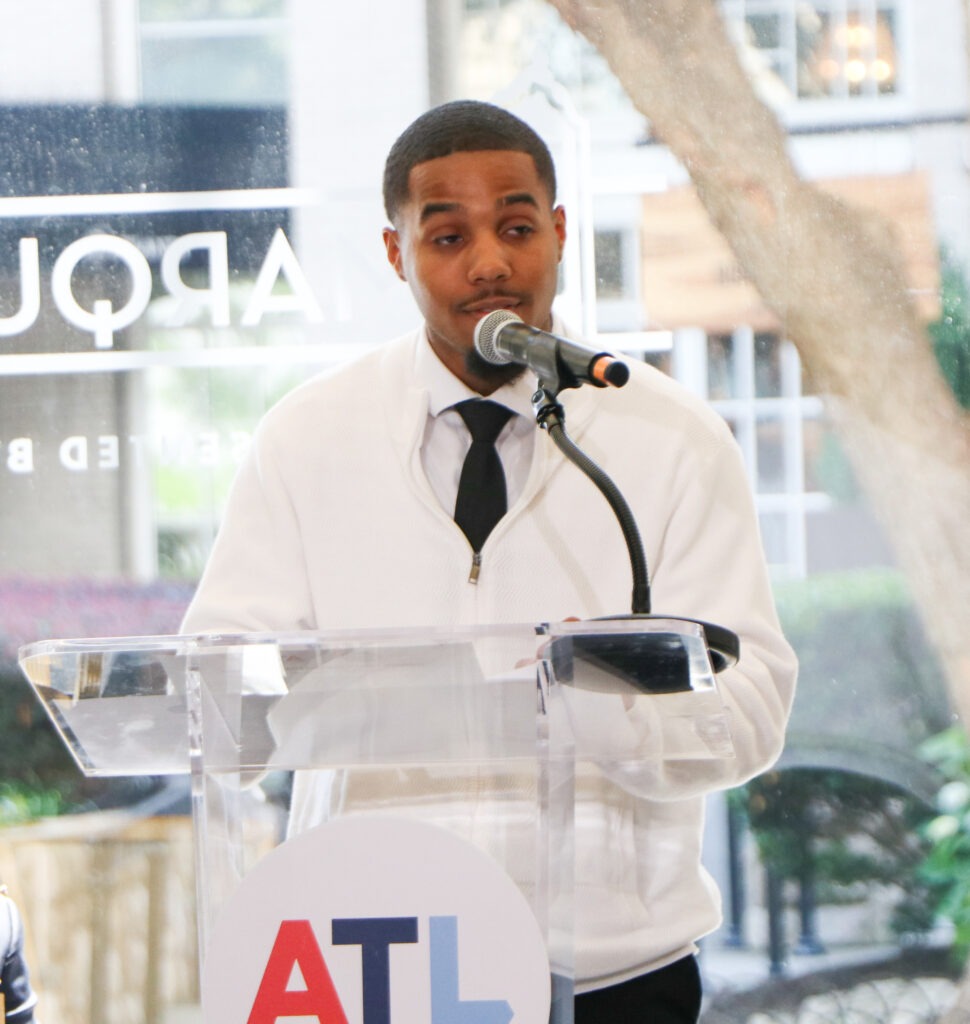
Jayla Scott Cottman – SYEP participant – Photo by Milton Kirby
“They learn by doing,” she said. “We are empowering them to be builders of technology, not just consumers.”
Officials repeatedly emphasized that the program’s impact extends far beyond temporary employment.
According to the city, nearly 6,000 youth participated in SYEP last summer alone, making it the program’s largest cohort to date. At least 38 participants transitioned from summer placements into permanent career opportunities afterward.
The program is open to Atlanta residents ages 14 to 24 and places participants in industries ranging from healthcare and government to technology, hospitality, logistics, and the arts. Participants can earn up to $15 per hour while gaining workplace training and mentorship.
Atlanta Department of Labor and Employment Services Commissioner Dr. Theresa Austin-Gibbons said the workforce landscape is changing rapidly because of automation, digital technologies, and artificial intelligence.
“That is why SYEP focuses on strong STEM program design while understanding that soft skills and technical skills must work together,” Austin-Gibbons said.
She noted that participants receive financial literacy education, workplace readiness instruction, conflict resolution training, and guidance on responsible AI usage before beginning work placements.
“Our youth are learning not just how to do a job, but how to show up and be successful,” she said.
The event also featured testimony from former participants whose careers began through the program.
Christopher Hobbs SYEP participant – Photo by Milton Kirby
Christopher Hobbs, a graduate of Florida A&M University currently completing his Master of Public Administration degree, described how his internship with the Atlanta Department of Labor and Employment Services helped shape his professional future.
“My experience with ATL DOLS gave me hope,” Hobbs said. “The skills, confidence, professionalism, exposure, and hope I gained in SYEP stayed with me long after the summer ended.”
Hobbs now works as an assistant project manager for Georgia Power.
Atlanta Police Chief Darin Schierbaum connected the program directly to the city’s broader public safety efforts, arguing that youth investment is one of the strongest crime prevention tools available.
“When we attack youth crime in our city, we don’t attack it by handcuffs,” Schierbaum said. “If we’re at the point of handcuffs, we’re standing at the point of failure.”
The chief credited initiatives like SYEP with helping Atlanta continue reductions in violent crime, shootings, and homicides over recent years.
“This is what crime fighting looks like in Atlanta,” Schierbaum said. “This is where we invest in our young people to make sure we are creating citizens.”
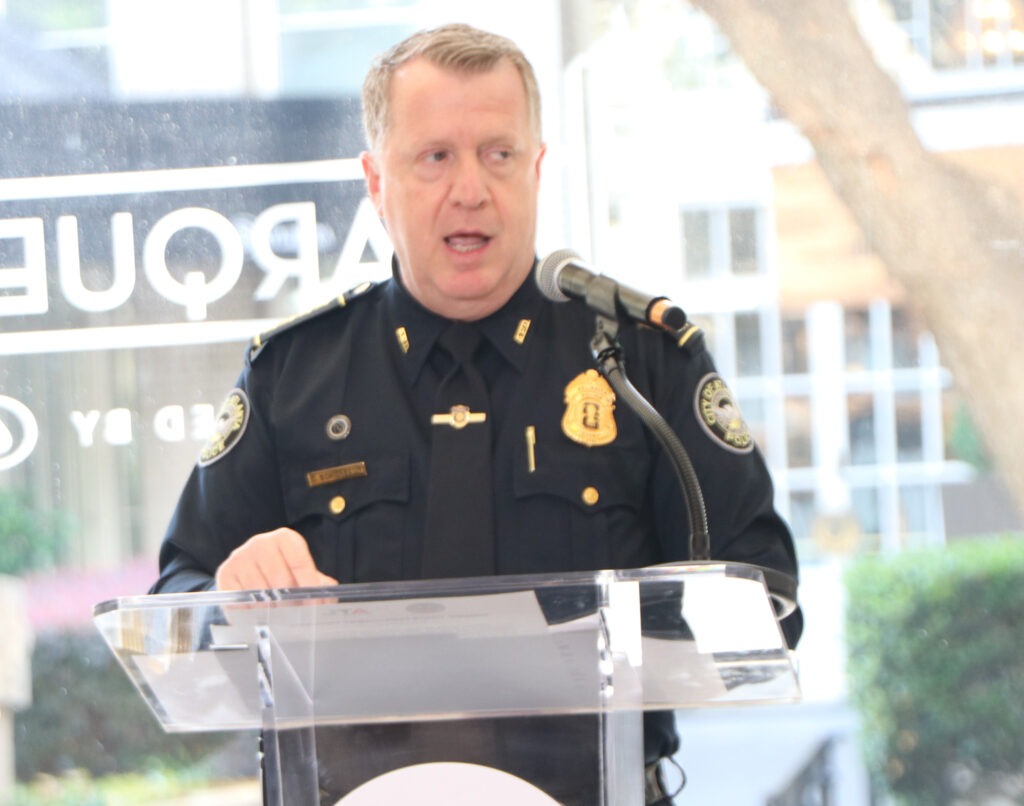
Atlanta Police Chief Darin Schierbaum – Photo by Milton Kirby
Fox Theatre CEO Allan C. Vella said the theater’s mission to “preserve and share” and “strengthen communities through theater” closely aligns with the city’s youth employment initiative.
The Fox has participated in the program for years by offering internships and professional development opportunities to students interested in arts and entertainment careers.
“When we create pathways for young people to succeed, we strengthen the future of our city,” Vella said.
The event concluded with employers signing formal pledges to support Atlanta youth this summer as city leaders encouraged additional businesses to participate.
Registration for Atlanta’s 2026 Summer Youth Employment Program remains open for both youth applicants and employer partners. Placements are expected to begin in June.
Support open, independent journalism – your contribution helps us tell the stories that matter most.
By Florita Bell Griffin | Houston, TX | May 12, 2026
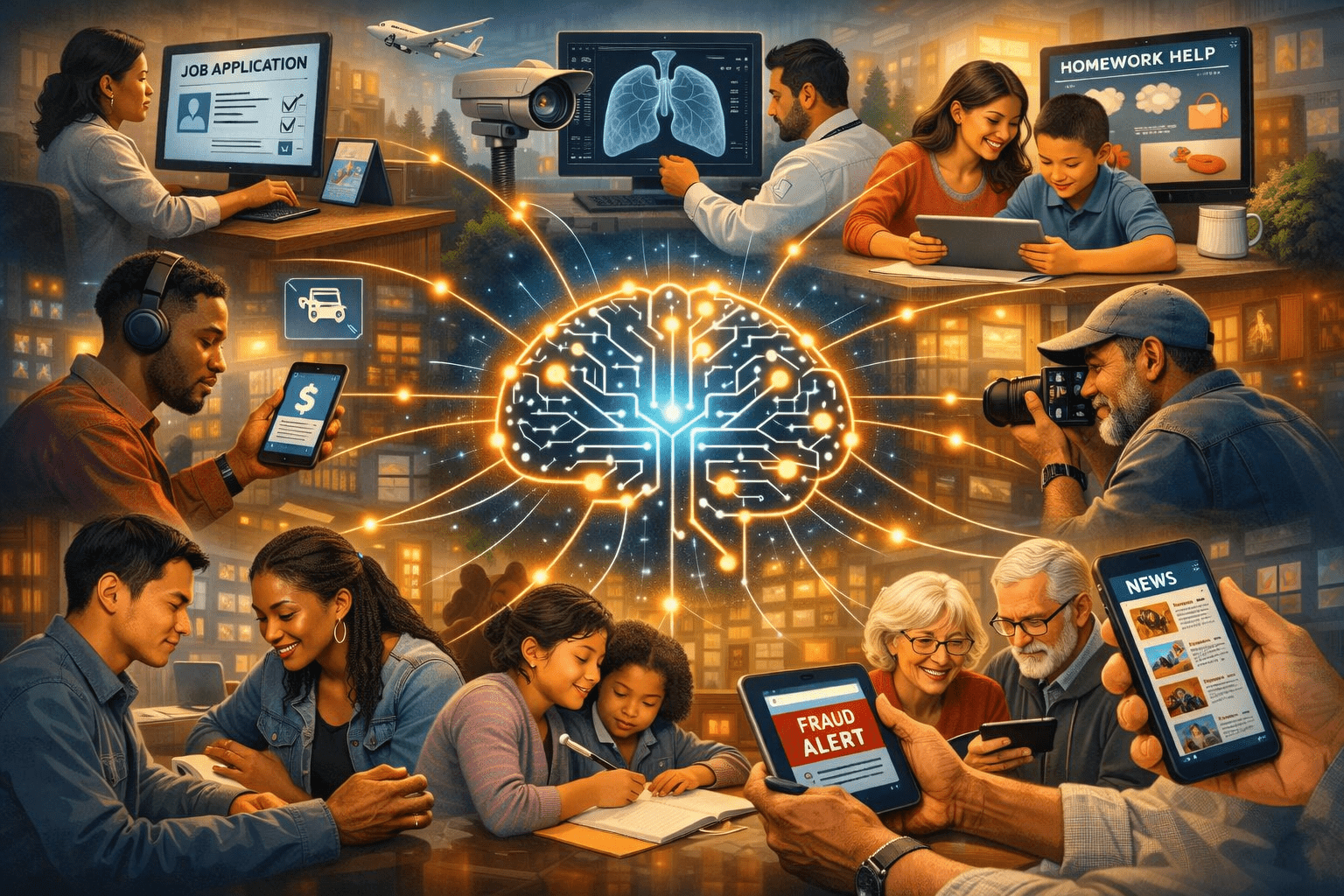
Artificial intelligence is often described in ways that make ordinary people feel as though the subject belongs to somebody else. The language can sound technical, distant, and crowded with terms that seem built for specialists rather than citizens, families, workers, or community members. Yet the truth is much simpler than the surrounding noise suggests. AI affects everyone because it has already moved into the systems that shape everyday life. It is present when people search for information, apply for jobs, use maps, interact with customer service, receive banking alerts, shop online, scroll through news feeds, help children with schoolwork, or rely on institutions to process important decisions. In that sense, AI is no longer a narrow technology topic. It has become part of the public environment.
To understand why AI affects everyone, it helps to begin with plain language rather than spectacle. At its core, AI is a type of digital system that can recognize patterns, generate responses, and perform tasks that once required more direct human effort. It can sort information, summarize documents, answer questions, draft language, recommend choices, identify likely patterns, and help automate decisions. Sometimes it does these things well. Sometimes it does them poorly. Sometimes it does them with a tone of confidence that sounds stronger than the truth beneath the answer. That is one of the most important facts ordinary people should understand. AI can be fast, helpful, persuasive, and wrong at the same time.
This matters because modern life already depends on digital systems. Most people do not wake up thinking about databases, software layers, platform architecture, or automated workflows. They wake up thinking about work, bills, appointments, transportation, school, health, family concerns, communication, and the responsibilities of the day. Yet many of those activities now pass through systems that AI influences. A search engine may decide what information appears first. A hiring platform may help sort applicants. A bank may use AI to detect unusual behavior. A school may use software that helps students or teachers generate material quickly. A hospital or insurer may use systems that help process large volumes of records and requests. The reason AI affects everyone is simple. Everyday life now moves through environments where AI is increasingly embedded.
One of the clearest effects can be seen in how people find and receive information. For years, digital search mainly involved typing a question and reviewing links. People had to choose where to click, what to read, and which sources seemed credible. AI changes that experience by offering direct summaries, generated responses, and neatly packaged answers that appear ready for immediate use. That can save time, and in many situations it does. Yet the deeper change lies in what happens to judgment when people stop tracing where information came from. A smooth answer can create the feeling of understanding before real understanding has been tested. In plain language, AI affects everyone because it changes how people come to believe they know something.
Work is another major part of the story. Many employees now use or encounter AI even when they do not think of themselves as working with advanced technology. They may see tools that draft messages, summarize notes, organize data, suggest replies, analyze documents, or support customer interactions. For some workers, this makes parts of the day easier. It can reduce repetition and save time. For others, it creates a new source of pressure. When software can produce something quickly, expectations can shift just as quickly. Employers may want more done in less time. Workers may be expected to supervise, refine, or improve machine-generated content while still carrying full responsibility for quality. In ordinary life, that means AI is changing jobs even before it fully changes job titles.
Families feel the change in a different way. Parents now raise children in a world where machines can answer questions, generate essays, solve equations, summarize reading, and imitate polished expression in seconds. That creates both opportunity and tension. AI can help explain a concept, support practice, and make some tasks more accessible. It can also make it easier for a child to move around the effort that real learning requires. Human growth still depends on patience, concentration, memory, correction, and the slow building of judgment. A polished answer is not the same thing as a developed mind. AI affects everyone because it enters the home, the classroom, and the habits children form long before adulthood.
Communication has changed as well. AI can help people write faster, sound more polished, and organize thoughts more quickly than before. That can feel useful, especially in a world where people are often tired, rushed, and carrying more than one person’s worth of daily responsibility. Yet the ease of generated language also changes what communication feels like. Words can become easier to produce than to mean. Tone can sound thoughtful without much thought behind it. Confidence can appear where knowledge is weak. Ordinary people encounter this every day now, whether they realize it or not, through emails, posts, articles, summaries, scripts, and automated responses that sound human enough to shape perception. AI affects everyone because language itself is one of the main ways people judge trust, seriousness, and intention.
Trust may be the most important part of all. People live in a time when text, images, audio, and video can all be generated or reshaped with growing ease. A realistic voice clip can spread quickly. A convincing image can circulate before anyone checks its source. A smooth explanation can be shared widely because it sounds authoritative on first contact. This changes what ordinary people must do to remain grounded. They need to ask stronger questions. Where did this come from. Who is behind it. Has it been confirmed elsewhere. Does it sound certain because it is true, or because it was designed to sound certain. AI affects everyone because it makes discernment more necessary in everyday life, not less.
Consumer life also helps explain why this technology reaches so broadly. AI influences what people are encouraged to watch, buy, read, notice, or believe matters most. Recommendation systems help shape entertainment. Shopping systems shape purchasing patterns. News feeds shape attention. Navigation tools shape movement. These systems often feel helpful because they reduce effort. Yet they also guide behavior quietly. They create the path of least resistance. Over time, repeated small influences become part of how a person’s daily life is structured. In plain language, AI affects everyone because it helps arrange the options people see and the choices that feel easiest to make.
The same is true in healthcare, finance, insurance, and public services. AI can help identify patterns, flag unusual behavior, process requests, and support administrative flow. These uses may improve speed and efficiency, and in many cases that matters. Still, real people live inside the outcomes of these systems. A patient wants to know whether a case received meaningful attention. A worker wants to know whether a decision can be challenged if a system gets it wrong. A family wants clarity if an insurer or institution relies on automated processing in ways that shape important outcomes. AI affects everyone because people do not experience technology in the abstract. They experience it through consequences.
The most important point is that people do not need technical expertise to understand what is at stake. They do not need to build AI systems in order to ask serious questions about how those systems affect ordinary life. They can ask who designed a tool, what data shaped it, what it rewards, what it overlooks, where human review enters, and how errors are corrected. They can teach children that speed is not wisdom. They can remind schools, businesses, and institutions that convenience carries responsibility. They can preserve the habit of pausing long enough to think before accepting the first polished answer that arrives.
AI in plain language is this: a powerful set of digital tools and systems that now shape how people search, work, communicate, learn, shop, trust, and move through the world. That is why this technology affects everyone. Its importance does not come from futuristic fantasy. Its importance comes from ordinary life. The more clearly people understand that, the better prepared they will be to live with AI wisely, question it responsibly, and keep human judgment at the center of the age now unfolding.
This column exists for only one purpose; that is to answer your questions on Negro League baseball history. To that end, I need your help … if you are reading this column and enjoy it and want it to continue and you do not already know everything about Negro League history … then please submit a question on any aspect of Negro League history. Your questions are the lifeblood of Shadow Ball—they shape where we go next … players, teams, events, and more – and, in so doing, you will direct where this column goes moving forward. Your participation is important and appreciated. The very existence of this column depends on you. Submit your questions to shadowball@truthseekersjournal.com.
Maria Rayburn of Salisbury, NC, posed the following question for me this week: who were the best catchers of the Negro Leagues?
Well, Maria – three are in the Hall of Fame – Josh Gibson, inducted 1972; Biz Mackey, 2006 and Lou Santop, 2006. They are the three best in that order. Roy Campanella, himself with nine years in the Negro Leagues before beginning a Hall of Fame career in the National League also needs to be named as he is arguably the second-best Negro League catcher. The interesting aspect of this answer is the next group. For me (as found in the 42 for ’21 poll) I think Quincey Trouppe, Double Duty Radcliffe, Bruce Petway, Larry Brown and Frank Duncen, Jr., deserve further consideration from the National Baseball Hall of Fame. With Campanella already in for National League play I would like to see at least three of that quintet in and all five given strong consideration.
Last week’s Shadowball Significa Question of the Week: Seven players have appeared in both a Negro League East-West Classic and a National League/American League All Star game, six of them have been inducted in the Baseball Hall of Fame. Name the 7th who is not inducted? … Kevin D. Johnson, of Broken Arrow, OK, was the first to correctly name Jim Gilliam, who appeared in the 1948 East-West Classic representing the Baltimore Elite Giants and the AL/NL All Star game in both 1956, as a Brooklyn Dodger, and 1959, as a Los Angeles Dodger. The other six appearing in both All-Star games include: Ernie Banks, Roy Campanella, Larry Doby, Minnie Minoso, Jackie Robinson, and Satchel Paige.
The Shadowball Significa Question of the Week: What Negro League pitcher, who participated in the Negro National League playoff in 1935, had a son who won two World Series games several decades later. Name this father/son pair. Send your answer and any comments on the Negro Leagues to shadowball@truthseekersjournal.com or Shadow Ball, 3904 N Druid Hills Rd, Ste 179, Decatur, GA 30033
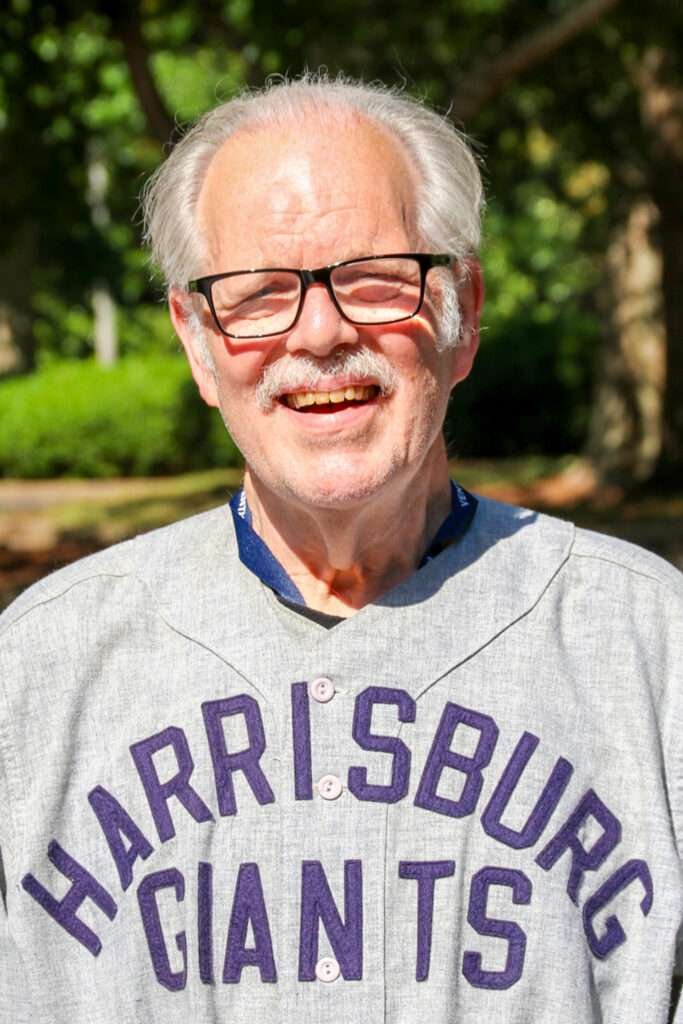
Ted Knorr
Ted Knorr is a respected Negro League baseball historian, a longtime member of the Society for American Baseball Research’s Negro League Committee, and the founder of the Jerry Malloy Negro League Conference as well as several Negro League Commemorative Nights in central Pennsylvania.
Beyond his research and organizing work, Ted is frequently invited to speak at sporting events, community programs, family gatherings, and educational forums, where he brings Negro League history to life. His deep knowledge of the players, teams, and cultural impact of Black baseball has made him a trusted voice for audiences who want to understand the legacy and significance of the Negro Leagues.
Support open, independent journalism—your contribution helps us tell the stories that matter most.
Charlotte Mayor Vi Lyles announces a June 30 resignation months after reelection, citing family priorities and closing a historic five‑term tenure as the city’s first Black female mayor.
By Milton Kirby | Charlotte, NC | May 11, 2026
Vi Lyles, the first Black woman ever elected mayor of Charlotte, will resign from office effective June 30, ending a historic political career that helped reshape leadership in one of America’s fastest‑growing cities.
The announcement comes only months after Lyles won reelection in 2025 by a wide margin a victory she celebrated as a mandate to continue expanding affordable housing, improving public safety, and investing in infrastructure. In July 2025, she told supporters, “Charlotte is a city of opportunity… there is still work to do and I’m ready to keep doing it.”
But on May 7, 2026, Lyles said her priorities had shifted.
“Serving as Charlotte’s mayor has been the honor of my life,” she said. “Now, it is time for the next phase of my life, to spend more time with my grandchildren and for someone new to lead us forward.”
Her resignation closes a remarkable public service career spanning more than three decades — one that began long before she stepped into the mayor’s office.
A Historic Rise: The 2017 Breakthrough
For many Charlotte residents, Lyles’ defining moment came on Election Day 2017.
That year, she defeated Republican City Council member Kenny Smith to become Charlotte’s first African American female mayor a milestone that carried deep symbolic weight in a Southern city still grappling with issues of race, growth, and representation.
Her victory came just one year after the 2016 police shooting of Keith Lamont Scott, an event that sparked days of protest and placed Charlotte under national scrutiny. Against that backdrop, Lyles’ election represented both continuity and change a veteran administrator promising stability while breaking one of the city’s highest political barriers.
In her 2017 victory speech, she told supporters:
“You’ve proven that we are a city of opportunity and inclusiveness. You’ve proven a woman whose father didn’t graduate from high school can become this city’s first female African American mayor.”
It was a moment that signaled a new era in Charlotte politics.
A Tenure Defined by Growth, Equity, and Infrastructure
During her five terms, Charlotte experienced rapid population growth, major corporate relocations, and significant public investment. Lyles championed:
Affordable housing initiatives
Public transit expansion, including a voter‑approved sales tax for infrastructure
Racial equity programs
Violence prevention and public safety reforms
Fiscal stability and long‑term planning
She frequently described Charlotte as “a city of opportunity,” a theme that shaped her policy agenda and her public messaging.
“I am very proud of my record as mayor,” she said, “but I also firmly believe that true leadership includes knowing when it is time to let the next generation of leaders take over.”
A Sudden Transition and a City at a Crossroads
Under North Carolina law, the Charlotte City Council will appoint an interim mayor to serve the remainder of Lyles’ term. The appointee must be a Democrat and reside within Charlotte city limits, but does not have to be a current council member.
The process could trigger a broader reshuffling of city leadership. If a sitting council member is appointed mayor, the council must also fill that vacant seat.
Political speculation has already intensified:
Former Mayor Jennifer Roberts has publicly stated she feels “called” to serve as interim mayor and pledged not to run in 2027.
Councilmember Dante Anderson has urged the council to consider an outsider familiar with city government rather than selecting one of its own members.
At least five current council members are rumored to be considering mayoral campaigns in 2027.
Anderson, who grew up in Charlotte public housing, said she is not seeking the interim appointment but believes the city should choose someone who can “keep the seat warm” without influencing the 2027 race.
“There has already been some politics in play during this term,” she said.
Lyles, for her part, said she does not plan to endorse a successor immediately.
“As in all things politics, I am sure there will be speculation as to why I am making this decision now,” she said. “Simply put, I am going to spend time with my grandchildren.”
A Legacy That Will Shape Charlotte for Decades
At 73, Vi Lyles leaves office as one of the most consequential figures in modern Charlotte politics – a leader whose rise reflected the city’s changing demographics and whose tenure helped define its trajectory during a period of extraordinary growth.
Her imprint is visible across the city: in new housing developments, expanded transit plans, strengthened fiscal policy, and a renewed focus on equity.
And her 2017 breakthrough remains a defining moment in Charlotte’s civic identity – a reminder of what representation can mean in a city still evolving.
As Charlotte prepares for a new chapter, Lyles’ legacy endures: a symbol of opportunity, a steward of growth, and a leader who believed deeply in the city she served.
Truth Seekers Journal thrives because of readers like you. Join us in sustaining independent voices.
Jay Freeman, a Mississippi‑raised country soul artist, blends blues roots, working‑class grit, and rising talent as he prepares for his return to the Soul Country Music Star stage.
By Milton Kirby | Truth Seekers Journal | Artis Profile Series
Man With No Hometown, A Voice With No Boundaries
Jay Freeman likes to say he’s “the man with no hometown.” It’s not a gimmick — it’s a truth shaped by movement, memory, and the Mississippi soil that raised him in pieces. Born in Vicksburg, Mississippi, with family roots stretching through the heart of the Delta, Jay grew up in a world where history wasn’t something you read — it was something you lived.
“I moved around a lot,” he said. “Mississippi played a major role in my upbringing and my influences.”
Those influences the blues, the juke joints, the working‑class grind, the echoes of Civil War history, and the voices of the elders who called him “Free” all stitched themselves into the artist he is becoming.
A Runner‑Up With a Winner’s Mindset
At the 2026 Soul Country Music Star Awards regional competition in Memphis, TN, Jay walked away as runner‑up. But he didn’t walk away defeated.
“I actually felt good,” he said. “Even in losing, I was noticeably improved.”
What makes that statement remarkable is what came next: From last year’s competition until this year’s, Jay picked up his guitar only six times. Not because he didn’t care but because he works 55 to 57 hours a week as a blue‑collar laborer.
“I struggle with balancing work life and the arts,” he admitted. “A lot of artists don’t like to talk about it, but bills have to be paid.”
Still, the stage called him back. And when he stepped onto it, the audience noticed the growth. The judges noticed it. And Jay noticed it in himself.
A New Plan, A New Discipline
Now, he’s done with the excuses. He’s done with the hesitation. He’s done with the fear of being original.
“The confidence of being original that’s what I’m working on,” he said. “I relied too much on backing tracks. I should’ve shown them I can really play.”
Because yes — Jay can play. He started learning guitar in 2020 during quarantine, sitting alone for hours, teaching himself chords and progressions.
His first song? A Charlie Pride classic.
“His baritone was close to mine,” Jay said. “It made it easy to learn.” He studied Pride’s phrasing, tone, and emotional delivery until people started asking him, “Did you write that?” That’s when he knew he was onto something.
Choosing Songs, Choosing Identity
For the competition, Jay chose songs that reflected both his roots and his range. The first was a crowd‑pleaser, something familiar, something that honored where he came from. The second was a chart‑topping hit that showed he could move with the times.
The third song – the one he wanted most – didn’t make it to the stage. His tuning was off. The backing track didn’t line up. And he refused to deliver anything less than his best.
That moment taught him something: He can’t rely on tracks. He has to rely on himself.
Lessons From the Judges
Jay spoke with the judges after the show including Kirk Jay and others who know the grind of rising from obscurity.
“They gave me real advice,” he said. “Background stories, how they got over the curve. They told me what I did well and what I needed to work on.”
One judge pulled him aside and told him she was proud of him, proud of his tone, proud of his courage, proud of his presence.
That stayed with him.
Prepared, Analytical, and Hungry
Jay doesn’t answer questions like someone guessing his way through a dream. He answers like someone who has studied himself. Someone who has replayed every moment. Someone who is building a blueprint.
“I analyze everything,” he said. “Every action, every consequence. I think through all the possibilities.”
That mindset is going to carry him far.
What’s Next for Jay Freeman?
He isn’t chasing every contest – but he’s open. He’s researching. He’s preparing. He’s sharpening his voice, his guitar work, and his stage presence.
“I came a lot stronger this year than last year,” he said. “And people noticed.”
He plans to keep that momentum going.
The Juke Joint Spirit
Jay has already played at the historic Blue Front Cafe a juke joint‑style venue outside Bentona, Mississippi, where blues legends once sharpened their craft.
“I’m at home in juke joints,” he said. “That’s my space.”
He’s also played in local spots where the crowd didn’t expect a young Black man to sing country — until he opened his mouth and changed the room.
“I love when people say, ‘I knew him when he first started,’” he said. “That’s a good feeling.”
The Man Behind the Music
Jay has lived many lives:
factory worker
blue‑collar laborer
artist finding his way
Each life gave him something; discipline, empathy, perspective. He carries all of it into his music.
“I put it into a beautiful light,” he said. “So people can understand what I see.”
A Call to the Community
Jay is ready for more stages. More juke joints. More night spots. More opportunities to grow.
If you know a venue looking for a rising country‑soul artist with grit, heart, and a voice shaped by Mississippi’s red clay and working‑class truth – Jay Freeman is ready.
Closing Note
Jay may call himself “the man with no hometown,” but his story is unmistakably rooted — in Mississippi, in resilience, in the blues, in country, and in the quiet determination of a man who knows he’s just getting started.
Next year’s Soul Country Music Star Awards won’t catch him unprepared. He’s coming back. He’s coming stronger. And he’s coming with something to prove.
A 30‑year sisterhood of praise dancers reflects on motherhood, faith, survival, and the unbreakable bond that carried them through aneurysms, loss, miracles, and life’s choreography.
A Mother’s Day Story of Seven Women, Thirty Years, and an Unbreakable Circle.
By Milton Kirby | Atlanta, GA | May 10, 2026
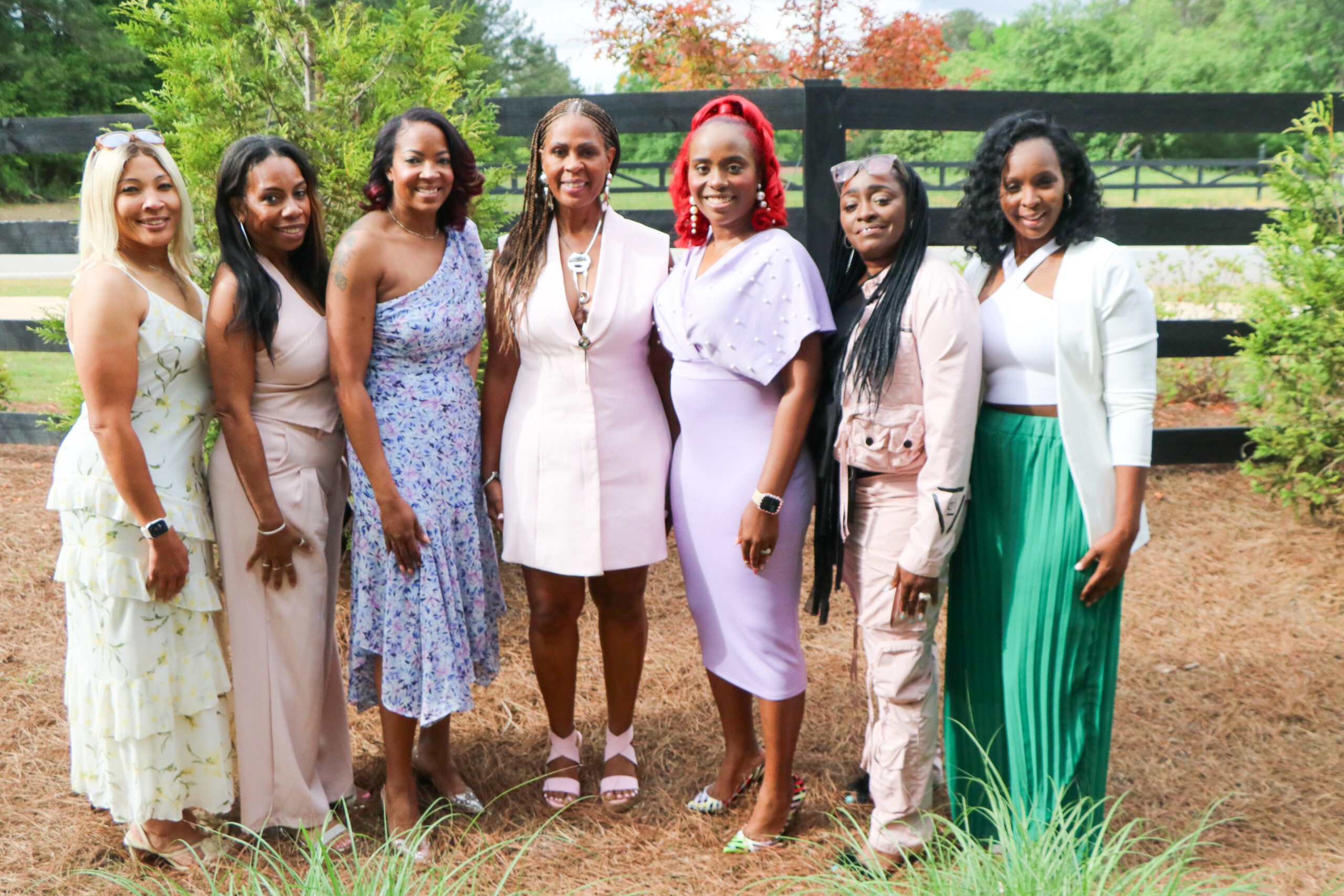
For nearly three decades, seven women along with others who have been part of their journey have been moving in harmony, not just across the sanctuary floor but through the unpredictable choreography of life. What began as a praise dance ministry in their youth has become something far deeper: a sisterhood stitched together by motherhood, faith, and the kind of love that shows up when life hits hard.
When we sat down with them recently – Tracey, Shelly, Aundrea, Geraldine, Tonya, Cassandra, and Robyn the laughter came first. The kind that fills a room before anyone speaks. The kind that tells you these women have lived a lot of life together.
“It was a sisterhood from the beginning,” Tracey said, her voice warm with memory.
Shelly nodded. “We watched each other’s kids grow from infants to young adults graduating from college.”
Three decades of birthdays, recitals, heartbreaks, promotions, and prayers – all witnessed in real time.
Aundrea added that they had danced with many people over the years, but the seven women in the room had danced with each other the longest. Their bond wasn’t accidental. It was chosen, nurtured, and protected.
And then there was Geraldine, whose first introduction to Tracey was a playful smack on the butt.
Tracey didn’t think it was real. “Oh, it was real,” Geraldine said, and the room erupted.
The Storm That Tested Them
Their sisterhood has been tested, too – none more than in 2019, when Tonya’s life changed in an instant.
She remembers the moment vividly: “It felt like a sledgehammer hit me in the back of the head.”
It was an aneurysm. For three days, she went untreated. Her mother noticed she was lethargic. By the time she reached the hospital, she was close to death.
The women around her grew quiet as she spoke even after all these years, the memory still trembles.
Tonya gets chills thinking about how they rallied: They brought food. They brought money. They brought love. They brought themselves.
The consensus was that Cassandra was the most animated – the one who sprang into action, the one who refused to let fear win.
Shelly grew emotional recalling those days. Tonya’s sister acted as gatekeeper, limiting visitors. Shelly coped the only way she knew how: “I prayed. And I talked to her like she was right there in the house with me.”
It took Tonya two years to recover.
Tracey calls her “my Miracle Friend.” And the room agreed.
The Complex Choreography of Mothering
The women’s lives outside the sanctuary are as diverse as their personalities. Aundrea, who joined the ministry at just 17, is now 48 and navigating the beautiful, often chaotic waters of raising two daughters, Summer and Winter. She sees her own strength reflected in them one shy, one outgoing, both formidable.
Robyn, one of the youngest in the group, carries her own deep well of experience. She lost her father and husband three years ago, and her mother a few years before that. She is no stranger to grief, but she is also no stranger to testimony.
“I share my bad,” she said. Not for attention, but for healing. Then she quoted Revelation 12:11 because for her, scripture is not just comfort; it is instruction.
Yet, the path to motherhood wasn’t a straight line for everyone. Aundrea, now a successful corporate executive, speaks with raw honesty about the “private storms” she weathered, including five miscarriages. She recalls the harrowing experience of being at work, mentoring a subordinate, while physically enduring the loss of a pregnancy in real-time.
Her first instinct was to look inward, not upward.
Robyn gently added, “When you’re a believer, you trust God – and you question your own actions.”
It was a moment of shared understanding – the kind only Black women can articulate to each other without explanation.
Their answers were as varied as their personalities.
For Geraldine, motherhood is an extension of the sanctuary – it is a ministry. She views her children as a “stewardship,” a holy responsibility placed in her hands by God.
Shelly, the day is “just another day,” a reflection of her own mother’s humble approach to the holiday.
Cassandra sees it as a day of relaxation and reflection.
Robyn finds joy in in the simple observation of her children becoming the people they were destined to be.
When asked what she wishes someone had told her before she became a mother, Tracey smiled: “That I might experience some of the things I put my own mom through.”
And when the question of “Who’s the troublemaker?” came up, the answer was unanimous: Geraldine. No debate. No hesitation. Just laughter.
A Circle That Holds
Even when they aren’t in the same room, even for Aundrea, who admits she sometimes relies on social media to keep tabs on the group the thread remains taut. They have survived aneurysms, miscarriages, grief, and the exhausting beauty of raising children. They have lived their testimonies out loud, sometimes quoting scripture, sometimes letting the reference alone speak for itself — trusting that anyone who needs to look it up will find something meant just for them.
What began as a simple praise dance ministry has evolved into a sacred lifeline. On this Mother’s Day, Tracey, Shelly, Aundrea, Geraldine, Tonya, Cassandra, and Robyn remind us that motherhood isn’t just a biological destiny. It is a communal act. It is the story of the women who raise us, the women who raise our children with us, and the women who refuse to let go of our hands when the music stops. They are still in harmony. They are still in step. And they are still dancing.
Truth Seekers Journal thrives because of readers like you. Join us in sustaining independent voices.
DeKalb CEO Lorraine Cochran-Johnson outlines $4.7B infrastructure plan, housing initiatives, WRAP assistance program, and crime reductions as county addresses growth and affordability challenges.
By Milton Kirby | Doraville, GA | May 8, 2026
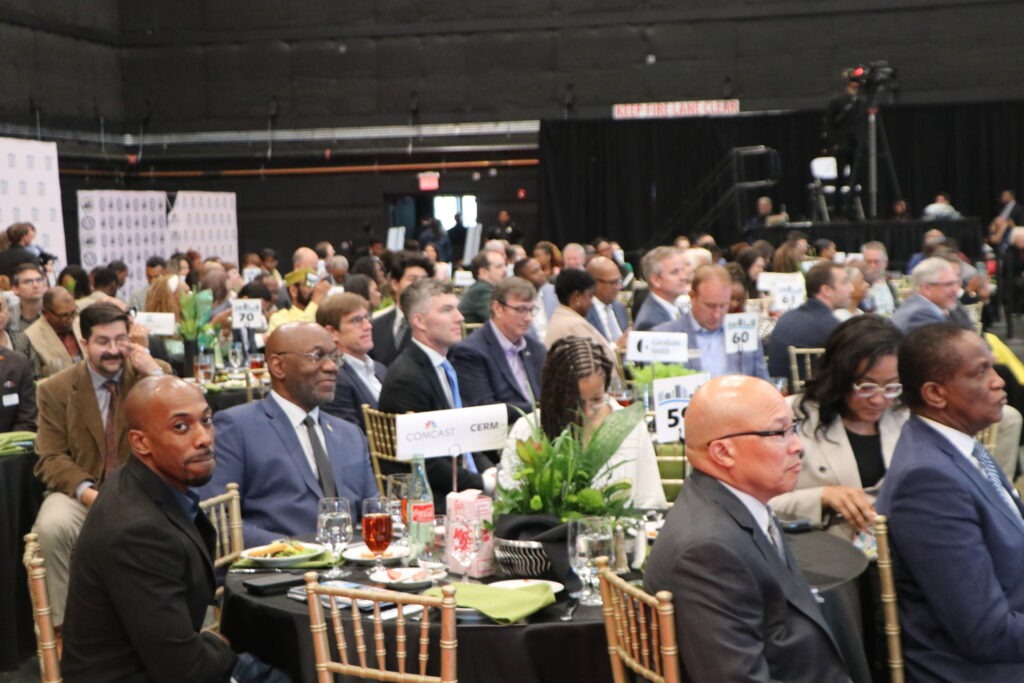
More than 800 business leaders, elected officials, and residents gathered at Assembly Studios on Thursday as Lorraine Cochran-Johnson delivered her annual State of the County address an event that underscored both the scale of DeKalb’s ambitions and the complexity of its challenges.
Hosted by the Council for Quality Growth in partnership with DeKalb County Government and the DeKalb Chamber of Commerce, the annual address serves as a key forum connecting the county’s business community with public leadership and regional stakeholders.
Before taking the stage, Cochran-Johnson was introduced through a short, high-energy video inspired by the film Mission: Impossible, featuring the CEO and members of her cabinet as part of a team navigating challenges and “completing the mission” for DeKalb County. The presentation reinforced the administration’s message that progress is intentional, coordinated, and action-driven.
“You cannot build a thriving county on a failing system,”
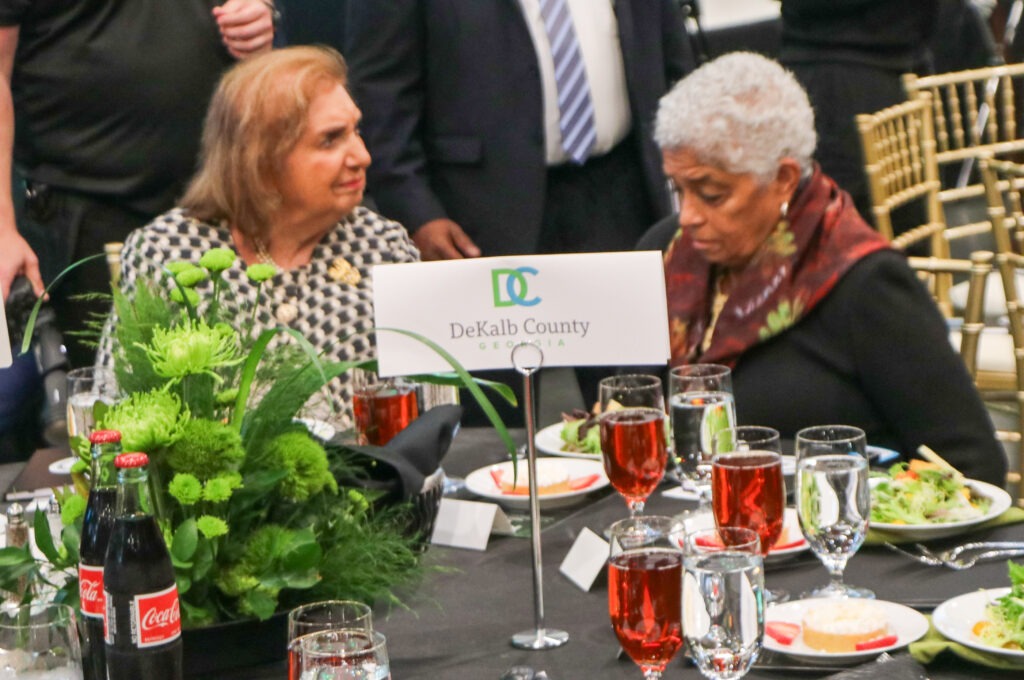
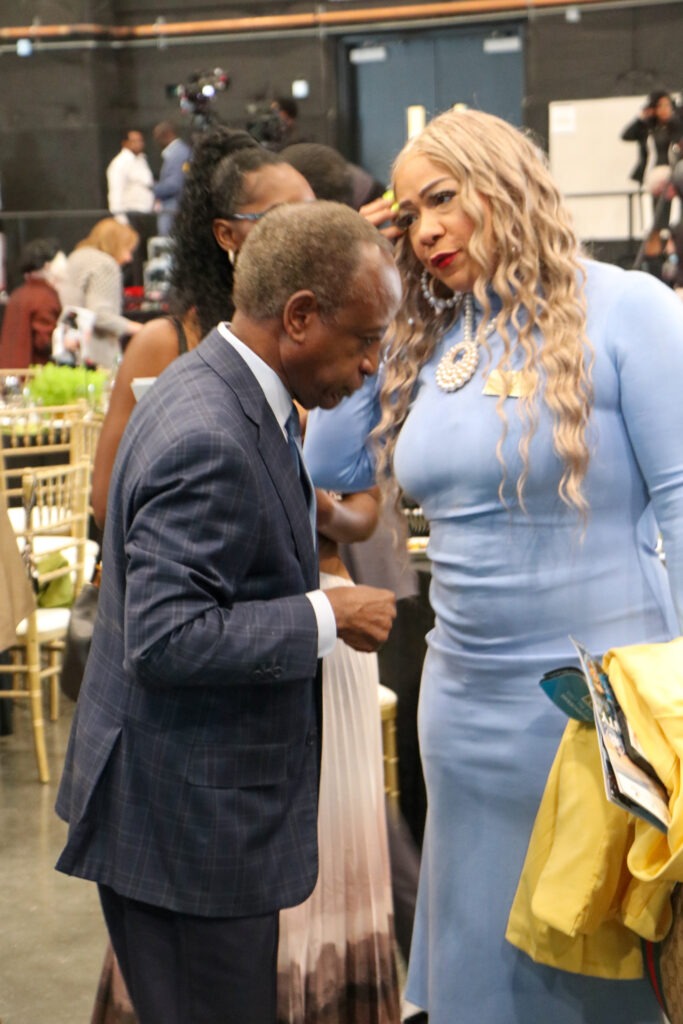
Former DeKalb CEO Liane Levetan & Former Atlanta Mayor Shirley Franklin – Photo by Milton Kirby
Cochran-Johnson also paused to recognize the legacy of those who previously led the county, acknowledging former CEOs including Manuel Maloof, Liane Levetan, Vernon Jones, Burrell Ellis, Lee May, and Michael Thurmond—a moment that underscored continuity as the county charts its next phase.
In her remarks, Cochran-Johnson outlined an aggressive agenda centered on public safety, infrastructure, housing, and government reform while acknowledging the work ahead.
“We are not just reimagining what’s possible – we are delivering,” she said.
Crime Down as Public Safety Investments Expand
Comcast & CERM Teams – Photo by Milton Kirby
Public safety remains a cornerstone of the administration’s strategy.
DeKalb County has invested more than $30 million into crime prevention through its “Digital Shield Initiative,” which includes a Real-Time Crime Center, drone first responder program, and expanded camera integration.
According to the county:
Police staffing has increased more than 300 percent since Cochran-Johnson took office
Violent crime is down 11 percent
Overall crime has dropped 25 percent
The county has also focused resources on high-crime areas, often working in partnership with local businesses to deploy surveillance technology and targeted enforcement.
“Public safety affects economic development, property values, and quality of life,” Cochran-Johnson said.
Historic $4.7 Billion Infrastructure Investment
The CEO announced a $4.7 billion water infrastructure plan—the largest in county history—aimed at addressing years of underinvestment.
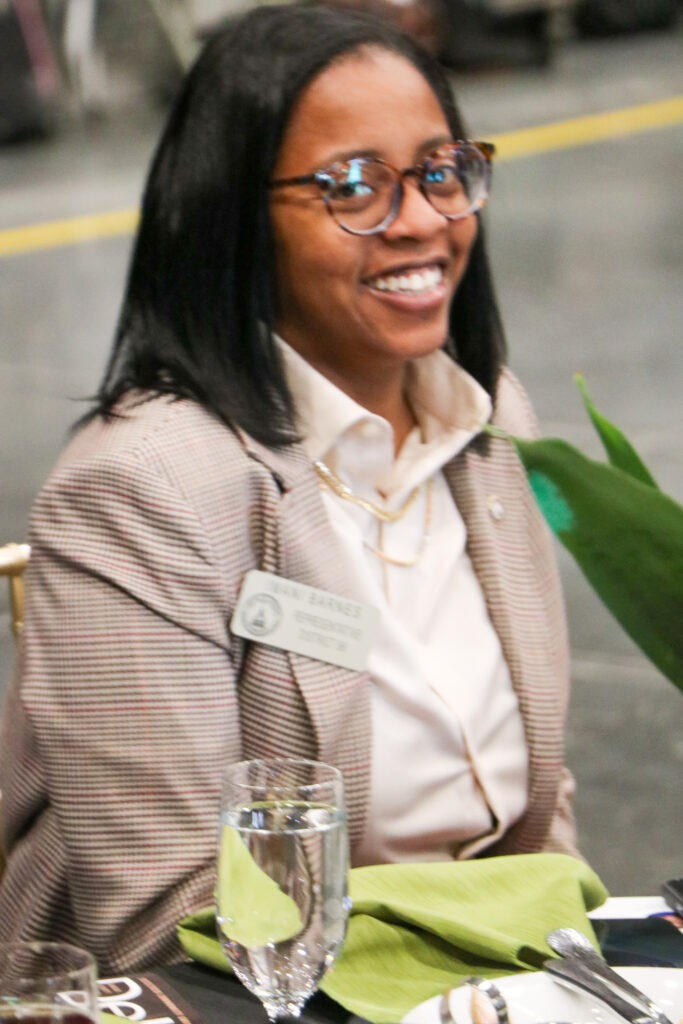
Imani Barnes GA House District 86 – Photo by Milton Kirby
Cochran-Johnson acknowledged that raising water rates to fund improvements was a difficult but necessary decision.
“You cannot build a thriving county on a failing system,” she said.
To support residents, the county launched the Water Rate Assistance Program (WRAP) in partnership with the Urban League of Greater Atlanta, providing relief to households struggling with rising water costs. The county also conducted outreach to more than 250,000 residents.
Officials say the investment will stabilize the system while supporting long-term growth.
Housing Crisis Drives New Policy Direction
Housing affordability has emerged as one of the most urgent challenges facing the county.
A study cited during the address found that a minimum-wage worker in metro Atlanta would need to work 140 hours per week to afford a two-bedroom apartment.
In response, DeKalb County has elevated housing as a central policy priority under Dr. Alan Ferguson Sr., the county’s first Chief Housing Officer.
Key initiatives include:
Expansion and preservation of affordable housing
Activation of underutilized land
Programs to prevent displacement and homelessness
Through a partnership with Neighborhood Assistance Corporation of America, the county has processed more than 7,000 applications and helped create over 900 new homeowners.
Additional actions include:
A 400-bed emergency shelter
A 60-unit rapid housing initiative
In July 2025, the DeKalb County Board of Commissioners approved an $8 million investment to secure 60 units at the Park 500 apartment complex, expanding the county’s capacity to provide stable housing.
“Housing will not be an afterthought in DeKalb County,” Cochran-Johnson said.
Economic Development Focused on Equity
County leaders say economic development must reach every part of DeKalb not just high-performing areas.
Former DeKalb CEO Michael Thurmond & Dr Alieka Anderson-Henry, Chairwoman Clayton County Board of Commissioners – Photo by Milton Kirby
Recent actions include:
Strategic purchase of county property at 4380 Memorial Drive in Decatur, now serving as a central government and tax operations hub
Investment in key redevelopment corridors
Support for mixed-use projects like Kensington Crossing
The acquisition of the Memorial Drive site marks a shift toward long-term asset ownership after decades of leasing, positioning the county to shape future development along a key corridor.
Cochran-Johnson emphasized that DeKalb’s assets including a strong workforce, proximity to Hartsfield-Jackson Atlanta International Airport, and the presence of DeKalb-Peachtree Airport one of the nation’s busiest general aviation airports along with nine colleges and universities, position the county for continued growth.
Blight Removal and Quality of Life Improvements
Efforts to improve neighborhood conditions are accelerating.
The county reports:
More than 30,000 illegally dumped tires removed
Over 240 blighted properties demolished
Expanded code enforcement operations, now averaging more than 200 cases per month
Road resurfacing, park investments, and extended library hours are also part of broader quality-of-life improvements.
Modernizing Government Operations
Cochran-Johnson said internal reform is critical to sustaining progress.
The county has:
Conducted a comprehensive operational assessment
Implemented performance dashboards across departments
Invested in upgraded 911 systems and enterprise technology
Officials also rebuilt the county’s website, eliminating more than 14,000 outdated pages to improve accessibility and transparency.
“You cannot deliver exceptional results without strong systems,” she said.
What Stakeholders Want Next
DeKalb Chamber Board Member Glenn Wallace – Photo by Milton Kirby
While many attendees expressed support for the county’s direction, conversations at the event revealed areas where residents and stakeholders want more clarity.
Glenn Wallace, a business stakeholder, said small business growth and homelessness remain top concerns.
“I would like to hear more about how we’re going to help small businesses,” Wallace said.
Other attendees pointed to emerging issues such as data center development and infrastructure.
Herb McCoy, a DeKalb resident and former library board member, said he wants a clearer understanding of those developments.
“I’d like to get a better sense of where the county stands,” McCoy said.
At the same time, McCoy expressed confidence in the CEO’s leadership.
“She showed up to practically every board meeting,” he said. “I think we’re in good hands right now.”
Residents Express Cautious Optimism
Among residents, the tone was largely supportive but measured.
Dorothy Anderson, a longtime DeKalb County resident, said she has seen progress but understands the timeline required for change.
“I believe in what she’s done and what she says she’s going to do,” Anderson said. “I know it can’t all be done in one day, but I see her making steps forward.”
She also pointed to the importance of community engagement moving forward.
“People have got to get out there,” she said.
A County in Transition
The address made clear that DeKalb County is actively reshaping its future through investment, policy shifts, and structural reform.
But it also highlighted a central reality: progress is uneven, and the success of these initiatives will ultimately be measured by how broadly they are felt.
“We are not waiting for what’s possible,” Cochran-Johnson said. “We are building it.”
Tickets for the Obama Presidential Center Museum go on sale May 6, offering timed entry, immersive exhibits, and high demand dates through November in Chicago.
By Milton Kirby | Atlanta, GA | May 5, 2026
Tickets for the highly anticipated museum at the Obama Presidential Center will go on sale Wednesday, May 6, marking a major milestone ahead of the center’s public opening later this summer.
The ticket release offers the public its first opportunity to secure entry into the museum dedicated to the legacy of former President Barack Obama and former First Lady Michelle Obama. Located in Chicago, the center is designed to explore themes of democracy, civic engagement, and the broader cultural impact of the Obama presidency.
Museum admission will include access to four levels of exhibits, featuring immersive storytelling and historical artifacts. Visitors will also be able to step inside a full-scale replica of the Oval Office and visit the Sky Room, which offers panoramic views of the surrounding campus and city skyline.
According to organizers, tickets will be available beginning at 9 a.m. Central Time through obama.org. Due to expected demand, a virtual queue system will be in place to manage traffic. Visitors who enter the queue will have their place held in line as they wait to access the ticketing platform.
Tickets will be sold on a timed-entry basis, with available visit dates spanning from June 19 through November 30. Officials warn that weekend and summer dates are likely to sell out quickly and recommend that prospective visitors prepare alternative dates.
Once tickets are selected, customers will have a 10-minute window to complete their purchase. Each transaction will be limited to a maximum of nine tickets.
Pricing will range from $15 to $30, with special provisions for Illinois residents. Free admission days will be offered on select Tuesdays, with eligibility verified through zip code entry during checkout.
The opening of the museum represents a significant cultural and civic addition to Chicago, drawing national attention as one of the few presidential centers located within a major urban park setting. The project has been closely followed since its announcement, reflecting both the historic significance of the Obama presidency and the broader mission to inspire future generations of leaders.
Additional details and ticketing information are available through the official Obama Presidential Center website.
By Florita Bell Griffin, Ph.D. | Houston, TX | May 5, 2026
Artificial intelligence has moved out of the research lab and into ordinary life with astonishing speed. A few years ago, many people heard about AI as a distant force tied to tech companies, robotics, or science fiction. Today, it sits inside search engines, customer service chats, writing tools, medical systems, hiring platforms, banking alerts, fraud detection, navigation apps, classrooms, and the devices people carry in their hands every day. The shift feels sudden because, for many families and workers, it arrived quietly. One day it sounded experimental. The next day it was shaping decisions, filtering information, and influencing the pace of daily life.
That change matters because AI is larger than a new app or a passing technology trend. It is a new layer of digital power. It affects how information is delivered, how choices are framed, how people are evaluated, and how institutions move. For everyday people, the issue reaches far beyond whether a tool can answer a question or generate an image. The deeper issue is how this technology changes the conditions under which people work, learn, communicate, trust, and make sense of the world around them.
One reason AI feels confusing is that it carries two stories at once. The first story is convenience. AI can save time, summarize large amounts of information, help with writing, support research, assist with scheduling, translate language, and make digital systems easier to use. For a busy parent, a student, a small business owner, or an elderly person trying to navigate services, that ease can feel valuable. The second story is influence. AI also decides what gets surfaced first, which patterns get flagged, which applications receive attention, which voices sound more authoritative, and which people get pushed toward approval or denial. Convenience draws people in. Influence changes the landscape around them.
That is why everyday people need a clearer understanding of what AI actually does. At its core, AI is a system trained to identify patterns, produce outputs, and support or automate forms of judgment. In plain language, it takes in data, looks for relationships inside that data, and generates a response based on what it has learned. Sometimes that response is useful and efficient. Sometimes it carries error, distortion, or bias with a polished tone that makes the answer sound stronger than it is. For the average person, the most important reality is simple: AI can be helpful, persuasive, fast, and wrong all at the same time.
This is where the public conversation often loses people. Many discussions about AI swing between extreme excitement and extreme fear. That leaves ordinary readers with more noise than clarity. A better approach begins with the human stakes. People want to know whether AI will affect their jobs, their children’s education, their privacy, their finances, their health care, and their ability to tell what is real. Those questions are reasonable. They are also the right questions. AI becomes meaningful when it is tied to the real conditions of life.
In the workplace, AI is already changing expectations. Employers can use AI to screen resumes, draft communications, analyze productivity, summarize meetings, monitor patterns, and reduce routine tasks. For some workers, that brings relief. For others, it brings pressure. Jobs can shift before people have time to adapt. Skills that took years to build can lose value if leaders decide software can complete part of the same task faster. At the same time, people who learn how to work alongside AI may gain an advantage. This creates a new divide between those who can understand and direct these tools and those who remain subject to decisions shaped by them. The gap will carry consequences for income, confidence, and opportunity.
In education, AI opens another major question. Students can now use AI to brainstorm, summarize, draft, solve, explain, and simulate. That can support learning when used with discipline and guidance. It can also weaken attention, reduce original thought, and make it harder to know whether a student understands the material or simply knows how to prompt a machine. For parents and teachers, the challenge reaches beyond rule enforcement. The deeper challenge is preserving human development in an environment where machines can imitate fluency. A child still needs to think, wrestle, read deeply, and form judgment. Speed alone cannot replace that process.
Trust is another area where the AI shift becomes personal. People already live inside an information environment crowded with edited images, generated text, synthetic voices, and algorithmically shaped feeds. AI increases the scale and sophistication of that environment. It becomes easier to produce content that looks polished, credible, and emotionally targeted. As a result, public life becomes harder to navigate. Citizens need stronger habits of discernment. Families need stronger conversations about what they consume. Communities need stronger expectations around transparency and accountability. In an AI-shaped world, truth remains vital, though truth may require more effort to recognize and protect.
Health care, banking, insurance, transportation, and government services also feel the pull of AI. These systems often present themselves as neutral and efficient, yet they rely on data, assumptions, and design choices made by human institutions. When AI enters these spaces, people can benefit from faster processing and earlier pattern detection. They can also face decisions that feel distant, opaque, or difficult to challenge. An automated system may influence which claim receives attention, which transaction gets flagged, or which patient receives a particular level of priority. For everyday people, the key issue is fairness joined with legibility. People deserve to understand when AI is shaping a major decision and how human review remains part of the process.
So, what should people understand right now? First, AI is already here in practical ways that touch ordinary life. Second, it is powerful because it scales decisions, patterns, and outputs quickly. Third, it carries strengths and weaknesses together. Fourth, the people who understand its role will be better positioned to respond wisely than the people who treat it as background noise. Knowledge matters here because silence leaves room for dependency without awareness.
The healthiest response is neither panic nor surrender. It is public literacy. Everyday people do not need advanced engineering knowledge to ask strong questions. They can ask what data a system uses, who benefits from its design, where human oversight enters the process, how errors get corrected, and what rights remain with the individual. They can teach children that fluent language is different from wisdom. They can remind institutions that speed and scale carry responsibility. They can insist that technology serve human life rather than quietly rearrange it without public understanding.
The AI shift is real, and it is unfolding in full view. This moment calls for clarity more than hype, seriousness more than spectacle, and public understanding more than passive adoption. For everyday people, the goal is larger than learning a new tool. The goal is learning how to live with a powerful technology while holding onto judgment, dignity, and the ability to recognize what matters most.
Louisiana Republicans eliminate an elected clerk position days before Calvin Duncan takes office, raising concerns over voter disenfranchisement and judicial restructuring
By Sara Cline and Jack Brook | Baton Rouge, LA & New Orleans, LA | May 3, 2026
Louisiana Republicans eliminated an elected position days before an exonerated man who overwhelmingly won the New Orleans-based clerk seat was set to take office.
Republican Gov. Jeff Landry on Thursday quietly signed into law legislation abolishing the long-standing Orleans Parish clerk of criminal court position, according to Louisiana Secretary of State spokesperson Trey Williams.
Republicans say wiping away the office is a consolidation effort meant to make the local judicial system more efficient and cut costs. But Democrats condemn the change as government overreach, arguing that it infringes on a predominantly Black parish’s decision at the polls.
Calvin Duncan, who spent nearly 30 years behind bars for a crime he did not commit, easily won election to the criminal court clerk position in November, beating the incumbent and earning more than two-thirds of the vote. He had been set to take office Monday and has asked a federal judge to allow him to take office as scheduled.
“It’s a sad thing to see the state government repeating what happened to Black public officials during Reconstruction,” Duncan said. “They will do what they do, and I will do whatever I have to do to vindicate the voters of New Orleans and make sure that what happened to me never happens to anybody else.”
Landry did not immediately respond to requests for comment.
Duncan, a Democrat whose murder conviction was vacated in 2021 after evidence emerged that police officers lied in court, has vowed to help fix the system that once failed him.
Duncan, 63, and his supporters say he is being targeted by the most powerful Republicans in the state, including those who have denied his innocence, even though Duncan’s name is listed on the National Registry of Exonerations.
“We’re doing something because powerful people don’t like him,” Rep. Mandie Landry, a New Orleans Democrat, told lawmakers during a legislative committee hearing in April. Landry, who is not related to the governor, described the Republican efforts as “atrocious” and worries what they could mean for other elected positions in the state.
Law consolidates two court clerk positions
Republicans say the legislation consolidates the civil and criminal court clerks’ offices in Orleans Parish, putting it in line with all other parishes in the state, which have a single clerk’s office. The civil clerk position would remain and absorb the criminal clerk’s role.
Eliminating the clerk position saves the state about $27,000 and the city $233,000, according to the office of the legislative auditor, which added that the long-term costs of consolidation are “unknown.” The legislation also shifts about $1.17 million in state expenditures to the parish. The civil and criminal court clerks have separate physical offices and different case management systems.
The governor told the Associated Press that eliminating Duncan’s elected office was about improving government efficiency and “cleaning up a system in Orleans Parish that has been plagued by dysfunction and corruption for years.”
The consolidation is part of a broader GOP effort during the ongoing legislative session to overhaul the judiciary in New Orleans — including bills that propose abolishing several other elected judicial positions in the parish. However, those jobs would be eliminated further down the line, allowing officials to serve out their terms.
The bill’s Republican author, Sen. Jay Morris, who represents a district several hours from New Orleans, said the goal was to implement the clerk consolidation before Duncan takes office, preventing him from starting a four-year term. Morris acknowledged that he expects lawsuits to be filed because of this law but believes the change to be constitutional.
“It’s unfortunate for Mr. Duncan, I concede that,” Morris told lawmakers in April. “He seems very nice, but we don’t make policy around here for just one person.”
Key takeaways
Election Overturned: Republican Gov. Jeff Landry signed a law eliminating the Orleans Parish criminal court clerk position just days before Calvin Duncan, an exonerated Democrat, was set to assume office.
Consolidation & Cost: The law merges civil and criminal clerk offices, aiming to cut costs ($27,000 state, $233,000 city) and improve efficiency, though long-term savings are uncertain.
Voter Concerns: Critics argue the move disenfranchises voters, undermining the will of a predominantly Black electorate that elected Duncan with 68% of the vote.
Concerns of disenfranchisement
Although conversations have revolved around Duncan, many also raise concerns about how the change potentially could disenfranchise voters — a heightened worry in a deeply red state that has been central to efforts to weaken the Voting Rights Act, including the case at issue in a landmark Supreme Court ruling last week. Orleans Parish is a Democratic hub with a predominantly Black electorate.
“Mr. Duncan was elected by 68% of the vote in a city that’s majority African American. This is the will of the people, and what your bill attempts to do is usurp the will of the people,” Rep. Edmond Jordan, a Democrat, told Morris.
Well before the legislation reached the governor’s desk, Duncan said he could see the writing on the wall. Ahead of the outcome, Duncan’s advocates held a ceremonial swearing-in for him. Hundreds of people gathered on the steps of the Orleans Parish criminal courthouse to support him.
Duncan told lawmakers that along the campaign trail last year, he spoke with many people who told him they typically abstain from voting in elections. “Now, this bill tells people exactly what they had believed — that their vote doesn’t count,” he said.
Cline and Brook write for the Associated Press and reported from Baton Rouge, La., and New Orleans, respectively.
This story originally appeared in Los Angeles Times.
Georgia Insurance Commissioner candidate pushes reforms to end credit-based premiums, strengthen consumer protections, and hold insurers accountable while promoting fairness and transparency statewide.
By Milton Kirby | Decatur, GA | May 2, 2026
DeAndre Mathis, candidate for Georgia Insurance Commissioner is building his campaign around a simple but forceful message: the system is not working for everyday policyholders and it needs to change.
Drawing on more than two decades of experience in the insurance industry, Mathis is calling for sweeping reforms aimed at transparency, fairness, and consumer protection. His platform focuses on eliminating what he describes as systemic inequities in how insurance rates are determined, while restoring accountability to both insurers and the regulatory office itself.
At the core of his campaign is a push to end the use of credit scores in determining insurance premiums. He argues that credit-based pricing unfairly penalizes working families, particularly those in historically underserved communities.
“Your premiums should be based on your safety record, not your bank account or ZIP code,” he said, framing the issue as a form of “modern-day redlining.”
Mathis also plans to prioritize enforcement against what he calls “bad faith” practices within the insurance industry. He says the current system too often targets individual policyholders for minor infractions while failing to hold large insurance companies accountable.
“The office should work for the people, not just the providers,” he said, emphasizing the need to rebalance the role of the Insurance Commissioner toward consumer advocacy.
Another key component of his platform is increasing oversight of mutual insurance companies—firms that are technically owned by their policyholders. He argues that many of these companies are not operating in the best interest of those stakeholders, particularly when it comes to sharing profits.
“If companies are profitable, those gains belong to the policyholders—not just executives,” he said.
Beyond financial reforms, Mathis is also highlighting public safety concerns tied to insurance regulation. His campaign includes proposals to modernize fire safety standards across the state, particularly for multi-family housing and high-rise developments. He points to gaps in statewide fire code enforcement as a risk to both urban and rural communities.
“Safety is more than a policy—it’s prevention,” he said, adding that rural fire departments and emergency infrastructure need stronger support.
The campaign’s broader message is rooted in a belief that the Insurance Commissioner’s office has lost critical authority over time. Mathis has pledged to push for legislative changes that would restore regulatory power, including greater oversight of rate increases.
He also plans to use existing enforcement tools—such as fines and investigations—more aggressively, arguing that consistent oversight can deter unfair practices even before new laws are passed.
As the race develops, DeAndre Mathis positions himself as both an industry insider and a reformer—someone who understands the system from within but is willing to challenge it.
“Our priorities are about fairness,” he said. “That means putting people first.”
Support local journalism. Subscribe to The Truth Seekers Journal and help us continue telling the stories that matter.