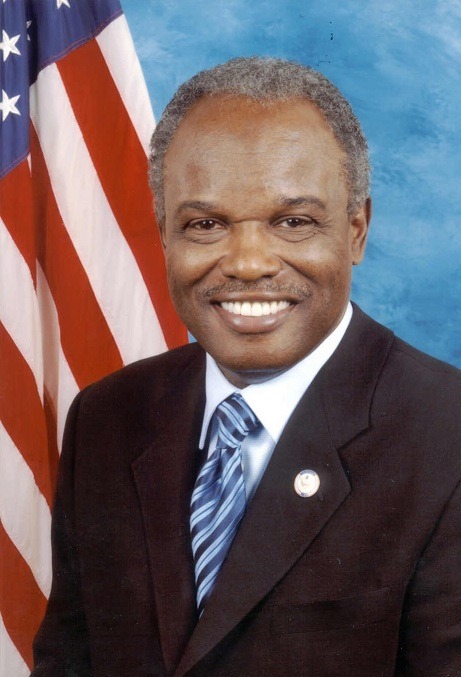
State leaders, national figures, and community members gathered beneath the gold dome of the Georgia State Capitol on May 1 to honor the life and legacy of longtime Congressman David Scott, a pioneering lawmaker whose decades of service reshaped Georgia politics and national agricultural policy.
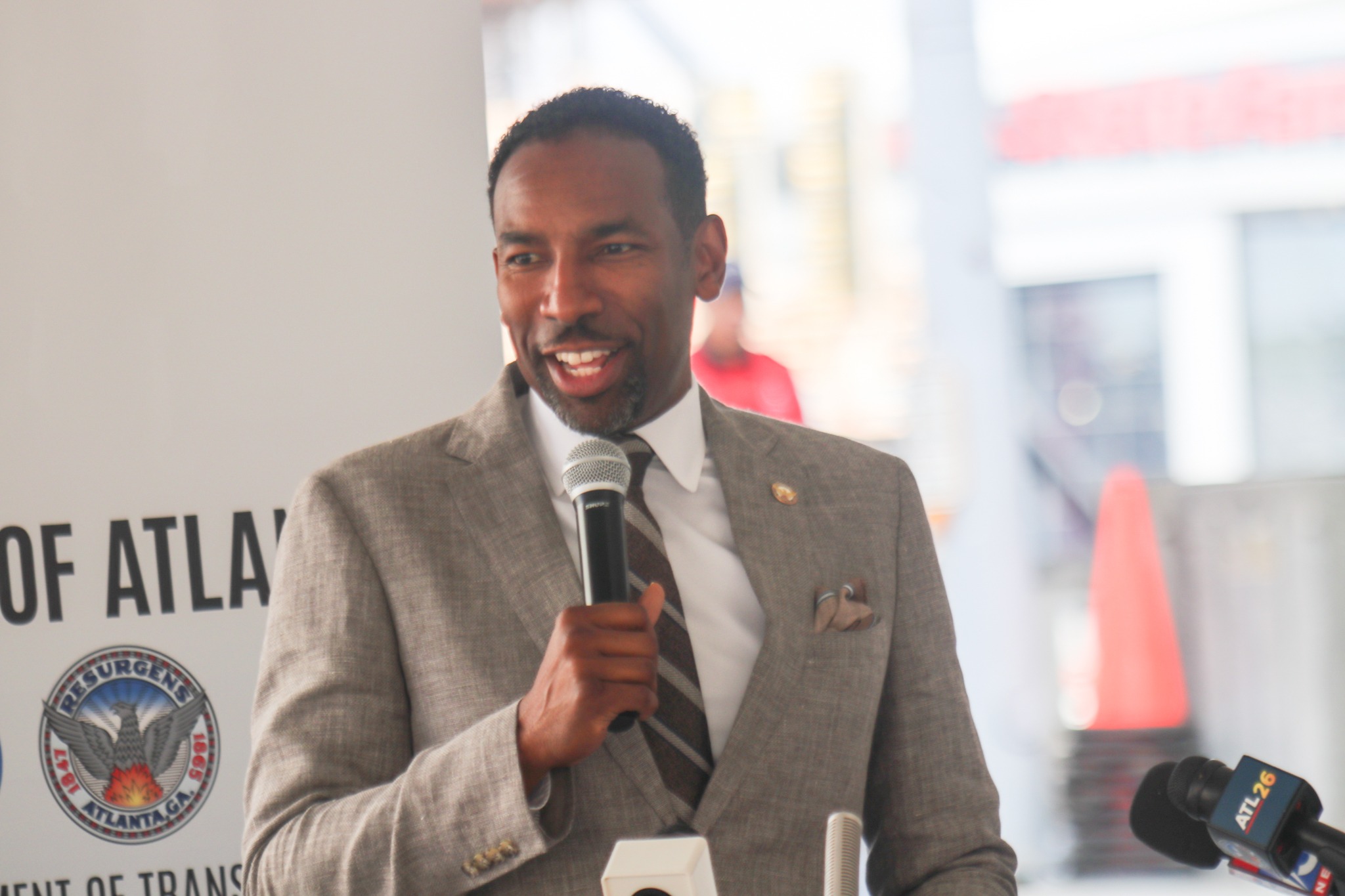
The ceremony, held in the Capitol Rotunda, featured remarks from Atlanta Mayor Andre Dickens and U.S. Representative Maxine Waters, both of whom reflected on Scott’s rise from humble beginnings to the heights of congressional leadership.
Dickens emphasized that Scott’s early life shaped his approach to public service. He noted that Scott’s connection to everyday people remained central throughout his career, from his time in the Georgia General Assembly to his tenure in Congress.
Scott, who represented Georgia’s 13th Congressional District since 2003, died on April 22, 2026, at the age of 80. His passing marked the loss of one of Georgia’s most enduring political figures and created a vacancy in the closely divided U.S. House of Representatives. A special election will be scheduled under Georgia law to fill the remainder of his term.
Historic Firsts and Legislative Impact
Scott made history as the first African American to chair the House Agriculture Committee, serving from 2021 to 2023. His leadership helped direct federal attention and funding toward farmers, rural communities, and historically Black land-grant institutions.
Among his notable achievements was securing $80 million in the 2018 Farm Bill for scholarships at 19 historically Black colleges and universities with agricultural programs. He also played key roles in housing assistance programs, veterans’ benefits, and financial protections for homeowners.
House Minority Leader Hakeem Jeffries described Scott as a “trailblazer” who served his district with dedication and integrity, emphasizing his commitment to delivering results for Georgia families.
From Rural Roots to National Leadership
Born in 1945 in Aynor, South Carolina during the Jim Crow era, Scott’s early life was marked by frequent moves and hard work. He later graduated from Florida A&M University and earned an MBA from the University of Pennsylvania’s Wharton School.
After launching an advertising business in Atlanta, Scott entered politics, first working on Andrew Young’s congressional campaign before winning election to the Georgia House in 1974 and the Georgia Senate in 1982.
His rise to Congress in 2002 was supported by prominent figures, including civil rights leader Andrew Young and baseball legend Hank Aaron, reflecting the broad coalition behind his political ascent.
A Career of Service and Advocacy
Throughout his career, Scott focused heavily on constituent services, hosting job fairs that connected thousands to employment and health events that expanded access to screenings and care. He also secured hundreds of millions in federal funding for transportation and community development projects across metro Atlanta.
On foreign policy, Scott supported NATO alliances and international cooperation, while domestically he advocated for food access, education funding, and economic stability for working families.
News of his passing was first shared during a Congressional Black Caucus meeting by Chair Yvette Clarke. Flags at the White House were lowered to half-staff in his honor.
A Legacy That Endures
Scott’s death comes amid broader national conversations about aging leadership in Congress, as he was among several lawmakers over 80 still serving. Despite facing calls to step aside in recent years, he remained committed to his role, often stating that he was focused on “doing the people’s work.”
He is survived by his wife, Alfredia Scott, their two daughters, and grandchildren.
As Georgia prepares for a special election and reflects on his decades of service, Scott’s legacy remains defined by his historic leadership, policy achievements, and unwavering connection to the communities he served.
Era
Position
Key Focus
1975–1982
Georgia State Representative
Gun safety and “Peachcare” children’s health.
1983–2002
Georgia State Senator
Environmental protection and school prayer.
2003–2026
U.S. Representative
Agriculture, HBCUs, and Veteran affairs.
2021–2023
Chairman, House Ag Committee
First African American to hold the post.
Truth Seekers Journal thrives because of readers like you. Join us in sustaining independent voices.
MARTA riders must switch to the Better Breeze system by May 2 as new fare gates close, ending old cards and introducing tap-to-pay options.
By Milton Kirby | Atlanta, GA | May 1, 2026
MARTA and its regional transit partners are entering a major transition this weekend as the new Better Breeze fare payment system becomes the standard across the network.
Riders on MARTA, ATL Xpress, CobbLinc, Connect Douglas, and Ride Gwinnett must switch to the updated system by Saturday, May 2, when new fare gates begin closing and fare payment becomes mandatory.
The rollout marks MARTA’s largest fare technology upgrade in more than a decade.
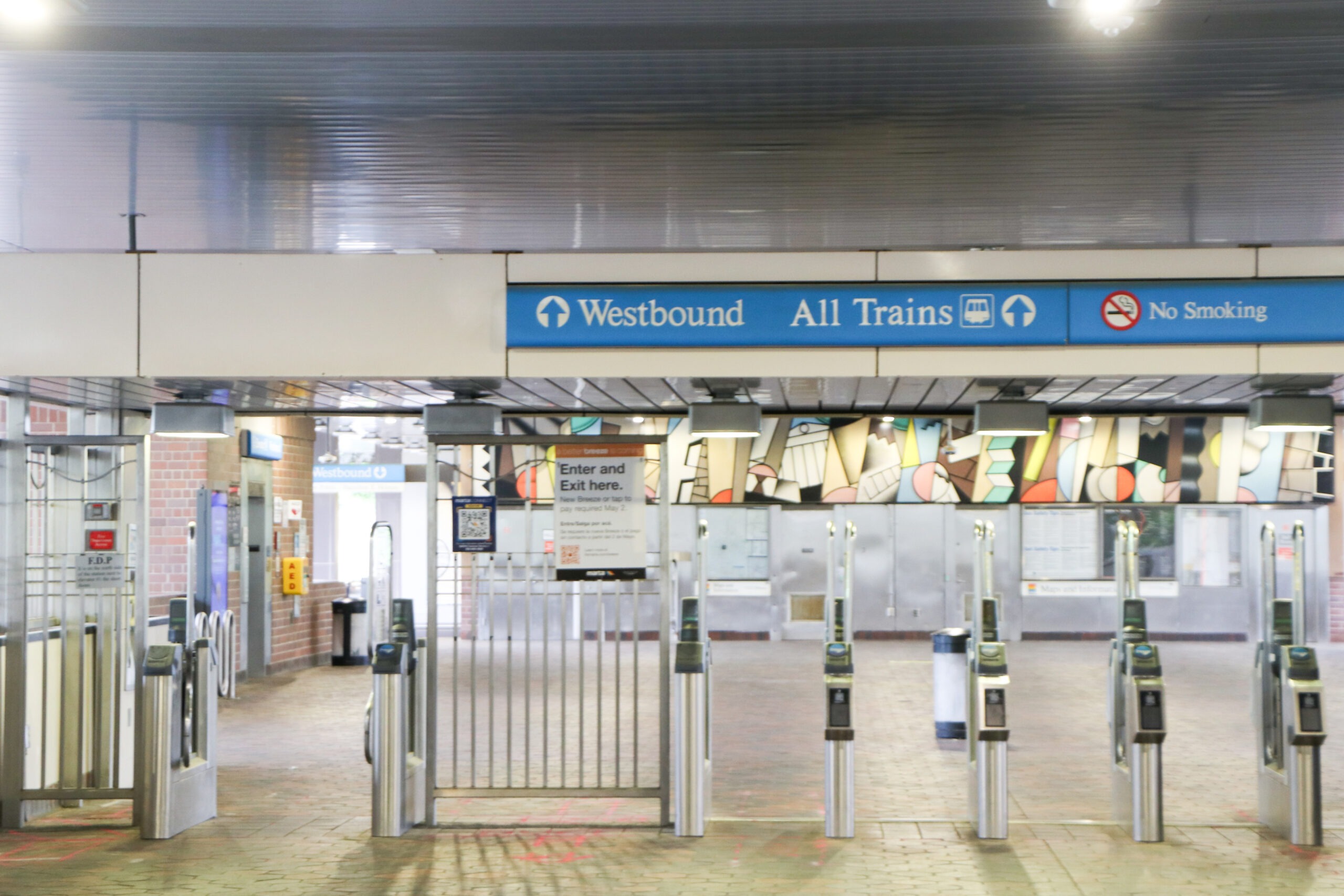
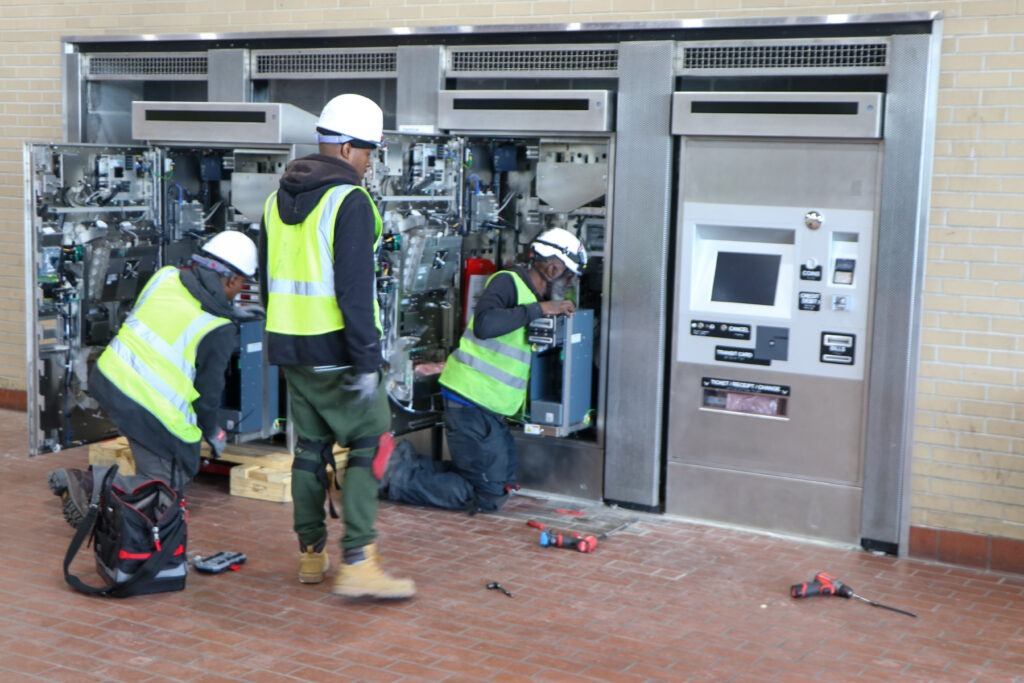
Installation is still underway at many stations, prompting MARTA to leave older fare gates open temporarily to maintain access. However, the agency stresses that open gates do not mean free rides. Beginning May 2, all riders must pay using one of the newly approved methods.
Old Breeze cards, paper tickets, and the Breeze Mobile 2.0 app will no longer be accepted.
At stations where construction is ongoing, older fare gates may remain open, but riders should not interpret this as free entry. Fare payment is still required.
New Ways to Pay
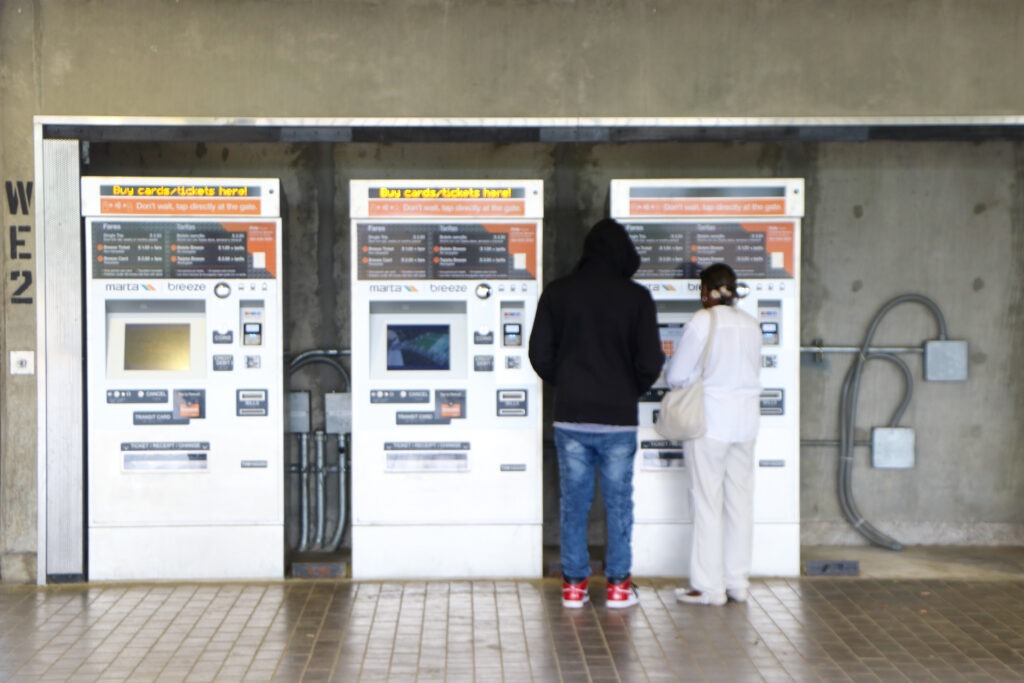
MARTA West End – patrons buying Better Breeze fare – Photo by Milton Kirby
The Better Breeze system introduces several payment options designed to speed up boarding and reduce wait times:
Tap-enabled bank cards – Mastercard, Visa, American Express, and Discover can be tapped directly at faregates and validators
Mobile wallets Riders can tap smartphones or smartwatches linked to a bank card
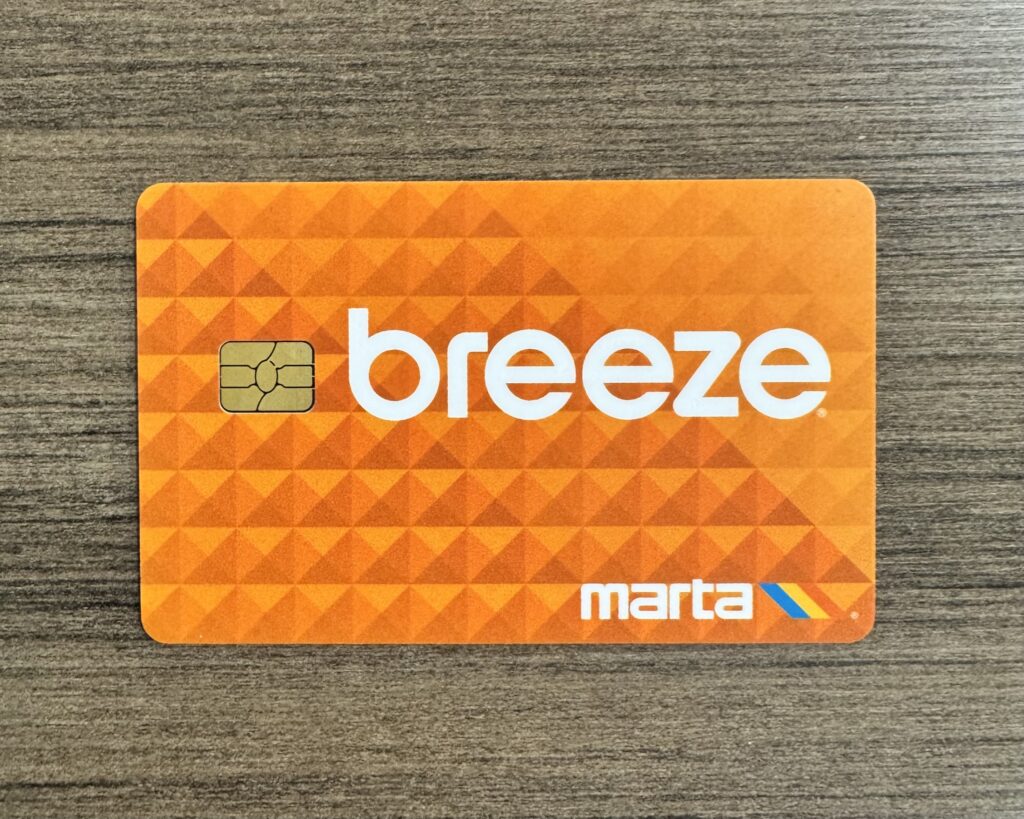
New orange Breeze cards – available at ticket vending machines, Ride Stores, the new Breeze Mobile app, and breezecard.com
Virtual Breeze cards – available in Google Wallet and Samsung Wallet, with Apple Wallet support expected soon
Cash remains an option with limitations. Riders may use cash at ticket vending machines and Ride Stores to purchase cards or tickets. On buses, cash is accepted for one-way fares only and does not include transfers.
Where to Get the New Breeze Cards
Beginning May 2, new ticket vending machines will be active at major stations including Airport, Buckhead, Civic Center, Doraville, East Point, Georgia State, H.E. Holmes, Kensington, Lenox, Lindbergh, Midtown, North Springs, Sandy Springs, Vine City, and West End. Additional machines are being installed daily.
Cards may also be purchased online at breezecard.com or at MARTA Ride Stores located at Airport and Sandy Springs stations.
Specialty cards including Reduced Fare and Mobility cards are being mailed to certified customers. Riders who have not received theirs may visit the Reduced Fare office at MARTA headquarters during extended hours from May 2 through May 7.
What Riders Need to Know About Fare Gates
New fare gates across the system will begin closing on May 2.
At stations still under construction, older gates may remain open. MARTA emphasizes that riders must still pay using one of the new payment methods, regardless of gate status.
Transit ambassadors and signage will be available systemwide to assist riders during the transition.
MARTA King Memorial – Crew installing Better Breeze dispensers
Transferring Old Breeze Balances
Riders with unused balances on old Breeze cards will be able to transfer funds to a new, registered account beginning May 5.
The transfer window will remain open through October 30. MARTA says detailed instructions will be released in the coming days.
Staying Connected
MARTA encourages riders to stay informed through:
Official website and Better Breeze information hub
breezecard.com
Social media: @MARTAservice and @MARTAtransit
Customer service: 404-848-5000
Instructional “how-to” videos available in English and Spanish
Support open, independent journalism—your contribution helps us tell the stories that matter most.
The Bill Pickett Invitational Rodeo expands its legacy of community care through a new partnership with Guardant Health, bringing life‑saving colorectal cancer screening and education directly to Black communities.
Riding for Our Lives: How the Bill Pickett Invitational Rodeo Is Expanding Its Legacy of Community Care Through a New Partnership With Guardant Health
By Milton Kirby | Memphis, TN | May 1, 2026
For forty‑two years, the Bill Pickett Invitational Rodeo (BPIR) has been more than a showcase of Black cowboy excellence. It has been a cultural institution, a traveling classroom, a family reunion, and a lifeline — a place where heritage is preserved, children are affirmed, and communities gather to celebrate themselves. Long before “community engagement” became a corporate buzzword, BPIR was already doing the work: educating youth, supporting families, creating safe spaces, and showing up in cities where resources were thin but hope was abundant.
That legacy continues today through the Bill Pickett Invitational Rodeo Foundation (BPIRF), whose mission is rooted in value‑driven philanthropy and whose vision is clear: preserving heritage, empowering communities, and inspiring generations. Since 1987, the Foundation has delivered health and wellness programs, STEM initiatives, scholarships, senior support, emotional‑intelligence workshops, and anti‑violence education across the country. Its values, generosity, compassion, empathy, equity, inclusion — are not slogans. They are the operating system.
So, when BPIR announced a new partnership with Guardant Health, a trusted leader in blood-based cancer tests for more than a decade, as part of its “Riding Across America for Community Health” initiative, it wasn’t a pivot. It was a continuation. It was BPIR doing what BPIR has always done: meeting the community where it is and bringing life‑saving information directly to the people who need it most.
The Heartbeat of the Mission: Rodeo for Kidz Sake
If you want to understand BPIR’s soul, you start with the children.
The Rodeo for Kidz Sake (RFKS) program is one of the most powerful expressions of BPIR’s values, an immersive, educational, joy‑filled introduction to Black cowboys and cowgirls, Western history, and the “cowboy mystique” that shapes childhood imagination. For many inner‑city students, RFKS is their first time seeing a horse up close, touching an animal, or witnessing Black excellence in a space they never knew belonged to them.
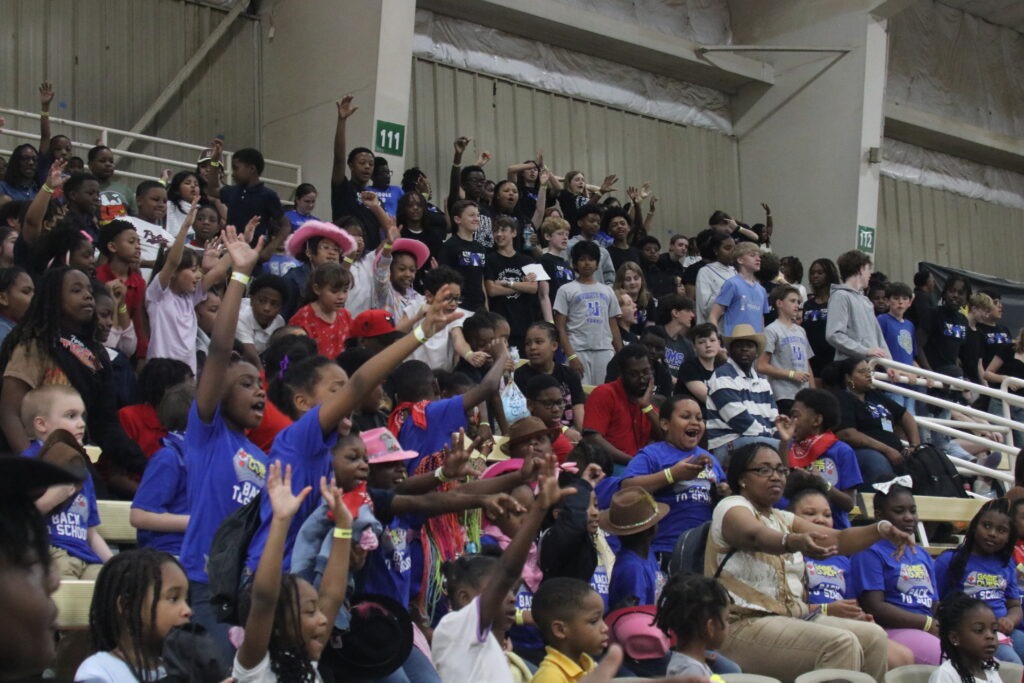
On Friday, April 10, nearly 4,000 students filled the AgriCenter Showplace Arena in Memphis. They laughed, learned, asked questions, and saw themselves reflected in a history that has too often been erased. RFKS events now take place in Denver, Memphis, and Washington, D.C./Maryland and for many children, the experience is life‑changing.
Photo by Milton Kirby – For Kidz Sake
Margo Wade‑LaDrew, National Development / Sponsorship Director told me this as cowboys and cowgirls streamed past us, moving through the lines to enter the arena for Saturday night’s show a reminder that BPIR’s commitment to community isn’t theoretical. It lives in the dust, the boots, the laughter, and the anticipation of families gathering for a night of culture and competition.
“The Bill Pickett Invitational Rodeo is committed to empowering and uplifting communities across the country through dynamic outreach initiatives. We focus on promoting health, education, emotional intelligence, life skills, career development, anti‑bullying, and anti‑violence awareness,” she said. “This new partnership with Guardant Health is in total alignment with that legacy.”
RFKS is the heartbeat of that commitment — a reminder that BPIR’s work is not just about preserving the past, but preparing the next generation to thrive.
A Longstanding Commitment to Health and Healing
BPIRF’s health outreach didn’t begin with Guardant Health. For years, the Foundation has delivered timely education on:
COVID‑19 and flu vaccination
Domestic and community violence prevention
Anti‑bullying and emotional intelligence
Mental health and suicide prevention
Breast cancer, prostate health, diabetes, and high blood pressure
Through partnerships with Anti‑Violence Ventures and the Black Beauty & Wellness Foundation, BPIRF has created safe spaces for emotional expression, healing, and empowerment — reaching both men and women with culturally grounded resources.
This is the context that makes the Guardant partnership meaningful. BPIR wasn’t looking for a sponsor. It was looking for alignment. And it found it.
The Crisis: Colorectal Cancer in Black America
Colorectal cancer is the second‑leading cause of cancer death in the United States.
Photo by Milton Kirby – Guardant Shield
For Black Americans, the burden is even heavier:
20% higher incidence
40% higher mortality
More likely to be diagnosed at a younger age
More likely to be diagnosed at a later stage
The difference between early and late detection is staggering:
91% survival when caught early
13% survival when caught late
We don’t fully understand why colorectal cancer behaves more aggressively in Black patients. But we do know this: early detection saves lives.
And that is where Guardant Health enters the story.
Shield Across America: Innovation Meets the Arena
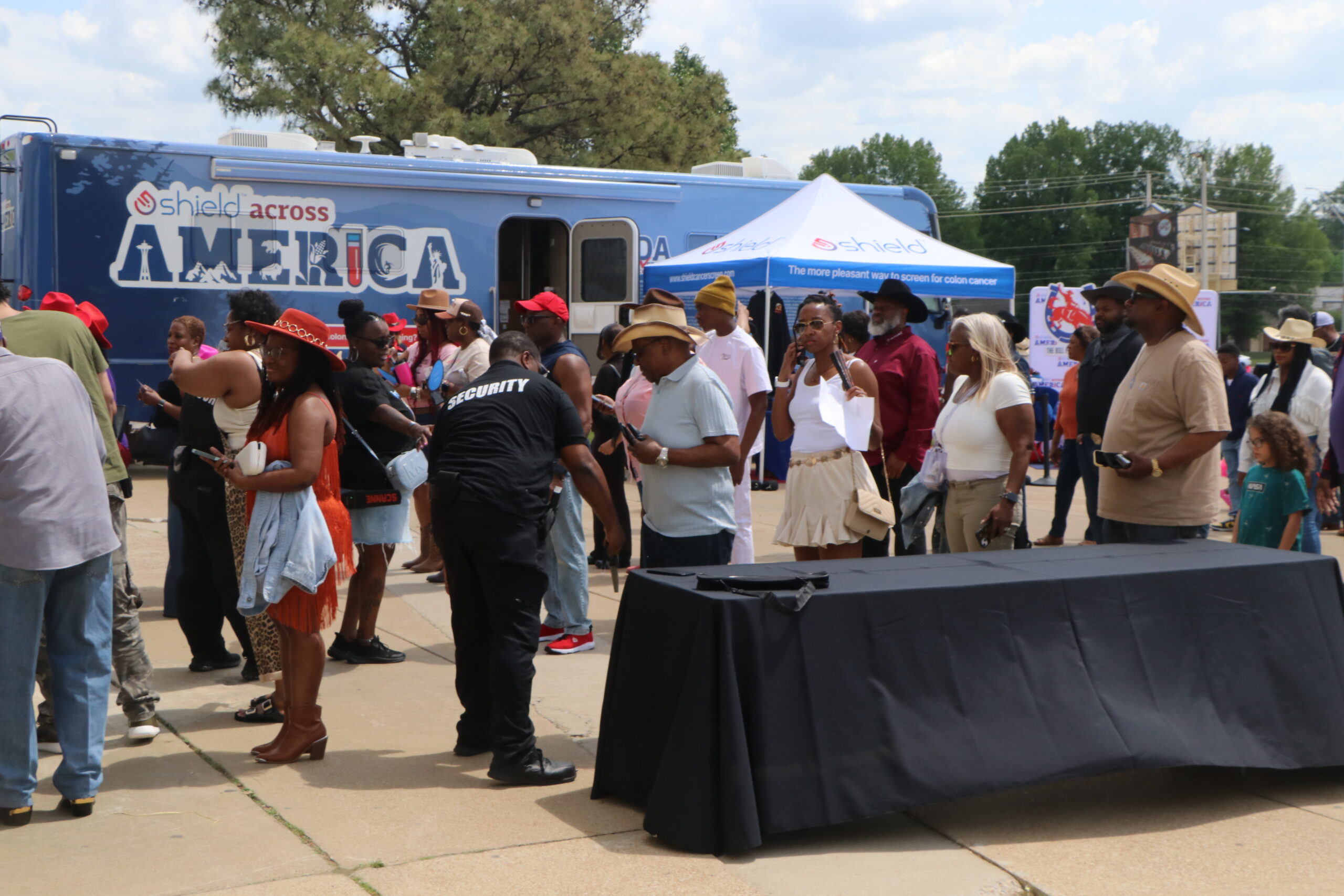
On April 11, 2026, the Guardant Health mobile colon cancer screening education tour bus rolled into Memphis to join BPIR’s tour stop, marking a milestone in the “Riding Across America for Community Health” initiative. The bus is part of Shield Across America, a nationwide effort to expand access to colorectal cancer screening and education about Shield, the first and only test FDA‑approved as a primary screening option for colorectal cancer for average‑risk adults 45 and older.
Shield is:
non‑invasive
accessible
covered by Medicare, and the VA Community Care Network
designed to meet people where they are
For communities facing systemic barriers to healthcare including Black Americans this partnership is more than symbolic. It is lifesaving.
Courtesy photo – Sam Asgarian, Guardant Health’s vice president of clinical development for screening
The Science Behind Shield: A Conversation With Dr. Sam Asgarian
To understand the test’s impact, I spoke with Dr. Sam Asgarian, Guardant Health’s vice president of clinical development for screening. He explained that Shield’s FDA approval was built on one of the largest colorectal cancer screening studies ever conducted.
In 2019, Guardant launched the ECLIPSE Study, enrolling more than 20,000 Americans across the country. The goal was not just size – it was representation.
“We made sure the study matched the demographics of the United States,” Asgarian said. “Not just white participants, not just white and Black participants — but a true reflection of the country.”
The results were strong:
83% detection ratefor colorectal cancers
10% false‑positive rate
Consistent performance across ethnicities
For Black families who have historically been excluded from clinical trials, this matters.
Cost, Coverage, and the Reality of Access
Eligible Medicare Part B or Fee for Service (FFS) patients will have $0 out-of-pocket cost for the Shield test. Medicare Advantage patients may be subject to co-pays, co-insurances and deductibles, depending on their specific plan. Veterans have zero copay through VA Community Care.
Coverage varies depending on private insurance.
But here’s where Guardant does something unusual: They don’t leave patients to navigate the insurance maze alone.
“Every time a test is ordered, we reach out to patients,” Asgarian said. “We tell them what we think their coverage will be. We work with insurance companies. We help with financial assistance. We don’t want people going through that alone.”
As someone who has had two colonoscopies myself, I asked whether people like me could switch to the blood test going forward.
“It’s entirely up to you and your physician,” he said. “You have options now.”
Optionality saves lives.
Memphis: What Happened on the Ground
The Shield Across America tour launched in Las Vegas in March, Colorectal Cancer Awareness Month. Since then, it has made several stops across the country navigating festivals, charity walks, and any event with enough space to park a 45‑foot mobile lab. The BPIR was a natural partnership for the tour.
Outside the arena, I saw a steady flow of people approaching the Shield Across America. Inside, Guardant had a table set up for conversations, questions, and education. I didn’t see the table myself — I was photographing from the opposite side of the arena — but the team reported strong engagement.
Even a few hundred screenings can shift outcomes in a community.
Looking Ahead: Atlanta and Beyond
When I asked about the next stop, Asgarian said the team was still finalizing the Atlanta layout, but that the latest information could be found at ShieldCancerScreen.com.
BPIR is uniquely positioned to make this work. The rodeo is already a family event. Adding health engagement to the pre‑show atmosphere is a natural fit.
This is not a one‑off partnership. It is the beginning of a sustained health equity effort.
The Human Barrier: Fear, Anxiety, and Avoidance
Asgarian said something that stayed with me:
“People aren’t avoiding screening because they don’t care. They’re afraid. They’ve had bad experiences. They don’t trust the system. They don’t know what’s available.”
This is why meeting people at the rodeo matters. When people are in a space they love — surrounded by culture, joy, and community — they are more open to engaging with healthcare.
BPIR becomes the bridge between fear and action.
The Role of Trusted Media
When I asked what Truth Seekers Journal could do to strengthen the partnership, Asgarian didn’t hesitate:
“There’s so much noise in the world. Breakthroughs get drowned out. When people hear about this from a trusted source — your publication — it means more. It pushes them to act.”
That is the responsibility of Black media: to amplify what saves us, not just what threatens us.
Colorectal cancer is the second‑leading cancer killer. But unlike many cancers, early detection changes everything.
This is breakthrough technology. This is life‑saving access. This is information our community deserves.
Closing: Riding for Our Lives
The Bill Pickett Invitational Rodeo has always been about more than competition. It is about culture, community, and care. It is about honoring the past while protecting the future. It is about showing up; for children, for families, for elders, for each other.
Now, through its partnership with Guardant Health, BPIR is riding for something even deeper: our lives.
Preserving heritage. Empowering communities. Inspiring generations. Protecting futures. One family, one child, one screening, one city at a time.
Atlanta proposes stronger blight tax law, increasing penalties on neglected properties up to 25 times, aiming to revitalize neighborhoods and hold absentee property owners accountable.
By Milton Kirby | Atlanta, GA | April 30, 2026
The administration of Andre Dickens has introduced new legislation aimed at strengthening Atlanta’s fight against blighted properties, expanding enforcement tools and increasing pressure on negligent property owners across the city.
The proposed legislation, sponsored by Atlanta City Councilmember Byron D. Amos, builds on the city’s existing “blight tax,” formally known as the community redevelopment ad valorem tax. The measure is part of the mayor’s broader Neighborhood Revitalization Initiative, which seeks to reverse long-standing disinvestment in Atlanta communities.
Under current law, properties deemed blighted—based on criteria outlined in O.C.G.A. 22-1-1—can face steep financial penalties. The updated legislation strengthens that framework, allowing the city to more aggressively apply a tax increase of up to 25 times the standard rate on qualifying vacant properties.
“Neglected properties drain the vitality from our neighborhoods,” Dickens said in a statement. “This legislation sends a clear message: if you own property in Atlanta, you have a responsibility to maintain it.”
City leaders say blighted properties often trigger a ripple effect in surrounding communities, lowering home values, attracting crime, and increasing strain on public services. The enhanced legislation aims to interrupt that cycle by accelerating enforcement and expanding accountability.
Amos emphasized the urgency of the issue, noting that many residents have endured deteriorating properties for years. “Let this legislation be a message to delinquent property owners throughout the City that their behavior will no longer be tolerated,” he said.
The strengthened blight tax is one of several legal tools available to the city. Officials say it will be used alongside judicial in rem actions, nuisance prosecutions, condemnation authority, and traditional code enforcement measures.
Raines Carter, who serves as the city’s designated Public Officer for blight enforcement, said the city plans to focus on the most severe cases. Once a property is officially designated as blighted, owners are given a limited window to correct violations before the increased tax penalty takes effect.
“The City will strategically deploy the blight tax and all other remedies available to hold delinquent property owners responsible,” Carter said, urging residents to report problem properties through Atlanta’s 311 system.
The legislation follows the Atlanta City Council’s 2024 passage of Ordinance 24-O-1370, which authorized the initial use of the blight tax and set the groundwork for implementation. Since then, multiple city departments have coordinated to develop enforcement procedures and identify eligible properties.
City officials say they will monitor the program’s outcomes during its first year, with plans to refine and potentially expand enforcement to additional neighborhoods. The move signals a more aggressive posture by Atlanta leaders in addressing blight—one that combines financial penalties with legal enforcement in an effort to stabilize communities and restore long-neglected areas.
Support open, independent journalism—your contribution helps us tell the stories that matter most.
By Florita Bell Griffin, Ph.D | Houston, TX | April 28, 2026
Progress rarely fails where people expect it to. It rarely collapses outright or breaks in visible ways. More often, it succeeds technically while losing its sense of orientation. Systems advance. Capabilities expand. Performance improves. Yet the path that led there becomes increasingly difficult to trace. What remains functions, but it no longer explains itself.
This kind of failure is subtle. It does not announce itself as malfunction or crisis. It appears instead as disconnection between past and present. Progress moves forward, but it leaves no markers behind. It arrives somewhere new without accounting for how it got there. Over time, that absence begins to matter more than any single improvement.
Early innovation moves easily because there is little history to preserve. Decisions are provisional. Dependencies are light. Tradeoffs remain visible. As systems mature, however, they accumulate consequence. Choices embed themselves into structure. Temporary solutions become permanent assumptions. Institutional memory forms through repetition, exception, and response. Progress that ignores this accumulation may remain efficient, but it begins to feel unstable.
People tend to notice this most clearly after they have lived through several cycles of change. They have seen organizations modernize, restructure, consolidate, and rebrand themselves. They have watched technologies promise clarity while introducing new layers of abstraction. They understand that change is unavoidable. What unsettles them is not complexity. It is amnesia.
Consider an organization that adopts a new enterprise platform intended to unify operations across departments. The rollout is efficient. Training is streamlined. Output increases. Reporting becomes cleaner. Leadership views the transition as a success. Yet employees struggle to explain how current workflows relate to previous ones. Longstanding expertise becomes difficult to locate within the new structure. Knowledge that once moved through people now sits awkwardly inside the system. The platform delivers results, but it no longer carries its own story. People comply with the process while quietly withdrawing trust from it.
A similar pattern appears in public systems. Consider a city that implements a data-driven infrastructure upgrade to improve traffic flow and energy efficiency. Sensors optimize movement. Algorithms rebalance load. Measurable outcomes improve. Commute times shorten. Resource use becomes more efficient. Yet residents lose a sense of continuity with prior planning decisions. Neighborhoods experience change without understanding how tradeoffs were made or how the new system reflects what existed before. The city works better, but it feels less knowable. Progress arrives, but its footsteps are missing.
In both cases, the system advances without carrying forward its own rationale. Decisions disappear into implementation. Sequence dissolves into outcome. Over time, this changes how people relate to the system itself. They follow instructions, but they stop inhabiting the logic behind them. They perform tasks, but they no longer feel oriented within the larger structure.
When sequence disappears, accountability becomes diffuse. Decisions feel less owned because their origins are unclear. Authority shifts away from judgment and toward procedure. Over time, participation changes shape. People execute rules without understanding intent. They adapt repeatedly without being shown how each state emerged from the last. The system continues to operate, yet fewer people feel responsible for its direction.
Human lives rarely function this way. Experience builds through accumulation. Lessons retain shape because they remain connected to prior outcomes. Growth remains intelligible because it unfolds in sequence. People understand themselves not as isolated moments, but as continuations of what came before. When systems fail to mirror this reality, they place the burden of coherence on the individual rather than the structure.
This burden shows up quietly. A tool can offer new power while draining confidence. A process can become smoother while leaving people less certain of their footing. A platform can increase speed while requiring users to repeatedly translate their own history into new terms. Over time, this creates a specific kind of fatigue: the fatigue of carrying continuity alone.
This is why progress that skips its own footsteps often provokes unease rather than resistance. People are not rejecting advancement. They are responding to disorientation. They sense that the system has moved faster than understanding can follow. They feel required to adapt without being oriented. Over time, that requirement erodes trust.
The long-term consequences are predictable. Decision-making becomes reactive rather than grounded. Expertise becomes harder to transmit because lineage is obscured. Mentorship weakens because the system no longer exposes how judgment was formed. New participants learn what to do, but not why it evolved that way. Progress continues, yet its foundations grow less stable.
Progress that honors continuity behaves differently. It makes its evolution visible. It carries forward its rationale alongside its functionality. Each change explains how it emerged from what preceded it. Sequence becomes part of the system rather than an external memory held by a few individuals. People remain oriented because the structure remembers itself.
This form of progress does not move more slowly. It moves more intelligibly. It allows people to inhabit change without losing their footing. It preserves accountability because decisions remain traceable. It preserves trust because movement makes sense across time.
When progress skips its own footsteps, it accelerates while understanding contracts. When it carries them forward, it gains the capacity to endure. The difference is not technical sophistication. It is whether the system can remain coherent as it moves.
This column exists for only one purpose; that is to answer your questions on Negro League baseball history. To that end, I need your help … if you are reading this column and enjoy it and want it to continue and you do not already know everything about Negro League history … then please submit a question on any aspect of Negro League history. Your questions are the lifeblood of Shadow Ball—they shape where we go next … players, teams, events, and more – and, in so doing, you will direct where this column goes moving forward. Your participation is important and appreciated. The very existence of this column depends on you. Submit your questions to shadowball@truthseekersjournal.com.
Freddie Oliver of McKeesport, PA, posed the following question for me this week: who were the best umpires in the Negro Leagues?
Not sure I am qualified to rank ‘em but after Rube Foster’s decision to hire Black umpires in 1923 they enjoyed just over three decades of excellent arbitrating with just as many complaints as umpires come to expect. I will briefly mention three of the Men in Blue that serve to bookend both the history of the Negro Leagues and the legacy of African American umpires in Black Baseball.
W.W. “Billy” Donaldson
Billy Donaldson was the quiet architect of Negro League umpiring professionalism. When Rube Foster decided in 1923 that Black umpires should call Black baseball, Donaldson was one of the first men he trusted. He worked with a calm, deliberate style — never rushed, never rattled — and players respected him because he respected the game. Donaldson helped establish the standards that would guide the leagues for decades: crisp signals, firm control, and a sense that the umpire was part of the game’s dignity. His name does not ring out like the stars he officiated, but the league’s stability in its early years owes much to him. Donaldson officiated in two East-West Classics in 1936 and 1937.
Bert Gholston
Bert Gholston was the steady hand beside Donaldson, a man whose reputation rested on consistency. He was not flashy, and he did not need to be. Gholston worked some of the most heated games of the 1920s and ’30s, and he did it with a temperament that players trusted. He was the umpire who kept arguments from becoming brawls, who could defuse a dugout with a look, who understood that the best umpires are remembered not for their calls but for their control. Gholston helped give the Negro National League its backbone during years when the league’s survival depended on professionalism. Gholston worked well into the 40s. In 1923 he debuted with Donaldson as part of the Negro National League’s first all‑Black umpiring crew.
Bob Motley
Bob Motley brought a sense of theater to the Negro Leagues, but it was never empty showmanship — it was authority earned the hard way. A Marine who survived the Battle of Okinawa returned home with a presence that players felt the moment he stepped on the field. Motley called games in the Negro American League’s final years, working All‑Star contests and barnstorming tours with the same crisp mechanics and booming voice. He understood that the umpire’s job was to keep the game honest, and he did it with flair, humor, and absolute command. When the leagues faded, he became their great storyteller, carrying the memory of Monarchs, Grays, and Crawfords into the 21st century. Motley worked at least three East-West Classics. Often called the “last surviving Negro League umpire.” Mr. Motley passed away in 2017.
All three of these umpires – the Alpha’s Donaldson & Gholston and the Omega Motley – do indeed bookend Negro League history. All three received votes in an ongoing poll – the 42 for ’21 poll – of Negro League fans, researchers, writers, artists, collectors, historians, and students. Donaldson and Gholston finished tied for 115th among 154 players and personages considered in the poll. Bob Motley, more current, finished tied for 42nd.
Other noteworthy umpires include former players such as Oscar Charleston, Bullet Rogan, Mule Stuttle, Phil Cockrell, and Hurley McNair. Veteran arbiters like Fred McGreary and Virgil Bluett, each of whom worked a dozen East-West Classics or fabled legends like Jacob Francis, who performed in the 1885 New York State League, and is considered the earliest Black umpire in an otherwise White professional league. The National Baseball Hall of Fame is very much behind in terms of inducting Negro League players and managers; I wonder if they could find room for one of these competent umpires?
Last week’s Shadowball Significa Question of the Week went unanswered: What feared slugger was the first to hit a home run in a Negro League East-West Classic? The Classic was the official name of the Negro League All Star game. None of my readers produced George “Mule” Suttles who took Sam Streeter to the upper deck in the 4th inning of the initial Negro League All Star game in 1934.
The Shadowball Significa Question of the Week: Seven players have appeared in both a Negro League East-West Classic and a National League/American League All Star game, six of them have been inducted in the Baseball Hall of Fame. Name the 7th who is not inducted? Send your answer and any comments on the Negro Leagues to shadowball@truthseekersjournal.com or Shadow Ball, 3904 N Druid Hills Rd, Ste 179, Decatur, GA 30033
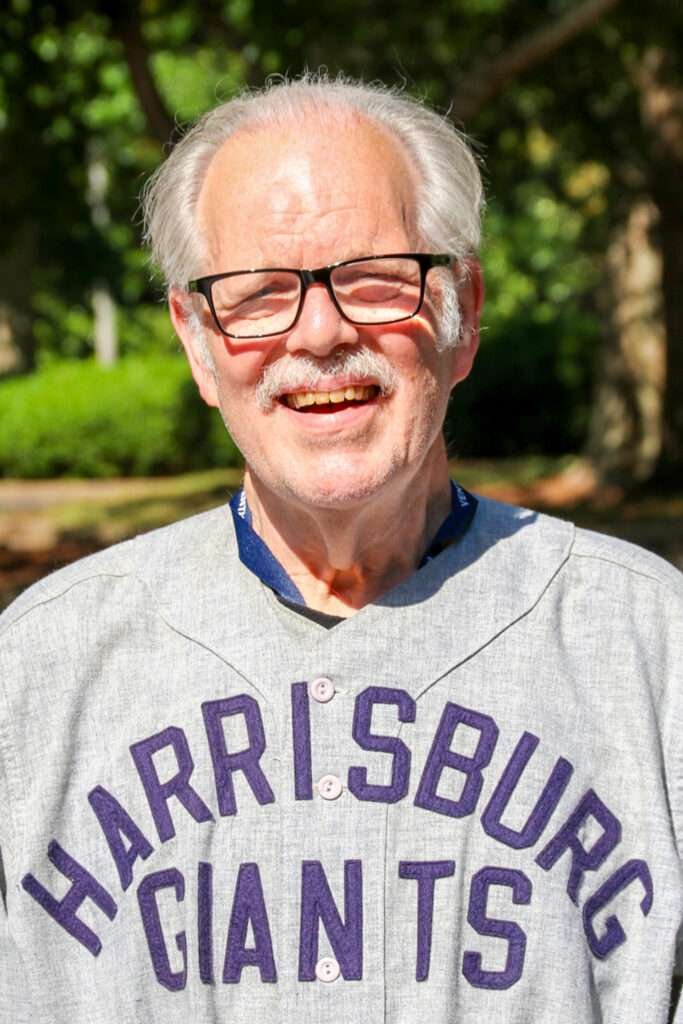
Ted Knorr
Ted Knorr is a respected Negro League baseball historian, a longtime member of the Society for American Baseball Research’s Negro League Committee, and the founder of the Jerry Malloy Negro League Conference as well as several Negro League Commemorative Nights in central Pennsylvania.
Beyond his research and organizing work, Ted is frequently invited to speak at sporting events, community programs, family gatherings, and educational forums, where he brings Negro League history to life. His deep knowledge of the players, teams, and cultural impact of Black baseball has made him a trusted voice for audiences who want to understand the legacy and significance of the Negro Leagues.
Support open, independent journalism—your contribution helps us tell the stories that matter most.
Atlanta proposes a Downtown Enterprise Zone to capture World Cup revenue, funding affordable housing and small businesses while accelerating long-term revitalization efforts in the city’s core.
By Milton Kirby | Atlanta, GA | April 23, 2026
Mayor Andre Dickens has introduced legislation to establish a new Downtown Enterprise Zone, a move city leaders say will channel the economic surge expected from the FIFA World Cup 2026 into long-term investment for housing, small businesses, and neighborhood revitalization.
The proposed zone, part of the mayor’s broader Neighborhood Reinvestment Initiative, is designed to transform a key section of Downtown Atlanta into a reinvestment engine—capturing revenue generated during major global events and redirecting it into community development.
“As part of our Administration’s unwavering commitment to changing generational outcomes for Atlantans, we are using every tool at our disposal to bring investment to high opportunity areas like Downtown,” Dickens said in the announcement. “The new Downtown Enterprise Zone will strategically harness the revenue and momentum of the World Cup events to create investment for new affordable housing and small businesses.”
Targeted Area, Strategic Timing
The Enterprise Zone would cover nearly 30 acres of Downtown, bounded roughly by Marietta Street NW, Peachtree Street SW, Trinity Avenue SW, and Ted Turner Drive/Forsyth Street SW. The designation is being coordinated with the Georgia Department of Community Affairs, which oversees such economic development zones.
City officials say the timing is intentional. With Atlanta set to host matches during the 2026 World Cup, leaders are looking to ensure that the influx of visitors and spending produces benefits that extend beyond the event itself.
Under the proposal, the city could capture up to 5% of gross sales from qualifying businesses within the zone. Those funds would then be reinvested into local projects, including affordable housing initiatives and support for small, locally owned businesses.
A Piece of a Larger Strategy
Atlanta City Councilmember Jason Dozier, whose district includes Downtown, emphasized that the Enterprise Zone is one part of a broader redevelopment effort.
“The timing of this legislation is no accident,” Dozier said. “No single policy is a panacea, and this initiative is one part of a broader, coordinated effort to help Downtown Atlanta live up to its fullest potential as a neighborhood, as a community and as a destination.”
Dozier added that the goal is to convert short-term economic activity into “lasting benefits and sustained momentum” for both residents and businesses.
Private Investment Already Underway
The success of the Enterprise Zone will depend heavily on the number of participating businesses and their economic activity. Increasing the number of viable businesses in the district is seen as critical.
That effort is already underway in parts of Downtown, particularly in South Downtown (SoDo), where David Cummings and his firm Atlanta Ventures are leading a large-scale redevelopment.
Cummings’ company controls a 58-building portfolio of historic mixed-use properties and is focused on attracting small, local retailers. Five businesses have already opened, with 11 more expected by June 2026—including a new location of El Tesoro.
“This Enterprise Zone ensures that as the district grows, we are simultaneously investing in the affordable housing and small businesses needed to support that growth,” Cummings said.
Why This Matters
The proposed Enterprise Zone reflects a growing trend among cities hosting global events: using short-term tourism spikes as catalysts for long-term urban investment. For Atlanta, the stakes are particularly high as leaders seek to reshape Downtown into a more livable, economically inclusive neighborhood.
If approved, the legislation could create a model for how major events like the World Cup can be leveraged not just for visibility, but for sustained economic impact—especially in areas that have long struggled to balance development with affordability.
MARTA riders must switch to the new Better Breeze fare system by May 2, 2026, as old Breeze cards and apps are phased out.
By Milton Kirby | Atlanta, GA | April 22, 2026
Riders across metro Atlanta’s transit network are approaching a firm deadline to transition to a new fare payment system, as Metropolitan Atlanta Rapid Transit Authority officials confirm that all customers must convert to the “Better Breeze” system by May 2, 2026.
The upgrade affects not only MARTA riders but also customers using regional transit partners, including ATL Xpress, CobbLinc, Connect Douglas, and Ride Gwinnett.
Transit officials say the new system is already live, with installation of updated fare equipment ongoing. For now, station gates remain open during the transition period—but that grace window will close May 2, when new faregates activate and payment will be required to ride.
What Riders Need to Know
Under the Better Breeze system, riders must use one of the following payment methods:
Better Breeze Card – Courtesy MARTA
A new orange Breeze card
A major bank card
A mobile wallet
New Breeze cards are available at ticket vending machines in select stations, MARTA Ride Stores, and online through Breezecard.com. Riders who qualify for reduced fares or mobility programs will automatically receive new cards by mail, while institutional cards are being distributed through employers, schools, and partner organizations.
Cash will still be accepted on local bus routes—with important limitations. Riders must provide exact change, will receive no transfers, and cannot load cash onto Breeze cards while on the bus. Cash is also not accepted onboard the Rapid A-Line.
What Will No Longer Work
Beginning May 2, several familiar options will be phased out:
Old Breeze cards
Breeze Mobile 2.0 app
The new BreezeMobile app for fare payment (it is currently for account management only)
Officials emphasize that while the new app exists, riders must still use a physical card or bank/mobile payment for now.
What Happens to Existing Balances
MARTA is assuring customers that unused balances will not be lost. Riders who register their new Breeze accounts will be able to transfer funds from old accounts between May 5 and October 30, 2026.
What’s Coming Next
The agency says additional improvements are on the way, including:
Virtual Breeze cards stored in mobile wallets
Retail availability of Breeze cards
New onboard cash fareboxes
Why It Matters
The Better Breeze rollout represents one of the most significant fare system upgrades in MARTA’s history, aligning Atlanta with other major transit systems that have shifted toward contactless payments.
But the transition also raises practical concerns—especially for riders who rely on cash or may not yet have access to updated cards. With the May 2 deadline approaching, transit officials are urging riders to act now to avoid disruptions.
Customers can find more information, including instructional videos in English and Spanish, through MARTA’s website, social media channels, or customer service line.
Grambling State University names Fawn Weaver as Spring 2026 commencement speaker, highlighting entrepreneurship, leadership, and the achievements of graduates across diverse academic programs.
By Milton Kirby | Grambling, LA | April 22, 2026
Grambling State University has announced that entrepreneur, author, and business leader Fawn Weaver will deliver the keynote address at its Spring 2026 Commencement Exercises.
The ceremony is scheduled for Friday, May 15, 2026, at 10:00 a.m. CST inside the Fredrick C. Hobdy Assembly Center, where graduates from across the university’s academic programs will gather to mark the culmination of their studies.
University President Martin Lemelle Jr. called commencement a defining moment for students and families, emphasizing both achievement and future promise.
“Commencement is a proud moment for Grambling State University—an opportunity to celebrate the academic achievement, resilience, and promise of our graduates,” Lemelle said. “We are honored to welcome Ms. Weaver, whose leadership, entrepreneurship, and commitment to purpose reflect the excellence we seek to cultivate in every Grambling State graduate.”
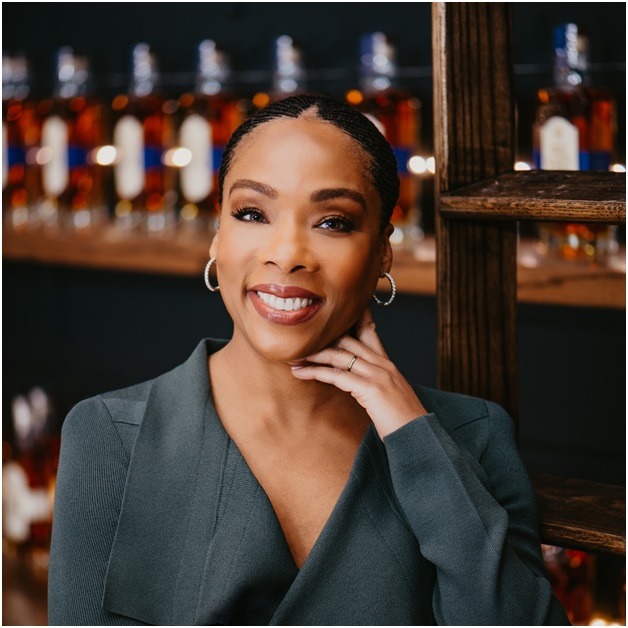
Weaver, founder and CEO of Uncle Nearest Inc., leads one of the fastest-growing independent whiskey brands in the country. Through her work, she has also elevated the legacy of Nathan Green, widely recognized as the first known African American master distiller.
Beyond her role in the spirits industry, Weaver is a two-time New York Times best-selling author, a popular TED speaker, and a seasoned entrepreneur with more than 25 years of experience building brands. Her credentials include certification as a Corporate Director from Harvard Business School, a summa cum laude degree from the University of Alabama, and an honorary Doctorate of Humanities from Bluefield State University. She is also currently pursuing a Master of Finance at Harvard Business School.
Her selection as commencement speaker places a nationally recognized business voice before graduates at one of the nation’s most storied historically Black colleges and universities, reinforcing the institution’s focus on leadership, innovation, and purpose-driven careers.
A Celebration of Academic Excellence
The Spring 2026 graduating class will include students earning degrees across multiple disciplines:
Graduate programs will confer doctoral and master’s degrees in fields ranging from education and public administration to criminal justice, nursing, and social work.
Undergraduate degrees will span the College of Arts and Sciences, including biology, computer science, cybersecurity, mathematics, and political science, alongside programs in music, theatre, and English.
The Thomas and Joyce Moorehead College of Business and Entrepreneurship will award degrees in accounting, management, marketing, economics, and information systems, while the College of Education and College of Professional Studies will recognize graduates in teaching, kinesiology, mass communications, psychology, and related fields.
University officials say the ceremony will reflect not only academic achievement, but also perseverance—an especially meaningful theme for a graduating class shaped by rapid change in higher education and the broader economy.
Additional information about the Spring 2026 Commencement Exercises is available through the university’s official website.
Atlanta unveils “Wild Seed, Wild Flower” mural in Mechanicsville, highlighting community, culture, and public art investment ahead of the 2026 FIFA World Cup.
By Milton Kirby | Atlanta, GA | April 21, 2026
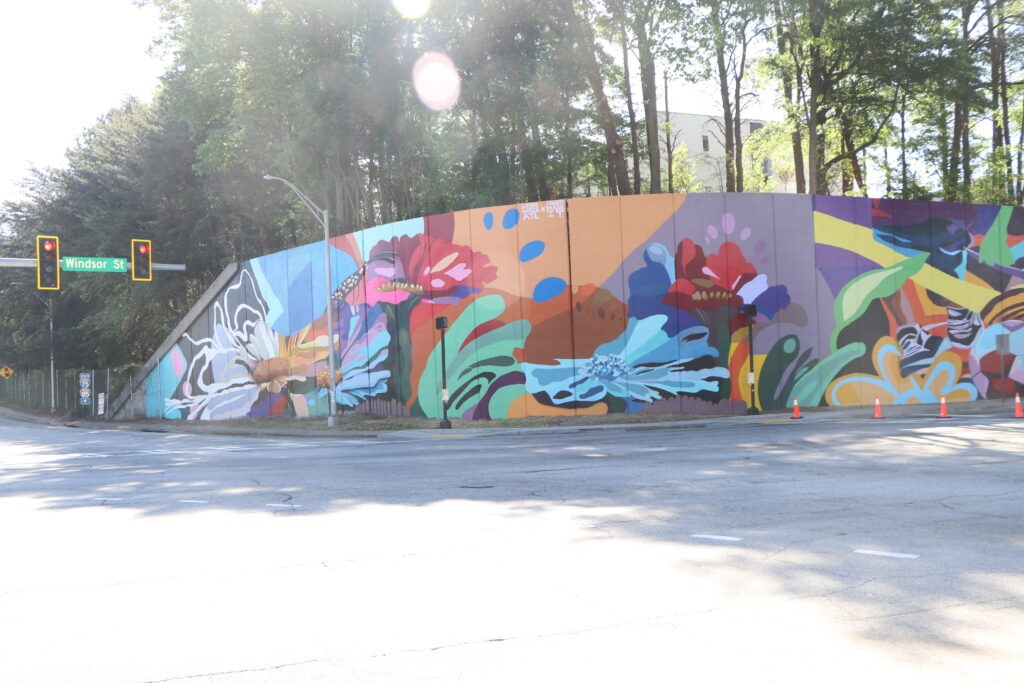
The sun hadn’t quite decided what kind of day it wanted to be. On one side of the retaining wall, warmth. On the other, a stubborn chill that clung to jackets and fingertips. But even in that cold pocket of Windsor and Rawson, the mural behind us radiated its own heat, a 10,000‑square‑foot pulse of color, care, and community.
Mechanicsville has seen its share of seasons. Some harsh. Some hopeful. But on this morning, as neighbors, artists, city leaders, and children gathered at the foot of a seen and unseen wall, the neighborhood felt like it was stepping into a new chapter. It was painted in over 100 colors and more than 800 spray cans, but rooted in something older, deeper, and already alive.
“Murals aren’t just nice because they look nice,” said Adriane Jefferson, Executive Director of the Mayor’s Office of Cultural Affairs. “They’re absolutely necessary.” She wasn’t talking about beautification. She was talking about story, the kind that lives in a community long before a ribbon is cut.
And that’s the truth of Wild Seed, Wild Flower: it didn’t arrive to make Mechanicsville beautiful. It arrived to reflect the beauty that was already here.
A Wall That Needed a Story
Councilmember Jason Dozier spoke like a man standing in his own living room. “Welcome to my home community of Mechanicsville,” he said, and the crowd answered with warmth.
He told the story of the “big A wall,” a massive, weathered stretch of concrete that residents passed daily, often with frustration. A wall that collected graffiti, grime, and the weight of being overlooked. A wall that sat beneath new rapid housing units, beneath the Beacon at Melody, beneath the quiet resilience of people rebuilding their lives.
Mechanicsville Mural by artist Charity Hamidullah – Photo by Milton Kirby
Dozier remembered telling the administration early on: We’ve got to do something about this wall.
And in that moment, you could feel the neighborhood nodding with him. Because every community has a wall like that — a place that holds the memory of what hasn’t yet changed.
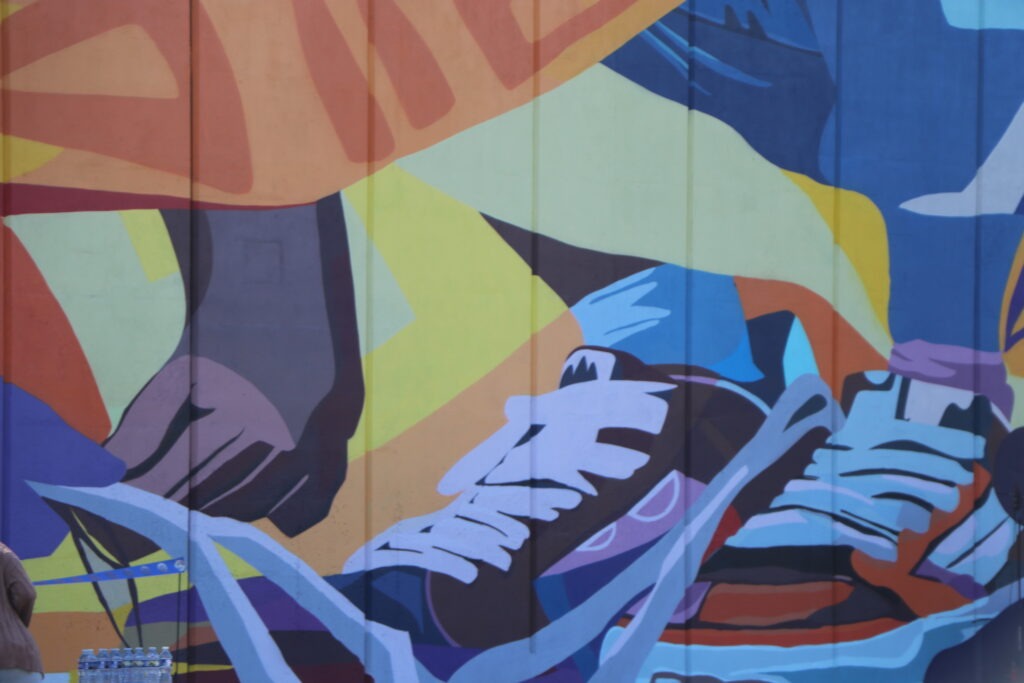
But now, that same wall holds a child tying someone else’s shoe while tying their own — a gesture Mayor Andre Dickens interpreted as a symbol of Atlanta itself: Helping others while helping ourselves. Growing together. A group project.
Art as Infrastructure, Art as Home
Mayor Dickens spoke about infrastructure, not the kind marked by orange cones and jackhammers, but the kind that shapes how a city feels.
“People are seeing these murals,” he said. “You’re seeing the social and artistic infrastructure that resonates with our emotions and our love of the city.”
It’s rare to hear a mayor talk about art with that kind of clarity. But in Atlanta, public art has long been a civic language. From Maynard Jackson to today, artists have been treated not as accessories to city life, but as partners in shaping it.
And this mural, the largest of the ten commissioned for the Bridges, Tunnels, and Walls program, stands as a testament to that partnership.
The Immigrant Who Helped Atlanta See Itself
When Monica Campana, co‑founder and executive director of Living Walls, stepped to the mic, she brought the story full circle.
She came to Atlanta in 2007 as an immigrant from Peru. She founded Living Walls in 2010. And she learned quickly that public art was the most democratic, accessible, and empowering way to claim space in a city.
“Public art made me feel like my voice mattered,” she said. It made her feel seen. It made Atlanta feel like home.
And then she said something that stayed with me long after the speeches ended:
“This mural is a love letter to Atlanta.”
A love letter written by artists from New Orleans, New York, Greece, Iran, Eritrea, Italy, Puerto Rico, Colombia, Peru, and Atlanta itself. A global chorus painting a local truth.
Charity Hamidullah – Photo by Milton Kirby
The Artist Who Saw God in Mechanicsville
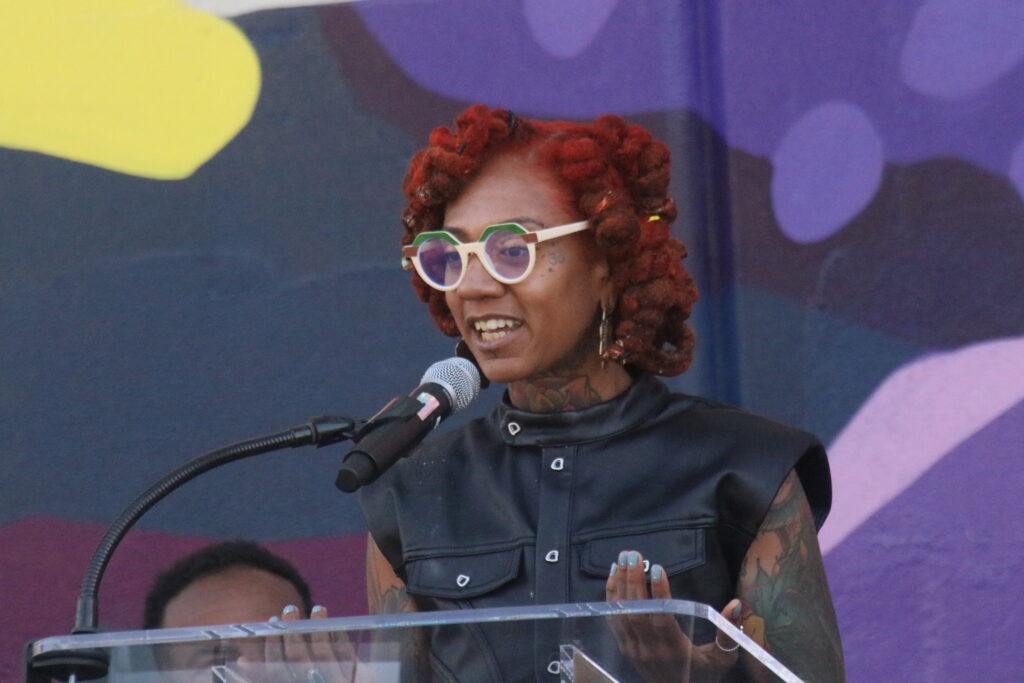
When lead artist Charity Hamidullah spoke, the ceremony shifted. Her voice carried something tender, something spiritual.
She talked about seeing children at the Dunbar Center — chalk on their hands, creativity in their eyes. She talked about seeing God’s creativity in the neighborhood. She talked about communities tying each other’s shoes, lifting each other up, dancing in harmony.
“This wall is just a mirror,” she said. A mirror of Mechanicsville. A mirror of Pittsburgh. A mirror of South Downtown and Castleberry Hill. A mirror of every place where people have survived, created, and loved each other through change.
Soccer Ball – Mechanicsville – Photo by Milton Kirby
Yes, the mural was created ahead of the World Cup. Yes, the world will see it. But Charity reminded us of the deeper truth:
“This community has been beautiful for a very long time.”
The mural didn’t create that beauty. It simply made it impossible to ignore.
Mechanicsville Mural – Photo by Milton Kirby
A Wildflower That Will Keep Spreading
When the ribbon was finally cut, the crowd pressed forward — neighbors, artists, city staff, children, elders. People touched the wall. People took photos. People lingered.
And in that lingering, you could feel something growing.
Wildflowers don’t bloom because someone is watching. They bloom because the soil is ready.
Mechanicsville was ready.
This mural — this wild seed — will keep spreading. Not because of the World Cup. Not because of the cameras. But because the community it reflects has been blooming all along.
And now, the city has a wall that tells the truth.
In Still Becoming, Florita Bell Griffin explores how rapid innovation can weaken trust, continuity, and human connection when systems change without coherence or lived context
By Florita Bell Griffin, Ph.D | Houston, TX | April 21, 2026
Most people who have lived long enough can sense when something is changing in the wrong way, even when it appears to be working. Systems improve. Outputs sharpen. Efficiency increases. Yet something essential thins. The sensation arrives quietly, often before language forms around it, registering instead as unease, fatigue, or distance. It can feel like walking into a familiar place after a renovation and realizing the layout makes sense on paper while the experience feels strangely disorienting.
This response comes from pattern recognition. Over time, people learn to distinguish movement that carries meaning from movement that merely accelerates. Earlier decades reward speed. Later years sharpen sensitivity to coherence. Progress that arrives without sequence feels unstable. Improvement that sheds its own history feels incomplete. What people recognize in these moments is discernment: an internal measurement of whether a system still holds together across time.
Many people over forty already know how to learn new tools. They have learned repeatedly across careers, technologies, institutions, and roles. What unsettles them now is rarely the demand to learn. The deeper issue is orientation. Too often, new systems arrive as if nothing existed before them. They provide instruction without context, features without lineage, and efficiency without explanation. The burden of coherence shifts onto the individual, who is left to reconcile what was with what is, without meaningful support from the structure itself.
Consider a system that updates regularly. Interfaces refresh. Terminology shifts. Workflows reorganize. Each change functions as intended. Performance metrics rise. Support demands fall. Yet longtime users feel disoriented rather than strengthened. The system has changed correctly, yet it has changed without coherence. No bridge connects the earlier state to the present one. No visible lineage explains how one version became the next. The result rarely presents as failure. The result presents as gradual erosion of trust, because the user can feel the system moving while the system declines to show its own continuity.
This dynamic extends far beyond software. Consider a healthcare organization that introduces a new operational model to improve throughput and reduce costs. Appointments become shorter. Scheduling becomes optimized. Data flows more cleanly between departments. Yet patients feel increasingly unseen, and practitioners struggle to reconcile new protocols with established judgment. Outcomes may improve on paper, while continuity of care thins. What has been gained in efficiency has been traded for intelligibility. The system works, yet fewer people feel grounded within it, because the link between prior practice and current policy remains unclear.
A life accumulates context whether a platform acknowledges it or overlooks it. Decisions leave residue. Experiences layer. Judgment forms through consequence rather than instruction. People carry forward lessons from work, family, loss, responsibility, and recovery. When tools enter that terrain without regard for what already exists, they feel intrusive rather than supportive. This becomes especially visible after forty, because the reader holds enough lived sequence to detect when a system treats human reality as interchangeable.
The difference shows up in subtle places. A tool can offer new power while draining confidence. A process can become smoother while leaving users less certain of their footing. A platform can create speed while requiring people to re-translate their own history into new labels. Over time, this creates a specific kind of fatigue: the fatigue of carrying coherence alone. People remain capable and engaged, yet they spend energy reconstructing context that a well-designed system could have carried forward on their behalf.
This is why certain innovations feel misaligned despite technical success. Systems may perform flawlessly while quietly dissolving coherence. They optimize outcomes while thinning meaning. People who have navigated enough transitions recognize this dynamic instinctively. They have seen institutions evolve, organizations restructure, technologies arrive, and narratives reset. They understand that sequence matters, because sequence is how accountability stays visible. Sequence is how judgment retains legitimacy. Sequence is how a person remains themselves across change.
Over time, the absence of continuity produces predictable consequences. Confidence erodes, rarely because people lack ability, and more often because they lack orientation. Decision-making becomes reactive rather than grounded. Authority shifts from judgment to procedure. Participation narrows to compliance. The shift tends to appear as silence rather than protest. People disengage without dramatic refusal. They adopt the tool while withholding trust. They follow the workflow while reducing investment. A system can interpret that as success because output continues, while the deeper relational layer continues thinning.
Still becoming describes growth that carries forward rather than breaks apart. It reflects development that aligns with a life already in motion, rather than demanding reinvention at the cost of integrity. In this posture, experience becomes an asset rather than an obstacle. Memory serves as structure rather than sentiment. Judgment operates as signal rather than delay. The person remains intact while the tool becomes more capable.
As intelligent systems increasingly shape how people work, decide, and interpret their own value, this distinction grows more consequential. Performance alone rarely satisfies. Coherence becomes the measure. Systems reveal their true character through how they handle what came before. Systems that honor sequence strengthen trust because they remain intelligible across time. Systems that erase lineage require users to rebuild meaning repeatedly, and that cost accumulates.
Still becoming is a way to describe progress that remains inhabitable. It is the choice to build systems that can move forward without abandoning the lives already inside them. It is the insistence that continuity carries value, because continuity is how people recognize themselves across change.
This distinction is the terrain this inventor now moves through.
Before Georgia’s gubernatorial forum, limited campaign access raises deeper questions about civic inclusion, political responsiveness, and whether all voices—not just the loudest—are heard.
By Milton Kirby | Decatur, GA | April 20, 2026
In a crowded election cycle, campaigns move fast, rhetoric moves faster, and the public is left to sort out which voices matter in the noise. Yet beneath the stump speeches and policy one‑pagers lies a quieter truth about how power circulates in Georgia politics: not every voice gets the same doorway in.
The Truth Seekers Journal reached out to multiple Democratic gubernatorial campaigns on March 30, 2026, requesting interviews ahead of Thursday’s candidates forum. Several campaigns acknowledged the requests and offered courteous replies. Few moved beyond that initial exchange. One campaign engaged with follow‑up questions but did not provide a confirmed interview date. (This piece focuses on the Democratic field because those were the campaigns contacted for pre‑forum interviews.)
Community‑based outlets, small publications, and rural storytellers often find themselves waiting at the edges of the conversation—not because their questions lack substance, but because their platforms lack volume. In the days leading up to the forum, that imbalance revealed itself in familiar ways: delayed replies, incomplete follow‑through, and the quiet silence that settles in when campaigns prioritize the largest microphones first.
A Familiar Pattern Before the Forum
In the days leading up to the event, a pattern emerged, subtle, but consistent. Campaigns were responsive, but not fully accessible. Communication was polite, but rarely actionable. Threads opened, then thinned.
For community‑based outlets, this rhythm is not new. It reflects the soft architecture of political communication in a state where visibility often determines access, and access often determines influence.
Why This Matters for Georgia Voters
For Georgia voter, especially those in rural counties, small towns, and communities historically overlooked by statewide power this pattern carries weight.
If campaigns struggle to engage consistently with smaller media during an election, what does that suggest about how they might engage with everyday residents once in office?
The question is not about press access. It is about civic access.
It is about whether the next governor will hear from people who lack institutional reach—those without large platforms, without political machinery, without the amplification that often determines whose concerns are prioritized.
As the Forum Approaches
By the time the candidates step onto the stage Thursday evening, the contrast between public performance and private patterns of communication will be difficult to ignore.
Moderated by Maya T. Prabhu and structured as a nonpartisan forum with both Democratic and Republican candidates invited, the event will bring together a wide cross‑section of Georgia’s political voices in a single space. The auditorium will fill with the low hum of conversations, campaign stickers, and the anticipation that comes with a rare gathering of statewide contenders.
The room will buzz with applause lines, policy contrasts, and the choreography of a statewide race. Yet beneath the lights, a deeper question will linger: whose voices will carry beyond the microphones?
The forum offers a moment where every candidate must face the same room, the same questions, and the same citizens, a moment where accessibility can be observed, not merely promised.
Two Questions That Cut to the Heart of Governance
Against that backdrop, two questions rise naturally from weeks of observation—questions not about campaign tactics, but about governance, listening, and the structure of power.
The first asks candidates to confront the reality that many Georgians, including community‑based storytellers and smaller civic groups, struggle to be heard:
“Many community‑based outlets and smaller publications often struggle to get timely responses from campaigns. If elected, how will you ensure that everyday Georgians, including those without large platforms or loud voices are heard, respected, and included in your decision‑making?”
The second widens the lens:
“Georgia is a state with urban, rural, and often overlooked communities. If elected, how will you ensure that your administration actively seeks out and listens to voices that don’t traditionally have political influence including small towns, grassroots groups, and residents who feel disconnected from state government?”
Together, these questions are not designed to challenge candidates on stage alone, but to reveal how they might listen once the stage is gone.
The Measure of Leadership Is Who Gets Heard
Elections are full of promises about jobs, lower taxes, schools, safety, infrastructure, and the future of the state. But beneath every policy debate lies a more fundamental test: Who does a leader hear? Who do they make time for? Whose concerns shape their decisions?
In a state as large and varied as Georgia, leadership cannot be measured solely by the size of a rally or the sharpness of a debate answer. It must also be measured by the willingness to engage with the people whose voices do not echo loudly in the halls of power.
As the candidates prepare to make their case to voters, the question is not only what they will say. It is whether they will listen—and to whom—when access is no longer convenient, visible, or politically necessary.
Editor’s Note
The Truth Seekers Journal is committed to elevating voices across Georgia—urban and rural, established and emerging, amplified and overlooked. This piece reflects TSJ’s ongoing effort to examine not only what candidates say, but how they engage with the communities they seek to represent. Our reporting will continue throughout the 2026 election cycle, including coverage of Thursday’s gubernatorial forum and follow‑up interviews as they become available.
MARTA launches Rapid A-Line, Atlanta’s first bus rapid transit route, connecting downtown to southside neighborhoods with faster service, dedicated lanes, and phased station improvements.
By Milton Kirby | Atlanta, Georgia | April 18, 2026
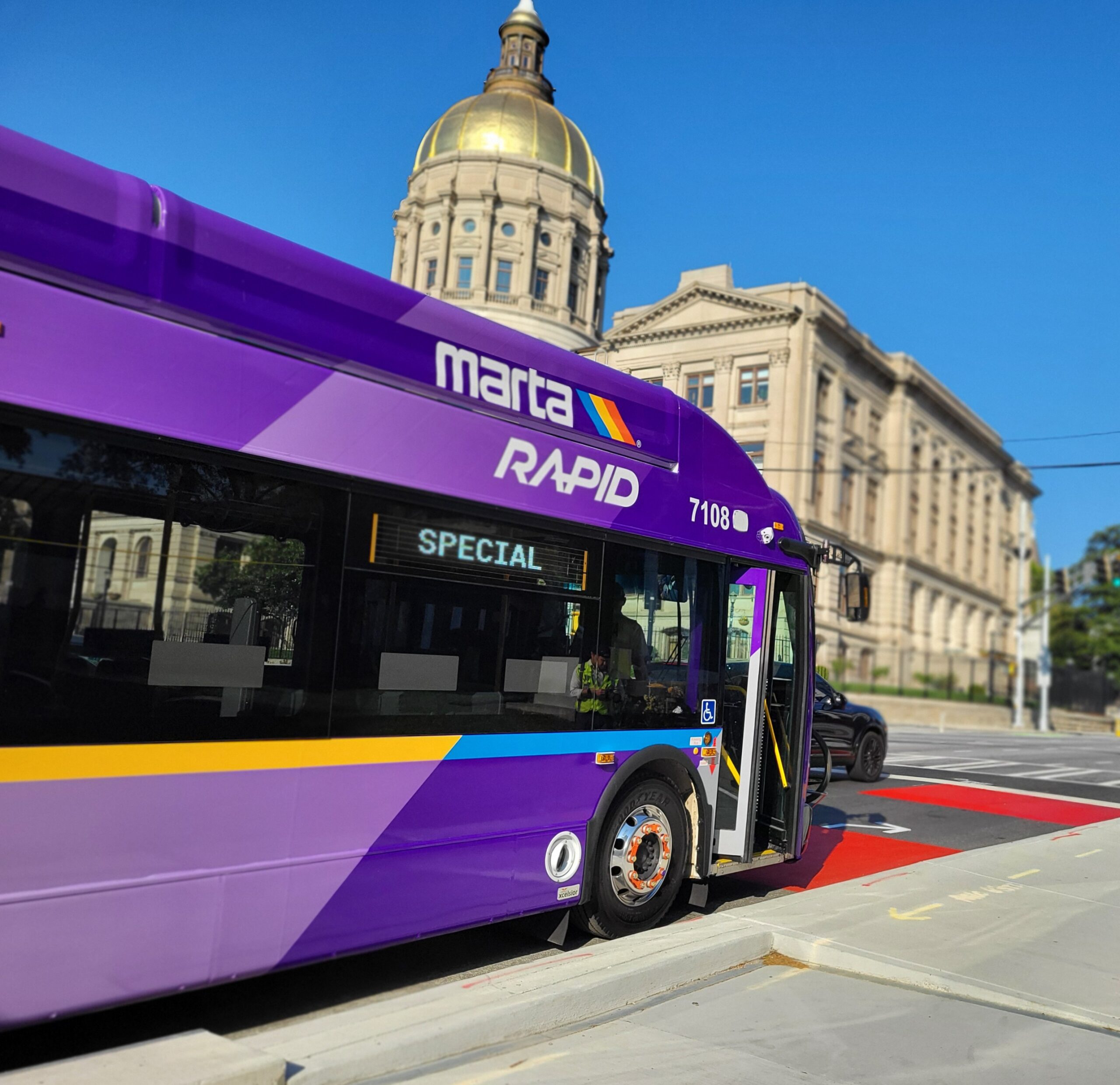
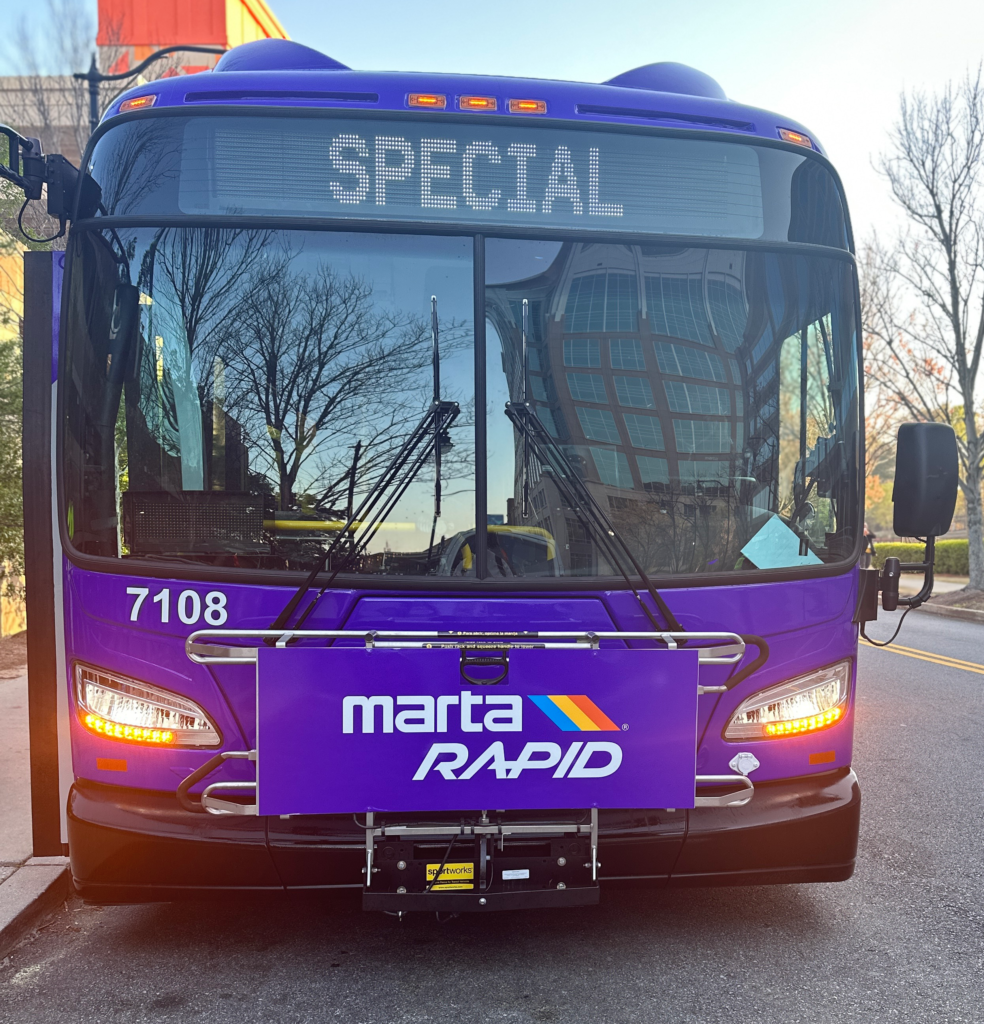
Atlanta’s transit system reached a milestone Saturday with the launch of the first phase of the Rapid A-Line, the region’s first bus rapid transit corridor operated by Metropolitan Atlanta Rapid Transit Authority (MARTA).
The new five-mile route connects Downtown Atlanta to key neighborhoods, including Capitol Gateway, Summerhill, Peoplestown, and the BeltLine’s Southside Trail. Riders can also transfer to MARTA’s rail system at Five Points, Georgia State, and Garnett stations.
The Rapid A-Line begins service as part of MARTA’s broader NextGen Bus Network redesign, a systemwide effort aimed at improving frequency, reliability, and access across metro Atlanta.
A Phased Opening with Immediate Service
Phase One service began April 18 with buses running daily from 5 a.m. to 1 a.m. The line currently operates using 40-foot compressed natural gas (CNG) buses branded for the Rapid A-Line.
While the system is designed to deliver rail-like features, some elements will roll out in stages. Off-board fare payment at stations is scheduled to begin May 2, along with additional amenities such as real-time arrival information.
MARTA Rapid Busing – Courtesy photo
In areas where construction is complete, buses travel in dedicated red lanes reserved strictly for transit and emergency vehicles. At several major intersections—including Martin Luther King Jr. Drive at Forsyth Street and Hank Aaron Drive at Haygood Avenue—buses receive signal priority, allowing them to move through traffic more efficiently.
Where construction is still ongoing, riders will use temporary stops located near future station sites. These stops are currently fare-free to accommodate the phased rollout.
Connecting Communities and Key Destinations
The Rapid A-Line is designed to improve connectivity between downtown and fast-growing neighborhoods south of the city center. The route links residential communities with major destinations such as the Georgia State University Convocation Center and the expanding BeltLine corridor.
Transit officials say the project represents a shift toward faster, more reliable bus service that mirrors many of the benefits traditionally associated with rail.
Delays and Challenges Along the Way
Despite the milestone, the project has faced hurdles. During construction, crews encountered unexpected underground infrastructure that slowed progress. In addition, a battery recall affecting the New Flyer electric buses originally planned for the route forced MARTA to adjust its rollout strategy.
Those challenges led to the decision to launch the line in phases. Full completion of all bus rapid transit stations is now expected in Phase Two, scheduled for fall 2026.
What Drivers Need to Know
MARTA is urging drivers to pay close attention along the corridor. Red bus-only lanes are restricted to transit vehicles and emergency responders, with no driving or parking permitted.
Motorists are also advised to follow traffic signals carefully at intersections where buses receive priority and to allow buses to clear before proceeding.
A Step Toward the Future
The Rapid A-Line marks Atlanta’s first true entry into bus rapid transit, a model used in cities nationwide to deliver faster service without the cost of rail expansion. As MARTA continues to build out its NextGen Bus Network, transit leaders say the A-Line will serve as a blueprint for future corridors aimed at improving mobility across the region.
Related
The Better Breeze rollout represents one of the most significant fare system upgrades in MARTA’s history, aligning Atlanta with other major transit systems that have shifted toward contactless payments.
But the transition also raises practical concerns—especially for riders who rely on cash or may not yet have access to updated cards. With the May 2 deadline approaching, transit officials are urging riders to act now to avoid disruptions.
Customers can find more information, including instructional videos in English and Spanish, through MARTA’s website, social media channels, or customer service line.
Atlanta celebrates opening of The Beacon at Cooper Street, marking 500 rapid housing units delivered to address homelessness through innovative modular construction and community partnerships.
By Milton Kirby | Atlanta, GA | April 17, 2026
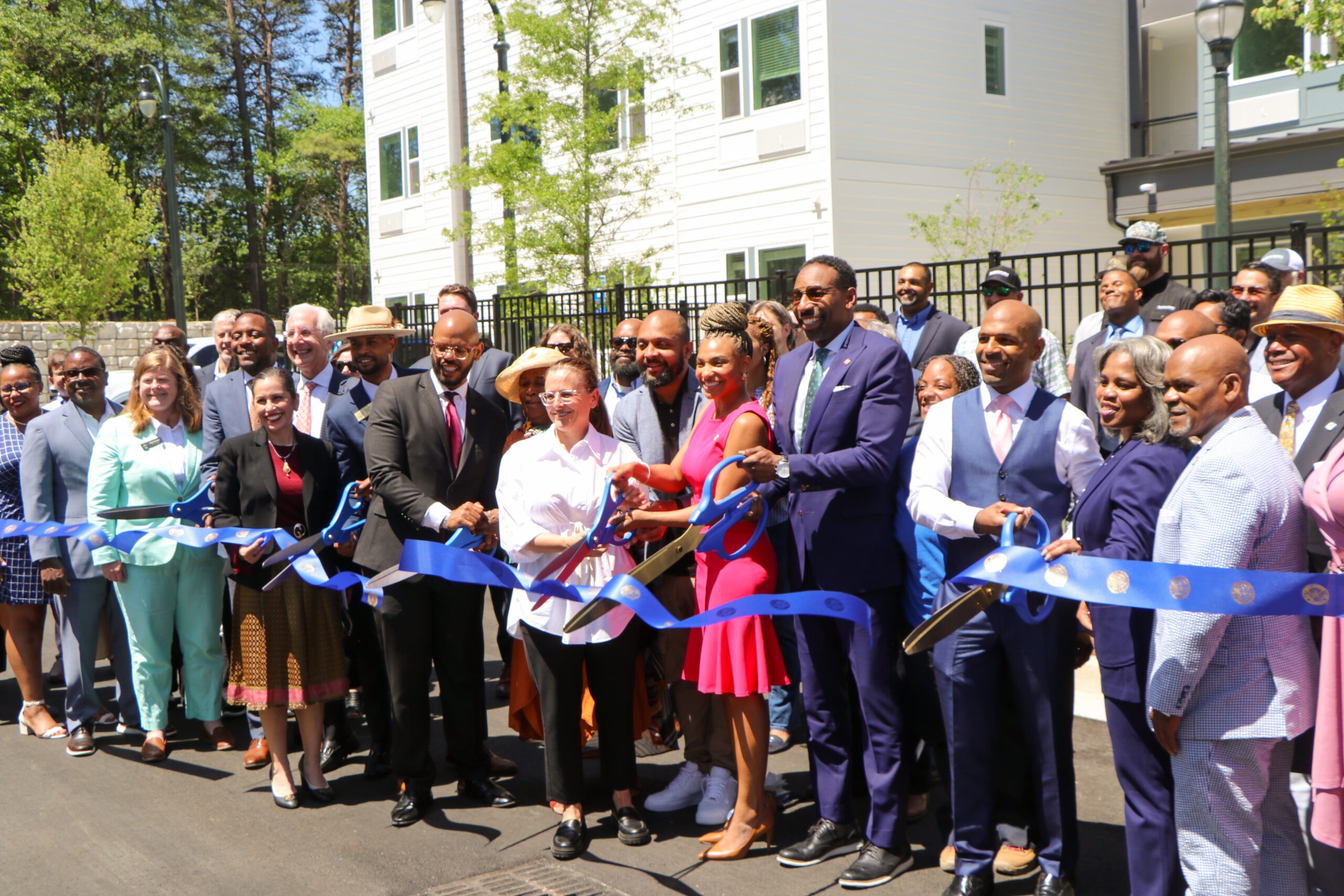
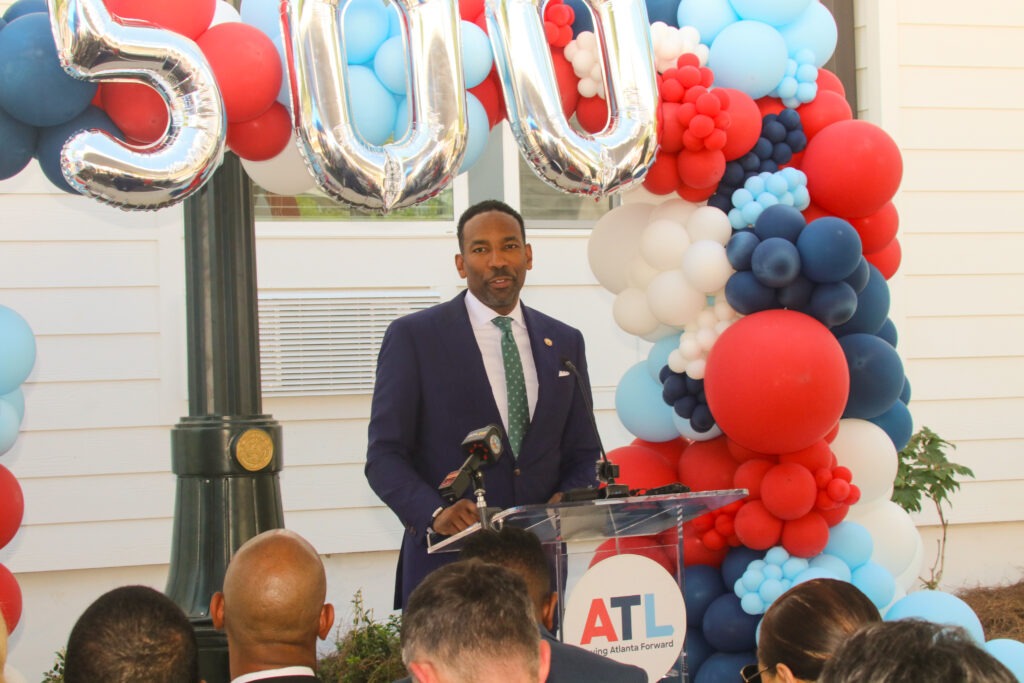
Atlanta leaders, community members, and housing advocates gathered this week in the Mechanicsville neighborhood to celebrate a major milestone in the city’s fight against homelessness: the ribbon cutting of The Beacon at Cooper Street, the final development needed to reach the city’s goal of 500 rapid housing units.
Mayor Andre Dickens called the moment “promises made and promises kept,” emphasizing that the project represents more than just construction.
“This work is not just about numbers,” Dickens said. “It represents 500 opportunities, 500 lives, and 500 chances at stability and dignity.”
Mayor Andre Dickens The Beacon @ Coopers Street – Photo by Milton Kirby
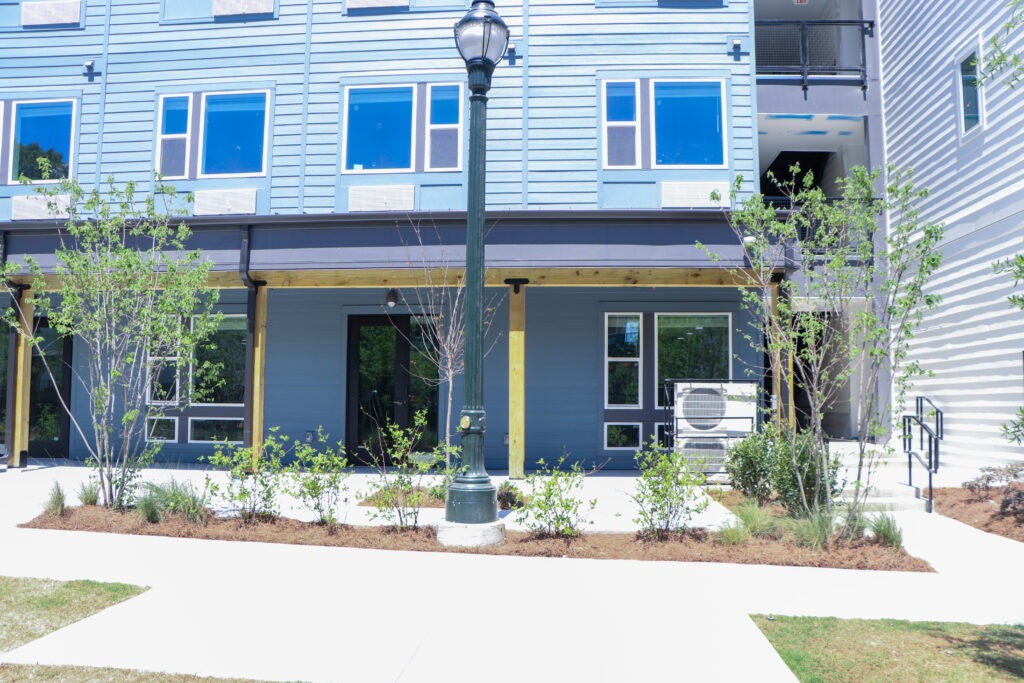
The Beacon at Cooper Street includes two multi-story buildings with 100 modular studio units, each designed to provide safe, supportive housing for individuals experiencing homelessness. The development also includes on-site offices for case management, mental health services, and other support systems aimed at helping residents rebuild their lives.
A Citywide Effort
The project is part of Atlanta’s broader Rapid Housing Initiative, a strategy launched by the Dickens administration to address homelessness by quickly converting underutilized city-owned land into permanent supportive housing.
From its earliest days, the initiative relied on partnerships across government, nonprofit organizations, developers, and the private sector.
“This is what it looks like when we listen, when we engage, and when we build together,” Dickens said during the ceremony.
City officials highlighted earlier developments in the initiative, including The Melody, a container-based housing community that gained international recognition, and Waterworks Village, a modular apartment complex delivered in record time.
Community Support in Mechanicsville
Leaders also praised the Mechanicsville community for embracing the project, noting that neighborhood support played a key role in its success.
“There’s a lot of ‘not in my backyard’ across the country,” Dickens said. “But this community said yes—and that made all the difference.”
District 4 Councilmember Jason Dozier described the development as both personal and transformative, pointing to the broader impact stable housing can have on families and neighborhoods.
“Housing creates the foundation for safety, health, and economic stability,” Dozier said.
More Than Housing
Officials emphasized that The Beacon is not just a housing project, but part of a larger ecosystem of care.
Thirty units are dedicated to individuals who need ongoing medical and mental health support through partnerships with local healthcare providers. The development also includes a “housing navigator” program to help individuals transition from hospitals and shelters into stable living environments.
The Beacon @ Coopers Street – Photo by Milton Kirby
Research cited during the event shows that rapid housing programs are effective, with 70 to 90 percent of participants remaining housed after one year.
Looking Ahead
While the ribbon cutting marked a significant achievement, leaders were clear that the work is far from finished.
Speakers emphasized that while the milestone is significant, much work remains to address homelessness across the city.
With the 500-unit goal now achieved, city officials signaled plans to expand the model and continue building housing solutions across Atlanta and the broader region.
As Dickens put it, “Love ought to look like something—and today, you can see what that looks like.”
A life taken too soon leaves a community grieving, questioning motive, seeking justice, and confronting the painful truth that no loss is ever just another headline.
By Milton Kirby | Charlotte, NC | April 15, 2026
There are moments when a life is taken so suddenly, so violently, that the world seems to tilt. A man is gone, and the questions begin to circle like smoke: Was it for property? Was it for money? Was it sheer meanness? Did the perpetrator believe he would get away with it—or did it even matter to him at all?
A face that once belonged to someone loved, someone known, someone real, now risks becoming one more among the faceless victims of senseless violence. His memory will remain vivid to those who cared for him, but to the wider world he becomes another name, another headline, another loss absorbed into the background noise of tragedy.
It isn’t that people don’t care. It’s that they don’t feel the closeness. When pain doesn’t touch our own doorstep, we often treat it as someone else’s burden. But violence is never someone else’s problem. It is a wound to the whole community, whether we acknowledge it or not.
No article can stop the next person determined to commit harm. But sometimes words reach the ones who are still reachable—the ones whose hearts are open enough to be changed.
When details are scarce, the mind fills the silence with questions: What if? Could anything have been done? Should something have been done differently? These questions haunt the people left behind, because the truth is simple and brutal: no amount of money, property, or pride is worth a human life.
So what do we do with the pain? We keep living. We keep hoping. We try—slowly, painfully—to place the hurt behind us. The hurt and images soften with time, but they never disappear. The face never leaves us.
And then comes the hardest question of all: Could I have done something if I had been there? The honest answer is often the only one we have—I don’t know.
Technology has made policing more efficient. Investigators can find perpetrators faster than ever before. We can only hope that in this case, justice follows truth, and truth follows evidence.
When the full story emerges, one family may feel a measure of relief, even as the pain deepens. Another family may face shock, disappointment, or disbelief. Violence ripples outward, touching more lives than the one it took.
And for those responsible, the question lingers: If they could do it all over again, would they? Would they choose differently—not because they were caught, but because hindsight reveals the weight of what they destroyed?
These are not easy questions. But they are necessary ones. Because the value of a life demands nothing less.
Support open, independent journalism—your contribution helps us tell the stories that matter most.
… this column exists for only one purpose and that is to answer your questions on Negro League baseball history. To that end, I need your help … if you are reading this column and enjoy it and want it to continue and you don’t already know everything about Negro League history … then please submit a question on any aspect of Negro League history. Your questions are the lifeblood of Shadow Ball—they shape where we go next.
– players, teams, events, and more – and, in so doing, you will direct where this column goes moving forward. Your participation is important and appreciated. The very existence of this column depends on you. Submit your questions to shadowball@truthseekersjournal.com.
Last week’s The Shadowball Significa Question of the Week: Who was the first African American pitcher to toss a no-hitter in Major League baseball? Sounds like a straightforward question but due to the peculiar history of Negro League baseball it is not so straight. Turns out there are three answers that I find acceptable: very acceptable. Let’s take a look at them in order.
On May 12, 1955, New York Giant right hander Sam Jones became the first African American to toss a Major League no hitter when he held the Pittsburgh Pirates hitless in a 4-0 victory. Shadowball favorite Will Clark nailed this one just half a day after it was posted.
Sam Jones had a solid big-league career. In addition to the no hitter, Jones had several other distinctions. Him & Quincey Trouppe formed the first African American battery in the American League. Jones was the runner-up to Early Wynn for the 1959 Cy Young award and tops in the NL. Sam Jones career strikeouts per 9 innings (7.5) was higher than all Major League pitchers with as many or more innings pitched than he had when he pitched his last game on October 3, 1964 (i.e. more than the Big Train, Rapid Robert Feller, Rube Waddell, Dazzy Vance and everyone else in MLB history).
Shadowball reader Matt Garvey offered some info that led me to an answer I had not considered but should have. He mentioned that Bill Gatewood had several no hitters. That got me to take a look at Gatewood. Negro League historian Phil S. Dixon offers that Gatewood may have authored as many as twenty no hitters at various levels of competition throughout his career. Phil has found documentation on six of them. One of them occurred on June 6, 1921, and, since December 16, 2020,when MLB designated 7 specific Negro Leagues (including the Negro National League in 1921) as Major. So, the first Major League no hitter by an African American was thrown by big Bill Gatewood in 1921, the second season of “Major” Negro League baseball.
I have one more possibly correct answer in mind – Charles Leander “Bumpus” Jones who, in his major league debut, took the ball for the Cincinnati Reds against the Pittsburgh Pirates 0n October 15, 1892. Ol’ Bumpus went on to be the only pitcher to toss a big league no hitter in first game in the majors. It also was the last game pitched from a pitcher’s box, instead of a mound, 50 feet way from home. It also, if local newspaper sources (as well as early family census records) are accurate he was the first Major League pitcher of African descent. He was referred to as mulatto in the census and colored in local newspaper articles.
If you are keeping score here is a list of select Major League baseball no hitters pitched by African Americans:
#1 10/15/1892 Bumpus Jones National League
#2 O6/06/1921 Bill Gatewood Negro National League
#3-21 numerous pitchers, including Satchel Paige, Hilton Smith, Leon Day, and a combined no no by Jose Mendez and Bullet Joe Rogan.
#22 05/12/1955 Sam Jones National League
Ol’ Sam Jones went to his grave thinking he was the first.
The Shadowball Significa Question of the Week: What feared slugger was the first to hit a home run in a Negro League East-West Classic? The Classic was the official name of the Negro League All Star game. Send your answer and any comments on the Negro Leagues to shadowball@truthseekersjournal.com or Shadow Ball, 3904 N Druid Hills Rd, Ste 179, Decatur, GA 30033
Ted Knorr
Ted Knorr is a Negro League baseball historian, longtime member of the Society for American Baseball Research’s Negro League Committee, and founder of the Jerry Malloy Negro League Conference and several local Negro League Commemorative Nights in central Pennsylvania.
Support open, independent journalism—your contribution helps us tell the stories that matter most.