More than 150 residents logged in on November 10 for a virtual town hall hosted by DeKalb County CEO Lorraine Cochran-Johnson and District 1 Commissioner Robert Patrick, with District 6 Commissioner Ted Terry serving as co-sponsor. The discussion centered on the future of DeKalb-Peachtree Airport (PDK) and a major proposed expansion by Sky Harbour, LLC.
The meeting brought together residents, business owners, and aviation leaders to talk through growth, environmental impact, aircraft noise, and the long-term vision for one of the county’s most important assets.
“PDK is one of DeKalb County’s greatest economic assets, but progress must always be guided by responsibility and community input,” Cochran-Johnson said.
Understanding PDK: A Busy Airport with Growing Pressure
PDK is a county-owned general aviation airport in Chamblee, roughly 11.5 miles from downtown Atlanta. It operates 24 hours a day and has averaged more than 230,000 annual takeoffs and landings since 1988.
With three asphalt runways in an H-shape—its longest stretching 6,000 feet—PDK is Georgia’s second busiest airport and ranks seventh nationwide among general aviation fields.
The airport generates most of its revenue through more than 250 ground leases for offices, hangars, and corporate tenants.
“Revenue from ground leases, along with fuel flowage fees, supports the airport’s enterprise fund and covers our annual operating and maintenance expenses,” Airport Director Hunter Hines explained.
But PDK has seen limited modernization in recent decades.
“This is something we are committed to changing,” Hines said, noting plans for transient landing fees and long-term infrastructure improvements.
Inside the Sky Harbour Proposal
Sky Harbour wants to build eight hangars on 12.8 acres on PDK’s east side at an estimated cost of $45 million. The project would include corporate hangars, an access road, aircraft support facilities, and the ability to add solar panels and electric ground-support equipment.
Over 50 years, the project is projected to generate $576 million in local revenue:
$66 million for the airport
$211 million for DeKalb County
$230 million for DeKalb County Schools
$67 million for the City of Chamblee
County officials say the development could reduce the need for aircraft repositioning flights and help more planes use PDK as their home base. Sky Harbour estimates 600 jobs would be created through construction, operations, and workforce development.
“We’re talking about 15 or 16 aircraft based with us,” said Sky Harbour Senior Vice President Neil Szymczak. “Only a handful of operations compared to the airport’s total. We won’t be driving up traffic.”
Szymczak also said Sky Harbour would contractually commit to housing no aircraft larger than what PDK already allows.
Growing Community Concerns: Noise, Safety, and Pollution
Local residents voiced concerns about added noise, environmental impact, and larger jets coming into their neighborhoods.
PDK Watch Inc. communications director Larry Foster wrote that the project could “significantly increase the number of flights and the noise disruption” already affecting more than 100,000 residents near the airport. “That disruption will only get worse in the future if the Sky Harbour project is allowed to go forward,” he said.
Noise remains a sensitive subject at PDK. Cochran-Johnson noted that more than 16,000 noise complaints were filed with the FAA in 2024—but most came from a small group of residents.
Environmental questions also loomed large.
The county confirmed that an environmental study is underway and is expected to be completed by June 2026. Cochran-Johnson said the county can stop the project if the review shows significant hazards.
How the Project Reached This Point
PDK issued a request for proposals in 2023 to explore east-side development. Only one company responded.
“This was not a sole-source solicitation,” Hines said. “We received one response from Sky Harbour, and based on evaluation of the criteria, the RFP was awarded.”
Sky Harbour currently holds 19 ground leases nationwide, with nine in operation and nine under development.
The project cleared the Operations Committee on November 4, but the full DeKalb County Commission deferred its vote until November 18, citing the need for more review.
Commissioner Patrick said county leaders want full transparency before moving forward.
Leaders Promise Continued Public Input
Despite the differing viewpoints, officials closed the town hall by agreeing on one point: community input will guide the process.
“We are committed to engaging the public as these plans move forward,” Cochran-Johnson said.
County leaders emphasized that the expansion will not increase the size or weight limit of jets allowed to use PDK. Any future development, they said, must balance economic benefits with environmental protection and neighborhood quality of life.
The debate is now set to continue as the county approaches its November 18 vote—and as the environmental review moves toward its 2026 deadline.
By Milton Kirby | Prince George’s County, MD | November 14, 2025
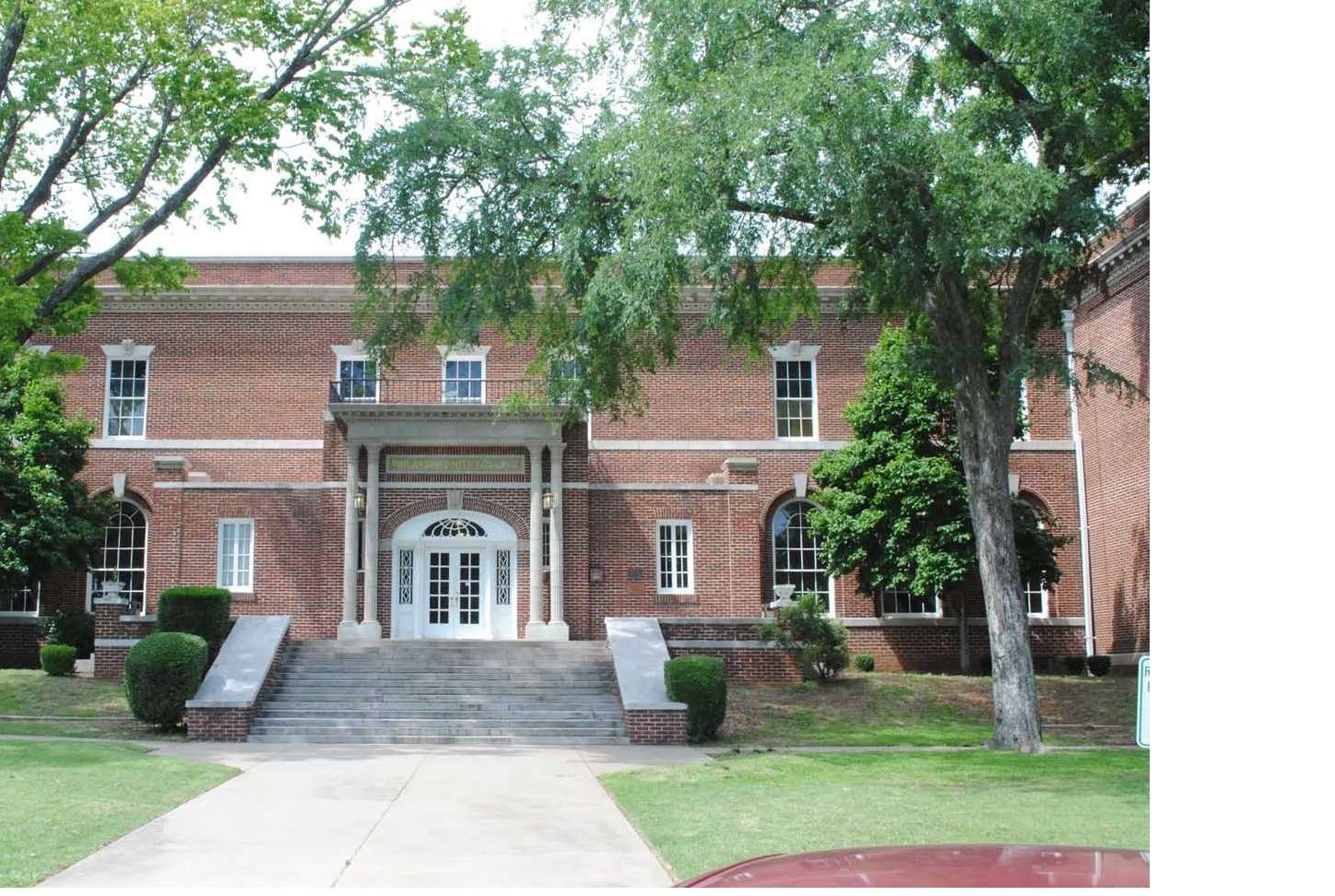
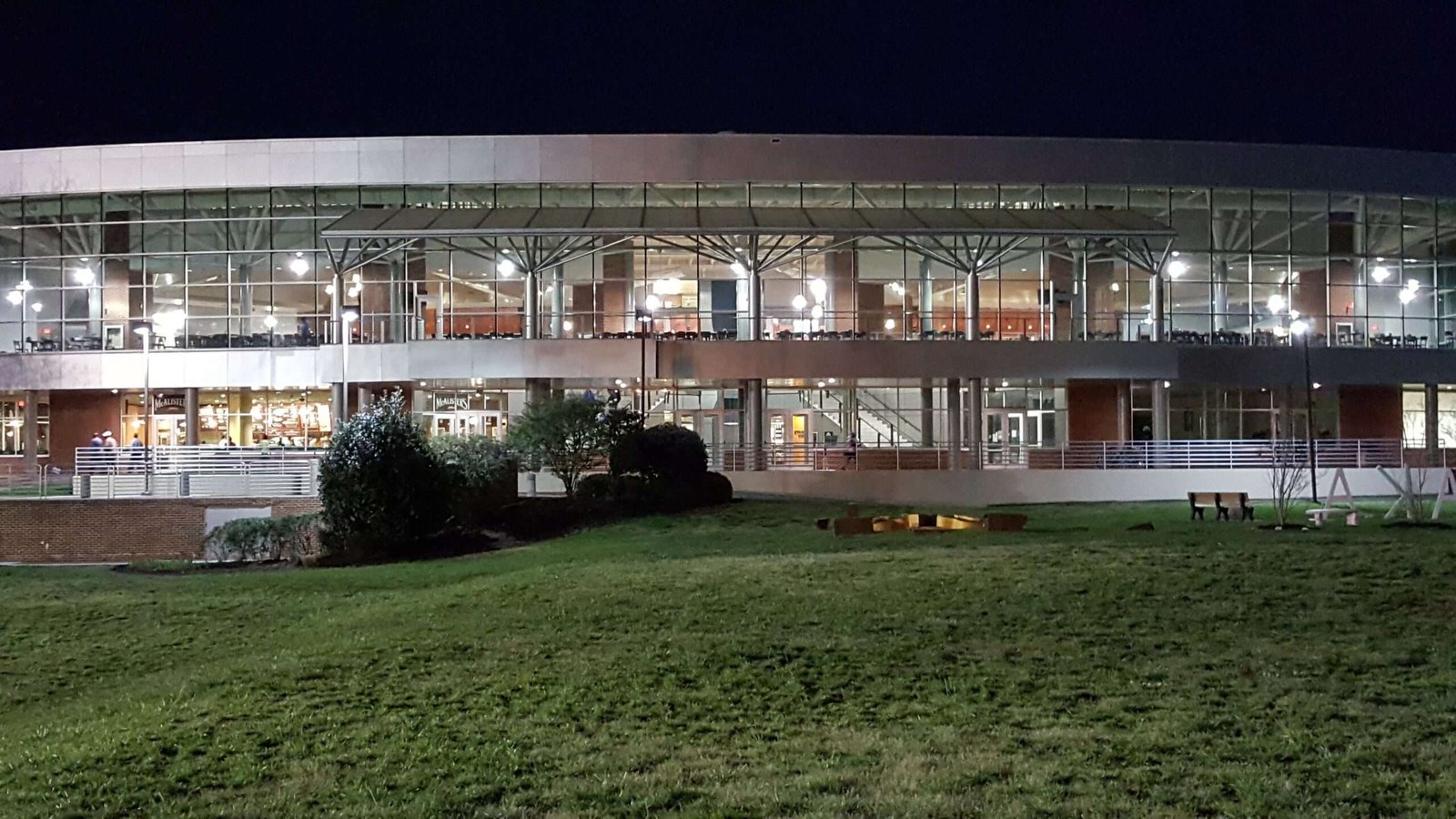
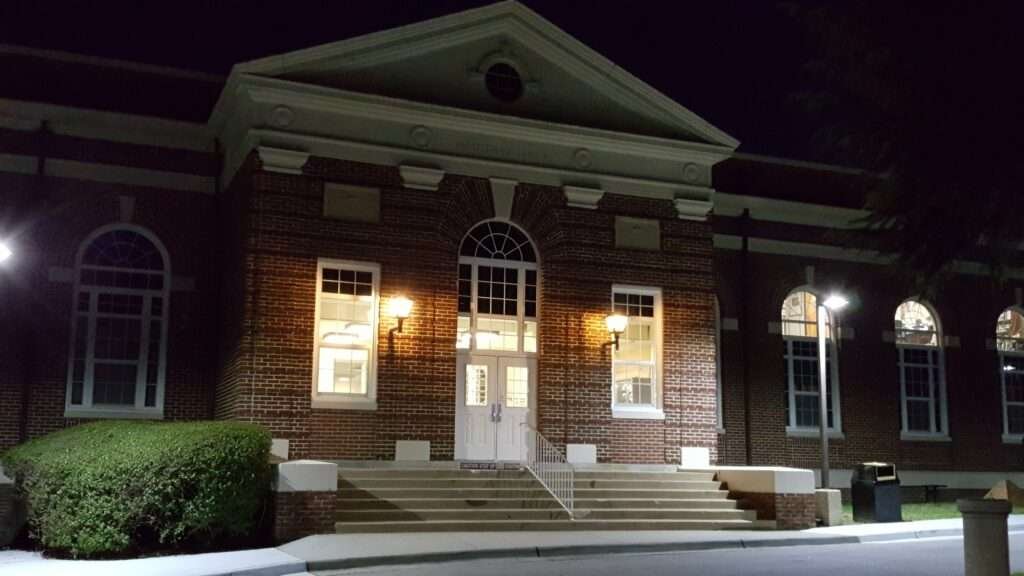
Bowie State University has received the largest single donation in its 160-year history — a $50 million unrestricted gift from philanthropist and author MacKenzie Scott. The announcement marks a major moment for Maryland’s oldest historically Black university and one of the fastest-growing institutions in the state.
The gift follows Scott’s earlier $25 million donation to Bowie State in 2020, bringing her total investment to the university to $75 million. Leaders say the unrestricted nature of the gift gives Bowie State the flexibility to expand scholarships, strengthen academic programs, and build long-term financial stability.
President Aminta Breaux said she was moved to tears when she learned of the gift. “I was truly at a loss for words… I was overjoyed. I was so overcome,” she said. Breaux noted that many of the university’s students are high-need, and the donation will significantly close financial gaps for those who require the most support.
MacKenzie Scott – Courtesy Vogue
“This gift has the ability to touch so many lives,” Breaux said. “Higher education is the pathway to upward social mobility for our students.”
Brent Swinton, Bowie State’s vice president for philanthropic engagement, called the donation “transformational,” saying it will inspire additional donors and help fuel new opportunities across the university.
Scott, who has given more than $1.7 billion to higher education and nonprofit organizations in recent years, has made large investments in several historically Black colleges and universities nationwide. Her support places Bowie State among a select group of institutions experiencing major increases in private philanthropy.
Bowie State is already in a period of growth, offering more than 30 undergraduate majors, over 21 master’s programs, 18 specialty certificates and three doctoral degrees in fields ranging from cybersecurity and nursing to business, education and STEM.
University officials say they plan to direct a large share of the funds toward student scholarships, faculty development, research expansion and new academic initiatives. Additional details are expected as planning continues.
The gift also increases the university’s ability to make long-term investments that strengthen the student experience — including campus modernization projects, expanded support services and new industry partnerships.
A deeper look at Bowie State’s long history shows why this moment carries such meaning for the institution.
Bowie State’s roots trace back to January 9, 1865, when an organization known as the Baltimore Association for the Moral and Educational Improvement of the Colored People opened a school inside the African Baptist Church at Calvert and Saratoga streets. The association, formed by 46 businessmen, lawyers, clergymen and Quakers, was committed to educating Maryland’s newly emancipated Black citizens.
One of its strongest advocates, Joseph M. Cushing, openly criticized the state for refusing to fund education for Black residents, predicting that Maryland would someday be forced by public opinion to do so. The first school—known as School No. 1—offered basic education courses. Teacher-training classes were added in 1866, and by 1867 the institution expanded with support from the Freedmen’s Bureau and Quaker donors.
The state took control of the school in 1908, renaming it Normal School No. 3. A move to Bowie soon followed, with Maryland purchasing a 187-acre tract of farmland to establish a new campus that opened in 1911. Don Speed Smith Goodloe became the first Black principal to lead the school.
Through the 1920s and 1930s, the curriculum continued to grow, transitioning from the Maryland Normal and Industrial School at Bowie to the Maryland Teachers College at Bowie in 1938. Liberal arts programs were added throughout the 1960s, and the state officially renamed the school Bowie State College in 1963.
Graduate education began in 1969 with the creation of the Master of Education program. Bowie State continued its rise through the 1970s and 1980s, and in 1988 the institution transitioned to Bowie State University. On the same day, it became part of the newly formed University System of Maryland.
The university gained national attention for its work in science, technology, engineering and mathematics. In 1995, Bowie State won an 11-year, $27 million NASA/NSF award, becoming one of just six national Model Institutions for Excellence in STEM.
Today, Bowie State ranks among the nation’s leading comprehensive universities, preparing students to thrive in a rapidly changing, highly technological world. The new $50 million gift strengthens that mission, linking a 160-year legacy of resilience with a future defined by opportunity and innovation.
With expanded scholarships, stronger academic programs and broader research capacity, Bowie State is positioned to open doors for generations of students who will carry the institution’s legacy forward.
Philander Smith University received a record $19 million unrestricted gift from philanthropist MacKenzie Scott, boosting scholarships, campus upgrades, student success efforts, and long-term HBCU sustainability.
By Milton Kirby | Little Rock, AR | November 14, 2025
Philander Smith University (PSU) has received an unrestricted $19 million gift from philanthropist MacKenzie Scott. It is the largest single donation in the university’s 147-year history. University leaders say the contribution strengthens academic programs, student support, and long-term planning for the historic Little Rock HBCU.
A Gift with Full Flexibility
The donation is unrestricted, giving the university freedom to direct funds where they are most needed. That flexibility allows PSU to respond quickly to student needs, expand programs, and improve facilities without donor-imposed limits.
A Historic Institution with a Unique Mission
Founded in 1877, Philander Smith University is a small, private, historically Black liberal arts institution related to the United Methodist Church. It offers four undergraduate degrees — the Bachelor of Arts, Bachelor of Science, Bachelor of Business Administration, and Bachelor of Social Work — along with a Master of Business Administration (MBA).
The university’s mission is to graduate academically accomplished students who are grounded as advocates for social justice and committed to changing the world for the better.
PSU is also the only United Negro College Fund member institution in Arkansas, serving students of all backgrounds regardless of race, religion, sex, national origin, or ethnicity.
Leadership Responds
President and CEO Dr. Maurice D. Gipson said the contribution marks a major step forward.
“This gift is a resounding vote of confidence in our mission and our momentum,” Dr. Gipson said. “It positions us to invest boldly in student success, facilities enhancement, and programs that prepare the next generation of Philander Smith leaders.”
MacKenzie Scott – Courtesy Vogue
Why This Gift Matters
HBCUs often operate with smaller endowments and historic funding inequities. Rising costs and enrollment shifts have increased pressure on many campuses. PSU leaders say the unrestricted gift will support scholarships, strengthen the endowment, and modernize facilities — areas essential for long-term growth.
Research shows that large, flexible donations like Scott’s can boost retention, expand academic offerings, and stabilize financial planning at HBCUs.
Scott’s Growing Impact on HBCUs
Since 2020, Scott has reduced her Amazon stake by 42 percent, selling or donating about 58 million shares. She is still worth more than $35 billion today, even after donating more than $19 billion through her philanthropic platform, Yield Giving. Created in 2022, Yield Giving supports thousands of organizations focused on education, equity, disaster recovery, and community advancement.
Her focus on large, unrestricted gifts has made her one of the most influential philanthropic partners for historically under-resourced institutions.
Scott’s donation to Philander Smith continues her record of large contributions to historically Black colleges and universities. Over the past five years, she has made significant gifts to institutions such as Prairie View A&M University, Bowie State University, North Carolina A&T University, and others.
These gifts have helped HBCUs build endowments, expand programs, and stabilize campuses that operate with far fewer financial resources than many predominantly white institutions.
Looking Forward
For Philander Smith University, the $19 million donation is more than a financial boost. It represents trust in the school’s mission, momentum for new initiatives, and an opportunity to deepen its impact on Little Rock and the region.
The gift provides stability and room for growth as PSU prepares the next generation of students and community leaders.
MacKenzie Scott gives North Carolina A&T a historic $63 million gift, boosting its research goals, student success, and endowment as the university advances toward national R1 status.
By Milton Kirby | Greensboro, NC | November 14, 2025
North Carolina Agricultural and Technical State University has received the largest single gift in its 134-year history — a record-setting $63 million investment from philanthropist and author MacKenzie Scott.
The announcement marks a major moment for the nation’s largest HBCU. It also deepens Scott’s relationship with the university, following her $45 million gift in 2020, which brought her total support to $108 million.
MacKenzie Scott – Courtesy Vogue
Chancellor James R. Martin II said the latest contribution demonstrates Scott’s trust in A&T’s mission and growing national prominence.
“No investor in higher education history has had such a broad and transformational impact across so many universities,” Martin said. “North Carolina A&T is deeply grateful for Ms. Scott’s reaffirmed belief in our mission and for the example she sets in placing trust in institutions like ours to drive generational change through education, discovery and innovation.”
A National Leader Rooted in History and Excellence
North Carolina A&T stands as one of the nation’s most dynamic universities — a land-grant research institution, a cultural pillar, and America’s largest HBCU for seven consecutive years. It is also the #1 producer of degrees awarded to African Americans in North Carolina and the leading HBCU STEM institution in the country.
The university’s diverse and global community includes students from across the nation and six continents, upheld by a tradition of excellence and alumni who hold influential roles in government, industry, and academia.
Photo by Milton Kirby – NC A&T – Murphy Hall
A&T’s achievements include:
66 patents issued from faculty and student research
A growing number of spin-off and start-up companies
The top public HBCU business school in the country
National recognition for engineering, agriculture, and science excellence
In recent years, the university has experienced rapid expansion. Enrollment surpassed 15,000 students in Fall 2025, and A&T opened major new facilities, including the $90 million Engineering Research and Innovation Center and a new 450-bed residence hall. Four new academic centers of excellence also debuted in the past year.
This foundation of growth sets the stage for Scott’s latest gift — and what it will help the university achieve next.
Fueling A&T’s Path to Research Leadership
Scott’s investment aligns directly with Preeminence 2030: North Carolina A&T Blueprint, the university’s strategic plan guiding its push toward the Research 1 (R1) Carnegie Classification — the highest level of research activity in the country.
The funding strengthens A&T’s capacity in key areas where it already leads, including:
Engineering
Agriculture and environmental sciences
Life and health sciences
Data science
Artificial intelligence
“This is an investment in A&T’s capacity to solve society’s most pressing challenges,” Martin said. “It will accelerate our momentum as a research and innovation powerhouse, ensuring that A&T continues to lead at the intersection of technology, human progress and social transformation.”
Supporting Students, Expanding Research, and Strengthening Generational Wealth
Because the gift is unrestricted, A&T can deploy resources where they will have the most impact — from bolstering student success and faculty recruitment to advancing interdisciplinary research.
The timing is pivotal. A&T’s endowment exceeded more than $202 million as of June 2024, the largest among all public HBCUs and one of the fastest-growing university endowments in the Southeast. Only a decade earlier, the figure stood below $60 million.
With Scott’s latest investment, the university’s endowment is projected to surpass $300 million, bolstering long-term stability and supporting competitive research portfolios, scholarships, and expanded federal and industry partnerships.
Board of Trustees Chair Gina L. Loften ’90 said Scott’s investment will have a lasting impact.
“On behalf of the North Carolina A&T Board of Trustees, I extend our deepest gratitude to Ms. Scott for her extraordinary gift,” Loften said. “This transformative investment will strengthen our capacity to fulfill A&T’s mission of exemplary teaching, innovative research, and service that lifts communities.”
At six years old, Ruby Bridges walked through a hateful mob into William Frantz Elementary, turning a school day into a turning point for America.
By Milton Kirby | New Orleans, LA | November 14, 2025
A Little Girl at the Center of History
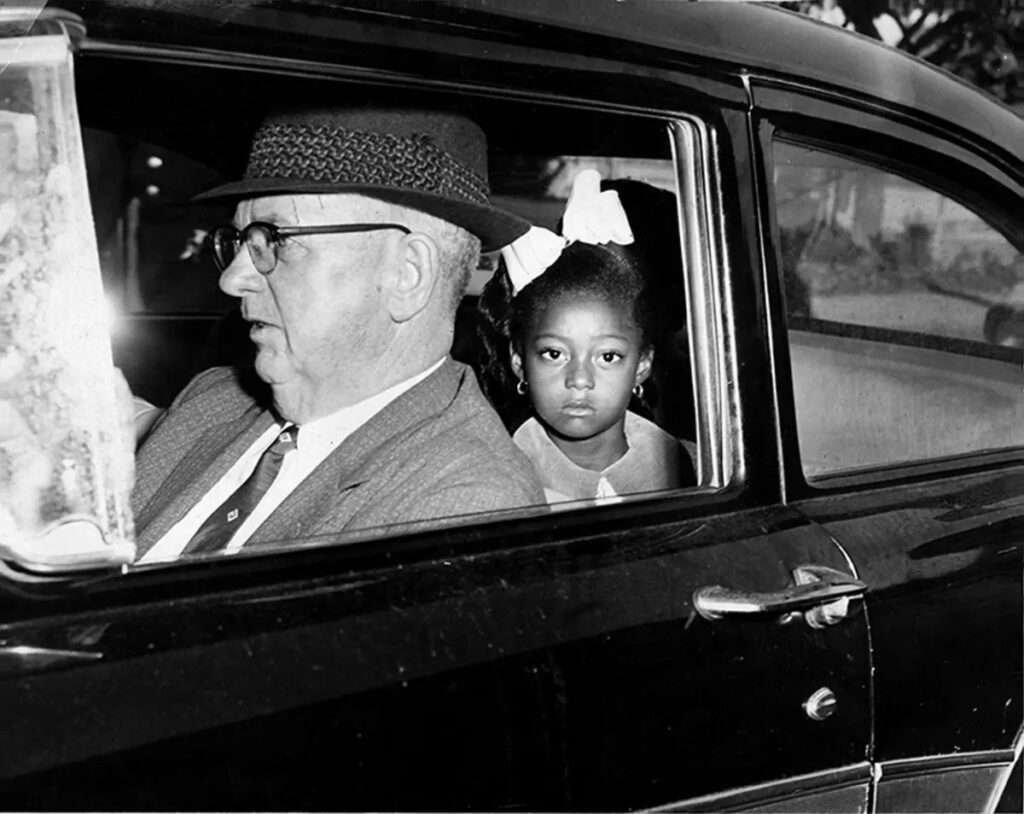
On November 14, 1960, a six-year-old girl in a starched dress and white shoes climbed the steps of William Frantz Elementary School in New Orleans. Four federal marshals flanked her — two in front, two behind — as a screaming mob hurled slurs, objects, and threats.
Her name was Ruby Nell Bridges.
That short walk into first grade changed the course of American history.
Born on September 8, 1954, in Tylertown, Mississippi, Ruby came into the world just months after the U.S. Supreme Court issued its landmark Brown v. Board of Education decision, declaring segregated public schools unconstitutional. Her early life, however, bore no resemblance to a legal victory. She grew up on a sharecropping farm, the eldest of five children born to Abon and Lucille Bridges, in a system designed to keep Black families poor and trapped on the land.
When Ruby was four, her parents left that world behind, moving to New Orleans in search of better work and a better future. Her father found a job as a gas station attendant. Her mother took night work to help support their growing family. Ruby helped watch her younger brothers and sister and walked a long way each day to an all-Black kindergarten, even though an all-white school sat just five blocks from her home.
That distance — five blocks that might as well have been a different country — became the line she was asked to cross.
A Test Meant to Exclude, and a Mother Who Said Yes
By 1960, under pressure from federal courts to comply with Brown v. Board, the Orleans Parish School Board tried a different tactic: administering an entrance exam for Black children. The test was designed to be difficult, with the hope that few, if any, would pass. If the children failed, white officials hoped, they could claim integration just wasn’t “practical” and delay it even longer.
Ruby’s father wanted no part of it. He feared exactly what would come — trouble, backlash, danger. Her mother, Lucille, saw something else: a chance for her daughter to get a stronger education and, just as important, to open a door “for all African-American children,” not just her own.
They argued. They prayed. And in the end, Lucille convinced Abon to say yes.
Out of all the Black children who took the test in New Orleans, only six passed. Three were assigned to McDonogh No. 19 Elementary. Ruby Bridges would be the only Black child sent to William Frantz — and the first Black child to integrate an all-white elementary school in the Deep South.
The court orders stated that the schools would open in September. Louisiana politicians responded with delay, stalling integration with every legal trick they could find. It took until November 14, 1960, for the judge’s order to finally break through.
That Monday morning, federal marshals drove Ruby and her mother the five blocks to William Frantz. In the car, the marshals calmly explained how they would walk around her to shield her from danger. Ruby, who had grown up watching parades and Mardi Gras crowds, thought the screaming crowd outside the school might be some celebration.
It was not.
Inside the School, Alone in a Classroom
White parents rushed to pull their children from the building as soon as Ruby walked in. Every teacher but one refused to teach while a Black child was enrolled. That first day, Ruby and her mother never made it to a classroom at all; they spent the day in the principal’s office while chaos raged outside.
On the second day, a young white teacher from Boston, Barbara Henry, came to meet her.
“Good morning, Ruby,” she said with a smile. “I’m your new teacher.”
Henry was the only educator willing to teach Ruby that year. Every other child assigned to her class was withdrawn or transferred, leaving Ruby as the single student in a first-grade room built for many. For the rest of that school year, Mrs. Henry taught her one-on-one — phonics, numbers, reading, writing — often sitting side by side at tiny desks rather than standing at the front of the room.
Outside the classroom, hate tried to make its presence felt daily. A white woman waved a Black baby doll in a coffin. Another threatened to poison Ruby, prompting the marshals to insist she only eat food brought from home. She could not go to the cafeteria. She couldn’t play outside during recess. Even to use the restroom, she had to be escorted down the hallway by federal marshals.
And yet, every day, she walked through that mob “like a little soldier,” Charles Burks, one of the marshals who escorted Bridges, later recalled. She did not cry. She did not turn back. Her resilience in the face of such adversity is a testament to the strength of the human spirit.
The Cost — and Quiet Courage — of One Family’s Decision
The Bridges family paid a steep price for that walk to school. Their sacrifices, both personal and financial, are a stark reminder of the toll that the fight for equality can take on individuals and families.
Ruby’s father lost his job at the gas station. The family’s regular grocery store refused to serve them. In Mississippi, her grandparents were turned off the land they had sharecropped for 25 years because of “the trouble” their granddaughter was causing in New Orleans. Under that kind of pressure, her parents’ marriage strained and eventually broke apart.
But the story was not only about hostility. Some white families chose to keep their children at William Frantz. A Methodist minister, Lloyd Anderson Foreman, walked his five-year-old Pam daughter through the mob, telling reporters, “I simply want the privilege of taking my child to school.” A neighbor gave Ruby’s father a new job painting houses. Others babysat, watched the family’s home to deter threats, and even walked behind the marshal’s car as Ruby traveled to school. These acts of solidarity show that change is possible, even in the face of deep-seated prejudice.
Child psychiatrist Dr. Robert Coles, disturbed by what he saw on the news, volunteered to counsel Ruby during that year. He met with her regularly at home, trying to understand how a child could carry such a burden. Years later, he would write The Story of Ruby Bridges for children and support the Ruby Bridges Foundation with his royalties.
Through it all, Ruby’s mother urged her to lean on faith. “If you’re afraid, pray,” she told her daughter. Ruby began praying on the way to school and, in time, even prayed for the people screaming at her. Years later, she recalled one morning when her teacher saw her lips moving as she walked through the crowd.
“Were you talking to them?” Mrs. Henry asked.
“No,” Ruby said. “I was praying for them.”
Life After the Mob, and the Work That Continues
By the time Ruby reached second grade, the mobs had thinned, the marshals were gone, and other Black children had quietly entered the school. Mrs. Henry, who had stood with her in that first, lonely year, was not invited back. The city, and much of the country, seemed eager to forget that ugly chapter.
Ruby finished elementary school at William Frantz, graduated from an integrated high school, and built a life in New Orleans. She studied travel and tourism, worked for years as a travel agent, married Malcolm Hall, and raised four sons. For a long time, she rarely spoke about what had happened when she was six.
That changed in the 1990s, when reporters, scholars, and schoolchildren began to ask: What happened to the little girl in Norman Rockwell’s famous painting, The Problem We All Live With? The painting, based on her walk into William Frantz, shows a small Black girl in a white dress, escorted by marshals past a wall splashed with a racial slur and a smashed tomato.
By then, Ruby had returned in a quiet way to William Frantz, volunteering as a parent liaison and helping families navigate the school system. She also reunited with Mrs. Henry after more than three decades. The two women, one Black and one white, one from New Orleans and one from Boston, picked up an old connection that had never really faded.
In 1999, Ruby founded the Ruby Bridges Foundation, dedicated to “the values of tolerance, respect, and appreciation of all differences.” As she often says, “Racism is a grown-up disease, and we must stop using our children to spread it.”
She has spent the years since speaking at schools, churches, museums, and universities, telling a new generation what it means to be the child at the center of a nation’s battle over who belongs in its classrooms.
The Other Three Who Walked That Morning
Ruby Bridges was not the only child who climbed into a federal marshal’s car on November 14, 1960. That same morning, just a few blocks away in the Lower Ninth Ward, three other six-year-old girls — Leona Tate, Gail Etienne, and Tessie Prevost — stepped into history as well.
Together with Ruby, they are known as the “New Orleans Four,” although for decades their story was eclipsed by the spotlight that was placed almost solely on Bridges.
These three children integrated McDonogh No. 19 Elementary School, a traditionally all-white school that had resisted the Supreme Court’s Brown v. Board ruling for six long years. Like Ruby, they passed the same deliberately difficult entrance exam meant to keep Black children out of white classrooms.
That morning, federal marshals arrived at each girl’s home to escort them to their first day of first grade. As the car approached McDonogh 19, the girls heard a roaring crowd and — being New Orleans children — assumed it was Mardi Gras.
Gail Etienne, seen being escorted by a U.S. Marshal (Courtesy of the Historic New Orleans Collection)
But what awaited them was no parade.
In front of the school, white protesters beat garbage-can lids, waved signs, and screamed hatred so loud and vicious that it startled even the federal escorts. “If they could get to me, they’d kill me,” Etienne later said. “At six years old, I’m wondering what I could have done to make people react this way.”
Within minutes of their arrival, every white student was pulled out of the building. The McDonogh Three sat outside the principal’s office as children streamed out around them. By day’s end, they were the only three students left in the school.
For their safety, the windows were covered with paper. The girls were unable to use the lunchroom. Their teacher, Mrs. Meyers, a young white woman from New Orleans, created a refuge for them — teaching lessons, offering comfort, and letting them jump rope and play hopscotch in the hallways instead of going outside.
Their courage came at immense cost, just as Ruby’s did. Their presence helped force open New Orleans’ schoolhouse doors and contributed to the moral and political momentum that later fueled the 1964 Civil Rights Act.
Today, their legacy is newly recognized:
• Leona Tate now owns the McDonogh 19 building, converting it into a civil rights museum through the Leona Tate Foundation for Change. • Tessie Prevost, who later spent decades working quietly at the LSU School of Dentistry, passed away July 6, 2024, her contribution finally receiving the attention it long deserved. • Gail Etienne continues to speak publicly about that day she mistook the mob for a Mardi Gras crowd — childhood innocence shattered in seconds.
Their bravery — alongside Ruby Bridges’ — reminds the country that school desegregation was never the work of one child alone. It was carried by four 6-year-old girls who faced mobs, terror, and abandonment to open the doors of American education.
From Desegregation to the DEI Backlash
Ruby Bridges’ walk into William Frantz Elementary helped open the doors of American public education. My own mother later rode buses into newly integrated schools in Southern California, part of that first generation of students who tried, in good faith, to build classrooms that truly reflected the country around them.
Within a single lifetime, many of those gains are under new attack.
School districts are banning books that deal honestly with race. Diversity, equity, and inclusion programs are being dismantled or defunded. Legal and political campaigns promise a return to a colorblind “meritocracy” that looks suspiciously like the old order in new clothes.
The mobs outside Ruby’s school carried signs and shouted slurs. Today’s fights often come wrapped in legal language and policy briefs. But at the heart of the struggle is the same question: Who gets to belong, and on what terms?
Ruby’s, Leona’s, Gail’s, and Tessie’s Mandate for Our Moment
Ruby Bridges was not an activist when she first climbed those steps. She was a child who loved jump rope, softball, and her younger siblings. The same was true for Leona, Gail, and Tessie — little girls thrust into a national confrontation over who deserved an equal education.
Their bravery was theirs. The consequences were theirs. And the mandate they carried is now ours
Today, as elders of the civil rights generation, Ruby, Leona, Gail, and the late Tessie Prevost leave behind a truth America must confront: schools can still be places that either bring children together or tear them apart.They opened the doors. They set the example. They showed the cost.
The question, now as then, is whether the country is willing to honor that sacrifice — in our school boards, in our policies, in our public memory, and in the stories we teach our children.
Their walk was not just a moment. It was a mandate.
Their walk into William Frantz and McDonogh 19 did not end segregation everywhere. It didn’t erase racism. But it drew a clear line between the world we inherited and the world we’re still trying to build.
The question now and then is whether the country has the will to honor it — in our policy fights, in our school districts, and in the stories we choose to tell our children about what happened on those steps in New Orleans, and why it still matters.
Prairie View A&M University receives a record $63 million gift from MacKenzie Scott, boosting scholarships, research, and long-term growth in one of the largest HBCU donations ever.
By Milton Kirby | Prairie View, TX | November 14, 2025
A Record-Breaking Moment for PVAMU
Prairie View A&M University has received the largest single gift in its 149-year history — a $63 million unrestricted donation from philanthropist and author MacKenzie Scott.
The university announced the news on Thursday, calling the investment a powerful vote of confidence in Prairie View’s mission, leadership, and rising research profile.
This new gift comes five years after Scott’s earlier $50 million donation. Together, her support now totals $113 million, marking one of the most significant philanthropic commitments ever made to a Historically Black College or University.
MacKenzie Scott – Courtesy Vogue
A Boost for Students, Research, and the Future
President Tomikia P. LeGrande said the gift is “defining and affirming,” and will accelerate the university’s long-range plan, Journey to Eminence: 2035.
The university plans to expand:
Scholarships and student support services
Faculty research and innovation in areas like artificial intelligence, cybersecurity, agriculture, public health, and space science
The timing aligns with a major milestone — PVAMU’s largest-ever enrollment of 10,106 students.
Why Unrestricted Funding Matters
Scott’s giving style sets her apart: she allows universities to decide how best to use the funds. PVAMU leaders say that flexibility is crucial for sustained excellence, especially as many HBCUs continue working to close long-standing funding gaps.
A Rising Star Among Public HBCUs
Prairie View A&M, part of the Texas A&M University System, has sharpened its focus on high-impact research in recent years.
University officials say the gift will:
Help strengthen PVAMU’s position as a national research institution
Expand opportunities for first-generation and low-income students
Support community and workforce development across Texas
What Comes Next
President LeGrande said the gift is not only a celebration but a call to action: “This investment amplifies the power and promise of a Prairie View education.”
To honor that promise, PVAMU plans to track and report measurable outcomes tied to student success, faculty advancement, and research impact.
With one of the largest philanthropic boosts in HBCU history, Prairie View A&M now enters a new chapter — one marked by momentum, vision, and opportunity.
Documentary photographer Jim Alexander spent seven decades framing Black life, from civil rights marches to jazz stages. Emory’s new Getty-funded project secures his archive forever.
By Milton Kirby | Atlanta, GA | November 14, 2025
When Jim Alexander picked up a camera in Navy boot camp in 1952, he wasn’t thinking about history. He was thinking about hustle.
The 17-year-old from Waldwick, New Jersey, had just won a camera in a friendly dice game at Bainbridge, Maryland. He started taking pictures of fellow sailors and selling the prints for fifty cents apiece. It was a simple exchange at first — a snapshot for some loose change — but it set the course for one of the most crucial documentary photography careers of the last century.
Over more than 60 years, Alexander turned that chance roll of the dice into a body of work that chronicles Black life, culture, struggle, and joy across America. His work has covered protests in Boston and Washington to jazz stages in Atlanta and New Orleans. Now, thanks to a new Getty Foundation grant, his vast archive at Emory University’s Stuart A. Rose Manuscript, Archives, and Rare Book Library is being carefully processed and preserved so future generations can see what he saw.
From a New Jersey Childhood to a Navy Darkroom
James “Jim” Alexander was born August 7, 1935, in Waldwick, New Jersey, one of 12 children of David and Frances James Alexander. Jobs were scarce, and opportunities for Black families to build wealth were even scarcer. The Navy offered a way out — a paycheck, a trade, a chance to see the world.
In Charleston, South Carolina, after boot camp, Alexander asked the base photographer to look at his pictures. The older man recognized his talent and began teaching him 35mm and large-format photography. The darkroom became another classroom, and the craft slowly began to take root.
After his service ended in 1956, Alexander put the camera aside for a while. He worked everyday jobs, but the pull of photography never really left. By the early 1960s, he enrolled at the New York Institute of Photography (NYIP), from which he earned a degree in commercial photography in 1968. He also earned a certificate in business organization and management from Rutgers University, equipping him with both the artistic and practical skills to build a successful career.
The Year Everything Changed: 1968
The year 1968 became a hinge in Jim Alexander’s life. It was the year he graduated from NYIP. The year he had his first exhibition. The year he met the legendary photographer Gordon Parks and began a friendship that would shape his thinking.
It was also the year Dr. Martin Luther King Jr. was assassinated. In the grief and anger that followed, Alexander started what would become his life’s signature project: SPIRITS/MARTYRS/HEROES.
The series, which he has continued to add to for more than 40 years, documents the impact of African Americans on politics, art, religion, culture, and everyday life — from civil rights marches and prisoner justice campaigns to concerts, community meetings, and quiet moments of ordinary people refusing to give up.
Parks listened as Alexander explained his plan to devote ten years to documenting human rights and the Black experience. Parks respected the vision, but warned him bluntly that nobody would pay him just to “run around shooting anything that interests you.” The solution Alexander arrived at became his life model: he would teach to support the work, and he would let the work speak for the people.
A “Participant Observer” with a Purpose
Alexander calls himself a “participant observer.” He never pretends that his presence has no impact on the scene. But he also refuses to become the story. He stands close enough to feel the heat, yet far enough to let the subject breathe.
His intention is clear in the way he photographs Black people. In a media environment that often distorted or demonized African Americans, Alexander insisted on images that carried dignity, complexity, and truth. He understood that a photograph could build or destroy — and that the responsibility lies in the hands of the person holding the camera.
Even before he fully named his mission, he was already working in that spirit. In the mid-1960s, he documented anti-war marches and peace rallies across the North and the Southeast. He photographed civil rights and human rights protests, school desegregation marches in Boston, rallies for the Wilmington 10, and demonstrations against apartheid and the Ku Klux Klan. His camera followed not just the famous faces at the microphone, but the people in the crowd who carried the risk and the hope.
Building Community Spaces for Art and Action
Alexander’s career has never been limited to taking pictures. Over and over, he has built spaces where artists, organizers, and everyday people could meet.
On a bus from Ridgewood, New Jersey, to New York, he struck up a conversation with fellow photographer Eric Maristany. That encounter led him to a video studio making educational filmstrips on the civil rights movement. Alexander volunteered there, sharpening his documentary eye and deepening his connection to movement work.
In 1970, Yale University’s School of Art and Architecture hired him as a consultant and photography instructor for the Black Environmental Studies Team and The Black Workshop. In New Haven, he opened Jim-Alex Studio Gallery in 1971, showcasing his own work as well as that of other photographers. The studio quickly turned into a hub. Community meetings were held there, and the Connecticut Black Media Coalition took shape within its walls.
True to his belief in “art for people’s sake,” he founded the Freedom Arts Communications Team (F.A.C.T.) in 1972 — a collective of musicians, visual artists, poets, media workers, and community advocates. FACT launched community arts festivals, worked with schools and the Police Athletic League, and ran a visiting-artist program serving youth and adults across New Haven.
Atlanta, the Black Arts Movement, and the Neighborhood Arts Center
Atlanta became home in 1976, when Alexander accepted a job as director of audiovisual communications for the Federation of Southern Cooperatives. The organization focused on saving and expanding the landholdings of Black farmers across the South — another front in the struggle for economic and human rights.
He arrived just as the Black Arts Movement was reshaping the city’s cultural landscape. In 1975, Mayor Maynard Jackson’s administration helped launch the Neighborhood Arts Center (NAC), which became the beating heart of Atlanta’s Black arts scene. Alexander joined as photographer-in-residence in 1977 and set about documenting everything that moved — dance rehearsals, writing workshops, political meetings, children’s classes, and legendary visitors.
One of those visitors was artist and author Romare Bearden, whose appearance at the NAC Alexander captured in a series of photos that now sit in major collections. His images from the NAC years form a visual diary of a moment when Black Atlanta declared its art, culture, and people beautiful on their own terms.
From 1984 to 1990, he served as photographer-in-residence at Clark College, which later merged with Atlanta University to become Clark Atlanta University. He mentored students who worked on the yearbook and campus newspaper, and he documented the meetings and ceremonies that led up to the AU/CC merger.
Framing the Soundtrack: Jazz, Blues, and Black Music
At some point, Alexander realized that almost every event he photographed began with music. In churches, community centers, protest marches, and festivals, someone would sing, play, or lead a chant before anything else happened. That pattern prompted him to examine musicians more closely — and to make Black music a central thread in his work.
For the inaugural National Black Arts Festival in 1988, he produced Blues Legacy, an exhibit honoring the musicians who turned pain into poetry. That same year, he created Duke and Other Legends: Jazz Photographs by Jim Alexander, a touring exhibit and monograph featuring 50 classic jazz musicians. Supported by the National Endowment for the Arts and the Southern Arts Federation, the show traveled to 13 cities in the South.
Over the decades, Alexander has photographed an extraordinary roster of performers, including Duke Ellington, Count Basie, Ella Fitzgerald, Miles Davis, and many others. His jazz and blues images capture not only the stars under the lights, but the quiet concentration between songs, the closed eyes and furrowed brows that speak to the weight of the music.
Teaching the Next Generation and Building Institutions
In the mid-1990s, he coordinated and taught “As Seen By Teens,” a summer photojournalism program at the Nexus Contemporary Art Center in Atlanta. The program helped young people learn to see their neighborhoods — and themselves — in a different light, while building practical skills in storytelling and media.
Beyond classrooms, he has helped build institutions. In 1988, he co-founded First World Bookstores, a chain specializing in African American books, art, and gifts that grew to five locations before closing in 1994. He has been a member and leader in organizations such as the Atlanta Photography Group, the National Alliance of Artists from HBCUs, and African Americans for the Arts.
His contributions have been recognized repeatedly. In 1995, Atlanta’s City Gallery East selected him as the first “Atlanta Master Artist” for its new Masters Series and mounted a 200-image retrospective, Jim Alexander: Telling Our Story, timed with the 1996 Olympic Games. He was inducted into The HistoryMakers in 2006 and has received lifetime achievement honors for his photojournalism and service.
The Emory Archive and a Getty Grant for the Future
Today, a major portion of Jim Alexander’s life work is housed at Emory University’s Stuart A. Rose Manuscript, Archives, and Rare Book Library. The collection first arrived in 2014, with additional deposits in 2016, 2018, and 2022. It includes prints, negatives, slides, and contact sheets — thousands of images from roughly 1960 to 2022.
The photographs span civil rights and anti-apartheid marches, Klan rallies and counterprotests, the March for Sisterhood and Brotherhood in Forsyth County, African Liberation Day, the Wilmington 10 demonstrations, and school desegregation marches in Boston. They also feature an extraordinary lineup of Black leaders and artists, including Romare Bearden, Angela Davis, Ralph Abernathy, John Lewis, Julian Bond, James Baldwin, Andrew Young, Jean Childs Young, and many more.
In 2025, the Getty Foundation’s Black Visual Arts Archives initiative awarded Emory a three-year, $280,000 grant to process and preserve the Jim Alexander collection. The project will fund a visiting archivist to organize and describe the materials in greater detail and will support an in-depth oral history with Alexander himself.
N’Kosi Oates, curator of African American collections at Rose Library and the project’s lead investigator, has said the grant recognizes how central the Alexander archive is to visual culture, Atlanta’s history, and the broader American story. Emory leaders describe the collection as a gift — a resource that will allow researchers, students, and community members to learn from
Alexander’s images for generations.
Even at 90, Alexander is still shooting. In the summer of 2025, his historical images were on view at multiple Atlanta venues, including The Sun ATL Gallery and the Fulton County Central Library. His camera remains focused on the same subjects that first drew him in: Black life, human rights, and the everyday courage of people who refuse to be erased.
A Living, Breathing Archive of Black America
The Jim Alexander Collection is more than a stack of boxes in a climate-controlled room. It is a visual progression through African American music, struggle, art, and love — and through the life of a man who chose to stand with his people and tell the truth.
From that first Navy dice game to the Getty-funded archive now being processed at Emory, Alexander has insisted that Black people deserve to be seen in their full complexity. His pictures hold the grief and the glory, the marches and the dances, the front-row legends and the folks in the back of the room who keep showing up.
As archivists work through thousands of prints, negatives, and slides — and as Alexander continues to step into rooms, lift his camera, and press the shutter — his role as a “participant observer” only grows more important. In an era of rapid images and fleeting memories, his work stands as a profound, steady record of Black life in motion.
And now, with his archive secured and opening wider to the public, the world will be able to see what Jim Alexander saw — and perhaps, learn to see Black America with the same care, respect, and clarity.
A federal judge paused the receiver’s push to expand Uncle Nearest’s receivership, ordering affiliates to produce financial records first and delaying any decision on broader court control.
By Milton Kirby | Chattanooga, TN | November 12, 2025
A federal judge has paused the receiver’s bid to expand control beyond Uncle Nearest, Inc. to other Weaver-owned businesses, ordering the parties to exchange financial records first. The stay comes via an “Agreed Order Staying Proceedings Related to Receiver’s Motion for Clarification,” entered October 29, 2025, in Farm Credit Mid-America, PCA v. Uncle Nearest, Inc.
What the order does
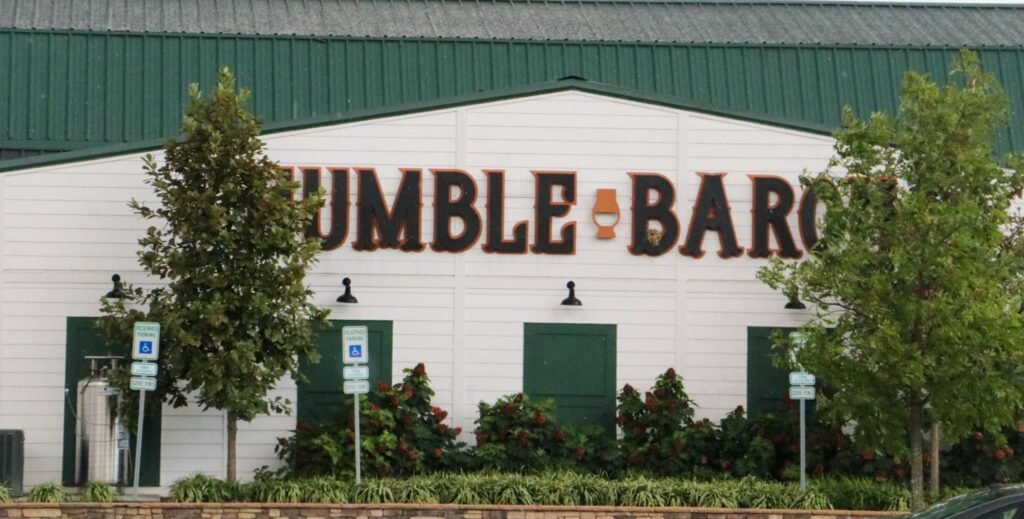
Judge Charles E. Atchley Jr. temporarily halts litigation on the receiver’s request to fold affiliated Weaver entities—such as Humble Baron, Classic Hops Brewing, and Shelbyville Barrelhouse BBQ—into the receivership. Instead, the court requires two years of bank statements and financial records from the affiliates within seven days, with permission for the receiver to review up to three additional years if needed.
Photo by Milton Kirby
Why it matters
The stay keeps those affiliates outside the receivership for now, while giving Receiver Phillip G. Young Jr. visibility into their finances. The scope question—whether the court should broaden control beyond Uncle Nearest, Inc.—remains unresolved until the records review is complete and any follow-up hearing is set.
The defense’s position
Attorneys for Fawn and Keith Weaver argue the attempted expansion chilled business and partnerships, contributing to over $1 million in lost revenue; they have signaled potential claims tied to that harm.
Case backdrop
The court placed Uncle Nearest under receivership in August after Farm Credit Mid-America sought protection of collateral and continuity of operations. The first quarterly report (filed October 1) cited missing records, overlapping entities, and a stabilization plan with significant professional-fee and vendor-catch-up costs.
Sidebar: Why the Case Is in Chattanooga
Though Uncle Nearest, Inc. operates in Shelbyville, Tennessee, and creditor Farm Credit Mid-America is based in Louisville, Kentucky, the federal receivership case is being handled in Chattanooga.
That’s because Shelbyville and Bedford County fall under the Chattanooga Division of the U.S. District Court for the Eastern District of Tennessee, where Judge Charles E. Atchley Jr. presides. This means all filings, orders, and hearings — including the October 29 Agreed Order Staying Proceedings — are issued through the Chattanooga federal courthouse, even though the business operations in question are about an hour northwest.
In short: Shelbyville is the stage, but Chattanooga is the courtroom.
What’s next
The parties face deadlines to complete disclosures and propose next steps. After the receiver reviews the affiliates’ financials, the court will decide whether to expand the receivership—or keep it narrow. TSJ will monitor the docket for any new motions or hearing dates.
Please consider supporting open, independent journalism – no contribution is too small!
Dear Shadow Ball: Any thoughts on why Jackie Robinson was first to break the major league’s color barrier and not Satchel Paige. Paige was a pitcher while Robinson was a 1st baseman. – David Nivens, parts unknown
Dear David, Great question! Thank you so much for breaking the ice in both categories. You were the first to answer my question and the first to pose a question to me. Hopefully, moving forward, folks will follow your lead.
Now, this question could take a book to answer, and, in fact, books have been written about the broader subject: Was Jack Robinson the best choice to integrate the game, and, if not, who else would have been a better choice? In the interest of column space, I am going to limit my answer to your parameters, why Jack Robinson and not Satchel Paige. Both of whom played for the Kansas City Monarchs in 1945.
Let us look first at Satchel Paige: he was one of the best pitchers in Negro League history and, arguably, in all of baseball history. He also, even at this stage of his career, was the most marketable name in the Negro Leagues. Satchel Paige ranks 1st in career Negro League strikeouts, 1st in ERA+, 2nd in shutouts, and 3rd in wins. This is the entire case for Paige, and it very well could have been enough had the game integrated earlier. However, by the time Branch Rickey invited Jack Robinson to a meeting in Brooklyn in August 1945, Satchel Paige was, at least, 38 years old. More importantly, Paige was coming off a less-than-stellar 1945 season in which he achieved a 4-4 record with a 4.05 E.R.A. He was the fourth-best pitcher on the Monarchs that year, and among pitchers with as many innings pitched as he did, only two hurlers had a worse ERA.
As for Jack Robinson, at 26, while he was a tad old for a prospect, he was on the cusp of his prime if he were to have one. The biggest question facing Robinson at the start of the ’45 season was in what sport his prime was to be in. He had not played much baseball at any level since leaving UCLA in 1941. Based on his athleticism, the Kansas City Monarchs, of the Negro National League, invited him for a tryout in the Spring of 1945. He not only made the team, but he was arguably the best player in the 1945 Negro American League! No one who batted as often or more than he did topped him in batting average, on base%, slugging, OPS, OPS+ … he led the league in 2Bs, HRs, extra base hits, was 2nd in steals, and 3rd in RBIs.
… and then there were the intangibles – intelligent, articulate, non-smoker, non-drinker, graduated high school, junior college, and had studied at UCLA, was a wartime 1st Lieutenant in the U.S. Army with an honorable discharge. While both he and Paige had competed in integrated competition, Robinson had a long history of integrated scenarios in Pasadena, UCLA, and the service.
Thus, given the choice between Paige & Robinson, I strongly agree with Rickey’s decision. Jack Robinson was the right person for this assignment.
Last week’s Shadow Ball Significa question: What was the name of Atlanta’s most prolific franchise (in terms of years in the league) in the Negro Leagues?
Since no one provided the correct answer last week, I would like to keep that question active until it is answered. This column depends on interaction. So, please try again.
Ted Knorr
Ted Knorr is a Negro League baseball historian, a longtime member of the Society for American Baseball Research’s Negro League Committee, and founder of the Jerry Malloy Negro League Conference and several local Negro League Commemorative Nights in central Pennsylvania. You can send questions for Knorr on Negro League topics, as well as your answers to the week’s Significa question to shadowball@truthseekersjournal.com or Shadow Ball, 3904 N Druid Hills Rd, Ste 179, Decatur, GA 30033
Please consider supporting open, independent journalism – no contribution is too small!
Reality-TV star and dentist Dr. Heavenly Kimes launches her Georgia 13th District congressional bid at Nostalgia Kitchen & Cocktails, pledging new leadership in healthcare, education, and community service.
By Milton Kirby | Stone Mountain, GA | November 10, 2025
The crowd packed into Nostalgia Kitchen & Cocktails in Stone Mountain wasn’t there for reality television drama — they came to hear a new kind of pitch.
Dr. Heavenly Kimes, best known for her role on Bravo’s Married to Medicine, stepped off the screen and into the political arena Saturday afternoon, holding her first town hall at the restaurant as a candidate for the U.S. House of Representatives in Georgia’s 13th Congressional District.
The nostalgic, mural-lined restaurant, tucked near downtown Stone Mountain, served as a fitting backdrop — lively, intimate, and full of conversation. Plates clattered, phones recorded, and neighbors leaned close as Kimes began to speak. Neighbors and fellow doctors were in the building, many eager to hear how one of their own planned to bring bedside compassion to Washington.
At 54, the dentist, entrepreneur, and TV personality is no stranger to reinvention. For years, she’s built a brand around transformation — first in smiles, now in service. What began as a planned run for the Georgia House of Representatives (District 93) has turned into something larger: a bid for Congress.
“Just days before I announced for State House, the One Big Beautiful Bill was signed,” Kimes told the audience. “I waited to hear something from my Congressman about it — I did not. When Donald Trump launched a retribution campaign against former allies like John Bolton, I hoped to hear my Congressman take a stand — I did not. Thousands of Georgians have lost their jobs this year, and I expected to see leadership at a town hall to help families transition to new opportunities — I did not.”
She paused, then added, “After hearing from community leaders urging me to run for Congress, I realized this: we need more than a vote in Washington, we need a voice. People are scared, but they also have hope — and they deserve someone willing to speak to both.”
From the Office to the District
Kimes’ campaign now centers on three familiar pillars — healthcare, economic development, and education reform. She said her decision to enter politics grew out of years of serving patients who couldn’t afford care. But even more heartbreaking, they can’t afford the prescriptions that go along with it.”
She told the crowd she understood the struggle personally. “When my first child was born, I received WIC benefits,” she said, referencing the federal Women, Infants and Children program. “Without those benefits, life would have been different.”
It was one of many moments where she blurred the line between TV personality and public servant — grounded in both story and sincerity.
New Leadership for a Changing District
Georgia’s 13th District, stretching across portions of DeKalb, Clayton, Gwinnett, Henry, Newton, and Rockdale Counties, has been represented by Congressman David Scott since 2002. Kimes made clear she respects Scott’s long tenure but believes a generational shift is overdue.
Scott served in the Georgia General Assembly from 1974 to 2002 — first in the House of Representatives (1974–1982) and then in the State Senate (1983–2002). He was first elected to Congress in 2002 and began his current term in January 2003. Kimes noted that Congressman Scott failed to vote in the last six elections — something she believes reflects the need for new leadership.
“We must have a new kind of candidate — one who is ready to fight for healthcare access, economic opportunity, education, and justice for every family in GA-13,” she said.
Her campaign manager, veteran political strategist Fred Hicks, framed her candidacy as essential to energizing Georgia’s Democratic base.
“If Democrats are going to win Georgia and take back the House, we need candidates like Dr. Heavenly,” Hicks said. “Candidates who are less political, more passionate, and deeply visible in their communities. Her voice and her audience are the missing keys to closing the vote gap and delivering Democratic victories.”
Healthcare at the Heart
Healthcare dominated the Stone Mountain discussion. From mental health to medical affordability, Kimes linked policy goals to lived experience.
She floated one creative — if unconventional — idea to address mental health funding: adding a one-dime fee to every ticket sold through Hartsfield-Jackson Atlanta International Airport.
“With about 108 million passengers passing through annually,” she explained, “that dime could generate roughly $10.8 million a year for mental health initiatives across metro Atlanta.”
Audience members nodded, some whispering their approval. One man in the back clapped softly, saying, “That’s thinking outside the box.”
Kimes emphasized that the federal government must partner more directly with counties to ensure those funds reach frontline organizations treating addiction and crisis intervention.
Faith in Families and Small Business
Her platform also calls for targeted investment in local entrepreneurs — particularly women- and minority-owned small businesses — and for expanding career-path programs in schools to bridge the gap between education and opportunity.
“I’ve built businesses from the ground up,” she said. “I know what it takes to sign a payroll and meet a budget. We need to make sure more people — especially our youth — learn those same skills early.”
Education, she said, should prepare students not only for college but also for trades, healthcare, and technology jobs that sustain families right here in Georgia.
“Not everyone’s path is the same,” she said. “We’ve got to invest in schools, teachers, and programs that give every child a real chance.”
The Personal Touch
Throughout the afternoon, Kimes balanced policy with personality — offering flashes of the humor and authenticity that have made her a fan favorite on television.
At one point, Hicks asked bluntly why voters should choose her to represent Georgia’s 13th Congressional District.
Kimes smiled. “You should vote for Dr. Heavenly not only because she’s the best person for the job — but because she’s real, she’s relatable, she has the reach, she has the resources, and she has the platform.”
Her voice carried both confidence and conviction.
“Congress works for the people,” she said. “And right now, a lot of people don’t feel like anyone’s working for them.”
Campaign in Motion
The Stone Mountain town hall marked the early phase of her congressional run. The campaign is still developing its detailed policy proposals, but Kimes made clear she intends to keep the conversation local — visiting neighborhoods, schools, churches, and small businesses across the district.
Her team plans a series of “Real Talk with Dr. Heavenly” sessions — informal meet-ups where residents can share concerns directly.
“We’ll keep these going,” she told attendees. “You’ll see me in Decatur, Riverdale, Stockbridge — everywhere. We can’t change anything if we don’t listen first.”
Though light on legislative specifics for now, her message of empathy and empowerment resonated with the audience. As the event ended, supporters lined up for photos, handshakes, and hugs — some thanking her for “showing up” where others had not.
A Campaign to Watch
Dr. Heavenly Kimes’ entry into the race makes Georgia’s 13th Congressional District one of the state’s most closely watched contests in 2026. Her celebrity brings visibility; her message brings energy. Whether that combination translates into electoral success remains to be seen.
But one thing was clear in Stone Mountain: Kimes intends to campaign like she practices dentistry — with a bright smile, sharp precision, and a steady hand.
The Truth Seekers Journal will continue to follow her campaign. As Dr. Heavenly releases more details on healthcare, education, and economic policy proposals, we will keep our readers informed.
Please consider supporting open, independent journalism – no contribution is too small!
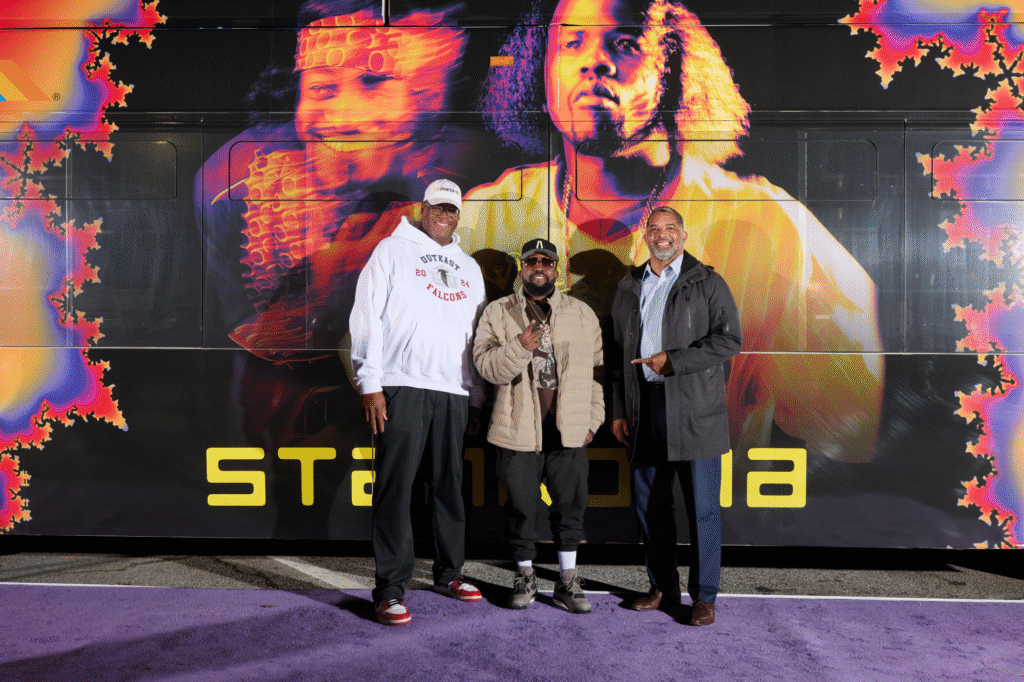
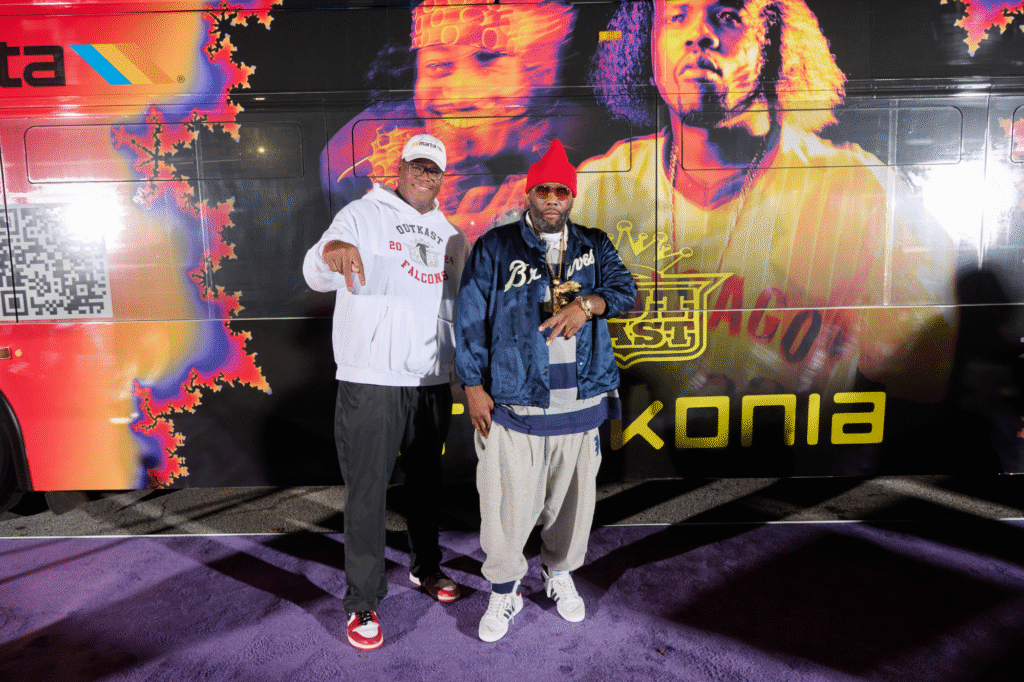
MARTA celebrates Outkast’s 25th anniversary of Stankonia with a custom bus honoring André 3000 and Big Boi ahead of their Rock & Roll Hall of Fame induction.
By Milton Kirby | Atlanta, GA | November 4, 2025
If you’ve ever ridden MARTA with Outkast playing through your headphones, this one’s for you. The city’s favorite duo — André 3000 and Big Boi — just got a moving tribute in their honor, and it’s riding through the same neighborhoods that raised them. This is a moment of pride for all of us, a testament to our shared love for our city and its music.
Courtesy MARTA – Interim General Manager & CEO Jonathan Hunt, Antwan “Big Boi” Patton, MARTA Chief of Staff Steven Parker
MARTA has wrapped one of its buses in full Stankonia glory — a rolling celebration of 25 years since the album that not only changed hip-hop but also changed Atlanta’s cultural landscape. It reminded the world that the South had something to say, and we’re proud to be a part of that cultural revolution.
The bus made its first appearance at Skatetonia25, a fan party thrown by Sony Music at Cascade Skating Rink — the kind of place where Atlanta’s stories always seem to begin. There was music, skating, and even Big Boi himself, posing for photos beside the bus that now carries his name through the streets he grew up on.
“MARTA is part of the fabric of Atlanta, just like Outkast,” said MARTA Interim CEO Jonathan Hunt. “We’re proud to celebrate artists who carried this city’s voice to the world — and who gave MARTA a shoutout along the way.”
That shoutout — the one every true fan knows — came on “Elevators (Me & You)” back in 1996:
“A couple of years ago on Headland and Delowe / Was the start of something good / Where me and my [partner] rode the MARTA through the hood…”
That spot, Headland and Delowe in East Point, still sits along MARTA bus routes 93 and 81. And thanks to Outkast, it’s part of Atlanta’s living soundtrack.
The new MARTA tribute bus will stay in service for a year, cruising through Southwest Atlanta, the birthplace of Outkast and a hotbed of creativity and community. This route is a reminder that these two elements always find a way to ride together, just like Outkast’s music and the city that inspired it.
Courtesy MARTA – CEO Jonathan Hunt, Mike “Killer Mike” Render
And with Outkast set to be inducted into the Rock & Roll Hall of Fame on November 8, this moment feels like more than nostalgia. It’s a full-circle ride — from ATLiens to Stankonia, from College Park to the cosmos. The bus, a moving tribute to their legacy, is a symbol of their journey from local heroes to global icons.
So, if you see that bus roll past, know: the South’s still got something to say.
Howard University receives a historic $80 million gift from philanthropist MacKenzie Scott, strengthening its research leadership, medical innovation, and mission of truth, service, and opportunity.
By Milton Kirby | Washington, D.C. | November 3, 2025
A Legacy Rooted in Truth and Service
Founded in 1867, Howard University has shaped generations of scholars, leaders, and visionaries. Across 14 schools and colleges offering 143 degree programs, the institution continues to embody its motto — Veritas et Utilitas, Truth and Service. With more than 14,000 students, the University remains one of the nation’s most important engines of opportunity, research, and social mobility.
Howard’s historic role in American life is reflected in its remarkable roster of honorees and scholars: one Schwarzman Scholar, three Marshall Scholars, four Rhodes Scholars, 12 Truman Scholars, 25 Pickering Fellows, and more than 165 Fulbright recipients. The university also produces more on-campus African American Ph.D. recipients than any other institution in the country.
A Leader in Research and STEM
Howard’s nationwide impact is perhaps most visible in the sciences. The National Science Foundation ranks the university as the top producer of African-American undergraduates who later earn science and engineering doctoral degrees.
Howard is also home to nationally recognized programs in business, social work, communications, and engineering. It is consistently ranked as the No. 1 HBCU for undergraduate programs in business, computer science, economics, engineering, psychology, and — at the graduate level — criminal law, constitutional law, dispute resolution, health care law, trial advocacy, economics, English, fine arts, history, political science, and speech pathology.
The Howard University School of Law, a national advocate for justice for more than 150 years, ranks No. 1 among HBCUs and recently placed No. 13 in the nation for graduates working at leading law firms.
A Historic Gift from MacKenzie Scott
Howard University has received one of the largest philanthropic gifts in its 154-year history: an $80 million investment from MacKenzie Scott. Combined with Scott’s earlier gifts of $40 million in 2020 and $12 million in 2023, her total contributions to Howard now reach $132 million.
MacKenzie Scott – Courtesy Vogue
The latest gift is unrestricted — a powerful vote of confidence in Howard’s ability to allocate resources where they will have the greatest impact. It arrives at a time when the university is accelerating its research efforts, expanding campus infrastructure, and strengthening academic programs.
This year, the Carnegie Foundation and American Council on Education designated Howard as an R1 research institution, placing it among the nation’s elite universities with the highest levels of research activity. Forbes, LinkedIn, and U.S. News & World Report similarly named Howard the nation’s top HBCU, with several programs ranked best-in-class across the country.
Transforming Medical Education and Innovation
Of the $80 million gift, $17 million is earmarked for the Howard University College of Medicine — a global leader in training physicians who serve medically underserved communities in the U.S. and abroad.
The funds will support the development of a new Academic Medical Center, a transformative project aligned with the innovation center Scott funded through her 2023 gift. This interdisciplinary hub — shared by the College of Medicine and the College of Engineering and Architecture — allows students to work at the cutting edge of health technology, exploring ways to improve patient outcomes and expand scientific frontiers.
Howard’s Health Sciences division, which includes the Colleges of Dentistry, Pharmacy, and Nursing and Allied Health Sciences, continues to serve as a national leader in studying health disparities and producing women surgeons, pharmacists, and allied health professionals.
Impact on Social Mobility and Opportunity
Howard’s mission to uplift economically challenged students is not just aspirational — it is measurable.
• U.S. News named Howard the top institution in the Washington, D.C. area for social mobility. • Carnegie and ACE recognized Howard as an Opportunity College and University – High Access and High Earnings, highlighting its success in serving Pell-eligible and underrepresented students. • Among Research One universities, Howard ranked highest in “access,” reflecting its commitment to enrolling students from diverse economic and ethnic backgrounds. • Eight years after graduation, Howard alumni earn the highest median income among all HBCUs.
Scott’s gift will strengthen these outcomes, funding both immediate needs and long-term initiatives.
Investing in the Future: Facilities, Research, and Stability
The University will direct part of the gift toward new construction and renovation projects essential to R1-level research — including work in artificial intelligence, automation, public health, and scientific discovery.
Howard is also building modern living, learning, and commercial spaces designed to attract top students across the country, including Black men whose enrollment numbers have lagged nationally.
A portion of Scott’s gift will also support a reserve fund to safeguard the university during federal funding delays and government shutdowns — a serious challenge for the nation’s only Congressionally-chartered HBCU.
A Relationship Rooted in Mentorship and Legacy
MacKenzie Scott’s bond with Howard is deeply personal — shaped by her mentor and Howard alumna, Nobel laureate Toni Morrison (B.A. ’53, DHL ’95).
Morrison, who later taught at Princeton, served as Scott’s senior thesis adviser. Their relationship extended far beyond the classroom. Morrison encouraged her writing, helped her find professional footing, and offered the kind of mentorship that leaves an imprint for life.
The two exchanged letters for years. In one, Scott thanked Morrison for “criticism and encouragement, therapy and breathing lessons.” Morrison once described Scott’s writing as technically sophisticated and assured — a prediction validated when Scott later won the American Book Award.
Morrison also played a pivotal role in Scott’s life trajectory, providing a reference that helped her secure a position at the investment management firm where she met Jeff Bezos.
Today, Scott’s philanthropy reflects the lessons she learned from Morrison: that one can shape the world in many different ways, and that talent — wherever found — deserves nurturing.
Part of Scott’s 2020 gift created the Toni Morrison Endowed Chair in Arts and Humanities, ensuring Morrison’s legacy continues at her alma mater.
A Gift That Honors the Past and Builds the Next 150 Years
For more than a century and a half, Howard University has been a national force for scholarship, justice, and leadership. As the university celebrates 154 years, it stands on the cusp of an even more ambitious future — one shaped by new research facilities, deeper community impact, and an unwavering commitment to preparing students to change the world.
MacKenzie Scott’s $80 million gift not only honors Howard’s past — it helps secure a future as glorious as the generations that came before.
The National Black Farmers Association’s 35th Conference in Birmingham honored John Boyd Jr.’s legacy, uniting farmers nationwide to reclaim land, legacy, and economic justice.
By Milton Kirby | Birmingham, AL | November 3, 2025
The air in Birmingham felt like history turning its own soil—just right for a gathering of people who understand the language of the land. Inside the conference hall, rows of worn cowboy hats, Sunday dresses, and seed-company caps filled the seats. Farmers came from every corner of the country—Alabama, West Virginia, Maryland, Mississippi, Montana, Virginia, Oklahoma, and Texas. Some arrived by pickup, others by bus or plane, but all came for one reason: to celebrate 35 years of the National Black Farmers Association and the man who has never stopped fighting for them, Dr. John W. Boyd Jr.
Photo Milton Kirby – Kara Brewer Boyd
The theme for the two-day gathering said it plain: “ReClaiming, ReGaining & ReGenerating Our Farms.” But what unfolded in those rooms was more than a conference. It was a reunion of faith and endurance—an unbroken line stretching from the sharecroppers of yesterday to the land stewards of today. It was family—farm boots and Sunday shoes, handshakes that turned into hugs, stories that started with the weather and ended with survival.
Grounded in the Work
Across two full days, the energy never dipped. Workshops buzzed with talk of farm loans, USDA programs, and the fine print that too often traps small farmers. Between sessions on farm credit, USDA programs, and cooperative models, farmers swapped lessons about soil testing, irrigation, and the art of keeping a small operation alive when fuel costs rise faster than the price of corn, cotton, beef, or soybeans.
At one table, a USDA outreach officer explained disaster-relief programs to a group of farmers. At another, a veteran rancher shared tips on protecting heirs’ property and forming family LLCs. Every conversation echoed one unspoken truth—knowledge is the new harvest.
Dr. Trina D. Brown, a health and wellness strategist, emphasized that the message was just as much about the people as the land. “We have to heal ourselves while we heal our soil,” she said, urging farmers to protect their mental health as fiercely as their crops.
Chaplain Eve Priester delivered a spirit-filled, inspirational prayer unlike any other. “Farming is God’s ministry in real time,” she said. “We plant, we nurture, and we believe in the harvest.” You could feel the amen in the air.
The Boyd Legacy
Mr Priester a hay farmer traveled from MS
When John W. Boyd Jr. stepped to the podium, applause broke like thunder. Some rose to their feet; others simply bowed their heads in respect. Boyd, a fourth-generation farmer from Baskerville, Virginia, has carried this fight for decades—from the long legal battles of Pigford v. Glickman to more recent struggles for debt relief and USDA reform.
“Black farmers, we’ve got to get to know one another,” he said. “Do business with each other. Build something together.”
Behind the quiet strength of his voice was the memory of his father, John Wesley Boyd Sr., who taught him the oldest truth in farming: “Be good to the land, and the land will be good to you.”
That lesson has guided the NBFA since its founding in the early 1990s—through courtrooms, congressional hearings, and countless farm visits across America.
Faces of the Movement
The conference lineup reflected the diversity and endurance of Black and Native farmers.
Kara Brewer Boyd, NBFA Program Director, President of the Association of American Indian Farmers, and wife of John Boyd, spoke about cross-cultural solidarity and the shared struggle of land-based people. An enrolled member of the Lumbee Tribe, she reminded the audience that “land is identity—and identity is power.”
Boyd offered tips and techniques so practical and powerful that attendees described them as “nuggets of gold,” carefully pocketed to take home and put to work.
Nick and Tonya Dangerfield, dedicated Realtors serving the Dallas–Fort Worth area, focus on empowering underserved clients in Texas and Oklahoma to purchase, retain, and sell property with confidence. The couple is also cultivating a family farm in East Texas, building legacy wealth for their children.
Jolene Beaumont Whiteclay, with 46 years of experience as a dedicated farmer and rancher, is deeply rooted in her community and heritage. Currently serving as a Health Systems Specialist with the Bureau of Indian Affairs’ Indian Health Service, she balances professional commitments with managing a thriving 3,000-acre ranch alongside her three sons. A proud member of the Crow Tribe of Montana, Jolene is a third-generation rancher continuing her family’s legacy.
Charles “Chuck” Baldwin has dedicated more than 40 years to cross-cultural work, primarily in Western and Central Africa. His career has included public speaking, fundraising, teaching, leadership development, mentoring, and building relationships across national and ethnic lines. For the past twelve years, Baldwin has served as the Special Populations Outreach Coordinator (SPOC) for the National AgrAbility Project at Purdue University. He collaborates closely with Extension professionals from 1890 and 1994 land-grant universities to expand support for diverse farming communities.
Every speaker’s story carried the same rhythm—loss, endurance, renewal. Through it all, the NBFA banner hung behind them, bold in green and gold, a reminder of how far they’ve come.
Photo Milton Kirby – NBFA Audience
Honoring the Struggle
During the awards ceremony, Boyd presented special honors to those whose service has strengthened the movement.
Lifetime Achievement Award – Adrian Boyd, a decorated Army veteran of Operation Desert Storm and brother of John W. Boyd Jr., was recognized for his advocacy in the In Re Black Farmers Class Action Lawsuit. He played an instrumental role in securing passage of the 2010 Reclamation Act, signed into law by President Barack Obama—a beacon of hope for Black farmers who had suffered from systemic discrimination at the U.S. Department of Agriculture (USDA). The act awarded $1.25 billion in restitution to those farmers.
Chairman’s Award – Andre P. Barlow, Esq., longtime NBFA legal counsel and former U.S. Department of Justice attorney, was honored for his unwavering commitment to justice. A former trial attorney with the Justice Department’s Antitrust Division, Barlow has spent years working to ensure fairness in the very systems that once failed Black farmers. His partnership with the NBFA reflects a deep commitment to civil rights, economic opportunity, and the belief that every farmer deserves a fair chance to thrive.
Family Farmer of the Year – George C. Roberts Jr., founder of Circle R Ranch in Oklahoma and a proud Seminole Freedman, spoke of stewardship, heritage, and the sacred duty to honor ancestors through the soil they once worked. Roberts was recognized for decades of ethical farming and for his advocacy for children with disabilities through his community foundation.
Farmer of the Year – Zachary Morse, a cattleman from Nelson County, Virginia, brought the crowd to its feet. He shared how his family’s Roundhouse Farm has grown into a 200-acre operation that now provides 80/20 processed beef for hamburgers and meals served at the University of Virginia in Charlottesville. His pride was quiet but steady.
As each name was called, the applause felt like gratitude paid forward. These were not just honorees—they were field generals in a long campaign for dignity and fairness.
The Work Continues
The closing session turned toward what’s next: youth engagement, policy reform, and land reclamation. Plans were laid for new training partnerships with universities and 1890 land-grant institutions, along with continued outreach through the NBFA’s women’s and Native farmer networks.
Boyd called for unity over rivalry. “We can’t do this work divided,” he said. “The future of Black farming depends on us doing business with one another—buying from, selling to, and standing up for each other.”
For two days, Birmingham became more than a meeting place. It became a crossroads of memory and mission. Farmers traded phone numbers and promised to stay in touch. Some left with new tools and grant information; others left with something even deeper—a sense that they were part of a living legacy.
The land is still rich. The people are still here. And the fight—for dignity, for ownership, for the soul of Black agriculture—is far from over.
Atlanta’s mayors and church leaders rally at Big Bethel AME, vowing to defend diversity, equity, and inclusion programs amid Trump’s federal funding threats.
By Milton Kirby | Atlanta, GA | November 1, 2025
On a cool Friday morning inside Big Bethel AME Church, sunlight poured through stained glass where freedom once found its voice. From that pulpit — the same one that carried Dr. King’s thunder and John Lewis’s call for good trouble — came a new rallying cry:
“The soul of Atlanta is not for sale.”
Mayor Andre Dickens stood with nearly every living Black mayor in city history — Andrew Young, Shirley Franklin, Bill Campbell, Kasim Reed — and Valerie Jackson, wife of the late Mayor Maynard Jackson. Together they filled the sanctuary with memory, defiance, and faith.
A City That Won’t Bow
They came to answer a challenge from Washington — a Trump administration order threatening to choke off federal dollars from cities that keep diversity, equity, and inclusion (DEI) programs alive.
Billions for housing, airport work, and BeltLine projects hang in the balance. But the crowd at Big Bethel didn’t come to talk fear. They came to talk faith.
“We are gathered here to rekindle the spirit of our city — to remind one another that courage, unity, and truth still live within us,” said former councilman Jabari Simama, now helping to lead the new Soul of Atlanta Coalition. “Our mission today is clear: to bring people together, share knowledge, and demonstrate that when we act with purpose and faith, we can change the course of our community. We can push back against forces that seek to divide, distract, and destroy us.”
“Atlanta was built by people who refused to dream small. We will never deny the values that have not only made this city great, but made it just.”
A Legacy Worth More Than Money
Atlanta has already paid a price for its convictions — forfeiting $37.5 million in airport funds this summer rather than gut its minority-contracting program.
“Our soul is not for sale,” declared Elder Toni Belin Ingram of the AME Church, her voice rising over the applause.
Big Bethel AME Church
Mayor Dickens called the fight what it is: another Goliath moment. “Goliath doesn’t stand a chance in Atlanta,” he said. “We’ve slayed bears. We’ve slayed lions. Been there. Done that. Got the notes. Got the t-shirt and some of the scars.”
His office later said the city is still reviewing the legal path forward, but his tone in the church left little doubt: the mayor intends to stand firm.
Where the Story Began
Valerie Jackson
It was Maynard Jackson — Atlanta’s first Black mayor — who planted the seed of economic fairness back in the 1970s. His Equal Business Opportunity program forced open the door for Black-owned firms to compete for city contracts. Washington noticed — and copied it.
“This is where it all began,” said Ambassador Andrew Young, looking over the packed pews. “These ideas didn’t come from Washington to us. They came from us to Washington.”
Valerie Jackson smiled softly at the mention of her husband’s name.
“Maynard’s policies of inclusion became a model for the nation,” she said. “We will not allow the principles of fairness and justice to be rolled back.”
A Coalition of Courage
From Shirley Franklin to Kasim Reed, the lineup at Big Bethel looked like a living timeline of Atlanta’s Black leadership. Pastor Jonathan C. Augustine — or “Pastor Jay” — reminded everyone why they were there.
“Your presence here says we know what’s happening,” he said. “An autocratic leader is targeting blue cities led by Black mayors. And yet here we stand.”
The new Soul of Atlanta Coalition plans to spend the next year gathering stories, uplifting minority-owned businesses, and organizing pushback against attacks on DEI and affirmative-action programs.
Standing in the Gap
Even as City Hall weighs its legal moves, Dickens said the work of serving people continues — especially with the federal shutdown straining families.
“We’re spending time feeding the least, the last, the lost,” he said.
The Atlanta Community Food Bank has launched a $5 million emergency plan to replace lost SNAP benefits, aiming to distribute six million pounds of food in four weeks through 700 local partners.
“In tough times,” Dickens said, “we see the true spirit of Atlanta — compassion, connection, and courage.”
By Stacy M. Brown | Black Press USA Senior National Correspondent
There are moments in history when a single act of generosity reveals the moral decay of an entire nation. MacKenzie Scott’s $38 million gift to Alabama State University, the largest in its 158-year history, is such a moment. It is not merely a financial transaction, nor the casual benevolence of the wealthy. It is a moral indictment against a society that has grown indifferent to the suffering of its Black citizens, against a government that starves their schools, and against a class of newly rich who have forgotten the communal obligations of success.
Dr. Quinton T. Ross Jr., the university’s president, called it a defining moment for Alabama State, and indeed it is. His words ring with the gratitude of those who have built excellence in the face of deprivation. “Ms. Scott’s generosity affirms Alabama State University’s reputation as a catalyst for excellence and innovation in higher education,” he said. But her act is more than affirmation. It is a resurrection, and a call to remember that Black institutions remain the crucibles of America’s moral and intellectual power. In recent weeks, Scott has dispersed her fortune with quiet conviction. Seventy million to the United Negro College Fund to strengthen endowments across thirty-seven member schools; sixty-three million to Morgan State University, her second gift to that campus in less than five years; and one hundred and one million combined to Morgan State and the University of Maryland Eastern Shore in a span of days.
Her giving, unshackled by stipulations or vanity, stands in luminous contrast to an era defined by greed and indifference. The plutocracy that dominates modern life often extracts from the many to enrich the few. Scott reverses that equation. She does not donate to dominate. She gives to repair. Her wealth, born of corporate conquest, has become the instrument of restoration. It stands as a redemption, perhaps, of what that very system has broken. One cannot ignore the symbolism of her actions. At a time when the federal government withholds support from historically Black institutions, when affirmative action has been dismantled, and when diversity programs are vilified, a white woman from the highest ranks of privilege has become the single most consistent benefactor of Black education in the nation. It is as though she has seen, from her rarefied vantage point, what America refuses to see: that the progress of its Black citizens is not a charity, but the measure of its own civilization.
Scott’s philanthropy, then, is not simply about money. It is about memory. The moral memory of a nation that has forgotten the debt it owes to those it once enslaved and now ignores. In her giving, she restores something elemental, the belief that one’s prosperity is meaningless if it does not lift others. W.E.B. Du Bois wrote of the “double consciousness” that afflicts the Negro in America, the struggle to see oneself through the eyes of a world that despises you. Today, the irony is reversed. America must learn to see itself through the eyes of those it has wronged. MacKenzie Scott, for all her privilege, seems to have glimpsed that truth. She gives the impression that she has looked into the soul of the republic and found it wanting.
Her actions do not absolve the sins of this nation. They reveal them. And in revealing them, they offer a path, not of atonement, but of accountability. For every dollar she gives to rebuild a school, there are a thousand more that others with power might give but will not. One woman has chosen conscience over complacency. The question that remains is whether the rest of America—Black and white alike—will choose to follow her example or remain comfortable in the quiet decay of its own moral poverty.
MARTA completes Garnett Station’s $5 million platform renovation, restoring full Red and Gold Line service and advancing its billion-dollar station modernization program across Atlanta.
By Milton Kirby | Atlanta, GA | October 29, 2025
After six weeks of construction, MARTA has officially reopened Garnett Station to full Red and Gold Line service, marking the completion of a major platform renovation that blends safety, efficiency, and forward-looking design.
The temporary “skip stop,” a strategic decision during which trains bypassed the downtown station, proved to be a well-thought-out move—saving an estimated four months of construction time and $5 million in project costs.
“By limiting service during construction, we were able to accelerate the timeline and ensure safety for both riders and workers,” MARTA officials said.
Restoring and Reinventing a 44-Year-Old Station
Built in 1981, Garnett Station has long served as a southern gateway to downtown Atlanta. The renovation replaced the station’s original 44-year-old pavers—a vital structural refresh handled by a team of experienced contractors, including Carroll Daniel Construction, C.D. Moody Construction Company, H&M Restoration Service, Level Construction Services, Schindler Elevator Corporation, SRC Ventures, and Williams Tile & Marble Company.
Work on the lower concourse was also completed ahead of schedule, setting the stage for continued improvements on the upper concourse, where crews are applying graffiti-resistant coatings, replacing windscreens, and performing deep cleaning and pressure washing.
Importantly, train service is no longer impacted, allowing riders to once again board and exit at Garnett while remaining improvements continue behind the scenes.
A New Vision for the Plaza
MARTA, in partnership with the Atlanta Downtown Improvement District and the Project for Public Spaces, is not just transforming the station’s large concrete plaza, but also inviting the community to be part of this change. The goal is to create a vibrant public space that promotes connection, accessibility, and civic pride—especially as Atlanta prepares for the 2026 FIFA World Cup.
The redesign aims to reimagine Garnett’s urban footprint, turning a utilitarian space into a place where art, culture, and transportation meet.
Part of a Billion-Dollar Revitalization Effort
The Garnett Station work is one piece of MARTA’s broader $1 billion Station Rehabilitation Program, which spans all 38 rail stations across the system. The initiative focuses on modernizing infrastructure, improving safety and accessibility, and enhancing the aesthetic experience for the hundreds of thousands of daily MARTA riders.
With Garnett Station’s platform now complete, MARTA’s leadership says it’s another step toward delivering on the agency’s promise of a safer, cleaner, and more connected transit experience for Atlanta residents and visitors alike. This project is not just about infrastructure but about enhancing the daily lives of our community.