From Tupelo to the World: Elvis Presley’s Birthplace Preserves His Legacy

Elvis Presley Birthplace Museum in Tupelo honors the King’s humble roots, rich musical heritage, and the fans who keep his legacy alive.


By Milton Kirby | Tupelo, MS | June 12, 2025

In a modest two-room shotgun house built in 1934 by Vernon Presley with just $180, the King of Rock’ n Roll, Elvis Aaron Presley, was born on January 8, 1935, in East Tupelo. Nearly a century later, the Elvis Presley Birthplace Museum stands as a globally recognized tribute to the musical legend who never forgot his roots preserving his legacy for generations to come.

From Poverty to Legacy

Life was difficult for the Presley family. Vernon and Gladys Presley, Elvis’s parents, struggled to make ends meet and eventually lost their home due to nonpayment of the loan. The family relocated several times around Tupelo before moving to Memphis when Elvis was 13.

Yet it was in Tupelo that Elvis’s musical identity began to take shape. He attended the Assembly of God Church, where he was first exposed to Southern gospel. He also lived near the Shake Rag community home to blues musicians and Black gospel music that influenced his unique musical style. It was in the Country radio programs added to the fusion of sound that would one day revolutionize the music world.

Honoring the Boy Who Dreamed Big

Today, visitors to the Elvis Presley Birthplace, Museum, Chapel, and Park can walk the same paths Elvis once roamed. The 15-acre campus welcomes over 100,000 visitors annually, offering an immersive experience anchored by Elvis’s childhood home, the relocated church where he worshipped, and stunning life-size statues that symbolize his journey.

One of the museum’s most beloved landmarks is the bronze statue of 13-year-old Elvis, sculpted at the suggestion of Irish fans Maurice and Maureen Colgan. The statue, crafted from historical photos, portrays Elvis in oversized overalls and plain shoes, representing the modesty of his upbringing. Positioned between the church and museum, the statue’s placement reflects Elvis’s deep spiritual roots and the material world he would later enter as a superstar.

Nearby, atop the Tupelo Overlook, a powerful art installation known as “BECOMING” features two Elvis statues—”Elvis the Boy” and “Elvis the Entertainer”—each facing west toward Tupelo. The path leading to them zigzags, a visual metaphor for the winding, complex journey Elvis walked on his way to icon status.

A Tribute Model: David Lee

The 1970s-era Elvis statue unveiled in 2015 carries a special connection to David Lee, a world-renowned Elvis tribute artist from Birmingham, Alabama. Lee served as the model for the sculpture and played a key role in securing $1 million in government funding to expand the museum.

A two-time world champion and the 2015 Ultimate Elvis titleholder from Elvis Presley Enterprises, Lee has performed across the U.S., Canada, Mexico, and international waters. His authentic performances and gospel roots have made him a favorite among fans and festival-goers alike. His contributions to Tupelo’s Elvis legacy include receiving the Key to the City, having his name engraved at the base of the statue in Fair Park, and being the first performer at the museum’s 120-seat auditorium in 2013.

“Elvis is gone and irreplaceable,” Lee said, “but my tribute hopes to do him justice.”

Living History on Display

The Assembly of God Church—where a young Elvis learned to play his first chords—has been preserved and moved to the Birthplace grounds. Visitors can experience a 1940s-style Pentecostal service through multimedia displays that include singing, preaching, and praise-filled worship. It was here, under the guidance of Brother Frank Smith, that Elvis learned to play “Ole Shep” with just three chords: D, A, and E.

Photo by Milton Kirby – Elvis Presley’s Childhood Church

The Elvis Presley Center, under the leadership of Executive Director Roy Turner and Associate Director Rhonda Lamb, continues to expand. The $6.5 million complex includes the birthplace home, museum, chapel, theater, event center, and scenic trails where visitors can reflect on the King’s journey.

A City’s Pride

Tupelo embraces Elvis’s legacy at every turn. From decorative guitars on street corners to murals and events, the City celebrates its native son with pride and purpose. Mr. Henry Dodge, retired chair of the board of directors, described the winding path from the museum to the statue as symbolic of Elvis’s climb from poverty to global fame.

“Elvis dreamed a dream from this very soil,” said one local visitor. “Now the world walks where he once walked.”

A Lasting Connection

For fans of Elvis Presley, the museum is more than a tourist attraction—it’s a pilgrimage site. It’s a place to experience the humble beginnings of a boy who went on to become a world icon. A place to honor music’s power to transcend barriers. And a place to celebrate a legacy rooted deeply in Mississippi soil.

Related videos

Betty Garrison shares her experience at the 2025 Elvis Presley Festival

The Horn Family at the 2025 Elvis Presley Festival

Photo Gallery

Please consider supporting open, independent journalism – no contribution is too small!

Carolina Crusher, Grave Digger, and Zombie: Three Icons, Three Paths, One Sport

From Carolina Crusher to Grave Digger, the sport of monster trucks has grown in power and diversity—thanks to icons like Gary Porter, Bari Musawwir, and Krysten Anderson.


By Milton Kirby | Atlanta, GA | June 11, 2025

In 1981, a small-town mechanic with a dream fired up an engine that would eventually roar through stadiums worldwide. Gary Porter, a native of Wadesboro, North Carolina, didn’t set out to become a legend. But when he opened Porter’s 4×4 Shop with his brother and began tinkering with lifted trucks, the seeds of something bigger were planted.

“I went to the bank and asked the lady there if I could borrow $9,500 to build me a monster truck,” Porter recalled. “She nearly had a heart attack and asked me, ‘Does your mamma and daddy know what you’re doing?’”

By 1985, Porter had built the Carolina Crusher, his first monster truck, and debuted it that summer. What began with displays and small-town pulls quickly gained traction. By 1988, Porter was competing nationally on the TNT Motorsports Monster Truck Challenge, later claiming his first world championship in the PENDA Points Series in 1991. He wasn’t just racing—he was helping define the very foundation of the sport.

“In the early days, you built whatever truck you had the money to build. There were no safety rules,” Porter said. “One of the most difficult challenges in the beginning was being a one-man team. Making sure that the truck was race ready for the next weekend was hard—there just weren’t enough hours.”

Major improvements came along when formal competitions started and the points system was instituted. Bigger checks led to bigger ambitions. Teams began upgrading trucks constantly—new shocks, lighter frames, more horsepower—all while trying to survive the pounding these machines took during jumps and freestyle runs.

Porter’s decades of work didn’t go unnoticed. In 2013, he was inducted into the International Monster Truck Hall of Fame, and again in 2021 into the Monster Jam Hall of Fame. In July 2017, after 32 years in the sport, Porter officially retired from monster truck driving, leaving behind a legacy built on resilience, innovation, and raw horsepower.

The Evolution of a Sport—and a Culture 

The sport’s roots stretch back to the 1970s when off-road enthusiasts modified trucks for mud bogging and tractor pulls. Then came Bob Chandler’s Bigfoot—a lifted Ford F-250 that crushed two junked cars in a promotional stunt. This iconic car-crushing run at the Pontiac Silverdome in 1982 captivated fans and launched the monster truck craze as a national entertainment force, marking a significant turning point in the sport’s history.

By the late ’80s and early ’90s, with Gary Porter and trucks like Grave Digger on tour, monster trucks had become a household attraction. In the 2000s, Monster Jam, operated by Feld Entertainment, refined the show with stadium production, international tours, and superstar drivers. Now, in the 2020s, the sport is evolving yet again—with electric prototypes, smarter suspensions, and a growing diversity among its stars.

Trailblazer Behind the Wheel: Bari Musawwir 

When Bari Musawwir saw his first Monster Jam show at the Silverdome in 1986, he had no idea it would shape his life. A kid from Cleveland who loved cars, Musawwir got into racing through radio-controlled trucks, eventually mastering the art by competing in national RC events. His journey from radio-controlled car tracks to stadiums filled with 60,000 fans would rewrite what was possible for Black athletes in the sport.

Photo courtesy Monster Jam – Bari Musawwir 

His big break came in 2006 during an RC competition at Digger’s Dungeon, the home of Grave Digger. A Monster Jam official happened to witness his performance and invited him to test a real truck. Though Musawwir had no formal motorsports experience, his skill was evident—and after several years of persistence, he made his pro debut in 2010, driving Backwards Bob.

Since then, he’s earned:

  • Rookie of the Year (2011)
  • Young Guns Shootout Champion (2012)
  • Multiple World Finals Appearances
  • Two Guinness World Records

More than his accomplishments, Musawwir’s presence as the first Black Monster Jam driver in the sport’s 70-year history opened new doors. “I want young people to see me and know they belong here too,” he says.

Representation, Cost, and the Road to Inclusion 

For decades, monster trucks were a white, male-dominated arena. That’s changing—but slowly. Musawwir’s rise shows that passion and opportunity can still break barriers, but entry into the sport remains expensive.

💰 Average Startup Costs:

  • Build a Monster Truck: $250,000–$350,000+
  • Launch a Team: $500,000–$750,000+
  • Annual Operations: $150,000–$250,000

The high price tags for chassis, tires, engines, and crew limit access for many aspiring drivers. Used trucks and sponsorships help, but visibility and representation are critical—especially in communities where kids rarely see themselves reflected in motorsports.

Musawwir, now also driving the Marvel-themed Black Panther truck, has made it a mission to mentor, encourage, and represent. “This is my passion. It’s a dream I had since I was six years old,” he says. “Now I get to be the person I once looked up to.” 

Leading Lady of the Lanes: Krysten Anderson

While Musawwir was blazing new ground, Krysten Anderson was carrying the weight of a legacy. The daughter of Grave Digger founder Dennis Anderson, she became the first woman ever to drive the iconic truck—and she did not disappoint.

Krysten’s Monster Jam journey began in 2017, after growing up around trucks with her two brothers, Adam and Ryan, both professional drivers. Although she initially studied art and planned to become a graphic designer, the opportunity to take a drive in a monster truck changed her career path.

Today, she’s not only the face of Grave Digger—she’s also the first female Monster Jam Series Champion (2022) and a fan favorite across the country.

Photo courtesy Babbit Bodnor – Krysten Anderson

“Protecting the Grave Digger brand is a big responsibility. Since my name is Anderson, I take it very seriously,” she said. “I want to represent my family well, the brand well, and I also want to represent the ladies well.”

At 5’7″, she’s just an inch taller than the massive BKT tires on her truck. Yet, she commands the arena with power and grace. Fans, especially young girls, are sometimes stunned to see a woman behind the wheel of one of the sport’s most legendary machines.

“It kind of blows their mind sometimes,” Krysten said. “When I put on that helmet and get behind the wheel, I have a big job to do, and I take it very seriously.”

Safety, Grit, and Legacy

Anderson’s job isn’t just about fame—it’s about trust and safety. Drivers are outfitted with custom helmets, neck restraints, reinforced steel roll cages, seven-point harnesses, and remote ignition interrupters—a single-button emergency stop controlled by race officials.

Before every race, Krysten checks the track, dirt and layout, tuning in for the unpredictable. “The trucks have evolved tremendously,” she said. “The tracks are always different. You have to dial it in every time.”

Her career is already storied. A veteran among just nine full-time female drivers, Anderson still feels in her prime. “There’s no end in sight right now,” she said. “I’m here to compete, to represent, and to make our fans proud.”

Her father, Dennis, remains her compass. “He taught me about life and racing,” she said. “He always reminds me why we do this—from humble beginnings to the most iconic truck in monster truck history. Love the fans, and they will love you back.”

When she’s not in the arena, she unwinds on the beach—recharging for what could be a grueling 20-week tour. June 20–22 will mark her first appearance in Athens, Georgia, where she aims for a clean sweep.

With all of the safety factors in place, “The only thing I worry about is the green light, the checkered flag, and the trophy,” she said.

Paving the Way for Future Generations 

The sport has expanded beyond its early roots. Since Debrah Ann Miceli, better known as Madusa, broke into Monster Jam in 1999, women have steadily claimed their space. Madusa proved that monster truck racing wasn’t just for men—and now, names like Kayla Blood, Becky McDonough, Cynthia Gauthier, and Rosalee Ramer are helping redefine what a champion looks like.

Anderson is proud to lead the new wave. 

The Road Ahead

Today, monster truck competitions include categories for racing, two-wheel skills, and freestyle—each judged for speed, control, creativity, and risk. Trucks are smarter, safer, and faster than ever. But the soul of the sport still lies in the people—those who drive, build, and dream.

Gary Porter built Carolina Crusher because he loved 4x4s. Bari Musawwir fought for a place he didn’t even know was available. Krysten Anderson carries a name, a brand, and the future of female drivers.

Together, their stories crush old expectations and build new ones—one jump, one flip, one stadium at a time.

For more information about Monster Jam – Athens, GA June 20-22, 2025

Please consider supporting open, independent journalism – no contribution is too small!

The Devil’s Proxies: How the Reincarnation of Racist Governor George Wallace Rules America Again Through the Presidency of Donald Trump and His Cult

In 2025, Trump’s return—fueled by voter suppression, disinformation, and GOP corruption—echoes Wallace’s legacy. Weaponized hate, authoritarianism, and moral decay now define America’s unraveling

By Lola Renegade | June 10, 2025

In 2017, the political spirit of George Wallace slithered into the Oval Office in the person of Donald J. Trump. And in 2025, thanks to voter suppression, disinformation, and a morally bankrupt Republican Party, it has returned. A cadre of predators from every sphere—an unlimited number of felons, misogynists, and undeniable dolts—has joined him again, eager to wield power, undermine democracy, and profit from America’s unraveling.

Trump is the literal and figurative reincarnation of Wallace in every meaningful way—rhetorically, ideologically, and strategically—he is Wallace’s heir. The Devil’s proxies now rule America once more, their mission unchanged: to sow division, weaponize hate, and derail this nation’s fragile pursuit of justice and democracy.

Trump has always been the monosyllabic turd in the punch bowl of American democracy. The stench is unmistakable. The rot is plain to see. And yet, the Republican Party—with eyes wide open—keeps ladling out another cup to drink and insisting the rest of us should do the same.

America is not the greatest country in the world. It can’t be. Their demonic actions have dragged America backward—not merely into a third-world state, but a fourth-world nation, where truth is mutilated, justice is auctioned off, cruelty is exalted as virtue, and the White House is for sale to anyone who will line Trump’s pockets.

Under Trump’s rule, his acolytes have sunk so low they could walk under a snake’s belly without touching it. And they do so proudly—grinning, gaslighting, and daring anyone to call it what it is: the moral collapse of a political movement, and a dangerous infection in the embryonic soul of America.

When George Wallace stood on the steps of the Alabama Capitol in 1963 and bellowed, “Segregation now, segregation tomorrow, segregation forever,” he became the face of white resistance to progress—a slick-talking, anti-intellectual, and violence-stoking avatar of American apartheid.

For decades, many Americans comforted themselves that Wallace and his kind had been consigned to history’s dustbin. But history, it turns out, is no graveyard. It is a recycling bin for America’s degenerates and never-ending syndicated horror shows.

Wallace built his career by stoking white resentment amid the victories of the civil rights movement. Trump surfs a similar tide, fueled by the demographic shifts of the 21st century and white backlash to the Obama presidency.

Where Wallace denounced “pointy-headed intellectuals who can’t park their bicycles straight,” Trump demonizes scientists, historians, and anyone with the courage to speak truth. Where Wallace called federal judges “tyrants in robes,” Trump demands a judiciary that bends only to his will.

This strain of anti-intellectualism is no accident. It is a core strategy of authoritarians: inflame the passions of the mob, vilify expertise, and dumb down the electorate so lies can thrive.

Wallace’s rallies were notorious for violence against civil rights protesters. Trump’s rallies are their modern-day equivalent—sites of hate and intimidation. When Trump told his crowds “Knock the crap out of them, I’ll pay the legal fees,” the echo of Wallace’s era was unmistakable.

Both men understood the power of cruelty as spectacle. Their movements are not about governance but about grievance. Not about policy but about punishing the vulnerable and dissenting voices.

Let us speak plainly: Trump is an incompetent, dangerous idiot. His first term left a trail of mismanagement, from the botched COVID-19 response to countless assaults on basic governance. But in Trump’s America, competence is not a prerequisite for higher offices. Obedience and cruelty are their currencies of power.

Incompetence becomes a weapon when government agencies are gutted, expertise is driven out, and public trust is corroded. Wallace pioneered this playbook in Alabama. Trump has brought it to Washington on steroids.

And let us not forget the other enablers. Many of the women in Trump’s orbit are today’s Carolyn Bryants—the lying, preening enablers of racist violence. It was Bryant’s false accusations that led to the brutal lynching of 14-year-old Emmett Till. Today, women in MAGA hats, racist media personalities, and political spouses perform the same role: lying, gaslighting, and seeking the approval of Satan’s spawns—their husbands, their political masters, their toxic movement.

Their lies fuel an ecosystem of conspiracy, cruelty, and chaos. And they do it with performative piety and crocodile tears, as if history has taught nothing.

This is not leadership. It is surrender to the darkest impulses of our national character.

This is no ordinary presidency. It is a test of whether America’s democratic experiment can survive its most brazen modern threat.

George Wallace ultimately expressed regret for his sins. Trump boasts of his—and vows to commit more.

But this is bigger than Trump alone. It is about an American political tradition we thought we had buried. Instead, we find it resurgent, emboldened, and sitting once again in the seat of power.

The Devil’s proxies now strut openly through our government, our media, and our public life. The question is whether the American people, in their multiracial, moral majority, will rise with greater resolve than ever before.

Our democracy—and the sacred memory of every child like Emmett Till—demands nothing less.

Please consider supporting open, independent journalism – no contribution is too small!

Georgia-Born, Globally Respected: America’s First Black Catholic Bishop, Ordained 150 Years Ago

Bishop James A. Healy, America’s first Black Catholic bishop, was ordained 150 years ago. His life shaped U.S. Catholicism through service, education, and advocacy.

By Milton Kirby | Atlanta, GA | June 10, 2025

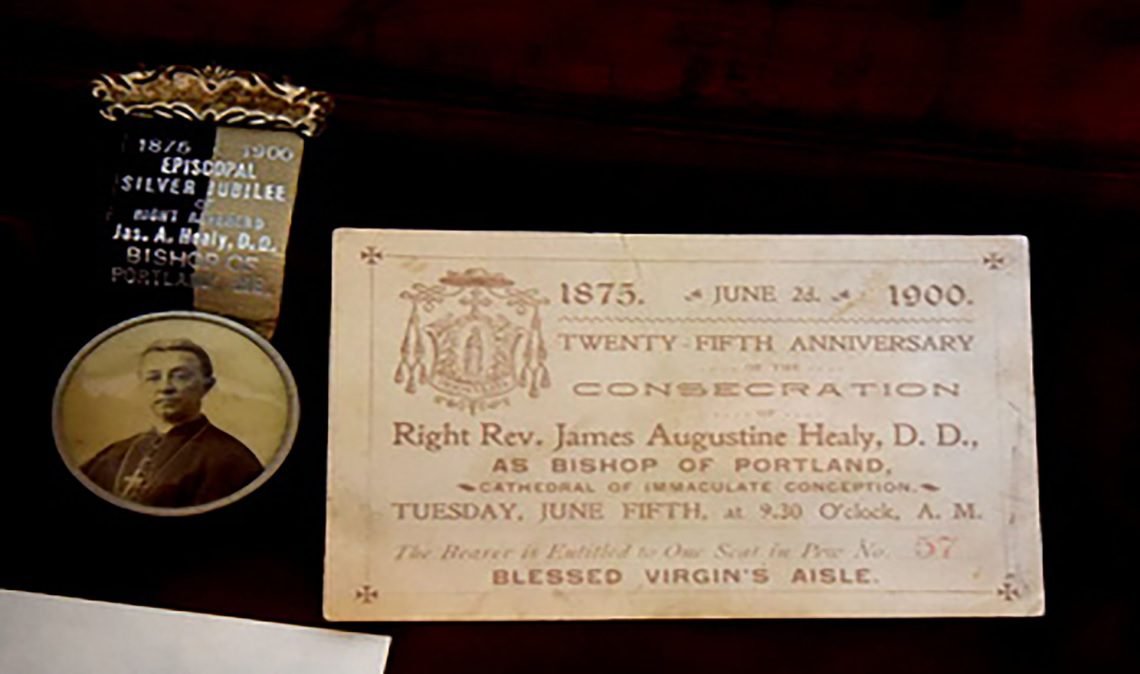
On June 10, 1854, James Augustine Healy was ordained as a Catholic priest in Paris. Precisely 150 years ago, he became the first known Black Catholic bishop in the United States.

Born into slavery in Jones County, Georgia, on April 6, 1830, Healy was the son of Irish immigrant Michael Healy and Mary Eliza Smith, a mixed-race enslaved woman. Under Georgia law, the Healy children were considered enslaved from birth. Despite their father’s wealth, they were denied the opportunity to receive an education in the South.

Bishop James A. Healy

To change that, Michael Healy sent James and his siblings north. James began his education at a Quaker school on Long Island, then continued his studies in New Jersey.

The family’s lives changed forever when Bishop John Fitzpatrick of Boston helped place the boys at the newly founded College of the Holy Cross in Massachusetts.

At Holy Cross, James thrived. He was named valedictorian of the first graduating class in 1849. He went on to earn a master’s degree and later studied for the priesthood in Montreal and Paris. On June 10, 1854, he was ordained at the Cathedral of Notre Dame.

Healy returned to Boston, where his talents and faith earned him several leadership roles. He served as assistant pastor, chancellor, and rector of the Cathedral of the Holy Cross. He helped start homes for orphans and destitute children and stood up for the Catholic Church in debates over taxes and civil service.

In 1875, Pope Pius IX appointed Healy as Bishop of Portland, Maine. For the next 25 years, he led the diocese, which included all of Maine and New Hampshire. During his time as bishop, Healy oversaw the creation of 60 new churches, 68 missions, 18 convents, and 18 schools. The Catholic population nearly doubled under his leadership.

Healy became known as “the children’s bishop” for his deep concern for orphans, widows, and the poor. He helped found homes for girls and children affected by the Civil War. He even bought part of an island to use as a vacation spot for orphans, where he often visited and played with the youngest ones.

Healy was also a strong voice in national Catholic matters. He attended the Third Plenary Council of Baltimore and helped launch the Catholic University of America. Though he was quietly proud of his Black heritage, he did not promote it publicly. He often faced discrimination, especially in the South, but continued to serve with humility and grace.

Despite illness, Healy celebrated 25 years as bishop in 1900. He died later that year on August 5. He had asked not to be buried in the cathedral crypt. Instead, he was laid to rest in Calvary Cemetery in South Portland under a simple Celtic cross.

Holy Cross, Healy’s alma mater, has honored his legacy with the Bishop Healy Committee, which supports diversity and inclusion. The Archdiocese of Boston also created an award in his name to honor dedicated Black parishioners.

James A. Healy’s life was a story of faith, perseverance, and quiet strength. Though born into slavery, he rose to one of the highest roles in the Catholic Church. He worked tirelessly for the poor, stood firm in his convictions, and left behind a legacy that continues to inspire 150 years later.

Please consider supporting open, independent journalism – no contribution is too small!
City Leaders Help Atlantans Start Fresh at Justice Fair

Atlanta leaders launch new expungement initiative to help residents remove old charges, access jobs, and build brighter futures ahead of June 7 community fair.


By Milton Kirby | June 9, 2025 | Atlanta, GA

Atlantans filled the C.T. Martin Natatorium and Recreation Center on Saturday, June 7th for a powerful and emotional community event focused on second chances.

The Record Restriction and Resource Fair, held June 7, brought together city officials, court leaders, attorneys, and community organizations to help eligible residents clear their criminal records and connect with critical resources. The event was hosted by the Atlanta City Council, the Fulton County District Attorney’s Office, the Fulton County Superior Court, and the Clerk of Superior Court.

Lines formed early as people arrived seeking answers, hope, and a path forward.

“We saw mothers, veterans, students—people from all walks of life,” said Atlanta City Councilmember Andrea Boone, who helped organize the event. “They showed up because they want to move forward. And we are here to support them.”

Photo courtesy – Andrea Boone

Residents were able to speak directly with legal professionals to find out if their records qualified for restriction or expungement under Georgia law. For many, it was their first chance to initiate a process often hindered by cost, confusion, or a lack of access.

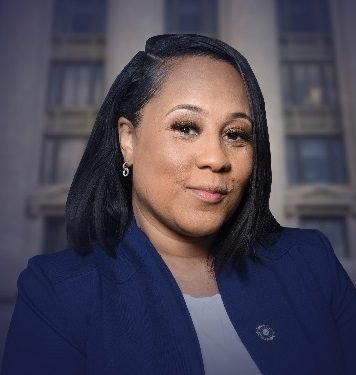
District Attorney Fani Willis called the turnout a testament to the community’s desire for fairness.

“A mistake from years ago shouldn’t block someone from getting a job today,” Willis said. “Saturday was about making the justice system work for the people, not against them.”

In addition to legal help, attendees connected with employers, reentry programs, mental health services, and nonprofit organizations focused on long-term stability and personal growth. Organizers reported that nearly 400 people passed through the doors during the event.

Superior Court Judge Thomas A. Cox Jr., who was on hand to greet attendees and answer questions, said the fair “brought dignity and hope to people who often feel invisible.”

Photo courtesy Fani Willis

According to the Georgia Justice Project, nearly 40% of Georgians have a criminal record, yet many charges are eligible for restriction or expungement under current law—especially those that were dismissed or occurred many years ago. But without legal help, most don’t know where to start.

“This is the kind of outreach that changes lives,” said Superior Court Clerk Ché Alexander. “We didn’t just give out forms. We gave people real steps toward a new future.”

Saturday’s event was just one piece of a larger initiative aimed at breaking down systemic barriers that prevent people from accessing jobs, housing, and education. The effort reflects a growing recognition among city and county leaders that criminal records—particularly for nonviolent, dated, or dismissed charges—should not be lifelong punishments.

Participants left with more than just paperwork. They left with job leads, support contacts, and, in many cases, a new sense of possibility.

“This was a lifeline,” said one attendee, who asked not to be named. “I didn’t think anyone cared. But today proved they do.”

Organizers say they plan to host additional fairs in other parts of the city later this year.

We’re just getting started,” Boone said. “Every person who walked through that door mattered. And we’re going to keep showing up for them.”

Please consider supporting open, independent journalism – no contribution is too small!

History Made: Austell, GA Appoints First Female Police Chief in Cobb County

Shameta Jones-Harrell becomes the first woman and Black woman to lead a police department in Cobb County, bringing bold vision and community focus to Austell, GA.

By Milton Kirby | Austell, GA | June 6, 2025

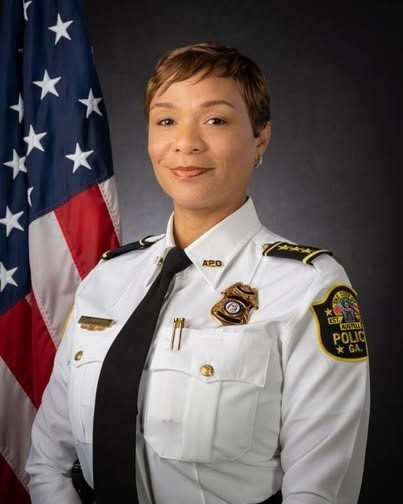
In a historic and unanimous decision, the Austell City Council has appointed Shameta Jones-Harrell as the city’s new police chief — making her the first woman, and the first Black woman, to lead any police department in Cobb County’s history.

The vote, which passed 6-0 during a Monday night council meeting, was met with celebration from residents and law enforcement officials alike. As Chief Jones-Harrell stood to take her oath Tuesday evening, the weight of the moment was not lost on the crowd gathered to witness a barrier-breaking chapter in the city’s leadership.

“We are so proud of her and we know that she will do a phenomenal job in this role,” read a statement from the Austell Police Department, shared on social media shortly after the vote.

A Trailblazing Career Built on Service

Jones-Harrell, a Huntsville, Alabama native and Lee High School graduate brings 24 years of law enforcement experience to her new role. Her career began in October 2000 at the College Park Police Department, where she worked as a detective handling sensitive cases such as sex crimes, domestic violence, and crimes against children. She also served on the SWAT team — a rare post for a woman at the time — underscoring her ability to succeed in high-pressure, male-dominated environments.

She later joined the Brookhaven Police Department, where her rise from sergeant to major marked her as a standout leader. There, she led the Support Services Division and developed several community-based initiatives, including the “One Congregation One Precinct” program, which built stronger relationships between officers and local faith communities. She also served as a liaison to the Police Accountability & Legitimacy Committee under the city’s Social Justice, Race, and Equity Commission.

In 2021, she joined the Austell Police Department as deputy chief. Since then, she has been instrumental in overhauling community engagement, leading more than 60 outreach events, and introducing patrol strategies that have been credited with lowering violent crime rates. Her leadership has emphasized proactive policing, transparency, and inclusion.

“One of the reasons why I decided to join law enforcement is so I can make sure I could progress other women through the ranks,”. That mission now takes center stage, as one of her top priorities is increasing the representation of women on the force.

Vision for Austell’s Police Department

Chief Jones-Harrell outlined three key goals for her tenure: securing state accreditation, increasing female representation, and strengthening community connections. “We are almost at the end of that goal,” she said, referring to the department’s progress toward official state certification — a benchmark of professionalism and accountability in policing.

She emphasized that public trust must be earned and maintained through ongoing engagement and transparency. “Community engagement is not an event,” she told reporters. “It’s a lifestyle.”

The department’s mission reflects this ethos: to establish trust through collaboration, transparency, and education while delivering equitable services to all residents.

The department’s Community Liaison Coordinator plays a key role in achieving these goals, facilitating partnerships with homeowner associations, faith organizations, schools, and advocacy groups. These relationships help tailor the department’s response strategies and crime prevention efforts to the specific needs of Austell’s neighborhoods.

A Leader Rooted in Faith, Family, and Forward Motion

Jones-Harrell holds a Bachelor of Science degree in Criminal Justice with a concentration in Forensic Science from Jacksonville State University. She has undergone advanced leadership and crisis management training, including the Law Enforcement Executive Development program and Critical Incident Stress Management courses. She is a member of both the Georgia Association of Chiefs of Police and the International Association of Chiefs of Police.

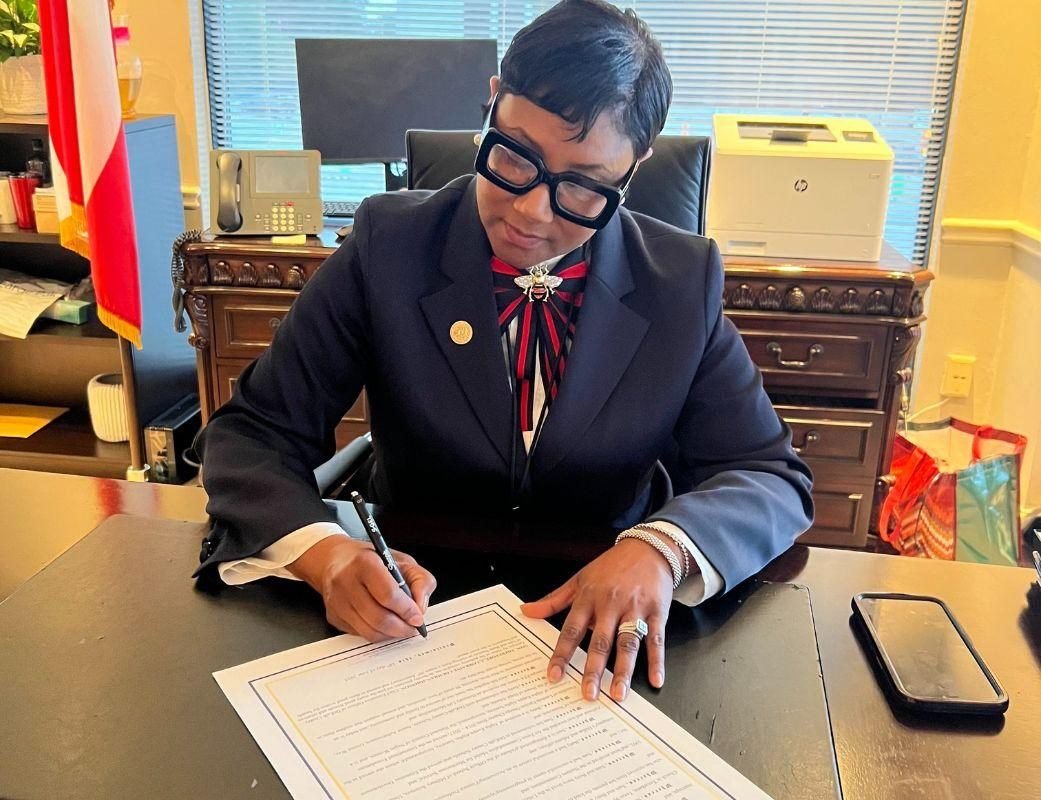
Though her resume is extensive, Jones-Harrell draws her deepest strength from her faith and family. A photo of her late mother sits near her desk; its inscription reads, “Inside me is a weak heart, but behind me is a strong God.”

“I am a mother of two boys, and I want them to see that leadership is about service, not status,” she said. “I want our department to reflect that too — that we are here to protect and uplift the people we serve.”

Breaking Barriers, Building Bridges

With her appointment, the City of Austell has not only made history, but it has also sent a message of progress and inclusion throughout Cobb County and the state of Georgia. For a city that prides itself on unity and resilience, Jones-Harrell’s elevation symbolizes the future of policing: rooted in service, driven by justice, and led by voices that have long been underrepresented.

She now stands at the helm of a department charged with safeguarding a rapidly growing and diversifying city. But more than that, she stands as a beacon for what’s possible when leadership reflects the community it serves.

Please consider supporting open, independent journalism – no contribution is too small!

DeKalb’s Youth, Homeless, and Pets Find Hope Under New Initiatives

DeKalb CEO Lorraine Cochran-Johnson announces major summer initiatives including youth jobs, housing support, property tax updates, and free dog adoptions across the county.


By Milton Kirby | Decatur, GA | June 6, 2025

DeKalb County CEO Lorraine Cochran-Johnson is setting the pace for a transformative summer, unveiling bold new initiatives aimed at strengthening the futures of the county’s youth, stabilizing families facing housing insecurity, simplifying property tax processes, and increasing access to pet adoption.

With the theme “Mission Possible” powering her 2025 State of the County address, Cochran-Johnson is matching words with action—and residents across the county are beginning to feel the impact.

Youth Employment: A Launchpad for the Future

The DeKalb Summer Youth Employment Program (DSYEP) kicked off with great energy as more than 380 students filled the Porter Sanford III Performing Arts Center for orientation and a celebratory event. This five-week, paid internship program introduces high school students to real-world job experiences across various departments, including government, finance, media, and technology.

Backed by a $700,000 investment, DSYEP isn’t just about filling summer schedules. It’s about igniting purpose and preparing tomorrow’s workforce. CEO Cochran-Johnson told students, “This isn’t just a job—it’s a launchpad. To whom much is given, much is required.”

She emphasized how rare such opportunities are in today’s climate, especially with many Job Corps programs having recently closed their doors. But in DeKalb, she said, “Students are being seen, supported, and equipped.”

The event also featured insights from Superintendent Dr. Devon Horton and former Harlem Globetrotter Harold Hubbard, as well as workshops on job readiness, financial literacy, and psychological safety in the workplace.

“This is your moment,” Cochran-Johnson told the students. “And I couldn’t be more proud to be your CEO.” 

Housing Instability Program: Meeting Urgent Needs

In a significant move to combat homelessness, CEO Cochran-Johnson announced the launch of DeKalb County’s $7.8 million Housing Stability Initiative (HSI), scheduled to begin on July 1, 2025.

Funded by the U.S. Department of Housing and Urban Development, the HSI program will offer targeted assistance to individuals and families experiencing or at risk of homelessness. The initiative addresses the root causes of instability, providing a range of services from rental assistance and case management to childcare coordination and substance use counseling.

“This funding allows us to directly address the urgent needs of individuals and families who are struggling to remain housed or to exit homelessness,” said Cochran-Johnson. “We’re opening doors—literally and figuratively.”

The program will prioritize the most vulnerable residents, including survivors of domestic violence and human trafficking. Residents must apply through the DeKalb Coordinated Entry System by calling 404-687-3500 on weekdays.

Transparency in Tax Assessments

On June 3, the 2025 Annual Notices of Assessment were mailed to DeKalb County property owners, signaling the start of the annual window for property tax appeals.

Each notice details the appraised value of residential or commercial property as of January 1, a valuation used to determine property taxes under Georgia law. Property owners have 45 days from the date of the notice to file an appeal.

Appeals can be submitted:

This year’s notices reflect recent changes in state legislation. The tax estimate section has been modified or removed, depending on the information provided by each taxing jurisdiction. Instead, some notices may show a preliminary roll-back rate.

While these changes may cause some confusion, the county encourages property owners to review their notices carefully and reach out for clarification if needed.

Free Dog Fridays: Homes for Pups, Hope for Families

DeKalb County has partnered with the LifeLine Animal Project to make pet adoption easier and more affordable this summer. Through the Free Dog Fridays program, residents can adopt dogs at no cost every Friday.

Free Dog Friday – Help a pet find a new home

With shelters across Fulton and DeKalb counties facing surges in owner surrenders, the initiative is designed to reduce overcrowding and help more animals find permanent, loving homes. Adoption packages include essential veterinary services, such as spay/neuter surgery, vaccinations, and microchipping.

Free Dog Fridays take place at LifeLine’s central shelter locations and partner shelters, making it easy for families and individuals to meet their new best friends.

A Season of Action—and Hope

CEO Lorraine Cochran-Johnson’s recent efforts reflect a bold, people-centered vision for DeKalb County. Whether by empowering young people, addressing housing insecurity, improving government transparency, or connecting families with pets, the common thread is access to opportunities.

These initiatives highlight the kind of leadership that doesn’t just promise change—it delivers it.

“The mission is possible,” said Cochran-Johnson, echoing her address. “And together, we will continue building a DeKalb County that works for everyone.”

Please consider supporting open, independent journalism – no contribution is too small!

New Fees, Fewer Perks: Southwest Updates Fare Structure

Southwest Airlines ends free checked bags, now charging $35 for the first and $45 for the second—a major shift impacting budget travelers and loyalty perks.

By Milton Kirby | Atlanta, GA | June 3, 2025

Southwest Airlines is no longer letting two bags fly free.

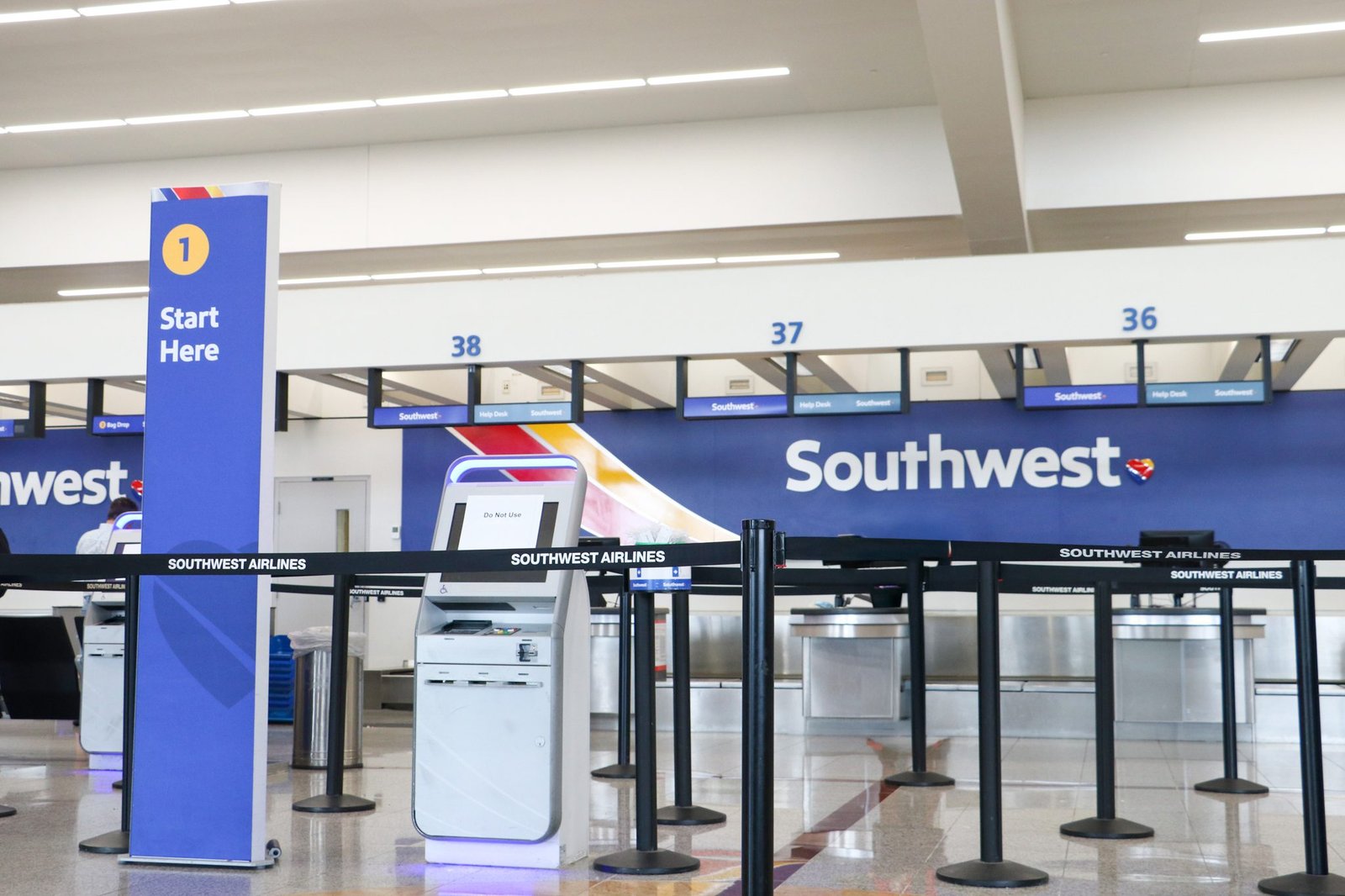
As of May 28, the popular budget carrier has officially ended one of its most beloved customer perks. For decades, the airline’s “bags fly free” policy was a hallmark of its friendly, no-frills service. Now, that tradition has come to an end—bringing new costs and questions for travelers.

From Beloved Benefit to Baggage Fees

Southwest’s policy change comes as part of a broader set of reforms aimed at boosting profits and attracting new customer segments. Under the new rules, most passengers will now pay $35 for their first checked bag and $45 for the second. For a round-trip flight, that’s an extra $160 for those carrying two bags.

This hits particularly hard for vacationers—especially skiers. In the past, a ski bag and boot bag counted as one item. Now, travelers must pay for each checked item separately unless they qualify for a waiver through their loyalty status or fare class.

New Fare Structure, More Fees

Southwest has also introduced a new “Basic” fare, mimicking competitors. This lower-cost tier removes flexibility—no refunds, no changes. Passengers seeking flexibility must upgrade to the “Wanna Get Away Plus” fare, which adds $35 each way. A traveler who wants flexibility and two checked bags now faces up to $230 in added costs for a round-trip flight.

The airline defends the changes as part of a strategy to offer more choices. “We will do all this while remaining focused on what’s made us strong—our People and our authentic, friendly service,” said CEO Bob Jordan in a March press release.

Who Still Gets Bags for Free?

Not everyone will be charged for bags. A-List Preferred members and Business Select fare holders continue to receive two free checked bags. A-list members get one. Rapid Rewards credit cardholders can check one bag free of charge.

The Department of Transportation reported that in 2024, Southwest earned $83 million in baggage fees from customers with three or more bags—even without charging for the first two. With this change, fee revenue is expected to rise significantly.

Loyalty Program and Perks Also Shift

Southwest’s Rapid Rewards program is also evolving. The airline has started offering more points for higher fare classes and fewer points for lower tiers, such as Wanna Get Away. Points redemption will now vary depending on demand.

Other new features include:

  • Assigned seating (a first for Southwest)
  • Premium legroom options
  • A growing list of international partnerships, including Icelandair and China Airlines
  • A rollout of in-seat power, faster Wi-Fi, and new cabin interiors on the Boeing 737 MAX 8 fleet


A History of LUV

Founded in 1966, Southwest made its name flying between Dallas, San Antonio, and Houston. It offered no assigned seats, free checked bags, and famously lighthearted service. “LUV” became the airline’s stock symbol—and unofficial brand.

The change marks a major evolution from the company’s roots. While the airline says it’s “honored to have you join us on this transformational journey,” many longtime fans feel left behind.

“I remember the Love Machines and friendly flight crews,” said another frequent flyer. “Now it just feels like every other airline.”

Southwest says it remains focused on operational excellence. In 2025, it leads U.S. airlines in on-time performance and has avoided most cancellations.

Still, for everyday travelers used to packing without penalty, the new baggage fee era may take some getting used to.

Please consider supporting open, independent journalism – no contribution is too small!

Predatory Lending Claims Move Forward: TitleMax Loses Bid to Dismiss NC Case

TitleMax must face trial in North Carolina over predatory title loans. Federal and state actions expose illegal practices targeting consumers, including military families.


By Milton Kirby | Atlanta, GA | June 4, 2025

A major legal blow has been dealt to TitleMax, a prominent auto title lending company, as a federal judge in North Carolina has ruled that the company must stand trial for allegedly exploiting consumers through high-interest loans and deceptive practices.

This decision comes just months after the Consumer Financial Protection Bureau (CFPB) announced a sweeping enforcement action against TitleMax and its parent company, TMX Finance LLC. That order, released on February 23, found the company guilty of violating the Military Lending Act (MLA) by charging military families triple the legal interest rate cap of 36% and concealing their status to sidestep federal protections.

In North Carolina, dozens of plaintiffs—most of whom are residents—allege that TitleMax issued car title loans with illegal interest rates, failed to disclose that such loans were unlawful under state law, and employed deceptive business tactics in violation of North Carolina’s Consumer Finance Act and the Unfair and Deceptive Trade Practices Act. These claims prompted TitleMax to file a motion to dismiss the case, arguing that the state had no personal jurisdiction over the company. U.S. District Judge Loretta C. Biggs disagreed.

In a 15-page ruling, Judge Biggs found that TitleMax intentionally reached into North Carolina to advertise and solicit business from residents via television, radio, and the internet. The company even recorded liens with the North Carolina Department of Motor Vehicles—acts the court found to be “continuing obligations” that tied the company to the state.

“The relationship between the defendant, the forum, and the litigation must arise out of contacts that the ‘defendant himself’ creates,” Biggs wrote, referencing U.S. Supreme Court precedent. The court concluded that TitleMax’s actions met the threshold for “minimum contacts,” allowing North Carolina courts to exercise specific jurisdiction.

The plaintiffs’ case has now cleared a major procedural hurdle and will proceed toward trial. The ruling also denied TitleMax’s request to transfer the case to district courts in states such as Virginia, South Carolina, and Georgia, where the loans were physically executed. Judge Biggs emphasized the importance of judicial efficiency and the plaintiffs’ right to have the case heard collectively in their home state.

This is not TitleMax’s first brush with regulators. The CFPB previously penalized the company in 2016 for misleading consumers about loan repayment options and using aggressive debt collection tactics. That earlier case resulted in a $9 million fine.

In the most recent CFPB enforcement action, TitleMax was ordered to pay over $5 million in restitution to affected consumers and an additional $10 million civil penalty. The Bureau alleged that the company doctored the records of military borrowers to avoid detection and charged illegal fees for an insurance product that provided no actual coverage.

Between 2016 and 2021, TitleMax issued at least 2,670 illegal loans to military families and imposed unlawful fees on roughly 15,000 loans. These practices directly violated the MLA, a law Congress passed in 2006 after a Department of Defense report showed how predatory lending undermines troop morale and military readiness.

Auto title loans, such as those offered by TitleMax, are short-term, high-cost loans secured by a borrower’s vehicle title. Borrowers who can’t repay risk losing their car, and many end up in a cycle of debt that impacts their ability to pay for basic needs like housing, food, and healthcare.

TitleMax currently operates more than 1,000 locations across 18 states and claims to serve

thousands of customers daily. Its headquarters is in Savannah, Georgia.

Military families and consumers who believe TitleMax or other lenders have wronged them can submit complaints at www.consumerfinance.gov or call (855) 411-CFPB. Employees aware of violations are encouraged to contact the Bureau at whistleblower@cfpb.gov.

The North Carolina case—America Washington et al. v. TitleMax of Virginia et al.—may prove pivotal in expanding how states can hold out-of-state lenders accountable for practices that harm their residents.

Please consider supporting open, independent journalism – no contribution is too small!

Hegseth Orders Navy Ship Honoring Civil Rights Icon Renamed

Defense Secretary Pete Hegseth orders the U.S. Navy to rename the USNS Harvey Milk, targeting civil rights-named ships during Pride Month amid DEI rollback.

by Michael Luciano | June 3, 2025

Secretary of Defense Pete Hegseth has ordered the U.S. Navy to rename at least one vessel that currently honors a civil rights icon.

On Tuesday, Military.com reported that it reviewed a memo from the Office of the Secretary of the Navy, which is formulating plans to rename the USNS Harvey Milk. The vessel is an oiler ship named for gay rights activist Harvey Milk, who was a San Francisco city councilor when he was assassinated in 1978. A defense official confirmed to the website that the Navy is preparing to rename the ship after Hegseth ordered Navy Secretary John Phelan to do so.

Milk served in the Navy during the Korean War, though he was not deployed. He was given a “less than honorable” discharge in 1955 after being questioned about his sexual orientation.

“The official also said that the timing of the announcement — occurring during Pride month — was intentional,” Military.com added.

Earlier in the day, Ed O’Keefe of CBS News reported that the Navy was considering renaming several ships, including the Milk, USNS Thurgood Marshall, USNS Ruth Bader Ginsburg, USNS Harriet Tubman, USNS Dolores Huerta, USNS Lucy Stone, USNS Cesar Chavez, and USNS Medgar Evers.

Hegseth has made purging diversity, equity, and inclusion initiatives from the military a top priority. In a memo last month, Hegseth ordered a review of books in military libraries that address sexism and racism. He said such publications were “promoting divisive concepts and gender ideology” that “are incompatible with the Department’s core mission.” The secretary also said that race and sex would not be considered when admitting applicants to U.S. military academies.

The post Hegseth Orders Navy Ship Honoring Civil Rights Icon Renamed first appeared on Mediaite.

Please consider supporting open, independent journalism – no contribution is too small!
Exit mobile version