
 Milton Kirby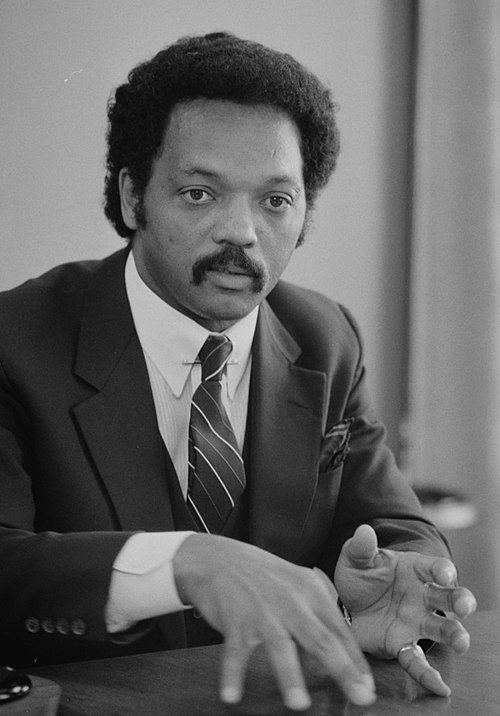
By Milton Kirby | Atlanta, GA | February 17, 2026
The Rev. Jesse Jackson, a towering figure in the modern Civil Rights Movement and two‑time presidential candidate who reshaped American politics, has died at the age of 84. Jackson passed away peacefully at his home in Chicago, surrounded by family, according to his daughter Santita Jackson. The family has not released a cause of death, though Jackson publicly disclosed in 2017 that he had been battling Parkinson’s disease.
Born Jesse Louis Burns on October 8, 1941, in Greenville, South Carolina, Jackson later adopted the surname of his stepfather, Charles Henry Jackson, at age 15. From humble beginnings in the segregated South, he rose to become one of the most recognizable moral voices in America.
A graduate of North Carolina A&T State University, Jackson returned to his alma mater as commencement speaker in May 1984, just months after mounting a historic presidential campaign that energized millions. I was among the graduating seniors that day, watching him fuse faith, politics, and possibility in a message that was not simply celebratory but urgent and instructive. His words carried the cadence of a movement and the clarity of a mandate.
Jackson stood beside Martin Luther King Jr. at the Lorraine Motel in Memphis when King was assassinated in 1968. In the aftermath, he carried forward the unfinished work of economic justice, voting rights, and dignity for the poor. Through Operation PUSH (People United to Save Humanity) and later the Rainbow Coalition now the Rainbow/PUSH Coalition Jackson pressured corporations to open their boardrooms to minorities and women and demanded that public policy reflect the needs of the marginalized.
His fiery oratory and signature phrases “Keep Hope Alive” and “I Am Somebody” became rallying cries. For many young Americans watching from public housing and underfunded schools, his presidential campaigns in 1984 and 1988 signaled that national leadership was within reach. His efforts helped widen the political pathway later walked by Barack Obama and other leaders of a new generation.
Jackson’s influence extended far beyond electoral politics. Decades before today’s debates over athlete compensation, he questioned the economic structure of college sports, criticizing universities for generating millions from football and basketball programs while players many of them young Black men saw none of the revenue beyond scholarships. His argument, once controversial, laid intellectual groundwork for what would later become Name, Image, and Likeness (NIL) reforms, allowing college athletes to profit from their own brands.
On the global stage, Jackson negotiated the release of hostages abroad, including Americans held in Syria and Cuba, and engaged world leaders in diplomatic efforts rooted in human rights. His ministry blended spiritual conviction with political activism, bringing poetry and prophetic power into the public square.
U.S. Senator Raphael Warnock said, “America has lost one of its great moral voices… As a kid growing up in public housing while watching him run for President, Rev. Jesse Jackson gave me a glimpse of what is possible and taught me to say, ‘I am somebody!’”
Tributes echoed across political and generational lines. President Donald Trump called him “a force of nature like few others before him.” Al Sharpton described him as his mentor and “a movement unto himself.” Bernice King posted a photo of Jackson beside her father with the words, “Both now ancestors.”
Jackson’s life was not without controversy. He publicly acknowledged fathering a child outside his marriage, a revelation that tested his public image. Yet even amid personal trials, he remained a relentless advocate for justice.
He is survived by his wife of 64 years, Jacqueline Brown, and their five children: Santita, Jesse Jr., Jonathan, Yusef, and Jacqueline.
From Greenville to Memphis, from Chicago to Greensboro, Jesse Jackson spent more than half a century urging America to expand its moral imagination. He did not simply preach hope. He organized it. He demanded it. And for more than fifty years, he kept it alive.
Support open, independent journalism—your contribution helps us tell the stories that matter most.











Excellent article! Yes, a giant in the Movement now rests among the ancestors. Now, the question: How will keep we the hope and dream alive?
Rev. Jackson, well done good and faithful servant. You now rest peacefully and eternally with the Lord. 🙏🏾🕊️✊🏾💜