
March 10, 2026
One of my main passions in Negro League baseball research is endeavoring to assist the National Baseball Hall of Fame & Museum to have better representation of Negro League “players” in their plaque gallery. Currently there are 28 Negro League “players” inducted in the Hall of Fame and 137 players inducted who had played in the traditional Major Leagues (as defined by MLB as “major” in 1969) prior to April 15, 1947. (I should note that only 125 of those players fully earned their plaques during MLB’s Segregated Era, 1876-1946)
The National Baseball Hall of Fame and Museum is a 501(c)3 not‑for‑profit educational institution, dedicated to preserving history, honoring excellence, and connecting generations. The question becomes does a 5 to one ratio properly “preserve (the) history” of baseball prior to 1947. Does having only 18% of all players prior to ’47 adequately educate the public on the National Pastime’s history?
Consider the following background facts:
- Oral history is full of Major League players, including Ty Cobb, Babe Ruth, and Honus Wagner (the first three inducted in the Baseball Hall of Fame), who extoled the talents of Negro League players.
- Despite Commissioner Landis doing his best to ban Major League teams from playing Negro League teams … hundreds of games between “so called “Major League and “so called” Negro League teams were played and, as historians and accountants will do, records were kept. I have seen a half dozen or so such composite accounts and the Negro League teams have the edge in every one of them.
- On December 16, 2020, “Commissioner of Baseball Robert D. Manfred, Jr. announced that Major League Baseball is correcting a longtime oversight in the game’s history by officially elevating the Negro Leagues to “Major League” status.” Designating 7 Negro Leagues – Negro National League, Eastern Colored League, American Negro League, East-West League, Negro Southern League, Negro National League II, Negro American League – as Major.
- On May 29, 2024, MLB officially absorbed select Negro League records. Amazingly and interestingly, they show virtually identical slash lines for the two sides of the ML color line. Now, this would not have a lot of probative value if not for the other supportive facts in this litany.
- Jackie Robinson and Roy Campanella were the first two players inducted in the Hall of Fame having debuted in the NL/AL after ’46. Including that pair, just about 41% of all Hall of Famers debuting in either the AL or NL since then are players who would not have been permitted to play prior to the reintegration of the game.
- In 2025, just under 41% of major league opening day rosters were players who would not have been permitted to play prior to the integration of the game. Keep in mind, unlike pre 1947 a significant amount of baseball talent is siphoned off by the National Football League or National Basketball Association.
- As for the National Baseball Hall of Fame & Museum it also has done spectacular work in telling both the history (and quality) of the Negro Leagues in every corner of the museum except the plaque gallery. In 2024, a Black baseball initiative was unveiled which included a new exhibit ‘The Souls of the Game: Voices of Black Baseball’; unveiling of a new Hank Aaron statue titled “Keep Swinging”; creation of a webpage called ‘We Play’ geared to 8 to 12 year olds which tells the story of Black baseball and its role in the Civil Rights movement; in addition additional educational outreach programs for older students are delivered to classrooms across the country; the Hall of Fame East-West Classic: A Tribute to the Negro Leagues All-Star Game (sadly this spectacular event was not continued annually – it is never too late; during ’24 the Hall began a collaboration with Dr. Geral Early, Washington University of Saint Louis, on a book published in 2025 “Play Harder” which sheds light on the early Black influence on baseball … for me, the year was capped when the Hall of Fame invited SABR’s Negro League Research Committee to hold its annual Jerry Malloy Conference in the Hall of Fame.
Surely, Negro League players must have made up more than 18% of the best players prior to 1947.
It is time for Hall to answer Major League Baseball’s action of ’20 and ’24 by bringing the Hall of Honor UpToDate by inducting all deserving Negro League baseball players with all deliberate speed. Not two this year, none the next, and then another, then another two … already most of the players are gone and at such pace even the historians and ancestors will be gone.
Last week’s Shadow Ball Significa question: Submitted by Shadow Ball fan, Will Clark): The 1969 New York Mets had a player (a key one at that) whose stepfather played in the Negro Leagues. Name the player and the Negro Leaguer who was his stepfather. The 1969 New York Mets player was Donn Clendenon. He was a key contributor and 1969 World Series MVP. Clendenon’s stepfather was Nish Williams Nish Williams raised him, mentored him, and shaped his athletic discipline. Clendenon often credited Williams with instilling the work ethic that carried him through his MLB career and ultimately helped power the Miracle Mets to their championship. Both Clendenon (2005) and Williams (1968) are deceased.
The Shadow ball Significa Question of the Week: What manager has been named to the Baseball Hall of Fame for Negro League performance? Send your answer and any comments on this issue’s Shadow Ball to shadowball@truthseekersjournal.com or Shadow Ball, 3904 N Druid Hills Rd, Ste 179, Decatur, GA 30033

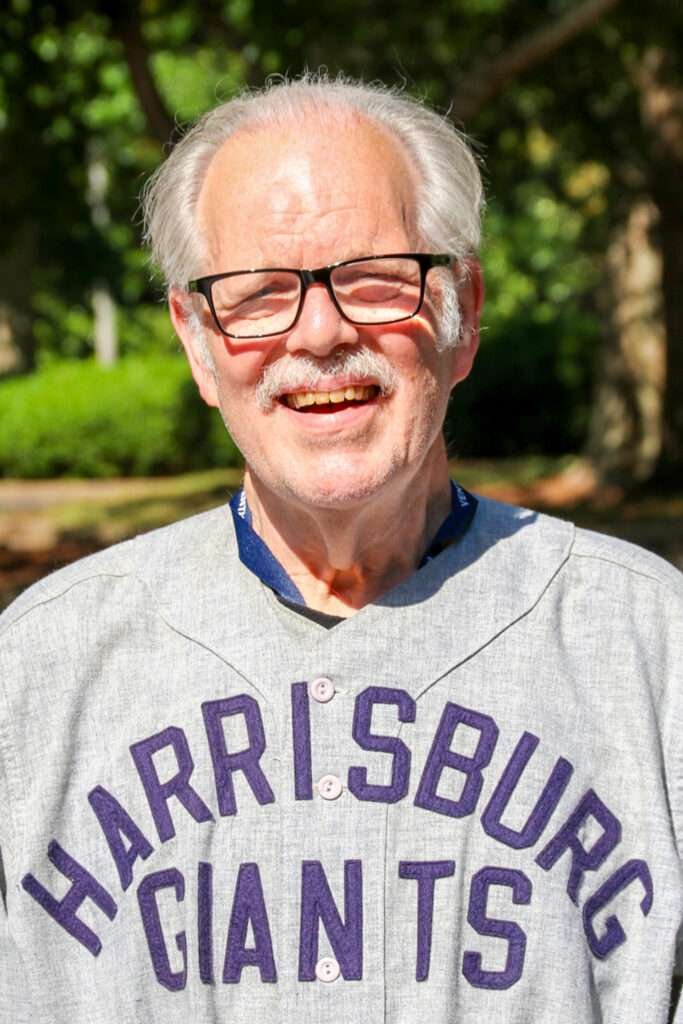
Ted Knorr is a Negro League baseball historian, longtime member of the Society for American Baseball Research’s Negro League Committee, and founder of the Jerry Malloy Negro League Conference and several local Negro League Commemorative Nights in central Pennsylvania. You can send questions for Knorr on Negro League topics as well as your answers to the week’s Significa question to shadowball@truthseekersjournal.com or Shadow Ball, 3904 N Druid Hills Rd, Ste 179, Decatur, GA 30033
Support open, independent journalism—your contribution helps us tell the stories that matter most.
Interesting read. It’s always a joy to be reminded of and learn (or re-learn) about the many innovations, discoveries, and contributions that the African American community has made, and continues to make, in this country. Thank you for sharing this insightful article.
Thank you taking the time to read The Truth Seekers Journal. Our publication is all about illuminating the truth and untold stories. Ted Knorr, the writer of Shadow Ball is an expert in Negro League Baseball history. Because of Ted and his knowledge of the teams, the players as well as those of the majors, his quest to get more Negro League Baseball players recognized by the Hall of Fame is a truth that we are delighted to help amplify.
We invite you to come back to TSJ every day to learn something new. Our archives consist of more than 450 articles many of them are historical in nature.
You are welcome Sapphire D. … last week I broached the subject of the Hall of Fame’s current (and easily correctable) problem of properly recognizing Negro Leaguers in the Hall of Fame … this week I hope to be helpful as my intent is to assist them by naming overlooked Negro League players that definitely belong in the plaque gallery … plus a few pioneers, managers, umpires and executives … hope to hear your comments on my suggestions.