Milton Kirby | Decatur, GA | March 6, 2026
A bipartisan housing proposal backed by Raphael Warnock could significantly reshape the housing market in Atlanta and across the nation by limiting the ability of large institutional investors to purchase single-family homes.
Warnock announced that a provision he championed has been included in the bipartisan ROAD to Housing Act, a sweeping federal housing package designed to address rising housing costs and limited homeownership opportunities.
The provision would prohibit institutional investors from purchasing additional single-family homes if they already own more than 350 such properties. The legislation specifically targets large private equity firms that have increasingly purchased homes in bulk and converted them into rental properties.

“In Atlanta, private equity’s greed is squeezing first-time homebuyers out of the market and pushing the American Dream further out of reach,” Warnock said in announcing the measure. “It’s time Congress did something about it. That’s why I’m proud to have helped lead the bipartisan effort to ban private equity from mass-purchasing homes. This legislation is bipartisan and common sense: let’s get it done.”
The proposal includes steep penalties for firms that violate the restriction. Institutional investors who purchase single-family homes beyond the allowed threshold would face fines of either $1 million or three times the purchase price of the home.
Funds collected through those penalties would be directed toward new housing construction and financial assistance programs for first-time homebuyers.
Why Atlanta? Ground Zero for Corporate Ownership
Atlanta’s housing market has become a focal point in the national debate over institutional home ownership. According to figures cited by Warnock’s office and regional research institutions, roughly 30 percent of Atlanta’s single-family rental homes—about 70,000 properties—are owned by institutional investors.
Much of the research tracking corporate homeownership in metro Atlanta comes from Georgia State University, where geographer Dr. Taylor Shelton has mapped institutional investor activity using property records and tax filings. His work shows that large portfolios of investor-owned homes are concentrated in several fast-growing suburban counties.
The impact is especially visible in Gwinnett, Henry, Cobb, and Clayton counties, where large investment firms have purchased thousands of homes over the past decade. In some neighborhoods in Henry County, investors have purchased nearly one out of every three homes sold in recent years.
Large institutional landlords have built enormous housing portfolios across the region. Companies such as Invitation Homes, Progress Residential, and Tricon Residential collectively own tens of thousands of single-family homes in metro Atlanta. In some suburban communities, a single company may control hundreds of houses, transforming once owner-occupied neighborhoods into large rental portfolios.
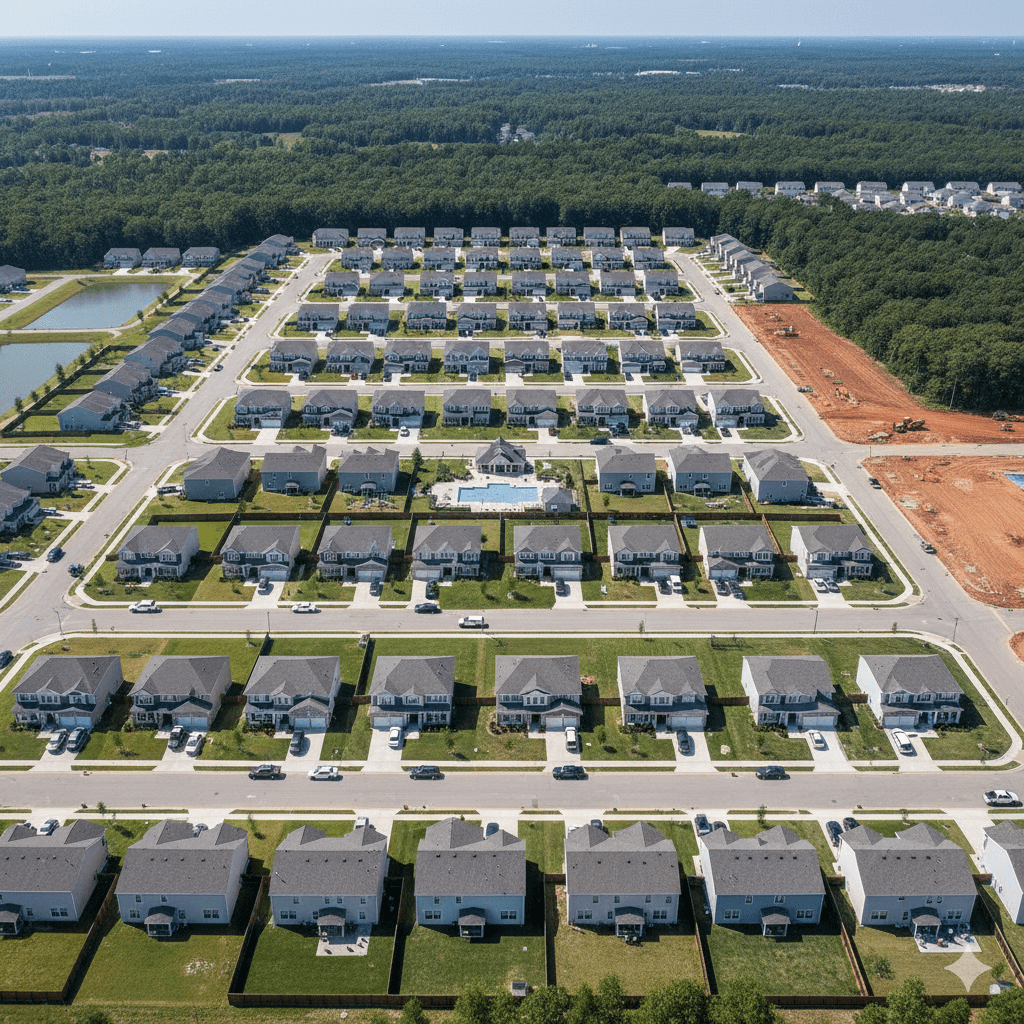
As competition for existing homes has intensified, some investors have shifted strategies. In several north metro counties, including Cherokee and Forsyth, developers are now building entire neighborhoods designed exclusively for rental housing—a model known as build-to-rent.
The surge in investor ownership accelerated during the housing boom that followed the COVID-19 pandemic. Between 2020 and 2022, institutional investors dramatically expanded their footprint in metro Atlanta, taking advantage of historically low interest rates and a wave of homes entering the market.
In some quarters during that period, investors accounted for more than 30 percent of all home purchases in the region, according to housing market analyses from firms such as Redfin and Zillow.
The Impact on the “American Dream”
Atlanta quickly became one of the nation’s most active markets for corporate homebuying. Large companies purchased homes in bulk, often making all-cash offers that individual buyers struggled to match.
For many Atlantans, the shift has been visible in everyday ways. Homes that once might have been sold to young families or first-time buyers are now part of corporate rental portfolios. In some neighborhoods, “For Rent” signs appear where “For Sale” signs once stood, a change that housing advocates say has quietly reshaped the path to homeownership across the region.
According to the Atlanta REALTORS® Association, the median home price in metro Atlanta reached roughly $411,000 in late 2025, placing homeownership further out of reach for many first-time buyers.
Housing advocates say large-scale purchasing by investment firms has contributed to rising home prices and reduced the number of starter homes available to individuals and families trying to buy their first property.
Warnock, who serves on the Senate Banking Committee, has pushed several initiatives aimed at increasing housing affordability since arriving in the Senate in 2021. The committee plays a key role in shaping federal housing policy.
The Georgia senator has also introduced legislation focused on expanding housing supply nationwide, including proposals that would help finance the construction of nearly three million additional housing units.
Warnock often links his housing advocacy to his own upbringing. Raised in public housing in Savannah, he was one of twelve children in a working-class family.
Supporters of the measure say limiting institutional purchases could reopen the door to homeownership for many families who have been priced out of the market.
The provision is expected to move forward as part of the broader ROAD to Housing Act, which lawmakers hope will receive Senate approval in the coming months.
SIDEBAR: Where Corporate Investors Are Buying Homes in Metro Atlanta
Research from housing analysts and regional planning agencies shows several metro Atlanta areas with especially high levels of institutional investor activity.
• Gwinnett County – More than 10,000 homes owned by major corporate landlords
• Henry County – One of the highest concentrations of investor-owned homes in Georgia
• Cobb & Clayton Counties – Thousands of corporate-owned homes tied to large rental portfolios
• Old Fourth Ward & West Midtown – Urban neighborhoods targeted for high-end rental conversions near the BeltLine
• Cherokee & Forsyth Counties – Emerging “build-to-rent” subdivisions developed entirely for rental housing
Researchers say the trend accelerated after the 2008 housing crisis, when large investment firms began purchasing foreclosed homes in bulk across metro Atlanta.
Support open, independent journalism—your contribution helps us tell the stories that matter most.