Florita Bell Griffin, Ph.D.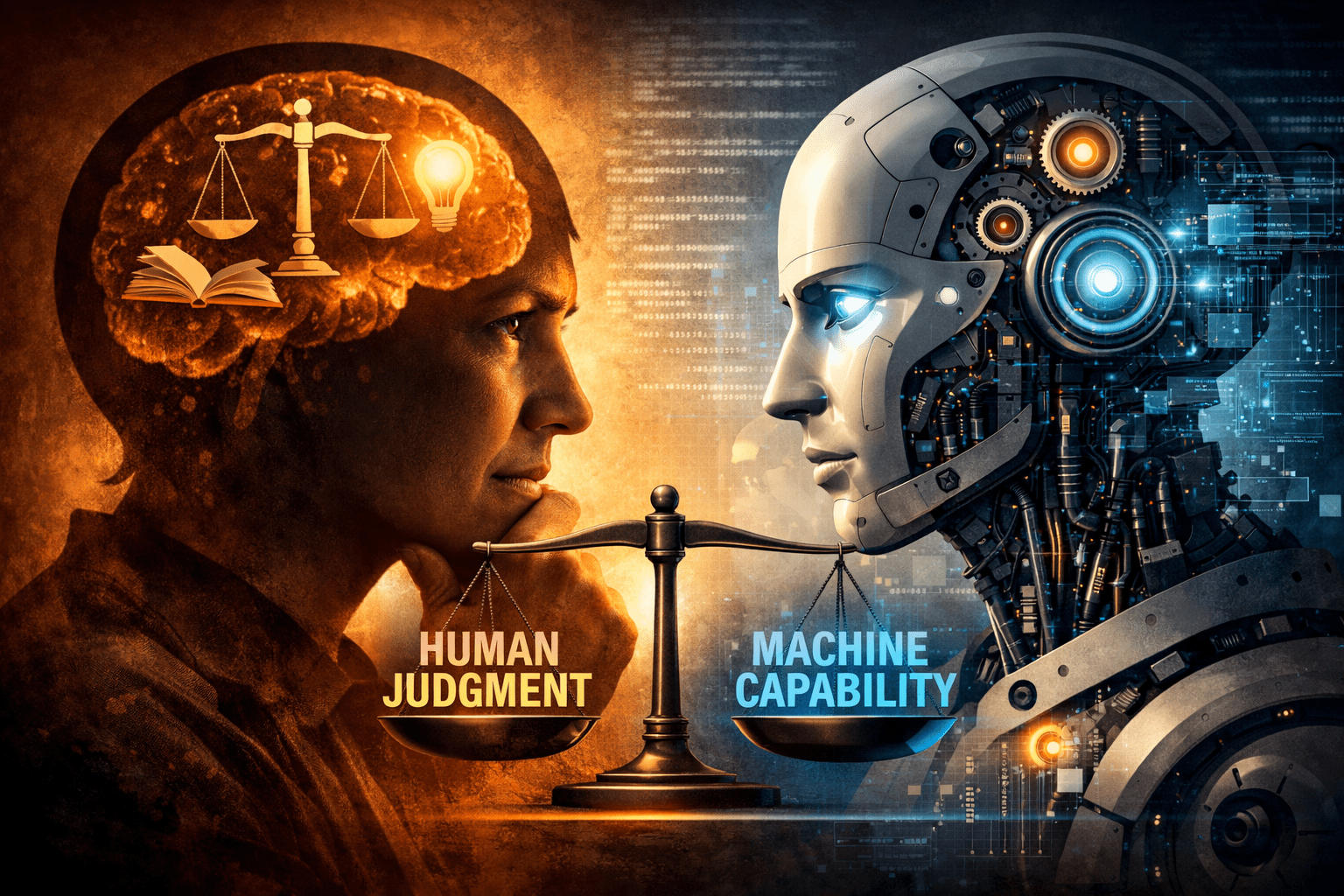
Artificial intelligence is advancing with unusual speed, and much of the public discussion around it has focused on what machines can now do. People hear about systems that can write, summarize, translate, recommend, calculate, generate images, imitate voices, analyze patterns, and respond to questions in seconds. Those capabilities are impressive, and they continue to expand. Yet the deeper public question is not only what machines can do. The deeper question is what human beings must protect as machines become more capable, more persuasive, and more embedded in the routines of daily life. At the center of that question stands human judgment.
Human judgment is one of the most important protections people have in any age of powerful systems. It is the ability to weigh context, notice nuance, recognize moral significance, question appearances, and resist the temptation to confuse speed with wisdom. Judgment is what allows a parent to sense that a child’s problem is larger than the words being spoken. It is what allows a teacher to see the difference between fluent language and real understanding. It is what allows a doctor, pastor, employer, neighbor, or citizen to recognize that a case cannot always be reduced to data points and pattern matches alone. Machines may process information quickly, though judgment belongs to a deeper layer of human responsibility.
This matters because AI increasingly enters the spaces where judgment once rested more visibly with people. Search engines offer direct answers instead of pages of sources. Recommendation systems shape what people notice and what they ignore. Hiring systems help screen candidates. Financial systems flag behavior and assign risk. Educational tools help students produce polished responses quickly. Healthcare systems support prioritization and administrative review. Customer service platforms guide interactions through automated logic. In each setting, the machine appears to save time or improve efficiency. Those gains may be real. Yet every gain raises a deeper question. What happens when people begin to rely on machine outputs without preserving the habits of thought that allow them to evaluate those outputs wisely?
One of the greatest risks in the age of AI is the weakening of human judgment through convenience. A smooth answer feels satisfying. A quick summary feels efficient. A confident recommendation feels useful. Over time, people may begin to treat the first polished output as sufficient, even when it needs further scrutiny. That is where judgment begins to thin. Human beings can slowly lose the habit of asking where an answer came from, what it may have left out, what assumptions shaped it, and whether the result fits the lived reality of the situation. AI does not need to replace human thought entirely in order to weaken it. It only needs to make unexamined acceptance feel normal.
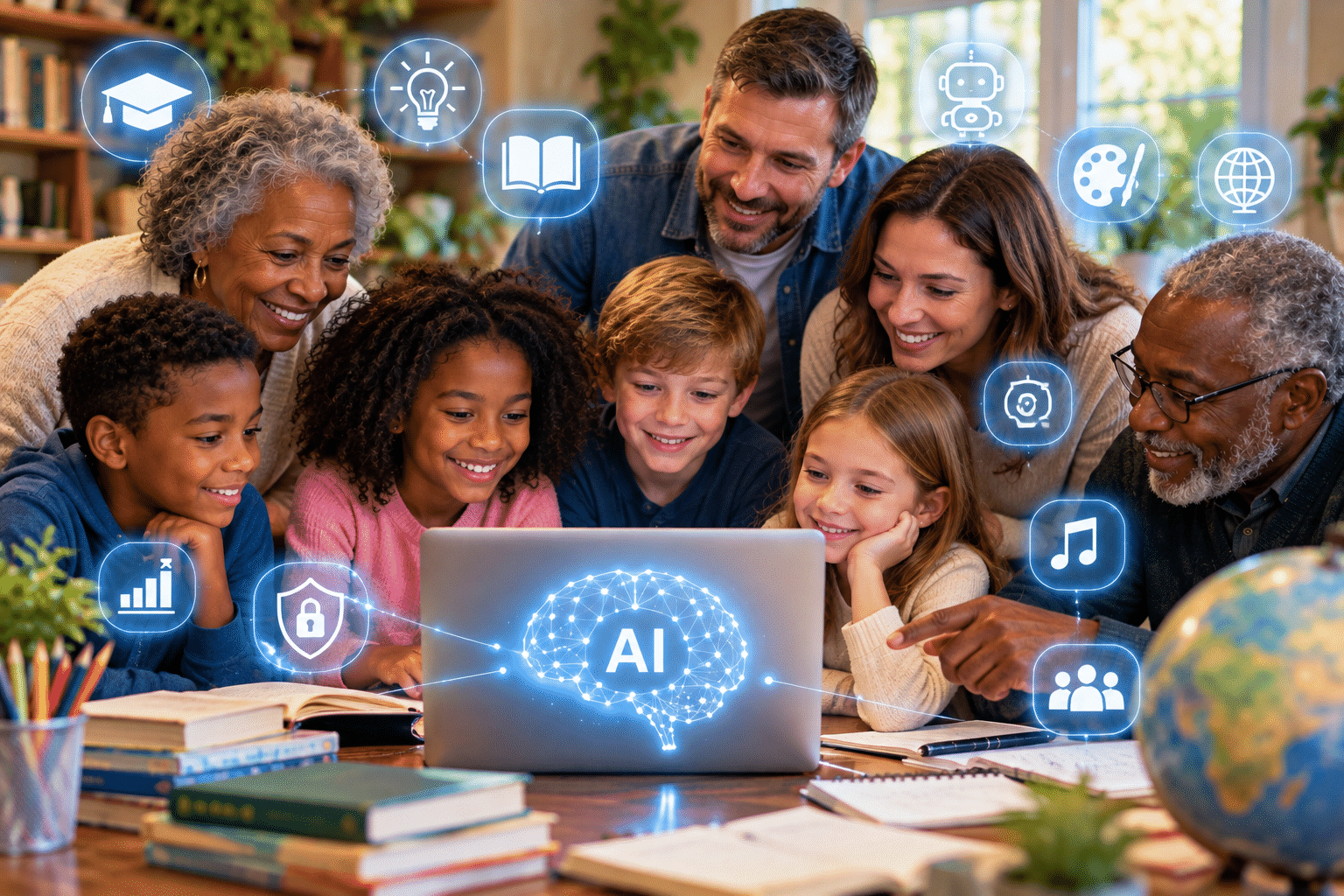
This concern reaches far beyond technical settings. In family life, parents and children now live in a world where machines can answer questions and generate language instantly. That can be useful, though it also changes the environment in which young minds develop. A child still needs to struggle, think, read, remember, revise, and grow through correction. Judgment matures through effort. It forms when a person learns to live with uncertainty long enough to reach clarity honestly. If every moment of confusion is met by an instant machine response, the child may gain speed while losing depth. What must be protected is not merely the child’s access to information. It is the child’s formation as a thinking and discerning human being.
The same issue appears in public life. AI-generated language, images, and audio can be persuasive, polished, and emotionally effective even when they are incomplete, misleading, or entirely false. This changes the conditions under which people exercise judgment. In earlier years, many trusted polished writing or realistic visuals as signals of credibility. That trust now requires greater caution. Human judgment becomes more important precisely because appearances are easier to manufacture. A person must now ask whether a piece of content is reliable, whether it has been confirmed, who created it, what motive may sit behind it, and whether its confidence matches its evidence. Machines advance by improving production. Human beings must advance by strengthening discernment.
The workplace offers another important example. AI can support drafting, analysis, documentation, scheduling, customer communication, and many other tasks. Used well, these systems can reduce drudgery and save time. Yet workplaces can also become environments where human judgment is subtly displaced by metrics, summaries, predictive scores, and machine-shaped assumptions. A manager may trust an automated summary without understanding what it omitted. A hiring process may narrow candidates before anyone sees the full person. A worker may feel pressure to produce at machine pace rather than think at human pace. In these conditions, judgment must be protected deliberately. Leaders still need to ask whether a recommendation makes sense in context. Workers still need room to think, question, and refine. Institutions still need to remember that accountability remains human even when assistance becomes digital.
Healthcare, finance, insurance, education, and public service all require the same caution. These are areas where decisions carry real human consequence. AI may help identify patterns, process cases, route requests, or support review. Yet no matter how sophisticated the tool becomes, the person affected by the outcome lives in a world larger than the categories a system can detect. Human judgment matters because life contains ambiguity, dignity, history, and moral weight that no automated process fully contains. A patient is more than a file. A student is more than an output. A family is more than a pattern. A citizen is more than a score. Protecting judgment means preserving the human capacity to see the person as a person.
Another reason judgment must be protected is that AI often produces fluent outputs that sound complete even when they are not. This creates a dangerous illusion. Fluency can feel like understanding. Confidence can sound like truth. Neatness can resemble wisdom. Human judgment is the faculty that interrupts that illusion. It is what asks whether the answer is adequate, whether the framing is fair, whether the conclusion is premature, and whether another perspective has been ignored. In an age of machine fluency, judgment becomes one of the last defenses against intellectual passivity.
Protecting judgment also means protecting certain human conditions that modern digital life tends to erode. Reflection matters. Pause matters. Reading beyond the summary matters. Listening with patience matters. Wrestling with a difficult question matters. Judgment does not usually emerge from speed. It grows through time, attention, memory, humility, and the willingness to remain in complexity without rushing toward the first available answer. Machines are built to optimize and accelerate. Human beings must protect the slower processes through which wisdom forms.
This does not require hostility toward technology. AI can be useful, and in many settings it already is. The task is larger than rejection or embrace. The task is governance of the human self. People must decide which responsibilities can be assisted by machines and which ones must remain rooted in human conscience, perception, and responsibility. They must decide when automation supports judgment and when it begins to replace it too easily. They must teach children, workers, institutions, and communities that there is a difference between receiving an answer and exercising judgment.
What people must protect as machines advance is therefore larger than a skill set. They must protect attention, discernment, moral seriousness, context-sensitivity, and the capacity to recognize that human life cannot be reduced to efficiency alone. They must protect the ability to say that a fluent answer is still weak, that a fast decision is still unfair, that a polished summary is still incomplete, and that a human being still deserves to be seen in full.
AI will continue to advance. Its presence in ordinary life will grow broader, faster, and more sophisticated. That reality calls for more than admiration or fear. It calls for steadiness. It calls for people who can use tools without surrendering their judgment to them. It calls for families, schools, employers, institutions, and communities that understand what is at stake. Machines may become more capable with each passing year. Human beings must become more deliberate about protecting the very capacities that make judgment possible.
© 2026 Truth Seekers Journal. Published with permission from the author. All rights reserved.
Support open, independent journalism. Your contribution helps us tell the stories that matter most.