
 Milton Kirby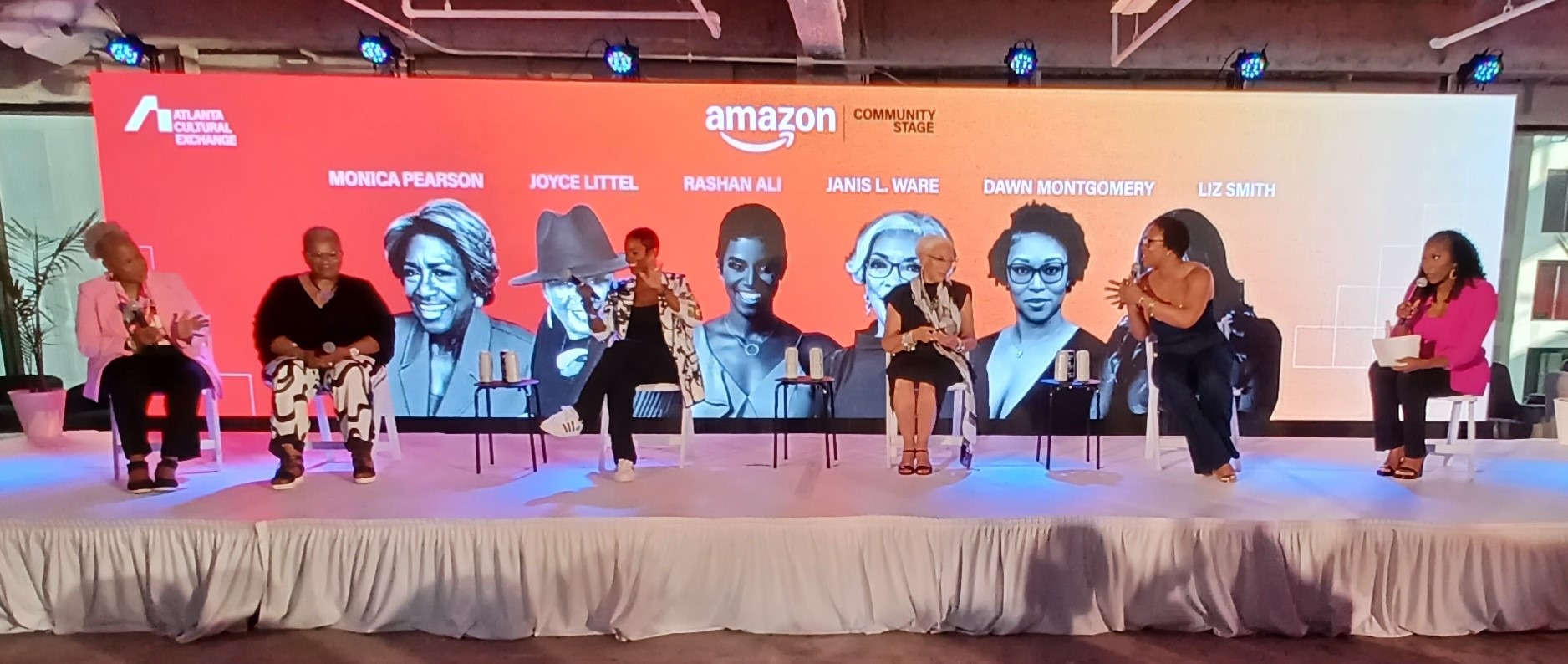
The Women Who Built Atlanta’s Black Media Legacy
By Milton Kirby | Atlanta, GA | July 7, 2026
Atlanta’s rise as the nation’s capital of Black culture did not happen by chance. While the city’s influence is often measured through politics, business, music, film, and professional sports, another force quietly helped shape its identity for generations: Black women in media.
Long before podcasts, livestreams, and social media influencers, pioneering women walked into television stations, radio studios, and newspaper offices where few people looked like them and even fewer expected them to succeed. They earned the public’s trust one broadcast, one headline, and one interview at a time. In doing so, they helped transform not only Atlanta’s media landscape but also the way an entire city saw itself.
That extraordinary legacy came into focus during the Atlanta Cultural Exchange’s “Unapologetically Influential” panel discussion, a gathering that celebrated the women whose careers helped define Atlanta’s media culture while inspiring those who will carry it into the future.
The panel brought together legendary broadcaster Monica Kaufman Pearson, veteran radio personality Joyce Littel, multimedia journalist Rashan Ali, Atlanta Voice Publisher Janis L. Ware, media strategist and journalist Dawn Montgomery, and award-winning broadcaster Liz Smith, who served as moderator.
Although each woman followed a different professional path, together they represented more than two centuries of journalism, broadcasting, publishing, entrepreneurship, and community leadership.
The conversation quickly became about something much larger than careers.
It became a conversation about legacy.
Building Atlanta’s Media Legacy
Throughout the afternoon, panelists reflected on how dramatically Atlanta has changed during their careers.
Today’s Atlanta is home to nationally recognized news organizations, influential Black-owned media companies, syndicated radio personalities, digital content creators, filmmakers, and cultural commentators whose work reaches audiences across the country.
But those opportunities were built by pioneers who entered an industry where few opportunities existed for women, particularly Black women.
Rather than focusing on personal accomplishments, the discussion repeatedly returned to a common theme: every generation has a responsibility to leave the profession stronger than it found it.
Atlanta’s Media Trailblazers
Monica Kaufman Pearson – Broke barriers in 1975 as the first woman and first African American to anchor the evening news at WSB-TV, becoming one of Georgia’s most trusted journalists over a 37-year career.
Jocelyn Dorsey – One of Atlanta television’s pioneering Black journalists whose work helped open newsroom doors for future generations while setting a standard for public affairs reporting and community engagement.
Joyce Littel – A respected Atlanta radio personality whose decades behind the microphone have informed, entertained, and mentored aspiring broadcasters.
Janis L. Ware – Publisher of The Atlanta Voice, preserving one of the nation’s historic Black-owned newspapers while leading its transformation into the digital age and championing community development throughout Atlanta.
Rashan Ali – A multimedia journalist whose career spans sports broadcasting, television, radio, acting, and digital media, reflecting the versatility of today’s media professionals.
Dawn Montgomery – A journalist, strategist, and cultural commentator whose work demonstrates the expanding role of storytelling across journalism, marketing, podcasting, and social commentary.
Liz Smith – An award-winning multimedia journalist and executive producer representing Atlanta’s next generation of influential media leadership across radio, television, streaming, and live events.
Jovita Moore – Remembered as one of Atlanta’s most beloved television anchors, whose professionalism, compassion, and community commitment inspired viewers and young journalists alike.
Remembering Those Who Opened the Door
One of the afternoon’s most meaningful moments came when Monica Kaufman Pearson reminded the audience that history is never created by one person alone.
She acknowledged veteran journalist Jocelyn Dorsey as the first Black news anchor in the Atlanta television market, recognizing one of the women whose groundbreaking work helped expand opportunities for those who followed.
It was a fitting reminder that Atlanta’s media story has always been one of shared progress rather than individual achievement.
The recognition also underscored an important truth often overlooked in conversations about success: every trailblazer once followed another pioneer.
“When I Started, I Didn’t See Black Anchors”
Following the panel discussion, The Truth Seekers Journal spoke with Pearson about the remarkable gathering of women whose careers collectively span nearly every chapter of modern Black media in Atlanta.
Reflecting on the beginning of her own career, Pearson recalled entering an industry where representation was almost nonexistent.
“When I started, I didn’t see Black anchors,” she said.
Rather than accepting those limitations, she chose to become the example she never had.
In 1975, Pearson made history when she became the first woman and the first African American to anchor the evening news at WSB-TV, beginning a remarkable 37-year career that would earn the trust of viewers throughout Georgia.
Her success demonstrated that excellence has the power to change institutions.
Knowing When to Go
Pearson also shared one of the most profound lessons she learned during her decades behind the anchor desk.
“Know when to go.”
The audience grew quiet.
Her advice was not about retirement.
It was about leadership.
Pearson explained that truly effective leaders understand that their responsibility extends beyond personal success. They must also create opportunities for those who follow.
By recognizing when it was time to leave the anchor desk, Pearson helped create space for another respected journalist to become a familiar face in Atlanta homes.
That opportunity allowed viewers to embrace the late Emmy Award-winning anchor Jovita Moore, whose warmth, professionalism, and deep commitment to community made her one of Atlanta’s most beloved broadcasters before her passing in 2021.
Pearson’s lesson extended far beyond journalism.
Leadership is measured not only by the barriers we break, but by the doors we leave open for others.
Every Platform, One Purpose
Although their careers developed in different decades and across different media, each panelist illustrated how journalism continues evolving while remaining grounded in the same core values.
Joyce Littel built one of Atlanta’s most respected careers in radio, using her voice to entertain audiences while encouraging and mentoring young broadcasters.
Janis L. Ware demonstrated that community journalism remains one of democracy’s most important institutions. Under her leadership, The Atlanta Voice has successfully evolved from a traditional newspaper into a modern multimedia news organization while remaining deeply rooted in serving Atlanta’s Black community. Her work in affordable housing, economic development, healthcare, and civic leadership reflects the belief that publishers should help strengthen the communities they cover.
Rashan Ali showed how modern journalists successfully move between television, sports broadcasting, acting, podcasting, and digital media without sacrificing credibility. Her career reflects the versatility demanded of today’s media professionals.
Dawn Montgomery offered another example of journalism’s evolution. Her career has crossed modeling, sports journalism, marketing, strategic communications, podcasting, and cultural commentary. Throughout those transitions, she has remained committed to authentic storytelling and using media as a vehicle for meaningful conversation.
Moderating the discussion was Liz Smith, whose own career represents the next chapter of Atlanta media. As an executive producer, radio personality, television host, and multimedia journalist, Smith embodies an industry where storytellers increasingly move seamlessly across radio, television, streaming platforms, podcasts, and live events.
Together, the women demonstrated that while technology changes, the mission of journalism remains remarkably consistent.
Serve the audience.
Tell the truth.
Earn trust.
More Than Media Personalities
One of the strongest themes to emerge from the discussion was that influence is not measured solely by ratings, readership, or followers.
Each woman described careers deeply connected to community service, mentorship, nonprofit leadership, civic engagement, and advocacy.
Their influence extends well beyond the newsroom.
Collectively, they have served on nonprofit boards, supported educational initiatives, championed healthcare awareness, mentored aspiring journalists, promoted economic development, strengthened neighborhoods, and used their platforms to elevate voices often overlooked by mainstream media.
For these women, journalism has never been simply a profession.
It has been public service.
The Legacy Reached Beyond the Stage
The conversation resonated just as strongly among those seated in the audience.
As attendees gathered following the discussion, many reflected on lessons that reached beyond media careers.
Taylor Dunn summed up the afternoon simply.
“It was an amazing panel, and I really enjoyed it.”
For Atlanta licensed esthetician Tasha, one lesson stood above all the others.
“Know when it’s time to go. Know when it’s your time to leave.”
Moments earlier, Pearson had offered nearly identical advice while describing her own career.
For Tasha, the message applied as much to business and life as it did to broadcasting.
Great leaders do not simply achieve success.
They prepare others to succeed after them.
A Legacy Still Being Written
Looking across the stage, it became clear that this was far more than another panel discussion.
These were not simply accomplished broadcasters, publishers, radio personalities, journalists, and media strategists.
They were women who helped shape how Atlanta tells its own story.
Individually, each forged a unique path through television, newspapers, radio, and digital media.
Collectively, they built something much larger than themselves.
They helped establish Atlanta as one of America’s most influential centers of Black journalism and media excellence.
The applause that filled the room at the close of “Unapologetically Influential” was not merely recognition of distinguished careers.
It was gratitude for doors opened.
Barriers broken.
Communities served.
And generations inspired.
As Atlanta’s media landscape continues to evolve, the technology will change. New platforms will emerge. Different voices will capture public attention.
But the standard established by these pioneering women remains unchanged.
Tell the truth.
Serve the community.
And never forget to leave the door open for the woman coming behind you.
Truth Seekers Journal thrives because of readers like you. Join us in sustaining independent voices.






What an awesome legacy!!