Milton Kirby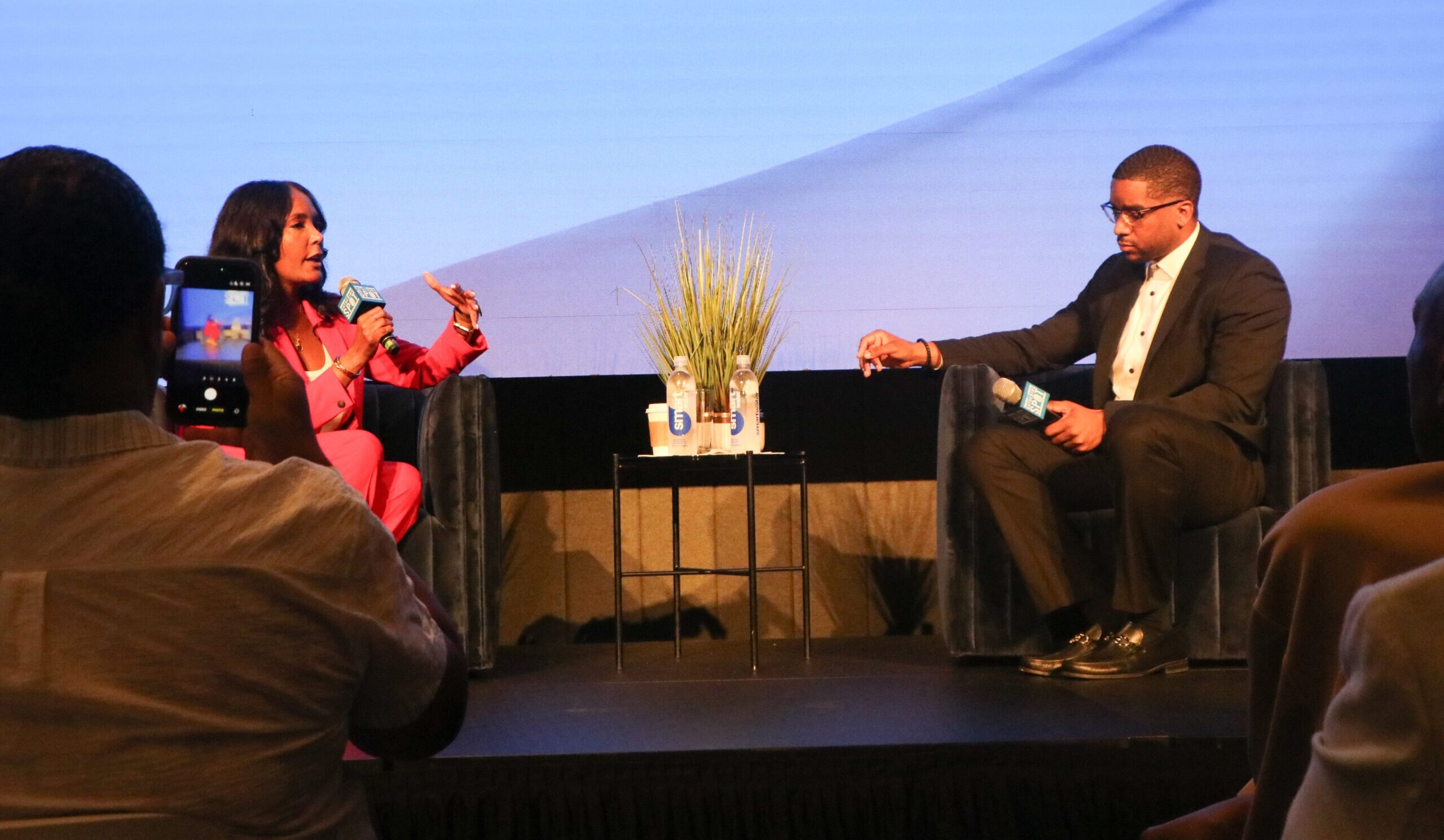
At Atlanta’s “Mandate” town hall, the Democratic nominee made a direct appeal to Georgia voters, particularly Black men, arguing that grassroots organizing, not campaign spending, will determine who becomes the state’s next governor.
By Milton Kirby | Atlanta, GA | July 28, 2026
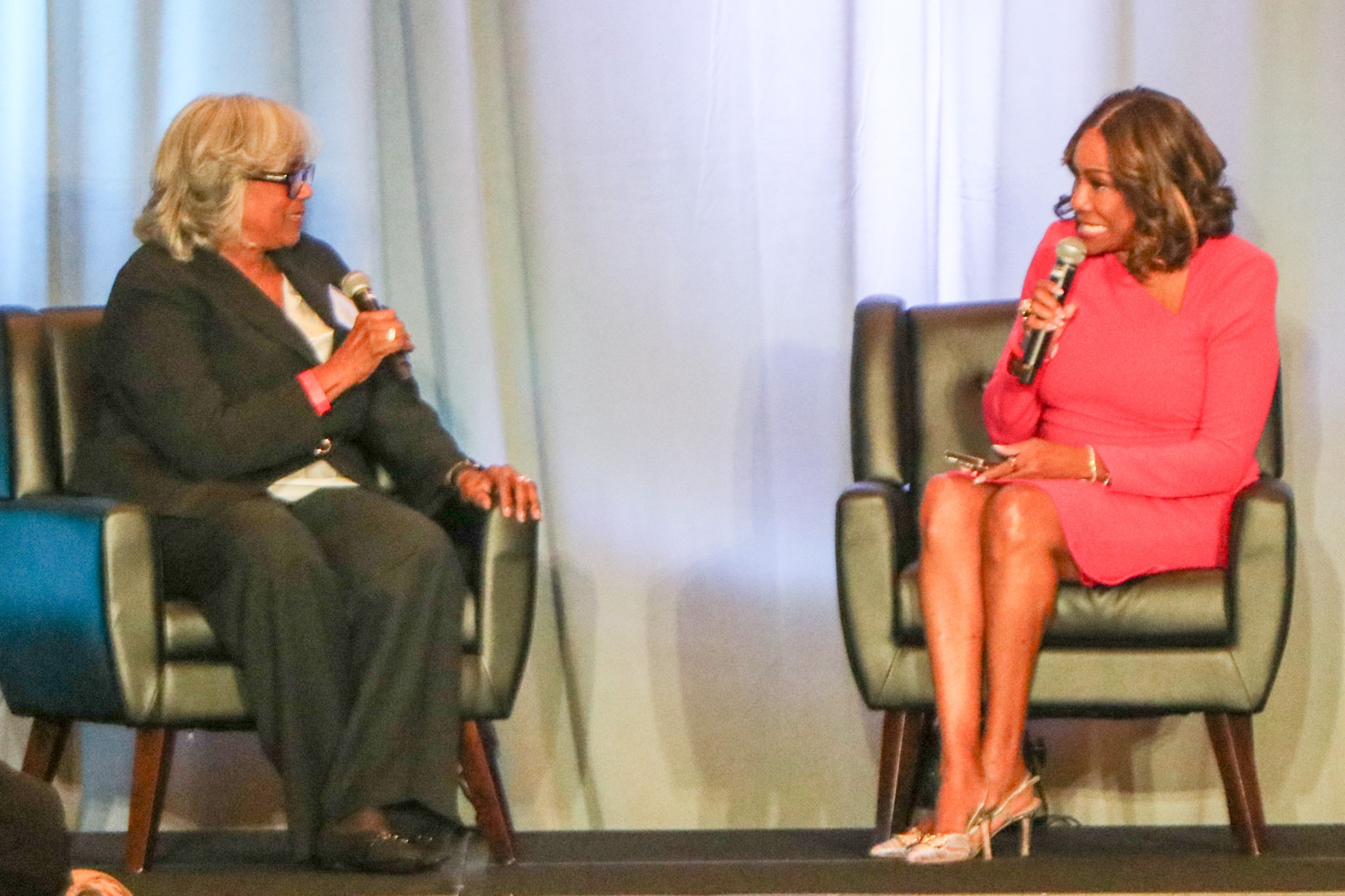
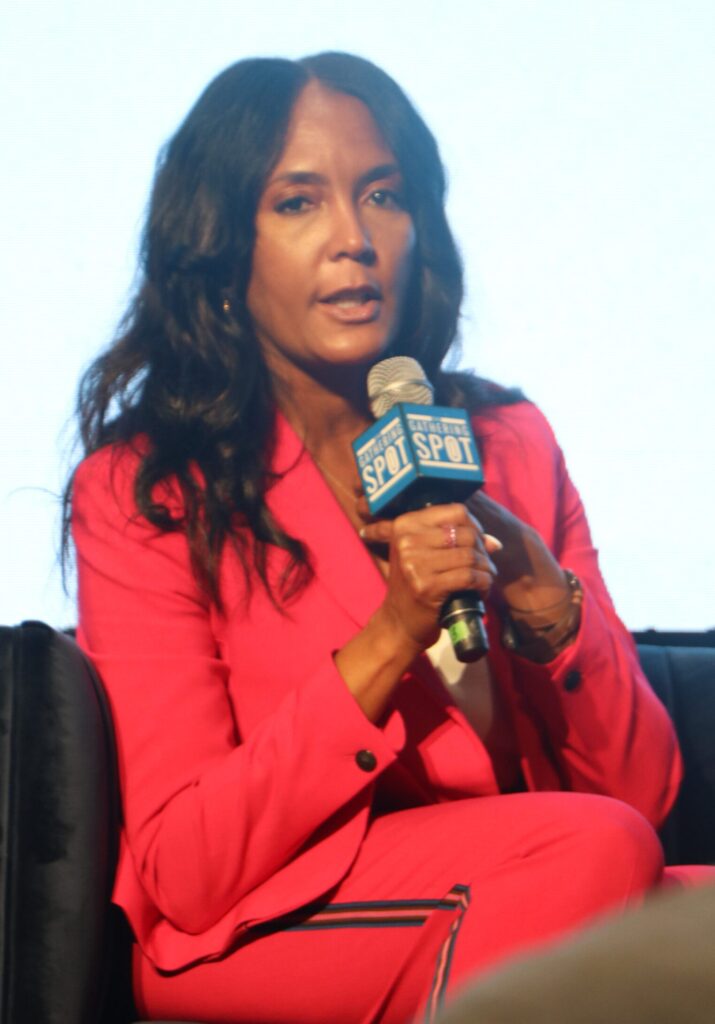
With just 99 days remaining before Georgians choose their next governor, Democratic nominee Keisha Lance Bottoms walked onto the stage at The Gathering Spot Monday evening carrying a message that has become the foundation of her general election campaign.
She isn’t asking voters to be impressed by campaign spending.
She isn’t asking them to be persuaded by carefully choreographed social media moments.
Instead, she is asking them to participate.
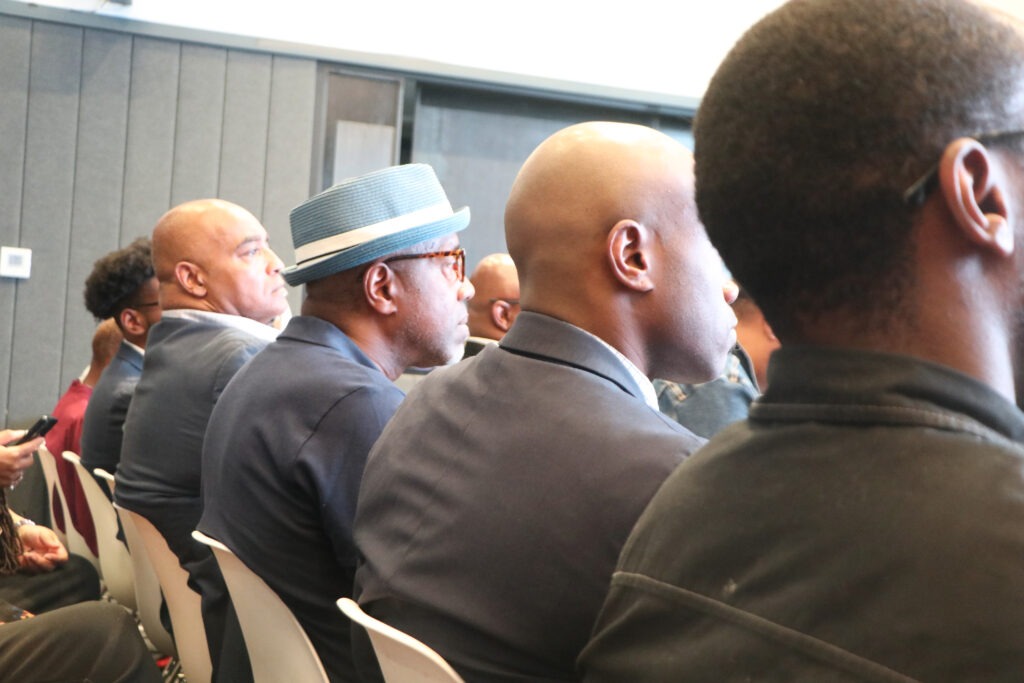
Speaking before a packed audience at “The Mandate,” a town hall organized by The Gathering Spot and moderated by co-founder Ryan Wilson, Bottoms repeatedly returned to one central theme: Georgia’s next governor will not be chosen by the candidate with the biggest advertising budget or the most viral campaign photographs. The election, she argued, will ultimately be decided by ordinary Georgians willing to organize their communities, encourage their neighbors and show up to vote in record numbers.
“Turnout is key. Turnout is key. Turnout is key,” Bottoms told the audience, emphasizing that participation—not complacency—will determine whether Democrats can reclaim Georgia’s highest office for the first time in more than a quarter century.
The message came at a pivotal moment in one of the nation’s most closely watched gubernatorial races.
Earlier Monday, Republican nominee Rick Jackson’s campaign announced an $87 million statewide advertising buy, underscoring the enormous financial resources fueling his campaign. Jackson, a billionaire healthcare executive who has already poured more than $100 million into the race, has paired that media strategy with a series of highly publicized visits to Black-owned businesses, churches and community gathering places throughout metro Atlanta.
Bottoms acknowledged the financial disparity but dismissed the notion that money alone will determine the outcome.
“We’re going to do what we need to do with what we have,” she told reporters after the event. “Whatever that amount is, we are still going to take our case directly to the people of this state.”
A Race That Could Reshape Georgia Politics
The stakes extend well beyond the two candidates.
No Democrat has won Georgia’s governor’s race since Roy Barnes was elected in 1998. Yet the state’s political landscape has shifted dramatically over the past decade. Georgia has twice elected Democratic U.S. senators, and razor-thin statewide contests have transformed the state into one of America’s premier political battlegrounds.
Those changes have elevated turnout from a campaign tactic to a governing strategy.
Political analysts from both parties agree that victory in November will depend less on persuading large numbers of undecided voters than on motivating reliable supporters to cast ballots. That reality has placed Black voters and particularly Black men at the center of both campaigns, although the candidates are pursuing markedly different approaches.
Monday night’s town hall reflected Bottoms’ strategy.
Rather than delivering a traditional stump speech, she spent nearly two hours answering questions about affordability, education, healthcare, economic opportunity and voting rights while repeatedly encouraging attendees to become ambassadors for civic participation within their own families and neighborhoods.
Answering a Personal Call to Serve
Bottoms told the audience that seeking the governor’s office was never part of a carefully crafted political roadmap.
After completing her four-year term as mayor of Atlanta, she said life had become comfortable. Returning to elected office was not part of her immediate plans.
That changed after the 2024 presidential election.
“The day after the presidential election, I cursed and then I prayed,” she recalled, explaining that she spent considerable time reflecting on whether she was being called back into public service. The decision, she said, required conversations with her husband and children because campaigns demand sacrifices from entire families, not just the candidates themselves.
“It was really about what am I called to do?” Bottoms said. “What can I offer? And is it worth me getting out of my comfort zone? Because life was comfortable. And the answer was yes.”
That sense of purpose shaped much of the evening’s discussion.
Rather than focusing primarily on partisan attacks, Bottoms framed her candidacy as an effort to build on opportunities created by previous generations while creating new ones for the next.
“I want to be able to look at my kids in their faces and say in this moment I did everything that I could do on behalf of us,” she said.
The Issues She Says Georgians Raise Everywhere
As Bottoms has campaigned from metropolitan Atlanta to rural South Georgia, she said the conversations have remained remarkably consistent.
Whether speaking in barbershops, churches, community centers or small-town gathering places, Georgians repeatedly raise the same concerns.
The rising cost of groceries.
Housing affordability.
Gas prices.
Healthcare expenses.
Mental health services.
Support for small businesses.
Educational opportunity.
“These are some of the issues that have been generations long,” Bottoms said. “And they are coming up everywhere I go.”
Healthcare emerged as one of the evening’s most frequently discussed topics.
Bottoms argued that many Georgians are facing increasing insurance costs while others have lost coverage altogether. She connected those concerns to broader questions about affordability, describing healthcare as inseparable from the financial pressures confronting working families across the state.
Education also occupied a prominent place in the discussion.
Bottoms criticized Georgia’s long-running struggles to fully fund public education, she stated that the last time the state consistently met its funding commitments she was still a member of the marching band at Frederick Douglass High School.
Her point drew laughter.
It also underscored her broader argument that many of Georgia’s biggest challenges did not emerge overnight but have persisted across generations.
A Direct Conversation With Black Men
Although “The Mandate” welcomed a broad audience, organizers intentionally focused much of the evening on Black men, a voting bloc both political parties increasingly recognize as critical to statewide success.
Wilson challenged the narrative that Black men have become disengaged from politics, noting that conversations inside barbershops and neighborhoods often center on the same economic and quality-of-life concerns shared by other Georgians.
Bottoms agreed.
Drawing from conversations with her own sons and young men she has met while traveling the state, she said Black men are asking practical questions about employment, housing, public safety and whether higher education still guarantees economic opportunity.
“They’re concerned there won’t be jobs,” she said. “They’re concerned whether they’ll be able to afford a home. They’re concerned about interactions with public safety. They’re concerned with mental health.”
At the same time, she rejected suggestions that Black men alone bear responsibility for civic participation.
“I think it’s an unfair burden for Black men to have to carry,” Bottoms said. “This democracy is about all of us.”
Instead of singling out one demographic, she encouraged every eligible voter to recognize that participation extends beyond casting a ballot. It also includes helping neighbors verify voter registration, reminding family members about Election Day and serving as trusted voices within their communities.
That appeal to transform supporters into organizers became the thread connecting nearly every answer she gave throughout the evening.
Policy Versus Political Theater
One of the evening’s sharpest exchanges centered not on taxes, healthcare or education, but on a series of campaign photographs that have fueled debate across social media in recent days.
Republican nominee Rick Jackson has made highly publicized visits to several minority-owned businesses throughout metro Atlanta, including Toast on Lenox, Big Daddy’s Dish on Old National Highway and a Mexican-owned restaurant in Doraville. The visits generated widespread online discussion, with some business owners finding themselves unexpectedly drawn into Georgia’s increasingly heated gubernatorial campaign.
Bottoms said she takes no issue with candidates supporting local businesses. What she questioned was whether highly publicized campaign stops accurately reflect a candidate’s policies.
“I support small businesses. It’s what I do,” she said in a video posted before Monday’s town hall. “What I take exception with is when we let ‘a thing become the thing.’ The theatrics are nice, but what is the real worth? What are you actually doing?”
For Bottoms, the issue is also personal.
She traced her family’s entrepreneurial roots back more than a century, recalling that her great-grandmother operated a business on Atlanta’s west side during the 1920s. Her grandfather and aunt later owned businesses in Vine City and English Avenue, while her mother spent more than three decades operating a beauty salon that served neighborhoods across southwest Atlanta.
Those experiences, she said, shaped her understanding of what neighborhood businesses mean to families and communities.
“I live in southwest Atlanta, and I am surrounded by Black businesses,” Bottoms said during the town hall. “I don’t have to have a camera crew with me every time I walk into one.”
She also questioned what she described as contradictions between Jackson’s outreach and his policy positions, pointing to his criticism of diversity, equity and inclusion initiatives and his support for stricter immigration policies while simultaneously visiting minority-owned businesses.
Her closing line in the Instagram video became one of the week’s most widely shared political remarks.
“Don’t allow people to piss on us and then tell us that it’s raining.”
Defending Her Record as Mayor
Jackson has frequently criticized Bottoms’ four-year tenure leading Atlanta, particularly on crime and public safety.
Monday night, she answered those criticisms directly.
Bottoms reminded the audience that she served the full four-year term voters elected her to complete despite receiving multiple invitations to join the Biden administration before leaving office.
“I served every single day,” she said. “I was asked three times to join the Biden-Harris Administration, and I said no because I wanted to complete my time.”
She then walked through what she considers some of her administration’s defining accomplishments.
During the COVID-19 pandemic, Atlanta maintained balanced budgets without laying off employees or furloughing city workers. The city increased financial support for police officers and other frontline employees while continuing major economic development initiatives, including the redevelopment of the Gulch and expanding opportunities for minority-owned businesses to compete for city contracts.
Rather than arguing she governed during easy circumstances, Bottoms suggested her administration demonstrated stability during one of the most difficult periods in the city’s history.
“If you want to say something about me, fine,” she said. “But don’t lie on my name.”
Competing Against a Billionaire
Bottoms acknowledged that this campaign presents challenges unlike any she has previously faced.
Jackson, a wealthy healthcare executive making his first bid for elected office, has already invested more than $100 million of his own money into the race. His campaign’s announcement Monday of an additional $87 million statewide advertising buy underscored the financial gulf separating the two candidates.
Bottoms said she is less concerned about Jackson’s wealth than about how it is being used.
“I’m not mad about him being a billionaire,” she told the audience. “What I am mad about is the way that he is manipulating the narrative with money.”
She added that one friend’s advice continues to resonate throughout the campaign.
“If you can be bought,” she said, “you can be sold.”
Her response reflected a broader strategy that has become increasingly central to her campaign—meeting voters directly rather than attempting to match Jackson’s advertising dollar for dollar.
Looking Beyond Metro Atlanta
Although much of the discussion focused on metropolitan Atlanta, Bottoms repeatedly returned to the importance of rural Georgia.
She described communities where factories have disappeared, broadband access remains limited and young people often leave after graduating from high school because economic opportunities are scarce.
“Some communities look like time has forgotten them,” she said.
Bottoms noted that while residents across Georgia want many of the same things, good schools, quality healthcare, stable jobs and safe neighborhoods. The path toward achieving those goals differs dramatically between urban and rural communities.
Bottoms also addressed the rapid expansion of artificial intelligence data centers across Georgia, calling for a deliberate review of their long-term impact on utility costs, environmental resources and economic development before embracing additional growth.
Rather than opposing the projects outright, she said state leaders should ensure communities receive tangible benefits while avoiding unintended burdens on residents.
Building a Campaign One Conversation at a Time
Perhaps the evening’s most consistent message had little to do with campaign advertising or partisan politics.
Bottoms repeatedly encouraged supporters to become what she called “trusted voices.”
She acknowledged that some people may have time only to cast a ballot on Election Day.
Others, she said, can do more.
Call ten friends.
Help a neighbor verify voter registration.
Knock on doors.
Volunteer.
Encourage family members to vote.
“Put your oxygen mask on first,” she said. “For some people, the most you can do is show up and vote. For others, it’s calling ten people in your phone. Whatever you can do—do it.”
She also warned that misinformation and confusion surrounding elections have become significant obstacles to civic participation, particularly among younger voters trying to distinguish fact from political rhetoric.
Her challenge to supporters was simple: become reliable sources of information inside their own communities.
The Road to November
As the formal program concluded, the campaign did not end.
Bottoms remained inside The Gathering Spot well after the town hall was over, moving deliberately through the room as supporters waited for photographs and reporters gathered for follow-up interviews. She answered questions from members of the media one by one before turning her attention to attendees, posing for photographs and greeting everyone who wanted a moment with her.
There was no rush toward the exit.
No effort to shorten conversations.
The evening closed much the way it had begun; with Bottoms engaging voters one person at a time.
Only after every reporter’s questions had been answered and every attendee seeking a photograph had the opportunity to take one did she leave the venue.
The scene reflected the strategy she had described throughout the evening.
Rather than measuring success by advertising dollars or viral campaign moments, Bottoms repeatedly argued that elections are won through personal relationships, neighborhood organizing and direct conversations with voters.
Before stepping away from the stage earlier that evening, she had summarized her confidence in a single sentence.
“I don’t have to introduce myself to people,” she said. “I just have to earn their vote.”
Whether that strategy can overcome a billionaire opponent’s unprecedented advertising campaign will be answered in November.
The outcome will determine more than who occupies the Governor’s Mansion. It will also test two competing theories of modern campaigning.
One relies on extraordinary financial resources, saturation advertising and carefully orchestrated public appearances. The other is built on conversations, community relationships and the belief that ordinary Georgians, especially if they turn out in record numbers, still possess the greatest power to shape the state’s political future
Support open, independent journalism. Your contribution helps us tell the stories that matter most.