Milton Kirby
A Dancer Shaped by Discipline, Lifted by Culture, and Carried Across Continents
By Milton Kirby | New York, NY | September 20, 2026
There are dancers who learn movement.
Then there are dancers who build a life around it.
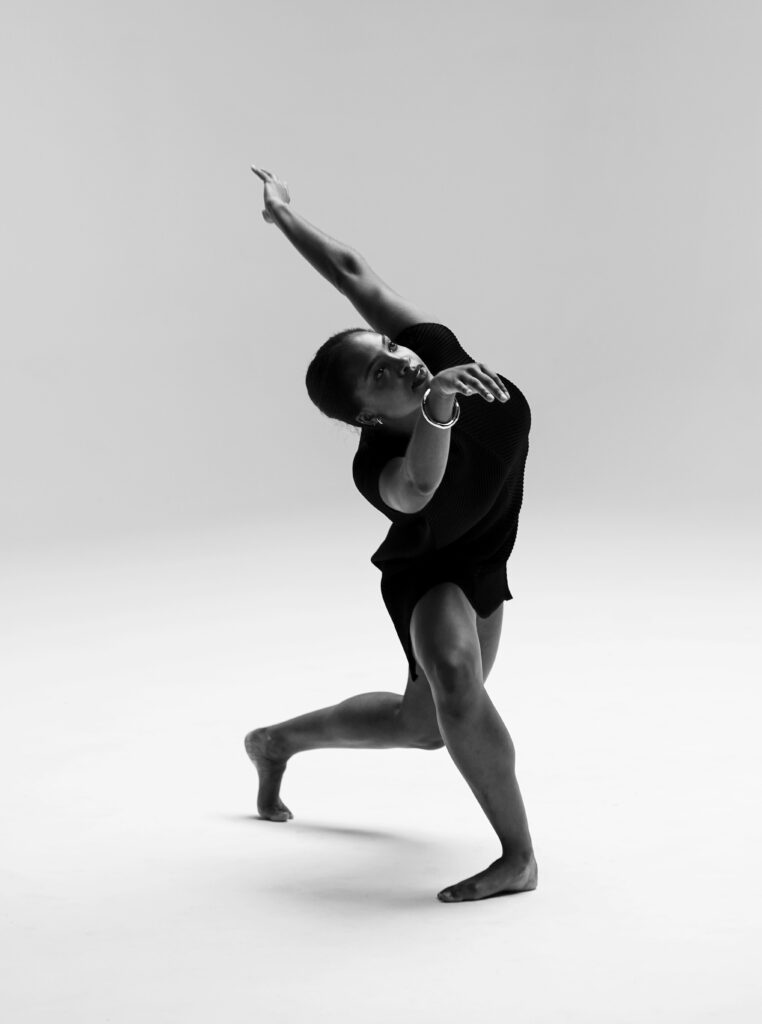
For Jordan Powell, dance has become both profession and language, a way of communicating across stages, cultures and, sometimes, barriers that spoken words cannot easily cross.
She has performed contemporary dance in New York. She has worked internationally in China. She has appeared in commercial projects, worked with different companies and choreographers, and earned a place among the Radio City Rockettes.
Yet behind those credentials is something less visible.
Discipline.
Powell grew up in New Jersey and began dancing as a child after her parents enrolled her in classes.
What began as a childhood activity became something more.
“I fell in love with it and haven’t stopped since,” Powell said.
Eventually, she decided to study dance at the University of Southern California, where intensive dance training existed within the larger university environment.
Since graduating in 2022, Powell has built a professional career that does not fit neatly into a single box.
She is a freelance dancer.
That means one performance may belong to one choreographer, the next to another company and another project somewhere else entirely.
Her professional work has crossed contemporary dance, jazz, modern dance, ballet and other styles.
That variety is intentional.
“There are a lot of different realms within dance that you could focus on,” Powell said. “For me, I found that I enjoy aspects of multiple different areas.”
That range has taken her from New York stages to Guangzhou, China.
When Dance Becomes the Common Language
Powell traveled to China as one of about five American dancers working with a dance company based in Guangzhou.
She did not speak Mandarin.
Some of the Chinese dancers spoke English. A choreographer who spoke both languages helped translate.
But something else began happening inside the rehearsal room.
The dancers watched one another.
They studied movement.
They learned cues.
They communicated through the work itself.
“At the end of the day, it didn’t feel any much different than a rehearsal that I would do in the States,” Powell said. “I think the dance is the dance and the rehearsal is rehearsal.”
That experience revealed something fundamental about the art form.
Movement could bridge what language could not.
Powell and the other dancers eventually performed at the Guangzhou Opera House. She remembers an audience excited not only by the performance, but by the cultural exchange happening onstage.
The production included live musicians and the use of paint on canvas.
For Powell, performing internationally was something more personal.
It was part of a dream she had carried since childhood.
“Doing the thing that I wanted to do since a little girl was really fulfilling,” she said.
But China also placed Powell in another familiar position.
She was the only Black woman in the company.
Being the Only One
That experience did not end when Powell returned to the United States.
In parts of the contemporary concert dance world, she said she has frequently found herself as one of a few Black women in the room—or the only one.
It is not a distinction she seeks.
It is a reality she notices.
“I don’t enjoy” being the only one, she said.
But Powell also understands what her presence can mean to someone watching from the audience.
She remembers wanting to attend performances and see someone who looked like her onstage.
Young Black dancers, she said, may want to explore ballet, contemporary dance or other genres but not always see themselves represented in those spaces.
That makes showing up important.
“It’s important to be in those spaces to remind everyone what Black dancers can do and what Black dancers are capable of,” Powell said.
Her presence, however, should not be mistaken for tokenism.
Powell has worked for it.
Asked whether her career reflects talent, tenacity or some combination of both, she resisted the suggestion that she might simply declare herself the best dancer in New York.
But she did not minimize the work required to get there.
“I have worked extremely hard to get where I am and to perform in all of the pieces that I’ve performed in,” she said. “So I think it does speak to both skill and also tenacity as well.”
What the Audience Doesn’t See
That tenacity matters because professional dance is physically demanding.
The audience sees the finished product.
The costumes.
The music.
The lights.
The bodies moving across a stage.
What it does not necessarily see are the hours of rehearsal, physical conditioning, mental preparation and decisions required to make those moments appear effortless.
“Dancing is extremely physical and intense,” Powell said.
But she said the job demands more than physical strength.
A dancer must understand musicality, timing and choreography. Dancers must communicate with partners and choreographers. They may have to step into a character or emotional state.
They also have to protect the instrument they depend upon most—their bodies.
Powell pays attention to nutrition, injury prevention and conditioning. She cross-trains and incorporates activities such as yoga, cardio and strength training into her routine.
In that respect, professional dancers are athletes.
But unlike many athletes, they are expected to turn all that physical preparation into art.
Then there is the unpredictability of live performance.
A dancer forgets choreography.
A prop fails.
A costume malfunctions.
Someone falls.
The audience may never know.
“You can never start over,” Powell said. “Once the show is going, the show is going.”
So the dancer adjusts.
Improvises.
Gets back up.
And keeps moving.
More Than One Stage
That ability to move between worlds has become part of Powell’s professional identity.

She has performed in works by contemporary choreographers such as Benjamin Freedman, including a recent collaborative production with the Seán Curran Company. Earlier in her career, she danced with Gibney Company in New York.
She has also become a Radio City Rockette, a role she describes as exciting and one she enjoys.
But no single company or title fully defines her.
Powell’s career is broader than one stage.
She sees possibilities in film, international performance, dance education and teaching. She wants to perform in places she has not yet reached.
She is also interested in making dance more accessible to communities that may not naturally see themselves connected to the professional dance world.
That matters because Powell believes dance belongs to far more people than those who train professionally.
People dance at family gatherings.
They dance with friends.
They dance as part of cultural and religious traditions.
They move to celebrate.
They move to express emotion.
In that sense, Powell argues, dance is already part of the human experience.
“I think it’s an extremely important part of our life,” she said.
Professional dance simply takes that human instinct and develops it through years of training, technique and discipline.
The Next Dancer
Powell knows there may be a young girl somewhere who loves to dance but cannot imagine making a career from it.
Maybe she does not see dancers who look like her.
Maybe she does not know anyone in the profession.
Maybe someone has already told her that the dream is unrealistic.
Powell has a message for her.
Keep dreaming.
Do not limit what you believe is possible.
Find people whose careers resemble the one you want. Reach out. Ask questions. Seek guidance.
And put in the work.
“There are plenty of people who will try to tell you what is or isn’t possible or what you can and can’t do,” Powell said.
If the passion is real, she believes people owe it to themselves to find out how far it can take them.
Powell is still finding out.
There are stages she has not performed on.
Countries she has not visited.
Films she has not appeared in.
Students she has not taught.
Audiences she has not yet reached.
The little girl from New Jersey who fell in love with dance has already crossed an ocean doing what she once dreamed of doing.
But she is not finished. She keeps dancing.
Please consider supporting open, independent journalism, no contribution is too small!