TSJ
By Lola Renegade | Atlanta, GA | October 30, 2026
“Something is rotten in the state of Denmark,” Shakespeare warned more than four centuries ago in Hamlet. But the stench today is not coming from Denmark. It is rising from America, a nation whose moral and political decay of the Trump Administration has become so pervasive that its scattered feces has contaminated the very ideals of democracy it claims to champion. And the foul odor no longer respects national borders. It has traveled across oceans, crossed continents, and reached the nostrils of a world watching America’s contradictions unfold under a Hitleresque, racist, anti-intellectual kakistocracy.
The question is no longer whether something is rotten in America. The question is how much longer more than half of Americans will willingly smell, chew on, swallow, and digest the very excrement poisoning our democracy before finally confronting those responsible for producing it.
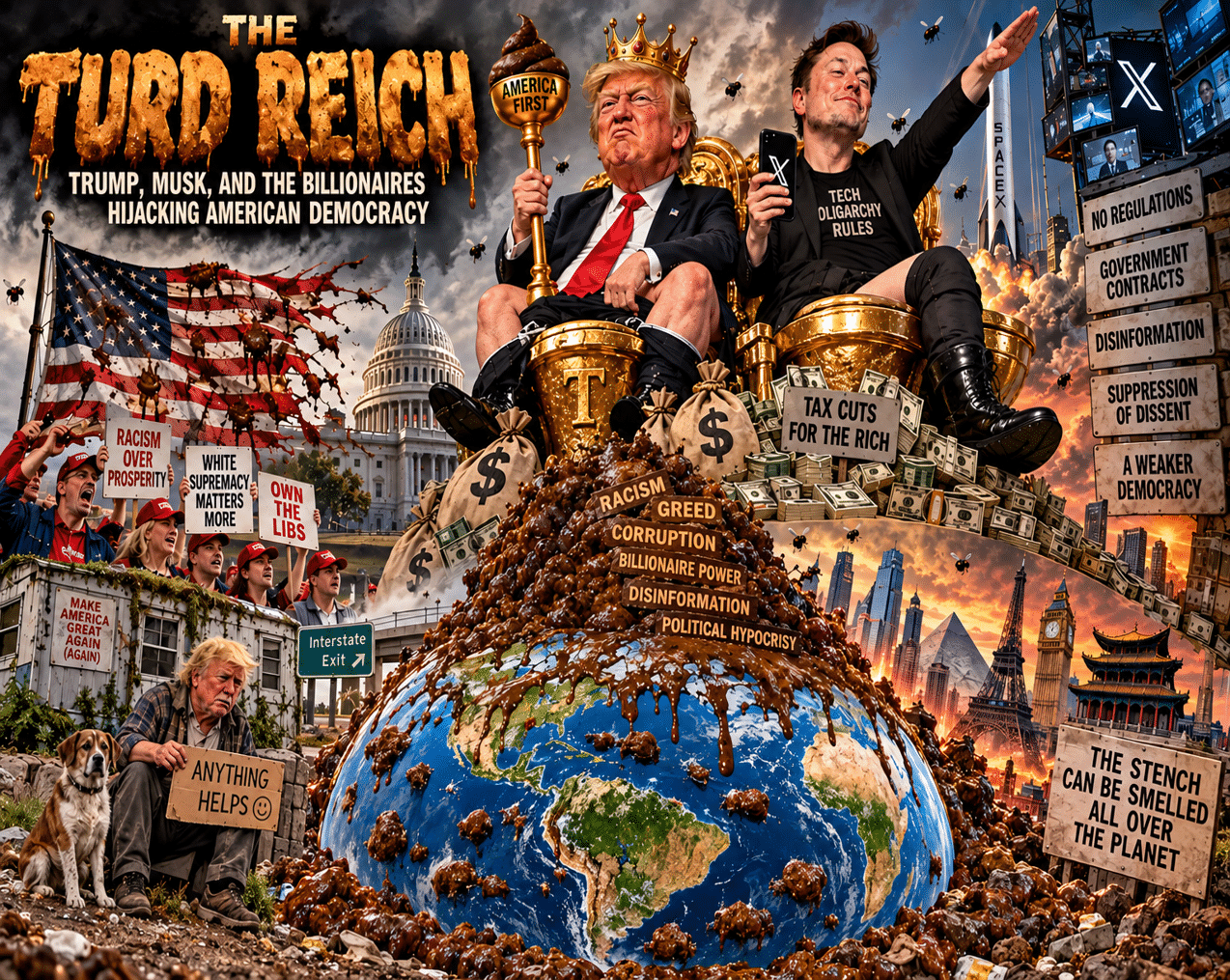
Suffice it to say, without the financial foundation provided by Daddy’s fortune, (p)Resident Donald Trump might well have been just another impoverished old white man standing at an interstate exit, clutching a cardboard sign and begging for spare change before returning to a dilapidated, mildewed, moss-covered trailer. Yet in America, wealth can be mistaken for extraordinary intelligence, financial privilege for personal genius, and bullying arrogance for leadership.
America has spent nearly 250 years proclaiming itself the greatest democracy on Earth. Yet the American experiment has always contained a profound contradiction: a nation founded upon the language of liberty while embracing and jerking off to slavery, celebrating equality while enforcing racial hierarchy, and proclaiming government of, by, and for the people while maintaining institutions that can prevent the candidate receiving the most presidential votes from occupying the White House.
Today, those contradictions collide with another enduring American reality: the extraordinary political influence of concentrated wealth and a menacing, self-important cadre of political Foghorn Leghorns – loudmouthed, blustering, grievance-fueled demagogues whose arrogance, authoritarian impulses, and spectacular hypocrisy threaten to turn the American Experiment into a cautionary tale of a democracy undone by its own contradictions.
And therein lies one of the most damning contradictions of the American Experiment: a nation that can summon billions of dollars to finance the pursuit of political power yet struggles to muster the political will to liberate its children from the suffocating grip of poverty. During the 2022 and 2024 federal election cycles alone, approximately $24.3 billion was spent on political campaigns and related election activities, with billions more flowing through the 2026 election cycle.
Meanwhile, research has estimated that an annual investment of approximately $90 billion could substantially reduce childhood poverty, while a more ambitious investment of approximately $179 billion annually could drive the childhood poverty rate below 1 percent. These figures expose a fundamental question of national priorities. America has perfected the machinery of political fundraising, transformed the acquisition of power into a multibillion-dollar enterprise, and demonstrated an extraordinary capacity to mobilize wealth whenever political dominance is at stake. Yet millions of children remain imprisoned by circumstances that extinguish their dreams before they have even had the opportunity to imagine them.
What does it say about a nation’s moral compass when the ambitions of politicians and their wealthy benefactors generate such enormous financial urgency while the futures of impoverished children remain negotiable? Perhaps the greatest indictment of the American Experiment is not that America lacks the resources to end childhood poverty, but that it has repeatedly failed to summon the collective conscience, courage, and political will to make the liberation of every child from poverty a nonnegotiable national imperative.
Donald Trump, Elon Musk, the bootlicking tech owners, and the other increasingly visible involvement of billionaires in national politics have intensified questions about the relationship between private fortunes and public power. Their political activities also provide an opportunity to examine how racial identity, economic security and insecurity, corporate influence, and allegiance to political leaders shape American democracy.
I call this political phenomenon The Turd Reich – it isa deliberately provocative expression of my concern about the convergence of racial resentment, billionaire influence, and the erosion of democratic accountability. Though the phrase is political satire, it is also an assertion that many in contemporary America, particularly among Republican white men and women, is identical to Nazi Germany. It is an invitation to examine the warning signs that history teaches us to recognize excessive concentration of power, the glorification of political personalities and brutes, hostility toward independent institutions, and the temptation to confuse loyalty to a leader with loyalty to a nation. This is a warning that the ideologies that enabled one of history’s darkest chapters are neither confined to the past nor immune from resurfacing in America.
The Billionaires, the Bigots, and the Betrayal of American Democracy
The alliance between Donald Trump, Elon Musk and other wealthy political donors illustrates the increasingly complicated relationship between concentrated private wealth and public authority.
Elon Musk poured hundreds of millions of dollars into Donald Trump’s 2024 election effort and subsequently assumed a prominent role in the administration’s Department of Government Efficiency (DOGE), an initiative whose sweeping personnel reductions, disputed savings claims, and disruption of federal operations generated considerable controversy. Meanwhile, Musk’s companies continued operating in industries deeply intertwined with federal contracts, regulatory decisions, and government policy, including aerospace, transportation, telecommunications, and artificial intelligence. His political spending and government role raise an unavoidable question: Where should the boundaries lie when a billionaire who helps finance a president’s election subsequently participates in an administration whose decisions can affect his own business empire?
And while billionaires navigate the corridors of political power, ordinary Americans confront the escalating costs of gasoline, diesel, groceries, housing, and other necessities. The September 2026 inflation report showed consumer prices rising 3.7 percent over the preceding year, with gasoline prices increasing particularly sharply. These economic pressures invite another examination of the American political landscape: How do economic insecurity, racial resentment, cultural identity, and political loyalty intersect when Americans enter the voting booth?
Donald Trump’s first election, following eight years of the first African American president, Barack Obama, raised profound questions about the role of race and racial backlash in American politics. But Trump’s return to the White House in 2024, after defeating Vice President Kamala Harris – a highly accomplished Black and South Asian woman – demands an even deeper examination. Twice, America was presented with a historic opportunity to confront its racial and gender hierarchies, and twice, the political outcomes revealed how complicated and deeply entrenched those divisions remain. Although no single election can establish the motivations of millions of individual voters, the sequence of these presidencies raises an unsettling question: To what extent do racial resentment, identity, and the preservation of established social hierarchies influence political allegiance, even when economic security and material well-being hang in the balance?
These circumstances raise profoundly troubling questions about conflicts of interest and the increasingly blurred boundaries between private wealth, corporate influence, and governmental responsibility. America’s constitutional system was designed around checks and balances, yet the Trump Administration’s expansive claims of executive authority have placed those safeguards to be either nonexistent or under extraordinary strain. Even the United States Supreme Court, whose fundamental responsibility includes upholding constitutional limits on governmental power, has issued decisions expanding presidential immunity and strengthening executive authority. To critics, these rulings have helped create an environment in which Trump – the useful idiot of powerful interests seeking to advance their own political and economic agendas – can exercise extraordinary authority while the institutions entrusted with restraining presidential overreach struggle to impose meaningful accountability.
What happens to a constitutional republic when the separation of powers becomes little more than a ceremonial declaration, when institutional loyalty threatens to supersede constitutional duty, and when the principle that no person is above the law appears increasingly difficult to enforce for wealthy white men? A democracy does not cease to exist only when its Constitution is abolished. It can also be weakened when the institutions entrusted with defending that Constitution fail to exercise their powers of accountability.
Business leaders have every right to participate in politics. They may advocate for policies, support candidates, and advise public officials. But when individuals possess extraordinary wealth, influential communications platforms, major government contracts, and direct access to national leaders, the public has a legitimate interest in knowing whether decisions are being made for the benefit of the country or for particular private interests.
The central question is not whether billionaires should have political rights. It is whether their wealth gives them access and influence so disproportionate that ordinary citizens become spectators in a democracy supposedly governed by them.
From Liberal Techies to Trump’s Lap Dogs
Silicon Valley once cultivated an image of itself as a center of intellectual independence, technological liberation, and socially progressive thinking. Its executives spoke enthusiastically about innovation, inclusion, diversity, and the democratization of information. Technology was presented as an instrument through which ordinary people could challenge entrenched institutions and gain access to knowledge previously controlled by powerful gatekeepers.
Yet the political relationship between several major technology companies and Trump changed markedly as he prepared to return to the presidency in 2025. Prominent executives attended his inauguration, and major corporations contributed substantial sums to the inaugural fund as well as to many of his upcoming vanity projects. Some companies also reconsidered and ended policies involving content moderation, diversity initiatives, and their relationships with federal regulators.
Critics interpreted these developments as evidence of corporate accommodation to political power. Supporters argued that technology companies must maintain working relationships with elected administrations regardless of political differences. From my perspective, however, this transformation invites a far more disturbing description: many of the once-liberal techies have become Trump’s obedient lapdogs, eagerly sucking at the tits of a grotesque beast nourished by political opportunism, corporate greed, and the insatiable appetite for wealth and influence.
These are the same corporate titans who once wrapped themselves in the language of innovation, progress, diversity, and social responsibility. Yet when their financial empires and access to political power appeared to be at stake, some discovered that their professed principles were remarkably negotiable. What good are declarations of corporate conscience when that conscience can be surrendered at the first whiff of political advantage?
But the underlying issue deserves serious examination. When technology companies control major channels of public communication, their relationships with government officials can affect far more than their shareholders. Decisions about information access, artificial intelligence, competition, and digital privacy have consequences for the entire population.
The question is whether the industry that promised to democratize information can maintain its independence while seeking favorable treatment from the very political institutions it once celebrated challenging.
When White Supremacy and Mediocracy Matters More Than Economic Survival
For generations, political commentators have asked why economically struggling white Americans sometimes support candidates and policies that appear inconsistent with their financial interests.
Perhaps that question is incomplete.
Economic security is not the only interest people consider when making political decisions. Racial attitudes, cultural identity, religious convictions, immigration policy, and perceived social status also influence political choices.
The historical relationship between whiteness and economic class is especially revealing.
During slavery, wealthy plantation owners accumulated enormous fortunes while many poor white Southerners possessed little property or financial security. Yet the racial hierarchy established by slavery offered white people a legal and social status denied to enslaved Black Americans.
That history raises an uncomfortable contemporary question: Can the preservation of presumed racial advantage become more important to some voters than their own material prosperity?
This is an assertion that most economically disadvantaged white voters are motivated by racism, and I must include misogyny. A mythical diversity of opinion must not become an excuse for refusing to confront the enduring influence of racial resentment and the psychological rewards of perceived racial and patriarchal superiority in American politics.
In the 2024 presidential election, approximately 60 percent of white men who cast ballots voted for Donald Trump, and white women were not far behind at 53 percent. I believe that racism motivated every vote, and these Americans must perform a serious examination of how their racial identity, economic disparity, cultural grievance, and political allegiance intersect. The more troubling question is whether, for some economically struggling white Americans, the preservation of a socially constructed racial advantage carries greater psychological value than the pursuit of their own economic security. If so, what does that reveal about a society in which the promise of racial superiority can compete with the promise of economic opportunity?
A society that encourages citizens to measure their standing by the disadvantage of another group perpetuates inequality across racial and economic lines. Racial superiority cannot pay a mortgage, provide affordable healthcare, rebuild a struggling business, or guarantee a child’s education. And yet the preservation status of whiteness can remain politically meaningful even when material conditions deteriorate.
How Racism, Greed, and the Worship of Wealth Shape the American Dream
America has long celebrated financial success as the ultimate testament to personal achievement, discipline, intelligence, ingenuity, and ambition. Conveniently omitted from this self-congratulatory narrative are the genocide of Indigenous peoples, the brutality and uncompensated labor of enslaved Africans, the systematic theft of land and resources, and the centuries of exploitation, dispossession, and economic plunder, both at home and abroad, that helped build the nation’s extraordinary wealth.
America’s prosperity was not forged by individual brilliance and honest enterprise alone, as many wealthy white people profess. It was also built upon stolen land, stolen labor, stolen resources, and stolen opportunities, while generations of those who bore the greatest human costs were systematically denied an equitable share of the wealth their suffering and labor helped create. What America so proudly celebrates as the triumph of individual achievement is inseparable from a history of collective exploitation that its mythology of meritocracy has too often sought to erase. Wealth also reflects inherited advantages, market conditions, access to capital, public infrastructure, favorable policies, and historical inequalities.
The danger emerges when financial success is treated as proof of superior political judgment.
A billionaire may possess exceptional expertise in building a corporation without possessing comparable expertise in constitutional government, public education, healthcare administration, or the needs of economically vulnerable communities.
A successful business leader can contribute valuable ideas to public policy. But a democratic government cannot be operated solely according to the priorities of a private corporation. Corporations answer to owners, shareholders, customers, employees, and regulators. Governments have constitutional obligations to an entire population, including citizens who possess little economic power.
Efficiency matters. So do fairness, due process, transparency, equal protection, and the preservation of essential public services. A government that measures success only through financial calculations risks overlooking the human consequences of its decisions.
The Electoral College: America’s Constitutional Contradiction
The Electoral College remains one of the most consequential institutional debates in American democracy. Established through the Constitution of 1787, it emerged from a political system in which slavery shaped representation and political power.
The Three-Fifths Compromise increased the population counts used to allocate representation to slaveholding states, despite denying enslaved people the political rights enjoyed by free citizens. Because electoral votes were connected to congressional representation, that compromise also affected presidential electoral power.
The institution has changed significantly over time, but its fundamental structure remains state-based rather than a direct national popular vote.
In 2000, George W. Bush was handed the presidency by the Supreme Court, despite receiving fewer votes nationally than Al Gore. In 2016, Trump won the Electoral College despite Hillary Clinton receiving nearly 2.9 million more popular votes.
In 2024, Trump won both the Electoral College and the national popular vote.
These outcomes illustrate the institution’s central controversy: it permits a presidential candidate to win without receiving the largest number of votes nationwide, even though that result does not occur in every election.
Defenders argue that the Electoral College preserves federalism and protects the role of states in presidential elections. Critics argue that it weakens the principle of equal individual voting power and directs disproportionate campaign attention toward competitive states.
The critical question is whether the constitutional role of states should continue to outweigh the advantages of a single nationwide popular vote. An institution’s historical longevity does not eliminate the need to examine its contemporary consequences.
The National Anthem, LeBron James, and the Contradictions of Patriotism
Earlier this month, President Donald Trump called basketball superstar, LeBron James “a TOTAL DISGRACE” and demanded that he apologize to American military service members after James appeared to practice a golf swing during the national anthem. Yet Trump himself received five deferments during the Vietnam War and never served a single day in the military. The contrast raises an obvious question: By what standard does a president who never wore the uniform presume to judge another American’s respect for those who did?
And consider his choice of Pete Hegseth, a former weekend Fox News television host, to lead the Department of Defense. Hegseth did serve in the Army National Guard, including deployments to Iraq and Afghanistan, but his appointment nevertheless raised questions about the qualifications required to oversee one of the world’s largest military institutions. If patriotism is to be measured by public displays of reverence for the flag, should it not also be measured by consistency, accountability, and respect for the sacrifices made in its name?
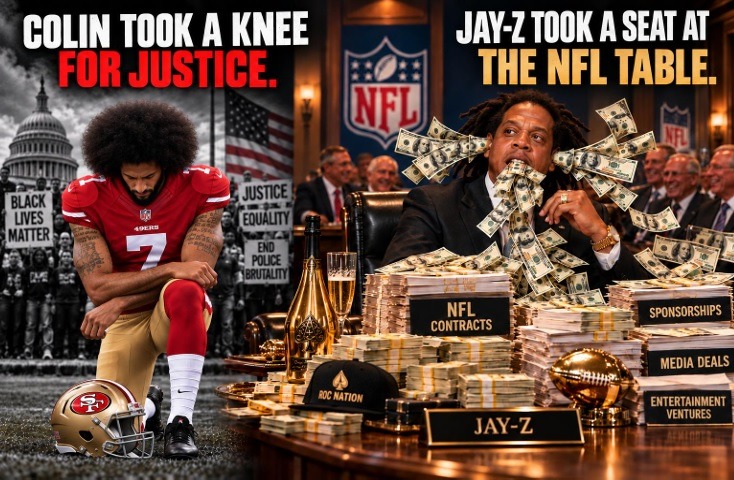
For many Americans, the national anthem represents the sacrifices of military personnel and the ideals of the republic. They regard respectful conduct during its performance as an important civic tradition. Others emphasize that constitutional freedom includes the right to express oneself in ways that challenge conventional expectations of patriotic behavior. The controversy provides an opportunity to compare public demands for symbolic patriotism with the obligations of constitutional governance.
Trump’s criticism of James can be considered together with several documented episodes from his own political career.
First, respect for the flag and respect for election results. Trump demanded respect for a national symbol, but after losing the 2020 presidential election, he repeatedly advanced claims of widespread election fraud that were not substantiated by the evidence presented in court or by election officials.
Second, honoring military sacrifice and accepting constitutional limits. Trump invoked service members who died defending the country, while his efforts to challenge the 2020 election included pressure on state officials and attempts to alter the outcome of certified electoral results.
Third, condemning ceremonial disrespect and examining January 6. Trump’s criticism concerned a gesture during the national anthem. The events of January 6, 2021, involved a violent attack on the United States Capitol, incited by Trump, while Congress was meeting to certify the presidential election. The congressional investigation examined Trump’s conduct before and during that attack.
If America had even a semblance of the fairness, equality, and equal justice under the law that it so sanctimoniously preaches to the rest of the world, Donald Trump would be facing the full weight of criminal accountability rather than enjoying the privileges of a second term in the White House. His conduct warrants the harshest punishment the law could justifiably impose – a life sentence behind the walls of ADX Florence, America’s most restrictive federal supermax prison, where inmates can spend approximately 23 hours a day confined to their cells.
Instead, he occupies the Oval Office, surrounded by the trappings of presidential power, while the nation continues hemorrhaging and debating whether its most powerful citizens should be held to the same standards as everyone else. In America, the distance between a prison cell and the Oval Office can apparently depend first on if you will promise to keep a white racial hierarchy intact, on who you are, how much power you wield, and whether the institutions entrusted with delivering justice have the courage to hold you accountable.
You really can’t make this sh*t up!
Fourth, demanding public accountability while challenging institutional scrutiny. Trump has repeatedly criticized investigations and proceedings involving his own conduct. His supporters argue that some of those investigations were politically motivated; critics argue that independent scrutiny is indispensable when allegations concern powerful public officials.
Fifth, celebrating national greatness while questioning the institutions through which the nation governs itself. Trump frequently invokes American exceptionalism, yet his disputes with courts, election officials, federal agencies, and other institutions have prompted recurring debates about the appropriate limits of presidential authority.
Is patriotism principally a matter of gestures, symbols, and public declarations? Or should it also be measured through adherence to constitutional procedures, respect for lawful election outcomes, and acceptance of institutional accountability?
Americans can disagree about the meaning of a gesture during the national anthem while still recognizing that questions involving presidential authority and constitutional governance carry far-reaching public consequences.
The Democracy America Has Yet to Build
American democracy did not emerge fully formed in 1776 or 1787. And it is not fully formed in 2026. Its expansion required generations of struggle. Enslaved Africans resisted bondage. Abolitionists challenged slavery. Black Americans fought for political rights during Reconstruction. Women organized for suffrage. Civil Rights activists confronted segregation, intimidation, and disenfranchisement.
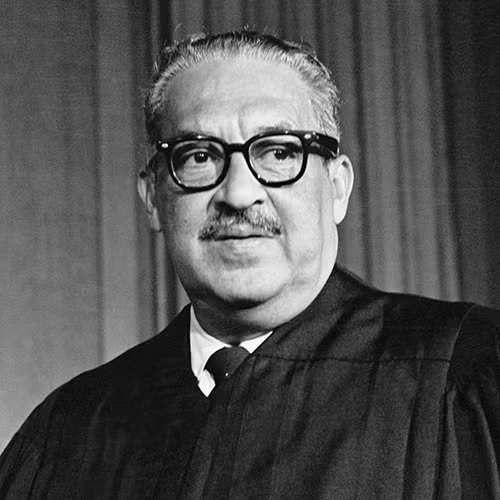
Martin Luther King, Jr., Ida B. Wells, Medgar Evers, Fannie Lou Hamer, James Earl Chaney, The Freedom Riders in 1961, Supreme Court Justice Thurgood Marshall, Jackie Robinson, and countless others demonstrated through their lives that democratic rights often require extraordinary sacrifice. Their work was not merely about gaining access to political institutions. It was about forcing those institutions to honor principles they had long proclaimed but failed to uphold. That unfinished work continues through contemporary debates about voting rights, representation, executive power, campaign finance, economic inequality, and the role of wealth in government.
Reforming democracy requires more than condemning particular personalities. It requires examining the institutions that distribute power and determining whether they adequately protect political equality and public accountability.
America Must Decide What It Values – or Abandon the Pretense of Being the Greatest Country in the World
The controversies surrounding Trump, Musk, Silicon Valley, racial politics, and the Electoral College raise questions that extend beyond any single administration.
How should a republic prevent private wealth from exercising disproportionate public influence? How should presidential elections balance federalism with equal voting power? How should citizens distinguish respect for national symbols from adherence to constitutional responsibilities? How should the public evaluate policies that may benefit one group while imposing costs on another?
And how can Americans preserve the independence of institutions that must sometimes investigate, constrain, or disagree with those holding political power?
These questions cannot be answered through slogans or personal allegiance. They require historical understanding, reliable evidence, public participation, and consistent constitutional standards.
The American experiment remains unfinished. Its future depends upon the willingness of citizens to examine its contradictions without abandoning its democratic aspirations.
A nation cannot measure its commitment to freedom solely by the flags it displays, the anthems it sings, or the wealth its most successful citizens accumulate. It must also measure that commitment by the equality of its political institutions, the integrity of its elections, the accountability of its leaders, and the opportunities available to its people – all of its people!
Truth Seekers Journal thrives because of readers like you. Join us in sustaining independent voices.

 Milton Kirby