Bambhu Innovation: Pioneering Sustainable Solutions for a Greener Future

Bambhu Innovation, founded by Walter Griggs, focuses on sustainable materials, particularly bamboo-based products. Their flagship Eco-Polymer offers a biodegradable alternative to plastics, supporting environmental goals while fostering local partnerships and a legacy for future generations.


By Milton Kirby | Atlanta, GA January 11, 2025

In a world grappling with environmental challenges, Bambhu Innovation emerges as a beacon of hope, blending sustainability with technological ingenuity. The company’s mission is simple yet transformative: to create materials that help businesses achieve sustainability goals while delivering measurable environmental impact.

A Journey Rooted in Purpose

Walter Griggs, a seasoned expert in material handling with over 15 years of experience, laid the foundation for this visionary enterprise. Initially, Griggs and his company SquarePac, Ltd. focused on optimizing warehouse operations through innovative racking and packaging solutions. Over time, he noticed a growing opportunity to address the environmental impact of waste, particularly in industries reliant on disposable materials.

Photo courtesy of Bambhu Innovation – Walter Griggs

During the pandemic, Griggs pivoted from material handling to supplying personal protective equipment (PPE) to organizations like Southern Company and MARTA. This period marked a turning point for Griggs. Witnessing the appreciation for their life-saving efforts inspired him to explore avenues that combined business with a more profound sense of purpose.

The Bamboo Breakthrough

The game-changer? Bamboo. Known as one of the fastest-growing plants on Earth, bamboo reaches full maturity in just 5–7 years. It boasts a tensile strength comparable to steel and remarkable soil-cleansing properties, making it a sustainable powerhouse. “Bamboo is a super plant,” Griggs, Co-founder and Senior Vice President, Industrial & Building Materials of Bambhu Innovation, said. “Anything we can do with wood, steel, or concrete, we can essentially do with bamboo.”

Leveraging this incredible natural resource, Bambhu Innovation has developed bamboo eco-polymer and bamboo composites, materials designed to combat deforestation and reduce landfill waste. These advanced materials are biodegradable, non-toxic, and leave no microplastics—offering a sustainable alternative to traditional plastics.

Innovating for a Sustainable Future

The company’s flagship product, Eco-Polymer, is a next-generation biodegradable material composed of 70% renewable biomass. It can replace conventional plastics like HDPE, polystyrene, and ABS without requiring changes to existing production infrastructure. “Imagine a material that eliminates microplastics and works seamlessly with existing machinery,” Griggs explained.

Ideal for companies with robust sustainability goals, Eco-Polymer meets the demands of the

Extended Producer Responsibility (EPR) Act, which holds manufacturers accountable for the environmental impact of their products. Whether packaging, stretch film, or single-use items, Bambhu Innovation aims to replace petroleum-based plastics with eco-friendly alternatives.

Beyond Business: A Community-Centric Approach

Griggs envisions a hybrid model that fosters local partnerships with bamboo farmers, creating a network to supply raw materials for production. This approach supports regional economies and provides a sustainable outlet for bamboo growers.

Moreover, the company emphasizes the importance of life-cycle assessments to understand the long-term environmental impact of products. “Recycling is valuable, but it’s not enough,” Griggs said. “Only a small fraction of recycled items avoids the landfill. We need to do better to protect future generations.”

A Call to Action

As Bambhu Innovation scales its operations, the company invites businesses and investors to join its mission. From large-scale manufacturers to small enterprises seeking greener solutions, Griggs and his team are eager to collaborate.

For more information, visit the Bambhu Innovation website or reach out through the contact page.

“This isn’t just about business,” Griggs concluded. “It’s about leaving a legacy. Our grandkids will thank us for the choices we make today.”

Bambhu Innovation is proof that purpose and profit can coexist—fueling a brighter, greener future for all.

New Year’s Resolutions or New Year’s Intentions

New Year’s Resolutions have been a tradition for over 4,000 years, but often fail due to unrealistic goals and lack of planning. Experts suggest setting smaller goals, creating detailed plans, and seeking accountability for success.

By Milton Kirby | Atlanta, GA | December 29, 2024

As January 1st approaches, millions of Americans prepare to start 2025 with New Year’s resolutions. This tradition of self-improvement dates back more than 4,000 years to the Babylonians, who celebrated the New Year in March with the Akitu festival. They pledged to their gods to repay debts and return borrowed items, laying the foundation for modern resolutions.

The Challenge of Resolutions

Despite their popularity, New Year’s resolutions often falter. A recent poll revealed that around 52% of resolutions are abandoned by March. Common reasons for failure include setting unrealistic goals, lacking a concrete plan, and losing motivation. Experts suggest setting smaller, achievable goals, finding accountability partners, and creating detailed plans to improve success rates.

A Historical Perspective

The Babylonians were among the first to mark the New Year with resolutions, but their year began in mid-March. During their 12-day religious festival, they crowned a new king or reaffirmed loyalty to the reigning one and made promises to their gods. Similarly, the Romans shifted their New Year to January 1st in 46 B.C., honoring Janus, the two-faced god who looked to the past and the future. Sacrifices and resolutions for good behavior marked the occasion.

By the 18th century, Christians adopted the practice as a time to reflect and set goals for personal growth. The phrase “New Year’s resolution” first appeared in print in 1813 and has since become a cultural staple.

The Most Popular Resolutions

Year after year, health-related goals top the list of resolutions, including eating healthier, exercising more, and losing weight. Saving money and reducing stress are also common themes. For instance:

  • In 2020, 44% of Americans resolved to eat healthier, alongside similar percentages in the UK and Poland.
  • In 2019, over half of Americans aimed to exercise more (59%), eat healthier (54%), and lose weight (48%).
  • A 2017 Stockholm University study found that 70% of resolutions focused on physical health, followed by self-improvement (10%) and psychological health (5%).

Expert Insights

Dr. Lawana Gladney, a Dallas, TX-based Success Psychologist, advises setting “intentions” rather than vague resolutions. “Success requires a clear goal, a detailed plan, and consistent execution,” she says.

Photo Courtesy Dr Lawana Gladney

Dr. Gladney helps clients establish realistic goals and actionable steps. For example, if one resolves to stay connected to family, then we have to have a plan and schedule to make the phone calls and make the trips to see the family. It is all about the goal, the plan, and the steps to execute the plan.

Dr. Gladney, a Ph.D. in Instructional Psychology and Technology specializing in human behavior and the brain’s role in behavioral change, has been practicing for over two decades. For more information about Dr. Gladney or to schedule an appointment, she can be reached at her website and across the following social media platforms: Facebook, Instagram, and LinkedIn.

Dr. Nancy J. Lewis, an Atlanta-based leadership coach, emphasizes the importance of accountability. . “Resolutions often fail because they are too generic,” she explains. Dr. Lewis has guided countless individuals to achieve their goals by fostering discipline and consistency.

Photo courtesy Dr Nancy J Lewis

Setting specific goals with tactical actions and having an accountability partner significantly improves the chances of success.

Dr. Lewis is a transformational management and leadership development trainer and strategist who helps organizations leverage generations, talent, people, and processes to positively impact the bottom line. Dr. Lewis has authored multiple books. She is accessible via email at nancy@progressivetechniquesinc.com, her website, LinkedIn, and by telephone at (770) 964-5533.

A Success Story

Katie Allison, a 34-year-old mother, serves as an inspiration. After giving birth to her first child in 2017, she set a New Year’s resolution to lose 75 pounds. Within six months, she reached her goal weight of 145 pounds through daily gym visits, a sugar-free and reduced carbohydrate diet, no red meat, no dairy, and a disciplined routine and meal plan. Katie’s commitment has helped her maintain a healthy lifestyle for five years. Now pregnant with her second child, Katie plans to resume her fitness routine as soon as medically cleared.

Katie Allison lost 75 pounds in six months after her January 1, 2019, New Year’s Resolution


Tips for Success

Experts recommend the following strategies to stick to resolutions:

·         Set realistic goals: Break down larger objectives into smaller, achievable steps.

·         Create a detailed plan: Outline specific actions and timelines.

·         Track progress: Regularly measure success to stay motivated.

·         Seek accountability: Work with a coach or partner to stay on track.

Whether you call them resolutions or intentions, the key to success lies in thoughtful planning, discipline, and a commitment to change. The New Year can be a time for meaningful transformation with these strategies.

Credit Card Swipe Fees Are Financial Inequities for Black America

Black Americans face higher credit card swipe fees, exacerbating existing financial burdens and racial wealth disparities. The Credit Card Competition Act aims to introduce competition and reduce fees, benefiting consumers and small businesses.

By Dr. Benjamin F. Chavis Jr., President and CEO, National Newspaper Publishers Association | December 27, 2024

America’s financial system is quietly reinforcing old inequities. Black American communities — historically denied access to wealth-building tools due to practices like redlining and restrictive banking — now face a new predatory financial hurdle: credit card swipe fees.

For Black Americans, swipe fees — which credit card companies use to fund luxury points programs — act as yet another layer of systemic discrimination, forcing many to pay more while receiving less in return.

Consider how credit card swipe fees work. Every time someone uses a credit card, the merchant is charged a fee — usually between 2% and 4% — which is often passed on to consumers through higher prices. Wealthier cardholders benefit from this system, recouping costs through rewards like fancy hotel stays and airline miles. But a legacy of discrimination has left Black families with fewer wealth-building opportunities, resulting in lower homeownership rates, lower credit scores, and higher debt burdens — putting those premium credit card and their luxury rewards out of reach for many.

In simple terms, Black Americans and other communities of color are left to foot the bill for the flights and perks of those who are considerably more affluent.

Black Americans are less likely to hold credit cards — 72% ownership compared to 88% for White Americans — and often face higher interest rates. 58% of Black Americans have more credit card debt than emergency savings, compared to 30% of White Americans. Black college graduates carry $25,000 more in student loan debt than their White counterparts, which can further harm their credit scores and financial stability.

It’s a painful irony: Black Americans, who are systematically excluded from wealth-building tools, end up paying more to access the same basic financial services. These financial pressures make it hard to escape revolving debt, and harder still to enjoy the rewards that banks offer. The promise of “free” rewards from swipe fees is an illusion for those who can barely afford to pay down their balance every month. While swipe fees aren’t solely responsible for racial wealth disparities, they compound existing financial burdens, making it even harder for Black families to build savings and financial security.

Black Americans are far from the only group that would benefit from comprehensive swipe fees reform: Small business owners and advocates across the country have been sounding the alarm and leading the calls. For small merchants, swipe fees are often their second-highest monthly cost after labor. These businesses  — which operate on razor-thin profit margins — are forced to raise prices to stay afloat. The average American family pays more than $1,100 a year in higher prices due to these fees.

The current swipe fee structure exists because the Visa-Mastercard duopoly controls 90% of the U.S. credit card processing market, allowing them to set and increase rates for merchants while blocking out competitors.

Swipe fee reform isn’t radical; it’s about fair competition and a level playing field. The Credit Card Competition Act (CCCA) — a bipartisan bill being considered in Congress — aims to introduce competition into this marketplace by requiring at least two competing processing networks on each credit card. This could save American consumers and businesses an estimated $15 billion annually.

The CCCA won’t end rewards programs — only the banks that offer them can decide that. In fact, a recent study found that the CCCA would have little to no impact on rewards. What the bill would do is end a broken system that preys on those with the least and benefits those with the most.

Reducing swipe fees through pro-competition reform won’t undo generations of economic inequality, but it’s a step toward dismantling one of the structures that reinforce it. A fairer financial landscape benefits everyone, not just those most impacted — and Black Americans have paid more to receive less for too long. It’s time for that to change.  An inequality anywhere is a threat to equality everywhere.

Dr. Benjamin F. Chavis Jr. is President and CEO of the National Newspaper Publishers Association (NNPA) representing the Black Press of America and Executive Producer of The Chavis Chronicles on PBS TV Network. Dr. Chavis can be reached at dr.bchavis@nnpa.org.

Associated Credit Union Foundation Offers $3,500 Scholarships to High School Seniors

The Associated Credit Union (ACU) Foundation offers the Ronald K. Ford Memorial Scholarship, awarding $3,500 to high school seniors who embody Mr. Ford’s commitment to education, sportsmanship, and community service, with a deadline of March 31, 2025.

By Milton Kirby | Atlanta, GA December 24, 2024

The Associated Credit Union (ACU) Foundation is honoring the legacy of Ronald K. Ford, a former member of its Board of Directors, by awarding $3,500 scholarships to exceptional high school seniors. The Ronald K. Ford Memorial Scholarship celebrates Mr. Ford’s 12 years of service on the board, his influential career in education, and his pioneering contributions to the credit union industry.

The scholarship recognizes students who embody Mr. Ford’s commitment to education, sportsmanship, and community service. Abigail, a 2024 scholarship recipient, expressed her gratitude, highlighting how the award has supported her academic and personal goals.

Eligibility Criteria

High school seniors graduating in 2025 are encouraged to apply if they meet the following requirements:

  • Maintain a minimum GPA of 3.0
  • Gain acceptance to an accredited college, university, or technical school
  • Submit all application materials by Monday, March 31, 2025

Application Process

Applicants must submit:

  1. A public link to a 60-second YouTube video addressing one of the following prompts:
    • Describe your most impactful community service activity.
    • Share your favorite academic subject and why it inspires you.
  2. Two reference letters:
    • One from a school official (e.g., coach, counselor, or teacher).
    • One from a non-family member (e.g., employer, friend, or neighbor).
  3. An official high school transcript and a college acceptance letter.

If you are a high school senior passionate about education, innovation, and community service, consider applying for the Ronald K. Ford Memorial Scholarship. This $3,500 award could be your stepping stone to a brighter future. For more details and application instructions, visit the Associated Credit Union Foundation’s website.

Don’t miss your chance—apply by March 31, 2025, and take a step closer to achieving your dreams!

Apply Today

College Costs in Georgia

For those seeking more affordable options, Georgia is home to some of the nation’s most economical colleges. Institutions like Dalton State College ($5,532 annual net price) and Abraham Baldwin Agricultural College ($7,260 annual net price) provide quality education at accessible costs.

Here are some reliable sources to estimate college costs in Georgia:

  1. College Websites – Visit the official websites of individual colleges and universities in Georgia. Most institutions provide detailed information about tuition, fees, room, board, and other expenses.
  2. Georgia Student Finance Commission (GSFC) – The GSFC offers tools and resources for understanding college costs, including information on tuition assistance programs like HOPE and Zell Miller Scholarships on their website.
  3. BestColleges.com – Provides rankings and average annual costs for colleges in Georgia, including public and private institutions. Website: www.bestcolleges.com
  4. College Navigator (NCES) – The National Center for Education Statistics (NCES) offers a tool to search and compare costs for colleges nationwide, including detailed breakdowns for Georgia institutions.
  5. University System of Georgia (USG) – The USG website lists tuition and fee schedules for public colleges and universities in Georgia.
  6. College Board – The College Board’s “Trends in College Pricing” report includes average tuition and fees by state, along with tools to estimate overall college costs.
  7. Scholarship and Financial Aid Platforms – Websites like Fastweb.com and Scholarships.com often include information on estimated college costs and financial aid options.
  8. Consumer-Focused Financial ToolsNerdWallet and CollegeSimply can provide estimates and comparisons of college costs across Georgia.
  9. Websites like Best Colleges can also provide a wealth of information.

Georgia DOT Hosts Public Meetings on I-285 Express Lanes Projects

I-285 Express Lanes Project: GDOT proposes new express lanes to reduce congestion, improve mobility, and enhance regional connectivity, with projected travel time reductions of up to 39% and toll-based pricing for market-based traffic management.

By Milton Kirby | Atlanta, GA – December 12, 2024

The Georgia Department of Transportation (GDOT) is holding a series of public meetings to inform residents and gather input on the proposed I-285 Express Lanes projects. These projects, part of GDOT’s Major Mobility Investment Program (MMIP). The MMIP is a grouping of projects expected to yield considerable reductions in congestion along key freight and passenger corridors.   The projects are expected to significantly improve mobility along the heavily congested I-285 corridor, including the Top End, Eastside, and Westside segments.

Addressing Congestion

According to GDOT, the northern stretch of I-285 is among the most traveled and congested highways in the United States, with over 240,000 vehicles traversing it daily. Meanwhile, the Eastside and Westside sections each see nearly 200,000 vehicles daily. To address this, GDOT plans to construct two new barrier-separated express lanes alongside the existing general-purpose lanes in both directions. These express lanes are designed to offer drivers a choice to by-pass traffic congestion and provide more reliable trip times. The express lanes will be toll roads which will utilize market-based pricing to reflect real-time congestion. The new are projected to reduce travel times by up to 39% for express lane users and over 8% for those in general-purpose lanes.

Photo by Milton Kirby | I-285 northbound @ Covington Highway in DeKalb County, GA – morning rush

All drivers will be able to use the optional express lanes, by registering and obtaining a Peach Pass regardless of the number of passengers traveling. Transit vehicles and state registered vanpools will be able to utilize the express lanes without paying a toll.

Transit Integration and Regional Connectivity

In parallel, MARTA is conducting a planning study to optimize transit connectivity along I-285. The I-285 Express Lanes Transit Study will explore how these lanes can enhance regional mobility and provide equitable transportation options. The study will focus on:

  • Identifying infrastructure enhancements, including ramps and station locations, to support transit access.
  • Developing operations plans for new express lanes transit services.
  • Ensuring equitable access to transportation, particularly for underserved communities.

The study will assess the corridor’s capacity to connect individuals to employment clusters, healthcare facilities, and other key destinations as part of the broader transit initiative. Population and job growth projections in the study area are 42% and 33%, respectively, by 2050. This projected growth underscores the urgency of these infrastructure improvements.

MARTA is accepting public comment from November 13 – December 18, 2024 on their website.

Other Public Engagement and Environmental Considerations

To foster community involvement, GDOT held a Public Hearing Open House (PHOH) series in July 2024, which included both in-person and virtual sessions to gather input regarding the environmental impact. Residents were invited to comment on the Draft Environmental Impact Statement (EIS), Mitigation Plan, and design concepts. Additional hearings are expected as the environmental studies progress. Federal regulations require an environmental impact study for any project utilizing federal funds.

Photo by Milton Kirby | Fly over construction @ I-285 & I-20 in DeKalb County, GA

Project Timeline and Benefits

The I-285 Top End Express Lanes project will be executed in three phases: procurement, design, and construction. Some segments will be at-grade, while others will feature elevated lanes. GDOT estimates that the lanes will enhance travel reliability, provide free access for transit vehicles and vanpools, and support economic growth by connecting consumers to businesses and workers to jobs.

GDOT has also partnered with the private sector to design, construct, finance, operate, and maintain the lanes, with toll revenue funding their operations.

Learn More

GDOT has made additional resources available, including a video gallery detailing the I-285 Top End Express Lanes proposals. Residents can monitor the GDOT website for further updates and attend upcoming public meetings.

These projects promise to alleviate traffic congestion, enhance regional connectivity, and support equitable transit solutions across metro Atlanta, setting the stage for sustainable growth and improved quality of life.

Pristine Mobile Mechanic – Quality Service in Your Driveway

owner Don White provides exceptional service, repairing a leaking coolant hose on a 2015 Ford F-150 in under an hour, showcasing his commitment to quality and customer satisfaction.

By Milton Kirby | Atlanta, GA – December 6, 20204

On one of the coldest days of the season, Wednesday, December 4, 2024, in Atlanta, GA, an unexpected automotive problem turned into a discovery of exceptional service. While driving down Northside Drive, I noticed the unmistakable scent of antifreeze. Initially, I assumed it came from another car, but by the time I turned onto 16th Street, steam started to escape from the engine compartment. The steam was coming through the small gaps on the right side of the vehicle where the hood and the fender met to close the engine compartment of my 2015 Ford F-150. The steam confirmed that the smell was coming from my engine and the problem was mine.

Pristine Mobile Mechanic does final check

A quick turn onto a side street and a hasty inspection of the radiator and engine revealed a leaking coolant hose connecting the heater core to the engine. Though the leak wasn’t severe, I knew from experience that it required immediate attention, and the vehicle should not be driven very far. I safely moved to a nearby secure parking garage and searched for a replacement hose. Neither the nearest auto parts store nor the nearest Ford dealer had the part in stock. After several phone calls, I finally found the part at Courtesy Ford in Conyers, GA.

The next step was to locate a mechanic. I encountered steep quotes and long wait times when calling early the following morning. Then, I spoke with Don White, the owner of Pristine Mobile Mechanic (PMM).

Don’s professionalism and transparent price estimate made PMM stand out against the other mobile technicians. For a service call fee of $35 and an estimated repair cost of $150-175, he assured me the job could be done promptly.

True to his word, Don arrived at the scheduled time, quickly confirmed the diagnosis and that I had purchased the right replacement part. With a focus on the job he completed the repair—removing the faulty hose, installing the new one, and refilling the coolant system—all within an hour. A quick test revealed no leaks, and Don was off to his next appointment, leaving me thoroughly impressed.

Don White’s passion for cars began in high school, where he started collecting and repairing vehicles. This interest helped him pay his way through South Carolina State University, where he earned a Bachelor of Science degree in Industrial Engineering. After gaining industry experience at BMW of South and Genuine Parts, Don launched Pristine Mobile Mechanic in 2023.

Since its inception, PMM has serviced over 300 vehicles, building a reputation for reliability and affordability. When asked about expansion, Don emphasized the importance of maintaining quality over rapid expansion. “The quality of my service is paramount to my brand,” he shared, reflecting on his dedication to excellence, specifically citing that he answers the telephone, maintains constant communication, and shows up when agreed.

Pristine Mobile Mechanic installing hose

PMM makes payment seamless by accepting cash, Apple Pay, Cash App, Zelle, and even Bitcoin, ensuring convenience for its clients.

Don White showed me a passion for servicing cars and a commitment to the profession, and he showed himself as a student of the craft. These embody the growing appeal of mobile mechanics, offering car owners convenience and high-quality service wherever they are. PMM is redefining automotive care—one vehicle at a time.

For more information about Pristine Mobile Mechanic and their services, visit their website.

Largest Private Company in US Is Quietly Firing Thousands Before Christmas Because Grocery Prices Are Falling

Cargill, the largest private US company, is firing approximately 8,000 employees (5% of workforce) due to falling grocery prices and earnings shortfalls, with restructuring efforts to streamline operations and reduce duplication of work.

By Elizabeth Urban | December 4, 2024

The largest private company in the U.S. is quietly firing about 8,000 employees before Christmas as grocery prices fall across the country.

Cargill, a major ingredients business and food production company, has been hit hard after grocery prices dropped recently as crops the company trades, including wheat, corn and soybeans, hit new lows, as reported by Reuters.

“The majority of these reductions will take place this year,” CEO Brian Sikes said in an internal memo obtained by Bloomberg. “They’ll focus on streamlining our organizational structure by removing layers, expanding the scope and responsibilities of our managers, and reducing duplication of work.”

The memo went on to state that this meant “reducing our global workforce by approximately 5%,” as reported by Reuters. This means that about 8,000 of Cargill’s 160,000 employees will lose their jobs.

Cargill’s businesses fell short of hitting their earnings goals in fiscal 2024, with less than a third of their businesses doing so. The company shared with employees over the summer that they planned to downsize from five business units to three, Bloomberg previously reported.

Photo by Milton Kirby – Cargill – Gainesville, GA

“As we look to the future, we have laid out a clear plan to evolve and strengthen our portfolio to take advantage of compelling trends in front of us, maximize our competitiveness, and, above all, continue to deliver for our customers,” Cargill said in a statement to CNN.

The company cut 200 tech jobs across the country earlier this year. Cargill previously announced that it was hiring for 400 positions for a new Atlanta location in June.

For the last four years, Cargill has been ranked as the largest privately-held company in the U.S., according to Forbes.

Atlanta Business League Inducts Three New Members into Hall of Fame

The Atlanta Business League (ABL) hosted its 91st Annual Meeting, inducting Albert G. Edwards, Dydra Virgil, and Delphyne Lomax Taylor into the ABL Hall of Fame for their exceptional leadership and community contributions.

By Milton Kirby| Atlanta, GA – November 22, 2024

The Atlanta Business League (ABL), founded in 1933, has been a cornerstone of Atlanta’s Black Business community for more than 91 years.

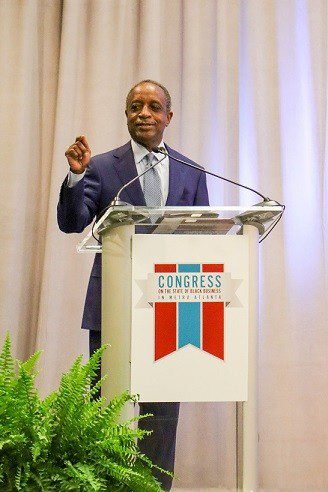
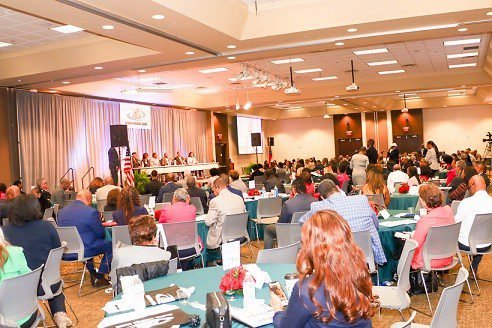
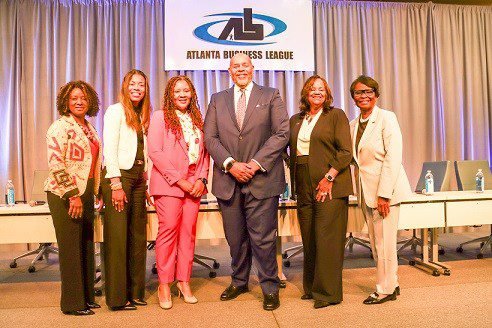
On Thursday, November 21, 2024, the ABL hosted a stellar event, its 91st Annual Meeting. A highlight of the event was the induction of Albert G. Edwards, Corporate Environmental Risk Management, LLC (CERM), Dydra Virgil, and Delphyne Lomax Taylor, V&L Research & Consulting, Inc., into the ABL Hall of Fame.

Honoring Excellence in Business

The Hall of Fame inductees represent the best of the best of Atlanta businesses. The ABL selects members for its Hall of Fame primarily by considering individuals who have demonstrated exceptional leadership, significant community contributions through philanthropy and volunteerism, and a lasting positive impact on the Atlanta business landscape, with a particular focus on recognizing Black-owned businesses and leaders within the community; their selection process usually involves a review of nominations based on criteria like professional achievements, community involvement, and business longevity.

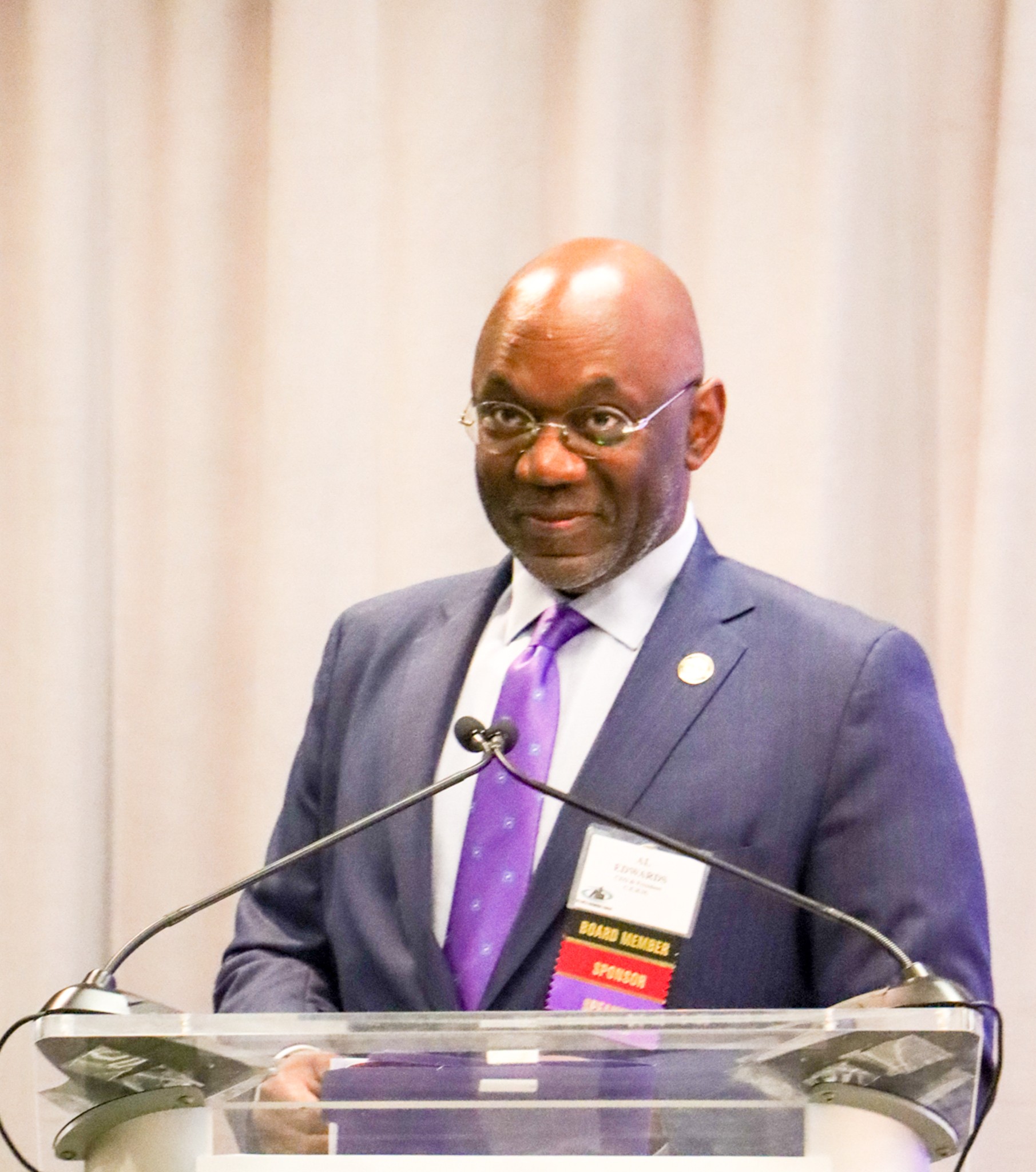
Albert G. Edwards – CERM

Albert G. Edwards: A Legacy of Integrity and Innovation

Albert G. Edwards, founder, and CEO of CERM, delivered a moving acceptance speech, reflecting on his journey and the pivotal role of his late business partner, Marcus Reese, who he met and befriended in high school.

The pain of the loss of his friend was clear to the audience as Mr. Edwards labored to get the words from his heart to his lips and to the audience’s ears. “The man who helped me build the company and who really changed my life as a friend, business partner, essentially a brother in everything except blood, went home to be with the Lord on November 21, 2017, seven years ago today.

CERM started in the South DeKalb Business incubator; today, it is one of the largest minority-owned and operated engineering and program management firms in the United States. CERM works on multi-million dollar projects across this region and across the southeast.

“Another reason that this day is made more special is that one of our leaders, DJ Keffler, and his wife delivered a baby girl today, November 21, 2024, at 12:54. DJ is one of the first success stories of our shadowing program. He has been with CERM for 10 years”.

CERM has over 120 staff, with offices in Atlanta, GA; Mobile, AL; Orlando, FL; and Tampa, FL. Leadership attributes the firm’s success to the dedication of its talented team, its clients’ loyalty, and the local community’s ongoing support.

Each project reflects the values that inspired Al and Marcus to start the company: integrity, service, and a deep respect for the community.

Dydra Virgil – V&L Research & Consulting

Dydra Virgil and Delphyne Lomax Taylor: Trailblazers in Market Research

V& L Research and Consulting, Inc., founded on November 1, 1991, has grown to be one of the top market research firms certified by the American Marketing Association.

For more than three decades, V&L has empowered hundreds of clients by providing vital insights to enhance, develop, and assess their services through comprehensive data analysis, focus groups, surveys, and other innovative research methodologies.

The firms take particular pride in their role in developing the internationally recognized public safety initiative, “If You See Something, Say Something.”

Throughout their 30 years, V&L has conducted hundreds of studies to uncover key consumer insights and assess public perceptions.

V & L provides their clients with reliable research services and continuous support: their ultimate goal is customer satisfaction.  V&L takes pride in their responsiveness to client requests and their ability to provide personal attention to detail. V & L works as a part of their client’s team, respecting their views, objectives, and budget constraints.

Dydra Virgil, who spoke on behalf of the duo, credited ABL for playing a pivotal role in their early success. “One of the first professional business organizations that we joined was ABL. Through our membership in ABL, we were able to land one of our biggest projects for such a small company, Cox Communications.”

Since then, their partnership with ABL has been instrumental in building a portfolio of private sector clients, including but not limited to Bank of America, McDonald’s, Delta Airlines, Grady Hospital, and Coca-Cola.

In the public sector, V&L has provided services for the US Department of Homeland Security, the Department of Commerce, and the Center for Disease Control and Prevention.

Michael Thurmond DeKalb CEO

Keynote Address by Michael L. Thurmond

The keynote address was delivered by the Honorable Michael L. Thurmond, Chief Executive Officer of DeKalb County, GA, since 2017, former, DeKalb County School Superintendent, former State Legislator, and Labor Commissioner.

“Congratulations to the ABL for your leadership, dedication, your unwavering belief in the power and talent and abilities of the men and women who have demonstrated the courage and vision to do what many have dreamed about but few have had the opportunity to achieve: to become business owners, to be entrepreneurs, to take their gifts they have and transform them into jobs, profit, dividends, and most importantly, service to individuals and communities across the country.”

A Proud Legacy

The National Business League is the first and largest trade organization for Black businesses in the world. The Atlanta Business League was established in 1933 as an affiliate of the National Business League, which was founded by Dr. Booker T. Washington in 1900.

Congratulations to the 2024 inductees for their remarkable achievements and lasting contributions to Atlanta’s business and community landscape.

Atlanta Dream Hire Karl Smesko as head coach

Karl Smesko joins the WNBA franchise with a 23-year coaching career, including 672 wins and a .843 winning percentage. He brings a fast-paced and innovative approach to the team.

By Milton Kirby | Atlanta, GA – November 13, 2024

The Atlanta Dream has announced hiring Karl Smesko as the team’s new head coach, bringing one of college basketball’s most accomplished coaches to the Women’s National Basketball Association (WNBA) franchise. Smesko, 54, joins the Dream with a reputation as an exceptional program builder, having established and developed the Florida Gulf Coast University (FGCU) women’s basketball program into a powerhouse.

A native of Bath, Ohio, Smesko ranks third in NCAA Division I women’s basketball history with a career-winning percentage of .843. His career totals include 672 wins. With over two decades of head coaching experience, Smesko brings a seasoned, fast-paced, and innovative approach to Atlanta.

“Karl is a proven leader with a history of developing his players and creating a winning culture,” said Dream General Manager Dan Padover. “His fast-paced, innovative style of play will be attractive to our players and fans alike. We are excited to have Karl bring his incredible basketball IQ to the Dream.”

Smesko’s success at FGCU includes leading the program from its inception in 2001 to becoming a consistent winner at both the Division II and Division I levels. In FGCU’s first season as an NCAA Division II independent in 2002-03, Smesko led the team to a remarkable 30-1 record. Under his leadership over the past 23 years, the program achieved a record of 611-110 (.847), won 14 Atlantic Sun Conference (ASUN) regular season titles, claimed 11 ASUN tournament championships, and made 10 NCAA tournament appearances. His teams also secured 25-win seasons for 14 consecutive years; a feat only equaled by University of Connecticut.

Smesko’s coaching tree is equally impressive: twenty-two former players have entered the coaching profession, including three on FGCU’s current staff, and three of his former assistant coaches are now head coaches at the collegiate level.

Atlanta Dream Majority Owner Larry Gottesdiener shared his excitement over the hiring, stating, “This is an exciting moment for our fans, the city of Atlanta, and the entire Dream organization. A great basketball mind is coming to our city. Karl’s passion for and commitment to women’s basketball bring out the best in everyone around him. I am confident we have found the right leader to take our organization to the next level.”

Smesko’s prior coaching roles include successful stints at Purdue University, University of Maryland, and Walsh University, where he began his coaching career. Reflecting on his new role, Smesko expressed his gratitude for his time at FGCU and enthusiasm for his next chapter with the Dream.

Courtesy – Atlanta Dream

“I am humbled and honored to be the head coach of the Atlanta Dream,” Smesko said. “I am grateful for a remarkable 23 years at FGCU and will be forever indebted to the amazing women who have played for me, the incredible professionals who have coached with me, and the passionate fanbase who supported us along the way. I’m thankful to the leadership of the Atlanta Dream for their faith in me to lead this organization into the future and can’t wait to get started.”

While contract details were not disclosed, Smesko’s previous contract at FGCU included a five-year rollover, earning him $440,000 in the 2022-23 season.

About the Atlanta Dream

Established in 2008, the Atlanta Dream is the only WNBA franchise in the Southeast, playing home games at Gateway Center Arena in College Park, Georgia. The Dream’s telecasts and simulcasts are accessible statewide, with the team earning a reputation as one of the league’s competitive forces, featuring 11 WNBA All-Stars, three regular-season first-place finishes, nine playoff bids, and 3 WNBA Finals appearances. For more information, visit dream.wnba.com.

Gwinnett County Launches First Disparity Study to promote equity in contracting practices

Gwinnett County has launched a disparity study to evaluate the inclusiveness of its procurement processes, aiming to determine if minority-owned and women-owned businesses have equitable access to public contracting opportunities.

By Milton Kirby | Atlanta, GA – November 13, 2024

Gwinnett County has launched its inaugural disparity study to evaluate and improve the inclusiveness of its procurement processes. On March 5, 2024, the Gwinnett County Board of Commissioners approved a contract with Atlanta-based consulting firm Griffin & Strong, P.C. (G&S) to conduct this critical analysis, covering the County’s spending from 2019 through 2023. This study aims to determine whether minority-owned, women-owned, and other disadvantaged business enterprises (MWDBEs) have equitable access to public contracting opportunities in Gwinnett County.

The Purpose of the Disparity Study

Disparity studies are tools used to provide a factual foundation for determining if there are inequalities in the way government contracts are awarded. The studies examine whether race or gender-conscious corrective programs are needed to ensure that all businesses, including those owned by minorities and women, have equal opportunities in the procurement process. This study for Gwinnett County will investigate several core aspects, including statistical analysis, economic impact, and anecdotal evidence. It will provide insights into whether minority- and women-owned businesses are adequately represented in county contracts or if systemic barriers exist that limit their participation.

A disparity study measures equity and ensures that any remedial programs resulting from its findings are legally sound. The study adheres to constitutional requirements and follows the legal precedent established by the 1989 U.S. Supreme Court case City of Richmond v. J.A. Croson. This ruling mandated that governments must demonstrate a “compelling interest” to justify implementing procurement programs specifically targeting MWDBEs.

Background and Significance

Gwinnett County’s journey toward its first disparity study began in 2022, during an annual strategic planning session held by the Board of Commissioners. During that session, the importance of evaluating and potentially correcting disparities in contracting practices was identified as a top priority, especially given the County’s growing diversity.

Chairwoman Nicole Love Hendrickson emphasized that Gwinnett County’s demographics make this study especially relevant. “We are a very diverse county with a lot of minority businesses, a lot of international businesses,” Hendrickson stated. “This effort is about responding to the change already present in our community and ensuring inclusivity in our economic activities.” The County allocated approximately $500,000 in its 2023 budget to commission this study, which will now move forward with the expertise of G&S.

Griffin & Strong, P.C.: A Leader in Equity Analysis

Selected to lead Gwinnett’s study, Griffin & Strong is a law and consulting firm based in Atlanta with a significant public policy consulting and supplier diversity track record. Established in 1992, the firm has more than 25 years of experience conducting disparity studies, developing legislative programs, and supporting government agencies in promoting equity and inclusion in contracting. Griffin & Strong’s expertise in disparity research positions them as a fitting choice to handle the complexities of Gwinnett County’s study. The firm’s unique approach as both a law firm and a policy consultant enables them to respond effectively to the legal and procedural challenges of disparity studies in today’s climate.

Key Components of the Disparity Study

The study will involve several critical stages designed to comprehensively assess the County’s procurement landscape. These include:

  1. Data Collection: Gathering and analyzing data on contracts awarded to MWDBEs and other businesses over the past five fiscal years to establish a baseline of current practices.
  2. Statistical and Economic Analysis: Assessing the availability of MWDBEs in the market and comparing it to their actual utilization in Gwinnett County contracts.
  3. Identification of Disparities: Using the gathered data to identify any significant gaps between the availability of MWDBEs and their representation in county contracts, which could point to underlying systemic issues.
  4. Anecdotal Evidence Collection: In addition to quantitative data, the study will include insights from business owners and community members gathered through interviews, surveys, focus groups, and public hearings.
  5. Recommendations: Based on the findings, the study will propose actionable recommendations to address identified disparities. This may include introducing or enhancing programs to increase MWDBE participation.

These components aim to provide a comprehensive understanding of the contracting environment and the barriers that may affect MWDBEs. The Gwinnett County study will also seek to identify whether there is underutilization of these businesses compared to their availability in the market.

Community Engagement: Public Hearings, Focus Groups, and Surveys

G&S will actively engage with the local business community to ensure a thorough analysis. Informational meetings were held on September 18 and 19, 2024, to inform stakeholders about the study’s objectives and ways to participate. Several avenues for community involvement are planned, including public hearings, surveys, and focus groups.

  • Public Hearings: These sessions allow business owners and community members to share their experiences with the County’s procurement process. Their testimonies will be recorded as part of the study’s official record and will contribute to the analysis.
  • Focus Groups: G&S will conduct small-group discussions with selected businesses across different ethnicities and genders to gain insights into their experiences working with Gwinnett County or their reasons for not pursuing contracts with the County.
  • Anecdotal Interviews: These one-on-one interviews will enable business owners to provide more personal accounts of their experiences, which can help illuminate any nuanced barriers in the contracting process.
  • Survey of Business Owners: The study will include a survey targeting a wide range of businesses operating within Gwinnett County. This survey will seek to understand the experiences of these firms in dealing with the County’s procurement and contracting system. The survey will be available online for any business that wishes to participate.

Potential Impact of the Study’s Findings

The findings of Gwinnett County’s disparity study could have far-reaching implications. Governments often use disparity study results to support new policies or adjustments to existing programs designed to foster diversity and prevent discrimination. Such measures could include setting specific contracting goals for MWDBEs, creating contract opportunities specifically for these businesses, and addressing any identified systemic barriers. Disparity studies provide a solid foundation for justifying such programs, ensuring that they align with both local and federal legal standards.

According to G&S, the study’s recommendations will focus on feasible solutions to improve diversity and inclusion within Gwinnett County’s contracting processes. These recommendations could range from policy adjustments to training programs aimed at enhancing awareness of available resources among MWDBEs.

Budget and Timeline

Gwinnett County has allocated a portion of its budget toward this effort. In 2023, the budget included continued support for the study, to ensure thorough, data-backed insights into contracting practices. As specified in the 2024 budget, the study will be conducted by an experienced consultant specializing in disparity and availability analyses.

The proposal request for qualified consultants was issued on September 20, 2023, under Request for Proposal RP036-23, with a deadline for submission on October 23, 2023. This selection process ultimately led to the engagement of Griffin & Strong, who will now proceed with the study’s execution.

Moving Forward: Shaping Gwinnett County’s Future in Public Contracting

As Gwinnett County embarks on this important analysis, its leaders are focused on building a fairer, more inclusive community for all businesses. The County’s diversity is seen as a strength that enriches its economic landscape, and this study marks a significant step toward ensuring that all businesses have equal opportunities to contribute.

The findings from the disparity study will be integral to shaping future policies that promote equitable access and fair competition within Gwinnett County’s procurement processes. For Gwinnett’s MWDBEs, the results of this study could lead to new opportunities to participate in public contracting, while also providing a model of inclusivity that other counties may look to as an example.

Community members and business owners who wish to participate or provide input can contact the County’s study team at gwinnettcountystudy@gspclaw.com. As the study progresses, continued engagement from local businesses and residents will be essential to ensure a comprehensive and representative understanding of the County’s contracting practices.

Exit mobile version