The Powerball jackpot climbs to $1.660 billion as no winner emerges, fueling nationwide ticket sales and boosting Georgia Lottery education funding ahead of Monday’s drawing.
By Milton Kirby | Decatur, GA | December 22, 2025
The Powerball jackpot has surged to $1.660 billion, placing it among the four largest lottery prizes in U.S. history and igniting another nationwide wave of ticket buying driven by hope, habit, and long odds.
The winning numbers from Saturday, December 20, 2025, were 4, 5, 28, 52, and 69, with the Powerball 20. No ticket matched all six numbers, pushing the jackpot higher ahead of Monday night’s drawing.
As lines stretch across convenience stores and gas stations, the spectacle once again raises a quieter, persistent question: who is actually funding these billion-dollar jackpots—and who benefits most from the system behind them?
A Jackpot Built on Millions of Small Bets
When Powerball jackpots climb into the billion-dollar range, economists estimate tens of thousands of tickets are sold every minute nationwide, with sales accelerating sharply in the final hours before each drawing.
In Georgia, those sales flow through the Georgia Lottery, which operates through roughly 8,500 retail locations statewide. Proceeds support education programs such as the HOPE Scholarship, HOPE Grant, and Georgia Pre-K.
Since its creation in 1993, the Georgia Lottery has generated more than $25 billion for education, a figure frequently cited by lottery officials as evidence of public benefit. Research shows, however, that the source of those funds is far from evenly distributed.
What the Atlanta ZIP Code Maps Show
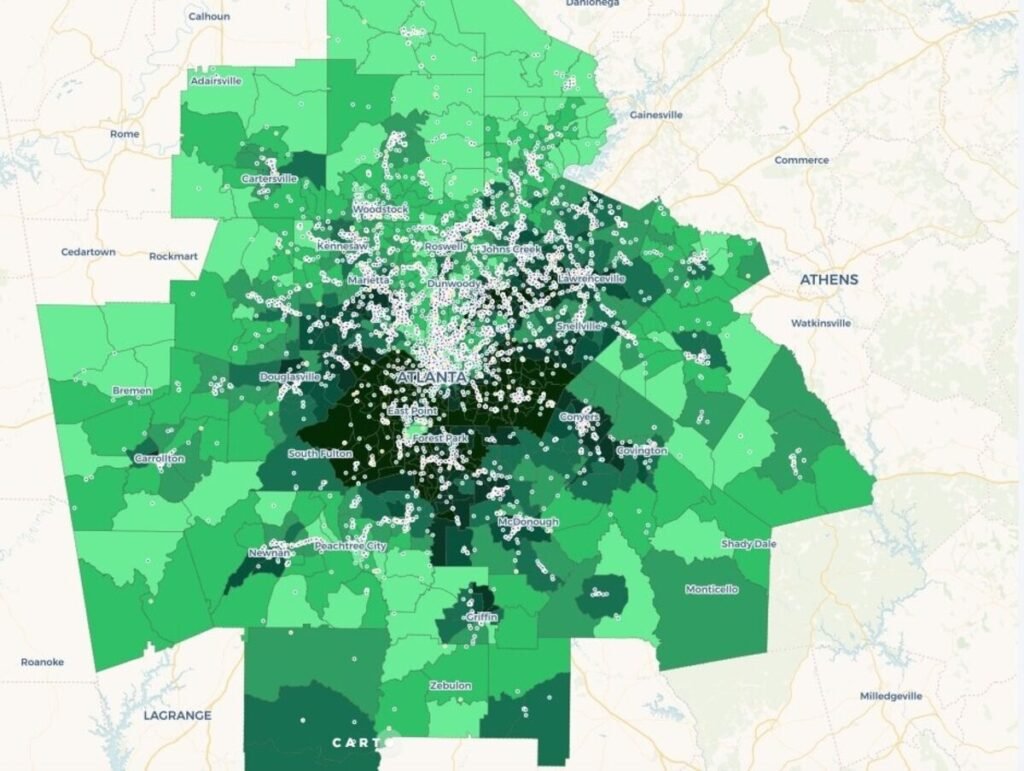
Visual mapping of Atlanta-area ZIP codes tells a consistent story seen in academic studies nationwide.
Lower-income ZIP codes in South DeKalb, Southwest Atlanta, and parts of South Fulton show higher concentrations of lottery retailers and higher per-capita ticket purchases. By contrast, wealthier areas in North Fulton, North DeKalb, and suburban communities show lower per-capita participation, even when absolute income levels are higher.
Metro Atlanta lottery retailers – per capita l participation (darker area represented higher participation)
Researchers affiliated with Georgia State University and other institutions have found that lottery spending increases as median household income declines. Retail density, advertising visibility, and consumer participation all rise in economically stressed neighborhoods.
Economists describe this pattern as a regressive funding structure, in which lower-income households spend a greater share of their income than wealthier households.
A National Pattern, Not a Georgia Exception
This dynamic extends far beyond metro Atlanta.
Studies cited by the Urban Institute and the Brookings Institution conclude that households earning under $30,000 annually spend three to ten times more of their income on lottery tickets than households earning over $75,000.
Lottery participation is highest where economic mobility is lowest, and where sudden wealth appears most transformative. As jackpots rise, those disparities become more pronounced.
Who Benefits From Lottery Funding
While lottery revenue is raised disproportionately from lower-income communities, the largest education benefits often flow elsewhere.
HOPE scholarships and grants are most frequently claimed by students who complete high school, meet GPA thresholds, and attend college. Those outcomes are more common among middle- and upper-middle-income households, which tend to have stronger academic preparation and access to resources.
The result, economists argue, is an indirect upward transfer of wealth, even when lottery funds are directed toward public education.
Billion-Dollar Winners and Long Odds
The scale of modern jackpots is a relatively recent development. Earlier versions of Powerball included jackpot caps and better odds. Structural changes extended the odds dramatically, allowing jackpots to roll over longer and grow larger.
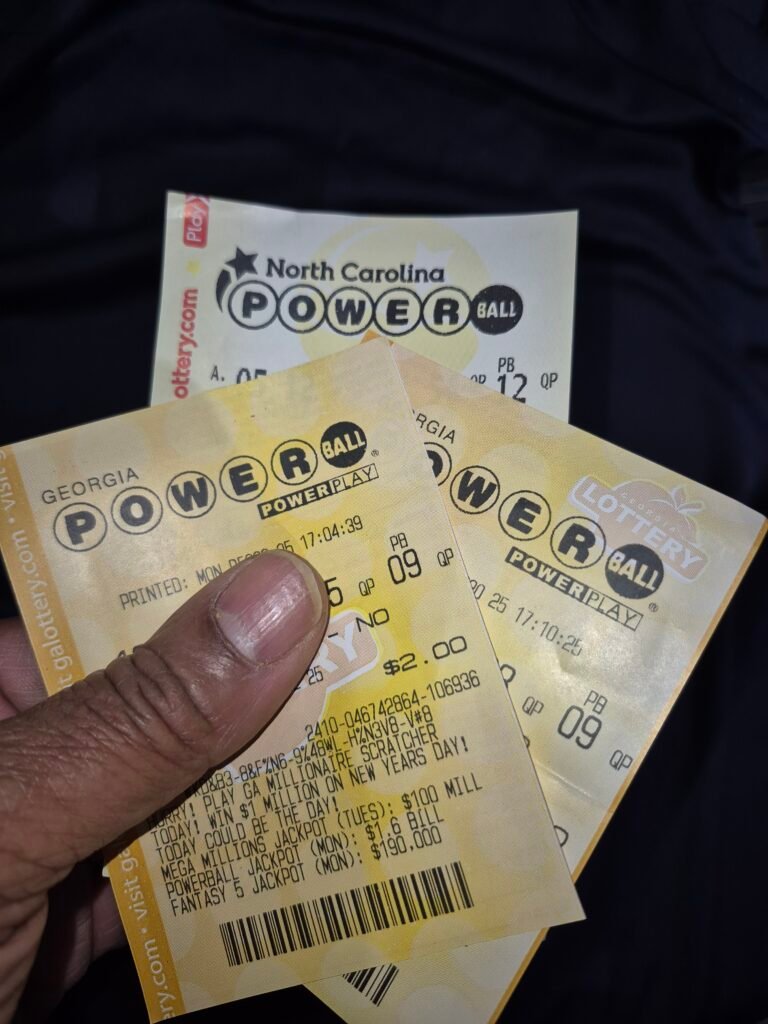
Powerball Ticket 12-22-25
That evolution culminated in 2022, when a $2.04 billion Powerball ticket sold in California became the largest lottery prize ever claimed. The sole winner, Edwin Castro, opted for a lump-sum payout of $997.6 million, according to the California Lottery.
Those rare wins dominate headlines, while millions of losing tickets quietly sustain the system.
The Lottery’s Counterpoint
Lottery officials and defenders argue that participation is voluntary entertainment rather than taxation, that proceeds fund voter-approved education programs, and that scholarships and Pre-K deliver measurable public benefits across the state.
They also note that without lottery funding, education programs would likely require alternative taxes or face reductions. Critics respond that voluntary participation does not eliminate inequity when spending patterns align so closely with income and geography.
Hope, Math, and Public Policy
For many players, the lottery represents possibility more than probability. Behavioral economists point to optimism bias and financial stress as powerful motivators, especially during billion-dollar jackpot runs.
The math, however, remains unforgiving. The odds of winning the Powerball jackpot are roughly one in 292 million.
As Georgians line up for the next drawing, the growing jackpot reflects a national reality: billion-dollar dreams are built from millions of small wagers, many placed in communities that can least afford to lose them.
Support open, independent journalism—your contribution helps us tell the stories that matter most.
DeKalb County launches a $2M Real Time Crime Center, combining drones, cameras, and analytics to improve response times, officer safety, and coordinated public safety efforts.
By Milton Kirby | Decatur, GA | December 19, 2025
DeKalb County officials on Thursday marked a major milestone in the County’s public safety strategy with the official launch of its new Real Time Crime Center (RTCC), a $2 million, high-tech operations hub designed to deliver faster response times, improved coordination, and enhanced officer safety.
The ribbon cutting and press conference were held at the DeKalb County Police Department Headquarters, located at 1960 W. Exchange Place in Tucker, where the RTCC now serves as the County’s centralized hub for live data, analytics, and coordinated response. County leaders described the center as a cornerstone of the Digital Shield Initiative, a comprehensive public safety strategy led by DeKalb County Chief Executive Officer Lorraine Cochran-Johnson.
“These investments represent a bold, forward-thinking approach to public safety,” Cochran-Johnson said. “By leveraging technology, we are strengthening officer safety, improving response times, and reimagining how we protect every DeKalb resident.”
DeKalb Real Time Crime Center Ribbon Cutting
A Central Hub for Real-Time Intelligence
Housed within police headquarters, the RTCC functions as a command center where civilian analysts and sworn officers monitor hundreds of live video feeds and data streams simultaneously. The system is designed to provide officers with real-time intelligence during active calls, giving them critical situational awareness before arriving on scene.
“This center strengthens our ability to prevent crime, support victims, and deliver the level of service that our residents expect and deserve,” said DeKalb County Police Chief Gregory Padrick, a longtime DeKalb professional recently promoted from within the department.
Following the ribbon-cutting, attendees toured the facility and observed live demonstrations of the RTCC’s capabilities, including a Drone as a First Responder deployment that showed how drones can be rapidly launched to provide aerial views during emergencies, active pursuits, or missing-person cases.
The Digital Shield Initiative: A Countywide Investment
The Real Time Crime Center is one component of the County’s broader Digital Shield Initiative, a multi-year, $18.9 million investment in public safety technology. The initiative integrates multiple tools into a single operational platform, enabling faster, more coordinated responses across agencies.
Key components include license plate recognition cameras deployed throughout the county to help track stolen vehicles and suspects in real time, an integrated data platform that connects video, alerts, and analytics into one interface, and a dedicated drone program focused on law-enforcement-specific use rather than general surveillance. The RTCC also integrates gunshot detection technology capable of pinpointing the location of gunfire, in some cases, before a 911 call is placed.
County officials emphasized that these tools are intended to support officers in the field, improve response times, and reduce risk during volatile situations.
Partnership With Flock Safety and “Safe County” Designation
A major partner in the RTCC is Flock Safety, which announced during the event that DeKalb County has been designated the first “Flock Safe County” in the nation. The designation reflects a full countywide deployment of Flock technology, connecting law enforcement, fire services, traffic, schools, businesses, and neighborhoods on a shared platform.
“This real-time crime center combines what is truly the most innovative stack of technology a county could imagine,” said Greg Langley, CEO of Flock Safety. “From license plate readers to drones, cameras, and audio detection, all of it is unified in a modern AI intelligence suite.”
As part of the designation, DeKalb County residents and businesses are eligible for discounted Flock Safety solutions and free installation, expanding participation beyond government facilities.
Privacy Protections and Voluntary Participation
County leaders stressed that participation by residents and businesses is voluntary and tiered. Through the Connect DeKalb camera registry, property owners may choose to register the location of their cameras or, for higher-traffic businesses, integrate live feeds accessible only to police during emergencies.
Officials emphasized that the RTCC does not use facial recognition technology. Instead, artificial intelligence tools are limited to identifying objects of interest, such as specific vehicle types or weapons, a safeguard designed to balance effectiveness with privacy and public trust.
DeKalb Real Time Crime Center
Regional Perspective and Proven Results
During the ceremony, Lisa Cupid, Chairwoman of the Cobb County Board of Commissioners, shared her experience with Flock Safety technology, which is already in use across Cobb County. Cupid noted that the deployment of Flock’s license plate readers and integrated analytics has contributed to public safety improvements of up to 25 percent, offering a regional example of how real-time intelligence can deliver measurable results.
Her remarks underscored the growing regional trend toward data-driven policing and inter-agency coordination.
Leadership Transitions and Unified Public Safety
The opening of the RTCC follows recent leadership appointments within DeKalb County government. In addition to Chief Padrick’s promotion, former DeKalb Fire Chief Darnell Fullum was elevated to Director of Public Safety, consolidating oversight of police, fire, and emergency services.
County officials also recognized and thanked outgoing leadership for their service during the transition period.
Technology, Youth, and Long-Term Crime Prevention
While technology took center stage, Cochran-Johnson emphasized that digital tools alone cannot address the root causes of crime.
“We understand that investing strictly in technology does not solve the problem of crime,” she said. “Crime is deeply rooted in economics.”
As part of a broader prevention strategy, the CEO outlined a coordinated effort to ensure that by 11th grade, every student in DeKalb County has a designated career pathway. Those pathways align with 18 skilled trades currently offered at no cost through programs supported by the State of Georgia, creating direct pipelines into high-demand careers and long-term economic stability.
The County also highlighted partnerships aimed at youth engagement and prevention, including a recent grant from QuikTrip to the DeKalb County Athletic League to support community-based programming. Additional partnerships with DeKalb County Schools are expected to be announced in January.
What Comes Next
Beginning in January, DeKalb County plans to host public town halls to provide residents with more information about the Real Time Crime Center, privacy safeguards, and opportunities for community participation.
As Cochran-Johnson framed it, the RTCC is more than a facility; it represents a shift in philosophy toward proactive, coordinated, and prevention-focused public safety.
The CEO further noted that the Real Time Crime Center supports the County’s broader Reimagine DeKalb vision — building safer, more connected, and more resilient communities by pairing technology with economic opportunity and community trust.
The Atlanta Civic Center’s story spans fire, displacement, Broadway, OutKast, and redevelopment — revealing how culture, land, and power shaped one of Atlanta’s most iconic sites.
By Milton Kirby | Atlanta, GA | December 14, 2025
For nearly half a century, the Atlanta Civic Center stood as one of the city’s most important cultural crossroads — a place where Broadway met ballet, punk rock met opera, and civic life met national television. Built in 1967 and officially closed in 2014, the venue played an outsized role in shaping Atlanta’s artistic identity during a period of explosive growth and transformation.
Now, more than a decade after its final curtain call, the Civic Center site is entering a new chapter. As of December 9, 2025, a multi-phase redevelopment led by Atlanta Housing is underway, with plans to honor the site’s legacy while addressing one of Atlanta’s most urgent modern needs: housing.
But the story of the Civic Center did not begin in 1967. Long before the first spotlight was raised, this land carried a deeper history — one marked by destruction, resilience, and displacement.
Before the Spotlight: The Land Beneath the Civic Center
The ground beneath the Atlanta Civic Center has been asked to start over more than once. In 1917, the Great Atlanta Fire tore through this area, destroying more than 1,900 buildings and displacing over 10,000 residents. From the ashes emerged Buttermilk Bottom — a working-class, majority-Black neighborhood that took root in what is now considered Midtown and the Old Fourth Ward.
Buttermilk Bottom was not vacant land waiting for redevelopment. It was a living community defined by churches, extended families, small businesses, music, and culture. Residents built full lives there despite persistent neglect, as city investment flowed elsewhere.
By the mid-20th century, the neighborhood was labeled a “slum” by city leaders and the local press. In 1963, then-Mayor Ivan Allen Jr. unveiled plans to redevelop Buttermilk Bottom using federal urban renewal bonds. Homes were demolished. Businesses were shuttered. A school was closed. Families were forced to move.
Rather than replacing the neighborhood with new public housing, the city cleared the land for a civic complex — an auditorium and exhibition hall designed to project Atlanta’s modern image to the nation. When the Atlanta Civic Center opened in 1967, Buttermilk Bottom was gone. The area was rechristened Bedford Pine.
Protests against the destruction of the neighborhood coincided with national unrest following the assassination of Dr. Martin Luther King Jr. in 1968, underscoring the racial and economic tensions embedded in Atlanta’s redevelopment choices.The Civic Center rose as a symbol of progress — but one built atop displacement.
A Pattern Beyond One Site
The clearance of Buttermilk Bottom was not an isolated decision. During the same era, Atlanta pursued similar urban renewal projects across the city, particularly in working-class and Black neighborhoods.
Just south of downtown, the Washington-Rawson neighborhood — once a thriving in-town community — was carved apart by expressway construction and demolition. Part of the land was designated for public housing. Another section was set aside for Atlanta–Fulton County Stadium, completed in 1965 as the city sought national recognition and a Major League Baseball franchise.
For many residents, the promise was familiar: progress, opportunity, renewal. The result was often the same — displacement without replacement. Together, these projects revealed a redevelopment philosophy that prioritized national visibility over neighborhood stability.
Against this backdrop, the Civic Center took shape — both a cultural achievement and a reminder of the costs of progress.
A City Builds a Cultural Anchor
When the Atlanta Civic Center opened in 1967, Atlanta was positioning itself as the cultural and commercial capital of the New South. City leaders envisioned a modern performance venue capable of hosting national touring productions, large civic gatherings, and televised events. With a seating capacity of approximately 4,600, the Civic Center was the largest performance stage in the Southeast at the time. Designed to replace the aging Municipal Auditorium, it quickly became a centerpiece of Atlanta’s arts and entertainment ecosystem. For audiences, the Civic Center symbolized access — a place where Atlanta could experience world-class performances without leaving home.
Broadway Comes to Atlanta
Throughout the 1970s, 1980s, and 1990s, the Civic Center became synonymous with Broadway in Atlanta. National and regional touring productions regularly filled its stage, bringing marquee shows to audiences who might not otherwise travel to New York.
Productions such as Two Gentlemen of Verona (1974), George M! (1981), and The Wizard of Oz during its 1999 national tour helped cultivate Atlanta’s theatergoing audience and cemented the city’s reputation as a serious stop on the national touring circuit.
For decades, the Civic Center functioned as a cultural bridge — connecting Atlanta’s growing metropolitan population with the broader world of American theater.
A Home for High Culture
In its early decades, the Civic Center also played a critical role in Atlanta’s classical arts scene. Beginning in 1969, the Atlanta Symphony Orchestra, along with opera and ballet companies, used the space for major performances.
Before newer, specialized venues emerged, the Civic Center was where many Atlantans first encountered large-scale orchestral music, opera, and ballet. These performances helped establish Atlanta as a city capable of supporting both popular entertainment and high culture — a dual identity that still defines the region.
Television Lights and National Exposure
From 2011 to 2015, the Civic Center reached millions of living rooms as the filming location for Family Feud during Steve Harvey’s tenure as host.
The show’s presence quietly reinforced Atlanta’s growing role in television production, years before the city’s reputation as “Hollywood of the South” fully took hold. The venue also hosted graduations, political rallies, church services, and mayoral inaugurations, strengthening its role as both a cultural and civic gathering place.
SciTrek and a Generation of Curiosity
One of the Civic Center’s most distinctive chapters began in 1988, when SciTrek, an interactive science museum, moved in. For 16 years, until 2004, SciTrek welcomed thousands of schoolchildren from across Georgia.
For many Atlantans who came of age in the 1990s, SciTrek was their first exposure to science beyond the classroom — another reminder of the Civic Center’s adaptability and reach.
From Symphony to Punk Rock
As Atlanta’s music scene diversified, so did the Civic Center’s bookings. In later years, the venue hosted pop-punk bands like All Time Low, punk icons Dropkick Murphys and Rancid, and local artists including Hoodrich Savo and Ms. Honesty.
From opera to punk, the Civic Center became known for its range — a venue willing to host contrasting worlds under one roof.
Why the Curtain Fell
Despite its cultural importance, the Civic Center struggled to remain viable in the 21st century. Operating costs increasingly outweighed revenue. Built in 1967, the facility lacked the amenities and technology expected by modern touring productions.
A $2 million renovation in 2001 offered only temporary relief. As newer venues such as State Farm Arena and Mercedes-Benz Stadium opened, fewer major acts chose the Civic Center. By 2014, declining bookings made continued operation difficult to justify. The Civic Center officially closed in October of that year, ending a 47-year run.
A Sale, a Promise, and a New Vision
In 2017, the City of Atlanta sold the 19-acre Civic Center property to the Atlanta Housing Authority for just over $30 million. In December 2025, officials broke ground on a multi-phase redevelopment that will ultimately include approximately 1,500 housing units, 38 percent of which will be affordable.
Speaking at the groundbreaking, Mayor Andre Dickens reflected not only as the city’s leader, but as someone personally shaped by the Civic Center. He recalled seeing OutKast perform on its stage and later returning to the same space for his own graduation — moments that captured how the venue functioned as both a cultural launchpad and a civic gathering place.
“This is sacred ground, sacred work,” Dickens said. “We made a promise to the people of Atlanta to make this a city where everyone can live, grow, and retire with dignity — a city of opportunity for all — and we intend to keep it that way.”
Once a site of graduations, concerts, church services, and inaugurations, the Civic Center is now part of what city leaders describe as a return to purpose — a future shaped by memory as much as by momentum.
A Legacy That Still Echoes
The Atlanta Civic Center’s story is not simply one of closure, but of evolution. For nearly five decades, it reflected Atlanta’s ambitions, creativity, and contradictions.
From Broadway classics to punk rock anthems, from symphonies to science exhibits, and from civic ceremonies to game-show lights, the Civic Center captured the full spectrum of Atlanta life — even as it stood on land shaped by loss and resilience.
As cranes rise where spotlights once shone, the Civic Center’s physical form may fade, but its meaning deepens. It becomes part of a larger story — of a city continually remaking itself, learning, and, perhaps this time, remembering who was here before.
DeKalb County launches a $250,000 initiative to combat illegal tire dumping, removing over 37,000 tires and targeting major dump sites across neighborhoods and commercial corridors.
By Milton Kirby | Decatur, GA | December 12, 2025
DeKalb County officials on Friday announced one of the most aggressive environmental cleanup efforts in the county’s history, unveiling a $250,000 initiative that has already removed more than 37,000 illegally dumped tires from neighborhoods, commercial corridors, and private property across the county.
The announcement came during a press conference led by DeKalb County Chief Executive Officer Lorraine Cochran-Johnson, who framed the effort as both an environmental response and a community restoration campaign.
“This is not just a cleanup. This is a reclaiming of our communities,” Cochran-Johnson said. “To put this into perspective, if the 37,000 tires we have removed were laid end to end, they would stretch 20 to 25 miles — the equivalent of the entire Atlanta BeltLine loop or the distance from Midtown Atlanta to Hartsfield-Jackson Airport. That is what our neighborhoods have been forced to live beside.”
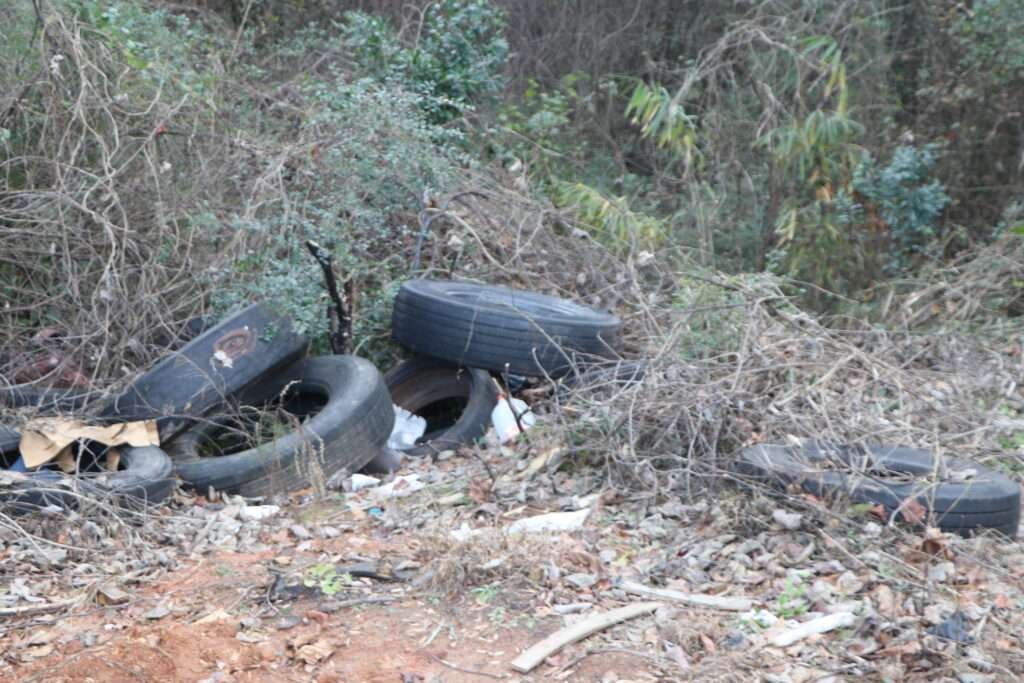
Photo by Milton Kirby -Varkel Lane
The cleanup is being carried out by DeKalb County’s Sanitation Division and Beautification Unit, with Ricky Crockett serving as the county’s lead coordinator. Crews are targeting some of the most hazardous and logistically challenging illegal tire dump sites in DeKalb, many located on steep slopes, in wooded ravines, or near abandoned structures.
Eight Priority Sites Targeted
County officials initially identified nine priority locations for remediation. One site, at 3747 Presidential Parkway, was previously cleaned by the Georgia Environmental Protection Division. The remaining eight sites form the backbone of the current initiative.
Four of those sites have already been fully cleared and are scheduled for final inspection and approval on December 3, 2025. The remaining four locations require more complex retrieval methods due to limited access and safety concerns but are projected to be completed by the week of December 24, weather permitting.
The eight priority cleanup sites include:
5986 Marbut Road, Lithonia (behind a residence)
3041 Northeast Expressway, Atlanta (former State Farm property with steep slope)
6941 Brannon Hill Road, Clarkston (residential neighborhood)
1785 Continental Way SE (commercial landscaping area)
1700 Corey Boulevard, Decatur (church property)
Officials estimate the total volume of tires removed from these locations is in the tens of thousands, with several sites requiring specialized equipment and extended timelines.
“Organized Environmental Crime”
Cochran-Johnson did not mince words when describing the scale and intent behind many of the dumping incidents.
“We must confront a difficult truth,” she said. “Much of this dumping is not accidental. It is organized environmental crime. We have documented cases where a business drives into our county at night and dumps 3,000 tires in a single incident, leaving taxpayers and communities to pick up the pieces. That is unacceptable.”
Photo by Milton Kirby – 2285 Randall Rd
Illegal tire dumping poses serious environmental and public safety risks. Stockpiled tires create fire hazards, attract mosquitoes, and often become magnets for additional illegal dumping and criminal activity. County leaders said the cleanup effort is part of a broader strategy that combines enforcement, prevention, and long-term restoration.
Push for Statewide Reform
Beyond local cleanup, DeKalb County is advocating for changes to Georgia’s tire remediation laws to help counties better address widespread dumping.
The county supports amendments to O.C.G.A. § 12-8-40.1 that would allow Solid Waste Trust Fund reimbursements for projected cleanup costs in hard-to-reach areas, permit counties to seek reimbursement on behalf of municipalities when intergovernmental agreements are in place, and provide additional state funding for large counties with populations over 500,000.
County leaders said those reforms are critical to sustaining long-term cleanup efforts and deterring repeat offenders.
Legal Disposal and What Comes Next
Residents are reminded that they can legally dispose of up to 10 tires per trip at the Seminole Road Landfill, located at 4203 Clevemont Road in Ellenwood. Tires are transported from the site to approved recycling facilities. Additional information is available by calling the landfill at (404) 687-4040.
Cochran-Johnson also announced that the county is developing a permanent solution to address tire disposal. In early 2026, DeKalb plans to introduce an option allowing all residents and businesses to legally dispose of tires, a move officials hope will undercut illegal dumping at its source.
The current initiative aligns with the county’s Reimagine DeKalb agenda, focusing on reducing blight, improving safety, and restoring pride in heavily impacted communities.
During a recent drive through Lithonia, The Truth Seekers Journal observed multiple tire dump sites at varying stages, many of which appeared to have begun with just a handful of discarded tires before rapidly expanding. Once visible, the piles often grew rapidly, reinforcing a pattern county officials say underscores the need for swift cleanup and consistent enforcement.
MARTA and Decide DeKalb host a festive Holiday Market and Customer Appreciation Event at Kensington Station with local vendors, free treats, crafts, music, and family-friendly activities.
By Milton Kirby | Decatur, GA | December 10, 2025
MARTA is bringing holiday cheer to the east side this week. In partnership with Decide DeKalb, the transit agency will host a special Customer Appreciation Event and Holiday Market on Thursday, Dec. 11, from 3 p.m. to 6 p.m. at Kensington Station.
The plaza outside the station will be transformed into a festive outdoor marketplace, complete with music, local vendors, crafts, giveaways, and a visit from Santa himself.
A Community Market for the Season
The holiday market will highlight DeKalb-based artisans and small businesses, giving customers a chance to shop local while picking up seasonal gifts. Organizers say the curated vendors reflect the cultural mix of the Kensington area and the county at large.
The market is designed to feel warm, welcoming, and accessible — the kind of place where neighbors stop, browse, and say hello.
Free Treats and Family Fun
Visitors will be greeted with free hot cocoa, cider, Coca-Cola samples, and snacks. Music and karaoke will run throughout the event, adding a light, cheerful energy to the station plaza.
There will also be story time led by local community leaders and guest readers, giving families a quiet moment to enjoy together.
Crafts, Photo Booths, and Giveaways
Scraplanta, a popular arts nonprofit known for turning recycled materials into creative projects, will host hands-on DIY holiday crafts for children and adults.
MARTA will also set up a pop-up shop with branded merchandise. A photo booth and several prize giveaways will keep the festive mood going.
And for the kids — and the kids at heart — Santa will be on-site from 3 to 5 p.m. for photos and meet-and-greets.
A Special Appearance: MARTA’s Holiday Buses
MARTA’s decorated holiday buses, wrapped in bright lights and seasonal artwork, will be at Kensington Station for customers to explore. These buses have become a small but joyful tradition across the system, drawing riders who appreciate the splash of color and creativity during the winter season.
Event Details
WHEN: Thursday, Dec. 11, 2025 3 p.m. – 6 p.m.
WHERE: Kensington Station 3350 Kensington Rd. Decatur, GA 30032
At Your DeKalb Farmers Market, 184 flags, global foods, and round-the-clock operations turn a Decatur grocery into Atlanta’s most beloved, affordable world market for families.
By Milton Kirby | Decatur, GA | December 9, 2025
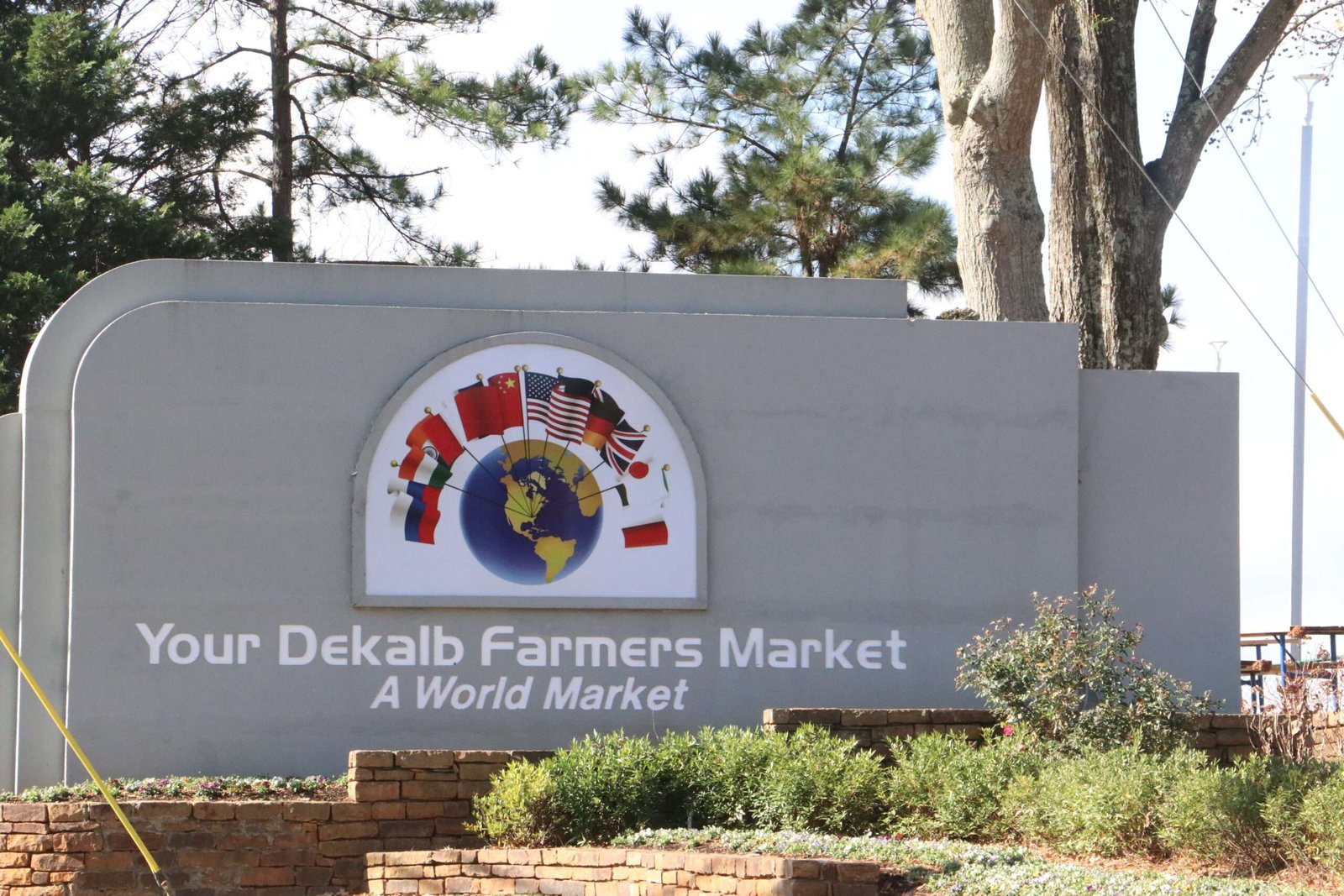
Walk up to the entrance of Your DeKalb Farmers Market on East Ponce de Leon Avenue, and the first thing you notice is the sky of flags. From one end of the roofline to the other, 184 national flags ripple above the parking lot, turning a simple grocery trip into a small United Nations of food and people.
Inside, more flags hang over the produce tables, seafood counters, and aisles of spices and grains. For many metro Atlanta families, spotting the flag of their home country is the start of a familiar routine: a deep breath, a smile, and a walk toward the foods that taste like home.
This is the heart of Your DeKalb Farmers Market — a place where global identity, fresh food, and community all meet under one roof.
A Market That Belongs to Its Neighbors
The story of this “world market” begins in 1977, when Rhode Island native and retail veteran Robert W. Blazer opened a small, 7,500-square-foot produce stand in Decatur.
Before he opened his first location on Medlock Road, Blazer went door to door in the surrounding neighborhood and asked residents a simple question: would you like to have a farmers market here? When they said yes, he dedicated the business to them and chose a name that still appears on the brown facade today: Your DeKalb Farmers Market.
His goal, as he later wrote, was not to build a chain of stores, but to create a direct, affordable source of high-quality fresh food that truly served the community.
Nine years after that first stand, the market moved to its current home at 3000 East Ponce de Leon Avenue in Decatur, where it has grown into a massive indoor marketplace now known across the region.
Flags as a Map of the World
The 184 flags above the building are not decoration. They are a map.
Photo by Milton Kirby – Your DeKalb Farmers Market Flags
Each one represents a country connected to the market’s shelves, staff, or shoppers. For customers, a flag can be a guidepost: a hint that somewhere inside they will find the cassava, plantains, injera flour, curry pastes, teas, or spices that match their home cooking.
For employees, the flags reflect the market’s workforce — a staff drawn from more than 40 countries, speaking around 50 different languages and dialects. On the sales floor, name tags often list both a worker’s country of origin and the languages they speak, helping shoppers connect in their own tongue and feel at ease.
The flags also send a message to new visitors who may be walking in for the first time. They say: whoever you are, whatever you eat, you can find a piece of yourself here. And if you are curious, you can also discover somebody else’s culture in the next aisle over.
From 7,500 Square Feet to a True World Market
Your DeKalb Farmers Market now covers well over 100,000 square feet and operates seven days a week, 9 a.m. to 9 p.m.
What began as a simple produce stand has grown into a complex, 24-hour operation that includes:
A sprawling retail floor for everyday shoppers
A busy business services department for restaurants, caterers, and other stores
Large adjacent warehouses and ripening rooms
A wholesale shipping operation that moves produce across the United States
Behind the scenes, roughly half of the building and half of the employees work out of public view. Trucks arrive around the clock. Cold rooms are checked and re-checked. Bananas, plantains, avocados, papayas, tomatoes, and pears are ripened in controlled rooms built with engineering precision.
Blazer’s background in mechanical engineering and discount retail helped him design and build much of the facility himself — with a focus on efficiency, temperature control, and food safety from the ground up.
World Direct: From Farm to Market
The market’s mission is not limited to what happens in Decatur.
Photo by Milton Kirby – DeKalb Farmers Market Florist
Under its “World Direct” registered trademark, Your DeKalb Farmers Market grows, packs, and ships produce from farms in Mexico, Central America, and South America directly to wholesale receivers across the United States. The company prides itself on working directly with farmers, helping them do what they love while building a stable market for their crops.
The market is also known in the produce industry for maintaining one of the best credit ratings available and for operating as a debt-free company — paying for what it buys with its own money and focusing on long-term strength instead of short-term debt.
Blazer’s son Daniel, who speaks Spanish fluently, heads up much of the international growing and shipping program. His work extends the reach of DeKalb’s “world market” far beyond Georgia.
Departments that Circle the Globe
Walk the aisles of Your DeKalb Farmers Market and each department feels like a different chapter in a global cookbook.
Produce: The Heart of the Market This is where it all began in 1977 and remains the beating heart of the business. Fresh fruits and vegetables arrive several times a week, often directly from growers. The market arranges its own transportation to keep produce moving quickly from field to shelf.
Organic options line up beside conventional items, many of them certified to USDA standards and the standards of their countries of origin. Shoppers can buy familiar staples or explore lesser-known greens, roots, tropical fruits, and herbs, many labeled with their home countries and uses.
Cold-pressed juices made on site — from organic kale, beets, carrots, ginger, apples, pears, and more — offer a quick way to drink those nutrients, using slower juicing methods that protect vitamins and enzymes.
Seafood: From Scottish Lochs to Georgia Kitchens The seafood department stretches across a long wall of ice and glass, with more than 450 varieties of whole fish, fillets, and shellfish. Live Maine lobsters, Dungeness crabs, and live catfish swim in tanks, turning shopping into a field trip for children.
The selection includes premium Lochlander Scottish salmon, raised in the cold lochs of the Scottish Highlands and Islands under sustainable practices and praised by chefs for its firmness and flavor. Customers can have their fish cleaned and filleted while they wait, then carry it a few aisles over to pick up global seasonings and sauces to match.
Bakery: Real People, Real Dough In the bakery, real people make more than 150 varieties of breads, bagels, muffins, pastries, and cakes from scratch every day. Many items use organic flours, organic butter, and cage-free eggs. Recipes are built around whole grains, nuts, dried fruits, and natural sweeteners rather than high-fructose corn syrup.
For shoppers with special diets, there is a wide selection of dairy-free baked goods made without milk or eggs, along with items made with gluten-free ingredients (prepared in a shared kitchen), and sprouted-grain breads that treat grain more like a vegetable for digestion and nutrition.
Coffee, Tea, and Nut Butters The coffee stand roasts and grinds more than 30 varieties of Arabica beans, including Fair Trade Ethiopian coffees from the Yirgacheffe region, Colombian, Kenyan, Guatemalan, Sumatra, Costa Rican, Jamaican, and others. Decaffeinated coffees are processed through the Swiss Water method, which uses water instead of chemicals to remove caffeine while preserving flavor.
Next to the coffee you can watch fresh nut butters being ground — organic peanut butter, almond butter, and cashew butter — made to order from nuts roasted in the market.
Chinese green teas, black teas, and delicate white teas share shelf space with herbal blends, giving health-minded shoppers a second home in this corner of the store.
Flowers and Gifts The flower department brings in stems and plants from Europe, Asia, Central America, Hawaii, and the continental United States. Staff create custom arrangements for weddings, holidays, and special occasions and even fill vases and fruit baskets to order. During Valentine’s season, the market sells thousands of dozens of roses.
International Groceries and Specialties Beyond the fresh departments, the center aisles hold dried fruits from Thailand, Turkish roasted nuts, olive oils from Greece and Spain, coconut water from Sri Lanka, specialty sauces like coconut curry simmering sauces, and Stonewall Kitchen condiments and curds for home cooks who like to experiment.
Shoppers can find gluten-free flours, sprouted ancient grains, sea salts, international pastas, zero-calorie noodles, organic snacks, and a long list of pantry staples that rarely appear together in one store.
The wine and beer section offers more than 700 wines and 500 beers, arranged by geography and type. Many bottles carry ratings from respected wine publications, giving shoppers a reference point as they choose; staff stand ready to talk through regions, grapes, and food pairings.
Serving Families and Businesses
Your DeKalb Farmers Market is more than a place for home cooks. Its business services department opens at 8 a.m. to serve restaurants, caterers, wholesale food distributors, and other retail stores. Once a commercial account is set up, clients can order in bulk, call ahead, and pick up loads packed and processed for them.
This dual mission — retail and wholesale — is part of what keeps the operation humming 24 hours a day. Workers on overlapping shifts receive shipments, process meats and seafood, bake, pack, and stock the floor before most shoppers arrive.
Safety and Air You Can Feel
During the COVID-19 pandemic, the market put in extensive health and safety measures to protect staff and shoppers. Employees working with customers wore gloves and masks; markers on the floor kept customers spaced out; carts and baskets were pressure-washed with bleach.
One feature that stands out is the building’s air-washer system, designed to keep the interior at about 62 degrees with roughly 65 percent relative humidity. All of the air in the production and selling areas cycles through the system roughly every 10 minutes, washing out pollen and particles while constantly adding outside air. Higher humidity makes it harder for certain viruses to travel as easily, and those lessons have carried forward into daily operations.
Even as crowds have shifted and weekends sometimes feel less packed than they once did, the market has stayed focused on keeping shelves stocked and shoppers safe.
A Family Effort and a Bigger “Game”
Blazer, now decades into this work, often says the market is about more than selling groceries. He has long been interested in how people work together — in families, on teams, and across cultures.
His wife, Barbara, joined the business in 1987, bringing her own experience as a successful salon owner with demanding clients. She has helped shape product selection, recipes, and operations, and she speaks openly about the way the market’s “people work” tools have helped employees understand themselves, their children, and their partners at home.
Many of those lessons formed the basis for internal booklets Blazer and his team have shared through the years — reflections on what they believe people have in common and how organizations can move beyond fear and greed to cooperation.
Today, the family’s goal is to keep the market strong and independent long after its founder is gone. The company’s debt-free structure and steady reinvestment in facilities and people are designed to make that happen.
Flags for the Future
On any given day, the parking lot at Your DeKalb Farmers Market still tells its own story. A full lot often means a holiday is coming or bad weather is on the way. Shoppers roll out carts stacked with greens, fish, spices, breads, wine, coffee, and flowers — enough to fill Sunday dinners, family cookouts, Eid tables, Diwali feasts, or Lunar New Year banquets.
Above them, 184 flags wave in the Georgia wind.
They remind Atlanta that this is more than a grocery store. It is a world market rooted in Decatur, built on fresh food, fair dealing, and the belief that people from every corner of the globe can work — and eat — side by side.
Truth Seekers Journal thrives because of readers like you. Join us in sustaining independent voices.
Morehouse and Spelman’s Glee Clubs delivered a powerful three-night Christmas concert series, blending tradition, harmony, and history in one of Atlanta’s most beloved holiday celebrations.
By Milton Kirby | Atlanta, GA | December 8, 2025
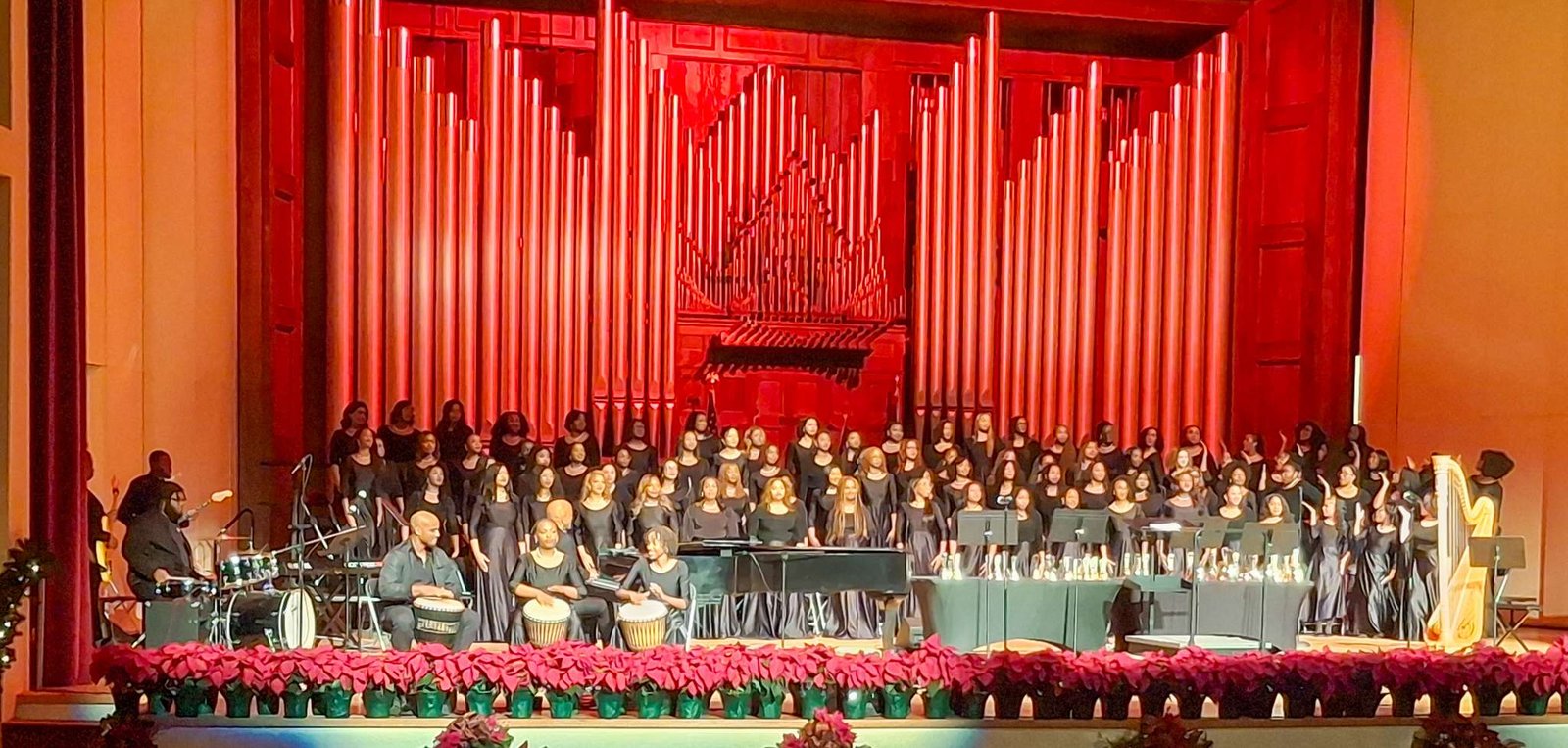
The holiday season opened in grand fashion this weekend as the Morehouse College Glee Club and the Spelman College Glee Club delivered three unforgettable nights of music, unity, and tradition. The concerts were held Friday through Sunday, December 5–7, and drew capacity crowds to two of Atlanta’s most cherished campus chapels.
Friday and Sunday performances were held at the Martin Luther King Jr. International Chapel at Morehouse College. Saturday’s concert took place at Sisters Chapel on the campus of Spelman College. Each night offered a stirring reminder of why this joint Christmas Carol Concert remains one of the most treasured holiday traditions in Atlanta.
TSJ attended the Friday night performance, where the Glee Clubs played to a full house inside the MLK International Chapel.
A Tradition of Excellence
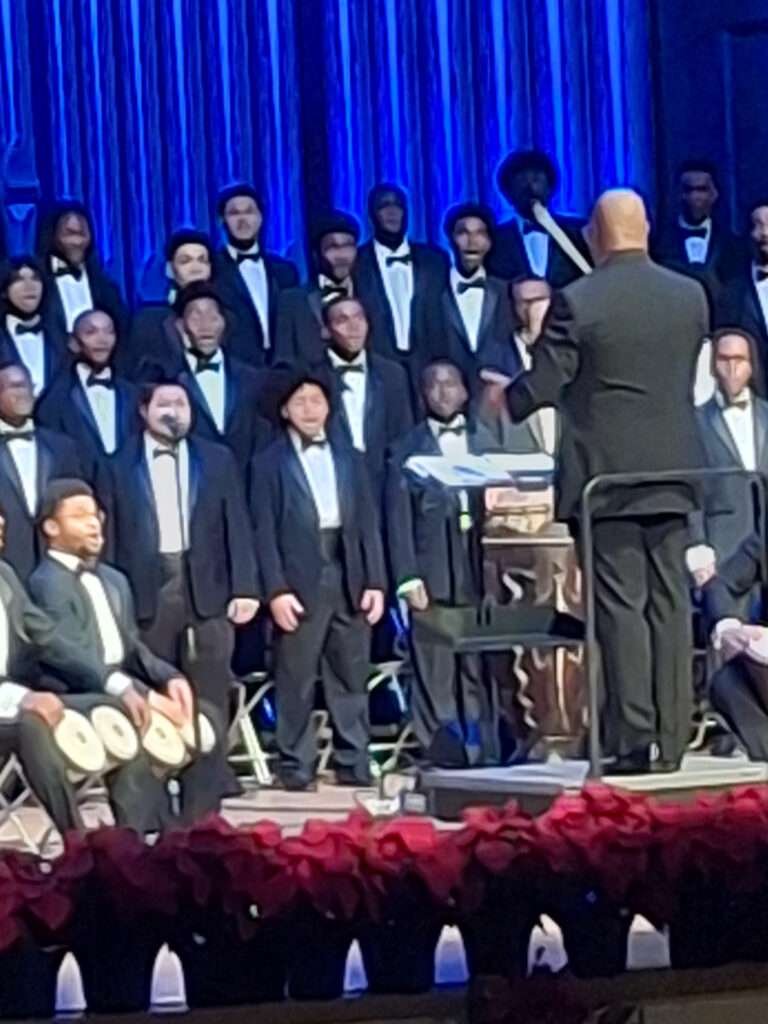
The Morehouse College Glee Club directed by Dr. David Morrow with organist Dr. Joyce F. Johnson, and the Spelman College Glee Club, directed by Dr. Kevin Johnson, performed a rich blend of sacred, classical, traditional, and contemporary holiday selections.
Audiences were treated to familiar favorites, including: Silent Night, Sir Christëmas, The Savior’s Birth, The First Noel, Joy to the World, This Christmas, O Come, All Ye Faithful, and Go Tell It on the Mountain.
The choirs also performed lesser-known works that were just as stirring and melodic, showcasing the depth of their repertoire and their ability to breathe new life into both classic and contemporary choral literature.
Spelman’s Legacy of Global Sisterhood
For over 100 years, the Spelman College Glee Club has upheld a standard of musical excellence shaped by harmony, discipline, and pride. With approximately 50 members from various academic disciplines, the ensemble performs most major campus events and maintains a repertoire that spans world cultures, commissioned works, and music of the African diaspora.
Under the leadership of Dr. Kevin Johnson, the Glee Club has performed across the U.S. and around the world. Highlights include concerts at the White House, Lincoln Center’s Avery Fisher Hall, Faneuil Hall in Boston, the National Museum of American History, and international tours to Brazil, Canada, Italy, and Portugal.
Membership requires a rigorous audition process evaluating tonal memory, pitch matching, vocal quality, and musicianship. Yet beyond the music, the Spelman Glee Club represents community. It is a space where sisterhood, pride, and excellence converge.
Morehouse’s Global Brotherhood in Song
The Morehouse College Glee Club has captivated audiences for more than a century. Their performances have graced presidential inaugurations, Super Bowls, the 1996 Olympics, and homegoing services for national figures including President Jimmy Carter and Dr. Martin Luther King Jr., a Morehouse alumnus.
Morehouse Glee Club Performs
Dr. Morrow says the Glee Club is more than a performance ensemble. It is a reflection of Morehouse identity and brotherhood.
“It’s remembering that you are part of a community,” Morrow said. “You are more than a member of the Glee Club. You are family. You are part of something great.”
Their musical résumé spans continents, with tours throughout Africa, the Caribbean, Europe, and every corner of the United States. The Glee Club has performed with cultural icons such as Aretha Franklin, Jessye Norman, Denyce Graves, Take 6, Stevie Wonder, and Jennifer Hudson. They are also featured on soundtracks to Spike Lee films and major national broadcasts.
The Glee Club is deeply tied to historical and cultural leadership. Alumni include Senator Raphael Warnock, Spike Lee, Samuel L. Jackson, and legendary figures such as Mayor Maynard Jackson and Herman Cain.
A Shared Holiday Tradition
Morehouse and Spelman have long united their voices for this Christmas tradition. Together, they carry an intergenerational message: music is a cultural bridge. Music preserves history. And music, especially during the holiday season, binds community.
Judge Sugarmon, speaking to the educational significance of the Glee Clubs, underscored the moment: “At a time when DEI is being denied, we must educate our children about our history. It is what made this country what it is.”
And as the music filled the chapels each night, that message rang clear—this tradition belongs to the people, to the campuses, and to the broader community that has embraced it for nearly a century.
A Look Toward the 100th Year
This year marked the 99th Annual Christmas Carol Concert, one of the longest-running holiday traditions in Atlanta. Both colleges promised that the upcoming centennial celebration will be even more spectacular, with expanded performances and special guests.
The joy, reverence, and unity felt this weekend offered a glimpse of what that milestone will hold.
When Morehouse sings and Spelman answers, a century of HBCU excellence fills the room — and the world listens.
Bipartisan bill led by Senator Raphael Warnock aims to cut red tape, speed up Georgia transit projects, and give state agencies more flexibility to deliver improvements faster.
By Milton Kirby | Washington, D.C. | December 4, 2025
U.S. Senator Reverend Raphael Warnock (D-GA) is leading a new bipartisan push to fast-track transit projects across Georgia and the nation, unveiling legislation aimed at cutting federal red tape, reducing delays, and giving state agencies more control over construction reviews.
Warnock introduced the Streamline Transit Projects Act on Wednesday alongside Senators Mike Lee (R-UT), Mark Kelly (D-AZ), and John Curtis (R-UT). The bill seeks to reduce the time it takes to approve and build transit projects—everything from new bus rapid transit corridors to station upgrades and light-rail improvements—by allowing qualified state and local transit agencies to conduct their own environmental reviews for low-impact projects.
State officials currently have that authority for highway construction, but not for transit. The sponsors argue that fixing this imbalance will help agencies deliver improvements more efficiently at a time when metropolitan regions are battling traffic congestion, rising emissions, and growing demand for reliable transit options.
A Push for Faster, More Flexible Transit Delivery
Warnock said the proposal will help Georgia communities receive modern transit improvements without years of avoidable delay.
“This bipartisan legislation will give transit agencies new tools to more quickly deliver projects that meet local needs and improve the ridership experience,” Warnock said. “By delivering transit projects faster, we can continue to invest in a brighter, more connected future for all who call Georgia home.”
The bill would streamline certain environmental reviews, reduce duplication, and allow states to use the same flexible process already applied to road construction—changes the senators say will accelerate project timelines without sacrificing environmental protections.
Support Across the Aisle
Co-sponsors emphasized the need for states and localities—not Washington—to take the lead on straightforward transit upgrades.
Sen. Mike Lee framed the legislation as a return of authority to states. “Utah’s transit projects will be better off without the federal government meddling in every decision and holding up construction… Don’t tread on our TRAX!” Lee said.
Sen. Mark Kelly highlighted how long waits for routine approvals hurt everyday riders. “Right now, simple transit projects can get tied up in years of red tape… Our bill cuts needless delays for low-impact projects so commuters see the benefits sooner.”
Sen. John Curtis said growing regions like Utah need faster tools to keep pace: “This bill gives transit agencies the flexibility to meet local needs more efficiently… connect people, reduce traffic, and protect the environment we all treasure.”
MARTA Strongly Backs the Bill
Metro Atlanta’s transit agency offered quick support. MARTA Interim CEO Jonathan Hunt said the reforms would improve safety, mobility, and project delivery.
“Reducing unnecessary administrative hurdles will help us accelerate project approvals and deliver high-quality transit to the metro Atlanta region more efficiently,” Hunt said. He added that modernizing federal processes will help MARTA expand mobility options and strengthen safety and security for riders.
Part of Warnock’s Broader Transit Strategy
Warnock has been one of the Senate’s vocal advocates for public transit expansion, pushing for upgrades in Georgia’s rapidly growing metro areas and improving mobility in both urban and rural communities. He previously secured key provisions in the Infrastructure Investment and Jobs Act to strengthen federal transit grant programs and support efforts to expand service statewide.
If enacted, the Streamline Transit Projects Act could smooth the path for major initiatives underway or planned across Georgia—including MARTA bus-rapid-transit corridors, station modernization, regional mobility upgrades, and new connections designed to reduce congestion as the state continues to grow.
Georgia will receive over $300 million in federal BEAD funding to expand broadband, helping close the digital divide and bringing high-speed internet to unserved rural communities.
By Milton Kirby | Atlanta, GA | December 2, 2025
Georgia is set to receive more than $300 million in new federal funding to expand high-speed internet access across the state, marking one of the largest broadband investments in Georgia history.
U.S. Senators Raphael WarnockandJon Ossoff announced the funding Monday in Washington, secured through the Bipartisan Infrastructure Law’s Broadband Equity, Access, and Deployment (BEAD) Program. The money will be distributed through the Georgia Technology Authority (GTA) to local contractors to build out new fiber networks in communities that still lack reliable service.
State leaders estimate that 15% of Georgians still do not have dependable broadband — a barrier that affects families, students, farmers, and small businesses across rural and underserved counties.
A Major Push Toward Full Connectivity
Senator Warnock said the investment moves Georgia closer than ever to 100% statewide broadband coverage.
“This federal investment means life gets easier for hundreds of thousands of Georgians,” Senator Warnock said. “You need a broadband connection to do just about anything. You can’t even farm without a broadband connection.”
Warnock also criticized delays by the Trump Administration in releasing federal broadband dollars earlier this year, saying he will continue pressing for all remaining BEAD funds to be released quickly.
Senator Ossoff called the funding “a major next step” for Georgia families and businesses.
“Our historic bipartisan infrastructure law continues to deliver for Georgia,” he said. “This is about ensuring every Georgia family and business has high-speed internet.”
Where the Money Will Go
Under the BEAD program, the new $300 million will be used to:
Build fiber broadband in unserved rural counties
Upgrade outdated networks in underserved areas
Expand affordable access programs aimed at low-income households
Support construction jobs and local contracting across the state
The Georgia Technology Authority will allocate funds to providers capable of installing fiber in areas where service is slow, unreliable, or non-existent.
A Long Legislative Trail to Today’s Funding
Senator Warnock has made broadband expansion a signature priority:
In 2024, he toured OFS Fitel in Norcross with former Commerce Secretary Gina Raimondo to highlight Georgia’s role in fiber manufacturing.
He urged the FCC to expand theE-Rate program to allow Wi-Fi hotspot lending by schools and libraries.
In 2022, he hosted then-FCC Chair Jessica Rosenworcel in Jackson County to spotlight rural internet needs.
Alongside Senator Luján, he pushed for strong federal rules to prevent digital discrimination by internet providers.
Senators Warnock and Ossoff also announced $1.3 billion in BEAD funding for Georgia in 2023. In May 2025, both senators demanded the Trump Administration release the delayed BEAD funds—setting the stage for this week’s announcement.
Why This Matters for Rural and Urban Georgia
The expansion is expected to help:
Farmers who depend on broadband for precision agriculture
Students completing homework and online learning
Small businesses that rely on digital payments and online tools
Seniors using telehealth services
For many counties, especially in South Georgia and parts of Appalachia, fiber broadband is still years away without federal help.
Monday’s announcement marks one of the strongest steps yet toward closing that gap.
No contribution is too small. Support us today and help keep truth accessible for all.
Utility shutoffs are surging nationwide as soaring energy costs, record debt, and collapsing financial stability push Americans into darkness—mirroring the lowest U.S. happiness levels ever recorded.
By Stacy M. Brown | Black Press USA Senior National Correspondent | November 29, 2025
America’s poorest families have long lived on the edge of darkness. Today, that edge is widening. Utility shutoffs are rising across the country as households buckle under soaring electric bills, mounting debt, and a level of financial despair that now mirrors what researchers describe as the lowest happiness rating ever recorded in the United States. The suffering is no longer hidden. It is the new face of life under the Trump administration.
“Electricity is becoming unaffordable in many parts of the country,” Mark Wolfe, executive director of the National Energy Assistance Directors Association, stated. His assessment is borne out in the data. About 14 million Americans are behind on their utility bills, with overdue balances up 32 percent since 2022. National electricity prices have risen 11 percent this year, and some states have seen increases of up to 37 percent.
In cities like New York, residential shutoffs in August were five times higher than the previous year. In Pennsylvania, more than 270,000 households have already lost electricity as average bills climbed 13 percent. Each number represents a home gone cold. A refrigerator is no longer running. Children doing homework in the dark.
Michigan tells the same story. Nearly 942,000 households are behind on their Consumers Energy or DTE bills, including 339,000 who are more than 91 days delinquent. In September alone, utilities disconnected more than 40,000 customers. “The organizations that provide energy assistance are seeing a significant increase in applications,” said Anne Armstrong of the Michigan Public Service Commission.
Even families earning far above the poverty line are now seeking help. When keeping the power on competes with groceries and rent, the question becomes how to survive another month.
The latest data on national well-being echoes the hardship. A YouGov poll conducted for MarketWatch found that only about half of Americans feel any happiness from how they use or manage their money. Thirteen percent said they do not know what would bring them financial happiness at all, a signal of deep instability. The United States ranked at its lowest position ever recorded in Gallup’s World Happiness Report, a decline researchers linked to financial strain and weakening trust in institutions nationwide.
Some states are trying to respond. In Delaware, lawmakers advanced legislation to strengthen protections for residents at risk of losing heating or cooling. The bill would prevent winter shutoffs during freezing temperatures, block cooling
Shutoffs during extreme heat, require utilities to make direct attempts to reach customers before cutting service. “Residents need long-term security and clear, consistent protections,” said Rep. Melanie Ross Levin, a Democrat and the bill’s primary sponsor.
Her colleagues added that no family should face life-threatening conditions because of one overdue bill. “Any one of us can be affected by energy insecurity,” said Rep. Rae Moore, a Democrat. “An entire family’s health shouldn’t suffer because they couldn’t afford to pay a high energy bill in the middle of summer.”
“Support open, independent journalism—your contribution helps us tell the stories that matter most.”
MARTA begins installing its new Better Breeze fare system across the region, bringing contactless payments, new Breeze cards, and upgraded faregates by spring 2026.
By Milton Kirby | Decatur, GA | November 26, 2025
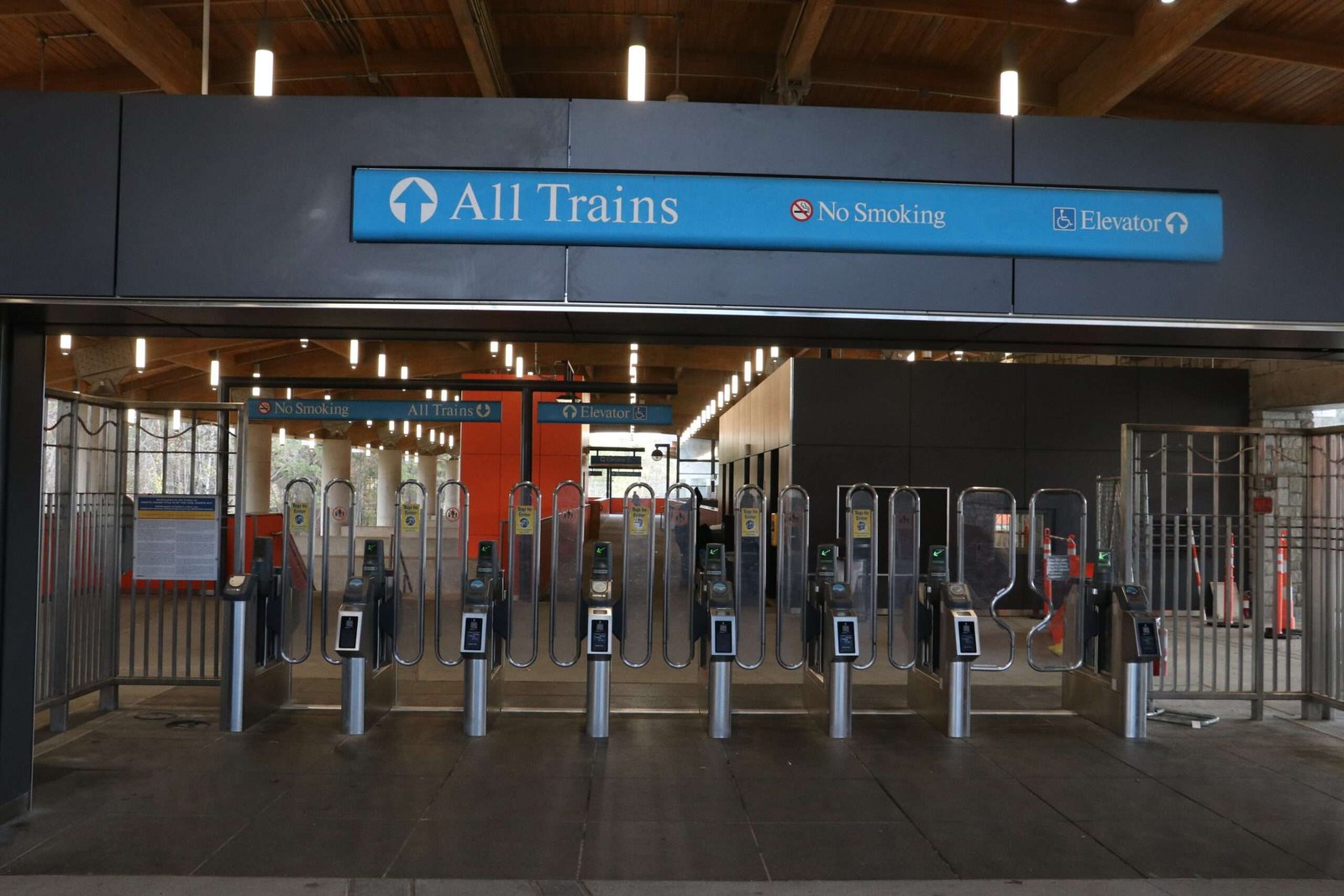
MARTA riders will soon tap into a new era of transit travel. The agency has begun a major, systemwide installation of its updated fare collection system, called Better Breeze, with work continuing through spring 2026.
The upgrade will replace every Breeze card reader, faregate, ticket machine, validator, and mobile app, ensuring a more reliable and efficient payment experience for riders across metro Atlanta.
Phased Work, Station by Station
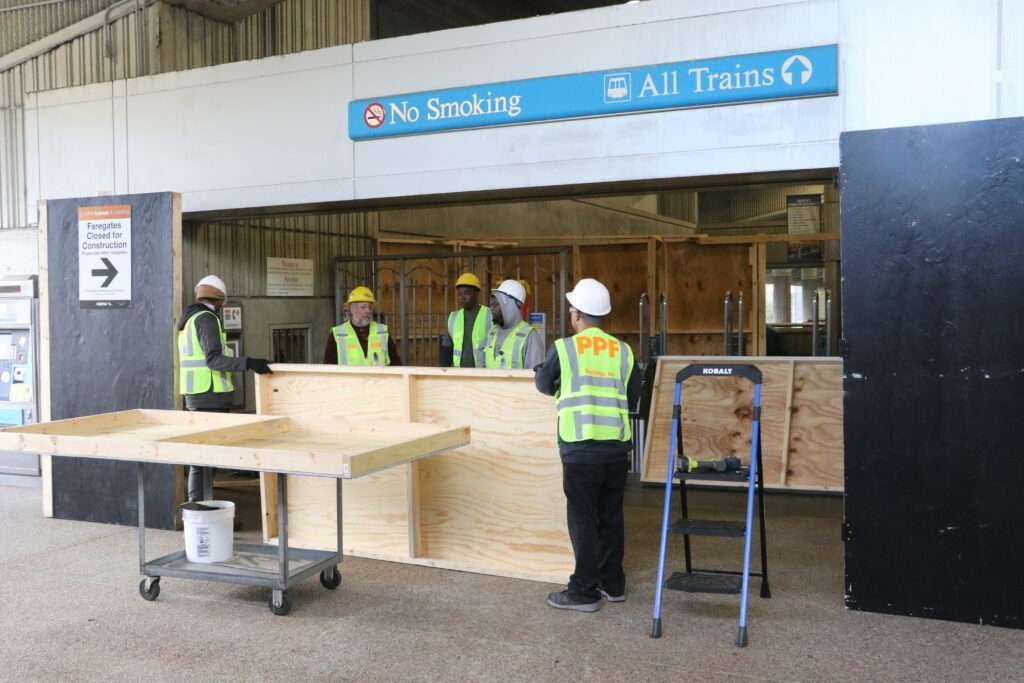
To keep stations open during the transition, MARTA is closing faregates in phases and posting clear signs inside the stations. Riders should expect detours but no service cuts.
The schedule moves across several stations from late November through early December:
West End Station – Nov. 24
Riders parking in the south lot at South faregates should follow the signs to reach the north entrance and allow extra time for their trip
.
North Springs Station – Nov. 25
West faregates near the bus loop closed. Riders should use east faregates on the opposite side of the station.
Photo by Milton Kirby – Crew Installing new faregates at Kensington Station
Kensington Station – Nov. 26
East and west faregates closed. Bus loop faregates remain open. Riders coming from the north lot should follow the signs to the bus loop. ADA riders should allow extra time.
Doraville Station – Dec. 1
South faregates are already closed. More closures begin Dec. 1. Riders must use emergency gates for entry. A valid fare is still needed to exit at the destination.
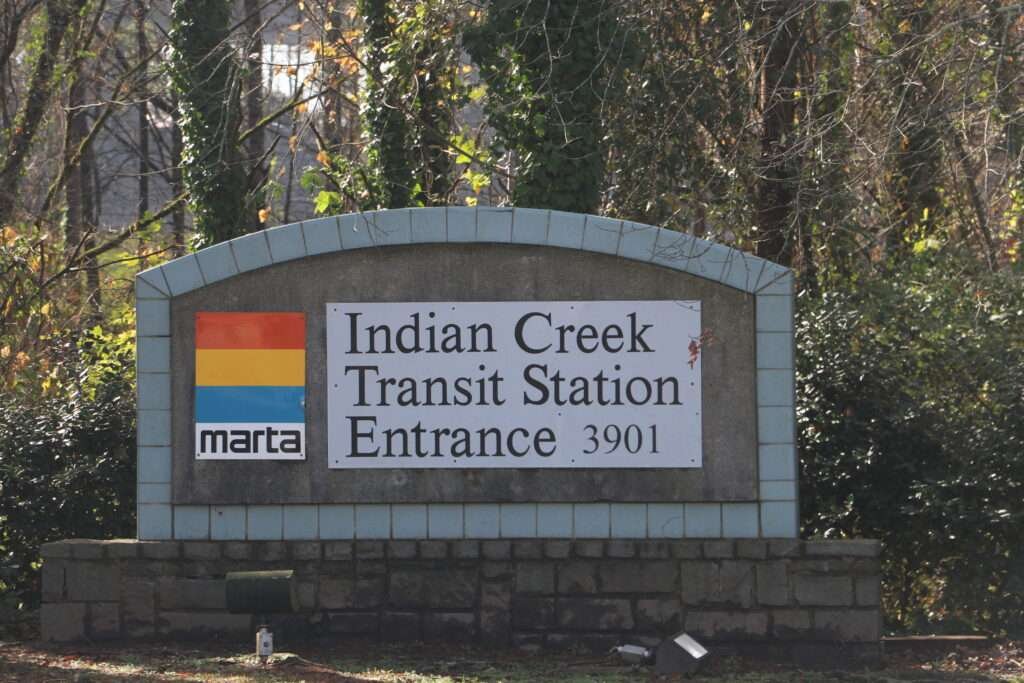
Photo by Milton Kirby – Indian Creek Entrance
Indian Creek Station – Dec. 3
East faregates at the bus loop closed. Riders must use west faregates.
Additional ongoing work continues at Dunwoody, East Point, Lindbergh Center, Ashby, and Georgia State stations. Some stations will use emergency gates during construction, and riders must have a fare to exit at their destination.
What Riders Need to Know
MARTA says customers should continue using the current Breeze card, old Breeze vending machines, and the existing mobile app. New faregates will be visible but not yet active until the final launch next spring.
The Better Breeze system will bring several major changes:
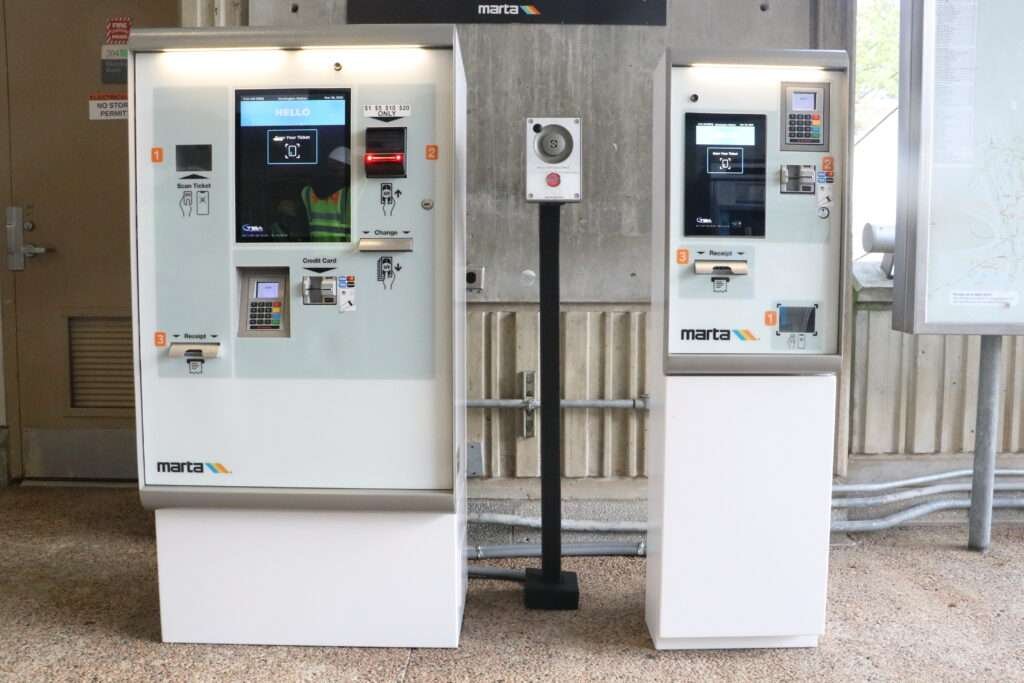
Photo by Milton Kirby – New Fare Collections Machines At Kensington
New Fare Equipment
New contactless faregates, validators, and touchscreen vending machines. The new gates are harder to tamper with, helping reduce fare evasion and improving station security.
New Ways to Pay
Open payment technology will let riders tap a bank card or mobile wallet directly on the faregate or bus farebox.
New App
The current Breeze Mobile 2.0 app will be retired. Riders will download a new Breeze app and create a virtual Breeze card in their account.
New Breeze Cards
All riders will move to account-based Breeze cards. Fare will be stored in the account rather than on the card, making replacement easier and reducing lost value.
Reduced Fare, Mobility, and Partner Agencies
Riders who use Reduced Fare or Mobility services can choose a new physical card or download the new app. They can contact MARTA by email or phone for help getting set up.
MARTA’s regional partners—including CobbLinc, Ride Gwinnett, and the ATL—will also shift to the new Better Breeze system. Transit customers will receive updates from their local providers in the coming months.
MARTA encourages riders to watch for signs inside stations, listen to announcements, and check online updates as the transition progresses, with detailed guidance on switching to new cards and apps coming closer to the April 2026 deadline.
For more information and to sign up for updates, visit MARTA
Thanksgiving blends history, food, travel, turkey pardons, football, and family traditions. The holiday’s origins, cultural shifts, and modern travel and shopping trends continue to shape its national meaning.
By Milton Kirby | Atlanta, GA | November 25, 2025
The Origins: A Feast of Survival and Alliance
Thanksgiving began long before football games, parades, or busy airports. The moment most Americans learn about—the 1621 harvest feast in Plymouth Colony—was a gathering shaped by hardship. The Pilgrims arrived in December 1620. Their first winter was cold, brutal and deadly. Only about half survived.
The Wampanoag people, led by Massasoit, chose to help the newcomers. They showed them how to plant corn, grow crops, and fish in local waters. When the Pilgrims held a harvest celebration that fall, roughly 90 Wampanoag arrived—likely after hearing gunfire and thinking the colony was under attack. Instead, they joined the feast.
For three days the groups shared food like venison, fowl, fish, stews, squash, and corn. They raced, fired muskets, and tried to communicate across two very different cultures. The uneasy peace held for decades, until the violent years of King Philip’s War.
Though not the first thanksgiving in North America—Spanish settlers in Florida held one in 1565, and Jamestown colonists in 1610—Plymouth became the story Americans chose to remember.
From Regional Tradition to National Holiday
Thanksgiving stayed mostly local for two centuries. That changed in the 1800s when writer Sarah Josepha Hale championed the holiday in her 1827 novel Northwood, describing a classic New England meal centered on roast turkey. Her influence helped popularize the menu we know today.
During the Civil War, President Abraham Lincoln proclaimed a national day of thanksgiving in 1863, hoping to unite a divided nation. In 1941, Congress fixed Thanksgiving as the fourth Thursday in November.
The Fowl History: How Turkeys Took Center Stage
Turkeys were not the star of the 1621 feast, but they became the centerpiece of the modern table because they were large, plentiful, and could feed a family. By the late 1800s, gifting turkeys to the White House became a tradition.
In 1947, farmers sent live hens to protest a government effort to discourage poultry consumption. A peace offering followed: the National Turkey Federation brought President Harry Truman a turkey. Over time, the presentation morphed into myth. Some claimed Truman “pardoned” the bird. Others pointed to an earlier story about Lincoln sparing a Christmas turkey at the request of his son Tad. But no official pardons existed until 1989, when President George H.W. Bush formally granted a turkey clemency—launching a ritual that now draws national attention every year.
Modern Traditions: Food, Travel, Football, and the Shopping Frenzy
Today’s Thanksgiving is a blend of old customs and new habits. What began as a harvest celebration is now a major cultural event shaped by food, travel, entertainment, and commerce.
The Feast
Most households serve roast turkey with dressing or stuffing, mashed potatoes, cranberry sauce, green bean casserole, and pumpkin pie. Many families add regional favorites—macaroni and cheese in the South, tamales in Latino households, or seafood in coastal communities. Some swap the turkey entirely for beef tenderloin, ham, or vegetarian dishes.
The holiday has also become a place where cultural humor shows up. Comedian Rickey Smiley often jokes about the difference between simple Thanksgiving menus and the long, elaborate spreads that show up in many Black households. On his nationally syndicated radio show, he playfully contrasts a straightforward plate of turkey, honey-baked ham, green bean casserole, pumpkin pie, and cranberry sauce with the “two-minute roll call” he remembers from his own family gatherings. He jokes that the list could include roasted turkey, two kinds of fried turkey, macaroni with white cheese, macaroni with yellow cheese, multiple greens, dressing, sweet potatoes, and desserts “too many to name.” His humor captures a real truth: every family’s Thanksgiving table reflects their culture, their region, and their own way of celebrating.
Friendsgiving gatherings have grown in popularity, offering a relaxed, potluck-style meal with a chosen family.
The Morning Rituals
Turkey Trots—charity 5Ks and community fun runs—have become a fast-growing tradition. The Macy’s Thanksgiving Day Parade remains a national favorite, with huge balloons and marching bands marking the official start of the holiday.
Gratitude and Service
Many families hold a gratitude circle, sharing something they are thankful for. Volunteers prepare meals at shelters and food banks, keeping alive the holiday’s spirit of giving.
The National Spectacle: Football and Parades
NFL games dominate the afternoon. The combination of food, family, and football is now as traditional as the turkey itself.
The Consumer Shift: Thanksgiving and Black Friday
Thanksgiving also marks the unofficial start of the holiday shopping season. Black Friday has crept earlier and earlier, with many retailers opening on Thursday evening. What was once a day of rest and reflection is now tied tightly to doorbuster sales and early holiday deals.
Travel: The Busiest Week of the Year
Thanksgiving remains the country’s biggest travel holiday. TSA expects nearly 18 million passengers during the week, and U.S. airlines plan to carry a record 31 million travelers from Nov. 21 through Dec. 1. The FAA says this will be the busiest Thanksgiving period in 15 years.
The Sunday after Thanksgiving is expected to break screening records, with more than 3 million people moving through airports in a single day.
But most people travel by car. AAA predicts about 81.8 million Americans will drive 50 miles or more—another all-time record.
Working on Thanksgiving: The Rules Depend on the State
For many workers, Thanksgiving is not guaranteed. In Wisconsin, for example, state law does not require private employers to give the day off, nor do they have to offer holiday pay. Only federal, state, and municipal workers are automatically guaranteed the day. A few New England states still restrict businesses from opening, based on laws more than 300 years old.
A Holiday With Many Meanings
Thanksgiving is celebrated in different ways across the country—some joyful, some reflective. Since 1970, many Native Americans have gathered in Plymouth for the National Day of Mourning to remember their ancestors and challenge the historical narrative that overlooks centuries of trauma and displacement.
For immigrant families, Thanksgiving is often a chance to blend cultures—mixing traditional dishes with foods that reflect their heritage.
Whether seen as a celebration, a commemoration, or a day of service, Thanksgiving continues to evolve while remaining one of America’s most meaningful and complicated holidays.
Please consider supporting open, independent journalism – no contribution is too small!
The Bill Pickett Invitational Rodeo closed its 41st season with packed arenas, rising music stars, bold fashion moments, and championship performances celebrating Black cowboy and cowgirl heritage nationwide.
By Milton Kirby | Denver, CO | November 25, 2025
The Bill Pickett Invitational Rodeo ended its 41st season the same way it started—with packed crowds, big moments, and a whole lot of love for the culture that keeps this tradition alive.
Photo by Milton Kirby -BPIR – Upper Marlboro, MD
BPIR President and CEO Valeria Howard-Cunningham expressed deep gratitude, highlighting how the event celebrates the history, family bonds, and the resilience of Black cowboys and cowgirls who keep this culture alive.
The 2025 tour stretched from Denver to Memphis, moved west through Oakland and Los Angeles, circled back to Atlanta, and touched down four times in historic Cowtown Coliseum in Fort Worth. The year closed in the DC/Upper Marlboro area, where the National Championship Finals brought out longtime supporters and new fans who wanted to witness the sport’s brightest stars.
A New Era in Country Music
A cultural shift is happening inside BPIR. The Soul Country Music Star partnership is giving Black country artists a stage they have long been denied. The Soul Country Rodeo Weekend brought immense talent and explosive energy, and the season ended in Burbank with the first-ever Soul Country Music Star Festival. When the dust settled, Atlanta’s Nathaniel Dansby walked away with the 2025 title.
Rodeo Meets Runway
Houston also saw something new when BPIR teamed up with SP5DER for the Sweet Tooth Rodeo. It was a mix of bucking bulls and bold fashion, and the arena looked more like a runway than a dirt floor. Fans are still talking about it.
Photo by Milton Kirby – BPIR – Upper Marlboro, MD
The Champions Who Left Nothing Behind
The athletes are the heartbeat of BPIR. Riders young and old brought fire to every arena this season. Championship titles went to:
Lamarr Hankins in Ranch Bronc.
Haley Mason in Ladies Breakaway.
Harrel Williams Jr in Junior Breakaway.
Tony Aska in Bull Dogging.
Devon Johnson and Montrel Gilder in Team Roping.
Travoris Zeno in Bull Riding.
And a rising generation—Kinley Adair, Rylen Wilburd, Paris Wilburd—claimed their own victories.
Montrel Gilder earned All Around Cowboy. Paris Wilburd took All Around Cowgirl. The future looks strong.
Photo by Milton Kirby – BPIR – Upper Marlboro, MD
Looking ahead
BPIR’s 42nd season is already shaping up with rodeos scheduled across the country, including dates in Fort Worth, Memphis, Atlanta, and Upper Marlboro, to keep the momentum going into 2026.BPIR’s 42nd season is already taking shape, and the movement rolls on with rodeos planned nationwide:
February 14 Fort Worth, TX (1:30 PM & 7:30 PM)
April 10 Memphis, TN (10:00 AM Rodeo for Kidz Sake)
April 11 Memphis, TN (1:30 PM & 7:30 PM)
April 17 Atlanta/Conyers, GA (Rodeo for Kidz Sake, Time TBD)
April 18 Atlanta/Conyers, GA (12:00 Noon & 7:30 PM)
May 16 Fort Worth, TX (1:30 PM & 7:30 PM)
June 20 Fort Worth, TX (1:30 PM & 7:30 PM)
July 11 Oakland, CA (2:30 PM)
July 12 Oakland, CA (2:30 PM)
July 18 Los Angeles, CA (7:00 PM)
July 19 Los Angeles, CA (3:30 PM)
August 1 Atlanta/Conyers (7:30 PM)
August 2 Atlanta/Conyers (3:30 PM)
August 15 Fort Worth, TX (1:30 PM & 7:30 PM)
September 18 Upper Marlboro, MD (10:00 AM & 7:30 PM)
September 19 Upper Marlboro, MD (1:30 PM & 7:30 PM)
October 17 Fort Worth, TX (1:30 PM & 7:30 PM)
Howard-Cunningham closed the season with a message of love and appreciation, emphasizing BPIR’s role in building unity and shared purpose, inspiring ongoing support for the movement into 2026.
DeKalb County approved a five-year, $78 million ambulance contract that expands coverage to 600 daily unit hours and continues cutting EMS response times across all emergencies.
By Milton Kirby | Decatur, GA | November 20, 2025
DeKalb County leaders have approved a five-year, nearly $78 million contract to strengthen ambulance coverage, boost emergency medical staffing, and continue lowering EMS response times across the county.
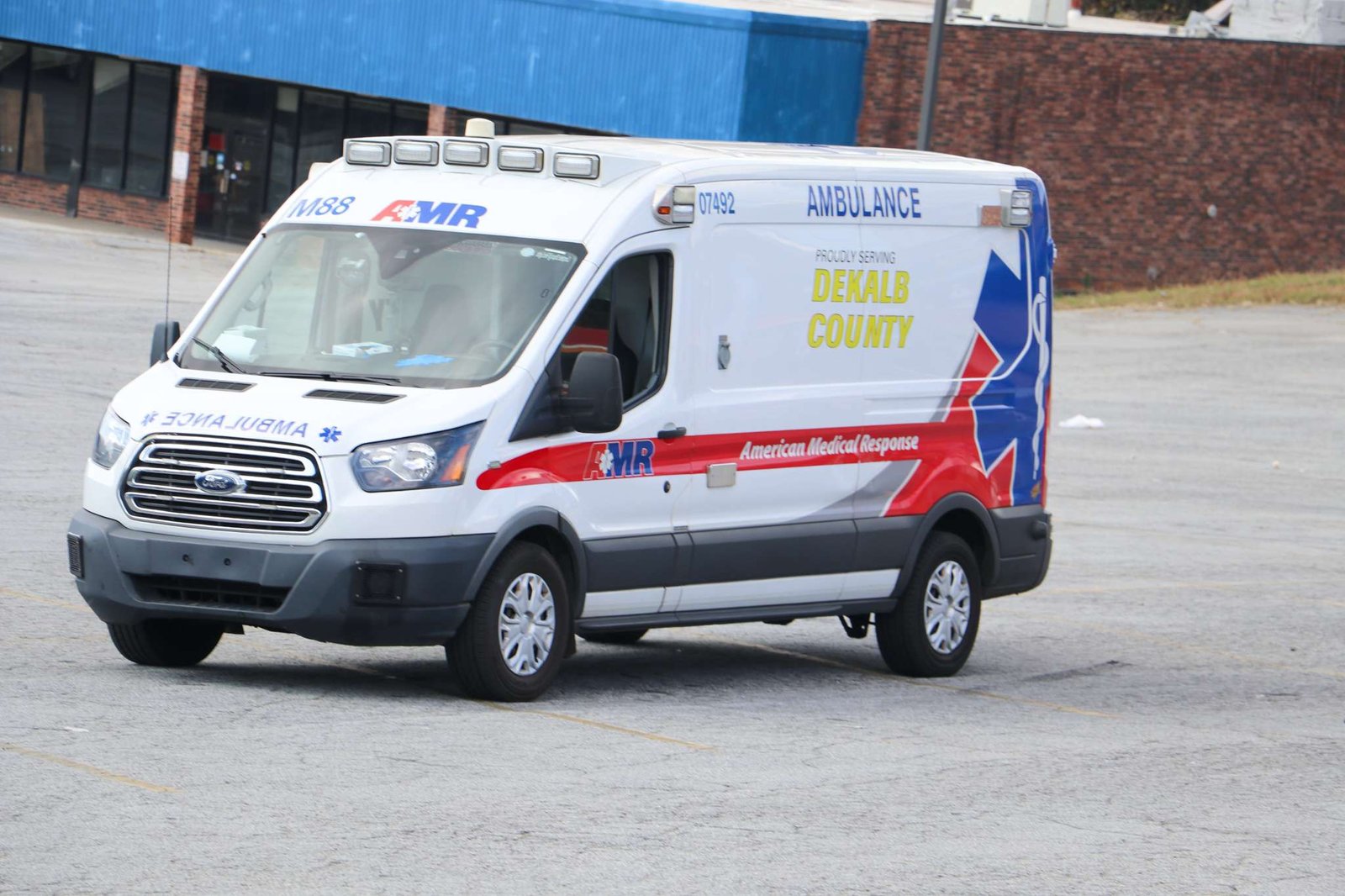
The Board of Commissioners voted unanimously Tuesday to adopt the new contract with American Medical Response (AMR), setting a maximum value of $77,773,900 based on performance. County officials say the agreement will support long-term growth, expand coverage, and build on the measurable improvements achieved over the past year.
Daily Ambulance Coverage to Reach 600 Unit Hours
The new contract increases daily unit hours—the number of hours ambulances are staffed and in service—to 600 per day, the highest in county history. The agreement also launches several major upgrades, including:
More ambulances in service daily
Improved response-time compliance through additional units and resources
A supplemental ambulance provider during peak call times
Expansion of the Nurse Navigator program and social-services outreach
A whole-blood program for trauma care
A third ambulance deployment center
AI-based analytics to improve ambulance posting and enhance patient care
County officials said these investments will help stabilize the system, especially during peak call periods and high-demand events.
County Leaders Say the System Is Moving in the Right Direction
CEO Lorraine Cochran-Johnson said the new contract continues the county’s push to build a modern, high-performing EMS system.
“As we continue to reimagine how EMS is provided in DeKalb County, I am excited at the progress we have made and expect this contract will allow us to better serve our residents,” Cochran-Johnson said. “We will have a world-class emergency medical service.”
Fire Chief Darnell Fullum also praised the results from earlier investments and said the new agreement positions the county for long-term success.
“I am excited about the positive outcomes we’ve achieved since the beginning of the year,” Fullum said. “This contract is a roadmap for success.”
Commissioner LaDena Bolton, who chairs the Employee Relations and Public Safety (ERPS) Committee, said the final agreement reflects community concerns raised during last year’s debate over an extension.
“Earlier this year I voted against an 18-month extension with AMR to push for a competitive RFP process that would secure a long-term contract meeting the service delivery our community deserves,” Bolton said. “Tuesday’s agreement not only ensures improved emergency response, but also provides real-time support for non-emergency calls and alternative ambulatory options. Through deliberation and compromise, we have positioned DeKalb County to deliver excellence in emergency medical services for the next five years.”
Improvements in 2025: Faster Response Times and More Unit Hours
In 2025, the county implemented an AMR contract extension that included a $4.9 million subsidy to increase ambulance availability. The investment immediately raised average daily unit hours from 456 in 2024 to 583 in the third quarter of 2025—a 28 percent increase.
According to county officials:
Response times for critical emergencies, such as heart attacks, are now 23 percent lower than at the peak of the COVID-19 pandemic.
All major emergency call types recorded their fastest response times since early 2020 through September 2025.
County leaders credit the gains to more ambulances, the Nurse Navigator system, additional county-funded EMS staff, and improved deployment strategies.
Audit Showed the System Was Underfunded
In 2024, DeKalb County hired Fitch and Associates to conduct a full review of EMS operations. The assessment found that the system was underfunded and recommended an investment between $12.6 million and $16.5 million, depending on the preferred design.
Key recommendations included:
Ensuring long-term financial and operational sustainability
Improving response-time performance
Reducing hospital offload delays
Expanding unit availability during peak hours
Updating EMS unit deployment locations
County officials say these findings guided both the 2025 contract extension and the new competitive RFP process that shaped the five-year agreement approved this week.
Years of Concerns Led to System Overhaul
DeKalb has spent years working to resolve concerns about slow ambulance response times. In 2024, leaders in Brookhaven and Dunwoody raised alarms after emergencies sometimes exceeded 20 minutes—well above the 12-minute benchmark for high-priority calls. Some residents reported waits of more than 25 minutes.
Earlier issues date back to 2018, when the county negotiated staffing and reporting reforms with AMR following service-related complaints.
But by mid-2025, county reports showed major improvement. A June 2025 update documented ambulances arriving nearly three minutes faster on average than before February 2024.
What’s Next
County officials say a press conference is planned for next week to outline the implementation timeline, explain upcoming deployment changes, and discuss additional components of the AMR contract.
The new agreement takes effect in 2026 and is expected to guide the county’s emergency medical services strategy for the next five years.
DeKalb County approves Sky Harbour’s PDK expansion proposal amid debate over airport safety, runway limits, environmental impacts, and rising community concerns about operations and development.
By Milton Kirby | Chamblee, GA | November 19, 2025
When the DeKalb County Board of Commissioners voted 6–1 on Tuesday, November 18, to authorize Sky Harbour’s proposal for new hangar development at DeKalb–Peachtree Airport (PDK), the decision marked a major turning point in a years-long debate about the airport’s growth, economic footprint, and impact on surrounding neighborhoods.
The vote does not approve construction itself. Instead, it allows the Sky Harbour proposal to move forward under the county’s procurement process, clearing the way for a finalized ground lease and future site development. But inside the chambers—and in the neighborhoods ringing PDK—the decision landed with mixed emotions.
District 2 Commissioner Michelle Long Spears cast the lone “no” vote, arguing that DeKalb County should wait for the results of an ongoing air-quality and noise study before greenlighting any expansion of aviation operations.
“The District 2 office has heard from over 700 people in the area surrounding PDK Airport,” Long Spears wrote in a message to her constituents after the vote. “The vast majority of people have expressed opposition to expansion of airport operations. There has been much concern about the health effects of the noise and jet fuel emissions into the environment. We pledge to work for the health and safety of residents impacted by this decision.”
Supporters of the project, including CEO Lorraine Cochran-Johnson and Airport Director Hunter Hines, noted that the proposal falls squarely within long-established development limits and does not permit larger aircraft than those already authorized at PDK today.
What “Operations” Mean at PDK
Much of the community discussion revolves around “airport operations,” a term that can sound technical but has a straightforward meaning.
An operation is either a takeoff or a landing.
One takeoff = one operation One landing = one operation
Touch-and-go training flights count as two operations each time the wheels contact the runway and lift off again.
Why this matters:
PDK averages between 150,000 and 200,000 operations per year.
Many are training flights or flight-school activity.
Business jets represent a smaller—though more visible and louder—portion of total operations.
Sky Harbour’s project focuses specifically on based aircraft, not transient traffic, meaning it would not directly increase flight-school training or unrelated jet activity.
But residents fear that added hangars could indirectly increase operations by attracting more business aviation activity to the airport.
PDK Residents Stand in opposition to PDK development
Runway Incursions at PDK
DeKalb–Peachtree Airport also carries another distinction that shapes community concern: its record on runway incursions. Between 2021 and 2024, PDK ranked at or near the top in the United States for the number of incursions reported to the FAA, including one study that placed it first with 103 incidents. Most of these events were classified as lower-risk, meaning they did not involve an imminent collision, but the frequency underscores the challenges of a busy general aviation airport with heavy training traffic. Residents often point to these numbers when raising questions about safety, oversight, and whether adding new development on the airfield could place additional pressure on the system. Airport officials have noted that high operations volume—especially from flight schools and private pilots—contributes to this ranking, but the raw numbers remain a major point in ongoing community debates.
FAA Runway Safety Upgrades
In March 2025, the Federal Aviation Administration announced a nationwide rollout of new runway-safety technology to reduce these incidents. The Runway Incursion Device (RID), set for installation at 74 air traffic control towers, alerts controllers in real time when a runway is occupied, closed, or at risk. RID can monitor up to eight runways at once and replaces older, inconsistent systems now used across the country. Industry estimates place installation costs between $5 million and $15 million per airport, depending on integration with radar-based systems like ASDE-X or existing runway-status lights. The deployment is part of the FAA’s “Safety Call to Action,” aimed at reducing runway conflicts after a rise in national incidents. The FAA has confirmed the number of airports (74), but no published list identifying those airports could be located, and officials did not respond to requests for comment.
Environmental Impact of Newer Aircraft
Another part of the airport conversation focuses on the environmental footprint of the planes that fly in and out of PDK. Newer business aircraft generate less noise and burn less fuel than earlier generations. Manufacturers have pushed quieter engine designs, cleaner combustion technology, and more aerodynamic airframes, reducing fuel burn and carbon emissions by roughly 15 to 20 percent with each generation. Sustainable Aviation Fuels (SAF) can further cut lifecycle carbon emissions by up to 80 percent, and both Gulfstream and other jet makers now certify their newer aircraft to run on blends of SAF. While aviation remains difficult to fully decarbonize, modern engines produce fewer particulates, lower nitrogen oxide emissions, and noticeably smaller noise footprints around airports compared to the aircraft they replace. Supporters of PDK modernization say these improvements soften the environmental impact of future operations.
Understanding Repositioning Flights
One of the most misunderstood parts of business aviation is the concept of “repositioning.” A repositioning flight occurs when a jet flies without passengers or cargo so it can be in the correct location for its next trip. These non-revenue flights include “empty legs,” where an aircraft drops passengers at one airport and then must fly empty to another to collect its next set of travelers. At PDK, repositioning also happens when aircraft are based at other airports but use PDK for pickup or drop-off because of convenience or availability. Each repositioning flight counts as an “operation,” adding to both noise and emissions even though no passengers are on board. For communities around PDK, this has become a major concern because empty-leg flights increase total operations without offering any local economic benefit.
The RFP: Why a Gulfstream G650 Sets the Limit
The DeKalb County Board of Commissioners issued RFP No. 22-500625 in August 2022 for the Eastside Aviation Development project—15 to 20 acres of unimproved airfield property. One requirement in that RFP has become central to the debate: any hangar development must be designed to house aircraft no larger than a Gulfstream G650, with a wingspan of 99.7 feet and a height of 25.8 feet.
This restriction means:
PDK is not authorizing larger aircraft than those already operating there.
Runway and taxiway limitations prevent heavier or larger jets.
The Sky Harbour project cannot exceed current aircraft-size limits.
PDK’s Runways: What the Airport Can—and Cannot—Handle
DeKalb–Peachtree Airport spans 745 acres and has three runways. The primary runway, 3R/21L, measures 6,001 feet in length with a weight-bearing capacity of 75,000 pounds for dual-wheel aircraft. This capacity is below the maximum takeoff and landing weights of the G650, meaning aircraft of that class must operate with weight restrictions when using PDK. The remaining runways are shorter and primarily serve smaller general aviation aircraft.
Is There Room to Lengthen the Runway?
A recurring question among residents is whether PDK could one day extend its primary runway. The answer is effectively no. The airport is surrounded by residential, commercial, and county-owned property, with major roadways and airspace constraints preventing any practical expansion.
Peachtree DeKalb Airport Map
Planning Document Confirmation
Long-term expansion fears are often linked to runway length, but PDK’s own planning documents make clear that the airfield cannot grow beyond its current footprint. In the airport’s 2018 Master Plan Update, the county states plainly: “There are no plans to lengthen any runways at PDK.” This appears in Chapter 4, the Facility Requirements section, page 4-24. The document cites physical constraints, nearby roadways, and residential development as reasons why expansion is not feasible.
What the Sky Harbour Project Actually Proposes
Sky Harbour, a publicly traded aviation infrastructure company, plans to develop a Home Base Operator (HBO) campus on roughly 13 acres of PDK’s eastside property. Their development includes modern hangars built for G650-class aircraft, dedicated office and operational space, new ramp and taxiway access, additional vehicle parking, and potential fuel facilities authorized under the RFP.
Sky Harbour markets its campuses as offering:
“The shortest time to wheels-up in business aviation”
Dedicated line service for based tenants
A premium environment for corporate and private aviation users
With national locations from Miami to San Jose and Denver to Nashville, PDK represents their 20th site. CEO Tal Keinan has praised the county’s decision, calling it a “triple win” for DeKalb residents, business aviation users, and the company.
Reducing Repositioning Flights
One of the stated goals in the county’s approval of the Sky Harbour proposal is to cut repositioning flights by nearly half. Sky Harbour’s model centers on creating premium home-base hangars on the airfield, allowing aircraft that frequently use PDK to remain on-site instead of flying in from other airports. When an aircraft is based where its flights originate, there is no need for empty positioning legs to bring the jet into place. Supporters argue that this reduction in unnecessary flights would lower noise, emissions, and congestion. Critics counter that total operations may still rise if more planes choose to base at PDK, but the county’s conditions attempt to balance these effects.
Economic Impact and Jobs
The Sky Harbour project is also expected to generate substantial long-term economic benefits for DeKalb County. Structured as a 50-year ground lease, the development requires no county-funded construction or financial contribution; instead, DeKalb collects steady lease payments and related tax revenue over the life of the agreement. County officials estimate the project could generate roughly $500 million in combined revenue and taxes during the lease term, benefiting DeKalb County government, local schools, and the City of Chamblee. The development is also projected to create approximately 600 jobs, including construction roles, aviation line-service positions, maintenance work, and administrative jobs tied to aircraft operations. Supporters say the economic impact positions PDK as an even stronger hub for corporate and private aviation in metro Atlanta, with growth tied directly to based aircraft rather than transient training flights.
The Airport Authority’s Role
The DeKalb Airport Authority advises the CEO and Board of Commissioners on long-term management and planning for PDK. Its statutory purpose includes maintaining a coordinated airport system, ensuring responsible growth, maximizing public benefit, and aligning local operations with national aviation standards.
A Century of History at PDK
From Camp Gordon in World War I to Naval Air Station Atlanta in World War II, and its transition to civilian use in the late 1950s, PDK has played a major role in Georgia’s military and aviation history. Brief commercial service operated between 2017 and 2020 before being suspended due to the pandemic. Today, it is one of the busiest general aviation airports in the Southeast.
What Comes Next
Sky Harbour’s proposal moves into the negotiation and execution phase for a long-term ground lease. Construction will require FAA review, environmental assessments, and continued community engagement. With public opinion divided, the future of PDK development remains a closely watched issue in DeKalb County.
Chit Chat Atlanta Tours celebrates a breakthrough month with national and international visitors, new cultural experiences, and rising demand as the company opens bookings for the holiday season.
By Milton Kirby | Atlanta, GA | November 19, 2025
October was a breakthrough month for Chit Chat Atlanta Tours. Visitors from London, Ireland, North Carolina, California, Connecticut, Florida, Pennsylvania, and Texas spent the month exploring Atlanta’s rich history, food, and culture through the company’s signature guided experiences. The wave of national and international guests signals significant momentum for the fast-growing tour company as the holiday season approaches.
A Powerful Journey Through Black History
One of the month’s most memorable moments came during the Black History & Civil Rights Tour. Guests learned about the 1906 Atlanta Race Massacre and then met Fabian, the visual artist behind the striking mural honoring the massacre’s victims. For a group visiting from London, the encounter offered a rare, personal connection to the people who continue to preserve Atlanta’s story through art.
Holiday Bookings Now Open
With demand rising, Chit Chat Atlanta Tours is now welcoming groups, families, organizations, and solo travelers to reserve holiday experiences. Tours are available throughout:
Thanksgiving Week
Christmas and Winter Break
New Year’s Eve and New Year’s Day
The company offers options for history lovers, foodies, students, corporate groups, birthday travelers, and visitors from around the world.
Chit Chat Atlanta Tours says its mission is simple: share the stories, culture, landmarks, and hidden gems that make Atlanta one of the most influential cities in the nation.