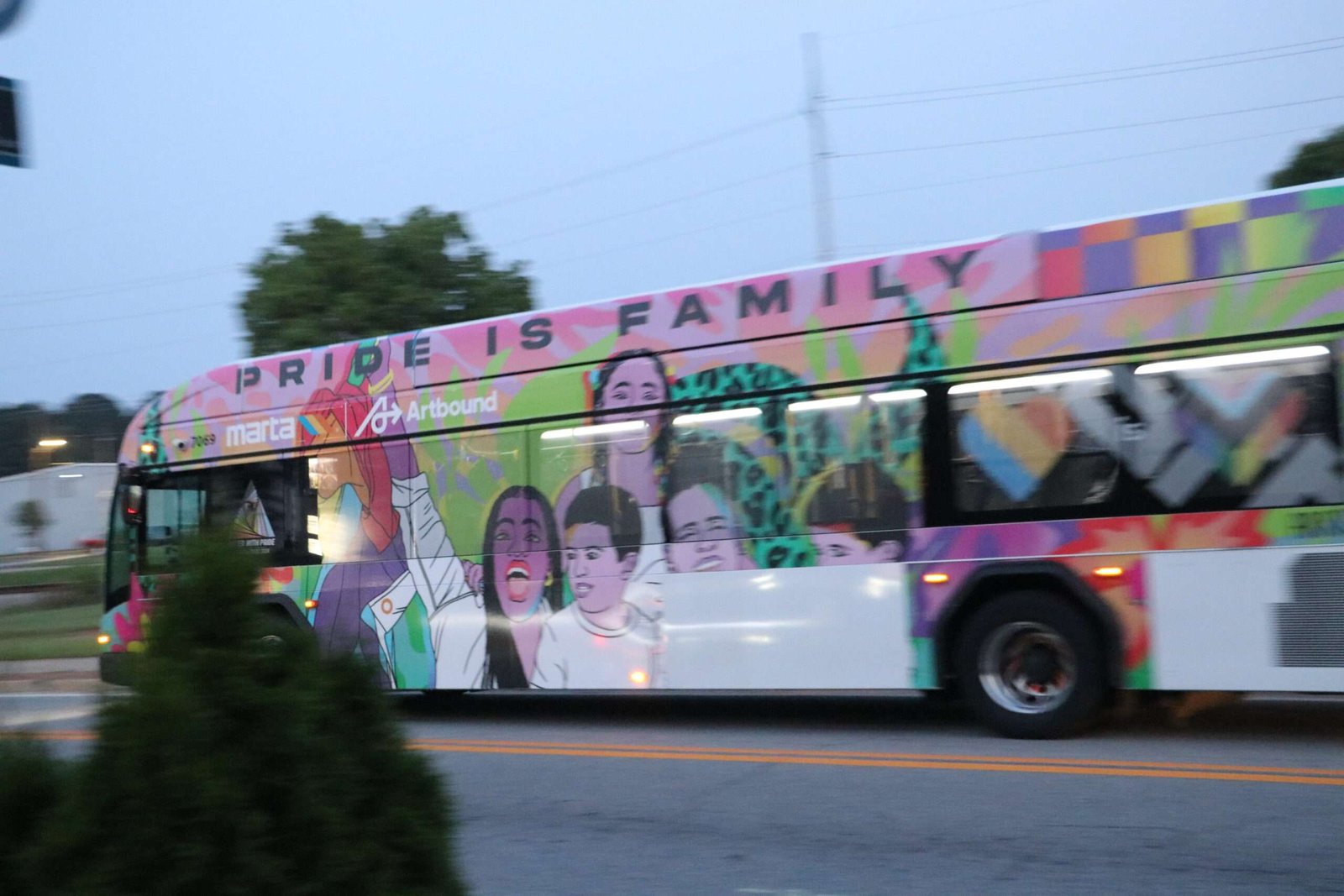
MARTA launches its 2025 holiday season with free rides, festive bus wraps, vendor markets, surprise giveaways, and community events across Atlanta, DeKalb, and Clayton County.
By Milton Kirby | Atlanta, GA | November 19, 2025
If you’re riding MARTA this season, expect more than your usual commute. Expect music drifting through station corridors, small businesses setting up tables full of handmade goods, and a flash of color when one of MARTA’s holiday buses pulls to the curb. The agency is rolling out six weeks of holiday cheer, complete with free rides, surprise giveaways, and a few visits from Santa — the real one.
The celebration starts Thursday at West End Station, where MARTA is hosting its third annual Holiday Market + Bus Reveal. It’s become one of those events people circle on the calendar: hot cocoa, local makers, DIY craft stations, and that moment everyone leans in together waiting for the holiday buses to roll out in fresh wraps. This year’s theme — “Wrapping Up the Year” — sits across three custom buses made possible by Tulsa Welding School Atlanta, which is opening its new campus in the metro area.
MARTA Interim General Manager and CEO Jonathan Hunt said the event reflects the agency’s bigger goal: bringing people together. “From free holiday rides to local vendor markets and festive surprises, we’re excited to spread cheer across the system all season long,” he said.
And the gifts don’t stop at the station. From Nov. 21 through New Year’s Eve, anyone who happens to step onto one of the wrapped buses rides free. The buses will be moving throughout Atlanta, DeKalb, and Clayton County — bright, loud, unmistakably festive.
There’s also something special planned for Dec. 2 through Dec. 4. MARTA teams — joined by The Real Black Santa and a handful of local influencers — will pop up around the system to hand out free Breeze Cards. No schedule, no announcement. Just a little joy, delivered in the moment.
The next big stop on the holiday tour is Dec. 11 at Kensington Station. In partnership with Decide DeKalb, MARTA is hosting a customer appreciation celebration with DeKalb-based vendors, holiday karaoke, music, story time, refreshments, giveaways, and a photo booth. The holiday buses will be parked onsite so families can climb aboard, take pictures, and see the designs up close.
Six weeks, systemwide. Free rides. Markets. Santa. And plenty of chances for people to meet the community around them. MARTA is keeping the holidays accessible — and bringing the season directly to the riders who keep the system moving.
Full details are available at itsmarta.com/holidayevents
Victor Hart Sr., longtime NAACP leader and Gifford advocate, devoted his life to dignity, justice, and community progress. His decades of service transformed opportunities for generations.
By Milton Kirby | Vero Beach, FL | November 17, 2025
A Life of Service Remembered
In Gifford, the measure of a person’s life is often found in the work they leave behind. It’s written in the stories people tell, the hands a leader lifts, and the ground a man helps steady when everything around him feels like it might shake loose. That is the kind of life Victor Hart Sr. lived — steady, humble, unbending in his love for people.
Hart, the longtime president of the Indian River County NAACP chapter, is remembered for walking with humility but speaking with a purposeful voice to provide opportunities for others. He died on November 13 at the age of 94.
From Cat Island to Gifford
Victor Hart, Sr.’s journey from his birthplace in 1931 in Old Bight Settlement on Cat Island in the Bahamas to Gifford in 1953 is a testament to his resilience and determination. He arrived in Florida with a fifth-grade education and a fruit picker’s job but quickly came to understand the hard lines of segregation in his new home.
He remembered an early trip to Orlando, when he wanted a sandwich and was told he wasn’t allowed to go through the front door.
“Well, I didn’t know there were two kinds of people,” he said. “So I just went on through that door. And I kept doing that.”
“Where I come from in the Bahamas, all people needed to know was that my name is Victor Hart,” he explained. “That’s who I was. In the Bahamas, we had lived as one.”
Challenging Barriers, Opening Doors
Those experiences pushed Hart toward a life of challenge and service. Though he did not first see himself as a civil rights figure, he later reflected, “I had never thought of myself as a civil rights worker — but I guess that’s what I’ve been doing ever since.”
Back in 1961, he recalled, “I got a crew together and I said, ‘Fellas, I don’t know what the law is all about in this country, but I’m not going to go around to the back.’”
From that determination came the Progressive Civic League in Gifford and the county’s NAACP chapter. Hart was the first to organize both.
“It was tough in those days,” he said. “You couldn’t just ride around — you had to go in groups.” Organizing offered some measure of safety and a collective voice.
Over the years, Victor Hart Sr.’s humble yet unflinching leadership was instrumental in bringing significant improvements to Gifford. His efforts led to the delivery of clean water, paved roads, streetlights, medical and community centers, the Gifford Youth Achievement Center, and the park that now bears his name.
A Father Who Lived His Values Out Loud
Hart’s public work was matched by the example he set at home.
“My father was a warrior. He was a fighter. He was a fighter to the end,” said his daughter, Vickie Hart-Brant. “My daddy was my hero. Daddy just understood so much.”
She described him as well-read and highly intellectual, noting that he kept up with the issues by reading five newspapers. Education, she said, was very important to him.
Hart instilled his values in his children. Hart-Brant remembers riding with him as he used a loudspeaker to remind people to vote. The family helped give rides to polling locations, joined parades, and took part in events to promote the community.
He taught them the art of negotiation and the importance of respecting others, regardless of their disagreement. His motto, she said, was simple: “I can disagree with you, but I don’t have to be disagreeable.”
He also insisted on integrity in his civic work. Hart-Brant recalled that he never took a penny from anyone. “My daddy financed his own work. His integrity was intact. He sacrificed to help promote and advocate for the people of Gifford. He loved the people of Gifford,” she said. “He was a God-fearing man. Faith and his family were the two most important things in his life.”
A Calming Presence in Difficult Times
County Commissioner Deryl Loar, a former sheriff, worked closely with Hart during difficult moments and witnessed his influence firsthand. Everyone called him “Chief.” “That was the respect that he commanded,” Loar said.
Hart had a calming effect on the community, even during times of racial tension. After the murder of George Floyd, when emotions and frustration ran high, Hart’s voice and presence helped steady Gifford.
“There were several instances when there could have been unrest, absent Victor Hart, Sr. calming the community,” Loar said.
A Legacy Etched Into a Park and a Community
The community’s respect and gratitude for Victor Hart, Sr.’s work were formally recognized in 2017, when Gifford Park on 43rd Avenue was renamed the Victor Hart Sr. Community Enhancement Complex. The well-attended ceremony made history: it was the first Indian River County-owned facility to be named for a person of color. This recognition is a source of pride for the entire community.
Victor Hart, Sr. Community Enhancement Complex.
The well-attended ceremony made history: it was the first Indian River County-owned facility to be named for a person of color.
The people of Gifford had long considered Hart an icon. Now there is a permanent and very visible testament to the esteem he earned through decades of work.
Tony Brown, Hart’s hand-picked successor as NAACP president, put it plainly: “When you mention an accomplishment in Gifford, you cannot get too far away from Victor Hart.”
According to County Commissioner Bob Solari, who made the motion to rename the park, “Few people have done so much for the community with so little personal benefit. He’s been working at it daily for almost 60 years.”
Today, the 39-acre Victor Hart, Sr. Community Enhancement Complex includes athletic fields, a large playground, the Gifford Aquatic Center, the Gifford Youth Achievement Center, basketball and tennis courts, a football field, a lighted Little League field, picnic pavilions with grills, restrooms, walking trails, fitness equipment, and parking areas. It operates daily from 7 a.m. until sunset and provides a safe and engaging environment for families and children.
Victor Hart Sr Community Enhancement Complex – Courtesy Indian River County
Pets, alcohol, open fires, and camping are not allowed within the park, underscoring its role as a community space focused on recreation, safety, and connection.
‘It Feels Good… Now Somebody Says Thank You’
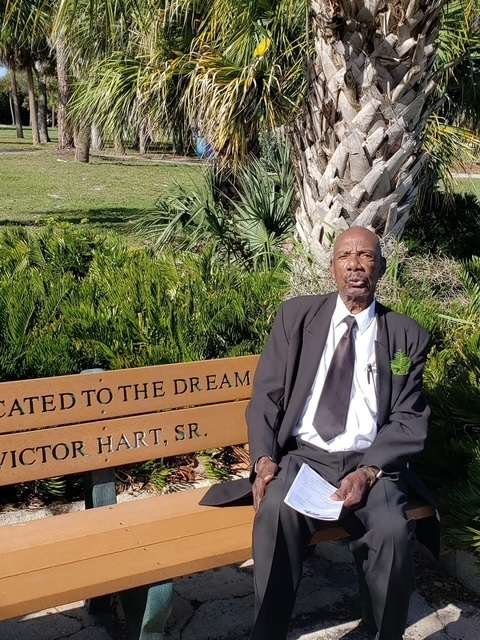
In 2013, Hart was honored with a living memorial at Historic Macedonia Church in Gifford. At age 82, he sat on a bench engraved with his name, alongside County Commissioner Bob Solari. The bench and accompanying plaque were placed outside the church at 2800 45th Street, across from Gifford Middle School.
“It feels good; people don’t usually do anything for me,” Hart said at the time. “Now somebody says thank you; at least they let me know they appreciate me.”
For the people of Gifford, the appreciation had been there all along — in clean water, paved roads, streetlights, community centers, youth programs, and a park that carries his name. For nearly 60 years, whenever something significant changed for the better in Gifford, it was almost always the result of Victor Hart’s work.
Please consider supporting open, independent journalism – no contribution is too small!
By Milton Kirby | Prince George’s County, MD | November 14, 2025
Bowie State University has received the largest single donation in its 160-year history — a $50 million unrestricted gift from philanthropist and author MacKenzie Scott. The announcement marks a major moment for Maryland’s oldest historically Black university and one of the fastest-growing institutions in the state.
The gift follows Scott’s earlier $25 million donation to Bowie State in 2020, bringing her total investment to the university to $75 million. Leaders say the unrestricted nature of the gift gives Bowie State the flexibility to expand scholarships, strengthen academic programs, and build long-term financial stability.
President Aminta Breaux said she was moved to tears when she learned of the gift. “I was truly at a loss for words… I was overjoyed. I was so overcome,” she said. Breaux noted that many of the university’s students are high-need, and the donation will significantly close financial gaps for those who require the most support.
MacKenzie Scott – Courtesy Vogue
“This gift has the ability to touch so many lives,” Breaux said. “Higher education is the pathway to upward social mobility for our students.”
Brent Swinton, Bowie State’s vice president for philanthropic engagement, called the donation “transformational,” saying it will inspire additional donors and help fuel new opportunities across the university.
Scott, who has given more than $1.7 billion to higher education and nonprofit organizations in recent years, has made large investments in several historically Black colleges and universities nationwide. Her support places Bowie State among a select group of institutions experiencing major increases in private philanthropy.
Bowie State is already in a period of growth, offering more than 30 undergraduate majors, over 21 master’s programs, 18 specialty certificates and three doctoral degrees in fields ranging from cybersecurity and nursing to business, education and STEM.
University officials say they plan to direct a large share of the funds toward student scholarships, faculty development, research expansion and new academic initiatives. Additional details are expected as planning continues.
The gift also increases the university’s ability to make long-term investments that strengthen the student experience — including campus modernization projects, expanded support services and new industry partnerships.
A deeper look at Bowie State’s long history shows why this moment carries such meaning for the institution.
Bowie State’s roots trace back to January 9, 1865, when an organization known as the Baltimore Association for the Moral and Educational Improvement of the Colored People opened a school inside the African Baptist Church at Calvert and Saratoga streets. The association, formed by 46 businessmen, lawyers, clergymen and Quakers, was committed to educating Maryland’s newly emancipated Black citizens.
One of its strongest advocates, Joseph M. Cushing, openly criticized the state for refusing to fund education for Black residents, predicting that Maryland would someday be forced by public opinion to do so. The first school—known as School No. 1—offered basic education courses. Teacher-training classes were added in 1866, and by 1867 the institution expanded with support from the Freedmen’s Bureau and Quaker donors.
The state took control of the school in 1908, renaming it Normal School No. 3. A move to Bowie soon followed, with Maryland purchasing a 187-acre tract of farmland to establish a new campus that opened in 1911. Don Speed Smith Goodloe became the first Black principal to lead the school.
Through the 1920s and 1930s, the curriculum continued to grow, transitioning from the Maryland Normal and Industrial School at Bowie to the Maryland Teachers College at Bowie in 1938. Liberal arts programs were added throughout the 1960s, and the state officially renamed the school Bowie State College in 1963.
Graduate education began in 1969 with the creation of the Master of Education program. Bowie State continued its rise through the 1970s and 1980s, and in 1988 the institution transitioned to Bowie State University. On the same day, it became part of the newly formed University System of Maryland.
The university gained national attention for its work in science, technology, engineering and mathematics. In 1995, Bowie State won an 11-year, $27 million NASA/NSF award, becoming one of just six national Model Institutions for Excellence in STEM.
Today, Bowie State ranks among the nation’s leading comprehensive universities, preparing students to thrive in a rapidly changing, highly technological world. The new $50 million gift strengthens that mission, linking a 160-year legacy of resilience with a future defined by opportunity and innovation.
With expanded scholarships, stronger academic programs and broader research capacity, Bowie State is positioned to open doors for generations of students who will carry the institution’s legacy forward.
Philander Smith University received a record $19 million unrestricted gift from philanthropist MacKenzie Scott, boosting scholarships, campus upgrades, student success efforts, and long-term HBCU sustainability.
By Milton Kirby | Little Rock, AR | November 14, 2025
Philander Smith University (PSU) has received an unrestricted $19 million gift from philanthropist MacKenzie Scott. It is the largest single donation in the university’s 147-year history. University leaders say the contribution strengthens academic programs, student support, and long-term planning for the historic Little Rock HBCU.
A Gift with Full Flexibility
The donation is unrestricted, giving the university freedom to direct funds where they are most needed. That flexibility allows PSU to respond quickly to student needs, expand programs, and improve facilities without donor-imposed limits.
A Historic Institution with a Unique Mission
Founded in 1877, Philander Smith University is a small, private, historically Black liberal arts institution related to the United Methodist Church. It offers four undergraduate degrees — the Bachelor of Arts, Bachelor of Science, Bachelor of Business Administration, and Bachelor of Social Work — along with a Master of Business Administration (MBA).
The university’s mission is to graduate academically accomplished students who are grounded as advocates for social justice and committed to changing the world for the better.
PSU is also the only United Negro College Fund member institution in Arkansas, serving students of all backgrounds regardless of race, religion, sex, national origin, or ethnicity.
Leadership Responds
President and CEO Dr. Maurice D. Gipson said the contribution marks a major step forward.
“This gift is a resounding vote of confidence in our mission and our momentum,” Dr. Gipson said. “It positions us to invest boldly in student success, facilities enhancement, and programs that prepare the next generation of Philander Smith leaders.”
MacKenzie Scott – Courtesy Vogue
Why This Gift Matters
HBCUs often operate with smaller endowments and historic funding inequities. Rising costs and enrollment shifts have increased pressure on many campuses. PSU leaders say the unrestricted gift will support scholarships, strengthen the endowment, and modernize facilities — areas essential for long-term growth.
Research shows that large, flexible donations like Scott’s can boost retention, expand academic offerings, and stabilize financial planning at HBCUs.
Scott’s Growing Impact on HBCUs
Since 2020, Scott has reduced her Amazon stake by 42 percent, selling or donating about 58 million shares. She is still worth more than $35 billion today, even after donating more than $19 billion through her philanthropic platform, Yield Giving. Created in 2022, Yield Giving supports thousands of organizations focused on education, equity, disaster recovery, and community advancement.
Her focus on large, unrestricted gifts has made her one of the most influential philanthropic partners for historically under-resourced institutions.
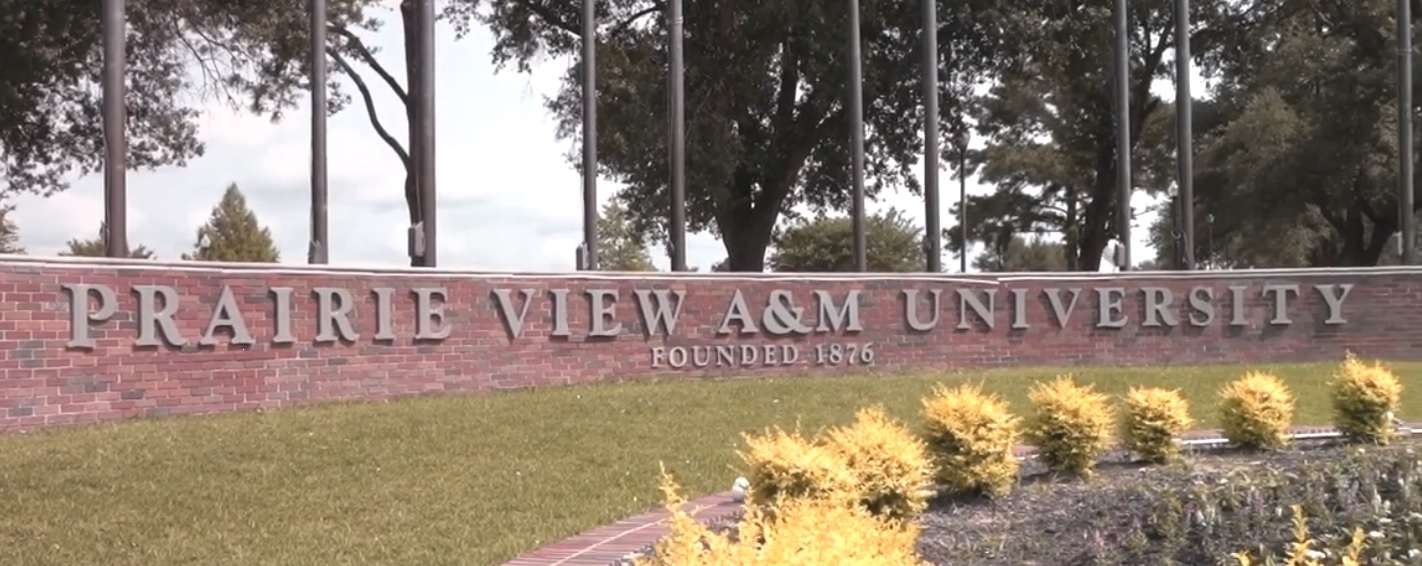
Scott’s donation to Philander Smith continues her record of large contributions to historically Black colleges and universities. Over the past five years, she has made significant gifts to institutions such as Prairie View A&M University, Bowie State University, North Carolina A&T University, and others.
These gifts have helped HBCUs build endowments, expand programs, and stabilize campuses that operate with far fewer financial resources than many predominantly white institutions.
Looking Forward
For Philander Smith University, the $19 million donation is more than a financial boost. It represents trust in the school’s mission, momentum for new initiatives, and an opportunity to deepen its impact on Little Rock and the region.
The gift provides stability and room for growth as PSU prepares the next generation of students and community leaders.
MacKenzie Scott gives North Carolina A&T a historic $63 million gift, boosting its research goals, student success, and endowment as the university advances toward national R1 status.
By Milton Kirby | Greensboro, NC | November 14, 2025
North Carolina Agricultural and Technical State University has received the largest single gift in its 134-year history — a record-setting $63 million investment from philanthropist and author MacKenzie Scott.
The announcement marks a major moment for the nation’s largest HBCU. It also deepens Scott’s relationship with the university, following her $45 million gift in 2020, which brought her total support to $108 million.
MacKenzie Scott – Courtesy Vogue
Chancellor James R. Martin II said the latest contribution demonstrates Scott’s trust in A&T’s mission and growing national prominence.
“No investor in higher education history has had such a broad and transformational impact across so many universities,” Martin said. “North Carolina A&T is deeply grateful for Ms. Scott’s reaffirmed belief in our mission and for the example she sets in placing trust in institutions like ours to drive generational change through education, discovery and innovation.”
A National Leader Rooted in History and Excellence
North Carolina A&T stands as one of the nation’s most dynamic universities — a land-grant research institution, a cultural pillar, and America’s largest HBCU for seven consecutive years. It is also the #1 producer of degrees awarded to African Americans in North Carolina and the leading HBCU STEM institution in the country.
The university’s diverse and global community includes students from across the nation and six continents, upheld by a tradition of excellence and alumni who hold influential roles in government, industry, and academia.
Photo by Milton Kirby – NC A&T – Murphy Hall
A&T’s achievements include:
66 patents issued from faculty and student research
A growing number of spin-off and start-up companies
The top public HBCU business school in the country
National recognition for engineering, agriculture, and science excellence
In recent years, the university has experienced rapid expansion. Enrollment surpassed 15,000 students in Fall 2025, and A&T opened major new facilities, including the $90 million Engineering Research and Innovation Center and a new 450-bed residence hall. Four new academic centers of excellence also debuted in the past year.
This foundation of growth sets the stage for Scott’s latest gift — and what it will help the university achieve next.
Fueling A&T’s Path to Research Leadership
Scott’s investment aligns directly with Preeminence 2030: North Carolina A&T Blueprint, the university’s strategic plan guiding its push toward the Research 1 (R1) Carnegie Classification — the highest level of research activity in the country.
The funding strengthens A&T’s capacity in key areas where it already leads, including:
Engineering
Agriculture and environmental sciences
Life and health sciences
Data science
Artificial intelligence
“This is an investment in A&T’s capacity to solve society’s most pressing challenges,” Martin said. “It will accelerate our momentum as a research and innovation powerhouse, ensuring that A&T continues to lead at the intersection of technology, human progress and social transformation.”
Supporting Students, Expanding Research, and Strengthening Generational Wealth
Because the gift is unrestricted, A&T can deploy resources where they will have the most impact — from bolstering student success and faculty recruitment to advancing interdisciplinary research.
The timing is pivotal. A&T’s endowment exceeded more than $202 million as of June 2024, the largest among all public HBCUs and one of the fastest-growing university endowments in the Southeast. Only a decade earlier, the figure stood below $60 million.
With Scott’s latest investment, the university’s endowment is projected to surpass $300 million, bolstering long-term stability and supporting competitive research portfolios, scholarships, and expanded federal and industry partnerships.
Board of Trustees Chair Gina L. Loften ’90 said Scott’s investment will have a lasting impact.
“On behalf of the North Carolina A&T Board of Trustees, I extend our deepest gratitude to Ms. Scott for her extraordinary gift,” Loften said. “This transformative investment will strengthen our capacity to fulfill A&T’s mission of exemplary teaching, innovative research, and service that lifts communities.”
Prairie View A&M University receives a record $63 million gift from MacKenzie Scott, boosting scholarships, research, and long-term growth in one of the largest HBCU donations ever.
By Milton Kirby | Prairie View, TX | November 14, 2025
A Record-Breaking Moment for PVAMU
Prairie View A&M University has received the largest single gift in its 149-year history — a $63 million unrestricted donation from philanthropist and author MacKenzie Scott.
The university announced the news on Thursday, calling the investment a powerful vote of confidence in Prairie View’s mission, leadership, and rising research profile.
This new gift comes five years after Scott’s earlier $50 million donation. Together, her support now totals $113 million, marking one of the most significant philanthropic commitments ever made to a Historically Black College or University.
MacKenzie Scott – Courtesy Vogue
A Boost for Students, Research, and the Future
President Tomikia P. LeGrande said the gift is “defining and affirming,” and will accelerate the university’s long-range plan, Journey to Eminence: 2035.
The university plans to expand:
Scholarships and student support services
Faculty research and innovation in areas like artificial intelligence, cybersecurity, agriculture, public health, and space science
The timing aligns with a major milestone — PVAMU’s largest-ever enrollment of 10,106 students.
Why Unrestricted Funding Matters
Scott’s giving style sets her apart: she allows universities to decide how best to use the funds. PVAMU leaders say that flexibility is crucial for sustained excellence, especially as many HBCUs continue working to close long-standing funding gaps.
A Rising Star Among Public HBCUs
Prairie View A&M, part of the Texas A&M University System, has sharpened its focus on high-impact research in recent years.
University officials say the gift will:
Help strengthen PVAMU’s position as a national research institution
Expand opportunities for first-generation and low-income students
Support community and workforce development across Texas
What Comes Next
President LeGrande said the gift is not only a celebration but a call to action: “This investment amplifies the power and promise of a Prairie View education.”
To honor that promise, PVAMU plans to track and report measurable outcomes tied to student success, faculty advancement, and research impact.
With one of the largest philanthropic boosts in HBCU history, Prairie View A&M now enters a new chapter — one marked by momentum, vision, and opportunity.
A federal judge paused the receiver’s push to expand Uncle Nearest’s receivership, ordering affiliates to produce financial records first and delaying any decision on broader court control.
By Milton Kirby | Chattanooga, TN | November 12, 2025
A federal judge has paused the receiver’s bid to expand control beyond Uncle Nearest, Inc. to other Weaver-owned businesses, ordering the parties to exchange financial records first. The stay comes via an “Agreed Order Staying Proceedings Related to Receiver’s Motion for Clarification,” entered October 29, 2025, in Farm Credit Mid-America, PCA v. Uncle Nearest, Inc.
What the order does
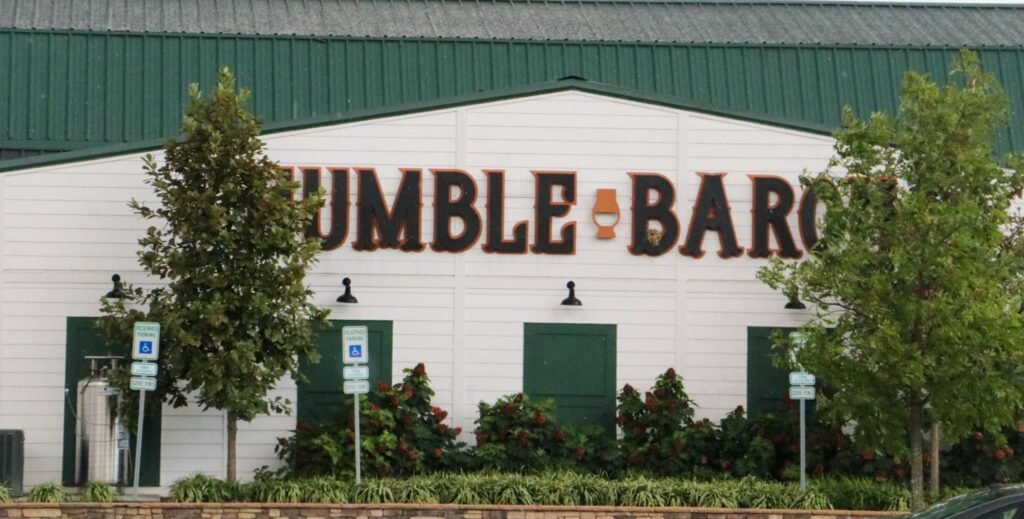
Judge Charles E. Atchley Jr. temporarily halts litigation on the receiver’s request to fold affiliated Weaver entities—such as Humble Baron, Classic Hops Brewing, and Shelbyville Barrelhouse BBQ—into the receivership. Instead, the court requires two years of bank statements and financial records from the affiliates within seven days, with permission for the receiver to review up to three additional years if needed.
Photo by Milton Kirby
Why it matters
The stay keeps those affiliates outside the receivership for now, while giving Receiver Phillip G. Young Jr. visibility into their finances. The scope question—whether the court should broaden control beyond Uncle Nearest, Inc.—remains unresolved until the records review is complete and any follow-up hearing is set.
The defense’s position
Attorneys for Fawn and Keith Weaver argue the attempted expansion chilled business and partnerships, contributing to over $1 million in lost revenue; they have signaled potential claims tied to that harm.
Case backdrop
The court placed Uncle Nearest under receivership in August after Farm Credit Mid-America sought protection of collateral and continuity of operations. The first quarterly report (filed October 1) cited missing records, overlapping entities, and a stabilization plan with significant professional-fee and vendor-catch-up costs.
Sidebar: Why the Case Is in Chattanooga
Though Uncle Nearest, Inc. operates in Shelbyville, Tennessee, and creditor Farm Credit Mid-America is based in Louisville, Kentucky, the federal receivership case is being handled in Chattanooga.
That’s because Shelbyville and Bedford County fall under the Chattanooga Division of the U.S. District Court for the Eastern District of Tennessee, where Judge Charles E. Atchley Jr. presides. This means all filings, orders, and hearings — including the October 29 Agreed Order Staying Proceedings — are issued through the Chattanooga federal courthouse, even though the business operations in question are about an hour northwest.
In short: Shelbyville is the stage, but Chattanooga is the courtroom.
What’s next
The parties face deadlines to complete disclosures and propose next steps. After the receiver reviews the affiliates’ financials, the court will decide whether to expand the receivership—or keep it narrow. TSJ will monitor the docket for any new motions or hearing dates.
Please consider supporting open, independent journalism – no contribution is too small!
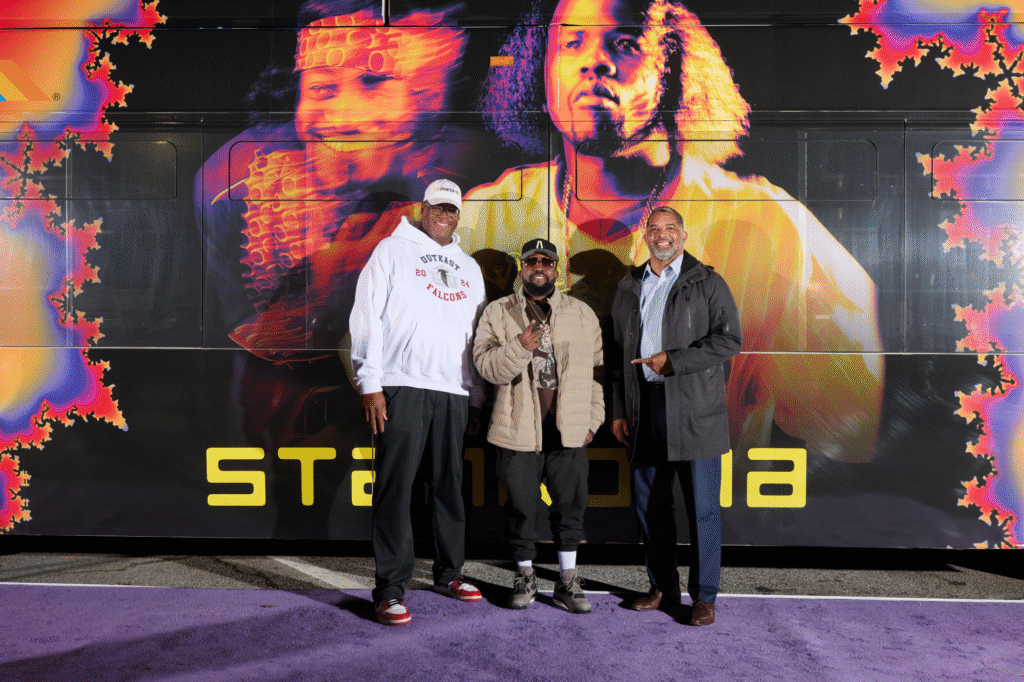
MARTA celebrates Outkast’s 25th anniversary of Stankonia with a custom bus honoring André 3000 and Big Boi ahead of their Rock & Roll Hall of Fame induction.
By Milton Kirby | Atlanta, GA | November 4, 2025
If you’ve ever ridden MARTA with Outkast playing through your headphones, this one’s for you. The city’s favorite duo — André 3000 and Big Boi — just got a moving tribute in their honor, and it’s riding through the same neighborhoods that raised them. This is a moment of pride for all of us, a testament to our shared love for our city and its music.
Courtesy MARTA – Interim General Manager & CEO Jonathan Hunt, Antwan “Big Boi” Patton, MARTA Chief of Staff Steven Parker
MARTA has wrapped one of its buses in full Stankonia glory — a rolling celebration of 25 years since the album that not only changed hip-hop but also changed Atlanta’s cultural landscape. It reminded the world that the South had something to say, and we’re proud to be a part of that cultural revolution.
The bus made its first appearance at Skatetonia25, a fan party thrown by Sony Music at Cascade Skating Rink — the kind of place where Atlanta’s stories always seem to begin. There was music, skating, and even Big Boi himself, posing for photos beside the bus that now carries his name through the streets he grew up on.
“MARTA is part of the fabric of Atlanta, just like Outkast,” said MARTA Interim CEO Jonathan Hunt. “We’re proud to celebrate artists who carried this city’s voice to the world — and who gave MARTA a shoutout along the way.”
That shoutout — the one every true fan knows — came on “Elevators (Me & You)” back in 1996:
“A couple of years ago on Headland and Delowe / Was the start of something good / Where me and my [partner] rode the MARTA through the hood…”
That spot, Headland and Delowe in East Point, still sits along MARTA bus routes 93 and 81. And thanks to Outkast, it’s part of Atlanta’s living soundtrack.
The new MARTA tribute bus will stay in service for a year, cruising through Southwest Atlanta, the birthplace of Outkast and a hotbed of creativity and community. This route is a reminder that these two elements always find a way to ride together, just like Outkast’s music and the city that inspired it.
Courtesy MARTA – CEO Jonathan Hunt, Mike “Killer Mike” Render
And with Outkast set to be inducted into the Rock & Roll Hall of Fame on November 8, this moment feels like more than nostalgia. It’s a full-circle ride — from ATLiens to Stankonia, from College Park to the cosmos. The bus, a moving tribute to their legacy, is a symbol of their journey from local heroes to global icons.
So, if you see that bus roll past, know: the South’s still got something to say.
Howard University receives a historic $80 million gift from philanthropist MacKenzie Scott, strengthening its research leadership, medical innovation, and mission of truth, service, and opportunity.
By Milton Kirby | Washington, D.C. | November 3, 2025
A Legacy Rooted in Truth and Service
Founded in 1867, Howard University has shaped generations of scholars, leaders, and visionaries. Across 14 schools and colleges offering 143 degree programs, the institution continues to embody its motto — Veritas et Utilitas, Truth and Service. With more than 14,000 students, the University remains one of the nation’s most important engines of opportunity, research, and social mobility.
Howard’s historic role in American life is reflected in its remarkable roster of honorees and scholars: one Schwarzman Scholar, three Marshall Scholars, four Rhodes Scholars, 12 Truman Scholars, 25 Pickering Fellows, and more than 165 Fulbright recipients. The university also produces more on-campus African American Ph.D. recipients than any other institution in the country.
A Leader in Research and STEM
Howard’s nationwide impact is perhaps most visible in the sciences. The National Science Foundation ranks the university as the top producer of African-American undergraduates who later earn science and engineering doctoral degrees.
Howard is also home to nationally recognized programs in business, social work, communications, and engineering. It is consistently ranked as the No. 1 HBCU for undergraduate programs in business, computer science, economics, engineering, psychology, and — at the graduate level — criminal law, constitutional law, dispute resolution, health care law, trial advocacy, economics, English, fine arts, history, political science, and speech pathology.
The Howard University School of Law, a national advocate for justice for more than 150 years, ranks No. 1 among HBCUs and recently placed No. 13 in the nation for graduates working at leading law firms.
A Historic Gift from MacKenzie Scott
Howard University has received one of the largest philanthropic gifts in its 154-year history: an $80 million investment from MacKenzie Scott. Combined with Scott’s earlier gifts of $40 million in 2020 and $12 million in 2023, her total contributions to Howard now reach $132 million.
MacKenzie Scott – Courtesy Vogue
The latest gift is unrestricted — a powerful vote of confidence in Howard’s ability to allocate resources where they will have the greatest impact. It arrives at a time when the university is accelerating its research efforts, expanding campus infrastructure, and strengthening academic programs.
This year, the Carnegie Foundation and American Council on Education designated Howard as an R1 research institution, placing it among the nation’s elite universities with the highest levels of research activity. Forbes, LinkedIn, and U.S. News & World Report similarly named Howard the nation’s top HBCU, with several programs ranked best-in-class across the country.
Transforming Medical Education and Innovation
Of the $80 million gift, $17 million is earmarked for the Howard University College of Medicine — a global leader in training physicians who serve medically underserved communities in the U.S. and abroad.
The funds will support the development of a new Academic Medical Center, a transformative project aligned with the innovation center Scott funded through her 2023 gift. This interdisciplinary hub — shared by the College of Medicine and the College of Engineering and Architecture — allows students to work at the cutting edge of health technology, exploring ways to improve patient outcomes and expand scientific frontiers.
Howard’s Health Sciences division, which includes the Colleges of Dentistry, Pharmacy, and Nursing and Allied Health Sciences, continues to serve as a national leader in studying health disparities and producing women surgeons, pharmacists, and allied health professionals.
Impact on Social Mobility and Opportunity
Howard’s mission to uplift economically challenged students is not just aspirational — it is measurable.
• U.S. News named Howard the top institution in the Washington, D.C. area for social mobility. • Carnegie and ACE recognized Howard as an Opportunity College and University – High Access and High Earnings, highlighting its success in serving Pell-eligible and underrepresented students. • Among Research One universities, Howard ranked highest in “access,” reflecting its commitment to enrolling students from diverse economic and ethnic backgrounds. • Eight years after graduation, Howard alumni earn the highest median income among all HBCUs.
Scott’s gift will strengthen these outcomes, funding both immediate needs and long-term initiatives.
Investing in the Future: Facilities, Research, and Stability
The University will direct part of the gift toward new construction and renovation projects essential to R1-level research — including work in artificial intelligence, automation, public health, and scientific discovery.
Howard is also building modern living, learning, and commercial spaces designed to attract top students across the country, including Black men whose enrollment numbers have lagged nationally.
A portion of Scott’s gift will also support a reserve fund to safeguard the university during federal funding delays and government shutdowns — a serious challenge for the nation’s only Congressionally-chartered HBCU.
A Relationship Rooted in Mentorship and Legacy
MacKenzie Scott’s bond with Howard is deeply personal — shaped by her mentor and Howard alumna, Nobel laureate Toni Morrison (B.A. ’53, DHL ’95).
Morrison, who later taught at Princeton, served as Scott’s senior thesis adviser. Their relationship extended far beyond the classroom. Morrison encouraged her writing, helped her find professional footing, and offered the kind of mentorship that leaves an imprint for life.
The two exchanged letters for years. In one, Scott thanked Morrison for “criticism and encouragement, therapy and breathing lessons.” Morrison once described Scott’s writing as technically sophisticated and assured — a prediction validated when Scott later won the American Book Award.
Morrison also played a pivotal role in Scott’s life trajectory, providing a reference that helped her secure a position at the investment management firm where she met Jeff Bezos.
Today, Scott’s philanthropy reflects the lessons she learned from Morrison: that one can shape the world in many different ways, and that talent — wherever found — deserves nurturing.
Part of Scott’s 2020 gift created the Toni Morrison Endowed Chair in Arts and Humanities, ensuring Morrison’s legacy continues at her alma mater.
A Gift That Honors the Past and Builds the Next 150 Years
For more than a century and a half, Howard University has been a national force for scholarship, justice, and leadership. As the university celebrates 154 years, it stands on the cusp of an even more ambitious future — one shaped by new research facilities, deeper community impact, and an unwavering commitment to preparing students to change the world.
MacKenzie Scott’s $80 million gift not only honors Howard’s past — it helps secure a future as glorious as the generations that came before.
The National Black Farmers Association’s 35th Conference in Birmingham honored John Boyd Jr.’s legacy, uniting farmers nationwide to reclaim land, legacy, and economic justice.
By Milton Kirby | Birmingham, AL | November 3, 2025
The air in Birmingham felt like history turning its own soil—just right for a gathering of people who understand the language of the land. Inside the conference hall, rows of worn cowboy hats, Sunday dresses, and seed-company caps filled the seats. Farmers came from every corner of the country—Alabama, West Virginia, Maryland, Mississippi, Montana, Virginia, Oklahoma, and Texas. Some arrived by pickup, others by bus or plane, but all came for one reason: to celebrate 35 years of the National Black Farmers Association and the man who has never stopped fighting for them, Dr. John W. Boyd Jr.
Photo Milton Kirby – Kara Brewer Boyd
The theme for the two-day gathering said it plain: “ReClaiming, ReGaining & ReGenerating Our Farms.” But what unfolded in those rooms was more than a conference. It was a reunion of faith and endurance—an unbroken line stretching from the sharecroppers of yesterday to the land stewards of today. It was family—farm boots and Sunday shoes, handshakes that turned into hugs, stories that started with the weather and ended with survival.
Grounded in the Work
Across two full days, the energy never dipped. Workshops buzzed with talk of farm loans, USDA programs, and the fine print that too often traps small farmers. Between sessions on farm credit, USDA programs, and cooperative models, farmers swapped lessons about soil testing, irrigation, and the art of keeping a small operation alive when fuel costs rise faster than the price of corn, cotton, beef, or soybeans.
At one table, a USDA outreach officer explained disaster-relief programs to a group of farmers. At another, a veteran rancher shared tips on protecting heirs’ property and forming family LLCs. Every conversation echoed one unspoken truth—knowledge is the new harvest.
Dr. Trina D. Brown, a health and wellness strategist, emphasized that the message was just as much about the people as the land. “We have to heal ourselves while we heal our soil,” she said, urging farmers to protect their mental health as fiercely as their crops.
Chaplain Eve Priester delivered a spirit-filled, inspirational prayer unlike any other. “Farming is God’s ministry in real time,” she said. “We plant, we nurture, and we believe in the harvest.” You could feel the amen in the air.
The Boyd Legacy
Mr Priester a hay farmer traveled from MS
When John W. Boyd Jr. stepped to the podium, applause broke like thunder. Some rose to their feet; others simply bowed their heads in respect. Boyd, a fourth-generation farmer from Baskerville, Virginia, has carried this fight for decades—from the long legal battles of Pigford v. Glickman to more recent struggles for debt relief and USDA reform.
“Black farmers, we’ve got to get to know one another,” he said. “Do business with each other. Build something together.”
Behind the quiet strength of his voice was the memory of his father, John Wesley Boyd Sr., who taught him the oldest truth in farming: “Be good to the land, and the land will be good to you.”
That lesson has guided the NBFA since its founding in the early 1990s—through courtrooms, congressional hearings, and countless farm visits across America.
Faces of the Movement
The conference lineup reflected the diversity and endurance of Black and Native farmers.
Kara Brewer Boyd, NBFA Program Director, President of the Association of American Indian Farmers, and wife of John Boyd, spoke about cross-cultural solidarity and the shared struggle of land-based people. An enrolled member of the Lumbee Tribe, she reminded the audience that “land is identity—and identity is power.”
Boyd offered tips and techniques so practical and powerful that attendees described them as “nuggets of gold,” carefully pocketed to take home and put to work.
Nick and Tonya Dangerfield, dedicated Realtors serving the Dallas–Fort Worth area, focus on empowering underserved clients in Texas and Oklahoma to purchase, retain, and sell property with confidence. The couple is also cultivating a family farm in East Texas, building legacy wealth for their children.
Jolene Beaumont Whiteclay, with 46 years of experience as a dedicated farmer and rancher, is deeply rooted in her community and heritage. Currently serving as a Health Systems Specialist with the Bureau of Indian Affairs’ Indian Health Service, she balances professional commitments with managing a thriving 3,000-acre ranch alongside her three sons. A proud member of the Crow Tribe of Montana, Jolene is a third-generation rancher continuing her family’s legacy.
Charles “Chuck” Baldwin has dedicated more than 40 years to cross-cultural work, primarily in Western and Central Africa. His career has included public speaking, fundraising, teaching, leadership development, mentoring, and building relationships across national and ethnic lines. For the past twelve years, Baldwin has served as the Special Populations Outreach Coordinator (SPOC) for the National AgrAbility Project at Purdue University. He collaborates closely with Extension professionals from 1890 and 1994 land-grant universities to expand support for diverse farming communities.
Every speaker’s story carried the same rhythm—loss, endurance, renewal. Through it all, the NBFA banner hung behind them, bold in green and gold, a reminder of how far they’ve come.
Photo Milton Kirby – NBFA Audience
Honoring the Struggle
During the awards ceremony, Boyd presented special honors to those whose service has strengthened the movement.
Lifetime Achievement Award – Adrian Boyd, a decorated Army veteran of Operation Desert Storm and brother of John W. Boyd Jr., was recognized for his advocacy in the In Re Black Farmers Class Action Lawsuit. He played an instrumental role in securing passage of the 2010 Reclamation Act, signed into law by President Barack Obama—a beacon of hope for Black farmers who had suffered from systemic discrimination at the U.S. Department of Agriculture (USDA). The act awarded $1.25 billion in restitution to those farmers.
Chairman’s Award – Andre P. Barlow, Esq., longtime NBFA legal counsel and former U.S. Department of Justice attorney, was honored for his unwavering commitment to justice. A former trial attorney with the Justice Department’s Antitrust Division, Barlow has spent years working to ensure fairness in the very systems that once failed Black farmers. His partnership with the NBFA reflects a deep commitment to civil rights, economic opportunity, and the belief that every farmer deserves a fair chance to thrive.
Family Farmer of the Year – George C. Roberts Jr., founder of Circle R Ranch in Oklahoma and a proud Seminole Freedman, spoke of stewardship, heritage, and the sacred duty to honor ancestors through the soil they once worked. Roberts was recognized for decades of ethical farming and for his advocacy for children with disabilities through his community foundation.
Farmer of the Year – Zachary Morse, a cattleman from Nelson County, Virginia, brought the crowd to its feet. He shared how his family’s Roundhouse Farm has grown into a 200-acre operation that now provides 80/20 processed beef for hamburgers and meals served at the University of Virginia in Charlottesville. His pride was quiet but steady.
As each name was called, the applause felt like gratitude paid forward. These were not just honorees—they were field generals in a long campaign for dignity and fairness.
The Work Continues
The closing session turned toward what’s next: youth engagement, policy reform, and land reclamation. Plans were laid for new training partnerships with universities and 1890 land-grant institutions, along with continued outreach through the NBFA’s women’s and Native farmer networks.
Boyd called for unity over rivalry. “We can’t do this work divided,” he said. “The future of Black farming depends on us doing business with one another—buying from, selling to, and standing up for each other.”
For two days, Birmingham became more than a meeting place. It became a crossroads of memory and mission. Farmers traded phone numbers and promised to stay in touch. Some left with new tools and grant information; others left with something even deeper—a sense that they were part of a living legacy.
The land is still rich. The people are still here. And the fight—for dignity, for ownership, for the soul of Black agriculture—is far from over.
Atlanta’s mayors and church leaders rally at Big Bethel AME, vowing to defend diversity, equity, and inclusion programs amid Trump’s federal funding threats.
By Milton Kirby | Atlanta, GA | November 1, 2025
On a cool Friday morning inside Big Bethel AME Church, sunlight poured through stained glass where freedom once found its voice. From that pulpit — the same one that carried Dr. King’s thunder and John Lewis’s call for good trouble — came a new rallying cry:
“The soul of Atlanta is not for sale.”
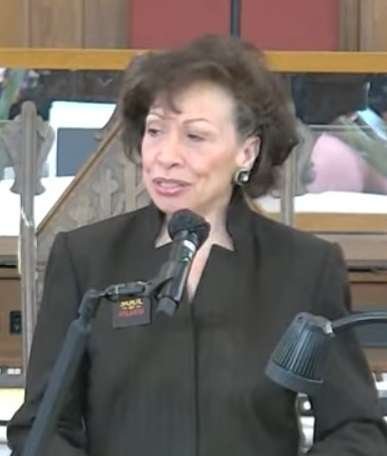
Mayor Andre Dickens stood with nearly every living Black mayor in city history — Andrew Young, Shirley Franklin, Bill Campbell, Kasim Reed — and Valerie Jackson, wife of the late Mayor Maynard Jackson. Together they filled the sanctuary with memory, defiance, and faith.
A City That Won’t Bow
They came to answer a challenge from Washington — a Trump administration order threatening to choke off federal dollars from cities that keep diversity, equity, and inclusion (DEI) programs alive.
Billions for housing, airport work, and BeltLine projects hang in the balance. But the crowd at Big Bethel didn’t come to talk fear. They came to talk faith.
“We are gathered here to rekindle the spirit of our city — to remind one another that courage, unity, and truth still live within us,” said former councilman Jabari Simama, now helping to lead the new Soul of Atlanta Coalition. “Our mission today is clear: to bring people together, share knowledge, and demonstrate that when we act with purpose and faith, we can change the course of our community. We can push back against forces that seek to divide, distract, and destroy us.”
“Atlanta was built by people who refused to dream small. We will never deny the values that have not only made this city great, but made it just.”
A Legacy Worth More Than Money
Atlanta has already paid a price for its convictions — forfeiting $37.5 million in airport funds this summer rather than gut its minority-contracting program.
“Our soul is not for sale,” declared Elder Toni Belin Ingram of the AME Church, her voice rising over the applause.
Big Bethel AME Church
Mayor Dickens called the fight what it is: another Goliath moment. “Goliath doesn’t stand a chance in Atlanta,” he said. “We’ve slayed bears. We’ve slayed lions. Been there. Done that. Got the notes. Got the t-shirt and some of the scars.”
His office later said the city is still reviewing the legal path forward, but his tone in the church left little doubt: the mayor intends to stand firm.
Where the Story Began
Valerie Jackson
It was Maynard Jackson — Atlanta’s first Black mayor — who planted the seed of economic fairness back in the 1970s. His Equal Business Opportunity program forced open the door for Black-owned firms to compete for city contracts. Washington noticed — and copied it.
“This is where it all began,” said Ambassador Andrew Young, looking over the packed pews. “These ideas didn’t come from Washington to us. They came from us to Washington.”
Valerie Jackson smiled softly at the mention of her husband’s name.
“Maynard’s policies of inclusion became a model for the nation,” she said. “We will not allow the principles of fairness and justice to be rolled back.”
A Coalition of Courage
From Shirley Franklin to Kasim Reed, the lineup at Big Bethel looked like a living timeline of Atlanta’s Black leadership. Pastor Jonathan C. Augustine — or “Pastor Jay” — reminded everyone why they were there.
“Your presence here says we know what’s happening,” he said. “An autocratic leader is targeting blue cities led by Black mayors. And yet here we stand.”
The new Soul of Atlanta Coalition plans to spend the next year gathering stories, uplifting minority-owned businesses, and organizing pushback against attacks on DEI and affirmative-action programs.
Standing in the Gap
Even as City Hall weighs its legal moves, Dickens said the work of serving people continues — especially with the federal shutdown straining families.
“We’re spending time feeding the least, the last, the lost,” he said.
The Atlanta Community Food Bank has launched a $5 million emergency plan to replace lost SNAP benefits, aiming to distribute six million pounds of food in four weeks through 700 local partners.
“In tough times,” Dickens said, “we see the true spirit of Atlanta — compassion, connection, and courage.”
By Stacy M. Brown | Black Press USA Senior National Correspondent
There are moments in history when a single act of generosity reveals the moral decay of an entire nation. MacKenzie Scott’s $38 million gift to Alabama State University, the largest in its 158-year history, is such a moment. It is not merely a financial transaction, nor the casual benevolence of the wealthy. It is a moral indictment against a society that has grown indifferent to the suffering of its Black citizens, against a government that starves their schools, and against a class of newly rich who have forgotten the communal obligations of success.
Dr. Quinton T. Ross Jr., the university’s president, called it a defining moment for Alabama State, and indeed it is. His words ring with the gratitude of those who have built excellence in the face of deprivation. “Ms. Scott’s generosity affirms Alabama State University’s reputation as a catalyst for excellence and innovation in higher education,” he said. But her act is more than affirmation. It is a resurrection, and a call to remember that Black institutions remain the crucibles of America’s moral and intellectual power. In recent weeks, Scott has dispersed her fortune with quiet conviction. Seventy million to the United Negro College Fund to strengthen endowments across thirty-seven member schools; sixty-three million to Morgan State University, her second gift to that campus in less than five years; and one hundred and one million combined to Morgan State and the University of Maryland Eastern Shore in a span of days.
Her giving, unshackled by stipulations or vanity, stands in luminous contrast to an era defined by greed and indifference. The plutocracy that dominates modern life often extracts from the many to enrich the few. Scott reverses that equation. She does not donate to dominate. She gives to repair. Her wealth, born of corporate conquest, has become the instrument of restoration. It stands as a redemption, perhaps, of what that very system has broken. One cannot ignore the symbolism of her actions. At a time when the federal government withholds support from historically Black institutions, when affirmative action has been dismantled, and when diversity programs are vilified, a white woman from the highest ranks of privilege has become the single most consistent benefactor of Black education in the nation. It is as though she has seen, from her rarefied vantage point, what America refuses to see: that the progress of its Black citizens is not a charity, but the measure of its own civilization.
Scott’s philanthropy, then, is not simply about money. It is about memory. The moral memory of a nation that has forgotten the debt it owes to those it once enslaved and now ignores. In her giving, she restores something elemental, the belief that one’s prosperity is meaningless if it does not lift others. W.E.B. Du Bois wrote of the “double consciousness” that afflicts the Negro in America, the struggle to see oneself through the eyes of a world that despises you. Today, the irony is reversed. America must learn to see itself through the eyes of those it has wronged. MacKenzie Scott, for all her privilege, seems to have glimpsed that truth. She gives the impression that she has looked into the soul of the republic and found it wanting.
Her actions do not absolve the sins of this nation. They reveal them. And in revealing them, they offer a path, not of atonement, but of accountability. For every dollar she gives to rebuild a school, there are a thousand more that others with power might give but will not. One woman has chosen conscience over complacency. The question that remains is whether the rest of America—Black and white alike—will choose to follow her example or remain comfortable in the quiet decay of its own moral poverty.
MARTA completes Garnett Station’s $5 million platform renovation, restoring full Red and Gold Line service and advancing its billion-dollar station modernization program across Atlanta.
By Milton Kirby | Atlanta, GA | October 29, 2025
After six weeks of construction, MARTA has officially reopened Garnett Station to full Red and Gold Line service, marking the completion of a major platform renovation that blends safety, efficiency, and forward-looking design.
The temporary “skip stop,” a strategic decision during which trains bypassed the downtown station, proved to be a well-thought-out move—saving an estimated four months of construction time and $5 million in project costs.
“By limiting service during construction, we were able to accelerate the timeline and ensure safety for both riders and workers,” MARTA officials said.
Restoring and Reinventing a 44-Year-Old Station
Built in 1981, Garnett Station has long served as a southern gateway to downtown Atlanta. The renovation replaced the station’s original 44-year-old pavers—a vital structural refresh handled by a team of experienced contractors, including Carroll Daniel Construction, C.D. Moody Construction Company, H&M Restoration Service, Level Construction Services, Schindler Elevator Corporation, SRC Ventures, and Williams Tile & Marble Company.
Work on the lower concourse was also completed ahead of schedule, setting the stage for continued improvements on the upper concourse, where crews are applying graffiti-resistant coatings, replacing windscreens, and performing deep cleaning and pressure washing.
Importantly, train service is no longer impacted, allowing riders to once again board and exit at Garnett while remaining improvements continue behind the scenes.
A New Vision for the Plaza
MARTA, in partnership with the Atlanta Downtown Improvement District and the Project for Public Spaces, is not just transforming the station’s large concrete plaza, but also inviting the community to be part of this change. The goal is to create a vibrant public space that promotes connection, accessibility, and civic pride—especially as Atlanta prepares for the 2026 FIFA World Cup.
The redesign aims to reimagine Garnett’s urban footprint, turning a utilitarian space into a place where art, culture, and transportation meet.
Part of a Billion-Dollar Revitalization Effort
The Garnett Station work is one piece of MARTA’s broader $1 billion Station Rehabilitation Program, which spans all 38 rail stations across the system. The initiative focuses on modernizing infrastructure, improving safety and accessibility, and enhancing the aesthetic experience for the hundreds of thousands of daily MARTA riders.
With Garnett Station’s platform now complete, MARTA’s leadership says it’s another step toward delivering on the agency’s promise of a safer, cleaner, and more connected transit experience for Atlanta residents and visitors alike. This project is not just about infrastructure but about enhancing the daily lives of our community.
The Metropolitan Atlanta Rapid Transit Authority (MARTA) is opening its doors to job seekers this fall, with a large-scale hiring event scheduled for Thursday, Nov. 6, 2025, from 1 p.m. to 4 p.m. at MARTA Headquarters, 2424 Piedmont Road NE, across from Lindbergh Center Station.
The agency is recruiting for a range of critical positions that keep Atlanta moving — including rail and bus operators, journeyman bus technicians, railcar mechanics, track mechanics, track maintainers, and hostler junior apprentices.
Qualified applicants can earn sign-on bonuses for select roles, including CDL Bus Operators (with passenger endorsement), Journeyman Bus Technicians, and Track Maintainers.
Requirements and Opportunities
MARTA is seeking both full-time and part-time operators who are 21 years or older, hold a high school diploma or equivalent, and have a current Class C license. All operator candidates must pass a physical exam, ability test, and drug and alcohol screening.
For Journeyman Bus Technicians, applicants must be 18 years or older, possess a Class C license, and have completed training in automotive, transit bus, diesel, or maintenance programs—or have at least three years of comparable experience.
Getting There
MARTA encourages candidates to ride transit to the event, which will be held directly across from Lindbergh Center Station for easy access.
Those who drive can park in the Sydney Marcus parking deck but must park only in MARTA-designated areas. Parking in the wrong section could result in additional fees.
Dress to Impress
Business casual or professional dress is required, and candidates should bring updated resumes and proof of required credentials.
Interested applicants can explore upcoming career fairs and other job opportunities by visiting itsmarta.com.
MARTA launches the “Better Breeze” upgrade, a modern contactless fare collection system arriving by spring 2026, bringing faster gates, tap-to-pay options, and enhanced rider security.
By Milton Kirby | Atlanta, GA | October 28, 2025
The next time you step onto MARTA, you may notice something new — and brighter. The Metropolitan Atlanta Rapid Transit Authority has begun replacing its entire fare collection system, marking one of the agency’s biggest technology upgrades in nearly two decades.
MARTA began installing new fare equipment at Lindbergh Center Station Sept. 22 and at Doraville Oct. 8. The installation of new contactless payment terminals on buses began in mid-September. The installation of new equipment will continue systemwide in phases until the customer transition period next April.
The project will continue in phases through spring 2026, when riders will officially transition to the Better Breeze system.
A System Built for the Future “It’s great to keep fares unchanged for years, but not an entire fare collection system,” said MARTA Interim General Manager and CEO Jonathan Hunt. Hunt called the upgrade essential to preparing for a “once-in-a-generation” year ahead, with new trains, a redesigned bus network, on-demand zones, and a refreshed mobile app launching before Atlanta hosts the 2026 World Cup.
Leadership from MARTA and INIT, the Better Breeze system developer and installer (L to R: Rhonda Allen, MARTA Deputy General Manager; Jonathan Hunt, MARTA Interim General Manager & CEO; Jennifer Ide, Chair, MARTA Board of Directors; Carl Commons, INIT CEO; Steven Parker, MARTA Chief of Staff).
MARTA’s Breeze system first launched in 2006, replacing tokens and paper transfers. While the Breeze name will remain, everything else — from faregates to the mobile app — will be rebuilt.
Tap, Go, and Keep Moving The Better Breeze system introduces open payment technology. Riders can simply tap their credit or debit card, smartphone, or digital wallet to pay the same $2.50 fare. The upgrade also includes new orange Breeze cards, improved vending machines, and a redesigned mobile app where users will create new accounts to purchase fares.
For MARTA Mobility and reduced-fare customers, the agency will offer both physical and digital options. Transition details will be announced early next year.
High-Tech Security, Lower Downtime MARTA’s installation partner, INIT, says each faregate unit can run 10,000 hours without service failure. The new gates are more tamper-resistant, remotely monitored, and designed to reduce fare evasion. “This is about transforming the rider experience and making transit more connected,” said Carl Commons, INIT’s CEO.
The technology is already used in cities including Houston, Seattle, Nashville, Grand Rapids, Honolulu, Los Angeles, and San Diego.
No Fare Increase — Just Faster Rides MARTA confirmed there will be no fare increase with the Better Breeze rollout. The systemwide modernization will take place in stages, ensuring riders can still access all rail stations during construction. Riders are advised to follow posted signs at stations to avoid closed faregates while new units are installed.
Better Breeze Card – Courtesy MARTA
From Tokens to Tap-to-Pay When MARTA began in 1971, bus rides cost just 15 cents. In 2006, the original Breeze card introduced Atlanta riders to smart-card technology. Nearly 20 years later, MARTA is once again reinventing how Atlanta moves — one tap at a time.
By the Numbers – MARTA Fare Facts
15 cents: Original MARTA fare in 1971
$2.50: Current one-way fare (unchanged for 14 years)
10,000 hours: Estimated operating time per faregate without service failure
2026: Target year for Better Breeze systemwide launch
20 years: Time since the original Breeze system debuted
Millions of low-income Americans could lose food assistance as SNAP benefits halt November 1 amid a prolonged government shutdown, leaving families and food banks bracing for crisis.
By Milton Kirby | Atlanta, GA | October 27, 2025
As the federal shutdown stretches into its fourth week, the U.S. Department of Agriculture has confirmed that no Supplemental Nutrition Assistance Program (SNAP) benefits will be issued on November 1 — potentially cutting off aid to more than 42 million Americans who rely on the program to feed their families.
On Monday, the USDA posted a stark message on its website: “Bottom line, the well has run dry.” According to the agency, Senate gridlock over federal spending has left SNAP — once known as food stamps — without the funds to continue into the new month.
Photo by Milton Kirby
The USDA’s statement comes amid partisan tension in Congress. The agency said that Senate Democrats have now voted 12 times against proposed measures to fund SNAP, citing disagreements over other spending priorities. Without a resolution, the department warned, “there will be no benefits issued November 1.”
Millions at Risk
The impact of this funding lapse is enormous. SNAP currently provides monthly food assistance to roughly one in eight Americans — including working parents, seniors, and people with disabilities. The separate Women, Infants, and Children (WIC) program, serving more than 7 million low-income mothers and babies, is also poised to run out of money.
While EBT cards will still function for now, only unused balances from prior months will remain available after November 1. USDA has clarified that these balances will roll over, but no new November benefits will be issued.
Adding to the strain, the USDA has said it will not reimburse states that use their own funds to keep SNAP benefits flowing during the shutdown. That decision leaves governors and local agencies scrambling to fill the gap.
Food Banks Brace for Surge
Across the nation, food banks are preparing for a potential surge in demand. “Food banks are already squeezed by federal funding cuts,” said George Matysik, executive director of the Share Food Program in Philadelphia. “If SNAP goes dark, we’ll see lines wrap around the block.”
Photo by Milton Kirby
The New Disabled South, a Georgia-based advocacy group, has begun offering small emergency grants — $100 for individuals and $250 for families — to help SNAP recipients cover basic needs. But even that organization is warning participants that accepting cash could affect other benefits such as Medicaid or Social Security.
A Divided Washington
The USDA said in an internal memo earlier this month that it would not tap its $5 billion contingency fund, explaining that the reserve is reserved for natural disasters, not shutdowns. That decision — combined with congressional inaction — has deepened frustration across party lines.
“It’s abysmal that we live in such a moment,” said Dom Kelly, founder of New Disabled South. “A government shutdown should not mean that people have to choose between paying rent and feeding their families.”
The shutdown, which began October 1 after lawmakers failed to agree on a 2026 federal budget, is now among the longest in U.S. history, trailing only the 35-day standoff of 2018–2019.
What SNAP Recipients Can Do
SNAP and WIC recipients are urged to contact their state agencies immediately for local assistance and to verify whether their states are releasing temporary emergency benefits. In some states, officials are exploring emergency appropriations or public-private partnerships with community food banks. Others are directing residents to faith-based and nonprofit food programs.
The USDA emphasized that while its mission is to “increase food security and reduce hunger in partnership with cooperating organizations,” it cannot operate without congressional funding.
For now, the agency’s message is clear: without a deal, millions of American households could see their food budgets vanish overnight.
Please consider supporting open, independent journalism – no contribution is too small!