Moratorium, Monitoring, and Modernization: DeKalb’s Careful Approach to Data Centers

DeKalb residents packed the Porter Sanford Center to learn how data centers impact energy, water, and community life—and what new policies could mean for local neighborhoods.

By Milton Kirby | Decatur, GA | October 17, 2025 (Updated October 21, 2025)

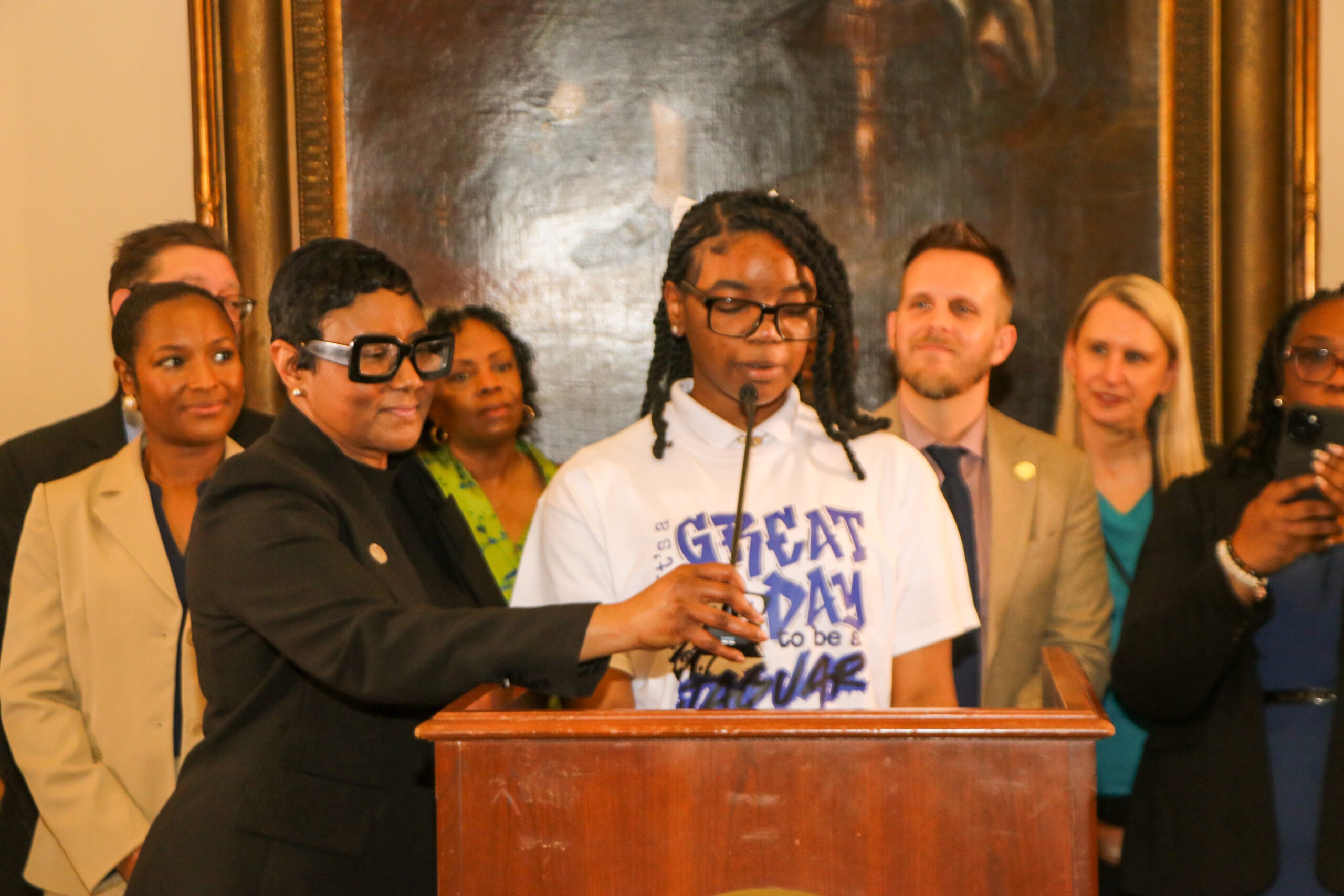
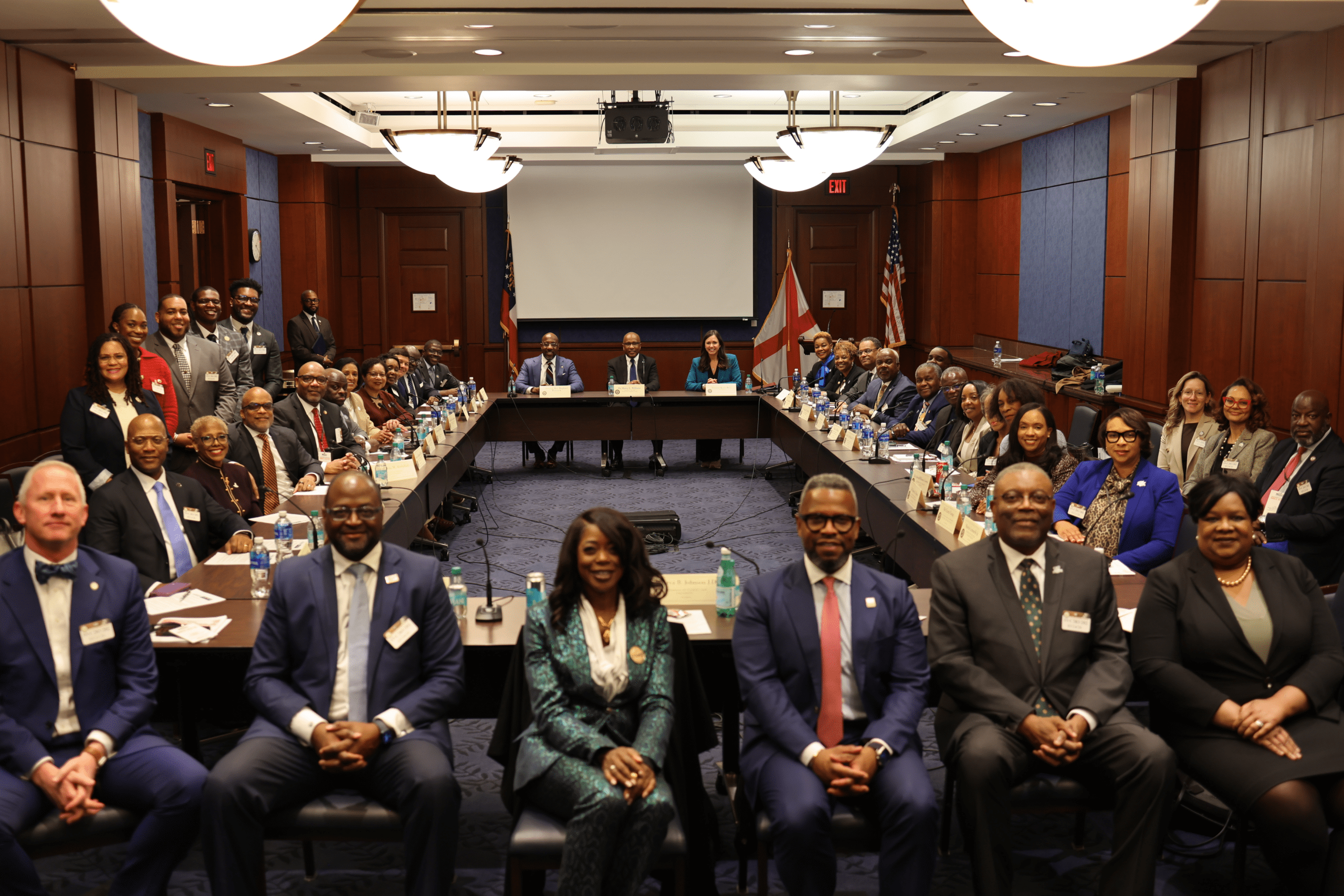
On Wednesday evening, a packed house at the Porter Sanford III Performing Arts & Community Center bore witness to an important community discussion: the town hall event titled “Helping Residents Understand Data Centers”, hosted by DeKalb County Government in collaboration with County CEO Lorraine Cochran Johnson, Commissioner Mereda Davis Johnson and Commissioner Dr. LaDena Bolton. The goal — to shed light on data-center development across metro Atlanta and engage residents directly in shaping policy and zoning.

In her opening remarks, CEO Cochran Johnson emphasized the event’s purpose: “Our goal is to ensure residents have access to accurate information and can engage in meaningful discussion before decisions are made,” she said, stressing that the conversation was “about education, transparency, and community understanding.” With the meeting also live-streamed on DCTV to reach broader audiences, it underscored the County’s intention to leave no stone unturned.

The timing is telling. In July the DeKalb County Board of Commissioners approved a temporary moratorium on new data-center approvals, citing the need for deeper research, policy development and public engagement — extended recently through December 2025. The town hall forms part of that process: a chance for residents to hear from experts directly, ask questions, weigh the potential benefits and pitfalls of data-center development in their communities, and help shape the regulatory framework that will guide what comes next.

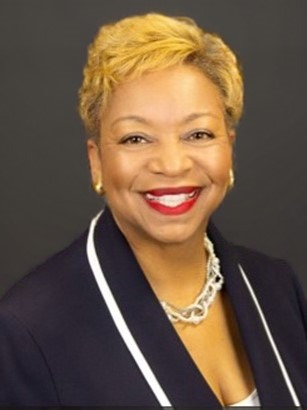
Photo by Milton Kirby – DeKalb CEO Lorraine Cochran-Johnson

What is a data center—and why does it matter?

It may sound technical, but the concept is clearer when you break it down. A data center is fundamentally a physical facility where computing equipment, storage systems, networking gear and infrastructure are housed to store, process and manage data and applications. According to Cisco Systems, “at its simplest, a data center is a physical facility that organizations use to house their critical applications and data.”
This includes the servers, storage drives, routers and switches, firewalls, as well as the power, cooling and backup infrastructure that keeps everything running — often 24/7.

In practice, the modern facility is an industrial-scale enterprise. It might host cloud-computing platforms, serve as the backbone for AI and machine-learning workloads, support massive “hyperscale” operations (for companies like Google, Amazon, Microsoft) or even serve as regional hubs, connecting telecommunications infrastructure.

Because nearly every service you use—online banking, streaming video, storing and sharing images, remote work, emergency services—runs through some portion of this infrastructure, data centers are essential to our digital lives. They are the silent—but massive—buildings behind the scenes.

As the panel at the Porter Sanford meeting made clear, the reason data centers are increasingly under scrutiny is that, while they provide digital backbone benefits, they also raise real questions about land use, infrastructure stress, environmental impact, community equity and local benefits.


The Town Hall Discussion: Experts, Residents & Real Questions

To assist residents and officials in considering these questions, the County brought together an array of specialists:

  • Demond Mason of Newton County
  • Shane Short of the Walton County Development Authority
  • Ahmed Saeed of Georgia Tech
  • Céline Benoît of the Metropolitan North Georgia Water Planning District
  • Danny Johnson of the Atlanta Regional Commission
  • Juliana Njoku of DeKalb’s Department of Planning and Sustainability

Under the guidance of CEO Cochran Johnson, the panel addressed core topics such as: energy and water use; required infrastructure (power grid, water, cooling, fiber and roads); economic impact and job creation; community benefit and quality-of-life concerns; and the evolving role of data centers in a world of AI, cloud computing and remote everything.

Residents asked pointed questions: how many jobs will actually be created? Will their electricity bills go up? What about the noise, the land-use conversion, the water demand? Many admitted they came to the event unsure of how a data center operates yet left with a clearer understanding of the mechanics and implications.


The Upsides: Why Data Centers Can Be Good for Local Communities

During the discussions, several clear benefits emerged.

Economic development and tax revenue
Data-center construction can bring substantial investment into a region. Some counties have seen increased property values, boosted infrastructure spending, and attraction of technology-sector ecosystem growth. The panel cited examples such as Loudoun County in Virginia, where data-centers supported these spill-over benefits.

Infrastructure-upgrade spillover
Because data centers require robust utilities—electricity grids, fiber-optic networks, road access—they can serve as catalysts for broader infrastructure improvements that benefit whole communities: better broadband, improved roads, enhanced power reliability.

Foundational digital backbone
As noted above, data centers are critical for cloud computing, artificial intelligence, digital entertainment, remote work, telehealth and emergency services. Local proximity to such infrastructure can help position a region for the future economy.

Community partnership opportunities
Some operators are increasingly conscious of their role as community partners: training programs, community benefit agreements, technological access, local hiring efforts. When these partnerships are handled proactively, the hosting community sees more than just a facility in its backyard.

In short: with the right planning, regulation and transparency, a data-center project can be more than an industrial site—it can become an asset for a community.


The Concerns: Real Risks that Need Guarding Against

However, the discussion also surfaced multiple legitimate concerns—several of which resonated with many residents.

Massive energy consumption
Data centers are extremely energy intensive. Analysts project that U.S. data-center power demand could triple by 2030 if current trends continue, driven in large part by AI workloads. That means pressure on local grids, higher utility infrastructure costs, potential for increased electricity costs for residents, and stronger reliance on fossil-fuel generation in some cases.

High water usage and cooling demands
In many facilities, water is used for cooling (evaporative systems, cooling towers). One study found that a single 100-megawatt data center could use up to two million liters (more than half a million gallons) per day in water-stressed regions. In drought-prone areas this becomes a key local water-resource risk.

At the town hall, panelists explained that not all data centers cool the same way. Some rely on open, or free-flowing, water systems—in which water continuously cycles through equipment and then exits the facility, often as warm discharge into municipal systems. While cheaper to build, these systems consume far more water and can increase strain on local supplies.

By contrast, closed-loop cooling systems recirculate water within sealed pipes or tanks, losing only small amounts through evaporation. Though more expensive upfront, they dramatically reduce total water consumption and are now considered a best practice in water-sensitive areas.
Experts noted that some advanced centers are moving toward hybrid or air-cooled designs that reduce or eliminate water use entirely.

Understanding which system is being proposed for any new facility, several panelists said, should be one of the first questions local residents and zoning boards ask. “The type of cooling system tells you a lot about the facility’s environmental footprint,” one expert explained. “A closed-loop system signals a commitment to sustainability.” These distinctions matter deeply for regions like metro Atlanta, where droughts and high summer demand already put pressure on shared water resources.

Pollution, noise and land-use impacts

  • Backup diesel generators, used for power outages and often regularly tested, release pollutants (particulate matter, nitrogen oxides) that affect air quality and health, particularly in nearby communities. (businessinsider.com)
  • Noise from cooling fans, servers, power infrastructure and HVAC systems can disturb neighborhoods. One source put it this way: “It’s like being on a tarmac with an airplane engine running constantly … Except that the airplane keeps idling and never leaves.” (en.wikipedia.org)
  • Large data-center campuses require significant land—sometimes in competition with housing, agriculture or conservation. Zoning change and land-use conversion may alter neighborhood character and environmental justice concerns.

Job and benefit-share questions
While data-center construction may bring many temporary jobs, once operational the facility often requires relatively few permanent employees (security, maintenance, facility management). Critics argue that the number of long-term, well-paid jobs may be low compared with the scale of incentives offered and the local infrastructure costs borne.

Infrastructure and regulatory burdens
Upgrading the local power grid, improving transmission lines, reinforcing water systems, may require large investments—sometimes partially funded by local utility customers. Without strong policy frameworks, the host community may bear disproportionate share of cost or risk. There is also concern that data centers are sometimes located in communities that already face higher pollution burdens—raising environmental-justice flags.

Unequal distribution of benefits and burdens
Some research suggests that while benefits concentrate (large corporations, landowners, utility companies), many of the burdens (environmental impact, utility cost increases, land conversion) fall on less-advantaged communities. (businessinsider.com)


What the Experts Emphasised: Keys for DeKalb County to Watch

From the town-hall panel, several watch-points and recommendations stood out.

  • Promised local benefits must be specific and enforceable. What are the actual jobs, training programs, property-tax contributions, community-benefit agreements?
  • Who bears the costs? Not just jobs and tax revenue, but what about added strain on the grid, water usage, infrastructure upgrades, noise mitigation, environmental monitoring?
  • Transparency, community engagement and ongoing monitoring. Projects must not just be approved and forgotten; ongoing oversight, community liaison and impact measurement matter.
  • Strong regulatory framework. Zoning, environmental review, utility oversight, noise/air-quality mitigation—all must be in place before large-scale approval.
  • Local context matters. The impact varies depending on water-stress region, grid capacity, land-use pressures, community vulnerability, equity considerations. A data center in one region can be far more challenging than in another.

  • Balance of economic opportunity and sustainability. It’s not simply “data centers good = jobs”; the full spectrum of benefits, burdens and trade-offs must be weighed.

Back to DeKalb: What Happens Next

For DeKalb County, the town hall was a milestone in a broader process. With the moratorium in place through December 2025, county staff, planners and officials will be synthesizing resident input, expert findings, fiscal and infrastructure impact studies, and crafting zoning and operational standards tailored for data-centers. Residents were encouraged to stay engaged: future meetings, updates and resources will be posted through official County channels.

Many attendees left the event expressing appreciation. One resident noted that she had arrived “not sure how a data center worked or why we should care” but departed with “a much clearer understanding of the issues, the trade-offs, and what questions I now want to ask.” Another stressed the importance of “making sure our neighborhood doesn’t get the downsides while someone else reaps the benefits.”

In the coming months the County will need to reconcile competing priorities: attracting investment and economic opportunity, preserving infrastructure capacity, protecting environmental and community health, ensuring fairness and equity, and shaping land use in a way that serves residents’ interests.


Final Thoughts: A Balanced Outlook

Data centers are undeniably a critical part of the 21st-century digital economy. They support cloud services, remote work, streaming, AI, healthcare, financial systems — indeed, much of modern life. If well-located, well-regulated and community-integrated, they can bring growth, infrastructure upgrades and strategic advantage to a region.

But the side-effects are non-trivial. Massive power draw, high water usage, potential air-quality and noise impacts, infrastructure cost burdens, limited long-term job gains, and land-use conversion all demand thoughtful planning and hard questions. The research is clear: impacts vary greatly depending on region, regulatory strength, benefit-sharing and community engagement. For example, while global studies show data centers may account for over 1 % of global electricity use currently and could double in the next few years, localized effects on utility grids, water systems and neighborhoods can be acute.

For DeKalb County, the next phase is crucial. The conversation has begun; now comes the work of translating dialogue into policy. The County will need to ensure that the benefits of any data-center project genuinely accrue to residents, that the costs are clearly allocated, and that long-term quality of life—environmental, infrastructural, social—is protected.

As CEO Cochran Johnson said in her opening remarks: this is about education, transparency, and community understanding. The residents of DeKalb have signalled they intend to be part of the process — and the success of future data-center development will depend on that engagement being genuine, sustained and meaningful.

In the end, the question isn’t simply whether to approve data centers—it’s how, under what terms and with what safeguards such a facility sits in a community. If DeKalb County can insist on rigorous criteria, clear community benefits, and strong oversight, it may capture the promise of 21st-century digital infrastructure while avoiding its pitfalls. The town hall was a strong first step in that direction.

Related video              Data Center Town Hall

Related articles

DeKalb CEO Lorraine Cochran Johnson’s Infrastructure and Growth Initiatives

Council for Quality Growth: Development Moratorium Extended Through 2025

Atlanta Beltline Nears 2030: Infrastructure and Innovation

Atlanta Regional Commission Sets Future Growth Priorities

Water Infrastructure Upgrades Coming to DeKalb County

Council for Quality Growth Honors Industry Leaders at Four Pillar Tribute

Residents Push for Smart Growth in DeKalb

Please consider supporting open, independent journalism – no contribution is too small!

Chief Justice Roberts warns of “potential disaster” in Supreme Court case

By Jenna Sundel | October 14, 2025

Supreme Court Chief Justice John Roberts warned of “potential disaster” in determining that the number of votes received should impact a candidate’s ability to pursue legal action related to mail-in ballots. 

The High Court heard arguments on Wednesday in a challenge to an Illinois law that allows the counting of late-arriving mail-in ballots. The lawsuit was filed by U.S. Representative Michael Bost, a Republican from Illinois. 

Lower courts threw out the case, ruling that the late votes likely had little effect on the results in his district. 

“What you’re sketching out for us is a potential disaster,” Roberts told an attorney representing the Illinois State Board of Elections, CNN reported. “You’re saying if the candidate is going to win by 64 percent, no standing. But if the candidate hopes to win by a dozen votes … then he has standing.” 

llinois was among 18 states that accepted mail-in ballots received after Election Day 2024, as long as they were postmarked on or before that date, according to the National Conference of State Legislatures. 

President Donald Trump signed an executive order in March that aims to require votes to be “cast and received” by Election Day, but the action has been challenged in court. 

What To Know 

Bost filed the lawsuit in 2022, arguing that state law violates a federal statute setting a uniform day for federal elections. The Republican also says that all candidates should have default standing to challenge election rules, without having to prove that they could shift the result of their own race. Illinois officials counter that a candidate must show that the law would cause them to lose their race. The state’s solicitor general said that reviving the case could lead to more lawsuits and “cause chaos” for election officials. 

Multiple justices expressed concerns that basing a candidate’s right to sue on electoral prospects could force judges to assume a political role. Roberts said it would push courts to make political decisions during “the most fraught time for the court to get involved in electoral politics.” 

Justice Brett Kavanaugh raised concerns that requiring candidates to wait until after an election to have standing could mean that judges are asked to invalidate votes that have already been cast. “If we’re not thinking ahead to that, we’re going to walk into something,” he said. 

Justice Elena Kagan characterized the legal claim as a “suit in search of a problem,” arguing that a large number of lawsuits are filed by voters, political parties and others around every election cycle. 

What People Are Saying 

Kagan, during arguments in Bost v. Illinois State Board of Elections“You’re asking to create a whole new set of rules when everything has been proceeding just fine.” 

Paul Clement, attorney for Bost, during arguments: “A longer campaign is a more expensive campaign, and that classic pocketbook injury is sufficient to give Congressman Bost standing. There is no need to make the standing inquiry here any more complicated than that.” 

What Happens Next 

The High Court is expected to issue its ruling by June. 

This article includes reporting by the Associated Press.

Georgia Voters Head to the Polls as Early Voting Begins Statewide

Early voting in Georgia runs through November 1, with local and statewide races on the ballot, including mayoral and Public Service Commission elections.

By Milton Kirby | Decatur, GA | October 14, 2025

Early voting began today in Georgia and in several states across the country, marking the start of a critical three-week stretch before the November 4th General Election.

In DeKalb County, residents can now cast ballots for a range of key races — from statewide offices to local leadership posts that will shape the future of communities across metro Atlanta.

On the ballot this year is the Statewide Special Election for the Public Service Commission, along with municipal general elections in numerous cities, including Atlanta, Avondale Estates, Brookhaven, Chamblee, Clarkston, Decatur, and Doraville.

Atlanta voters will select a Mayor, City Council President, City Council members, Board of Education representatives, and Municipal Court Judges. These races are expected to draw strong turnout as city leaders continue to navigate housing affordability, infrastructure expansion, and public safety reform.

Election officials across Georgia are encouraging voters to take advantage of early voting to avoid long lines on Election Day. Polling places and sample ballots are available through the state’s My Voter Page.

Georgia’s 17-day early voting period will run through Friday, November 1, with mandatory Saturday voting in every county.

This year’s election season arrives as lawmakers and advocacy groups continue to debate possible adjustments to Georgia’s early voting laws — a discussion that could shape voter access and participation for years to come.

Please consider supporting open, independent journalism – no contribution is too small!

Trump’s trend of targeting prominent Black women, like Letitia James, explained

By Gerren Keith Gaynor| October 10, 2025

“It’s just the continuation of his hatred toward Black women and Black people,” former Obama White House aide Michael Blake tells theGrio.

President Donald Trump‘s vow to go after his political enemies came to a head on Thursday when his Justice Department announced the indictment of New York Attorney General Letitia James.

James, who was charged with mortgage fraud, maintains that she did not commit any crime and slammed the president for his “desperate weaponization of our justice system” and “grave violation of our constitutional order.”

While the targeting of James is being condemned as part of a growing trend of political retribution in which Trump is using his second term presidency to go after Democrats he deems his political enemies, others see another trend: the targeting of prominent Black women in politics.

“It’s just the continuation of his hatred toward Black women and Black people. From Tish James, to Lisa Cook, to Fani Willis, over and over again, this is Donald Trump,” said Michael Blake, a former Obama White House aide who serves as CEO of KAIROS Democracy Project. He told theGrio, “You can’t be surprised when a man calls for political revenge that he takes these kinds of actions.”

Blake slammed the “cowardice” of Republicans in not speaking out against Trump’s use of the Department of Justice to try to or threaten to jail his political enemies.

“You have a Republican Party that refuses to fund the government because they want to take your health care away. You have a president who cares not about helping you with groceries but cares about grudges,” he said.

“It is quite appropriate and fitting that in his latest act of cowardice, of going after Tish James, where he fired someone because they wouldn’t go after her, but the very next day, he lost on the Peace Prize he thought he was going to get. Justice was actually served.” Here is a list of the Black women that President Trump and his administration have gone after since taking office this year.

NEW YORK, NEW YORK – FEBRUARY 14: NY Attorney General Letitia James speaks during a press conference on the Department of Government Efficiency (DOGE) at Manhattan Federal Courthouse on February 14, 2025 in New York City. (Photo by Michael M. Santiago/Getty Images)

Letitia James

On Oct. 9, the Trump Justice Department announced that it had indicted Letitia James, New York’s first female and African American attorney general.

James is accused of committing mortgage fraud over a Virginia property she owns. According to the New York Times, the Eastern District of Virginia alleges that James falsely claimed in loan documents that she would use a home she purchased in Norfolk as a secondary residence. Instead, the indictment alleges, she used it as a rental investment property and received loans with “favorable terms that would save her close to $19,000.”

James called the indictment “baseless” and has maintained she did nothing wrong.

Citing the president’s own statements, New York’s top prosecutor said the charges brought by the Trump administration are nothing more than “political retribution” for her successful prosecution of Trump for business fraud.

“He is forcing federal law enforcement agencies to do his bidding, all because I did my job as a New York State Attorney General,” said James, who noted that Trump fired a U.S. attorney who refused to bring charges against her, only to replace the prosecutor with someone who is “blindly loyal not to the law but to the president.”

James said she stands “strongly” behind her office’s litigation against the Trump Organization.

“We conducted a two-year investigation based on the facts and evidence, not politics. Judges have upheld the trial court’s finding that Donald Trump, his company and his two sons were liable for fraud,” she asserted.

On Oct. 9, the Trump Justice Department announced that it had indicted Letitia James, New York’s first female and African American attorney general.

James is accused of committing mortgage fraud over a Virginia property she owns. According to the New York Times, the Eastern District of Virginia alleges that James falsely claimed in loan documents that she would use a home she purchased in Norfolk as a secondary residence. Instead, the indictment alleges, she used it as a rental investment property and received loans with “favorable terms that would save her close to $19,000.”

James called the indictment “baseless” and has maintained she did nothing wrong.

Citing the president’s own statements, New York’s top prosecutor said the charges brought by the Trump administration are nothing more than “political retribution” for her successful prosecution of Trump for business fraud.

“He is forcing federal law enforcement agencies to do his bidding, all because I did my job as a New York State Attorney General,” said James, who noted that Trump fired a U.S. attorney who refused to bring charges against her, only to replace the prosecutor with someone who is “blindly loyal not to the law but to the president.”

James said she stands “strongly” behind her office’s litigation against the Trump Organization.

“We conducted a two-year investigation based on the facts and evidence, not politics. Judges have upheld the trial court’s finding that Donald Trump, his company and his two sons were liable for fraud,” she asserted.

While a grand jury indicted James, it is no indication that the U.S. government will come out victorious in the case against James. Prosecutors have incredible sway in grand juries, which are conducted in secrecy, and defense lawyers are not permitted to present their evidence.

James said, as a woman of faith, she knows that “faith and fear cannot share the same space,” adding, “I’m not fearful; I’m fearless.”

“As my faith teaches me, no weapon formed against me shall prosper. We will fight these baseless charges aggressively,” she said.

FILE – Fulton County District Attorney Fani Willis speaks during a news conference, Aug. 14, 2023, in Atlanta. (AP Photo/John Bazemore, File)

Fani Willis

In late September, the Trump Justice Department subpoenaed records related to the travel history of Fulton County District Attorney Fani Willis, who, in 2023, indicted Trump and 18 others for engaging in a “criminal enterprise” to illegally return Trump to office after his 2020 defeat.

Willis accused Trump, who peddled false claims that the 2020 presidential election was “stolen” from him due to voter fraud, of “attempts to interfere in the administration of Georgia’s 2020 presidential election.”

The Georgia prosecutor accused Trump and his co-defendants of taking “various actions in Georgia and elsewhere to block the counting of the votes of the presidential electors who were certified as the winners of Georgia’s 2020 general election.”

Trump infamously called Georgia Secretary of State Raffensberger after the 2020 election to demand that he “find 11,780 votes,” which would have reversed his loss in the state.

Willis’s case against Trump hit a snag after defense attorneys asked a judge to remove Willis from the case because of a romantic relationship with the case’s special prosecutor, Nathan Wade. After much scrutiny into their personal lives, Wade resigned, and Willis was allowed to continue leading the case.

In December 2023, an appeals court disqualified Willis, citing that the trial court “erred by failing to disqualify DA Willis and her office.” Willis appealed the decision and asked to be reinstated; however, Georgia’s Supreme Court denied her appeal.

Willis’s criminal prosecution of Trump was one of four criminal cases against him, two of which were led by special prosecutors appointed by the DOJ. The two federal cases related to Trump’s attempt to overturn the 2020 election and the withholding of classified documents were dropped upon his re-election.

Though the case in Georgia was stalled due to Willis’s disqualification, Trump was found guilty in another criminal case brought by New York Manhattan District Attorney Alvin Bragg.

WASHINGTON, DC – JUNE 21: Lisa DeNell Cook, nominee to be a member of the Board of Governors of the Federal Reserve System, testifies during a Senate Banking nominations hearing on June 21, 2023 in Washington, DC. If confirmed, Cook would be the first Black woman to sit on the Board of Governors in its 108-year history. (Photo by Drew Angerer/Getty Images)

Lisa Cook

On Aug. 25, President Trump attempted to fire Federal Reserve Bank Board of Governor Lisa Cook, accusing her of mortgage fraud, similar to the accusations against Letitia James.

The accusations against Cook, the first Black woman to serve on the Fed board–first lodged by Bill Pulte, Trump’s director of the Federal Housing Finance Agency–launched a criminal investigation by the Justice Department.

Cook, who has not been charged with a crime, has maintained she did no wrong and successfully challenged Trump’s attempted termination in federal court.

The effort to unseat Cook gave Trump an opportunity to reshape the Federal Reserve’s seven-member board, which was designed to be an independent economic policy body that is free from politics. No president has fired a sitting Fed governor in the agency’s 112-year history.

A federal judge ruled that the removal of Cook was illegal and reinstated her to the position. An appeals court upheld that decision. The Trump administration appealed to the U.S. Supreme Court in a last-ditch effort to remove Cook. The nation’s highest court allowed Cook to remain as board governor as it prepares to hear oral aguments in the case in January 2026.

An investigative report from ProPublica found that at least three members of Trump’s Cabinet have similarly listed multiple homes as their primary residences based on mortgage records. Primary residences typically see lower interest rates than those that are not.

WASHINGTON, DC – FEBRUARY 06: U.S. Rep. LaMonica McIver (D-NJ) speaks on Elon Musk’s government interference at a press conference at the U.S. Capitol on February 06, 2025 in Washington, DC. (Photo by Kayla Bartkowski/Getty Images)

LaMonica McIver

U.S. Rep. LaMonica McIver, D-N.J., was indicted by the Trump administration on June 10 for an encounter she had with federal agents outside an ICE facility in Newark, where she was conducting a congressional oversight visit.

McIver, a 39-year-old freshman congresswoman, faces up to 17 years in prison for a May altercation outside of a Newark ICE detention facility, where she and two other members of Congress were joined by Mayor Ras Baraka.

The encounter with federal agents was chaotic, as McIver attempted to shield Baraka from being arrested for trespassing. Baraka’s charges were ultimately dropped, and the judge overseeing the case scolded the U.S. Attorney of New Jersey, Alina Habba, for bringing the “hasty” and “embarrassing” prosecution.

McIver was ultimately still charged in a historically rare criminal case for a sitting member of Congress.

“The facts are on my side…I have no doubt that I will be victorious,” McIver previously told theGrio shortly after leaving a New Jersey courthouse where she was arraigned in June for her three-count indictment, for which she is accused of “forcibly impeding and interfering with federal officers.”

“Me being the one person picked out to be charged, definitely speaks to me being a young Black woman, and basically speaking up and speaking out about what they were doing and how they treated us,” McIver told theGrio. The congresswoman dismissed her prosecution as an “intimidation tactic” to “humiliate” her. 

In August, McIver’s defense attorneys moved to dismiss the case against her, accusing the Trump Justice Department of selective and vindictive prosecution. She also argued that she cannot be charged for official acts.

What’s more, McIver said that the DOJ is demonstrating “unconstitutional differential treatment” by pursuing charges against her after dropping cases against over 160 other Jan. 6 defendants who were accused of the same crime. Trump pardoned more than 1,500 accused Jan. 6 rioters on the first day in office during his second term.

“There is a simple difference between this prosecution of Congresswoman McIver and the 160 cases involving assault against federal officers on January 6 that the Justice Department has dismissed: it is all about politics and partisanship,” a dismissal motion reads.

Related:

Trump’s indictment of New York attorney general Letitia James stirs concerns for Black women leaders

Pam Bondi, DOJ officials caught off guard by Tish James indictment: Sources

Here’s How Trump’s Attacks On His Political Opponents Could Backfire On Him

Opinion: Lindsey Halligan Should Have Read the Constitution

Please consider supporting open, independent journalism – no contribution is too small!

Mayor Dickens Names New Housing Leadership Team to Drive Atlanta’s Affordable Housing Vision

Mayor Andre Dickens appoints Amanda Rhein as Chief Housing Officer and Chatiqua Ellison as Deputy, strengthening Atlanta’s affordable housing and homelessness response.

By Milton Kirby | Atlanta, GA | October 9, 2025

Mayor Andre Dickens has announced a new housing leadership team that is committed to shaping the City’s next chapter in affordable housing, homelessness response, and community development, instilling hope for a better future.

At the top of that team is Amanda Rhein, appointed Chief Housing Officer, effective January 2026. Rhein currently serves as Executive Director of the Atlanta Land Trust, where she has built one of the nation’s most successful community land trust models. Under her leadership, the organization has placed more than 100 homes into trust and has 100 more under development.

Amanda Rhein – Courtesy City of Atlanta

Rhein brings over two decades of experience in equitable development, affordable housing, and community revitalization. She previously led transit-oriented development (TOD) at MARTA, where she redeveloped more than 35 acres of underused surface parking at eight rail stations. Before that, she spent nearly a decade at Invest Atlanta, managing more than 30 projects that generated $3.5 billion in investment for underserved neighborhoods.

A native of Cincinnati, Ohio, Rhein earned a Bachelor’s degree in Sociology from Boston College and a Master of City and Regional Planning from the Georgia Institute of Technology.

“Amanda is a nationally respected leader whose experience, innovation, and track record of execution will serve the city well,” said Mayor Dickens. “With her leadership, we will continue to set national standards for how cities can tackle housing affordability with innovation and compassion.”

Strengthening the City’s Homelessness Response

Joining Rhein is Chatiqua Ellison, appointed Deputy Chief Housing Officer and Senior Advisor to the Mayor on Homelessness. An Atlanta native, Ellison has led several of the City’s most transformative housing efforts — including the Forest Cove Relocation, which successfully moved 193 families into safe, stable homes.

Chatiqua Ellison – Courtesy City of Atlanta

She also oversees the Rapid Housing Initiative, which has already created more than 300 of a targeted 500 quick-delivery homes for unhoused residents, including The Melody, Atlanta’s first container home community.

Ellison earned a Bachelor’s degree in Political Science from Spelman College and a Master of Public Policy in Urban Planning and Policy from Georgia State University’s Andrew Young School of Policy Studies.

Her leadership extends to chairing the City’s Homelessness Taskforce, where she helped establish coordinated encampment closure policies, and to partnering with Invest Atlanta to launch the Grocery Initiative, which expands access to fresh food in underserved neighborhoods and supports projects like The Azalea Market.

A Comprehensive Housing Leadership Team

The new housing leadership team will report directly to Chief of Staff Courtney English, aligning the City’s affordable housing, homelessness, and revitalization goals.

Other key appointments include:

  • William Tucker, Director of the Housing Innovation Lab, leading creative housing affordability strategies.
  • Katie Molla, Director of Special Projects, overseeing food access programs and Tax Allocation District implementation.
  • Colin Delargy, Assistant Director, focusing on housing finance, planning, and policy.
  • Carolyn Kovar, Assistant Director of Housing Delivery, coordinating affordable housing projects on public land.
  • Matt Delicata, Senior Real Estate Advisor, specializing in large-scale real estate development.
  • Chanel Ziesel, continuing as Director of Housing Policy, leading anti-blight and downtown revitalization initiatives.

“This team represents the best housing leadership in the country,” said Dickens. “Together, we’re not just building housing — we’re building pathways to stability, dignity, and opportunity for all.”

Related articles

From OutKast to Urban Renewal: The Civic Center and Atlanta’s Complicated Progress

Dickens, Invest Atlanta Board Advance Affordable Housing Push Amid National Crisis

Mayor Dickes Strengthes Leadership Team with Key Appointments

Bridge to the Future: Ted Turner Bridge Reopens After 7-Year Closure, Reconnecting Downtown Atlanta

Walmart Returns to Vine City Location

Related video

The Live Stream | Swearing-in ceremony for Atlanta Mayor Andre Dickens

Please consider supporting open, independent journalism – no contribution is too small!

Mayor Dickens Strengthens Leadership Team with Key Appointments

Mayor Andre Dickens appoints Courtney English as permanent Chief of Staff, names Greg Clay and Gabrielle Slade deputies, and launches a national search for Chief Policy Officer.

By Milton Kirby | Atlanta, GA | October 9, 2025

Mayor Andre Dickens has appointed Courtney English as the permanent Chief of Staff for the City of Atlanta, solidifying leadership within his administration as it advances major housing, infrastructure, and equity priorities. English, who had served in the role on an interim basis, will now officially oversee operations of the Mayor’s Executive Office, intergovernmental coordination, and the strategic rollout of citywide initiatives.

English has been a key architect of several high-impact programs under Mayor Dickens. He led the $5 billion Neighborhood Reinvestment Initiative, a sweeping plan to strengthen housing, infrastructure, and community development across Atlanta. He also helped secure the $60 million Homeless Opportunity Bond—Atlanta’s largest-ever investment in homelessness solutions—and spearheaded the Affordable Housing Strike Force, credited with delivering nearly 12,000 affordable units in less than four years.

Under his direction, the city launched Azalea Market, Atlanta’s first municipal grocery store, expanding access to healthy food and stimulating neighborhood revitalization. English also helped shape rapid housing projects such as The Melody and Ralph David’s House, providing critical shelter and stability for unhoused residents. His leadership on the Year of the Youth initiative expanded programs that have already reached more than 30,000 young Atlantans.

“Courtney English has consistently demonstrated exceptional leadership and a steadfast commitment to the residents of Atlanta,” said Mayor Dickens. “His strategic vision and dedication to public service will continue to guide this administration as we advance our mission of building a City of Opportunity for All.”

Alongside English’s appointment, Dickens named Greg Clay and Gabrielle Slade as Deputy Chiefs of Staff.

Clay, an Atlanta native and former Executive Director of Constituent Services, brings decades of experience as a nonprofit executive, community advocate, and public administrator. His past leadership includes service in five Georgia municipalities, including East Point and College Park. A graduate of Florida A&M University and the University of Kansas, Clay has earned recognition including the Atlanta Business Chronicle’s 40 Under Forty Award and President Obama’s Drum Major for Service Award.

Slade, a 19-year veteran of Atlanta city government and Spelman College graduate, most recently served as Deputy Chief Equity Officer in the Mayor’s Office of Equity, Diversity, and Inclusion. Her tenure includes five years in legislative affairs, 20 successful city annexations, and leadership in the Department of Parks and Recreation, which achieved national accreditation under her guidance.

“With the addition of Greg and Gabrielle to our leadership team, Atlanta is well-positioned to advance our mission of building a city that works for everyone,” said English. “Their expertise and commitment will ensure residents and neighborhoods remain at the heart of everything we do.”

A national search is now underway to fill the Chief Policy Officer position previously held by English. The new role will report directly to the Chief of Staff and help coordinate the administration’s policy and strategic initiatives across departments.

Please consider supporting open, independent journalism – no contribution is too small!

Trump no longer distancing himself from Project 2025 as he uses shutdown to further pursue its goals

By Jill Colvin | New York, NY | October 3, 2025

NEW YORK — President Donald Trump is openly embracing the conservative blueprint he desperately tried to distance himself from during the 2024 campaign, as one of its architects works to use the government shutdown to accelerate his goals of slashing the size of the federal workforce and punishing Democratic states.

In a post on his Truth Social site Thursday morning, Trump announced he would be meeting with his budget chief, “Russ Vought, he of PROJECT 2025 Fame, to determine which of the many Democrat Agencies, most of which are a political SCAM, he recommends to be cut, and whether or not those cuts will be temporary or permanent.”

The comments represented a dramatic about-face for Trump, who spent much of last year denouncing Project 2025, The Heritage Foundation’s massive proposed overhaul of the federal government, which was drafted by many of his longtime allies and current and former administration officials.

Both of Trump’s Democratic rivals, Joe Biden and Kamala Harris, made the far-right wish list a centerpiece of their campaigns, and a giant replica of the book featured prominently onstage at the Democratic National Convention.

“Donald Trump and his stooges lied through their teeth about Project 2025, and now he’s running the country straight into it,” said Ammar Moussa, a former spokesperson for both campaigns. “There’s no comfort in being right — just anger that we’re stuck with the consequences of his lies.”

Shalanda Young, director of the Office of Management and Budget under Biden, said the administration had clearly been following the project’s blueprint all along.

“I guess Democrats were right, but that doesn’t make me feel better,” she said. “I’m angry that this is happening after being told that this document was not going to be the centerpiece of this administration.”

Asked about Trump’s reversal, White House spokesperson Abigail Jackson said, “Democrats are desperate to talk about anything aside from their decision to hurt the American people by shutting down the government.”

Project what?

Top Trump campaign leaders spent much of 2024 livid at The Heritage Foundation for publishing a book full of unpopular proposals that Democrats tried to pin on the campaign to warn a second Trump term would be too extreme.

While many of the policies outlined in its 900-plus pages aligned closely with the agenda that Trump was proposing — particularly on curbing immigration and dismantling certain federal agencies — others called for action Trump had never discussed, like banning pornography, or Trump’s team was actively trying to avoid, like withdrawing approval for abortion medication.

Trump repeatedly insisted he knew nothing about the group or who was behind it, despite his close ties with many of its authors. They included John McEntee, his former director of the White House Presidential Personnel Office, and Paul Dans, former chief of staff at the U.S. Office of Personnel Management.

“I know nothing about Project 2025,” Trump insisted in July 2024. “I have no idea who is behind it. I disagree with some of the things they’re saying and some of the things they’re saying are absolutely ridiculous and abysmal. Anything they do, I wish them luck, but I have nothing to do with them.”

Trump’s campaign chiefs were equally critical.

“President Trump’s campaign has been very clear for over a year that Project 2025 had nothing to do with the campaign, did not speak for the campaign, and should not be associated with the campaign or the President in any way,” wrote Susie Wiles and Chris LaCivita in a campaign memo. They added, “Reports of Project 2025’s demise would be greatly welcomed and should serve as notice to anyone or any group trying to misrepresent their influence with President Trump and his campaign — it will not end well for you.”

Trump has since gone on to stock his second administration with its authors, including Vought, “border czar” Tom Homan, CIA Director John Ratcliffe, immigration hard-liner Stephen Miller and Brendan Carr, who wrote Project 2025’s chapter on the Federal Communications Commission and now chairs the panel.

Heritage did not respond to a request for comment Thursday. But Dans, the project’s former director, said it’s been “exciting” to see so much of what was laid out in the book put into action.

“It’s gratifying. We’re very proud of the work that was done for this express purpose: to have a doer like President Trump ready to roll on Day One,” said Dans, who is currently running for Senate against Lindsey Graham in South Carolina.

Trump administration uses the shutdown to further its goals

Since his swearing in, Trump has been pursuing plans laid out in Project 2025 to dramatically expand presidential power and reduce the size of the federal workforce. They include efforts like the Department of Government Efficiency and budget rescission packages, which have led to billions of dollars being stalled, scrapped or withheld by the administration so far this year.

They are now using the shutdown to accelerate their progress.

Ahead of the funding deadline, OMB directed agencies to prepare for additional mass firings of federal workers, rather than simply furloughing those who are not deemed essential, as has been the usual practice during past shutdowns. Vought told House GOP lawmakers in a private conference call Wednesday that layoffs would begin in the next day or two.

They have also used the shutdown to target projects championed by Democrats, including canceling $8 billion in green energy projects in states with Democratic senators and withholding $18 billion for transportation projects in New York City that have been championed by Senate Democratic Leader Chuck Schumer and House Democratic leader Hakeem Jeffries in their home state.

Dreaming of this moment

The moves are part of a broader effort to concentrate federal authority in the presidency, which permeated Project 2025.

In his chapter in the blueprint, Vought made clear he wanted the president and OMB to wield more direct power.

“The Director must view his job as the best, most comprehensive approximation of the President’s mind,” he wrote. Vought described OMB as “a President’s air-traffic control system,” which should be “involved in all aspects of the White House policy process,” becoming “powerful enough to override implementing agencies’ bureaucracies.”

Sen. Mike Lee, R-Utah, said on Fox News Channel that Vought “has a plan, and that plan is going to succeed in further empowering Trump. This is going to be the Democrats’ worst nightmare.”

House Speaker Mike Johnson echoed that message, insisting the government shutdown gives Trump and his budget director vast power over the federal government and the unilateral power to determine which personnel and policies are essential and which are not.

Schumer has handed “the keys of the kingdom to the president,” Johnson said Thursday. “Because they have decided to vote to shut the government down, they have now effectively turned off the legislative branch … and they’ve turned it over to the executive.”

Young said the Constitution gives the White House no such power and chastised Republicans in Congress for abandoning their duty to serve as a check on the president.

“I don’t want to hear a lecture about handing the keys over,” she said. “The keys are gone. They’re lost. They’re down a drain. This shutdown is not what lost the keys.”

Please consider supporting open, independent journalism – no contribution is too small!

Dickens, Invest Atlanta Board Advance Affordable Housing Push Amid National Crisis

Atlanta Mayor Andre Dickens and Invest Atlanta approved housing projects to add 2,500 affordable units, part of a broader response to America’s worsening housing crisis.

Milton Kirby | Atlanta, GA | September 29, 2025

Atlanta’s affordable housing efforts took a major step forward on September 18, 2025 when Mayor Andre Dickens and the Invest Atlanta Board of Directors approved a slate of projects that could yield more than 2,500 affordable housing units across the city.

The board’s actions span 10 of the city’s 12 council districts, reflecting both the broad demand for affordable housing and Atlanta’s growing population pressures.

“Now more than ever, we must continue to be resourceful and innovative in our approach to meeting the needs of the community,” said Mayor Dickens, who also serves as chair of the Invest Atlanta Board. “The number of actions taken today sends a strong message about the need to continue expanding housing options across our city.”

Major Approvals and Investments

The board authorized two bond resolutions that will support 351 affordable housing units expected to close by the end of the year. Those approvals unlock bond financing through Invest Atlanta.

In addition, 14 inducement resolutions were passed for projects that—if approved by the Georgia Department of Community Affairs—could finance another 2,201 affordable units. Because inducement resolutions must pass through a statewide competitive process, Invest Atlanta officials stressed that these approvals are an important but early step in securing funding.

Collectively, the projects could inject more than $891 million in capital investment into Atlanta’s economy, funding both new construction and rehabilitation of existing communities.

Dr. Eloisa Klementich, president and CEO of Invest Atlanta, emphasized the economic link. “Atlanta’s continued economic growth depends on our ability to ensure that the people who power our city—our teachers, healthcare workers, small business owners, and service professionals—can afford to live here,” she said. “When families can live near jobs, transit, and schools, we strengthen our workforce, reduce barriers to opportunity, and build a more resilient economy.”

Photo by Milton Kirby City Lights South

Project Highlights

Among the key developments approved:

  • City Lights South (404 Boulevard NE, Old Fourth Ward): $30.9 million in tax-exempt bonds for 159 new affordable units.
  • Ashley Cascade (1371 Kimberly Way SW, Ashley Courts): $25.6 million for rehabilitation of 384 units as part of a HOPE VI revitalization.
  • Columbia Senior at Mechanicsville (555 McDaniel St SW): $8.5 million to rehabilitate 150 affordable senior units near downtown.
  • Folio House Phase II (143 Alabama St SW, Downtown): $22 million to build 149 new affordable units alongside commercial space.

Since 2022, Invest Atlanta has financed 7,141 housing units, including 6,302 affordable units, contributing to Dickens’ goal of creating or preserving 20,000 affordable homes by 2030.

Photo by Milton Kirby City Lights South

Part of a National Crisis

Atlanta’s actions come as experts warn of a deepening national affordable housing crisis. The National Low Income Housing Coalition’s 2025 The Gap report found that extremely low-income renters face a shortage of 7.1 million affordable homes nationwide. Only 35 affordable and available homes exist for every 100 extremely low-income renter households.

The Joint Center for Housing Studies reports that22.6 million renter households are cost-burdened, spending more than 30% of their income on housing. Among extremely low-income renters, many spend more than half their income on rent, a situation HUD labels “worst case housing needs.”

Polling shows that 77% of Americans believe the nation faces a housing shortage and needs more homes and rentals, according to the Center for American Progress.

Experts point to multiple causes: underproduction of new housing, restrictive zoning and land-use rules, rising construction costs, stagnant wages, and the loss of older affordable units to gentrification or deterioration.

Local Action, National Relevance

While the national crisis cuts across regions, Atlanta’s approvals highlight how local governments can leverage bond financing, inducements, and partnerships to tackle affordability challenges. Yet the scope of the crisis means such efforts, while significant, remain one part of a much larger puzzle. As Dickens noted, ensuring every Atlanta resident has access to safe, affordable housing is both a moral and economic imperative. With billions in investment on the table and projects spread across the city, Atlanta is positioning itself as a case study in how local leadership can respond to a national challenge.

Related articles

From OutKast to Urban Renewal: The Civic Center and Atlanta’s Complicated Progress

Mayor Dickens Names New Housing Leadership Team to Drive Atlanta’s Affordable Housing Vision

Mayor Dickes Strengthens Leadership Team with Key Appointments

Dickens, Invest Atlanta Board Advance Affordable Housing Push Amid National Crisis

Bridge to the Future: Ted Turner Bridge Reopens After 7-Year Closure, Reconnecting Downtown Atlanta

Walmart Returns to Vine City Location

Please consider supporting open, independent journalism – no contribution is too small!

Presidency Boosts Trump’s Net Worth By $3 Billion In A Year

Donald Trump lost money during his first term. Out of office, he found a formula for profiting off politics—now he’s piling up billions.

By Dan Alexander | Forbes | September 15, 2025

Donald Trump just had the most lucrative year of his life. The president is now worth a record $7.3 billion, up from $4.3 billion in 2024, when he was still running for office. The $3 billion gain vaulted him 118 spots on The Forbes 400, where he lands at No. 201 this year.

No president in U.S. history has used his position of power to profit as immensely as Trump. His primary vehicle for enrichment: cryptocurrency, an asset class full of hype and vulnerable to regulators. Teaming up with his three sons, Trump announced a crypto venture in September 2024 named World Liberty Financial, which initially struggled to gain traction. Then he won the White House.

Crypto entrepreneur Justin Sun, whom the Securities and Exchange Commission had accused of fraud, invested $75 million, routing an estimated $40 million to the president-elect and millions more to his family members, kickstarting a bonanza that has since snowballed. In January, days before reentering the White House, Trump launched a memecoin, adding hundreds of millions to his pile of cash.

In office, Trump rolled back regulatory enforcement of crypto and signed legislation favorable to the industry, ensuring he would personally benefit from conflicts of interest. His memecoins, initially tied up for three months, now unlock daily, freeing tens of millions per week. World Liberty Financial, meanwhile, has continued selling tokens, including to opaque buyers, generating an estimated $1.4 billion so far. A Trump family entity receives a roughly 75% cut of those sales, amounting to more than $1 billion.

The president apparently made plans to sell part of that entity, according to a letter that a court-appointed monitor overseeing the Trump Organization wrote to a New York judge in May. It remains unclear what percentage the president sold or whether the transaction even happened. The identity of the supposed buyer also remains unknown. The Trump Organization did not respond to questions about the deal. (Shortly after a Forbes reporter first exposed it, the president ranted about the journalist on Truth Social.)

With supporters piling into risky assets, Trump deployed his cash conservatively. He paid off $114 million of debt against 40 Wall Street, a troubled New York skyscraper, at the start of the summer. In July, he knocked out a couple of smaller loans, totaling an estimated $15 million, against mansions in New York and Florida. He also loaded up on municipal and corporate bonds. Trump’s balance sheet is now stronger than it has ever been, with an estimated $1.1 billion of liabilities and $8.4 billion of assets, $1.1 billion of which are in liquid holdings.

Cashing in on Crypto

Most of Trump’s jump in net worth comes from his move into cryptocurrency, which provided him with a pile of cash. He still has plenty of coins leftover, set to jump in value as they unlock over the course of his presidency. Below, Forbes highlights which parts of the Trump fortune improved the most over the last year.

Memecoin: +$710 million

Liquid assets: +$660 million

Licensing and management business: +$410 million

Legal victory: +$470 million

World Liberty Financial tokens: +$340 million

Stablecoin business: +$240 million

Almost everything in his portfolio is doing well. Appellate judges in New York threw out a roughly $500 million fraud penalty in August. Trump’s real-estate licensing business, stalled out for years, has come roaring back to life, with new deals in Saudi Arabia, Vietnam, Romania, India, Qatar and the United Arab Emirates. Revenues jumped an estimated 580% in 2024 to $45 million, boosting the value of the business by $400 million. In the United States, the president’s golf-and-club portfolio continues to thrive, as profits jumped an estimated 30% in 2024, adding roughly $325 million to Trump’s net worth.

With so much money coming in, the president may soon get back to his first love, building. He and his family have been making noise for years about constructing small villages at golf resorts in Scotland and Florida. Projects like that require a lot of liquidity, something that has not always been available to Trump. But now, after reclaiming the White House—and cashing in on the power that comes with it—he can pretty much do anything he wants.

—With additional reporting by Kyle-Khan Mullins, Zach Everson and Thomas Gallagher.

Please consider supporting open, independent journalism – no contribution is too small!

From Pecans to Hospitals: Warnock Highlights Tariff and Health Care Struggles in Georgia

Senator Raphael Warnock visited Georgia farms, hospitals, and small businesses, warning Trump tariffs and GOP tax cuts threaten farmers, rural hospitals, and small business survival statewide.


By Milton Kirby | Atlanta, GA | August 20, 2025

U.S. Senator Reverend Raphael Warnock spent the past week crisscrossing Georgia, meeting with farmers, health care providers, and small business owners to highlight the economic risks he says stem from former President Donald Trump’s tariff policies and the recently passed GOP tax bill.

Tariffs Burden Georgia Farmers

On Saturday, Warnock toured Three Bees Pecan Farm in Wrens with owner Jeb Barrow Jr., meeting local producers to discuss the financial uncertainty surrounding U.S. tariff policy. Georgia farmers, already operating on thin margins, said shifting trade rules make it difficult to plan investments and sustain jobs.

“I just know how hard farmers work in this state, and if you talk to them, they’re not interested in aid, they’re interested in trade,” Warnock said. “They want to see their products make it to India. But right now, this whole thing is being operated willy-nilly, from Donald Trump’s back pocket. One announcement, then a reversal. How do you plan a farm around that?”

Barrow praised Warnock’s approach: “He takes a genuine interest in our problems, and when we sit down at the table, he listens.”

Georgia is the nation’s top pecan producer, and nearly 28% of U.S. pecans are exported, making access to foreign markets critical. In 2022, Warnock helped lower India’s trade barriers on pecans by 70%, opening a major market for Georgia growers.

Senator Raphael Warnock visited Georgia pecan farm

As Ranking Member of the Senate Finance Subcommittee on Trade, Warnock has pressed administration officials for relief, voting to roll back tariffs on Canada, urging expedited USDA action on pecan exports, and demanding answers on how tariffs impact small producers.

Rural Hospitals Under Pressure

In Claxton, Warnock visited Evans Memorial Hospital, which faces an annual shortfall of $3.3 million due to cuts embedded in the GOP tax bill. The hospital, already forced to close its labor and delivery unit, now risks cutting intensive care or cardio-pulmonary rehab services.

“This is a matter of life and death,” Warnock said. “We’re cutting services and endangering rural health care, all to give billionaires a tax cut. That’s bad public policy.”

According to the Georgia Hospital Association, more than 16,000 rural health care jobs could be at risk statewide. Medicaid cuts would remove up to 93,000 Georgians from coverage, while raising premiums for 1.2 million.

Warnock previously secured $1 million for Evans Memorial to replace its leaking roof, protecting equipment and patient safety. He continues to push the Health Care Affordability Act to prevent premium hikes for Georgians on the state’s insurance marketplace.

Tariffs Strain Small Businesses

On Tuesday, Warnock traveled to Atlanta’s XocolATLChocolate Factory, where owners Matt Weyandt and Elaine Read described the challenges of importing cacao beans from Central America and Africa, as well as sugar from Brazil. Tariffs on those products have spiked between 10% and 50%, forcing the business to raise prices and stockpile raw materials.

Warnock Visits Candy Factory

“We don’t even know what our cost of goods will be in six months,” Weyandt said. “Setting a price for customers is almost impossible.”

Warnock called the tariff policy “a job killer,” emphasizing that small businesses are the backbone of Georgia’s economy. “Congress could put forward a coherent tariff policy, but so far, my Republican colleagues have ceded all their power to the executive branch,” he said.

During his visit, the Senator joined employees in grinding cocoa beans and mixing sugar, joking, “I can’t even wrap my Christmas gifts. This is a tough job, but somebody’s got to do it.”

Broader Message

The Senator tied the week’s visits together with a broader critique: tariffs, tax cuts for the wealthy, and health care reductions are connected by what he sees as misplaced priorities. “When you center politics rather than people, you hurt farmers, you hurt families, and you hurt the very businesses that fuel Georgia’s economy,” Warnock said.

For Georgia’s farmers, small business owners, and rural health workers, the message was clear: the fight over tariffs and tax policy is not just about Washington politics — it’s about survival at home.

Please consider supporting open, independent journalism – no contribution is too small!

Exit mobile version