Trump Orders Purge of Black History from Smithsonian, Targets African American Museum

The executive order is chillingly titled “Restoring Truth and Sanity to American History.” It declares that the Smithsonian, once a symbol of “American excellence,” has become tainted by narratives that portray “American and Western values as inherently harmful and oppressive.”

BLACKPRESSUSA NEWSWIRE — The executive order is chillingly titled “Restoring Truth and Sanity to American History.” It declares that the Smithsonian, once a symbol of “American excellence,” has become tainted by narratives that portray “American and Western values as inherently harmful and oppressive.”

By Stacy M. Brown | Chicago, IL | March 29, 2025

Even the most cynical observers knew this day would come.

Since Donald Trump returned to the White House in January, the dog whistle has become a bullhorn. The whitewashing of American history is no longer implied—it’s spelled out in ink, signed into law, and backed by a government that is now openly in the grip of white supremacist power. In his latest executive order, President Trump has targeted the Smithsonian Institution and the National Museum of African American History and Culture, calling for the erasure of what he deems “divisive race-centered ideology.” He has directed Vice President JD Vance to eliminate these so-called “divisive” elements from the Smithsonian’s 21 museums, educational and research centers, and even the National Zoo. The executive order is chillingly titled “Restoring Truth and Sanity to American History.” It declares that the Smithsonian, once a symbol of “American excellence,” has become tainted by narratives that portray “American and Western values as inherently harmful and oppressive.” “Museums in our Nation’s capital should be places where individuals go to learn—not to be subjected to ideological indoctrination or divisive narratives that distort our shared history,” the order states.

Photo by Alan Karchmer

The directive goes further, instructing Vance, along with Vince Haley, Assistant to the President for Domestic Policy, and Lindsey Halligan, Special Assistant to the President, to work with Congress to block all federal appropriations for Smithsonian exhibitions or programs that “degrade shared American values, divide Americans based on race, or promote programs or ideologies inconsistent with Federal law and policy.” The order also aims at the American Women’s History Museum, demanding that no future appropriations “recognize men as women in any respect,” and calls for new citizen members to be appointed to the Smithsonian Board of Regents—individuals committed to enforcing the president’s vision. This is not an isolated move. Since returning to office, Trump has issued a barrage of executive orders aimed at dismantling every vestige of diversity, equity, and inclusion across the federal government. He terminated all DEI programs, calling them “illegal and immoral discrimination.” The National Endowment for the Arts Challenge America initiative—long dedicated to uplifting historically underserved communities—has been gutted. The Pentagon’s website erased the stories of Navajo Code Talkers. A “Black Lives Matter” mural in the heart of Washington, D.C., was demolished. Perhaps most brazenly, the Department of Defense Education Activity banned Black History Month observances at military base schools and ordered the removal of any book or material that mentions slavery, the civil rights movement, or the treatment of Native Americans.

Now, the National Museum of African American History and Culture—which opened to national fanfare in 2016—is in the crosshairs. “In an almost surprising fashion, the Smithsonian has been outside of the bounds of political wrangling,” said Samuel Redman, a history professor and director of the public history program at the University of Massachusetts at Amherst. “It’s not as though there hasn’t been political influence … but just in terms of overall funding and support for the Smithsonian, it’s been remarkably consistent.” That consistency has now been shattered. Trump’s executive order doesn’t just attack the museum—it hints at restoring what many hoped America had buried: Confederate monuments, white supremacist names on federal buildings, and the reinstallation of statues that were taken down during the country’s reckoning after the murder of George Floyd.

What the president calls “shared American values” is beginning to resemble a national doctrine rooted in erasure and oppression. The Smithsonian Institution, the world’s largest museum, education, and research complex—was founded on increasing and diffusing knowledge. Established by Congress with funds left by James Smithson, a British scientist, the institution spans 21 museums and the National Zoo, with 11 of the museums located along the National Mall in Washington, D.C. Now, it faces its greatest threat yet—not from budget cuts or neglect, but from a government determined to rewrite history at the expense of truth. The stakes have never been clearer as the country watches these moves unfold. The battle over American history isn’t theoretical. It’s happening now, in plain sight, with executive orders, political enforcers, and the full weight of the federal government behind it. “This is about power,” said a Smithsonian staffer who asked not to be named out of fear of retribution. “They’re not hiding it anymore.”

What Lies Beneath: The Drowned History of Lake Lanier

Revealing the hidden history of Lake Lanier, Georgia’s playground, where a thriving Black community named Oscarville was erased by racial terror and forced displacement, leaving a legacy of injustice and resilience.

By Milton Kirby | Atlanta, GA | March 24, 2025

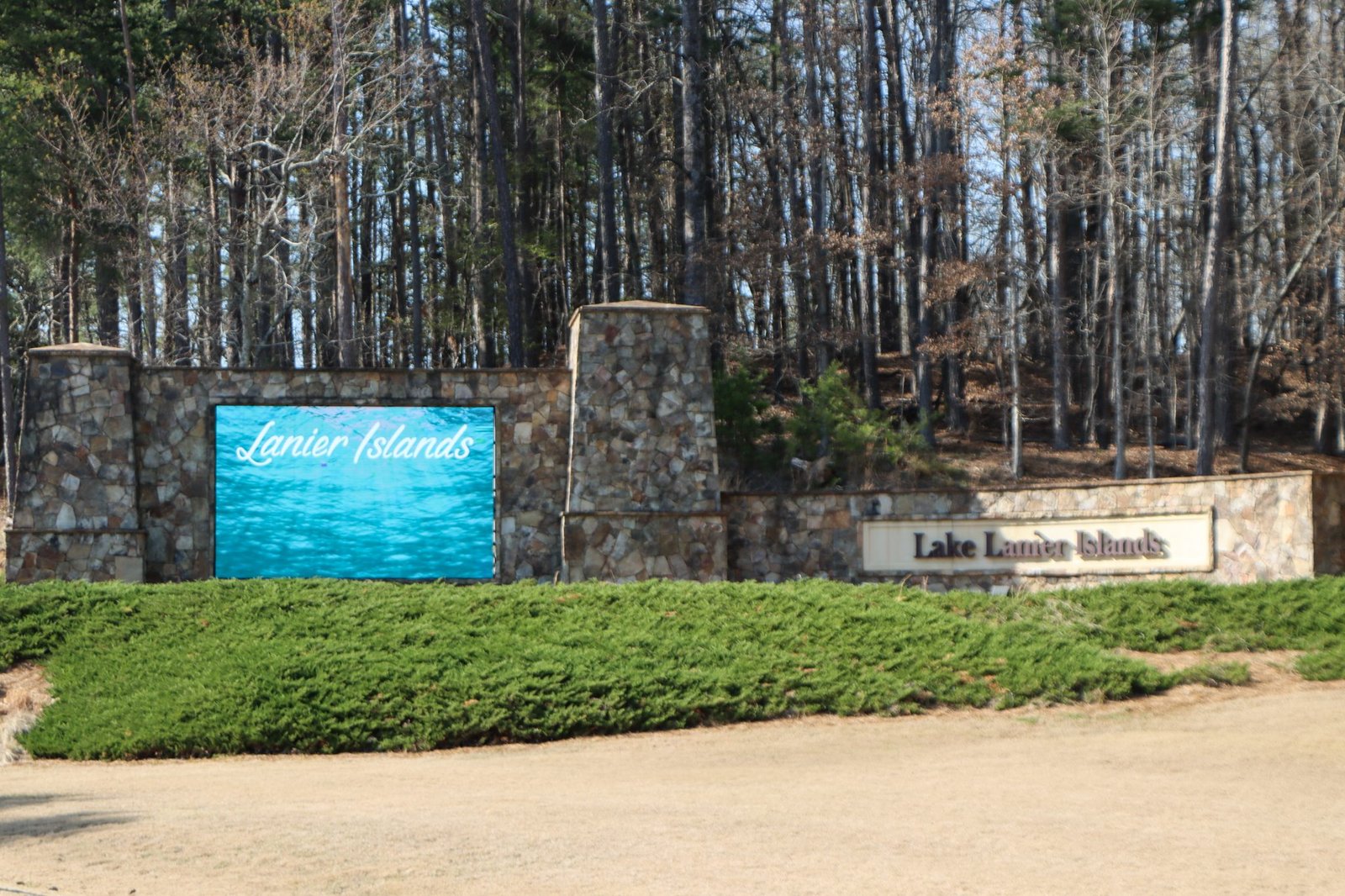
Lake Lanier is often called Georgia’s playground—38,000 acres of water and 692 miles of shoreline that draw over 30 million visitors annually, even more than Niagara Falls. Officially named Lake Sidney Lanier, it honors a Confederate soldier, poet, and musician, a choice that reflects another complicated legacy. Just 50 miles north of downtown Atlanta, the lake is now a thriving resort area and scenic escape—yet its beauty obscures the troubled history beneath its waters and the name it bears.

But beneath its shimmering surface lies a history far less serene—one marked by racial terror, forced displacement, and the erasure of a once-thriving Black community named Oscarville. This is not just a lake. It is a flooded ledger of lives uprooted and stories buried, still seeking air.

The Making of Lake Lanier: Progress at an inhumane Cost

Lake Lanier was born of ambition and necessity. In 1946, the U.S. Army Corps of Engineers launched a project to control flooding, generate hydroelectric power, and supply water to a rapidly expanding Atlanta. The Buford Dam, completed in 1956 on the Chattahoochee River, made it possible.

The construction was vast. Crews built three saddle dikes, new bridges and roads, and excavated land for a power station. The price of progress was steep: 56,000 acres of land were seized—often through the forced hand of eminent domain. More than 250 families were displaced, 15 businesses were closed, and 20 cemeteries were moved. Thousands of lives were disrupted. Homes, churches, and entire communities were cleared to make way for a reservoir.

By August 1, 1958, the lake had reached its full pool elevation of 1,071 feet. What remained under the water were not only roads and buildings—but histories, headstones, and unanswered questions.

Photo by Milton Kirby Lake Lanier

Oscarville: A Community Buried but not Forgotten

Before the lake, there was Oscarville.

Founded during Reconstruction, Oscarville was a flourishing Black agricultural town. It stood as a testament to resilience in the face of systemic oppression. By 1911, its roughly 1,100 residents had built a thriving local economy. Fifty-eight families owned land. Others worked as sharecroppers, poultry farmers, carpenters, and cotton hands. They built schools, churches, and lives filled with dignity and hope.

But in 1912, that hope was shattered by a wave of white supremacist violence that would drive nearly every Black resident from Forsyth County—and from Oscarville itself..

The Racial Cleansing of 1912

The violence began with the assault and death of 18-year-old Mae Crow, a white woman. Three Black teenagers—Rob Edwards, Ernest Knox, and Oscar Daniel—were arrested. Before a trial could begin, a white mob lynched Edwards in the town square of Cumming. Knox and Daniel, both under 18, were quickly convicted by an all-white jury and publicly hanged.

What followed was a campaign of racial terror. White vigilantes calling themselves “night riders” looted homes, burned Black churches, and issued ultimatums: leave or die. Over 1,000 Black residents were expelled in just three months. Their land was abandoned, stolen, or sold under duress.

Oscarville, like other Black towns across the South, was wiped off the map—not by natural disaster or economic collapse, but by deliberate racial cleansing.

A Lake Built on Dispossession racial hatred

Decades later, that same land—emptied by violence—was sold or seized for the Lake Lanier project. Cemeteries were relocated, but many graves may still lie beneath the water. Submerged buildings, roads, and foundations remain intact under the lakebed, adding to the lake’s reputation for mystery—and its eerie nickname: haunted.

But this is no ghost story. It is a story of stolen legacies and the silent weight of injustice.

Today’s Lake, and the Communities It Now Serves

Today, Lake Lanier is a vital resource. It provides drinking water for nearly 6 million people and supports hydroelectric power, tourism, and recreation. Towns like Buford, Gainesville, and Cumming benefit from its presence, with marinas, lakefront homes, and rental cabins lining its shores.

The Lake Lanier Islands were created following the completion of Buford Dam in 1956. When the reservoir, Lake Sidney Lanier, was filled with water from the Chattahoochee River, the rising waters submerged vast portions of North Georgia. The high ground that remained above water became a scattering of islands — essentially, the former mountaintops of the region.

Development and Governance: LLIDA

In1962, the Lake Lanier Islands Development Authority (LLIDA) was established by the Georgia General Assembly as a state agency. Its mission was clear:

“To plan, develop, and operate four islands in the southern portion of Lake Sidney Lanier for resort and recreation purposes and to enhance the tourism potential of North Georgia.”

LLIDA oversaw the early development of the islands, initiating projects like:

  • The PineIsle Resort
  • The beach and its expansions
  • The entrance bridge
  • Waterpark attractions (now part of Margaritaville at Lanier Islands)
  • The Legacy Lodge (formerly Emerald Pointe)
  • Golf courses and equestrian stables

Initially, some operations were leased to concessionaires, but LLIDA resumed direct control in the 1980s. By the mid-1990s, LLIDA entered into a privatization agreement with KSL Lake Lanier, Inc., signaling a new era of resort management.

Ownership: The Williams Family & LLIMC

In August 2005, Georgia businessman Virgil Williams purchased the Lake Lanier Islands resort complex from KSL Corporation for $14.5 million. The acquisition was made through his company, the Lake Lanier Islands Management Company (LLIMC)— a local, family-operated business.

Under along-term lease and management agreement with LLIDA, LLIMC now:

  • Oversees daily operations
  • Manages long-term development strategies
  • Maintains the resort’s public-private partnership with the state

Amenities & Attractions at the Islands

Lake Lanier Islands offers a vast array of activities and accommodations, including:

Game Changer Arcade and Bar

A lively indoor attraction featuring:

  • Axe Throwing
  • Virtual Sports Suites
  • Duckpin Bowling
  • Arcade Games
  • On-site restaurant and bar

Legacy Lodge & Guest Exclusives

Guests of the Legacy Lodge, Legacy Villas, and LakeHouses at Legacy enjoy:

  • A 24-hour saltwater lounging pool
  • Poolside service from Bullfrog’s Bar
  • A 6-court pickleball venue
  • A 24/7 business center with free Wi-Fi, charging stations, and printer access

Additional Resort Features

  • Margaritaville at Lanier Islands water park
  • Lakefront dining and boating
  • Golf courses and trails
  • Special seasonal events and group activities

Revenue From Parking Fees Alone

One of the resort’s most straightforward — yet substantial — revenue streams is its daily parking fee of $20 per vehicle. With an estimated 30 million visitors to Lake Lanier each year, the potential income from parking fees is staggering.

By the Numbers:

  • If just 15 million vehicles (half the visitor count) pay the fee:
    • 15 million x $20 = $300 million per year
  • If every visitor arrives by car and pays:
    • 30 million x $20 = $600 million per year

Even under conservative estimates, the annual revenue from parking fees alone may exceed hundreds of millions of dollars, not including resort stays, dining, attractions, or retail.

But amid the jet skis and fishing tournaments, the story of Oscarville is often forgotten—or worse, never told.

Reclaiming the Past, One Story at a Time

In recent years, historians, educators, and community leaders have begun to reclaim Oscarville’s story. Efforts to memorialize the lost town are growing. Documentaries, articles, and educational programs are shifting the narrative—moving away from myths of hauntings and toward historical truth.

Oscarville was not a legend. It was a living, breathing community, destroyed by fear and greed, not by fate.

A Legacy That Refuses to Sink

Lake Lanier will always shimmer with beauty. But beneath its surface lies a reckoning still in progress. The story of Oscarville is not just about what was lost, but about what still lives—in memory, in truth, and in the movement to honor those who were forcibly silenced.

What lies beneath is more than water. It is a legacy. One that must not be forgotten.

Silent Strength: Extraordinary Women in the Margins of History

Learn about the remarkable stories of 20 trailblazing women who broke barriers in science, art, aviation, and more, shaping history and inspiring future generations with their courage and determination.


By Milton Kirby | Atlanta, GA | March 23, 2025

As Women’s History Month comes to a close, the Truth Seekers Journal is proud to highlight a remarkable group of lesser-known women who have made extraordinary contributions to our world.

Women have long been the backbone of progress in this nation—and across the globe—often driving change, innovation, and justice without receiving the recognition they deserve. In this special feature, we aim to shine a light on these unsung sheroes whose legacies have shaped history, even if their names are not widely known.

Whether this is your first time learning about them or a welcomed reminder, we hope these stories inspire reflection, admiration, and continued curiosity.

We also invite you to join the celebration: share the names and stories of extraordinary women who have impacted your life or community. Scroll to the end of the article and add your tribute in the comments section—let’s continue writing women’s history together.

1. Alice Augusta Ball (1892–1916)

Alice Augusta Ball was a pioneering African American chemist whose groundbreaking work in the early 20th century provided the first effective treatment for leprosy. Born in Seattle, Ball earned dual bachelor’s degrees in pharmaceutical chemistry and pharmacy before becoming the first woman and first African American to earn a master’s degree from the University of Hawaii. At just 23, she developed the “Ball Method,” which chemically modified chaulmoogra oil to make it injectable and more easily absorbed by the body. This treatment brought hope to thousands suffering from Hansen’s disease until the 1940s.

Tragically, Ball died before she could publish her findings, and her work was initially credited to a male colleague. It wasn’t until years later that Dr. Harry Hollmann acknowledged her contributions publicly. Today, she is recognized as a chemist far ahead of her time—likely the first African American published in the Journal of the American Chemical Society. Her legacy is honored with plaques, a university medal, and a day named in her honor in Hawaii.


2. Faith Ringgold (1930–2024)

Faith Ringgold was a visionary African American artist and author known for fusing quilting with storytelling to explore themes of race, gender, and civil rights. Born in Harlem, Ringgold was deeply influenced by the Harlem Renaissance and earned both her bachelor’s and master’s degrees from City College of New York. Initially trained as a painter, she later embraced multimedia, becoming best known for her story quilts, which gave voice to Black American experiences through textiles.

Ringgold was a bold advocate for Black artists, often challenging museums on their exclusionary practices. Her art resides in major institutions like the Guggenheim and the Met. She also authored and illustrated children’s books, using them to instill pride and cultural knowledge in young readers. Ringgold’s vibrant art and tireless activism transformed American visual culture and elevated fiber arts to a powerful political medium.


3. Bessie Stringfield (1911–1993)

Known as the “Motorcycle Queen of Miami,” Bessie Stringfield shattered stereotypes by becoming a solo long-distance motorcyclist in the 1930s and 1940s. Born in Jamaica and raised in the United States, she learned to ride a motorcycle at 16 and set off on eight solo trips across the country, navigating racism and sexism along the way. She often disguised herself as a man and slept on her bike when motels denied her entry due to her race.

During World War II, she served as a civilian dispatch rider for the U.S. Army, completing rigorous military training. Stringfield later became a nurse and founded a motorcycle club in Florida. A fearless trailblazer, she was inducted into the Motorcycle Hall of Fame in 2002. Her legacy lives on in every rider who defies expectations to chase their passion.


4. Dr. Marie Maynard Daly (1921–2003)

Marie Maynard Daly was the first African American woman in the United States to earn a Ph.D. in chemistry, achieving the milestone at Columbia University in 1947. Her groundbreaking research helped identify the link between high blood pressure and clogged arteries, contributing vital insights into cardiovascular health. She also conducted key studies on proteins and cellular chemistry.

Born in Queens, New York, Daly was inspired by her scientist father and the book Microbe Hunters. She later became a dedicated mentor, establishing programs to support minority students in STEM. Daly’s brilliance opened doors not only in science but in higher education, leaving a legacy of intellectual excellence and equity in science.


5. Dr. Valerie L. Thomas (b. 1943)

Valerie Thomas is a physicist, inventor, and former NASA scientist best known for inventing the illusion transmitter, a device that laid the groundwork for modern 3D imaging. Despite facing racial and gender barriers, she graduated with a degree in physics from Morgan State University in 1964 and joined NASA shortly thereafter.

At NASA, she helped develop satellite image-processing systems, including for the Landsat program, and led projects that monitored global crop health. In 1980, she patented the illusion transmitter. Her work continues to influence visual technology in science and entertainment. Thomas is a trailblazer in tech innovation, proving the power of Black women in STEM.


6. Bessie Coleman (1892–1926)

Bessie Coleman soared beyond the barriers of race and gender to become the first African American and Native American woman to earn a pilot’s license. Born to a family of sharecroppers in Texas, Coleman worked in cotton fields and saved money while attending beauty school in Chicago. When no American flight school would accept her, she learned French and traveled to Paris, where she earned her license from the Fédération Aéronautique Internationale in 1921.

Returning to the U.S. as a media sensation, Coleman performed daring aerial stunts at air shows and inspired African Americans to pursue aviation. Nicknamed “Queen Bess,” she dreamed of opening a flight school for Black students. Though her life was tragically cut short in a plane crash at age 34, her courage and ambition blazed a trail for future generations of aviators. Today, aviation schools, streets, and scholarships bear her name in tribute.


7. Willa Brown (1906–1992)

Willa Brown was a dynamic aviator, civil rights activist, and educator who broke barriers in both aviation and politics. In 1938, she became the first African American woman in the U.S. to earn a commercial pilot’s license. A Chicago-based teacher turned pilot, she later co-founded the Coffey School of Aeronautics with Cornelius Coffey. Their school trained hundreds of Black aviators, including over 200 Tuskegee Airmen and instructors.

Brown also made history as the first Black woman to run for U.S. Congress (Illinois, 1946) and as the first African American officer in the Civil Air Patrol. Through advocacy and leadership, she helped integrate military flight training programs. Brown’s work helped change the face of aviation and demonstrated the power of community-based education and activism in reshaping opportunity.


8. Ann Lowe (1898–1981)

Ann Lowe was a trailblazing African American fashion designer whose exquisite gowns graced America’s high society for over five decades. Born in Alabama to a lineage of dressmakers, Lowe learned the craft from her mother and grandmother. After attending design school in New York—where she was segregated from her classmates—she opened her own salons and became the go-to designer for the nation’s wealthiest families.

Lowe’s most famous creation was Jacqueline Bouvier’s wedding gown for her 1953 marriage to John F. Kennedy. Though her name was omitted from news reports at the time, Lowe’s legacy has since been reclaimed. Despite being underpaid and often uncredited, her work exemplified couture elegance and artistic precision. As the first Black woman to own a salon on Madison Avenue, Lowe left a lasting mark on American fashion.


9. Betye Saar (b. 1926)

Betye Saar is a groundbreaking visual artist whose assemblages challenge racist stereotypes and elevate personal and ancestral memory into fine art. Born in Los Angeles, Saar studied design at UCLA and began her artistic journey with printmaking. After seeing an exhibition of Joseph Cornell’s work in 1967, she shifted toward assemblage, using found objects to explore themes of Black identity, spirituality, and empowerment.

Her 1972 piece The Liberation of Aunt Jemima transformed a derogatory “mammy” caricature into a revolutionary symbol, wielding a rifle and a grenade. Saar’s art became central to the Black Arts Movement and Black feminist art, and her work remains in major museums like the MoMA and the Los Angeles County Museum of Art. With her evocative storytelling and fierce reclamation of imagery, Saar continues to influence generations of artists.


10. Henrietta Lacks (1920–1951)

Henrietta Lacks was a young mother whose cancer cells, taken without her knowledge or consent, became one of the most important tools in modern medicine. Born in Virginia and treated for cervical cancer at Johns Hopkins in 1951, her biopsied cells—later known as HeLa cells—were the first human cells to reproduce indefinitely in the lab. Her cells fueled scientific breakthroughs including the polio vaccine, cancer treatments, and even space research.

Lacks died at 31, unaware of the vast scientific impact her cells would have. Her family only learned of the HeLa cells’ existence decades later. The ethical questions surrounding her case sparked national conversations about medical consent and patients’ rights. Today, Lacks is honored globally, her legacy a reminder of the Black body’s historical exploitation—and its immeasurable contributions to science.


11. Claudette Colvin (b. 1939)

At just 15 years old, Claudette Colvin refused to give up her seat to a white passenger on a segregated bus in Montgomery, Alabama—nine months before Rosa Parks made history with a similar act. On March 2, 1955, Colvin was arrested for her defiance. Though young and pregnant at the time, she went on to become a key plaintiff in Browder v. Gayle, the landmark Supreme Court case that struck down bus segregation laws in Alabama.

Colvin’s story was initially suppressed by civil rights leaders concerned with respectability politics, but her courage was undeniable. In recent years, her contributions have received long-overdue recognition. A retired nurse’s aide, she remains a living symbol of youthful defiance and the power of ordinary people to spark extraordinary change.


12. Barbara Hillary (1931–2019)

Barbara Hillary shattered expectations and made history as the first known Black woman to reach both the North and South Poles—after surviving cancer twice and taking up exploration in her 70s. Born and raised in Harlem, she worked as a nurse for 55 years and earned degrees in gerontology. After surviving lung cancer, which reduced her lung capacity, she was inspired to travel to the Arctic and began training in cross-country skiing and survival skills.

In 2007, at age 75, she reached the North Pole. Four years later, at 79, she stood on the South Pole. Her bold spirit defied stereotypes about age, race, and physical ability. Later in life, she became an advocate for environmental justice and climate awareness. Barbara Hillary’s legacy is a powerful reminder that it’s never too late to dream, explore, and inspire.


13. MaVynee Betsch (“The Beach Lady”) (1935–2005)

MaVynee Betsch, affectionately known as “The Beach Lady,” was a classically trained opera singer who gave up her wealth to become an environmental activist and fierce protector of American Beach—a historic African American beach community in Florida. Born into one of the South’s most prominent Black families, Betsch studied at Oberlin Conservatory and performed opera in Europe for over a decade.

After a cancer diagnosis in the 1970s, she redirected her life toward preserving the legacy and environment of American Beach, founded by her grandfather, Abraham Lincoln Lewis. Betsch gave away her entire fortune to environmental causes and became a fixture on the beach, educating visitors about its cultural and ecological significance. Her passion, eccentric style, and unwavering dedication earned her posthumous recognition as a humanitarian and environmental hero.


14. Maggie Lena Walker (1864–1934)

Maggie Lena Walker was a visionary businesswoman and activist who became the first African American woman to charter and serve as president of a bank in the United States. Born in Richmond, Virginia, during the Reconstruction era, Walker rose from modest beginnings to lead the Independent Order of St. Luke, a Black fraternal organization that provided social services and financial support to African Americans.

In 1903, she founded the St. Luke Penny Savings Bank to empower the Black community through financial independence. Under her leadership, the bank enabled hundreds of Black families to buy homes. Walker was also a champion of education, women’s rights, and racial justice. Despite becoming paralyzed later in life, she continued her activism from a wheelchair. Her legacy endures as a model of resilience, leadership, and Black economic empowerment.


15. Octavia Butler (1947–2006)

Octavia E. Butler revolutionized science fiction by centering Black protagonists and tackling themes of race, gender, power, and survival in futuristic worlds. Born in Pasadena, California, Butler battled dyslexia and social isolation as a child but found refuge in books and writing. She earned a degree from Pasadena City College and studied at UCLA before attending the Clarion Science Fiction Writers’ Workshop, where she launched her career.

Her novels—including Kindred, Parable of the Sower, and the Patternist series—blended speculative fiction with social critique, laying the foundation for Afrofuturism. Butler became the first African American woman to gain prominence in sci-fi and the first sci-fi writer to win a MacArthur “Genius” Grant. Her haunting, prophetic narratives continue to resonate, offering both warning and hope about the future. Octavia Butler didn’t just write herself into science fiction—she transformed the genre.


16. Fannie Lou Hamer (1917–1977)

Fannie Lou Hamer was a fearless civil rights leader whose voice—both literal and symbolic—galvanized a movement for racial and economic justice in the Jim Crow South. Born the 20th child of Mississippi sharecroppers, Hamer began picking cotton at age six and left school by 12 to support her family. She spent decades toiling on plantations, where she also served as a timekeeper due to her literacy—an early sign of her leadership.

In 1962, after being fired for trying to register to vote, Hamer became an organizer for the Student Non-Violent Coordinating Committee (SNCC). Her outspokenness and moral clarity brought national attention, especially when she co-founded the Mississippi Freedom Democratic Party (MFDP) to challenge the all-white state delegation at the 1964 Democratic National Convention. Her televised testimony detailing voter suppression and police brutality—delivered with unflinching honesty—shocked the nation.

Though denied political representation, Hamer continued to fight for justice through grassroots economics. She launched the Freedom Farm Cooperative and a “pig bank” to help Black families achieve food and land security. Despite constant physical threats and health complications from a forced hysterectomy, she never stopped advocating. Before her death in 1977, she helped found the National Women’s Political Caucus. Nearly five decades later, she was awarded the Presidential Medal of Freedom posthumously. Her words still echo today: “I’m sick and tired of being sick and tired.”


17. Miriam Benjamin (1861–1947)

Miriam Benjamin was a trailblazing inventor and educator who became the second African American woman in U.S. history to receive a patent. Born in Charleston, South Carolina, in 1861, Benjamin moved with her family to Boston where she attended the Girl’s High School, graduating in 1881. She began her professional life as a schoolteacher in Jacksonville, Florida, and later pursued studies at Howard University Medical School and earned legal training—eventually working as a government clerk in Washington, D.C.

In 1888, Benjamin secured a patent for her invention, the Gong and Signal Chair for Hotels. Her innovation allowed guests to discreetly summon attendants by pressing a button, triggering a bell and raising a visible signal behind the chair. Designed to reduce the need for waitstaff, the chair emphasized comfort and quiet, making it an attractive feature for hotels and government buildings. Benjamin even lobbied for its use in the U.S. House of Representatives, where a similar system was later installed. Her concept directly influenced the modern airplane call button and helped revolutionize customer service signaling.

Benjamin’s multifaceted career—as an inventor, teacher, medical student, and aspiring lawyer—reflected both her brilliance and resilience in the face of social and institutional barriers. Though her name is not widely known today, her contributions remain embedded in the very technology we still use.


18. Zora Neale Hurston (1891–1960)

Zora Neale Hurston was a literary icon and pioneering anthropologist whose work gave voice to the richness of Black Southern culture. Born in Notasulga, Alabama, and raised in the all-Black town of Eatonville, Florida, Hurston was shaped by her vibrant community and the oral traditions that flourished there. After earning her associate’s degree at Howard University—where she co-founded the school newspaper—Hurston won a scholarship to Barnard College. There, she became the first Black student and studied under famed anthropologist Franz Boas.

Hurston traveled extensively through the American South and the Caribbean, documenting folklore, spiritual practices, and oral histories of Black communities. Her anthropological work informed her fiction, which was rooted in authentic dialect and rich cultural detail. Her most celebrated novel, Their Eyes Were Watching God (1937), tells the story of Janie Crawford, a Black woman seeking autonomy and self-realization—defying both literary norms and societal expectations.

Though Hurston struggled financially throughout her life and died in relative obscurity, her legacy was revived by Black feminist writers like Alice Walker in the 1970s. Today, she is recognized as one of the foremost American writers of the 20th century, with a body of work that continues to influence literature, anthropology, and cultural studies. Zora Neale Hurston captured the soul of Black life—and ensured it would never be forgotten.


19. Mae Carol Jemison (b. 1956)

Mae Carol Jemison made history in 1992 as the first Black woman to travel into space, serving as a mission specialist aboard the Space Shuttle Endeavour. A true polymath—physician, engineer, dancer, and educator—Jemison shattered stereotypes and redefined what was possible for women in science and technology.

Born in Decatur, Alabama, and raised in Chicago, Jemison was a curious child who loved science and aspired to reach the stars. She entered Stanford University at just 16 years old, earning degrees in chemical engineering and African and African-American studies. She went on to receive her medical degree from Cornell University and worked with the Peace Corps in Liberia and Sierra Leone, providing medical care, managing health systems, and contributing to vaccine research with the CDC.

Inspired by the space flights of Sally Ride and Guion Bluford, Jemison applied to NASA in 1985 and was accepted in 1987. Her mission aboard Endeavour in 1992 included conducting bone cell research in microgravity. Jemison brought cultural symbols with her into orbit, including a West African statuette and a flag from the Alpha Kappa Alpha sorority, celebrating both science and heritage.

After leaving NASA in 1993, Jemison founded her own technology consulting firm and launched the 100 Year Starship project—an ambitious initiative to make interstellar travel possible within the next century. She also became an advocate for STEM education, especially for girls and students of color, and authored several children’s books. A lifelong dancer, Jemison even appeared in an episode of Star Trek: The Next Generation, fulfilling a dream inspired by Nichelle Nichols’ role as Lieutenant Uhura.

With multiple honorary doctorates and inductions into both the National Women’s Hall of Fame and the International Space Hall of Fame, Mae Jemison remains a powerful symbol of Black excellence, curiosity, and the limitless reach of human potential.


20. Dr. Mildred Fay Jefferson (1926–2010)

Dr. Mildred Fay Jefferson broke barriers in medicine and public advocacy, becoming the first African American woman to graduate from Harvard Medical School in 1951. She also became the first woman to graduate from Harvard in surgery, the first woman employed as a general surgeon at Boston University Medical Center, and the first woman admitted to the prestigious Boston Surgical Society.

Born in Pittsburg, Texas, Jefferson was a gifted student, entering college at 15 and eventually earning degrees from Texas College and Tufts University before making history at Harvard. Her medical expertise and commanding intellect made her a pioneer in surgery during an era when both her race and gender presented steep obstacles.

In the 1970s, Jefferson became a prominent figure in the right-to-life movement. She co-founded the Massachusetts Citizens for Life (MCFL) and later the Right to Life Crusade, Inc., serving as its founding president. Her articulate opposition to abortion rights earned her national attention, and she served as a board member and delegate to the National Right to Life Committee (NRTLC). Throughout her life, she was known for fusing her medical knowledge with passionate public advocacy, often speaking out on moral and ethical dimensions of healthcare.

Dr. Jefferson’s legacy is complex, encompassing groundbreaking medical achievements and decades of activism. Whether in the operating room or on the national stage, she defied expectations and left a lasting imprint on American medicine and political discourse.

Selma’s Bloody Sunday makes 60 years – An estimated 15,000 mark the solemn day that changed America – minus Republicans

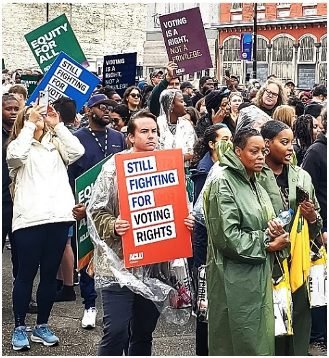
60th Anniversary of Selma to Montgomery March: Thousands Gather to Honor Foot Soldiers and Fight for Voting Rights. Inspirational speeches and reflections on the past, present, and future of American equality and justice were shared by prominent leaders and a 7th-grade foot soldier from 1965.


By Christopher Young

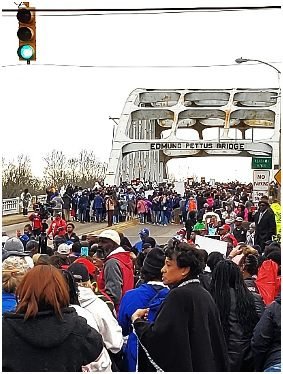
Where to even begin? So many in our country want to erase the truth. They are employing a sinful revisionist history. How in God’s world can they look in the mirror? The sacrifice of the foot soldiers on March 7, 1965, cannot and will never be erased, revised, or forgotten. Thank God for television. The whole world saw the vicious and bloody assaults at the hands of white Alabama State Troopers and others, upon innocent non-violent African-American marchers seeking the equality inherent in the right to vote. It is American history that the march from Selma to Montgomery (March 7-25, 1965) galvanized American’s support for the Voting Rights Act of 1965. The Edmund Pettus Bridge – a bridge named after a Confederate Brigadier General, Grand Dragon of the Alabama Ku Klux Klan, and U.S. Senator – will forever be remembered.

By Christopher Young – Edmund Pettus Bridge

Sixty years later, on Sunday, March 9, 2025, under overcast skies with just an occasional drop or two of rain, an estimated 15,000 people gathered to remember that historic day and those foot soldiers – their unyielding determination and courage playing out in a racist America – remembering the price that is never ever marked as ‘paid-in-full’ in our country.

On Sunday, there was no massive security operation, no metal detectors to pass through, no snipers on rooftops adjacent to the foot of the bridge where long speeches are normally provided during Democratic administrations. When there is no president or vice president in attendance, all those things go by the wayside where the bridge crosses the mighty Alabama River in the town of Selma, Alabama. A town with a population of 17,971 per the 2020 Census, where 81.2% of population are African American, and 28.3% live in poverty. 

The mood on the bridge this year expressed the full-range of emotions of We the People – from tears of joy to tears of anguish that the fight is never finished. Scores of faces were lined with seriousness, reverence, determination and awe – akin to a pilgrimage. By guesstimate, a solid 20% of marchers were age 21 and below. 

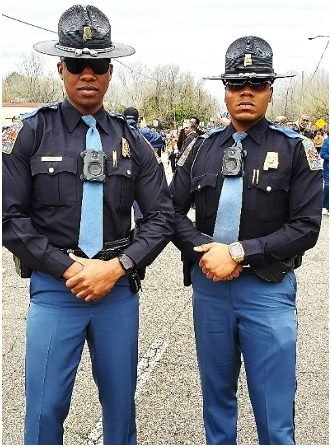
By Christopher Young – Alabama-Troopers-Shuford-James

This year there were some speeches on the other side of the bridge. Reverend Jesse Jackson was pushed in a wheelchair. Reverend Al Sharpton is always there. Others included NAACP President Derrick Johnson, National Urban League President Marc Morial, President of the National Coalition on Black Civic Participation Dr. Melanie L. Campbell, Selma Mayor James Perkins, Jr., Alabama Representative Terri Sewell (Selma native), House Minority Leader Hakeem Jeffries, Representative Maxine Waters, Rev. Senator Raphael G. Warnock, Alabama 2nd District Rep.

Shomari Figures, D-Mobile, reminded that “in two years we can make liars out of all those people who say we don’t vote,” Dr. Benjamin J. Chavis, Jr. – president & CEO of the National Newspaper Publishers Association, i.e. The Black Press, Bobby Henry – chairman of the Board of The Black Press, Reverend Mark Thompson – NNPA’s Global Digital Transformation director, and Kentucky Governor Andy Beshear, a Democrat, who spoke in favor of DEI, “…sixty years ago marchers were met by an Alabama governor full of hate and ignorance…I believe that diversity is a strength and never a weakness. I know we’ve got a lot more marching to go. If you’ll have me, I’ll be there every step of the way…”

“No Justice – No Peace” call and response was heard often, and a group of young people – Black Men & Women Live, from Atlanta, Georgia, chanted, “I am a link in this chain, and it will not break here.” Singing was heard throughout Broad Street leading up to the bridge, and included, We Shall Overcome and Ain’t Gonna Let Nobody Turn Me Around.

The Mississippi Link newspaper was privileged to meet with Reverend Dave Fulford (pictured above), a foot soldier still in the 7th grade and at the back of line with the other children on March 7, 1965, in one of his offices a couple miles from the bridge, just 90 minutes before he was due at the foot of the bridge to be part of the first wave to cross this year. He stressed the importance of education and hard work. He rose through the ranks at IBM to supervise projects in numerous countries. After retiring, he moved back to Alabama and started a non-profit – Blackbelt & Central Alabama Housing Authority that helps low-income families, seniors and veterans with housing issues, repairs, food, and health information. He continues service as executive director.

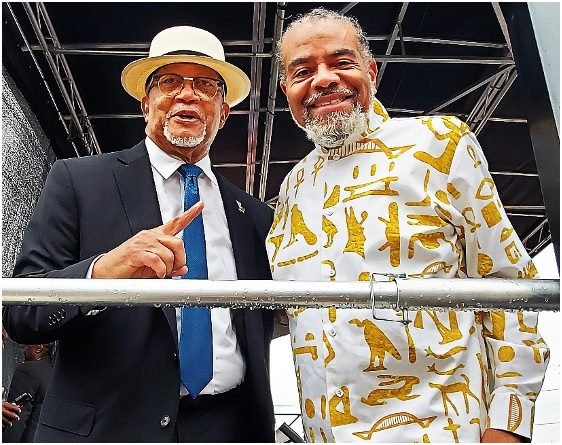
By Christopher Young – Dr.-Benjamin-J.-Chavis-Jr.-Reverend-Mark-Thompson

Additionally, he serves as pastor of Camden Mission Seven Day Adventist Church in Camden, Alabama.

Reverend Fulford shared some of his family and educational background and values. “We were taught as children to respect our country and stand up for what is right, liberty, and that all men are created equal. The other foot soldiers gave me a reason to live. We have lost our way as a country. Even here in Selma…black on black crime…we sacrificed so much and were living in deplorable housing…the leadership is appalling when you see what could be done and is not being done.”

What will you say to the readers of The Mississippi Link newspaper about these times we are in now after you have given everything in you to push forward and now, we are being pushed backward? “When I see what’s going on, I’m praying ‘Lord please help America to get back on track.’ One thing, in our nation, I believe in the Constitution, the Bill of Rights, and everything that we stood for as a country is now being changed. 

“The removal of DEI is awful…IBM saw the value of it…when I see what’s going on in America today, I just ask God to please help America to go back to when all men were created equal. Many people are losing their jobs, and grants. I write a lot of grants. That’s what I do for housing, and I don’t know what’s going to happen, so I just say Lord please help America, and the last thing I’ll say – one of our most powerful weapons that we have as Americans is vote, vote, vote. One person, one vote, is a powerful weapon.”

EU beer and winemakers fear business will dry up under Trump’s tariffs

US President Trump’s tariffs threat sparks fear in Europe’s drinks industry, with wine and spirits producers warning of devastating impact on jobs and exports, potentially crippling key markets.


Alcohol producers are reeling after the US president threatened retaliation against EU whiskey tariffs, leaving a key export market ‘dead in the water’

By David Chazan, Tom Kington, Isambard Wilkinson, Bruno Warfield | Friday, March 14, 2025

From picturesque vineyards that produce Côte de Beaune fit for Manhattan supper soirées to Belgian breweries whose beers delight blue-collar Americans, one question is on the minds of Europe’s drinks industry: how do we survive Trump’s tariffs?

Fear is rising that the president’s trade war will have a devastating impact and many have expressed fury at Brussels over what they perceive as a failure to accommodate Trump’s demands or, worse, a hostility towards the president that has exacerbated the situation.

With the president declaring that he would hit European alcohol exports with tariffs of up to 200 per cent, we meet the manufacturers who are on the front line of an existential fight they neither wanted nor expected.

Battle will take a lot of bottle

Thiébault Huber had a simple message for a teetotal president who has taken aim at wine and champagne. “Trump ought to relax and have a glass of burgundy to calm himself down,” said the head of the winemakers’ confederation in the region that produces what many people regard to be the world’s greatest wines.

However, he had little sympathy for Brussels bureaucrats, who he accused of starting the transatlantic war of words. Trump’s threat came after the European Commission said it would impose a 50 per cent surcharge on US whiskey imports in response to tariffs on steel and aluminium. “The European Commission shouldn’t have retaliated like this,” Huber said.

“We met a huge number of MEPs before they took the decision to increase the charge on imported bourbon. We told them not to do it, that the reaction from the US would be terrible, but despite all our warnings, here we are, threatened by tariffs that will annihilate the wine and spirits trade.”

Nicolas Ozanam of the Federation of French Wine and Spirits Exporters agreed. “We’ve been telling the European Commission for months that targeting American bourbon and whiskey serves no purpose,” he said. “No one wins from trade wars, they’re idiotic. Business will dry up completely.”

Burgundy exports nearly a quarter of its wines to the US but Huber said vintners were working on increasing their sales to other parts of the world. “Demand is rising in a lot of African countries, as it is in eastern European countries too. Asia is still an attractive market and Scandinavia is very active,” he said.

However, Christine Sévillano, head of the Federation of Independent Champagne Producers, warned that finding new markets was time-consuming and expensive. “It can take years to develop a market in a particular country. If we have to redirect our investment into other countries, it will be very costly,” she said.

France’s wine and spirits industry is one of its biggest employers. Hundreds of thousands of jobs could be jeopardised by disruption to trade with the US, which is the sector’s biggest export market, worth €3.8 billion a year.

Time to fortify the spirits

Until recent developments with the Diet Coke-drinking president, the sherry producers of southern Spain had been primarily focused on the drought that had left them fearing for crops.

The prospect of tariffs had a chilling effect on companies such as Barbadillo, for whom the US market represents a great hope for the future of its best wines. “It would be disastrous for business,” said Tim Holt, the international area director of the company, which is based in Sanlucar de Barrameda. He said the tariffs would leave one of his principal export markets “dead in the water”.

Fear has gripped wine businesses across Spain, particularly in the rioja and cava-producing regions of the north. Over the border in Portugal too, port and madeira are reeling from the possible impact.

“[It] would clearly and effectively remove Spanish wines and European wines in general from the entire US market,” said José Luis Benítez, director-general of the Spanish Wine Federation (FEV). Wine exports from Spain to the US reached a total value of 390 million euros last year. For cava producers, such as Cordoniu and Freixenet, the US accounts for 10 per cent of total sales.

The US market is important for Barbadillo sherry as an outlet for its premium wines. “I have just come back from a visit and there is a great appetite for premium sherry across the generations,” Holt said. “The US has huge potential for sherry and tariffs would destroy that.”

Feud over beer gets bitter

Benjamin Franklin, the founding father of the United States, knew a good pint when he saw one, once memorably noting: “Beer is proof that God loves us and wants us to be happy.”

The Americans who drink some 80 million litres of Belgian beer every year would agree. Their thirst is not limited to relatively upmarket offerings, with large quantities of cheap, mass-produced Dutch lager, such as Heineken, consumed.

Alain De Laet of Belgium’s Brouwerij Huyghe makes the famous Delirium Tremens beer, which has an intimidating alcohol content of 8.5 per cent, and carries the symbol of pink elephant. “We are immediately sending our entire stock of Delirium, two months’ production, to the US,” he told Het Laatste Nieuws. “About twenty containers, good for about 300,000 litres of Delirium in bottles, barrels and cans, will leave next week.

“Almost a quarter of our turnover comes from America. If Trump continues, our Delirium will no longer be saleable there.”

Dolf van den Brink, chief executive of Heineken, one of the biggest brewers in the world, criticised the uncertainty triggered by Trump’s announcement. “A trade war is in no one’s interest,” he said, stressing that companies can “stand up to the American trade whims together”.

He added: “We are the beer men and women. We are always a bit optimistic.”

Not so lovely bubbly

In recent years the Italians who grow grapes for prosecco have expanded to cover a planting area between Venice and the Alps. Many farmers have abandoned arable crops to switch to grapes as the sparkling wine appeared set to conquer the world. The boom times, however, may be over.

Trump’s tariffs may halt the sparkling wine’s triumphant conquest of the US. After prosecco’s invasion of the UK, North America has been the next target for north Italian producers, who have seen US sales soar by 51 per cent in the last four years.

“It would be absolutely unsustainable, it would ruin all the efforts we have made in the US to create a market and culture for our wines,” the prosecco producer Elvira Maria Bortolomiol told La Repubblica.

The 124 million bottles of prosecco sold in the US in 2024, for which American drinkers paid $1.86 billion, accounted for 19 percent of the entire Italian production of 660 million bottles last year.

Federica Boffa, who produces high-priced barolos, was defiant, claiming that American lovers of the wine would rebel against the US government. “This could be a boomerang — the Americans love our wines and I don’t believe they will keep quiet and swap Italian or French wines for a Napa Valley chardonnay or cabernet,” she told La Stampa.

Trump Golf Weekends’ Cost To Taxpayers Hits $18.2 Million

Donald Trump has spent over $18 million in taxpayer money on golfing since his second term began, playing at his Florida courses on 13 occasions out of 48 days in office. This spending could surpass the $151.5 million spent during his first term, raising concerns about the associated costs and security measures.


Donald Trump has played golf at his own courses in Florida on six of the seven weekends since his second term began.

By S. V. Date | Washington, DC | March 8, 2025

Donald Trump’s insistence on playing golf at his Florida courses has now cost American taxpayers more than $18 million since he regained the presidency, setting him on a pace to exceed the $151.5 million he spent in his first term, according to a HuffPost analysis.

On Saturday, Trump is playing golf for the 13th day of his 48 in office. It was his 10th day playing at his course in West Palm Beach, across the Intracoastal Waterway from his Mar-a-Lago country club home and adjacent to the Palm Beach County Jail.

He spent another three days at his course in Doral, just east of the main runways at Miami International Airport.

According to a 2019 Government Accountability Office report examining the first four trips Trump took to Mar-a-Lago during his first administration, each one costs $3,383,250 — a sum based on 2017 dollars that is likely higher now.

Trump and his entourage fly down on Air Force One while the military brings down the vehicles for his motorcade on C-17 transports. Because Mar-a-Lago, in Palm Beach, straddles the width of the barrier island, police boats with machine guns mounted on the bows patrol the Intracoastal while a Coast Guard vessel is stationed off the beach in the Atlantic. Additional costs include law enforcement and explosive-sniffing dogs.

On his first trip after retaking office to California, Nevada, and, ultimately, his Doral golf resort, reporters aboard Air Force One asked Trump if he would be playing golf on that trip. “No. I don’t think so. I’m busy,” he said.

Two days later, a Fox News reporter posted photos of him playing golf at his Doral course.

Al Green Accepts Consequences for Speech Disruption – Says He Will Do It Again

During President Trump’s address on March 4, 2025, Congressman Al Green protested proposed cuts to Social Security and Medicare, leading to his censure by the House. Despite backlash, Green emphasized the need to protect these programs and vowed to file articles of impeachment against Trump, asserting the importance of advocating for the underserved.

By Milton Kirby | Atlanta, GA | March 9, 2025

In a dramatic moment during President Donald Trump’s address to a Joint Session of Congress on March 4, 2025, Representative Al Green (D-TX) interrupted the speech in protest of proposed cuts to Social Security, Medicare, and Medicaid. His actions led to a formal censure by the House of Representatives, highlighting tensions between Democrats over how to counter the new administration’s policies.

A Bold Protest in the House Chamber

As President Trump stepped up to the podium, Rep. Green stood on the House floor and loudly objected to the president’s assertion of a mandate to cut Medicaid following the November 5, 2024, elections. Using his cane for emphasis, Green directed his remarks toward the president, saying, “You don’t have a mandate to cut Medicare, and you need to raise the cap on Social Security.”

Courtesy – Al Green

Green’s protest was met with immediate backlash. Speaker Mike Johnson (R-LA) demanded decorum and asked Green to take his seat. When he refused, he was escorted from the chamber by Capitol Police. The congressman later expressed no regrets, saying, “I did what I did because I don’t want people to believe he has a mandate to cut Medicaid. We have to protect Social Security, Medicare, and Medicaid. They are the foundation of our safety net.”

A Divided House Votes to Censure Green

Two days later, the House voted 224-198 to censure Green, with ten Democrats siding with Republicans in the reprimand. The vote underscores divisions within the Democratic Party over how to resist Trump’s agenda. Freshman Rep. Shomari Figures (D-AL) and Green himself voted “present.”

As Speaker Johnson announced the censure, Green and a group of Democratic colleagues responded by singing the gospel anthem “We Shall Overcome,” a gesture that angered Republican lawmakers and forced Johnson to call for a recess to restore order.

While censure is a rare and serious rebuke, it does not carry immediate punitive consequences. However, the conservative House Freedom Caucus members have signaled plans to strip Green of his committee assignments in the coming weeks.

A Legacy of Civil Rights Activism

Born in New Orleans, Louisiana, Green’s activism is deeply rooted in his upbringing and education. He attended Florida A&M University, Howard University, Texas Southern University, and Tuskegee University without earning an undergraduate degree. He later entered the Thurgood Marshall School of Law and earned his Juris Doctorate in 1973. He has long championed civil rights and social justice, serving Texas’ 9th Congressional District since 2001. As a law student, he earned awards in Federal Procedure and Conflicts.

Green compared his protest to the actions of the late Congressman John Lewis, with whom he was once jailed during civil rights demonstrations. “If you get in the way, you break the rules, you have to be ready to suffer the consequences,” Green said, referencing Lewis’s philosophy of “good trouble.” As a veteran civil rights advocate, he has fought for those in society whose voices, too often, are not heard.

A Stand for Social Security and Medicare

Green’s protest stemmed from concerns over potential cuts to entitlement programs. He has long advocated for raising the Social Security tax cap—currently set at $176,100—to ensure wealthier Americans contribute more to the system. Around 2035 the Social Security Trust Fund will face serious short falls.

Green opposes raising the retirement age, citing its disproportionate impact on Black men, who have a shorter average lifespan. “Raising the age would make Black men donors rather than beneficiaries of Social Security,” he explained.

Despite the censure, Green remains defiant. “I assume there is some effort to sanction me,” he said. “I will accept whatever the punishment is, but I would do it again. This is a matter of conscience.”

Moving Forward: Green’s Next Steps

In addition to continuing his advocacy for Social Security and Medicare protections, Green intends to follow through on a promise to file articles of impeachment against President Trump. “This president is causing harm to society,” he declared, reaffirming his commitment to holding Trump accountable.

While Green’s censure marks a rare rebuke for a protest during a presidential address, similar disruptions have occurred in the past. Notably, Reps. Marjorie Taylor Greene (R-GA) and Lauren Boebert (R-CO) heckled President Joe Biden during his addresses, and Rep. Joe Wilson (R-SC) infamously shouted “You lie!” during President Barack Obama’s 2009 speech. However, Green is the only member in recent years to face formal censure for such actions.

As the fallout continues, Rep. Green remains resolute. “It is more important to stand alone than not stand at all,” he said. “I’m standing for those who can’t stand for themselves.”

“Justice Denied: Supreme Court Declares Black Americans Have No Rights”

The Dred Scott v. Sandford case, culminating in a Supreme Court ruling on March 6, 1857, denied freedom to Dred Scott and ruled African Americans could not be U.S. citizens. This decision invalidated the Missouri Compromise and intensified national tensions over slavery, fueling the path to the Civil War and inspiring the abolitionist movement.


By Milton Kirby | Atlanta, GA | March 6, 2025

One of the most significant legal battles in American history unfolded in St. Louis’ Old Courthouse, where Dred Scott and his wife, Harriet, fought for their freedom from enslavement. The landmark Supreme Court decision in Dred Scott v. Sandford (1857) not only denied their freedom but also ruled that African Americans could not be U.S. citizens and that Congress had no authority to prohibit slavery in federal territories. This ruling invalidated the Missouri Compromise of 1820 and pushed the nation closer to the Civil War.

Dred Scott’s Journey to the Courtroom

Dred Scott was born into enslavement in Virginia around 1799 and later moved with his enslavers, the Blow family, to St. Louis in 1830. Financial difficulties forced the Blows to sell Scott to Dr. John Emerson, a military surgeon. Scott accompanied Emerson to free territories—Illinois and the Wisconsin Territory—where slavery was prohibited under the Missouri Compromise.

During this time, Scott married Harriet Robinson, who was also enslaved. The couple had two daughters, Eliza and Lizzie. After Dr. Emerson died in 1843, his widow, Irene Emerson, continued to profit from their forced labor, hiring them out to other families.

Courtesy – Britannica – Dred Scott

In 1846, Scott took legal action, suing Irene Emerson for his freedom. The case, filed in the Old Courthouse, was based on the legal precedent that an enslaved person who had lived in a free territory was entitled to freedom. With the support of abolitionist allies and financial backing from the Blow family, Scott embarked on an eleven-year legal battle that would reach the highest Court in the land.

The Supreme Court’s Ruling and Its Fallout

On March 6, 1857, the U.S. Supreme Court ruled 7-2 against Scott. The Court, led by Chief Justice Roger B. Taney, declared that African Americans, whether free or enslaved, could not be U.S. citizens and therefore had no right to sue in Federal Court. Moreover, the ruling struck down the Missouri Compromise, stating that Congress had no power to prohibit slavery in U.S. territories.

The Collection of the Supreme Court of the United States (Artist: George P.A. Healy)

Taney actually freed the enslaved people that he had inherited; however, he believed that the Federal government had no right to limit slavery. He mistakenly thought he could save the Union when he ruled that the Framers of the Constitution believed enslaved people were so inferior that they possessed no legal rights.

Chief Justice Taney held the Missouri Compromise unconstitutional, claiming that as property, enslaved people were protected under Article V.  In addition to this unpopular opinion, Taney became even more disliked when he challenged President Lincoln’s constitutional authority to apply certain emergency measures during the Civil War. Lincoln saw him as an enemy and even defied one of Taney’s judicial decisions. Despite his critics, Taney served until he died on October 12, 1864, at the age of 87, after being Chief Justice for 28 years.

This decision deepened the nation’s divide over slavery, further fueling tensions that would lead to the Civil War. Though Scott lost his case, his courage in seeking justice contributed to the broader movement for abolition.

The Missouri Compromise and Its Repeal

Scott’s case directly challenged the Missouri Compromise (also known as the Compromise of 1820) which was, Federal legislation of the United States that balanced northern states’ desires to prevent slavery in the country with those of southern states to expand it. It admitted Missouri as a slave state and Maine as a free state and declared a policy of prohibiting slavery in the remaining Louisiana Purchase lands north of the 36th parallel. The 16th United States Congress passed the legislation on March 3, 1820, and President James Monroe signed it into law on March 6, 1820.

The Missouri Compromise was a critical effort to prevent the nation from fracturing over slavery, but it was repealed in 1854 by the Kansas-Nebraska Act, which allowed territories to decide the issue of slavery through popular sovereignty. The Supreme Court’s ruling in Dred Scott v. Sandford further dismantled any legal barriers to slavery’s expansion, emboldening pro-slavery factions and enraging abolitionists.

Legacy of the Dred Scott Case

Though the Supreme Court denied Scott’s plea for freedom, his case became a turning point in American history. The ruling heightened national tensions and galvanized anti-slavery forces, accelerating the path to the American Civil War. In 1857, Scott and his family were eventually freed by Taylor Blow, a member of his original enslaver’s family. Tragically, Scott died just a year later.

Dred and Harriet Scott’s determination to fight for their freedom stands as a testament to the resilience of those who resisted enslavement. Their struggle helped shape the national debate over slavery and ultimately contributed to the Union’s commitment to ending the institution once and for all.

The Union won the American Civil War. The war effectively ended in April 1865 when Confederate General Robert E. Lee surrendered his troops to Union General Ulysses S. Grant at Appomattox Court House in Virginia.

Fulton County: An Economic, Cultural, and Educational Hub for Georgia


By Milton Kirby | Atlanta, GA | February 19, 2025

According to Board of Commissioners Chairman Robb Pitts in his annual State of the County address, Fulton County continues to thrive as a cornerstone of Georgia’s economy, education, and cultural life. Delivered on February 18, 2025, the address highlighted the county’s impressive achievements across various sectors and outlined a bold vision for the future.

Photo by Milton Kirby Robb Pitts

A Leader in Education and Workforce Development

Home to 1.2 million residents, Fulton County serves as an educational hub, with 136,000 students enrolled in Fulton County Schools and Atlanta Public Schools. Additionally, 120,000 students attend higher education institutions, including the county’s renowned Historically Black Colleges and Universities (HBCUs) such as Spelman College, Morehouse College, Morris Brown College, Interdenominational Theological Center Morehouse School of Medicine, and Clark Atlanta University.

Another accolade in education is that Dr. Mike Looney, Superintendent for Fulton County Schools, was named Georgia’s Superintendent of the Year for 2025, an honor bestowed by the Georgia School Boards Association and the Georgia School Superintendents Association.

Economic Powerhouse and Business Hub

Fulton County continues to be the economic engine of metro Atlanta. One-third of all wages paid in the metropolitan area are earned in Fulton County. According to Site Selection Magazine, the county also boasts the highest concentration of Fortune 500 companies in the nation, ranking fourth among U.S. counties. Delta Airlines, Georgia’s largest employer, is headquartered in the county.

The county’s economic strength extends to the arts, Georgia’s most significant public contributor to cultural programs. With over 200 parks, nature preserves, and walking trails, Fulton County provides a high quality of life for residents and visitors alike.

Sports, Culture, and Global Events

Fulton County is home to Atlanta’s professional sports teams, including the Hawks (NBA), Atlanta Dream (WNBA), Atlanta Falcons (NFL), United (MLS), and the Atlanta Fire (professional cricket). Additionally, there are ongoing efforts to bring a professional hockey franchise to the area.

The county will play a significant role on the global stage, hosting eight matches during the 2026 FIFA World Cup.

In November 2024, media worldwide reported on Fulton County’s elections from the newly constructed, state-of-the-art Elections Center, which consolidated all election activities under one roof. Secretary of State Brad Raffensperger praised the county for conducting a flawless election.

Investments in Infrastructure and Public Services

Fulton County has made significant strides in infrastructure, particularly in water and sewer management. The recently completed $350 million Big Creek Water Treatment Facility represents one of the most significant infrastructure projects in county history, and an additional $500 million facility is planned for the City of South Fulton.

Healthcare access is also improving, with the launch of the Fulton County Health and Human Services Campus in Alpharetta, which provides public health, behavioral health, senior services, and developmental disability support. A similar facility is in the planning stages for South Fulton. Additionally, a Mental Health Crisis Center opened on Metropolitan Parkway in October 2024, a collaboration between Fulton County, the State of Georgia, and Grady Hospital.

Advertisement

Cybersecurity and Government Resilience

One year after a cyberattack by the international crime ring LockBit, Fulton County has emerged stronger and more secure. Despite the attack shutting down government systems, county officials developed alternative solutions to maintain essential services. No ransom payments were made to the crime ring.

The attack on Fulton County and others prompted new legislation that now prevents the use of taxpayer funds to pay ransoms to cybercriminals, serving as a deterrent for future attacks.

A Vision for Continued Growth

The State of the County event was hosted by the Council for Quality Growth, an advocacy organization that represents the interests of developers, contractors, engineers, planners, and other stakeholders in metro Atlanta’s growth and development. Chairman Pitts reaffirmed the county’s commitment to fostering economic prosperity while ensuring the well-being of all residents.

As Fulton County continues to expand and innovate, its status as Georgia’s economic, cultural, and educational hub remains unchallenged, setting a standard for progress in the region and beyond.


The Dash in Jimmy Carter’s Life

A remarkable journey spanning a century, marked by dedication, faith, and service. He served as the 39th US President, championed environmental conservation, and dedicated his post-presidency to humanitarian efforts.

By Milton Kirby | Atlanta, GA – January 2, 2025

Jimmy Carter’s life—a remarkable journey spanning a century—is a testament to the profound impact of dedication, faith, and service. Born James Earl Carter Jr. on October 1, 1924, in Plains, Georgia, his journey began in the small farming town and nearby community of Archery. Raised by James Earl Carter Sr., a farmer and businessman, and Lillian Gordy Carter, a registered nurse, young Jimmy would lead an extraordinary life defined by humility and an unyielding commitment to the betterment of humanity.

Carter’s early years were marked by academic and naval success. Educated in the public schools of Plains, he pursued higher education at Georgia Southwestern College, Georgia Institute of Technology, and the United States Naval Academy, where he earned a B.S. in 1946. As a submariner in the Navy, Carter served with distinction, rising to the rank of lieutenant and playing a pivotal role in the emerging nuclear submarine program. Under the guidance of Admiral Hyman Rickover, he took graduate coursework in reactor technology and nuclear physics at Union College.

In 1946, Carter married Rosalynn Smith, a partnership that would define much of his life. When his father passed away in 1953, Carter returned to Plains to manage the family farms and their seed and farm

Photo courtesy Maranatha Baptist Church – Jimmy & Rosalynn Carter

supply business. It was here that he began his political career, serving on community boards and eventually winning a seat in the Georgia Senate in 1962. Despite an initial gubernatorial defeat in 1966, Carter persevered, becoming Georgia’s 76th governor in 1971. His national political career was launched with his announcement of candidacy for the U.S. presidency in 1974. He was elected as the 39th president in 1976, serving from January 20, 1977, to January 20, 1981.

As president, Carter championed environmental conservation, setting aside more land for national parks and wildlife refuges than any of his predecessors. He was a pioneer in energy conservation, advocating for reduced reliance on foreign oil and alternative energy sources, symbolized by the installation of solar panels on the White House roof. His administration also established the Department of Energy, emphasizing the importance of sustainability long before it became a global priority.

Post-presidency, Carter dedicated his life to humanitarian efforts. In 1982, he founded The Carter Center in Atlanta, a nonpartisan institution addressing public policy issues, promoting democracy, and eradicating diseases such as Guinea worm disease. His work with Habitat for Humanity—building homes for impoverished families worldwide—further solidified his legacy of compassion. Recognized with the Nobel Peace Prize in 2002, Carter joined the ranks of Theodore Roosevelt, Woodrow Wilson, and Barack Obama as the only U.S. presidents to receive the honor.

Photo Courtesy of the Carter Center

The Carters’ partnership extended to their shared advocacy for mental health. Rosalynn chaired The Carter Center’s Mental Health Task Force and hosted annual symposia to address critical issues in the field. Together, they demonstrated the power of collaborative leadership rooted in their shared values and commitment to service.

A prolific author, Carter wrote over 30 books on topics ranging from politics to poetry, faith, and human rights. Despite his global influence, he remained deeply connected to his roots, teaching Sunday school for over 40 years at Maranatha Baptist Church in Plains. His Christian faith was a cornerstone of his life, shaping his moral and ethical compass and inspiring countless others.

Carter’s life was a “dash” filled with purpose—from humble beginnings as a peanut farmer to his presidency and beyond. He concluded each Sunday school lesson with a challenge: perform one good deed for someone else. This simple yet profound message encapsulated his belief in the power of kindness to change the world.

Courtesy – National Governors Association

On December 29, 2024, Jimmy Carter completed his dash at the age of 100. His legacy endures through the countless lives he touched, the causes he championed, and the enduring message of love and service he imparted. Indeed, the dash in Jimmy Carter’s life symbolizes a life well-lived, defined by unwavering dedication to making the world a better place.


DeKalb County’s First African American Woman CEO Brings Past Leaders Together for Historic Dialogue

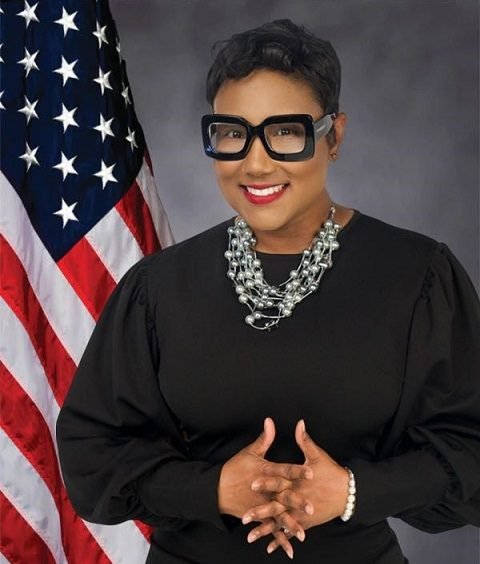
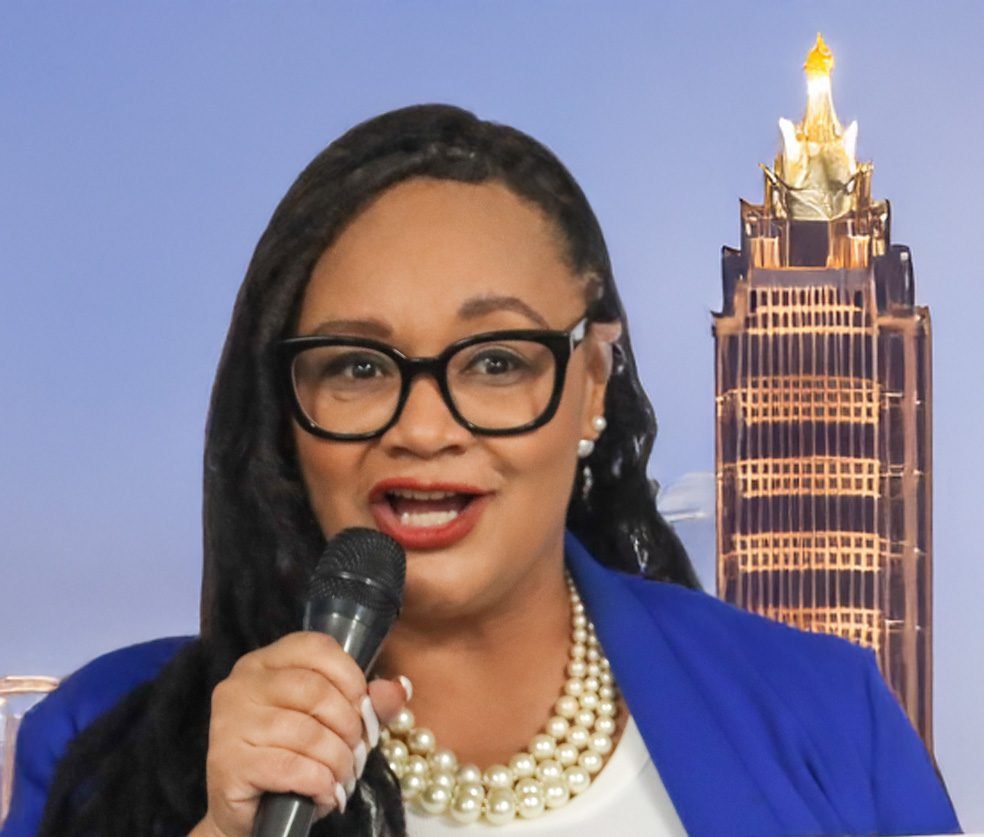
Lorraine Cochran-Johnson will be sworn in as DeKalb County’s sixth CEO on January 10, 2025, marking a historic milestone as the first African American woman to hold the position.


By Milton Kirby | Atlanta, GA December 22, 2024

Lorraine Cochran-Johnson will be sworn in as the sixth Chief Executive Officer (CEO) of DeKalb County, Georgia, on January 10, 2025. She will mark a historic milestone as the first African American woman to hold the position. This momentous occasion highlights a significant chapter in DeKalb County’s governance history, showcasing its evolution and progress over the decades.

A Journey of Dedication and Public Service

Cochran-Johnson’s rise to leadership is rooted in her extensive background in public administration and community engagement. Originally from Greenville, Alabama, and an eighteen-year resident of DeKalb County, GA, she attended Troy University, where she earned a Bachelor of Science degree in Political Science and Criminal Justice. Her academic journey continued at Auburn University, where she received a Master of Public Administration with a concentration in Economic Development and Grant Writing. She later attended John Marshall Law School, further broadening her expertise.

Before entering politics, Cochran-Johnson held various roles emphasizing public service and community development. Her active involvement in civic organizations across DeKalb County helped her gain an in-depth understanding of the challenges faced by its residents. In 2017, she was elected to represent District 7 on the Board of Commissioners, which includes areas such as Stonecrest and Lithonia. Her tenure as commissioner brought innovative ideas and transformative leadership to the district.

Celebrating Leadership: A Panel with Past CEOs

As part of her inaugural activities, Cochran-Johnson will moderate a panel discussion featuring four of DeKalb County’s previous CEOs: Liane Levetan, Vernon Jones, Burrell Ellis, and Michael Thurmond. This historic gathering will reflect on the county’s past challenges and achievements while setting the stage for its future. The panel will honor Manuel Maloof, DeKalb County’s first CEO, who served from 1984 to 1992 and passed away in 2004.

DeKalb County: A Unique Governance Model

DeKalb County is Georgia’s fourth-most populous county and boasts the highest population density in the Atlanta metropolitan area. Its transition to a CEO-led government in 1981 marked a pivotal shift in its governance structure, distinguishing it from other Georgia counties. The CEO model was designed to centralize leadership and streamline decision-making, addressing inefficiencies under the previous commission-led system.

Under this governance framework, the CEO serves as the county’s chief executive, responsible for day-to-day operations, appointing department heads, and proposing budgets. Meanwhile, the Board of Commissioners retains legislative authority, approving ordinances, budgets, and policies. This balance aims to foster accountability and efficient administration.

A Legacy of Leadership

DeKalb County’s CEO position has been instrumental in shaping its governance and growth. Each CEO brought distinct strengths and faced unique challenges during their tenure:

  • Manuel Maloof (1984–1992): As the inaugural CEO, Maloof centralized governance and prioritized infrastructure improvements. His tenure set the foundation for DeKalb’s transformation into a bustling suburban community.
  • Liane Levetan (1993–2000): The first woman to serve as CEO, Levetan championed environmental preservation, economic growth, and inclusivity in leadership. Her omnipresence set the tone for strong executive leadership at the helm of county government. 
  • Vernon Jones (2001–2008): The first African American CEO, Jones emphasized infrastructure development and greenspace expansion. He championed DeKalb County’s emergence as a metropolitan epicenter. 
  • Burrell Ellis (2009–2016):  Ellis worked to restore the county’s fiscal stability in the aftermath of the Great Recession, emphasizing government reorganization, community engagement, and laying the foundation for renewed economic growth through water and sewer system reconstruction. His ONE DeKalb initiative was renowned as a model for civic engagement. 
  • Lee May (Interim, 2013–2016): Appointed following Ellis’ suspension, May worked to restore trust and stability during a turbulent period.
  • Michael Thurmond (2017–present): Thurmond’s leadership has been characterized by fiscal responsibility, infrastructure improvements, and a focus on public safety.

The Evolution of DeKalb County’s Governance

DeKalb County’s adoption of the CEO model was a response to its rapid growth and urbanization during the late 20th century. This change was adopted to address the county’s increasing complexity by creating a centralized executive role. Voter approval in a 1981 referendum signaled strong public support for the modernization of its governance.

Key reasons for this transition included:

  1. Improved Accountability: The CEO model centralized decision-making, providing clear leadership and accountability.
  2. Administrative Efficiency: Streamlined operations reduced inefficiencies in managing the county’s growing population and services.
  3. Adaptation to Urban Growth: The shift reflected DeKalb’s evolution from a rural area to a major suburban hub within the Atlanta metropolitan region.
  4. Public Support: Voters recognized the need for a more robust governance structure to address emerging challenges.
  5. Spotlight on Leadership: Past CEOs’ Achievements and Challenges

Manuel Maloof (1984–1992)

As DeKalb’s first CEO, Manuel Maloof played a pivotal role in defining the position’s responsibilities. His leadership focused on modernizing governance, investing in public infrastructure, and advocating for community needs. While balancing growth and resident concerns, Maloof laid the groundwork for DeKalb’s future development. He championed initiatives to streamline the permitting process for small businesses and fostered partnerships between the government and local entrepreneurs.

Photo Courtesy Atlanta Magazine – Manuel Maloof

Maloof is remembered as a leader who brought accountability, growth, and a personal touch to DeKalb County’s government. His work established DeKalb as a model for suburban governance in Georgia and the broader Southeast. Maloof’s influence extended beyond politics through his ownership and work at Manuel’s Tavern, cementing his place as a beloved figure in Atlanta’s civic life.

One of Maloof’s quotes: “Leadership isn’t about sitting behind a desk. It’s about rolling up your sleeves and solving real problems for real people.”

Liane Levetan (1993–2000)

Liane Levetan broke barriers as the first female CEO of DeKalb County. Her tenure emphasized environmental preservation, balanced development, and inclusivity. Signature initiatives included expanding parks, promoting recycling programs, and advocating for transit-oriented development. Her leadership inspired future generations of women in politics.

Levetan’s emphasis on green space preservation and environmental sustainability left a lasting impact on the county’s landscape. Her administration set a precedent for diversity and inclusion in DeKalb County governance.

Expansion of the Mason Mill Park and improvements to its facilities, including trails and picnic areas. The creation of the PATH trail system, connecting neighborhoods and parks with multi-use trails, was a major milestone.

Photo Courtesy of Liane Levetan

Her tireless efforts have ensured that Arabia Mountain will be a focal point for conservation and recreation for years to come. Located in southeast DeKalb County, it is a granite outcrop similar to Stone Mountain surrounded by diverse ecosystems, including forests, wetlands, and lakes. She quipped, “Arabia Mountain isn’t just a place—it’s a legacy. Preserving it ensures future generations can experience its wonder.”

Levetan personally participated in trail-blazing events, often walking alongside community volunteers to mark potential trail routes. She was known to say:

Levetan quoted on being the first female CEO: “Breaking barriers is never easy, but every step forward creates a path for others. I’m proud to be the first woman in this role, but I look forward to the day when it’s no longer remarkable.”

Vernon Jones (2001–2008)

One of the main highlights of Jones’ administration was his focus on economic development and improving the infrastructure of DeKalb County. He sought to attract businesses, improve housing, and revitalize the county’s commercial areas. Under his leadership, several major projects aimed at boosting the county’s economy were initiated, including the development of new commercial properties, industrial sites, and improved transportation systems.

Photo Courtesy Vernon Jones

Jones was instrumental in advocating for improved infrastructure in DeKalb, including the expansion and modernization of roads, public transportation services, and the county’s water and sewer systems. He focused on improving traffic flow, which had become a significant concern as the county’s population grew.

CEO Jones prioritized public safety, increasing funding for police and fire services. He also worked to modernize emergency services, including the establishment of new fire stations and improvements to police equipment and training programs.

Jones created several community engagement programs focused on youth development, senior services, and improving the quality of life for residents. His administration introduced initiatives such as the DeKalb Summer Youth Employment Program, which provided job opportunities and training for young people in the county.

Mr. Jones also worked to improve the environmental conditions in DeKalb County. This included efforts to improve waste management and increase recycling programs. He also promoted green space preservation and conservation efforts.

Vernon Jones focused on infrastructure improvements and economic development. Despite notable achievements, including public safety enhancements and community engagement programs.

Burrell Ellis (2009–2016)

Burrell Ellis was elected CEO (Chief Executive Officer) of DeKalb County in 2008. He took office in January 2009. Prior to serving as CEO, Ellis had a history of public service, having served as a member of the DeKalb County Commission from 2000 to 2008, representing District 5.

Photo By Milton Kirby – Burrell Ellis

Like many other local governments, DeKalb County faced significant fiscal challenges during Ellis’ tenure as CEO. These included the effects of the Great Recession, which made budgeting more challenging. Ellis worked to manage the county’s budget through a combination of cost-cutting measures and increased revenue efforts.

Ellis focused on improving the county’s government’s efficiency and accountability. He introduced initiatives to reduce waste and fraud in county departments.

CEO Ellis prioritized public safety by focusing on expanding police services and addressing high crime rates in certain areas of the county. He advocated for additional resources for law enforcement agencies and emergency services

Ellis’ administration prioritized fiscal management and government reform during a challenging economic period. However, legal troubles dampened his accomplishments, culminating in a conviction that was later reversed on appeal.

As a result of the Georgia Supreme Court ruling, Ellis was reimbursed more than a million dollars in legal fees. He also received back pay that covered his suspension period and he completed the remaining time of his term in office.

His tenure highlighted the complexities of balancing governance, public trust, and fiscal responsibility.

Michael Thurmond (2017–present)

Michael Thurmond’s Leadership brought stability to DeKalb County after a tumultuous period. His focus on fiscal responsibility, infrastructure revitalization, and public safety has been widely praised. Thurmond’s collaborative approach has strengthened community trust and positioned the county for continued growth.

Photo by Milton Kirby – Michael Thurmond

DeKalb County will close the 2024 fiscal year with a $150 million rainy day fund, a major turnaround from the $27 million deficit the county faced in 2017 when Thurmond took office. Thurmond launched a financial recovery plan upon taking office, and his administration has worked with county leaders to erase the deficit and build up a substantial reserve.

Looking Ahead: Cochran-Johnson’s Vision

As DeKalb County’s newly elected CEO, Lorraine Cochran-Johnson aims to build on the successes of her predecessors while addressing the county’s evolving needs. Her background in public administration and commitment to community engagement provide a strong foundation for her leadership. By fostering dialogue with past leaders, she seeks to honor DeKalb’s rich history while charting a bold course for its future.

Cochran-Johnson plans to tackle DeKalb’s housing affordability crisis, accelerate infrastructure modernization, and expand programs to support small businesses, all while emphasizing transparency and civic engagement.

Cochran-Johnson’s inauguration marks a new chapter in DeKalb County’s journey, one defined by innovation, inclusivity, and a shared commitment to progress.

Related

President Biden Announces Clemency for Nearly 1,500 Americans

President Joe Biden grants clemency to nearly 1,500 Americans, the largest single-day grant in modern history, commuting sentences and pardoning individuals convicted of non-violent crimes.

By Milton Kirby | Washington, DC | December 12, 2024

In a historic move, President Joe Biden has granted clemency to nearly 1,500 Americans, the largest single-day grant in modern history. This action includes commuting the sentences of close to 1,500 individuals placed on home confinement during the COVID-19 pandemic and pardoning 39 individuals convicted of non-violent crimes. These individuals have demonstrated successful rehabilitation and a strong commitment to making their communities safer. The White House said, “the 1,500 people had been serving long prison sentences that would have been shorter under today’s laws and practices.”

A Historic Day for Clemency

This unprecedented act builds on President Biden’s commitment to criminal justice reform, aiming to reunite families, strengthen communities, and help individuals reintegrate into society. At this point in his presidency, Biden has issued more commutations than any of his recent predecessors. Notably, he is the first president to grant categorical pardons for simple marijuana possession and for certain LGBTQI+ service members convicted due to their sexual orientation.

Who Received Clemency?

The individuals granted clemency today include:

  • A decorated military veteran and pilot who helps church members with health challenges and strenuous tasks.
  • A nurse who led emergency response efforts during natural disasters and spearheaded COVID-19 vaccination campaigns.
  • An addiction counselor who volunteers to mentor young people, helping them avoid destructive behaviors and gang involvement.

As President Biden has often stated, the United States is a nation of second chances. Through clemency, he seeks to advance equal justice under the law and remedy the harms caused by outdated practices.

Commutations and Pardons in Detail

The nearly 1,500 individuals receiving sentence commutations have been serving time on home confinement under the CARES Act for at least one year. They have shown their commitment to rehabilitation by securing employment, pursuing education, and reintegrating into their communities. The 39 individuals granted pardons were convicted of non-violent crimes, including drug offenses, and have since turned their lives around. These recipients are parents, veterans, healthcare professionals, teachers, and advocates who use their experiences to inspire others.

President Biden’s Clemency Record

President Biden has consistently used his clemency power to address injustices and provide second chances. Key clemency actions throughout his administration include:

  • April 2022: Granted clemency to individuals with drug-related offenses and those on CARES Act home confinement, including three pardons and 75 commutations.
  • December 2022: Pardoned six individuals with drug- and alcohol-related offenses.
  • April 2023: Issued 31 commutations to individuals on CARES Act home confinement.
  • December 2023 & April 2024: Pardoned 11 individuals and commuted 16 sentences for non-violent drug offenses.

These actions have positively transformed lives by addressing barriers such as housing, employment, education, and healthcare often faced by those with federal convictions.

Categorical Clemency Actions

In addition to individual clemency, President Biden has taken bold steps with categorical clemency:

  • October 2022: Issued a full pardon for simple possession of marijuana.
  • December 2023: Expanded marijuana-related pardons to include attempted possession and use offenses.
  • June 2024: Granted categorical pardons to former service members convicted of offenses based on consensual, private conduct related to their sexual orientation between 1951 and 2013.

These systemic actions have inspired states like Maryland and Massachusetts to follow suit, granting categorical clemency for marijuana convictions and helping individuals rebuild their lives.

Moving Forward

While today’s announcement marks significant progress, President Biden’s work is far from over. The administration will continue reviewing clemency petitions to advance equity, justice, and public safety. By promoting rehabilitation and reentry, the President reaffirms his belief in second chances and the transformative power of justice reform.

President Biden marks historic 40th Black female judge confirmed to federal bench

President Biden’s historic 40th Black female judge, Tiffany Rene Johnson, was confirmed to the federal bench, tying the record for most Black lifetime judges confirmed during a presidency.

By Gerren Keith Gaynor – TheGrio | December 10, 2024

President Joe Biden marked yet another historic moment for his administration in his final days in office on Monday when the U.S. Senate confirmed his 40th Black female judge to the federal bench.

As part of an effort to seat as many federal judges before President-elect Donald Trump returns to the White House on Jan. 20, the Senate confirmed Tiffany Rene Johnson to serve on the Northern District of Georgia. Judge Johnson is only the third Black woman to serve a lifetime appointment on the court. Johnson’s confirmation also ties the record for the most Black lifetime judges (62) confirmed during a presidency. 

According to data tracked by The Leadership Conference on Civil and Human Rights, President Biden’s appointment of 62 Black lifetime judges is the highest in a single term. During his one term in office, President Jimmy Carter appointed 37 Black lifetime judges, as did President Bill Clinton during his first term. Over the course of their two terms in office, President Barack Obama and Clinton each appointed 62 Black judges.

During his first term, President Trump appointed only two Black women out of 234 judges to the federal bench, which is less than 1% of his appointments. Trump nominated no Black judges to federal circuit courts.

Since taking office, President Biden has vowed to reshape the federal judiciary to reflect America’s diversity. His most historic and notable appointment was Justice Ketanji Brown Jackson, who was confirmed as the first Black woman to serve on the U.S. Supreme Court in April 2022. 

Courtesy Supreme Court Ketanji Brown Jackson

Biden has appointed several “first” Black judges across the nation’s district courts and courts of appeals, including Tiffany Cunningham, the first Black judge to serve on the U.S. Court of Appeals for the Federal Circuit; Dana Douglas, the first Black woman to serve on the U.S. Court of Appeals for the Fifth Circuit; and Jerry Edwards, Jr., the first Black judge to serve on U.S. District Court for the Western District of Louisiana.

In addition to this record appointment, the Leadership Conference also noted that among President Biden’s Black female judicial selections, more than half of them bring what advocates celebrate as important professional experiences to the federal bench as former civil rights lawyers and public defenders.

The steady appointments from President Biden (and confirmations by the Senate) are seen as necessary in his final 41 days in the Oval Office, not only to fulfill his goal of transforming the federal judiciary but also to preserve his legislative legacy. Many of his policies — and those enacted by President Trump in his second term — could be challenged in the courts in the coming months and years. The ideological bent of federal judges will undoubtedly have major implications.

Loretta Green, 89, Wears Her Poll Tax Certificate as a Badge of Perseverance

Loretta Green’s Story: At 89, Loretta Green has been voting since 1960 and has a poll tax exemption certificate, symbolizing her resilience in the fight for voting rights, which she continues to advocate for today.

By Milton Kirby – Atlanta, GA – November 6, 2024

At 89 years old, Loretta Green, originally from Mobile, Alabama, and now an Atlanta resident has been casting her ballot since 1960—and she has a poll tax exemption certificate to prove it. For Green, this certificate is more than a document; it’s a testament to the resilience of voting rights. She knocked on doors this Election Day, rallying support for Vice President Kamala Harris and encouraging registered voters to make their voices heard.

Green’s journey in voter advocacy spans decades, rooted in a history of discrimination and unyielding perseverance. After the Civil War and throughout Reconstruction, Southern states enacted laws designed to curtail the voting rights of newly freed Black citizens. Chief among these barriers was the poll tax—a fee that, though small, effectively barred countless Black and poor White citizens from the ballot box.

The tax, ranging from $1 to $2 (roughly $20 to $40 today), was required annually, and voters often had to show proof of past payments to remain eligible. This and other discriminatory tactics sought to undermine the Fifteenth Amendment’s promise of voting rights, carefully crafted to avoid federal intervention while systematically disenfranchising African Americans.

This unjust barrier persisted until the mid-20th century when the civil rights movement brought national attention to voting rights. Although the Supreme Court initially upheld poll taxes in Breedlove v. Suttles in 1937, the tide turned with ratifying the 24th Amendment in 1964, which abolished poll taxes in federal elections. Two years later, the Supreme Court further ruled in Harper v. Virginia Board of Elections that poll taxes in all elections, state and local, were unconstitutional—ushering in an era of more inclusive democracy.

Ms. Green has attended countless voter rallies over the years, proudly displaying her poll tax exemption certificate as a reminder of past obstacles and the progress achieved. For Green, this certificate is a powerful symbol of the struggle and the triumph in the long fight for equal voting rights. She continues to inspire her community this Election Day, sharing her story as a reminder of the sacrifices made to secure the right to vote for all Americans.

November 5th – A Day of Change?

Election Day in the US: Voters across the country cast their ballots, with many expressing relief, optimism, and a sense of civic duty. For some, this election marks a personal milestone, such as voting for the first time.

By Milton Kirby – Atlanta, GA – November 5, 2024

As dawn broke on November 5th, voters across the United States began lining up to cast their ballots, eager to participate in what some see as a critical election for the future of the country. Polls opened at 7:00 a.m. and will close between 6:00 p.m. and 8:00 p.m. in various jurisdictions. In some areas, lines began to form well before 6:30 a.m., underscoring the commitment of many Americans to make their voices heard.

At the polling place located at the New Birth Missionary Baptist Church in South DeKalb County, Georgia, voters expressed various thoughts and emotions as they exited the voting booths.

Terrance Olive, a Rockdale County resident, cast his ballot on the first day of early voting. Today, he returned to the polling site to support his wife, who is working as a poll worker. Reflecting on the campaign season, Mr. Olive said he felt relieved that Election Day had finally arrived, as it marked the end of a relentless barrage of political advertisements. He expressed optimism about a smooth transition in leadership, confident that the country would avoid the heated discourse seen in 2020.

For 43-year-old Ja’Ron Clark, this election marks a personal milestone: his very first-time voting. His decision to participate came after persistent encouragement from his mother. Mr. Clark prepared for his vote by watching the recent presidential debate, eager to understand each candidate’s platform.

Learning about his family’s history, particularly discovering in his thirties that his grandmother had been a house-enslaved person, has profoundly impacted him, shaping his understanding of civic duty and motivating his participation.

Another voter, Konrad Crowder of Lithonia, Georgia, shared his perspective. An experienced voter in both local and national elections, Mr. Crowder expressed confidence in Vice President Harris, saying, “I tend to believe more in what Harris says and that she will stand by it.” He expressed doubts about the sincerity of former President Trump’s policies, voicing concerns that his focus seemed to benefit “his rich friends.” Crowder, like many others, found the voting process straightforward and efficient.

As the day continues, voters nationwide will cast their ballots, each vote contributing to a potential turning point in the country’s future. For many, November 5th is more than just a date on the calendar – it’s a day to make a change.

Early Voting in Georgia ends on high note

By Milton Kirby – Atlanta, GA – November 4, 2024

Early voting ended on Friday, November 1st, in the battleground state of Georgia. Four million four thousand five hundred eighty-eight voters had cast ballots either by voting early or absentee by mail. With 55.3% turnout, Georgians cast 3,761,968 ballots during Early Voting and 242,620 ballots by mail.

As of Saturday morning, 92 Georgia counties have exceeded 50% turnout. This is unprecedented in Georgia’s history.

During Early Voting in 2018, 1,890,364 voters cast ballots. 2,697,822 cast ballots in 2020, and 2,289,933 cast ballots in 2022.

“This was the most successful early voting period in Georgia’s history because voters trusted the process,” said Secretary of State Brad Raffensperger. “Four years of progress brought us here. We’re battle-tested and ready, regardless of what the critics say. And we’re going to hold those who interfere in our elections accountable.”

Statewide, reports of long lines were minimal. However, there were some reports of voters waiting in line for more than 30 minutes from a few popular voting locations in metro Atlanta areas. Now that early voting has ended, voters who have not yet cast their ballot should confirm their polling location on My Voter Page and cast a ballot on Tuesday, November 5th. 

According to TargetSmart, 76,183,090 votes have been cast as early in-person or mail-in. 41% of those votes cast were by registered democrats, 39% registered republicans and 20% other.

As Election Day nears, millions of voters have already cast their ballots nationwide.

According to data from the University of Florida’s Election Lab, whether through mail-in ballots or early in-person polling stations, more than 70 million Americans, roughly 44% of the 2020 turnout, had voted against standing in line on Election Day as of Friday afternoon.

Academic experts, reporters, and pundits have been going through basic and limited data gleaned from the early voting numbers, trying to get clues about tomorrow’s outcome.

A flip in the ways people vote early

Voting trends have shown that more people have been choosing to cast their ballots before Election Day, and this has increased in numbers over the last 30 years, but 2020 turned out to be a major outlier.

In the last presidential election, 69% of the 158 million total votes were cast before Election Day either through the mail, which included mail ballots dropped off in person, or at early voting poll sites, according to data from the Michigan Institute of Technology.

According to the data, some 43% of the 2020 early votes came from mail ballots.

The shift in voting patterns is apparent in Georgia, which has seen record early voting numbers, with over 4 million ballots cast as of Saturday. According to the Georgia Secretary of State’s office, roughly 92% of those were cast at in-person polling places and the rest via mail.

Some states, including swing states Pennsylvania, North Carolina and Arizona, only offer early voting through in-person absentee options. Under this option, a voter must request an absentee ballot, fill it out, and deposit it in a ballot box or at a designated location. They are counted as a mail ballot voter.

US News has labeled seven states as Swing States during the 2024 election cycle.

Those states are listed below with their respective electoral votes:

Arizona 11, Georgia 16, Michigan 15, Nevada 6, North Carolina 16, Pennsylvania 19, and Wisconsin 10.

A total of 17,882,174 votes have been cast in these seven swing states. Of which, registered democrats have cast 40% or 7,179,095. Thirty-nine percent or 6,938,594 have been cast by registered republicans. The most astonishing fact in these swing states is that 21% of the votes cast were by other voters. They reinforce that the 2024 presidential election will be decided by independent voters and the candidates’ ability to connect with and convince those independent voters that their plan and road map for the country is the best direction in which to go.

Exit mobile version