Decatur’s Brian Norman Jr Inks Multi-Year Deal with Top Rank, Eyes Haney Showdown

Decatur’s Brian Norman Jr. extends Top Rank deal, defending his WBO welterweight title against Devin Haney in Riyadh after knockouts in San Diego and Tokyo cemented his rise.

By Milton Kirby | Las Vegas, NV | September 6, 2025

Brian “The Assassin II” Norman Jr. has just signed a new multi-year deal with Top Rank. At only 24, the undefeated welterweight champ is betting on loyalty, staying with the promoter who believed in him from day one.

And now, the stage is set. On Nov. 22, halfway across the world in Riyadh, Saudi Arabia, Norman will defend his WBO crown against none other than Devin “The Dream” Haney.

“This is just the start,” Norman said. “Top Rank believed in me, and I’m building with the home team.”

From Decatur to the desert lights

Folks around Decatur remember Norman as a teenager already packing dynamite in both fists. He turned pro at 17, often fighting in small Mexican rings to stay busy. By 22-0, he caught Top Rank’s eye and inked a deal in 2022.

The rise hasn’t been smooth. In 2024, he walked straight into San Diego and silenced Giovani Santillan’s crowd with a 10th-round stoppage. That win earned him the WBO interim title, which was later upgraded to full champion when Terence Crawford stepped aside.

A hand injury benched him for the rest of that year, but Norman came roaring back. First, a March 2025 knockout of Derrieck Cuevas. Then, a June masterpiece in Tokyo — a left hook that left Jin Sasaki flat on the canvas and fans gasping. Knockout of the Year? No doubt.

A team effort

Behind Norman is a circle that has remained steady from the beginning: his father, Brian Sr.; adviser Adrian Clark; Jolene Mizzone; and veteran matchmakers Brad Goodman and Bruce Trampler.

Clark put it plain: “It’s been a total team effort. We’re proud to keep pushing forward with Top Rank.”

The fight ahead

With 28 wins, 22 by knockout, Norman now faces his biggest test in Devin Haney — a technician known for his slick defense and ring IQ. Riyadh will host the clash, but back home in Decatur, fans will be watching every punch. From the quiet gyms off Candler Road to the bright lights overseas, Brian Norman Jr. carries Atlanta pride with him. This next fight is more than a title defense. It’s a chance to prove he belongs among the legends.

Related articles

Brian Norman, Jr.: The Kid Next Door and World Champion

Norman vs. Haney: Unbeaten Stars Collide for Welterweight Supremacy

Brian Norman Jr. Falls Short as Haney Claims WBO Welterweight Crown in Riyadh

Please consider supporting open, independent journalism – no contribution is too small!


Negro League Conference Unveils More History and Takes on Future Challenges

The 2025 Jerry Malloy Negro League Conference in Louisville celebrated Black baseball history with films, panels, and a grave marker dedication, while addressing future challenges of diversity and memory.


By Milton Kirby | Louisville, KY | August 31, 2025

The Society for American Baseball Research (SABR) brought its annual Jerry Malloy Negro League Conference (JMNLC) to Louisville, Kentucky, August 7–9, filling the Galt House Hotel with scholars, historians, fans, and community leaders devoted to preserving the legacy of Black baseball.

This year’s gathering highlighted the cultural and historical depth of the Negro Leagues. Attendees viewed the premiere of I Forgot to Tell You About: The Story of the Cleveland Buckeyes, followed by a panel with former All-Star Kenny Lofton, filmmaker Evelyn Pollard-Gregory, and authors Wayne Pearsall and Vince Guerrieri. The weekend also featured poet Dorian Hairston, a Louisville Baseball History Panel with Harry Rothgerber and Anne Jewell, and a film screening on Black baseball in Nashville.

Historians Gather @ History Museum

Participants enjoyed a tour of the Louisville Slugger Museum & Factory, a reception at the Roots 101 African American Museum, and a Louisville Bats game at Slugger Field. Presenters included longtime researchers such as James Brunson III, Larry McGill, Gary Gillette, Keith Wood, and others who continue to shed light on overlooked chapters of African American baseball.

Honoring Sammy Hughes

The conference closed with a powerful moment on Sunday, August 10, when SABR’s Pee Wee Reese Chapter, working with the Louisville Bats and Louisville Slugger Museum, placed a long-awaited grave marker for Negro Leagues great Sammy Hughes at Louisville Cemetery. Known as “Sammy T,” Hughes was a six-time All-Star second baseman who played with 17 Hall of Fame players (Roy Campanella, Biz Mackey, Mule Suttles, Willie Wells, Josh Gibson, Buck Leonard, Cool Papa Bell, Ray Brown, Ray Dandridge, Turkey Stearnes, Leon Day, Martin Dihigo, Willie Foster, Judy Johnson, Satchel Paige, Hilton Smith, and Jud Wilson), and captured a 1939 Negro National League title with the Baltimore Elite Giants. After his death in 1981, Hughes had lain in an unmarked grave for 44 years.

Dorian Hairston (L) – Chris Jensen (R)
JMNLC Speakers

History and Mission

Since its founding in 1998, the Jerry Malloy Negro League Conference has been the only national symposium devoted exclusively to Black baseball history. Named for journalist and historian Jerry Malloy (1946–2000), the event reflects the mission of SABR’s Negro Leagues Committee, founded in 1971, to encourage research into the Negro Leagues, pre-Negro League baseball, and the broader African American impact on the game.

Founders such as Ted Knorr, Dick Clark, Larry Lester, Leslie Heaphy, and Malloy himself envisioned a forum where scholarship, storytelling, and community could meet. Their vision still guides today’s gatherings, with annual presentations, trivia contests, youth scholarships, library grants, and the ongoing Negro Leagues Baseball Grave Marker Project, which has provided headstones for more than 30 forgotten players.

The Future: Carrying the Flame

This year’s conference not only honored history but also raised questions about the future. Organizers acknowledged the challenge of drawing more diverse participants and sustaining momentum at a time when diversity initiatives are under political attack.

The Malloy is the place where connections are made, and ideas are born,” said committee co-chair Todd Peterson. “Good trouble always has, and always will be, made here.”

Fellow co-chair James Brunson added, “The conference bridges past and present. Nothing is foreign, forbidden, or impossible with this group.”

Looking ahead, leaders emphasized Larry Lester’s “Three R’s” — Recognition, Respect, Redemption— as guiding principles for expanding the conference’s reach while ensuring that the painful history of baseball’s color line remains central to public memory.

In the words of one participant, the Malloy is not simply about baseball statistics or forgotten box scores, but about resisting historical amnesia, confronting injustice, and keeping alive the stories of the players who laid the groundwork for integration and equity in sport.

As Peterson concluded: “We are the keepers of the flame. We must be the bulwark against attempts to whitewash the past.”

Please consider supporting open, independent journalism – no contribution is too small!

Why Rap Dixon Belongs in Cooperstown with the Legends

Negro Leagues star Rap Dixon, a five-tool outfielder from Harrisburg, earned Hall of Fame-worthy praise from legends like Oscar Charleston and dominated globally.


By Ted Knorr & Chris Rainey | Harrisburg, PA | Updated August 22, 2025

On December 12, 2018, at the Negro League Baseball Museum in Kansas City, Missouri, Museum President Bob Kendrick, with historian Jay Caldwell, announced the Negro League Centennial Team. The team was a key part of the Museum’s celebration in 2020 of the 100th anniversary of the founding of the Negro Leagues. The team of 30 players, a manager, and an owner was to honor the greatest Negro League players of all-time. Of the 19 position players on the team, only one was not already enshrined in the National Baseball Hall of Fame in Cooperstown, New York — Herbert Alphonso “Rap” Dixon.

Further affirmation of Rap Dixon’s greatness was provided 70 years earlier when in 1949, the greatest of all Negro League outfielders, Oscar Charleston, was asked by a reporter from the Philadelphia Evening Bulletin for his all-time Negro League lineup, Charleston, whose career began before the Negro Leagues were organized, and ended several years after their demise as a major league, offered his team. In the outfield, he placed future Hall of Famers Martin Dihigo in left and Cristobal Torriente in right … between that pair, at his old position of center field, he inserted Rap Dixon. High praise indeed for a lesser-known player among the pantheon of Negro League stars.

A 6-foot-1, 185-pound dynamo who batted and threw right-handed, and played all three outfield positions, Dixon was a classic five-tool player: hitting for both power and average, running, fielding, and throwing. He also had a knack for performing well on the big stage. During his 16-year career, he was a key player on great teams in the Negro Leagues as well as in offseason leagues and a tour of Japan.

Herbert Alphonso Dixon was born on September 15, 1902, in Kingston, Georgia, about 56 miles northwest of Atlanta. He was the first of John and Rosa Goodwin Dixon’s five children. Herbert and his younger brother Paul (also a future Negro League outfielder) developed their rudimentary baseball talents in Georgia’s rural farm country.

Photo courtesy of Phillip Dewey – Rap Dixon

Just before the First World War, Rosa’s brother Oliver P. Goodwin accepted a position in Steelton, Pennsylvania, as pastor of the First Baptist Church. Steelton lies along the Susquehanna River south of the state capital of Harrisburg. Shortly thereafter, additional Dixon and Goodwin families, including John and Rosa Dixon, headed north for greener pastures, joining approximately 1.6 million African Americans opting to leave the South as part of the Great Migration.

The Dixon and Goodwin families settled on Adams Street near Uncle Oliver’s church. Just down the street was the Hygienic School for Colored Children, where Herbert began formal education. He graduated from eighth grade on May 23, 1919, before matriculating at Steelton High School. Herbert’s extracurriculars, in addition to baseball, included boxing, football, and playing the trumpet in the school band. In addition, Herbert worked part-time in the steel mill once he was old enough. According to Chappie Gardner: “[Dixon] got his wonderful strength of arms and shoulder from throwing pig iron billets at the crane operators in the steel mills.”

Herbert Dixon completed only two years of high school. Purportedly, Dixon’s schooling ended, and his “career in baseball started one day when his high school science teacher announced that the class was going to dissect a cat. Dixon, feeling squeamish, exited quickly and went straight to a sporting goods store; with the money he had earned working weekends at the Bethlehem Steel Company, he purchased a glove and bat, took a train to Atlantic City, and joined the Bacharach Giants.” Neither Seamheads.com nor Baseball-Reference.com lists him playing any games with the Giants that year.

By 1919, Dixon became a regular with Steelton’s semipro Keystone Giants. On May 31, the Harrisburg Telegraph announced that “Dixon, the Giants new shortstop, played fast ball and made two healthy swats” in an 8-3 victory over the Middletown White Sox. Dixon usually batted leadoff and was one of the team’s stars, even at age 16.

Perhaps the biggest game for young Herbert with Steelton came on July 16, 1921, at Harrisburg’s Island Park, when they took on the best of the local semipro clubs — Colonel W. Strothers’ Harrisburg Giants. The upstart Steelton club held a 9-4 lead into the bottom of the eighth inning before the more polished Harrisburg team rallied and eventually won the game in the 10th. Dixon played shortstop, batted third, and had two hits in the loss.

Herbert Dixon was briefly with the Keystone Giants in early May 1922 before Colonel Strothers recruited him. Dixon’s debut with Harrisburg occurred on May 20 against the powerful Hilldale Club when he stroked one hit in three at-bats with a run and a ribbie in a 5-3 loss. By mid-June, Dixon was the Harrisburg center fielder. When the veteran fly hawk, Jess Barbour, returned to the lineup, Dixon mainly played right field. Over the summer, he continuously upped his place in the batting order from eighth to fourth. The 1922 season ended on an unhappy note for Harrisburg as they lost their city title in a nine-game series against the fast Motive Power semipro team.

As the 1923 season dawned, Colonel Strothers struggled to find talent for his independent team competing against 14 teams in two leagues. These difficulties were eased when E.B. Lamar of the New York Bacharach Giants joined Harrisburg’s administrative team and brought with him several outstanding players, including outfielder Fats Jenkins, second baseman Dick Jackson, and pitchers Harold Treadwell and Nip Winters. In addition, Strothers brought in William Pettus of the Richmond Giants to anchor the infield at first and to manage the team.

By early 1923, Dixon’s nickname began to appear in print. There are two suggestions as to its origin. One supposes it was derived from the Rappahannock River, which flows through Virginia. How this relates to him is unclear. Sportswriter Chester L. Washington offered a more plausible suggestion: that it grew out of Dixon’s hitting ability while still in high school.

Washington claimed, “Rap hits the old apple with the same degree of force that made William Tell famous.”

The Giants’ primary opponent in 1923 was again the local Motive Power team. John Brackenridge, Motive Power’s manager, threw down the gauntlet in the offseason saying he had “signed the same aggregation of stars that annexed the City championship from Strothers’ Harrisburg Giants.” Unlike 1922, where the Giants got off to a slow start losing 11 of their first 17 contests, the 1923 Harrisburg team captured a dozen victories in their initial 17 games. They faced Ben Taylor’s Washington Potomacs nine times and emerged with six wins.

Dixon started the season slowly at the plate before being sidelined most of July with an undisclosed illness. It was a harbinger of the future for Dixon, who would be haunted by injury and illness during his career. He had powerful arms, but author James Riley called attention to his spindly legs. Riley also suggests that drinking was an issue with Dixon, especially later in his career.

The season culminated, as it had the previous year, with a series against Motive Power. The Giants dropped the opener, 7-4, on the Island Park field. Dixon’s bat led the team to an 8-3 victory in the second game. The remainder of the series was dominated by Giant’s pitcher Nip Winters, who captured three complete-game wins.

During the offseason, the Giants joined the ECL and signed Oscar Charleston to guide the team. Charleston arrived in Harrisburg on March 3, 1924. Immediately, he and Strothers began building a ballclub that Charleston thought could be a dark-horse contender. Retained were outfielders Dixon, Jenkins, and Barbour, and five others. Charleston brought four pitchers with him from the Indianapolis ABCs. Other fresh faces included first baseman Edgar Wesley from the Detroit Stars and pitcher Slim Branham. The new manager gushed about the potential he saw. “We got the stuff, boy, we got the stuff.”

The season began on April 19 with a non-league contest versus the York White Roses, featuring Del Bissonette. The Giants lost a close encounter, 3-1, and Dixon appeared as a defensive replacement for Dick Jackson, the second baseman. Charleston started in right field. Dixon saw little action early in the season as Jackson held down right field. At 21, Rap was the youngest member of the team and may not have won Charleston’s favor yet.

Dixon’s chance to impress came in early June in New York against the Lincoln Giants at the Catholic Protectory Grounds. In a doubleheader victory, he supplied five hits off a quartet of hurlers. By late June, Dixon had cemented his place in right field, joining Jenkins (left) and Charleston (center).

The trio was soon dubbed the “million-dollar outfield” and played together through the 1927 season. Combined, they posted a stellar .351 batting average (898-for-2559) in their time together. The trio is one of only 12 outfield groups that played four or more years together while featuring a future Hall of Famer. Local sportswriter Wellington “Welly” Jones said, “There is no better outfield than Dixon, Charleston, and Jenkins.”

While Dixon maintained his hold on the right-field spot, he hit only .259 in ECL action. His first ECL home run came on July 15 off Brooklyn’s Pud Flournoy. Jenkins batted .336, and Charleston dominated league pitching with 15 home runs and a .405 average. A revolving door at third base and a struggling pitching staff doomed the Giants to a 30-31 mark.

The following season, 1925, was the Harrisburg Giants’ high-water mark. Charleston captured his second consecutive triple crown (.427/20/97 in a 73-game ECL season). Jenkins hit .317 and scored 82 runs, while Dixon made his presence known, hitting .352/8/53. The team finished second (48-24-1, .664) behind Hilldale. The outfield trio was honored with both Charleston and Dixon being named first team All-East, and Jenkins as an honorable mention in left.

That fall, Dixon accepted an invitation from Hilldale’s Biz Mackey and joined the Philadelphia Royal Giants in the California Winter League. The team won the season’s second half with an overall record of 24-15-3. Dixon batted just .271 and usually was in the bottom of the order. He struck four hits as the Royal Giants swept the White King Soapsters in a three-game postseason battle.

The Royal Giants remained in the West after the Winter League season, playing local semipro squads and PCL teams. Dixon hit well in these exhibitions, although the most significant impression his bat made was on the head of Portland catcher Frank Tobin. In a game on March 19, Dixon swung and missed but knocked Tobin unconscious. The team wrapped up their stay in California in early April.

His fine 1925 season made Dixon a star. New York Giants manager John “Muggsy” McGraw told the press that winter that, “If that boy Dixon was not so black, I could make a Cuban out of him and the National League would have another star to talk about. He is, without question, one of the greatest outfielders in the United States.” Despite the glowing praise, Colonel Strothers listened to offers from Rube Foster that might have sent Dixon to Chicago.

In the 1926 season, Dixon again put up nice stats, .323/6/40, while playing 47 of the 49 league games. Charleston’s numbers dipped dramatically, and John Beckwith led the team with a .330 average. Perhaps it was his off-year or maybe the pitching staff’s 5.00 ERA, but, as his biographer Jeremy Beer notes, Charleston “increasingly edged into hotheadedness as the year dragged on.” The manager’s attitude rubbed off on his players. Dixon tried to fight an umpire in Baltimore. Shortstop Rev Cannady went further by slugging an umpire in the jaw. The team finished fourth in the ECL at 27-22.

When the ECL season ended, Dixon again joined Mackey in California. He joined a spectacular lineup featuring holdovers Mackey and Bullet Joe Rogan, plus Turkey StearnesWillie Wells, and Andy Cooper. After a decent (9-8) first half, the Royal Giants added Bill Foster. The team caught fire, winning 13 of 14 second-half decisions to capture the playoff qualifying title. In the playoffs, they split four games but failed to capture the official league title when the deciding fifth game with Shell Oil was never played.

Dixon batted .349 — third in the league behind Stearnes (.387) and Shell’s Bob Jones (.361) while leading the league in games and doubles. He finished second on the team (and league) in hits to Stearnes. As in the previous winter, he was the team’s left fielder.

After the season, Philadelphia Royal Giants owner/promoter Lonnie Goodwin desired to take the squad on a tour of Japan, Korea, and the Hawaiian Islands. With the core of his team under contract to Negro League teams such plans were not without controversy. Ownership threatened a five-year suspension on any Negro Leaguers who failed to show for spring training. Of the 14 players on the Winter League team only five risked the potential punishment — Mackey, Cooper, Dixon, Frank Duncan, and Neal Pullen.

On March 9, Goodwin and his team set sail on the La Plata Maru to Yokohama, Japan. The touring Royal Giants were not the same team that had participated in the California Winter League, but they remained a formidable unit. They arrived in Japan on March 29 to begin a 27-game schedule (22 games in Japan; 5 in Korea).

The major-league tour of Japan in 1934, featuring Babe Ruth, was highly influential in the birth of the Nippon Professional Baseball League. Writers also credit the two earlier Negro League tours for creating a love for the game in Japan. In his study of Ruth’s tour, Robert K. Fitts notes that the “Negro Leaguers conducted themselves far better than their white counterparts.” Years of barnstorming had taught them not to embarrass an opponent with antics or running up the score.

The tour opened on April 1 in Tokyo against the Keio University’s Mita Club, which five years earlier had defeated the Herb Hunter All-Stars, 9-3. The Mita Club fell, 2-0, to Cooper, and then Mackey beat them, 10-6, the following day. No box score exists for the opener, but Dixon went three for three with a double, a walk, and a sac fly in the second game. He followed that performance with a five-for-five day (including a triple and double) in cavernous Koshien Stadium.

The Japanese fans were in awe of Dixon’s bat, speed, and throwing arm. Dixon’s eighth consecutive hit was a mere appetizer for his next feat. Koshien Stadium had been built in 1924 with a left-center-field gap that measured 128 meters (420 feet). No native batter had hit or cleared the fence, but on April 6, Dixon smashed a ball that ricocheted off the wall for a triple. Dixon next wowed the fans at Jingu Stadium on April 28 after a 14-0 win. He stood at home plate and threw balls on target to players in the left-field seats.

After Emperor Hirohito commemorated the Japanese tour of Dixon and his mates by presenting them with a trophy, the team headed for Korea. Dixon pitched the May 19 game in present-day Daegu, picking up the victory, 14-2. From there, the team traveled to Honolulu, where they played for two weeks before heading back to the mainland. The threatened lengthy suspension had been reduced to approximately two weeks by ECL President Isaac Nutter.

Dixon finally returned to Harrisburg on July 22. Things were vastly different with the Giants as Oscar Charleston was being dealt to the Hilldale club, and John Beckwith was the manager. Charleston’s departure fell through, and he took the field with Dixon against a Brooklyn Royal Giants team rattled from an auto accident en route to the game.

Brooklyn’s late arrival and a rain shower held the game to just four-and-a-half innings with Harrisburg on top, 8-7. Dixon had a hit and scored a run while batting in the seventh spot and playing his traditional right field. Harrisburg had finished the first half with a 25-20 mark. They were 0-3 in the second half before the victory over Brooklyn. With their million-dollar outfield again intact, the team finished second and posted a 13-8 record after Dixon’s return. Dixon hit .282 in 21 league games.

Dixon returned to the California League that winter, but circumstances were far different than the previous year. A second Black team was entered, called the Cleveland Stars, with a roster that included Dixon’s former Royal Giants teammates Stearnes, Newt Allen, Crush Holloway, and Wells. In addition, Commissioner Landis had imposed restrictions on major leaguers playing in the circuit.

Besides the newly minted Stars, the Royal Giants’ main competition came from Pirrone’s All-Stars. Anchored by Babe Herman and Bob Meusel, Pirrone’s squad beat Dixon’s team early in the campaign, but then Herman and Meusel stopped play to comply with Landis’s edict. After their departure, the All-Stars faded, and the Royal Giants ran away with the title.

After his shortened season with Harrisburg, Dixon exploded in California. His .380 batting average was second in the league behind teammate Jess Hubbard (.442). He exhibited power with a league-leading six doubles and three triples in just 79 at-bats. His five home runs were second to Stearnes’ seven.

Dixon played with the Cleveland Giants in California in 1928-29. His .360 average was only sixth on the team. After a winter in Cuba, Dixon returned to California in 1930-31 with the Royal Giants. In five seasons on the coast, he batted .326 (156-479) and had 21 home runs.

Citing poor attendance, Colonel Strothers disbanded his Harrisburg team in March 1928. Dixon signed with the Baltimore Black Sox and turned in two of the finest seasons ever seen in baseball. In 1928, he posted a line of .398/13/58. They were nearly Triple Crown numbers had teammate Jud Wilson not hit .399 (.0006 points separated them). He also led the circuit with 34 walks. Using modern statistics, he posted an OPS of 1.180 and an OPS+ of 190.

The following year found the team in the American Negro League, where they captured the flag in both halves and posted a league (ANL) best 55-25 mark. In 76 games, Dixon produced even better numbers: .415/16/92. His OPS rose to 1.204 and his OPS+ to 191. Dixon’s marvelous season was jeopardized in July when he was beaned in a game with the Homestead Grays. He fearlessly returned to the lineup the next day and proceeded to rap out 14 consecutive league hits during the week. The streak started against the Grays and culminated on July 28 when he collected eight hits in a doubleheader versus Hilldale. The major-league record for consecutive hits is 12.. Including two walks against the Grays, he had 16 consecutive on-base appearances, which is bested only by Piggy Ward’s 17 in 1893.

Dixon did not go west in the offseason, opting instead to play in Cuba with Almendares. He displayed his power and speed, leading the league in stolen bases (19) and the team with five home runs. (Mule Suttles led the league with seven.)

Dixon entered the 1930 season as a 27-year-old, with his prime years ahead of him. Rather than improving on the two impressive seasons, he tailed off and found himself packing bags to go from team to team. He opened 1930 with the Black Sox and played the first Negro League games at Yankee Stadium in a doubleheader versus the Lincoln Giants on July 5.

Dixon had a reputation for saving his best for big occasions. He opened the scoring in the first game with a home run in the first inning off Bill Holland, but the Giants prevailed easily, 13-4. In the second game, Dixon again homered in the first, then added an inside-the-park blow to deep left-center in the third as Baltimore won, 5-3.

There were 15 Black ballclubs in 1930: nine in the NNL and six Eastern Independent teams. The competition between the two leagues led to players jumping from one circuit to the other. Dixon was one of three big names (with Suttles and Jenkins) to leave the Black Sox as he skipped to the NNL Chicago American Giants. He hit .305 with eight home runs in 49 games for Baltimore and Chicago.

Dixon opened the 1931 season playing left field for the Hilldale club that featured Mackey and Martin Dihigo. He struggled to a .226 average in 44 games before joining the Black Sox late in the season. In 1932, he reunited with manager Oscar Charleston with the Pittsburgh Crawfords. He wowed the fans at Greenlee Field on May 28 with a single and double, two stolen bases, and four runs scored in a 13-4 win over Birmingham. The Crawfords featured 20-year-old catcher Josh Gibson, whose eight home runs took the team title over Dixon’s seven home runs.

Dixon married Rosa (aka Rose) Yarbrough in August 1931 in Richmond, Virginia. The couple was divorced in October 1934, also in Richmond. The decree listed desertion as the cause and noted that Rap had not contested the proceedings. Dixon’s death certificate shows a second wife, Edith Dixon.

Dixon joined the independent Philadelphia Stars in 1933 and came out slugging. He hit a robust .360, finishing second on the team to Jud Wilson (.376). The Stars finished out of contention with a 22-13 mark. Fans rewarded Dixon with a spot on the East roster in the first East-West All-Star game. While the East squad lost 11-7, Dixon had a strong game, going 1-for-3 with a walk, sacrifice fly, and stolen base against Bill Foster.

In November 1933, Dixon joined Josh Gibson and league players on a boat trip to San Juan, Puerto Rico. The players formed a team that the Pittsburgh Courier called the Ramirez Stars. Following the Puerto Rican season, Dixon and Gibson joined the Concordia team from Venezuela. Dr. Leyton Revel and Luis Munoz list Dixon with 21 at-bats with Concordia. It has often been suggested that Dixon injured his back badly during the winter of 1933-34. Concordia played in four series, one of them going nine games, so it appears (from his limited at-bats) that Dixon was injured while with this team. We can further pinpoint the timing by noting that the Philadelphia Tribune reported a trade offer of Cool Papa Bell for Dixon in early February 1934. News of a serious injury had presumably not made its way back to the States by that time.

In the spring of 1934, the Philadelphia Stars released Dixon while he was in the hospital. Was he being treated for the back injury that plagued him the remainder of his life? Dixon’s numbers when he returned to action from 1934-37 indicate a severe downturn. He batted .272 in those seasons, 50 points below his career average.

The Baltimore Black Sox entered the NNL for the second half of the 1934 campaign, and Dixon served as their player/manager. Confident in his recovery, he used himself as a utilityman, even playing third base in a win over the Homestead Grays. That was one of just three wins the team earned. As a manager, he won praise for his work with the young, unknown players, including rookie Leon Day. Dixon’s reputation was rewarded with a spot on the East roster in the All-Star Game. He replaced Vic Harris midgame and went 1-for-2 in the East’s classic win, 1-0.

The following year the Brooklyn Eagles’ Ben Taylor invited Dixon to training camp in Gadsden, Alabama. Soon after his arrival, Dixon was referred to a dentist who discovered four infected molars. Once they were removed, Dixon’s health improved remarkably, and he showed flashes of his athletic talent.

Dixon split the season with Brooklyn and the New York Cubans, batting .301. The Cubans were the second-half champions and faced the Crawfords in the championship. In the spotlight for the final time in his career, Dixon responded by leading all hitters with a .421 average and 1.079 OPS, but was on the losing side.

He joined the Grays in 1936, then finished with a few games with the Crawfords in 1937. He joined the all-star contingent, often labeled the Ciudad Trujillo team, which captured the crown in the Denver Post tournament that August. He played sparingly in the games, quite possibly managing the team. Upon leaving that team, the 35-year-old returned home to Steelton. Dixon took a job with Bethlehem Steel, then in the 1940s, he took a job with the county. Later, he operated a pool hall in Steelton.

While his professional days were over, Rap Dixon still played with Harrisburg area semipros. But mostly he dreamed of bringing the NNL back to Harrisburg. To that end, he became a great advocate for the game in his area, throwing his support and reputation behind numerous efforts to keep the sport alive during the Depression and ensuing war years. This included managing an American Legion team in 1940 and an integrated semipro team.

In 1943 Dixon made an unsuccessful run as a Republican nominee for constable. After the election defeat and a burglary at his pool hall, he left Steelton for greener pastures in Detroit, supposedly for a job coaching a baseball team. A heart attack hospitalized him on July 18, followed by his death on July 20. His body was returned to Harrisburg for funeral services that were attended by his parents, two brothers, a sister, and other family and friends. On June 8, 2007, a citizen’s group dedicated a fitting grave marker in the Midland Cemetery where he had been laid to rest. The Orioles sent Paul Blair and Curt Motton to honor the former Baltimore Black Sox.

 Sources

Unless otherwise cited, Rap Dixon’s baseball statistics were compiled by SABR members Gary Ashwill and Kevin Johnson and are available at Seamheads.com. Extensive use of the Harrisburg newspapers provided background. Ancestry.com provided extensive family background information, complemented by 10 years of research and family interviews conducted by Ted Knorr.

Photo: Courtesy of Phillip Dewey.

Acknowledgments

Bill Nowlin and Rory Costello reviewed this biography. Facts checked by Kevin Larkin.

Related Articles:

From Exclusion to Excellence: The Birth of Negro League Baseball

Shadow Ball: Learning More About Negro League History

Negro League Conference Unveils More History and Takes on Future Challenges

Baseball Historian Ted Knorr Brings Negro League Legacy to Life in new TSJ Column

Willie Mays, Baseball Legend and Hall of Famer, Passes Away at 93

Harrisburg Historian Fights to Secure Negro League Star H. Rap Dixon’s Place in Hall of Fame

Please consider supporting open, independent journalism – no contribution is too small!

Rap Dixon: Beyond Baseball is screen at the BronzeLens  Film Festival,

Sunday August 24, 2025 at 11:15am

From Exclusion to Excellence: The Birth of Negro League Baseball

The Negro National League’s first game on May 2, 1920, marked a historic turning point for Black baseball, led by visionary founder Rube Foster.


By Milton Kirby | Atlanta, GA | Updated August 22, 2025

On May 2, 1920, thousands gathered at Washington Park in Indianapolis, Indiana. They came to witness a moment that would change baseball forever. That day, the Negro National League (NNL) played its first official game. The Indianapolis ABCs beat the Chicago American Giants 4 to 2. Between 6,000 and 8,000 fans filled the stands, making history together.

The man behind it all was Andrew “Rube” Foster. A former star pitcher and manager, Foster dreamed of a league for Black players. At the time, Black athletes were banned from white baseball leagues due to segregation. Foster wanted to give them a stage of their own. His goal was simple but powerful: create a profession for Black players that paid well and made the race proud.

Earlier that year, Foster met with team owners at a YMCA in Kansas City. Together, they formed the Negro National League. Foster boldly declared, “We are the ship, all else the sea.” He became the league’s first president.

The NNL began with eight teams: the Chicago American Giants, Chicago Giants, Indianapolis ABCs, Cuban Stars, Detroit Stars, Dayton Marcos, St. Louis Giants, and the Kansas City Monarchs. While other Negro Leagues had been attempted in the past, none had lasted. Foster made sure this league was different. He worked 15-hour days and even loaned his own money to keep teams going. He shifted players between teams to keep games exciting and fair. He believed in excellence and often reminded players always to be ready, because integration would come one day.

The energy at that first game was electric. Though the American Giants lost, they would later become league champions. And the game itself lit a fire in Black communities across the country. Baseball was the favorite sport of the day. Just like football and basketball are now, Black baseball was the heart of the community. People gathered on weekends to cheer for their local teams in small towns and big cities. The game was easy to play and cheap to set up. All you needed was a bat, a ball, and some open land.

Negro League games were full of energy, speed, and flair. Stars like Satchel Paige wowed crowds with their talent and showmanship. Paige, a tall and confident pitcher, sometimes made his outfield sit down while he struck out batters. “Cool Papa” Bell, one of the fastest men in the sport, could steal two bases on one pitch. Josh Gibson, known as the “Black Babe Ruth,” hit home runs over 575 feet. Oscar Charleston, called the “Black Ty Cobb,” thrilled fans with speed and power.

But life in the Negro Leagues wasn’t easy. Players faced racism daily. They couldn’t eat in most restaurants or stay in white-owned hotels. Some slept on the bus for days. Ted Radcliffe once said, “We didn’t get a chance sometimes to take a bath for 3 or 4 days because they wouldn’t let us.”

Still, the league brought people together. By the 1940s, Black-owned ballparks were places of pride and celebration. Owners gave back to the community, raising money for civil rights causes and Black colleges.

Then came 1947. Jackie Robinson joined the Brooklyn Dodgers and broke the color barrier. Within five years, more than 150 players from the Negro Leagues had joined Major League Baseball. Without its stars and with fewer fans, the Negro Leagues faded away.

But what they built was lasting. The first game on May 2, 1920, wasn’t just a win for the ABCs. It was a win for Black history, sports, and the fight for equality. Rube Foster’s dream came true and paved the way for future generations.

Rap Dixon: Beyond Baseball is screen at the BronzeLens  Film Festival,

Sunday August 24, 2025 at 11:15am

Related Articles:

Shadow Ball: Learning More About Negro League History

Negro League Conference Unveils More History and Takes on Future Challenges

Baseball Historian Ted Knorr Brings Negro League Legacy to Life in new TSJ Column

Willie Mays, Baseball Legend and Hall of Famer, Passes Away at 93

Please consider supporting open, independent journalism – no contribution is too small!

This post contains affiliate links, which means a small commission may be earned if a purchase is made through them, at no extra cost to you.

North Metro Miracle League Gears Up for 21st Annual “No Limits” Golf Classic

The North Metro Miracle League’s 21st Annual “No Limits” Golf Classic returns September 29 to White Columns Country Club, raising funds for life-changing programs for individuals with disabilities


By Milton Kirby | Alpharetta, GA | August 15, 2025

The greens at White Columns Country Club in Alpharetta will be filled with swings, smiles, and a spirit of generosity on Monday, September 29, 2025, when the North Metro Miracle League (NMML) hosts its 21st Annual Carl Black “No Limits” Golf Classic.

This premier fundraising event—organized by former Atlanta Falcon and NMML Executive Director Mike Haynes—serves as the league’s largest source of annual support, enabling it to provide year-round programming for children, youth, and adults with disabilities.

“This tournament isn’t just about golf,” Haynes said. “It’s about creating opportunities for people with disabilities to live healthier, more active lives, to connect socially, and to grow emotionally. Disability is a family affair, and we make sure parents and siblings are part of that journey.”

A Day on the Course, A Lifetime of Impact

The day begins at 9:30 a.m. with registration and breakfast, followed by an 11:00 a.m. shotgun start for the four-person best ball scramble. Players will enjoy breakfast, on-course lunch, and a buffet dinner with an awards ceremony. Extra games and contests will add to the fun, while sponsorship opportunities offer businesses and individuals a chance to support NMML’s mission.

For those who are not golfers, there are still plenty of ways to get involved and show your support. You can sponsor a team, volunteer during the tournament, set up a booth, connect NMML to friends and networks, or donate a special prize. Your involvement, no matter how big or small, will make a difference in the lives of those we serve.

Programs That Change Lives

Funds raised through the tournament support a wide range of NMML initiatives:

  • Family Support: A comprehensive database connects families to trusted doctors, therapists, lawyers, accountants, and experts who can navigate Medicare, Medicaid, SSDI, and other systems.
  • Social & Experiential Learning Events: Field trips and outings to sports games, entertainment venues, and other activities help participants build confidence in complex social environments—turning what could be overwhelming into moments of growth and joy.
  • Miracle League Conservation Initiative: A unique program focused on saving pollinators like butterflies and honeybees by restoring their food sources, including milkweed.
  • Volunteer Opportunities: From on-field buddies to coaches and board members, volunteers play a vital role in every aspect of NMML’s operations.

Doing Extraordinary Things with Extraordinary People

The North Metro Miracle League isn’t just a sports organization—it’s a community that believes in the boundless potential of individuals with disabilities. Through baseball, special programs, and outreach, NMML fosters social competence, physical activity, and emotional well-being.

“Luke 1:37 says, ‘For with God nothing shall be impossible,’ and that’s the heart of what we do,” Haynes said. “We hope the community will join us—on the course or off—to help keep this mission going.”

Event Details

  • When: Monday, September 29, 2025
  • Where: White Columns Country Club, 300 Country Club Dr., Alpharetta, GA 30004
  • Time: 9:30 a.m. registration & breakfast; 11:00 a.m. shotgun start
  • Format: 4-person best ball scramble
  • More Info: nmmlatl.org | Call Mike Haynes at 770-851-6453

Please consider supporting open, independent journalism – no contribution is too small!

Brian Norman, Jr.: The Kid Next Door and World Champion

Undefeated WBO welterweight champion Brian Norman Jr., the Decatur-born “Assassin II,” defends his title against Devin Haney in Saudi Arabia after a stunning Tokyo knockout win.

By Milton Kirby | Atlanta, GA | August 13, 2025

Brian Norman, Jr. seems like any other 24-year-old from Decatur, Georgia. He enjoys music, spending time with friends, and—even though he wasn’t asked — he probably enjoys pizza and movie nights. Standing 5’8″ and weighing 147 pounds, he carries himself with quiet confidence, a neatly trimmed beard, and a smile that could brighten a hundred nights.

Photo by Milton Kirby – Brian Norman, Jr.

But unlike most people his age, Norman doesn’t head to an office, warehouse or classroom when he goes to work. He walks into a boxing gym, pulls on his gloves, and steps between the ropes.

There, he’s not just Brian Norman — he’s The Assassin II, a name that signifies his lethal precision and power in the ring, and the reigning World Boxing Organization (WBO) welterweight champion.

Boxing 101 for the Casual Fan

For those new to the sport, professional boxing is organized into weight classes to ensure fair competition. Norman competes in the welterweight division, which includes fighters weighing no more than 147 pounds. The WBO is one of four major sanctioning bodies in professional boxing — alongside the WBA, WBC, and IBF — recognized worldwide for awarding official world titles.

A boxer’s win can come in several ways:

  • Knockout (KO): When a fighter is knocked down and cannot get back to their feet before the referee counts to ten, or is physically unable to continue.
  • Technical Knockout (TKO): When the referee stops the fight because one boxer cannot defend themselves safely, even if they are still standing.
  • Unanimous Decision: After the scheduled rounds are completed, all three judges agree on the winner, awarding points based on clean punches, defense, effective aggression, and ring generalship — a fighter’s ability to control the pace and location of the action.
  • Split Decision: two of the three judges scored the fight for one boxer, while the third judge scored it for the other boxer. It’s a way to determine the winner when the judges’ opinions are divided.

Norman’s record — 30 fights, 28 wins, and no losses — includes 22 victories by knockout, six by unanimous decision, and two bouts ruled as no contest due to accidental injuries.

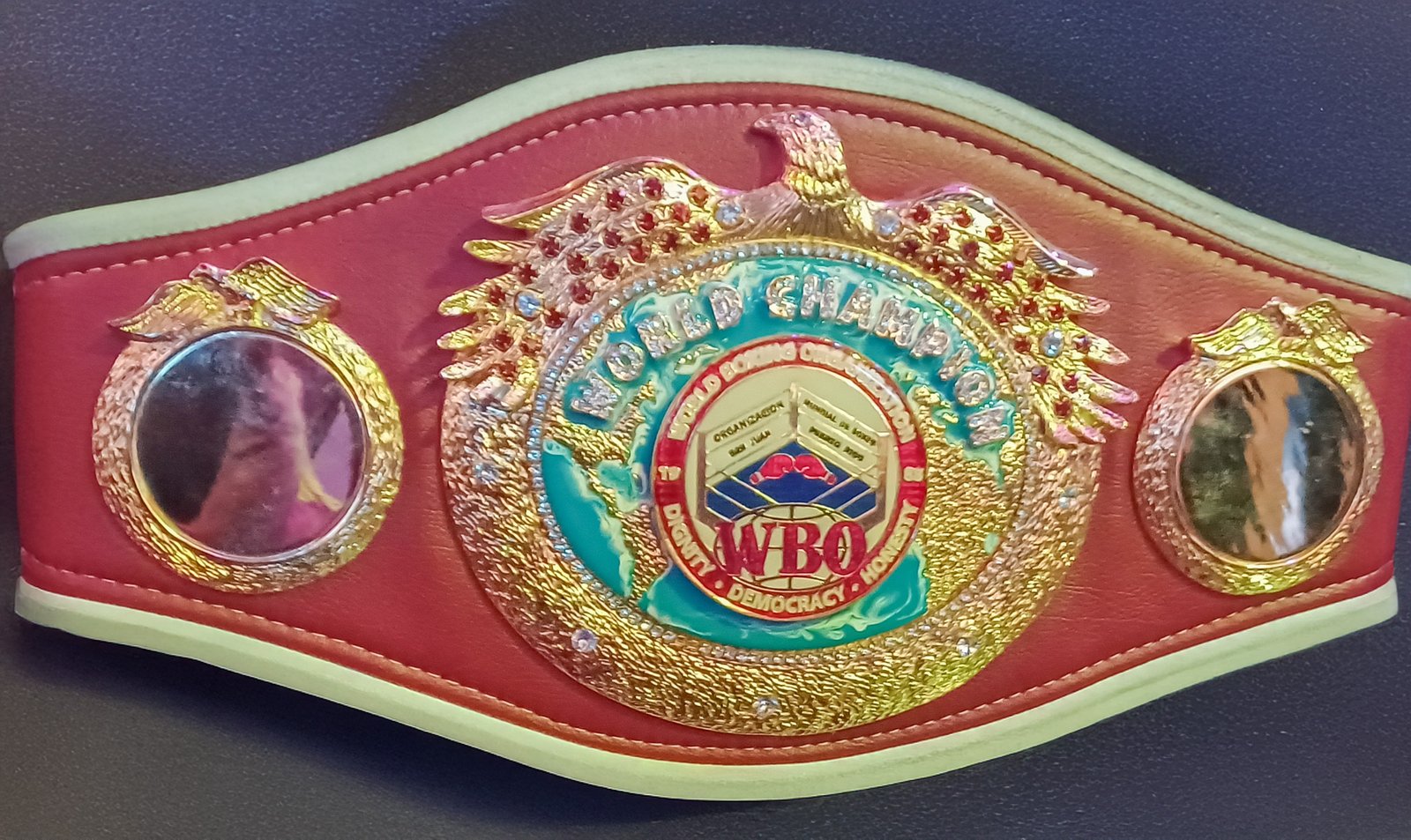
WBO Championship Belt

From Decatur Roots to the Top of the Sport

Born November 23, 2000, Norman grew up in Decatur and attended Lakeside High School. His father, Brian Norman, Sr., was a professional boxer from 2003 to 2011, compiling a record of 18 wins and 11 losses. From childhood, Norman Jr. trained under his father’s guidance, learning both the mental and physical demands of the sport.

In November 2023, Norman won the WBO International welterweight title with a unanimous decision over Quinton Randall in Las Vegas, NV. Brian defended his title in March 2024 against Janelson Figueroa Bocachia in Verona, NY. Both fighters were cut in an accidental clash in the ring. Norman was cut above his right eye in the second round, while Bocachica suffered a cut in the opening round. The bout was stopped at the end of the third round due to the severity of Bocachica’s cut, resulting in a no contest.

His big break came in August 2024, when Terence Crawford — a legend in the sport — vacated the WBO welterweight belt to move up in weight. Norman, already holding the WBO interim title, was promoted to full champion, becoming the youngest male world champion in boxing at the time.

Knockouts, Travel, and Titles

Norman’s most recent defense took him to Tokyo, Japan, on June 19, 2025, where he faced hometown contender Jin Sasaki. In the opening minute, Norman scored his first knockdown with a left hook to the head. By the fifth round, he delivered another left hook so devastating that Sasaki was left on the canvas for several minutes. Many analysts called it a Knockout of the Year candidate.

Norman spoke of the Japanese customs and traditions, and mentioned that since the fight he and Sasaki have exchanged kind and respectful words.

Business in the Ring

Currently signed with Top Rank — the promotional powerhouse behind legends like Muhammad Ali, Oscar De La Hoya, and Manny Pacquiao — Norman has earned an estimated $1 million in career purses. His biggest payday so far was $650,000 in a bout against Cuevas.

The WBO, headquartered in San Juan, Puerto Rico, is a key gatekeeper in boxing, with its champions recognized as among the best in the world. Holding a WBO belt is often a stepping stone to multi-division championships and career-defining fights.

The Risks of the Sport

Brian Norman well understands the risks of his profession. He knows that hundreds of punches to the head can lead to serious long-term effects. As a knowledgeable boxer himself, Norman, Sr. placed an exceptionally high emphasis on Brian, Jr. to become an excellent defensive boxer to protect himself as best as possible.

This is one way to ensure a long, healthy career.

The Place He Calls Home

Brian trains at Granite City Boxing & Fitness (GCBF) in Ellenwood, GA. GCBF has a rich history of its own. Some of the most elite boxers in Georgia were birthed at GCBF, including Eli Lankford, Casey Dixion, Hakim Lopez, and Najee Lopez to name a few.

Coach Natasha (Titi) noted, “It’s amazing to see where Brian has come from versus the skills that he has developed now.”

As for training, Brian says, “he starts counting reps once the workout starts to hurt. Discipline is the key to training and development.” His training regimen includes rigorous workouts, sparring sessions, and a strict diet, all of which contribute to his physical and mental preparedness for each fight.

Next Challenge: Devin Haney in Saudi Arabia

On November 22, 2025, Norman will defend his title against two-division champion Devin Haney in Riyadh, Saudi Arabia. Both men are undefeated — Norman at 28-0 (22 KOs) and Haney at 32-0 (15 KOs) — making this a rare matchup where neither fighter has ever tasted defeat. This highly anticipated bout is expected to be a test of skill, endurance, and determination for both fighters.

For Norman, the fight is another chance to prove that The Assassin II is more than just a nickname. With an undefeated record of 28-0 (22 KOs), he has shown his dominance in the ring. For the sport, it’s an opportunity to showcase one of boxing’s youngest champions to a global audience.

From Decatur’s neighborhood gyms to the bright lights of Las Vegas, Tokyo, and soon Saudi Arabia, Brian Norman, Jr. has shown that even the kid next door can rise to the very top of the boxing world — and do it without a single loss.

Related articles:

Decatur’s Brian Norman Jr Inks Multi-Year Deal with Top Rank, Eyes Haney Showdown

Norman vs. Haney: Unbeaten Stars Collide for Welterweight Supremacy

Haney Outpoints Norman Jr. in Riyadh to Claim Third World Title

Please consider supporting open, independent journalism – no contribution is too small!

First to Fly: Lisa Leslie Dunked, and Women’s Basketball Took Flight

Lisa Leslie made history with the WNBA’s first dunk on July 30, 2002—redefining women’s basketball and inspiring generations to reach higher than ever before.

By Milton Kirby | July 30, 2025 | Atlanta, GA

On July 30, 2002, Lisa Leslie soared.

In a split second that lasted forever, the Los Angeles Sparks superstar caught a fast break, glided to the rim, and threw down a one-handed dunk against the Miami Sol. With that slam, she became the first woman to dunk in a WNBA game. Twenty-three years later, on this historic anniversary, her leap still represents a seismic shift in women’s sports.

Leslie didn’t just dunk a basketball that day—she shattered perceptions.


The Dunk That Changed Everything

The play was textbook: a long rebound, a pass to midcourt, a couple of dribbles, and a takeoff from just inside the paint. Fans in the arena rose to their feet in disbelief as the 6-foot-5 center delivered the moment many thought they’d never see in the women’s game.

Leslie, never one to showboat, calmly jogged back on defense.

But history had already been made.

“I didn’t go into the game thinking I’d dunk,” Leslie later told reporters. “It just happened. The opportunity came, and I took it.”


From Compton to the Sky

Lisa Deshaun Leslie was born July 7, 1972, in Gardena, California, and raised in nearby Compton by her hardworking mother, Christine. Tall from an early age, Leslie didn’t pick up basketball seriously until junior high. By then, she was already over six feet tall.

She made an early impact. At Morningside High School, she once scored 101 points—in one half. At 16, she led the U.S. Junior National Team in scoring and rebounding at a world tournament in Spain.

Her dominance followed her to USC, where she earned Naismith Player of the Year honors and left as the Pac-10’s all-time leader in points, rebounds, and blocks.

By the time the WNBA launched in 1997, Lisa Leslie was ready-made for the spotlight.


A Spark From Day One

Drafted by the Los Angeles Sparks in the inaugural WNBA draft, Leslie made an immediate impact. She recorded the first double-double in WNBA history during her debut game against the New York Liberty. Over the next decade, she would redefine what it meant to be a dominant center.

Leslie was a three-time WNBA MVP, two-time champion, and eight-time All-Star. She led the Sparks to back-to-back titles in 2001 and 2002 and capped the latter year with that historic dunk, an exclamation point on one of the most iconic seasons in women’s basketball history.

Later that year, she became the first WNBA player to surpass 3,000 career points.


Dunking Barriers, Not Just Basketballs

The image of Leslie dunking reverberated far beyond the court.

Photo courtesy WNBA Lisa Leslie

For young girls and aspiring athletes, it was a symbol of what was possible.

“She changed the way people talked about women’s basketball,” said Sheryl Swoopes, fellow WNBA legend. “She showed that we weren’t just skilled—we were powerful.”

Leslie wasn’t finished. In 2005, she dunked again, this time at the WNBA All-Star Game. She would eventually become the first player in league history to reach 6,000 points, retire as its all-time leading rebounder, and earn enshrinement in the Naismith Memorial Basketball Hall of Fame in 2015.


Beyond the Hardwood

Leslie’s legacy stretches beyond statistics and slam dunks. She’s also an Olympic icon, winning four gold medals with Team USA between 1996 and 2008. In the 1996 Games, she set a U.S. Olympic record by scoring 35 points in a single game.

Off the court, Leslie built a multi-faceted career. She modeled for high-end fashion houses, earned an MBA, worked in broadcasting, and authored a memoir titled Don’t Let the Lipstick Fool You. She’s appeared in films, television shows, and even video games.

In 2011, Leslie became a part-owner of the Sparks. In 2019, she became head coach of the BIG3 men’s team Triplets—and won a championship in her debut season.

Today, she remains a respected voice in basketball, business, and media, serving as a studio analyst for the Orlando Magic on FanDuel Sports Network Florida.


A Moment That Still Matters

As the WNBA celebrates continued growth in 2025, with record viewership and superstar talent headlined by players like Angel Resse, A’ja Wilson, Caitlin Clark, and Breanna Stewart, the league stands on the foundation built by pioneers like Lisa Leslie.

Her dunk didn’t just make headlines—it made history.

And on this anniversary, it still inspires.

“She dunked for all of us,” said a young Sparks fan attending the team’s commemorative event in Los Angeles. “She made us believe we could fly too.”

Please consider supporting open, independent journalism – no contribution is too small!

History is Made: Bubba Wallace Becomes the First Black NASCAR Driver to Win on the Indianapolis Oval

Bubba Wallace makes NASCAR history as the first Black driver to win the Brickyard 400 at Indianapolis, earning a playoff spot and inspiring millions.

By Milton Kirby | Indianapolis, IN | July 28, 2025

Bubba Wallace is Black. And now, he’s also a Brickyard 400 champion.

The 31-year-old driver of the No. 23 Toyota Camry for 23XI Racing made history Sunday at Indianapolis Motor Speedway, becoming the first Black driver to win on the famed 2.5-mile oval. With this career-defining victory, Wallace not only snapped a 100-race winless drought but also earned his first crown jewel win — solidifying his place in NASCAR’s history books and punching his ticket to the Cup Series playoffs.

It was a win years in the making.

 A Landmark Victory at the Brickyard

After fending off defending champion Kyle Larson through two tense overtime restarts, Wallace powered across the yard of bricks and into the record books. The moment capped a race filled with drama, strategy, and emotion — including an 18-minute rain delay, looming fuel concerns, and a frenzied final-lap showdown.

“Coming off Turn 4, I knew I was going to get there — unless we ran out of gas,” Wallace said after the win. “To overcome so much and to put these people in Victory Lane, that’s what it’s all about.”

In doing so, Wallace became the first Black driver to win a major event at the Indianapolis Motor Speedway since the track opened in 1909. No Black driver has ever won the Indianapolis 500, and Formula 1’s brief run on the road course never saw a Black winner either.

This wasn’t just a win. It was a cultural milestone.

Bubba Wallace during NASCAR Cup Series at Brickyard – Photo AP – Darron Cummings

 The Road to the Brickyard

Born William Darrell Wallace Jr. in Mobile, Alabama, and raised in Concord, North Carolina, Bubba Wallace’s path to stardom was anything but conventional. The son of a Black mother, Desiree, a former collegiate track star and social worker, and a white father, Darrell Sr., who runs an industrial cleaning company, Wallace proudly identifies as a Black American.

His parents made it clear to him early on — and to those around them — that his Blackness was not something to be diluted or ignored.

From age nine, Wallace dominated local circuits, winning 35 of 48 Bandolero races in 2005. He rose quickly through NASCAR’s youth development ladder, competing in the K&N Pro Series East, Xfinity, and Truck Series. In 2013, he became the first Black driver in over 50 years to win a national touring series race, joining the legendary Wendell Scott.

By 2018, Wallace had a full-time ride in the NASCAR Cup Series, piloting the famed No. 43 for Richard Petty Motorsports. But it was his partnership with 23XI Racing — co-owned by NBA legend Michael Jordan and Denny Hamlin — that gave Wallace a more robust platform and faster cars. Sunday’s win proved just how far they’ve come.

 Trials, Critics, and a Turning Point

Despite his talents, Wallace has never had a smooth ride in the garage. His 2020 season was particularly turbulent. A reported noose in his garage at Talladega sparked a federal investigation and polarized the fanbase. Though the FBI ruled it a pull-down rope with no malicious intent, the backlash that followed was swift and personal.

Wallace’s advocacy for racial justice — from championing Black Lives Matter to pushing NASCAR to ban the Confederate flag — put him in the crosshairs of critics. Former President Donald Trump even demanded an apology. Wallace refused. Instead, he doubled down on his principles and leaned into his platform.

He channeled the pain into performance, winning at Talladega in 2021 and Kansas in 2022. But for the last three seasons, Wallace came close without sealing the deal until Sunday.

 Fuel, Faith, and the Finish Line

Wallace had built a 4-second lead late in the race when the skies opened up. A brief rain shower in Turn 1 triggered a red flag with four laps to go. When the race resumed, Wallace had to survive two overtimes, manage tire wear, and pray his fuel would hold out.

“I thought about everything except racing during that red flag,” Wallace admitted. “But once I saw it was Larson behind me, I knew I had to be perfect. He’s the best in the field.”

And he was. Twice, Wallace outpaced Larson on restarts, defending his line and never flinching under pressure. His Chumba Casino-sponsored Camry surged ahead on the final lap, sending fans into a frenzy and his team into tears.

Even Cookie Monster, Sunday’s whimsical grand marshal, could barely contain his excitement.

 The Man Behind the Wheel

Beyond the helmet and fire suit, Bubba Wallace is a husband and a new father. He married Amanda Carter — his high school acquaintance turned longtime partner — on New Year’s Eve 2022. The couple welcomed their first child, a son named Becks Hayden Wallace, in September 2024.

“We waited nine months on this little guy,” Wallace wrote on Instagram. “He’s made it all worth it.”

Their love story, rekindled after college and forged through the chaos of national headlines and racetrack travel, reflects Wallace’s blend of resilience and humility.

“I’m a Christian, I believe in pushing for what’s right,” Wallace once told Esquire. “When you see something unjust, you don’t stay silent.”

It’s that same moral compass that led Wallace to found the Live to Be Different Foundation, dedicated to empowering individuals to be themselves and live authentically.

SIDEBAR: Paving the Way — Wendell Scott and NASCAR’s Drive for Diversity 

Wendell Scott: The Trailblazer

Wendell Scott was the first Black driver to race full-time in NASCAR’s highest level and the first to win a race in what is now the Cup Series. Born in Danville, Virginia, in 1921, Scott overcame racism, sabotage, and financial obstacles to pursue his passion for racing in the Jim Crow South.

He entered NASCAR in 1953 and made history on December 1, 1963, when he won a race in Jacksonville, Florida. Scott crossed the finish line first, but officials initially awarded the trophy to a white driver. Only hours later, Scott was declared the rightful winner. He never received the trophy during his lifetime.

Scott competed in 495 races over 13 years and earned top-ten finishes in nearly 50 of them — all while funding and fixing his cars. He passed away in 1990, and in 2015, he was posthumously inducted into the NASCAR Hall of Fame.

Bubba Wallace has often credited Wendell Scott’s legacy as a source of inspiration. “He made it possible for someone like me to dream of this,” Wallace has said.

Drive for Diversity: Building a New Generation 

Launched in 2004, NASCAR’s Drive for Diversity program aims to recruit and develop minority and female drivers and crew members in a sport that has historically been dominated by white males. The initiative includes:

  • Rev Racing: A team that competes in the ARCA Menards Series and the Advance Auto Parts Weekly Series, serving as the competition arm of Drive for Diversity.
  • Driver Development: Talents such as Bubba Wallace, Daniel Suárez, Rajah Caruth, and Hailie Deegan have all passed through the program.
  • Pit Crew Development: The program also trains aspiring diverse pit crew members for roles on competitive race teams.

NASCAR continues to evolve, but progress hasn’t been easy. Wallace’s win at the Brickyard shows how the seeds planted by Scott — and watered by Drive for Diversity — are beginning to bloom.

“We’re not where we want to be yet,” said Rev Racing’s CEO Max Siegel, “but we’re definitely moving in the right direction.”

 What’s Next?

With his Brickyard 400 win, Wallace has secured a coveted playoff spot. He’ll return to the postseason after missing it in 2024. The momentum couldn’t have come at a better time for 23XI Racing, which is currently embroiled in a legal dispute with NASCAR over team charters.

Bubba Wallace during NASCAR Cup Series at Brickyard – Photo AP – Darron Cummings

“Beating the best means being the best,” Wallace said, reflecting on his battle with Larson. “We were the best today.”

The next stop on the Cup Series tour is Iowa, but Wallace’s focus is already on the playoffs. The garage knows he’s more than a symbol now — he’s a threat.

 A Legacy in the Making

More than just a win, Sunday’s Brickyard triumph was a culmination of grit, growth, and generational change. Wallace didn’t just win a race. He claimed space in a sport that once made Black drivers feel unwelcome. He honored the legacy of Wendell Scott and paved a path for those yet to come.

“This one’s really cool,” Wallace repeated after the race. “To be here, to win here, to do it the way we did — it means everything.”

It meant everything to his fans, too. As Wallace knelt by the bricks with his wife and baby boy, he etched more than rubber into the track — he cemented a legacy.

Please consider supporting open, independent journalism – no contribution is too small!

Lee Elder: The Man Who Changed Golf Forever


July 14, 1934 – November 28, 2021

By Milton Kirby | Atlanta, GA | July 14, 2025

On July 14, 1934, in the heart of segregated Dallas, Texas, a boy named Robert Lee Elder was born. He would grow to become one of golf’s most important figures—not because he captured the most trophies, but because he shattered barriers, redefined the game, and walked where others were denied.

A legacy born in hardship, forged in courage, and remembered with honor

Despite not winning the Masters, Lee Elder etched his name in history on April 10, 1975, when he teed off at Augusta National as the first Black golfer to ever compete in the tournament. This moment was a testament to his quiet resilience, athletic excellence, and a lifetime of overcoming obstacles.

Elder’s journey to that fateful day in Augusta was a testament to his unwavering spirit and determination, despite the numerous hurdles he faced. 

Courtesy Baltimore Times – Lee Elder

From Orphaned Youth to Golf Hustler

By age nine, Elder had lost both parents—his father was killed in World War II, and his mother died just three months later. He bounced between homes and cities, ultimately landing in Los Angeles with an aunt. There, Elder frequently cut classes to work as a caddie.  After two years at Manual Arts High School, he dropped out to work as a caddie and around the golf course.

Too poor to afford lessons and unwelcome at many clubs, Elder learned by watching, mimicking, and hustling. He finally played a full 18 holes at age 16. However, a chance encounter with boxing legend Joe Louis and golf pioneer Ted Rhodes provided Elder with something priceless: mentorship.

Under Rhodes, Elder’s skills sharpened, and his dream was crystallized. 

Serving His Country and the Game

Drafted into the U.S. Army in 1959, Elder was stationed at Fort Lewis, Washington, where a golf-loving colonel ensured Elder had access to play. After his discharge in 1961, he joined the United Golf Association Tour—the only professional golf tour available to Black golfers at the time.

There, Elder dominated, winning 18 of 22 straight tournaments. But the pay was meager, and the path to PGA stardom remained blocked by color lines.

Courtesy Golf Magazine Fred Ridley & Lee Elder

Crashing the PGA and the Augusta Wall

In 1961, the PGA finally lifted its “Caucasian-only” clause. By 1967, Elder had saved enough money to attend qualifying school. He earned his PGA Tour card and never looked back.

In 1974, Elder won the Monsanto Open, earning an invitation to the 1975 Masters and becoming the first Black golfer to be invited.

Despite receiving death threats and being forced to rent multiple homes for safety, Elder walked onto Augusta National’s first tee with grace and strength. He missed the cut but won the moment. As he once recalled, “I started to shake… It changed my life.”

He would go on to play in five more Masters, with his best finish a tie for 17th in 1979. That same year, Elder became the first Black golfer to play in the Ryder Cup.

 Honors, Legacy, and the Road He Paved

Elder’s contributions extended beyond the course. He helped manage Langston Golf Course in Washington, D.C., mentored young minority golfers and helped launch a scholarship fund and women’s golf program at Paine College.

In 2021, Augusta National honored Elder by naming him an honorary starter alongside Jack Nicklaus and Gary Player. That same year, Washington, D.C., proclaimed April 10 “Lee Elder Day.” He passed away just months later, on November 28, 2021, at age 87. 

A Memory That Changed a Sport

Elder’s triumphs weren’t just personal—they opened doors. His pioneering spirit paved the way for future generations, including Tiger Woods, the first Black golfer to win the Masters in 1997, who has credited Elder for his inspiration.

“I’ll never forget the ride down Magnolia Lane,” Elder once said. “Some of the players had told me how it felt, but I wasn’t prepared for it.”

That ride didn’t just change Elder’s life—it changed golf.

Please consider supporting open, independent journalism – no contribution is too small!

50 Stars, One Stage: HBCU Swingman Classic Kicks Off MLB All-Star Week

The 2025 HBCU Swingman Classic in Atlanta showcased 50 elite Black college baseball stars during MLB All-Star Week at Truist Park.


By Milton Kirby | Atlanta, GA | July 12, 2025

The 2025 MLB All-Star Week, a highly anticipated event in the baseball calendar, kicked off in true Southern style on Friday, July 11, with the HBCU Swingman Classic at Truist Park. This game, a significant part of the week’s festivities, brought 50 top student-athletes from Historically Black Colleges and Universities (HBCUs) to the big stage, giving them a national spotlight and showcasing the rich talent pool of HBCU baseball players.

A Game Full of Smiles and Showstoppers

The night ended with a 7-4 comeback win for the National League team. Alabama State catcher DeMarkus Smiley drove in the go-ahead run and later scored himself. Jay Campbell of Florida A&M smashed a seventh-inning home run. Kameron Douglas of Alabama State launched a 417-foot homer and struck out two in the final inning.

Courtesy MLB – Jay Campbell

“It’s a lot of fun for the kids,” said Ken Griffey Jr., the Classic’s founder and a constant, smiling presence. The joy and excitement on the field were palpable, creating a connection with the audience.

Legends in the Dugout

Former Braves All-Stars Brian Jordan and David Justice, two highly respected figures in the baseball community, managed the National and American League teams. Their presence and praise for the talent on the field added a significant level of prestige to the event.

“It’s not about us. It’s about giving these kids a shot,” said Justice.

Beyond the Chalk Lines

The Classic was more than a game. It was a vibrant cultural celebration. The Georgia Mass Band brought HBCU flair, the Divine Nine Greek organizations added their unique touch, Avery Sunshine’s rendition of the national anthem was soul-stirring, and the Spelman College Glee Club’s performance of “Lift Every Voice and Sing” Was a powerful moment. Roy Wood Jr. announced, “Play Ball!” and fireworks capped the evening, leaving everyone feeling included and uplifted.

A Night to Remember

Fifty players across 17 HBCU programs were selected. The game aired nationally on MLB Network. Family, scouts, and fans cheered from the stands. The event created lifelong memories and new opportunities.

History of the HBCU Swingman Classic: A Legacy in the Making

The first Classic was held in 2023 in Seattle. It was created by Ken Griffey Jr. and supported by the MLB-MLBPA Youth Development Foundation. It shines a light on HBCU baseball talent, which is often overlooked in professional scouting.

Since its launch, five Swingman alumni have been drafted:

  • Nolan Santos, Bethune-Cookman (2023), Twins
  • Xavier Meachem, NC A&T (2023), Marlins
  • Trey Paige, Delaware State (2023), Cardinals
  • Randy Flores, Alabama State (2023, 2024), Angels
  • Canyon Brown, NC A&T (2024), Royals

2025 Stars to Watch

  • Cardell Thibodeaux (Southern): SWAC Player and Newcomer of the Year. .439 average, .847 slugging.
  • Eric Elliot (Jackson State): SWAC Pitcher of the Year. 108 strikeouts.
  • Andrey Martinez (Bethune-Cookman): SWAC Co-Hitter of the Year. 20 homers. Walk-off in SWAC title game.
  • Elijah Pinckney (Morehouse): First DII player selected. Hit .407. Elite defense.

Future of the Classic

The HBCU Swingman Classic has fast become a pillar of MLB All-Star Week. Each year, more players, schools, and scouts join the ranks. The message remains clear: Black baseball lives thrive and belong in the big leagues.

2025 Rosters: By the Numbers

Bethune-Cookman led with seven players. Alabama State, Jackson State, and Southern each sent six. Players were selected by a panel that included Griffey, MLB, MLBPA, and scouts.

American League

PlayerPositionSchool
Tyler SmithCatcherNorth Carolina A&T
Vinny SaumellCatcherArkansas Pine-Bluff
Jonathan Gonzalez PerezCatcherMaryland Eastern Shore
Andrey MartinezFirst baseBethune-Cookman
Jalon MackSecond baseSouthern
Kylan DuncanSecond baseAlabama A&M
Taj BatesThird baseSouthern
Kade WoodShortstopMississippi Valley State
*KJ WhiteShortstopSouthern
Chenar BrownInflield/Designated HitterGrambling State
Justin JournetteOutfieldNorfolk State
Darryl LeeOutfieldBethune-Cookman
Jordan McCladdieOutfieldJackson State
Jalan JonesOutfieldNorfolk State
*Joseph EichelbergerOutfieldJackson State
Jaylon BurrellOutfieldAlcorn State
Cameron HillOutfieldGrambling State
Eric ElliottLeft-handed pitcherJackson State
Jean Carlos ZambranoRight-handed pitcherBethune-Cookman
Jorhan LaBoyLeft-handed pitcherAlabama State
Garrett WorkmanLeft-handed pitcherFlorida A&M
Esaid PeñaRight-handed pitcherAlabama State
*Jafet MartinezRight-handed pitcherAlabama State
Yoansell DiazRight-handed pitcherBethune-Cookman
Nick LuckettRight-handed pitcherSouthern

National League

PlayerPositionSchool
Broedy PoppellCatcherFlorida A&M
**Irvin EscobarCatcherBethune-Cookman
DeMarckus SmileyCatcherAlabama State
*Juan CruzFirst baseAlabama State
JT TaylorSecond baseNorth Carolina A&T
Daniel MooreSecond baseCoppin State
Jesus VanegasThird baseBethune-Cookman
Elijah PinckneyShortstopMorehouse
*Robert Tate Jr.ShortstopJackson State
Ahmar DonattoInflield/Designated HitterPraire View A&M
Cardell ThibodeauxOutfieldSouthern
Kameron DouglasOutfieldAlabama State
Jacoby RadcliffeOutfieldSouthern
Trey BridgesOutfieldGrambling State
Kelton PhillipsOutfieldTexas Southern
Trey RutledgeOutfieldAlabama A&M
*Jamal RitterOutfieldNorfolk State
Edwin SanchezLeft-handed pitcherBethune-Cookman
Reagan RiveraRight-handed pitcherCoppin State
Diego BarrettRight-handed pitcherNorth Carolina A&T
*Erick GonzalezRight-handed pitcherJackson State
Nkosi DidderRight-handed pitcherJackson State
Kenney FabianRight-handed pitcherArkansas Pine-Bluff
Calvin McClendonLHPTexas Southern
Jay CampbellThird base/Right-handed pitcherFlorida A&M

*Represents second-time attendee **Represents third-time attendee

Courtesy MLB – Ken Griffey Jr Founder Swingman Classic

Looking Ahead

More events are in the works. The Swingman Classic has ties to the Breakthrough Series, Hank Aaron Invitational, Cactus Jack HBCU Classic, and Andre Dawson Classic. Expect to hear more names from this year’s roster called in future MLB Drafts.

The Swingman Classic is not just a game. It’s a movement.

Please consider supporting open, independent journalism – no contribution is too small!

Exit mobile version