Peachtree Street has long been called Atlanta’s spine — a corridor where commerce, culture, and conflict have intersected for more than a century. Now, a new tour experience aims to tell that story with greater depth, balance, and historical honesty.
Chit Chat Atlanta Tours this week unveiled its newest cultural offering, “Peachtree Street: The Main Artery,” a guided experience designed to trace Atlanta’s growth through the people, institutions, and neighborhoods that shaped its most iconic street.
Rather than focusing solely on skyline views and postcard landmarks, the tour places equal emphasis on overlooked histories, particularly Black institutions and communities whose stories have often been pushed to the margins.
“This tour is about more than buildings,” organizers said in announcing the experience. “It’s about understanding how Peachtree Street reflects Atlanta’s past, its present, and the people who built it.”
Chit Chat Special Offer
A Church That Anchors Buckhead’s Black History
One of the most significant stops along the route is New Hope AME Church, recognized as the oldest Black church in Buckhead. Long before luxury towers and high-end retail defined the area, New Hope AME stood as a center of worship, education, and civic leadership for Black Atlantans navigating segregation, displacement, and change.
By highlighting New Hope AME, the tour expands the narrative of Buckhead beyond affluence and architecture, grounding it in resilience and community continuity. For many visitors, it is a revelation — a reminder that Black history in Atlanta extends well beyond downtown and Sweet Auburn.
Literary Legacy and Southern Elegance
The experience also includes visits to some of Peachtree Street’s most recognizable landmarks, including the Margaret Mitchell House, where the Pulitzer Prize–winning author wrote Gone With the Wind. The site remains a touchstone for discussions about Southern literature, memory, and mythmaking.
Nearby, guests encounter the Georgian Terrace Hotel, long regarded as one of the South’s most elegant historic hotels. Its halls have hosted dignitaries, artists, and civic leaders, making it a fitting symbol of Peachtree Street’s role as Atlanta’s front parlor.
Together, these stops illustrate how Peachtree Street has served as both a cultural stage and a mirror, reflecting the values and contradictions of the city across generations.
Urban Living and a Changing Skyline
As the tour moves north and south along the corridor, it explores Atlanta’s transition into a modern metropolis. A featured stop includes the city’s first luxury condominium, a development that marked a turning point in how Atlantans viewed urban living.
That moment signaled Peachtree Street’s evolving identity — from commercial thoroughfare to residential destination — and helped redefine how the city grew upward rather than outward.
Remembering Johnsontown
Perhaps the most powerful segment of the tour centers on Johnsontown, one of Buckhead’s historic Black communities. Long before Buckhead became synonymous with exclusivity, Johnsontown existed as a self-sustaining neighborhood rooted in faith, family, and land ownership.
Its story — shaped by endurance, displacement, and transformation — adds necessary context to Peachtree Street’s modern prosperity. By including Johnsontown, the tour acknowledges that development often came at a human cost, and that Atlanta’s growth cannot be fully understood without reckoning with those realities.
An Invitation to Locals and Visitors Alike
Chit Chat Atlanta Tours says the “Main Artery” experience is designed for longtime residents, newcomers, and visitors who want more than surface-level history. The tour blends architecture, social history, and lived experience into a single narrative that feels both educational and personal.
By centering untold stories alongside familiar landmarks, the experience positions Peachtree Street not just as a road, but as a living archive of Atlanta itself.
NASCAR, 23XI Racing and Front Row Motorsports reach a landmark settlement creating long-term stability, stronger team equity, and a unified path forward ahead of the 2026 season.
By Milton Kirby | Charlotte, NC | December 11, 2025
NASCAR, 23XI Racing and Front Row Motorsports have reached a sweeping settlement that leaders across the sport are calling a turning point. The agreement ends months of tension, restores unity inside the garage, and sets new terms meant to give teams stability for years ahead.
The announcement came Wednesday in a joint statement. All three parties said the resolution protects the future of the sport, strengthens the charter system and positions NASCAR for “meaningful growth” in a more competitive environment.
Officials also stressed that the settlement creates a fairer economic structure. It also keeps the focus on fans as the sport prepares for its 78th season.
A Foundation for Long-Term Growth
As part of the settlement, NASCAR will issue a formal amendment to charter holders. It will include updated terms and a version of “evergreen” charters — a major point of negotiation for teams seeking permanent value and long-term ownership security.
Financial terms remain confidential. But all sides say the result creates a level playing field and enhances the model for team participation.
In their joint statement, NASCAR and the teams said the goal was simple: protect the sport’s foundation while opening doors for new investment, stronger sponsorships, and a more stable competitive field.
They also thanked U.S. District Judge Kenneth Bell and mediator Jeffrey Mishkin, along with the jury involved in the process, acknowledging the complexity of the negotiations.
Michael Jordan: “This was about progress”
Michael Jordan, co-owner of 23XI Racing, said the lawsuit was never about conflict. It was about modernizing a system built for a different era.
“From the beginning, this lawsuit was about progress,” Jordan said. “It was about making sure our sport evolves in a way that supports everyone: teams, drivers, partners, employees and fans.”
Jordan said the new framework gives teams a stronger voice and a real chance to build equity over time.
“I’m excited to watch our teams get back on the track and compete hard in 2026,” he added.
Denny Hamlin: “Worth fighting for”
For Denny Hamlin, the agreement reflects both personal history and professional commitment.
“I’ve cared deeply about the sport of NASCAR my entire life,” Hamlin said. “Racing is all I’ve ever known, and this sport shaped who I am.”
Hamlin said the decision to challenge the existing structure was difficult, but necessary.
“We believed it was worth fighting for a stronger and more sustainable future for everyone in the industry,” he said. “Our commitment to the fans and to the entire NASCAR community has never been stronger.”
Front Row’s Bob Jenkins: “Real confidence in where we’re headed”
Front Row Motorsports owner Bob Jenkins said the settlement strengthens the garage as a whole.
“I love this sport, and it was clear we needed a system that treated our teams, drivers and sponsors fairly,” Jenkins said.
He believes the new terms will finally allow teams to build true long-term value, something owners have sought since the charter system began in 2016.
“I’m excited for the road ahead — for the people in the garage, the folks in the stands and everyone who loves this sport,” he said.
Curtis Polk: “Significant progress toward the Four Pillars”
Curtis Polk, 23XI co-owner and a member of the Team Negotiating Committee, pointed to the framework teams have long advocated for — known as the Four Pillars.
Those pillars include:
Sustainability for teams
Equity and long-term value
Transparency in NASCAR’s financial systems
Stronger governance and collaboration
Polk said the settlement delivers “significant progress” and aligns NASCAR and teams around shared goals for growth.
Jim France: “A brighter future”
NASCAR CEO and Chairman Jim France said the agreement safeguards what fans value most — competitive racing, strong teams and the stability required to shape the next generation of the sport.
“This outcome gives all parties the flexibility and confidence to continue delivering unforgettable racing moments for our fans,” France said.
He called the charter system “invaluable” since its creation in 2016, and said the new agreement strengthens it even further.
“We are excited to return the collective focus of our sport, teams and race tracks toward an incredible 78th season that begins with the Daytona 500 on Sunday, Feb. 15, 2026,” he added.
A Historic Moment for the Sport
The settlement marks the end of a turbulent chapter but also the beginning of a new era. For the first time, teams appear poised to gain lasting ownership security. NASCAR, in turn, preserves the competitive structure that drives the sport’s popularity.
Both sides now shift their attention back to the track — and to a 2026 season that is already shaping up to be one of the most anticipated in years.
Black On Demand TV expands its fall lineup with new creator-led shows, spotlighting a Black-owned streaming platform redefining access, mentorship, and distribution in entertainment.
By Milton Kirby | Atlanta, GA | December 11, 2025
Black On Demand TV is not trying to compete with Hollywood. It is trying to change how creators get there.
The independently Black-owned streaming network has emerged as a studio, accelerator, and launchpad for everyday people with stories to tell — many of whom have never worked in media before.
Founded and led by Swan Simpson, Black On Demand TV focuses on one core mission: closing the gap between Black creators and major distribution platforms.
“Too many talented voices never get heard,” Simpson said. “Not because the ideas aren’t strong, but because access has always been limited.”
A Different Model for Black Entertainment
Black On Demand TV operates on a model rarely seen in the streaming world.
The platform develops creators from the ground up. It provides mentorship, packaging, production guidance, and real distribution opportunities.
Creators are not required to come with professional cameras, crews, or industry connections. Many start with nothing more than a mobile phone, a concept, and lived experience.
The goal is not just content. The goal is ownership, visibility, and sustainability.
Since its launch, Black On Demand TV has helped hundreds of creators premiere original shows and then graduate to larger platforms, including Roku, Amazon Fire TV, Tubi, and Fawesome TV.
Community, Excellence, and Authenticity
The network is built on four guiding values.
Community comes first. Creators support one another and shape the culture together.
Excellence is expected at every level, from production quality to audience experience.
Authenticity is non-negotiable. Stories are told without dilution or compromise.
Innovation drives the platform forward, opening new pathways for creators who have long been excluded from traditional media systems.
Black On Demand TV is free to viewers, removing another barrier to access for audiences nationwide.
Fall 2025 Lineup Expands the Vision
On Wednesday, December 10, Black On Demand TV officially unveiled its 2025 Fall Premiere Lineup, signaling another major step forward as the network looks toward 2026.
The lineup includes the return of two flagship series:
The Sandy Rodgers Show (Season 2) Doc, Fix My Plate (Season 2)
Both shows build on successful first seasons with deeper conversations, expanded formats, and new guests.
Eight new original series also debuted, all developed through the Black On Demand Creator Accelerator Program:
The Review Rebel
Vibz N Viewz
Texas Unleashed
The Verdict Is In
Hidden Treasures Sarasota/Tampa Bay
Detroit On A Dime
Southern Charm On A Fork
Always VIP
What sets these shows apart is not just the content, but the creators behind them.
Every series was developed by individuals with no prior media experience.
From Homes and Communities to Television Screens
“These creators stepped into television from their homes, their communities, and their lived experiences,” Simpson said. “That’s the future of media.”
Under Simpson’s mentorship, creators learn how to turn ideas into structured shows that can compete on national platforms.
The Fall Premiere Weekend was celebrated at the Aloft Hotel at The Battery in Atlanta, bringing together creators, partners, and supporters to mark the network’s rapid growth.
Looking Toward National Recognition
Beyond distribution, Black On Demand TV is also guiding creators toward professional recognition.
The network recently announced plans to help creators pursue membership with the National Academy of Television Arts & Sciences, home of the Emmy Awards.
For many independent creators, this step represents uncharted territory.
For Black On Demand TV, it is part of a larger vision: proving that grassroots storytelling belongs on the biggest stages.
As the holiday streaming season begins, the network invites viewers nationwide to experience content that is raw, real, and rooted in Black culture.
MARTA and Decide DeKalb host a festive Holiday Market and Customer Appreciation Event at Kensington Station with local vendors, free treats, crafts, music, and family-friendly activities.
By Milton Kirby | Decatur, GA | December 10, 2025
MARTA is bringing holiday cheer to the east side this week. In partnership with Decide DeKalb, the transit agency will host a special Customer Appreciation Event and Holiday Market on Thursday, Dec. 11, from 3 p.m. to 6 p.m. at Kensington Station.
The plaza outside the station will be transformed into a festive outdoor marketplace, complete with music, local vendors, crafts, giveaways, and a visit from Santa himself.
A Community Market for the Season
The holiday market will highlight DeKalb-based artisans and small businesses, giving customers a chance to shop local while picking up seasonal gifts. Organizers say the curated vendors reflect the cultural mix of the Kensington area and the county at large.
The market is designed to feel warm, welcoming, and accessible — the kind of place where neighbors stop, browse, and say hello.
Free Treats and Family Fun
Visitors will be greeted with free hot cocoa, cider, Coca-Cola samples, and snacks. Music and karaoke will run throughout the event, adding a light, cheerful energy to the station plaza.
There will also be story time led by local community leaders and guest readers, giving families a quiet moment to enjoy together.
Crafts, Photo Booths, and Giveaways
Scraplanta, a popular arts nonprofit known for turning recycled materials into creative projects, will host hands-on DIY holiday crafts for children and adults.
MARTA will also set up a pop-up shop with branded merchandise. A photo booth and several prize giveaways will keep the festive mood going.
And for the kids — and the kids at heart — Santa will be on-site from 3 to 5 p.m. for photos and meet-and-greets.
A Special Appearance: MARTA’s Holiday Buses
MARTA’s decorated holiday buses, wrapped in bright lights and seasonal artwork, will be at Kensington Station for customers to explore. These buses have become a small but joyful tradition across the system, drawing riders who appreciate the splash of color and creativity during the winter season.
Event Details
WHEN: Thursday, Dec. 11, 2025 3 p.m. – 6 p.m.
WHERE: Kensington Station 3350 Kensington Rd. Decatur, GA 30032
At Your DeKalb Farmers Market, 184 flags, global foods, and round-the-clock operations turn a Decatur grocery into Atlanta’s most beloved, affordable world market for families.
By Milton Kirby | Decatur, GA | December 9, 2025
Walk up to the entrance of Your DeKalb Farmers Market on East Ponce de Leon Avenue, and the first thing you notice is the sky of flags. From one end of the roofline to the other, 184 national flags ripple above the parking lot, turning a simple grocery trip into a small United Nations of food and people.
Inside, more flags hang over the produce tables, seafood counters, and aisles of spices and grains. For many metro Atlanta families, spotting the flag of their home country is the start of a familiar routine: a deep breath, a smile, and a walk toward the foods that taste like home.
This is the heart of Your DeKalb Farmers Market — a place where global identity, fresh food, and community all meet under one roof.
A Market That Belongs to Its Neighbors
The story of this “world market” begins in 1977, when Rhode Island native and retail veteran Robert W. Blazer opened a small, 7,500-square-foot produce stand in Decatur.
Before he opened his first location on Medlock Road, Blazer went door to door in the surrounding neighborhood and asked residents a simple question: would you like to have a farmers market here? When they said yes, he dedicated the business to them and chose a name that still appears on the brown facade today: Your DeKalb Farmers Market.
His goal, as he later wrote, was not to build a chain of stores, but to create a direct, affordable source of high-quality fresh food that truly served the community.
Nine years after that first stand, the market moved to its current home at 3000 East Ponce de Leon Avenue in Decatur, where it has grown into a massive indoor marketplace now known across the region.
Flags as a Map of the World
The 184 flags above the building are not decoration. They are a map.
Photo by Milton Kirby – Your DeKalb Farmers Market Flags
Each one represents a country connected to the market’s shelves, staff, or shoppers. For customers, a flag can be a guidepost: a hint that somewhere inside they will find the cassava, plantains, injera flour, curry pastes, teas, or spices that match their home cooking.
For employees, the flags reflect the market’s workforce — a staff drawn from more than 40 countries, speaking around 50 different languages and dialects. On the sales floor, name tags often list both a worker’s country of origin and the languages they speak, helping shoppers connect in their own tongue and feel at ease.
The flags also send a message to new visitors who may be walking in for the first time. They say: whoever you are, whatever you eat, you can find a piece of yourself here. And if you are curious, you can also discover somebody else’s culture in the next aisle over.
From 7,500 Square Feet to a True World Market
Your DeKalb Farmers Market now covers well over 100,000 square feet and operates seven days a week, 9 a.m. to 9 p.m.
What began as a simple produce stand has grown into a complex, 24-hour operation that includes:
A sprawling retail floor for everyday shoppers
A busy business services department for restaurants, caterers, and other stores
Large adjacent warehouses and ripening rooms
A wholesale shipping operation that moves produce across the United States
Behind the scenes, roughly half of the building and half of the employees work out of public view. Trucks arrive around the clock. Cold rooms are checked and re-checked. Bananas, plantains, avocados, papayas, tomatoes, and pears are ripened in controlled rooms built with engineering precision.
Blazer’s background in mechanical engineering and discount retail helped him design and build much of the facility himself — with a focus on efficiency, temperature control, and food safety from the ground up.
World Direct: From Farm to Market
The market’s mission is not limited to what happens in Decatur.
Photo by Milton Kirby – DeKalb Farmers Market Florist
Under its “World Direct” registered trademark, Your DeKalb Farmers Market grows, packs, and ships produce from farms in Mexico, Central America, and South America directly to wholesale receivers across the United States. The company prides itself on working directly with farmers, helping them do what they love while building a stable market for their crops.
The market is also known in the produce industry for maintaining one of the best credit ratings available and for operating as a debt-free company — paying for what it buys with its own money and focusing on long-term strength instead of short-term debt.
Blazer’s son Daniel, who speaks Spanish fluently, heads up much of the international growing and shipping program. His work extends the reach of DeKalb’s “world market” far beyond Georgia.
Departments that Circle the Globe
Walk the aisles of Your DeKalb Farmers Market and each department feels like a different chapter in a global cookbook.
Produce: The Heart of the Market This is where it all began in 1977 and remains the beating heart of the business. Fresh fruits and vegetables arrive several times a week, often directly from growers. The market arranges its own transportation to keep produce moving quickly from field to shelf.
Organic options line up beside conventional items, many of them certified to USDA standards and the standards of their countries of origin. Shoppers can buy familiar staples or explore lesser-known greens, roots, tropical fruits, and herbs, many labeled with their home countries and uses.
Cold-pressed juices made on site — from organic kale, beets, carrots, ginger, apples, pears, and more — offer a quick way to drink those nutrients, using slower juicing methods that protect vitamins and enzymes.
Seafood: From Scottish Lochs to Georgia Kitchens The seafood department stretches across a long wall of ice and glass, with more than 450 varieties of whole fish, fillets, and shellfish. Live Maine lobsters, Dungeness crabs, and live catfish swim in tanks, turning shopping into a field trip for children.
The selection includes premium Lochlander Scottish salmon, raised in the cold lochs of the Scottish Highlands and Islands under sustainable practices and praised by chefs for its firmness and flavor. Customers can have their fish cleaned and filleted while they wait, then carry it a few aisles over to pick up global seasonings and sauces to match.
Bakery: Real People, Real Dough In the bakery, real people make more than 150 varieties of breads, bagels, muffins, pastries, and cakes from scratch every day. Many items use organic flours, organic butter, and cage-free eggs. Recipes are built around whole grains, nuts, dried fruits, and natural sweeteners rather than high-fructose corn syrup.
For shoppers with special diets, there is a wide selection of dairy-free baked goods made without milk or eggs, along with items made with gluten-free ingredients (prepared in a shared kitchen), and sprouted-grain breads that treat grain more like a vegetable for digestion and nutrition.
Coffee, Tea, and Nut Butters The coffee stand roasts and grinds more than 30 varieties of Arabica beans, including Fair Trade Ethiopian coffees from the Yirgacheffe region, Colombian, Kenyan, Guatemalan, Sumatra, Costa Rican, Jamaican, and others. Decaffeinated coffees are processed through the Swiss Water method, which uses water instead of chemicals to remove caffeine while preserving flavor.
Next to the coffee you can watch fresh nut butters being ground — organic peanut butter, almond butter, and cashew butter — made to order from nuts roasted in the market.
Chinese green teas, black teas, and delicate white teas share shelf space with herbal blends, giving health-minded shoppers a second home in this corner of the store.
Flowers and Gifts The flower department brings in stems and plants from Europe, Asia, Central America, Hawaii, and the continental United States. Staff create custom arrangements for weddings, holidays, and special occasions and even fill vases and fruit baskets to order. During Valentine’s season, the market sells thousands of dozens of roses.
International Groceries and Specialties Beyond the fresh departments, the center aisles hold dried fruits from Thailand, Turkish roasted nuts, olive oils from Greece and Spain, coconut water from Sri Lanka, specialty sauces like coconut curry simmering sauces, and Stonewall Kitchen condiments and curds for home cooks who like to experiment.
Shoppers can find gluten-free flours, sprouted ancient grains, sea salts, international pastas, zero-calorie noodles, organic snacks, and a long list of pantry staples that rarely appear together in one store.
The wine and beer section offers more than 700 wines and 500 beers, arranged by geography and type. Many bottles carry ratings from respected wine publications, giving shoppers a reference point as they choose; staff stand ready to talk through regions, grapes, and food pairings.
Serving Families and Businesses
Your DeKalb Farmers Market is more than a place for home cooks. Its business services department opens at 8 a.m. to serve restaurants, caterers, wholesale food distributors, and other retail stores. Once a commercial account is set up, clients can order in bulk, call ahead, and pick up loads packed and processed for them.
This dual mission — retail and wholesale — is part of what keeps the operation humming 24 hours a day. Workers on overlapping shifts receive shipments, process meats and seafood, bake, pack, and stock the floor before most shoppers arrive.
Safety and Air You Can Feel
During the COVID-19 pandemic, the market put in extensive health and safety measures to protect staff and shoppers. Employees working with customers wore gloves and masks; markers on the floor kept customers spaced out; carts and baskets were pressure-washed with bleach.
One feature that stands out is the building’s air-washer system, designed to keep the interior at about 62 degrees with roughly 65 percent relative humidity. All of the air in the production and selling areas cycles through the system roughly every 10 minutes, washing out pollen and particles while constantly adding outside air. Higher humidity makes it harder for certain viruses to travel as easily, and those lessons have carried forward into daily operations.
Even as crowds have shifted and weekends sometimes feel less packed than they once did, the market has stayed focused on keeping shelves stocked and shoppers safe.
A Family Effort and a Bigger “Game”
Blazer, now decades into this work, often says the market is about more than selling groceries. He has long been interested in how people work together — in families, on teams, and across cultures.
His wife, Barbara, joined the business in 1987, bringing her own experience as a successful salon owner with demanding clients. She has helped shape product selection, recipes, and operations, and she speaks openly about the way the market’s “people work” tools have helped employees understand themselves, their children, and their partners at home.
Many of those lessons formed the basis for internal booklets Blazer and his team have shared through the years — reflections on what they believe people have in common and how organizations can move beyond fear and greed to cooperation.
Today, the family’s goal is to keep the market strong and independent long after its founder is gone. The company’s debt-free structure and steady reinvestment in facilities and people are designed to make that happen.
Flags for the Future
On any given day, the parking lot at Your DeKalb Farmers Market still tells its own story. A full lot often means a holiday is coming or bad weather is on the way. Shoppers roll out carts stacked with greens, fish, spices, breads, wine, coffee, and flowers — enough to fill Sunday dinners, family cookouts, Eid tables, Diwali feasts, or Lunar New Year banquets.
Above them, 184 flags wave in the Georgia wind.
They remind Atlanta that this is more than a grocery store. It is a world market rooted in Decatur, built on fresh food, fair dealing, and the belief that people from every corner of the globe can work — and eat — side by side.
Truth Seekers Journal thrives because of readers like you. Join us in sustaining independent voices.
Dear Shadow Ball: Which team was the best in the history of the Negro Leagues? Coach Al Davis, Rensselaer, NY.
Dear Al: I will answer your inquiry from two perspectives – franchise history and single season.
BEST CAREER BODY OF WORK – Of 142 franchises listed in the Seamheads Negro League Database, these three on display below are clearly the best in Negro League history.
Chicago American Giants 1562 1326 .541 4.9 4.6 2 6 16
The categories above are Wins, Losses, Winning Percentage, Runs Scored per game, Runs Allowed per game, World Series won, Pennants won, and Hall of Famers on team’s roster over the years. Eight separate categories and, as indicated in bold, all eight categories found one of these three franchises at the top. Given Homestead had the best winning percentage, margin of victory, World Series titles, number of Hall of Famers and was 2nd to KC in pennants, the Homestead Grays nose out the Monarchs for the all-time top spot.
BEST SEASON – With only one season instead of 37 years (in the case of the Chicago American Giants) to inspect the differences in greatness between various annual league champions becomes more difficult and less defensible as an opinion. Nonetheless, the show must go on. I found 49 pennant winners in the Seamheads database … which I further reduced by eliminating World Series losers, teams demonstrably worse than other teams in a given season, removing duplicate franchise representatives leaving reducing to less than ten before finally, listing the below three teams as the three best:
W L % RSg RAg Hall of Famers
1943 Homestead Grays 82-26 .759 7.4 4.1 6
1929 Kansas City Monarchs 65-17 .793 6.8 3.7 3
1925 Hilldale Daisies 58-21 .734 6.3 4.4 3
Among teams not making the cut were the 1920 Chicago American Giants, 1928-1931 St Louis Stars, 1932-36 Pittsburgh Crawfords, 1945 Cleveland Buckeyes, 1946 Newark Eagles as well as other Grays & Monarchs teams.
This, in the end, I found the Homestead Grays the best franchise and the 1943 Grays as the best team.
Last week’s Shadow Ball Significa question – Last issue’s question was intended to be tricky. What Georgia native struck the initial home run by an African American in Yankee Stadium? I hoped to induce a quick “Josh Gibson” from a few early entrants banking on Gibson’s pre-eminent status as a Georgia native and as a legendary home run hitter. Alas, I couldn’t get that knuckler past Will Clark, Hackensack, NJ, who correctly posted the pride of Kingston, Georgia, Rap Dixon as the slugger who on July 5, 1930 in his first at bat in the House that Ruth built changed the name to the House that Dixon rehabbed with a 1st inning round tripper. Congrats Will!
The Shadow Ball Significa Question of the Week: Who was the first African American signed to a contract by the Boston Red Sox organization?
Ted Knorr
Ted Knorr is a Negro League baseball historian, longtime member of the Society for American Baseball Research’s Negro League Committee, and founder of the Jerry Malloy Negro League Conference and several local Negro League Commemorative Nights in central Pennsylvania. You can send questions for Knorr on Negro League topics as well as your answers to the week’s Significa question to shadowball@truthseekersjournal.com or Shadow Ball, 3904 N Druid Hills Rd, Ste 179, Decatur, GA 30033
Support open, independent journalism—your contribution helps us tell the stories that matter most.
Morehouse and Spelman’s Glee Clubs delivered a powerful three-night Christmas concert series, blending tradition, harmony, and history in one of Atlanta’s most beloved holiday celebrations.
By Milton Kirby | Atlanta, GA | December 8, 2025
The holiday season opened in grand fashion this weekend as the Morehouse College Glee Club and the Spelman College Glee Club delivered three unforgettable nights of music, unity, and tradition. The concerts were held Friday through Sunday, December 5–7, and drew capacity crowds to two of Atlanta’s most cherished campus chapels.
Friday and Sunday performances were held at the Martin Luther King Jr. International Chapel at Morehouse College. Saturday’s concert took place at Sisters Chapel on the campus of Spelman College. Each night offered a stirring reminder of why this joint Christmas Carol Concert remains one of the most treasured holiday traditions in Atlanta.
TSJ attended the Friday night performance, where the Glee Clubs played to a full house inside the MLK International Chapel.
A Tradition of Excellence
The Morehouse College Glee Club directed by Dr. David Morrow with organist Dr. Joyce F. Johnson, and the Spelman College Glee Club, directed by Dr. Kevin Johnson, performed a rich blend of sacred, classical, traditional, and contemporary holiday selections.
Audiences were treated to familiar favorites, including: Silent Night, Sir Christëmas, The Savior’s Birth, The First Noel, Joy to the World, This Christmas, O Come, All Ye Faithful, and Go Tell It on the Mountain.
The choirs also performed lesser-known works that were just as stirring and melodic, showcasing the depth of their repertoire and their ability to breathe new life into both classic and contemporary choral literature.
Spelman’s Legacy of Global Sisterhood
For over 100 years, the Spelman College Glee Club has upheld a standard of musical excellence shaped by harmony, discipline, and pride. With approximately 50 members from various academic disciplines, the ensemble performs most major campus events and maintains a repertoire that spans world cultures, commissioned works, and music of the African diaspora.
Under the leadership of Dr. Kevin Johnson, the Glee Club has performed across the U.S. and around the world. Highlights include concerts at the White House, Lincoln Center’s Avery Fisher Hall, Faneuil Hall in Boston, the National Museum of American History, and international tours to Brazil, Canada, Italy, and Portugal.
Membership requires a rigorous audition process evaluating tonal memory, pitch matching, vocal quality, and musicianship. Yet beyond the music, the Spelman Glee Club represents community. It is a space where sisterhood, pride, and excellence converge.
Morehouse’s Global Brotherhood in Song
The Morehouse College Glee Club has captivated audiences for more than a century. Their performances have graced presidential inaugurations, Super Bowls, the 1996 Olympics, and homegoing services for national figures including President Jimmy Carter and Dr. Martin Luther King Jr., a Morehouse alumnus.
Morehouse Glee Club Performs
Dr. Morrow says the Glee Club is more than a performance ensemble. It is a reflection of Morehouse identity and brotherhood.
“It’s remembering that you are part of a community,” Morrow said. “You are more than a member of the Glee Club. You are family. You are part of something great.”
Their musical résumé spans continents, with tours throughout Africa, the Caribbean, Europe, and every corner of the United States. The Glee Club has performed with cultural icons such as Aretha Franklin, Jessye Norman, Denyce Graves, Take 6, Stevie Wonder, and Jennifer Hudson. They are also featured on soundtracks to Spike Lee films and major national broadcasts.
The Glee Club is deeply tied to historical and cultural leadership. Alumni include Senator Raphael Warnock, Spike Lee, Samuel L. Jackson, and legendary figures such as Mayor Maynard Jackson and Herman Cain.
A Shared Holiday Tradition
Morehouse and Spelman have long united their voices for this Christmas tradition. Together, they carry an intergenerational message: music is a cultural bridge. Music preserves history. And music, especially during the holiday season, binds community.
Judge Sugarmon, speaking to the educational significance of the Glee Clubs, underscored the moment: “At a time when DEI is being denied, we must educate our children about our history. It is what made this country what it is.”
And as the music filled the chapels each night, that message rang clear—this tradition belongs to the people, to the campuses, and to the broader community that has embraced it for nearly a century.
A Look Toward the 100th Year
This year marked the 99th Annual Christmas Carol Concert, one of the longest-running holiday traditions in Atlanta. Both colleges promised that the upcoming centennial celebration will be even more spectacular, with expanded performances and special guests.
The joy, reverence, and unity felt this weekend offered a glimpse of what that milestone will hold.
When Morehouse sings and Spelman answers, a century of HBCU excellence fills the room — and the world listens.
Georgia crushed Alabama 28–7 to win the 2025 SEC Championship, ending years of title-game losses to the Tide and securing a strong College Football Playoff position.
By Milton Kirby | Atlanta, GA | December 7, 2025
The Georgia Bulldogs finally broke through. After four straight SEC Championship losses to Alabama — and years of heartbreak inside Mercedes-Benz Stadium — Georgia ended both streaks Saturday with a commanding 28–7 win over the Crimson Tide in the 2025 SEC Championship Game.
The victory not only secures Georgia’s sixth SEC title but also strengthens their bid for a first-round bye in the College Football Playoff. Both teams entered the matchup widely expected to make the postseason field.
Early Defense, Special Teams Set the Tone
Georgia (11-1, 7-1 SEC) took the opening kickoff and immediately leaned on its physical identity. The Bulldogs’ defense smothered Alabama early, and special teams delivered the spark that shifted the game.
A blocked Alabama punt in the first quarter set up short field position, allowing Roderick Robinson II to punch in the game’s opening touchdown. Minutes later, Georgia intercepted a Tide pass, stopping Alabama’s attempt to regain momentum.
Bulldog Offense Finds Its Rhythm
In the second quarter, Georgia extended its lead when Dillon Bell hauled in a touchdown reception, putting the Bulldogs up two scores.
The domination continued after halftime. Nate Frazier broke free on a nine-yard touchdown run with 10 minutes remaining in the third quarter, stretching the Georgia lead to 21–0.
Alabama Strikes Back — Briefly
Alabama (10-2, 7-1 SEC), battling injuries and missing several key players listed as questionable pre-game — including running back Jam Miller and tight ends Josh Cuevas and Danny Lewis Jr. — finally responded with a touchdown to cut the deficit to 21–7.
But Georgia answered immediately. Zachariah Branch, who had been questionable entering the game, helped anchor the defense, and the Bulldogs’ offense kept rolling. Zachariah Branch capped another scoring drive with a 13-yard touchdown reception, pushing the score to 28–7 and sealing the championship.
Breaking the Curse
With the win, Georgia snapped a years-long streak of SEC Championship losses to Alabama and ended its losing streak to the Tide inside Mercedes-Benz Stadium. The Bulldogs — long haunted by Alabama in high-stakes moments — delivered one of the most complete title-game performances in program history.
FanFare, Festivities, and a Weekend Takeover of Atlanta
The SEC Championship once again turned downtown Atlanta into the center of the college football universe. Mercedes-Benz Stadium hosted the SEC’s title matchup for the ninth consecutive year. This marked the fifth championship meeting between Georgia and Alabama, with both teams appearing in the game roughly a dozen times each.
Phote by Milton Kirby – SEC Fansville
Thousands of fans packed the Georgia World Congress Center for the two-day Dr Pepper SEC FanFare on December 5-6. The free event included interactive games, merchandise vendors, live SEC Network shows, ESPN’s College GameDay broadcast, and a Saturday concert headlined by Ludacris.
Each school also held a pregame pep rally in Hall C on Saturday afternoon, with fans filling the space before heading into the stadium.
Mobile-Only Tickets
As part of updated stadium procedures, all tickets for the championship were fully digital. Fans were urged to download tickets to their mobile wallets in advance and review instructions at www.secsports.social/mobile.
Georgia’s performance ensured the stadium stayed red — and loud — for hours after the final whistle.
With the win, the Bulldogs leave Atlanta not only as SEC champions, but with the satisfaction of finally shutting the door on a long Alabama-shaped shadow.
Atlanta rapper 1 Way Street rises from Dalton roots with faith, grit, and authenticity—balancing fatherhood, music, and a growing brand as he builds his own lane.
By Milton Kirby | Truth Seekers Journal | Artist Profiles Series
An Atlanta Artistic Voice Powered by Faith, Grit, and Real-Life Truth
Atlanta’s rap scene has no shortage of talent, but few artists embody grit, faith, and straight-line determination like 1 Way Street. Born in Dalton, Georgia, and now unmistakably part of Atlanta’s creative fabric, 1 Way has been steadily building his voice and audience since at least 2019—earning streams, bookings, and respect through persistence and authenticity rather than shortcuts.
For him, the journey isn’t defined by charts or fame. It’s measured by where he started, how far he’s come, and the road ahead that he continues to walk with intention.
Roots in Dalton: Faith, Doubt, and Self-Belief
Raised in Dalton, 1 Way Street grew up hearing more reasons he wouldn’t succeed than reasons he would. But the doubts of others never outshined the faith he held in himself—and in God.
“My prayers and my faith kept me moving,” he says. Even in a small town, he felt a pull to see more, do more, be more. When he arrived in Atlanta, that inner push became fuel. He began traveling, networking, and expanding his world far beyond the country roads he came from.
His personal creed is simple and unshakeable:
“I put my pants on just like the next guy. Anything he can do, I can do also.”
That belief—balanced with humility—became the backbone of his career.
Becoming 1 Way Street
Friends and family had always called him “Street.” It fit him—straightforward, grounded, and honest. And he had a habit of doing things one way…his way.
So when he stepped into the music world and needed a name that reflected who he truly was, 1 Way Street arrived naturally.
Ironically, at first he never planned to be a rapper. He hung around rappers, looked like a rapper, moved like a rapper—but didn’t see himself in that world. That changed the moment he walked into a studio for the first time.
“A star was born that day,” he remembers.
He recorded one song, and suddenly he was getting booked three times a week to perform it. That track—“Go There”—carried him for years. Even though he wasn’t in love with the song, he respected what it did for him: it showed him he could do this.

The Work: Hundreds of Songs, Endless Drive
Today, 1 Way Street has hundreds of unreleased and recorded songs in his catalog. His process shifts with his mood—sometimes he speaks into a voice recorder; sometimes he scribbles notes in a journal. Either way, the creativity doesn’t stop.
He streams heavily now and earns revenue through listeners, subscribers, and consistent engagement across platforms. He has always had someone in his corner to help navigate the business side—something many independent artists struggle with alone.
And above all, he stays focused.
“My authenticity connects me to the people.”
Life as a Father: The Heart Behind the Hustle
Away from the stage, 1 Way Street is a dedicated father of two—a 14-year-old daughter and a 10-year-old son. They are not an accessory to his brand. They are his grounding force.
Ask him if he’s a “girl dad,” and he smiles: “I’m a both dad.”
He is intentional with his daughter—showing her through everyday life what a good man looks like, how she deserves to be treated, and why she should expect respect, admiration, and kindness from others.
With his son, he sees a glimpse of himself. Basketball was 1 Way’s passion growing up, and now his son is showing real promise of his own. At just 10 years old, he’s already being taught to work hard, develop his skills, and create his own path to excellence.
After long weekends of shows, tours, or studio sessions, time with his kids is his recharge. They understand that Daddy has to go to work. He understands that they are his purpose.
Building a Brand: Music, Merch, and a New Creative Era
1 Way Street isn’t just an artist—he’s a brand.
He runs his own clothing line at www.1waystreet.com, featuring designs inspired by his lifestyle and message. And in 2026, he is preparing to launch Aura Gallery, a new creative platform and venture that expands his artistry beyond the mic.
Fans spot him at stores, gas stations, and concerts:
“Aren’t you 1 Way?” “When are you dropping another song?”
He takes those moments in stride—not because he thinks he’s famous, but because they remind him he’s moving in the right direction.
A Voice for the Voiceless
1 Way Street knows that many people have lived through struggles similar to his own. That’s why he creates.
His music speaks for people who don’t always have the mic, the platform, or the confidence to tell their stories. Whether he’s rapping about resilience, loyalty, pain, or growth, there’s a raw honesty in his delivery that connects him to everyday listeners.
Yes, he’s still climbing. Yes, he’s still hungry. But he’s already walking his purpose:
Bipartisan bill led by Senator Raphael Warnock aims to cut red tape, speed up Georgia transit projects, and give state agencies more flexibility to deliver improvements faster.
By Milton Kirby | Washington, D.C. | December 4, 2025
U.S. Senator Reverend Raphael Warnock (D-GA) is leading a new bipartisan push to fast-track transit projects across Georgia and the nation, unveiling legislation aimed at cutting federal red tape, reducing delays, and giving state agencies more control over construction reviews.
Warnock introduced the Streamline Transit Projects Act on Wednesday alongside Senators Mike Lee (R-UT), Mark Kelly (D-AZ), and John Curtis (R-UT). The bill seeks to reduce the time it takes to approve and build transit projects—everything from new bus rapid transit corridors to station upgrades and light-rail improvements—by allowing qualified state and local transit agencies to conduct their own environmental reviews for low-impact projects.
State officials currently have that authority for highway construction, but not for transit. The sponsors argue that fixing this imbalance will help agencies deliver improvements more efficiently at a time when metropolitan regions are battling traffic congestion, rising emissions, and growing demand for reliable transit options.
A Push for Faster, More Flexible Transit Delivery
Warnock said the proposal will help Georgia communities receive modern transit improvements without years of avoidable delay.
“This bipartisan legislation will give transit agencies new tools to more quickly deliver projects that meet local needs and improve the ridership experience,” Warnock said. “By delivering transit projects faster, we can continue to invest in a brighter, more connected future for all who call Georgia home.”
The bill would streamline certain environmental reviews, reduce duplication, and allow states to use the same flexible process already applied to road construction—changes the senators say will accelerate project timelines without sacrificing environmental protections.
Support Across the Aisle
Co-sponsors emphasized the need for states and localities—not Washington—to take the lead on straightforward transit upgrades.
Sen. Mike Lee framed the legislation as a return of authority to states. “Utah’s transit projects will be better off without the federal government meddling in every decision and holding up construction… Don’t tread on our TRAX!” Lee said.
Sen. Mark Kelly highlighted how long waits for routine approvals hurt everyday riders. “Right now, simple transit projects can get tied up in years of red tape… Our bill cuts needless delays for low-impact projects so commuters see the benefits sooner.”
Sen. John Curtis said growing regions like Utah need faster tools to keep pace: “This bill gives transit agencies the flexibility to meet local needs more efficiently… connect people, reduce traffic, and protect the environment we all treasure.”
MARTA Strongly Backs the Bill
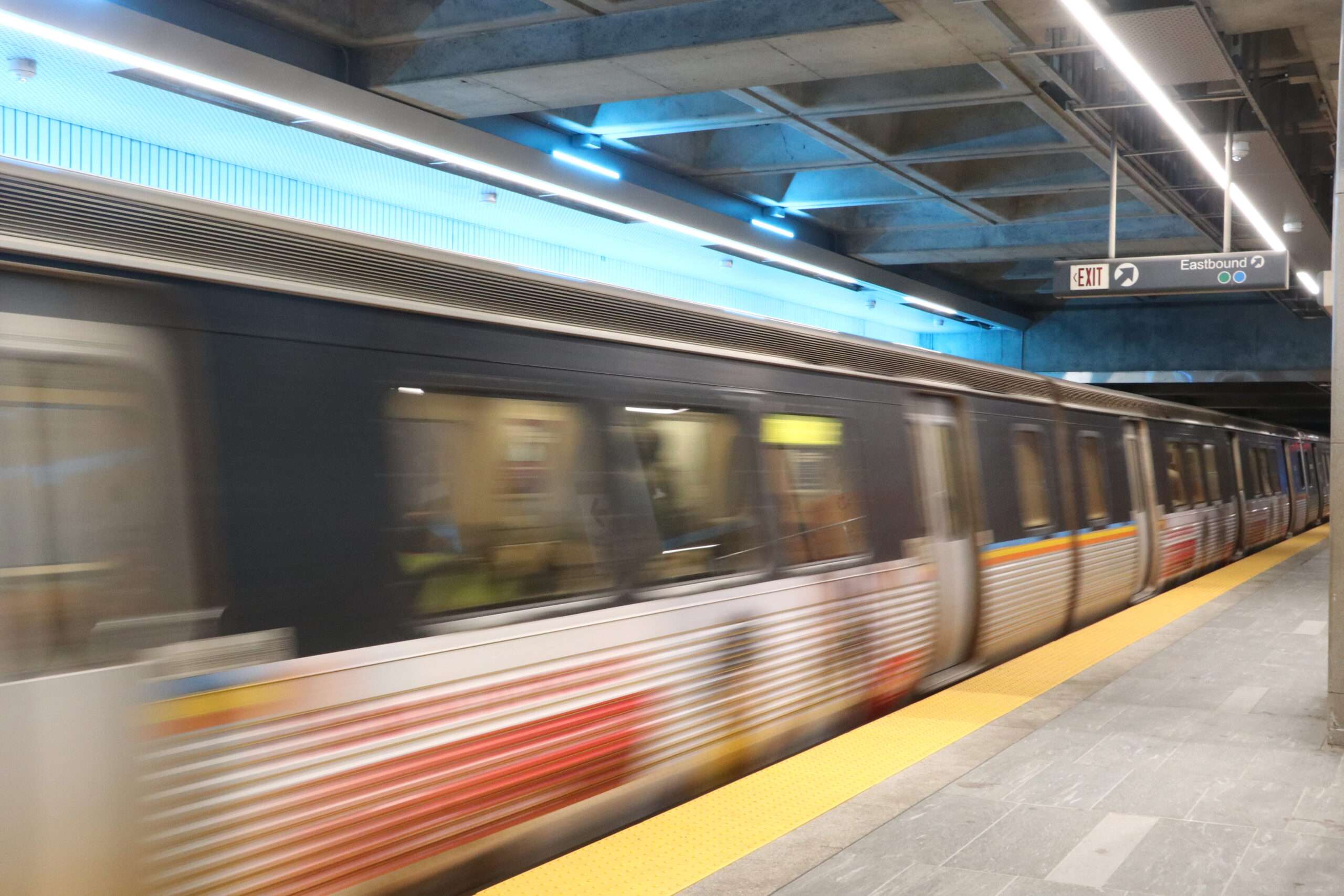
Metro Atlanta’s transit agency offered quick support. MARTA Interim CEO Jonathan Hunt said the reforms would improve safety, mobility, and project delivery.
“Reducing unnecessary administrative hurdles will help us accelerate project approvals and deliver high-quality transit to the metro Atlanta region more efficiently,” Hunt said. He added that modernizing federal processes will help MARTA expand mobility options and strengthen safety and security for riders.
Part of Warnock’s Broader Transit Strategy
Warnock has been one of the Senate’s vocal advocates for public transit expansion, pushing for upgrades in Georgia’s rapidly growing metro areas and improving mobility in both urban and rural communities. He previously secured key provisions in the Infrastructure Investment and Jobs Act to strengthen federal transit grant programs and support efforts to expand service statewide.
If enacted, the Streamline Transit Projects Act could smooth the path for major initiatives underway or planned across Georgia—including MARTA bus-rapid-transit corridors, station modernization, regional mobility upgrades, and new connections designed to reduce congestion as the state continues to grow.