DeKalb Reimagined: CEO Lorraine Cochran-Johnson Charts New Path Forward

DeKalb CEO Lorraine Cochran-Johnson outlines bold plans to improve public safety, infrastructure, economic inclusion, and homelessness in her 2025 State of the County Address.


By Milton Kirby | Atlanta, GA | May 9, 2025

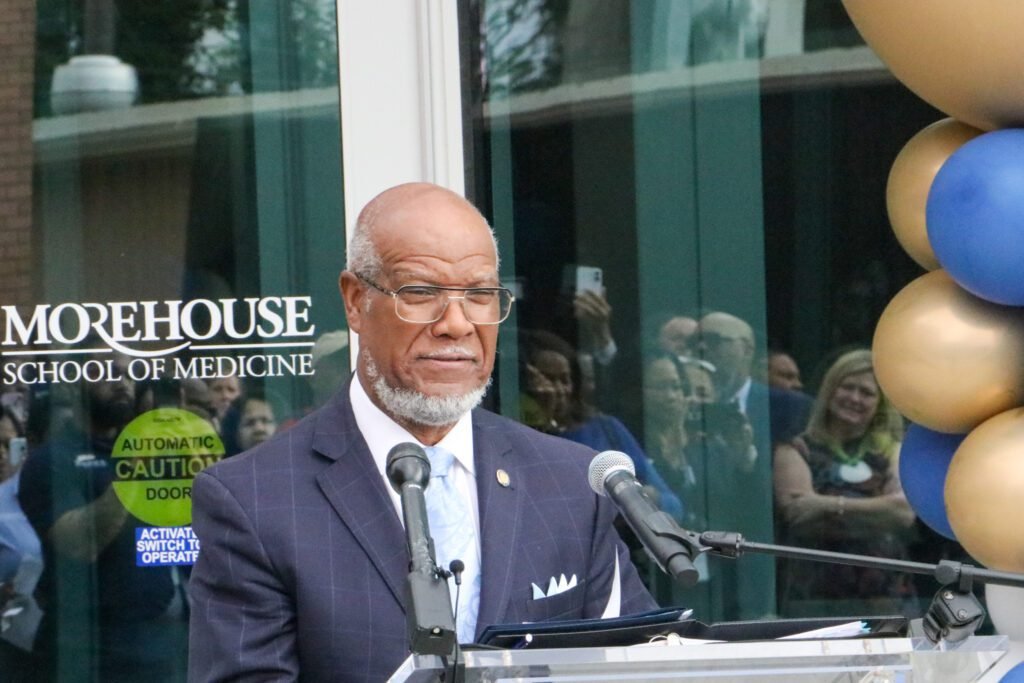
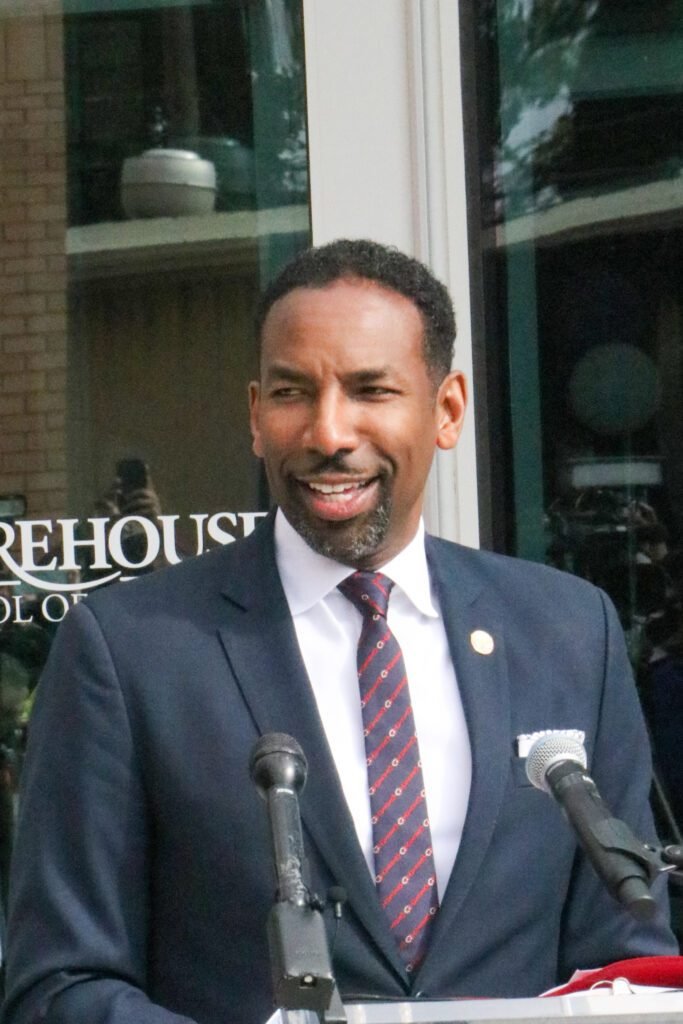
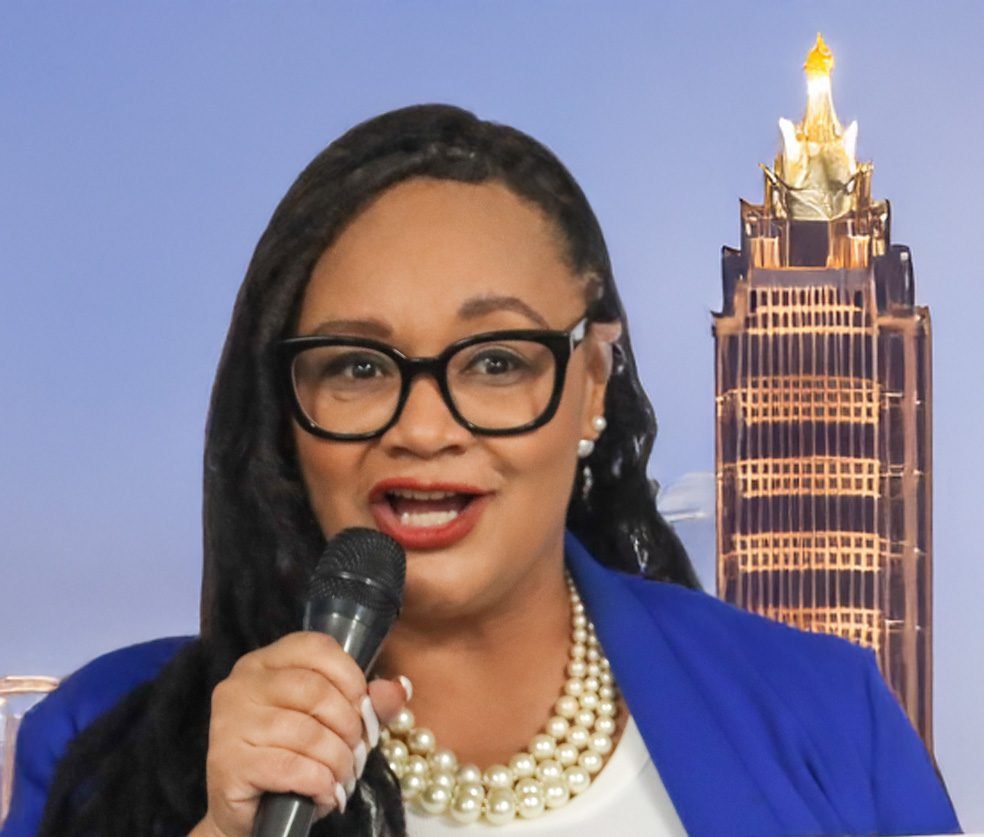
In her first State of the County address, DeKalb County CEO Lorraine Cochran-Johnson delivered a powerful message of transformation, transparency, and urgency.

Speaking from the red carpet backdrop of Assembly Studios, Cochran-Johnson — the county’s first Black woman to serve as CEO — laid out a bold four-pillar plan centered on public safety, infrastructure, housing, and economic development.

“DeKalb County is not just reimagined,” she said. “It’s awakened.”

A Fast Start and a Bold Vision

Since taking office in January, Cochran-Johnson has moved swiftly. Within her first 100 days, she replaced the police chief, installed an interim leader, and committed more than $10 million to raise officer salaries, making DeKalb’s department one of the best paid in the region.

She also proposed a $2 million real-time crime center and announced a pilot program to use drones for emergency response.

“When it comes to public safety and water, water is a matter of public health – you can’t move slowly,” she said. “Give me grace and time, but know that urgency is necessary.”

Cochran-Johnson emphasized that public safety is more than policing — it’s the foundation for economic development. She called on DeKalb’s 12 city mayors to join her in fighting crime, building infrastructure, and ensuring opportunity.

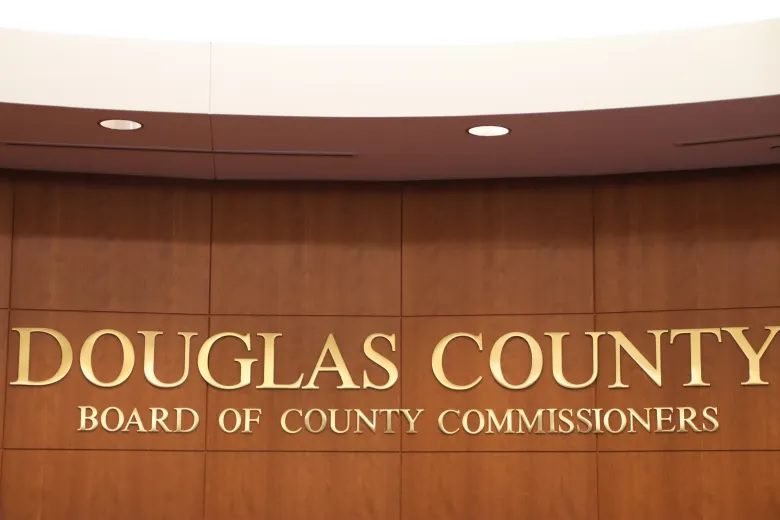
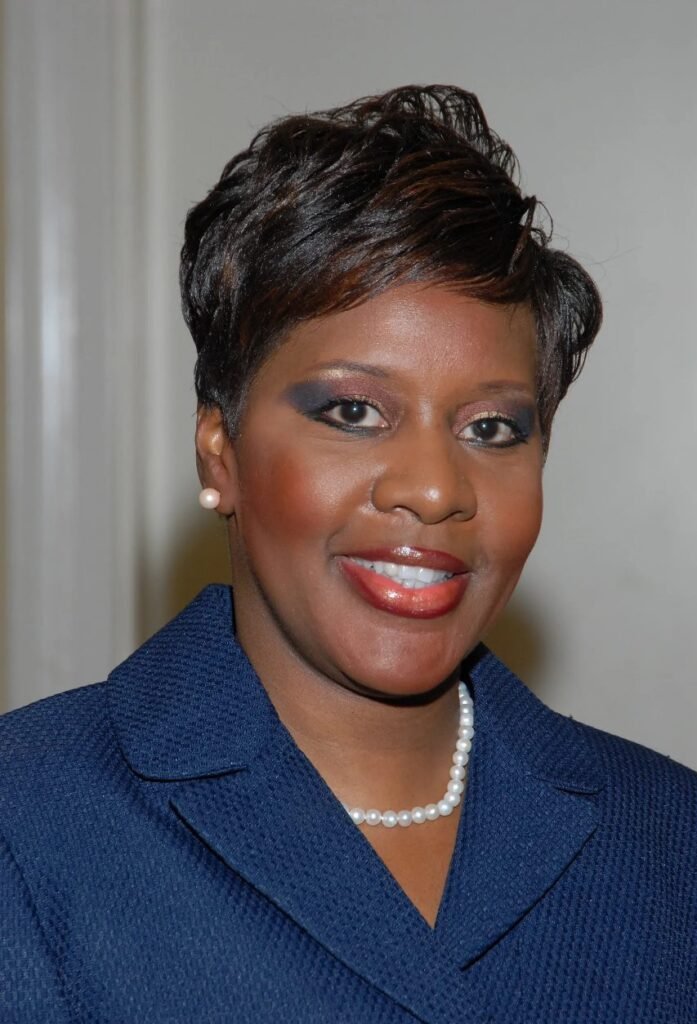
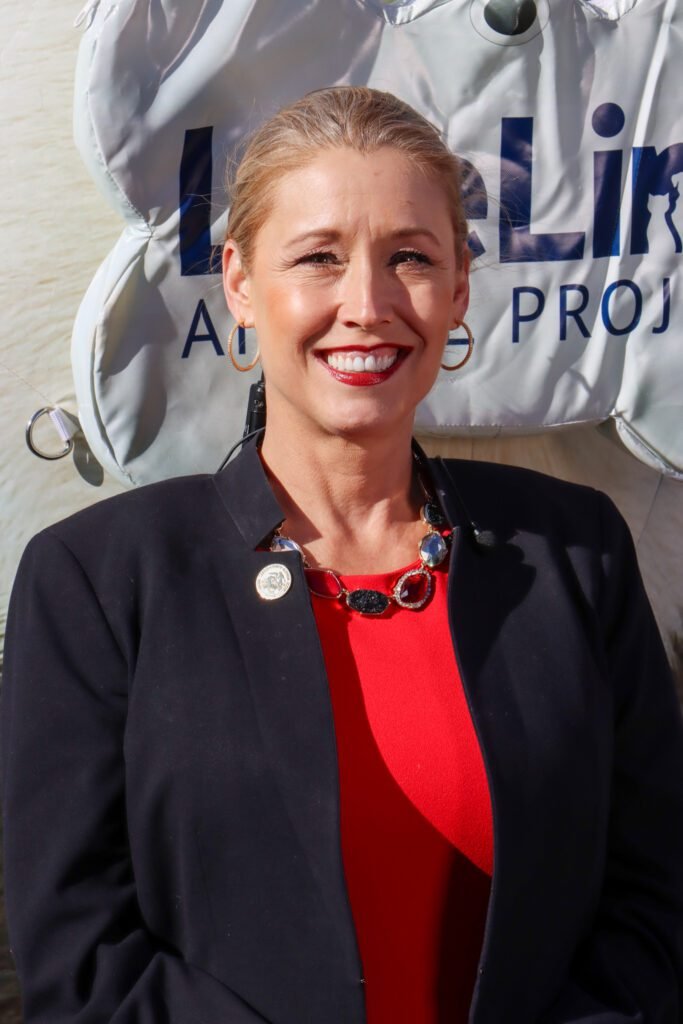
DeKalb County CEO & Board of Commissioners

Infrastructure Investment: “The Decision of My Life”

“After analyzing the data and evaluating the risks, it was one of the best decisions of my life,” she said. The CEO also addressed the county’s aging water and sewer system, which is under federal oversight. She backed a tough but necessary decision: a 10% annual increase in water rates over the next decade to support a $4.27 billion overhaul.

Atlanta Regional Commission, under the direction of Executive Director, Anna Roach, reinforced the urgency, noting metro Atlanta has one of the nation’s smallest water supplies for a major urban area.

Cochran-Johnson added that infrastructure is not just about pipes — it’s about quality of life, public health, and future growth.

Small Businesses and Economic Equity

Cochran-Johnson pledged to ensure that local, small, and minority-owned businesses are equipped to compete for government contracts. Her administration will focus on strategic economic development that attracts top-tier companies and creates jobs, particularly in underserved communities.

“We must build a more connected and transparent government,” she said. “We are being responsible stewards of taxpayer dollars and innovative in our approach.”

To foster better communication and cooperation, she appointed an intergovernmental liaison to help align priorities across the county’s 12 cities.

Tackling Homelessness and Building Community

In the months ahead, Cochran-Johnson will unveil a comprehensive framework to reduce homelessness. She hinted at wraparound services and stronger partnerships with nonprofits and health agencies.

She also shared personal stories to highlight the commitment of county employees, including a Roads and Drainage crew that cleared snow for an ambulance so a pregnant woman could safely deliver her baby.

“That’s the spirit of DeKalb,” she said.

Fiscal Discipline and Innovation

Despite financial uncertainty due in part to potential federal funding cuts, Cochran-Johnson presented a balanced budget to the Board of Commissioners just 15 days after taking office. A temporary hiring and spending freeze is in effect as departments review cost-saving and revenue-generating ideas.

While acknowledging the challenges, she was resolute:

“Aggressive and bold moves are necessary,” she said. “Government may be a slow-moving vehicle, but there are times when you simply cannot move slowly.”

A County Reimagined

Throughout the address, Cochran-Johnson emphasized collaboration, accountability, and bold leadership. She expressed gratitude for past CEOs and vowed to lead with vision and courage.

“I’ve learned from those who came before me. But now is the time for bold action,” the CEO said. “The mission is possible — and DeKalb’s future starts now.”

Photo Gallery – 2025 CEO Lorraine Cochran-Johnson State of the County Address

Please consider supporting open, independent journalism – no contribution is too small!

Golden Years, Golden Goals: DeKalb County Hosts 36th Annual Senior Olympics

DeKalb County’s 2025 Senior Olympics promotes fitness, fun, and friendship for adults 50+. Events include basketball, swimming, track, and more across multiple venues


By Milton Kirby | Atlanta, GA | May 6, 2025

Seniors from across DeKalb County are lacing up their sneakers and getting ready to compete. The 36th Annual DeKalb County Senior Olympic Games began on Monday, May 5, and will run through May 16. The opening ceremony was held at the Exchange Intergenerational Recreation Center in Decatur, where dozens of participants gathered with family and friends to kick off the games.

This event is for residents aged 50 and older and offers them a chance to compete in Olympic-style games across the county. This festival celebrates movement, friendship, and healthy aging, from swimming to bowling, basketball to line dancing.

Celebrating Strength and Spirit

Participants can enter as individuals or as part of a team. Gold, silver, and bronze will be awarded to the top three finishers in each event. Events are spread out across DeKalb County at various venues to ensure everyone has access.

Some of the featured competitions include:

  • 3-on-3 basketball
  • Track and field events like the 50-yard dash and softball throw
  • Pickleball (singles and doubles)
  • Swimming races in different strokes and distances
  • Table tennis and billiards
  • Golf and card games
  • Water volleyball and line dancing

Seniors needing transportation help are encouraged to contact MARTA Mobility at 404-848-5389.

A Message of Motivation

Two-time Olympic gold medalist DeeDee Trotter opened the games with a powerful message. Once labeled an underdog, Trotter told the crowd how she turned that label into fuel for greatness. Her long career in track and field brought her multiple titles, including Olympic medals and national championships.

After retiring from sports, Trotter followed a new dream — baking. She graduated from the Art Institute of Atlanta as valedictorian with a 4.0 GPA and is now the Executive Pastry Chef at a top golf club. She also runs her own bakery, “Taste of Gold.” Trotter’s story reminded everyone that it’s never too late to chase your goals.

A Community Committed to Health

The Senior Olympic Games are hosted each May by DeKalb County’s Department of Recreation, Parks & Cultural Affairs to celebrate Older Americans Month. The goal is to help seniors stay active, social, and healthy.

“It’s no secret that baby boomers are entering their golden years,” said a department spokesperson. “We want to help them do that with strength and joy. Staying fit and active is the best answer to aging.”

This year, more than 30 events are featured. Some, like the football toss and standing long jump, focus on mobility and coordination. Others, like card games and dominoes, are designed to keep the mind sharp and the spirit engaged.

“It’s not just about competition,” said Damon Scott, Director of Human Services. “It’s about building community, having fun, and proving to ourselves that age is just a number.”

Local Leaders Lend Support

The opening ceremony featured remarks from several community leaders, including:

DeKalb CEO & Commissioners
  • Lorraine Cochran-Johnson, DeKalb County CEO
  • Mereda Johnson, District 5 Commissioner
  • Nicole Massiah, District 3 Commissioner
  • LeDena Bolton, Super District 7 Commissioner
  • Damon Scott, Director of Human Services
  • Remy Epps, City of Decatur Parks and Recreation Director

Each speaker highlighted the importance of staying active in later life and praised the Senior Olympics as a model for healthy living.

“Our seniors are the heart of DeKalb County,” said CEO Cochran-Johnson. “They have raised families, built careers, and shaped this community. Now, we get to celebrate their strength and perseverance.”

Beyond the Games

For many participants, the games are about more than medals. They’re a chance to see old friends, meet new ones, and feel the joy of movement. Some use the games to try new activities for the first time. Others are seasoned competitors who look forward to the event every year.

DeKalb Seniors Line Dancing before Olympics

The games also offer a chance for families to come together. Organizers encourage younger relatives to cheer on their elders and even sign up to volunteer. “It brings the whole family into the fitness mindset,” said one event organizer.

For those who aren’t competing, volunteering is another way to get involved. Helpers are needed to set up events, track scores, and cheer on athletes. “Every smile, every clap, every word of encouragement matters,” said LeDena Bolton, Commissioner for Super District 7.

A Growing Tradition

The DeKalb County Senior Olympics began more than three decades ago with a simple mission: to keep older adults moving. Since then, it has grown into a beloved community tradition that draws hundreds of participants every year.

“Every year, we see more people joining and more energy in the air,” said Nicole Massiah, District 3 Commissioner. “This event is proof that you can age with power and purpose.”

With health at the center of the event, organizers also offer information on wellness programs, nutrition, and preventive care. Some venues even provide health screenings during the games.

As one participant put it, “You come for the games, but you leave with a new reason to stay active all year.”

Looking Ahead

The 2025 DeKalb Senior Olympics run until May 16, with a closing ceremony to celebrate all participants and volunteers. This final showcase will include awards, performances, and community tributes.

The Department of Recreation, Parks & Cultural Affairs hopes this year’s games inspire even more seniors to get involved. “Our mission is to promote healthy lifestyles through fun, fitness, and play,” said an official. “We are looking forward to seeing even more smiling faces next year.”

For registration or information on events and volunteering, visit the county’s website or contact the recreation department directly.

Please consider supporting open, independent journalism – no contribution is too small!

Kemp Says No to Senate Run, Shakes Up Georgia’s 2026 Political Map

Brian Kemp’s decision not to run for Senate in 2026 reshapes Georgia’s political landscape, boosting Jon Ossoff’s chances and triggering GOP uncertainty

By Milton Kirby | Atlanta, GA | May 6, 2025

Georgia Governor Brian Kemp has made it official: he will not run for U.S. Senate in 2026. The announcement sent shockwaves through the political world, especially in Georgia, where many Republicans had hoped Kemp would take on Democratic Senator Jon Ossoff.

Kemp’s decision was posted on X (formerly Twitter) Monday afternoon. “Being on the ballot next year is not the right decision for me and my family,” he wrote. He also confirmed that he had spoken to Senate GOP leadership and former President Donald Trump about his decision.

Kemp’s absence from the race leaves Republicans without their strongest possible challenger to Ossoff, who is widely considered the most vulnerable Democrat up for re-election in 2026.

Kemp’s Strong Political Standing

Kemp, a two-term governor, is one of the most well-known and popular Republicans in Georgia. In 2018, he narrowly defeated Democrat Stacey Abrams. Four years later, he beat her again — this time by more than seven percentage points. Kemp also overcame a Trump-backed primary challenge from former Senator David Perdue, winning by over 50 points.

Polls had shown that Kemp would be a top contender against Ossoff. An April poll from the Atlanta Journal-Constitution had Kemp ahead of the Democrat 49% to 46%, a margin within the 3.1-point error range. It was the only matchup where a Republican led Ossoff.

Kemp’s decision not to run means other Republicans will need to step up. However, none currently match his name recognition or appeal across the state.

Jon Ossoff: From Underdog to Incumbent

Jon Ossoff, now 37, became a national figure during the 2017 special election for Georgia’s 6th Congressional District. Though he lost that race, he gained a reputation as a rising star in the Democratic Party.

In 2020, Ossoff ran for U.S. Senate and forced incumbent Republican David Perdue into a runoff. He won the January 2021 runoff by less than two points, thanks to heavy turnout in metro Atlanta and strong support from Black voters. His victory, along with Raphael Warnock’s, flipped the Senate to Democratic control.

Since then, Ossoff has built a solid war chest. In the first three months of 2025, he raised over $11 million — more than any Senate incumbent in an off-year. His campaign manager, Ellen Foster, said the campaign is ready for any challenge. “As Republicans scramble in the aftermath, our campaign will continue to build insurmountable momentum needed to win next November,” she said.

GOP’s New Bench

Without Kemp, the field is wide open. Several names have already emerged.

One of the highest-profile is Rep. Marjorie Taylor Greene. Known for her far-right views and support of conspiracy theories, Greene has not ruled out a Senate run. She once said she would only run if Kemp did not. Now that he’s out, she is expected to consider it seriously.

However, a recent poll showed Greene trailing Ossoff by 17 points, 54% to 37%. That’s a troubling sign for Republicans hoping to flip the seat.

Other possible GOP candidates include:

  • Rep. Mike Collins, a freshman Congressman from middle Georgia.
  • Rep. Buddy Carter, who represents the coastal region of the state.
  • Rep. Rich McCormick, a physician and Marine veteran from the Atlanta suburbs.
  • Agriculture Commissioner Tyler Harper, who has already visited the National Republican Senatorial Committee offices.
  • Insurance Commissioner John King, a retired police chief and former Army major general.

All of these names come with pros and cons, but none have Kemp’s statewide reach or fundraising power.

A Look at Kemp’s Political Future

Kemp is term-limited and will leave office in 2027. That means his next political move is uncertain, but his decision to skip the Senate race does not mean he’s done.

Over the weekend, Kemp hosted a high-dollar donor retreat at Sea Island, Georgia. Attendees were asked to contribute as much as $100,000 each. The event shows that Kemp is still in the game — just not for 2026.

At 61 years old, he could be eyeing a national run in 2028. Kemp is well-known in Republican circles and has a strong record of winning tough elections in a purple state.

Kemp’s relationship with Trump has been complicated. The two clashed after the 2020 election when Kemp refused to support Trump’s fraud claims. Trump even called Kemp “the worst governor in America” in terms of election integrity. In 2022, Trump backed Perdue in the primary, but Kemp won in a landslide.

Since then, the two have made peace. Kemp endorsed Trump’s 2024 run, and Trump went on to win Georgia. Kemp also confirmed he spoke with Trump on Monday before making his Senate announcement. “I expressed my commitment to work alongside them to ensure we have a strong Republican nominee,” Kemp said.

Democrats Seize the Moment

Democrats wasted no time in calling Kemp’s decision a major GOP failure.

Maeve Coyle, spokesperson for the Democratic Senatorial Campaign Committee (DSCC), issued a statement on May 5, 2025, in response to Georgia Governor Brian Kemp’s announcement that he would not run for the U.S. Senate in 2026. In her statement, Coyle characterized Kemp’s decision as “yet another embarrassing Republican Senate recruitment failure,” suggesting that it underscores challenges within the GOP’s candidate recruitment efforts and highlights the influence of former President Donald Trump’s agenda on Republican candidates. This statement was reported in several news outlets, including The Washington Post and The Current.

Ossoff, for his part, has not shied away from criticizing Trump. He has described the former president as having “authoritarian impulses” and a “desire to rule as a king.” In a recent interview, he said, “This country was founded on a rejection of kings, and the American people have no interest in this new experiment in monarchy.”

What Comes Next

With Kemp out, all eyes are now on who will officially jump in. Greene remains the wildcard. A Senate run would mean giving up her House seat unless she waits to announce and risks losing both. She’s also floated the idea of running for governor in 2026, which could create tension with more mainstream Republicans.

Meanwhile, Ossoff continues to prepare for a battle. His campaign is already operating as if 2026 is around the corner. Democrats view holding the Georgia seat as critical to regaining control of the Senate, where Republicans currently have a 53-47 advantage.

In a state where every race is close, nothing is certain. Georgia has become one of the most competitive battlegrounds in the country. Ossoff won by less than two points in 2021. Warnock won by just under three points in 2022. And Trump reclaimed Georgia in 2024 by a narrow margin.

With Kemp out of the picture, the road ahead is more uncertain than ever — for Republicans and could be a massive opportunity for the Democrats.

Please consider supporting open, independent journalism – no contribution is too small!

Let Us Make Man Gala Awards Scholarships, Honors Advocates for Justice, and Youth Empowerment

Let Us Make Man awarded scholarships to 50 students and honored five advocates during its 2025 Gala, celebrating Black leadership, education, and community empowerment


By Milton Kirby | Atlanta, GA | May 2, 2025

Let Us Make Man (LUMM) hosted its annual Scholarship & Awards Gala on Thursday, May 1, 2025, to celebrate achievement, legacy, and promise. The black-tie affair honored nearly 50 promising young men and women with tuition and book scholarships while recognizing three seasoned community leaders and two emerging activists for their impactful work in social justice and community advancement.

Held at the Morrow Center in Morrow, Georgia, the Gala was the latest milestone in LUMM’s long-standing mission to uplift and equip Black youth with the tools to thrive.

This year, LUMM awarded 30 tuition scholarships and 28 book scholarships to students who plan to study fields ranging from mechanical engineering and business to law, nursing, and medicine. Each recipient embodies the vision, mission, and values that have guided LUMM since its inception in 2006.

Scholarship & Awards Gala photo gallery                 Scholarship & Awards Gala video link

By Milton Kirby – LUMM Scholarship Recipients

A Legacy Rooted in Purpose

Let Us Make Man seeds were planted in the summer of 2006 when attorney Mawuli Mel Davis hosted a high school basketball team from Rota, Spain. That visit led to a powerful discussion event titled “Building Boyz to Men,” where local Black men spoke about manhood in America with the team. Inspired by the evening, activist and former Atlanta City Councilman Derrick Boazman proposed forming a broader effort to engage and mentor Black youth.

Later that fall, Boazman gathered nine men from diverse backgrounds—law, education, ministry, business, and culture—who all shared a deep sense of responsibility to save and support young Black men. From that gathering, LUMM was born.

The founding ten members of LUMM include:

  • Derrick Boazman – Community Leader
  • Mawuli Mel Davis – Attorney at Law
  • Doug Evans – Forensic Scientist
  • A. B. Jihad – Entrepreneur
  • Kwame Lazarus – Cultural Griot
  • Minister Ray Muhammad – Minister
  • Pastor Derrick Rice – Pastor
  • Keene Walker – Educator
  • Dr. Mike Weaver – Educator
  • Kweku Webb – Financial Planner

Their first major event, The Gathering to Reclaim Black Manhood, took place in February 2007 at Atlanta Technical College, attracting over 700 participants. Unlike traditional conferences, The Gathering provided structured, research-based training sessions for attendees to take back to their communities. Workshops focused on law, education, mentoring, and spiritual growth. The tradition of honoring community leaders also began that year, with notable figures like Rev. C.T. Vivian and Stedman Graham in attendance.

Over the years, LUMM events have expanded across Georgia, with gatherings at institutions such as Savannah State, Paine College, Fort Valley State, and Columbus State University—each year engaging hundreds of attendees in leadership, economics, family unity, and youth empowerment workshops.

Honoring a Lifelong Advocate

Among this year’s honorees was Lawren Wilson, a rising senior majoring in political science at Clark Atlanta University. She received the Vincent D. Fort Scholarship, named in memory of the late Georgia State Senator (1956–2024), a staunch advocate for civil rights, economic justice, and educational access.

Senator Fort served Georgia’s 39th District from 1996 to 2017 and was nationally recognized for authoring the Georgia Fair Lending Act in 2002—one of the strongest anti-predatory lending laws in the country. A longtime supporter of LUMM, Fort’s legacy continues through this scholarship, awarded to students who demonstrate a strong commitment to justice and community service.

Celebrating Vision, Justice, and Cultural Preservation

In addition to student scholarships, LUMM recognized several trailblazers whose work exemplifies leadership, justice, and community empowerment:

Business Visionary Leader Award: Cortez A. Carter

  • Carter, Executive Vice President of Hyde Park Hospitality, has spent over 30 years shaping aviation, banking, and real estate industries. As a certified International Airport Professional and experienced pilot, Carter has led development efforts at major U.S. airports, championing minority business growth and infrastructure innovation.

Champion for Justice Award: The Hon. Debra E. Deberry

  • Deberry, Clerk of the Superior Court of DeKalb County since 2011, has spent more than 25 years in public service. Managing a department of over 100 employees and a $7 million budget, she has been a force in judicial reform and community engagement. Deberry’s impact has been felt across the legal system, from jury oversight to juvenile advocacy.

C.T. Vivian Medal of Freedom: Dr. Georgianne Thomas

  • A filmmaker, educator, and activist, Dr. Thomas is best known as the executive producer of Foot Soldiers: Class of 1964, an award-winning documentary chronicling Black women’s role in the civil rights movement. Her career has spanned acting, international diplomacy, and authorship, rooted in her passion for justice and storytelling.

Rising Stars: Young Warriors in Action

LUMM also honored two dynamic youth leaders with its Young Warrior Award:

Kannette King

  • A passionate advocate for mental health, education equity, and youth development, King is quickly emerging as a leading voice in her generation. Her work inside and outside the classroom shapes future movements and mentors her peers to rise in leadership.

Daxton Pettus

  • As a high school student in Decatur, Pettus led efforts to remove a Confederate monument and install a historical marker honoring Dr. Martin Luther King Jr. Now a student at Morehouse College; he continues to blend activism with academics to build a more just and equitable society.

A Movement That Endures

As Let Us Make Man prepares for its next chapter, the Gala served as a reminder and a call to action. From scholarships to awards, each honor represents the collective power of Black leadership, unity, and vision.

Eighteen years after its founding, LUMM continues to train, uplift, and inspire—affirming the belief that when we invest in young minds and honor our elders, we make not just men, but leaders.

Please consider supporting open, independent journalism – no contribution is too small!
Court of Appeals clears path for Republicans to take over NC Board of Elections. Stein to appeal


By Will Doran WRAL state government reporter | April 30, 2025

Republicans have been trying for years to take control of elections decisions away from the governor’s office under Democrats Roy Cooper and Josh Stein. Those efforts have all been ruled unconstitutional, until now.

Control over elections administration in North Carolina could flip from Democratic to Republican control within hours, following a decision late Wednesday from the state Court of Appeals.

Elections decisions in North Carolina are made by political appointees, who make calls on issues such as where and when to open early voting sites, which allegations of campaign finance violations or voter fraud to refer to prosecutors, and whether to confirm election results.

Last week, a trial court ruled that Republican state lawmakers violated the constitution when they tried taking control of the elections board away from Democratic Gov. Josh Stein.

Today, the Republican-controlled state Court of Appeals overturned that decision. The two-sentence ruling offered no explanation for why the judges were overruling the trial court; it also didn’t name the judges who made the decision. And it came despite the judges hearing no oral arguments on the case.

The 15-judge court of appeals typically hears cases in panels of three judges. Because the court has 11 Republicans and four Democrats, its panels are almost always majority-Republican.

Wednesday’s ruling means that as soon as Thursday, the elections board could switch to GOP control. After Stein defeated Republican challenger Mark Robinson for governor in 2024, Republican legislators passed a law — which former Democratic Gov. Roy Cooper unsuccessfully vetoed — putting elections in the hands of the new state auditor, Republican Dave Boliek, who is close with GOP legislative leadership.

With protested override, NC lawmakers sap power from governor, attorney general, other incoming Democrats

The state and county election boards all have five members. For years state law has given three of those five seats to the governor’s political party. The other two seats go to the next-largest political party. But ever since Democrat Roy Cooper unseated Republican Gov. Pat McCrory in 2016, Republican lawmakers have been trying to change that law to make sure Republicans, not Democrats, have control over elections. They’ve been unsuccessful, at least until now, with numerous attempts either struck down in court as unconstitutional or rejected at the ballot box by voters.

Republican state Senate leader Phil Berger has presided over all of those past unconstitutional efforts to shift power over elections to his party. Berger praised Wednesday’s ruling, which broke with those past legal precedents.

“Stein is desperately grasping to keep a partisan stranglehold on the Board of Elections, instead of working to make commonsense changes to improve election administration,” Berger wrote in a statement. “North Carolinians deserve to have a Board of Elections that works for them.”

A spokesman for the State Board of Elections declined to comment on Wednesday’s ruling. Stein said the ruling injects chaos into elections, and is unconstitutional. “Today’s Court of Appeals decision about the Board of Elections poses a threat to our democracy and the rule of law,” Stein wrote in a statement. “The Supreme Court should not allow it to stand.”

The ruling could affect administration of the 2026 midterms and beyond. But it could also affect the outcome of a still-uncalled race from 2024. The elections board has been at the center of a politically contentious lawsuit over whether to throw out thousands of ballots in Republican Jefferson Griffin’s attempt to unseat Democratic state Supreme Court Justice Allison Riggs.

Legal battle over NC ballots now plays out on two fronts with Supreme Court seat on the line

Griffin’s fellow Republicans on the Court of Appeals also overturned a trial court ruling in that case, in order to rule in his favor. Griffin also later won a partial victory at the Republican-controlled state Supreme Court. But Riggs and the elections board have been fighting that decision in federal court, and a GOP takeover of the elections board in the middle of those federal court fights could help Griffin if the new elections board begins siding with him.

Stein suggested that in addition to the lack of details explaining why the Court of Appeals was overturning past precedent on this issue, the fast timing of the ruling also indicated politics were at play rather than legal reasoning.

“I fear that this decision is the latest step in the partisan effort to steal a seat on the Supreme Court,” Stein wrote. “No emergency exists that can justify the Court of Appeals’ decision to interject itself at this point. The only plausible explanation is to permit [Boliek] to appoint a new State Board of Elections that will try to overturn the results of the Supreme Court race.”

A spokesman for Boliek didn’t respond to a request for comment on Stein’s accusation that he’s part of a broader GOP plot to steal last year’s election.

Also Wednesday, Stein immediately sent word to the North Carolina Supreme Court that he intends to appeal the ruling. Typically, big changes such as the proposed elections overhaul are put on hold while being appealed. However, it’s unclear what might happen if Boliek takes steps to overhaul the elections board quickly on Thursday before the Supreme Court can potentially step in. The state law, which the Court of Appeals put back into place Wednesday, transfers control of elections to Boliek starting Thursday.

Boliek’s office also didn’t respond to a request for comment on when he might appoint new elections board members.

Please consider supporting open, independent journalism – no contribution is too small!

How to Avoid Credit Card Late Fees After a Court Threw Out a Proposed Cap


By Cora Lewis | Associated Press | April 28, 2025

A Texas judge earlier this month threw out a federal rule that would have capped credit card late fees at $8.

The Consumer Finance Protection Bureau finalized the rule last year as part of the Biden administration’s efforts to do away with what it called junk fees. It was paused by the courts before it could take effect.

At the time, the CFPB estimated that American families would have saved more than $10 billion in late fees annually had the fees been capped at $8, significantly less than the $32 average.

Banks and industry groups argued that the rule didn’t allow card issuers to charge fees high enough to deter late payments and discourage repeat violations.

The Texas judge’s ruling earlier this month came a day after a collection of major industry groups and the CFPB under President Donald Trump announced that they had reached an agreement to throw out the rule.

Here’s what to know about credit card late fees:

What is the average credit card late fee?

The average late fee for major issuers has steadily ticked up since the 2010s, going from $23 at the end of 2010 to $32 in 2022, according to the CFPB. WalletHub, which tracks financial data, found the average late fee in 2025 to be $30.50, with the maximum $41.

A September 2023 Consumer Reports study estimated that 1 in 5 American adults, or about 52 million people, paid a credit card late fee in the previous year. People with lower incomes pay proportionately bigger fees, according to the CFPB, with the highest burden falling on communities of color and those living paycheck to paycheck.

How can consumers avoid the fees?

Enrolling in auto-pay for your credit cards can help you avoid making late payments, and there are some credit cards that don’t charge late fees at all (though it’s important to note that these cards may have other fee or penalty structures, or higher interest rates.)

Citi Simplicity and the Apple card do not currently charge late fees, and Discover offers a card that will automatically waive the first late fee.

It’s also possible to appeal credit card late fees charged by your credit card company by calling them directly. The companies will often reverse the fees, especially if it’s your first late payment.

You may also want to consider making payments on your credit card balances during the month. That means you’ll have paid more of the balance by the time the amount comes due, and keeping your balance low relative to your credit limit can improve your credit score.

If you’re having trouble making ends meet, you can ask your credit issuers about hardship programs. These are typically available to people affected by job loss, illness or medical conditions, natural disasters, or other emergencies.

What was the CFPB credit card late fee cap rule about?

Concerned that credit card companies were building a business model based on high penalties, Congress passed the Credit Card Accountability Responsibility and Disclosure Act of 2009 (CARD Act), which banned the companies from charging excessive late fees and established clearer disclosures and consumer protections.

In 2010, the Federal Reserve Board of Governors voted to issue a regulation implementing the CARD Act, which said that banks could only charge fees to recover costs associated with late payment.

However, the rule included an “immunity provision” that let some banks charge $25 for the first late payment and $35 for subsequent late payments, adjusted for inflation each year. Those amounts subsequently grew to $30 and $41.

After a review of market data, the CFPB finalized a rule that would have capped late fees at $8 and ended automatic inflation adjustments. Based on records analyzed by the CFPB, a late fee of $8 would be sufficient for card issuers, on average, to cover collection costs incurred as a result of late payments.

How have banking groups responded to the court decision?

Industry groups, including the Consumer Bankers Association, American Bankers Association, the U.S. Chamber of Commerce, and others, said they welcomed the court’s decision eliminating the cap.

The groups said that the rule would have led to higher interest rates and reduced credit access for card holders. The groups also said the rule would have “reduced important incentives for consumers to manage their finances.”

The CFPB has estimated that banks bring in roughly $14 billion in credit card late fees a year.

How have consumer advocates responded?

Horacio Méndez, president and CEO of Woodstock Institute, an organization for advancing economic equity, called the ruling a “devastating blow.”

“By tossing out the CFPB’s common-sense rule to cap these predatory late fees — some as high as $41 — a federal judge is putting corporations over the lives of everyday consumers,” he said. “The CFPB’s rule was borne out of clear evidence: the credit card industry was using inflated late fees as a profit engine, forcing families with the least financial cushion to pay.”

Méndez said that while consumers have come to expect fees for services, those fees needn’t be punitive to be effective.

Please consider supporting open, independent journalism – no contribution is too small!

15 Small Steps, Big Impact: How You Can Help the Planet

Protect the planet with 15 simple tips—from reducing plastic and food waste to conserving energy and water—that make eco-friendly living easy and impactful every day.

By Milton Kirby | Atlanta, GA | April 29, 2025

You don’t have to be a scientist or activist to make a difference. Protecting the environment can start with small, everyday choices. Here are 15 easy and impactful steps you can take to help protect the planet:


1. Switch to a Reusable Water Bottle

Using a reusable water bottle helps reduce plastic waste, conserves energy and water used in production, and limits harmful emissions from transporting single-use plastic bottles around the world.

2. Don’t Always Preheat the Oven

Unless you’re baking, many dishes don’t need a preheated oven. Skipping preheating saves up to 20% of energy and reduces unnecessary strain on your home’s power usage.

3. Use LED Bulbs Instead of Incandescent

LED light bulbs use up to 80% less energy, last longer, and provide the same brightness. Turning off lights when you leave a room boosts your energy savings.

4. Unplug Devices When Not in Use

Electronics continue drawing power when plugged in, even if turned off. Unplugging or using a power strip helps eliminate phantom energy waste and lowers your monthly electric bill.

5. Buy Household Staples in Bulk

Purchasing items like soap, rice, and pasta in bulk reduces plastic and cardboard waste. It also cuts energy used in packaging and transportation, making it better for the planet.

6. Run Full Loads in Your Machines

Only run your dishwasher or washing machine when they’re full. Scraping plates instead of rinsing also saves water, energy, and time while keeping your kitchen efficient and eco-friendly.

7. Use Safer, Non-Toxic Cleaners

Choose green-certified or homemade cleaners using baking soda and vinegar. These reduce indoor air pollution, are safer for your family, and limit chemical runoff into soil and water systems.

8. Cut Down on Food Waste

Plan meals, store food correctly, and use leftovers. Americans waste about a pound of food per person daily. Reducing waste saves money and decreases landfill methane emissions.

9. Cook More Efficiently

Match your pan to the burner size and use lids—a small pan on a large burner wastes over 40% of heat. Lids cut cooking time and energy use.

10. Always Bring Reusable Grocery Bags

Reusable bags can replace hundreds or thousands of plastic ones over time. Leave a few in your car or bag so you’re never without one at the store.

11. Recycle Paper and Cardboard

Recycling saves trees, water, and energy while lowering greenhouse gas emissions. In 2019, the U.S. landfilled over 60 million tons of paper. Do your part to reverse that trend.

12. Compost What You Can

Food scraps, leaves, coffee grounds, and newspapers can all be composted. Composting reduces landfill waste, enriches soil naturally, and lowers emissions from organic materials that would otherwise rot.

13. Choose Laptops Over Desktops

Laptops use about 80% less electricity than desktop computers. Their energy-efficient design makes them a more intelligent choice when upgrading your tech or setting up a home workspace.

14. Reduce Idling in Your Vehicle

Turn off your engine if parked for more than a minute. Reducing idling saves fuel, lowers emissions, and helps fight climate change by improving air quality and efficiency.

15. Conserve Water at Home

Fix leaks, shorten showers, and turn off taps when brushing. Conserving water helps protect groundwater, save energy, and maintain healthier ecosystems for wildlife and future generations.

Why Shedeur Sanders Dropped in the 2025 NFL Draft — And Why It Makes Sense

Despite his talent, Shedeur Sanders fell to the fifth round of the NFL Draft—because leadership, humility, and team chemistry matter more than hype.


By George Gentry | April 29, 2025

As the dust settles on the 2025 NFL Draft, analysts and fans alike are scratching their heads over one name that remained on the board far longer than expected: Shedeur Sanders. Once projected as a potential Day 2 selection, Sanders fell to the fifth round—a surprising development for a quarterback with strong statistics and a recognizable name. But to me, the real surprise is that anyone expected otherwise.

I’m not a die-hard college football fan, nor did I follow the Colorado Buffaloes closely last season. But over the past four days, I’ve been inundated with hours of draft coverage and punditry. One thing has become clear: NFL teams didn’t just pass on Sanders because of his performance. They passed because they saw warning signs of something more damaging than inconsistent play—they saw a potentially toxic presence.

Courtesy – Shedeur Sanders

In that same four-day window, I heard no more than 90 seconds combined of Shedeur Sanders and his father, Deion Sanders, speaking. Yet, in that brief time, both made it clear that humility is in short supply. The elder Sanders declared publicly that there were certain teams he wouldn’t “allow” his son to play for—an audacious statement in a league where no player, especially a rookie, gets to make such demands. Meanwhile, Shedeur’s own remarks suggested he was used to being singled out, subtly positioning himself above the scrutiny that every other draft prospect faces.

That alone raises red flags. Football is not an individual sport; it thrives on leadership, selflessness, and unity. A successful quarterback doesn’t just complete passes—they inspire belief in the locker room, command respect in the huddle, and own their mistakes when things go wrong. Yet the public persona of Shedeur Sanders, with his designer cars and performative flash, suggests a man more interested in optics than accountability.

Let’s call this what it is: classic signs of a toxic potential employee.

Toxic employees aren’t always obvious at first glance. Sometimes they’re talented, even charismatic. But beneath the surface, their actions can poison a culture. In any workplace—including an NFL franchise—these individuals exhibit behaviors that hurt morale, sabotage progress, or create rifts among teams. They may bully teammates, dodge responsibility, or take credit for others’ efforts. They’re often overly competitive, insensitively brash, or blind to their own egos.

Is that Shedeur Sanders? That remains to be seen—but NFL scouts and executives are trained to spot those red flags. They look not just at arm strength and accuracy, but at attitude, composure, and fit. If they believed Sanders projected the warning signs of a toxic presence—overconfidence, entitlement, insensitivity—then dropping him down the draft board wasn’t a mistake. It was strategy.

And let’s not ignore the role of his father, Deion Sanders. A generational talent and now a high-profile coach, Deion has shown little interest in letting his son develop a public image separate from his own. Instead, he’s wrapped Shedeur in his shadow, defending him, controlling narratives, and framing adversity as conspiracy. But there’s a fine line between support and interference—and in this case, Deion may have taught his son all the wrong lessons about leadership.

The NFL doesn’t just want talent—it demands maturity. If a player walks in acting like the CEO before they’ve proven themselves on the field, they alienate teammates, challenge authority, and distract from the goal of winning.

Some may argue that Shedeur Sanders is simply misunderstood, that confidence is being mistaken for arrogance. But leadership is not about how you shine alone—it’s about how you elevate others. And humility, not hype, is what builds a winning culture.

So why did Shedeur Sanders fall to the fifth round? Because NFL teams weren’t just picking a quarterback. They were protecting their locker rooms.

Please consider supporting open, independent journalism – no contribution is too small!

2025 New Orleans Jazz & Heritage Festival Delivers Hot Music and Even Hotter Vibes

The 2025 New Orleans Jazz & Heritage Festival blended hot music, rich traditions, and global flavors across a sunlit, unforgettable first weekend.


By Milton Kirby | New Orleans, LA | April 28, 2025

The 2025 New Orleans Jazz & Heritage Festival opened on Thursday, April 24. Excitement filled the air as crowds poured into the Fair Grounds. The sounds of jazz, soul, and rock echoed across the city.

The first weekend wrapped up on Sunday, April 27. It ended with a bang. Big-name artists and local legends took the stage. Performers included the Dave Matthews Band, HAIM, Burna Boy, and The Revivalists.

By Milton Kirby – Randi & Phillip M, enjoying the music

Fans also enjoyed Cyril Neville, known as The Uptown Ruler. James Bay, The Soul Rebels, and Tab Benoit kept the energy high—the Branford Marsalis Quartet wowed jazz lovers with their smooth sounds.

Gospel music filled the air as Bishop Paul S. Morton and The Greater Sound Choir of Greater St. Stephen FGBC performed. Their voices lifted spirits and brought many to tears.

Guitar wizard Eric Gales lit up the stage. Jake Shimabukuro amazed crowds with his ukulele skills. C.J. Chenier & the Red Hot Louisiana Band got everyone dancing.

There was something for everyone. Boyfriend brought flair and fun. Hans Williams kept things mellow with his soft melodies. Big Freedia joined the New Orleans Gospel Soul Children for a lively show.

Local bands like the New Orleans Nightcrawlers and the Judith Owen Big Band kept the hometown pride strong. Steve Riley & the Mamou Playboys brought the sounds of Cajun country.

Jazz fans enjoyed an exceptional performance by the Louis Armstrong Hot 5 and 7 Centennial, featuring Nicholas Payton and Dr. Michael White.

The festival celebrated world music too. Etran de L’Aïr of Niger and RAM of Haiti performed, showcasing global sounds.

Big Chief Monk Boudreaux & The Golden Eagles honored the Mardi Gras Indian traditions. People Museum added a new indie-pop flavor.

Tributes were also part of the weekend. Paul Varisco & the Milestones honored the late Luther Kent. Trickbag, featuring Jonathon “Boogie” Long, joined the tribute.

Legendary guitarist Bill Frisell teamed up with Brian Blade and Thomas Morgan. Their set was soulful and moving. Tuba Skinny and Charlie Gabriel and Friends closed out smaller stages with traditional jazz favorites.

Everywhere you looked, music filled the air. From the opening bell at 11:00am to the last note at 7:00pm, there was a tune for every soul.

By Milton Kirby – Friends gathering for a good time

There truly was something for everyone. Young, old, and even the unborn were part of the celebration. Many expectant mothers could be seen walking from stage to stage, enjoying the sunshine and music.

The temperature on the festival grounds reached 86 degrees. But the music was even hotter. Fans danced, sang, and celebrated despite the heat.

Kids had their own place to play and learn. The children’s venue offered music, crafts, and storytelling. Parents relaxed nearby, knowing their little ones were entertained.

Food was a major highlight. More than 60 vendors were set up in nine different areas. The smells of gumbo, jambalaya, and crawfish pies filled the air.

Cultural blending happened everywhere. Music, dance, and food from around the world came together. It was an authentic New Orleans experience.

The festival grounds were alive with color. People wore hats, beads, and colorful shirts. Some brought umbrellas, not for rain, but to twirl and dance with.

Artisans sold handmade jewelry, paintings, and crafts. Every corner offered a new surprise.

You could hear musicians practicing or playing small sets even when moving between stages. Every inch of the festival vibrated with life.

The spirit of New Orleans was strong. Smiles were everywhere. Strangers became friends. Families reconnected.

Security and volunteers kept things safe and fun. Water stations were easy to find. Medical tents stayed ready but mostly handed out sunscreen and water.

By Milton Kirby – New Orleans Jazz Festival

The Jazz Fest isn’t just about music. It’s about culture, community, and celebration.

Tommy and Elizabeth of Fair Hope, AL, return to the festival year after year for the music, the food, and the march.

For others, Jazz Fest is a long-time tradition. Tori McKenny of Boston, who has New Orleans roots, has been coming for 30 years.

“It’s not just about the music,” McKenny said. “It’s about meeting old friends, making new ones, and blending two worlds. This festival is home for me.”

Festival organizers made sure everyone felt welcome. Maps and event guides were available. Volunteers guided guests to stages, food areas, and art villages.

Families with kids found shady areas to rest. Grandparents shared memories while little ones danced. Teens enjoyed discovering new bands and posting their experiences online.

Vendors offered tastes from every corner of Louisiana. Crawfish étouffée, shrimp po’boys, beignets, and sno-balls were just a few of the favorites.

“The food alone is worth the trip,” said Julie Sanders of Houston. “I’m eating my way through every booth.”

The blend of cultures was more than just food and music. Dance groups from across the globe performed throughout the grounds. African drum circles, Cajun dancers, and Caribbean steel drum bands gave nonstop shows.

Workshops taught traditional crafts. Guests could learn to weave baskets, make Mardi Gras masks, and carve wooden instruments.

Jazz Fest shows the world that New Orleans is still one of the greatest cultural cities.

As the final notes drifted into the night, everyone knew the magic would last. Memories were made. Songs were shared. And hearts were full.

The 2025 New Orleans Jazz & Heritage Festival once again is proving why it remains one of the most beloved events in the world.

With great food, hot music, and happy crowds, this first weekend no one will soon forget.

In New Orleans, the music never stops. And neither does the joy.

More music, more food, and excitement are on tap for next weekend.

Please consider supporting open, independent journalism – no contribution is too small!

A Life of Grace and Grit: The Legacy of Coretta Scott King

Coretta Scott King, civil rights leader and activist, built a legacy of justice, peace, and equality, championing causes worldwide while preserving Dr. King’s dream.


By Milton Kirby | Atlanta, GA |April 27, 2025

Coretta Scott King was born in rural Heiberger, Alabama, on April 27, 1927. Her family lived modestly but comfortably. She was descended from enslaved people and had Irish ancestry as well. She showed strong values, discipline, and a love for music from a young age.

Coretta graduated valedictorian from her high school, Lincoln Normal School, in 1945. She then attended Antioch College in Ohio. King broke racial barriers as one of the first Black students to study there. Later, she earned a degree in voice and violin from the New England Conservatory of Music in Boston, intending to become a concert vocalist.

While in Boston, she met a young minister named Martin Luther King Jr. They fell in love and married in 1953. They soon became partners in the fight for civil rights.

Coretta gave up her dream to be a concert singer and took up the march for freedom. She used her voice differently. She sang at rallies and held “freedom concerts” to raise money for the cause.

In 1956, their home in Montgomery, Alabama, was bombed. She and her infant daughter were inside. Thankfully, neither was hurt. But it showed the danger of their work.

Coretta stood firm. She marched, spoke out, and supported her husband’s mission. After Dr. King was killed in 1968, Coretta kept going. Just four days later, she gave a speech at Morehouse College in his place.

She led the effort to create the Martin Luther King Jr. Center for Nonviolent Social Change. The center became a place for learning about justice and peace.

Coretta also fought for other causes. She opposed the Vietnam War. She stood up for women’s rights and helped found the National Organization for Women. She spoke out against apartheid in South Africa. She was an early supporter of LGBTQ rights, saying, “Homophobia is like racism and anti-Semitism.”

Coretta pushed hard for a national holiday to honor Dr. King. For more than 15 years, she lobbied leaders. In 1983, President Ronald Reagan signed the bill. Martin Luther King Jr. Day became a federal holiday.

At the signing, President Reagan said, “Mrs. King, I am pleased to sign this legislation that honors your husband’s legacy. Your efforts have been instrumental.”

Tributes to Coretta Scott King for various accomplishments

  1. President Reagan: “Her courage kept Dr. King’s dream alive.”
  2. Senator Ted Kennedy: “Mrs. King showed the same strength her husband had.”
  3. Vice President George H. W. Bush: “Your husband’s dream is now a national commitment.”
  4. Senator Joe Biden: “Well done.”
  5. Nelson Mandela: “She was a soldier for peace around the world.”
  6. President Bill Clinton: “She stood for love, not hate. For hope, not fear.”
  7. Hillary Clinton: “She built her own legacy of justice and peace.”
  8. Bishop Desmond Tutu: “She was a moral leader, full of grace.”
  9. President Jimmy Carter: “Coretta’s dignity inspired millions.”
  10. Barack Obama: “She fought for the rights of all people—Black, white, straight, gay.”
  11. Oprah Winfrey: “Mrs. King was a queen in every sense.”
  12. Maya Angelou: “She wore hope like a crown.”
  13. Jesse Jackson: “She was the glue that held the movement together.”
  14. Andrew Young: “Her wisdom guided us in dark times.”
  15. Rep. John Lewis: “She walked the walk and never turned back.” 

Coretta Scott King received over 60 honorary degrees. She met world leaders like Pope John Paul II and Mandela. She wrote her memoir, My Life with Martin Luther King Jr., in 1969.

By Milton Kirby – Martin Luther King Jr & Corretta Scott King Tombs

In 2006, she passed away. Georgia honored her by allowing her body to lie in state at the Capitol—the first Black woman to receive that honor. She was laid to rest beside her husband at The King Center in Atlanta, near the eternal flame of justice.

Her life was one of courage, vision, and heart. She was more than Dr. King’s wife. She was a leader, a fighter, and a voice for those unheard. Her light still shines.

Please consider supporting open, independent journalism – no contribution is too small!
Exit mobile version