Milton Kirby
By Milton Kirby | Atlanta, GA | August 14, 2026
Jonathan Hunt did not initially want the job.
When Hunt stepped into the role of interim general manager and CEO of MARTA in August 2025, following the departure of Collie Greenwood, he said he was not interested in becoming the permanent leader of one of the nation’s largest public transit systems.
A year later, Hunt had changed his mind.
After a national search that reached across the transportation industry and identified and contacted more than 250 candidates, the MARTA Board of Directors narrowed the field to three finalists. On Thursday, Aug. 13, it selected the man who had spent the previous year doing the job.
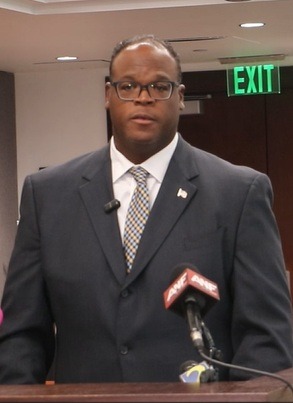
Hunt is now MARTA’s permanent general manager and chief executive officer.
“To be named general manager and CEO of MARTA is an incredible, incredible honor,” Hunt said following the decision.
But neither Hunt nor MARTA Board Chair Jennifer N. Ide used the occasion simply to celebrate.
Both acknowledged that MARTA still has work to do.
“I think that we are in a much better place than we were a year, 18 months ago,” Hunt said. “But we still have, you know, a ways to go.”
Ide was even more direct.
“How MARTA is operating today is good,” Ide said. “What we expect with Jonathan as the permanent CEO is we expect great. We expect exceptional.”
Then she raised the bar higher.
“Where we are today isn’t good enough for the city of Atlanta.”
For Hunt, the year-long audition is over. The challenge now is turning the accomplishments of his interim tenure into the everyday service riders expect from MARTA.
A National Search Ends at Home
Hunt’s selection followed what MARTA described as an extensive national search.
The Board retained Diversified Search Group following a competitive selection process. According to Ide, the firm and MARTA’s search committee cast a wide net across public transit, airports and airlines, freight and passenger rail, port authorities and logistics.
More than 250 potential candidates were identified and contacted.
Board members representing MARTA’s major jurisdictions participated in the process, developing the position description, screening and vetting candidates and conducting structured interviews.
Three finalists emerged.
Hunt was joined by Cleveland Ferguson III of the Jacksonville Transportation Authority and Leroy Jones of Washington’s Metro system.
The candidates brought different experiences to the competition.
Jones came from one of the nation’s largest transit systems, with extensive bus and rail operations in the Washington metropolitan area.
Ferguson came from Jacksonville, a smaller transit operation without a heavy-rail system comparable to MARTA.
Hunt brought something neither outside candidate could offer: more than a decade inside MARTA and nearly a year already sitting in the chief executive’s chair.
Ide emphasized that the selection was not an indictment of the other finalists.
“The process gave us three exceptional finalists, and I didn’t say that lightly,” she told the Board. “Cleveland Ferguson, Leroy Jones, and Jonathan Hunt each brought something real to the table, and any one of them could have led MARTA well.”
But after final interviews and deliberations, the Board chose Hunt.
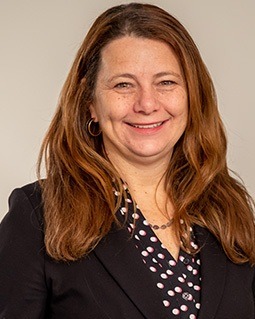
Ide explained why.
“What ultimately made Jonathan the most qualified candidate was not a single credential,” she said.
Instead, she pointed to Hunt’s leadership and the Board’s belief that MARTA is moving in the right direction under him.
Over the past year, Ide said, Hunt strengthened relationships with MARTA’s jurisdictional partners, business community, employees, stakeholders and riders.
His knowledge of the agency also mattered.
“He understands our operations, our finances, our capital program, and the complicated web of government and community interests that we answer to,” Ide said.
The Candidate Who Initially Didn’t Want the Job
Hunt’s path to the permanent position was unusual because he initially indicated he wasn’t seeking it.
But something changed during his year at the top.
Hunt has described the interim assignment as the most rewarding and purposeful experience of his professional career. He also said people within and around MARTA encouraged him after watching his leadership.
Eventually, the reluctant interim leader became a candidate for the permanent position.
The Board’s decision suggests his year in the job became something few outside candidates could duplicate: a real-world audition.
Hunt took over MARTA during a period of significant change.
During his interim tenure, the agency launched a redesigned bus network, replaced its Breeze fare-payment system and implemented Atlanta’s first bus rapid transit line.
He also oversaw MARTA’s operations, safety and customer experience during the FIFA World Cup, when the region’s transit system faced extraordinary demand.
Ide pointed specifically to the World Cup as evidence of Hunt’s leadership.
“For those few months, all eyes were on MARTA and on Jonathan, and he met the moment and delivered,” she said.
But Hunt’s permanent tenure will not be judged solely by how MARTA performed during a global sporting event.
The more difficult test may be what happens on an ordinary Monday morning.
From World Cup Success to “Routine Excellence”
Hunt has repeatedly used a phrase to describe what he wants MARTA to become: “routine excellence.”
His goal, he says, is a transit system that is safe, clean and reliable every day.
That distinction matters.
Moving huge crowds successfully during the World Cup demonstrated what MARTA can do when the system, its employees and the region are focused on a major event.
The challenge now is delivering that level of reliability when there are no international television cameras and no global event underway.
Ide made clear that the Board shares that expectation.
“We have a unique opportunity to carry the momentum of the World Cup into our everyday routine excellence of service,” she said.
Then she added an important promise.
The Board, she said, will hold Hunt to that standard.
That standard comes as MARTA continues to manage major projects and challenges.
The agency is rolling out a redesigned bus system, transitioning riders to a new Breeze fare system, implementing bus rapid transit and preparing new rail cars for passenger service.
At the same time, riders judge MARTA by more immediate concerns: whether the bus arrives, whether the train is on time, whether stations and vehicles are clean and whether they feel safe while using the system.
Those everyday experiences may ultimately determine whether Hunt’s “routine excellence” becomes more than a phrase.
Safety and Trust Remain Challenges
Safety remains particularly important.
During coverage of the CEO search, riders repeatedly raised security as one of their concerns for MARTA’s next leader.
That concern exists alongside MARTA statistics showing improvements in overall crime.
The distinction between statistics and perception is important.
An agency can report declining crime while riders still feel unsafe. A new CEO must address both.
Hunt appears to recognize that rebuilding confidence will require more than operational improvements.
In his remarks following his selection, he repeatedly returned to three ideas: transparency, accountability and trust.
He pledged greater collaboration across MARTA’s jurisdictions, with businesses and with community leaders.
He also called for “additional transparency as much as we possibly can in order to build back trust.”
“We started doing that in a major way this year,” Hunt said, “but we still have a long way to go.”
He described accountability as good for MARTA and good for rebuilding regional trust.
That acknowledgment may prove important.
Hunt is not taking over an agency that he describes as having completed its transformation. He is taking permanent responsibility for an agency whose shortcomings he openly acknowledges.
From Lawyer to Transit CEO
Hunt’s route to MARTA’s top job differs from the traditional image of a transit executive who spent an entire career running buses and trains.
He joined MARTA in 2014 and spent more than a decade in its legal department, serving as Chief of Corporate Law and Real Estate, Deputy Chief Counsel and ultimately Chief Legal Counsel.
But his professional background extends beyond law.
Earlier in his career, Hunt served as a Senior Assistant City Attorney for the City of Atlanta, handling aviation matters involving Hartsfield-Jackson Atlanta International Airport. He practiced law at Dentons and BakerHostetler and previously worked as a project engineer with Gilbane Building Company.
He also serves on the national board of the American Public Transportation Association and chairs its Legal Affairs Committee.
Hunt holds a bachelor’s degree from Hampton University and a Juris Doctor from Case Western Reserve University School of Law.
Ide emphasized that Hunt’s years inside MARTA have given him an understanding that extends well beyond the legal department.
“He understands our operations, our finances, our capital program, and the complicated web of government and community interests that we answer to,” Ide said.
“He has been in the ring for all of it.”
A Leadership Transition MARTA Did Not Expect
Hunt’s rise began with an unexpected leadership transition.
Greenwood, originally from Canada, joined MARTA in 2019 and became CEO in 2022. He left the agency in 2025 in what MARTA described as an early retirement connected to immigration and personal matters.
MARTA said at the time that the immigration process had affected Greenwood’s personal and professional progress. Greenwood said he and his wife had decided it was a good opportunity to retire early and spend more time with family and friends.
His departure created the opening that eventually placed Hunt in the interim role.
There is also a historical similarity.
Greenwood served as interim CEO before receiving the permanent job. Hunt has now traveled a similar path.
But MARTA’s Board stressed that Hunt did not simply inherit the permanent position.
He had to compete for it.
The national search ultimately brought MARTA back to the executive already inside the building.
The Patron Experience
Perhaps the clearest indication of where Hunt intends to place his attention came near the end of his Board remarks.
He promised to work with MARTA’s leadership team to improve the agency and, “most importantly,” improve the experience MARTA provides its patrons.
That is where the Board’s decision will eventually be judged.
Not in the executive suite.
Not in a press release.
Not simply by the successful handling of one major international event.
But on buses, trains and station platforms across the region.
Can MARTA improve reliability?
Can it increase ridership?
Can riders feel safer?
Can major projects be delivered successfully?
Can the agency become more transparent and accountable?
And can the system provide the safe, clean and reliable service Hunt says riders deserve every day?
Ide has already made clear that “good” will not be enough.
Hunt appears to agree.
“I truly believe we do have the best transit agency in the nation,” he said, “and we need to live up to that mantra.”
For the past year, Jonathan Hunt had the opportunity to show MARTA’s Board what he could do as an interim leader.
The Board liked what it saw enough to give him the job permanently.
Now comes the harder part.
Delivering what Hunt calls “routine excellence,” not for a few extraordinary weeks, but every day.
Support open, independent journalism. Your contribution helps us tell the stories that matter most.