Florita Bell Griffin, Ph.D.
By Florita Bell Griffin | Houston, TX | April 14, 2026
Artificial intelligence has moved into daily life with unusual speed. For many people, the shift happened almost quietly. One year, AI sounded like a technical subject reserved for engineers, laboratories, and large technology firms. The next year, it appeared in search engines, workplace software, school assignments, customer service systems, banking alerts, medical platforms, shopping tools, social media feeds, and the everyday devices people use from morning until night. This change matters because AI has become part of the environment ordinary people live inside. It shapes routines, choices, expectations, and relationships in ways that feel practical, immediate, and increasingly difficult to ignore.
Living with AI now means more than using a new tool. It means adapting to a new layer of digital influence that reaches into work, family, and community life all at once. That is why the subject deserves public attention in plain language. People do not need a technical credential to understand that AI is changing how tasks are completed, how children learn, how information spreads, how institutions respond, and how trust moves through society. The technology matters because its effects are human before they are technical. They show up in pressure, convenience, confusion, speed, dependence, and shifting expectations about what a normal day looks like.
Work is one of the clearest places where this change can be seen. AI now helps draft emails, summarize meetings, analyze documents, generate reports, screen applications, support customer interactions, and automate routine administrative tasks. For many workers, that support feels useful. It can reduce repetitive labor and free time for more thoughtful responsibilities. Yet AI also changes the terms of work itself. When software can perform part of a task in seconds, employers may begin to expect faster output, tighter turnaround, and broader productivity from each employee. This creates a new pressure inside ordinary jobs. Workers are asked to keep pace with systems that operate at machine speed while still bringing human judgment, accuracy, and accountability to the final result.
That pressure reaches across many kinds of employment. Office workers may be expected to manage more communication and produce more written material in less time. Teachers may face students who rely on AI-generated responses while classrooms still require genuine understanding. Small business owners may feel compelled to adopt AI tools simply to remain competitive in scheduling, marketing, customer service, or content production. Freelancers may discover that some of the work they once performed manually is now partially automated, shifting their value toward refinement, oversight, and strategy. The central issue is clear. AI changes work by altering expectations before many people have fully adjusted to the new conditions.
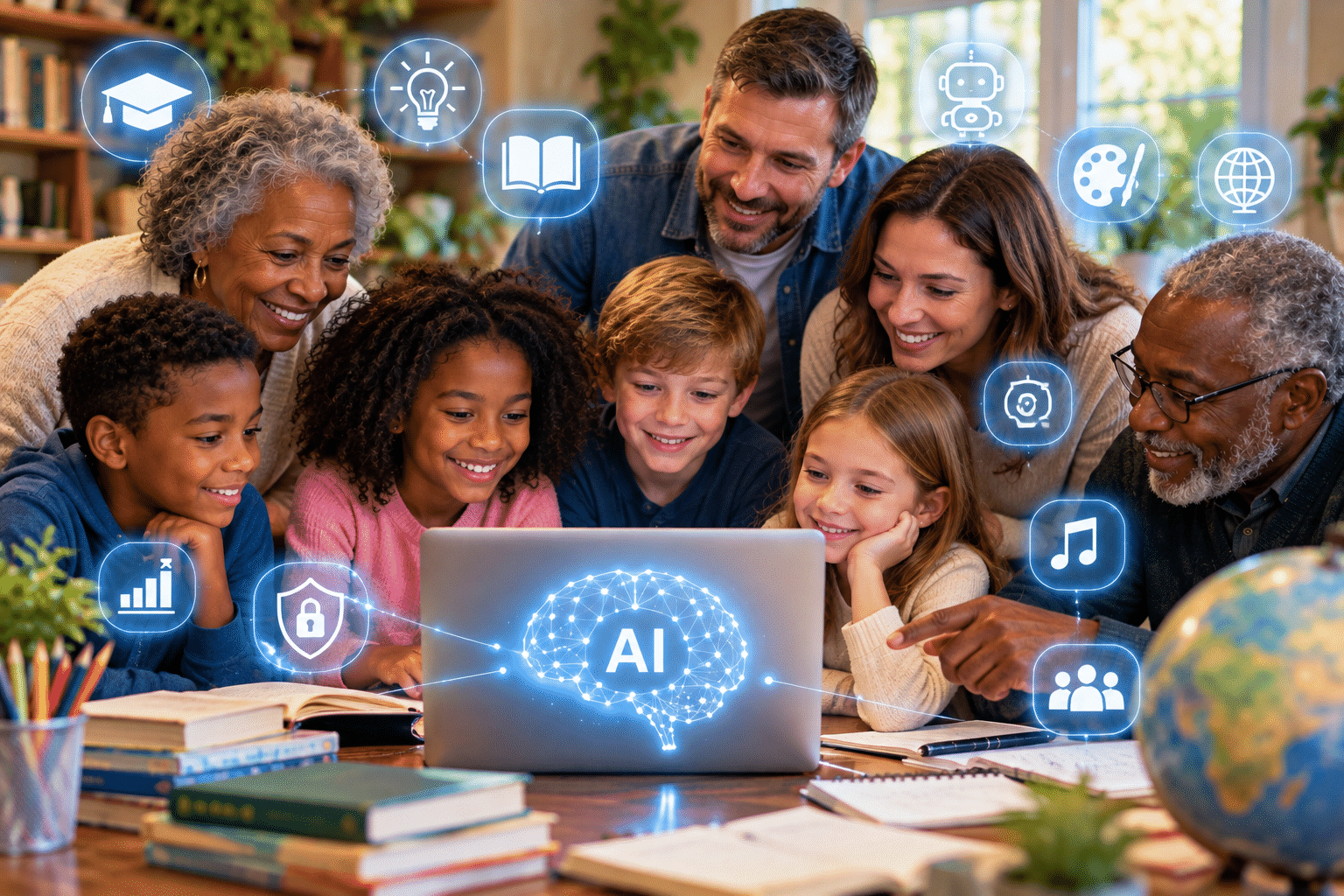
Family life is changing too, though in a different way. Inside the home, AI often arrives through convenience. A parent may use it to organize a schedule, draft a message, compare options, plan a meal, or gather information quickly. A student may use it to summarize reading, solve equations, explain ideas, or generate writing. A teenager may encounter AI through social media filters, recommendation systems, voice tools, or creative applications that make digital life feel more interactive and responsive. These uses can feel harmless or even helpful, and in many cases they are. Still, the deeper issue lies in the habits being formed beneath the convenience.
Families now face a world where polished answers arrive instantly, often before a child has struggled long enough to think deeply. That changes the rhythm of learning. Human development still depends on concentration, reflection, patience, memory, and the slow strengthening of judgment. AI can support those processes when guided carefully. It can also weaken them when it becomes a substitute for effort. A child still needs to read, wrestle with ideas, organize thought, make mistakes, and grow through correction. Families who live well with AI will need more than rules about devices. They will need a culture of conversation around truth, effort, wisdom, and the difference between assistance and dependence.
Communication inside families is also affected. AI-generated content can create a world where words are easier to produce than to mean. Messages may sound polished, affectionate, persuasive, or authoritative with very little human thought behind them. This creates a subtle challenge for relationships. Language has always carried emotional weight because it reflected effort, presence, and intention. When machines can imitate tone and fluency with ease, families may need to value sincerity more consciously. The question becomes larger than whether AI can help write something. The question is whether people remain connected to what they truly mean.
Community life is changing as well. AI influences the information people see, the stories that spread, the recommendations that shape local behavior, and the digital atmosphere communities live inside. News feeds, search platforms, neighborhood groups, online forums, and church or civic communications are increasingly shaped by systems that rank, summarize, suggest, and amplify content. This affects public understanding because visibility shapes perception. When a system decides what appears first, what sounds most credible, or what receives more circulation, it quietly influences what a community notices and how that community interprets events.
This becomes especially important in times of uncertainty, grief, conflict, or public concern. AI can help distribute useful information quickly. It can also accelerate confusion when false, exaggerated, or emotionally manipulative material is produced at scale and shared without care. Communities once relied heavily on visual evidence, familiar phrasing, or polished presentation as signals of trust. Those habits now require greater caution. AI makes it easier to generate images, text, and voice that feel persuasive on first contact. Living with AI therefore requires stronger local habits of discernment. Communities need people who pause, verify, compare sources, and bring steadiness into public conversation rather than reacting to every polished piece of digital material that appears urgent.
The effect on institutions is also part of community life. Schools, hospitals, banks, local governments, insurers, and public service systems are increasingly using AI to process requests, flag patterns, route cases, estimate risk, and improve efficiency. These systems can help organizations move faster and manage complexity. Yet ordinary people live inside the consequences of those systems. A parent trying to resolve a school issue, a patient trying to understand care options, a worker navigating a benefits question, or a resident dealing with a public service problem wants more than speed. They want fairness, clarity, and a real path to human review when something goes wrong. Community trust depends on whether institutions use AI in ways that preserve dignity and legibility for the people they serve.
Living with AI also changes the emotional atmosphere of daily life. Digital systems now respond faster, speak more smoothly, and generate more content than ever before. People can feel surrounded by a constant stream of answers, prompts, recommendations, and alerts. That density creates convenience, though it can also create fatigue. Human beings still need quiet, pause, and room to think without immediate computational assistance. Work, family, and community all depend on that slower space where reflection forms. A society that moves entirely at machine pace risks losing the habits that hold human life together.
This is why AI deserves a serious public conversation centered on ordinary people. The real question is larger than whether a tool is impressive. The real question is how people will live with a technology that changes the flow of work, the formation of children, the quality of communication, and the trustworthiness of public life. That conversation belongs in homes, schools, churches, businesses, and local communities because the effects of AI already live there.
Living well with AI will require discernment, steadiness, and a stronger public ethic. People will need to ask better questions about the systems they use. Families will need to protect the habits that build character and judgment. Employers will need to remember that efficiency carries responsibility. Communities will need to value truth more carefully in a world where polished content is easier to produce than ever before. AI is now part of ordinary life. The task ahead is to make sure ordinary life remains deeply human while this technology continues to expand.
© 2026 Truth Seekers Journal. Published with permission from the author. All rights reserved.
Support open, independent journalism—your contribution helps us tell the stories that matter most.