
By Milton Kirby | St. Louis, MO | June 16, 2026
Series: Lungs, Lives, and Lessons – Part III
For many families, lung cancer conversations do not begin in a doctor’s office. They begin at home after months of unexplained coughing, fatigue, chest pain, or shortness of breath that slowly becomes impossible to ignore. Sometimes the symptoms are dismissed. Sometimes fear delays action. And sometimes people simply do not know where to begin.
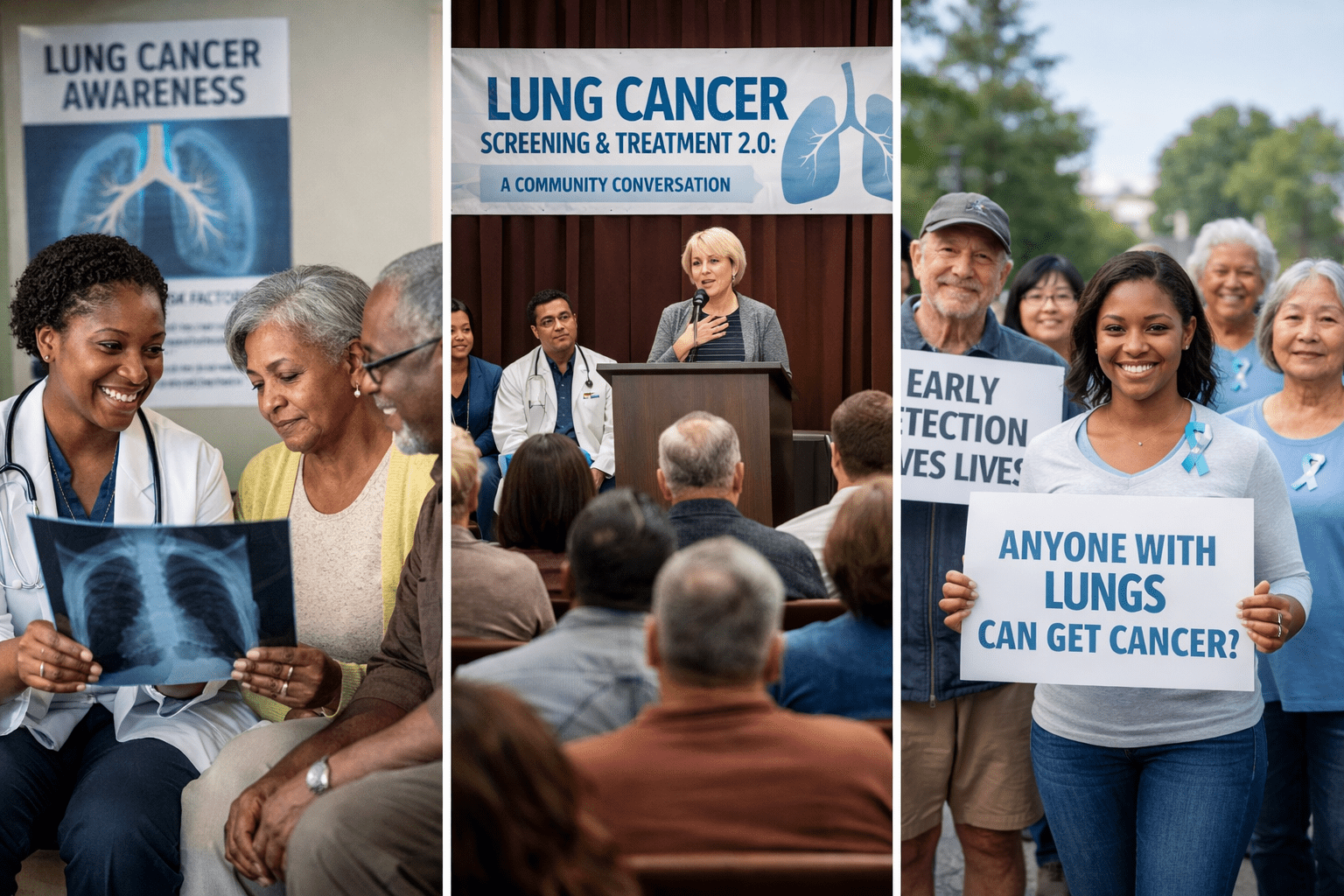
Organizers behind the upcoming “Lung Cancer Screening to Treatment 2.0: A Community Conversation” symposium in St. Louis say that uncertainty is exactly what they hope to change. The June 27 event, hosted by Five Star Center, Inc. in partnership with the HEAL Collaborative and supported by AMGEN, is designed to bring physicians, advocates, survivors, and residents together for one purpose: helping communities move from awareness to action.
After weeks of public education surrounding risk factors, symptoms, and stigma, organizers say the next step is empowering residents with information, support, and clear pathways toward care. Their message has remained consistent throughout planning: “Anyone with lungs can get lung cancer.”
More Than a Health Event
The symposium is intentionally structured as more than a traditional medical seminar. It is a community conversation, one designed to meet residents where they are, especially in neighborhoods where access to healthcare information and preventive services has historically been uneven.
Attendance is expected to reach 120 residents. The free event will include lunch, educational resources, survivor perspectives, interactive discussions, and opportunities for attendees to speak directly with healthcare professionals about lung cancer risks and screening eligibility.
While low-dose CT scans will not be performed onsite, clinicians will help residents determine whether they may qualify for screening and how to begin conversations with their medical providers. For many people, that first step can be life changing. Countless individuals who qualify for screening never pursue it because they do not realize they are eligible, lack consistent healthcare access, or fear what a diagnosis might reveal.
The Importance of Survivor Voices
One of the most powerful elements of the symposium may come not from physicians, but from survivors themselves. Two to three speakers are expected to share personal stories of diagnosis, treatment, fear, uncertainty, and survival.
Their voices matter because statistics alone cannot capture the emotional reality of the disease. Survivor testimony also helps dismantle one of the most persistent misconceptions surrounding lung cancer the belief that patients somehow deserve blame for their illness.
Too often, people diagnosed with lung cancer are asked whether they smoked before they are asked how they are feeling. That question can deepen shame at the very moment patients need support most. Organizers hope survivor stories will humanize the disease and encourage residents to seek medical guidance earlier rather than later.
Why Community Conversations Matter
Improving lung cancer outcomes requires more than medicine — it requires trust. Communities must feel safe enough to ask questions, discuss symptoms honestly, and pursue preventive care before emergencies develop.
That process can be especially difficult in communities that have experienced longstanding disparities in healthcare access and outcomes. St. Louis was selected intentionally because Black and Brown residents continue to face disproportionately low screening rates and lower survival outcomes tied to lung cancer. Economic barriers, insurance limitations, environmental exposure, transportation challenges, and delayed access to care all contribute to those disparities.
The symposium acknowledges that health challenges rarely exist in isolation. In addition to discussions about pulmonology care and screening eligibility, the event will include conversations about:
- navigation support
- medical debt
- stigma in healthcare
- the future role of artificial intelligence in lung cancer care
These topics matter because families often struggle with far more than the disease itself. Navigating appointments, insurance systems, treatment decisions, transportation, and financial pressures can quickly become overwhelming.
Education as Prevention
Throughout this three-part series, one theme has remained constant: early detection saves lives. Lung cancer survival rates improve dramatically when the disease is identified before it spreads. Yet many diagnoses still occur at later stages because symptoms were dismissed, misunderstood, or never evaluated.
Organizers believe education itself can become a form of prevention. Helping residents understand warning signs, risk factors, and screening conversations may encourage earlier medical attention long before symptoms become severe.
This educational focus is especially important because many people still incorrectly believe lung cancer only affects smokers. In reality, exposure to secondhand smoke, radon gas, hazardous chemicals, pollution, genetics, and occupational environments can also increase risk. Public understanding has not fully caught up with that reality, leaving many individuals unaware of their own vulnerability.
A Different Kind of Public Health Conversation
At its core, the St. Louis symposium reflects a broader shift in public health: awareness campaigns must do more than distribute information — they must create environments where people feel safe enough to engage with difficult topics honestly. That includes acknowledging fear, confronting stigma, and recognizing that many families have lost loved ones after symptoms were discovered too late.
The goal of “Lung Cancer Screening to Treatment 2.0” is not to alarm residents, but to encourage earlier conversations that could ultimately improve outcomes. For some attendees, the event may offer reassurance. For others, it may be the first step toward asking a doctor about symptoms they have ignored. And for some families, organizers hope it may ultimately help save lives.
The Conversation Continues
Across this series, the discussion surrounding lung cancer has moved from misconception, to medical understanding, to community response.
Part I challenged the stigma and silence surrounding the disease.
Part II focused on symptoms, risk factors, and the importance of early detection.
Part III brings the conversation back to the community, where awareness becomes action and education becomes empowerment.
Organizers hope residents leave the symposium understanding one thing above all else:
Lung cancer is not someone else’s issue. It is a public health issue, a community issue, and a human issue.
And conversations that begin with awareness today may help create survival stories tomorrow.
Related articles
Part I – “Anyone With Lungs”: Understanding the Hidden Realities of Lung Cancer
Part II- “Your Lungs Are Talking”: How the Respiratory System Works – and What It Tells Us
Related video

Support open, independent journalism. Your contribution helps us tell the stories that matter most.