Milton Kirby
By Milton Kirby | St. Louis, MO | June 9, 2026
Series: Lungs, Lives, and Lessons – Part II
Part I of this series explored the misconceptions surrounding lung cancer, Part II turns inward, to the lungs themselves. Understanding how the respiratory system works is not just a biology lesson. It’s a form of self‑protection. When you know how your lungs function, you can recognize when something isn’t right.
How Your Lungs Keep You Alive
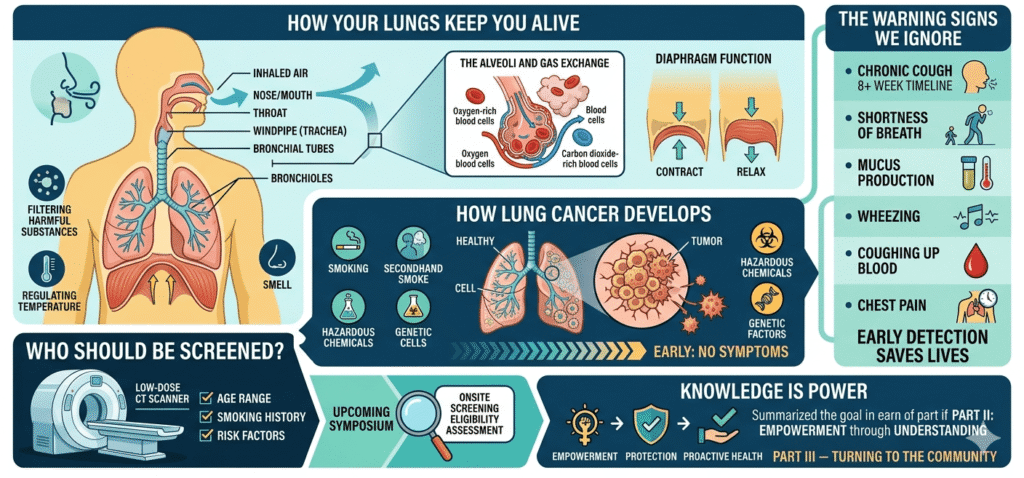
Every cell in the body needs oxygen. The lungs deliver it. When you inhale, air travels through the nose or mouth, down the throat, and into the windpipe. From there, it branches into the bronchial tubes, which divide again and again until they reach the bronchioles, tiny passageways that end in clusters of air sacs called alveoli.
Inside these microscopic sacs, oxygen enters the bloodstream while carbon dioxide leaves it. This exchange happens thousands of times a day, without conscious effort. The diaphragm, a strong muscle beneath the lungs, contracts and relaxes to pull air in and push it out.
The lungs also filter harmful substances, regulate air temperature, and support the sense of smell. They are constantly working, and constantly exposed to the outside world.
How Lung Cancer Develops
Lung cancer begins when cells in the lung mutate. These mutations can be caused by smoking, secondhand smoke, hazardous chemicals, or genetic factors. Once mutated, cells grow uncontrollably, forming tumors that damage healthy tissue and interfere with breathing.
The challenge is that early lung cancer often causes no symptoms. By the time people notice something is wrong, the disease may already be advanced.
The Warning Signs We Ignore
The body sends signals long before a crisis. But many people dismiss them as aging, allergies, or the remnants of a cold.
Warning signs include:
- A cough lasting more than eight weeks
- Shortness of breath after little or no exertion
- Chronic mucus or phlegm production
- Wheezing or noisy breathing
- Coughing up blood
- Chest pain lasting a month or more
These symptoms do not automatically mean lung cancer, but they do mean something is wrong. Early detection is key to successful treatment, and recognizing these signs can save lives.
Who Should Be Screened?
Low‑dose CT scans are the gold standard for early lung cancer detection. Screening is recommended for people who meet certain criteria, including age, smoking history, and risk factors. But many people who qualify have never been screened, often because they don’t know they’re eligible.
The upcoming symposium will offer onsite screening eligibility assessments, giving residents a chance to learn whether they qualify and how to access screening.
Knowledge Is Power
Part II of this series is about empowerment. When people understand how their lungs work, they can better protect them. When they know the warning signs, they can seek help sooner. And when they understand screening, they can take the first step toward early detection.
In Part III, we turn to the community and to the event bringing these lessons to life.
Related articles
Part I – “Anyone With Lungs”: Understanding the Hidden Realities of Lung Cancer
Part III – “From Awareness to Action”: Communities Confront Lung Cancer Together
Support open, independent journalism. Your contribution helps us tell the stories that matter most.