Ted Knorr
June 9, 2026
This column exists for only one purpose: that is to answer your questions on Negro League baseball history. To that end, we need your help … if you are reading this column, enjoy it, want it to continue, and do not already know everything about Negro League history … then please submit a question on any aspect of Negro League history. Your questions are the lifeblood of Shadow Ball—they shape where we go next … players, teams, events, and more – and, in so doing, you will direct where this column goes moving forward. Your participation is important and appreciated. The very existence of this column depends on you. Submit your questions to shadowball@truthseekersjournal.com.
Curious George Atkins, Aurora, IL, posed the following question to Shadow Ball: “Why is the Negro League Baseball Museum in Kansas City?”
It’s a deceptively simple question. Negro League history sprawls across dozens of cities, each with legitimate claims to significance. So why Kansas City? To answer that, we must first consider the alternatives — and then the extraordinary convergence of people, place, and timing that made Kansas City the only choice:
Chicago had the strongest historical case, as it was the home of Rube Foster, the chief organizer of the Negro National League, its first league President, and the face of Negro League baseball as a player, manager, administrator, and entrepreneur for the preceding two decades in Black baseball. Chicago also had two teams in that first season, and, with the 4th-largest urban Black population in the country in 1920, was a major destination in the early stages of the Great (African American) Migration, which brought millions of Black families from the South to eastern, Midwestern, and far-western urban centers. Lastly, the Chicago American Giants won the initial pennant in that first season.
Other cities with teams in that first season of Negro National League baseball included Saint Louis, Detroit, and Indianapolis,, all of whom, like Chicago, had strong Black baseball histories prior to the formation of the league. Indianapolis had another historical point – the first game in Negro National League history took place there on May 2nd, 1920.
Another possible site could have been Ashland, KY, where several Negro League reunions took place in the decade prior to the opening of the Negro League Baseball Museum. In addition to the reunions, a substantial number of artifacts were collected and ended up in Cooperstown. But Ashland was a sentimental center, not a historical or demographic one.
My preference for my birthplace, Pittsburgh, is shaped by the presence of two of the greatest franchises in Negro League history and by the fact that more Negro League baseball games were played in Pennsylvania than in any other state in the union. Two other eastern megalopolises – New York and Philadelphia (which, along with Chicago, represented the three largest Black populations in the country) – had solid pedigrees in the history of the Negro Leagues and can be seen to have defensible cases, but …
In the end, the correct decision was made to place the NLBM in Kansas City due to a confluence of inarguable facts, talent, and civic leadership:
• The Negro National League was founded on February 13, 1920, in the Paseo YMCA in Kansas City
• A fortuitous gathering of local leadership came together, including Buck O’Neil, Alfred Surratt, Larry Lester, Phil Dixon, and Horace Peterson, all of whom lived and worked in Kansas City
• The 18th & Vine redevelopment project, which included the Paseo YMCA, provided a ready civic partner, with several prominent KC mayors seeing value.
• Kansas City’s Black civic and business community backed the project early.
• There is no evidence that Chicago, Pittsburgh, or any other historically significant Negro League city ever submitted a proposal or was approached.
• Eventually, such serendipity in the Paseo neighborhood continued when, almost four years after the Negro Baseball League Museum had opened its doors in one room in the neighborhood, Ken Burns’ nine-part documentary – Baseball – debuted on PBS. It made Buck O’Neil a star and opened interest and access to capital. Burns’ documentary did for the Negro League Baseball Museum what Eyes on the Prize did for civil rights memory — it created a national audience hungry for the stories the museum was uniquely positioned to tell.
• The NLBM is currently poised for another expansion project. While still in fundraising for the $30 million project that includes tripling exhibition space in a newly rehabilitated Paseo YMCA Building; creating the Buck O’Neil Education and Research Center; building a new majority Black-owned hotel and new residential construction. According to the February 16, 2026, press release, the project could be completed by late 2028.
Last week’s Shadowball Significa Question of the Week: What Negro League pitcher, who participated in the Negro National League playoff in 1935, had a son who won two World Series games several decades later? Name this father/son pair. With no correct answer submitted, I am going to provide this answer and move on. Luis Tiant Sr, was a participant in the 1935 Negro League playoff, and his son starred in the 1967 World Series.
The Shadowball Significa Question of the Week: What Negro League pennant-winning team played their home games at Dick Kent’s Ballyard? Send your answer and any comments on the Negro Leagues to shadowball@truthseekersjournal.com or Shadow Ball, 3904 N Druid Hills Rd, Ste 179, Decatur, GA 30033
Ted Knorr
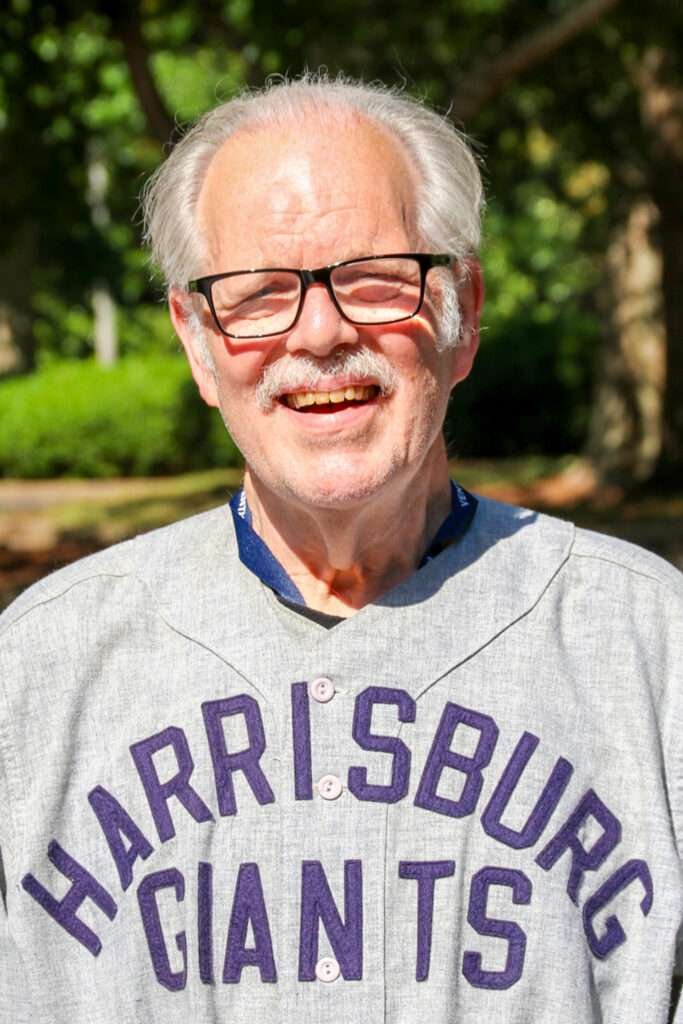
Ted Knorr is a respected Negro League baseball historian, a longtime member of the Society for American Baseball Research’s Negro League Committee, and the founder of the Jerry Malloy Negro League Conference as well as several Negro League Commemorative Nights in central Pennsylvania.
Beyond his research and organizing work, Ted is frequently invited to speak at sporting events, community programs, family gatherings, and educational forums, where he brings Negro League history to life. His deep knowledge of the players, teams, and the cultural impact of Black baseball has made him a trusted voice for audiences seeking to understand the legacy and significance of the Negro Leagues.
Please consider supporting open, independent journalism – no contribution is too small!

 Milton Kirby