Milton Kirby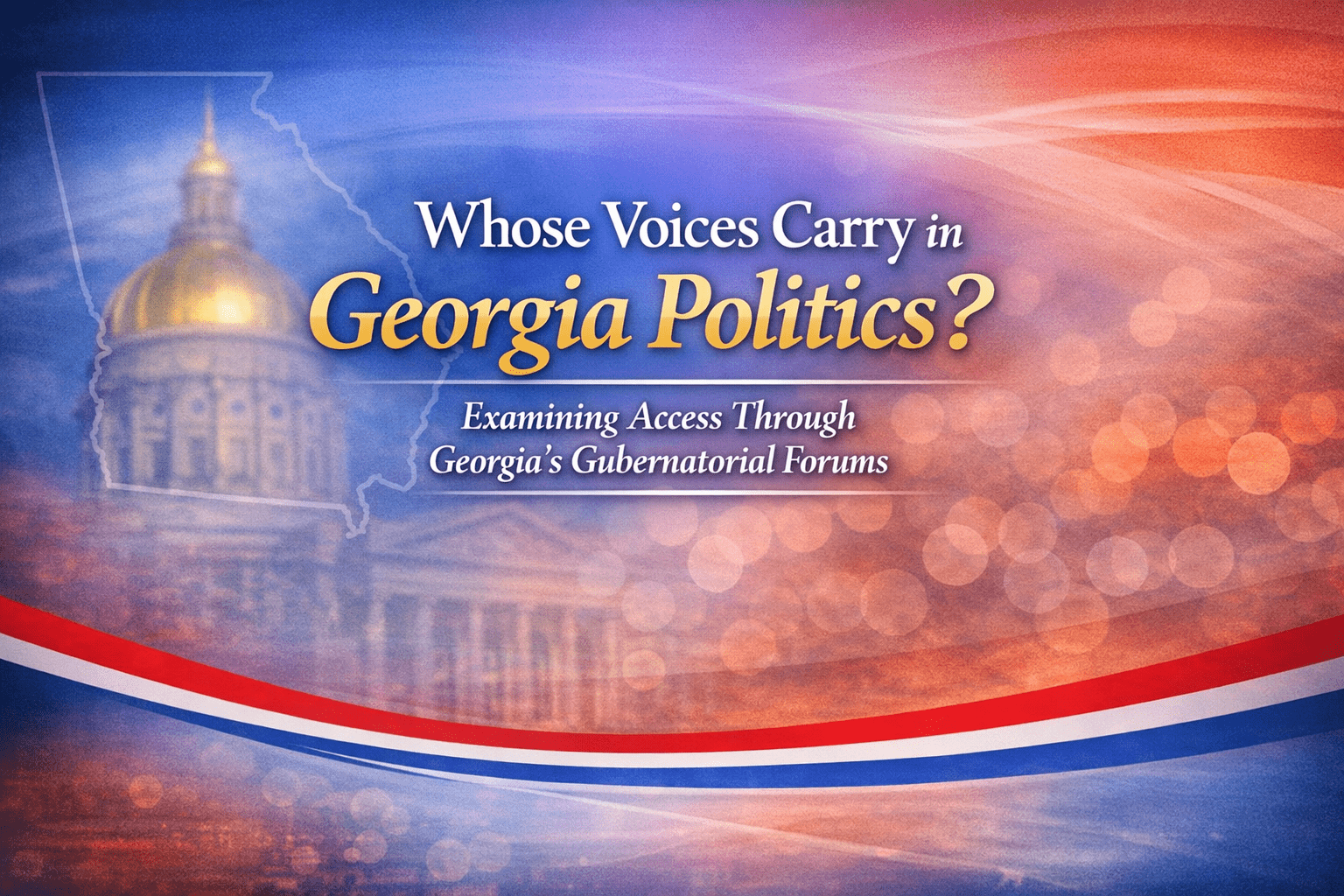
By Milton Kirby | Decatur, GA | April 20, 2026
In a crowded election cycle, campaigns move fast, rhetoric moves faster, and the public is left to sort out which voices matter in the noise. Yet beneath the stump speeches and policy one‑pagers lies a quieter truth about how power circulates in Georgia politics: not every voice gets the same doorway in.
The Truth Seekers Journal reached out to multiple Democratic gubernatorial campaigns on March 30, 2026, requesting interviews ahead of Thursday’s candidates forum. Several campaigns acknowledged the requests and offered courteous replies. Few moved beyond that initial exchange. One campaign engaged with follow‑up questions but did not provide a confirmed interview date.
(This piece focuses on the Democratic field because those were the campaigns contacted for pre‑forum interviews.)
Community‑based outlets, small publications, and rural storytellers often find themselves waiting at the edges of the conversation—not because their questions lack substance, but because their platforms lack volume. In the days leading up to the forum, that imbalance revealed itself in familiar ways: delayed replies, incomplete follow‑through, and the quiet silence that settles in when campaigns prioritize the largest microphones first.
A Familiar Pattern Before the Forum
In the days leading up to the event, a pattern emerged, subtle, but consistent. Campaigns were responsive, but not fully accessible. Communication was polite, but rarely actionable. Threads opened, then thinned.
For community‑based outlets, this rhythm is not new. It reflects the soft architecture of political communication in a state where visibility often determines access, and access often determines influence.
Why This Matters for Georgia Voters
For Georgia voter, especially those in rural counties, small towns, and communities historically overlooked by statewide power this pattern carries weight.
If campaigns struggle to engage consistently with smaller media during an election, what does that suggest about how they might engage with everyday residents once in office?
The question is not about press access.
It is about civic access.
It is about whether the next governor will hear from people who lack institutional reach—those without large platforms, without political machinery, without the amplification that often determines whose concerns are prioritized.
As the Forum Approaches
By the time the candidates step onto the stage Thursday evening, the contrast between public performance and private patterns of communication will be difficult to ignore.
Moderated by Maya T. Prabhu and structured as a nonpartisan forum with both Democratic and Republican candidates invited, the event will bring together a wide cross‑section of Georgia’s political voices in a single space. The auditorium will fill with the low hum of conversations, campaign stickers, and the anticipation that comes with a rare gathering of statewide contenders.
The room will buzz with applause lines, policy contrasts, and the choreography of a statewide race. Yet beneath the lights, a deeper question will linger: whose voices will carry beyond the microphones?
The forum offers a moment where every candidate must face the same room, the same questions, and the same citizens, a moment where accessibility can be observed, not merely promised.
Two Questions That Cut to the Heart of Governance
Against that backdrop, two questions rise naturally from weeks of observation—questions not about campaign tactics, but about governance, listening, and the structure of power.
The first asks candidates to confront the reality that many Georgians, including community‑based storytellers and smaller civic groups, struggle to be heard:
“Many community‑based outlets and smaller publications often struggle to get timely responses from campaigns. If elected, how will you ensure that everyday Georgians, including those without large platforms or loud voices are heard, respected, and included in your decision‑making?”
The second widens the lens:
“Georgia is a state with urban, rural, and often overlooked communities. If elected, how will you ensure that your administration actively seeks out and listens to voices that don’t traditionally have political influence including small towns, grassroots groups, and residents who feel disconnected from state government?”
Together, these questions are not designed to challenge candidates on stage alone, but to reveal how they might listen once the stage is gone.
The Measure of Leadership Is Who Gets Heard
Elections are full of promises about jobs, lower taxes, schools, safety, infrastructure, and the future of the state. But beneath every policy debate lies a more fundamental test: Who does a leader hear? Who do they make time for? Whose concerns shape their decisions?
In a state as large and varied as Georgia, leadership cannot be measured solely by the size of a rally or the sharpness of a debate answer. It must also be measured by the willingness to engage with the people whose voices do not echo loudly in the halls of power.
As the candidates prepare to make their case to voters, the question is not only what they will say.
It is whether they will listen—and to whom—when access is no longer convenient, visible, or politically necessary.
Editor’s Note
The Truth Seekers Journal is committed to elevating voices across Georgia—urban and rural, established and emerging, amplified and overlooked. This piece reflects TSJ’s ongoing effort to examine not only what candidates say, but how they engage with the communities they seek to represent. Our reporting will continue throughout the 2026 election cycle, including coverage of Thursday’s gubernatorial forum and follow‑up interviews as they become available.
Related articles
Seven Visions for Georgia: Inside the Democratic Gubernatorial Field
In Rome, A Close Race Reveals a District in Tension Between Change and Tradition
New Leadership on the Menu: Harris Campaign Brings Focus to Hiram Voters
Runoff Set to Decide Who Replaces Marjorie Taylor Greene in Georgia’s 14th Congressional District
A Farmer, a General, a Democrat: Shawn Harris Enters Georgia’s 14th District Race
Support open, independent journalism—your contribution helps us tell the stories that matter most