
 Milton Kirby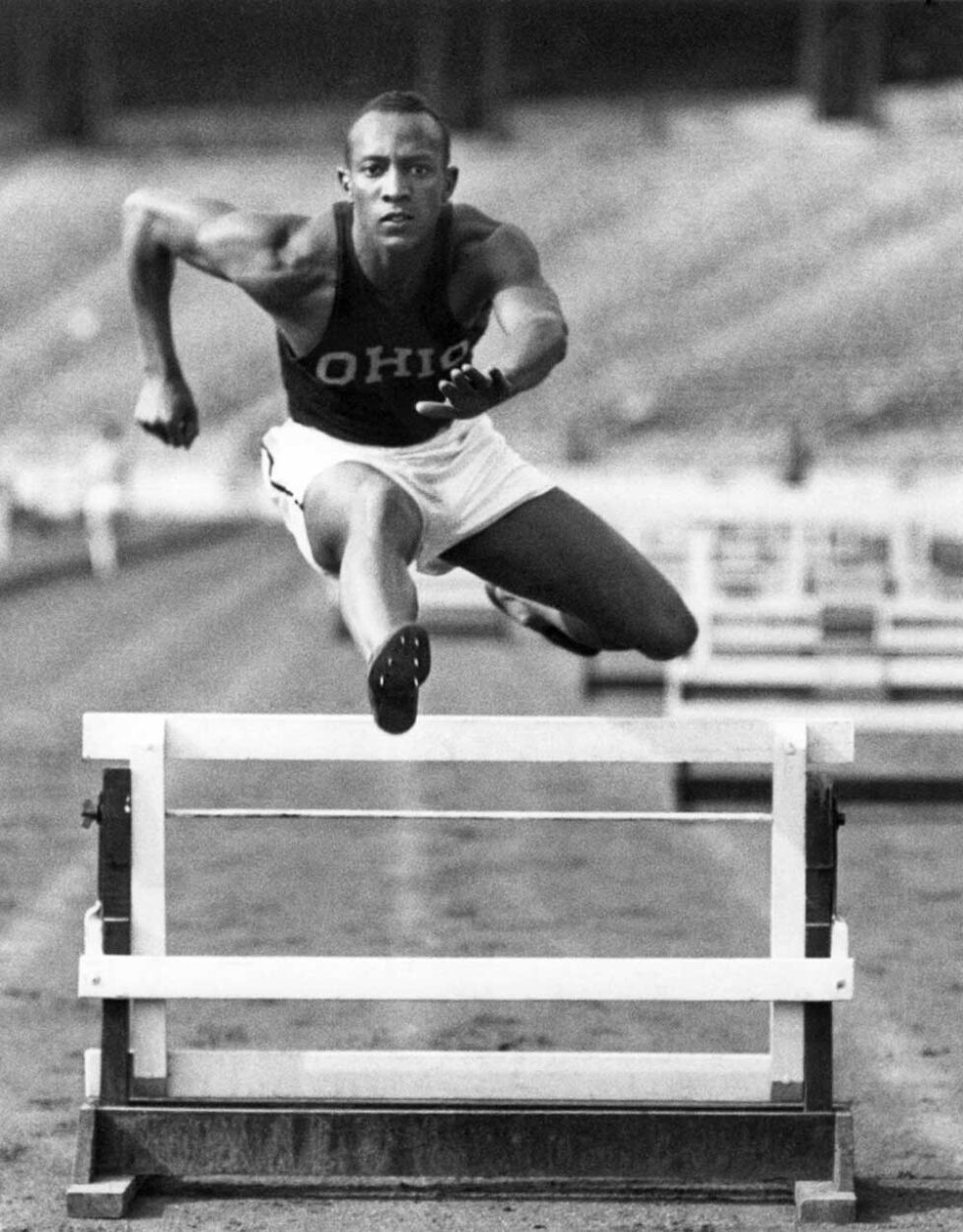
On August 9, 1936, Jesse Owens completed one of the greatest performances in Olympic history. What happened before Berlin made him a champion. What happened afterward tells a larger American story.
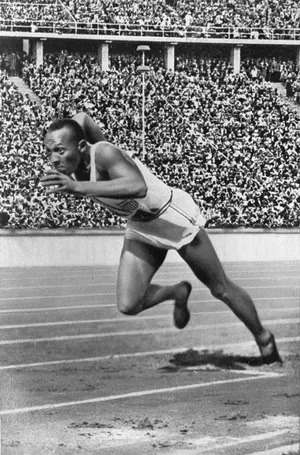
Ninety years ago, on August 9, 1936, Jesse Owens stepped onto the track inside Berlin’s Olympic Stadium for one final race.
He had already won three gold medals.
The 100 meters.
The long jump.
The 200 meters.
Now came the 4×100-meter relay.
Owens joined Ralph Metcalfe, Foy Draper and Frank Wykoff on the American team. They crossed the finish line in 39.8 seconds, setting a world record and giving Owens his fourth gold medal of the 1936 Olympic Games.
Four events.
Four gold medals.
All accomplished by a 22-year-old Black American competing in Nazi Germany.
Owens became the most successful athlete of the Berlin Games and the first American track and field athlete to win four gold medals at a single Olympics. His feat would not be matched in the same four events until Carl Lewis accomplished it at the 1984 Los Angeles Olympics.
But 90 years later, Jesse Owens deserves to be remembered for more than what happened during those seven remarkable days in Berlin.
His story began in a sharecropping family in Alabama. It carried him through segregation, poverty and discrimination. It took him to Ohio State University, where he became one of the greatest college athletes in history while being denied some of the basic privileges available to his white teammates.
Then it took him to Berlin, where his performance offered a powerful answer to Adolf Hitler’s theories of racial superiority.
And finally, it brought him home to an America that celebrated his victories while still denying him equality.
That part of the story deserves remembering, too.
From Alabama to Cleveland
James Cleveland Owens was born September 12, 1913, in Oakville, Alabama. He was the youngest of 10 children and the grandson of an enslaved person.
His father was a sharecropper.
When Owens was nine years old, his family moved to Cleveland, Ohio, as part of the Great Migration, the movement of millions of Black Americans out of the rural South in search of greater opportunity elsewhere.
He arrived in Cleveland known as “J.C.”
According to the familiar story, when a teacher asked his name, Owens answered “J.C.” His Southern accent led her to believe he had said “Jesse.”
The name stayed with him for the rest of his life.
So did something else that was becoming increasingly clear.
Jesse Owens could run.
Coach Charles Riley recognized the youngster’s talent and helped develop it. Because Owens worked after school, Riley allowed him to practice before school.
By high school, Owens was becoming a national sensation.
At the 1933 National High School Championships, he tied the world record in the 100-yard dash at 9.4 seconds and established a national high school record in the 220-yard dash.
Colleges noticed.
Owens eventually chose Ohio State University.
The Buckeye Bullet
At Ohio State, Owens became known as the “Buckeye Bullet.”
His performances were extraordinary.
He won eight individual NCAA championships, four in 1935 and four in 1936. During his 1936 season, Owens reportedly won all 42 events he entered.
But athletic greatness did not erase race.
Owens received no athletic scholarship. He worked several jobs to support himself and his family while attending school and training.
He operated an elevator at night. He waited tables. He worked in library stacks. He pumped gas. He also served as a page at the Ohio Statehouse.
And although he competed for Ohio State, Owens could not live on campus with white athletes.
When the team traveled, segregation followed him. He sometimes had to order food rather than eat with his teammates and stay in hotels that accepted Black guests.
The contradiction was already taking shape.
Ohio State could put Jesse Owens in its uniform.
It could depend upon his speed to win championships.
But the racial customs of the time still determined where he could sleep and eat.
Then came May 25, 1935.
Perhaps the Greatest 45 Minutes in Sports
Owens arrived at the Big Ten Championships in Ann Arbor, Michigan, with an injured back after falling down a flight of stairs.
He was not certain he could compete.
Owens reportedly persuaded his coach to let him try the 100-yard dash as a test.
He ran it in 9.4 seconds, tying the world record.
He kept going.
Over roughly the next 45 minutes, Owens set records in event after event.
He broke the world record in the long jump with a leap of 26 feet, 8 1/4 inches. He set records in the 220-yard dash and the 220-yard low hurdles.
His performances in the longer races also bettered the corresponding metric records.
His long jump world record would stand for 25 years.
What Owens accomplished that afternoon has often been described as one of the greatest single-day performances in sports history.
He had proven himself ready for the Olympic Games.
The setting awaiting him would make those Olympics unlike almost any before or since.
Berlin
The 1936 Summer Olympics opened in Berlin under the rule of Adolf Hitler and Nazi Germany.
The Nazi government intended the Games to showcase a powerful Germany before an international audience.
Race was impossible to separate from that presentation.
Nazi ideology promoted the supposed racial superiority of Aryan people while persecuting Jews and other groups the regime considered inferior.
Into that environment walked Jesse Owens.
On August 3, he won the 100 meters in 10.3 seconds.
On August 4, Owens won the long jump with a leap of 26 feet, 5 inches.
On August 5, he captured the 200 meters in 20.7 seconds.
Then, on August 9, Owens and his teammates won the 4×100-meter relay in a world-record 39.8 seconds.
Owens had entered four events.
He won four gold medals.
The symbolism was impossible to ignore.
A Black American had become the dominant athlete at an Olympic Games hosted by a regime preaching racial hierarchy.
Yet one part of the story commonly told about Berlin deserves a closer examination.
What Really Happened With Hitler?
Generations of Americans learned that Hitler personally refused to shake Jesse Owens’ hand after the Black athlete defeated Germany’s competitors.
The historical record is more complicated.
Early in the Olympics, Hitler congratulated selected winners. Olympic officials then told him he would have to greet every medalist or none of them.
Hitler chose not to greet medalists.
Owens himself later disputed the simple version of the story that Hitler had personally singled him out for a snub. He recalled Hitler waving toward him and said he waved back.
None of that changes the racial ideology of Nazi Germany or the significance of Owens’ victories.
But it does change where Owens himself placed responsibility when discussing how he had been treated.
His most pointed complaint was not about Hitler.
It was about his own president.
“It Was Our President Who Snubbed Me”
President Franklin D. Roosevelt never received Jesse Owens at the White House following his four Olympic victories.
He did not send Owens a congratulatory telegram.
And Owens remembered.
Later that year, while speaking at a Republican political event, he said:
“Hitler didn’t snub me. It was our president who snubbed me.”
Owens added that the president had not even sent him a telegram.
The statement becomes even more significant when viewed against records preserved by the National Archives.
While Owens was still competing in Berlin, Americans were already writing to Roosevelt about how the returning Olympians should be treated.
The Rev. Ernest Hall of Cleveland specifically urged Roosevelt to officially receive the successful Olympic competitors upon their return without regard to their race or color.
The White House did not do so.
Owens was not the only Black American representing the country in Berlin. Eighteen Black athletes competed for the United States during the 1936 Olympics.
None received the kind of presidential reception that might seem routine for American Olympic heroes today.
Why Roosevelt made that decision has been debated for decades.
It came during an election year. Roosevelt’s political coalition included growing numbers of Black voters in Northern cities while also relying heavily on powerful white Southern Democrats. Many of those Southern politicians defended segregation and opposed federal action on civil rights.
Those political realities are part of the historical record.
So is another fact.
The president of the United States had an opportunity to publicly receive Jesse Owens and the other Black Olympians.
People asked him to do it.
He did not.
Readers can decide for themselves what that meant.
Celebrated on Broadway, Segregated at the Hotel
America did celebrate Owens when he returned.
New York City welcomed him with a ticker-tape parade through Manhattan’s Canyon of Heroes.
Crowds cheered.
The young man from Oakville, Alabama, had returned home as one of the most famous athletes in the world.
Then came a reminder of the America to which he had returned.
A reception was held in Owens’ honor at the Waldorf-Astoria hotel.
Yet the guest of honor was reportedly not permitted to enter through the hotel’s main entrance.
Owens had to use a freight elevator to reach the reception honoring him.
The scene almost requires no commentary.
A Black man could represent the United States before the world.
He could win four Olympic gold medals.
He could stand beneath the American flag while the national anthem played.
He could receive a parade down Broadway.
But he still could not necessarily walk through the front door.
Four Gold Medals Could Not Feed a Family
Olympic fame did not make Owens wealthy.
The modern world of multimillion-dollar shoe contracts, television advertising and corporate sponsorships did not exist for athletes in 1936.
For Black athletes, opportunities were more limited still.
Owens’ competitive career also ended quickly after Berlin. After leaving a demanding European exhibition tour, he lost his amateur eligibility.
He had a wife and children to support.
So Jesse Owens worked.
Over the years, he held jobs, promoted sporting events and operated businesses. At times he participated in exhibition races against motorcycles, automobiles and even horses.
People later questioned why one of history’s greatest runners would race a horse for money.
Owens had an answer.
He had four gold medals.
But, as he explained, you could not eat them.
The remark captured another side of American sports history.
The nation could cheer a Black champion without necessarily creating a path for that champion to turn accomplishment into economic security.
More Than an Athlete
But reducing Jesse Owens’ post-Olympic life to struggle would also be incomplete.
He built another life.
Owens became a businessman, public speaker, corporate representative and advocate for young people.
His work as a playground director in Cleveland helped begin a lifelong commitment to youth. After moving to Chicago, he continued working with organizations serving young people, including the Chicago Boys’ Club.
In 1955, President Dwight D. Eisenhower enlisted Owens as a goodwill ambassador. He traveled overseas promoting sports and representing the United States.
Owens eventually became a highly sought-after speaker, addressing schools, churches, civic groups, business organizations and young people.
The man once denied equal treatment while representing America increasingly became one of America’s representatives to the world.
Official recognition eventually followed.
The White House, Four Decades Later
On August 5, 1976, President Gerald Ford presented Jesse Owens with the Presidential Medal of Freedom.
Forty years had passed since Berlin.
In 1979, Owens returned to the White House again, where President Jimmy Carter honored him as a Living Legend.
The recognition arrived late in Owens’ life.
He died from lung cancer on March 31, 1980, in Tucson, Arizona.
He was 66.
After his death, Carter remembered Owens as far more than a runner. He described him as a symbol of the struggle against tyranny, poverty and racial bigotry.
Ten years later, Owens was posthumously awarded the Congressional Gold Medal.
His name now appears on schools, roads, parks and athletic facilities.
USA Track & Field’s annual award honoring leading athletes bears the Jesse Owens name.
And the Jesse Owens Foundation continues the family’s work of helping young people develop their talents, broaden their horizons and reach their potential.
Four Gold Medals, Two Americas
It would be easy to end Jesse Owens’ story in Berlin.
Four races.
Four gold medals.
A Black athlete standing victorious in Adolf Hitler’s Germany.
That story is inspiring.
It is also incomplete.
Jesse Owens’ life asks us to remember what happened before Berlin and what happened when he returned home.
He grew up in a sharecropping family.
He became one of America’s greatest college athletes without receiving an athletic scholarship.
He represented a university whose racial customs prevented him from living with his teammates.
He represented the United States in Germany and became the greatest athlete of the Olympic Games.
He returned to a ticker-tape parade but still encountered segregation.
And despite four gold medals, the president of the country he represented never invited him to the White House.
Those are facts.
Why America could celebrate Jesse Owens abroad while denying him equality at home is a larger question.
Ninety years later, perhaps we do not need to answer it for our readers.
Perhaps Jesse Owens’ life provides enough evidence for them to answer it themselves.
On August 9, 1936, Owens crossed his final Olympic finish line and secured his fourth gold medal.
Ninety years later, we remember the speed.
We remember the records.
We remember the medals.
But we should also remember the man.
Jesse Owens did more than run against a stopwatch.
He ran through barriers that his country had placed before him.
And history is still catching up.
Support open, independent journalism. Your contribution helps us tell the stories that matter most.

 Ted Knorr



Great article, well documented
Please continue to post