Florita Bell Griffin, Ph.D.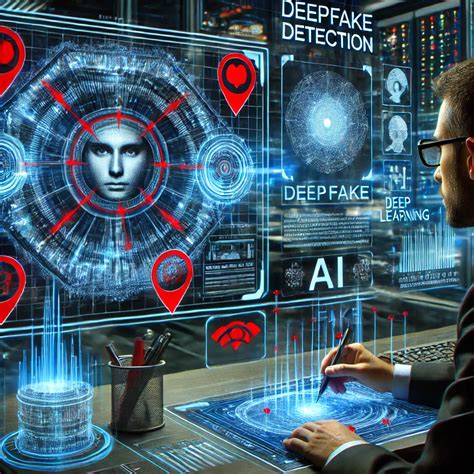
By Florita Bell Griffin, Ph.D. | Houston, TX | September 15, 2026
For generations, people were taught that seeing was believing. A photograph seemed to show what happened, a recording preserved what someone said, and a video appeared even more convincing because it combined image, sound, movement, and context. Artificial intelligence has changed that assumption. Today, AI can create realistic photographs, voices, and videos of events that never happened. A person can appear to say words never spoken, endorse a product never used, attend an event never visited, or participate in conduct that never occurred. A familiar voice can be copied, a face can be placed into another scene, and entire people, settings, and conversations can be generated from written instructions.
These creations are commonly called deepfakes. Some are made for entertainment, education, satire, or art, while others are created to deceive, defraud, embarrass, manipulate, or influence public opinion. The important issue is no longer simply whether a photograph or video looks real. We increasingly have to ask whether it can be verified. That represents a major change in the way ordinary people must think about digital evidence.
Deepfakes are especially powerful because human beings naturally trust familiar faces and voices. When we see someone we recognize speaking directly into a camera, our instincts tell us that the person is really there. AI can now reproduce many of those signals of authenticity without reproducing the actual event. A criminal may clone the voice of a child, grandchild, spouse, employer, or business executive and use it to request money. A fabricated video may appear to show a public official making an inflammatory statement. A false image may be used to damage someone’s reputation. AI-generated endorsements can make it appear that doctors, celebrities, or respected public figures support products or claims they have never approved.
The problem can become even more serious during elections, wars, disasters, public emergencies, or fast-moving news events. A convincing false video can travel around the world before journalists, officials, or the person shown in the recording have time to respond. Even after a correction appears, the original content may continue circulating. People often remember the first dramatic image they saw more clearly than the later explanation that proved it false.
Deepfakes also create the opposite problem. Once people know that convincing false media exists, someone caught in an authentic recording can simply claim that it was created by AI. Real evidence may then be dismissed along with fake evidence. Society therefore faces two dangers at once: believing something simply because we saw it and refusing to believe anything because it could have been fabricated. Neither response is useful. The better response is verification.
The first question should be simple: Where did this come from? A dramatic video from an unknown social-media account deserves more scrutiny than material released through an identifiable and accountable source. Look for the original version rather than relying on reposts. Check whether credible news organizations, public agencies, businesses, or other independent sources confirm the event. Context matters as much as appearance. If a video supposedly shows a major public event, are there other recordings? Did witnesses report it? Has the person or organization involved responded? A truly significant event will rarely exist only in one unexplained clip circulating online.
People are often told to look for strange hands, unusual blinking, distorted teeth, poor lip movement, or unnatural lighting when trying to identify a deepfake. Those clues can still be useful, but they are becoming less dependable as AI-generated media improves. A video that looks perfect is not automatically authentic, and a blurry or awkward-looking video is not automatically fake. Visual inspection alone is no longer enough. The source, timing, surrounding evidence, and independent confirmation matter more than ever.
When a familiar person contacts you with an urgent request for money or confidential information, verify the request separately. Call the person using a telephone number you already know rather than a number supplied in the message. Ask a question that would be difficult for an impersonator to answer. In a workplace, unusual financial requests should be confirmed through established procedures even when the voice or face appears to belong to a senior executive. AI can imitate appearance and sound, but it does not automatically possess the full shared history of a real relationship.
Emotional urgency is another warning sign. Messages such as “Send this immediately,” “Share before they remove it,” or “You have to see this” are designed to make people react before thinking. Shock, anger, fear, and excitement can all interfere with careful judgment. A useful habit is to delay sharing anything extraordinary until it has been independently confirmed. In the age of AI, waiting for verification is not being slow. It is being responsible.
Artificial intelligence is not the only way digital media can deceive. A completely genuine photograph can be paired with a false description. A real image from one country can be presented as if it came from another. An old disaster photograph can be circulated as breaking news. A truthful video can be shortened so that viewers never see what happened before or afterward. A real quotation can be placed beside an unrelated image, and a genuine speech can be edited to remove an important sentence. The central question is therefore broader than “Is this AI-generated?” The better question is “Does this accurately represent what happened?”
That distinction matters because an authentic image can still support a false story. Truthseekers should examine the source, date, context, and surrounding evidence rather than relying only on the apparent realism of the content. The goal is not to become suspicious of every photograph or recording. It is to understand that digital evidence now requires more careful judgment than it once did.
Deepfakes do not mean that photographs, recordings, and videos have become useless. They remain valuable forms of evidence. What has changed is the amount of verification we may need before treating them as proof. Seeing something should now be the beginning of the inquiry rather than the end of it. Before believing or sharing important digital content, ask where it originated, whether independent sources confirm it, whether the date and context are correct, and whether the person distributing it has provided enough information to evaluate the claim.
Artificial intelligence has made the creation of convincing false media easier than ever before. Our response should not be fear or permanent distrust. It should be stronger habits of verification. For generations, the saying was “Seeing is believing.” In the age of artificial intelligence, a wiser rule may be that seeing is a reason to look closer.
© 2026 Truth Seekers Journal. Published with permission from the author. All rights reserved.
Related articles
Living With AI: How It Is Changing Work, Family, and Community
What Happens to Your Information After You Type It Into an AI Chatbot?
AI Can Save You Time, but Can It Make You Smarter?
Living With AI: How It Is Changing Work, Family, and Community
When Systems Forget Who They Were Built For
Why Familiarity Is Not the Same as Understanding
Truth Seekers Journal thrives because of readers like you. Join us in sustaining independent voices.

 Milton Kirby