Florita Bell Griffin, Ph.D.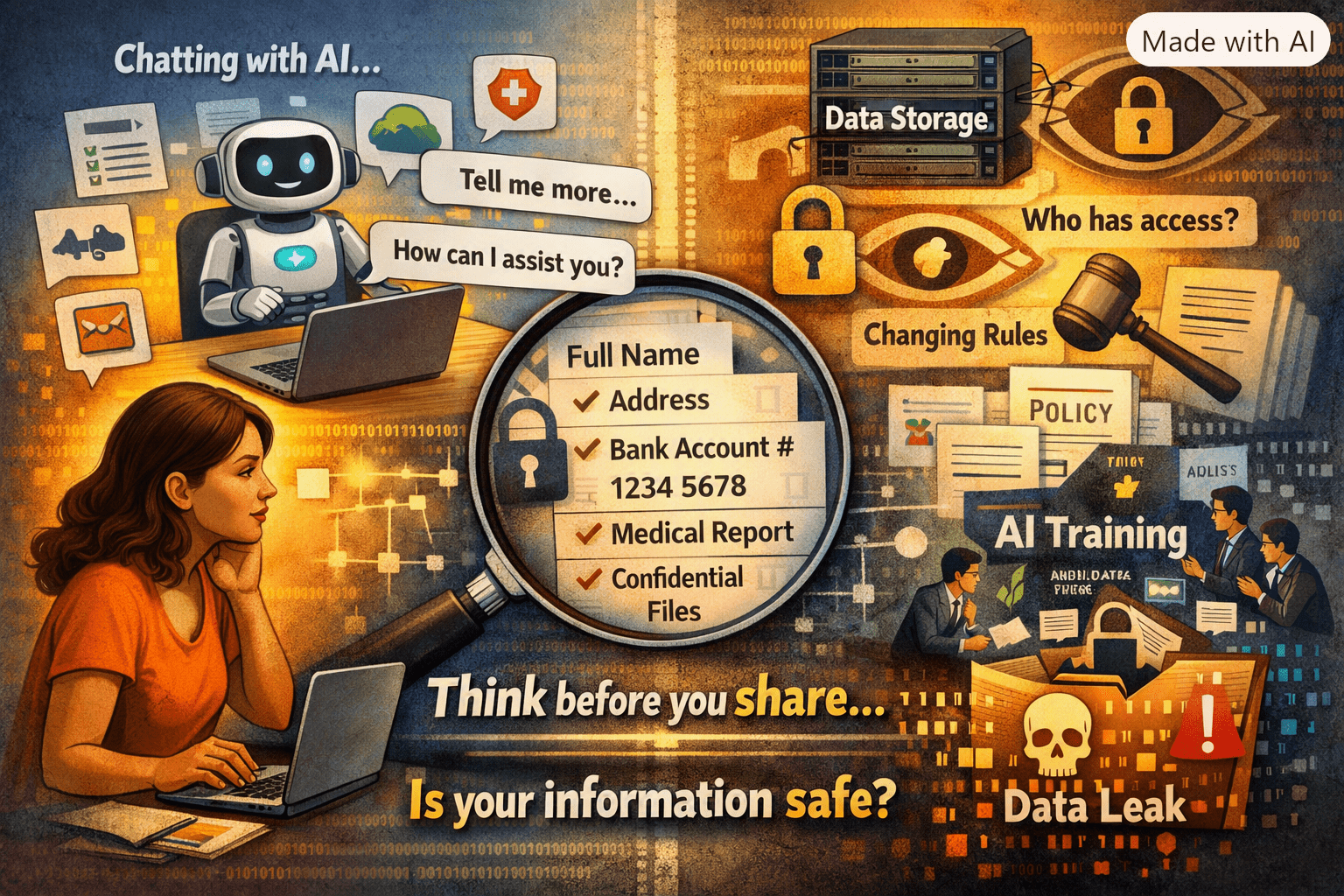
By Florita Bell Griffin, Ph.D. | Houston, TX | September 1, 2026
Millions of people now use artificial-intelligence chatbots for everything from writing emails to planning trips, organizing ideas, understanding medical terms, preparing résumés, and working through personal problems. The conversation often feels private because it appears on a personal screen and responds directly to the user. That feeling can lead people to type information they would never place in a public post. The important question is what happens to that information after it is entered.
AI systems need information in order to respond. When a user types a question, uploads a document, or shares an image, the system processes that material to generate an answer. Different services have different rules about how long information is stored, whether conversations may be used to improve models, who can access the data, and what privacy controls are available. This means users should not assume that every AI service handles information in the same way.
The safest approach is to think before sharing. A chatbot may be useful for drafting a letter about a financial dispute, but entering a full bank account number is usually unnecessary. It may help explain a medical report, but the user should consider whether names, addresses, identification numbers, and other personal details need to remain in the document. The same principle applies to tax records, legal documents, employee information, confidential business plans, and family matters.
People often reveal sensitive information gradually without realizing how much has accumulated. One question may include a first name. Another may mention an employer. A later message may include a city, a financial situation, or a family relationship. Each detail may seem harmless by itself, but together they can create a much clearer picture of the person.
This is especially important when using unfamiliar or free AI tools. A polished website does not automatically mean strong privacy protection. Users should look for information about data practices, account controls, retention policies, and whether conversation history can be deleted. Businesses should be particularly careful about entering confidential company information into consumer AI systems without knowing how that information is handled.
AI tools are also being built into email programs, office software, search engines, phones, and workplace systems. This can make the technology feel like a normal part of the environment, but convenience should not eliminate good judgment. Before pasting sensitive material into any AI system, ask whether the full information is necessary for the task.
Often, it is not. A person seeking help understanding a contract can remove names, addresses, account numbers, and signatures. Someone asking for help with a financial calculation can use rounded figures rather than exact identifying information. A worker seeking help with a difficult email can describe the situation without copying confidential internal messages word for word.
There is another reason to be careful. AI-generated conversations may feel temporary because they resemble spoken dialogue, but digital information can be stored, logged, backed up, or retained according to a service’s policies. Users should therefore treat important information with the same care they would use when sending an email or uploading a document to a website.
This does not mean people should stop using AI for personal or professional tasks. The technology can be extraordinarily useful. It can help organize thoughts, explain difficult concepts, improve writing, compare options, and reduce time spent on routine work. The wiser approach is to separate useful context from unnecessary exposure.
A good rule is to share what the AI needs to help, but not everything you know. Remove details that identify people when those details are not required. Avoid entering passwords, Social Security numbers, banking credentials, private medical identifiers, and confidential business secrets. Review privacy settings and understand whether conversation history can be managed or deleted.
The rise of AI has created a new kind of digital relationship. People are speaking to machines in a way that feels conversational, personal, and sometimes deeply private. That makes privacy awareness more important, not less.
Before typing something into an AI chatbot, ask one simple question: Would I be comfortable placing this information into another digital system if I knew it might be stored? If the answer is no, the information probably deserves another layer of protection.
© 2026 Truth Seekers Journal. Published with permission from the author. All rights reserved.
Related articles
AI Can Save You Time, but Can It Make You Smarter?
Living With AI: How It Is Changing Work, Family, and Community
When Systems Forget Who They Were Built For
Why Familiarity Is Not the Same as Understanding
Support open, independent journalism. Your contribution helps us tell the stories that matter most.