Milton Kirby
By Milton Kirby | Atlanta, GA | October 30, 2026
Some Atlanta neighborhoods have four or five grocery stores. Others have none.
That disparity was among the challenges Mayor Andre Dickens highlighted October 29 as he welcomed fellow mayors to downtown Atlanta for the final stop of the U.S. Conference of Mayors’ national affordability tour.
Gathered at Azalea Fresh Market on Peachtree Street, the mayors discussed rising grocery prices, the financial pressures confronting American households, and the need for stronger partnerships among local, state, and federal governments.
Joining Dickens were U.S. Conference of Mayors President and San Diego Mayor Todd Gloria, Cincinnati Mayor Aftab Pureval, Columbia, South Carolina Mayor Daniel Rickenmann, and Hartford, Connecticut Mayor Arunan Arulampalam.
Their discussions reflected a common concern: American families are struggling to afford everyday necessities, while city governments are increasingly being called upon to develop solutions.
For Dickens, the downtown grocery store offered a working example of how public-private partnerships can address food access while supporting neighborhood economic development.
National Survey Reveals Growing Affordability Concerns
The Atlanta gathering concluded a four-city tour that began October 8 in Albuquerque, New Mexico, with a focus on childcare affordability. Subsequent stops addressed housing in Austin, Texas, on October 14 and healthcare in Columbus, Ohio, on October 21. Atlanta’s October 29 event focused on food affordability.
The tour followed the release of a national affordability survey conducted by the U.S. Conference of Mayors between August 18 and September 4.
The survey included responses from 113 cities across 39 states and Puerto Rico, representing approximately 34.1 million Americans.
The findings painted a troubling picture of the economic pressures municipal leaders reported in their communities.
According to the survey, 96.4 percent of responding mayors said their residents were very or extremely concerned about affordability, while 92.9 percent believed the cost of living in their cities had worsened over the previous year.
Housing remained the leading concern, identified by 95.5 percent of respondents. Grocery costs ranked second at 55.4 percent.
Nearly 70 percent reported increased food insecurity and demand at food banks, underscoring the difficulties households face in purchasing enough food.
The survey also identified areas where mayors believe federal action could help. Approximately 76.8 percent supported restoring or expanding Supplemental Nutrition Assistance Program benefits and addressing food deserts, while 58 percent identified ending tariffs that increase consumer costs as a helpful federal action.
The findings reflected the perceptions and priorities of responding mayors rather than a direct survey of residents.
Gloria, who launched the affordability tour, said families across the country are working harder than ever but still struggling to make ends meet.
He emphasized that affordability extends beyond economic statistics to whether parents can purchase groceries, pay rent, and have money remaining at the end of the month.
Azalea Fresh Market Offers a Local Solution
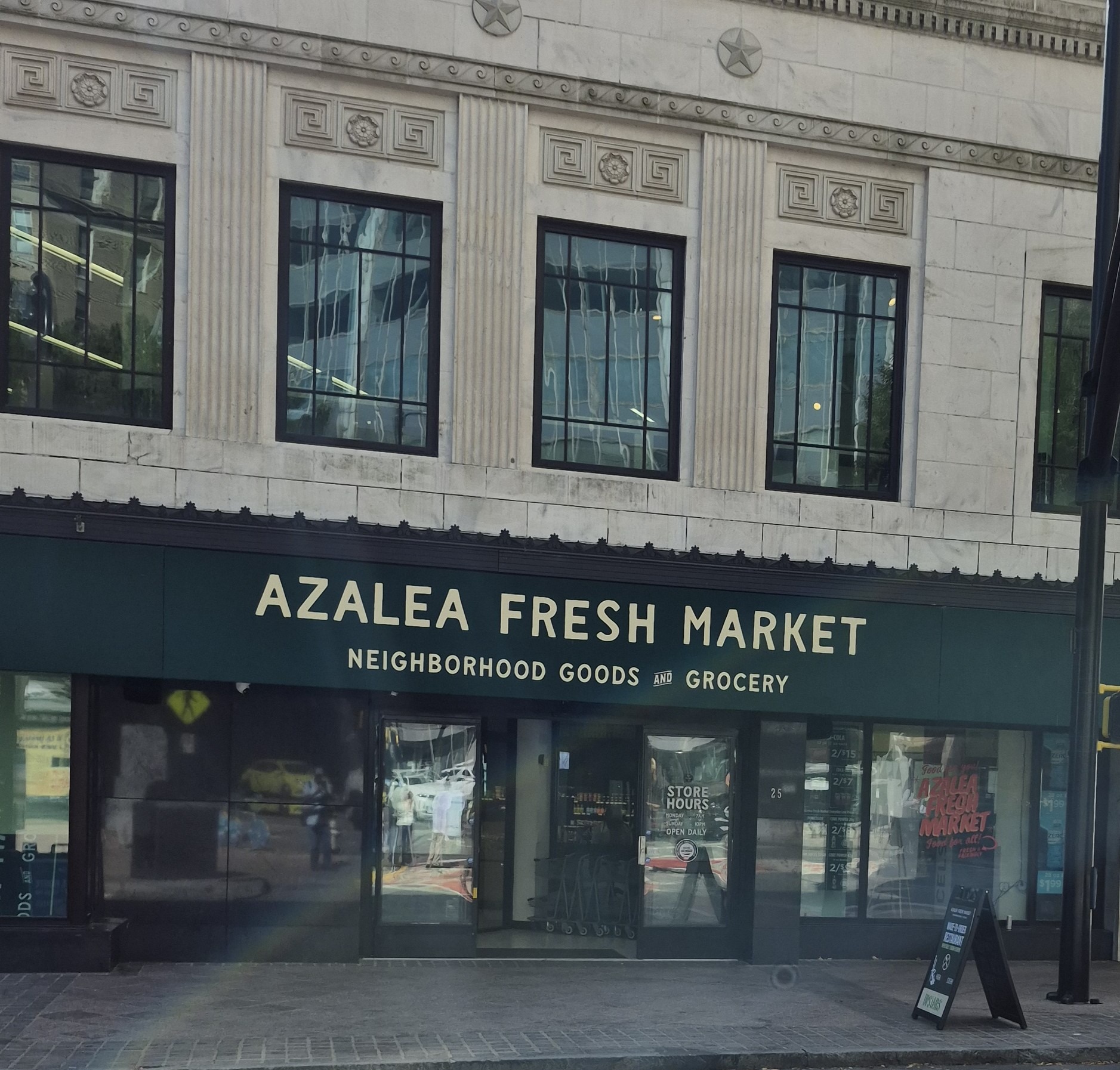
Azalea Fresh Market, located at 25 Peachtree Street NW, served as the backdrop for the national discussion.
The grocery store was developed through a public-private partnership involving the City of Atlanta, Invest Atlanta, and Savi Provisions.
Dickens described the uneven distribution of grocery stores throughout Atlanta, noting that some neighborhoods have four or five locations from which residents can choose while others have none.
For residents living in communities without nearby grocery stores, obtaining fresh food can require additional transportation expenses, longer travel times, and greater dependence on convenience stores offering limited selections.
The mayor said Atlanta is preparing to open a second market on Campbellton Road in southwest Atlanta, extending the city’s grocery-access efforts to another community.
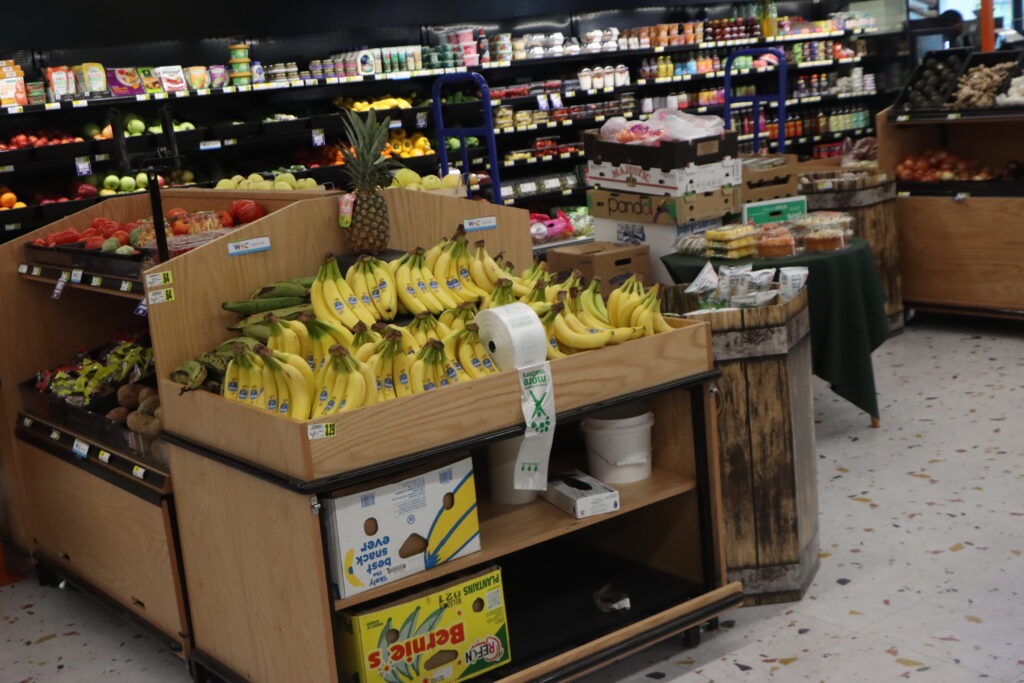
The downtown market offers fresh produce, dairy products, pantry staples, prepared foods, and household necessities.
The two-story facility includes an upstairs prepared-food and dining area with seating for at least 20 customers.
During the press conference, the store provided boxed lunches featuring turkey and roast beef sandwiches, hors d’oeuvres, and individual red velvet cheesecake desserts.
Customers were already shopping when The Truth Seekers Journal arrived. By the conclusion of the press conference, foot traffic on the first floor had increased noticeably.
The activity provided a glimpse of the market’s everyday operations beyond the speeches and public policy discussions taking place upstairs.
First-Year Sales Approach $3 Million
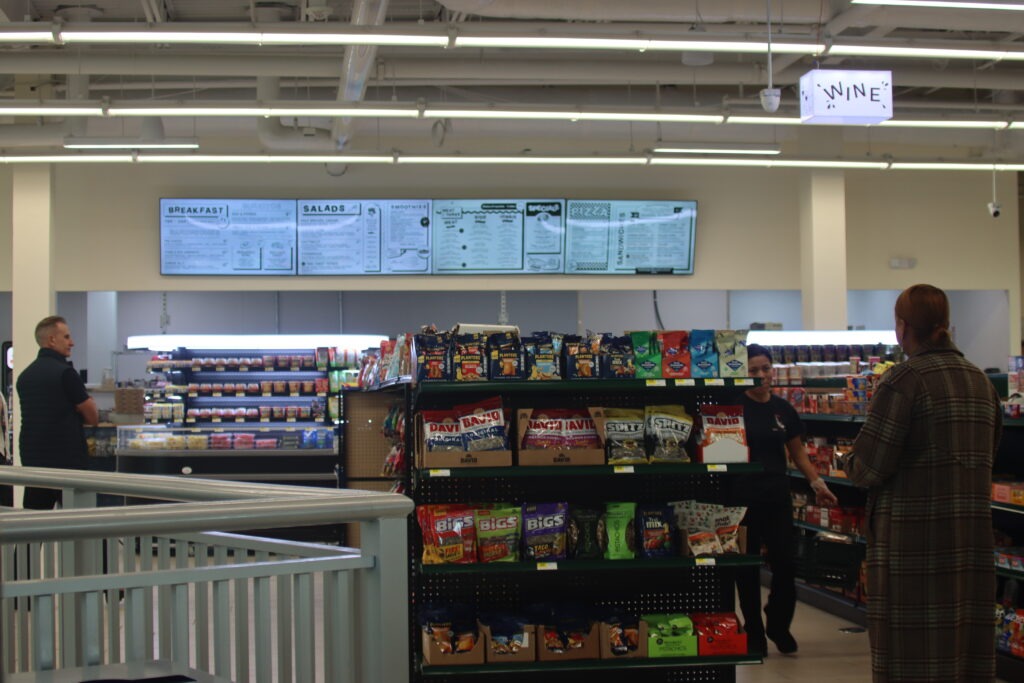
Dickens shared financial and customer activity figures that he said demonstrated the market’s growing acceptance among downtown residents, workers, and students.
September sales reached approximately $327,000, the highest monthly total reported since the store opened.
Weekly sales were approximately $65,000, with sales increasing about 37 percent following the return of Georgia State University students for the fall semester.
The market recorded approximately 30,000 customer visits during September and reported roughly 250,000 visits during its first year.
First-year sales approached $3 million.
Dickens also cited sales productivity of approximately $103 per labor hour, a measure of revenue generated relative to employee hours worked.
The figures suggest substantial customer demand, although sales volume alone does not establish profitability. Staffing, inventory, utilities, transportation, and other operating expenses remain important factors in determining the long-term financial sustainability of grocery businesses.
Nevertheless, the reported results offer evidence that the market is attracting customers and meeting a demand for grocery services in downtown Atlanta.
Diesel Prices, Tariffs and the Cost of Groceries
During the press conference’s question-and-answer session, Dickens offered an explanation of why grocery prices continue to strain household budgets.
He described the journey food takes before reaching consumers, beginning at farms and continuing through processing facilities, distribution warehouses, and ultimately retail grocery stores.
At multiple stages, products are transported by trucks powered by diesel fuel.
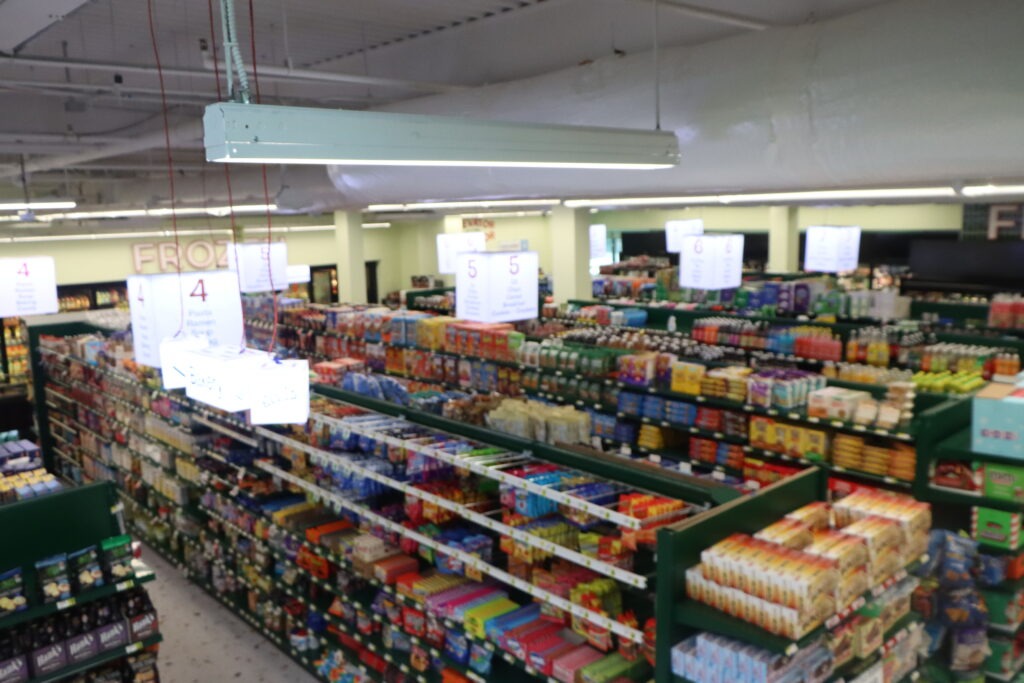
Dickens argued that rising fuel costs increase transportation expenses throughout the supply chain, contributing to higher prices when consumers reach the checkout counter.
He also pointed to tariffs on imported food products and broader inflationary pressures as additional factors affecting grocery costs.
The mayor connected those pressures, in part, to decisions made in Washington, emphasizing that municipal governments have limited control over national trade and energy policies.
Although fuel expenses and tariffs can influence retail food prices, their impact varies depending on the product, transportation requirements, supply chain, and broader market conditions.
Dickens said Atlanta is working to support existing neighborhood grocery stores as well as develop new markets, including assistance with equipment expenses that can burden smaller retailers.
Such efforts, he suggested, can help businesses manage operating costs and maintain access to affordable food.
His remarks illustrated the challenges confronting local officials who are attempting to address grocery affordability while many of the economic forces influencing prices originate beyond city boundaries.
Mayors Look to Replicate Successful Ideas
The visiting mayors repeatedly emphasized the importance of learning from successful initiatives in other communities.
During the gathering and related conversations, the leaders discussed their willingness to borrow, adapt, and even humorously “steal” good ideas from one another.
Azalea Fresh Market attracted attention as an example of a grocery-access initiative that could potentially be duplicated or expanded in other cities.
Cincinnati Mayor Aftab Pureval described his city’s partnership with Kroger to provide grocery delivery services in a low-income neighborhood.
He also discussed additional financial support intended to help residents stretch food assistance benefits and meet household needs.
The Cincinnati example demonstrated that cities can approach food affordability through different strategies, including new grocery stores, delivery services, transportation improvements, and partnerships with established retailers.
Hartford Mayor Arunan Arulampalam emphasized the importance of community involvement and described how residents facing financial hardship often find ways to support their neighbors.
The mayors agreed that local innovation is essential but argued that municipalities should not be expected to address the nation’s affordability challenges without sufficient state and federal support.
Federal Partnerships Remain Central to the Debate
Throughout the gathering, the mayors called for stronger cooperation with federal and state governments.
They expressed concerns about federal spending priorities, reductions in assistance programs, and the financial burdens being transferred to local communities.
The Conference of Mayors’ survey reinforced those concerns, with more than three-quarters of responding mayors identifying food assistance and efforts to eliminate food deserts as areas where federal support could help.
Gloria said the lessons gathered during the tour would become part of the organization’s continuing advocacy efforts.
The mayors also highlighted a fundamental challenge of municipal government: City leaders are often the first to hear from residents struggling with rising expenses, but many of the financial resources and policy decisions needed to address those problems rest with state and federal authorities.
For families struggling to pay for housing, healthcare, transportation, and groceries, the consequences are immediate regardless of which level of government controls the solution.
The mayors argued that meaningful progress will require cooperation across those boundaries.
Atlanta Will Welcome the Mayors Again in 2027
Dickens reminded attendees that Atlanta is scheduled to host the U.S. Conference of Mayors’ annual meeting in late June 2027, when more than 300 mayors are expected to gather in the city.
The meeting will provide another opportunity for municipal leaders to exchange ideas and discuss challenges involving affordability, housing, infrastructure, public safety, and economic development.
For now, Azalea Fresh Market offers a local example of how government and private-sector partners are attempting to address a problem confronting communities across the country.
Its reported sales and customer traffic suggest a demand for accessible grocery shopping, while the interest expressed by visiting mayors indicates that similar approaches may be considered elsewhere.
As the press conference concluded, shoppers continued moving through the market’s aisles, purchasing groceries and going about their daily routines.
For the visiting mayors, the gathering was part of a national conversation about public policy and economic opportunity.
For the customers shopping downstairs, the issue was more immediate: finding the groceries they need at prices they can afford.
The challenge ahead is whether the ideas exchanged in Atlanta can be translated into lasting, affordable solutions for communities across America.
Support open, independent journalism. Your contribution helps us tell the stories that matter most.