Milton Kirby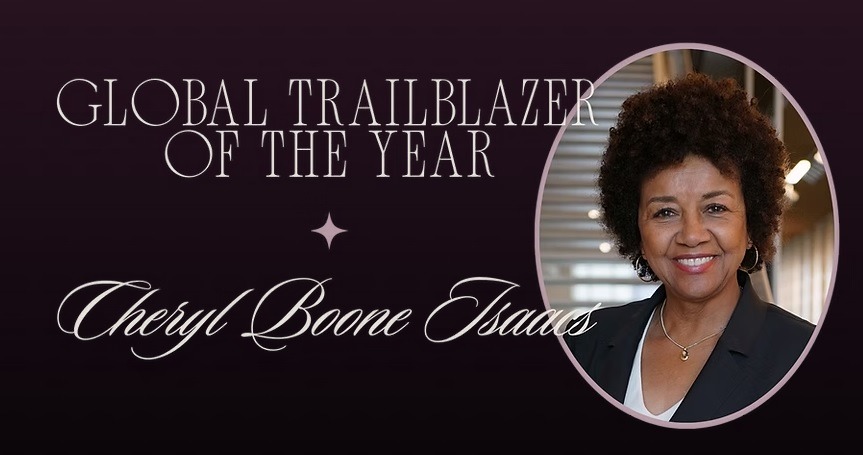
By Milton Kirby | Washington, D.C. |August 30, 2026
Inside The Ritz-Carlton in Washington, D.C., accomplished Black women from across the country gathered Monday, July 13th to be recognized for their influence.
They were executives and entrepreneurs, filmmakers and advocates, corporate leaders and community builders. Their professions differed, as did the paths that brought them into the room.
But throughout the U.S. Black Chambers, Inc. 2026 Power 50 Women of Influence luncheon, conversations kept returning to a larger question: What makes someone influential?
Nicole Parker had a straightforward answer.
“How you give, how you serve, how you show up.”
Parker, a member of the inaugural Power 50 class, was describing qualities behind an annual recognition of Black women whose leadership and impact extend across business, government, healthcare, finance, entertainment, technology, nonprofit leadership and other sectors.
Some of the women honored have names recognized far beyond their industries. Others have spent years doing consequential work with considerably less public attention.
That distinction is part of why the Power 50 exists.
Looking Beyond Familiar Names
Tiffany Murphy, who works with the Power 50 program, said its beginnings grew partly from noticing who was, and was not, receiving recognition.
“We realized the same Black female executives were getting recognized, but there were so many that were doing wonderful things,” Murphy said. “And that’s what essentially became the Power 50.”
The response to the program suggests just how many women fit that description.
Murphy said USBC received nearly 1,000 nominations for the 2026 class.
Organizers then faced the difficult task of narrowing that pool to the women who would receive the annual recognition. Despite the Power 50 name, Murphy acknowledged that organizers have found it difficult to limit the final class to exactly 50.
The number of nominations points to something larger than an awards program. There is no shortage of Black women leading companies, building organizations, influencing industries and serving communities. The challenge is making sure more of that work is seen.
Murphy believes the program itself is beginning to reach another stage.
“I think this is the first year it’s really kind of did its own thing,” Murphy said. “We’re five years in. It’s getting buzz. People are learning more about it.”
The 2026 class included women from a broad range of professions and experiences.
Cheryl Boone Isaacs, former president of the Academy of Motion Picture Arts and Sciences, was named Global Trailblazer of the Year. U.S. Rep. Jasmine Crockett was named Woman of the Year.
Isaacs made history in 2013 when she became the first African American to serve as president of the Academy. She now serves as founding director of the Sidney Poitier New American Film School at Arizona State University.
But national name recognition is not what defines a Power 50 honoree.
The class also includes women building businesses, creating nonprofits, opening professional pathways and working in communities where their names may never regularly appear in national headlines.
“How You Give, How You Serve, How You Show Up”
Parker has watched the Power 50 develop from its early years.
A small-business owner and USBC board member, she returned for the 2026 luncheon as a previous honoree supporting a new class of women.
“The Power 50 is just about women leading the movement, from women entrepreneurs to C-suite executives in all industries,” Parker said.
Asked what goes into identifying a Woman of Influence, Parker did not begin with titles, money or celebrity.
“They look at community,” she said. “They look at the impacts that you’ve done in your industry or in the community, how you give, how you serve, how you show up.”
Inside the luncheon, those qualities took different forms.
For one woman, influence meant turning a missing pathway into an opportunity for others.
For another, it meant recognizing the collective economic and creative power of Black women.
And for another, being honored for decades of work became a reminder that there was still more to do.
Creating the Opportunity She Once Needed
Agnes Moss knows what it is like to search for a professional pathway and not find one.
Moss, founder and president of the National Black Movie Association, once dreamed of working in film.
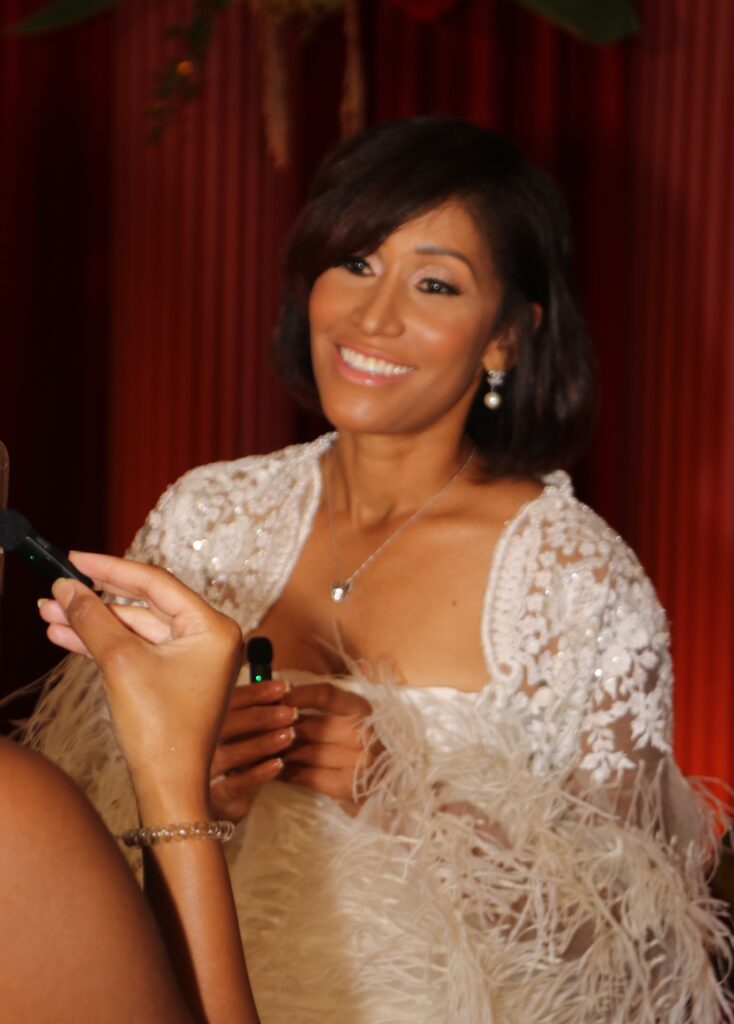
While attending North Carolina Central University, she could see successful Black filmmakers such as Spike Lee and John Singleton. What she could not see was a clear path from college into a sustainable career in the industry.
“We didn’t have social media, so there was no direct path to get to a viable career in the film industry,” Moss said.
Her professional journey eventually took her into news, education, public relations and other fields. Still, the desire to tell stories through film remained.
Years later, Moss began asking herself what might have changed her own journey.
“How could my trajectory have been different?” she recalled. “What did I need?”
The answer helped shape the National Black Movie Association, a nonprofit that champions Black stories, promotes equity in film education and works to connect aspiring filmmakers, including students at historically Black colleges and universities, with opportunities in the industry.
Moss summarized the evolution of that work in one sentence.
“We used to advocate for opportunities in the film industry, but now we create them.”
Her experience offered one answer to the question of what influence can accomplish.
It can make sure someone coming behind you does not encounter the same closed door.
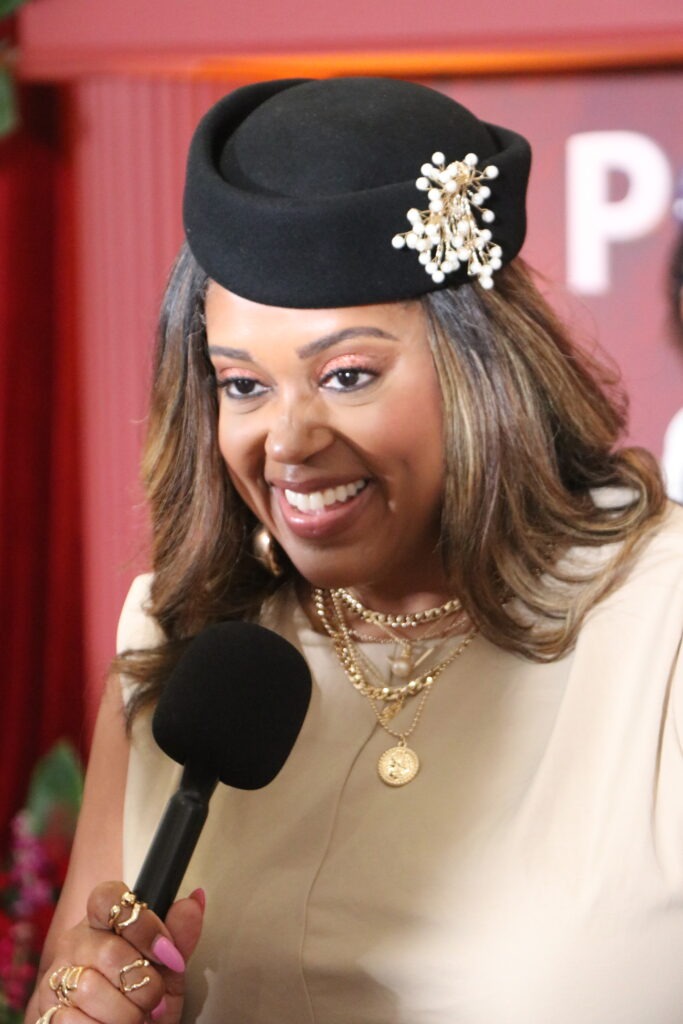
“We’re All Impact Makers”
Kyra Rénel Hardwick saw another kind of power in bringing accomplished Black women together.
Hardwick, founder of The Kyra Company, works with small businesses and corporations on operations and business development.
“Black women coming together and being honored for being amazing is top tier,” Hardwick said. “But the fact that we know we’re all impact makers is what makes this amazing.”
For Hardwick, the significance was not simply that individual women were receiving awards. It was what their collective presence represented.
“You get us in the same room and all this good energy, regardless of what our economic status is, regardless of what our economy is saying, we are innovators. We’re creators.”
The room represented women who had accumulated experience, relationships, resources and influence in different corners of American life.
Bringing them together created the possibility that individual influence could become collective impact.
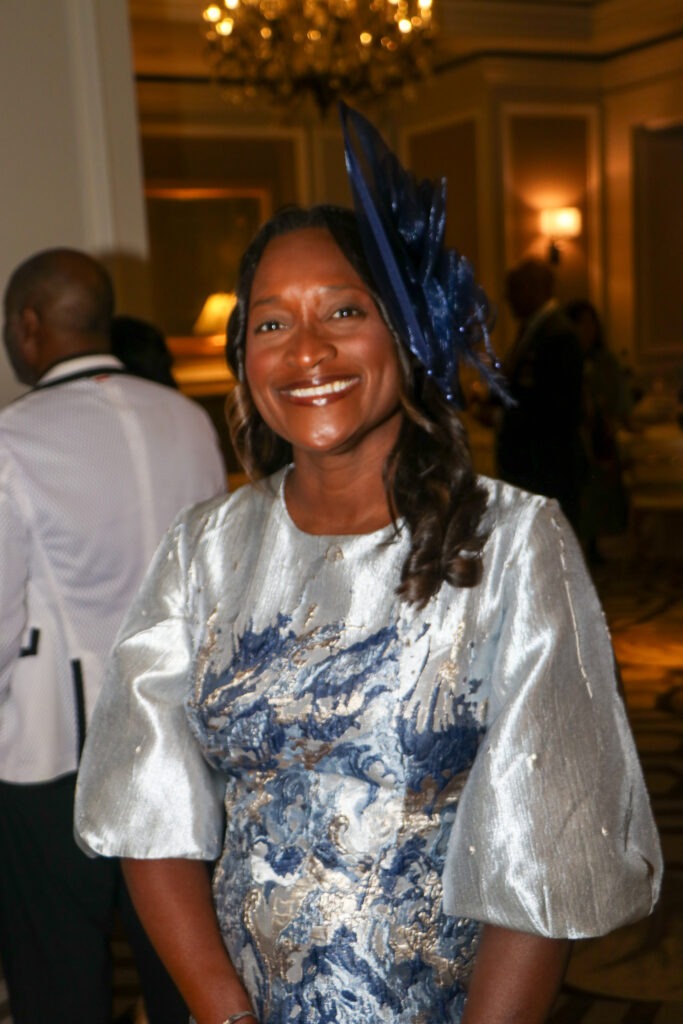
Recognition Without Arrival
Beth Powell offered perhaps the clearest example of why recognition matters even to someone who has already accomplished much.
Powell is a Boeing 737 captain with American Airlines, as well as an author, emerging filmmaker and longtime community advocate.
She described being selected for the Power 50 as “incredible, humbling and, at the same time, inspirational.”
Her reaction also illustrated Parker’s earlier description of the qualities behind the recognition.
Powell said her community work spans more than 26 years. Yet when she looked around the gathering, she did not describe herself as someone who had arrived.
She saw women she admired.
“I see the vision, and that they believe in me, and that I will be like my heroes and sheroes someday,” Powell said.
It was a striking observation from a woman who had already been selected to stand among those she admired.
Recognition can acknowledge a body of work. But it can also tell recipients that others see something in them that they may still be working to see fully in themselves.
For Powell, selection to the Power 50 did not sound like an endpoint.
It sounded like another reason to keep going.
The Work That Remains
The Power 50 luncheon was built around recognition, but the conversations surrounding it repeatedly returned to responsibility.
Murphy talked about women whose work deserved to be seen.
Parker talked about giving, serving and showing up.
Moss talked about creating opportunities.
Hardwick talked about impact.
And Powell talked about work.
Together, their voices offered a definition of influence considerably broader than a job title or a place on an annual list.
Influence meant having enough experience to create a pathway for someone else.
Enough visibility to bring attention to work that matters.
Enough access to open a door.
And enough humility to recognize that receiving an honor does not mean the work is finished.
Powell returned to that idea as she reflected on what the gathering represented.
“We’re celebrating tenacity,” she said. “We’re celebrating the work. We’re celebrating the work within the community I’ve done over 26 years, and there is work that still remains to be done.”
For an event honoring some of the nation’s influential Black women, it was a fitting reminder of what the Power 50 recognition can mean.
Not merely reaching the room. But remembering who still needs a door opened.
Truth Seekers Journal thrives because of readers like you. Join us in sustaining independent voices.


 Ted Knorr