Dear Shadow Ball: I have a question about Negro League stats being entered into the Major League Baseball record book. It is my understanding that in 1969 four pro leagues’ records, in addition to the American and National Leagues, were entered into the record book. Were the Negro Leagues considered at that time by the committee and rejected, or were they completely ignored or overlooked (and we had to wait 50+ years for it to finally happen)? — Chris Hansen, Ogden, Utah
… this column exists for only one purpose and that is to answer your questions on Negro League baseball history. To that end, I need your help … if you are reading this column and enjoy it and want it to continue and you don’t already know everything about Negro League history … then please submit a question on any aspect of Negro League history. Your questions are the lifeblood of Shadow Ball—they shape where we go next.
– players, teams, events, and more – and, in so doing, you will direct where this column goes moving forward. Your participation is important and appreciated. The very existence of this column depends on you. Submit your questions to shadowball@truthseekersjournal.com.
Dear Chris: I happen to know the answer to that question very well. On July 1, 2017, at the 47th annual convention of the Society for American Baseball Research (SABR) in New York City, I had the opportunity to pose that very question to two men who knew the subject as well as anyone alive: John Thorn, Major League Baseball’s Official Historian, and David Neft, the driving force behind the 1969 Macmillan Baseball Encyclopedia. Neft was in the room in 1969 when MLB’s Special Baseball Records Committee (SBRC) designated six professional leagues — the National League, American League, Players League, Federal League, American Association, and Union Association — as “major.”
Both Thorn and Neft welcomed questions from the audience, and asking mine was one of the principal reasons I attended SABR 47. When my turn came, I asked: “Did the Special Baseball Records Committee consider, at all, the Negro Leagues to be a Major League?” Thorn answered immediately — exactly as I expected — with a single word: “No.” Both men then expanded on the criteria the SBRC used in 1969, and why the Negro Leagues were not even discussed. (If interested the Q & A occurs at the 47:32 point in this mp3 SABR47-David_Neft-John_Thorn-Baseball_Records_Cmte.mp3 | Powered by Box and lasts about three minutes. If you have time the hour-long conversation between Thorn & Neft is well worth the listen) Years later, Neft told The Ringer: “The one thing that I am absolutely certain about is that there never was any SBRC discussion about treating the Negro Leagues as major leagues.” Major League Baseball itself confirmed this in its December 16, 2020 press release announcing the elevation of seven Negro Leagues to Major League status: “It is MLB’s view that the Committee’s 1969 omission of the Negro Leagues from consideration was clearly an error that demands today’s designation.”
In short: The Negro Leagues were not rejected in 1969 — they were ignored. This was before Robert Peterson’s seminal Only the Ball Was White (1970), before SABR’s Negro Leagues Committee (1971), and before the sustained scholarly work that finally brought the Negro Leagues into proper historical focus. On December 16, 2020, MLB corrected that omission by recognizing seven Negro Leagues as Major: Negro National League I, Eastern Colored League, American Negro League, East West League, Negro Southern League, Negro National League II, and the Negro American League.
Last week’s Shadow Ball Significa question Who was the last surviving Atlanta Black Crackers player? Answer: Dr. Leslie Heaphy of Canton, OH, nailed it — Red Moore. Moore also led the franchise in career batting average, walks, and sacrifice flies. Born and died in Atlanta.
The Shadow Ball Significa Question of the Week: Which Negro League team introduced night baseball five years before Major League Baseball adopted it?
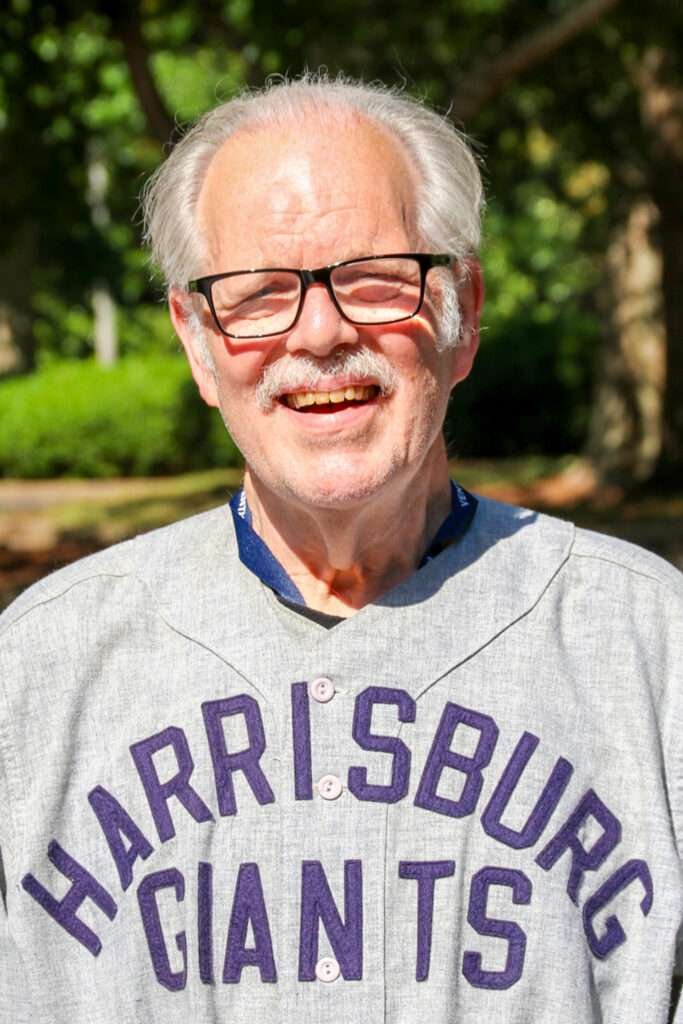
Ted Knorr
Ted Knorr is a Negro League baseball historian, longtime member of the Society for American Baseball Research’s Negro League Committee, and founder of the Jerry Malloy Negro League Conference and several local Negro League Commemorative Nights in central Pennsylvania. You can send questions for Knorr on Negro League topics as well as your answers to the week’s Significa question to shadowball@truthseekersjournal.com or Shadow Ball, 3904 N Druid Hills Rd, Ste 179, Decatur, GA 30033
Support open, independent journalism—your contribution helps us tell the stories that matter most.
The Atlanta Falcons reshuffle leadership, firing Raheem Morris and Terry Fontenot while hiring franchise legend Matt Ryan as President of Football to end years of mediocrity.
By Milton Kirby | Atlanta, GA | January 11, 2026
The Atlanta Falcons began 2026 by making one of the most consequential leadership moves in franchise history a decision that signaled both a search for stability and the end of one of the NFL’s rare examples of Black executive leadership.
On Saturday, the organization hired former quarterback Matt Ryan as President of Football just days after dismissing head coach Raheem Morris and general manager Terry Fontenot. The move reset the franchise’s football hierarchy while simultaneously eliminating the league’s only remaining Black head coach–general manager partnership. This move also carried a deeper, more complicated weight.
Announced by owner Arthur Blank, the decision immediately reshaped power inside Flowery Branch. Ryan, the most accomplished player in franchise history, now oversees all football operations and reports directly to Blank, while working alongside team president and CEO Greg Beadles to align football and business priorities.
The move followed a turbulent week that underscored Atlanta’s urgency to escape a cycle of mediocrity and raised harder questions about patience, progress, and who is afforded time to build at the highest levels of the league.
An abrupt ending to a rare pairing
The Falcons fired Morris and Fontenot on January 4 after a second consecutive 8–9 season. The decision came one week after Atlanta closed the year with a win over rival New Orleans, finishing stronger than expected and showing measurable defensive progress.
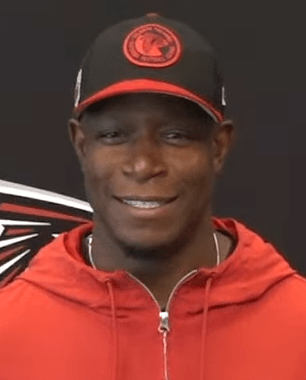
Courtesy Photo Raheem Morris
Morris, who previously served as Atlanta’s interim head coach in 2020, completed two full seasons at the helm from 2024 to 2025. Fontenot, hired in 2021, became one of the NFL’s few Black general managers and the longest-tenured of that group during his six-year run.
Together, Morris and Fontenot represented the league’s only Black head coach–general manager tandem a symbolic milestone in a league where such pairings remain exceptionally rare. Their dismissal ended that distinction that proved as fragile as it was meaningful, even as the team showed signs of forward movement.
Atlanta’s postseason drought now stands at eight years, dating back to the 2017 season the final playoff appearance of the Matt Ryan era under center.
Black Leadership in the NFL
Despite a player base that is roughly 70 percent Black, leadership representation at the NFL’s highest levels has remained limited. Entering the 2025 season, only three Black head coaches led teams, alongside a small number of Black general managers league wide. Prior to their dismissal, the Falcons were the only franchise pairing a Black head coach with a Black general manager a combination that remains rare in a league that has repeatedly acknowledged challenges in creating sustained pathways to executive leadership.
Progress without payoff
Measured strictly by wins and losses, Morris’s tenure mirrored the Falcons’ recent pattern of frustrating near-misses. His two seasons ended with identical 8–9 records, falling short of the playoffs in a competitive NFC South.
Yet context complicates the narrative. Morris inherited a defense that ranked near the bottom of the league in 2024. By 2025, Atlanta surged into the NFL’s top three in sacks and set a new franchise record with 57, one of the league’s most dramatic year-over-year defensive turnarounds.
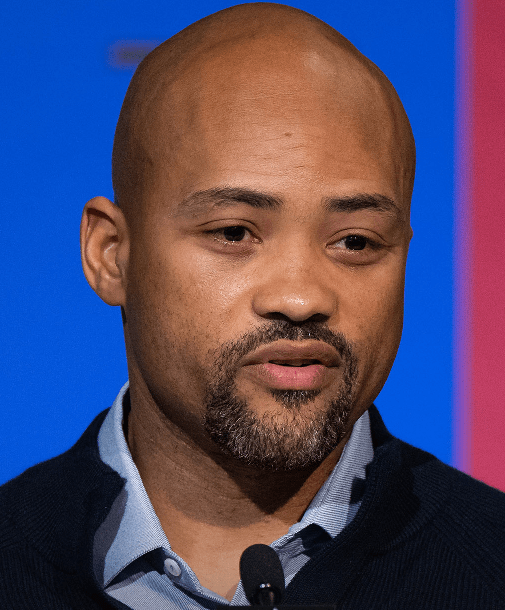
Courtesy photo Terry Fontenot
Under Fontenot, the Falcons also assembled a young and highly regarded core. Draft picks such as Bijan Robinson, Drake London, and Kyle Pitts became offensive centerpieces, while recent additions like Xavier Watts, Jalon Walker, and James Pearce Jr. were viewed internally as long-term building blocks.
Still, results lagged behind expectations. Fontenot, who signed a six-year contract in 2021, is owed one remaining year. Morris, hired as head coach in 2024, signed a five-year contract, according to a January 27, 2024 report by USA Today Sports, leaving three years remaining on his deal.
The contrast between measurable improvement and organizational impatience reflects a broader league pattern, where Black head coaches and executives are often afforded less time to see long-term plans through even when progress is evident but incomplete.
Enter Matt Ryan — from franchise face to football boss
Blank’s answer to stagnation was bold and deeply personal. Ryan, the former league MVP and face of the franchise for 14 seasons, now occupies a role newly created within the organization.
“Throughout his remarkable 14-year career in Atlanta, Matt’s leadership, attention to detail, knowledge of the game and unrelenting drive to win made him the most successful player in our franchise’s history,” Blank said in a statement. “I am confident those same qualities will be a tremendous benefit to our organization as he steps into this new role.”
Ryan accepted the position early Saturday morning and immediately joined the search for the team’s next head coach and general manager. Both hires will report directly to him.
Courtesy photo Matt Ryan
Ryan steps into the position not as a repudiation of the previous regime, but as the owner’s bet that cultural continuity and institutional trust can succeed where repeated resets have not.
A resume unmatched in Falcons history
Ryan’s credentials inside the building are undeniable. Drafted third overall in 2008 out of Boston College, he became the most productive quarterback the franchise has ever known.
He led Atlanta to five playoff appearances, two NFC Championship Games, and one Super Bowl. His 2016 season remains the gold standard: first-team All-Pro honors, NFL MVP, and Offensive Player of the Year while guiding the Falcons to their second NFC title.
Ryan holds nearly every major passing record in franchise history, including career yards (59,735), touchdowns (367), completions, attempts, passer rating, and 300-yard games. From 2011 to 2020, he posted 10 consecutive 4,000-yard seasons and finished his Falcons career with a 120–102 regular-season record.
For many fans, he remains the embodiment of stability during an otherwise turbulent half-century of Falcons football.
A franchise defined by turnover
That instability is not anecdotal it is structural. Since joining the NFL in 1966, the Falcons have employed 18 head coaches, including five interims. Only two Dan Reeves in 1998 and Dan Quinn in 2016 reached the Super Bowl. Mike Smith remains the winningest coach in team history, yet even his tenure ended without a championship.
Morris’s dismissal places him among a long list of leaders who showed promise but fell short of delivering sustained success. Ryan now inherits not just a roster, but a legacy of resets.
The search ahead and immediate questions
As of January 11, Ryan is leading interviews for the vacant head coach and general manager positions. Early candidates include Klint Kubiak, Anthony Weaver, Aden Durde, and Kevin Stefanski.
The inclusion of Kevin Stefanski has raised eyebrows. Stefanski was fired by the Cleveland Browns on January 5 after consecutive losing seasons and a 5–12 finish in 2025 despite earlier Coach of the Year honors.
The Browns’ decision to move on while retaining their general manager highlights a broader league tension: success windows close quickly, and past accolades offer limited insulation.
For Ryan, the challenge is immediate and unforgiving. He must identify leaders who can win quickly without repeating the organizational whiplash that has defined the franchise.
Beyond wins and losses
Ryan’s impact in Atlanta has never been limited to the field. In 2020, he and his wife, Sarah, launched ATL: Advance The Lives, raising more than $1.3 million to combat systemic barriers facing Black youth. His community work earned him the Falcons’ Walter Payton Man of the Year nomination in 2016.
Those values accountability, stability, long-term investment are themes Ryan emphasized during his final CBS broadcast.
“We want to be in the mix, in the playoffs,” he said. “It’s been too long. Football is about the people. The building is about the people.”
A defining gamble
The Falcons’ decision to place football operations in the hands of a franchise icon is both risky and revealing. Ryan brings credibility, institutional knowledge, and the trust of ownership. What he does not bring is prior front-office experience, a gap the organization believes leadership, perspective, and discipline can overcome.
Yet the move also leaves behind an unresolved question. In choosing stability, the Falcons closed the book on one of the NFL’s rare Black leadership partnerships not after collapse, but after incremental progress that fell just short of the postseason.
Whether that choice reflects urgency, impatience, or the league’s enduring unevenness in who is granted time to build may ultimately matter as much as who leads the next era.
But the move also leaves an unresolved question hanging over the franchise: What does progress look like when the league’s rare Black leadership partnerships are given so little time to grow?
Atlanta chose stability but in doing so, it closed the door on a pairing that represented something larger than wins and losses. Whether Ryan can deliver the success that eluded Morris and Fontenot will define the next era of Falcons football. Whether the league can sustain meaningful pathways for Black leadership remains a larger test still.
Truth Seekers Journal thrives because of readers like you. Join us in sustaining independent voices.
Jayden Williams, 22, was sworn in as Stockbridge’s youngest mayor ever, signaling a new era of youth leadership, economic focus, and inclusive growth in Henry County.
By Milton Kirby | Stockbridge, GA | January 2, 2026
Before a standing-room-only crowd and an atmosphere that felt more like a celebration than a formal government ceremony, Jayden Williams was officially sworn in as mayor of Stockbridge, becoming the youngest person ever to hold the office in the city’s history.
Williams, just 22 years old, took the oath of office as cheers filled the room and walk-up music echoed through the chamber. Roughly 250 to 300 residents, family members, elected officials, and supporters packed the venue, many coming specifically to witness a moment that symbolized both generational change and a new chapter for the growing Henry County city.
The ceremony was energetic and deeply personal. Gospel recording artist Jarrett Boyce and saxophonist Richard Shaw, Jr. performed while laughter, dancing, and applause punctuated the proceedings. Williams entered to Young Jeezy’s “Put On,” a nod to Atlanta culture and a signal that this administration intends to bring a fresh tone to City Hall.
When the moment arrived, Williams placed his hand on his late great-grandfather’s Bible, held by his younger sister, as Honorable Judge Holly Veal administered the oath. His parents, siblings, grandparents, and great-grandmothers looked on from the audience, alongside longtime supporters who followed his rise from youth leadership to the city’s highest office.
Williams defeated a two-time incumbent in November, a victory he has said reflected a clear desire for change among Stockbridge voters. At the time of the election, he was still completing his studies in political science at Clark Atlanta University, balancing coursework with door-knocking and community forums.
“I really want to see us grow into something where every single resident feels accommodated,” Williams said following the election. “When I say that, I’m referring to new residents, young professionals, our working families, our teachers, and our seniors. How can we accommodate them to make them feel like they are home?”
A Personal and Historic Moment
During his remarks, Williams paid tribute to his late great-grandfather, recalling family stories about racial tensions that once made Henry County a place to pass through rather than stop.
“My great-grandfather used to warn my grandmother never to stop in Henry County or Stockbridge because of the racial tensions here,” Williams said. “And yet today, in a moment he could only have dreamed of, I was sworn in on his very Bible. If he could see me now, I know he’d be grinning ear to ear. This history matters.”
That theme of history and progress ran throughout the ceremony, as Stockbridge leaders emphasized how much the city has changed—and how much more change lies ahead.
New Council Members Take Office
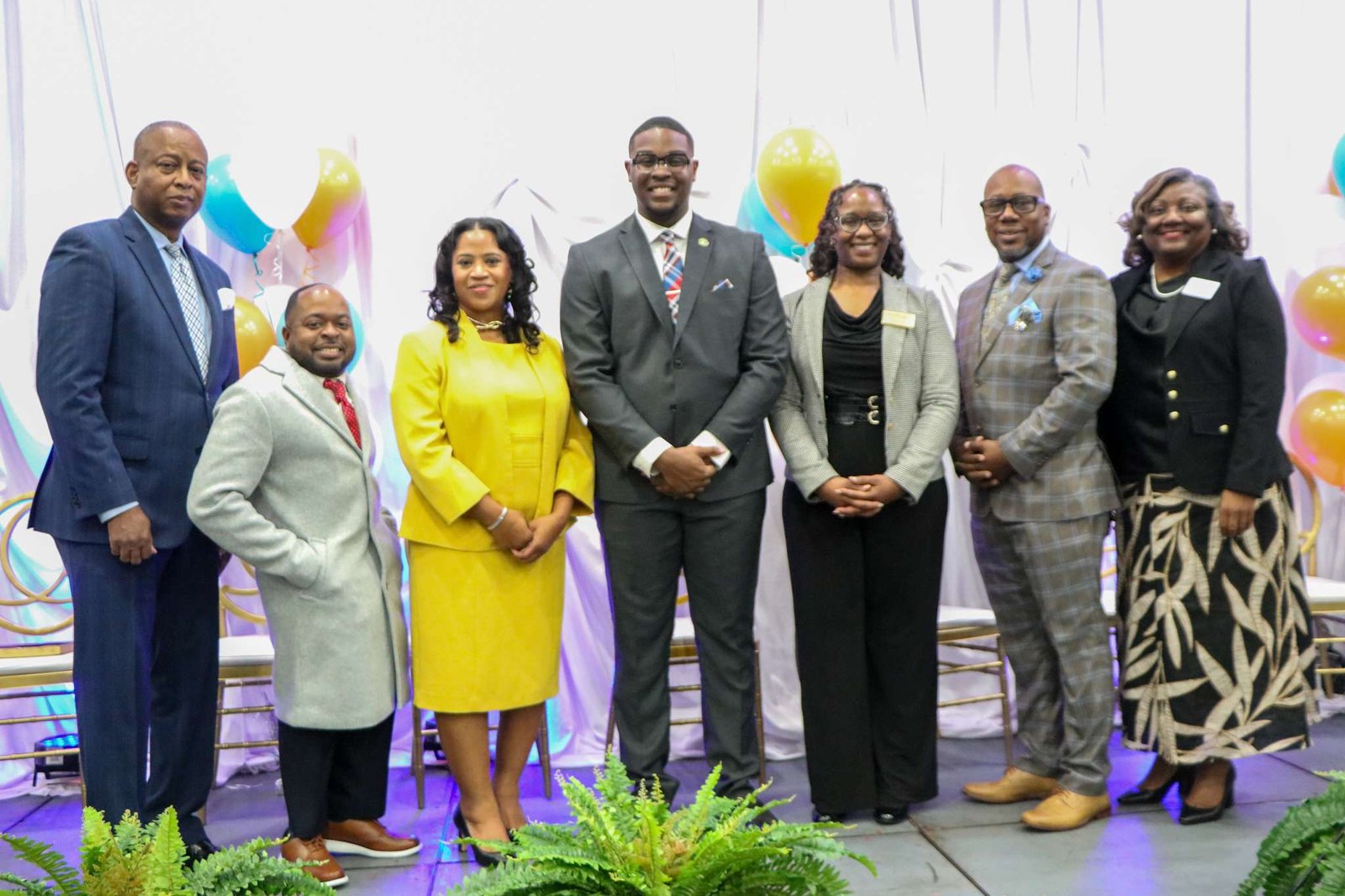
Williams was sworn in alongside newly elected District 1 Councilwoman LaKeisha Gantt and District 2 Councilman Antwan Cloud, both of whom also took their oaths during the ceremony.
Photo by Milton Kirby – Jayden Williams & LaKeisha Gant after being sworn in
“It means our city is growing, our leadership is evolving, and we are embracing every generation as a part of Stockbridge’s future,” Gantt said.
While the evening celebrated all three officials, the crowd’s energy made clear that Williams’ milestone carried special significance for residents who see his election as a signal that Stockbridge is entering a new era.
A Resume Built on Youth Leadership
Long before launching his mayoral campaign, Williams built a reputation as a youth advocate and civic leader. He began community work at just 13 years old and went on to serve as Freshman Class President and Student Government Association Treasurer at Clark Atlanta University. He was twice appointed as a White House Scholar and became the youngest Planning Commissioner in Georgia, currently serving as chair of the Stockbridge Planning Commission.
Williams has also served as State Conference President of the Georgia NAACP Youth & College Division, Youth Mayor Emeritus for the City of Stockbridge Youth Council, and Chairman Emeritus of Youth Leaders of Henry. His work has earned him numerous honors, including ACCG Youth Leader of the Year, the AT&T Climber Award, and a national public speaking award.
An Agenda Focused on Opportunity
In his inaugural address, Williams laid out an ambitious but grounded agenda centered on economic development, youth opportunity, housing stability, and inclusive growth.
“A city cannot rise if its people are locked out of opportunity,” he told the crowd, emphasizing that economic innovation will be a front-and-center priority for his administration.
City of Stockbridge
Williams outlined plans to strengthen small businesses, expand workforce training, revitalize downtown Stockbridge, and align education pathways with real job opportunities in sectors such as healthcare and logistics. He also stressed the importance of youth programming, the arts, and mentorship as tools for long-term community stability.
Quoting Shirley Chisholm, Williams added his own twist to a familiar line.
“If you don’t have a seat at the table, bring a folding chair,” he said. “But Stockbridge did something different. We gathered the wood, we built the table, and now together, we’re going to make sure that table is strong enough and welcoming enough for everyone.”
Looking Ahead
Williams said his administration will prioritize affordable housing, public safety rooted in prevention and trust, and infrastructure that supports smart, responsible growth. He also pledged transparency and collaboration, acknowledging that challenges lie ahead.
“Leadership is not pretending everything is perfect,” he said. “Leadership is showing up anyway and doing the work.”
As the ceremony concluded, supporters lingered, taking photos and embracing family members, while the new mayor greeted residents one by one. For many in attendance, the night marked more than a swearing-in—it marked a generational shift and a statement about who belongs in Stockbridge’s future.
A new year, a new mayor, and, as Williams put it, a city that is “all in for Stockbridge.”
Dear Shadow Ball: What pitcher holds the Negro League record for most inning pitched?
Mick Kolb, York, PA.
Dear Mick: My go to source for such questions is Seamheads Negro League Database. The leader in innings pitched in that database is Cannonball Dick Redding (2,334 innings over 26 years). This total includes games in the Negro Leagues plus Cuba, the Florida Winter Hotel League, and games versus minor and major league teams. Limiting the view, as your question does, to Negro League games only sent me to a different source – mlb.com. Since May 2024, Negro League statistics are now included on that site. To interpret and compile innings pitched, I turned to Tom Thress, President, Retrosheet, who informed me that Willie Foster (with 1,521 innings) leads all pitchers in total innings pitched in major Negro League games.
Last week’s Shadow Ball Significa question – Who was the first African American signed to a contract by the Boston Red Sox organization? For the 2nd week in a row, Will Clark, Hackensack, NJ, smacks one of my hanging curves over the fence … dodging my reach for a Pumpsie Green – who, in 1959, was the first African-American to play for the Boston Red Sox – answer he kept his focus on 1950 and offered Piper Davis which is correct. Unfortunately, Piper never got the call to come to Fenway.
The Shadow Ball Significa Question of the Week: Who was the last surviving Atlanta Black Crackers player? Here is a clue for you to keep from going down a rabbit hole – this player was born and died in Atlanta.
Ted Knorr
Ted Knorr is a Negro League baseball historian, longtime member of the Society for American Baseball Research’s Negro League Committee, and founder of the Jerry Malloy Negro League Conference and several local Negro League Commemorative Nights in central Pennsylvania. You can send questions for Knorr on Negro League topics as well as your answers to the week’s Significa question to shadowball@truthseekersjournal.com or Shadowball, 3904 N Druid Hills Rd, Ste 179, Decatur, GA 30033
Support open, independent journalism—your contribution helps us tell the stories that matter most.
The Atlanta Civic Center’s story spans fire, displacement, Broadway, OutKast, and redevelopment — revealing how culture, land, and power shaped one of Atlanta’s most iconic sites.
By Milton Kirby | Atlanta, GA | December 14, 2025
For nearly half a century, the Atlanta Civic Center stood as one of the city’s most important cultural crossroads — a place where Broadway met ballet, punk rock met opera, and civic life met national television. Built in 1967 and officially closed in 2014, the venue played an outsized role in shaping Atlanta’s artistic identity during a period of explosive growth and transformation.
Now, more than a decade after its final curtain call, the Civic Center site is entering a new chapter. As of December 9, 2025, a multi-phase redevelopment led by Atlanta Housing is underway, with plans to honor the site’s legacy while addressing one of Atlanta’s most urgent modern needs: housing.
But the story of the Civic Center did not begin in 1967. Long before the first spotlight was raised, this land carried a deeper history — one marked by destruction, resilience, and displacement.
Before the Spotlight: The Land Beneath the Civic Center
The ground beneath the Atlanta Civic Center has been asked to start over more than once. In 1917, the Great Atlanta Fire tore through this area, destroying more than 1,900 buildings and displacing over 10,000 residents. From the ashes emerged Buttermilk Bottom — a working-class, majority-Black neighborhood that took root in what is now considered Midtown and the Old Fourth Ward.
Buttermilk Bottom was not vacant land waiting for redevelopment. It was a living community defined by churches, extended families, small businesses, music, and culture. Residents built full lives there despite persistent neglect, as city investment flowed elsewhere.
By the mid-20th century, the neighborhood was labeled a “slum” by city leaders and the local press. In 1963, then-Mayor Ivan Allen Jr. unveiled plans to redevelop Buttermilk Bottom using federal urban renewal bonds. Homes were demolished. Businesses were shuttered. A school was closed. Families were forced to move.
Rather than replacing the neighborhood with new public housing, the city cleared the land for a civic complex — an auditorium and exhibition hall designed to project Atlanta’s modern image to the nation. When the Atlanta Civic Center opened in 1967, Buttermilk Bottom was gone. The area was rechristened Bedford Pine.
Protests against the destruction of the neighborhood coincided with national unrest following the assassination of Dr. Martin Luther King Jr. in 1968, underscoring the racial and economic tensions embedded in Atlanta’s redevelopment choices.The Civic Center rose as a symbol of progress — but one built atop displacement.
A Pattern Beyond One Site
The clearance of Buttermilk Bottom was not an isolated decision. During the same era, Atlanta pursued similar urban renewal projects across the city, particularly in working-class and Black neighborhoods.
Just south of downtown, the Washington-Rawson neighborhood — once a thriving in-town community — was carved apart by expressway construction and demolition. Part of the land was designated for public housing. Another section was set aside for Atlanta–Fulton County Stadium, completed in 1965 as the city sought national recognition and a Major League Baseball franchise.
For many residents, the promise was familiar: progress, opportunity, renewal. The result was often the same — displacement without replacement. Together, these projects revealed a redevelopment philosophy that prioritized national visibility over neighborhood stability.
Against this backdrop, the Civic Center took shape — both a cultural achievement and a reminder of the costs of progress.
A City Builds a Cultural Anchor
When the Atlanta Civic Center opened in 1967, Atlanta was positioning itself as the cultural and commercial capital of the New South. City leaders envisioned a modern performance venue capable of hosting national touring productions, large civic gatherings, and televised events. With a seating capacity of approximately 4,600, the Civic Center was the largest performance stage in the Southeast at the time. Designed to replace the aging Municipal Auditorium, it quickly became a centerpiece of Atlanta’s arts and entertainment ecosystem. For audiences, the Civic Center symbolized access — a place where Atlanta could experience world-class performances without leaving home.
Broadway Comes to Atlanta
Throughout the 1970s, 1980s, and 1990s, the Civic Center became synonymous with Broadway in Atlanta. National and regional touring productions regularly filled its stage, bringing marquee shows to audiences who might not otherwise travel to New York.
Productions such as Two Gentlemen of Verona (1974), George M! (1981), and The Wizard of Oz during its 1999 national tour helped cultivate Atlanta’s theatergoing audience and cemented the city’s reputation as a serious stop on the national touring circuit.
For decades, the Civic Center functioned as a cultural bridge — connecting Atlanta’s growing metropolitan population with the broader world of American theater.
A Home for High Culture
In its early decades, the Civic Center also played a critical role in Atlanta’s classical arts scene. Beginning in 1969, the Atlanta Symphony Orchestra, along with opera and ballet companies, used the space for major performances.
Before newer, specialized venues emerged, the Civic Center was where many Atlantans first encountered large-scale orchestral music, opera, and ballet. These performances helped establish Atlanta as a city capable of supporting both popular entertainment and high culture — a dual identity that still defines the region.
Television Lights and National Exposure
From 2011 to 2015, the Civic Center reached millions of living rooms as the filming location for Family Feud during Steve Harvey’s tenure as host.
The show’s presence quietly reinforced Atlanta’s growing role in television production, years before the city’s reputation as “Hollywood of the South” fully took hold. The venue also hosted graduations, political rallies, church services, and mayoral inaugurations, strengthening its role as both a cultural and civic gathering place.
SciTrek and a Generation of Curiosity
One of the Civic Center’s most distinctive chapters began in 1988, when SciTrek, an interactive science museum, moved in. For 16 years, until 2004, SciTrek welcomed thousands of schoolchildren from across Georgia.
For many Atlantans who came of age in the 1990s, SciTrek was their first exposure to science beyond the classroom — another reminder of the Civic Center’s adaptability and reach.
From Symphony to Punk Rock
As Atlanta’s music scene diversified, so did the Civic Center’s bookings. In later years, the venue hosted pop-punk bands like All Time Low, punk icons Dropkick Murphys and Rancid, and local artists including Hoodrich Savo and Ms. Honesty.
From opera to punk, the Civic Center became known for its range — a venue willing to host contrasting worlds under one roof.
Why the Curtain Fell
Despite its cultural importance, the Civic Center struggled to remain viable in the 21st century. Operating costs increasingly outweighed revenue. Built in 1967, the facility lacked the amenities and technology expected by modern touring productions.
A $2 million renovation in 2001 offered only temporary relief. As newer venues such as State Farm Arena and Mercedes-Benz Stadium opened, fewer major acts chose the Civic Center. By 2014, declining bookings made continued operation difficult to justify. The Civic Center officially closed in October of that year, ending a 47-year run.
A Sale, a Promise, and a New Vision
In 2017, the City of Atlanta sold the 19-acre Civic Center property to the Atlanta Housing Authority for just over $30 million. In December 2025, officials broke ground on a multi-phase redevelopment that will ultimately include approximately 1,500 housing units, 38 percent of which will be affordable.
Speaking at the groundbreaking, Mayor Andre Dickens reflected not only as the city’s leader, but as someone personally shaped by the Civic Center. He recalled seeing OutKast perform on its stage and later returning to the same space for his own graduation — moments that captured how the venue functioned as both a cultural launchpad and a civic gathering place.
“This is sacred ground, sacred work,” Dickens said. “We made a promise to the people of Atlanta to make this a city where everyone can live, grow, and retire with dignity — a city of opportunity for all — and we intend to keep it that way.”
Once a site of graduations, concerts, church services, and inaugurations, the Civic Center is now part of what city leaders describe as a return to purpose — a future shaped by memory as much as by momentum.
A Legacy That Still Echoes
The Atlanta Civic Center’s story is not simply one of closure, but of evolution. For nearly five decades, it reflected Atlanta’s ambitions, creativity, and contradictions.
From Broadway classics to punk rock anthems, from symphonies to science exhibits, and from civic ceremonies to game-show lights, the Civic Center captured the full spectrum of Atlanta life — even as it stood on land shaped by loss and resilience.
As cranes rise where spotlights once shone, the Civic Center’s physical form may fade, but its meaning deepens. It becomes part of a larger story — of a city continually remaking itself, learning, and, perhaps this time, remembering who was here before.
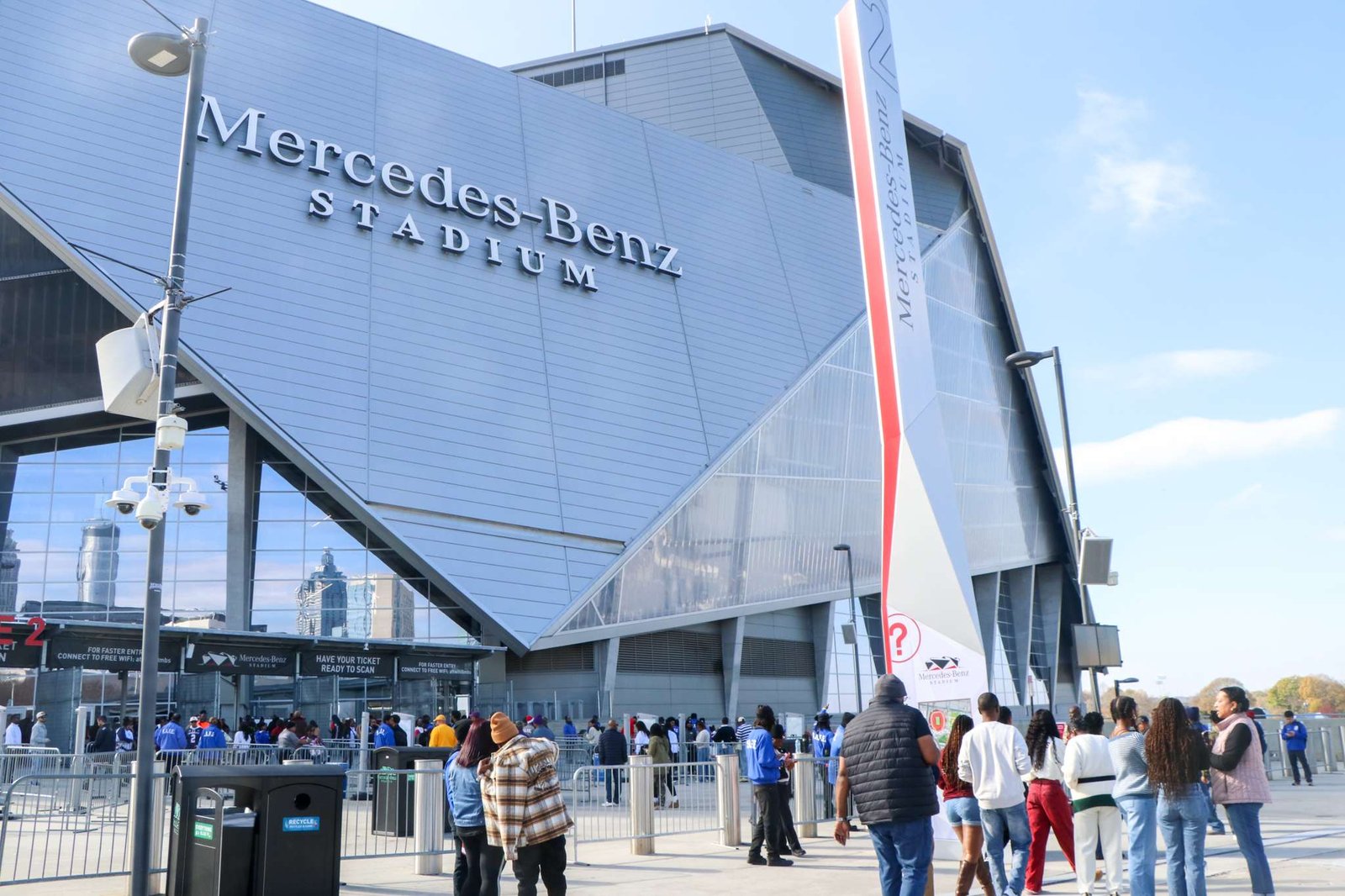
On a crisp December afternoon inside Mercedes-Benz Stadium, South Carolina State and Prairie View A&M delivered a game that will live far beyond the final score. What began as a one-sided first half evolved into the longest and most dramatic finish in Celebration Bowl history, culminating in a four-overtime thriller that crowned the Bulldogs as the 2025 HBCU National Champions.
South Carolina State’s 40–38 victory over Prairie View A&M was not simply a football game. It was a statement of resilience, tradition, and the enduring power of Historically Black Colleges and Universities to command the national stage—on the field, in the stands, and across Black culture.
More Than a Bowl Game
Since its inaugural kickoff in 2015, the Celebration Bowl has occupied a unique space in college athletics. It is the de facto HBCU national championship, pitting the champions of the Mid-Eastern Athletic Conference (MEAC) and the Southwestern Athletic Conference (SWAC) against one another in a winner-take-all clash.
But the game’s significance extends well beyond X’s and O’s.
Each December, Atlanta becomes a gathering place for alumni caravans, marching bands, fraternities and sororities, entrepreneurs, families, and generations of fans who understand that HBCU football is inseparable from Black history and community pride. Tailgates turn into reunions. Halftime becomes a concert. The stadium transforms into a cultural archive.
The 2025 edition honored that legacy—and then raised the bar.
A Decade of Tradition
Over its first ten seasons, the Celebration Bowl has charted the evolution of modern HBCU football.
North Carolina A&T dominated the early years, winning four titles between 2015 and 2019. Grambling State and Florida A&M added their names to the roll of champions. North Carolina Central captured a memorable overtime win in 2022. Jackson State’s rise under Deion Sanders brought unprecedented national visibility, culminating in a decisive 2024 victory.
South Carolina State entered that history twice before—an upset of Jackson State in 2021 and now, in 2025, a triumph that may never be matched for drama.
Prairie View’s Long Road to Atlanta
For Prairie View A&M, simply reaching the Celebration Bowl marked a milestone decades in the making.
The Panthers earned their first-ever appearance by winning the 2025 SWAC Championship, edging Jackson State 23–21 on December 6 in Jackson, Mississippi. It was a disciplined, defense-driven performance that capped a 10–3 season and announced Prairie View’s arrival on the national HBCU stage.
Under head coach Tremaine Jackson, Prairie View played with composure throughout the season, winning close games late and building confidence with each passing week. For alumni, the trip to Atlanta represented validation—proof that the program belonged among the elite of Black college football.
South Carolina State’s Surge
South Carolina State arrived with momentum of a different kind.
The Bulldogs finished the regular season 9–3 and closed the year with seven straight wins, securing the MEAC championship and its automatic bid to the Celebration Bowl. Their late-season run was defined by steady defense, improved quarterback play, and a growing belief that the team had yet to play its best football.
Head coach Chennis Berry, already a proven winner at the Division II level, guided the Bulldogs with a steady hand. His teams had a reputation for discipline and poise—traits that would be tested to their limits in Atlanta.
A First Half Gone Wrong
For much of the opening half, Prairie View looked poised to write a storybook ending.
The Panthers jumped out to a commanding lead, exploiting defensive lapses and capitalizing on early momentum. By halftime, Prairie View held a 21-point advantage, and South Carolina State faced long odds against a confident opponent that had controlled the tempo.
Then adversity struck again.
Starting quarterback William Atkins IV was sidelined, forcing South Carolina State to turn to backup Ryan Stubblefield—a move that would redefine the game and the season.
The Comeback Begins
Stubblefield entered with little fanfare but played with composure well beyond his role. He steadied the offense, made smart reads, and slowly chipped away at Prairie View’s lead.
As the Bulldogs mounted their comeback, the atmosphere inside Mercedes-Benz Stadium shifted. What had been a partisan Prairie View crowd grew tense. South Carolina State fans found their voices. Bands traded musical blows. Every possession carried weight.
By the end of regulation, the Bulldogs had erased the deficit and forced overtime—an achievement that alone would have been remarkable.
What followed was unprecedented.
Four Overtimes of Resolve
The 2025 Celebration Bowl became the longest game in the event’s history, stretching into a fourth overtime that tested endurance, execution, and nerves.
Both teams traded scores. Defensive stands were met with clutch conversions. Each overtime period heightened the drama, drawing the crowd deeper into the spectacle.
In the fourth overtime, with everything on the line, South Carolina State elected to go for two. Stubblefield delivered a strike to Tyler Smith, sealing a 40–38 victory that instantly entered HBCU lore.
The comeback—down 21 points at halftime—stands as the largest in Celebration Bowl history.
A Defining Win
The win marked South Carolina State’s second Celebration Bowl title, adding to their 2021 championship and cementing the program’s place among the modern HBCU elite.
For Coach Berry, it was another national championship moment in a career defined by winning at multiple levels. For Stubblefield, it was the performance of a lifetime—234 passing yards and leadership under extraordinary pressure.
For the Bulldogs, it was validation.
The Culture on Full Display
Yet, even as the final score was recorded, the true power of the Celebration Bowl remained visible all around the stadium.
Marching bands delivered halftime performances that rivaled any professional show. Alumni waved school flags with pride. Families posed for photos beneath banners celebrating Black excellence. Vendors, entrepreneurs, and artists turned the concourses into a marketplace of culture.
This is what separates the Celebration Bowl from every other postseason game.
It is not merely an endpoint to a season. It is a living showcase of history, resilience, and joy—an affirmation that HBCUs continue to produce excellence on their own terms.
A Rivalry Renewed
The MEAC-SWAC rivalry remains the heartbeat of the Celebration Bowl. Over the past decade, momentum has swung back and forth, with each conference staking its claim to supremacy.
Prairie View’s appearance reinforced the SWAC’s depth and competitiveness. South Carolina State’s victory reaffirmed the MEAC’s ability to rise on the biggest stage.
Together, they delivered a game worthy of the platform.
Why 2025 Will Be Remembered
The 2025 Celebration Bowl will be remembered not only for its statistics—four overtimes, a 21-point comeback, a championship-winning conversion—but for what it represented.
It was a reminder that HBCU football remains one of the sport’s most compelling theaters. That legacy programs still matter. That new contenders can rise. And that when given the stage, Black college football delivers unforgettable moments.
In Atlanta, beneath a closed roof and surrounded by open hearts, South Carolina State and Prairie View A&M gave the Celebration Bowl its defining chapter.
And the celebration, as always, extended far beyond the final whistle.
Peachtree Street has long been called Atlanta’s spine — a corridor where commerce, culture, and conflict have intersected for more than a century. Now, a new tour experience aims to tell that story with greater depth, balance, and historical honesty.
Chit Chat Atlanta Tours this week unveiled its newest cultural offering, “Peachtree Street: The Main Artery,” a guided experience designed to trace Atlanta’s growth through the people, institutions, and neighborhoods that shaped its most iconic street.
Rather than focusing solely on skyline views and postcard landmarks, the tour places equal emphasis on overlooked histories, particularly Black institutions and communities whose stories have often been pushed to the margins.
“This tour is about more than buildings,” organizers said in announcing the experience. “It’s about understanding how Peachtree Street reflects Atlanta’s past, its present, and the people who built it.”
Chit Chat Special Offer
A Church That Anchors Buckhead’s Black History
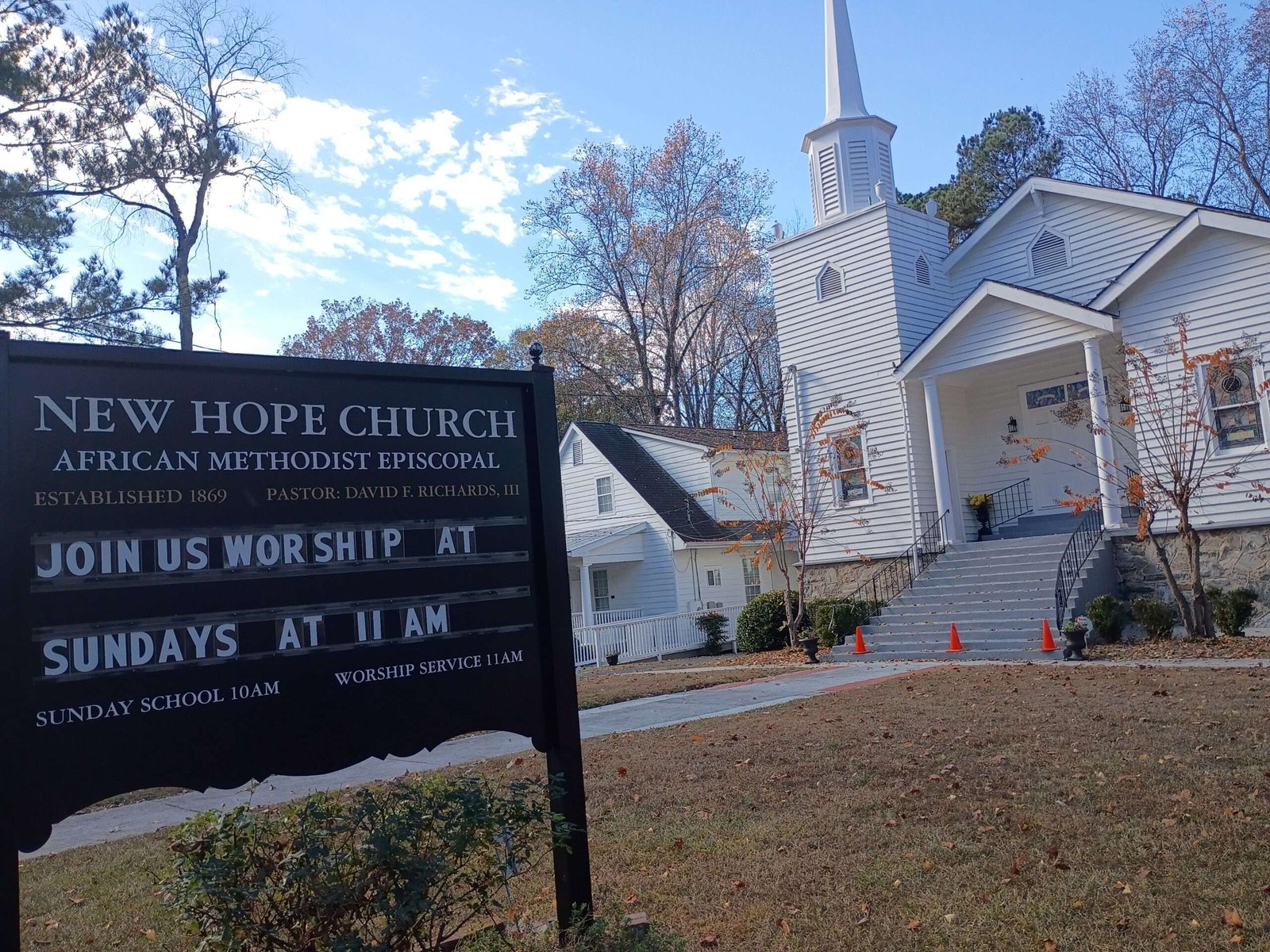
One of the most significant stops along the route is New Hope AME Church, recognized as the oldest Black church in Buckhead. Long before luxury towers and high-end retail defined the area, New Hope AME stood as a center of worship, education, and civic leadership for Black Atlantans navigating segregation, displacement, and change.
By highlighting New Hope AME, the tour expands the narrative of Buckhead beyond affluence and architecture, grounding it in resilience and community continuity. For many visitors, it is a revelation — a reminder that Black history in Atlanta extends well beyond downtown and Sweet Auburn.
Literary Legacy and Southern Elegance
The experience also includes visits to some of Peachtree Street’s most recognizable landmarks, including the Margaret Mitchell House, where the Pulitzer Prize–winning author wrote Gone With the Wind. The site remains a touchstone for discussions about Southern literature, memory, and mythmaking.
Nearby, guests encounter the Georgian Terrace Hotel, long regarded as one of the South’s most elegant historic hotels. Its halls have hosted dignitaries, artists, and civic leaders, making it a fitting symbol of Peachtree Street’s role as Atlanta’s front parlor.
Together, these stops illustrate how Peachtree Street has served as both a cultural stage and a mirror, reflecting the values and contradictions of the city across generations.
Urban Living and a Changing Skyline
As the tour moves north and south along the corridor, it explores Atlanta’s transition into a modern metropolis. A featured stop includes the city’s first luxury condominium, a development that marked a turning point in how Atlantans viewed urban living.
That moment signaled Peachtree Street’s evolving identity — from commercial thoroughfare to residential destination — and helped redefine how the city grew upward rather than outward.
Remembering Johnsontown
Perhaps the most powerful segment of the tour centers on Johnsontown, one of Buckhead’s historic Black communities. Long before Buckhead became synonymous with exclusivity, Johnsontown existed as a self-sustaining neighborhood rooted in faith, family, and land ownership.
Its story — shaped by endurance, displacement, and transformation — adds necessary context to Peachtree Street’s modern prosperity. By including Johnsontown, the tour acknowledges that development often came at a human cost, and that Atlanta’s growth cannot be fully understood without reckoning with those realities.
An Invitation to Locals and Visitors Alike
Chit Chat Atlanta Tours says the “Main Artery” experience is designed for longtime residents, newcomers, and visitors who want more than surface-level history. The tour blends architecture, social history, and lived experience into a single narrative that feels both educational and personal.
By centering untold stories alongside familiar landmarks, the experience positions Peachtree Street not just as a road, but as a living archive of Atlanta itself.
NASCAR, 23XI Racing and Front Row Motorsports reach a landmark settlement creating long-term stability, stronger team equity, and a unified path forward ahead of the 2026 season.
By Milton Kirby | Charlotte, NC | December 11, 2025
NASCAR, 23XI Racing and Front Row Motorsports have reached a sweeping settlement that leaders across the sport are calling a turning point. The agreement ends months of tension, restores unity inside the garage, and sets new terms meant to give teams stability for years ahead.
The announcement came Wednesday in a joint statement. All three parties said the resolution protects the future of the sport, strengthens the charter system and positions NASCAR for “meaningful growth” in a more competitive environment.
Officials also stressed that the settlement creates a fairer economic structure. It also keeps the focus on fans as the sport prepares for its 78th season.
A Foundation for Long-Term Growth
As part of the settlement, NASCAR will issue a formal amendment to charter holders. It will include updated terms and a version of “evergreen” charters — a major point of negotiation for teams seeking permanent value and long-term ownership security.
Financial terms remain confidential. But all sides say the result creates a level playing field and enhances the model for team participation.
In their joint statement, NASCAR and the teams said the goal was simple: protect the sport’s foundation while opening doors for new investment, stronger sponsorships, and a more stable competitive field.
They also thanked U.S. District Judge Kenneth Bell and mediator Jeffrey Mishkin, along with the jury involved in the process, acknowledging the complexity of the negotiations.
Michael Jordan: “This was about progress”
Michael Jordan, co-owner of 23XI Racing, said the lawsuit was never about conflict. It was about modernizing a system built for a different era.
“From the beginning, this lawsuit was about progress,” Jordan said. “It was about making sure our sport evolves in a way that supports everyone: teams, drivers, partners, employees and fans.”
Jordan said the new framework gives teams a stronger voice and a real chance to build equity over time.
“I’m excited to watch our teams get back on the track and compete hard in 2026,” he added.
Denny Hamlin: “Worth fighting for”
For Denny Hamlin, the agreement reflects both personal history and professional commitment.
“I’ve cared deeply about the sport of NASCAR my entire life,” Hamlin said. “Racing is all I’ve ever known, and this sport shaped who I am.”
Hamlin said the decision to challenge the existing structure was difficult, but necessary.
“We believed it was worth fighting for a stronger and more sustainable future for everyone in the industry,” he said. “Our commitment to the fans and to the entire NASCAR community has never been stronger.”
Front Row’s Bob Jenkins: “Real confidence in where we’re headed”
Front Row Motorsports owner Bob Jenkins said the settlement strengthens the garage as a whole.
“I love this sport, and it was clear we needed a system that treated our teams, drivers and sponsors fairly,” Jenkins said.
He believes the new terms will finally allow teams to build true long-term value, something owners have sought since the charter system began in 2016.
“I’m excited for the road ahead — for the people in the garage, the folks in the stands and everyone who loves this sport,” he said.
Curtis Polk: “Significant progress toward the Four Pillars”
Curtis Polk, 23XI co-owner and a member of the Team Negotiating Committee, pointed to the framework teams have long advocated for — known as the Four Pillars.
Those pillars include:
Sustainability for teams
Equity and long-term value
Transparency in NASCAR’s financial systems
Stronger governance and collaboration
Polk said the settlement delivers “significant progress” and aligns NASCAR and teams around shared goals for growth.
Jim France: “A brighter future”
NASCAR CEO and Chairman Jim France said the agreement safeguards what fans value most — competitive racing, strong teams and the stability required to shape the next generation of the sport.
“This outcome gives all parties the flexibility and confidence to continue delivering unforgettable racing moments for our fans,” France said.
He called the charter system “invaluable” since its creation in 2016, and said the new agreement strengthens it even further.
“We are excited to return the collective focus of our sport, teams and race tracks toward an incredible 78th season that begins with the Daytona 500 on Sunday, Feb. 15, 2026,” he added.
A Historic Moment for the Sport
The settlement marks the end of a turbulent chapter but also the beginning of a new era. For the first time, teams appear poised to gain lasting ownership security. NASCAR, in turn, preserves the competitive structure that drives the sport’s popularity.
Both sides now shift their attention back to the track — and to a 2026 season that is already shaping up to be one of the most anticipated in years.
Dear Shadow Ball: Which team was the best in the history of the Negro Leagues? Coach Al Davis, Rensselaer, NY.
Dear Al: I will answer your inquiry from two perspectives – franchise history and single season.
BEST CAREER BODY OF WORK – Of 142 franchises listed in the Seamheads Negro League Database, these three on display below are clearly the best in Negro League history.
Chicago American Giants 1562 1326 .541 4.9 4.6 2 6 16
The categories above are Wins, Losses, Winning Percentage, Runs Scored per game, Runs Allowed per game, World Series won, Pennants won, and Hall of Famers on team’s roster over the years. Eight separate categories and, as indicated in bold, all eight categories found one of these three franchises at the top. Given Homestead had the best winning percentage, margin of victory, World Series titles, number of Hall of Famers and was 2nd to KC in pennants, the Homestead Grays nose out the Monarchs for the all-time top spot.
BEST SEASON – With only one season instead of 37 years (in the case of the Chicago American Giants) to inspect the differences in greatness between various annual league champions becomes more difficult and less defensible as an opinion. Nonetheless, the show must go on. I found 49 pennant winners in the Seamheads database … which I further reduced by eliminating World Series losers, teams demonstrably worse than other teams in a given season, removing duplicate franchise representatives leaving reducing to less than ten before finally, listing the below three teams as the three best:
W L % RSg RAg Hall of Famers
1943 Homestead Grays 82-26 .759 7.4 4.1 6
1929 Kansas City Monarchs 65-17 .793 6.8 3.7 3
1925 Hilldale Daisies 58-21 .734 6.3 4.4 3
Among teams not making the cut were the 1920 Chicago American Giants, 1928-1931 St Louis Stars, 1932-36 Pittsburgh Crawfords, 1945 Cleveland Buckeyes, 1946 Newark Eagles as well as other Grays & Monarchs teams.
This, in the end, I found the Homestead Grays the best franchise and the 1943 Grays as the best team.
Last week’s Shadow Ball Significa question – Last issue’s question was intended to be tricky. What Georgia native struck the initial home run by an African American in Yankee Stadium? I hoped to induce a quick “Josh Gibson” from a few early entrants banking on Gibson’s pre-eminent status as a Georgia native and as a legendary home run hitter. Alas, I couldn’t get that knuckler past Will Clark, Hackensack, NJ, who correctly posted the pride of Kingston, Georgia, Rap Dixon as the slugger who on July 5, 1930 in his first at bat in the House that Ruth built changed the name to the House that Dixon rehabbed with a 1st inning round tripper. Congrats Will!
The Shadow Ball Significa Question of the Week: Who was the first African American signed to a contract by the Boston Red Sox organization?
Ted Knorr
Ted Knorr is a Negro League baseball historian, longtime member of the Society for American Baseball Research’s Negro League Committee, and founder of the Jerry Malloy Negro League Conference and several local Negro League Commemorative Nights in central Pennsylvania. You can send questions for Knorr on Negro League topics as well as your answers to the week’s Significa question to shadowball@truthseekersjournal.com or Shadow Ball, 3904 N Druid Hills Rd, Ste 179, Decatur, GA 30033
Support open, independent journalism—your contribution helps us tell the stories that matter most.
Morehouse and Spelman’s Glee Clubs delivered a powerful three-night Christmas concert series, blending tradition, harmony, and history in one of Atlanta’s most beloved holiday celebrations.
By Milton Kirby | Atlanta, GA | December 8, 2025
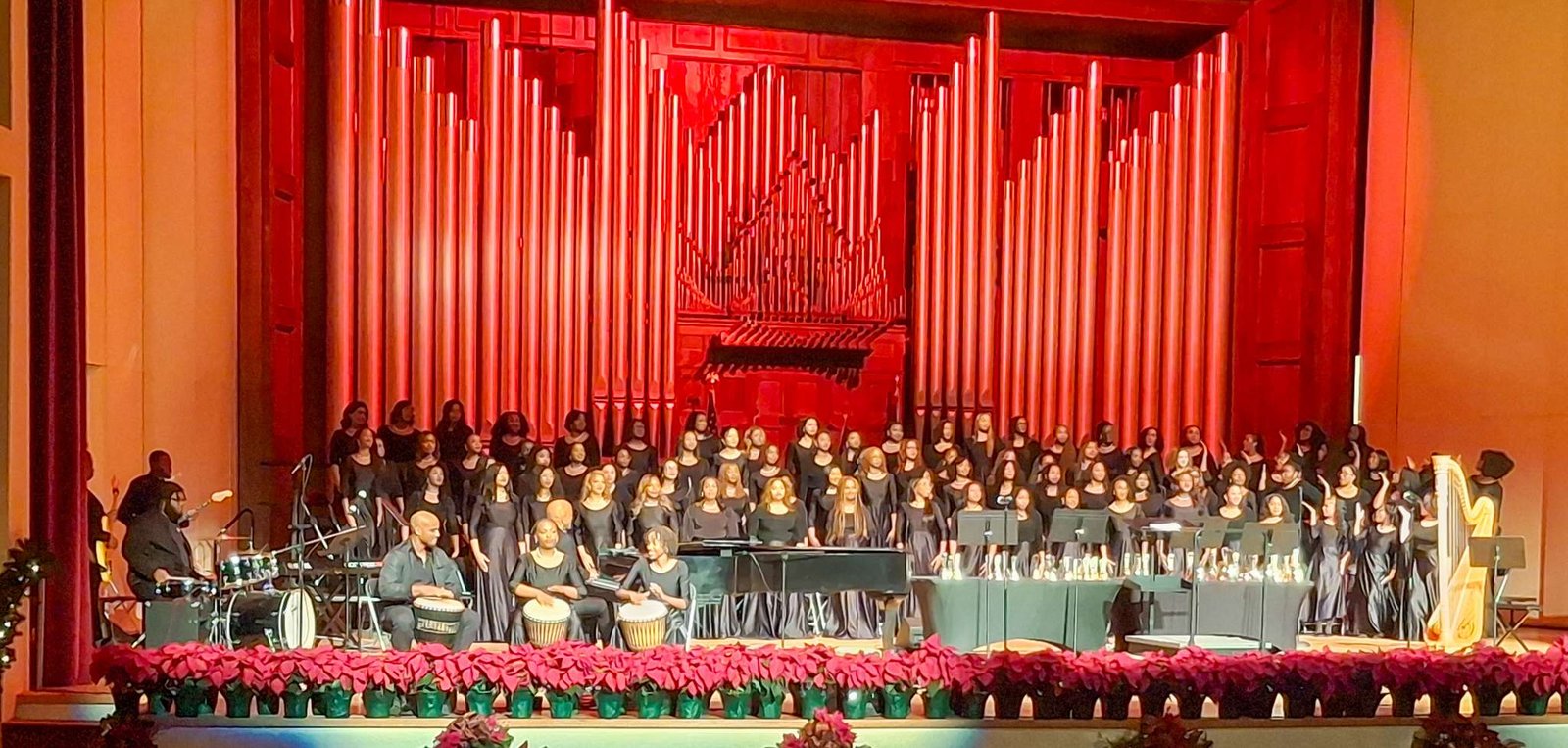
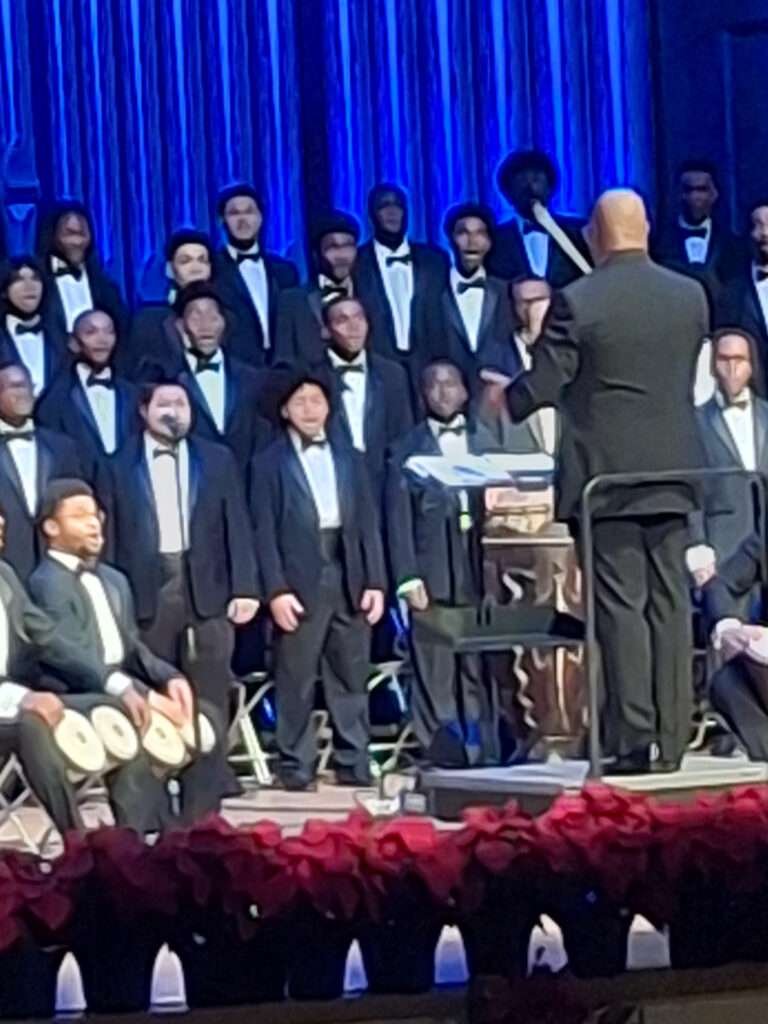
The holiday season opened in grand fashion this weekend as the Morehouse College Glee Club and the Spelman College Glee Club delivered three unforgettable nights of music, unity, and tradition. The concerts were held Friday through Sunday, December 5–7, and drew capacity crowds to two of Atlanta’s most cherished campus chapels.
Friday and Sunday performances were held at the Martin Luther King Jr. International Chapel at Morehouse College. Saturday’s concert took place at Sisters Chapel on the campus of Spelman College. Each night offered a stirring reminder of why this joint Christmas Carol Concert remains one of the most treasured holiday traditions in Atlanta.
TSJ attended the Friday night performance, where the Glee Clubs played to a full house inside the MLK International Chapel.
A Tradition of Excellence
The Morehouse College Glee Club directed by Dr. David Morrow with organist Dr. Joyce F. Johnson, and the Spelman College Glee Club, directed by Dr. Kevin Johnson, performed a rich blend of sacred, classical, traditional, and contemporary holiday selections.
Audiences were treated to familiar favorites, including: Silent Night, Sir Christëmas, The Savior’s Birth, The First Noel, Joy to the World, This Christmas, O Come, All Ye Faithful, and Go Tell It on the Mountain.
The choirs also performed lesser-known works that were just as stirring and melodic, showcasing the depth of their repertoire and their ability to breathe new life into both classic and contemporary choral literature.
Spelman’s Legacy of Global Sisterhood
For over 100 years, the Spelman College Glee Club has upheld a standard of musical excellence shaped by harmony, discipline, and pride. With approximately 50 members from various academic disciplines, the ensemble performs most major campus events and maintains a repertoire that spans world cultures, commissioned works, and music of the African diaspora.
Under the leadership of Dr. Kevin Johnson, the Glee Club has performed across the U.S. and around the world. Highlights include concerts at the White House, Lincoln Center’s Avery Fisher Hall, Faneuil Hall in Boston, the National Museum of American History, and international tours to Brazil, Canada, Italy, and Portugal.
Membership requires a rigorous audition process evaluating tonal memory, pitch matching, vocal quality, and musicianship. Yet beyond the music, the Spelman Glee Club represents community. It is a space where sisterhood, pride, and excellence converge.
Morehouse’s Global Brotherhood in Song
The Morehouse College Glee Club has captivated audiences for more than a century. Their performances have graced presidential inaugurations, Super Bowls, the 1996 Olympics, and homegoing services for national figures including President Jimmy Carter and Dr. Martin Luther King Jr., a Morehouse alumnus.
Morehouse Glee Club Performs
Dr. Morrow says the Glee Club is more than a performance ensemble. It is a reflection of Morehouse identity and brotherhood.
“It’s remembering that you are part of a community,” Morrow said. “You are more than a member of the Glee Club. You are family. You are part of something great.”
Their musical résumé spans continents, with tours throughout Africa, the Caribbean, Europe, and every corner of the United States. The Glee Club has performed with cultural icons such as Aretha Franklin, Jessye Norman, Denyce Graves, Take 6, Stevie Wonder, and Jennifer Hudson. They are also featured on soundtracks to Spike Lee films and major national broadcasts.
The Glee Club is deeply tied to historical and cultural leadership. Alumni include Senator Raphael Warnock, Spike Lee, Samuel L. Jackson, and legendary figures such as Mayor Maynard Jackson and Herman Cain.
A Shared Holiday Tradition
Morehouse and Spelman have long united their voices for this Christmas tradition. Together, they carry an intergenerational message: music is a cultural bridge. Music preserves history. And music, especially during the holiday season, binds community.
Judge Sugarmon, speaking to the educational significance of the Glee Clubs, underscored the moment: “At a time when DEI is being denied, we must educate our children about our history. It is what made this country what it is.”
And as the music filled the chapels each night, that message rang clear—this tradition belongs to the people, to the campuses, and to the broader community that has embraced it for nearly a century.
A Look Toward the 100th Year
This year marked the 99th Annual Christmas Carol Concert, one of the longest-running holiday traditions in Atlanta. Both colleges promised that the upcoming centennial celebration will be even more spectacular, with expanded performances and special guests.
The joy, reverence, and unity felt this weekend offered a glimpse of what that milestone will hold.
When Morehouse sings and Spelman answers, a century of HBCU excellence fills the room — and the world listens.
By Milton Kirby | Abbeville, AL | December 2, 2025
On a warm September night in 1944, a 24-year-old Black mother from Abbeville, Alabama walked home from a revival service. Her name was Recy Taylor, and what happened next would echo far beyond the unpaved roads of Henry County. It would ignite a national outcry, embolden a generation of activists, and lay down one of the earliest steppingstones of the modern Civil Rights Movement.
Taylor’s kidnapping and brutal gang rape by six white men was not only an act of racial terror; it was a defining moment of resistance. And though Alabama’s all-white legal system refused to prosecute her attackers — even after multiple confessions — Taylor refused silence. Her insistence on justice, and the national movement built in her name, helped shape the path later traveled by Rosa Parks, Claudette Colvin, and the freedom fighters who changed America.
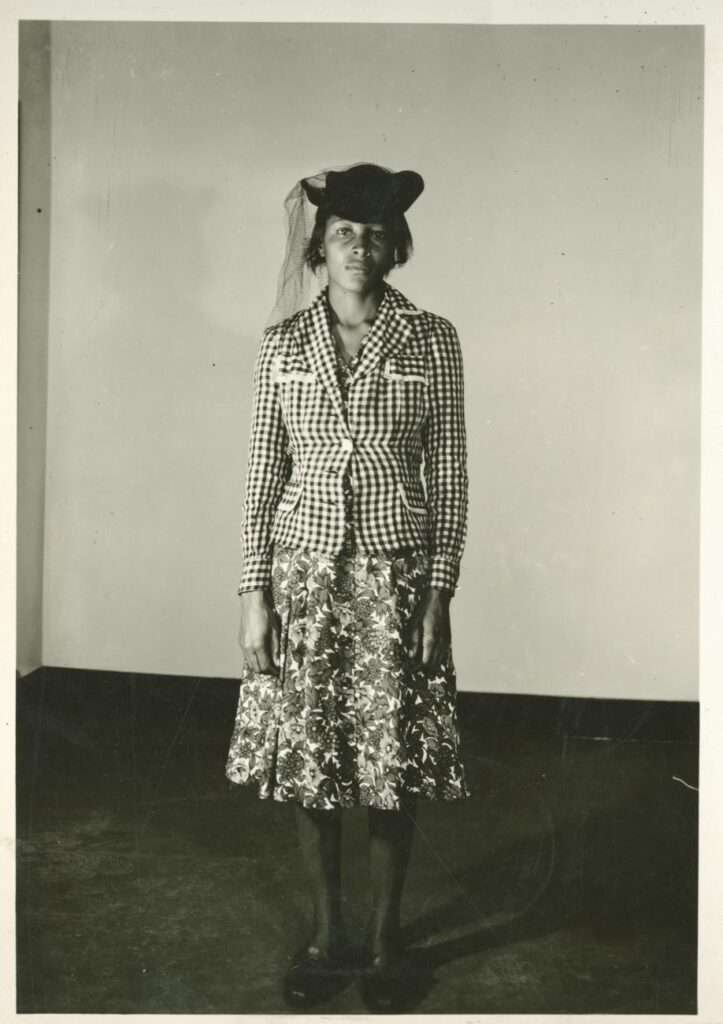
Recy Taylor
Mrs. Recy Taylor, 1944, credit: “The Rape of Recy Taylor” Courtesy of The People’s World/Daily Worker and Tamiment Library/Robert F. Wagner Labor Archives, New York University
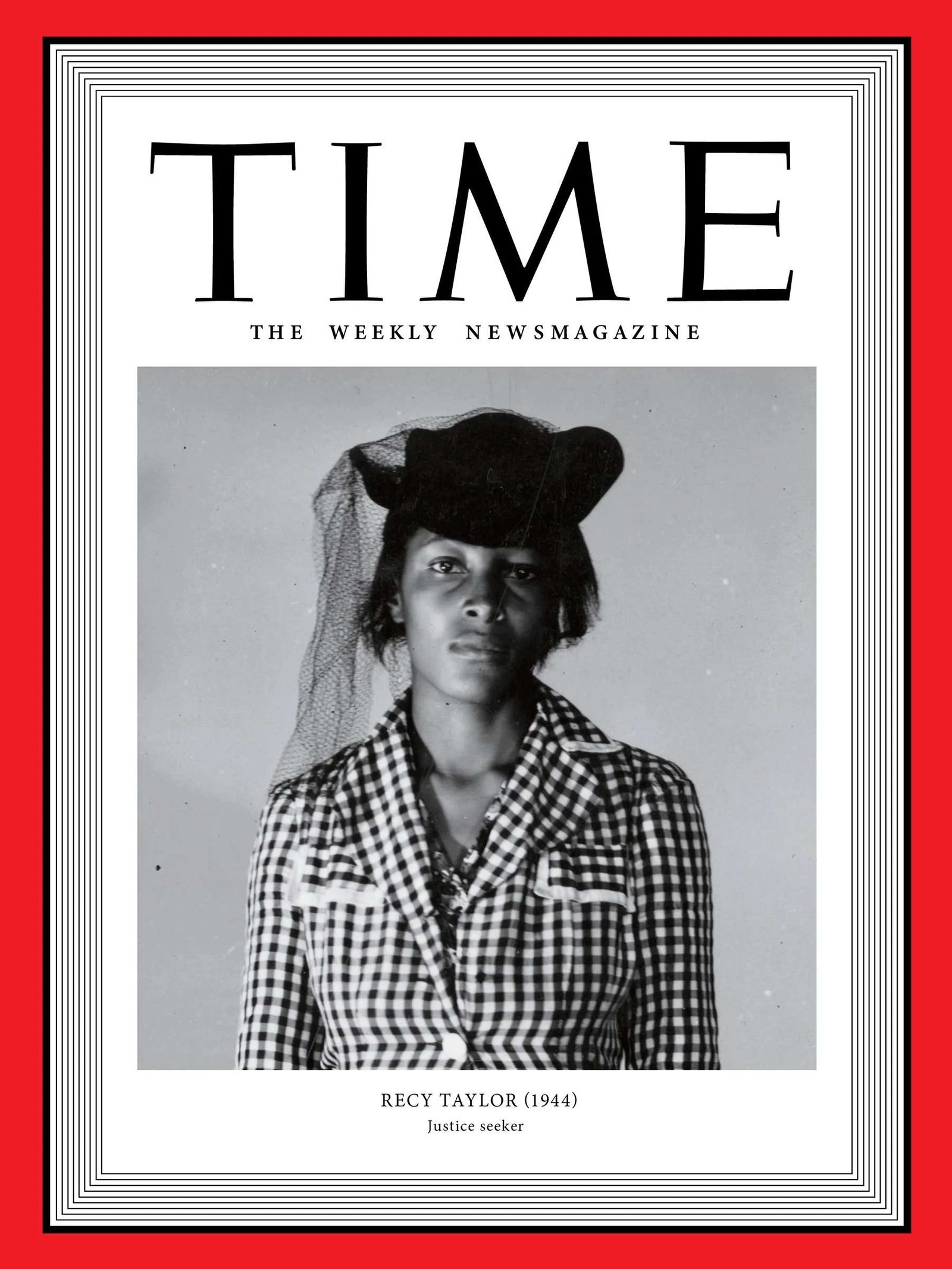
In 2020, TIME Magazine retroactively named Recy Taylor its “1944 Woman of the Year,” an acknowledgment long overdue. She did not hold office, command an army, or lead a corporation. She wielded something more dangerous: truth, courage, and the refusal to surrender her dignity.
A Crime Meant to Silence — and the Woman Who Would Not Be Silenced
On September 3, 1944, Taylor walked home from Rock Hill Holiness Church with friends Fannie and West Daniels. A green Chevrolet circled them repeatedly before seven armed white men jumped out. At gunpoint, they forced Taylor into the car, drove her into the woods, blindfolded her, and raped her one after another.
Her friend Fannie Daniel immediately reported the kidnapping. Taylor was later found near the center of town by her father and a former police officer. Despite being traumatized, she insisted on reporting the assault to authorities.
Her courage produced immediate results — and an immediate backlash. The sheriff identified the car’s owner, Hugo Wilson, who confessed and named the other men involved. Instead of being arrested, he was allowed to go home.
The next day, the Taylor home was firebombed.
Rosa Parks Before Montgomery
The NAACP, outraged by the sheriff’s refusal to act, dispatched its best investigator: Rosa Parks, already deeply engaged in documenting sexual violence against Black women. Parks traveled to Abbeville, interviewed witnesses, and began organizing a national campaign.
Her work in the Taylor case became the blueprint for what she would later do in Montgomery.
Parks and other leaders formed the Committee for Equal Justice for Mrs. Recy Taylor, uniting voices likeW.E.B. Du Bois, Mary Church Terrell, Langston Hughes, and activists across the country. The national pressure pushed Alabama’s governor to order not one, but two grand jury hearings.
Both — all-white and all-male — refused to indict.
Yet the movement did not fade. It grew.
A Catalyst of the Civil Rights Movement
Decades before the world called Rosa Parks “the mother of the Civil Rights Movement,” Parks herself pointed back to Recy Taylor’s case as a catalyst. Historian Danielle L. McGuire later documented that the fight for Taylor marked the first major statewide campaign against sexualized violence toward Black women — and the roots of women-led resistance that shaped the 1955 Montgomery Bus Boycott.
Black women’s testimonies — often dismissed, ignored, or punished — became acts of political resistance. Recy Taylor stood among the bravest of them, risking everything to tell the truth.
Life After the Headlines
The assault left Taylor unable to have additional children and forced her family to live under constant threat. She separated from her husband, later moved to Florida for work, and ultimately returned to home in Abbeville as her health declined. Her only child, Joyce Lee, died in a car accident in 1967.
For nearly seven decades, the state of Alabama refused to acknowledge its failure. That changed in 2011, when the Alabama Legislature issued a formal apology — a victory made possible by the scholarship and activism that had resurrected Taylor’s story.
Taylor died on December 28, 2017, at 97 years old. She lived long enough to witness the world finally naming the injustice she endured.
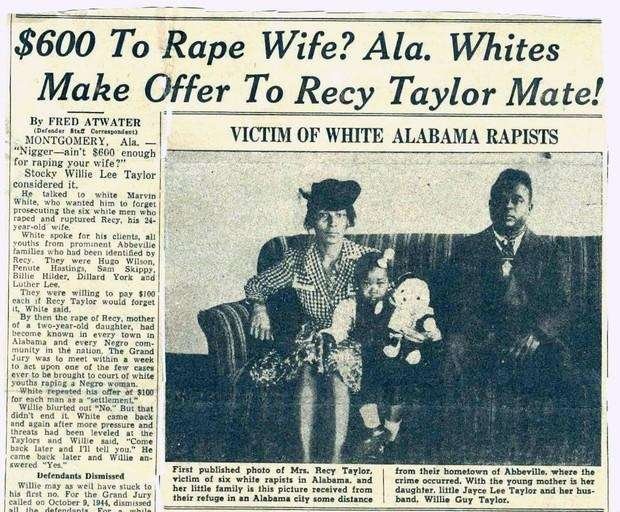
Recy Taylor article in The Chicago Defender, credit: “The Rape of Recy Taylor” NMAAHC
Legacy: A Thread Woven Into America’s Freedom Story
TIME Magazine’s selection of Recy Taylor as “1944 Woman of the Year” reframed the era: history is not shaped only by presidents, generals, or magnates. It is also shaped by a sharecropper’s daughter who refused to be erased.
Her courage galvanized Rosa Parks. Her testimony inspired a movement. Her story helped change the national conversation around sexual violence, Black women’s rights, and dignity under the law.
Taylor’s life reminds us that all justice movements are connected. The Civil Rights Movement did not begin on a Montgomery bus in 1955. It began in places like Abbeville — under pecan trees, along dirt roads, in the voices of Black women who refused to be silenced.
Recy Taylor’s bravery laid the groundwork for the world we continue building today.
Seventy years after Rosa Parks refused to give up her seat, her quiet “no” still shows how organized, everyday courage can move a nation forward.
By Milton Kirby | Montgomery, AL | December 1, 2025
A quiet act that shook a city
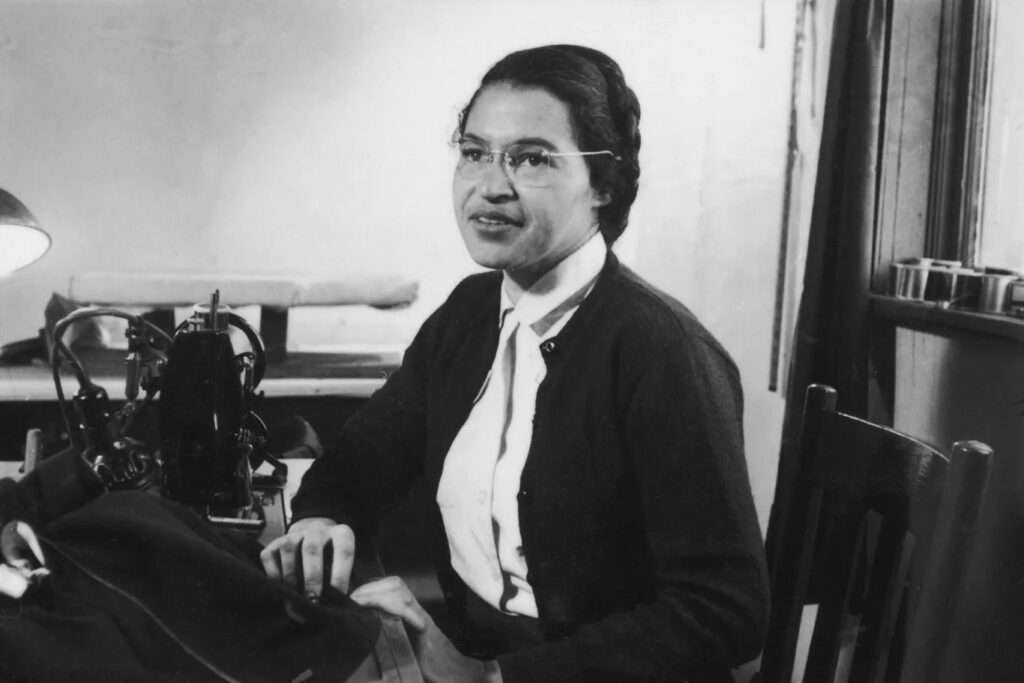
Seventy years ago in Montgomery, Alabama, a soft-spoken seamstress made a choice that changed the course of American history.
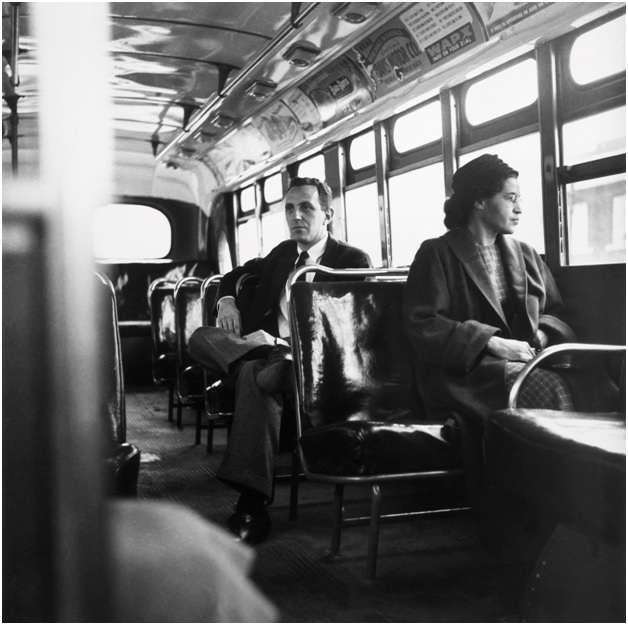
On December 1, 1955, 42-year-old Rosa Louise McCauley Parks refused bus driver James F. Blake’s order to give up her seat so a white man could sit. Montgomery’s rules reserved the front rows for white riders and pushed Black passengers to the back. The middle seats, where Parks sat, were a constant battleground.
Three Black riders in her row stood up. Parks did not.
“I felt that, if I did stand up, it meant that I approved of the way I was being treated, and I did not approve,” she later said. She was not too tired from work; she was “tired of giving in.”
Police were called. Parks was arrested, fingerprinted, fined, and pushed into the machinery of Jim Crow justice. But what happened next turned one woman’s arrest into a mass movement.
The Montgomery Bus Boycott: 381 days of organized courage
Parks’ arrest hit a nerve in a city where Black riders made up about three-fourths of bus passengers but had few rights on board. For decades, drivers had ordered Black passengers to stand, even when seats were open. Many drivers carried weapons and had near-police authority on their routes.
This time, the community pushed back.
The Women’s Political Council quickly circulated tens of thousands of leaflets calling for a one-day bus boycott on the day of Parks’ trial, December 5, 1955. Black residents walked, carpooled, and paid Black taxi drivers instead of riding city buses. Courtroom benches were full. Bus seats were nearly empty.
That same evening, thousands crowded into Holt Street Baptist Church. Local ministers and organizers formed a new group, the Montgomery Improvement Association (MIA), and chose a young pastor, Dr. Martin Luther King Jr. of Dexter Avenue Baptist Church, as president.
Rosa Parks – Don Cravens – Getty Images
They voted to keep the boycott going. Day after day, for 381 days, Black residents of Montgomery walked miles to work and to school. Volunteers ran car-pool systems. Church parking lots became dispatch centers.
The city tried to break the movement. Parks lost her job as a seamstress. Her husband, Raymond, was fired as well. Leaders were arrested and threatened. A grand jury declared the boycott illegal. Still, people kept walking.
In federal court, a separate case, Browder v. Gayle, challenged bus segregation directly. In November 1956, the U.S. Supreme Court ruled that segregation on Montgomery’s buses was unconstitutional. On December 20, 1956, the court’s order took effect. Dr. King called off the boycott. The next day, Black riders boarded buses and sat wherever they chose.
A quiet “no” had turned into a landmark victory that propelled the national Civil Rights Movement.
Years of organizing before the bus ride
The popular story often begins with a tired seamstress on a December afternoon. But Parks’ courage was not sudden. It was built over years of steady, often dangerous work.
Parks joined the Montgomery chapter of the NAACP in 1943 and soon became its secretary. She attended meetings, took notes, and listened. She and her husband were active in the local Voters League, struggling to increase Black voter registration at a time when poll taxes, literacy tests, and intimidation kept almost all Black citizens from the rolls.
Parks herself tried three times to register to vote before finally succeeding in 1945.
As NAACP secretary, she helped investigate violent crimes that white authorities preferred to ignore. In 1944, she took on the case of Recy Taylor, a Black woman from Abbeville who was kidnapped and gang-raped by white men. When local juries refused to indict the attackers, Parks and other activists organized the Committee for Equal Justice for Mrs. Recy Taylor, building one of the strongest national campaigns against racial and sexual violence in that era.
She also worked for justice in the case of Jeremiah Reeves, a Black teenager accused of raping a white woman and later executed.
In the summer of 1955, just months before her arrest, Parks attended training at the Highlander Folk School in Tennessee, an interracial education center where activists studied nonviolent protest and community organizing. That experience, she later said, helped strengthen her resolve.
By the time she sat down on that bus in December 1955, Rosa Parks was not just a seamstress. She was a seasoned organizer who understood both the risk and the power of civil disobedience.
Roots of resistance: family, school, and early Jim Crow
Rosa Louise McCauley was born in Tuskegee, Alabama, on February 4, 1913. Her parents, James and Leona McCauley, separated when she was young. Rosa and her younger brother, Sylvester, were raised mainly by her mother and maternal grandparents near Montgomery.
Her grandparents were formerly enslaved people who believed fiercely in racial equality. They kept a shotgun by the door and refused to shrink from white terror. Growing up in their home, Parks learned both the fear and the pride that came with resisting injustice.
She attended the laboratory school at Alabama State College, an unusual opportunity for a Black girl in the 1920s. Later, she worked to complete her education, earning her high school diploma in 1933 at a time when only about 7% of Black Alabamians had finished high school.
During World War II, Parks worked at Maxwell Air Force Base in Montgomery. On base, the buses were integrated, and she could ride alongside white co-workers. Off base, she had to return to segregated city buses. That painful contrast, she later said, “opened her eyes” to the unnatural cruelty of Jim Crow.
In 1932, she married Raymond Parks, a barber and early NAACP activist. With his encouragement, she returned to school and deepened her activism. Their small home became a place where politics and community strategy were regular topics at the kitchen table.
The personal cost—and new beginnings in Detroit
The boycott’s success came at a high cost for Parks and her family. In addition to the firings and constant threats, she and Raymond struggled to find work in Montgomery afterward. The city that had celebrated her as a symbol elsewhere often treated her as a troublemaker at home.
In 1957, the couple moved north to Detroit, Michigan, looking for safety and opportunity. Even there, they found neighborhoods divided by race and an economy that still treated Black families unfairly. Parks continued her work quietly—speaking, organizing, and supporting local struggles against school segregation, housing discrimination, and police brutality.
From 1965 to 1988, she worked as a staff assistant for U.S. Congressman John Conyers Jr. Her desk in his Detroit office became a quiet but powerful bridge between local residents and the halls of Congress. Through this job, her influence reached into the federal government and helped shape responses to civil rights issues in the North as well as the South.
Building leaders: The Rosa and Raymond Parks Institute
In 1987, Parks co-founded the Rosa and Raymond Parks Institute for Self-Development. The institute focuses on youth leadership, voter education, and teaching civil rights history. Its “Pathways to Freedom” programs take young people on bus tours through key civil rights sites, helping them see that history is not just something in a textbook—it is written by ordinary people who refuse to accept injustice.
By then, the nation had begun to give Rosa Parks the honors her work deserved. She received the Presidential Medal of Freedom in 1996 and the Congressional Gold Medal in 1999. Textbooks called her the “mother of the modern Civil Rights Movement.” For many schoolchildren, her story became their first lesson in civil disobedience.
Inspiring new movements: from Montgomery to disability rights
Parks’ influence did not end with racial desegregation. Her example helped later generations see public transportation as a stage for justice.
In 1984, in Chicago, disability rights activists from the group ADAPT rolled their wheelchairs in front of city buses to protest the purchase of hundreds of new vehicles without wheelchair lifts. Like Parks, they were demanding the right simply to ride. Their actions helped build support for accessible transit and laid groundwork for the Americans with Disabilities Act.
Their protest echoed Parks’ lesson: organized, nonviolent disruption can force a city—and a nation—to confront who is left behind.
Final honors and a living legacy
Rosa Parks died in Detroit on October 24, 2005, at the age of 92. In death, she received an honor no woman in U.S. history had ever received before: her body lay in honor in the rotunda of the U.S. Capitol. Thousands lined up in silence to pay their respects.
Today, buses, schools, streets, and museums bear her name. But her deepest legacy lives in something smaller and harder to measure: the courage of ordinary people who refuse to “give in” when the rules are unjust.
Each year, walkers trace the short route from Dexter Avenue King Memorial Baptist Church to the Rosa Parks Museum in Montgomery. The distance is only a few city blocks. The meaning stretches across generations.
It is a reminder that one woman’s quiet “no,” backed by years of organizing and a city willing to stand with her, can bend the arc of history—and still speaks to struggles for justice today.
Dear Shadow Ball: I have a feeling that I am going to learn some things. Is third baseman Judy Johnson (a 1975 Hall of Fame inductee) a male or female? David Nivens, parts unknown … I should note that Mr. Nivens has supplied two questions thus far and I very much appreciate both … this column exists for only one purpose and that is to answer your questions on Negro League baseball history. To that end, I need your help … if you are reading this column and enjoy it and want it to continue and you don’t already know everything about Negro League history … then please submit a question on any aspect of Negro League history.
– players, teams, events, and more – Your questions are the lifeblood of Shadow Ball—they shape where we go next. Your participation is important and appreciated. Submit your questions to shadowball@truthseekersjournal.com.
Dear David: I have a feeling that I am going to learn some things also. Judy Johnson, like Dolly King, Connie Johnson, Bunny Downs, Bonnie Serrell, Beverly Boanes and Judy Gans, was very much a man. All these fellows were Negro League baseball players. William Julius Johnson was nicknamed “Judy” due to a resemblance to another player with that nickname – “Judy.” Why that player, Robert Edward Gans, was called “Judy” is a question for another day when I figure it out.
Last week’s Shadow Ball Significa question What was the name of Atlanta’s most prolific franchise (in terms of years in the league) in the Negro Leagues? Since this question has stood unanswered for a month, I am going to provide the answer – the Atlanta Black Crackers.
The Atlanta Black Crackers were founded in 1919 as the Atlanta Cubs and lasted, active most years, until their demise in 1943. They were members of the Negro Southern League, later the Negro American League and played as an independent. They never won a pennant.
The Shadow Ball Significa Question of the Week: What Georgia native was the first African American to hit a home run in Yankee Stadium?
Ted Knorr
Ted Knorr is a Negro League baseball historian, longtime member of the Society for American Baseball Research’s Negro League Committee, and founder of the Jerry Malloy Negro League Conference and several local Negro League Commemorative Nights in central Pennsylvania. You can send questions for Knorr on Negro League topics as well as your answers to the week’s Significa question to shadowball@truthseekersjournal.com or Shadow Ball, 3904 N Druid Hills Rd, Ste 179, Decatur, GA 30033
Please consider supporting open, independent journalism – no contribution is too small!
Chit Chat Atlanta Tours celebrates a breakthrough month with national and international visitors, new cultural experiences, and rising demand as the company opens bookings for the holiday season.
By Milton Kirby | Atlanta, GA | November 19, 2025
October was a breakthrough month for Chit Chat Atlanta Tours. Visitors from London, Ireland, North Carolina, California, Connecticut, Florida, Pennsylvania, and Texas spent the month exploring Atlanta’s rich history, food, and culture through the company’s signature guided experiences. The wave of national and international guests signals significant momentum for the fast-growing tour company as the holiday season approaches.
A Powerful Journey Through Black History
One of the month’s most memorable moments came during the Black History & Civil Rights Tour. Guests learned about the 1906 Atlanta Race Massacre and then met Fabian, the visual artist behind the striking mural honoring the massacre’s victims. For a group visiting from London, the encounter offered a rare, personal connection to the people who continue to preserve Atlanta’s story through art.
Holiday Bookings Now Open
With demand rising, Chit Chat Atlanta Tours is now welcoming groups, families, organizations, and solo travelers to reserve holiday experiences. Tours are available throughout:
Thanksgiving Week
Christmas and Winter Break
New Year’s Eve and New Year’s Day
The company offers options for history lovers, foodies, students, corporate groups, birthday travelers, and visitors from around the world.
Chit Chat Atlanta Tours says its mission is simple: share the stories, culture, landmarks, and hidden gems that make Atlanta one of the most influential cities in the nation.
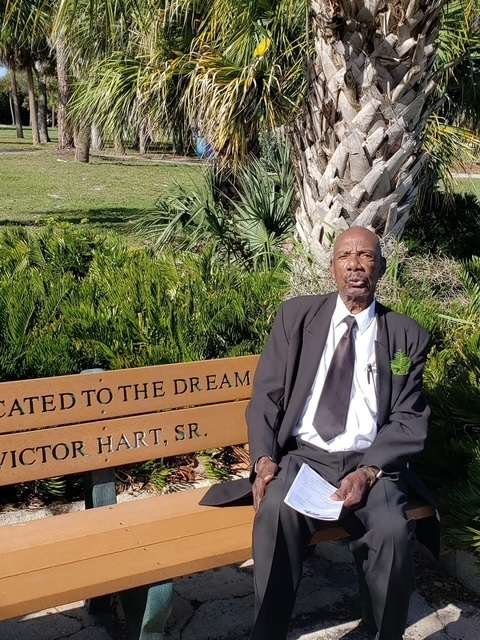
Victor Hart Sr., longtime NAACP leader and Gifford advocate, devoted his life to dignity, justice, and community progress. His decades of service transformed opportunities for generations.
By Milton Kirby | Vero Beach, FL | November 17, 2025
A Life of Service Remembered
In Gifford, the measure of a person’s life is often found in the work they leave behind. It’s written in the stories people tell, the hands a leader lifts, and the ground a man helps steady when everything around him feels like it might shake loose. That is the kind of life Victor Hart Sr. lived — steady, humble, unbending in his love for people.
Hart, the longtime president of the Indian River County NAACP chapter, is remembered for walking with humility but speaking with a purposeful voice to provide opportunities for others. He died on November 13 at the age of 94.
From Cat Island to Gifford
Victor Hart, Sr.’s journey from his birthplace in 1931 in Old Bight Settlement on Cat Island in the Bahamas to Gifford in 1953 is a testament to his resilience and determination. He arrived in Florida with a fifth-grade education and a fruit picker’s job but quickly came to understand the hard lines of segregation in his new home.
He remembered an early trip to Orlando, when he wanted a sandwich and was told he wasn’t allowed to go through the front door.
“Well, I didn’t know there were two kinds of people,” he said. “So I just went on through that door. And I kept doing that.”
“Where I come from in the Bahamas, all people needed to know was that my name is Victor Hart,” he explained. “That’s who I was. In the Bahamas, we had lived as one.”
Challenging Barriers, Opening Doors
Those experiences pushed Hart toward a life of challenge and service. Though he did not first see himself as a civil rights figure, he later reflected, “I had never thought of myself as a civil rights worker — but I guess that’s what I’ve been doing ever since.”
Back in 1961, he recalled, “I got a crew together and I said, ‘Fellas, I don’t know what the law is all about in this country, but I’m not going to go around to the back.’”
From that determination came the Progressive Civic League in Gifford and the county’s NAACP chapter. Hart was the first to organize both.
“It was tough in those days,” he said. “You couldn’t just ride around — you had to go in groups.” Organizing offered some measure of safety and a collective voice.
Over the years, Victor Hart Sr.’s humble yet unflinching leadership was instrumental in bringing significant improvements to Gifford. His efforts led to the delivery of clean water, paved roads, streetlights, medical and community centers, the Gifford Youth Achievement Center, and the park that now bears his name.
A Father Who Lived His Values Out Loud
Hart’s public work was matched by the example he set at home.
“My father was a warrior. He was a fighter. He was a fighter to the end,” said his daughter, Vickie Hart-Brant. “My daddy was my hero. Daddy just understood so much.”
She described him as well-read and highly intellectual, noting that he kept up with the issues by reading five newspapers. Education, she said, was very important to him.
Hart instilled his values in his children. Hart-Brant remembers riding with him as he used a loudspeaker to remind people to vote. The family helped give rides to polling locations, joined parades, and took part in events to promote the community.
He taught them the art of negotiation and the importance of respecting others, regardless of their disagreement. His motto, she said, was simple: “I can disagree with you, but I don’t have to be disagreeable.”
He also insisted on integrity in his civic work. Hart-Brant recalled that he never took a penny from anyone. “My daddy financed his own work. His integrity was intact. He sacrificed to help promote and advocate for the people of Gifford. He loved the people of Gifford,” she said. “He was a God-fearing man. Faith and his family were the two most important things in his life.”
A Calming Presence in Difficult Times
County Commissioner Deryl Loar, a former sheriff, worked closely with Hart during difficult moments and witnessed his influence firsthand. Everyone called him “Chief.” “That was the respect that he commanded,” Loar said.
Hart had a calming effect on the community, even during times of racial tension. After the murder of George Floyd, when emotions and frustration ran high, Hart’s voice and presence helped steady Gifford.
“There were several instances when there could have been unrest, absent Victor Hart, Sr. calming the community,” Loar said.
A Legacy Etched Into a Park and a Community
The community’s respect and gratitude for Victor Hart, Sr.’s work were formally recognized in 2017, when Gifford Park on 43rd Avenue was renamed the Victor Hart Sr. Community Enhancement Complex. The well-attended ceremony made history: it was the first Indian River County-owned facility to be named for a person of color. This recognition is a source of pride for the entire community.
Victor Hart, Sr. Community Enhancement Complex.
The well-attended ceremony made history: it was the first Indian River County-owned facility to be named for a person of color.
The people of Gifford had long considered Hart an icon. Now there is a permanent and very visible testament to the esteem he earned through decades of work.
Tony Brown, Hart’s hand-picked successor as NAACP president, put it plainly: “When you mention an accomplishment in Gifford, you cannot get too far away from Victor Hart.”
According to County Commissioner Bob Solari, who made the motion to rename the park, “Few people have done so much for the community with so little personal benefit. He’s been working at it daily for almost 60 years.”
Today, the 39-acre Victor Hart, Sr. Community Enhancement Complex includes athletic fields, a large playground, the Gifford Aquatic Center, the Gifford Youth Achievement Center, basketball and tennis courts, a football field, a lighted Little League field, picnic pavilions with grills, restrooms, walking trails, fitness equipment, and parking areas. It operates daily from 7 a.m. until sunset and provides a safe and engaging environment for families and children.
Victor Hart Sr Community Enhancement Complex – Courtesy Indian River County
Pets, alcohol, open fires, and camping are not allowed within the park, underscoring its role as a community space focused on recreation, safety, and connection.
‘It Feels Good… Now Somebody Says Thank You’
In 2013, Hart was honored with a living memorial at Historic Macedonia Church in Gifford. At age 82, he sat on a bench engraved with his name, alongside County Commissioner Bob Solari. The bench and accompanying plaque were placed outside the church at 2800 45th Street, across from Gifford Middle School.
“It feels good; people don’t usually do anything for me,” Hart said at the time. “Now somebody says thank you; at least they let me know they appreciate me.”
For the people of Gifford, the appreciation had been there all along — in clean water, paved roads, streetlights, community centers, youth programs, and a park that carries his name. For nearly 60 years, whenever something significant changed for the better in Gifford, it was almost always the result of Victor Hart’s work.
Please consider supporting open, independent journalism – no contribution is too small!
By Milton Kirby | Prince George’s County, MD | November 14, 2025
Bowie State University has received the largest single donation in its 160-year history — a $50 million unrestricted gift from philanthropist and author MacKenzie Scott. The announcement marks a major moment for Maryland’s oldest historically Black university and one of the fastest-growing institutions in the state.
The gift follows Scott’s earlier $25 million donation to Bowie State in 2020, bringing her total investment to the university to $75 million. Leaders say the unrestricted nature of the gift gives Bowie State the flexibility to expand scholarships, strengthen academic programs, and build long-term financial stability.
President Aminta Breaux said she was moved to tears when she learned of the gift. “I was truly at a loss for words… I was overjoyed. I was so overcome,” she said. Breaux noted that many of the university’s students are high-need, and the donation will significantly close financial gaps for those who require the most support.
MacKenzie Scott – Courtesy Vogue
“This gift has the ability to touch so many lives,” Breaux said. “Higher education is the pathway to upward social mobility for our students.”
Brent Swinton, Bowie State’s vice president for philanthropic engagement, called the donation “transformational,” saying it will inspire additional donors and help fuel new opportunities across the university.
Scott, who has given more than $1.7 billion to higher education and nonprofit organizations in recent years, has made large investments in several historically Black colleges and universities nationwide. Her support places Bowie State among a select group of institutions experiencing major increases in private philanthropy.
Bowie State is already in a period of growth, offering more than 30 undergraduate majors, over 21 master’s programs, 18 specialty certificates and three doctoral degrees in fields ranging from cybersecurity and nursing to business, education and STEM.
University officials say they plan to direct a large share of the funds toward student scholarships, faculty development, research expansion and new academic initiatives. Additional details are expected as planning continues.
The gift also increases the university’s ability to make long-term investments that strengthen the student experience — including campus modernization projects, expanded support services and new industry partnerships.
A deeper look at Bowie State’s long history shows why this moment carries such meaning for the institution.
Bowie State’s roots trace back to January 9, 1865, when an organization known as the Baltimore Association for the Moral and Educational Improvement of the Colored People opened a school inside the African Baptist Church at Calvert and Saratoga streets. The association, formed by 46 businessmen, lawyers, clergymen and Quakers, was committed to educating Maryland’s newly emancipated Black citizens.
One of its strongest advocates, Joseph M. Cushing, openly criticized the state for refusing to fund education for Black residents, predicting that Maryland would someday be forced by public opinion to do so. The first school—known as School No. 1—offered basic education courses. Teacher-training classes were added in 1866, and by 1867 the institution expanded with support from the Freedmen’s Bureau and Quaker donors.
The state took control of the school in 1908, renaming it Normal School No. 3. A move to Bowie soon followed, with Maryland purchasing a 187-acre tract of farmland to establish a new campus that opened in 1911. Don Speed Smith Goodloe became the first Black principal to lead the school.
Through the 1920s and 1930s, the curriculum continued to grow, transitioning from the Maryland Normal and Industrial School at Bowie to the Maryland Teachers College at Bowie in 1938. Liberal arts programs were added throughout the 1960s, and the state officially renamed the school Bowie State College in 1963.
Graduate education began in 1969 with the creation of the Master of Education program. Bowie State continued its rise through the 1970s and 1980s, and in 1988 the institution transitioned to Bowie State University. On the same day, it became part of the newly formed University System of Maryland.
The university gained national attention for its work in science, technology, engineering and mathematics. In 1995, Bowie State won an 11-year, $27 million NASA/NSF award, becoming one of just six national Model Institutions for Excellence in STEM.
Today, Bowie State ranks among the nation’s leading comprehensive universities, preparing students to thrive in a rapidly changing, highly technological world. The new $50 million gift strengthens that mission, linking a 160-year legacy of resilience with a future defined by opportunity and innovation.
With expanded scholarships, stronger academic programs and broader research capacity, Bowie State is positioned to open doors for generations of students who will carry the institution’s legacy forward.