From Tupelo to the World: Elvis Presley’s Birthplace Preserves His Legacy

Elvis Presley Birthplace Museum in Tupelo honors the King’s humble roots, rich musical heritage, and the fans who keep his legacy alive.


By Milton Kirby | Tupelo, MS | June 12, 2025

In a modest two-room shotgun house built in 1934 by Vernon Presley with just $180, the King of Rock’ n Roll, Elvis Aaron Presley, was born on January 8, 1935, in East Tupelo. Nearly a century later, the Elvis Presley Birthplace Museum stands as a globally recognized tribute to the musical legend who never forgot his roots preserving his legacy for generations to come.

From Poverty to Legacy

Life was difficult for the Presley family. Vernon and Gladys Presley, Elvis’s parents, struggled to make ends meet and eventually lost their home due to nonpayment of the loan. The family relocated several times around Tupelo before moving to Memphis when Elvis was 13.

Yet it was in Tupelo that Elvis’s musical identity began to take shape. He attended the Assembly of God Church, where he was first exposed to Southern gospel. He also lived near the Shake Rag community home to blues musicians and Black gospel music that influenced his unique musical style. It was in the Country radio programs added to the fusion of sound that would one day revolutionize the music world.

Honoring the Boy Who Dreamed Big

Today, visitors to the Elvis Presley Birthplace, Museum, Chapel, and Park can walk the same paths Elvis once roamed. The 15-acre campus welcomes over 100,000 visitors annually, offering an immersive experience anchored by Elvis’s childhood home, the relocated church where he worshipped, and stunning life-size statues that symbolize his journey.

One of the museum’s most beloved landmarks is the bronze statue of 13-year-old Elvis, sculpted at the suggestion of Irish fans Maurice and Maureen Colgan. The statue, crafted from historical photos, portrays Elvis in oversized overalls and plain shoes, representing the modesty of his upbringing. Positioned between the church and museum, the statue’s placement reflects Elvis’s deep spiritual roots and the material world he would later enter as a superstar.

Nearby, atop the Tupelo Overlook, a powerful art installation known as “BECOMING” features two Elvis statues—”Elvis the Boy” and “Elvis the Entertainer”—each facing west toward Tupelo. The path leading to them zigzags, a visual metaphor for the winding, complex journey Elvis walked on his way to icon status.

A Tribute Model: David Lee

The 1970s-era Elvis statue unveiled in 2015 carries a special connection to David Lee, a world-renowned Elvis tribute artist from Birmingham, Alabama. Lee served as the model for the sculpture and played a key role in securing $1 million in government funding to expand the museum.

A two-time world champion and the 2015 Ultimate Elvis titleholder from Elvis Presley Enterprises, Lee has performed across the U.S., Canada, Mexico, and international waters. His authentic performances and gospel roots have made him a favorite among fans and festival-goers alike. His contributions to Tupelo’s Elvis legacy include receiving the Key to the City, having his name engraved at the base of the statue in Fair Park, and being the first performer at the museum’s 120-seat auditorium in 2013.

“Elvis is gone and irreplaceable,” Lee said, “but my tribute hopes to do him justice.”

Living History on Display

The Assembly of God Church—where a young Elvis learned to play his first chords—has been preserved and moved to the Birthplace grounds. Visitors can experience a 1940s-style Pentecostal service through multimedia displays that include singing, preaching, and praise-filled worship. It was here, under the guidance of Brother Frank Smith, that Elvis learned to play “Ole Shep” with just three chords: D, A, and E.

Photo by Milton Kirby – Elvis Presley’s Childhood Church

The Elvis Presley Center, under the leadership of Executive Director Roy Turner and Associate Director Rhonda Lamb, continues to expand. The $6.5 million complex includes the birthplace home, museum, chapel, theater, event center, and scenic trails where visitors can reflect on the King’s journey.

A City’s Pride

Tupelo embraces Elvis’s legacy at every turn. From decorative guitars on street corners to murals and events, the City celebrates its native son with pride and purpose. Mr. Henry Dodge, retired chair of the board of directors, described the winding path from the museum to the statue as symbolic of Elvis’s climb from poverty to global fame.

“Elvis dreamed a dream from this very soil,” said one local visitor. “Now the world walks where he once walked.”

A Lasting Connection

For fans of Elvis Presley, the museum is more than a tourist attraction—it’s a pilgrimage site. It’s a place to experience the humble beginnings of a boy who went on to become a world icon. A place to honor music’s power to transcend barriers. And a place to celebrate a legacy rooted deeply in Mississippi soil.

Related videos

Betty Garrison shares her experience at the 2025 Elvis Presley Festival

The Horn Family at the 2025 Elvis Presley Festival

Photo Gallery

Please consider supporting open, independent journalism – no contribution is too small!

Georgia-Born, Globally Respected: America’s First Black Catholic Bishop, Ordained 150 Years Ago

Bishop James A. Healy, America’s first Black Catholic bishop, was ordained 150 years ago. His life shaped U.S. Catholicism through service, education, and advocacy.

By Milton Kirby | Atlanta, GA | June 10, 2025

On June 10, 1854, James Augustine Healy was ordained as a Catholic priest in Paris. Precisely 150 years ago, he became the first known Black Catholic bishop in the United States.

Born into slavery in Jones County, Georgia, on April 6, 1830, Healy was the son of Irish immigrant Michael Healy and Mary Eliza Smith, a mixed-race enslaved woman. Under Georgia law, the Healy children were considered enslaved from birth. Despite their father’s wealth, they were denied the opportunity to receive an education in the South.

Bishop James A. Healy

To change that, Michael Healy sent James and his siblings north. James began his education at a Quaker school on Long Island, then continued his studies in New Jersey.

The family’s lives changed forever when Bishop John Fitzpatrick of Boston helped place the boys at the newly founded College of the Holy Cross in Massachusetts.

At Holy Cross, James thrived. He was named valedictorian of the first graduating class in 1849. He went on to earn a master’s degree and later studied for the priesthood in Montreal and Paris. On June 10, 1854, he was ordained at the Cathedral of Notre Dame.

Healy returned to Boston, where his talents and faith earned him several leadership roles. He served as assistant pastor, chancellor, and rector of the Cathedral of the Holy Cross. He helped start homes for orphans and destitute children and stood up for the Catholic Church in debates over taxes and civil service.

In 1875, Pope Pius IX appointed Healy as Bishop of Portland, Maine. For the next 25 years, he led the diocese, which included all of Maine and New Hampshire. During his time as bishop, Healy oversaw the creation of 60 new churches, 68 missions, 18 convents, and 18 schools. The Catholic population nearly doubled under his leadership.

Healy became known as “the children’s bishop” for his deep concern for orphans, widows, and the poor. He helped found homes for girls and children affected by the Civil War. He even bought part of an island to use as a vacation spot for orphans, where he often visited and played with the youngest ones.

Healy was also a strong voice in national Catholic matters. He attended the Third Plenary Council of Baltimore and helped launch the Catholic University of America. Though he was quietly proud of his Black heritage, he did not promote it publicly. He often faced discrimination, especially in the South, but continued to serve with humility and grace.

Despite illness, Healy celebrated 25 years as bishop in 1900. He died later that year on August 5. He had asked not to be buried in the cathedral crypt. Instead, he was laid to rest in Calvary Cemetery in South Portland under a simple Celtic cross.

Holy Cross, Healy’s alma mater, has honored his legacy with the Bishop Healy Committee, which supports diversity and inclusion. The Archdiocese of Boston also created an award in his name to honor dedicated Black parishioners.

James A. Healy’s life was a story of faith, perseverance, and quiet strength. Though born into slavery, he rose to one of the highest roles in the Catholic Church. He worked tirelessly for the poor, stood firm in his convictions, and left behind a legacy that continues to inspire 150 years later.

Please consider supporting open, independent journalism – no contribution is too small!
City Leaders Help Atlantans Start Fresh at Justice Fair

Atlanta leaders launch new expungement initiative to help residents remove old charges, access jobs, and build brighter futures ahead of June 7 community fair.


By Milton Kirby | June 9, 2025 | Atlanta, GA

Atlantans filled the C.T. Martin Natatorium and Recreation Center on Saturday, June 7th for a powerful and emotional community event focused on second chances.

The Record Restriction and Resource Fair, held June 7, brought together city officials, court leaders, attorneys, and community organizations to help eligible residents clear their criminal records and connect with critical resources. The event was hosted by the Atlanta City Council, the Fulton County District Attorney’s Office, the Fulton County Superior Court, and the Clerk of Superior Court.

Lines formed early as people arrived seeking answers, hope, and a path forward.

“We saw mothers, veterans, students—people from all walks of life,” said Atlanta City Councilmember Andrea Boone, who helped organize the event. “They showed up because they want to move forward. And we are here to support them.”

Photo courtesy – Andrea Boone

Residents were able to speak directly with legal professionals to find out if their records qualified for restriction or expungement under Georgia law. For many, it was their first chance to initiate a process often hindered by cost, confusion, or a lack of access.

District Attorney Fani Willis called the turnout a testament to the community’s desire for fairness.

“A mistake from years ago shouldn’t block someone from getting a job today,” Willis said. “Saturday was about making the justice system work for the people, not against them.”

In addition to legal help, attendees connected with employers, reentry programs, mental health services, and nonprofit organizations focused on long-term stability and personal growth. Organizers reported that nearly 400 people passed through the doors during the event.

Superior Court Judge Thomas A. Cox Jr., who was on hand to greet attendees and answer questions, said the fair “brought dignity and hope to people who often feel invisible.”

Photo courtesy Fani Willis

According to the Georgia Justice Project, nearly 40% of Georgians have a criminal record, yet many charges are eligible for restriction or expungement under current law—especially those that were dismissed or occurred many years ago. But without legal help, most don’t know where to start.

“This is the kind of outreach that changes lives,” said Superior Court Clerk Ché Alexander. “We didn’t just give out forms. We gave people real steps toward a new future.”

Saturday’s event was just one piece of a larger initiative aimed at breaking down systemic barriers that prevent people from accessing jobs, housing, and education. The effort reflects a growing recognition among city and county leaders that criminal records—particularly for nonviolent, dated, or dismissed charges—should not be lifelong punishments.

Participants left with more than just paperwork. They left with job leads, support contacts, and, in many cases, a new sense of possibility.

“This was a lifeline,” said one attendee, who asked not to be named. “I didn’t think anyone cared. But today proved they do.”

Organizers say they plan to host additional fairs in other parts of the city later this year.

We’re just getting started,” Boone said. “Every person who walked through that door mattered. And we’re going to keep showing up for them.”

Please consider supporting open, independent journalism – no contribution is too small!

History Made: Austell, GA Appoints First Female Police Chief in Cobb County

Shameta Jones-Harrell becomes the first woman and Black woman to lead a police department in Cobb County, bringing bold vision and community focus to Austell, GA.

By Milton Kirby | Austell, GA | June 6, 2025

In a historic and unanimous decision, the Austell City Council has appointed Shameta Jones-Harrell as the city’s new police chief — making her the first woman, and the first Black woman, to lead any police department in Cobb County’s history.

The vote, which passed 6-0 during a Monday night council meeting, was met with celebration from residents and law enforcement officials alike. As Chief Jones-Harrell stood to take her oath Tuesday evening, the weight of the moment was not lost on the crowd gathered to witness a barrier-breaking chapter in the city’s leadership.

“We are so proud of her and we know that she will do a phenomenal job in this role,” read a statement from the Austell Police Department, shared on social media shortly after the vote.

A Trailblazing Career Built on Service

Jones-Harrell, a Huntsville, Alabama native and Lee High School graduate brings 24 years of law enforcement experience to her new role. Her career began in October 2000 at the College Park Police Department, where she worked as a detective handling sensitive cases such as sex crimes, domestic violence, and crimes against children. She also served on the SWAT team — a rare post for a woman at the time — underscoring her ability to succeed in high-pressure, male-dominated environments.

She later joined the Brookhaven Police Department, where her rise from sergeant to major marked her as a standout leader. There, she led the Support Services Division and developed several community-based initiatives, including the “One Congregation One Precinct” program, which built stronger relationships between officers and local faith communities. She also served as a liaison to the Police Accountability & Legitimacy Committee under the city’s Social Justice, Race, and Equity Commission.

In 2021, she joined the Austell Police Department as deputy chief. Since then, she has been instrumental in overhauling community engagement, leading more than 60 outreach events, and introducing patrol strategies that have been credited with lowering violent crime rates. Her leadership has emphasized proactive policing, transparency, and inclusion.

“One of the reasons why I decided to join law enforcement is so I can make sure I could progress other women through the ranks,”. That mission now takes center stage, as one of her top priorities is increasing the representation of women on the force.

Vision for Austell’s Police Department

Chief Jones-Harrell outlined three key goals for her tenure: securing state accreditation, increasing female representation, and strengthening community connections. “We are almost at the end of that goal,” she said, referring to the department’s progress toward official state certification — a benchmark of professionalism and accountability in policing.

She emphasized that public trust must be earned and maintained through ongoing engagement and transparency. “Community engagement is not an event,” she told reporters. “It’s a lifestyle.”

The department’s mission reflects this ethos: to establish trust through collaboration, transparency, and education while delivering equitable services to all residents.

The department’s Community Liaison Coordinator plays a key role in achieving these goals, facilitating partnerships with homeowner associations, faith organizations, schools, and advocacy groups. These relationships help tailor the department’s response strategies and crime prevention efforts to the specific needs of Austell’s neighborhoods.

A Leader Rooted in Faith, Family, and Forward Motion

Jones-Harrell holds a Bachelor of Science degree in Criminal Justice with a concentration in Forensic Science from Jacksonville State University. She has undergone advanced leadership and crisis management training, including the Law Enforcement Executive Development program and Critical Incident Stress Management courses. She is a member of both the Georgia Association of Chiefs of Police and the International Association of Chiefs of Police.

Though her resume is extensive, Jones-Harrell draws her deepest strength from her faith and family. A photo of her late mother sits near her desk; its inscription reads, “Inside me is a weak heart, but behind me is a strong God.”

“I am a mother of two boys, and I want them to see that leadership is about service, not status,” she said. “I want our department to reflect that too — that we are here to protect and uplift the people we serve.”

Breaking Barriers, Building Bridges

With her appointment, the City of Austell has not only made history, but it has also sent a message of progress and inclusion throughout Cobb County and the state of Georgia. For a city that prides itself on unity and resilience, Jones-Harrell’s elevation symbolizes the future of policing: rooted in service, driven by justice, and led by voices that have long been underrepresented.

She now stands at the helm of a department charged with safeguarding a rapidly growing and diversifying city. But more than that, she stands as a beacon for what’s possible when leadership reflects the community it serves.

Please consider supporting open, independent journalism – no contribution is too small!

DeKalb’s Youth, Homeless, and Pets Find Hope Under New Initiatives

DeKalb CEO Lorraine Cochran-Johnson announces major summer initiatives including youth jobs, housing support, property tax updates, and free dog adoptions across the county.


By Milton Kirby | Decatur, GA | June 6, 2025

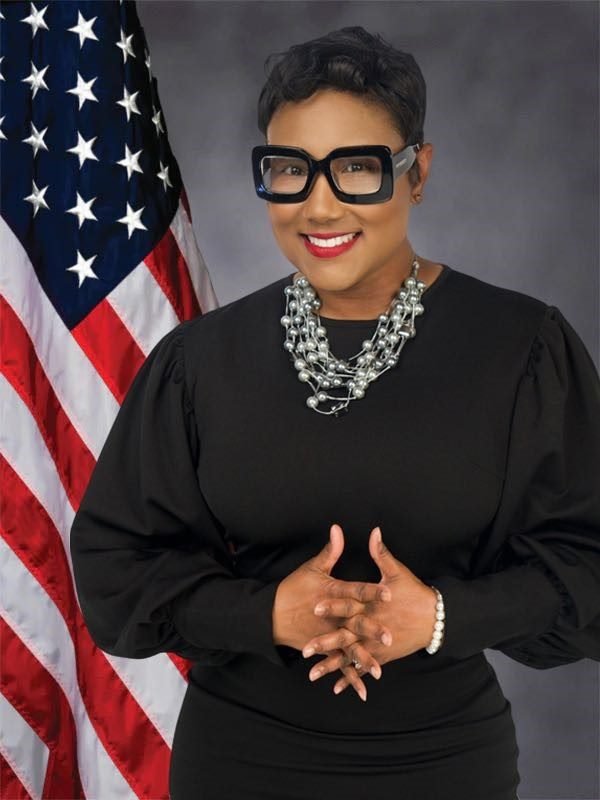
DeKalb County CEO Lorraine Cochran-Johnson is setting the pace for a transformative summer, unveiling bold new initiatives aimed at strengthening the futures of the county’s youth, stabilizing families facing housing insecurity, simplifying property tax processes, and increasing access to pet adoption.

With the theme “Mission Possible” powering her 2025 State of the County address, Cochran-Johnson is matching words with action—and residents across the county are beginning to feel the impact.

Youth Employment: A Launchpad for the Future

The DeKalb Summer Youth Employment Program (DSYEP) kicked off with great energy as more than 380 students filled the Porter Sanford III Performing Arts Center for orientation and a celebratory event. This five-week, paid internship program introduces high school students to real-world job experiences across various departments, including government, finance, media, and technology.

Backed by a $700,000 investment, DSYEP isn’t just about filling summer schedules. It’s about igniting purpose and preparing tomorrow’s workforce. CEO Cochran-Johnson told students, “This isn’t just a job—it’s a launchpad. To whom much is given, much is required.”

She emphasized how rare such opportunities are in today’s climate, especially with many Job Corps programs having recently closed their doors. But in DeKalb, she said, “Students are being seen, supported, and equipped.”

The event also featured insights from Superintendent Dr. Devon Horton and former Harlem Globetrotter Harold Hubbard, as well as workshops on job readiness, financial literacy, and psychological safety in the workplace.

“This is your moment,” Cochran-Johnson told the students. “And I couldn’t be more proud to be your CEO.” 

Housing Instability Program: Meeting Urgent Needs

In a significant move to combat homelessness, CEO Cochran-Johnson announced the launch of DeKalb County’s $7.8 million Housing Stability Initiative (HSI), scheduled to begin on July 1, 2025.

Funded by the U.S. Department of Housing and Urban Development, the HSI program will offer targeted assistance to individuals and families experiencing or at risk of homelessness. The initiative addresses the root causes of instability, providing a range of services from rental assistance and case management to childcare coordination and substance use counseling.

“This funding allows us to directly address the urgent needs of individuals and families who are struggling to remain housed or to exit homelessness,” said Cochran-Johnson. “We’re opening doors—literally and figuratively.”

The program will prioritize the most vulnerable residents, including survivors of domestic violence and human trafficking. Residents must apply through the DeKalb Coordinated Entry System by calling 404-687-3500 on weekdays.

Transparency in Tax Assessments

On June 3, the 2025 Annual Notices of Assessment were mailed to DeKalb County property owners, signaling the start of the annual window for property tax appeals.

Each notice details the appraised value of residential or commercial property as of January 1, a valuation used to determine property taxes under Georgia law. Property owners have 45 days from the date of the notice to file an appeal.

Appeals can be submitted:

This year’s notices reflect recent changes in state legislation. The tax estimate section has been modified or removed, depending on the information provided by each taxing jurisdiction. Instead, some notices may show a preliminary roll-back rate.

While these changes may cause some confusion, the county encourages property owners to review their notices carefully and reach out for clarification if needed.

Free Dog Fridays: Homes for Pups, Hope for Families

DeKalb County has partnered with the LifeLine Animal Project to make pet adoption easier and more affordable this summer. Through the Free Dog Fridays program, residents can adopt dogs at no cost every Friday.

Free Dog Friday – Help a pet find a new home

With shelters across Fulton and DeKalb counties facing surges in owner surrenders, the initiative is designed to reduce overcrowding and help more animals find permanent, loving homes. Adoption packages include essential veterinary services, such as spay/neuter surgery, vaccinations, and microchipping.

Free Dog Fridays take place at LifeLine’s central shelter locations and partner shelters, making it easy for families and individuals to meet their new best friends.

A Season of Action—and Hope

CEO Lorraine Cochran-Johnson’s recent efforts reflect a bold, people-centered vision for DeKalb County. Whether by empowering young people, addressing housing insecurity, improving government transparency, or connecting families with pets, the common thread is access to opportunities.

These initiatives highlight the kind of leadership that doesn’t just promise change—it delivers it.

“The mission is possible,” said Cochran-Johnson, echoing her address. “And together, we will continue building a DeKalb County that works for everyone.”

Please consider supporting open, independent journalism – no contribution is too small!

New Fees, Fewer Perks: Southwest Updates Fare Structure

Southwest Airlines ends free checked bags, now charging $35 for the first and $45 for the second—a major shift impacting budget travelers and loyalty perks.

By Milton Kirby | Atlanta, GA | June 3, 2025

Southwest Airlines is no longer letting two bags fly free.

As of May 28, the popular budget carrier has officially ended one of its most beloved customer perks. For decades, the airline’s “bags fly free” policy was a hallmark of its friendly, no-frills service. Now, that tradition has come to an end—bringing new costs and questions for travelers.

From Beloved Benefit to Baggage Fees

Southwest’s policy change comes as part of a broader set of reforms aimed at boosting profits and attracting new customer segments. Under the new rules, most passengers will now pay $35 for their first checked bag and $45 for the second. For a round-trip flight, that’s an extra $160 for those carrying two bags.

This hits particularly hard for vacationers—especially skiers. In the past, a ski bag and boot bag counted as one item. Now, travelers must pay for each checked item separately unless they qualify for a waiver through their loyalty status or fare class.

New Fare Structure, More Fees

Southwest has also introduced a new “Basic” fare, mimicking competitors. This lower-cost tier removes flexibility—no refunds, no changes. Passengers seeking flexibility must upgrade to the “Wanna Get Away Plus” fare, which adds $35 each way. A traveler who wants flexibility and two checked bags now faces up to $230 in added costs for a round-trip flight.

The airline defends the changes as part of a strategy to offer more choices. “We will do all this while remaining focused on what’s made us strong—our People and our authentic, friendly service,” said CEO Bob Jordan in a March press release.

Who Still Gets Bags for Free?

Not everyone will be charged for bags. A-List Preferred members and Business Select fare holders continue to receive two free checked bags. A-list members get one. Rapid Rewards credit cardholders can check one bag free of charge.

The Department of Transportation reported that in 2024, Southwest earned $83 million in baggage fees from customers with three or more bags—even without charging for the first two. With this change, fee revenue is expected to rise significantly.

Loyalty Program and Perks Also Shift

Southwest’s Rapid Rewards program is also evolving. The airline has started offering more points for higher fare classes and fewer points for lower tiers, such as Wanna Get Away. Points redemption will now vary depending on demand.

Other new features include:

  • Assigned seating (a first for Southwest)
  • Premium legroom options
  • A growing list of international partnerships, including Icelandair and China Airlines
  • A rollout of in-seat power, faster Wi-Fi, and new cabin interiors on the Boeing 737 MAX 8 fleet


A History of LUV

Founded in 1966, Southwest made its name flying between Dallas, San Antonio, and Houston. It offered no assigned seats, free checked bags, and famously lighthearted service. “LUV” became the airline’s stock symbol—and unofficial brand.

The change marks a major evolution from the company’s roots. While the airline says it’s “honored to have you join us on this transformational journey,” many longtime fans feel left behind.

“I remember the Love Machines and friendly flight crews,” said another frequent flyer. “Now it just feels like every other airline.”

Southwest says it remains focused on operational excellence. In 2025, it leads U.S. airlines in on-time performance and has avoided most cancellations.

Still, for everyday travelers used to packing without penalty, the new baggage fee era may take some getting used to.

Please consider supporting open, independent journalism – no contribution is too small!

Predatory Lending Claims Move Forward: TitleMax Loses Bid to Dismiss NC Case

TitleMax must face trial in North Carolina over predatory title loans. Federal and state actions expose illegal practices targeting consumers, including military families.


By Milton Kirby | Atlanta, GA | June 4, 2025

A major legal blow has been dealt to TitleMax, a prominent auto title lending company, as a federal judge in North Carolina has ruled that the company must stand trial for allegedly exploiting consumers through high-interest loans and deceptive practices.

This decision comes just months after the Consumer Financial Protection Bureau (CFPB) announced a sweeping enforcement action against TitleMax and its parent company, TMX Finance LLC. That order, released on February 23, found the company guilty of violating the Military Lending Act (MLA) by charging military families triple the legal interest rate cap of 36% and concealing their status to sidestep federal protections.

In North Carolina, dozens of plaintiffs—most of whom are residents—allege that TitleMax issued car title loans with illegal interest rates, failed to disclose that such loans were unlawful under state law, and employed deceptive business tactics in violation of North Carolina’s Consumer Finance Act and the Unfair and Deceptive Trade Practices Act. These claims prompted TitleMax to file a motion to dismiss the case, arguing that the state had no personal jurisdiction over the company. U.S. District Judge Loretta C. Biggs disagreed.

In a 15-page ruling, Judge Biggs found that TitleMax intentionally reached into North Carolina to advertise and solicit business from residents via television, radio, and the internet. The company even recorded liens with the North Carolina Department of Motor Vehicles—acts the court found to be “continuing obligations” that tied the company to the state.

“The relationship between the defendant, the forum, and the litigation must arise out of contacts that the ‘defendant himself’ creates,” Biggs wrote, referencing U.S. Supreme Court precedent. The court concluded that TitleMax’s actions met the threshold for “minimum contacts,” allowing North Carolina courts to exercise specific jurisdiction.

The plaintiffs’ case has now cleared a major procedural hurdle and will proceed toward trial. The ruling also denied TitleMax’s request to transfer the case to district courts in states such as Virginia, South Carolina, and Georgia, where the loans were physically executed. Judge Biggs emphasized the importance of judicial efficiency and the plaintiffs’ right to have the case heard collectively in their home state.

This is not TitleMax’s first brush with regulators. The CFPB previously penalized the company in 2016 for misleading consumers about loan repayment options and using aggressive debt collection tactics. That earlier case resulted in a $9 million fine.

In the most recent CFPB enforcement action, TitleMax was ordered to pay over $5 million in restitution to affected consumers and an additional $10 million civil penalty. The Bureau alleged that the company doctored the records of military borrowers to avoid detection and charged illegal fees for an insurance product that provided no actual coverage.

Between 2016 and 2021, TitleMax issued at least 2,670 illegal loans to military families and imposed unlawful fees on roughly 15,000 loans. These practices directly violated the MLA, a law Congress passed in 2006 after a Department of Defense report showed how predatory lending undermines troop morale and military readiness.

Auto title loans, such as those offered by TitleMax, are short-term, high-cost loans secured by a borrower’s vehicle title. Borrowers who can’t repay risk losing their car, and many end up in a cycle of debt that impacts their ability to pay for basic needs like housing, food, and healthcare.

TitleMax currently operates more than 1,000 locations across 18 states and claims to serve

thousands of customers daily. Its headquarters is in Savannah, Georgia.

Military families and consumers who believe TitleMax or other lenders have wronged them can submit complaints at www.consumerfinance.gov or call (855) 411-CFPB. Employees aware of violations are encouraged to contact the Bureau at whistleblower@cfpb.gov.

The North Carolina case—America Washington et al. v. TitleMax of Virginia et al.—may prove pivotal in expanding how states can hold out-of-state lenders accountable for practices that harm their residents.

Please consider supporting open, independent journalism – no contribution is too small!

World-Class Transit for World-Class Soccer: MARTA Steps Up

MARTA offers world-class transit service for the 2025 FIFA Club World Cup in Atlanta. Let MARTA drive you to matches, events, and fan celebrations.


By Milton Kirby | Atlanta, GA | June 2, 2025

Soccer fans from around the globe will soon descend on Atlanta for the 2025 FIFA Club World Cup. MARTA is ready to deliver them to the action.

The Metropolitan Atlanta Rapid Transit Authority (MARTA) is preparing to move thousands to and from matches at Mercedes-Benz Stadium and fan events citywide. With decades of experience managing large crowds, MARTA promises smooth rides and increased service for the international tournament.

“MARTA is one of the only transit systems in the world with a train station inside the airport,” said MARTA General Manager and CEO Collie Greenwood. “Fans can go straight from the plane to the train, to their hotel, and then to the stadium—no rental car needed.”

MARTA has served Atlanta well during major events in the past. From three Super Bowls and NCAA Final Fours to weekly Falcons, Hawks, and Atlanta United games, MARTA is the city’s go-to transit system for sports fans.

For the six Club World Cup games this summer, MARTA will increase train service before and after each match. A special pre-game shuttle will run between Five Points and GWCC Stations for faster stadium access.

MARTA will also deploy Transit Ambassadors to assist riders, load-and-go teams on platforms to guide boarding, and additional MARTA Police to ensure safety.

MATCH SCHEDULE AT MERCEDES-BENZ STADIUM:

  • Monday, June 16, 3 p.m.: Chelsea FC (England) vs. LAFC (USA)
  • Thursday, June 19, 3 p.m.: Inter Miami CF (USA) vs. FC Porto (Portugal)
  • Sunday, June 22, 9 p.m.: Manchester City (England) vs. Al Ain FC (UAE)
  • Sunday, June 29, 12 p.m.: Round of 16 Match
  • Tuesday, July 1, 9 p.m.: Round of 16 Match
  • Saturday, July 5, 12 p.m.: Quarterfinal Match
  •  

Even with the Five Points Station undergoing renovations, MARTA confirms that rail service will not be disrupted. All train lines and transfers will run on schedule, and street-level access is available via Forsyth Street.

Looking ahead, MARTA is also preparing for Atlanta’s role in the 2026 FIFA World Cup. The city will host eight matches, and MARTA is collaborating with FIFA, the Atlanta Sports Council, and other cities to plan safe and efficient transit operations.

MARTA is also rolling out upgrades. The better Breeze fare system will allow customers to tap their credit cards or phones to pay—no ticket needed.

And World Cup fun won’t be limited to the stadium. In Decatur, fans can enjoy WatchFest26, a month-long celebration above Decatur Station. MARTA will be the easiest way to get there and to other fan zones around metro Atlanta.

LET MARTA DRIVE YOU TO THE GAMES:

  • Use GWCC or Vine City Stations for Mercedes-Benz Stadium access
  • Visit itsmarta.com for real-time service info
  • Download the MARTA On the Go and Breeze Mobile 2.0 apps
  • Use the See & Say 2.0 app to report safety concerns
  • Restrooms are open 6 a.m.–10 p.m. at six major stations

For help, call MARTA at 404-848-5000 or follow @MARTAservice on social media. Share your trip with #LetMARTADrive.

With top teams, excited fans, and a proven transit system, Atlanta is ready to shine on the world stage—and MARTA is prepared to get you there.

Related articles

MARTA rolls out Big Changes with New Fare System Upgrades

MARTA Unwraps the Holidays with Free Rides, Festive Buses, and Gifts for Riders

MARTA Rolls Out an Outkast Tribute Across Atlanta

MARTA Completes Garnett Station Platform Renovation

From Tokens to Tap-to-Pay: MARTA Unveils Better Breeze

MARTA to Close Five Points Peachtree Entrance as Next Phase of Transformation Begins

MARTA Interim CEO Charts Course for Safer, Faster, More Reliable Transit Ahead of World Cup

Atlanta Beltline Nears 2030 Completion with Big Progress and Bigger GoalsWorld-Class Transit for World-Class Soccer: MARTA Steps Up

Please consider supporting open, independent journalism – no contribution is too small!
Fighting Violence with Values: HWPL Georgia Leads the Way

HWPL Georgia’s Peace Walk brings together residents, youth, and educators to end violence, promote peace education, and build unity in Atlanta and beyond.


By Milton Kirby | Atlanta, GA | June 3, 2025

Under the bright spring sun in Atlanta, neighbors, leaders, and youth marched side by side in the Peoplestown neighborhood—not for fitness but to take a bold stand for peace, — they walked for change.

The event, led by HWPL Georgia, was a powerful show of unity. According to Kim Thomas, Chief Branch Manager of HWPL Georgia, “A peace walk is a community-led effort. It’s a chance for people to walk side by side and show they want peace in their neighborhoods.”

HWPL, which stands for Heavenly Culture, World Peace, Restoration of Light, is an international peace organization dedicated to promoting peace and harmony worldwide. It is based in South Korea but has branches worldwide, including one in Georgia. The organization’s mission is to promote peace through three core areas: legislation, education, and community action.

Photo by Milton Kirby – HWPL Peace Walk

Thomas said HWPL’s Georgia branch is working to create a “culture of peace” throughout the state. The goal is to turn Georgia from the “Peach State” into the “Peace State.”

“We want people to think about peace in their community,” Thomas explained. “Violence doesn’t just appear. It grows over time. But peace can grow, too. That’s what we’re trying to build—a culture where peace is normal.”

Tackling Violence at the Root

One of HWPL’s most essential tools is Peace Education. This 12-lesson program teaches children about respect, self-worth, and the value of life. HWPL offers the curriculum in after-school programs, school clubs, and other youth organizations.

“When kids learn these values early, they grow into adults who care about peace,” said Thomas. “We want to stop violence before it starts.”

The Peace Education program also helps educators. Teachers and youth leaders are trained first so they can pass on peaceful habits and thinking to the children in their care. Topics include coexistence, gratitude, respect, and being a law-abiding citizen.

Youth Leading the Way

HWPL Georgia also runs a youth program called PLAY, or Peace Leadership Academy for Youth. PLAY helps young people become leaders in peace education. The program utilizes literacy and leadership training to promote nonviolence and effective problem-solving.

Students in the PLAY program learn how to speak up for peace in their schools, homes, and communities. The goal is to build a new generation of peace leaders.

Another educational effort, the Peace Expedition series, helps young people develop skills such as empathy, teamwork, and social justice. These lessons prepare them to handle conflict and help others.

Peace in Action

HWPL believes peace isn’t just about words—it’s about action. That’s why HWPL Georgia also gives back to the community. They’ve donated:

  • 2,613 items of clothing to families in need
  • 18,725 hygiene products to support health and dignity
  • 1,608 school supplies to help children succeed in the classroom

These acts of kindness help create stronger, safer communities. They also remind people that peace starts with caring for one another.

A Global Mission with Local Roots

HWPL isn’t just working in Georgia. Around the world, the organization promotes peace through international law, interfaith dialogue, and policy change. HWPL supports the Declaration of Peace and Cessation of War (DPCW), a legal document that aims to end conflicts and protect human rights.

Locally, HWPL Georgia brings people together through interfaith discussions, youth programs, and events such as the Peace Walk. These gatherings help neighbors connect, share ideas, and learn from one another.

“Our goal is to build peace from the ground up,” Thomas said. “Whether it’s through teaching kids, supporting families, or simply walking together, we’re planting the seeds for something bigger.”

The Peace Walk was just one event, but it sent a clear message: Georgians are ready to lead with peace. HWPL Georgia is helping them do just that—one step at a time.

A second peace walk will be held on Saturday, June 7, 2025. for more information or support before or during the event, please contact our Vendor Coordinator, Grace Brown at 770-335-4954 or our event coordinator Alex Leconte at 678-468-3278 or hwpl.us.atl@gmail.com.

Please consider supporting open, independent journalism – no contribution is too small!
Despite Pushback From Students and Alumni, DeSantis Ally Picked to Lead FAMU

“Discover expert tips, proven strategies, and essential tools to boost website traffic, increase conversions, and improve your SEO rankings with our comprehensive digital marketing guide.

Many in the Florida A&M community don’t believe that Marva Johnson has the experience needed to lead the storied institution

By Brandon TensleyAallyah Wright and Ja’Caiya Y. Stephens | May 16, 2025

The Florida A&M University Board of Trustees on Friday picked Marva Johnson as the school’s 13th president in an 8-4 vote. Her selection is subject to confirmation by the 17-member Florida Board of Governors, which oversees the state’s public university system.

This decision comes as a blow to many students and alumni. Over the past week, they mounted fierce opposition to Johnson’s candidacy, arguing that the current group vice president of state government affairs at Charter Communications lacks the experience needed to lead the state’s flagship historically Black school.

These tensions bubbled over at a moment when other HBCUs across the South are struggling to find leadership that enjoys the confidence of their respective communities.

“We shouldn’t be seen as a training ground for someone who doesn’t have any academic experience,” Gregg Bishop, who takes pride in his alma mater, told Capital B. “Yes, she may have business experience, but for us, it’s academics first.”

Johnson hasn’t responded to Capital B’s request for comment.

FAMU stands out as the first HBCU to offer its students a nationally accredited journalism program. The school is also one of the top producers of Black graduates with doctoral degrees in science and engineering and sits in the top five of the Black land-grant universities that generate the most annual economic impact for their graduates. FAMU has been the highest-ranked public HBCU for six consecutive years.

From its academic rigor to its campus culture, FAMU is “unmatched,” Bishop added. Plus, the school accepted him — a former college dropout with a 1.9 grade point average. After working in the tech industry for seven years, he returned to college, graduating from FAMU in 2005 with a bachelor’s degree in business administration.

“I have a special love for FAMU because FAMU gave me the opportunity to get my bachelor’s degree. Then, I went to Florida State University and got my master’s degree. Because of that, I was able to have over a decade-long career in government in New York City,” said Bishop, a member of FAMU’s School of Journalism and Graphic Communication Board of Visitors.

An ally of Florida Gov. Ron DeSantis, Johnson was one of four people in the running to be the university’s next leader.

While some worry that she’ll push DeSantis’ anti-diversity agenda, the biggest concern, according to Bishop, is that she won’t last long in the position, a situation that would only fuel instability. The university’s next president, he argued, ought to be selected based not on political ties but on commitment to the FAMU community.

The three other people who were being considered were Donald Palm, FAMU’s executive vice president and chief operating officer; Gerald Hector, the University of Central Florida’s senior vice president for administration and finance; and Rondall Allen, the University of Maryland Eastern Shore’s provost and vice president for academic affairs.

FAMU’s National Alumni Association endorsed Palm as its preferred candidate.

Students and alumni were speaking out because they wanted to make sure that the people in charge of hiring think long and hard about protecting the university’s future, Erica Stallworth, a 2002 FAMU graduate, told Capital B.

“I’m a second-generation HBCU graduate, and I’m proud to be a Rattler,” she said, referring to the school’s mascot. “We need someone who understands — and wants to understand — our culture.”

“More than just a school”

Others in the FAMU community share Bishop and Stallworth’s concerns.

Elijah Hooks, a political science major, started a petition that’s received more than 12,000 signatures. The document describes Johnson, because of her ties to DeSantis, as someone who is out of step with a school that values “teaching our full history” and who would be “learning on the job.”

“To me, FAMU represents the epitome of Black excellence,” Hooks, the co-chair of the grassroots coalition FAMU Deserves Better, told Capital B. “It’s a place where we cultivate Black leaders across every field — from health and engineering, to politics and the arts.”

For Hooks and many of his peers, having a president who embodies these ideals is non-negotiable. The person in this role is “more than a figurehead,” he said — they also “set the tone” for the rest of the school.

Though Johnson previously served on the Florida State Board of Education, her experience is rooted in K-12 policy and corporate governance. She also was an elector for Donald Trump in 2020, and has been appointed to several state positions by Republican governors.

Like Bishop, Stallworth, and Hooks, Hannah Kirby, a broadcast journalism major, believes that the next FAMU president should be someone who understands student life at the university, which she calls her “dream school.”

“Undergraduate students are the heart and soul of this campus,” she told Capital B. “If the president doesn’t understand or support students, that’s a recipe for disaster.”

After attending the open forums for the presidential finalists, Kirby said that Johnson’s lack of academic leadership experience stood out to her.

“Going from lobbying to running a university is a huge leap,” she said. “FAMU is more than just a school. It is a cultural institution that shapes communities.”

One of the university’s most famous alumni, the producer Will Packer, also has denounced Johnson. He said in a video he posted on Instagram, “Right this very minute, a group of activist Republicans is trying to put in the highest position of power someone who is solidly and objectively unqualified for it.”

Packer, whose credits include the 2017 movie Girls Trip, posted the video following a roiling town hall last week. FAMU alumni, boosters, and others criticized Johnson as a “political plant” and threw their support behind Palm.

“What we cannot allow is a hostile takeover by someone who is aligned with a party that has loudly and proudly espoused ideologies that attack diversity and diverse institutions, attacked equitable economics, and attacked inclusive principles — the exact pillars that institutions like FAMU were built upon,” Packer, who didn’t respond to Capital B’s request for comment, said in the video.

Alan Levine, the vice chair of the Florida Board of Governors, criticized the backlash to Johnson, calling it “unfair, uninformed, and not helpful to the process.”

“It’s odd to me that an organized effort is underway to target a candidate before she has been given an opportunity to be interviewed by the Board of Trustees in an open forum,” he told the Tallahassee Democrat last week.

“The Board of Trustees should focus on the qualities of their candidates, and decide which candidate they believe they, as a board, will be able to partner with to deliver the results the BOG, legislature, governor, and most importantly, students expect,” Levine added.

A problem beyond Florida

FAMU isn’t the only HBCU scrambling to find qualified leadership.

At the beginning of the month, Marcus Thompson suddenly resigned as the president of Mississippi’s Jackson State University. The school has had nine presidents over the past 15 years, and alumni — and Gov. Tate Reeves — are demanding greater transparency in its search and vetting process.

Meanwhile, in March, Georgia’s Albany State University named Robert Scott as its next president. But this announcement followed a contentious period: Earlier this year, alumni and their supporters collected more than 900 signatures to make clear that they didn’t want Lawrence Drake, who was the university’s interim president, to assume a permanent role. The petitioners argued that Drake, who worked at the Coca-Cola Co. for 21 years, wasn’t qualified.

Together, these developments underscore the wider leadership challenges facing HBCUs.

In a letter, Florida’s state NAACP chapter expressed “profound concern” about Johnson’s being included in the pool of candidates and threatened to “take all appropriate advocacy and legal actions” over the selection process.

Deveron Gibbons, the chair of the presidential search committee, has defended the process and the qualifications of all four candidates.

The committee “has conducted a transparent, inclusive process and identified four exceptional candidates to move forward,” Gibbons, who’s also the vice chair of FAMU’s Board of Trustees, said in a statement. “Each brings a strong record of leadership.”

Bishop wants others to get involved in their alumni associations, donate to their universities, and boost their civic engagement in everything from parent–teacher associations to state politics. 

He predicts that alumni and students will continue to speak out against Johnson.

“She worked in the private sector. She should be the next CEO of a company, not the next CEO of a university,” Bishop said. “What you’re hearing from the alumni community is that to have someone with zero experience shepherd one of the flagship universities of Florida … it’s concerning.”

Please consider supporting open, independent journalism – no contribution is too small!
Exit mobile version