Brown v. Board of Education: The Supreme Court Ruling That Changed America

Briggs v. Elliott helped end school segregation. Discover the personal sacrifice of the Briggs family in the landmark Brown v. Board decision.


By Milton Kirby | Atlanta, GA | May 31, 2025

On May 17, 1954, the United States Supreme Court issued a landmark decision that would forever alter the course of American history. In a unanimous ruling, the Court declared that racial segregation in public schools was unconstitutional, bringing an end to the legal foundation of the “separate but equal” doctrine that had stood for nearly 60 years since Plessy v. Ferguson.

The case, officially titled Brown v. Board of Education of Topeka, was one of the most significant legal victories of the Civil Rights Movement. It addressed whether separating children in public schools based on race violated the Equal Protection Clause of the Fourteenth Amendment. Chief Justice Earl Warren delivered the opinion of the Court, stating clearly:

Separate educational facilities are inherently unequal.

This decision did more than desegregate schools. It marked a pivotal moment in the nation’s struggle for racial justice and paved the way for future civil rights legislation, including the landmark Civil Rights Act of 1964.

A Case that Began in Topeka—and Beyond

Although the case was named after Oliver Brown, a Black parent in Topeka, Kansas, it represented a group of lawsuits from across the country. Brown had tried to enroll his daughter in a nearby white elementary school. Brown and other parents sued the Topeka Board of Education when she was denied.

But Topeka was not alone. Brown v. Board was a consolidation of five separate cases from different states:

  1. Brown v. Board of Education of Topeka, Kansas
  2. Briggs v. Elliott – South Carolina
  3. Davis v. County School Board of Prince Edward County – Virginia
  4. Gebhart v. Belton – Delaware
  5. Bolling v. Sharpe – Washington, D.C.

South Carolina’s Briggs v. Elliott was the earliest filed and arguably the most courageous. It originated in Clarendon County, where Black parents, led by Rev. J.A. DeLaine, challenged the appalling disparities between Black and white schools. At the time, Black children in Clarendon County attended schools with no buses, crumbling buildings, outdated books, and underpaid teachers, despite tax dollars funding white schools at nearly ten times the rate.

When their petitions for equal resources were ignored, the case became a direct challenge to segregation. The lead plaintiff was Harry Briggs, a gas station attendant, and the defendant was R.W. Elliott, chairman of the county’s school board.

According to Nate Briggs, son of Harry Briggs, Sr., “participation in the case took a terrible toll on the family. So much so, that Harry Briggs, Sr. had to move his family away from Summerton, South Carolina, for their safety and to find steady work. The personal cost of standing up for justice was high—but it was a sacrifice that helped move the nation forward.”

Though the federal Court ruled against them, one judge, J. Waties Waring, issued a powerful dissent, calling segregation inherently unequal. His words laid the intellectual groundwork for what would soon become national law.

The Man Who Argued the Case: Thurgood Marshall

Thurgood Marshall, the brilliant attorney who served as chief counsel for the NAACP Legal Defense and Educational Fund, stood at the center of this legal battle. Marshall, who was 45 during the Brown arguments, had already established a reputation for himself by fighting segregation in cases such as Sweatt v. Painter and Smith v. Allwright.

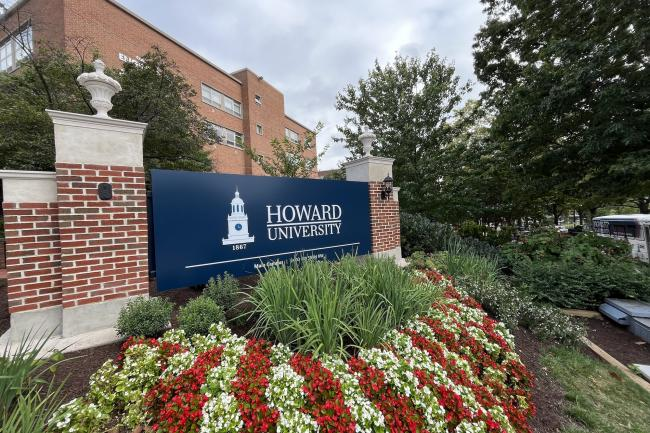
Marshall was born on July 2, 1908, in Baltimore, Maryland. After being denied admission to the University of Maryland Law School due to segregation, he attended Howard University School of Law, where he graduated first in his class. By the time of Brown, he had already argued numerous cases before the Supreme Court and would go on to argue a total of 32 cases, winning 29.

His victory in Brown was more than a professional achievement. It was a decisive blow against legalized racism, and it positioned him to become the first African American U.S. Supreme Court Justice in 1967.

After the Ruling: Resistance and Reform

While the decision was celebrated across much of the country, its implementation was met with fierce resistance, especially in the South. Some states openly defied the ruling. Others delayed desegregation through legal maneuvers or token compliance.

Recognizing the challenge, the Court issued a follow-up decision in Brown II on May 31, 1955, instructing states to carry out desegregation “with all deliberate speed.” Still, progress was slow. Many Black students and families continued to face threats, intimidation, and legal battles in the years that followed.

Despite the resistance, the decision in Brown v. Board became a moral and legal cornerstone of the Civil Rights Movement. It led to increased momentum for equality, energized grassroots activism, and showed that the highest Court in the land was willing to challenge systemic racism.

Legacy

Today, more than 70 years later, Brown v. Board of Education remains a symbol of hope, courage, and constitutional justice. It reminds us of the power of the law to correct injustice—and the power of ordinary people, like the Briggs family and Rev. DeLaine, to change the course of a nation.

The decision did not eradicate racism or inequality, but it signaled that the Constitution could be a tool for progress. It also proved that when legal strategy, moral clarity, and community courage come together, history can be rewritten.

Brown v. Board was not just a court case. It was a national awakening…

Please consider supporting open, independent journalism – no contribution is too small!

MARTA’s Five Points Transformation Begins June 6: Major Closures and Bus Changes Ahead

Major changes are coming to Atlanta’s busiest transit hub. Beginning June 6, MARTA will close three Five Points Station entrances and relocate key customer services as part of a $230 million transformation project aimed at revitalizing downtown transit and enhancing rider experience.


By Milton Kirby | Atlanta, GA | May 30, 2025

Atlanta’s central transit hub is about to undergo a significant transformation. On June 6, the Metropolitan Atlanta Rapid Transit Authority (MARTA) will commence the next phase of its $230 million Five Points Station overhaul, which will result in several service disruptions and relocations affecting daily commuters.

What’s Closing?

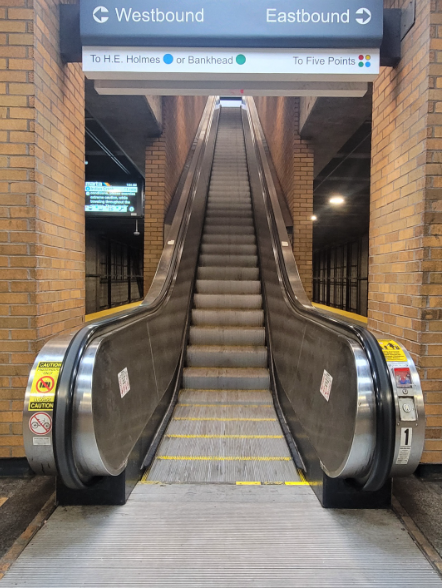
At the close of service on Friday, June 6, three main entrances to the Five Points Station—Alabama Street, Broad Street Plaza, and Peachtree Street—will shut down. However, Forsyth Street will remain open with both street-level and elevator access.

Several station amenities are also affected. Restrooms will close at the station; however, MARTA is directing customers to nearby facilities at the GWCC/CNN Center, Peachtree Center, Georgia State, and West End stations. Other closures include the MARTA Market, StationSoccer, and the tunnel to the federal building.

Customer Services on the Move

Key MARTA customer service offices will relocate starting June 6:

  • Lost & Found will operate by appointment only. Riders can call 404-848-3208 or email lostandfound@itsmarta.com .
  • Reduced Fare Services will move to MARTA headquarters at 2424 Piedmont Road NE, open weekdays from 8:30 a.m. to 5 p.m.
  • RideStore services will continue at the Airport Station, with an additional location to be announced.
  • MARTA Police will relocate to Ashby Station in the future but will continue to maintain patrols at Five Points.
  • MARTA HOPE will relocate, though its new site has not yet been announced.

Downtown Bus Detours Already in Effect

Ahead of the June 6 changes, MARTA rerouted some Downtown bus service on May 17. Currently, only the following routes still stop on Forsyth Street near Five Points:

  • Routes: 3, 21, 40, 49, 55, 107, 186, 813

Other routes now terminate at alternate stations:

  • Georgia State Station: Routes 21, 42, 49, 55, 107, 186
  • King Memorial Station: Routes 26, 813, 899
  • Civic Center Station: Route 816

MARTA advises riders to check with regional partners CobbLinc, Ride Gwinnett and Xpress for any schedule changes resulting from this project.

A Bold Vision for the Future

The Five Points Transformation Project aims to revitalize the heart of Atlanta’s transit system. The initial work involves removing the aging concrete canopy. Future phases will include a new canopy design, a centralized bus hub, enhanced pedestrian access to Broad Street, public art, green spaces, and community gathering areas.

Funded through the More MARTA Atlanta half-penny sales tax, the $230 million project also includes $13.8 million in state funding and a $25 million Federal RAISE Grant. Additional funding comes from MARTA’s core penny sales tax.

For more information, updates, and alternate service options, visit MARTA’s official website.

Related articles

MARTA rolls out Big Changes with New Fare System Upgrades

MARTA Unwraps the Holidays with Free Rides, Festive Buses, and Gifts for Riders

MARTA Rolls Out an Outkast Tribute Across Atlanta

MARTA Completes Garnett Station Platform Renovation

From Tokens to Tap-to-Pay: MARTA Unveils Better Breeze

MARTA Interim CEO Charts Course for Safer, Faster, More Reliable Transit Ahead of World Cup

Atlanta Beltline Nears 2030 Completion with Big Progress and Bigger GoalsWorld-Class Transit for World-Class Soccer: MARTA Steps Up

Please consider supporting open, independent journalism – no contribution is too small!

One Woman’s Story: Living Abroad with Purpose, Allyn Wall’s Path from the U.S. to Guam

Allyn Wall’s journey from Japan to Guam reveals how culture, purpose, and community shaped her leadership and inspired a global business rooted in service.


By Milton Kirby | Atlanta, GA | May 27, 2025

Allyn Wall’s journey from the U.S. mainland to Japan, and now Guam, is shaped by courage, culture, and community.

Wall left the United States with a dream — to teach abroad and serve military-connected students. That dream took her to Japan first, where she discovered a society built on discipline, precision, and deep respect. “Japan taught me how to move with intention,” she said. Learning the language and embracing the culture helped her thrive both professionally and personally.

In Japan, she quickly learned that the workplace was structured and hierarchical. Meetings followed a strict rhythm. Silence carried weight. “You have to read the room,” she said, “and adjust without losing yourself.”

Photo Courtesy Allyn Wall

After Japan, Wall moved to Guam. Though still a U.S. territory, Guam has a rhythm of its own. The pace is slower. People focus more on relationships than rigid rules. It was the perfect place for Wall to continue her global mission while pivoting her business, Digital Glo Consulting. “Guam gave me breathing room to grow,” she said.

Each place brought new lessons. In Japan, she built connections through consistency and respect. In Guam, she found community through service and presence. “You earn your place in Guam,” she explained. “It’s not automatic.”

Wall’s work across different cultures sharpened her adaptability, empathy, and relationship-building skills. She became a cultural bridge, connecting people and ideas across continents. Whether leading teams in Guam, consulting in the U.S., or expanding business ideas in Japan, Wall listens before she leads it is a way to always ensure that she respects the local way before taking the lead.

The professional worlds she’s lived in all differ. “Japan is exacting,” she said. “Guam is loyal and intimate. The U.S. mainland is fast and high-pressure.” But she carries pieces of each. “I balance structure with soul.”

Wall has also faced challenges. Language barriers in Japan. Resource limitations in Guam. But each obstacle made her stronger and more creative. “You learn to lead with heart and think on your feet,” she said.

Through it all, Wall stays focused on her long-term vision. She wants to expand globally, with Guam as her base, and future plans to grow into Ghana and other communities ready for innovation and digital transformation.

Her advice to others: “Respect the culture. Listen deeply. And always bring value.”

After years of navigating different systems, Wall knows her purpose. She helps people connect across borders, cultures, and industries. “Every day,” she said, “I’m constantly interpreting, comparing, translating the languages, and connecting dots between worlds.”

While Japan has seen an influx of foreign workers in recent years — growing its foreign resident population from 2.1 million in 2014 to 3.77 million by 2024 — Guam has experienced a gradual population decline. From 2010 to 2020, the island’s population fell by more than 5,500 residents. In 2023, the net migration rate was -10.9 per 1,000 people. Wall’s decision to grow her business and invest in Guam’s tight-knit community is a bold and meaningful commitment.

As an American, Wall was uniquely positioned to live and work in both places. Guam, a U.S. territory, allows Americans to move freely without a visa, and jobs are typical in military, education, and tourism. In contrast, Japan attracts Americans for teaching, IT, and business roles. But beyond the job titles, Wall found that what mattered most was how each place shaped her leadership — Japan taught her precision and discipline, while Guam nurtured community and creativity.

Wall’s social life has not suffered; to the contrary, she found circles of friends in the two different cities in Japan where she lived and the one city in Guam. She stated that because many of the friends made in Japan and Guam have since moved to other parts of the world, her friendships and potential business partnerships are truly global.

Her earnings are significantly higher than would be in mainland United States, but suggests that anyone considering moving, working and or living abroad do some thorough research.

Please consider supporting open, independent journalism – no contribution is too small!

The Future Works Here: ICRA 2025 Highlights Robotics Jobs and Education

ICRA 2025 in Atlanta broke records and barriers, featuring lifelike humanoids, art-powered robotics, and global tech leaders pushing the field into the future.


By Milton Kirby | Atlanta, GA | May 27, 2025

The 2025 IEEE International Conference on Robotics and Automation (ICRA 2025) concluded on May 23, following a week of groundbreaking research, dazzling robot demonstrations, and global collaboration. Hosted in Atlanta’s Georgia World Congress Center, this year’s ICRA was the largest in the event’s history, drawing more than 7,000 participants, 141 exhibitors, and hundreds of educational institutions and tech companies from around the world.

Organized by the IEEE Robotics and Automation Society, ICRA is recognized as the world’s premier robotics event. It combines academic research, industrial innovation, and community networking to explore how robots are shaping our world today—and what’s coming next.

Hands-On with the Future: Robots Take Center Stage

The exhibition floor at ICRA 2025 transformed into a living showcase of tomorrow’s technology. Spanning 235,000 square feet, it buzzed with live demonstrations of cutting-edge robots—from lifelike humanoids to four-legged machines designed for rescue, research, and even barista work.

Boston Dynamics drew a steady crowd with its agile quadruped robot, Spot. Measuring approximately 43 inches long and weighing 72 pounds, Spot is already being utilized in industries such as power generation, petroleum, and pet food manufacturing. At ICRA, Spot wowed attendees by navigating around obstacles, self-correcting after falls, and showcasing its ability to operate independently. It charges itself, re-routes when paths are blocked, and carries up to 14 kilograms of custom equipment. With more than 1,500 Spots already in the field, the robot’s user-friendly interface and powerful API make it ideal for hazardous inspections and industrial monitoring.

Unitree’s G1 humanoid robots also made headlines. These compact androids, standing 52 inches tall and weighing 77 pounds (including their battery), mimic the structure of a human body—complete with a head, torso, rotating arms, elbows, wrists, fingers, and legs with hip, knee, and ankle joints. The units even wore shoes for their performance. In a playful yet impressive demonstration, two G1s donned boxing gloves and engaged in a mock match, reacting to punches and showcasing their ability to regain balance after being hit. With approximately two hours of battery life and an AI-driven control system, the G1 demonstrated just how close humanoid robots are to mastering complex, real-world movements.

Nearby, Rainbow Robotics of South Korea showcased its RB-Y1 humanoid platform. This research-friendly bot features multiple control options, including a joystick, VR headset, and master arm system. The company also introduced a Mecanum Wheel System for 360-degree movement in tight spaces. RB-Y1 has already attracted users from top institutions, including MIT, UC Berkeley, Georgia Tech, and the University of Washington. Its flexible software development kit (SDK) enables researchers to tailor the robot for AI projects by utilizing grippers, LiDAR, and IMUs. Rainbow’s exhibit, supported by its US subsidiary in Chicago, reinforced the company’s growing global presence.

The MAB Honey Badger team returned with their latest version of a rugged quadruped robot: the HB4.0. Developed over nearly a decade, this legged robot has been field-tested in challenging environments and is now being deployed by customers for real-world applications. Designed for durability and agility, the Honey Badger is built to navigate rugged terrain where wheels and tracks fail.

On the more delightful side of robotics, Artly AI presented its Barista Bot, built not just to serve coffee but to do it with craftsmanship. Using deep learning and imitation-based training, Artly’s robots learn directly from human baristas. They recognize tools, follow quality checks at each brewing step, and produce consistently perfect drinks. The bots can be bought for $80,000 or leased starting at $2,650 per month. Artly’s mission isn’t to replace human baristas—but to honor and preserve the fine art of coffee-making, bringing café-quality service to airports, malls, and workplaces.

The exhibition area also featured The Gecko, a robot named for its sticky-footed namesake. With specialized grip pads and adaptive gait, The Gecko is designed for wall and pipe inspections, particularly in environments that are hazardous or difficult for humans to access. Its unique ability to navigate vertical or irregular surfaces has made it a favorite among research teams focused on infrastructure monitoring and maintenance.

Altogether, ICRA 2025’s exhibition floor was more than a tech showcase—it was a window into a world where robots not only support human work but do so with agility, precision, and even a touch of personality.

Where Arts and Engineering Meet

ICRA 2025 didn’t just showcase technology—it celebrated creativity. The growing “Arts in Robotics” program provided a unique perspective on how machines and art intersect. From choreography to sculpture and painting to costume design, the fusion of expression and engineering is redefining what robots can do.

This year’s events included live performances, juried art sessions, and workshops exploring motion planning in dance, haptics in clothing, and other related topics. It’s part of a larger trend: using robots not just as tools but as partners in human expression.

Powered by People: Global Collaboration and Education

ICRA 2025 featured over 2,000 paper presentations across 24 tracks, along with plenary talks and 52 keynote sessions. The conference also included workshops on robot ethics, robotics in Africa, and undergraduate education. Satellite conferences around the globe allowed remote participation, making this the most inclusive ICRA yet.

Top schools from around the world were well-represented. Gabrielle Madison says, “The A. James Clark School of Engineering of the University of Maryland (CSE) is a great place to get graduate engineering degrees in robotics.  Our graduate engineering programs are run in conjunction with the nationally recognized Maryland Robotics Center.”

The CSE offers a Graduate Certificate in Engineering program in Robotics, which can be completed in as little as two years. The certificate credit can be applied to a Master of Engineering degree.

Graduates of the program have been placed in jobs such as software developer, robotics operator, sales engineer, robotics engineer, electrical maintenance engineer, process engineer and machine learning specialist. Some of their top student employers have included Accenture, Cognizant Technology Solutions, the US Department of Defense, H-Tech Engineers, Infosys Ltd., Naval Air Systems Command, Raytheon, and the US Navy.

Networking groups like Black in Robotics, LatinX in Robotics, and Queer in Robotics held events to strengthen community and inclusion in the field.

Jobs, Automation, and the Road Ahead

As robotics continues to advance, it brings both opportunity and disruption. According to the World Economic Forum, while 85 million jobs may be displaced by automation by 2025, 97 million new ones could emerge—if workers can reskill. McKinsey estimates that 375 million workers may need to change careers by 2030.

The robotics industry is expected to reach $73 billion globally by 2029. In the US, jobs for robotics engineers are projected to grow by 3.3% over the next decade, with thousands of new roles across fields.

Industries driving this growth include:

  • Manufacturing: Cobots are speeding up assembly lines.
  • Healthcare: Robots assist in surgery and elder care.
  • Logistics: Autonomous bots are transforming warehouses.
  • Aerospace & Defense: Drones and robotic suits are under development.
  • Agriculture: Robots help with planting, sorting, and packaging.

Top careers in robotics include:

  • Robotics Engineer – $95,300/year
  • Software Developer (Robotics) – $122,386/year
  • Electromechanical Technician – $76,543/year
  • AI Specialist – $101,428/year

Educational paths range from two-year associate degrees for technicians to master’s programs for advanced engineers. Bootcamps and certifications also offer fast-track options for those entering the field.

Robotics Replacing the “Three Ds”

Many robots are now being used to take over jobs that are dull, dirty, or dangerous—reducing risks and improving productivity. Tasks such as bomb disposal, sewer inspections, and repetitive factory work are increasingly being handled by machines. A fourth “D” often added is “Dear”—jobs that are simply too expensive when done by humans.

Still, jobs that require emotional intelligence, creativity, and complex decision-making—such as those of teachers or therapists—remain less likely to be automated.

Looking Ahead

The energy at ICRA 2025 was electric. The blend of technical innovation, artistic collaboration, and career development made it a must-attend event for anyone in the robotics field.

Next year’s ICRA conference will take place in Vienna, Austria, from June 1 to 5, 2026. If this year was any sign, the future of robotics is not only bright—it’s inclusive, expressive, and globally connected.

Please consider supporting open, independent journalism – no contribution is too small!

From Blueprints to Landmarks: Holder Awarded Four Pillar Tribute for Shaping Atlanta

Tommy Holder, Chairman of Holder Construction, will receive the 2025 Four Pillar Award for leadership, vision, and lasting impact on Atlanta’s skyline and community.


By Milton Kirby | Atlanta, GA | May 22, 2025

The Council for Quality Growth has named Thomas M. “Tommy” Holder, Chairman and Former CEO of Holder Construction, as the 36th recipient of its prestigious Four Pillar Tribute and Award. The recognition celebrates Holder’s decades of leadership, commitment to the Atlanta community, and his company’s impact on the region’s skyline and economy.

Each year, the Four Pillar Award honors an individual who embodies the Council’s core values of Quality, Responsibility, Vision, and Integrity—traits that define both the honoree and the organization’s mission of promoting balanced growth across metro Atlanta. This year’s tribute theme—Opportunity – Empowerment – Integrity—was chosen by Holder to reflect the values that guided his leadership.

“The Holder name is engrained in the way Atlanta has grown and developed,” said Michael E. Paris, President & CEO of the Council for Quality Growth. “Tommy’s leadership and vision can be witnessed from every corner of this region and across the country.”

The tribute event will take place on October 16, 2025, at the Georgia World Congress Center, with presenting sponsorship from Delta Air Lines, Georgia Power, and Norfolk Southern.

Building Atlanta, One Landmark at a Time

Tommy Holder’s story begins in Atlanta, where he attended The Lovett School before earning his degree from Georgia Tech. In 1976, he joined Holder Construction, the firm founded by his father, Robert Holder, in 1960. After climbing the ranks, Tommy became President and CEO in 1989 and Chairman and CEO in 1997. He served as CEO until 2021 and remains Chairman today.

Under his leadership, Holder Construction transformed into a national powerhouse with eight offices and projects in over 30 states. The company now generates more than $8 billion in annual revenue.

Some of the most recognizable buildings in Atlanta bear Holder Construction’s imprint—including Mercedes-Benz Stadium, NCR Global Headquarters, the New World of Coca-Cola, the National Center for Civil and Human Rights, and Georgia Tech Square.

Beyond Georgia, Holder Construction’s portfolio includes the Devon Energy Center in Oklahoma City, Apple Park in Cupertino, and over 400 data centers for global clients like Google, Amazon, and Verizon.

“We are fortunate to work among the most sophisticated architects and structural engineers in the world,” said Holder. “Each project is a reflection of our team’s commitment to quality, innovation, and collaboration.”

A Legacy of Leadership and Service

While his construction projects have reshaped cityscapes, Holder has also built a legacy of service. He chairs the Georgia Tech Foundation and serves on the boards of the Metro Atlanta Chamber of Commerce and Georgia Power Company. He is a former board chair of Children’s Healthcare of Atlanta, a past president of the Rotary Club of Atlanta, and Chair Emeritus of the Georgia Historical Society.

He has also supported the Cathedral of St. Philip, most recently contributing to the design and construction of the new Good Faith Chapel.

“Tommy’s dedication to our community and the built environment speaks volumes about the kind of leader he is,” said Clyde Higgs, 2025 Chairman of the Council for Quality Growth and CEO of the Atlanta BeltLine. “His influence on Atlanta will be felt for generations.”

A Celebration of Visionaries

The Four Pillar Tribute, now in its 36th year, is widely considered metro Atlanta’s highest honor for civic and business leadership. Past honorees include Ambassador Andrew Young, Arthur M. Blank, Governor Nathan Deal, Dan Cathy, and the Herman J. Russell Family.

The Council encourages community and business leaders to attend this year’s gala and join in recognizing Holder’s contributions. Sponsorship and event details are available at www.FourPillarTribute.com.

“I am humbled to be part of a legacy that includes so many inspiring leaders,” said Holder. “Atlanta has given so much to me and my family, and I’m grateful for the chance to give back through our work.”

About the Council for Quality Growth

Founded over 40 years ago, the Council for Quality Growth is a trade organization dedicated to ensuring sustainable growth and economic prosperity across metro Atlanta and Georgia. Through advocacy, education, and collaboration, the Council works with local governments and private stakeholders to address critical infrastructure and quality-of-life challenges.

For more information, visit www.councilforqualitygrowth.org.

Please consider supporting open, independent journalism – no contribution is too small!

House Passes Trump’s Deficit-Swelling Tax Bill, With Big Medicaid Changes


By Riley Beggin, USA TODAY Washington, DC | May 22, 2025

Americans could see major changes to Medicaid, food stamps, border security and taxes under a sweeping Republican bill that passed the U. S. House early on May 22.

The proposal, which President Donald Trump has dubbed the “big, beautiful bill,” would enact Trump’s major campaign promises like eliminating taxes on workers’ tips and overtime and is likely to be one of the most significant pieces of legislation that will be passed during his second term in the Oval Office.

It passed the House 215-214, with all Democrats and two Republicans – Reps. Th Thomas Massie of Kentucky and Warren Davidson of Ohio – voting against it after a marathon all-night debate. Republicans had only three ‘no’ votes to spare in the closely-divided House.

As recently as May 20, it wasn’t clear House Republicans would be able to get the bill endorsed by Trump across the finish line.

A handful of Republicans from primarily Democratic states were holding out on raising a tax deduction cap that would benefit their constituents, while fiscal conservatives remained concerned about the cost of the legislation, which is expected to add around $3.3 trillion to the deficit over the next 10 years. The tax plan has rattled stock markets in recent days as investors worry about the ballooning debt.

Trump met personally with the GOP conference that morning, urging them to stop pushing for more changes and get behind the bill. “Failure is simply not an option,” House Speaker Mike Johnson, R-Louisiana, said after the meeting.

House vote count on Trump tax bill

After several marathon days of negotiations, including a May 21 meeting at the Trump White House, Republican leadership made additional changes and enough lawmakers came on board to pass it.

“What we’re going to do here this morning is truly historic, and it will make all the difference in the daily lives of hard working Americans,” Johnson said in a floor speech shortly before the bill passed.

Apart from Massie and Davidson, three other Republicans did not vote in support of the legislation. Rep. Andy Harris, R-Maryland, voted present, which would have effectively been an opposition vote if the rest of the lawmakers had tied. Harris is the chairman of the ultra-conservative House Freedom Caucus, which sought greater cuts in spending in the package.

Reps. David Schweikert of Arizona and Andrew Gabarino of New York missed the vote entirely.

Democrats have slammed the bill as a giveaway to the wealthy at the expense of people who benefit from social safety net programs like Medicaid and SNAP.

“This is one big, ugly bill that House Republicans are trying to jam down the throats of the American people under the cover of darkness,” House Minority Leader Hakeem Jeffries, D-New York, said on the House floor in an early morning speech before the final vote.

Still, it has a long way to go before it becomes law. The bill will next go to the Senate, which has already made clear that it plans to make changes. If that happens, the two chambers would still have to hash out the details capable of winning majority votes before they can send it to Trump’s desk to be signed into law.

The clock is ticking: Treasury Sec. Scott Bessent warned that the U.S. is likely to hit the debt ceiling in August, and urged lawmakers to finalize the package – which raises the debt ceiling by $4 trillion – before leaving for their summer recess at the end of July.

Trump urges Senate to act swiftly on bill

Trump commended the House passage of the legislation and urged quick Senate action by highlighting priorities such as no taxes on tips, overtime or interest on loans for American-made cars.

He also cited tougher border security measures such as pay raises for Immigration and Customs Enforcement and Customs and Border Protection agents.

Trump chided Democrats for opposing the measure and supporting “Open Borders” and transgender participants in women’s sports.

“Now, it’s time for our friends in the United States Senate to get to work, and send this Bill to my desk AS SOON AS POSSIBLE!” Trump said in a social media post. “There is no time to waste.”

What is in the bill?

The sweeping House bill is expected to touch many corners of American life, from their wallets and healthcare to the southern border and the national debt.

The 2017 Tax Cuts and Jobs Act, which lowered income tax rates for all income groups but disproportionately benefitted the highest earners, is set to expire at the end of 2025. The bill would make those tax rates permanent at an expected cost of more than $2 trillion over the next 10 years.

No taxes on tips and overtime

The bill would also implement temporary tax breaks for tipped wages and overtime, create a new temporary deduction for the interest on loans for American-made cars, and create a new tax deduction for people over age 65. Children under 8 years old could also benefit from a new “Trump” savings account seeded with $1,000 from the federal government.

7.6 million would lose Medicaid

Medicaid, the program that provides health insurance to more than 71 million low-income Americans, would undergo big changes. That includes new work requirements for adults enrolled in Medicaid expansion beginning in December of 2026, more frequent eligibility checks, and disincentives for states to cover unauthorized migrant children, among other provisions.

Collectively, the Medicaid proposal would save at least $625 billion and cause 7.6 million Americans to lose their health insurance over the next 10 years, according to initial estimates by the nonpartisan Congressional Budget Office.

Trump warned Republicans who wanted to squeeze additional changes out of the health insurance program, telling them “Don’t f‒‒‒ around with Medicaid,” at a May 20 meeting.

The proposal would also implement new requirements in the Supplemental Nutrition Assistance Program, known as SNAP or food stamps, which provides assistance to around 42 million Americans. That would save up to $300 billion over the next ten years and shift more of the cost of the program to states.

Big spending on border security, missile defense

The bill would put more than $140 billion toward Trump’s plan to crack down on illegal immigration, including $50 billion for a border wall, $45 billion for detention centers, $8 billion for immigration officers and $14 billion for deportations.

It would also put around $150 billion toward defense spending, including $20 billion that would go, in part, to creating a “Golden Dome” missile defense system that Trump has promoted.

Blue state tax benefits, green energy, vouchers

Residents of high-tax states like New York, California and New Jersey making under $500,000 will be able to claim a deduction of up to $40,000 on their federal returns for taxes paid to their state and local governments – which those holdout lawmakers pushed up from the initially-proposed $30,000. Right now, the cap on that deduction is $10,000.

The bill would eliminate several green energy provisions passed under former President Joe Biden, such as tax credits for electric vehicles and renewable energy, and would accelerate permitting for fossil fuel projects.

Families could use new vouchers collectively worth billions dollars for education outside of public schools, such as for private schools, parochial schools or homeschooling. Meanwhile, private universities could face new taxes for large endowments.

Contributing: Bart Jansen

Please consider supporting open, independent journalism – no contribution is too small!

Biden Has Been Diagnosed With Aggressive Prostate Cancer

Former President Joe Biden has been diagnosed with aggressive, metastatic prostate cancer but is exploring treatment options and receiving support from national leaders.


By Josh Boak AP | Washington, DC | May 18, 2025

Former President Joe Biden has been diagnosed with prostate cancer, his office said Sunday.

The finding came after the 82-year-old reported urinary symptoms, which led doctors to discover a nodule on his prostate. He was diagnosed with prostate cancer on Friday, with the cancer cells having spread to the bone.

“While this represents a more aggressive form of the disease, the cancer appears to be hormone-sensitive which allows for effective management,” his office said. “The President and his family are reviewing treatment options with his physicians.”

Prostate cancers are graded for aggressiveness using what’s known as a Gleason score. The scores range from 6 to 10, with 8, 9 and 10 prostate cancers behaving more aggressively. Biden’s office said his score was 9, suggesting his cancer is among the most aggressive.

When prostate cancer spreads to other parts of the body, it often spreads to the bones. Metastasized cancer is much harder to treat than localized cancer because it can be hard for drugs to reach all the tumors and completely root out the disease.

However, when prostate cancers need hormones to grow, as in Biden’s case, they can be susceptible to treatment that deprives the tumors of hormones.

Outcomes have improved in recent decades and patients can expect to live with metastatic prostate cancer for four or five years, said Dr. Matthew Smith of Massachusetts General Brigham Cancer Center.

“It’s very treatable, but not curable,” Smith said. “Most men in this situation would be treated with drugs and would not be advised to have either surgery or radiation therapy.”

Many political leaders sent Biden their wishes for his recovery.

President Donald Trump, a longtime political opponent, posted on social media that he was saddened by the news and “we wish Joe a fast and successful recovery.”

Biden’s vice president, Kamala Harris, said on social media that she was keeping him in her family’s “hearts and prayers during this time.”

“Joe is a fighter — and I know he will face this challenge with the same strength, resilience, and optimism that have always defined his life and leadership,” Harris wrote.

Former President Barack Obama said his thoughts and prayers were with Biden, his former vice president, lauding his toughness. “Nobody has done more to find breakthrough treatments for cancer in all its forms than Joe, and I am certain he will fight this challenge with his trademark resolve and grace,” Obama wrote on social media.

The health of Biden was a dominant concern among voters during his time as president. After a calamitous debate performance in June while seeking reelection, Biden abandoned his bid for a second term. Harris became the nominee and lost to Trump, a Republican who returned to the White House after a four-year hiatus.

But in recent days, Biden rejected concerns about his age despite reporting in the new book “Original Sin” by Jake Tapper and Alex Thompson that aides had shielded the public from the extent of his decline while serving as president.

In February 2023, Biden had a skin lesion removed from his chest that was a basal cell carcinoma, a common form of skin cancer. And in November 2021, he had a polyp removed from his colon that was a benign, but potentially pre-cancerous lesion.

In 2022, Biden made a “cancer moonshot” one of his administration’s priorities with the goal of halving the cancer death rate over the next 25 years. The initiative was a continuation of his work as vice president to address a disease that had killed his older son, Beau, who died from brain cancer in 2015.

His father, when announcing the goal to halve the cancer death rate, said this could be an “American moment to prove to ourselves and, quite frankly, the world that we can do really big things.”

___

Associated Press writer Jon Fahey in New York contributed to this report.

Please consider supporting open, independent journalism – no contribution is too small!
This post contains affiliate links, which means a small commission may be earned if a purchase is made through them, at no extra cost to you.

Morehouse Picks Alumnus and National Scholar to Write Its Next Chapter

Morehouse College names Dr. F. DuBois Bowman as its 13th president, honoring a distinguished alumnus, scientist, and leader committed to equity and excellence.


By Milton Kirby | Atlanta, GA | May 17, 2025

Morehouse College has chosen Dr. F. DuBois Bowman as its next president. He will become the 13th president of the college on July 15, 2025. Dr. Bowman is a 1992 graduate of Morehouse and currently serves as dean of the University of Michigan School of Public Health.

The decision comes after a national search to replace outgoing president Dr. David A. Thomas, who will step down in June.

Dr. Bowman is widely known for his work in public health and biostatistics. He is a member of the National Academy of Medicine and a fellow of the American Statistical Association and the American Association for the Advancement of Science.

Willie Woods, chairman of the Morehouse Board of Trustees, praised Dr. Bowman’s leadership and deep connection to the college.

“Dr. Bowman’s record of visionary leadership, his deep commitment to academic excellence, and his lifelong dedication to Morehouse make him the ideal choice,” said Woods.

Dr. Bowman’s research has helped improve understanding of diseases like Parkinson’s, Alzheimer’s, and schizophrenia. He has also studied how the environment can affect brain development in young people. His work has led to more personalized treatments and helped shape national public health strategies.

He oversees over 1,300 students and $100 million in research funding at the University of Michigan. He has led programs on gun violence, health equity, and pandemic response. He is also known for building a strong, inclusive, forward-thinking academic culture.

Returning to Morehouse is deeply personal for Dr. Bowman. He is a two-time Morehouse parent and has long mentored Morehouse and Spelman College students. In 2019, he received Morehouse’s highest alumni award, the Bennie Trailblazer Award.

“Returning to Morehouse as its 13th president is the honor of a lifetime,” said Dr. Bowman. “This institution shaped who I am—instilling a commitment to excellence, justice, and impact.”

His appointment comes at a key moment for Morehouse. The college was recently named a Research College & University (RCU) and an Opportunity College & University (OCU) in the 2025 Carnegie Classifications. These honors recognize Morehouse’s growing role in research and its strong support for students from underrepresented backgrounds.

Before leading Michigan’s public health school, Dr. Bowman held roles at Columbia University and Emory University. He earned his master’s in biostatistics from the University of Michigan and a Ph.D. from the University of North Carolina at Chapel Hill.

Dr. Bowman is married to Cynthia Bowman, a Spelman College, Georgia Tech, and Northwestern University graduate. They have four children, including two sons who attend or recently graduated from Morehouse.

Please consider supporting open, independent journalism – no contribution is too small!

This post contains affiliate links, which means a small commission may be earned if a purchase is made through them, at no extra cost to you.

Six Metro Areas Get Grants to Improve Streets and Transit

The Atlanta Regional Commission awarded $1 million to six metro Atlanta communities to help create walkable, vibrant spaces through new planning studies and future development.


By Milton Kirby | Atlanta, GA | May 15, 2025

The Atlanta Regional Commission (ARC) has awarded over $1 million in grants to help six metro Atlanta areas become more walkable and connected. The $1,040,000 in Livable Centers Initiative (LCI) funding will go toward planning studies that encourage better ways to live, work, and move around without always using a car.

These planning projects will focus on walkability, public transit, bike access, and more vibrant public spaces. After the studies, the cities and groups involved can apply for more federal funds to build what they planned.

The LCI program began 26 years ago. It helps reduce traffic and improve air quality. ARC leaders say the program continues to grow and adapt.

“ARC is wrapping up a full review of the LCI program,” said Samyukth Shenbaga, ARC’s Managing Director of Community Development. “The changes we find will shape this year’s and future projects. Bigger improvements will be ready for 2026 and beyond.”

Here’s a look at the six 2025 grant recipients:

1. Ashby MARTA Station Connectivity Study – City of Atlanta – $200,000

This project will help make the area around the Ashby MARTA Station safer and easier to use. It will build on a 2009 plan and look at better street designs, new bike and pedestrian paths, and more apparent signs. The goal is to connect neighborhoods and public spaces to the station and help more people access transit safely.

2. Avondale Estates Downtown Master Plan Update – City of Avondale Estates – $160,000

Avondale Estates will update its 2014 plan to reflect current growth and ideas. The new version will suggest better transportation options, more housing, and greener public spaces. It will be created with input from city leaders, developers, and residents.

3. Kensington Area Master Plan Update – DeKalb County – $200,000

This update will focus on the area around the Kensington MARTA station. It follows up on a MARTA plan from 2023. The new study will look at how the neighborhood has changed and how to redevelop county-owned land. The goal is to create a fresh, community-driven vision.

4. Cobb Parkway Gateway & Connectivity Study – City of Kennesaw – $160,000

Kennesaw will study its most important road, Cobb Parkway, and how to connect it to downtown better. The project will also look at ways to clean up the area, add green spaces, and encourage new development in empty or poorly kept areas.

5. Olde Town Conyers Master Plan Update – City of Conyers – $160,000

With a new county justice center being built downtown, Conyers plans to update its Olde Town plan. The city wants to make it easier for people to get around and turn the area into a place where workers, residents, and tourists feel welcome and safe.

6. One Northlake – Tucker-Northlake Community Improvement District – $160,000

This plan will improve how people move around the Tucker-Northlake area. It will link bus express lanes, trails, bikeshare stations, sidewalks, and public transit. The goal is to build a network that connects people with jobs, homes, and services.

Each project is designed to improve life for those who live and work in these areas. ARC leaders hope these ideas will lead to new investments, healthier communities, and easier ways to get around.

Please consider supporting open, independent journalism – no contribution is too small!

Live Nation to Anchor Centennial Yards with 5,300-Seat Music Venue

Centennial Yards selects Live Nation to operate a new 5,300-seat music venue, anchoring Downtown Atlanta’s $5B entertainment district near State Farm Arena and the Mercedes-Benz Stadium


Live Music Powerhouse to Anchor $5 Billion Sports and Entertainment District

By Milton Kirby | Atlanta, GA | May 15, 2025

Centennial Yards Company has officially selected Live Nation to operate a 5,300-seat state-of-the-art music and entertainment venue at the heart of its sprawling Downtown Atlanta development. The long-term lease deal, announced on Wednesday, marks a significant milestone for the $5 billion, 50-acre project, which aims to transform underutilized rail yards into a vibrant hub of culture, sports, and commerce.

The new venue, adjacent to State Farm Arena and Mercedes-Benz Stadium, will serve as a cornerstone of the emerging Centennial Yards entertainment district. It joins a roster of high-profile projects already underway or planned for the area, including the immersive experience space Cosm, Hotel Phoenix, and The Mitchell apartment tower.

“Centennial Yards is poised to be the epicenter of sports and entertainment for the Southeast,” said Brian McGowan, President of Centennial Yards Company. “This partnership with Live Nation brings us one step closer to creating a thriving hub where unforgettable experiences happen.”

With Live Nation at the helm, the venue is set to host a wide array of performances—from global touring acts to local up-and-comers—adding depth to Atlanta’s already rich music scene. The facility promises premium sound, fan-first design, and elevated food and drink options.

The venue is expected to fill a strategic gap between larger stadiums, such as Mercedes-Benz, and mid-sized halls, like the Tabernacle and Buckhead Theatre. According to Jordan Zachary, President of Global Venues at Live Nation, the partnership will bolster Atlanta’s stature as a cultural and economic heavyweight.

“Atlanta has long been a cornerstone of American music and live entertainment,” said Zachary. “We’re proud to help write its next chapter downtown with this new venue at Centennial Yards.”

The announcement drew praise from key stakeholders, including Tony Ressler, principal owner of the Atlanta Hawks and a lead partner in the Centennial Yards development.

“As owners rooted in Atlanta, we are committed to shaping a Downtown that is dynamic, inclusive, and vibrant,” said Ressler. “Live Nation’s presence helps us fulfill that promise.”

CIM Group, the development firm behind several transformational urban projects across the U.S., is the primary partner alongside Ressler’s group. “This venue brings people together through transformative experiences,” said Shaul Kuba, CIM Co-Founder and Principal.

Upon completion, Centennial Yards will feature 8 million square feet of new space, comprising residential, hotel, office, retail, and entertainment uses. Centennial Yards South—home to student-friendly Lofts at Centennial Yards and Wild Leap Brewery — has already opened. Community-driven activations, such as food trucks, live music, and tailgating parties, are already drawing crowds to the site.

The Live Nation venue is expected to open in 2027, becoming a pivotal part of the district’s 24/7 live-work-play experience. The project is also supported by strong transit connections, with multiple MARTA stations nearby and access to the Atlanta Beltline.

In a city known for producing music legends and iconic performances, this partnership aims to expand Atlanta’s live entertainment legacy well into the future.

Please consider supporting open, independent journalism – no contribution is too small!

Exit mobile version