The Aging Power of Sugar


Want to speed up the aging process and damage your long-term health? Have we got just the thing for you!

By Jeanne Dorin McDowell

Aging is a one-way street, and we all travel down its path. But what if you could do one thing today that would slow your body’s aging process?

You can. You can stop eating sugar.

“Sugar is a primary driver of the aging reaction,” says neuroendocrinologist Robert Lustig M. D., professor emeritus of pediatrics and a member of the Institute of Health Policy Studies at the University of California San Francisco. “The more sugar you eat, the quicker the aging will occur. As you get older your cells go downhill, but if you consume a lot of sugar, they go downhill seven times faster.”

Let’s repeat the statistic: Eating a lot of sugar causes your body to age at seven times its natural rate.

We all know that sugar is bad for your teeth and your waistline and that it plays a role in the development of diabetes. But that’s just the beginning of the story. In a study published last July, researchers at UCSF looked at 342 middle-aged women and found the cells, tissues and overall systems of those who followed a diet low in added sugar were biologically younger than their actual age. But for each additional gram of added sugar people ate each day, they were about seven days older than their biological age — regardless of how healthy their diet was otherwise.

“We knew that high levels of added sugars are linked to worsen metabolic health and early disease, possibly more than any other dietary factor,” Elissa Epel, vice chair in the department of Psychiatry and Behavioral Sciences at USCF and co-author of the JAMA Network Open study, said in the statement. “Now we know that accelerated epigenetic aging is underlying this relationship, and that this is likely one of the many ways that excessive sugar intake limits healthy longevity.”

“Epigenetic aging” refers to how your body ages based on external factors beyond just the calendar and the natural occurrences that come with it. Stress, pollution a lack of exercise and poor diet are all factors in the epigenetic aging. But added sugar may be the unique among these factors, an aging superpower. And the less you have of it in your life, the better.

What is added sugar?

The sugars that occur naturally in fruits. vegetables grains and dairy are essential to a healthy diet, providing energy and acting as a delivery service for thousands of nutrients in these foods. Indeed, they’ve been found to reduce the risk of chronic diseases such as diabetes, heart disease and even some cancers. 

Added sugars, on the other hand, are the compounds that humans put into their food — from spoonful of sugar in your coffee to the factory-made sweeteners manufacturers add to processed foods to increase flavor and extend its shelf life. These are the sugars that are harmful and accelerate aging. On Food labels they are often the ingredients ending in “ose,” such high-fructose corn syrup, sucrose, dextrose and maltose, among others.

“Natural” sweeteners can have the same age promoting effects: Cane sugar is almost entirely sucrose. Agave is mostly fructose.

Fructose maybe more harmful than any other sugar molecules because it is primarily metabolized by the liver, where it is readily converted into fat, in excessive amounts, it leads to increase fat accumulation and scarring in the liver. Manufacturers are now required to document added sugars on food labels, so there’s an obvious tip-off if the product contains harmful sugar.

Think of added sugars the way you think of alcohol: The extent of damage to your body is proportionate to the amount you consume, what scientist call “dose dependent.” Every gram of sugar interacts with your body in some way, Lustig says, but it’s the cumulative impact that portends the most damage and drives accelerated aging.

What sugar really does to your body

When sugar molecules bind to proteins and lipids in the body, they form harmful compounds called advanced glycation end products (AGEs). These AGEs accumulate in the tissues, reducing their plasticity and flexibility, increasing inflammation, and creating oxidative stress in cells — all of which produce diseases, says Monica Serra, a health scientist administrator for the National Institute on Aging. In blood vessels and arteries, they can increase the risk of heart disease or strokes. In the kidneys, they can contribute to insulin resistance, and in the skin, they can deplete collagen and add to the appearance of aging. 

“They affect every tissue in a negative way and a cross your entire lifespan, which is why we try to emphasize healthy habits in childhood,” says Serra. “By the time you get older, you see the impact of these dietary choices, at a time when you have less resilience.”

This is where fructose does its worse damage, says Lustig. “Every time glucose or fructose binds with a protein, you get an oxygen radical. If your body is making radicals faster than you can quench them, your cells undergo damage, and they eventually die.  Fructose makes the reaction occur seven times faster and generates 100 times the number of oxygen radicals as glucose. Every time this process occurs, you age faster.”

How Sugar Ages You

Sugar places increased burden on an already aging body, says Dorothy Chiu, a postdoctoral scholar at the UCSF Osher Center for Integrative Health and coauthor of The UCSF study. Getting older puts us at greater risk for disease she says, but “sugar is the. icing on the cake.” Here’s what sugar can do:

Raise dementia risk. Excessive amounts of sugar can increase inflammation and weaken the blood-brain barrier, which can trigger cognitive decline. Serra says. In one study, researchers found that in older adults (average age 79), consuming more sugar may double the risk of developing dementia later in life. “People at the highest risk got 32 percent of their calories from sugar versus the low group consuming only 17 percent of calories from sugar,” says Puja Agarwal, assistant professor of internal medicine at the Rush Alzheimer’s Disease Center at Rush University Medical Center and lead author of the study. ”This study tells us consuming higher sugar or calories from sugar may impact risk for dementia.”

Where Added Sugar Lurks

Much of the sugar we east doesn’t come from ice cream and cake. It comes from everyday foods that we don’t associate with sweetness. Here’s a (partial) list of sneaky sugar sources, according to the Centers for Disease Control and Prevention.

     Condiments                                    Sauces                                                 Flavored yogurt

(such as ketchup & salad dressings) (pasta sauces & barbecue sauce) (especially low-fat yogurt)

                                    Granola,                                                        Nut butters

                        (instant oatmeal, & breakfast cereals)                       (such as peanut butter)           

Make your belly bigger. When you eat excessive sugar, your liver metabolizes the fructose compound and converts it into fat, which accumulates in the liver. You gain weight when your liver stores excess fat instead of burning it off as energy. Fat accumulation can lead to higher cholesterol insulin resistance and cardiovascular disease.

Hamper your nutritional status. As we get older, our need for calories declines so to maintain the same body weight we need to eat less says Alice H. Lichtenstein, senior scientist at the Jean Mayer USDA Human Nutrition Research Center on Aging at Tufts University. “Consuming a diet high in sugar makes it challenging to also include enough healthy foods so that we balance calorie needs and meet our nutrients needs.”

Damage your liver. High sugar intake, especially fructose, can lead to nonalcoholic fatty liver disease, which is an excessive amount of fat in the liver that is associated with an increased risk of developing liver cancer.

Increase your risk of heart disease. Added sugar can elevate your blood pressure, promote chronic inflammation and increase levels of triglycerides, a type of fat that builds up in the bloodstream and increases your risk of heart disease. Excessive sugar intake damages the arteries and puts stress on the heart. 

Up your diabetes risk. Sugar causes rampant spikes and blood sugar levels, which can contribute to insulin is resistance, a precursor to type 2 diabetes, and drives other major chronic diseases in older adults. In addition to aging and stress, sugar “can wreak havoc on insulin sensitivity and through various pathways accelerate aging in the body‘s systems.” Says UCSF’s Epel. ”This is one of the most important metrics of health and aging.”

Worsen menopause symptoms. Postmenopausal women are more vulnerable to the effects of sugar because they have lower levels of estrogen and progesterone and become more insulin resistant. Some studies show that high sugar levels are also associated with more hot flashes in menopausal women. It may be because they cause spikes in blood sugar and dramatic drops. “It’s reasonable to conclude that reducing sugar may help reduce hot flashes for some individuals, but it has not been tested, Epel adds.

Promote tooth loss. Sugar can foster bacterial growth in the mouth, which in turn, can produce acid that erodes the enamel on your teeth, causing cavities. Excess sugar can also lead to inflammation of the gums, leading to gum recession and tooth loss. 

Bottom line: The occasional sugar indulgence isn’t harmful, but “be selective and only indulge when the option is your favorite.” Lichtenstein says. So yes, have the slice of birthday cake. But don’t have a party every day, OK?

Please consider supporting open, independent journalism – no contribution is too small!

This post contains affiliate links, which means a small commission may be earned if a purchase is made through them, at no extra cost to you.

The One-Drop Papacy: What Pope Leo XIV American Roots Reveal

Pope Leo XIV, the first American pontiff, promises humility and reform as he succeeds Pope Francis and ushers in a new era for the Catholic Church


By Milton Kirby | Atlanta, GA | May 12, 2025

White smoke rose from the Sistine Chapel chimney on Thursday evening, signaling a historic moment for the Catholic Church. The cardinals inside had chosen a new pope: 69-year-old American Cardinal Robert Prevost. He will now be known as Pope Leo XIV, the 267th leader of the Roman Catholic Church.

The End of an Era

Pope Leo XIV replaces Pope Francis, who died on April 21, 2025, at 88. Francis passed away at Domus Sanctae Marthae in Vatican City, ending a 12-year papacy. He was the first pope from South America and led the Church through major reforms.

Following Francis’s funeral, cardinals gathered in Vatican City. After two days of informal meetings, the conclave officially began on May 7. By May 8, a new pope had been chosen. The process took just over a day of voting before the required two-thirds majority was reached.

Who is Pope Leo XIV?

Born in Chicago in 1955, Pope Leo grew up in a working-class neighborhood. He was raised in a devout Catholic family with Spanish, French, and Italian roots. As a child, he often “played priest” and took his faith seriously, even memorizing prayers in Latin.

He was ordained in 1982 and soon after moved to Peru, where he spent over a decade working with poor and rural communities. He served as a pastor and teacher in Trujillo, a coastal city in northwest Peru. Locals remember him as a humble leader who waded through floodwaters to deliver aid in 2022.

Leo holds dual citizenship in the U.S. and Peru. His international experience gives him a global view that church officials say will help him lead with compassion and unity.

A Symbol of Diversity

Pope Leo’s family has deep American roots, including connections to New Orleans’ Black community. Genealogist Jari Honora uncovered that Leo’s grandparents were listed as “black or mulatto” in Louisiana records. However, when the family moved to Chicago, they were later recorded as white—a stark illustration of how race in America has long been fluid, constructed, and contested.

The phrase “one drop of Black blood makes you Black” is rooted in a legal and social doctrine known as the “one-drop rule.” It emerged in the United States during the 19th and early 20th centuries. It became widely enforced during the Jim Crow era, particularly in the South.

Though never formally adopted at the federal level, the concept shaped state laws to maintain strict racial boundaries. In 1910, Tennessee became the first state to define anyone with even a trace of African ancestry as Black. By the 1920s and 1930s, similar laws and social customs were widespread across the South. The one-drop rule reflected a broader white supremacist ideology that aimed to preserve racial “purity” and legitimize segregation.

The rule’s impact was far-reaching. Mixed-race individuals were denied legal protections and subjected to the same discriminatory treatment as those classified as Black. The idea entered mainstream consciousness through literature, journalism, and legal systems, helping to normalize racial divisions based on ancestry rather than appearance or lived experience.

The one-drop rule’s legacy persists, it still influences how Americans think and talk about racial identity, belonging, and history. Pope Leo’s personal story brings that legacy into sharp focus, reminding the world that identity is often shaped not just by heritage—but by the policies and perceptions that define how heritage is seen.

This complex history is especially relevant as the world reflects on the background of Pope Leo XIV, born Cardinal Robert Prevost.

His Vision for the Church

Leo XIV is expected to continue many of Pope Francis’s reforms. He has shown support for:

  • Helping the poor and migrants
  • Protecting the environment
  • Offering Communion to divorced and remarried Catholics
  • Allowing blessings for same-sex couples (with cautious support)

One of his key beliefs is that church leaders should not act like royalty. “The bishop is not supposed to be a little prince sitting in his kingdom,” he once said.

As a cardinal, Leo also helped lead a significant change by allowing three women to vote in the selection of bishops—something never done before.

In his first public remarks from the balcony of St. Peter’s Basilica, Leo said, “Peace be with you… God loves us all unconditionally… Evil will not prevail.” His speech honored the legacy of Pope Francis and called for humility and hope.

Controversy and Challenges

Despite the celebration, Leo’s past is controversial. A group called SNAP (Survivors Network of those Abused by Priests) raised concerns about his handling of abuse cases.

In 2023, a $2 million settlement was paid in a case involving a priest under Leo’s former leadership in Chicago. Critics say he failed to act quickly or transparently. Leo has said the Church must be honest in dealing with abuse and has called for full transparency moving forward.

The Global Church Reacts

With 1.4 billion Catholics worldwide, the election of an American pope is a major shift. The U.S. has over 61 million Catholics and the second-most cardinals after Italy. Still, experts had long doubted an American would ever be chosen due to global political tensions.

Leo’s election brought cheers in St. Peter’s Square and praise from around the world. U.S. President Donald Trump called it a “great honor for the country.” However, Leo has been outspoken about migrant rights and once criticized the Trump administration for failing to show compassion.

In a 2024 post, he asked, “Do you not see the suffering? Is your conscience not disturbed?”

What Comes Next?

As Pope, Leo XIV faces many tests. He must heal deep divisions in the Church and respond to growing concerns about youth engagement, abuse reform, and global poverty. He will also need to address questions about gender, sexuality, and tradition—issues that continue to stir debate among Catholics.

Despite the challenges, Leo brings a blend of humility, experience, and boldness. His life story—spanning Chicago neighborhoods, Peruvian missions, and Vatican halls—makes him one of the most unique leaders the Church has ever had.

For now, Catholics worldwide wait to see how Pope Leo XIV will guide them in a time of great change—and great hope.

Please consider supporting open, independent journalism – no contribution is too small!

Tougaloo College Faces Threats After Jasmine Crockett’s Commencement Speech

Black Information Network | May 9, 2025

Tougaloo College officials are investigating “concerning calls” to the school after Rep. Jasmine Crockett (D) delivered a commencement address during which she criticized President Donald Trump.

In a letter sent to the school community on Monday (May 5), Tougaloo College President Donzell Lee addressed threats to campus following Crockett’s keynote address on Sunday (May 4), per WAPT.

“Appropriate actions have been taken,” Lee said, noting school officials weren’t taking “concerning calls” lightly. “Contact has been made with law enforcement authorities to ensure that safety protocols are in place, if needed.”

Crockett was invited to deliver Sunday’s commencement speech by fellow Democrat and Tougaloo graduate Rep. Bennie Thompson.

During her address, Crockett acknowledged Anne Moody and Memphis Norman, Tougaloo students who played pivotal roles in the 1963 Woolworth’s sit-in in Jackson, before taking aim at Trump.

“Sadly enough, in the year of our Lord 2025, sitting in these very classrooms is just as much of a protest as Anne and Memphis pulling up to Woolworths in 1963,” Crockett said. “It’s the paradox and parallels for me. … As I stand here in this safe space, still only one of the few places that an institution can invite me to speak.”

“To think about the fact that people have to be fearful of having a sitting member of Congress to come and address their graduates, tells us that we still got a lot of work to do,” the Texas Democrat continued. “The president of the United States having a temper tantrum that strips funding because I’m Black and I’m proud should not be something that we are dealing with in 2025.”

Crockett also pointed out how Tougaloo’s campus served as a safe space in the 1960s for civil rights leaders like Medgar EversFannie Lou Hamer, and Dr. Martin Luther King Jr.

“The work done by so many like Bennie (Thompson), Medgar (Evers) and Fannie Lou Hamer are under attack,” she said. “Instead of calling us the ‘N word,’ they use racist epithets and suggest that we’re ghetto, or unqualified or diversity hires, even though we’re all, more oftentimes than not, more educated and qualified than they are. I have news for you. These attacks are not new because Jim Crow never died. He just lied (sic) in wait.”

Thompson said he stands in solidarity with Tougaloo and Crockett amid threats to the school.

“It is unfortunate that a day of celebration at Tougaloo College was met with attempts by extremists to overshadow the moment and intimidate those in attendance,” Thompson said in a statement. “Their threats, aimed at undermining Congresswoman Jasmine Crockett’s powerful commencement address, failed. The Tougaloo community remains proud, strong and unmoved.”

In a post on X, Crockett also spoke out against the threats.

“No low is too low for MAGA… now explain to me why an institution would be receiving threats because of the commencement speech that I GAVE,” Crockett tweeted. “This type of behavior is why I’m constantly having to be protected & I understand that truth telling in this country; sadly, is a dangerous business, but college students don’t deserve this.”

Please consider supporting open, independent journalism – no contribution is too small!

Mother’s Day: A Time to Celebrate, Reflect, and Remember

Mother’s Day began as a personal tribute, but its founder later rejected its commercialization—reminding us to cherish heartfelt moments over gifts.


By Milton Kirby | Charlotte, NC | May 10, 2025

Mother’s Day is one of the most widely celebrated holidays in the United States. It’s a time to honor the women who raise, guide, and support us. However, few people know that the woman who created Mother’s Day later tried to destroy it.

Anna Jarvis founded Mother’s Day in 1908. She created it to honor her mother, who had worked to improve the lives of other mothers. Anna never had children of her own, but she believed strongly that mothers deserved a special day of recognition. She organized the first official Mother’s Day events at her hometown church in Grafton, West Virginia, and also at a department store in Philadelphia, where she lived.

Jarvis wanted Mother’s Day to be personal—a day when sons and daughters showed love to their mothers. That’s why she insisted the holiday be spelled “Mother’s Day,” not “Mothers’ Day.” It was meant to honor one remarkable woman at a time.

By 1912, the holiday had caught on across the country. In 1914, President Woodrow Wilson signed a bill making the second Sunday in May the official day to celebrate mothers. But what followed shocked Jarvis. The holiday quickly became commercialized. Stores began selling flowers, candy, and cards in large numbers. Jarvis believed this ruined the spirit of what she had created.

She spent years—and most of her inheritance—trying to stop what she saw as the misuse of Mother’s Day. She filed lawsuits against businesses and organizations that used the name. In 1925, she was arrested for crashing a fundraiser where carnations were being sold. By the 1940s, Jarvis had entirely given up on the holiday and begged the government to remove it from the calendar. She died in 1948, poor and forgotten, in a sanitarium in Philadelphia.

Despite her efforts, Mother’s Day has only grown in popularity. An estimated $34.1 billion will be spent on Mother’s Day in 2025. Americans buy cards, flowers, clothes, candy, jewelry, and gadgets like smartphones and tablets to show their love. In 2015, the average person spent nearly $165 on Mother’s Day gifts.

But for many, Mother’s Day still holds deep meaning beyond the gifts.

For the past 20 years, my family has celebrated the day with dinner and togetherness. My five brothers and my niece—whom we’ve always treated like a sister—join friends and extended family to honor our Mom.

Our mother will turn 95 this September. Over the recent years, we’ve watched her change. Once a lively cook and doting mother, she now sometimes struggles to remember names and faces. For the past 18 months, I’ve traveled to North Carolina every four to six weeks to visit her. A little over a year ago, I stayed for almost a month to help care for her. I did the cooking and shopping, but most importantly, I shared time with her—laughing, listening, and simply being present.

Even as age, dementia, or Alzheimer’s try to chip away at her memory, she never forgets how to treat her sons equally. She keeps that part of her mind strong. She still lights up during these Mother’s Day gatherings, even if she is a little frustrated about the ride out. She also finds equal delight during visits from her longtime pastor, Reverend Ledbetter. They sit together, sing old Baptist hymns, and pray.

Mother’s Day is more than a holiday. It’s a chance to pause, reflect, and be grateful. Whether it’s a bouquet of flowers, a heartfelt hug, or just sitting in silence with the woman who raised you, it’s the love that matters most.

Let us never forget what Anna Jarvis tried to remind us—Mother’s Day is about honoring our mother, not just spending money. And for those of us still lucky enough to share a moment with her, that moment is the greatest gift of all.

Please consider supporting open, independent journalism – no contribution is too small!

DeKalb Reimagined: CEO Lorraine Cochran-Johnson Charts New Path Forward

DeKalb CEO Lorraine Cochran-Johnson outlines bold plans to improve public safety, infrastructure, economic inclusion, and homelessness in her 2025 State of the County Address.


By Milton Kirby | Atlanta, GA | May 9, 2025

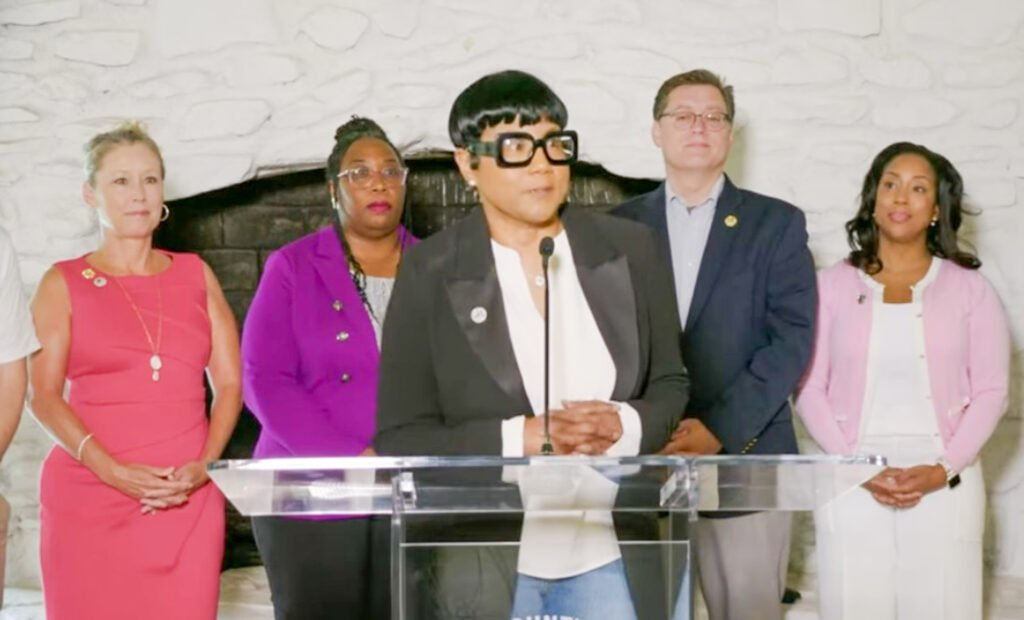
In her first State of the County address, DeKalb County CEO Lorraine Cochran-Johnson delivered a powerful message of transformation, transparency, and urgency.

Speaking from the red carpet backdrop of Assembly Studios, Cochran-Johnson — the county’s first Black woman to serve as CEO — laid out a bold four-pillar plan centered on public safety, infrastructure, housing, and economic development.

“DeKalb County is not just reimagined,” she said. “It’s awakened.”

A Fast Start and a Bold Vision

Since taking office in January, Cochran-Johnson has moved swiftly. Within her first 100 days, she replaced the police chief, installed an interim leader, and committed more than $10 million to raise officer salaries, making DeKalb’s department one of the best paid in the region.

She also proposed a $2 million real-time crime center and announced a pilot program to use drones for emergency response.

“When it comes to public safety and water, water is a matter of public health – you can’t move slowly,” she said. “Give me grace and time, but know that urgency is necessary.”

Cochran-Johnson emphasized that public safety is more than policing — it’s the foundation for economic development. She called on DeKalb’s 12 city mayors to join her in fighting crime, building infrastructure, and ensuring opportunity.

DeKalb County CEO & Board of Commissioners

Infrastructure Investment: “The Decision of My Life”

“After analyzing the data and evaluating the risks, it was one of the best decisions of my life,” she said. The CEO also addressed the county’s aging water and sewer system, which is under federal oversight. She backed a tough but necessary decision: a 10% annual increase in water rates over the next decade to support a $4.27 billion overhaul.

Atlanta Regional Commission, under the direction of Executive Director, Anna Roach, reinforced the urgency, noting metro Atlanta has one of the nation’s smallest water supplies for a major urban area.

Cochran-Johnson added that infrastructure is not just about pipes — it’s about quality of life, public health, and future growth.

Small Businesses and Economic Equity

Cochran-Johnson pledged to ensure that local, small, and minority-owned businesses are equipped to compete for government contracts. Her administration will focus on strategic economic development that attracts top-tier companies and creates jobs, particularly in underserved communities.

“We must build a more connected and transparent government,” she said. “We are being responsible stewards of taxpayer dollars and innovative in our approach.”

To foster better communication and cooperation, she appointed an intergovernmental liaison to help align priorities across the county’s 12 cities.

Tackling Homelessness and Building Community

In the months ahead, Cochran-Johnson will unveil a comprehensive framework to reduce homelessness. She hinted at wraparound services and stronger partnerships with nonprofits and health agencies.

She also shared personal stories to highlight the commitment of county employees, including a Roads and Drainage crew that cleared snow for an ambulance so a pregnant woman could safely deliver her baby.

“That’s the spirit of DeKalb,” she said.

Fiscal Discipline and Innovation

Despite financial uncertainty due in part to potential federal funding cuts, Cochran-Johnson presented a balanced budget to the Board of Commissioners just 15 days after taking office. A temporary hiring and spending freeze is in effect as departments review cost-saving and revenue-generating ideas.

While acknowledging the challenges, she was resolute:

“Aggressive and bold moves are necessary,” she said. “Government may be a slow-moving vehicle, but there are times when you simply cannot move slowly.”

A County Reimagined

Throughout the address, Cochran-Johnson emphasized collaboration, accountability, and bold leadership. She expressed gratitude for past CEOs and vowed to lead with vision and courage.

“I’ve learned from those who came before me. But now is the time for bold action,” the CEO said. “The mission is possible — and DeKalb’s future starts now.”

Photo Gallery – 2025 CEO Lorraine Cochran-Johnson State of the County Address

Please consider supporting open, independent journalism – no contribution is too small!
Golden Years, Golden Goals: DeKalb County Hosts 36th Annual Senior Olympics

DeKalb County’s 2025 Senior Olympics promotes fitness, fun, and friendship for adults 50+. Events include basketball, swimming, track, and more across multiple venues


By Milton Kirby | Atlanta, GA | May 6, 2025

Seniors from across DeKalb County are lacing up their sneakers and getting ready to compete. The 36th Annual DeKalb County Senior Olympic Games began on Monday, May 5, and will run through May 16. The opening ceremony was held at the Exchange Intergenerational Recreation Center in Decatur, where dozens of participants gathered with family and friends to kick off the games.

This event is for residents aged 50 and older and offers them a chance to compete in Olympic-style games across the county. This festival celebrates movement, friendship, and healthy aging, from swimming to bowling, basketball to line dancing.

Celebrating Strength and Spirit

Participants can enter as individuals or as part of a team. Gold, silver, and bronze will be awarded to the top three finishers in each event. Events are spread out across DeKalb County at various venues to ensure everyone has access.

Some of the featured competitions include:

  • 3-on-3 basketball
  • Track and field events like the 50-yard dash and softball throw
  • Pickleball (singles and doubles)
  • Swimming races in different strokes and distances
  • Table tennis and billiards
  • Golf and card games
  • Water volleyball and line dancing

Seniors needing transportation help are encouraged to contact MARTA Mobility at 404-848-5389.

A Message of Motivation

Two-time Olympic gold medalist DeeDee Trotter opened the games with a powerful message. Once labeled an underdog, Trotter told the crowd how she turned that label into fuel for greatness. Her long career in track and field brought her multiple titles, including Olympic medals and national championships.

After retiring from sports, Trotter followed a new dream — baking. She graduated from the Art Institute of Atlanta as valedictorian with a 4.0 GPA and is now the Executive Pastry Chef at a top golf club. She also runs her own bakery, “Taste of Gold.” Trotter’s story reminded everyone that it’s never too late to chase your goals.

A Community Committed to Health

The Senior Olympic Games are hosted each May by DeKalb County’s Department of Recreation, Parks & Cultural Affairs to celebrate Older Americans Month. The goal is to help seniors stay active, social, and healthy.

“It’s no secret that baby boomers are entering their golden years,” said a department spokesperson. “We want to help them do that with strength and joy. Staying fit and active is the best answer to aging.”

This year, more than 30 events are featured. Some, like the football toss and standing long jump, focus on mobility and coordination. Others, like card games and dominoes, are designed to keep the mind sharp and the spirit engaged.

“It’s not just about competition,” said Damon Scott, Director of Human Services. “It’s about building community, having fun, and proving to ourselves that age is just a number.”

Local Leaders Lend Support

The opening ceremony featured remarks from several community leaders, including:

DeKalb CEO & Commissioners
  • Lorraine Cochran-Johnson, DeKalb County CEO
  • Mereda Johnson, District 5 Commissioner
  • Nicole Massiah, District 3 Commissioner
  • LeDena Bolton, Super District 7 Commissioner
  • Damon Scott, Director of Human Services
  • Remy Epps, City of Decatur Parks and Recreation Director

Each speaker highlighted the importance of staying active in later life and praised the Senior Olympics as a model for healthy living.

“Our seniors are the heart of DeKalb County,” said CEO Cochran-Johnson. “They have raised families, built careers, and shaped this community. Now, we get to celebrate their strength and perseverance.”

Beyond the Games

For many participants, the games are about more than medals. They’re a chance to see old friends, meet new ones, and feel the joy of movement. Some use the games to try new activities for the first time. Others are seasoned competitors who look forward to the event every year.

DeKalb Seniors Line Dancing before Olympics

The games also offer a chance for families to come together. Organizers encourage younger relatives to cheer on their elders and even sign up to volunteer. “It brings the whole family into the fitness mindset,” said one event organizer.

For those who aren’t competing, volunteering is another way to get involved. Helpers are needed to set up events, track scores, and cheer on athletes. “Every smile, every clap, every word of encouragement matters,” said LeDena Bolton, Commissioner for Super District 7.

A Growing Tradition

The DeKalb County Senior Olympics began more than three decades ago with a simple mission: to keep older adults moving. Since then, it has grown into a beloved community tradition that draws hundreds of participants every year.

“Every year, we see more people joining and more energy in the air,” said Nicole Massiah, District 3 Commissioner. “This event is proof that you can age with power and purpose.”

With health at the center of the event, organizers also offer information on wellness programs, nutrition, and preventive care. Some venues even provide health screenings during the games.

As one participant put it, “You come for the games, but you leave with a new reason to stay active all year.”

Looking Ahead

The 2025 DeKalb Senior Olympics run until May 16, with a closing ceremony to celebrate all participants and volunteers. This final showcase will include awards, performances, and community tributes.

The Department of Recreation, Parks & Cultural Affairs hopes this year’s games inspire even more seniors to get involved. “Our mission is to promote healthy lifestyles through fun, fitness, and play,” said an official. “We are looking forward to seeing even more smiling faces next year.”

For registration or information on events and volunteering, visit the county’s website or contact the recreation department directly.

Please consider supporting open, independent journalism – no contribution is too small!

Let Us Make Man Gala Awards Scholarships, Honors Advocates for Justice, and Youth Empowerment

Let Us Make Man awarded scholarships to 50 students and honored five advocates during its 2025 Gala, celebrating Black leadership, education, and community empowerment


By Milton Kirby | Atlanta, GA | May 2, 2025

Let Us Make Man (LUMM) hosted its annual Scholarship & Awards Gala on Thursday, May 1, 2025, to celebrate achievement, legacy, and promise. The black-tie affair honored nearly 50 promising young men and women with tuition and book scholarships while recognizing three seasoned community leaders and two emerging activists for their impactful work in social justice and community advancement.

Held at the Morrow Center in Morrow, Georgia, the Gala was the latest milestone in LUMM’s long-standing mission to uplift and equip Black youth with the tools to thrive.

This year, LUMM awarded 30 tuition scholarships and 28 book scholarships to students who plan to study fields ranging from mechanical engineering and business to law, nursing, and medicine. Each recipient embodies the vision, mission, and values that have guided LUMM since its inception in 2006.

Scholarship & Awards Gala photo gallery                 Scholarship & Awards Gala video link

By Milton Kirby – LUMM Scholarship Recipients

A Legacy Rooted in Purpose

Let Us Make Man seeds were planted in the summer of 2006 when attorney Mawuli Mel Davis hosted a high school basketball team from Rota, Spain. That visit led to a powerful discussion event titled “Building Boyz to Men,” where local Black men spoke about manhood in America with the team. Inspired by the evening, activist and former Atlanta City Councilman Derrick Boazman proposed forming a broader effort to engage and mentor Black youth.

Later that fall, Boazman gathered nine men from diverse backgrounds—law, education, ministry, business, and culture—who all shared a deep sense of responsibility to save and support young Black men. From that gathering, LUMM was born.

The founding ten members of LUMM include:

  • Derrick Boazman – Community Leader
  • Mawuli Mel Davis – Attorney at Law
  • Doug Evans – Forensic Scientist
  • A. B. Jihad – Entrepreneur
  • Kwame Lazarus – Cultural Griot
  • Minister Ray Muhammad – Minister
  • Pastor Derrick Rice – Pastor
  • Keene Walker – Educator
  • Dr. Mike Weaver – Educator
  • Kweku Webb – Financial Planner

Their first major event, The Gathering to Reclaim Black Manhood, took place in February 2007 at Atlanta Technical College, attracting over 700 participants. Unlike traditional conferences, The Gathering provided structured, research-based training sessions for attendees to take back to their communities. Workshops focused on law, education, mentoring, and spiritual growth. The tradition of honoring community leaders also began that year, with notable figures like Rev. C.T. Vivian and Stedman Graham in attendance.

Over the years, LUMM events have expanded across Georgia, with gatherings at institutions such as Savannah State, Paine College, Fort Valley State, and Columbus State University—each year engaging hundreds of attendees in leadership, economics, family unity, and youth empowerment workshops.

Honoring a Lifelong Advocate

Among this year’s honorees was Lawren Wilson, a rising senior majoring in political science at Clark Atlanta University. She received the Vincent D. Fort Scholarship, named in memory of the late Georgia State Senator (1956–2024), a staunch advocate for civil rights, economic justice, and educational access.

Senator Fort served Georgia’s 39th District from 1996 to 2017 and was nationally recognized for authoring the Georgia Fair Lending Act in 2002—one of the strongest anti-predatory lending laws in the country. A longtime supporter of LUMM, Fort’s legacy continues through this scholarship, awarded to students who demonstrate a strong commitment to justice and community service.

Celebrating Vision, Justice, and Cultural Preservation

In addition to student scholarships, LUMM recognized several trailblazers whose work exemplifies leadership, justice, and community empowerment:

Business Visionary Leader Award: Cortez A. Carter

  • Carter, Executive Vice President of Hyde Park Hospitality, has spent over 30 years shaping aviation, banking, and real estate industries. As a certified International Airport Professional and experienced pilot, Carter has led development efforts at major U.S. airports, championing minority business growth and infrastructure innovation.

Champion for Justice Award: The Hon. Debra E. Deberry

  • Deberry, Clerk of the Superior Court of DeKalb County since 2011, has spent more than 25 years in public service. Managing a department of over 100 employees and a $7 million budget, she has been a force in judicial reform and community engagement. Deberry’s impact has been felt across the legal system, from jury oversight to juvenile advocacy.

C.T. Vivian Medal of Freedom: Dr. Georgianne Thomas

  • A filmmaker, educator, and activist, Dr. Thomas is best known as the executive producer of Foot Soldiers: Class of 1964, an award-winning documentary chronicling Black women’s role in the civil rights movement. Her career has spanned acting, international diplomacy, and authorship, rooted in her passion for justice and storytelling.

Rising Stars: Young Warriors in Action

LUMM also honored two dynamic youth leaders with its Young Warrior Award:

Kannette King

  • A passionate advocate for mental health, education equity, and youth development, King is quickly emerging as a leading voice in her generation. Her work inside and outside the classroom shapes future movements and mentors her peers to rise in leadership.

Daxton Pettus

  • As a high school student in Decatur, Pettus led efforts to remove a Confederate monument and install a historical marker honoring Dr. Martin Luther King Jr. Now a student at Morehouse College; he continues to blend activism with academics to build a more just and equitable society.

A Movement That Endures

As Let Us Make Man prepares for its next chapter, the Gala served as a reminder and a call to action. From scholarships to awards, each honor represents the collective power of Black leadership, unity, and vision.

Eighteen years after its founding, LUMM continues to train, uplift, and inspire—affirming the belief that when we invest in young minds and honor our elders, we make not just men, but leaders.

Please consider supporting open, independent journalism – no contribution is too small!
Court of Appeals clears path for Republicans to take over NC Board of Elections. Stein to appeal


By Will Doran WRAL state government reporter | April 30, 2025

Republicans have been trying for years to take control of elections decisions away from the governor’s office under Democrats Roy Cooper and Josh Stein. Those efforts have all been ruled unconstitutional, until now.

Control over elections administration in North Carolina could flip from Democratic to Republican control within hours, following a decision late Wednesday from the state Court of Appeals.

Elections decisions in North Carolina are made by political appointees, who make calls on issues such as where and when to open early voting sites, which allegations of campaign finance violations or voter fraud to refer to prosecutors, and whether to confirm election results.

Last week, a trial court ruled that Republican state lawmakers violated the constitution when they tried taking control of the elections board away from Democratic Gov. Josh Stein.

Today, the Republican-controlled state Court of Appeals overturned that decision. The two-sentence ruling offered no explanation for why the judges were overruling the trial court; it also didn’t name the judges who made the decision. And it came despite the judges hearing no oral arguments on the case.

The 15-judge court of appeals typically hears cases in panels of three judges. Because the court has 11 Republicans and four Democrats, its panels are almost always majority-Republican.

Wednesday’s ruling means that as soon as Thursday, the elections board could switch to GOP control. After Stein defeated Republican challenger Mark Robinson for governor in 2024, Republican legislators passed a law — which former Democratic Gov. Roy Cooper unsuccessfully vetoed — putting elections in the hands of the new state auditor, Republican Dave Boliek, who is close with GOP legislative leadership.

With protested override, NC lawmakers sap power from governor, attorney general, other incoming Democrats

The state and county election boards all have five members. For years state law has given three of those five seats to the governor’s political party. The other two seats go to the next-largest political party. But ever since Democrat Roy Cooper unseated Republican Gov. Pat McCrory in 2016, Republican lawmakers have been trying to change that law to make sure Republicans, not Democrats, have control over elections. They’ve been unsuccessful, at least until now, with numerous attempts either struck down in court as unconstitutional or rejected at the ballot box by voters.

Republican state Senate leader Phil Berger has presided over all of those past unconstitutional efforts to shift power over elections to his party. Berger praised Wednesday’s ruling, which broke with those past legal precedents.

“Stein is desperately grasping to keep a partisan stranglehold on the Board of Elections, instead of working to make commonsense changes to improve election administration,” Berger wrote in a statement. “North Carolinians deserve to have a Board of Elections that works for them.”

A spokesman for the State Board of Elections declined to comment on Wednesday’s ruling. Stein said the ruling injects chaos into elections, and is unconstitutional. “Today’s Court of Appeals decision about the Board of Elections poses a threat to our democracy and the rule of law,” Stein wrote in a statement. “The Supreme Court should not allow it to stand.”

The ruling could affect administration of the 2026 midterms and beyond. But it could also affect the outcome of a still-uncalled race from 2024. The elections board has been at the center of a politically contentious lawsuit over whether to throw out thousands of ballots in Republican Jefferson Griffin’s attempt to unseat Democratic state Supreme Court Justice Allison Riggs.

Legal battle over NC ballots now plays out on two fronts with Supreme Court seat on the line

Griffin’s fellow Republicans on the Court of Appeals also overturned a trial court ruling in that case, in order to rule in his favor. Griffin also later won a partial victory at the Republican-controlled state Supreme Court. But Riggs and the elections board have been fighting that decision in federal court, and a GOP takeover of the elections board in the middle of those federal court fights could help Griffin if the new elections board begins siding with him.

Stein suggested that in addition to the lack of details explaining why the Court of Appeals was overturning past precedent on this issue, the fast timing of the ruling also indicated politics were at play rather than legal reasoning.

“I fear that this decision is the latest step in the partisan effort to steal a seat on the Supreme Court,” Stein wrote. “No emergency exists that can justify the Court of Appeals’ decision to interject itself at this point. The only plausible explanation is to permit [Boliek] to appoint a new State Board of Elections that will try to overturn the results of the Supreme Court race.”

A spokesman for Boliek didn’t respond to a request for comment on Stein’s accusation that he’s part of a broader GOP plot to steal last year’s election.

Also Wednesday, Stein immediately sent word to the North Carolina Supreme Court that he intends to appeal the ruling. Typically, big changes such as the proposed elections overhaul are put on hold while being appealed. However, it’s unclear what might happen if Boliek takes steps to overhaul the elections board quickly on Thursday before the Supreme Court can potentially step in. The state law, which the Court of Appeals put back into place Wednesday, transfers control of elections to Boliek starting Thursday.

Boliek’s office also didn’t respond to a request for comment on when he might appoint new elections board members.

Please consider supporting open, independent journalism – no contribution is too small!

How to Avoid Credit Card Late Fees After a Court Threw Out a Proposed Cap


By Cora Lewis | Associated Press | April 28, 2025

A Texas judge earlier this month threw out a federal rule that would have capped credit card late fees at $8.

The Consumer Finance Protection Bureau finalized the rule last year as part of the Biden administration’s efforts to do away with what it called junk fees. It was paused by the courts before it could take effect.

At the time, the CFPB estimated that American families would have saved more than $10 billion in late fees annually had the fees been capped at $8, significantly less than the $32 average.

Banks and industry groups argued that the rule didn’t allow card issuers to charge fees high enough to deter late payments and discourage repeat violations.

The Texas judge’s ruling earlier this month came a day after a collection of major industry groups and the CFPB under President Donald Trump announced that they had reached an agreement to throw out the rule.

Here’s what to know about credit card late fees:

What is the average credit card late fee?

The average late fee for major issuers has steadily ticked up since the 2010s, going from $23 at the end of 2010 to $32 in 2022, according to the CFPB. WalletHub, which tracks financial data, found the average late fee in 2025 to be $30.50, with the maximum $41.

A September 2023 Consumer Reports study estimated that 1 in 5 American adults, or about 52 million people, paid a credit card late fee in the previous year. People with lower incomes pay proportionately bigger fees, according to the CFPB, with the highest burden falling on communities of color and those living paycheck to paycheck.

How can consumers avoid the fees?

Enrolling in auto-pay for your credit cards can help you avoid making late payments, and there are some credit cards that don’t charge late fees at all (though it’s important to note that these cards may have other fee or penalty structures, or higher interest rates.)

Citi Simplicity and the Apple card do not currently charge late fees, and Discover offers a card that will automatically waive the first late fee.

It’s also possible to appeal credit card late fees charged by your credit card company by calling them directly. The companies will often reverse the fees, especially if it’s your first late payment.

You may also want to consider making payments on your credit card balances during the month. That means you’ll have paid more of the balance by the time the amount comes due, and keeping your balance low relative to your credit limit can improve your credit score.

If you’re having trouble making ends meet, you can ask your credit issuers about hardship programs. These are typically available to people affected by job loss, illness or medical conditions, natural disasters, or other emergencies.

What was the CFPB credit card late fee cap rule about?

Concerned that credit card companies were building a business model based on high penalties, Congress passed the Credit Card Accountability Responsibility and Disclosure Act of 2009 (CARD Act), which banned the companies from charging excessive late fees and established clearer disclosures and consumer protections.

In 2010, the Federal Reserve Board of Governors voted to issue a regulation implementing the CARD Act, which said that banks could only charge fees to recover costs associated with late payment.

However, the rule included an “immunity provision” that let some banks charge $25 for the first late payment and $35 for subsequent late payments, adjusted for inflation each year. Those amounts subsequently grew to $30 and $41.

After a review of market data, the CFPB finalized a rule that would have capped late fees at $8 and ended automatic inflation adjustments. Based on records analyzed by the CFPB, a late fee of $8 would be sufficient for card issuers, on average, to cover collection costs incurred as a result of late payments.

How have banking groups responded to the court decision?

Industry groups, including the Consumer Bankers Association, American Bankers Association, the U.S. Chamber of Commerce, and others, said they welcomed the court’s decision eliminating the cap.

The groups said that the rule would have led to higher interest rates and reduced credit access for card holders. The groups also said the rule would have “reduced important incentives for consumers to manage their finances.”

The CFPB has estimated that banks bring in roughly $14 billion in credit card late fees a year.

How have consumer advocates responded?

Horacio Méndez, president and CEO of Woodstock Institute, an organization for advancing economic equity, called the ruling a “devastating blow.”

“By tossing out the CFPB’s common-sense rule to cap these predatory late fees — some as high as $41 — a federal judge is putting corporations over the lives of everyday consumers,” he said. “The CFPB’s rule was borne out of clear evidence: the credit card industry was using inflated late fees as a profit engine, forcing families with the least financial cushion to pay.”

Méndez said that while consumers have come to expect fees for services, those fees needn’t be punitive to be effective.

Please consider supporting open, independent journalism – no contribution is too small!

15 Small Steps, Big Impact: How You Can Help the Planet

Protect the planet with 15 simple tips—from reducing plastic and food waste to conserving energy and water—that make eco-friendly living easy and impactful every day.

By Milton Kirby | Atlanta, GA | April 29, 2025

You don’t have to be a scientist or activist to make a difference. Protecting the environment can start with small, everyday choices. Here are 15 easy and impactful steps you can take to help protect the planet:


1. Switch to a Reusable Water Bottle

Using a reusable water bottle helps reduce plastic waste, conserves energy and water used in production, and limits harmful emissions from transporting single-use plastic bottles around the world.

2. Don’t Always Preheat the Oven

Unless you’re baking, many dishes don’t need a preheated oven. Skipping preheating saves up to 20% of energy and reduces unnecessary strain on your home’s power usage.

3. Use LED Bulbs Instead of Incandescent

LED light bulbs use up to 80% less energy, last longer, and provide the same brightness. Turning off lights when you leave a room boosts your energy savings.

4. Unplug Devices When Not in Use

Electronics continue drawing power when plugged in, even if turned off. Unplugging or using a power strip helps eliminate phantom energy waste and lowers your monthly electric bill.

5. Buy Household Staples in Bulk

Purchasing items like soap, rice, and pasta in bulk reduces plastic and cardboard waste. It also cuts energy used in packaging and transportation, making it better for the planet.

6. Run Full Loads in Your Machines

Only run your dishwasher or washing machine when they’re full. Scraping plates instead of rinsing also saves water, energy, and time while keeping your kitchen efficient and eco-friendly.

7. Use Safer, Non-Toxic Cleaners

Choose green-certified or homemade cleaners using baking soda and vinegar. These reduce indoor air pollution, are safer for your family, and limit chemical runoff into soil and water systems.

8. Cut Down on Food Waste

Plan meals, store food correctly, and use leftovers. Americans waste about a pound of food per person daily. Reducing waste saves money and decreases landfill methane emissions.

9. Cook More Efficiently

Match your pan to the burner size and use lids—a small pan on a large burner wastes over 40% of heat. Lids cut cooking time and energy use.

10. Always Bring Reusable Grocery Bags

Reusable bags can replace hundreds or thousands of plastic ones over time. Leave a few in your car or bag so you’re never without one at the store.

11. Recycle Paper and Cardboard

Recycling saves trees, water, and energy while lowering greenhouse gas emissions. In 2019, the U.S. landfilled over 60 million tons of paper. Do your part to reverse that trend.

12. Compost What You Can

Food scraps, leaves, coffee grounds, and newspapers can all be composted. Composting reduces landfill waste, enriches soil naturally, and lowers emissions from organic materials that would otherwise rot.

13. Choose Laptops Over Desktops

Laptops use about 80% less electricity than desktop computers. Their energy-efficient design makes them a more intelligent choice when upgrading your tech or setting up a home workspace.

14. Reduce Idling in Your Vehicle

Turn off your engine if parked for more than a minute. Reducing idling saves fuel, lowers emissions, and helps fight climate change by improving air quality and efficiency.

15. Conserve Water at Home

Fix leaks, shorten showers, and turn off taps when brushing. Conserving water helps protect groundwater, save energy, and maintain healthier ecosystems for wildlife and future generations.

Exit mobile version