Retired Brigadier General and farmer Shawn Harris enters Georgia’s 14th Congressional District race, positioning himself as a pragmatic alternative after Marjorie Taylor Greene’s resignation.
By Milton Kirby | Rockmart, GA | January 17, 2026
Confident, but not cocky. Bold, but not brash. That is how Shawn Harris comes across on a cold January afternoon in Rockmart in northwest Georgia. We caught up with Harris working on his cattle farm, adjusting an underground freshwater delivery system designed to keep his herd fed through winter freezes.
Harris is a Democratic candidate in Georgia’s 14th Congressional District, a sprawling region covering 10 counties across the northwest corner of the state. The district stretches from rural farmland to small manufacturing towns, a footprint shaped more like a winding patchwork than a clean rectangle. Until recently, it was represented by one of the most polarizing figures in modern American politics.
Former Rep. Marjorie Taylor Greene resigned from Congress effective January 5, 2026. In a video announcement released weeks earlier, Greene cited public clashes with Donald Trump and frustration with the political system. That resignation date was not accidental. Public records indicate it marked the minimum service threshold roughly five years required to qualify for an estimated annual congressional pension of about $8,700.
With Greene’s exit, the 14th District enters a rare moment of political reset.
From Farm to Battlefield and Back Again
Harris is no stranger to difficult terrain.
After graduating high school, he enlisted in the United States Marine Corps. Over a four-decade military career, he rose from private to Brigadier General an achievement so rare it places him among a tiny fraction of service members nationwide.
Photo by Milton Kirby Harris’ beef cattle grazing
To put that rise into perspective: while the U.S. Army has roughly 450,000 active-duty soldiers, only about 130 to 150 serve as Brigadier Generals at any given time. Fewer than 5 percent of Colonels are ever selected for promotion to the first general officer rank. The climb typically requires more than 25 years of service, advanced degrees, senior service college graduation, and survival through the military’s unforgiving “up or out” promotion system.
Harris served as a combat infantry commander in Afghanistan before retiring as a General. When his military service ended, he and his wife, Karla, returned home to Georgia and back to the land.
A Special Election, a Crowded Field
Following Greene’s resignation, Gov. Brian Kemp set a special election for March 10, 2026, in accordance with Georgia law. The timeline allows for ballot access, overseas military voting, and compliance with federal election requirements.
Beef stock just days from delivery
Because the contest is a special election, all candidates regardless of party will appear on a single “jungle” ballot. A runoff is expected if no candidate clears 50 percent. In total, 22 candidates qualified, including 17 Republicans.
Harris enters the race with recent electoral history. In the November 2024 general election, running head-to-head against Greene, Harris received 134,759 votes, 35.6 percent of the total, while Greene garnered 64.4 percent. For a first-time candidate in one of Georgia’s most Republican districts, the showing surprised many observers.
Harris believes that result revealed a growing coalition. “There is a pathway to victory,” he said. “It requires one victory every day, one voter, one volunteer, one yard sign at a time.”
Why He’s Running
Harris describes his candidacy as rooted in lived experience rather than political theater.
He grew up on a Georgia farm. He enlisted to serve his country. He and Karla have been married for 36 years, raised five children, and now have four grandchildren. While Harris served overseas, Karla became a family physician. When his military career ended, they returned to Georgia not Washington.
Harris says the resignation of Greene has changed the conversation in Northwest Georgia.
“For years, we watched national drama take priority over local needs,” he said. “Now we have a once-in-a-generation chance to bring real leadership back to this district.”
Policy Grounded in Place
Harris’ platform emphasizes practical issues affecting rural and working families.
On agriculture, he supports a fully funded Farm Bill that prioritizes small and medium-sized farms, protects SNAP benefits, modernizes water infrastructure, and expands access to advanced agricultural technology beyond corporate producers.
On healthcare, he opposes proposed cuts to Medicare and Medicaid, calls for expanded rural specialist access, increased mental health and addiction services, and protection of reproductive healthcare from political interference. He also supports removing marijuana from federal drug schedules to expand medical access for veterans and chronic pain patients.
On the economy, Harris backs expanded prescription drug price negotiations, rural broadband investment, infrastructure funding, labor protections, and efforts to bring stable, high-paying jobs back to Northwest Georgia.
On national security, he calls for modernized immigration processing, tougher action on fentanyl trafficking, expanded port screening, and domestic investment in supply chains and cybersecurity.
As a veteran, Harris opposes privatization of VA healthcare and supports expanded trauma care, suicide prevention, and job training programs that translate military skills into civilian opportunity.
Still a Farmer
Despite four decades in uniform, Harris remains unmistakably a farmer.
Farmers For Shawn Harris a yard sign in the neighborhood
One of his prized possessions is a young bull calf half Black Angus, half Wagyu. Wagyu cattle, a Japanese breed known for exceptional marbling, are prized worldwide. Harris smiled as he spoke about the animal.
“This is a valuable member of the herd,” he said. “He could be sold for beef or as a stud bull.”
For Harris, that choice mirrors the district he hopes to represent: rooted in tradition, full of potential, and deserving of careful stewardship.
DeKalb County commissioners elect Chakira Johnson as Presiding Officer and LaDena Bolton as Deputy while deferring a key data center zoning vote until July.
By Milton Kirby | Decatur, GA | January 14, 2026
DeKalb County entered 2026 with a shift in political leadership and a community still wrestling with one of the most consequential land‑use debates in its history. On Tuesday, the Board of Commissioners elected new officers while also voting to delay action on proposed data center zoning rules, a pause that reflects both rising public pressure and the county’s struggle to balance economic opportunity with environmental and neighborhood protections.
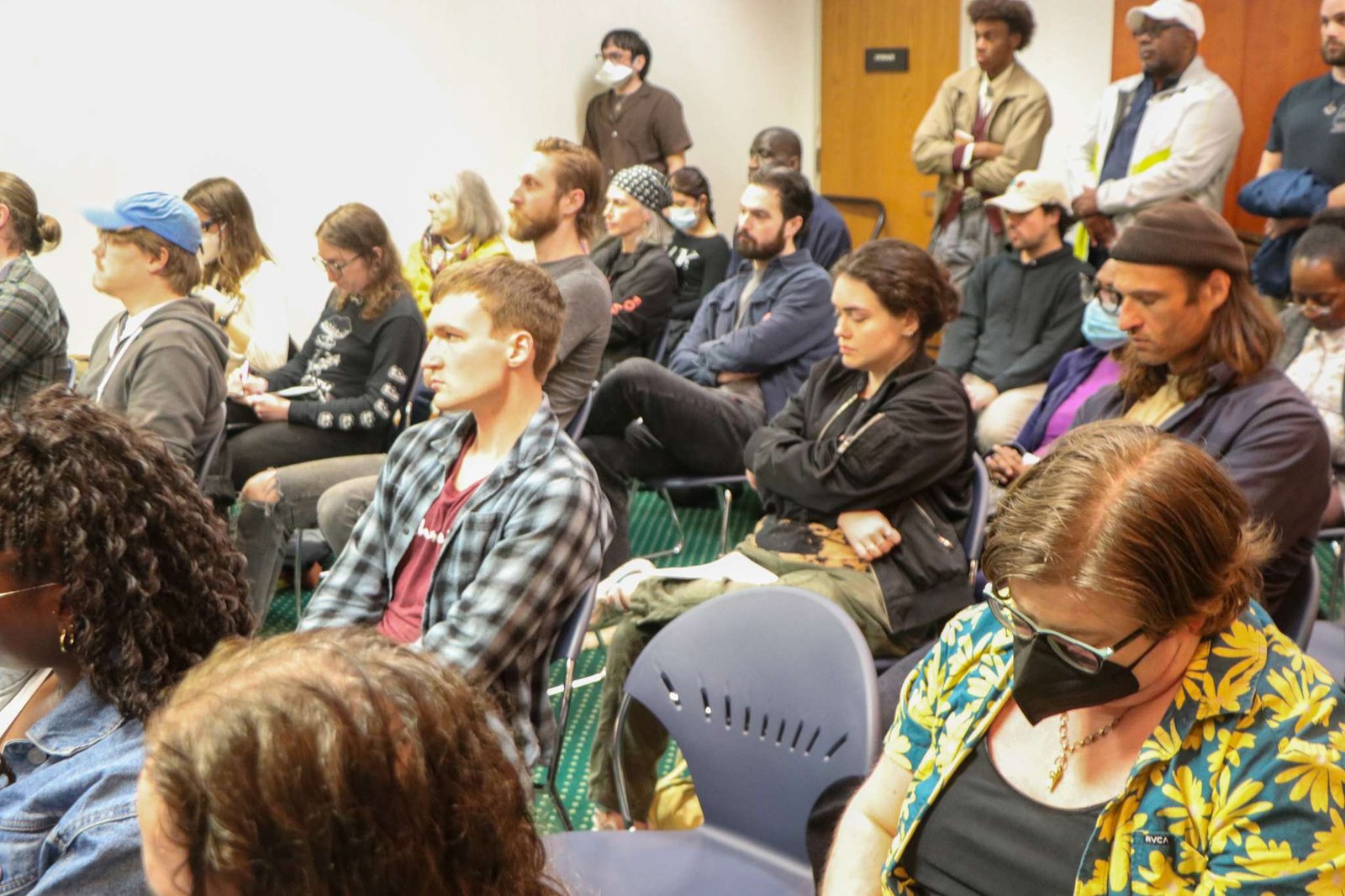
The meeting drew a packed room of residents from South and East DeKalb, many of whom have spent months demanding transparency, clearer communication, and stronger safeguards as data center proposals continue to surface across the county.
A New Leadership Team for a Critical Moment
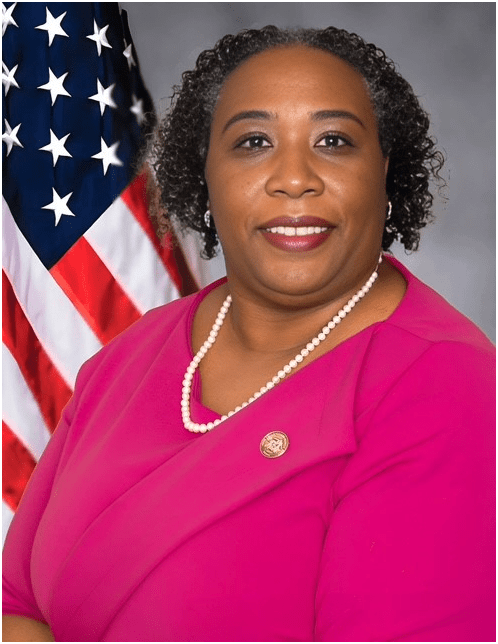
Courtesy photo Chakira-Johnson-Presiding-Officer
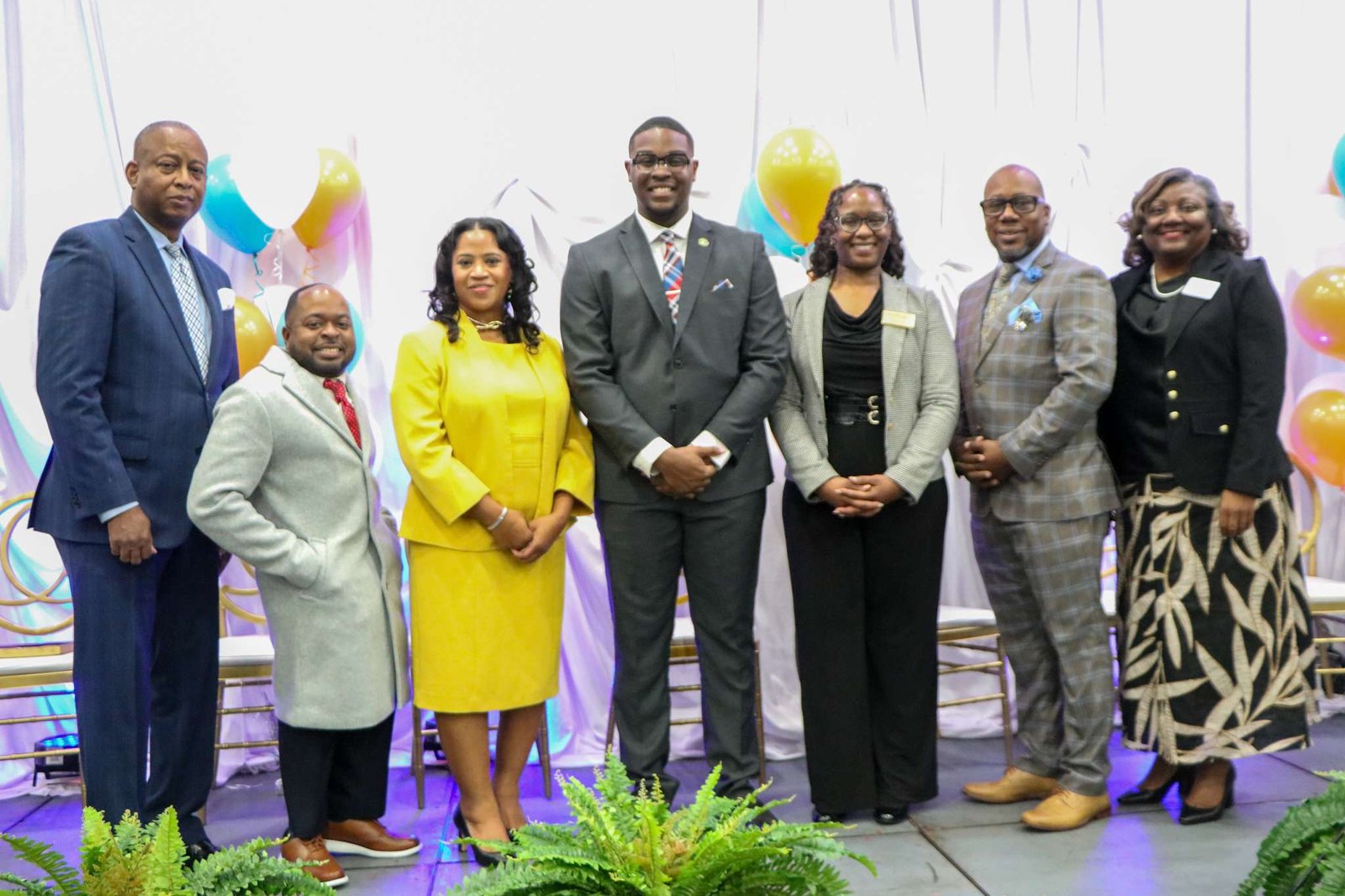
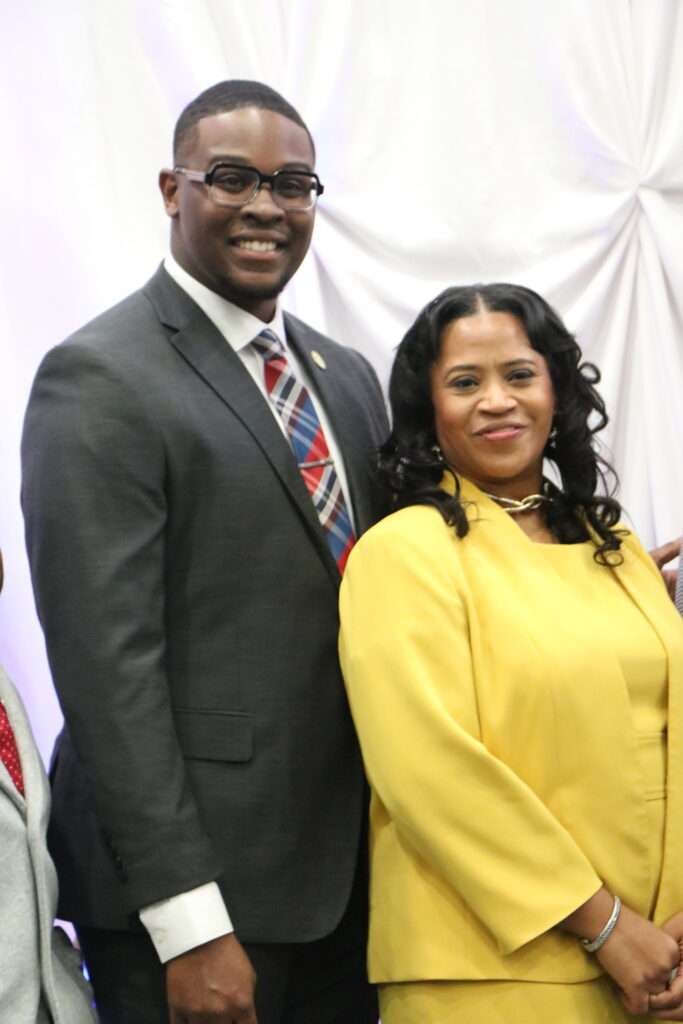
Commissioners unanimously selected Chakira Johnson (District 4) as Presiding Officer and elected LaDena “Dr. B” Bolton (Super District 7) as Deputy Presiding Officer, a pairing that blends deep engineering expertise with community‑rooted advocacy.
Chakira Johnson: Engineering Mindset Meets Procedural Power
Johnson brings more than two decades of experience in civil engineering, municipal operations, and public infrastructure management. A Georgia Tech graduate with a master’s degree in international relations from Troy University, she is a licensed professional engineer in three states and was named one of Engineering Georgia’s 50 Notable Women in 2022.
Her résumé is matched by her long-standing service in DeKalb: nearly 30 years as a resident and 16 years on the Stone Mountain City Council, including three terms as Mayor Pro Tem. She has been a consistent advocate for STEM education and youth engagement.
As Presiding Officer, Johnson will guide the Board’s procedural direction running meetings, appointing committee chairs, and shaping how and when major issues come to the floor. She emphasized a leadership style grounded in professionalism and public trust.
“I am committed to leading with efficiency, integrity, and respect,” Johnson said. “This Board serves the people of DeKalb County.”
LaDena Bolton: A Community Voice With Scientific Rigor
Bolton, known affectionately as “Dr. B,” enters the Deputy Presiding Officer role during her first year on the commission. A graduate of Avondale High School, she credits her December 2024 election to long-standing community relationships and grassroots service.
Her professional background includes a Ph.D. in chemistry from Clark Atlanta University, a bachelor’s degree from Savannah State University, and a career as an analytical forensic chemist working in national security, energy sustainability, and health equity.
Bolton’s early initiatives reflect her community-first approach:
March Into a Cleaner Tomorrow, a countywide cleanup effort that mobilized more than 1,000 volunteers and removed roughly five tons of litter in three months.
Youth Aviation Program, the county’s first, offering underserved students hands-on aviation training at DeKalb‑Peachtree Airport and mentorship toward earning pilot licenses.
Her office uses the bee pollinator as a symbol of collective work and community uplift.
“We’re building legacies from the inside out,” Bolton said. “Families, youth, neighborhoods that’s where the work begins.”
Why These Roles Matter Now
Under the DeKalb County Organizational Act, the Presiding Officer and Deputy Presiding Officer shape the Board’s internal structure and public-facing process. They control meeting flow, committee leadership, special session calls, and how major issues like data centers move through the system.
With public trust strained and residents demanding clearer communication, the leadership style of Johnson and Bolton will directly influence how the county navigates the months ahead.
Data Centers: A Debate That Has Become a Community Flashpoint
Beyond leadership elections, commissioners voted to delay action on data center zoning changes until July, when the planning commission is expected to present updated recommendations.
The pause comes after months of intense debate, particularly in South and East DeKalb communities that have historically borne the brunt of industrial encroachment, infrastructure strain, and uneven economic development.
Community Concerns
Residents have raised concerns about noise from cooling systems, water usage in a county already facing infrastructure challenges, environmental impact on nearby neighborhoods, proximity to homes and schools, and transparency in how proposals are evaluated.
Many residents say they are not opposed to economic development they simply want development that respects community health, land use, and long-term sustainability.
Economic Stakes
County officials, including CEO Lorraine Cochran‑Johnson, have noted that a single large-scale data center could generate an estimated $27 million annually in tax revenue, driven by the high value of servers and cooling equipment.
Supporters argue that revenue could support long‑delayed water system upgrades, reduce pressure on residential taxpayers, and strengthen the county’s long-term financial position.
They also describe data centers as essential digital infrastructure the unseen backbone of cloud computing, artificial intelligence, and modern communications.
Regulation vs. Restriction
Proposals under discussion include 500‑foot buffers from residential areas, strict noise limits, generator restrictions, environmental impact reviews, and community benefit funds. Commissioner Ted Terry has suggested dedicating a portion of data center tax revenue to libraries, youth programs, and neighborhood improvements.
Statewide Scrutiny: Georgia Reconsiders Its Data Center Boom
The local debate mirrors a broader conversation unfolding at the Georgia Capitol.
A report from the Carl Vinson Institute of Government found that data center projects have generated more than 28,000 construction jobs, over 5,000 permanent positions, and billions in economic impact statewide.
Metro Atlanta led the nation in data center expansion last year, surpassing Northern Virginia, according to CBRE.
But the growth comes with a cost: state utility regulators have approved plans to add roughly 10,000 megawatts of new power generation capacity, much of it to meet data center demand.
State Rep. Ruwa Roman has introduced bipartisan legislation proposing a moratorium on new data center construction through 2027.
“This is permanent,” Roman said during recent hearings. “And if we get it wrong, Georgians will deal with the consequences for decades.”
Looking Ahead: Leadership, Trust, and the Path Forward
As DeKalb County moves deeper into 2026, the election of Johnson and Bolton signals a leadership team that blends technical expertise with community‑centered advocacy. Their challenge will be guiding a divided public conversation while ensuring transparency, fairness, and long-term planning.
The July deadline for data center zoning recommendations sets the stage for a pivotal summer one that will test the Board’s ability to balance economic growth with environmental stewardship, neighborhood protection, and community trust.
For residents, the question remains: what kind of development will shape DeKalb’s future and who gets to decide?
For Johnson and Bolton, the months ahead will define not only their leadership but the county’s direction for years to come.
Residents packed a Renew DeKalb town hall to oppose data centers in South and East DeKalb, citing health risks, water strain, and zoning rules they say favor developers.
By Milton Kirby | Decatur, GA | January 11, 2026
A packed community meeting at the DeKalb Covington Highway Public Library on Saturday underscored a growing resistance to large-scale data center development in DeKalb County particularly in South and East DeKalb, where residents say environmental and infrastructure burdens are already too heavy.
The town hall, organized by Renew DeKalb and led by community organizer Gina Mangham, drew residents concerned that existing zoning rules are too broad and could allow massive, industrial-style data campuses to be built dangerously close to homes, schools, and churches.
Opponents warned that while data centers are often framed as clean, quiet engines of economic growth, the lived reality can be far different for nearby neighborhoods.
“The impact to the community that people are not looking at is the real health impact to nearby residents,” Mangham told the audience, pointing to concerns over air quality, noise, light pollution, and long-term infrastructure strain.
From Homes to Servers
According to Mangham, at least one proposed data center site in DeKalb was previously slated for a residential development of roughly 305 homes. That plan was later replaced with a data center proposal a shift residents say prioritizes developer profits over community stability.
Residents repeatedly emphasized that South and East DeKalb have historically borne the brunt of landfills, industrial zoning, and environmental hazards. Many fear data centers represent the next wave of uneven development.
“This is not happening in a vacuum,” one speaker said. “Our communities are already carrying more than their fair share.”
Water, Sewer, and a Federal Consent Decree
A central theme of the meeting was water and sewer capacity — a sensitive issue in DeKalb County.
In December 2011, DeKalb entered into a federal consent decree with the Environmental Protection Agency and the Georgia Environmental Protection Division to address chronic sanitary sewer overflows. The agreement required billions in upgrades and repairs over an initial 8.5-year period, later extended due to ongoing compliance challenges.
Residents questioned how the county could responsibly approve water-intensive data centers while still working to meet those long-standing obligations.
Large data centers can consume millions of gallons of water per day, primarily for cooling systems. Speakers also raised concerns about glycol-based coolants, which are recyclable but hazardous if improperly handled.
Unanswered questions remain: How will contaminated cooling water be disposed of? Who pays for cleanup if a data campus is decommissioned decades from now?
Noise, Air, and the Grid
Beyond water, residents cited noise pollution from constant cooling fans, light pollution from 24-hour operations, and air emissions from diesel backup generators.
Studies and community reports from other states show that generator testing can release nitrogen oxides and fine particulate matter linked to asthma and cardiovascular disease. Some residents described the sound near data centers as a constant hum approaching the level of heavy lawn equipment.
Energy use is another concern. Data centers place extraordinary demands on local power grids, which can drive up residential utility bills as infrastructure upgrades are passed on to consumers.
Federal Push, Local Pushback
The meeting took place against a backdrop of aggressive federal efforts to accelerate data center construction nationwide.
In July 2025, Executive Order 14318 — “Accelerating Federal Permitting of Data Center Infrastructure” — directed federal agencies to streamline approvals, limit environmental reviews, and offer financial incentives to qualifying data center projects. The order also encourages the use of federal lands, including Brownfield and Superfund sites, for development.
Then, on December 11, 2025, President Donald Trump signed a separate executive order aimed at blocking state and local governments from restricting artificial intelligence development, arguing that fragmented regulation could weaken U.S. competitiveness.
Community leaders warn these federal moves could weaken local oversight just as neighborhoods are trying to assert their voices.
DeKalb Hits Pause
In response to mounting pressure, the DeKalb County Board of Commissioners voted in December to extend a moratorium on new data center applications until June 23, 2026.
The pause temporarily blocks approval of new permits while commissioners work on comprehensive regulations addressing buffer zones, noise, screening, water use, and energy impacts.
· Terry has publicly argued that the moratorium is about responsible, data-driven planning, not stopping economic development outright.
· He has warned about unchecked expansion, rising residential power bills, and the lack of guardrails in current zoning.
· He has framed the pause as time to “get it right,” listen to residents, and build protections.
“This is about making decisions based on data and residents’ lived experiences,” Terry said during prior board discussions, warning that unchecked expansion could raise residential power bills by as much as $20 per month.
Other commissioners echoed concerns about data centers being allowed near schools and residential areas under current zoning rules.
What’s Already Here — and What’s Proposed
DeKalb currently has two operating data centers: a 3,350-square-foot facility run by DC Blox Atlanta and an 88,000-square-foot facility owned by Lincoln Rackhouse.
More significantly, county records show an application from PCC-DeKalb for a 1 million-square-foot data center campus on roughly 95 acres along Loveless Place in Ellenwood. That proposal includes three two-story buildings and an outdoor electric substation, with a vote expected in early 2026.
Two additional sites Bouldercrest Road and International Park Drive previously received zoning certification letters indicating data centers could be allowed, though neither project has moved forward.
Lessons From Virginia
Renew DeKalb organizers also pointed to Northern Virginia, the nation’s largest data center hub, as both a cautionary tale and a roadmap.
Loudoun County now requires special exceptions for all data centers. Fairfax County has imposed strict setbacks, enclosure requirements, and transit buffers. Even in Prince William County where data centers generate tens of millions in tax revenue fierce community opposition has derailed projects.
Virginia’s generous tax exemptions for data centers, which cost the state an estimated $750 million in lost sales tax revenue in 2023, have also drawn legislative scrutiny.
A New Proposal: Sharing the Benefits
In early January, Commissioner Terry introduced a resolution proposing a “DeKalb For the People AI Tech Dividend Fund,” which would dedicate 50 percent of data center tax revenue to community investments and fiscal stability.
The plan includes funding for libraries, seniors, youth programs, environmental buffers, green infrastructure, and workforce retraining particularly for neighborhoods within three miles of a data center site.
Public hearings on zoning amendments are scheduled later this month, with final votes expected in 2026.
A Community on Record
As Saturday’s town hall made clear, many DeKalb residents are no longer willing to be silent.
Speakers repeatedly said they are not opposed to technology or economic development — but they reject what they see as sacrifice zones for an industry that consumes enormous resources while providing relatively few local jobs.
Atlanta Mayor Andre Dickens begins his second term pledging to defeat poverty and inequality, citing falling crime, housing investment, and a renewed push for neighborhood reinvestment.
By Milton Kirby | Atlanta, GA | January 6, 2026
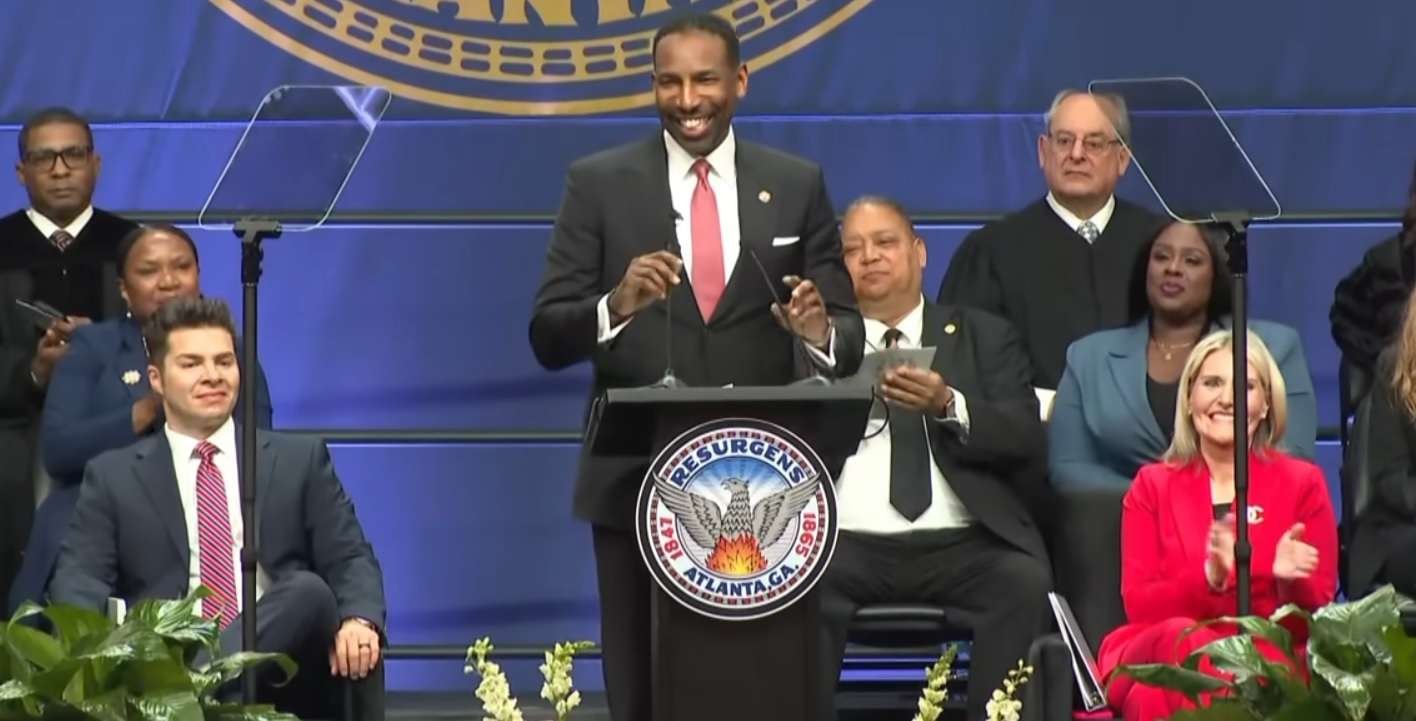
Atlanta entered a new chapter Monday as Andre Dickens was sworn in for a second four-year term, pledging to confront poverty, inequality, and public safety with renewed urgency — and with proof, he said, that the city’s approach is working.
Before thousands packed into Georgia State University’s Convocation Center, Dickens framed his next term as the completion phase of what he repeatedly called Atlanta’s “group project,” a citywide effort to invest in people, neighborhoods, and opportunity without leaving communities behind.
“Atlanta, we are done managing poverty,” Dickens declared. “We are done tolerating inequality. And we are done accepting violence as destiny.”
A second term shaped by results
Dickens, a lifelong Atlantan who grew up in the Adamsville neighborhood, returns to office after winning more than 85 percent of the vote in November. His second inauguration followed an unprecedented three-day Inauguration Weekend that included 61 community service projects across the city — a nod to his role as Atlanta’s 61st mayor and a signal that service, not ceremony, would define the moment.
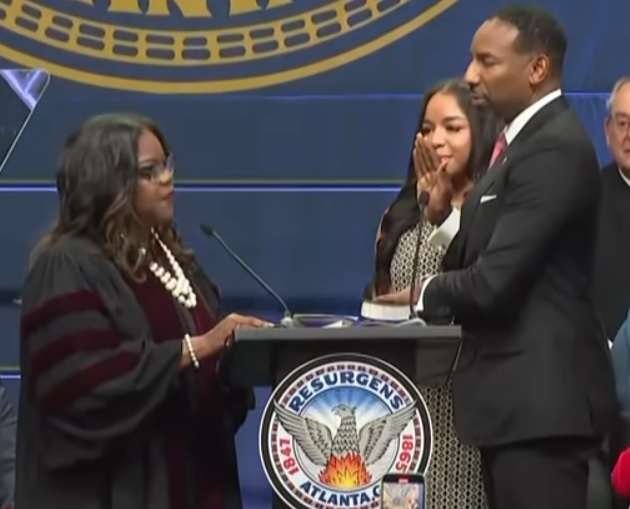
The Honorable Asha Jackson administers oath of office to Mayor Andre Dickens
During his first term, Dickens said the city invested in people and neighborhoods at a historic scale. Atlanta opened 500 rapid re-housing units and started or completed more than 13,000 units of affordable housing. Youth investments topped $40 million, and more than 19,000 young people were hired at a living wage through city-supported programs.
Those investments, Dickens argued, produced measurable outcomes. Violent crime dropped sharply, with Atlanta finishing 2025 with fewer than 100 homicides for the first time in years. Youth-related crime fell by 56 percent, while Atlanta Public Schools posted its highest graduation rate on record.
The city also earned its first-ever AAA bond rating, raised the minimum wage for city employees to $17.50 an hour, expanded the BeltLine and park access, reduced food deserts, and launched the city’s first municipal grocery store.
“Across every measure,” Dickens said, “the Phoenix of Atlanta continues to rise.”
The unfinished work
Still, Dickens made clear that progress alone is not enough.
“How can we be satisfied when too many of our neighbors still sleep on our streets?” he asked. “How can we be satisfied when too many families live check to check — with more month than money?”
At the center of his second term is the Neighborhood Reinvestment Initiative, aimed at ensuring every Atlanta neighborhood is safe, connected, healthy, and whole. Dickens described poverty and inequality as Atlanta’s modern-day “Goliath” — a persistent enemy that demands a direct confrontation, not incremental management.
He outlined five priorities — “five smooth stones,” as he called them — that will guide the administration: affordable housing, neighborhood investment, youth opportunity, public safety, and ethical, fiscally responsible government.
“Where we’ve thrown those stones,” Dickens said, “the results have been undeniable.”
A citywide audience
The inauguration drew a broad cross-section of Atlanta’s political and civic leadership, including U.S. Sen. Raphael Warnock, U.S. Reps. Lucy McBath and Nikema Williams, U.N. Ambassador Andrew Young, and former mayors Kasim Reed and Shirley Franklin.
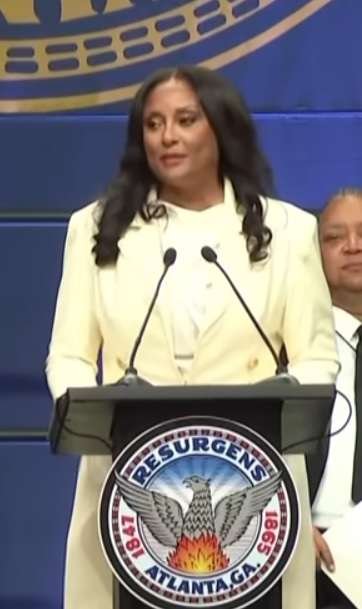
City Council President Marci Collier Overstreet speaks
All members of the Atlanta City Council were sworn in alongside Dickens, including incoming Council President Marci Collier Overstreet, underscoring the administration’s emphasis on collaboration entering a politically active year ahead of the 2026 Georgia legislative session.
From Adamsville to City Hall
Dickens’ story remains central to his message. A graduate of Benjamin E. Mays High School, Georgia Tech, and Georgia State University, he often describes his leadership as forged in Atlanta’s neighborhoods long before City Hall.
“Leadership doesn’t begin in the palace,” he said, referencing his upbringing. “It begins in the field.”
That framing resonated throughout the address, which closed with a promise to move beyond what Dickens called a “tale of two cities” — one prosperous, one struggling — toward a future where opportunity is shared more evenly.
“This is not just a slogan,” he said. “It is our promise.”
Why it matters
As Atlanta continues to grow, Dickens’ second term will test whether the city can expand affordability, safety, and economic mobility without displacing the communities that built it. His administration enters 2026 with momentum, measurable results, and heightened expectations — and with a mayor signaling that the next four years will be about finishing the work already underway.
“Now,” Dickens told the crowd, “let’s get to work, Atlanta.”
Jayden Williams, 22, was sworn in as Stockbridge’s youngest mayor ever, signaling a new era of youth leadership, economic focus, and inclusive growth in Henry County.
By Milton Kirby | Stockbridge, GA | January 2, 2026
Before a standing-room-only crowd and an atmosphere that felt more like a celebration than a formal government ceremony, Jayden Williams was officially sworn in as mayor of Stockbridge, becoming the youngest person ever to hold the office in the city’s history.
Williams, just 22 years old, took the oath of office as cheers filled the room and walk-up music echoed through the chamber. Roughly 250 to 300 residents, family members, elected officials, and supporters packed the venue, many coming specifically to witness a moment that symbolized both generational change and a new chapter for the growing Henry County city.
The ceremony was energetic and deeply personal. Gospel recording artist Jarrett Boyce and saxophonist Richard Shaw, Jr. performed while laughter, dancing, and applause punctuated the proceedings. Williams entered to Young Jeezy’s “Put On,” a nod to Atlanta culture and a signal that this administration intends to bring a fresh tone to City Hall.
When the moment arrived, Williams placed his hand on his late great-grandfather’s Bible, held by his younger sister, as Honorable Judge Holly Veal administered the oath. His parents, siblings, grandparents, and great-grandmothers looked on from the audience, alongside longtime supporters who followed his rise from youth leadership to the city’s highest office.
Williams defeated a two-time incumbent in November, a victory he has said reflected a clear desire for change among Stockbridge voters. At the time of the election, he was still completing his studies in political science at Clark Atlanta University, balancing coursework with door-knocking and community forums.
“I really want to see us grow into something where every single resident feels accommodated,” Williams said following the election. “When I say that, I’m referring to new residents, young professionals, our working families, our teachers, and our seniors. How can we accommodate them to make them feel like they are home?”
A Personal and Historic Moment
During his remarks, Williams paid tribute to his late great-grandfather, recalling family stories about racial tensions that once made Henry County a place to pass through rather than stop.
“My great-grandfather used to warn my grandmother never to stop in Henry County or Stockbridge because of the racial tensions here,” Williams said. “And yet today, in a moment he could only have dreamed of, I was sworn in on his very Bible. If he could see me now, I know he’d be grinning ear to ear. This history matters.”
That theme of history and progress ran throughout the ceremony, as Stockbridge leaders emphasized how much the city has changed—and how much more change lies ahead.
New Council Members Take Office
Williams was sworn in alongside newly elected District 1 Councilwoman LaKeisha Gantt and District 2 Councilman Antwan Cloud, both of whom also took their oaths during the ceremony.
Photo by Milton Kirby – Jayden Williams & LaKeisha Gant after being sworn in
“It means our city is growing, our leadership is evolving, and we are embracing every generation as a part of Stockbridge’s future,” Gantt said.
While the evening celebrated all three officials, the crowd’s energy made clear that Williams’ milestone carried special significance for residents who see his election as a signal that Stockbridge is entering a new era.
A Resume Built on Youth Leadership
Long before launching his mayoral campaign, Williams built a reputation as a youth advocate and civic leader. He began community work at just 13 years old and went on to serve as Freshman Class President and Student Government Association Treasurer at Clark Atlanta University. He was twice appointed as a White House Scholar and became the youngest Planning Commissioner in Georgia, currently serving as chair of the Stockbridge Planning Commission.
Williams has also served as State Conference President of the Georgia NAACP Youth & College Division, Youth Mayor Emeritus for the City of Stockbridge Youth Council, and Chairman Emeritus of Youth Leaders of Henry. His work has earned him numerous honors, including ACCG Youth Leader of the Year, the AT&T Climber Award, and a national public speaking award.
An Agenda Focused on Opportunity
In his inaugural address, Williams laid out an ambitious but grounded agenda centered on economic development, youth opportunity, housing stability, and inclusive growth.
“A city cannot rise if its people are locked out of opportunity,” he told the crowd, emphasizing that economic innovation will be a front-and-center priority for his administration.
City of Stockbridge
Williams outlined plans to strengthen small businesses, expand workforce training, revitalize downtown Stockbridge, and align education pathways with real job opportunities in sectors such as healthcare and logistics. He also stressed the importance of youth programming, the arts, and mentorship as tools for long-term community stability.
Quoting Shirley Chisholm, Williams added his own twist to a familiar line.
“If you don’t have a seat at the table, bring a folding chair,” he said. “But Stockbridge did something different. We gathered the wood, we built the table, and now together, we’re going to make sure that table is strong enough and welcoming enough for everyone.”
Looking Ahead
Williams said his administration will prioritize affordable housing, public safety rooted in prevention and trust, and infrastructure that supports smart, responsible growth. He also pledged transparency and collaboration, acknowledging that challenges lie ahead.
“Leadership is not pretending everything is perfect,” he said. “Leadership is showing up anyway and doing the work.”
As the ceremony concluded, supporters lingered, taking photos and embracing family members, while the new mayor greeted residents one by one. For many in attendance, the night marked more than a swearing-in—it marked a generational shift and a statement about who belongs in Stockbridge’s future.
A new year, a new mayor, and, as Williams put it, a city that is “all in for Stockbridge.”
Bipartisan bill led by Senator Raphael Warnock aims to cut red tape, speed up Georgia transit projects, and give state agencies more flexibility to deliver improvements faster.
By Milton Kirby | Washington, D.C. | December 4, 2025
U.S. Senator Reverend Raphael Warnock (D-GA) is leading a new bipartisan push to fast-track transit projects across Georgia and the nation, unveiling legislation aimed at cutting federal red tape, reducing delays, and giving state agencies more control over construction reviews.
Warnock introduced the Streamline Transit Projects Act on Wednesday alongside Senators Mike Lee (R-UT), Mark Kelly (D-AZ), and John Curtis (R-UT). The bill seeks to reduce the time it takes to approve and build transit projects—everything from new bus rapid transit corridors to station upgrades and light-rail improvements—by allowing qualified state and local transit agencies to conduct their own environmental reviews for low-impact projects.
State officials currently have that authority for highway construction, but not for transit. The sponsors argue that fixing this imbalance will help agencies deliver improvements more efficiently at a time when metropolitan regions are battling traffic congestion, rising emissions, and growing demand for reliable transit options.
A Push for Faster, More Flexible Transit Delivery
Warnock said the proposal will help Georgia communities receive modern transit improvements without years of avoidable delay.
“This bipartisan legislation will give transit agencies new tools to more quickly deliver projects that meet local needs and improve the ridership experience,” Warnock said. “By delivering transit projects faster, we can continue to invest in a brighter, more connected future for all who call Georgia home.”
The bill would streamline certain environmental reviews, reduce duplication, and allow states to use the same flexible process already applied to road construction—changes the senators say will accelerate project timelines without sacrificing environmental protections.
Support Across the Aisle
Co-sponsors emphasized the need for states and localities—not Washington—to take the lead on straightforward transit upgrades.
Sen. Mike Lee framed the legislation as a return of authority to states. “Utah’s transit projects will be better off without the federal government meddling in every decision and holding up construction… Don’t tread on our TRAX!” Lee said.
Sen. Mark Kelly highlighted how long waits for routine approvals hurt everyday riders. “Right now, simple transit projects can get tied up in years of red tape… Our bill cuts needless delays for low-impact projects so commuters see the benefits sooner.”
Sen. John Curtis said growing regions like Utah need faster tools to keep pace: “This bill gives transit agencies the flexibility to meet local needs more efficiently… connect people, reduce traffic, and protect the environment we all treasure.”
MARTA Strongly Backs the Bill
Metro Atlanta’s transit agency offered quick support. MARTA Interim CEO Jonathan Hunt said the reforms would improve safety, mobility, and project delivery.
“Reducing unnecessary administrative hurdles will help us accelerate project approvals and deliver high-quality transit to the metro Atlanta region more efficiently,” Hunt said. He added that modernizing federal processes will help MARTA expand mobility options and strengthen safety and security for riders.
Part of Warnock’s Broader Transit Strategy
Warnock has been one of the Senate’s vocal advocates for public transit expansion, pushing for upgrades in Georgia’s rapidly growing metro areas and improving mobility in both urban and rural communities. He previously secured key provisions in the Infrastructure Investment and Jobs Act to strengthen federal transit grant programs and support efforts to expand service statewide.
If enacted, the Streamline Transit Projects Act could smooth the path for major initiatives underway or planned across Georgia—including MARTA bus-rapid-transit corridors, station modernization, regional mobility upgrades, and new connections designed to reduce congestion as the state continues to grow.
Georgia will receive over $300 million in federal BEAD funding to expand broadband, helping close the digital divide and bringing high-speed internet to unserved rural communities.
By Milton Kirby | Atlanta, GA | December 2, 2025
Georgia is set to receive more than $300 million in new federal funding to expand high-speed internet access across the state, marking one of the largest broadband investments in Georgia history.
U.S. Senators Raphael WarnockandJon Ossoff announced the funding Monday in Washington, secured through the Bipartisan Infrastructure Law’s Broadband Equity, Access, and Deployment (BEAD) Program. The money will be distributed through the Georgia Technology Authority (GTA) to local contractors to build out new fiber networks in communities that still lack reliable service.
State leaders estimate that 15% of Georgians still do not have dependable broadband — a barrier that affects families, students, farmers, and small businesses across rural and underserved counties.
A Major Push Toward Full Connectivity
Senator Warnock said the investment moves Georgia closer than ever to 100% statewide broadband coverage.
“This federal investment means life gets easier for hundreds of thousands of Georgians,” Senator Warnock said. “You need a broadband connection to do just about anything. You can’t even farm without a broadband connection.”
Warnock also criticized delays by the Trump Administration in releasing federal broadband dollars earlier this year, saying he will continue pressing for all remaining BEAD funds to be released quickly.
Senator Ossoff called the funding “a major next step” for Georgia families and businesses.
“Our historic bipartisan infrastructure law continues to deliver for Georgia,” he said. “This is about ensuring every Georgia family and business has high-speed internet.”
Where the Money Will Go
Under the BEAD program, the new $300 million will be used to:
Build fiber broadband in unserved rural counties
Upgrade outdated networks in underserved areas
Expand affordable access programs aimed at low-income households
Support construction jobs and local contracting across the state
The Georgia Technology Authority will allocate funds to providers capable of installing fiber in areas where service is slow, unreliable, or non-existent.
A Long Legislative Trail to Today’s Funding
Senator Warnock has made broadband expansion a signature priority:
In 2024, he toured OFS Fitel in Norcross with former Commerce Secretary Gina Raimondo to highlight Georgia’s role in fiber manufacturing.
He urged the FCC to expand theE-Rate program to allow Wi-Fi hotspot lending by schools and libraries.
In 2022, he hosted then-FCC Chair Jessica Rosenworcel in Jackson County to spotlight rural internet needs.
Alongside Senator Luján, he pushed for strong federal rules to prevent digital discrimination by internet providers.
Senators Warnock and Ossoff also announced $1.3 billion in BEAD funding for Georgia in 2023. In May 2025, both senators demanded the Trump Administration release the delayed BEAD funds—setting the stage for this week’s announcement.
Why This Matters for Rural and Urban Georgia
The expansion is expected to help:
Farmers who depend on broadband for precision agriculture
Students completing homework and online learning
Small businesses that rely on digital payments and online tools
Seniors using telehealth services
For many counties, especially in South Georgia and parts of Appalachia, fiber broadband is still years away without federal help.
Monday’s announcement marks one of the strongest steps yet toward closing that gap.
No contribution is too small. Support us today and help keep truth accessible for all.
Reality-TV star and dentist Dr. Heavenly Kimes launches her Georgia 13th District congressional bid at Nostalgia Kitchen & Cocktails, pledging new leadership in healthcare, education, and community service.
By Milton Kirby | Stone Mountain, GA | November 10, 2025
The crowd packed into Nostalgia Kitchen & Cocktails in Stone Mountain wasn’t there for reality television drama — they came to hear a new kind of pitch.
Dr. Heavenly Kimes, best known for her role on Bravo’s Married to Medicine, stepped off the screen and into the political arena Saturday afternoon, holding her first town hall at the restaurant as a candidate for the U.S. House of Representatives in Georgia’s 13th Congressional District.
The nostalgic, mural-lined restaurant, tucked near downtown Stone Mountain, served as a fitting backdrop — lively, intimate, and full of conversation. Plates clattered, phones recorded, and neighbors leaned close as Kimes began to speak. Neighbors and fellow doctors were in the building, many eager to hear how one of their own planned to bring bedside compassion to Washington.
At 54, the dentist, entrepreneur, and TV personality is no stranger to reinvention. For years, she’s built a brand around transformation — first in smiles, now in service. What began as a planned run for the Georgia House of Representatives (District 93) has turned into something larger: a bid for Congress.
“Just days before I announced for State House, the One Big Beautiful Bill was signed,” Kimes told the audience. “I waited to hear something from my Congressman about it — I did not. When Donald Trump launched a retribution campaign against former allies like John Bolton, I hoped to hear my Congressman take a stand — I did not. Thousands of Georgians have lost their jobs this year, and I expected to see leadership at a town hall to help families transition to new opportunities — I did not.”
She paused, then added, “After hearing from community leaders urging me to run for Congress, I realized this: we need more than a vote in Washington, we need a voice. People are scared, but they also have hope — and they deserve someone willing to speak to both.”
From the Office to the District
Kimes’ campaign now centers on three familiar pillars — healthcare, economic development, and education reform. She said her decision to enter politics grew out of years of serving patients who couldn’t afford care. But even more heartbreaking, they can’t afford the prescriptions that go along with it.”
She told the crowd she understood the struggle personally. “When my first child was born, I received WIC benefits,” she said, referencing the federal Women, Infants and Children program. “Without those benefits, life would have been different.”
It was one of many moments where she blurred the line between TV personality and public servant — grounded in both story and sincerity.
New Leadership for a Changing District
Georgia’s 13th District, stretching across portions of DeKalb, Clayton, Gwinnett, Henry, Newton, and Rockdale Counties, has been represented by Congressman David Scott since 2002. Kimes made clear she respects Scott’s long tenure but believes a generational shift is overdue.
Scott served in the Georgia General Assembly from 1974 to 2002 — first in the House of Representatives (1974–1982) and then in the State Senate (1983–2002). He was first elected to Congress in 2002 and began his current term in January 2003. Kimes noted that Congressman Scott failed to vote in the last six elections — something she believes reflects the need for new leadership.
“We must have a new kind of candidate — one who is ready to fight for healthcare access, economic opportunity, education, and justice for every family in GA-13,” she said.
Her campaign manager, veteran political strategist Fred Hicks, framed her candidacy as essential to energizing Georgia’s Democratic base.
“If Democrats are going to win Georgia and take back the House, we need candidates like Dr. Heavenly,” Hicks said. “Candidates who are less political, more passionate, and deeply visible in their communities. Her voice and her audience are the missing keys to closing the vote gap and delivering Democratic victories.”
Healthcare at the Heart
Healthcare dominated the Stone Mountain discussion. From mental health to medical affordability, Kimes linked policy goals to lived experience.
She floated one creative — if unconventional — idea to address mental health funding: adding a one-dime fee to every ticket sold through Hartsfield-Jackson Atlanta International Airport.
“With about 108 million passengers passing through annually,” she explained, “that dime could generate roughly $10.8 million a year for mental health initiatives across metro Atlanta.”
Audience members nodded, some whispering their approval. One man in the back clapped softly, saying, “That’s thinking outside the box.”
Kimes emphasized that the federal government must partner more directly with counties to ensure those funds reach frontline organizations treating addiction and crisis intervention.
Faith in Families and Small Business
Her platform also calls for targeted investment in local entrepreneurs — particularly women- and minority-owned small businesses — and for expanding career-path programs in schools to bridge the gap between education and opportunity.
“I’ve built businesses from the ground up,” she said. “I know what it takes to sign a payroll and meet a budget. We need to make sure more people — especially our youth — learn those same skills early.”
Education, she said, should prepare students not only for college but also for trades, healthcare, and technology jobs that sustain families right here in Georgia.
“Not everyone’s path is the same,” she said. “We’ve got to invest in schools, teachers, and programs that give every child a real chance.”
The Personal Touch
Throughout the afternoon, Kimes balanced policy with personality — offering flashes of the humor and authenticity that have made her a fan favorite on television.
At one point, Hicks asked bluntly why voters should choose her to represent Georgia’s 13th Congressional District.
Kimes smiled. “You should vote for Dr. Heavenly not only because she’s the best person for the job — but because she’s real, she’s relatable, she has the reach, she has the resources, and she has the platform.”
Her voice carried both confidence and conviction.
“Congress works for the people,” she said. “And right now, a lot of people don’t feel like anyone’s working for them.”
Campaign in Motion
The Stone Mountain town hall marked the early phase of her congressional run. The campaign is still developing its detailed policy proposals, but Kimes made clear she intends to keep the conversation local — visiting neighborhoods, schools, churches, and small businesses across the district.
Her team plans a series of “Real Talk with Dr. Heavenly” sessions — informal meet-ups where residents can share concerns directly.
“We’ll keep these going,” she told attendees. “You’ll see me in Decatur, Riverdale, Stockbridge — everywhere. We can’t change anything if we don’t listen first.”
Though light on legislative specifics for now, her message of empathy and empowerment resonated with the audience. As the event ended, supporters lined up for photos, handshakes, and hugs — some thanking her for “showing up” where others had not.
A Campaign to Watch
Dr. Heavenly Kimes’ entry into the race makes Georgia’s 13th Congressional District one of the state’s most closely watched contests in 2026. Her celebrity brings visibility; her message brings energy. Whether that combination translates into electoral success remains to be seen.
But one thing was clear in Stone Mountain: Kimes intends to campaign like she practices dentistry — with a bright smile, sharp precision, and a steady hand.
The Truth Seekers Journal will continue to follow her campaign. As Dr. Heavenly releases more details on healthcare, education, and economic policy proposals, we will keep our readers informed.
Please consider supporting open, independent journalism – no contribution is too small!
Atlanta’s mayors and church leaders rally at Big Bethel AME, vowing to defend diversity, equity, and inclusion programs amid Trump’s federal funding threats.
By Milton Kirby | Atlanta, GA | November 1, 2025
On a cool Friday morning inside Big Bethel AME Church, sunlight poured through stained glass where freedom once found its voice. From that pulpit — the same one that carried Dr. King’s thunder and John Lewis’s call for good trouble — came a new rallying cry:
“The soul of Atlanta is not for sale.”
Mayor Andre Dickens stood with nearly every living Black mayor in city history — Andrew Young, Shirley Franklin, Bill Campbell, Kasim Reed — and Valerie Jackson, wife of the late Mayor Maynard Jackson. Together they filled the sanctuary with memory, defiance, and faith.
A City That Won’t Bow
They came to answer a challenge from Washington — a Trump administration order threatening to choke off federal dollars from cities that keep diversity, equity, and inclusion (DEI) programs alive.
Billions for housing, airport work, and BeltLine projects hang in the balance. But the crowd at Big Bethel didn’t come to talk fear. They came to talk faith.
“We are gathered here to rekindle the spirit of our city — to remind one another that courage, unity, and truth still live within us,” said former councilman Jabari Simama, now helping to lead the new Soul of Atlanta Coalition. “Our mission today is clear: to bring people together, share knowledge, and demonstrate that when we act with purpose and faith, we can change the course of our community. We can push back against forces that seek to divide, distract, and destroy us.”
“Atlanta was built by people who refused to dream small. We will never deny the values that have not only made this city great, but made it just.”
A Legacy Worth More Than Money
Atlanta has already paid a price for its convictions — forfeiting $37.5 million in airport funds this summer rather than gut its minority-contracting program.
“Our soul is not for sale,” declared Elder Toni Belin Ingram of the AME Church, her voice rising over the applause.
Big Bethel AME Church
Mayor Dickens called the fight what it is: another Goliath moment. “Goliath doesn’t stand a chance in Atlanta,” he said. “We’ve slayed bears. We’ve slayed lions. Been there. Done that. Got the notes. Got the t-shirt and some of the scars.”
His office later said the city is still reviewing the legal path forward, but his tone in the church left little doubt: the mayor intends to stand firm.
Where the Story Began
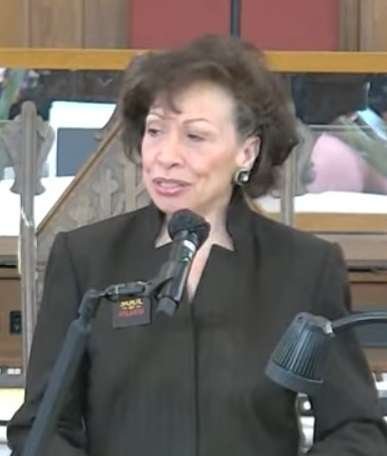
Valerie Jackson
It was Maynard Jackson — Atlanta’s first Black mayor — who planted the seed of economic fairness back in the 1970s. His Equal Business Opportunity program forced open the door for Black-owned firms to compete for city contracts. Washington noticed — and copied it.
“This is where it all began,” said Ambassador Andrew Young, looking over the packed pews. “These ideas didn’t come from Washington to us. They came from us to Washington.”
Valerie Jackson smiled softly at the mention of her husband’s name.
“Maynard’s policies of inclusion became a model for the nation,” she said. “We will not allow the principles of fairness and justice to be rolled back.”
A Coalition of Courage
From Shirley Franklin to Kasim Reed, the lineup at Big Bethel looked like a living timeline of Atlanta’s Black leadership. Pastor Jonathan C. Augustine — or “Pastor Jay” — reminded everyone why they were there.
“Your presence here says we know what’s happening,” he said. “An autocratic leader is targeting blue cities led by Black mayors. And yet here we stand.”
The new Soul of Atlanta Coalition plans to spend the next year gathering stories, uplifting minority-owned businesses, and organizing pushback against attacks on DEI and affirmative-action programs.
Standing in the Gap
Even as City Hall weighs its legal moves, Dickens said the work of serving people continues — especially with the federal shutdown straining families.
“We’re spending time feeding the least, the last, the lost,” he said.
The Atlanta Community Food Bank has launched a $5 million emergency plan to replace lost SNAP benefits, aiming to distribute six million pounds of food in four weeks through 700 local partners.
“In tough times,” Dickens said, “we see the true spirit of Atlanta — compassion, connection, and courage.”
Millions of low-income Americans could lose food assistance as SNAP benefits halt November 1 amid a prolonged government shutdown, leaving families and food banks bracing for crisis.
By Milton Kirby | Atlanta, GA | October 27, 2025
As the federal shutdown stretches into its fourth week, the U.S. Department of Agriculture has confirmed that no Supplemental Nutrition Assistance Program (SNAP) benefits will be issued on November 1 — potentially cutting off aid to more than 42 million Americans who rely on the program to feed their families.
On Monday, the USDA posted a stark message on its website: “Bottom line, the well has run dry.” According to the agency, Senate gridlock over federal spending has left SNAP — once known as food stamps — without the funds to continue into the new month.
Photo by Milton Kirby
The USDA’s statement comes amid partisan tension in Congress. The agency said that Senate Democrats have now voted 12 times against proposed measures to fund SNAP, citing disagreements over other spending priorities. Without a resolution, the department warned, “there will be no benefits issued November 1.”
Millions at Risk
The impact of this funding lapse is enormous. SNAP currently provides monthly food assistance to roughly one in eight Americans — including working parents, seniors, and people with disabilities. The separate Women, Infants, and Children (WIC) program, serving more than 7 million low-income mothers and babies, is also poised to run out of money.
While EBT cards will still function for now, only unused balances from prior months will remain available after November 1. USDA has clarified that these balances will roll over, but no new November benefits will be issued.
Adding to the strain, the USDA has said it will not reimburse states that use their own funds to keep SNAP benefits flowing during the shutdown. That decision leaves governors and local agencies scrambling to fill the gap.
Food Banks Brace for Surge
Across the nation, food banks are preparing for a potential surge in demand. “Food banks are already squeezed by federal funding cuts,” said George Matysik, executive director of the Share Food Program in Philadelphia. “If SNAP goes dark, we’ll see lines wrap around the block.”
Photo by Milton Kirby
The New Disabled South, a Georgia-based advocacy group, has begun offering small emergency grants — $100 for individuals and $250 for families — to help SNAP recipients cover basic needs. But even that organization is warning participants that accepting cash could affect other benefits such as Medicaid or Social Security.
A Divided Washington
The USDA said in an internal memo earlier this month that it would not tap its $5 billion contingency fund, explaining that the reserve is reserved for natural disasters, not shutdowns. That decision — combined with congressional inaction — has deepened frustration across party lines.
“It’s abysmal that we live in such a moment,” said Dom Kelly, founder of New Disabled South. “A government shutdown should not mean that people have to choose between paying rent and feeding their families.”
The shutdown, which began October 1 after lawmakers failed to agree on a 2026 federal budget, is now among the longest in U.S. history, trailing only the 35-day standoff of 2018–2019.
What SNAP Recipients Can Do
SNAP and WIC recipients are urged to contact their state agencies immediately for local assistance and to verify whether their states are releasing temporary emergency benefits. In some states, officials are exploring emergency appropriations or public-private partnerships with community food banks. Others are directing residents to faith-based and nonprofit food programs.
The USDA emphasized that while its mission is to “increase food security and reduce hunger in partnership with cooperating organizations,” it cannot operate without congressional funding.
For now, the agency’s message is clear: without a deal, millions of American households could see their food budgets vanish overnight.
Please consider supporting open, independent journalism – no contribution is too small!
DeKalb residents packed the Porter Sanford Center to learn how data centers impact energy, water, and community life—and what new policies could mean for local neighborhoods.
By Milton Kirby | Decatur, GA | October 17, 2025 (Updated October 21, 2025)
On Wednesday evening, a packed house at the Porter Sanford III Performing Arts & Community Center bore witness to an important community discussion: the town hall event titled “Helping Residents Understand Data Centers”, hosted by DeKalb County Government in collaboration with County CEO Lorraine Cochran Johnson, Commissioner Mereda Davis Johnson and Commissioner Dr. LaDena Bolton. The goal — to shed light on data-center development across metro Atlanta and engage residents directly in shaping policy and zoning.
In her opening remarks, CEO Cochran Johnson emphasized the event’s purpose: “Our goal is to ensure residents have access to accurate information and can engage in meaningful discussion before decisions are made,” she said, stressing that the conversation was “about education, transparency, and community understanding.” With the meeting also live-streamed on DCTV to reach broader audiences, it underscored the County’s intention to leave no stone unturned.
The timing is telling. In July the DeKalb County Board of Commissioners approved a temporary moratorium on new data-center approvals, citing the need for deeper research, policy development and public engagement — extended recently through December 2025. The town hall forms part of that process: a chance for residents to hear from experts directly, ask questions, weigh the potential benefits and pitfalls of data-center development in their communities, and help shape the regulatory framework that will guide what comes next.
Photo by Milton Kirby – DeKalb CEO Lorraine Cochran-Johnson
What is a data center—and why does it matter?
It may sound technical, but the concept is clearer when you break it down. A data center is fundamentally a physical facility where computing equipment, storage systems, networking gear and infrastructure are housed to store, process and manage data and applications. According to Cisco Systems, “at its simplest, a data center is a physical facility that organizations use to house their critical applications and data.” This includes the servers, storage drives, routers and switches, firewalls, as well as the power, cooling and backup infrastructure that keeps everything running — often 24/7.
In practice, the modern facility is an industrial-scale enterprise. It might host cloud-computing platforms, serve as the backbone for AI and machine-learning workloads, support massive “hyperscale” operations (for companies like Google, Amazon, Microsoft) or even serve as regional hubs, connecting telecommunications infrastructure.
Because nearly every service you use—online banking, streaming video, storing and sharing images, remote work, emergency services—runs through some portion of this infrastructure, data centers are essential to our digital lives. They are the silent—but massive—buildings behind the scenes.
As the panel at the Porter Sanford meeting made clear, the reason data centers are increasingly under scrutiny is that, while they provide digital backbone benefits, they also raise real questions about land use, infrastructure stress, environmental impact, community equity and local benefits.
The Town Hall Discussion: Experts, Residents & Real Questions
To assist residents and officials in considering these questions, the County brought together an array of specialists:
Demond Mason of Newton County
Shane Short of the Walton County Development Authority
Ahmed Saeed of Georgia Tech
Céline Benoît of the Metropolitan North Georgia Water Planning District
Danny Johnson of the Atlanta Regional Commission
Juliana Njoku of DeKalb’s Department of Planning and Sustainability
Under the guidance of CEO Cochran Johnson, the panel addressed core topics such as: energy and water use; required infrastructure (power grid, water, cooling, fiber and roads); economic impact and job creation; community benefit and quality-of-life concerns; and the evolving role of data centers in a world of AI, cloud computing and remote everything.
Residents asked pointed questions: how many jobs will actually be created? Will their electricity bills go up? What about the noise, the land-use conversion, the water demand? Many admitted they came to the event unsure of how a data center operates yet left with a clearer understanding of the mechanics and implications.
The Upsides: Why Data Centers Can Be Good for Local Communities
During the discussions, several clear benefits emerged.
Economic development and tax revenue Data-center construction can bring substantial investment into a region. Some counties have seen increased property values, boosted infrastructure spending, and attraction of technology-sector ecosystem growth. The panel cited examples such as Loudoun County in Virginia, where data-centers supported these spill-over benefits.
Infrastructure-upgrade spillover Because data centers require robust utilities—electricity grids, fiber-optic networks, road access—they can serve as catalysts for broader infrastructure improvements that benefit whole communities: better broadband, improved roads, enhanced power reliability.
Foundational digital backbone As noted above, data centers are critical for cloud computing, artificial intelligence, digital entertainment, remote work, telehealth and emergency services. Local proximity to such infrastructure can help position a region for the future economy.
Community partnership opportunities Some operators are increasingly conscious of their role as community partners: training programs, community benefit agreements, technological access, local hiring efforts. When these partnerships are handled proactively, the hosting community sees more than just a facility in its backyard.
In short: with the right planning, regulation and transparency, a data-center project can be more than an industrial site—it can become an asset for a community.
The Concerns: Real Risks that Need Guarding Against
However, the discussion also surfaced multiple legitimate concerns—several of which resonated with many residents.
Massive energy consumption Data centers are extremely energy intensive. Analysts project that U.S. data-center power demand could triple by 2030 if current trends continue, driven in large part by AI workloads. That means pressure on local grids, higher utility infrastructure costs, potential for increased electricity costs for residents, and stronger reliance on fossil-fuel generation in some cases.
High water usage and cooling demands In many facilities, water is used for cooling (evaporative systems, cooling towers). One study found that a single 100-megawatt data center could use up to two million liters (more than half a million gallons) per day in water-stressed regions. In drought-prone areas this becomes a key local water-resource risk.
At the town hall, panelists explained that not all data centers cool the same way. Some rely on open, or free-flowing, water systems—in which water continuously cycles through equipment and then exits the facility, often as warm discharge into municipal systems. While cheaper to build, these systems consume far more water and can increase strain on local supplies.
By contrast, closed-loop cooling systems recirculate water within sealed pipes or tanks, losing only small amounts through evaporation. Though more expensive upfront, they dramatically reduce total water consumption and are now considered a best practice in water-sensitive areas. Experts noted that some advanced centers are moving toward hybrid or air-cooled designs that reduce or eliminate water use entirely.
Understanding which system is being proposed for any new facility, several panelists said, should be one of the first questions local residents and zoning boards ask. “The type of cooling system tells you a lot about the facility’s environmental footprint,” one expert explained. “A closed-loop system signals a commitment to sustainability.” These distinctions matter deeply for regions like metro Atlanta, where droughts and high summer demand already put pressure on shared water resources.
Pollution, noise and land-use impacts
Backup diesel generators, used for power outages and often regularly tested, release pollutants (particulate matter, nitrogen oxides) that affect air quality and health, particularly in nearby communities. (businessinsider.com)
Noise from cooling fans, servers, power infrastructure and HVAC systems can disturb neighborhoods. One source put it this way: “It’s like being on a tarmac with an airplane engine running constantly … Except that the airplane keeps idling and never leaves.” (en.wikipedia.org)
Large data-center campuses require significant land—sometimes in competition with housing, agriculture or conservation. Zoning change and land-use conversion may alter neighborhood character and environmental justice concerns.
Job and benefit-share questions While data-center construction may bring many temporary jobs, once operational the facility often requires relatively few permanent employees (security, maintenance, facility management). Critics argue that the number of long-term, well-paid jobs may be low compared with the scale of incentives offered and the local infrastructure costs borne.
Infrastructure and regulatory burdens Upgrading the local power grid, improving transmission lines, reinforcing water systems, may require large investments—sometimes partially funded by local utility customers. Without strong policy frameworks, the host community may bear disproportionate share of cost or risk. There is also concern that data centers are sometimes located in communities that already face higher pollution burdens—raising environmental-justice flags.
Unequal distribution of benefits and burdens Some research suggests that while benefits concentrate (large corporations, landowners, utility companies), many of the burdens (environmental impact, utility cost increases, land conversion) fall on less-advantaged communities. (businessinsider.com)
What the Experts Emphasised: Keys for DeKalb County to Watch
From the town-hall panel, several watch-points and recommendations stood out.
Promised local benefits must be specific and enforceable. What are the actual jobs, training programs, property-tax contributions, community-benefit agreements?
Who bears the costs? Not just jobs and tax revenue, but what about added strain on the grid, water usage, infrastructure upgrades, noise mitigation, environmental monitoring?
Transparency, community engagement and ongoing monitoring. Projects must not just be approved and forgotten; ongoing oversight, community liaison and impact measurement matter.
Strong regulatory framework. Zoning, environmental review, utility oversight, noise/air-quality mitigation—all must be in place before large-scale approval.
Local context matters. The impact varies depending on water-stress region, grid capacity, land-use pressures, community vulnerability, equity considerations. A data center in one region can be far more challenging than in another.
Balance of economic opportunity and sustainability. It’s not simply “data centers good = jobs”; the full spectrum of benefits, burdens and trade-offs must be weighed.
Back to DeKalb: What Happens Next
For DeKalb County, the town hall was a milestone in a broader process. With the moratorium in place through December 2025, county staff, planners and officials will be synthesizing resident input, expert findings, fiscal and infrastructure impact studies, and crafting zoning and operational standards tailored for data-centers. Residents were encouraged to stay engaged: future meetings, updates and resources will be posted through official County channels.
Many attendees left the event expressing appreciation. One resident noted that she had arrived “not sure how a data center worked or why we should care” but departed with “a much clearer understanding of the issues, the trade-offs, and what questions I now want to ask.” Another stressed the importance of “making sure our neighborhood doesn’t get the downsides while someone else reaps the benefits.”
In the coming months the County will need to reconcile competing priorities: attracting investment and economic opportunity, preserving infrastructure capacity, protecting environmental and community health, ensuring fairness and equity, and shaping land use in a way that serves residents’ interests.
Final Thoughts: A Balanced Outlook
Data centers are undeniably a critical part of the 21st-century digital economy. They support cloud services, remote work, streaming, AI, healthcare, financial systems — indeed, much of modern life. If well-located, well-regulated and community-integrated, they can bring growth, infrastructure upgrades and strategic advantage to a region.
But the side-effects are non-trivial. Massive power draw, high water usage, potential air-quality and noise impacts, infrastructure cost burdens, limited long-term job gains, and land-use conversion all demand thoughtful planning and hard questions. The research is clear: impacts vary greatly depending on region, regulatory strength, benefit-sharing and community engagement. For example, while global studies show data centers may account for over 1 % of global electricity use currently and could double in the next few years, localized effects on utility grids, water systems and neighborhoods can be acute.
For DeKalb County, the next phase is crucial. The conversation has begun; now comes the work of translating dialogue into policy. The County will need to ensure that the benefits of any data-center project genuinely accrue to residents, that the costs are clearly allocated, and that long-term quality of life—environmental, infrastructural, social—is protected.
As CEO Cochran Johnson said in her opening remarks: this is about education, transparency, and community understanding. The residents of DeKalb have signalled they intend to be part of the process — and the success of future data-center development will depend on that engagement being genuine, sustained and meaningful.
In the end, the question isn’t simply whether to approve data centers—it’s how, under what terms and with what safeguards such a facility sits in a community. If DeKalb County can insist on rigorous criteria, clear community benefits, and strong oversight, it may capture the promise of 21st-century digital infrastructure while avoiding its pitfalls. The town hall was a strong first step in that direction.
Supreme Court Chief Justice John Roberts warned of “potential disaster” in determining that the number of votes received should impact a candidate’s ability to pursue legal action related to mail-in ballots.
The High Court heard arguments on Wednesday in a challenge to an Illinois law that allows the counting of late-arriving mail-in ballots. The lawsuit was filed by U.S. Representative Michael Bost, a Republican from Illinois.
Lower courts threw out the case, ruling that the late votes likely had little effect on the results in his district.
“What you’re sketching out for us is a potential disaster,” Roberts told an attorney representing the Illinois State Board of Elections, CNN reported. “You’re saying if the candidate is going to win by 64 percent, no standing. But if the candidate hopes to win by a dozen votes … then he has standing.”
llinois was among 18 states that accepted mail-in ballots received after Election Day 2024, as long as they were postmarked on or before that date, according to the National Conference of State Legislatures.
President Donald Trump signed an executive order in March that aims to require votes to be “cast and received” by Election Day, but the action has been challenged in court.
What To Know
Bost filed the lawsuit in 2022, arguing that state law violates a federal statute setting a uniform day for federal elections. The Republican also says that all candidates should have default standing to challenge election rules, without having to prove that they could shift the result of their own race. Illinois officials counter that a candidate must show that the law would cause them to lose their race. The state’s solicitor general said that reviving the case could lead to more lawsuits and “cause chaos” for election officials.
Multiple justices expressed concerns that basing a candidate’s right to sue on electoral prospects could force judges to assume a political role. Roberts said it would push courts to make political decisions during “the most fraught time for the court to get involved in electoral politics.”
Justice Brett Kavanaugh raised concerns that requiring candidates to wait until after an election to have standing could mean that judges are asked to invalidate votes that have already been cast. “If we’re not thinking ahead to that, we’re going to walk into something,” he said.
Justice Elena Kagan characterized the legal claim as a “suit in search of a problem,” arguing that a large number of lawsuits are filed by voters, political parties and others around every election cycle.
What People Are Saying
Kagan, during arguments in Bost v. Illinois State Board of Elections: “You’re asking to create a whole new set of rules when everything has been proceeding just fine.”
Paul Clement, attorney for Bost, during arguments: “A longer campaign is a more expensive campaign, and that classic pocketbook injury is sufficient to give Congressman Bost standing. There is no need to make the standing inquiry here any more complicated than that.”
What Happens Next
The High Court is expected to issue its ruling by June.
This article includes reporting by the Associated Press.
Early voting in Georgia runs through November 1, with local and statewide races on the ballot, including mayoral and Public Service Commission elections.
By Milton Kirby | Decatur, GA | October 14, 2025
Early voting began today in Georgia and in several states across the country, marking the start of a critical three-week stretch before the November 4th General Election.
In DeKalb County, residents can now cast ballots for a range of key races — from statewide offices to local leadership posts that will shape the future of communities across metro Atlanta.
On the ballot this year is the Statewide Special Election for the Public Service Commission, along with municipal general elections in numerous cities, including Atlanta, Avondale Estates, Brookhaven, Chamblee, Clarkston, Decatur, and Doraville.
Atlanta voters will select a Mayor, City Council President, City Council members, Board of Education representatives, and Municipal Court Judges. These races are expected to draw strong turnout as city leaders continue to navigate housing affordability, infrastructure expansion, and public safety reform.
Election officials across Georgia are encouraging voters to take advantage of early voting to avoid long lines on Election Day. Polling places and sample ballots are available through the state’s My Voter Page.
Georgia’s 17-day early voting period will run through Friday, November 1, with mandatory Saturday voting in every county.
This year’s election season arrives as lawmakers and advocacy groups continue to debate possible adjustments to Georgia’s early voting laws — a discussion that could shape voter access and participation for years to come.
Please consider supporting open, independent journalism – no contribution is too small!
“It’s just the continuation of his hatred toward Black women and Black people,” former Obama White House aide Michael Blake tells theGrio.
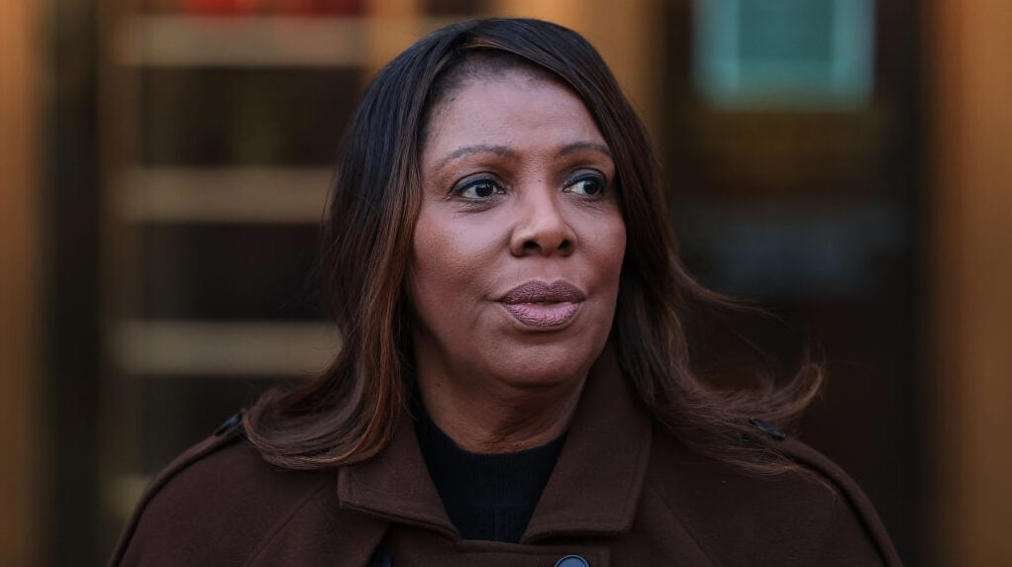
President Donald Trump‘s vow to go after his political enemies came to a head on Thursday when his Justice Department announced the indictment of New York Attorney General Letitia James.
James, who was charged with mortgage fraud, maintains that she did not commit any crime and slammed the president for his “desperate weaponization of our justice system” and “grave violation of our constitutional order.”
While the targeting of James is being condemned as part of a growing trend of political retribution in which Trump is using his second term presidency to go after Democrats he deems his political enemies, others see another trend: the targeting of prominent Black women in politics.
“It’s just the continuation of his hatred toward Black women and Black people. From Tish James, to Lisa Cook, to Fani Willis, over and over again, this is Donald Trump,” said Michael Blake, a former Obama White House aide who serves as CEO of KAIROS Democracy Project. He told theGrio, “You can’t be surprised when a man calls for political revenge that he takes these kinds of actions.”
Blake slammed the “cowardice” of Republicans in not speaking out against Trump’s use of the Department of Justice to try to or threaten to jail his political enemies.
“You have a Republican Party that refuses to fund the government because they want to take your health care away. You have a president who cares not about helping you with groceries but cares about grudges,” he said.
“It is quite appropriate and fitting that in his latest act of cowardice, of going after Tish James, where he fired someone because they wouldn’t go after her, but the very next day, he lost on the Peace Prize he thought he was going to get. Justice was actually served.” Here is a list of the Black women that President Trump and his administration have gone after since taking office this year.
NEW YORK, NEW YORK – FEBRUARY 14: NY Attorney General Letitia James speaks during a press conference on the Department of Government Efficiency (DOGE) at Manhattan Federal Courthouse on February 14, 2025 in New York City. (Photo by Michael M. Santiago/Getty Images)
Letitia James
On Oct. 9, the Trump Justice Department announced that it had indicted Letitia James, New York’s first female and African American attorney general.
James is accused of committing mortgage fraud over a Virginia property she owns. According to the New York Times, the Eastern District of Virginia alleges that James falsely claimed in loan documents that she would use a home she purchased in Norfolk as a secondary residence. Instead, the indictment alleges, she used it as a rental investment property and received loans with “favorable terms that would save her close to $19,000.”
James called the indictment “baseless” and has maintained she did nothing wrong.
Citing the president’s own statements, New York’s top prosecutor said the charges brought by the Trump administration are nothing more than “political retribution” for her successful prosecution of Trump for business fraud.
“He is forcing federal law enforcement agencies to do his bidding, all because I did my job as a New York State Attorney General,” said James, who noted that Trump fired a U.S. attorney who refused to bring charges against her, only to replace the prosecutor with someone who is “blindly loyal not to the law but to the president.”
James said she stands “strongly” behind her office’s litigation against the Trump Organization.
“We conducted a two-year investigation based on the facts and evidence, not politics. Judges have upheld the trial court’s finding that Donald Trump, his company and his two sons were liable for fraud,” she asserted.
On Oct. 9, the Trump Justice Department announced that it had indicted Letitia James, New York’s first female and African American attorney general.
James is accused of committing mortgage fraud over a Virginia property she owns. According to the New York Times, the Eastern District of Virginia alleges that James falsely claimed in loan documents that she would use a home she purchased in Norfolk as a secondary residence. Instead, the indictment alleges, she used it as a rental investment property and received loans with “favorable terms that would save her close to $19,000.”
James called the indictment “baseless” and has maintained she did nothing wrong.
Citing the president’s own statements, New York’s top prosecutor said the charges brought by the Trump administration are nothing more than “political retribution” for her successful prosecution of Trump for business fraud.
“He is forcing federal law enforcement agencies to do his bidding, all because I did my job as a New York State Attorney General,” said James, who noted that Trump fired a U.S. attorney who refused to bring charges against her, only to replace the prosecutor with someone who is “blindly loyal not to the law but to the president.”
James said she stands “strongly” behind her office’s litigation against the Trump Organization.
“We conducted a two-year investigation based on the facts and evidence, not politics. Judges have upheld the trial court’s finding that Donald Trump, his company and his two sons were liable for fraud,” she asserted.
While a grand jury indicted James, it is no indication that the U.S. government will come out victorious in the case against James. Prosecutors have incredible sway in grand juries, which are conducted in secrecy, and defense lawyers are not permitted to present their evidence.
James said, as a woman of faith, she knows that “faith and fear cannot share the same space,” adding, “I’m not fearful; I’m fearless.”
“As my faith teaches me, no weapon formed against me shall prosper. We will fight these baseless charges aggressively,” she said.
FILE – Fulton County District Attorney Fani Willis speaks during a news conference, Aug. 14, 2023, in Atlanta. (AP Photo/John Bazemore, File)
Fani Willis
In late September, the Trump Justice Department subpoenaed records related to the travel history of Fulton County District Attorney Fani Willis, who, in 2023, indicted Trump and 18 others for engaging in a “criminal enterprise” to illegally return Trump to office after his 2020 defeat.
Willis accused Trump, who peddled false claims that the 2020 presidential election was “stolen” from him due to voter fraud, of “attempts to interfere in the administration of Georgia’s 2020 presidential election.”
The Georgia prosecutor accused Trump and his co-defendants of taking “various actions in Georgia and elsewhere to block the counting of the votes of the presidential electors who were certified as the winners of Georgia’s 2020 general election.”
Trump infamously called Georgia Secretary of State Raffensberger after the 2020 election to demand that he “find 11,780 votes,” which would have reversed his loss in the state.
Willis’s case against Trump hit a snag after defense attorneys asked a judge to remove Willis from the case because of a romantic relationship with the case’s special prosecutor, Nathan Wade. After much scrutiny into their personal lives, Wade resigned, and Willis was allowed to continue leading the case.
In December 2023, an appeals court disqualified Willis, citing that the trial court “erred by failing to disqualify DA Willis and her office.” Willis appealed the decision and asked to be reinstated; however, Georgia’s Supreme Court denied her appeal.
Willis’s criminal prosecution of Trump was one of four criminal cases against him, two of which were led by special prosecutors appointed by the DOJ. The two federal cases related to Trump’s attempt to overturn the 2020 election and the withholding of classified documents were dropped upon his re-election.
Though the case in Georgia was stalled due to Willis’s disqualification, Trump was found guilty in another criminal case brought by New York Manhattan District Attorney Alvin Bragg.
WASHINGTON, DC – JUNE 21: Lisa DeNell Cook, nominee to be a member of the Board of Governors of the Federal Reserve System, testifies during a Senate Banking nominations hearing on June 21, 2023 in Washington, DC. If confirmed, Cook would be the first Black woman to sit on the Board of Governors in its 108-year history. (Photo by Drew Angerer/Getty Images)
The accusations against Cook, the first Black woman to serve on the Fed board–first lodged by Bill Pulte, Trump’s director of the Federal Housing Finance Agency–launched a criminal investigation by the Justice Department.
Cook, who has not been charged with a crime, has maintained she did no wrong and successfully challenged Trump’s attempted termination in federal court.
The effort to unseat Cook gave Trump an opportunity to reshape the Federal Reserve’s seven-member board, which was designed to be an independent economic policy body that is free from politics. No president has fired a sitting Fed governor in the agency’s 112-year history.
A federal judge ruled that the removal of Cook was illegal and reinstated her to the position. An appeals court upheld that decision. The Trump administration appealed to the U.S. Supreme Court in a last-ditch effort to remove Cook. The nation’s highest court allowed Cook to remain as board governor as it prepares to hear oral aguments in the case in January 2026.
WASHINGTON, DC – FEBRUARY 06: U.S. Rep. LaMonica McIver (D-NJ) speaks on Elon Musk’s government interference at a press conference at the U.S. Capitol on February 06, 2025 in Washington, DC. (Photo by Kayla Bartkowski/Getty Images)
LaMonica McIver
U.S. Rep. LaMonica McIver, D-N.J., was indicted by the Trump administration on June 10 for an encounter she had with federal agents outside an ICE facility in Newark, where she was conducting a congressional oversight visit.
McIver, a 39-year-old freshman congresswoman, faces up to 17 years in prison for a May altercation outside of a Newark ICE detention facility, where she and two other members of Congress were joined by Mayor Ras Baraka.
The encounter with federal agents was chaotic, as McIver attempted to shield Baraka from being arrested for trespassing. Baraka’s charges were ultimately dropped, and the judge overseeing the case scolded the U.S. Attorney of New Jersey, Alina Habba, for bringing the “hasty” and “embarrassing” prosecution.
McIver was ultimately still charged in a historically rare criminal case for a sitting member of Congress.
“The facts are on my side…I have no doubt that I will be victorious,” McIver previously told theGrio shortly after leaving a New Jersey courthouse where she was arraigned in June for her three-count indictment, for which she is accused of “forcibly impeding and interfering with federal officers.”
“Me being the one person picked out to be charged, definitely speaks to me being a young Black woman, and basically speaking up and speaking out about what they were doing and how they treated us,” McIver told theGrio. The congresswoman dismissed her prosecution as an “intimidation tactic” to “humiliate” her.
In August, McIver’s defense attorneys moved to dismiss the case against her, accusing the Trump Justice Department of selective and vindictive prosecution. She also argued that she cannot be charged for official acts.
What’s more, McIver said that the DOJ is demonstrating “unconstitutional differential treatment” by pursuing charges against her after dropping cases against over 160 other Jan. 6 defendants who were accused of the same crime. Trump pardoned more than 1,500 accused Jan. 6 rioters on the first day in office during his second term.
“There is a simple difference between this prosecution of Congresswoman McIver and the 160 cases involving assault against federal officers on January 6 that the Justice Department has dismissed: it is all about politics and partisanship,” a dismissal motion reads.
Mayor Andre Dickens appoints Amanda Rhein as Chief Housing Officer and Chatiqua Ellison as Deputy, strengthening Atlanta’s affordable housing and homelessness response.
By Milton Kirby | Atlanta, GA | October 9, 2025
Mayor Andre Dickens has announced a new housing leadership team that is committed to shaping the City’s next chapter in affordable housing, homelessness response, and community development, instilling hope for a better future.
At the top of that team is Amanda Rhein, appointed Chief Housing Officer, effective January 2026. Rhein currently serves as Executive Director of the Atlanta Land Trust, where she has built one of the nation’s most successful community land trust models. Under her leadership, the organization has placed more than 100 homes into trust and has 100 more under development.
Amanda Rhein – Courtesy City of Atlanta
Rhein brings over two decades of experience in equitable development, affordable housing, and community revitalization. She previously led transit-oriented development (TOD) at MARTA, where she redeveloped more than 35 acres of underused surface parking at eight rail stations. Before that, she spent nearly a decade at Invest Atlanta, managing more than 30 projects that generated $3.5 billion in investment for underserved neighborhoods.
A native of Cincinnati, Ohio, Rhein earned a Bachelor’s degree in Sociology from Boston College and a Master of City and Regional Planning from the Georgia Institute of Technology.
“Amanda is a nationally respected leader whose experience, innovation, and track record of execution will serve the city well,” said Mayor Dickens. “With her leadership, we will continue to set national standards for how cities can tackle housing affordability with innovation and compassion.”
Strengthening the City’s Homelessness Response
Joining Rhein is Chatiqua Ellison, appointed Deputy Chief Housing Officer and Senior Advisor to the Mayor on Homelessness. An Atlanta native, Ellison has led several of the City’s most transformative housing efforts — including the Forest Cove Relocation, which successfully moved 193 families into safe, stable homes.
Chatiqua Ellison – Courtesy City of Atlanta
She also oversees the Rapid Housing Initiative, which has already created more than 300 of a targeted 500 quick-delivery homes for unhoused residents, including The Melody, Atlanta’s first container home community.
Ellison earned a Bachelor’s degree in Political Science from Spelman College and a Master of Public Policy in Urban Planning and Policy from Georgia State University’s Andrew Young School of Policy Studies.
Her leadership extends to chairing the City’s Homelessness Taskforce, where she helped establish coordinated encampment closure policies, and to partnering with Invest Atlanta to launch the Grocery Initiative, which expands access to fresh food in underserved neighborhoods and supports projects like The Azalea Market.
A Comprehensive Housing Leadership Team
The new housing leadership team will report directly to Chief of Staff Courtney English, aligning the City’s affordable housing, homelessness, and revitalization goals.
Other key appointments include:
William Tucker, Director of the Housing Innovation Lab, leading creative housing affordability strategies.
Katie Molla, Director of Special Projects, overseeing food access programs and Tax Allocation District implementation.
Colin Delargy, Assistant Director, focusing on housing finance, planning, and policy.
Carolyn Kovar, Assistant Director of Housing Delivery, coordinating affordable housing projects on public land.
Matt Delicata, Senior Real Estate Advisor, specializing in large-scale real estate development.
Chanel Ziesel, continuing as Director of Housing Policy, leading anti-blight and downtown revitalization initiatives.
“This team represents the best housing leadership in the country,” said Dickens. “Together, we’re not just building housing — we’re building pathways to stability, dignity, and opportunity for all.”
Mayor Andre Dickens appoints Courtney English as permanent Chief of Staff, names Greg Clay and Gabrielle Slade deputies, and launches a national search for Chief Policy Officer.
By Milton Kirby | Atlanta, GA | October 9, 2025
Mayor Andre Dickens has appointed Courtney English as the permanent Chief of Staff for the City of Atlanta, solidifying leadership within his administration as it advances major housing, infrastructure, and equity priorities. English, who had served in the role on an interim basis, will now officially oversee operations of the Mayor’s Executive Office, intergovernmental coordination, and the strategic rollout of citywide initiatives.
English has been a key architect of several high-impact programs under Mayor Dickens. He led the $5 billion Neighborhood Reinvestment Initiative, a sweeping plan to strengthen housing, infrastructure, and community development across Atlanta. He also helped secure the $60 million Homeless Opportunity Bond—Atlanta’s largest-ever investment in homelessness solutions—and spearheaded the Affordable Housing Strike Force, credited with delivering nearly 12,000 affordable units in less than four years.
Under his direction, the city launched Azalea Market, Atlanta’s first municipal grocery store, expanding access to healthy food and stimulating neighborhood revitalization. English also helped shape rapid housing projects such as The Melody and Ralph David’s House, providing critical shelter and stability for unhoused residents. His leadership on the Year of the Youth initiative expanded programs that have already reached more than 30,000 young Atlantans.
“Courtney English has consistently demonstrated exceptional leadership and a steadfast commitment to the residents of Atlanta,” said Mayor Dickens. “His strategic vision and dedication to public service will continue to guide this administration as we advance our mission of building a City of Opportunity for All.”
Alongside English’s appointment, Dickens named Greg Clay and Gabrielle Slade as Deputy Chiefs of Staff.
Clay, an Atlanta native and former Executive Director of Constituent Services, brings decades of experience as a nonprofit executive, community advocate, and public administrator. His past leadership includes service in five Georgia municipalities, including East Point and College Park. A graduate of Florida A&M University and the University of Kansas, Clay has earned recognition including the Atlanta Business Chronicle’s 40 Under Forty Award and President Obama’s Drum Major for Service Award.
Slade, a 19-year veteran of Atlanta city government and Spelman College graduate, most recently served as Deputy Chief Equity Officer in the Mayor’s Office of Equity, Diversity, and Inclusion. Her tenure includes five years in legislative affairs, 20 successful city annexations, and leadership in the Department of Parks and Recreation, which achieved national accreditation under her guidance.
“With the addition of Greg and Gabrielle to our leadership team, Atlanta is well-positioned to advance our mission of building a city that works for everyone,” said English. “Their expertise and commitment will ensure residents and neighborhoods remain at the heart of everything we do.”
A national search is now underway to fill the Chief Policy Officer position previously held by English. The new role will report directly to the Chief of Staff and help coordinate the administration’s policy and strategic initiatives across departments.
Please consider supporting open, independent journalism – no contribution is too small!