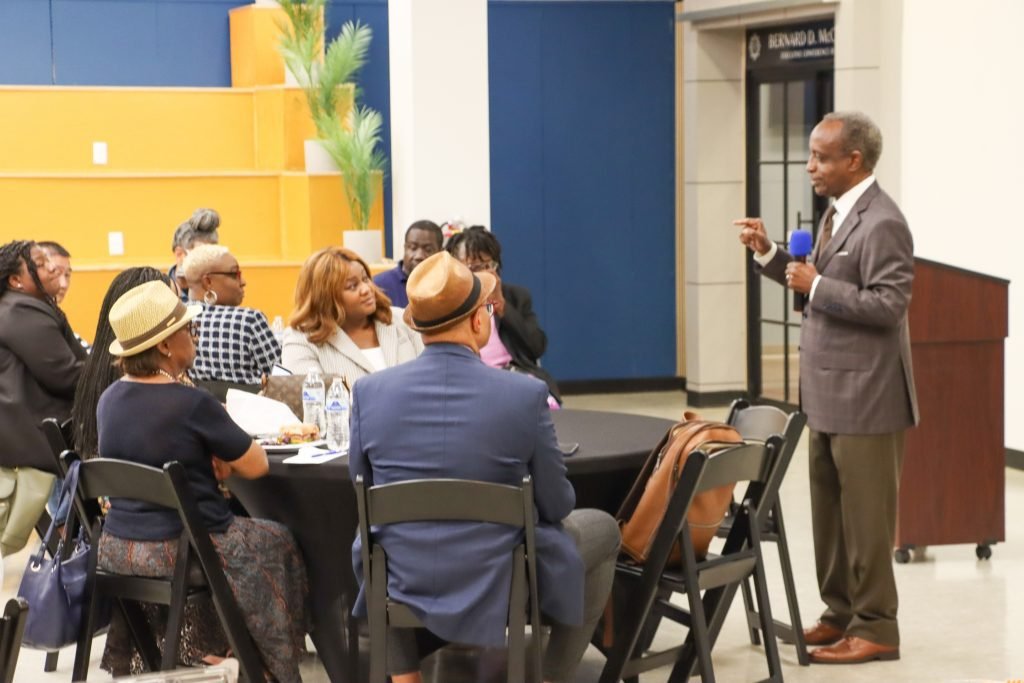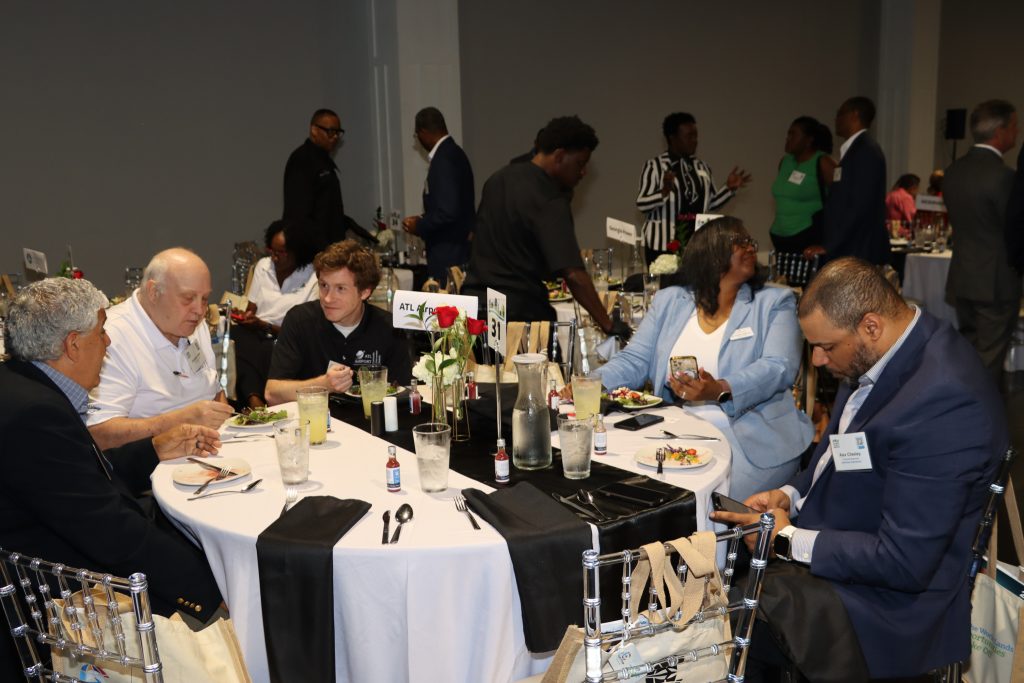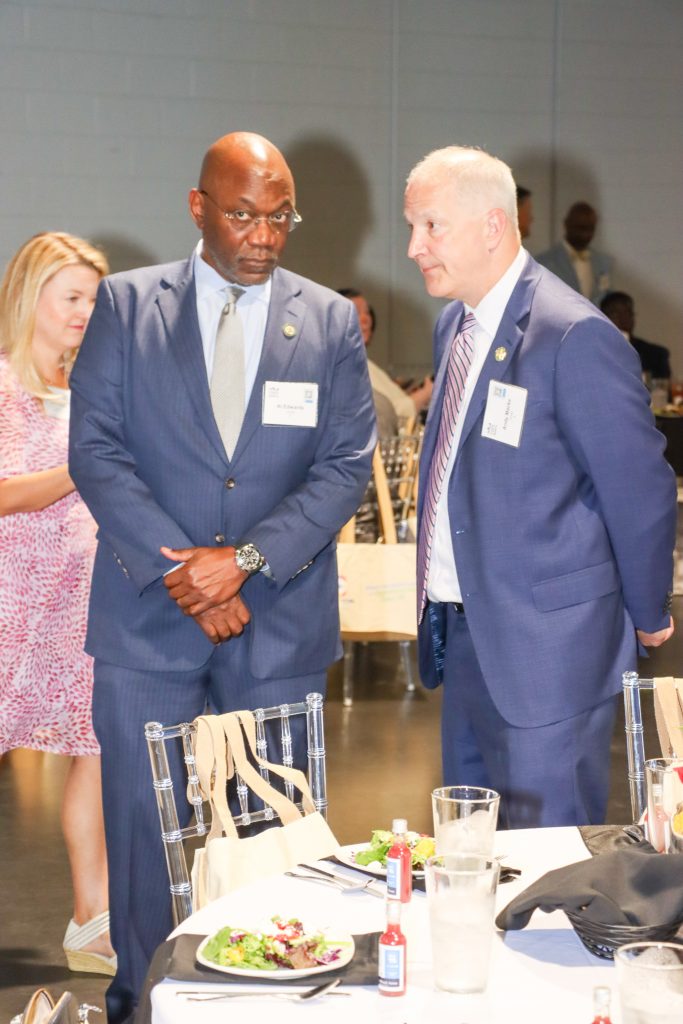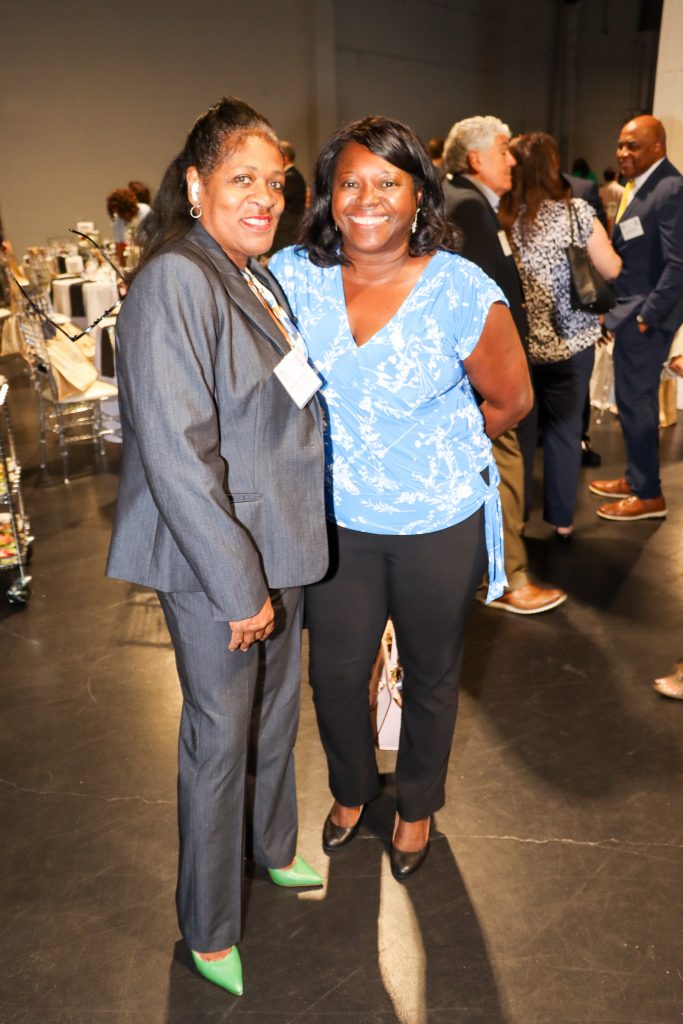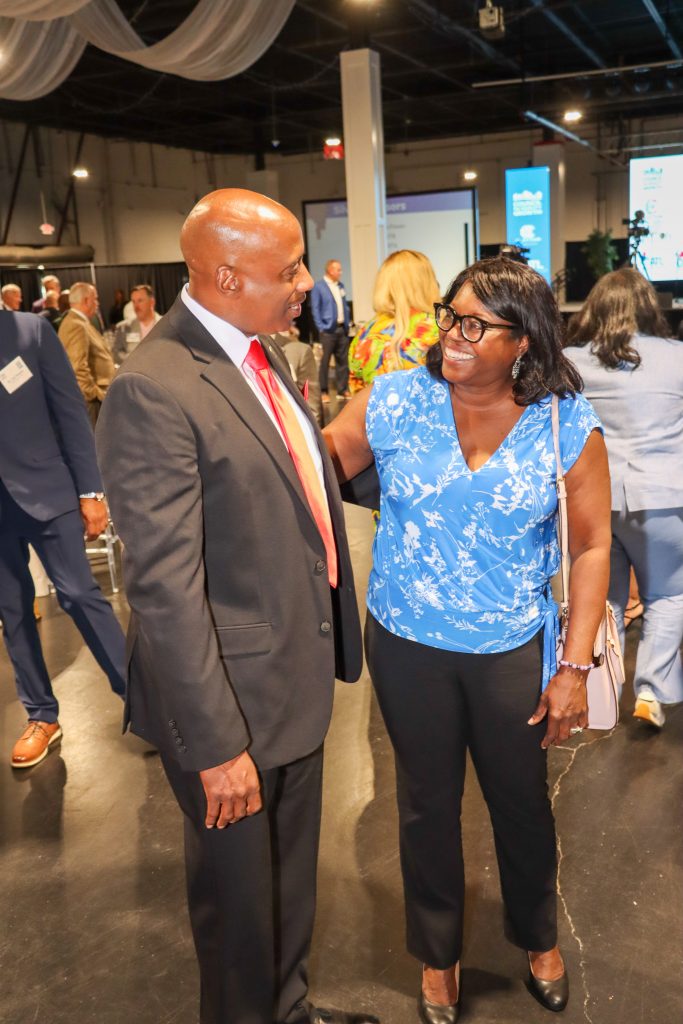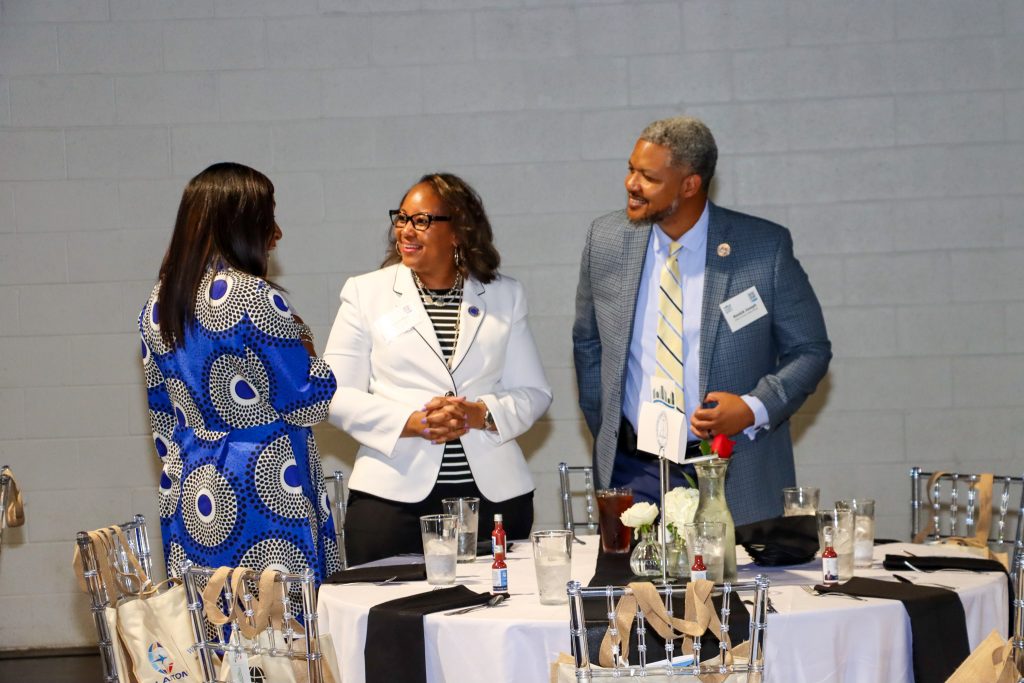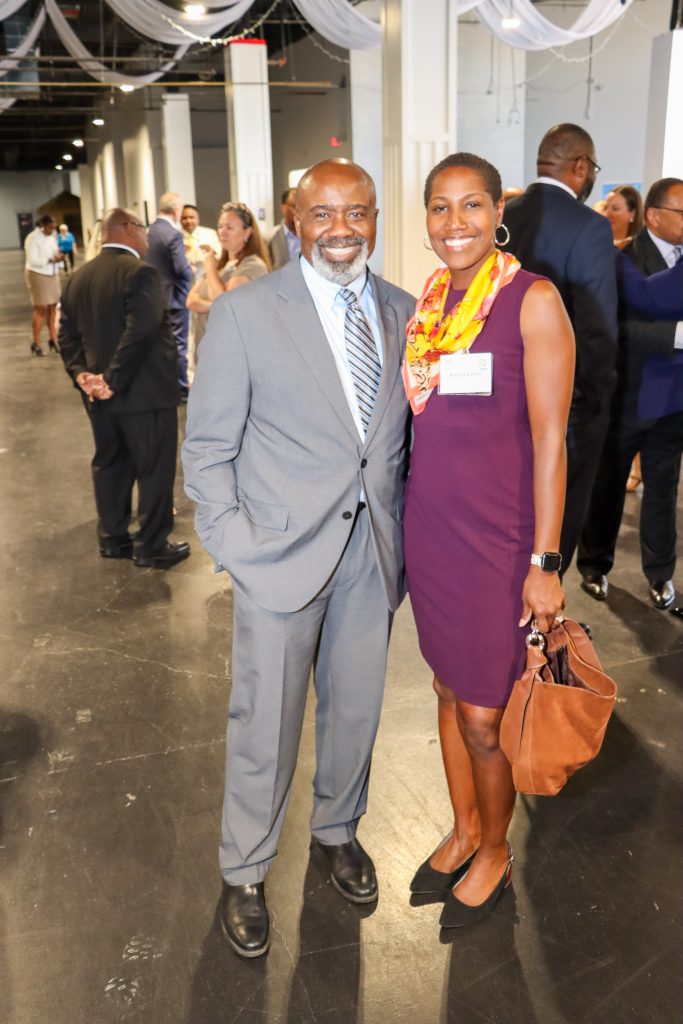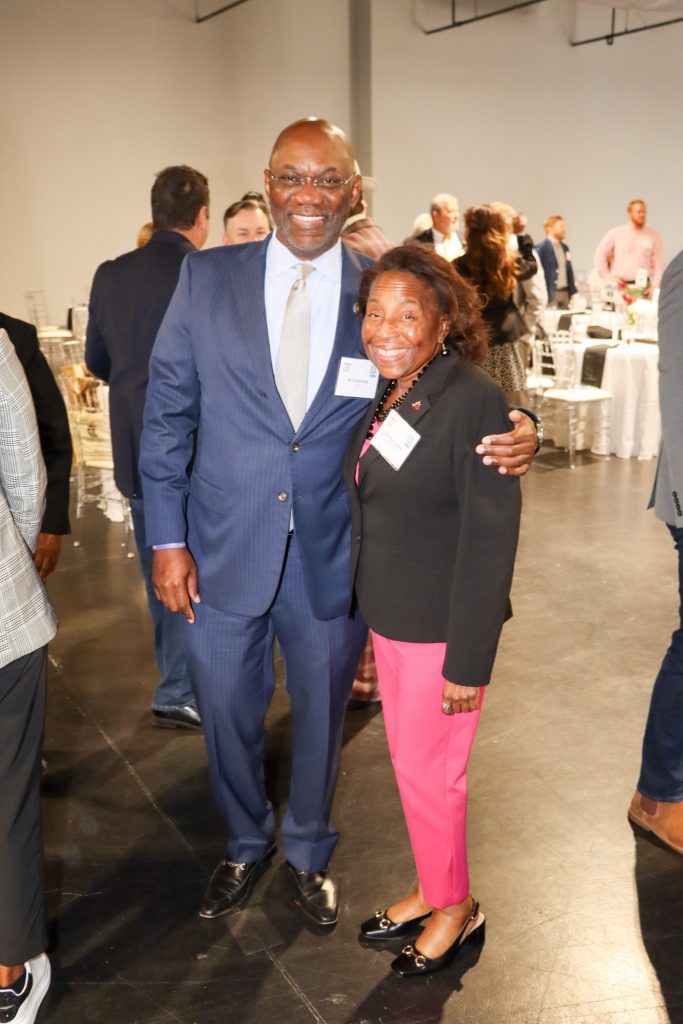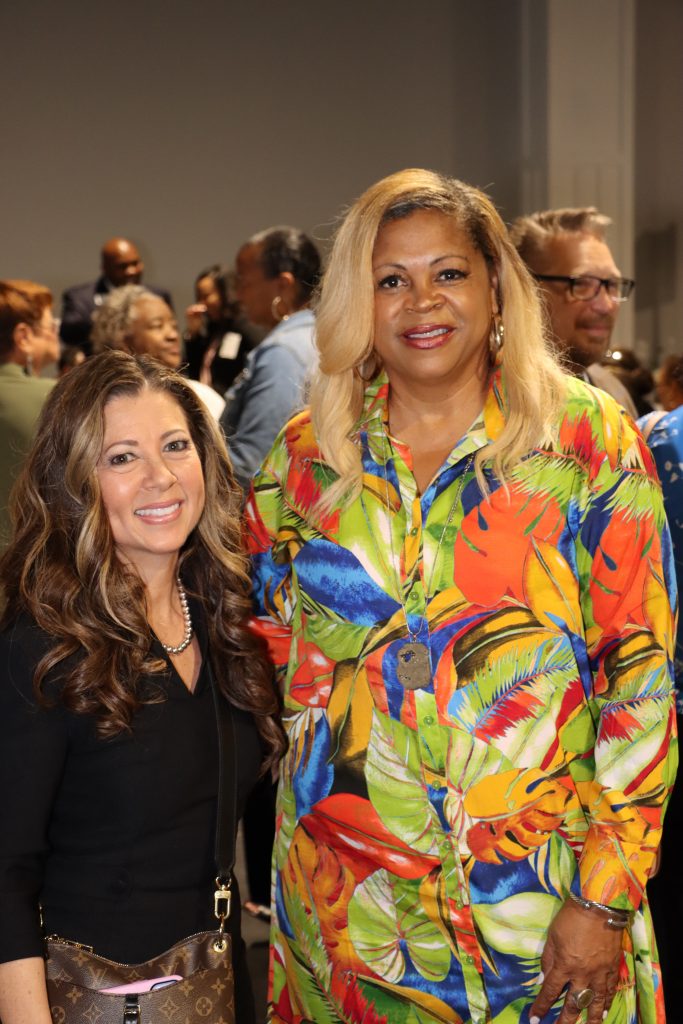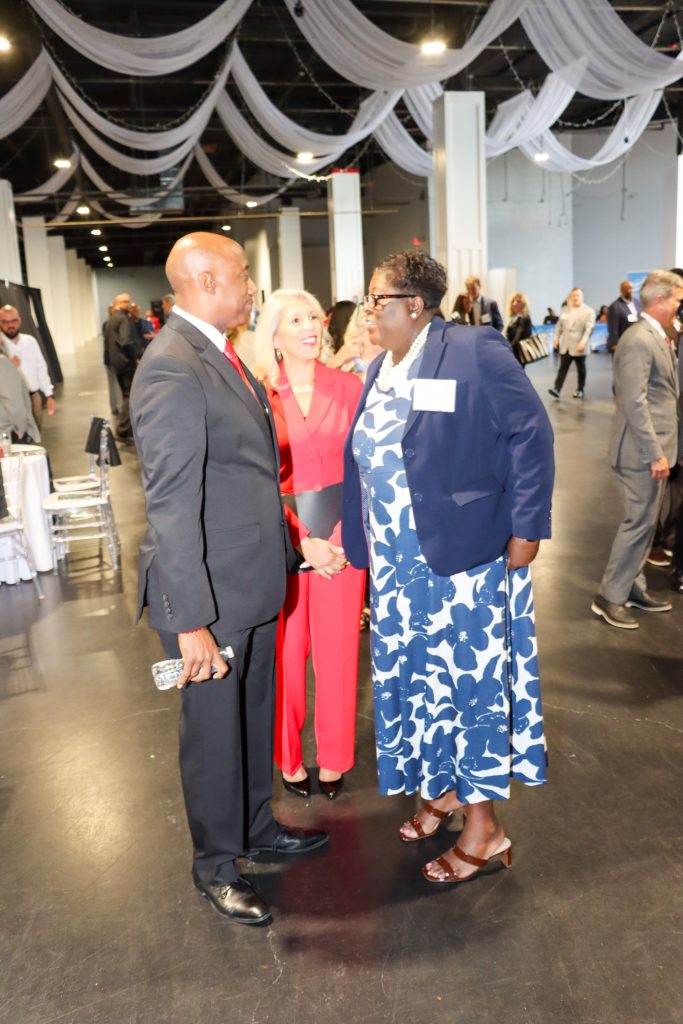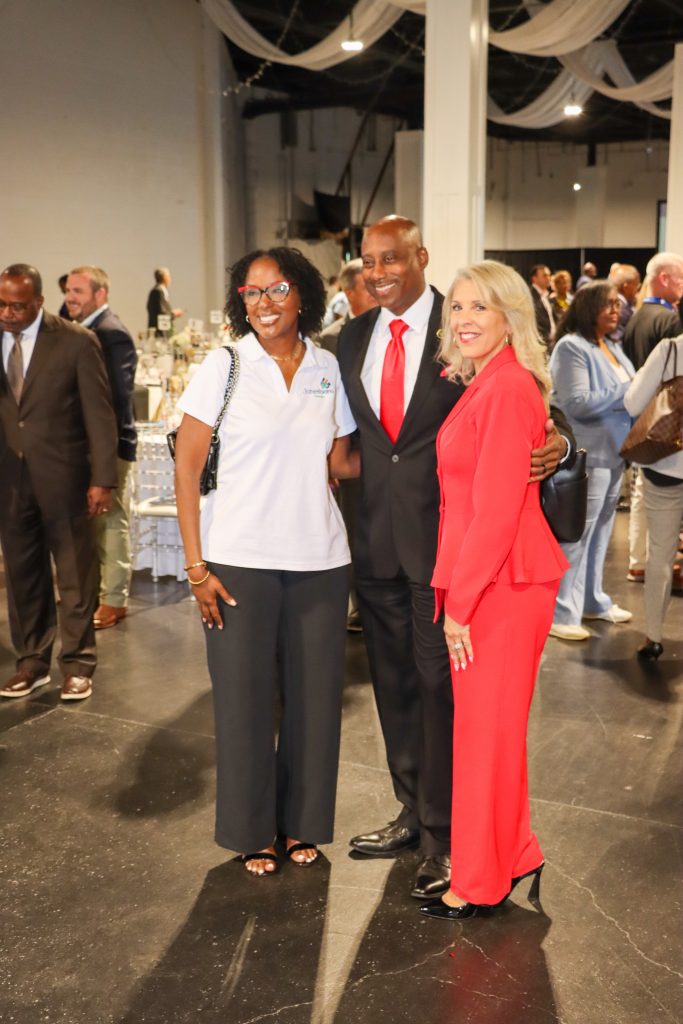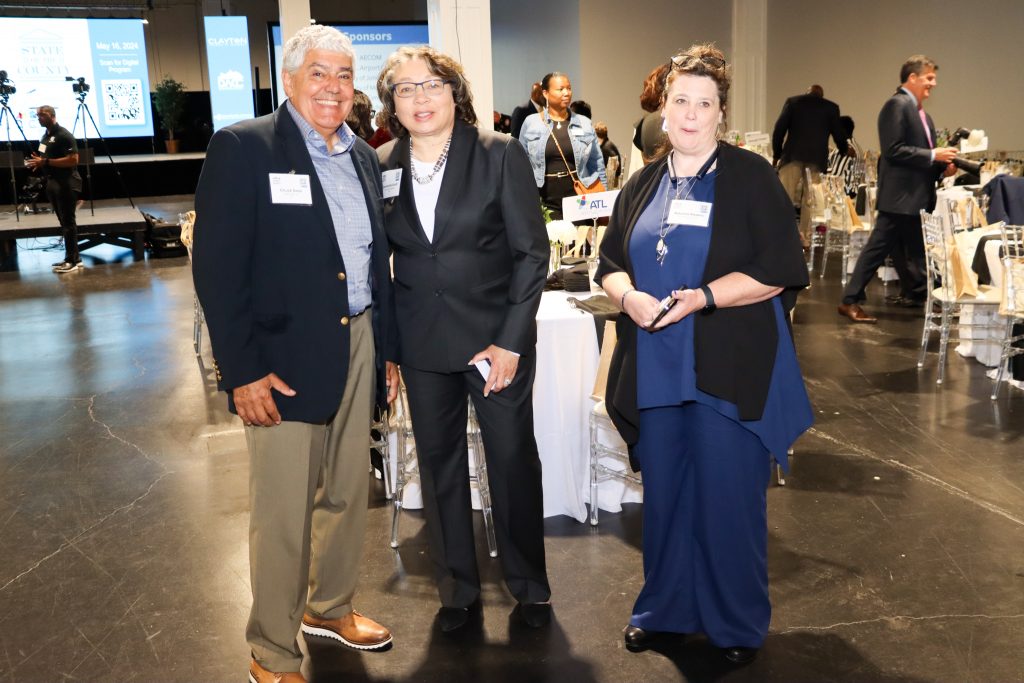
According to Board of Commissioners Chairman Robb Pitts in his annual State of the County address, Fulton County continues to thrive as a cornerstone of Georgia’s economy, education, and cultural life. Delivered on February 18, 2025, the address highlighted the county’s impressive achievements across various sectors and outlined a bold vision for the future.
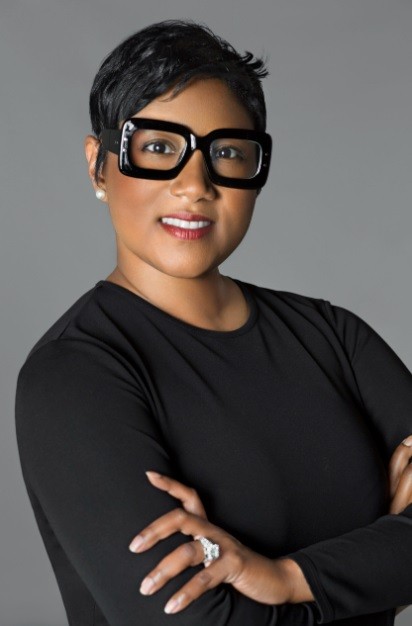
Photo by Milton Kirby Robb Pitts
A Leader in Education and Workforce Development
Home to 1.2 million residents, Fulton County serves as an educational hub, with 136,000 students enrolled in Fulton County Schools and Atlanta Public Schools. Additionally, 120,000 students attend higher education institutions, including the county’s renowned Historically Black Colleges and Universities (HBCUs) such as Spelman College, Morehouse College, Morris Brown College, Interdenominational Theological Center Morehouse School of Medicine, and Clark Atlanta University.
Another accolade in education is that Dr. Mike Looney, Superintendent for Fulton County Schools, was named Georgia’s Superintendent of the Year for 2025, an honor bestowed by the Georgia School Boards Association and the Georgia School Superintendents Association.
Economic Powerhouse and Business Hub
Fulton County continues to be the economic engine of metro Atlanta. One-third of all wages paid in the metropolitan area are earned in Fulton County. According to Site Selection Magazine, the county also boasts the highest concentration of Fortune 500 companies in the nation, ranking fourth among U.S. counties. Delta Airlines, Georgia’s largest employer, is headquartered in the county.
The county’s economic strength extends to the arts, Georgia’s most significant public contributor to cultural programs. With over 200 parks, nature preserves, and walking trails, Fulton County provides a high quality of life for residents and visitors alike.
The county will play a significant role on the global stage, hosting eight matches during the 2026 FIFA World Cup.
In November 2024, media worldwide reported on Fulton County’s elections from the newly constructed, state-of-the-art Elections Center, which consolidated all election activities under one roof. Secretary of State Brad Raffensperger praised the county for conducting a flawless election.
Investments in Infrastructure and Public Services
Fulton County has made significant strides in infrastructure, particularly in water and sewer management. The recently completed $350 million Big Creek Water Treatment Facility represents one of the most significant infrastructure projects in county history, and an additional $500 million facility is planned for the City of South Fulton.
Healthcare access is also improving, with the launch of the Fulton County Health and Human Services Campus in Alpharetta, which provides public health, behavioral health, senior services, and developmental disability support. A similar facility is in the planning stages for South Fulton. Additionally, a Mental Health Crisis Center opened on Metropolitan Parkway in October 2024, a collaboration between Fulton County, the State of Georgia, and Grady Hospital.
The attack on Fulton County and others prompted new legislation that now prevents the use of taxpayer funds to pay ransoms to cybercriminals, serving as a deterrent for future attacks.
A Vision for Continued Growth
The State of the County event was hosted by the Council for Quality Growth, an advocacy organization that represents the interests of developers, contractors, engineers, planners, and other stakeholders in metro Atlanta’s growth and development. Chairman Pitts reaffirmed the county’s commitment to fostering economic prosperity while ensuring the well-being of all residents.
As Fulton County continues to expand and innovate, its status as Georgia’s economic, cultural, and educational hub remains unchallenged, setting a standard for progress in the region and beyond.
A remarkable journey spanning a century, marked by dedication, faith, and service. He served as the 39th US President, championed environmental conservation, and dedicated his post-presidency to humanitarian efforts.
By Milton Kirby | Atlanta, GA – January 2, 2025
Jimmy Carter’s life—a remarkable journey spanning a century—is a testament to the profound impact of dedication, faith, and service. Born James Earl Carter Jr. on October 1, 1924, in Plains, Georgia, his journey began in the small farming town and nearby community of Archery. Raised by James Earl Carter Sr., a farmer and businessman, and Lillian Gordy Carter, a registered nurse, young Jimmy would lead an extraordinary life defined by humility and an unyielding commitment to the betterment of humanity.
Carter’s early years were marked by academic and naval success. Educated in the public schools of Plains, he pursued higher education at Georgia Southwestern College, Georgia Institute of Technology, and the United States Naval Academy, where he earned a B.S. in 1946. As a submariner in the Navy, Carter served with distinction, rising to the rank of lieutenant and playing a pivotal role in the emerging nuclear submarine program. Under the guidance of Admiral Hyman Rickover, he took graduate coursework in reactor technology and nuclear physics at Union College.
In 1946, Carter married Rosalynn Smith, a partnership that would define much of his life. When his father passed away in 1953, Carter returned to Plains to manage the family farms and their seed and farm
Photo courtesy Maranatha Baptist Church – Jimmy & Rosalynn Carter
supply business. It was here that he began his political career, serving on community boards and eventually winning a seat in the Georgia Senate in 1962. Despite an initial gubernatorial defeat in 1966, Carter persevered, becoming Georgia’s 76th governor in 1971. His national political career was launched with his announcement of candidacy for the U.S. presidency in 1974. He was elected as the 39th president in 1976, serving from January 20, 1977, to January 20, 1981.
As president, Carter championed environmental conservation, setting aside more land for national parks and wildlife refuges than any of his predecessors. He was a pioneer in energy conservation, advocating for reduced reliance on foreign oil and alternative energy sources, symbolized by the installation of solar panels on the White House roof. His administration also established the Department of Energy, emphasizing the importance of sustainability long before it became a global priority.
Post-presidency, Carter dedicated his life to humanitarian efforts. In 1982, he founded The Carter Center in Atlanta, a nonpartisan institution addressing public policy issues, promoting democracy, and eradicating diseases such as Guinea worm disease. His work with Habitat for Humanity—building homes for impoverished families worldwide—further solidified his legacy of compassion. Recognized with the Nobel Peace Prize in 2002, Carter joined the ranks of Theodore Roosevelt, Woodrow Wilson, and Barack Obama as the only U.S. presidents to receive the honor.
Photo Courtesy of the Carter Center
The Carters’ partnership extended to their shared advocacy for mental health. Rosalynn chaired The Carter Center’s Mental Health Task Force and hosted annual symposia to address critical issues in the field. Together, they demonstrated the power of collaborative leadership rooted in their shared values and commitment to service.
A prolific author, Carter wrote over 30 books on topics ranging from politics to poetry, faith, and human rights. Despite his global influence, he remained deeply connected to his roots, teaching Sunday school for over 40 years at Maranatha Baptist Church in Plains. His Christian faith was a cornerstone of his life, shaping his moral and ethical compass and inspiring countless others.
Carter’s life was a “dash” filled with purpose—from humble beginnings as a peanut farmer to his presidency and beyond. He concluded each Sunday school lesson with a challenge: perform one good deed for someone else. This simple yet profound message encapsulated his belief in the power of kindness to change the world.
Courtesy – National Governors Association
On December 29, 2024, Jimmy Carter completed his dash at the age of 100. His legacy endures through the countless lives he touched, the causes he championed, and the enduring message of love and service he imparted. Indeed, the dash in Jimmy Carter’s life symbolizes a life well-lived, defined by unwavering dedication to making the world a better place.
Lorraine Cochran-Johnson will be sworn in as DeKalb County’s sixth CEO on January 10, 2025, marking a historic milestone as the first African American woman to hold the position.
By Milton Kirby | Atlanta, GA December 22, 2024
Lorraine Cochran-Johnson will be sworn in as the sixth Chief Executive Officer (CEO) of DeKalb County, Georgia, on January 10, 2025. She will mark a historic milestone as the first African American woman to hold the position. This momentous occasion highlights a significant chapter in DeKalb County’s governance history, showcasing its evolution and progress over the decades.
A Journey of Dedication and Public Service
Cochran-Johnson’s rise to leadership is rooted in her extensive background in public administration and community engagement. Originally from Greenville, Alabama, and an eighteen-year resident of DeKalb County, GA, she attended Troy University, where she earned a Bachelor of Science degree in Political Science and Criminal Justice. Her academic journey continued at Auburn University, where she received a Master of Public Administration with a concentration in Economic Development and Grant Writing. She later attended John Marshall Law School, further broadening her expertise.
Before entering politics, Cochran-Johnson held various roles emphasizing public service and community development. Her active involvement in civic organizations across DeKalb County helped her gain an in-depth understanding of the challenges faced by its residents. In 2017, she was elected to represent District 7 on the Board of Commissioners, which includes areas such as Stonecrest and Lithonia. Her tenure as commissioner brought innovative ideas and transformative leadership to the district.
Celebrating Leadership: A Panel with Past CEOs
As part of her inaugural activities, Cochran-Johnson will moderate a panel discussion featuring four of DeKalb County’s previous CEOs: Liane Levetan, Vernon Jones, Burrell Ellis, and Michael Thurmond. This historic gathering will reflect on the county’s past challenges and achievements while setting the stage for its future. The panel will honor Manuel Maloof, DeKalb County’s first CEO, who served from 1984 to 1992 and passed away in 2004.
DeKalb County: A Unique Governance Model
DeKalb County is Georgia’s fourth-most populous county and boasts the highest population density in the Atlanta metropolitan area. Its transition to a CEO-led government in 1981 marked a pivotal shift in its governance structure, distinguishing it from other Georgia counties. The CEO model was designed to centralize leadership and streamline decision-making, addressing inefficiencies under the previous commission-led system.
Under this governance framework, the CEO serves as the county’s chief executive, responsible for day-to-day operations, appointing department heads, and proposing budgets. Meanwhile, the Board of Commissioners retains legislative authority, approving ordinances, budgets, and policies. This balance aims to foster accountability and efficient administration.
A Legacy of Leadership
DeKalb County’s CEO position has been instrumental in shaping its governance and growth. Each CEO brought distinct strengths and faced unique challenges during their tenure:
Manuel Maloof (1984–1992): As the inaugural CEO, Maloof centralized governance and prioritized infrastructure improvements. His tenure set the foundation for DeKalb’s transformation into a bustling suburban community.
Liane Levetan (1993–2000): The first woman to serve as CEO, Levetan championed environmental preservation, economic growth, and inclusivity in leadership. Her omnipresence set the tone for strong executive leadership at the helm of county government.
Vernon Jones (2001–2008): The first African American CEO, Jones emphasized infrastructure development and greenspace expansion. He championed DeKalb County’s emergence as a metropolitan epicenter.
Burrell Ellis (2009–2016): Ellis worked to restore the county’s fiscal stability in the aftermath of the Great Recession, emphasizing government reorganization, community engagement, and laying the foundation for renewed economic growth through water and sewer system reconstruction. His ONE DeKalb initiative was renowned as a model for civic engagement.
Lee May (Interim, 2013–2016): Appointed following Ellis’ suspension, May worked to restore trust and stability during a turbulent period.
Michael Thurmond (2017–present): Thurmond’s leadership has been characterized by fiscal responsibility, infrastructure improvements, and a focus on public safety.
The Evolution of DeKalb County’s Governance
DeKalb County’s adoption of the CEO model was a response to its rapid growth and urbanization during the late 20th century. This change was adopted to address the county’s increasing complexity by creating a centralized executive role. Voter approval in a 1981 referendum signaled strong public support for the modernization of its governance.
Key reasons for this transition included:
Improved Accountability: The CEO model centralized decision-making, providing clear leadership and accountability.
Administrative Efficiency: Streamlined operations reduced inefficiencies in managing the county’s growing population and services.
Adaptation to Urban Growth: The shift reflected DeKalb’s evolution from a rural area to a major suburban hub within the Atlanta metropolitan region.
Public Support: Voters recognized the need for a more robust governance structure to address emerging challenges.
Spotlight on Leadership: Past CEOs’ Achievements and Challenges
Manuel Maloof (1984–1992)
As DeKalb’s first CEO, Manuel Maloof played a pivotal role in defining the position’s responsibilities. His leadership focused on modernizing governance, investing in public infrastructure, and advocating for community needs. While balancing growth and resident concerns, Maloof laid the groundwork for DeKalb’s future development. He championed initiatives to streamline the permitting process for small businesses and fostered partnerships between the government and local entrepreneurs.
Photo Courtesy Atlanta Magazine – Manuel Maloof
Maloof is remembered as a leader who brought accountability, growth, and a personal touch to DeKalb County’s government. His work established DeKalb as a model for suburban governance in Georgia and the broader Southeast. Maloof’s influence extended beyond politics through his ownership and work at Manuel’s Tavern, cementing his place as a beloved figure in Atlanta’s civic life.
One of Maloof’s quotes: “Leadership isn’t about sitting behind a desk. It’s about rolling up your sleeves and solving real problems for real people.”
Liane Levetan (1993–2000)
Liane Levetan broke barriers as the first female CEO of DeKalb County. Her tenure emphasized environmental preservation, balanced development, and inclusivity. Signature initiatives included expanding parks, promoting recycling programs, and advocating for transit-oriented development. Her leadership inspired future generations of women in politics.
Levetan’s emphasis on green space preservation and environmental sustainability left a lasting impact on the county’s landscape. Her administration set a precedent for diversity and inclusion in DeKalb County governance.
Expansion of the Mason Mill Park and improvements to its facilities, including trails and picnic areas. The creation of the PATH trail system, connecting neighborhoods and parks with multi-use trails, was a major milestone.
Photo Courtesy of Liane Levetan
Her tireless efforts have ensured that Arabia Mountain will be a focal point for conservation and recreation for years to come. Located in southeast DeKalb County, it is a granite outcrop similar to Stone Mountain surrounded by diverse ecosystems, including forests, wetlands, and lakes. She quipped, “Arabia Mountain isn’t just a place—it’s a legacy. Preserving it ensures future generations can experience its wonder.”
Levetan personally participated in trail-blazing events, often walking alongside community volunteers to mark potential trail routes. She was known to say:
Levetan quoted on being the first female CEO: “Breaking barriers is never easy, but every step forward creates a path for others. I’m proud to be the first woman in this role, but I look forward to the day when it’s no longer remarkable.”
Vernon Jones (2001–2008)
One of the main highlights of Jones’ administration was his focus on economic development and improving the infrastructure of DeKalb County. He sought to attract businesses, improve housing, and revitalize the county’s commercial areas. Under his leadership, several major projects aimed at boosting the county’s economy were initiated, including the development of new commercial properties, industrial sites, and improved transportation systems.
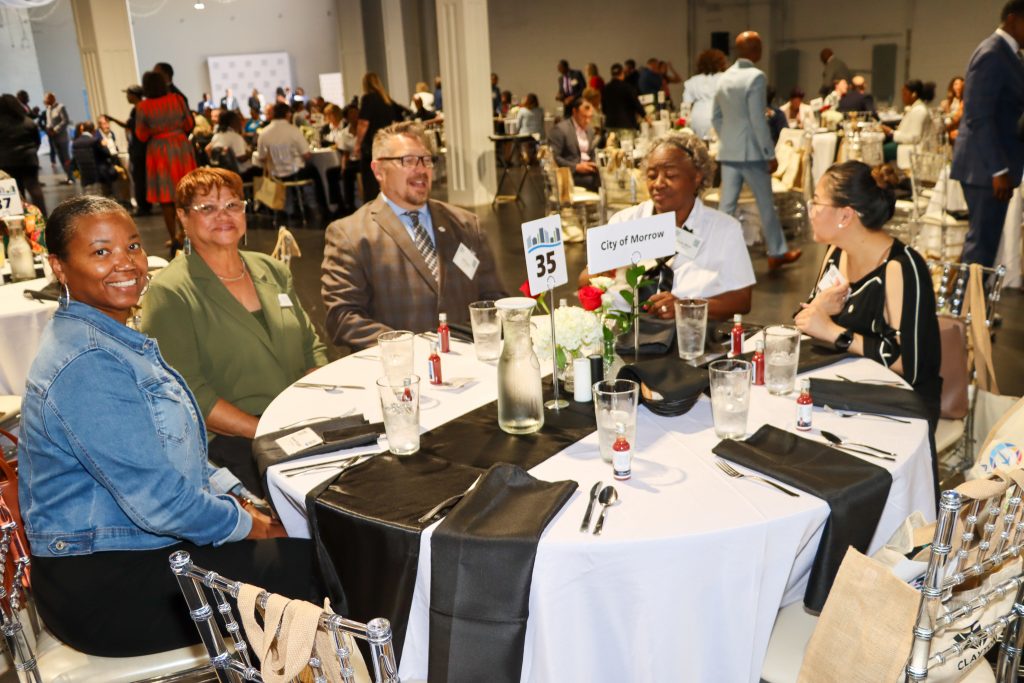
Photo Courtesy Vernon Jones
Jones was instrumental in advocating for improved infrastructure in DeKalb, including the expansion and modernization of roads, public transportation services, and the county’s water and sewer systems. He focused on improving traffic flow, which had become a significant concern as the county’s population grew.
CEO Jones prioritized public safety, increasing funding for police and fire services. He also worked to modernize emergency services, including the establishment of new fire stations and improvements to police equipment and training programs.
Jones created several community engagement programs focused on youth development, senior services, and improving the quality of life for residents. His administration introduced initiatives such as the DeKalb Summer Youth Employment Program, which provided job opportunities and training for young people in the county.
Mr. Jones also worked to improve the environmental conditions in DeKalb County. This included efforts to improve waste management and increase recycling programs. He also promoted green space preservation and conservation efforts.

Vernon Jones focused on infrastructure improvements and economic development. Despite notable achievements, including public safety enhancements and community engagement programs.
Burrell Ellis (2009–2016)
Burrell Ellis was elected CEO (Chief Executive Officer) of DeKalb County in 2008. He took office in January 2009. Prior to serving as CEO, Ellis had a history of public service, having served as a member of the DeKalb County Commission from 2000 to 2008, representing District 5.
Photo By Milton Kirby – Burrell Ellis
Like many other local governments, DeKalb County faced significant fiscal challenges during Ellis’ tenure as CEO. These included the effects of the Great Recession, which made budgeting more challenging. Ellis worked to manage the county’s budget through a combination of cost-cutting measures and increased revenue efforts.
Ellis focused on improving the county’s government’s efficiency and accountability. He introduced initiatives to reduce waste and fraud in county departments.
CEO Ellis prioritized public safety by focusing on expanding police services and addressing high crime rates in certain areas of the county. He advocated for additional resources for law enforcement agencies and emergency services

Ellis’ administration prioritized fiscal management and government reform during a challenging economic period. However, legal troubles dampened his accomplishments, culminating in a conviction that was later reversed on appeal.
His tenure highlighted the complexities of balancing governance, public trust, and fiscal responsibility.
Michael Thurmond (2017–present)
Michael Thurmond’s Leadership brought stability to DeKalb County after a tumultuous period. His focus on fiscal responsibility, infrastructure revitalization, and public safety has been widely praised. Thurmond’s collaborative approach has strengthened community trust and positioned the county for continued growth.
Photo by Milton Kirby – Michael Thurmond
DeKalb County will close the 2024 fiscal year with a $150 million rainy day fund, a major turnaround from the $27 million deficit the county faced in 2017 when Thurmond took office. Thurmond launched a financial recovery plan upon taking office, and his administration has worked with county leaders to erase the deficit and build up a substantial reserve.
Looking Ahead: Cochran-Johnson’s Vision
As DeKalb County’s newly elected CEO, Lorraine Cochran-Johnson aims to build on the successes of her predecessors while addressing the county’s evolving needs. Her background in public administration and commitment to community engagement provide a strong foundation for her leadership. By fostering dialogue with past leaders, she seeks to honor DeKalb’s rich history while charting a bold course for its future.
Cochran-Johnson plans to tackle DeKalb’s housing affordability crisis, accelerate infrastructure modernization, and expand programs to support small businesses, all while emphasizing transparency and civic engagement.
Cochran-Johnson’s inauguration marks a new chapter in DeKalb County’s journey, one defined by innovation, inclusivity, and a shared commitment to progress.
President Joe Biden grants clemency to nearly 1,500 Americans, the largest single-day grant in modern history, commuting sentences and pardoning individuals convicted of non-violent crimes.
By Milton Kirby | Washington, DC | December 12, 2024
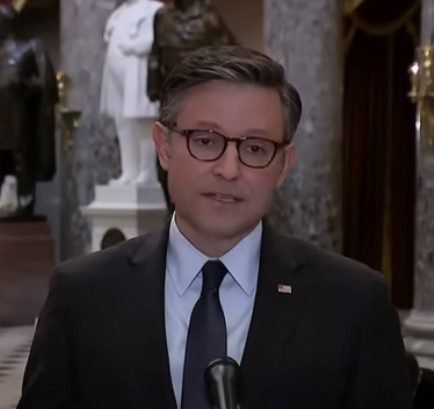
In a historic move, President Joe Biden has granted clemency to nearly 1,500 Americans, the largest single-day grant in modern history. This action includes commuting the sentences of close to 1,500 individuals placed on home confinement during the COVID-19 pandemic and pardoning 39 individuals convicted of non-violent crimes. These individuals have demonstrated successful rehabilitation and a strong commitment to making their communities safer. The White House said, “the 1,500 people had been serving long prison sentences that would have been shorter under today’s laws and practices.”
A Historic Day for Clemency
This unprecedented act builds on President Biden’s commitment to criminal justice reform, aiming to reunite families, strengthen communities, and help individuals reintegrate into society. At this point in his presidency, Biden has issued more commutations than any of his recent predecessors. Notably, he is the first president to grant categorical pardons for simple marijuana possession and for certain LGBTQI+ service members convicted due to their sexual orientation.
A decorated military veteran and pilot who helps church members with health challenges and strenuous tasks.
A nurse who led emergency response efforts during natural disasters and spearheaded COVID-19 vaccination campaigns.
An addiction counselor who volunteers to mentor young people, helping them avoid destructive behaviors and gang involvement.
As President Biden has often stated, the United States is a nation of second chances. Through clemency, he seeks to advance equal justice under the law and remedy the harms caused by outdated practices.
Commutations and Pardons in Detail
The nearly 1,500 individuals receiving sentence commutations have been serving time on home confinement under the CARES Act for at least one year. They have shown their commitment to rehabilitation by securing employment, pursuing education, and reintegrating into their communities. The 39 individuals granted pardons were convicted of non-violent crimes, including drug offenses, and have since turned their lives around. These recipients are parents, veterans, healthcare professionals, teachers, and advocates who use their experiences to inspire others.
President Biden’s Clemency Record
President Biden has consistently used his clemency power to address injustices and provide second chances. Key clemency actions throughout his administration include:
April 2022: Granted clemency to individuals with drug-related offenses and those on CARES Act home confinement, including three pardons and 75 commutations.
December 2022: Pardoned six individuals with drug- and alcohol-related offenses.
April 2023: Issued 31 commutations to individuals on CARES Act home confinement.
December 2023 & April 2024: Pardoned 11 individuals and commuted 16 sentences for non-violent drug offenses.
These actions have positively transformed lives by addressing barriers such as housing, employment, education, and healthcare often faced by those with federal convictions.
Categorical Clemency Actions
In addition to individual clemency, President Biden has taken bold steps with categorical clemency:
October 2022: Issued a full pardon for simple possession of marijuana.
December 2023: Expanded marijuana-related pardons to include attempted possession and use offenses.
June 2024: Granted categorical pardons to former service members convicted of offenses based on consensual, private conduct related to their sexual orientation between 1951 and 2013.
These systemic actions have inspired states like Maryland and Massachusetts to follow suit, granting categorical clemency for marijuana convictions and helping individuals rebuild their lives.
Moving Forward
While today’s announcement marks significant progress, President Biden’s work is far from over. The administration will continue reviewing clemency petitions to advance equity, justice, and public safety. By promoting rehabilitation and reentry, the President reaffirms his belief in second chances and the transformative power of justice reform.
President Biden’s historic 40th Black female judge, Tiffany Rene Johnson, was confirmed to the federal bench, tying the record for most Black lifetime judges confirmed during a presidency.
By Gerren Keith Gaynor – TheGrio | December 10, 2024
President Joe Biden marked yet another historic moment for his administration in his final days in office on Monday when the U.S. Senate confirmed his 40th Black female judge to the federal bench.
As part of an effort to seat as many federal judges before President-elect Donald Trump returns to the White House on Jan. 20, the Senate confirmed Tiffany Rene Johnson to serve on the Northern District of Georgia. Judge Johnson is only the third Black woman to serve a lifetime appointment on the court. Johnson’s confirmation also ties the record for the most Black lifetime judges (62) confirmed during a presidency.
According to data tracked by The Leadership Conference on Civil and Human Rights, President Biden’s appointment of 62 Black lifetime judges is the highest in a single term. During his one term in office, President Jimmy Carter appointed 37 Black lifetime judges, as did President Bill Clinton during his first term. Over the course of their two terms in office, President Barack Obama and Clinton each appointed 62 Black judges.
During his first term, President Trump appointed only two Black women out of 234 judges to the federal bench, which is less than 1% of his appointments. Trump nominated no Black judges to federal circuit courts.
Since taking office, President Biden has vowed to reshape the federal judiciary to reflect America’s diversity. His most historic and notable appointment was Justice Ketanji Brown Jackson, who was confirmed as the first Black woman to serve on the U.S. Supreme Court in April 2022.
Courtesy Supreme Court
Ketanji Brown Jackson
Biden has appointed several “first” Black judges across the nation’s district courts and courts of appeals, including Tiffany Cunningham, the first Black judge to serve on the U.S. Court of Appeals for the Federal Circuit; Dana Douglas, the first Black woman to serve on the U.S. Court of Appeals for the Fifth Circuit; and Jerry Edwards, Jr., the first Black judge to serve on U.S. District Court for the Western District of Louisiana.
In addition to this record appointment, the Leadership Conference also noted that among President Biden’s Black female judicial selections, more than half of them bring what advocates celebrate as important professional experiences to the federal bench as former civil rights lawyers and public defenders.
The steady appointments from President Biden (and confirmations by the Senate) are seen as necessary in his final 41 days in the Oval Office, not only to fulfill his goal of transforming the federal judiciary but also to preserve his legislative legacy. Many of his policies — and those enacted by President Trump in his second term — could be challenged in the courts in the coming months and years. The ideological bent of federal judges will undoubtedly have major implications.
Loretta Green’s Story: At 89, Loretta Green has been voting since 1960 and has a poll tax exemption certificate, symbolizing her resilience in the fight for voting rights, which she continues to advocate for today.
By Milton Kirby – Atlanta, GA – November 6, 2024
At 89 years old, Loretta Green, originally from Mobile, Alabama, and now an Atlanta resident has been casting her ballot since 1960—and she has a poll tax exemption certificate to prove it. For Green, this certificate is more than a document; it’s a testament to the resilience of voting rights. She knocked on doors this Election Day, rallying support for Vice President Kamala Harris and encouraging registered voters to make their voices heard.
Green’s journey in voter advocacy spans decades, rooted in a history of discrimination and unyielding perseverance. After the Civil War and throughout Reconstruction, Southern states enacted laws designed to curtail the voting rights of newly freed Black citizens. Chief among these barriers was the poll tax—a fee that, though small, effectively barred countless Black and poor White citizens from the ballot box.
The tax, ranging from $1 to $2 (roughly $20 to $40 today), was required annually, and voters often had to show proof of past payments to remain eligible. This and other discriminatory tactics sought to undermine the Fifteenth Amendment’s promise of voting rights, carefully crafted to avoid federal intervention while systematically disenfranchising African Americans.
This unjust barrier persisted until the mid-20th century when the civil rights movement brought national attention to voting rights. Although the Supreme Court initially upheld poll taxes in Breedlove v. Suttles in 1937, the tide turned with ratifying the 24th Amendment in 1964, which abolished poll taxes in federal elections. Two years later, the Supreme Court further ruled in Harper v. Virginia Board of Elections that poll taxes in all elections, state and local, were unconstitutional—ushering in an era of more inclusive democracy.
Ms. Green has attended countless voter rallies over the years, proudly displaying her poll tax exemption certificate as a reminder of past obstacles and the progress achieved. For Green, this certificate is a powerful symbol of the struggle and the triumph in the long fight for equal voting rights. She continues to inspire her community this Election Day, sharing her story as a reminder of the sacrifices made to secure the right to vote for all Americans.
Election Day in the US: Voters across the country cast their ballots, with many expressing relief, optimism, and a sense of civic duty. For some, this election marks a personal milestone, such as voting for the first time.
By Milton Kirby – Atlanta, GA – November 5, 2024
As dawn broke on November 5th, voters across the United States began lining up to cast their ballots, eager to participate in what some see as a critical election for the future of the country. Polls opened at 7:00 a.m. and will close between 6:00 p.m. and 8:00 p.m. in various jurisdictions. In some areas, lines began to form well before 6:30 a.m., underscoring the commitment of many Americans to make their voices heard.
At the polling place located at the New Birth Missionary Baptist Church in South DeKalb County, Georgia, voters expressed various thoughts and emotions as they exited the voting booths.
Terrance Olive, a Rockdale County resident, cast his ballot on the first day of early voting. Today, he returned to the polling site to support his wife, who is working as a poll worker. Reflecting on the campaign season, Mr. Olive said he felt relieved that Election Day had finally arrived, as it marked the end of a relentless barrage of political advertisements. He expressed optimism about a smooth transition in leadership, confident that the country would avoid the heated discourse seen in 2020.
For 43-year-old Ja’Ron Clark, this election marks a personal milestone: his very first-time voting. His decision to participate came after persistent encouragement from his mother. Mr. Clark prepared for his vote by watching the recent presidential debate, eager to understand each candidate’s platform.
Learning about his family’s history, particularly discovering in his thirties that his grandmother had been a house-enslaved person, has profoundly impacted him, shaping his understanding of civic duty and motivating his participation.
Another voter, Konrad Crowder of Lithonia, Georgia, shared his perspective. An experienced voter in both local and national elections, Mr. Crowder expressed confidence in Vice President Harris, saying, “I tend to believe more in what Harris says and that she will stand by it.” He expressed doubts about the sincerity of former President Trump’s policies, voicing concerns that his focus seemed to benefit “his rich friends.” Crowder, like many others, found the voting process straightforward and efficient.
As the day continues, voters nationwide will cast their ballots, each vote contributing to a potential turning point in the country’s future. For many, November 5th is more than just a date on the calendar – it’s a day to make a change.
Early voting ended on Friday, November 1st, in the battleground state of Georgia. Four million four thousand five hundred eighty-eight voters had cast ballots either by voting early or absentee by mail. With 55.3% turnout, Georgians cast 3,761,968 ballots during Early Voting and 242,620 ballots by mail.
As of Saturday morning, 92 Georgia counties have exceeded 50% turnout. This is unprecedented in Georgia’s history.
During Early Voting in 2018, 1,890,364 voters cast ballots. 2,697,822 cast ballots in 2020, and 2,289,933 cast ballots in 2022.
“This was the most successful early voting period in Georgia’s history because voters trusted the process,” said Secretary of State Brad Raffensperger. “Four years of progress brought us here. We’re battle-tested and ready, regardless of what the critics say. And we’re going to hold those who interfere in our elections accountable.”
Statewide, reports of long lines were minimal. However, there were some reports of voters waiting in line for more than 30 minutes from a few popular voting locations in metro Atlanta areas. Now that early voting has ended, voters who have not yet cast their ballot should confirm their polling location on My Voter Page and cast a ballot on Tuesday, November 5th.
According to TargetSmart, 76,183,090 votes have been cast as early in-person or mail-in. 41% of those votes cast were by registered democrats, 39% registered republicans and 20% other.
As Election Day nears, millions of voters have already cast their ballots nationwide.
According to data from the University of Florida’s Election Lab, whether through mail-in ballots or early in-person polling stations, more than 70 million Americans, roughly 44% of the 2020 turnout, had voted against standing in line on Election Day as of Friday afternoon.
Academic experts, reporters, and pundits have been going through basic and limited data gleaned from the early voting numbers, trying to get clues about tomorrow’s outcome.
A flip in the ways people vote early
Voting trends have shown that more people have been choosing to cast their ballots before Election Day, and this has increased in numbers over the last 30 years, but 2020 turned out to be a major outlier.
In the last presidential election, 69% of the 158 million total votes were cast before Election Day either through the mail, which included mail ballots dropped off in person, or at early voting poll sites, according to data from the Michigan Institute of Technology.
According to the data, some 43% of the 2020 early votes came from mail ballots.
The shift in voting patterns is apparent in Georgia, which has seen record early voting numbers, with over 4 million ballots cast as of Saturday. According to the Georgia Secretary of State’s office, roughly 92% of those were cast at in-person polling places and the rest via mail.
Some states, including swing states Pennsylvania, North Carolina and Arizona, only offer early voting through in-person absentee options. Under this option, a voter must request an absentee ballot, fill it out, and deposit it in a ballot box or at a designated location. They are counted as a mail ballot voter.
US News has labeled seven states as Swing States during the 2024 election cycle.
Those states are listed below with their respective electoral votes:
Arizona 11, Georgia 16, Michigan 15, Nevada 6, North Carolina 16, Pennsylvania 19, and Wisconsin 10.
A total of 17,882,174 votes have been cast in these seven swing states. Of which, registered democrats have cast 40% or 7,179,095. Thirty-nine percent or 6,938,594 have been cast by registered republicans. The most astonishing fact in these swing states is that 21% of the votes cast were by other voters. They reinforce that the 2024 presidential election will be decided by independent voters and the candidates’ ability to connect with and convince those independent voters that their plan and road map for the country is the best direction in which to go.
By Milton Kirby – Atlanta, GA – September 11, 2024
Shortly after the 2024 Presidential Debate, hosted by ABC News, Taylor Swift announced on her official Instagram Page that she would be voting for Vice President Kamala Harris in the upcoming election. As of our writing today, her post has received 8.5 million likes.
In her post Taylor said, “Like many of you, I watched the debate tonight. If you haven’t already, now is a great time to do your research on the issues at hand and the stances these candidates take on the topics that matter to you the most. As a voter, I make sure to watch and read everything I can about their proposed policies and plans for this country,” Swift wrote on Instagram, shortly after the conclusion of Harris’ debate with former President Donald Trump, her Republican rival, on ABC News.
“Recently, I was made aware that AI of ‘me’ falsely endorsing Donald Trump’s presidential run was posted to his site. It really conjured up my fears around AI, and the dangers of spreading misinformation. It brought me to the conclusion that I need to be very transparent about my actual plans for this election as a voter. The simplest way to combat misinformation is with the truth. I will be casting my vote for Kamala Harris and Tim Walz in the 2024 Presidential Election.”
Swift also said she was “so heartened and impressed” by Minnesota Gov. Tim Walz being chosen as Harris’ running mate, adding that he “has been standing up for LGBTQ+ rights, IVF, and a woman’s right to her own body for decades.”
Swift concluded her post by encouraging fans to register to vote and to vote early if they can, saying she would share links in her Instagram story on how to do so.
She signed off her post with her name and “Childless Cat Lady” — a callback to a 2021 comment from Sen. JD Vance, in which he smeared Harris and other Democrats for not having biological children, and a reference to her owning three cats.
Swift released her debut album, “Taylor Swift,” on October 24, 2006, under the Big Machine Records imprint. She has since been awarded 14 Grammys from 52 nominations. Swift wrote her third album all by herself and released it when she was 20 years old. It marked her transition into more of a pop sound, though you can still hear the country influence. The album sold 1 million copies in the U.S. in its first week, ultimately going platinum six times.
Taylor is one of the most prolific and influential recording artists currently recording and performing.
Vice President Kamala Harris and former President Donald Trump clashed in a heated debate, highlighting their differing visions for America’s future, with Harris emphasizing her plans for economic recovery and social policy.
By Milton Kirby – Philadelphia, PA – September 11, 2024
With just 56 days remaining before the November 5, 2024, election, Vice President Kamala Harris and former President Donald Trump clashed in what is expected to be their only face-to-face debate of the 2024 campaign season. The debate, held in Philadelphia, was a heated exchange filled with policy proposals, personal jabs, and contentious moments that highlighted their starkly different visions for America’s future.
The debate quickly turned combative, with Trump repeating false claims about the 2020 election results, immigration, and abortion. Harris, in contrast, appeared calm and composed, emphasizing her plans for economic recovery, and social policy.
Regarding immigration, Harris pointed out that the former President killed a bipartisan immigration legislation that would have provided needed resources at the border and more restrictive border and immigration policies by personally calling on several members of Congress.
At the onset, Harris said, “You are going to hear from the same old tired playbook, a bunch of lies, grievances, and name-calling. What you are going to hear tonight is a detailed and dangerous plan called Project 2025that the former president intends on implementing if he gets elected again. I believe very strongly that the American people want a president who understands the importance of bringing us together. We have so much more in common than what separates us. I pledge to you to be a President for all Americans.”
For his part, Mr. Trump said, “Number one, I have nothing to do with it as you know, and she knows better than anyone, I have nothing to do with Project 2025. That’s out there, I haven’t read it, I don’t want to read it purposely, I am not going to read it. This is a group of people that got together. They came up with some ideas, I guess some good, some bad, but it makes no difference. I have nothing to do with it; everybody knows that I am an open book. Everybody knows what I am going to do; I will cut taxes substantially and create a great economy like I did before.”
Policy Proposals and Clashes
During the debate, Harris outlined her policy priorities, including tax breaks for small businesses and parents and a proposal for a first-time homebuyer credit to assist with down payments. Repeatedly declaring, “I have a plan,” Harris sought to contrast her approach with Trump, who referred to his own agenda as having “concepts of a plan,” particularly when questioned about replacing the Affordable Care Act.
Harris’s stance on energy policy also came under scrutiny, with the Vice President explaining her moderated position on fracking, stating, “My position is that we have got to invest in diverse sources of energy, so we reduce our reliance on foreign oil.”
Trump, meanwhile, sidestepped a direct question about whether he wanted Ukraine to win its war against Russia, instead pivoting to criticize Harris’s policy shifts and accusing her of adopting his own political philosophy. “Everything that she believed three years ago and four years ago is out the window—she’s gone to my philosophy now,” Trump claimed while warning that Harris’s election would mean “the end of our country” and labeling her a “Marxist.”
Personal Attacks and Heated Exchanges
The debate also saw Harris directly attack Trump, accusing him of being a poor businessman who inherited $400 million “on a silver platter and then filed for bankruptcy six times” and highlighting that he was “fired by 81 million people” in the 2020 election. Harris took aim at the enthusiasm of Trump’s supporters, quipping that attendees at his rallies “leave early out of exhaustion and boredom.”
Trump, not one to shy away from personal attacks, responded with a quip reminiscent of Harris’s famous line from the 2020 vice-presidential debate, “Wait a minute, I’m talking now if you don’t mind. Please.”
Contentious Moments on Afghanistan and Democracy
The debate also revisited the chaotic U.S. withdrawal from Afghanistan. When asked whether she bore any responsibility for the manner of the withdrawal, Harris defended the decision to pull out, stating, “I agreed with President Biden’s decision to pull out of Afghanistan. Four presidents said they would, and Joe Biden did.” However, she did not directly address whether she felt accountable for the 13 U.S. service members killed in a terrorist attack during the withdrawal nor for the U.S. equipment left behind. Harris noted that the Trump administration had previously negotiated a weak deal with the terrorist organization the Taliban circumventing the Afghanistan government.
Trump seized on the issue, criticizing the withdrawal as “disastrous” and blaming the Biden administration for the chaos and loss of American lives. He also reiterated his longstanding claim that he is not a threat to democracy, stating, “They talk about democracy—I’m a threat to democracy. They’re the threat to democracy with the fake Russia, Russia, Russia investigation that went nowhere.”
Looking Ahead to November 5
With the November 5 election approaching, the debate underscored the high stakes of the 2024 race and the deep divisions within the electorate. As the only direct confrontation between the two candidates, it provided voters with a rare opportunity to see Harris and Trump challenge each other on stage and articulate their contrasting visions for the country’s future.
The outcome of this heated exchange and its impact on the election will unfold in the coming weeks as both campaigns make their final push toward Election Day.