Milton Kirby
By Milton Kirby | Doraville, GA | May 8, 2026
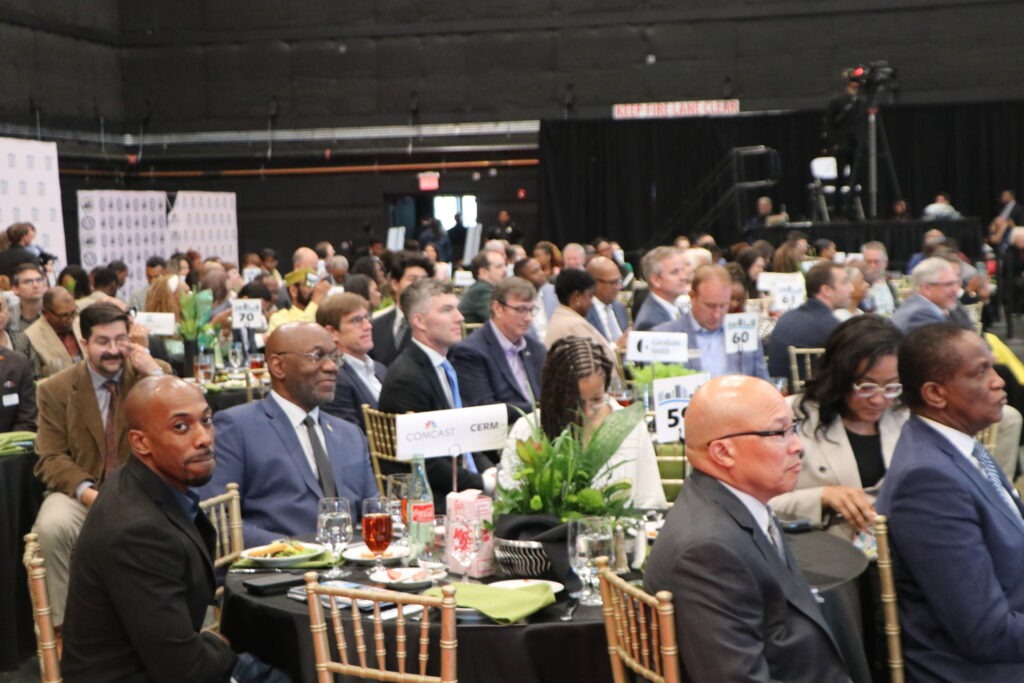
More than 800 business leaders, elected officials, and residents gathered at Assembly Studios on Thursday as Lorraine Cochran-Johnson delivered her annual State of the County address an event that underscored both the scale of DeKalb’s ambitions and the complexity of its challenges.
Hosted by the Council for Quality Growth in partnership with DeKalb County Government and the DeKalb Chamber of Commerce, the annual address serves as a key forum connecting the county’s business community with public leadership and regional stakeholders.
Before taking the stage, Cochran-Johnson was introduced through a short, high-energy video inspired by the film Mission: Impossible, featuring the CEO and members of her cabinet as part of a team navigating challenges and “completing the mission” for DeKalb County. The presentation reinforced the administration’s message that progress is intentional, coordinated, and action-driven.
“You cannot build a thriving county on a failing system,”
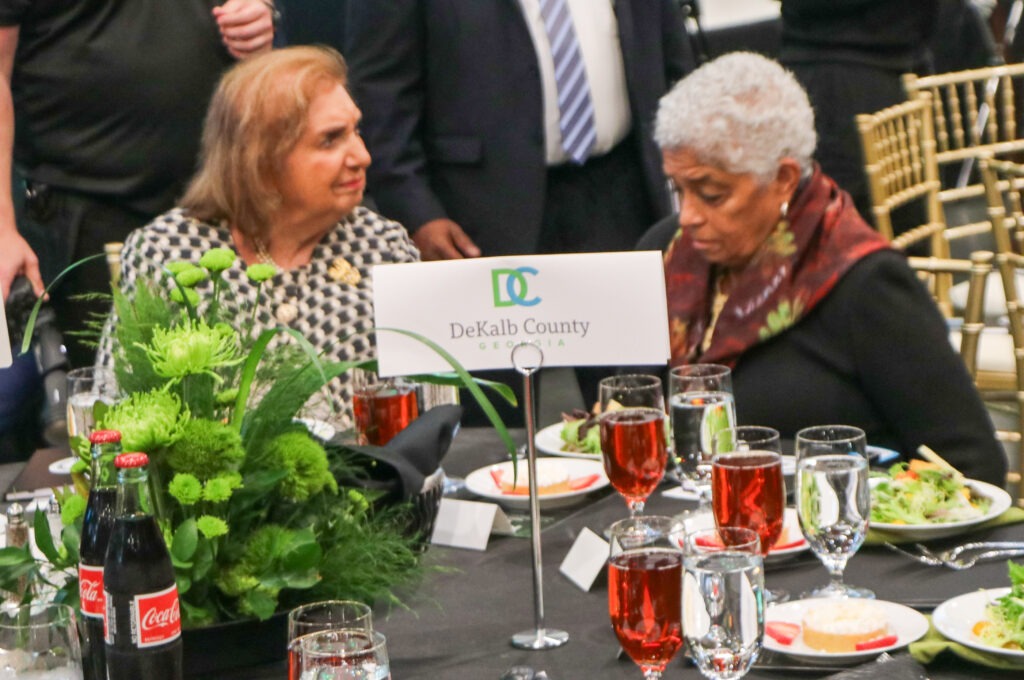
Cochran-Johnson also paused to recognize the legacy of those who previously led the county, acknowledging former CEOs including Manuel Maloof, Liane Levetan, Vernon Jones, Burrell Ellis, Lee May, and Michael Thurmond—a moment that underscored continuity as the county charts its next phase.
In her remarks, Cochran-Johnson outlined an aggressive agenda centered on public safety, infrastructure, housing, and government reform while acknowledging the work ahead.
“We are not just reimagining what’s possible – we are delivering,” she said.
Crime Down as Public Safety Investments Expand
Public safety remains a cornerstone of the administration’s strategy.
DeKalb County has invested more than $30 million into crime prevention through its “Digital Shield Initiative,” which includes a Real-Time Crime Center, drone first responder program, and expanded camera integration.
According to the county:
- Police staffing has increased more than 300 percent since Cochran-Johnson took office
- Violent crime is down 11 percent
- Overall crime has dropped 25 percent
The county has also focused resources on high-crime areas, often working in partnership with local businesses to deploy surveillance technology and targeted enforcement.
“Public safety affects economic development, property values, and quality of life,” Cochran-Johnson said.
Historic $4.7 Billion Infrastructure Investment
The CEO announced a $4.7 billion water infrastructure plan—the largest in county history—aimed at addressing years of underinvestment.
Cochran-Johnson acknowledged that raising water rates to fund improvements was a difficult but necessary decision.
“You cannot build a thriving county on a failing system,” she said.
To support residents, the county launched the Water Rate Assistance Program (WRAP) in partnership with the Urban League of Greater Atlanta, providing relief to households struggling with rising water costs. The county also conducted outreach to more than 250,000 residents.
Officials say the investment will stabilize the system while supporting long-term growth.
Housing Crisis Drives New Policy Direction
Housing affordability has emerged as one of the most urgent challenges facing the county.
A study cited during the address found that a minimum-wage worker in metro Atlanta would need to work 140 hours per week to afford a two-bedroom apartment.
In response, DeKalb County has elevated housing as a central policy priority under Dr. Alan Ferguson Sr., the county’s first Chief Housing Officer.
Key initiatives include:
- Expansion and preservation of affordable housing
- Activation of underutilized land
- Programs to prevent displacement and homelessness
Through a partnership with Neighborhood Assistance Corporation of America, the county has processed more than 7,000 applications and helped create over 900 new homeowners.
Additional actions include:
- A 400-bed emergency shelter
- A 60-unit rapid housing initiative
In July 2025, the DeKalb County Board of Commissioners approved an $8 million investment to secure 60 units at the Park 500 apartment complex, expanding the county’s capacity to provide stable housing.
“Housing will not be an afterthought in DeKalb County,” Cochran-Johnson said.
Economic Development Focused on Equity
County leaders say economic development must reach every part of DeKalb not just high-performing areas.

Recent actions include:
- Strategic purchase of county property at 4380 Memorial Drive in Decatur, now serving as a central government and tax operations hub
- Investment in key redevelopment corridors
- Support for mixed-use projects like Kensington Crossing
The acquisition of the Memorial Drive site marks a shift toward long-term asset ownership after decades of leasing, positioning the county to shape future development along a key corridor.
Cochran-Johnson emphasized that DeKalb’s assets including a strong workforce, proximity to Hartsfield-Jackson Atlanta International Airport, and the presence of DeKalb-Peachtree Airport one of the nation’s busiest general aviation airports along with nine colleges and universities, position the county for continued growth.
Blight Removal and Quality of Life Improvements
Efforts to improve neighborhood conditions are accelerating.
The county reports:
- More than 30,000 illegally dumped tires removed
- Over 240 blighted properties demolished
- Expanded code enforcement operations, now averaging more than 200 cases per month
Road resurfacing, park investments, and extended library hours are also part of broader quality-of-life improvements.
Modernizing Government Operations
Cochran-Johnson said internal reform is critical to sustaining progress.
The county has:
- Conducted a comprehensive operational assessment
- Implemented performance dashboards across departments
- Invested in upgraded 911 systems and enterprise technology
Officials also rebuilt the county’s website, eliminating more than 14,000 outdated pages to improve accessibility and transparency.
“You cannot deliver exceptional results without strong systems,” she said.
What Stakeholders Want Next

While many attendees expressed support for the county’s direction, conversations at the event revealed areas where residents and stakeholders want more clarity.
Glenn Wallace, a business stakeholder, said small business growth and homelessness remain top concerns.
“I would like to hear more about how we’re going to help small businesses,” Wallace said.
Other attendees pointed to emerging issues such as data center development and infrastructure.
Herb McCoy, a DeKalb resident and former library board member, said he wants a clearer understanding of those developments.
“I’d like to get a better sense of where the county stands,” McCoy said.
At the same time, McCoy expressed confidence in the CEO’s leadership.
“She showed up to practically every board meeting,” he said. “I think we’re in good hands right now.”
Residents Express Cautious Optimism
Among residents, the tone was largely supportive but measured.
Dorothy Anderson, a longtime DeKalb County resident, said she has seen progress but understands the timeline required for change.
“I believe in what she’s done and what she says she’s going to do,” Anderson said. “I know it can’t all be done in one day, but I see her making steps forward.”
She also pointed to the importance of community engagement moving forward.
“People have got to get out there,” she said.
A County in Transition
The address made clear that DeKalb County is actively reshaping its future through investment, policy shifts, and structural reform.
But it also highlighted a central reality: progress is uneven, and the success of these initiatives will ultimately be measured by how broadly they are felt.
“We are not waiting for what’s possible,” Cochran-Johnson said. “We are building it.”
Related articles
DeKalb County Shows Unified Vision at Capitol, Elevates Students and Legislative Priorities
DeKalb County Pioneers Long-Term Housing Solution with $8M Investment
DeKalb Reimagined: CEO Lorraine Cochran-Johnson Charts New Path Forward
DeKalb County Approves $78 Million Contract to Improve Ambulance Response and Expand EMS Coverage
DeKalb County, Urban League Launch Water Rate Assistance Program to Support Families
Support open, independent journalism, your contribution helps us tell the stories that matter most.