Shadow Ball: Learning More About Negro League History

January 27, 2026

Dear Shadow Ball: “Who was the last Negro Leaguer to play in MLB?”
Will Clark, Hackensack, NJ

 … this column exists for only one purpose and that is to answer your questions on Negro League baseball history. To that end, I need your help … if you are reading this column and enjoy it and want it to continue and you don’t already know everything about Negro League history … then please submit a question on any aspect of Negro League history. Your questions are the lifeblood of Shadow Ball—they shape where we go next.

 – players, teams, events, and more – and, in so doing, you will direct where this column goes moving forward. Your participation is important and appreciated. The very existence of this column depends on you. Submit your questions to shadowball@truthseekersjournal.com.

Dear Will: If by play one means debut, according to baseball-reference, the answer is Ike Brown who briefly played for the Kansas City Monarchs in the early sixties before beginning a lengthy stay in the Detroit Tigers system, including four years in the AAA International League, finally debuting with the parent club on June 17, 1969 thereby becoming the last player from the Negro Leagues to break in to MLB.

Ironically, at the time of Brown’s debut only one former Negro Leaguer was active – Hank Aaron who had just two months earlier broke Babe Ruth’s career home run record with a round tripper off Al Downing on April 8, 1974. Hammerin’ Hank would play his MLB final game on October 3, 1976, becoming the last Negro Leaguer to play in MLB.

Late in that 1976 season the Chicago White Sox, under the forever showman Bill Veeck, utilized 52 year old Minnie Minoso, a Negro League All Star third baseman in the 40s, as a designated hitter in three games all preceding Aaron’s finale but four years later Minoso would appear as a pinch hitter on October 5, 1980 in his last appearance in the bigs (and Bill Veeck’s last game as an owner.)

Thus, the last former Negro Leaguer to debut in the Majors is Ike Brown, the last to play regularly is Hank Aaron and the last to appear in any role – gimmicky or otherwise – is Minnie Minoso.

Last week’s Shadow Ball Significa question: Which Negro League team introduced night baseball five years before Major League Baseball adopted it? No one submitted the correct answer, but I will give it because we have a guest with a significa question this week. The Kansas City Monarchs first played night baseball in 1930, using J.L. Wilkinson’s pioneering portable lighting system, the first of its kind.

The Shadow Ball Significa Question of the Week (submitted by Shadowball fan, Will Clark): A Hall of Fame Negro League slugger had a nephew who sang with, and co-founded, a legendary R&B vocal group of the 1940’s and 1950’s. Name that slugger.

Ted Knorr

Ted Knorr is a Negro League baseball historian, longtime member of the Society for American Baseball Research’s Negro League Committee, and founder of the Jerry Malloy Negro League Conference and several local Negro League Commemorative Nights in central Pennsylvania. You can send questions for Knorr on Negro League topics as well as your answers to the week’s Significa question to shadowball@truthseekersjournal.com or Shadow Ball, 3904 N Druid Hills Rd, Ste 179, Decatur, GA 30033.

Truth Seekers Journal thrives because of readers like you. Join us in sustaining independent voices.


What Riders Need to Know About MARTA’s Sunday Weather Plan

MARTA will run reduced rail, lifeline bus, and Mobility service Sunday, Jan. 25, due to forecasted winter weather. Most bus routes will be suspended.

By Milton Kirby | Atlanta, GA | January 24, 2026

The Metropolitan Atlanta Rapid Transit Authority (MARTA) will operate on a reduced schedule Sunday, January 25, as severe winter weather is forecast across metro Atlanta.

Under the agency’s inclement weather service plan, rail service, select lifeline bus routes, and MARTA Mobility paratransit service will continue running, while most regular bus routes will be suspended. Officials cautioned that service could be further reduced or halted if road and weather conditions deteriorate.

“MARTA will continue to share real-time service updates across all customer-facing platforms as conditions evolve,” the agency said in a statement.

Rail service

Rail service will begin at 6 a.m., with trains arriving every 20 minutes. Out-of-service trains will operate continuously to prevent track icing.

North/South lines

  • Red Line: North Springs to Lindbergh Center
  • Gold Line: Doraville to Airport

East/West lines

  • Green Line: Bankhead to Vine City
  • Blue Line: Indian Creek to H.E. Holmes

Streetcar service will begin at 8:21 a.m. on a regular Sunday schedule, operating with shuttle vans.

Lifeline bus routes only

Only designated lifeline bus routes will operate beginning in the 5 a.m. hour. These routes provide direct access to major medical facilities and emergency rooms. All other bus routes will be suspended.

Operating routes and frequencies include:

  • Route 6 – Clifton Road/Emory (45 minutes)
  • Route 8 – North Druid Hills (30 minutes)
  • Route 19 – Clairmont/W. Howard Avenue (40 minutes)
  • Route 40 – Peachtree Street/Downtown (45 minutes)
  • Route 107 – Glenwood (30 minutes)
  • Route 110 – Peachtree Road/Buckhead (20 minutes)
  • Route 111 – Snapfinger Woods (40 minutes)
  • Route 123 – Church Street (60 minutes)
  • Route 185 – Alpharetta (40 minutes)
  • Route 196 – Upper Riverdale (30 minutes)

MARTA Mobility service

MARTA Mobility will operate within three-quarters of a mile of rail stations and the active lifeline bus routes, as road conditions allow.

  • Pre-booked medically necessary trips will be honored when safe
  • All subscription trips are canceled
  • Only next-day reservations will be accepted
  • Reservations Call Center opens at 9:30 a.m.

Customer services and information

Reduced Fare and Lost & Found offices will be closed Sunday.

The Customer Information Call Center will operate from 8 a.m. to 7 p.m. for routing and scheduling questions at 404-848-5000.

Riders are encouraged to monitor itsmarta.com, the MARTA On the Go app, and @MARTAservice and @MARTAtransit on social media for real-time updates.

Related articles

New Year, New MARTA: 2026 Upgrades Aim to Boost Safety, Reliability, and the Rider Experience

MARTA rolls out Big Changes with New Fare System Upgrades

MARTA Unwraps the Holidays with Free Rides, Festive Buses, and Gifts for Riders

From Tokens to Tap-to-Pay: MARTA Unveils Better Breeze

World-Class Transit for World-Class Soccer: MARTA Steps Up

MARTA rolls out Big Changes with New Fare System Upgrades

MARTA Unwraps the Holidays with Free Rides, Festive Buses, and Gifts for Riders

MARTA Rolls Out an Outkast Tribute Across Atlanta

MARTA Completes Garnett Station Platform Renovation

From Tokens to Tap-to-Pay: MARTA Unveils Better Breeze

MARTA to Close Five Points Peachtree Entrance as Next Phase of Transformation Begins

Support open, independent journalism—your contribution helps us tell the stories that matter most.

Brett Kavanaugh raises impeachment question in Trump Federal Reserve case

Why It Matters

The justices are contemplating a case that deals with the president’s removal of an independent official and what counts as “for cause.” An attorney representing Cook, former U.S. Solicitor General Paul Clement, tells the court that impeachment, a form of removal of an official, is “the ultimate backup” in a hypothetical situation that Justice Samuel Alito presented to him.

During arguments, several justices questioned whether President Donald Trump has the authority to fire a sitting Fed governor over allegations of mortgage fraud that Cook denies. Earlier in the hearing, Justice Brett Kavanaugh warned that allowing Cook’s dismissal could “weaken, if not shatter, the independence of the Federal Reserve.”

What To Know

Following Justice Samuel Alito’s hypothetical question, “how about if, after the person assumes office, videos are disclosed in which the officeholder is expressing deep admiration for Hitler or for the Klan?” Clement, responded “that’s an official that would be impeached in a heartbeat.”

Amid the back and forth among other justices as well, Clement reiterated that his “backup to the backup” is “impeachment.” Kavanaugh then jumped in stating, “We got an argument in the past that impeachment doesn’t cover private conduct. You obviously disagree with that then?”

Clement responded, “Well, I certainly see, but this actually kind of makes the point about judicial review, right?”

Kavanaugh said, “I’m not saying I agree with that, by the way. It’s been—it’s been argued.”

Cook’s attorney then said, “What I absolutely agree with is the Walter Nixon case says that there’s no judicial review of the impeachment determination in the end. So whatever the House and the Senate ultimately determine, I mean, they can make constitutional law, too and they can determine whether private conduct is or is not out.”

The back and forth continued with Clement bringing up “INM,” referring to inefficiency, neglect of duty, or malfeasance, which comes from the Federal Trade Commission Act. He told the Court, “the reason I want to spend at least a moment answering some of the hard hypos is not because I’m a masochist. It’s just because those are—have got to be the answers under INM.”

Kavanaugh responded, “your answer is that those are funneled to the impeachment process?” to which Clement responded “that’s right,” continuing on that “INM has worked for 150 years. And I think it would continue to work. It hasn’t proven a problem in practice.”

Why Did Trump Fire Lisa Cook From the Federal Reserve Board of Governors?

Trump moved to remove Cook from the Federal Reserve Board, citing allegations that she committed mortgage fraud in 2021, before she joined the central bank. The administration argues that Cook improperly claimed two properties as primary residences, potentially securing more favorable loan terms. Trump’s legal team has said the allegations amount to misconduct sufficient to justify her dismissal, though Cook has not been charged with any crime. Critics have questioned whether the effort reflects a broader attempt by Trump to exert greater control over the independent central bank and influence interest rate policy.

Key takeaways

  • Impeachment as Backstop: Justice Brett Kavanaugh questioned whether impeachment is a realistic safeguard for removing independent officials, with attorney Paul Clement calling it the “ultimate backup” for misconduct or controversial behavior.
  • Trump vs. Lisa Cook: President Trump attempted to remove Fed Governor Lisa Cook over alleged mortgage fraud, raising concerns about Federal Reserve independence and presidential authority to fire governors.
  • About Lisa Cook: Cook is the first Black woman on the Fed Board, an economist focused on labor markets, economic inequality, and innovation, helping set U.S. monetary policy insulated from political pressure.

Who Is Lisa Cook? What to Know

(AP Photo/Mark Schiefelbein)

Cook is a Federal Reserve governor and the first Black woman to serve on the Fed’s Board of Governors. An economist by training, she was confirmed to the board in 2022 after previously serving as a professor at Michigan State University and holding roles focused on economic research and policy.

Cook’s work has centered on labor markets, economic inequality and innovation. As one of seven governors, she helps set U.S. monetary policy, including interest rates, in a role designed to be insulated from political pressure.

What People Are Saying

The Supreme Court justices, writing in a separate case last year: “The Federal Reserve is a uniquely structured, quasi-private entity that follows in the distinct historical tradition of the First and Second Banks of the United States.”

Justice Sonia Sotomayor, speaking Wednesday: “This whole case is irregular, starting with the Truth Social notice…But that’s where we are.”

White House spokesman Kush Desai previously told The Associated Press: “President Trump lawfully removed Lisa Cook for cause from the Federal Reserve Board of Governors. We look forward to ultimate victory after presenting our oral arguments before the Supreme Court in January.”

What Happens Next

The justices finished oral arguments on Wednesday and are expected to rule on the case at a later date.

This article was written by Mandy Taheri.

No contribution is too small. Support us today and help keep truth accessible for all.

How Urban Planning Taught Me to Build Continuity into Intelligent Systems

AutoLore™ is a continuity architecture that preserves coherence, lineage, and accountability in intelligent systems, governing context before AI interpretation, generation, or action occurs.

By Florita Bell Griffin, Ph.D | Houston, TX | January 23, 2026

I first encountered the problem that would later become AutoLore while creating an AI-generated art collection in 2023 titled “All We Need Is Love”, a 77-piece body of work honoring the contributions of African American men across every U.S. state and territory, paired with images referencing African ceremonial mask traditions to honor ancestral origins. The project carried personal weight long before it became technical. I had long recognized the absence of continuity in Black culture as an intentional infliction—history fragmented, lineage disrupted, context erased or compressed. This collection emerged as a corrective act, an effort to hold presence, contribution, and dignity together across geography and time.

As the work developed, a persistent pattern surfaced. The system repeatedly rendered African American men through a narrow visual range, compressing skin tone, facial variation, and presence into a single flattened representation. Iteration revealed deeper inconsistencies as well—misalignments absent when the same tools portrayed other cultures. Extended testing clarified the issue with precision. Knowledge existed in fragments, yet coherence across history, representation, and context failed to carry forward. The system struggled to sustain identity across variation. That realization redirected my attention toward continuity as a governing condition, examined through the same analytical lens I had long used to understand cities, infrastructure, and long-horizon systems. A single question emerged, linking cultural memory, intelligent systems, and urban science: how systems evolve while retaining themselves.

From the beginning of my professional formation, I learned to recognize failure as structural before it becomes visible. Urban planning shows that breakdowns arise through ungoverned assumptions as conditions shift. A transportation network can operate while quietly undermining land use. A zoning decision can appear sensible at a local scale while destabilizing an entire region over time. Systems drift long before they fracture.

Urban and regional science deepened this way of seeing. It oriented my thinking toward flows rather than objects—flows of people, capital, information, movement, and power. Stability emerges through alignment rather than optimization alone. When flows exceed the structures meant to contain them, continuity erodes even as performance improves. That insight endured.

Most importantly, my discipline taught me to treat identity, sequence, and authority as foundational variables. Regions depend on boundaries. Systems rely on sequence. Cities operate through layered authority across jurisdictions. When identity blurs, when sequence fractures, or when authority shifts quietly, fragmentation follows even while individual actors remain capable and sincere.

I carried that understanding forward as I continued examining intelligent systems through creative practice.

Midway through this exploration, I initiated a second experiment. “Sisters Across Borders” became a 60-piece global collection portraying women whose faces blended African descent with another culture, each work representing a different country. This project allowed real-time application of emerging insights. Continuity principles shaped data preparation, representation logic, and contextual framing. At the same time, the African American cultural thread remained active. The lessons from All We Need Is Love carried forward rather than closing behind me. The contrast between the two collections revealed something critical. When continuity was deliberately prepared and carried, the system retained coherence across variation. When continuity remained implicit, fragmentation resurfaced.

What I observed felt familiar.

Intelligent systems were becoming more capable, more autonomous, and more interconnected. As they retrained, migrated, integrated, and evolved, coherence diminished over time. Operation continued. Performance increased. Yet continuity thinned. Identity shifted toward inference rather than enforcement. Lineage yielded to overwriting. Context leaned toward reconstruction rather than preservation. Authority drifted quietly between components.

The industry described these conditions as drift, forgetting, instability, or degradation. I recognized them as symptoms. I had witnessed the same patterns in cities, regions, and infrastructure systems. The cause remained structural.

Continuity was absent as an architectural condition.

In urban planning, systems never infer continuity for themselves. Continuity is designed. Lineage is preserved. Boundaries are defined. Transitions are governed. Sequence is respected. Authority is established. Growth and change follow afterward. Intelligent systems were being asked to reverse this order—to learn their way into coherence without a stable frame.

AutoLore emerged from the realization that continuity must exist before intelligence expresses itself. When continuity depends on interpretation, learning, or retrospective analysis, fragility follows under change. As conditions shift, the system must guess who it is, what applies, and which authority governs the present moment.

That condition reflects vulnerability rather than intelligence.

The first step involved recognizing that raw events create unstable inputs. In cities, raw activity never serves as planning truth. Contextualization gives events meaning. Sequence situates them. Lineage connects them. Applicability clarifies relevance. AutoLore applies the same principle to intelligent systems. Events are prepared into continuity-ready representations that carry identity relevance, contextual scope, lineage relationships, and transition awareness forward explicitly. Continuity becomes structured rather than inferred.

Preparation alone remains insufficient. In planning, design without governance collapses under pressure. AutoLore therefore treats continuity as something actively governed. Identity, provenance, sequence, scope, authority, and persistence bind together into continuity states that exist independently of models, applications, or platforms. Continuity retains authority across upgrades, replacements, migrations, and distributed environments because it belongs to the architecture rather than the implementation.

A further issue soon became clear—one planners understand well. Without clear authority, governance dissolves. Cities fragment when jurisdiction blurs. Systems bypass rules when precedence remains unclear. AutoLore addresses this through continuity supremacy: continuity established as an authoritative system property that holds precedence over execution. Continuity is traversed before action. Authority persists even as systems pause, transfer, or operate in parallel.

This way of thinking emerged through a discipline built to design environments that evolve without collapse. Urban planning and regional science shaped how identity endures across time, how change remains governed while progress continues, and how failure emerges when structure remains implicit.

AutoLore expresses that discipline in a new domain.

I developed AutoLore by giving intelligent systems what cities require to endure: continuity prepared, governed, and upheld as an architectural responsibility. The work began in practice before it became architecture, and it continues wherever systems are asked to carry identity, context, and authority forward through change.

AutoLore™ is a proprietary continuity architecture of ARC Communications, LLC. The AutoLore™ architecture and its associated subsystems are patent pending. All rights reserved.

Adapted for Truth Seekers Journal from research originally published by ARC Communications, LLC.

For correspondence: arccommunications@arc-culturalart.com

©2026 ARC Communications, LLC. All rights reserved.

Related articles

Truth Seekers Journal Welcomes Dr. Forita Bell Griffin as Contributing Writer and Systems Analyst

“What Is AutoLore?”

Truth Seekers Journal thrives because of readers like you. Join us in sustaining independent voices.

Hardee’s Returns to NASCAR, Becomes Official QSR and Primary Sponsor of Bubba Wallace’s No. 23

By Milton Kirby | Daytona Beach, FL | January 22, 2026

Hardee’s is back in NASCAR in a big way.

The iconic American fast‑food brand has signed a multiyear agreement to become the Official Quick Service Restaurant of NASCAR, while also joining 23XI Racing as a primary sponsor of Bubba Wallace and the No. 23 Toyota Camry XSE.

The move represents one of the most notable heritage‑brand returns in recent NASCAR history and arrives at a moment when the sport is eager to reset after a turbulent offseason.

Hardee’s branding will appear throughout the season on Wallace’s firesuit, team uniforms, and equipment, with the No. 23 Hardee’s car set to debut at Martinsville Speedway this spring. The partnership also fills a long‑vacant category: Hardee’s becomes the first official NASCAR QSR in more than 15 years, a slot left open since Checkers/Rally’s exited in 2008.

A Heritage Brand Comes Home

For longtime fans, Hardee’s return is more than a sponsorship it’s a callback to an era when the brand was synonymous with winning. During the 1980s and 1990s, Hardee’s‑backed teams collected 12 NASCAR Cup Series victories with Hall of Fame drivers Bobby Allison, Cale Yarborough, Alan Kulwicki, and Dale Jarrett.

Allison delivered three wins in the No. 28 Hardee’s car in 1981, including the Coca‑Cola 600. Yarborough added nine victories, highlighted by back‑to‑back Daytona 500 triumphs in 1983 and 1984.

Now, as NASCAR courts legacy brands seeking multigenerational reach, Hardee’s return fits squarely into the sport’s push to reconnect with its roots.

“Hardee’s is an American classic with deep roots in our sport,” said NASCAR Chief Commercial Officer Craig Stimmel. “Its return represents more than a new partnership it symbolizes the power and appeal of NASCAR’s heritage.”

Why 23XI, Why Now

Hardee’s arrival also reshapes the sponsorship landscape at 23XI Racing.
The brand steps in as McDonald’s quietly exits the team — a shift that became clear when the Golden Arches were absent from recent car renderings tied to the team’s expanded partnership with Xfinity.

Hardee’s will serve as a primary sponsor for Wallace at select races beginning with Martinsville, while Xfinity remains the dominant presence on the No. 23 throughout the season, including the Daytona 500.

The timing is notable. The agreement lands just months after NASCAR and 23XI Racing resolved their high‑profile antitrust dispute, a case Truth Seekers Journal has covered extensively from the damages sought by 23XI and Front Row Motorsports to the permanent charter resolution and the broader implications for team equity and sponsorship stability.

Industry sources said Hardee’s evaluated multiple teams before selecting 23XI, ultimately offering commitments slightly above $1 million annually. The deal, brokered by Hardee’s media agency PMG, includes trackside activations, digital campaigns, and integration with NASCAR’s My Rewards loyalty ecosystem.

For Wallace, the partnership carries both personal and professional weight.

“NASCAR is built on legacy, and Hardee’s has been part of some of the most iconic moments in our sport’s history,” Wallace said. “Fans know the Hardee’s paint schemes of the past, and I’m excited to help create some new memories.”

A Signal Beyond Sponsorship

Beyond the branding, Hardee’s return sends a broader message about the sport’s direction.
NASCAR Holdings and 23XI Racing collaborated closely to bring the brand back a sign that the two sides have maintained a functional working relationship following last year’s antitrust litigation.

Had the case gone to trial, 23XI Racing and Front Row Motorsports were seeking $365 million in damages. Instead, the dispute concluded with NASCAR granting both teams permanent charters a resolution analysts estimate to be worth tens to hundreds of millions of dollars, not including substantial legal costs.

Against that backdrop, Hardee’s re‑entry is being viewed inside the industry as a tangible step toward renewed stability and a signal that major brands are once again comfortable making long‑term investments in the sport.

Looking Ahead

Hardee’s parent company, CKE Restaurants Holdings, also operates Carl’s Jr., with more than 3,800 restaurants across the U.S. and internationally. Company officials say the NASCAR partnership will emphasize fan engagement, community outreach, and celebrating the sport’s past while fueling its future.

For NASCAR, 23XI Racing, and Bubba Wallace, the partnership represents something increasingly rare in modern motorsports: a heritage brand not just returning — but reclaiming a central place on the grid.

Related articles

23XI, NASCAR and Front Row Strike Deal to Strengthen Team Equity and Gro

Michael Jordan’s 23XI Racing Scores Major Win in NASCAR Antitrust Fight

History is Made: Bubba Wallace Becomes the First Black NASCAR Driver to Win on the Indianapolis Oval

Truth Seekers Journal thrives because of readers like you. Join us in sustaining independent voices.
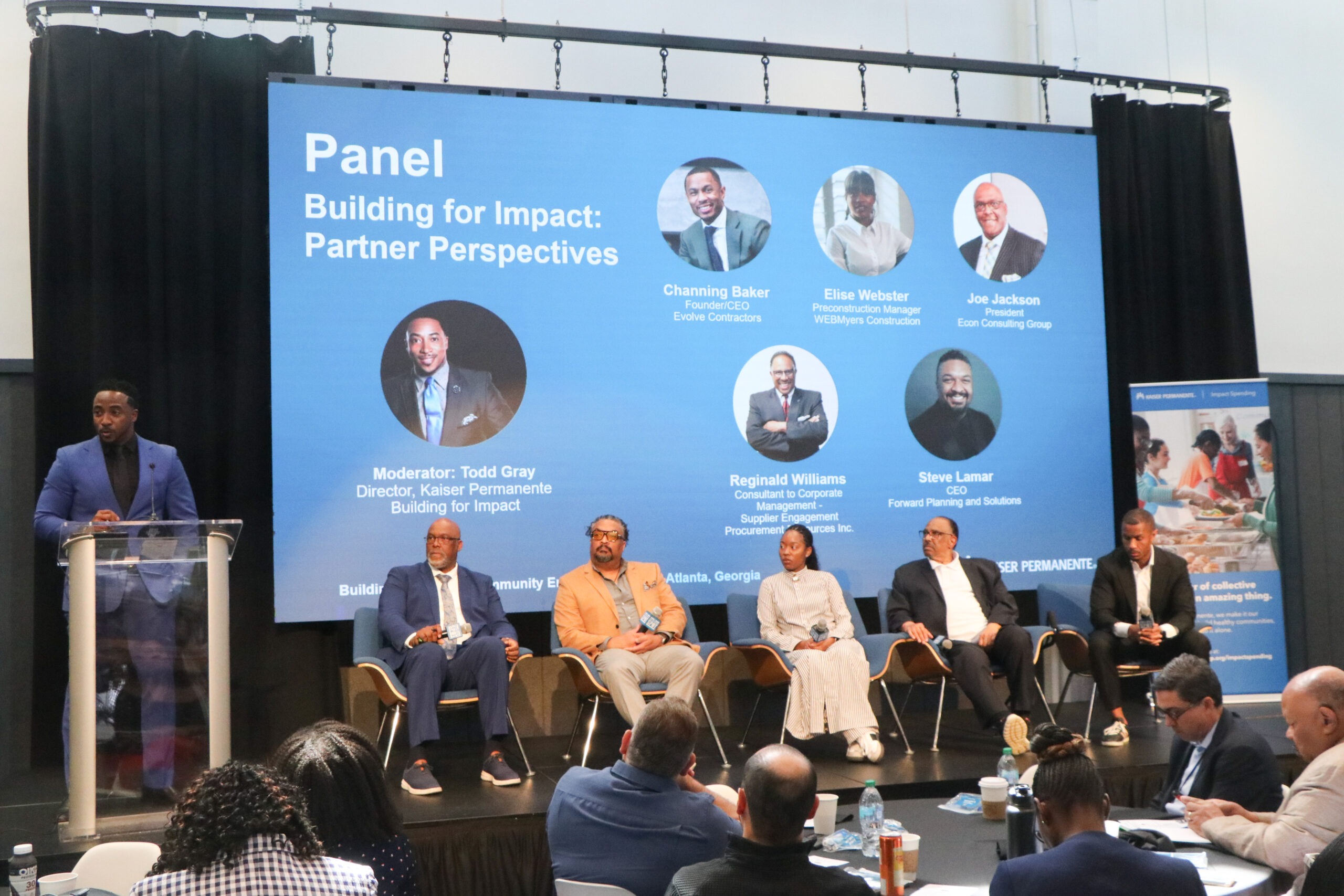
What Is AutoLore?

AutoLore™ is a continuity architecture that preserves coherence, lineage, and accountability in intelligent systems, governing context before AI interpretation, generation, or action occurs.

By Florita Bell Griffin, Ph.D | Houston, TX | January 22, 2026

Inventor of AutoLore™ · AutoLore™ is owned by ARC Communications, LLC

AutoLore™ is a continuity architecture. Its purpose is to preserve coherence, lineage, and integrity as real-world events, data, and decisions move through intelligent systems over time. AutoLore prepares raw inputs into continuity-verified representations before any interpretation, generation, or action occurs. By governing preparation rather than performance, AutoLore stabilizes systems across scale, transfer, and change.

Modern intelligent systems are optimized for output. They predict, personalize, and adapt with impressive speed. Yet as systems evolve, context fragments, sequence blurs, and decisions become harder to trace. What remains may continue to function, but it no longer holds together. AutoLore exists to address this structural failure mode by treating continuity itself as a first-class architectural concern.

AutoLore operates as a preparation layer positioned between raw event intake and downstream system use. Instead of allowing each component to infer its own understanding of events, AutoLore standardizes how events enter the system. It produces continuity-ready representations designed for durable use across time, environments, and ownership. These representations carry the information required to preserve context without exposing raw inputs or forcing downstream interpretation.

At the core of AutoLore is disciplined preparation. Real-world events are received through a defined intake interface. Continuity attributes are extracted. Lineage relationships are established so sequence and causality remain intact. Transition states are classified to reflect change rather than overwrite history. Boundaries are defined to govern how prepared representations may be consumed downstream. The output is a structured representation designed to remain coherent as systems evolve.

This approach allows downstream systems to operate with clarity. Models, interfaces, and services consume prepared representations rather than raw events, which supports auditability, provenance, and long-range integrity. Routing and flow control can occur without interpretation, preserving determinism and reducing drift. Over time, this yields systems that remain recognizable even as components are replaced or upgraded.

AutoLore is intentionally distinct from performance-oriented intelligence. It does not predict outcomes, personalize behavior, or generate meaning. Instead, it governs the conditions under which meaning, action, and expression can remain coherent. This distinction enables AutoLore to function across domains wherever continuity must survive scale and change, including intelligent vehicles, AI platforms, robotics, data systems, and complex infrastructures.

AutoLore includes a core subsystem responsible for governed expressive output: Arjent AI Voice Architecture™. This subsystem ensures that when a system explains, narrates, or communicates, its output remains aligned with continuity-prepared inputs. Expression is governed by structure, lineage, and boundary rules rather than repetition or reinterpretation, preserving consistency across time and context.

AutoLore is a foundational architecture created to govern continuity before intelligence acts and before meaning is produced. Developed by ARC Communications, LLC, AutoLore defines a new category of system architecture centered on continuity preparation rather than downstream correction.

Fifty Real Problems AutoLore Resolves

The following questions reflect recurring failures observed in large-scale intelligent systems. Each illustrates a condition that emerges when continuity, lineage, and governed transition are absent. AutoLore addresses these problems by preserving coherence before interpretation, generation, or action occurs.

Why do large AI systems behave inconsistently across versions even when trained on the same data?
A: › Because lineage between model states, data contexts, and decision boundaries is reconstructed after the fact instead of preserved. AutoLore carries continuity forward explicitly, so each transition retains its governing context.

Why does internal AI governance break down once systems scale across teams?
A: › Governance fails when context ownership fragments. AutoLore enforces continuity before interpretation, keeping authority intact as systems cross organizational boundaries.

Why do audit trails fail under regulatory scrutiny?
A: › Logs describe outcomes rather than causality. AutoLore preserves lineage at the moment of transition, making audits evidentiary rather than inferential.

Why do safety teams disagree with product teams about what a system knew at a given time?
A: › Because memory is inferred rather than fixed. AutoLore locks continuity states so interpretation never rewrites history.

Why do autonomous systems drift even when performance metrics improve?
A: › Optimization rewards local success rather than identity preservation. AutoLore defines invariants that adaptation cannot override.

Why does system behavior change after infrastructure migrations?
A: › Context is stripped during translation. AutoLore treats migrations as continuity events rather than data moves.

Why do long-lived platforms lose coherence after acquisitions?
A: › Institutional memory is undocumented and informal. AutoLore embeds lineage into the system itself.

Why is AI explainability unreliable months after deployment?
A: › Explanations are regenerated using present context. AutoLore preserves original interpretive conditions.

Why do compliance teams rely on manual documentation for automated systems?
A: › Automation lacks continuity guarantees. AutoLore provides machine-verifiable lineage.

Why does “human in the loop” fail at scale?
A: › Humans intervene without preserved context. AutoLore ensures interventions occur inside governed continuity frames.

Why do robotics systems behave differently in identical environments?
A: › Environmental context is flattened into sensor data. AutoLore preserves situational lineage.

Why do simulation-trained systems fail in real-world deployment?
A: › Simulation lacks continuity with reality. AutoLore binds simulated and real transitions.

Why do multi-modal systems struggle to reconcile conflicting inputs?
A: › Inputs lack shared lineage. AutoLore resolves conflicts through continuity hierarchy.

Why does retraining erase prior safety learnings?
A: › Safety knowledge is not preserved as invariant. AutoLore protects it across cycles.

Why do distributed systems disagree about current state?
A: › State is computed locally. AutoLore maintains global continuity.

Why do AI incidents take weeks to root-cause?
A: › History must be reconstructed. AutoLore eliminates reconstruction.

Why do systems pass testing but fail in production?
A: › Test context differs from live context. AutoLore carries context forward.

Why does model rollback create new failures?
A: › Rollback ignores intervening continuity. AutoLore accounts for transition debt.

Why do AI governance policies lag technical reality?
A: › Policy operates outside the system. AutoLore embeds governance inside execution.

Why do platforms struggle with accountability across partners?
A: › Responsibility diffuses across interfaces. AutoLore preserves provenance across handoffs.

Why do customer-facing AI systems contradict themselves over time?
A: › Narrative continuity is not preserved. AutoLore maintains coherent memory states.

Why do personalization systems feel invasive or inconsistent?
A: › Context is inferred probabilistically. AutoLore uses continuity-verified context.

Why do internal tools behave differently than external ones using the same model?
A: › Integration strips lineage. AutoLore standardizes continuity intake.

Why do data governance teams distrust AI outputs?
A: › Outputs lack traceable origin. AutoLore provides verifiable lineage.

Why do safety assurances weaken after system updates?
A: › Updates overwrite assumptions. AutoLore enforces invariant preservation.

Why does federated learning complicate accountability?
A: › Contributions lose attribution. AutoLore preserves origin across federation.

Why do large systems require tribal knowledge to operate safely?
A: › Knowledge lives in people rather than systems. AutoLore moves it into architecture.

Why do explainability tools disagree with one another?
A: › They interpret from different temporal contexts. AutoLore fixes the temporal frame.

Why do AI failures repeat in slightly different forms?
A: › Lessons are not preserved structurally. AutoLore encodes them into continuity.

Why does system identity blur after rapid iteration?
A: › Change outpaces coherence. AutoLore governs identity through transitions.

Why do platform leaders fear regulatory retroactivity?
A: › They cannot prove historical compliance. AutoLore makes compliance durable.

Why do AI risk reports rely on narrative rather than evidence?
A: › Evidence was never preserved. AutoLore generates evidence by design.

Why do internal disagreements stall AI deployment?
A: › Teams reason from different histories. AutoLore synchronizes lineage.

Why do handoffs between vendors introduce silent risk?
A: › Context is lost at boundaries. AutoLore enforces continuity at interfaces.

Why do systems behave correctly until a rare edge case?
A: › Edge cases break implicit assumptions. AutoLore makes assumptions explicit.

Why does long-term system stewardship degrade?
A: › Original intent fades. AutoLore preserves intent structurally.

Why do AI systems struggle with policy consistency?
A: › Policies change without continuity mapping. AutoLore binds policy to state.

Why does AI forget why decisions were made?
A: › Memory stores outputs rather than reasoning context. AutoLore preserves decision lineage.

Why do multi-year AI programs lose strategic alignment?
A: › Strategy is not embedded. AutoLore carries strategic continuity forward.

Why do postmortems fail to prevent recurrence?
A: › Lessons stay external. AutoLore integrates them into execution.

Why do AI roadmaps drift from original promises?
A: › Change lacks guardrails. AutoLore defines protected invariants.

Why do cross-border deployments create governance gaps?
A: › Jurisdictional context is not preserved. AutoLore maintains contextual lineage.

Why does AI safety depend on individual champions?
A: › Safety is not structural. AutoLore makes it architectural.

Why do systems appear compliant until challenged?
A: › Compliance is performative. AutoLore is evidentiary.

Why do organizations fear explaining their AI publicly?
A: › They cannot guarantee consistency. AutoLore ensures stable explanation.

Why do AI capabilities outpace control mechanisms?
A: › Control is added downstream. AutoLore operates upstream.

Why do platforms struggle with trust erosion?
A: › Trust requires continuity. AutoLore preserves it.

Why does AI governance feel abstract to engineers?
A: › Governance is not executable. AutoLore makes it operational.

Why do intelligent systems age poorly?
A: › Time erodes context. AutoLore carries context forward.

Why do advanced systems still fail in simple, human-visible ways?
A: › They optimize intelligence without continuity. AutoLore restores coherence.

AutoLore™ is a proprietary continuity architecture of ARC Communications, LLC. The AutoLore™ architecture and its associated subsystems are patent pending. All rights reserved.

Adapted for Truth Seekers Journal from research originally published by ARC Communications, LLC.

For correspondence: arccommunications@arc-culturalart.com

©2026 ARC Communications, LLC. All rights reserved.

Related articles

Truth Seekers Journal Welcomes Dr. Forita Bell Griffin as Contributing Writer and Systems Analyst

Truth Seekers Journal thrives because of readers like you. Join us in sustaining independent voices.

Truth Seekers Journal Welcomes Dr. Florita Bell Griffin as Contributing Writer and Systems Analyst

Truth Seekers Journal welcomes Dr. Florita Bell Griffin, inventor of AutoLore™, whose work on continuity and governance explores how truth and context are preserved across intelligent systems.

By Milton Kirby | Atlanta, GA | January 22, 2026

Truth Seekers Journal (TSJ) is proud to welcome Dr. Florita Bell Griffin as a contributing writer and systems analyst. Her work sits at the intersection of continuity, governance, and intelligent systems—core concerns that mirror TSJ’s mission to preserve truth, lineage, and coherence across generations.

Dr. Griffin is the inventor of AutoLore™, a continuity architecture designed to protect context and integrity as information moves through complex systems. Rather than optimizing for speed or output alone, her research focuses on preparation—how raw events, data, and decisions are stabilized before interpretation or action. The result is a framework that resists drift, fragmentation, and the quiet loss of lineage that often occurs as systems scale and change.

What makes her perspective especially timely is its reach beyond technology. Dr. Griffin’s work examines how continuity breaks down in institutions, communities, and narratives—and how governance structures can be designed to preserve meaning over time. In an era where information moves faster than memory, her insights help explain why systems may continue to function while no longer holding together.

Her voice strengthens TSJ’s editorial mandate: to examine how truth is preserved, how systems fail, and how continuity can be protected in a rapidly changing world. We are honored to bring her perspective to our readers.

Related articles

“What Is AutoLore?”

Truth Seekers Journal thrives because of readers like you. Join us in sustaining independent voices.
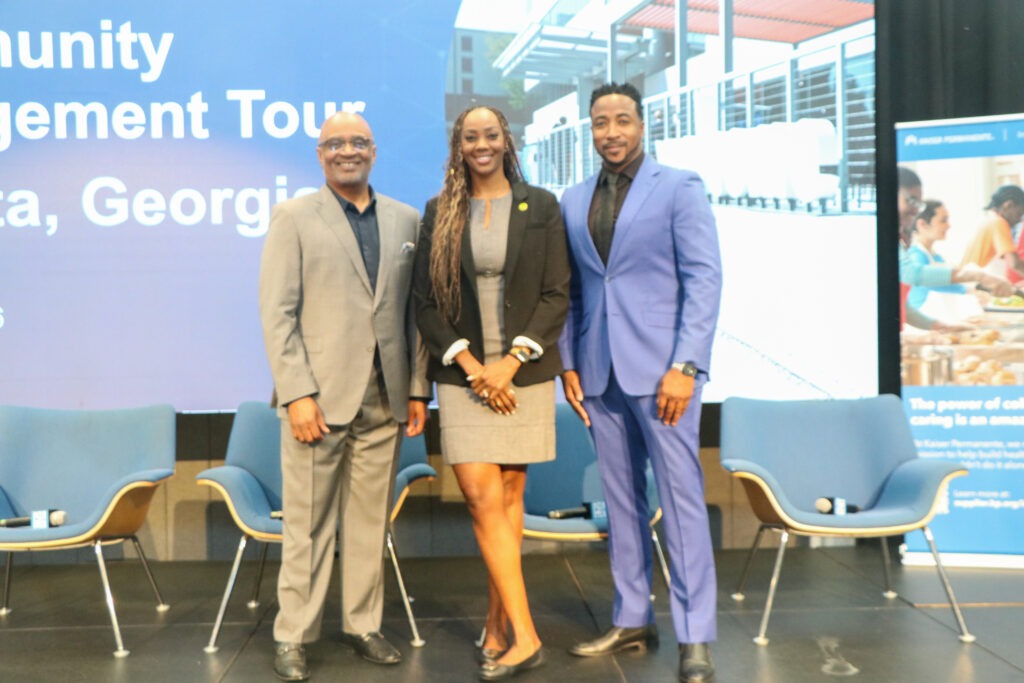
MARTA Celebrates 2026 King Holiday With Commemorative Bus Wrap Honoring Dr. King and Coretta Scott King

MARTA launches a King Holiday commemorative bus wrap honoring Dr. Martin Luther King Jr. and Coretta Scott King, running Route 3 along MLK Drive.

By Milton Kirby | Atlanta, GA | January 19, 2026

The Metropolitan Atlanta Rapid Transit Authority (MARTA), in partnership with The King Center, marked the 2026 Martin Luther King Jr. Holiday with the launch of a commemorative bus wrap honoring Dr. Martin Luther King Jr. and Coretta Scott King. This year’s observance carries the theme: “Mission Possible II: Building Community, Uniting a Nation the Nonviolent Way.”

Public transit has long been intertwined with the Civil Rights Movement. Dr. King described urban public transportation as “a genuine civil rights issue,” recognizing its role in connecting people to education, jobs, healthcare, and community life. MARTA leaders tied that history to the agency’s present-day mission and the daily realities of riders across metro Atlanta.

“MARTA is proud to honor Dr. Martin Luther King Jr. and Coretta Scott King,” said Jonathan Hunt, Interim General Manager and CEO of MARTA. “Public transit is more than a way to get from place to place. It is a connector of communities, an enabler of opportunity, and a platform for building unity. This commemorative bus represents transit’s power to shape a better future and make communities more equitable and inclusive.”

The Dr. King and Coretta Scott King commemorative bus will operate on Route 3, traveling along MLK Drive from the King Center through Sweet Auburn and the Atlanta University Center to H.E. Holmes Station. MARTA said the route highlights neighborhoods central to Dr. King’s legacy while underscoring the agency’s ongoing goal of connecting communities.

In addition, MARTA displayed its restored historical 1955 bus across from Dr. King’s Birth Home on Monday. The agency said the exhibit serves as a reminder of Rosa Parks’ courageous stand that ignited the Montgomery Bus Boycott—an event that helped propel the modern Civil Rights Movement and cemented the bus as a national symbol of protest and dignity.

MARTA said its partnership with The King Center spans more than a decade, reflecting a shared commitment to honoring Dr. King’s legacy through community engagement and public service.

Related articles

New Year, New MARTA: 2026 Upgrades Aim to Boost Safety, Reliability, and the Rider Experience

MARTA rolls out Big Changes with New Fare System Upgrades

MARTA Unwraps the Holidays with Free Rides, Festive Buses, and Gifts for Riders

From Tokens to Tap-to-Pay: MARTA Unveils Better Breeze

World-Class Transit for World-Class Soccer: MARTA Steps Up

MARTA rolls out Big Changes with New Fare System Upgrades

MARTA Unwraps the Holidays with Free Rides, Festive Buses, and Gifts for Riders

MARTA Rolls Out an Outkast Tribute Across Atlanta

MARTA Completes Garnett Station Platform Renovation

From Tokens to Tap-to-Pay: MARTA Unveils Better Breeze

MARTA to Close Five Points Peachtree Entrance as Next Phase of Transformation Begins

Support open, independent journalism—your contribution helps us tell the stories that matter most.

A Farmer, a General, a Democrat: Shawn Harris Enters Georgia’s 14th District Race

Retired Brigadier General and farmer Shawn Harris enters Georgia’s 14th Congressional District race, positioning himself as a pragmatic alternative after Marjorie Taylor Greene’s resignation.

By Milton Kirby | Rockmart, GA | January 17, 2026

Confident, but not cocky. Bold, but not brash.
That is how Shawn Harris comes across on a cold January afternoon in Rockmart in northwest Georgia. We caught up with Harris working on his cattle farm, adjusting an underground freshwater delivery system designed to keep his herd fed through winter freezes.

Harris is a Democratic candidate in Georgia’s 14th Congressional District, a sprawling region covering 10 counties across the northwest corner of the state. The district stretches from rural farmland to small manufacturing towns, a footprint shaped more like a winding patchwork than a clean rectangle. Until recently, it was represented by one of the most polarizing figures in modern American politics.

Former Rep. Marjorie Taylor Greene resigned from Congress effective January 5, 2026. In a video announcement released weeks earlier, Greene cited public clashes with Donald Trump and frustration with the political system. That resignation date was not accidental. Public records indicate it marked the minimum service threshold roughly five years required to qualify for an estimated annual congressional pension of about $8,700.

With Greene’s exit, the 14th District enters a rare moment of political reset.

From Farm to Battlefield  and Back Again

Harris is no stranger to difficult terrain.

After graduating high school, he enlisted in the United States Marine Corps. Over a four-decade military career, he rose from private to Brigadier General an achievement so rare it places him among a tiny fraction of service members nationwide.

Photo by Milton Kirby Harris’ beef cattle grazing

To put that rise into perspective: while the U.S. Army has roughly 450,000 active-duty soldiers, only about 130 to 150 serve as Brigadier Generals at any given time. Fewer than 5 percent of Colonels are ever selected for promotion to the first general officer rank. The climb typically requires more than 25 years of service, advanced degrees, senior service college graduation, and survival through the military’s unforgiving “up or out” promotion system.

Harris served as a combat infantry commander in Afghanistan before retiring as a General. When his military service ended, he and his wife, Karla, returned home to Georgia and back to the land.

A Special Election, a Crowded Field

Following Greene’s resignation, Gov. Brian Kemp set a special election for March 10, 2026, in accordance with Georgia law. The timeline allows for ballot access, overseas military voting, and compliance with federal election requirements.

Beef stock just days from delivery

Because the contest is a special election, all candidates regardless of party will appear on a single “jungle” ballot. A runoff is expected if no candidate clears 50 percent. In total, 22 candidates qualified, including 17 Republicans.

Harris enters the race with recent electoral history. In the November 2024 general election, running head-to-head against Greene, Harris received 134,759 votes, 35.6 percent of the total, while Greene garnered 64.4 percent. For a first-time candidate in one of Georgia’s most Republican districts, the showing surprised many observers.

Harris believes that result revealed a growing coalition. “There is a pathway to victory,” he said. “It requires one victory every day, one voter, one volunteer, one yard sign at a time.”

Why He’s Running

Harris describes his candidacy as rooted in lived experience rather than political theater.

He grew up on a Georgia farm. He enlisted to serve his country. He and Karla have been married for 36 years, raised five children, and now have four grandchildren. While Harris served overseas, Karla became a family physician. When his military career ended, they returned to Georgia not Washington.

Harris says the resignation of Greene has changed the conversation in Northwest Georgia.

“For years, we watched national drama take priority over local needs,” he said. “Now we have a once-in-a-generation chance to bring real leadership back to this district.”

Policy Grounded in Place

Harris’ platform emphasizes practical issues affecting rural and working families.

On agriculture, he supports a fully funded Farm Bill that prioritizes small and medium-sized farms, protects SNAP benefits, modernizes water infrastructure, and expands access to advanced agricultural technology beyond corporate producers.

On healthcare, he opposes proposed cuts to Medicare and Medicaid, calls for expanded rural specialist access, increased mental health and addiction services, and protection of reproductive healthcare from political interference. He also supports removing marijuana from federal drug schedules to expand medical access for veterans and chronic pain patients.

On the economy, Harris backs expanded prescription drug price negotiations, rural broadband investment, infrastructure funding, labor protections, and efforts to bring stable, high-paying jobs back to Northwest Georgia.

On national security, he calls for modernized immigration processing, tougher action on fentanyl trafficking, expanded port screening, and domestic investment in supply chains and cybersecurity.

As a veteran, Harris opposes privatization of VA healthcare and supports expanded trauma care, suicide prevention, and job training programs that translate military skills into civilian opportunity.

Still a Farmer

Despite four decades in uniform, Harris remains unmistakably a farmer.

Farmers For Shawn Harris a yard sign in the neighborhood

One of his prized possessions is a young bull calf half Black Angus, half Wagyu. Wagyu cattle, a Japanese breed known for exceptional marbling, are prized worldwide. Harris smiled as he spoke about the animal.

“This is a valuable member of the herd,” he said. “He could be sold for beef or as a stud bull.”

For Harris, that choice mirrors the district he hopes to represent: rooted in tradition, full of potential, and deserving of careful stewardship.

Related articles

Farm Credit Mid-America Opens 2026 Scholarship Applications for Future Agriculture Leaders

Truth Seekers Journal thrives because of readers like you. Join us in sustaining independent voices.

Farm Credit Mid-America Opens 2026 Scholarship Applications for Future Agriculture Leaders

Farm Credit Mid-America opens 2026 scholarship applications, offering up to $5,000 for students pursuing agriculture and rural community careers. Deadlines approach in January.

By Milton Kirby | Atlanta, GA | January 15, 2026

College-bound students with a passion for agriculture and rural communities have a new opportunity to invest in their futures. Farm Credit Mid-America has opened applications for its 2026 scholarship programs, continuing a decade-long commitment to developing the next generation of agricultural leaders.
Each year, Farm Credit Mid-America awards scholarships to students who demonstrate strong academics, leadership, and community involvement. Over the past ten years, the organization has invested more than $2 million to support students pursuing careers that strengthen agriculture and rural communities across its service region.
Two Scholarship Paths for Students

Farm Credit Mid-America offers two distinct scholarship programs tailored to different student pathways.

The Farm Credit Mid-America Scholars program provides $5,000 in financial assistance over two years to rising college students majoring in agriculture. Beyond financial support, scholars gain exposure to Farm Credit Mid-America through career exploration, leadership development, and professional networking opportunities. Applications for the 2026 school year will be accepted from January 7 through January 31, 2026.

The Customer Scholarship awards $1,500 in financial support to students pursuing agricultural or rural community-related careers. Applicants must be a child or grandchild of a Farm Credit Mid-America customer and may attend an accredited two- or four-year college, university, vocational, or trade school. Applications are open October 1, 2025 through January 15, 2026, with award notifications expected in April 2026.

Eligibility and Application Details

Scholarships are available to students majoring in agriculture or pursuing careers connected to agriculture and rural communities. The online application process takes approximately 10–30 minutes and must be completed in one sitting. Applicants to the Scholars program must upload a résumé and a letter of recommendation. Only online applications will be accepted.

Students may apply for multiple Farm Credit Mid-America scholarships but may receive only one per school year. All scholarship funds will be awarded by August 2026 for the fall semester. Team members and directors of Farm Credit Mid-America, as well as their children, are not eligible. For students committed to shaping the future of agriculture, the scholarships offer both financial support and a pathway to leadership in rural America.

Related articles

A Farmer, a General, a Democrat: Shawn Harris Enters Georgia’s 14th District Race

Thank you for reading The Truth Seekers Journal. Subscribe, share, and support independent community journalism.

Exit mobile version