Inside Thee Manor Private Members Club: Atlanta’s Premier Social Club

By Milton Kirby | Atlanta, GA | February 2, 2026

In an era of digital noise and fast fashion, Thee Manor Private Members Club stands as a defiant sanctuary of quiet luxury and refined intentionality. Located at 760 10th Street NW, this three-story enclave is not merely a social club; it is a meticulously curated experience designed to engage all five senses.

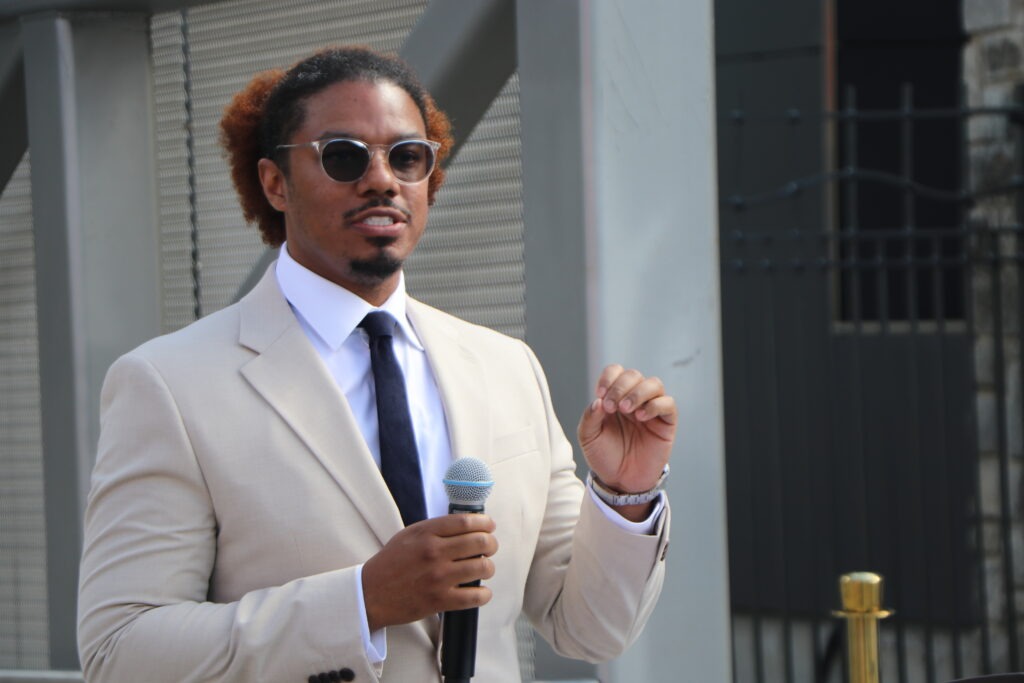
Founded in 2021 by Sir Jay-De Robinson and co-founder Chef Patricia, the concept emerged from what Managing Director Robinson describes as a void. “Exclusivity what I wanted for myself but couldn’t find became the reason to build it,” he said. The result is a carefully layered environment designed for mature adults who value presence as much as polish

A Three-Tiered Masterpiece

Even the furniture is intentional. Sixteenth-century Victorian chairs from England, antique cutlery, and antique serving utensils define the space. Nothing is modern unless it is meant to be.

The club is housed in a structure where every floor offers a distinct chapter of exclusivity.

The First Floor: Mr. Classic’s Haberdashery

The journey begins with the tactile. Here, the scent of fine textiles meets the sight of bespoke garments in various stages of creation. Members have access to over 1,000 seasonal fabrics and executive image consulting. Jay-De Robinson, a former professional musician, believes your aesthetic is your first introduction.

In any situation, “before they hear you, they must first see you so make sure what they are looking at is going to be worth listening to” he noted

After once being told to either dress down or teach the people around him to dress up, he chose the latter and Thee Manor became the answer.

The Second Floor: The Piano Bar & Gallery

The atmosphere shifts to the auditory and visual. High-back 16th-century Victorian chairs from England and artifacts from Italy and Asia provide the backdrop for a world-class piano bar. On the fourth Thursday of every month, the air fills with the jazz and blues stylings of pianist Philip Adair and vocalist Song Bird Maya Richardson.

The Third Floor: The Culinary Quarters

The pinnacle of the Manor is dedicated to the palate. Chef Patricia, a Philippine-born and French-trained pastry chef, curates seasonal menus and private dining experiences that blend her international expertise with the club’s antique-heavy elegance. Nothing is modern unless it is meant to be.

A private dining room sits just beyond the bar. Chef Patricia merges technique with imagination. Her culinary department was the second arm of Thee Manor to open, and her influence is unmistakable.

Beyond the Ambiance: The Power of “Netweaving”

While Thee Manor is steeped in history boasting an antique guest registry signed by every visitor since its inception its mission is firmly focused on the future.

The club hosts Mastermind Mondays, a dedicated safe space for entrepreneurs. Unlike standard networking, these sessions focus on “netweaving,” where members discuss business strategy, mental health, and financial hurdles in a supportive environment. For the women of Thee Manor, the second Saturday of each month is reserved for Tea Time, a dedicated space for collaboration and relaxation.

The Philosophy of the Unspoken

Art is the connective tissue of Thee Manor, featuring rotating exhibitions and immersive pieces, including works by celebrated artist Andrea McKenzie. Robinson maintains a strict philosophy regarding the collection:

“An artist should never explain their work to a viewer. They should craft, then allow the interpretation to come from the viewer.”

This ethos extends to every corner of the club. From smoking jackets and private lapel pins to shoe care and closet pickup services, Thee Manor is designed for the mature adult who understands that true luxury is felt, not just seen.

Every detail from antique cutlery to curated sound reinforces Thee Manor’s mission: come taste the food, feel the ambiance, and let your senses wander.

It is not simply a private members club.
It is a philosophy made physical.

For more information about Thee Manor Private Members Club

Truth Seekers Journal thrives because of readers like you. Join us in sustaining independent voices.

John Stewart Rock: A Life Of Brillance Against The Odds

John Stewart Rock—physician, lawyer, and abolitionist—challenged racist science, affirmed Black dignity, and became the first Black attorney admitted to the U.S. Supreme Court.

Physician. Dentist. Lawyer. Abolitionist. Pioneer of Black dignity.
Born: October 13, 1825 — Died: December 3, 1866

By Milton Kirby | Atlanta, GA | February 1, 2026

Long before the civil rights movements of the 1960s, John Stewart Rock stood in the cradle of liberty, Boston’s Faneuil Hall, and demanded that the nation recognize not only the humanity of Black people but also the race’s inherent beauty, intellect, and strength. At a moment when the Supreme Court had attempted to erase Black citizenship through the Dred Scott decision, Rock asserted a higher authority: the undeniable truth of his own identity and the dignity of his people.

His March 5, 1858, address was both scholarly and incendiary. Drawing on his medical training, he dismantled the era’s so-called “scientific” racism, rejecting the notion that whiteness defined beauty or superiority. Instead, he celebrated what he called the “beautiful, rich color” of Black people and argued that true excellence was measured by character and resilience, not complexion.

Even more provocative was Rock’s call for self-determination. He urged Black Americans to rely on their own strength — to “sink or swim” with their race — and to build institutions, intellect, and dignity from within. It was a philosophy rooted in pride, discipline, and an unshakable belief in Black potential. That worldview would guide every chapter of his remarkable life.

In the landscape of 19th-century America, a nation fractured by slavery, war, and racial hierarchy, few figures embodied intellectual defiance and quiet excellence like John Stewart Rock. Born free in Salem, New Jersey, Rock rose to prominence not through wealth or political power, but through relentless study, disciplined mastery, and an unwavering belief in the inherent worth of Black people. His life stands as one of the most extraordinary examples of Black professional achievement before the end of the Civil War.

Denied admission to medical school because of his race, Rock refused to be deterred. He apprenticed under two white physicians in Philadelphia, studying medicine the way many Black professionals of the era were forced to — through private mentorship rather than institutional access. When medical opportunities remained limited, he pivoted to dentistry, quickly earning a reputation for precision and skill. His success eventually opened the door to formal medical study, and Rock earned his medical degree, becoming one of the earliest African American physicians in the United States.

While practicing medicine and dentistry, Rock emerged as a commanding abolitionist speaker whose words cut through the political fog of the era. In his 1858 address, he declared:

“I am proud of my ancestry. I am proud of the black man… I believe that the time will come when the black man will be as much respected in this country as the white man is.”

His speeches consistently confronted the myth of white superiority, reminding audiences that oppression was not evidence of inferiority, but of injustice.

Years of overwork and declining health eventually forced Rock to scale back his medical practice. But instead of retreating, he reinvented himself once again, this time as a lawyer. He studied law with the same intensity he had brought to medicine and was admitted to the Massachusetts bar, offering representation and advocacy to Black clients navigating a hostile legal system.

On February 1, 1865, in the final months of the Civil War, Rock became the first Black attorney admitted to practice before the United States Supreme Court. The moment represented the intellectual authority of a people long denied recognition and signaled a shift in the nation’s legal and moral landscape as the 13th Amendment moved toward ratification.

Rock’s health continued to decline, and he died on December 3, 1866, at just 41 years old. Though his life was brief, his impact was profound. His speeches, including his reflections on the Haitian Revolution.

“The history of the bloody struggles for freedom in Hayti… will be a lasting refutation of the malicious aspersions of our enemies.”

reveal a man deeply aware of the global Black struggle for dignity and liberation.
John Stewart Rock’s life is a reminder that brilliance often emerges in the margins — in the quiet determination of individuals who refuse to accept the limits imposed upon them. His achievements challenge the historical narrative that Black excellence began after emancipation.

Rock proved, long before the Civil War ended, that Black intellect, discipline, and leadership were already reshaping the nation.


John Stewart Rock at a Glance

Key Dates
• 1825 — Born free in Salem, New Jersey
• 1844–1848 — Teacher in New Jersey public schools
• 1852 — Earns medical degree
• 1855 — Admitted to the Massachusetts bar
• 1858 — Delivers landmark Crispus Attucks Day address at Faneuil Hall
• 1865 — First Black attorney admitted to the U.S. Supreme Court bar
• 1866 — Dies at age 41


Signature Ideas

“Beautiful, rich color.”

Rock’s rejection of “scientific” racism and his affirmation of Black beauty decades before the phrase Black is beautiful entered the cultural lexicon.

“Sink or swim with our race.”

His call for Black self-determination, institution building, and intellectual independence.

“A lasting refutation.”

His insistence that Haiti’s revolution proved Black capability and courage on the world stage.


Professional Firsts

• Among the earliest African American physicians
• Practiced both medicine and dentistry
• One of the first Black lawyers in Massachusetts
• First Black attorney admitted to argue before the U.S. Supreme Court


Why He Matters

Rock’s life demonstrates that Black excellence did not begin with emancipation — it was already flourishing in the shadows of slavery. His achievements challenge the nation’s historical amnesia and reclaim a lineage of brilliance too often overlooked.


“I am proud of my ancestry. I am proud of the black man.”
— John Stewart Rock, 1858


Truth Seekers Journal thrives because of readers like you. Join us in sustaining independent voices.

DeKalb CEO Outlines 2026 Legislative Priorities as Session Begins

By Milton Kirby | Decatur, GA | January 31, 2026

As Georgia’s 2026 legislative session officially gets underway, Lorraine Cochran-Johnson, CEO of DeKalb County, met virtually with members of the DeKalb County House Legislative Delegation to outline the county’s priorities and highlight areas where state partnership will be critical in the months ahead.

The meeting marked the first formal engagement between county leadership and the delegation since the annual legislative dinner and coincided with the launch of Georgia’s constitutionally mandated 40 legislative-day session. That session, led by the Georgia General Assembly, is scheduled to conclude April 2.

Against the backdrop of hundreds of bills expected to be introduced, debated, and voted on before final measures reach the governor’s desk, Cochran-Johnson emphasized three core objectives: reaffirming alignment between the County’s executive leadership and Board of Commissioners, sharing updates on issues that have evolved since the last meeting, and identifying areas where collaboration with state lawmakers will be essential.

Top Legislative Priorities for 2026

DeKalb County’s 2026 legislative agenda reflects a unified approach to housing stability, infrastructure, governance reform, public safety, and long-term sustainability. The county’s top five priorities include:

Regulatory authority over vacant and rental properties.
County leaders are seeking authorization to establish and maintain a comprehensive registry of all rental and vacant properties, regardless of business licensing status. Officials say a verified in-state contact list would improve accountability and help ensure properties meet basic safety, health, and maintenance standards.

Annexation and new city reforms.
DeKalb is calling for revisions to state law governing municipal annexations and the creation of new cities. Proposed changes include repealing restrictions related to the sale of parks, reviewing the 60 percent annexation method, removing barriers to de-annexation, opposing legislative annexations advanced without county support, and limiting the use of taxpayer funds for annexation consultants.

Tenant protections.
The county is backing legislation requiring property owners to clearly disclose all lease-related fees, including junk fees, before a tenant signs a lease and in all housing advertisements.

NextGen 911 funding.
DeKalb is seeking increased and more flexible funding to support next-generation emergency systems, including integration with the county’s Real Time Crime Center and technologies that allow video, text, and GPS capabilities during emergency calls.

Expanded authority for Community Service Aides.
Proposed legislation would allow Community Service Aides to handle minor injury and property damage accidents, freeing sworn officers to focus on higher-priority public safety needs.

Public Works Leadership Update

In addition to outlining legislative priorities, Cochran-Johnson announced the appointment of Robert L. Gordon as Director of Public Works, effective immediately.

Gordon brings more than 40 years of leadership experience in public works and fleet management. Most recently, he served as Deputy Director of Fleet Management, overseeing procurement, maintenance, and lifecycle management for county vehicles supporting public safety and infrastructure services.

“Robert Gordon is a proven leader with a deep understanding of the complex operations that keep DeKalb County running,” Cochran-Johnson said, citing his institutional knowledge and commitment to service delivery.

As director, Gordon will oversee Fleet Maintenance, Roads and Drainage, Sanitation, and Transportation, while advancing initiatives aimed at improving infrastructure reliability, operational efficiency, and customer service. His career includes managing preventive maintenance for more than 600 heavy trucks and earning national recognition from the American Public Works Association, including induction into its Public Fleet Hall of Fame.

Gordon holds an associate’s degree in business management, professional certifications from the University of Georgia’s Carl Vinson Institute of Government and currently serves on the board of Clean Cities Georgia.

Thank you for reading The Truth Seekers Journal. Subscribe for continued coverage of DeKalb County, Georgia politics, and community impact reporting.

House Of Representatives Passes 13th Amendment, Abolishing Slavery

Reflecting on the 161st Anniversary of the 13th Amendment – A Nation at War Takes a Defining Step Toward Freedom

By Milton Kirby | Atlanta, GA | January 31, 2026

Today marks a date that should be etched into the mind of every American who values the sanctity of the law and the progress of human liberty. On this day, January 31, 1865, the United States House of Representatives sat in a chamber thick with the scent of tobacco and the heavy weight of history. They were there to decide if the “peculiar institution” of slavery would finally be purged from our national charter.

The amendment’s language was stark in its clarity:
“Neither slavery nor involuntary servitude… shall exist within the United States, or any place subject to their jurisdiction.”

As we at The Truth Seekers Journal spend our days digging through modern court authorizations and federal actions, it is vital to look back at the most significant “court-authorized” action in our history: the passage of the 13th Amendment.

A House Divided, A Gallery Overflowing

The atmosphere in Washington 161 years ago was electric. The Civil War was grinding toward its bloody conclusion, but President Abraham Lincoln knew that his Emancipation Proclamation was merely a wartime measure, a temporary fix that could be undone by a future court or a hostile peace. He needed a “King’s cure,” a permanent constitutional seal that would ensure freedom was not just a policy, but a foundational right.

The vote was far from a sure thing. Just months earlier, the House had failed to reach the necessary two-thirds majority. But through the relentless political maneuvering of James Mitchell Ashley and the unwavering moral clarity of Thaddeus Stevens, the tide began to turn.

When the final tally was announced—119 to 56—the House erupted. Reports from the time describe a “tumult of joy” that broke all decorum. Members wept openly. The galleries cheered so loudly the rafters shook. For the first time, the word “Slavery” was used in the Constitution not to protect it, but to abolish it forever.

The vote came nearly four years into the Civil War, at a moment when the Union’s military fortunes had begun to turn and the moral urgency of abolition had become inseparable from the nation’s survival. President Abraham Lincoln, who had issued the Emancipation Proclamation two years earlier, had long argued that only a constitutional amendment could permanently end slavery across all states including those loyal to the Union.

The Power of the Record

What strikes me, as I review the FBI’s recent confirmations regarding election record custody in Union City, is the parallel of accountability. In 1865, the struggle was over the custody of human lives; today, our struggle is often over the custody of the truth and the integrity of our democratic processes.

The 13th Amendment succeeded because of a transparent, recorded vote. It succeeded because men like Lincoln and Stevens weren’t afraid to push against the status quo to ensure that the law reflected the will of a free people.

Why We Remember

At The Truth Seekers Journal, we believe that history is a living document. When we ask the FBI about the statutory basis for a search warrant, we are standing on the shoulders of those who demanded that the federal government operate under the light of constitutional authority.

The 13th Amendment didn’t just end a dark chapter; it set a precedent that the Constitution belongs to the people, and its amendments are our tools for course correction.

As we continue to investigate the events unfolding at the Fulton County Election Hub, let us remember the lesson of January 31, 1865: Truth and transparency are the only path to a more perfect union.

Truth Seekers Journal thrives because of readers like you. Join us in sustaining independent voices.

FBI Confirms Federal Judicial Authorization in Fulton Election Records Search

Atlanta, GA | January 30, 2026

Editor’s Note: This update follows The Truth Seekers Journal’s earlier reporting on the FBI’s execution of a search warrant at the Fulton County Election Hub and Operations Center and reflects the agency’s first written response to TSJ’s request for clarification.

The Federal Bureau of Investigation has confirmed that Wednesday’s search and seizure at the Fulton County Election Hub and Operations Center was authorized by a federal judge but says no additional details can be released as the investigation continues.

In a written response to The Truth Seekers Journal, FBI Atlanta Public Affairs stated that agents executed a “court authorized law enforcement action” at the county’s elections facility located at 5600 Campbellton Fairburn Road in Union City, Georgia.

The FBI further confirmed that authorization for the search was granted by a judge associated with the U.S. Attorney’s Office for the Northern District of Georgia. No further information was provided regarding the scope of the warrant, the materials sought or seized, or whether any individuals or entities have been identified as targets of the investigation.

“Our investigation into this matter is ongoing so there are no details that we can provide at the moment,” the FBI said.

The search, which involved records related to the 2020 election, has drawn public attention due to ongoing national scrutiny of election administration, record custody, and voter confidence.

The Truth Seekers Journal previously requested clarification on the legal basis and scope of the action. The FBI’s response confirms federal judicial oversight while underscoring that the matter remains active. No timeline was provided for the release of additional information.

Related articles

FBI Executes Search Warrant at Fulton County Election Hub Seeking 2020 Ballots

Fulton County: An Economic, Cultural, and Educational Hub for Georgia

No contribution is too small. Support us today and help keep truth accessible for all.

MARTA Unveils NextGen Bus Network, Reach Service, and Better Breeze Fare System at Rider Open House

MARTA previews major transit upgrades, including Bus Rapid Transit, Reach on-demand service, and the Better Breeze fare system, during a series of rider open houses across metro Atlanta.

By Milton Kirby | Atlanta, GA | January 30, 2026

The Metropolitan Atlanta Rapid Transit Authority opened its doors to riders this week, hosting a systemwide open house aimed at previewing major service upgrades, revised bus routes, and new fare technology that will reshape how Atlantans move across the region beginning this spring.

The open houses are part of MARTA’s outreach around its NextGen Bus Network, the launch of Bus Rapid Transit (BRT) service, the introduction of MARTA Reach, and the transition to the agency’s new Better Breeze fare collection system. Rather than formal presentations, the events feature informational displays and staff available to answer general questions and help riders understand how the changes may affect their daily commutes..

Officials emphasized that the changes are intended to make service faster, more reliable, and more accessible—while addressing long-standing rider concerns around safety, fare evasion, and neighborhood connectivity.


Bus Rapid Transit and New Neighborhood Connections

One of the most visible additions is MARTA’s Bus Rapid Transit service, which will use articulated electric buses operating every 10 to 12 minutes in dedicated lanes. The goal is to deliver rail-like frequency and reliability on major corridors without the cost or disruption of new rail construction with greater flexibility than rail expansion.

Photo by Milton Kirby MARTA Reach Bus

Complementing BRT is MARTA Reach, a new on-demand transit service developed as part of the NextGen Bus Network. Reach will offer shared, curb-to-curb rides within 12 designated zones and serve as a first- or last-mile connection to existing bus routes and rail stations.

Vans are ADA-accessible and available 18 hours per day, seven days a week. Riders can request service through a mobile app or by phone.

Reach zones include West Atlanta, Kirkwood/Candler Park, East Point, Gresham Park, North Fulton, and several South DeKalb and industrial corridors, expanding MARTA’s footprint beyond traditional fixed-route service.


NextGen Bus Network: Nearly Every Route Changes

Beginning April 18, 2026, MARTA’s NextGen Bus Network will bring sweeping changes to nearly every bus route in the system. The redesigned network focuses on simpler routes, fewer transfers, and more frequent service.

Seventeen major corridors—including Buford Highway, Memorial Drive, Campbellton Road, Covington Highway, and Metropolitan Parkway—will see buses arriving every 15 minutes or better. Timed transfer points and more consistent schedules are intended to reduce wait times and improve reliability throughout the day and on weekends.

MARTA officials stressed that while some routes may look different on paper, the redesign is aimed at getting riders to more places, faster, with fewer missed connections.


Budget, Safety, and Fare Evasion Addressed in Writing

Questions regarding fare evasion, station safety, and the budget impact of new services were submitted by The Truth Seekers Journal and addressed in written responses from MARTA officials following the open house.

According to MARTA, the Rapid A-Line BRT service is being funded through the voter-approved More MARTA half-penny sales tax, while MARTA Reach will be supported by the agency’s Core Penny sales tax. Final operating budgets for both programs are currently under development as part of MARTA’s FY2027 budget process and will be presented to the MARTA Board for approval once finalized.

On safety and fare evasion, MARTA officials stated that the new Better Breeze faregates are designed to be more tamper-resistant and can be monitored and adjusted remotely. While MARTA has not yet released system-specific data, officials noted that the agency reviewed case studies from peer transit systems showing significant reductions in fare evasion following the installation of higher, reinforced faregates.

When asked about evidence supporting those claims, MARTA pointed to case studies from other transit systems. Washington Metro has reported fare evasion reductions of more than 70 percent at stations with higher, reinforced faregates, while BART in the Bay Area has documented reductions of roughly 55 to 60 percent following similar upgrades.

MARTA plans to collect and analyze its own fare-evasion data once the new system is fully deployed.


Better Breeze: New Faregates, New Rules

Better Breeze Faregates & Ticketing – Courtesy MARTA

A major focus of rider questions centered on MARTA’s transition to the Better Breeze fare system, which replaces the existing Breeze cards, vending machines, and mobile app.

Beginning March 28, 2026, MARTA will operate both systems during a transition period that runs through May 2. After that date, current Breeze cards and the Breeze Mobile 2.0 app will no longer work, and balances will not carry over.

The new system introduces contactless payments using credit or debit cards, mobile wallets, new Breeze cards, and a redesigned mobile app. Cash will continue to be accepted on local buses.


More Chances for Public Input

MARTA has scheduled more than 20 additional open houses across the region through late February, with stops at rail stations, libraries, recreation centers, and city halls from Alpharetta to College Park and Doraville.

Agency officials encouraged riders to attend, review proposed route changes, ask questions, and prepare for the upcoming fare transition.

For riders navigating a growing region with evolving transportation needs, the message from MARTA was clear: change is coming—and the agency wants the public informed before it arrives.


Upcoming MARTA Open House Dates and Locations

MARTA has scheduled additional open houses across metro Atlanta to provide riders with information about upcoming service changes, new routes, and fare system updates.

February 2026 Open House Schedule

  • Monday, Feb. 2 | 7:00–11:00 a.m.                 Lindbergh Center Station
    2424 Piedmont Rd NE, Atlanta, GA 30324
  • Monday, Feb. 2 | 3:00–6:00 p.m.                   Lindbergh Center Station
    2424 Piedmont Rd NE, Atlanta, GA 30324
  • Tuesday, Feb. 3 | 7:00–11:00 a.m.                 College Park Station
    3800 Main St, College Park, GA 30337
  • Tuesday, Feb. 3 | 3:00–6:00 p.m.                  College Park Station
    3800 Main St, College Park, GA 30337
  • Wednesday, Feb. 4 | 4:00–8:00 p.m.             Alpharetta City Hall
    2 Park Plaza, Alpharetta, GA 30009
  • Monday, Feb. 9 | 4:00–8:00 p.m.                   Northwest Library at Scotts Crossing
    2489 Perry Blvd NW, Atlanta, GA 30318
  • Tuesday, Feb. 10 | 7:00–11:00 a.m.               East Point Station
    2848 East Main St, East Point, GA 30344
  • Tuesday, Feb. 10 | 3:00–6:00 p.m.                East Point Station
    2848 East Main St, East Point, GA 30344
  • Wednesday, Feb. 11 | 4:00–8:00 p.m            Exchange Recreation Center
    2771 Columbia Dr, Decatur, GA 30034
  • Thursday, Feb. 12 | 7:00–11:00 a.m.            North Springs Station
    7010 Peachtree Dunwoody Rd, Sandy Springs, GA 30328
  • Thursday, Feb. 12 | 3:00–6:00 p.m.              North Springs Station
    7010 Peachtree Dunwoody Rd, Sandy Springs, GA 30328
  • Monday, Feb. 16 | 7:00–11:00 a.m.               H.E. Holmes Station
    70 Hamilton E. Holmes Dr NW, Atlanta, GA 30311
  • Monday, Feb. 16 | 3:00–6:00 p.m.                 H.E. Holmes Station
    70 Hamilton E. Holmes Dr NW, Atlanta, GA 30311
  • Tuesday, Feb. 17 | 4:00–8:00 p.m.                Tucker–Reid H. Cofer Library
    5234 Lavista Rd, Tucker, GA 30084
  • Wednesday, Feb. 18 | 4:00–8:00 p.m.           The Gathering Place Community Center
    6280 Bruant St., Union City, GA 30291
  • Thursday, Feb. 19 | 7:00–11:00 a.m.            Kensington Station
    3350 Kensington Rd, Decatur, GA 30032
  • Thursday, Feb. 19 | 3:00–6:00 p.m.              Kensington Station
    3350 Kensington Rd, Decatur, GA 30032
  • Monday, Feb. 23 | 4:00–8:00 p.m.                 Adams Park Library
    2231 Campbellton Rd SW, Atlanta, GA 30311
  • Tuesday, Feb. 24 | 4:00–8:00 p.m.                Carver YMCA
    1600 Pryor Rd SW, Atlanta, GA 30315
  • Wednesday, Feb. 25 | 7:00–11:00 a.m.         Doraville Station
    6000 New Peachtree Rd, Doraville, GA 30340
  • Wednesday, Feb. 25 | 3:00–6:00 p.m.           Doraville Station
    6000 New Peachtree Rd, Doraville, GA 30340
  • Thursday, Feb. 26 | 7:00–11:00 a.m.            Georgia State Station
    170 Piedmont Ave SE, Atlanta, GA 30303
  • Thursday, Feb. 26 | 3:00–6:00 p.m.              Georgia State Station
    170 Piedmont Ave SE, Atlanta, GA 30303

Riders are encouraged to attend an upcoming open house to review route changes, explore new services, and prepare for the upcoming Better Breeze fare transition.

Related articles

New Year, New MARTA: 2026 Upgrades Aim to Boost Safety, Reliability, and the Rider Experience

MARTA rolls out Big Changes with New Fare System Upgrades

MARTA Unwraps the Holidays with Free Rides, Festive Buses, and Gifts for Riders

From Tokens to Tap-to-Pay: MARTA Unveils Better Breeze

World-Class Transit for World-Class Soccer: MARTA Steps Up

MARTA rolls out Big Changes with New Fare System Upgrades

MARTA Unwraps the Holidays with Free Rides, Festive Buses, and Gifts for Riders

MARTA Rolls Out an Outkast Tribute Across Atlanta

MARTA Completes Garnett Station Platform Renovation

From Tokens to Tap-to-Pay: MARTA Unveils Better Breeze

MARTA to Close Five Points Peachtree Entrance as Next Phase of Transformation Begins

Support open, independent journalism—your contribution helps us tell the stories that matter most.

FBI Executes Search Warrant at Fulton County Election Hub Seeking 2020 Ballots

The FBI executed a search warrant at Fulton County’s Election Hub, seizing 2020 ballots and records in a move local officials call alarming and politically charged.

By Milton Kirby | Union City, GA | January 29, 2026

Federal Bureau of Investigation agents executed a court-authorized search warrant Wednesday at the Fulton County Election Hub and Operations Center in Union City, Georgia, seizing records connected to the 2020 presidential election as part of what authorities described as an ongoing federal investigation.

The FBI confirmed it was conducting “court-authorized law enforcement activity” at the county’s primary elections facility south of Atlanta but declined to provide further details. “Our investigation into this matter is ongoing so there are no details that we can provide at the moment,” the agency said in a statement.

Fulton County Elections Hub

Fulton County spokesperson Jessica Corbitt-Dominguez confirmed that the warrant sought 2020 election records but declined further comment while the search was underway. County officials said the FBI remained inside the building into the evening hours.

County Leaders Express Alarm and Compliance

Robb Pitts, chair of the Fulton County Board of Commissioners, told reporters late Wednesday that he did not know where the seized records were being taken.

“All I know is that as long as those boxes had been in the control of the county in this facility, they were safe and secure,” Pitts said. “I can no longer, as chair of this board, satisfy not only the citizens of Atlanta but the citizens of the world that those ballots are still secure.”

Sherri Allen, chair of the Fulton County Board of Registration and Elections, said the board “fully complied” with the FBI and confirmed agents were still on site as of 8 p.m. Eastern Time.

State Sen. Josh McLaurin, a Democrat whose district includes Fulton County, called the search “extremely alarming,” warning that it could further erode public trust in election administration.

Scope of the Warrant and Legal Questions

According to county officials, the FBI sought all ballots from the 2020 election in Fulton County, including tabulator tapes, ballot images, and voter rolls.

Fulton County Commissioner Mo Ivory said the initial warrant presented by agents was “incorrect legally” and challenged by county officials on site. The FBI later returned with a corrected warrant, she said.

The county’s Clerk of Superior Court, Che Alexander, who is the legal custodian of the election materials, was present during the search and inventorying the items taken, Ivory said.

“The commissioners, the chairman, the county attorney are trying to figure out a legal plan,” Ivory said during a press conference outside of the facility. “Maybe an injunction, a motion to quash, something. We’re trying to figure it out.”

Commissioner Marvin Arrington Jr. said the Trump administration had previously attempted to obtain the same 2020 election records through civil litigation. Because the records were sealed as part of earlier investigations, the county did not release them. Arrington noted the records were scheduled for release within months as a result of those civil actions.

He questioned why a criminal investigation—with no named defendant—began only after those civil efforts failed, and why records from the 2024 election were not sought.

Political Context and Renewed Scrutiny

The FBI search comes amid renewed federal attention to Fulton County, a jurisdiction that has remained a focal point of former President Donald Trump’s repeated false claims that the 2020 election was “rigged.”

Speaking last week at the World Economic Forum in Davos, Switzerland, Trump again asserted without evidence that the election was fraudulent and said “people will soon be prosecuted.”

Fulton County was central to Trump’s post-election efforts in Georgia, including a now-infamous January 2021 phone call in which he pressured Georgia Secretary of State Brad Raffensperger to “find 11,780 votes,” roughly President Joe Biden’s margin of victory in the state.

Trump also publicly speculated that ballots had been shredded in Fulton County claims that were repeatedly debunked by audits, recounts, and court rulings.

Pitts said he was not surprised by the federal action. “Fulton County is sort of on a hit list,” he said. “We have complied with the law. The 2020 elections were fair. They were open. Every legal vote was counted, and we will continue to comply with the law.”

DOJ, Intelligence Officials, and Election Security Claims

The search also follows a December Department of Justice complaint requesting extensive 2020 election materials from Fulton County, including used and void ballots, ballot stubs, signature envelopes, and related digital files, citing an investigation into compliance with federal law.

According to a senior Trump administration official, Director of National Intelligence Tulsi Gabbard was also in Fulton County on Wednesday and visited the elections hub the same day the FBI executed the warrant.

“Director Gabbard has a pivotal role in election security and protecting the integrity of our elections,” the official said, adding that she was acting under Trump’s directive to secure elections nationwide.

Pitts said Gabbard had not communicated with the Fulton County Board of Commissioners.

Warnings of Intimidation and Historical Parallels

Several local and state officials warned the federal action could be perceived as intimidation ahead of upcoming elections.

“This is a scare tactic. This is a distraction,” Commissioner Mo Ivory said. “This is about sowing the seeds of fear so that people will not show up at the polls in May and November.”

Georgia State Rep. Saira Draper said Fulton County has undergone repeated audits and investigations since 2020, all of which cleared the county of wrongdoing.

“If this administration had a genuine interest in investigating voter fraud,” Draper said, “they would be investigating Coffee County, a red county, where there is actual evidence of people going into the election office after hours and copying election documents.”

Former special counsel Jack Smith previously documented how false fraud claims targeting Fulton County led to death threats against election workers.

Two of those workers, Ruby Freeman and Wandrea Shaye Moss, were falsely accused by Trump allies of manipulating ballots. Former New York Mayor Rudy Giuliani amplified those claims. A jury awarded Freeman and Moss $148 million in damages in 2023, a judgment Giuliani satisfied in 2025.

National Reactions

U.S. Sen. Raphael Warnock condemned the search, calling it politically motivated.

“The FBI should be focused on going after violent criminals, not carrying out political errands for a vengeful President,” Warnock said. “Republicans and Democrats agree: the 2020 elections were accurate and secure. End of story.”

Meanwhile, Josh McKoon praised the action, saying it marked “a major step toward truth and accountability” and arguing Georgians have waited years for answers about the 2020 election.

A Facility Built for Transparency

The Fulton County Election Hub, which opened in 2023, houses more than 261,000 square feet dedicated to elections staff, operations, and equipment. County officials have repeatedly cited the facility as evidence of enhanced transparency, security, and chain-of-custody controls.

As of Wednesday night, county leaders said they were still assessing legal options and seeking clarity on the scope and implications of the federal seizure.

The Truth Seekers Journal reached out to the FBI seeking additional information regarding the search warrant and scope of the investigation. No response had been received at the time of publication.

Support open, independent journalism—your contribution helps us tell the stories that matter most.

A Letter from the Publisher: Investing in the Truth

To our readers and neighbors,

When we launched The Truth Seekers Journal (TSJ), our mission was simple: to restore trust in local journalism by focusing on verified facts, transparency, and the stories that truly shape our community.

Today, I am proud to share that the “pulse” of this journal is stronger than ever. This past week, we reached a significant turning point in our growth. Our page views have tripled, and most importantly, our Returning Visits have grown by over 1,000%. This tells me that TSJ isn’t just a site you stumble upon. It is becoming a trusted resource you rely on.

National Recognition

I am also honored to announce that The Truth Seekers Journal has been awarded a prestigious rural reporting grant from Grist, following a highly competitive national selection process. Grist is a national leader in environmental and justice journalism.

Furthermore, to ensure we maintain the highest ethical standards, we have been formally accepted as members of the Society of Professional Journalists (SPJ), the Online News Association (ONA), the National Association of Black Journalists (NABJ), and the Atlanta Press Club. These affiliations are our “gold standard” promise to you that our reporting is independent, ethical, and professional.

Expanding Our Expertise

Growth isn’t just about numbers; it’s about the depth of the stories we can tell. I am thrilled to highlight two key pillars of our expanded editorial team:

  • Dr. Florita Bell Griffin has joined us as a Contributing Writer and Systems Analyst. Dr. Griffin will lead our coverage in the AI, Science, and Technology sectors. Her expertise allows us to move beyond the headlines, providing our readers with deep-dive analysis on how emerging technologies and infrastructure projects impact our local economy and daily lives..

  • Ted Knorr, our resident historian, continues to bridge the gap between our past and present through his twice-monthly column, “Shadow Ball: Learning More About Negro League History.” Many of you have already engaged with Ted by submitting questions and sharing family stories, making “Shadow Ball” a true cornerstone of our community dialogue.

The Road Ahead

We are no longer just a news site; we are a growing civic institution. Whether we are investigating DeKalb data centers or documenting the rich history of the South, our goal remains the same: to give you the information you need to understand your community and shape your future.

Thank you for being the most important part of this journey. We are just getting started.

In Truth,

Milton Kirby

Founder & Publisher, The Truth Seekers Journal

Warnock Forces Release of $192M in Delayed Federal Aid for Helene Recovery

Sen. Raphael Warnock secures $192 million in delayed Hurricane Helene relief, pushing total recovered Georgia disaster funds past $500 million amid reimbursement disputes.

By Milton Kirby | Washington, D.C. | January 28, 2026

U.S. Senator Reverend Raphael Warnock announced Tuesday that he has secured an additional $192 million in federal disaster relief funding owed to Georgia communities recovering from Hurricane Helene, marking the latest installment in a months-long effort to force the release of delayed reimbursements.

The funds were released by the Federal Emergency Management Agency (FEMA) after sustained pressure from Warnock’s office, as counties across Georgia particularly in rural areas faced mounting financial strain and the prospect of lawsuits from contractors seeking payment for completed recovery work.

The announcement follows a December 2025 release of $300 million in outstanding Helene payments that Warnock also helped unlock, bringing the total recovered funds to more than $500 million in recent months.

“I am thrilled to announce I have secured an additional $192 million in federal funding owed to Georgia communities recovering from Hurricane Helene,” Warnock said. “Hurricanes and natural disasters are not political; they do not care if you voted red or blue. Georgia counties and cities went right to work recovering from Helene’s destruction with the understanding the federal government would fulfill its promises.”

Warnock emphasized that the fight is not over. In September 2025, he released a report finding that nearly $500 million in promised federal disaster funding remained unpaid. Follow-up reviews later increased that figure to as much as $600 million, raising alarms about the financial exposure of local governments forced to front recovery costs.

The funding stems from a 2024 disaster recovery bill championed by Warnock, designed to reimburse counties and state agencies for emergency work performed after Helene. Despite bipartisan congressional support, Warnock’s office says the delivery of funds was slowed by administrative breakdowns and bureaucratic delays within the Trump Administration.

Among the largest recipients in the latest reimbursement round is the Georgia Department of Transportation, which received $78.3 million. Counties receiving funding include Columbia County ($16.6 million), Emanuel County ($11.3 million), Jefferson County ($10.4 million), Burke County ($6.6 million), and Coffee County ($4.7 million), among others.

Warnock said he will continue pressing federal agencies until Georgia receives every dollar it was promised. “It should not have gotten to this point,” he said. “I will continue fighting until Georgia’s communities especially rural Georgia get every cent they are owed.”

Related Articles

Warnock Leads Bipartisan Push to Speed Up Transit Projects, Cut Red Tape Across Georgia

Warnock, Ossoff Announce $300 Million to Close Georgia’s Digital Divide

Warnock Leads Effort to End Racial Bias in Black Home Appraisals

From Pecans to Hospitals: Warnock Highlights Tariff and Health Care Struggles in Georgia

No contribution is too small. Support us today and help keep truth accessible for all.

From D.C. to Dubai: The Rise of a Global AI Governance Leader

Aliyana Isom is named Global Lead for Security Professionals in AI Governance by WiAIG, marking a milestone in ethical, secure, and inclusive global AI leadership.

By Milton Kirby | Washington, D.C. | January 28, 2026

At 10:00 a.m. Tuesday morning at Dulles International Airport, Aliyana Isom boarded a plane bound for Dubai. The destination is more than a city. It’s a signal. In a matter of hours, she will moderate a global leadership panel at the January 31, 2026 Corporate Women Summit, bringing culture, accountability, and governance into a room where decisions ripple across borders.

That flight marks a milestone. Isom has been named Global Lead for Security Professionals in AI Governance by Women in AI Governance (WiAIG) a role that places her at the center of one of the most consequential conversations shaping technology’s future.

A Role That Signals Trust

This trust underpins WiAIG’s appointment. Their decision recognizes more than résumé lines: it’s confidence in Isom’s ability to translate risk into policy, and policy into practice. As Global Lead, she will grow and support a worldwide community of security practitioners working to ensure AI systems are built and governed with trust at their core.
Security professionals are essential to AI governance because artificial intelligence systems must protect confidentiality, preserve integrity, and remain resilient from design through deployment. Isom’s mandate is to align security risk management with ethical, legal, and operational frameworks so organizations can adopt AI responsibly without sacrificing public trust.

Roots and Resolve

Isom’s path to global leadership is grounded in service and systems. A proud U.S. Air Force veteran and former Senior Cybersecurity Program Manager at Nike, she has spent her career navigating invisible infrastructures that shape real lives.

“I realized it when I saw how invisible systems could directly affect real people’s lives,” Isom says. “Someone had to be accountable for that power.”

Working close to innovation clarified the stakes. “AI can scale harm quickly if governance isn’t built in from the start,” she explains. Mentors trusted her with complexity. Communities reminded her that her voice mattered even when she was the only one in the room.

Making Sense of AI Governance

At its core, AI governance is a framework of policies, procedures, and ethical standards that ensure AI is developed and used responsibly. It addresses bias, privacy, security threats, and accountability—balancing innovation with safety.

Trust, Isom argues, comes from controls, transparency, and accountability especially when systems fail. Governance is not about slowing innovation; it is about building guardrails early so damage does not have to be repaired later..

Representation and Responsibility

Stepping into this role as a Black woman in tech governance carries weight and purpose. “My presence expands what leadership can look like in these spaces,” Isom says. From her community, she carries resilience, discernment, and an awareness that decisions made in global rooms affect people far beyond those in the room.

To young women watching, her message is direct: “You do not need permission to lead. Preparation and competence will open doors.”

Dubai: Leadership in Action

In Dubai, Isom will moderate a session at the Corporate Women Summit from 11:15 a.m. to 12:00 p.m. titled “From the Office Cubicle to Navigating Foreign Territories.” The panel explores what it takes to succeed in a new country, including understanding cultural nuances and building networks from scratch.

She will guide a conversation with Tatjana Markovic, Paulina Mercader, Sophie McBaiden, and Donna Forte-Regis, leaders whose experiences navigating unfamiliar systems mirror the same challenges facing global AI governance.

Cross-cultural leadership, Isom notes, requires the same discipline as governing artificial intelligence: the ability to assess risk in unfamiliar environments, build trust across differences, and design systems that remain accountable even when contexts change.

“The practitioners who are responsible when theory meets reality are often missing from global conversations,” Isom says. In Dubai, she brings those voices forward, grounding dialogue in outcomes rather than abstraction.

The Vision Ahead

Looking ahead, Isom is focused on building a safer AI future, stronger global standards, inclusive leadership pipelines, and systems that protect communities rather than exploit them.

“Responsible AI must be explainable, auditable, and challengeable,” she says. “Innovation can move fast, but trust has to move faster.”

As the plane descends and the heat of Dubai rises, Isom’s journey comes into focus. This is more than her career advancing; it is about bringing accountability and purpose to the forefront of global technology leadership.

This article was first published in The Truth Seekers Journal.

Related articles

How Urban Planning Taught Me to Build Continuity into Intelligent Systems

What is Autolore?

Truth Seekers Journal Welcomes Dr. Florita Bell Griffin as Contributing Writer and Systems Analyst

The Future Works Here: ICRA 2025 Highlights Robotics Jobs and Education

Truth Seekers Journal thrives because of readers like you. Join us in sustaining independent voices.

Exit mobile version