Milton Kirby
By Milton Kirby | Bronx, NY | August 31, 2026
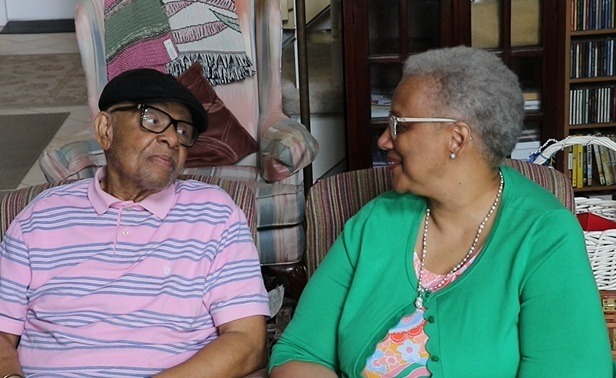
Along a Bronx street lined with apartment buildings, Colette Smith tends flowers growing in beds along the sidewalk.
She is quick to correct anyone who calls it her garden.
“It’s our garden,” Smith said.
The flowers have grown from seeds. Solar lights illuminate the beds after dark. Trees provide shade on hot days, when neighbors sometimes bring out lawn chairs.
For Smith, working in the soil provides something more.
She is a lung cancer survivor.
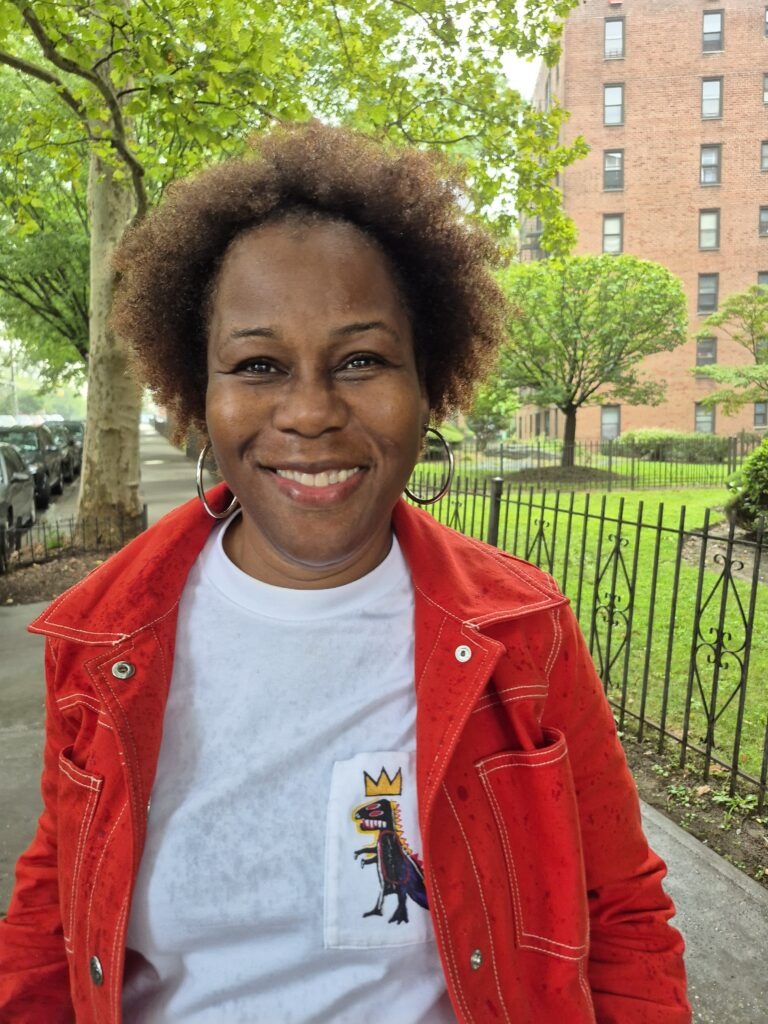
Cancer, she said, “can live in your head if you let it.” Even years after treatment, an upcoming scan or unexpected reminder can bring the anxiety rushing back.
“When I come out here and I play in the dirt and the soil, it quiets that,” Smith said. Working with something living and beautiful, she said, gives her a feeling of control.
These days, Smith is cultivating more than flowers.
She is trying to grow awareness about lung cancer in a borough where residents face significant health disparities, and where getting potentially lifesaving information to the people who need it can be a challenge.
On Sept. 19, HEAL Collaborative, with support from Amgen, Merck and Commonpoint Bronx, will hold a community conversation at Commonpoint Bronx, 1665 Hoe Ave. The program is scheduled from 9 a.m. to 12:30 p.m..
The gathering will focus on lung cancer screening and treatment while also addressing patient navigation, mental wellness, financial health literacy, medical debt and access to care.
But before residents walk through the doors, another part of the work is already taking place outside them.
It is happening on sidewalks, beneath elevated subway tracks and at bus stops.
Sometimes the conversation begins with a simple question:
Do you know someone who could benefit from this information?
Sometimes the answer is no.
Sometimes there are only minutes to discover that the answer is yes.
A Cancer She Wasn’t Expecting
Smith did not fit the image many people still associate with lung cancer.
She did not smoke.
Her cancer was discovered after an unrelated medical procedure. Smith said an elevated heart rate eventually led her to an emergency room, where doctors performed a CT scan while looking for blood clots.
Instead, they found nodules in her lungs.
Smith recalls being told that because she did not smoke, she should not worry about the nodules and should follow up in six months.
She didn’t wait.
Smith went to her primary-care physician. Another scan was performed about four months later, but questions remained.
Finally, Smith asked her doctor a different kind of question.
“If this were your wife, what would you do?”
She was referred to a cardiothoracic surgeon.
That encounter did not satisfy her either.
Smith eventually sought another surgeon and continued asking questions, including whether a biopsy could be performed before major surgery. The process ultimately confirmed lung cancer at an early stage, and surgery followed.
The Lung Cancer Foundation of America identifies Smith’s diagnosis as Stage 1A adenocarcinoma in 2015 and describes her as a never-smoker.
Her experience now informs one of the messages she carries into her community: lung cancer is not only a smoker’s disease, and patients sometimes have to push for answers.
“But I Don’t Smoke”
That message remains necessary.
During conversations with Bronx residents about the upcoming program, questions about lung cancer sometimes produced an immediate response:
They didn’t smoke.
In one encounter, two women responded that way after hearing about the Sept. 19 program.
The conversation turned to something they had not necessarily considered: people who have never smoked can develop lung cancer.
That does not mean every nonsmoker should receive routine lung cancer screening. Current screening recommendations generally target people at high risk based largely on age and smoking history.
But Smith’s experience illustrates why lung cancer cannot be viewed exclusively as a smoker’s disease.
One of the women described keeping up with other preventive health care, including mammograms and gynecological visits.
Another woman encountered during the outreach said she had been screened and was approaching her 50th birthday.
These encounters were not a scientific survey and cannot establish what Bronx residents generally know about lung cancer.
But they offer a glimpse of the challenge facing organizations trying to increase awareness.
Before someone can decide whether screening or additional information might be relevant, that person first has to understand why it could matter.
Smith has seen what can happen when that connection is made.
She recalled meeting a man during a neighborhood block party where she shared her cancer story.
Later, he returned with news.
“I heard your story and I went and got screened,” Smith recalled him saying.
According to Smith, doctors at Mount Sinai found a lung nodule and began monitoring it. The man smoked, she said, but Smith believes another part of their encounter was important.
He trusted her.
He heard the information from someone in his community and acted on it.
For Smith, that is what impact looks like.
“There are more stories out there like that,” she said. “We just need to find them or they need to find us.”
Ten Minutes at a Bus Stop
Under elevated subway tracks in the Bronx, the roar overhead and noise from the street made conversation difficult.
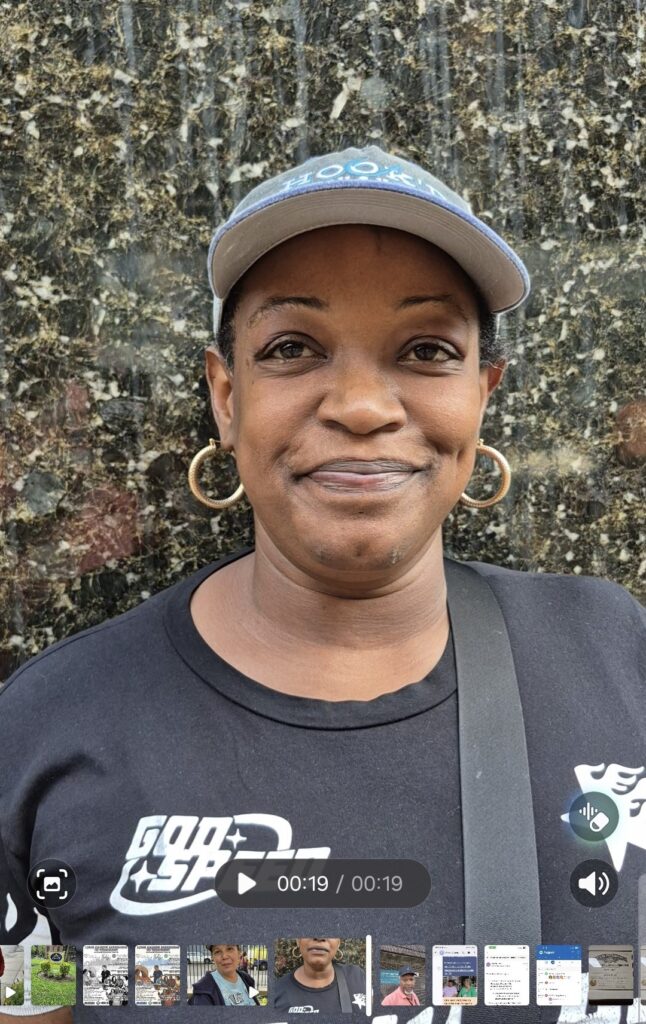
Ishawna Bridges was waiting for a bus.
There were perhaps 10 minutes before it arrived, only a brief window to tell her about the Sept. 19 community conversation on lung cancer screening and treatment.
Then the conversation changed.
Bridges said her mother has Stage 4 kidney and lung cancer.
“My mom’s has stage four kidney and lung cancer,” Bridges said during a brief recorded statement. “And I think this will be a good result and good information for me and my mom.”
She wanted to attend the Sept. 19 gathering and hoped her mother could attend as well.
Bridges discussed trying to get her mother there and possibly enlisting her brother’s help.
She carries other family responsibilities as well. Bridges said she has a nonverbal son with autism and another son with multiple sclerosis.
“I have a lot going on,” she said.
Then the bus came.
A woman who had been waiting for public transportation was gone.
But in those few noisy minutes beneath the elevated tracks, what began as an effort to tell a stranger about a community health program had connected with a family already confronting advanced cancer.
For Bridges, questions about cancer treatment were not theoretical.
They were already inside her family.
Her encounter illustrated something easily lost when community health is discussed in terms of programs, initiatives and statistics.
People have to be reached in the middle of their lives.
They are catching buses. Going to work. Caring for children and parents. Managing illnesses. Paying bills.
Sometimes there may be only 10 minutes to make the connection.
Lung Cancer and the Bronx
Traveling along the Bruckner Expressway offers another view of the Bronx.
Older brick apartment buildings line portions of the roadway, many with window air-conditioning units jutting from window after window. From the expressway, parts of the borough can appear caught between eras.
The view does not tell the whole story of the Bronx. But it offers a visible reminder that New York’s prosperity and modernization has not reached every neighborhood in the same way.
At the street level, however, another Bronx emerges.
People tend flowers along the sidewalk. They wait beneath elevated subway tracks for buses. They care for children and aging parents. And community advocates such as Colette Smith work to make sure their neighbors have information that could someday save a life.
It is against that backdrop that the Sept. 19 community conversation will take place.
The Bronx had an estimated 1.38 million residents in 2024. About 55% were Hispanic and nearly 30% were non-Hispanic Black, according to the New York State Department of Health. More than one in five Bronx families lived below the poverty line during the 2020-2024 period, and nearly 36% of children were living in poverty.
Lung cancer also cuts across racial and ethnic lines.
From 2020 through 2022, the age-adjusted lung cancer incidence rate in the Bronx was 38.5 cases per 100,000 residents, according to state health data.
The rate was highest among non-Hispanic White residents, at 53.6 per 100,000. It was 43.8 among non-Hispanic Black residents, 34.4 among Asian and Pacific Islander residents and 30.6 among Hispanic residents.
Those numbers are important because they prevent an oversimplification of the story: Black Bronx residents do not have the borough’s highest lung cancer incidence rate.
But incidence is not the only measure of disparity.
Across New York, Black people with lung cancer are less likely than White patients to have their disease diagnosed early, according to the American Lung Association’s State of Lung Cancer report.
The report also identifies disparities in survival and treatment among Black patients. Those findings provide a broader context for Smith’s concerns about the experiences of Black women with lung cancer.
Smith belongs to an affinity group of Black women who have experienced the disease. She said the group once included 32 women and that three have since died. Many, she said, experienced later-stage disease.
“We don’t get believed when we go to doctors’ offices and we describe symptoms,” Smith said. “We are not given diagnostic measures. We just get ignored.”
Smith’s experience cannot establish how frequently that happens throughout the health-care system.
But independent health data show that disparities in lung cancer diagnosis, survival and treatment exist.
The numbers and Smith’s experience arrive at the issue from different directions.
Together, they raise a question central to the Sept. 19 gathering: How do communities make sure people receive useful cancer information, and can act on it, before opportunities for early intervention disappear?
Four Organizations Behind the Conversation
That challenge is bringing together HEAL Collaborative, Amgen, Merck and Commonpoint.
Their support of the Sept. 19 community conversation brings health advocacy, private-sector resources and an established community presence together in one place.
But the larger question is not simply who supports a Saturday health event.
It is what happens afterward.
A community conversation can provide information for several hours.
Improving health outcomes requires people to know what to do with that information after they leave, where to go, whom to call and how to navigate the barriers between learning about screening and actually receiving appropriate care.
Smith believes part of the answer is trust.
She wants health outreach to happen in ways that feel natural to the community, including conversations and activities where residents feel comfortable asking questions. She has discussed bringing screening resources directly into neighborhoods.
She knows what can happen when people feel comfortable enough to listen.
One man heard her story.
Then he got screened.
Cancer Doesn’t End With Treatment
Smith’s advocacy did not end when doctors removed her cancer.
She said other lung nodules have been monitored for roughly 11 years. Some have disappeared or calcified.
Neither did her experience navigating the health-care system end after surgery.
Smith said an insurance company denied coverage for one of her surveillance CT scans about two years ago.
She challenged the decision.
“We got to fight them,” she said.
There was also the financial side of cancer.
Her husband’s earlier experience with prostate cancer prompted Smith to obtain disability and catastrophic-illness insurance and think more seriously about how the family would manage if she became seriously ill.
Two or three years later, she said, she received her own lung cancer diagnosis.
Because those protections were already in place, Smith said she was able to spend months recovering at home without the same fear about what she calls “financial toxicity.”
That experience helps explain why the Sept. 19 conversation extends beyond screening and treatment to mental wellness, financial health literacy and medical debt.
Cancer can begin with an abnormal scan.
Its consequences can spread into employment, household finances, transportation, caregiving and mental health.
Smith knows that.
So does Bridges.
But the two women stand at very different places in the cancer journey.
One is years beyond an early-stage lung cancer diagnosis and now spends part of her life encouraging others to seek information, ask questions and advocate for themselves.
The other is a daughter whose mother is confronting Stage 4 disease and who hopes a Saturday morning community conversation might provide information her family can use.
Between those experiences are Bronx residents whose relationship with cancer may not yet be known.
Some may be caring for someone with cancer.
Some may qualify for lung cancer screening.
Some may need help navigating treatment.
Some may be worried about what medical care will cost.
Some may simply hear something on Sept. 19 that becomes important later.
And others may never walk through the door unless somebody reaches them first.
Finding Each Other
Back on her Bronx block, Smith continues tending the flowers.
The garden gives her somewhere to put some of the anxiety cancer left behind. Her advocacy gives her somewhere to put the experience.
Smith believes there are other people who need to hear what she and other survivors have learned.
“We just need to find them or they need to find us,” Smith said.
A short distance away, beneath the elevated subway tracks, that challenge became literal.
Bridges was waiting for a bus.
The trains and traffic made it difficult to hear. Her mother has Stage 4 cancer. She had other family responsibilities waiting for her.
And there were perhaps 10 minutes to make a connection.
Then the bus came.
On Sept. 19, HEAL Collaborative, Amgen, Merck and Commonpoint Bronx, will try to bring more of those connections under one roof.
But the work of reaching people will continue after the chairs are put away.
Because somewhere in the Bronx, another person may be waiting for a bus, walking home, sitting beneath a shade tree or simply going about an ordinary day unaware that a conversation they have not yet had could someday matter.
Smith put the challenge more simply.
“We just need to find them or they need to find us.”
In the Bronx, perhaps they need to find each other.
The HEAL Collaborative is based in Atlanta, GA. To learn more, please visit: www.healcollaborative.org.
Related articles
One Small Card, One Big Question That Changed a Life
Six Blocks That Changed the Conversation About Lung Health
A Celebration of Hope Inspires Birmingham’s Community Conversation on Lung Cancer
Part I – “Anyone With Lungs”: Understanding the Hidden Realities of Lung Cancer
Part II – “Your Lungs Are Talking”: How the Respiratory System Works – and What It Tells Us
Part III – “From Awareness to Action”: Communities Confront Lung Cancer Together
Support open, independent journalism. Your contribution helps us tell the stories that matter most.


 Florita Bell Griffin, Ph.D.