Atlanta Beltline Nears 2030 Completion with Big Progress and Bigger Goals

Atlanta Beltline marks 20 years at State of the Beltline 2025, highlighting housing, jobs, trails, and community equity while charting a path toward 2030 completion.

By Milton Kirby | Atlanta, GA | September 25, 2025                                                                                     

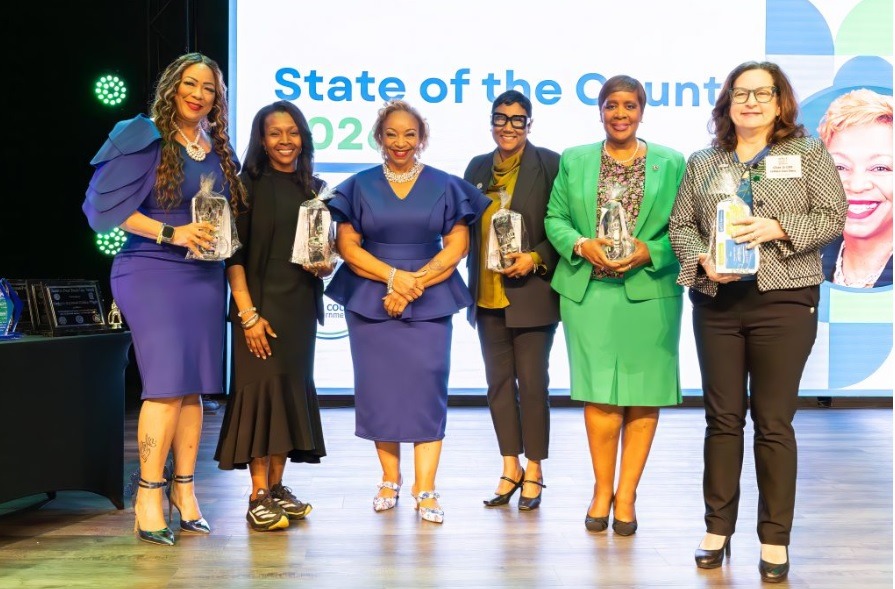
Atlanta — The Atlanta Beltline celebrated two decades of progress on Wednesday with its 2025 State of the Beltline address, drawing more than 350 leaders, developers, and community voices to The Eastern.

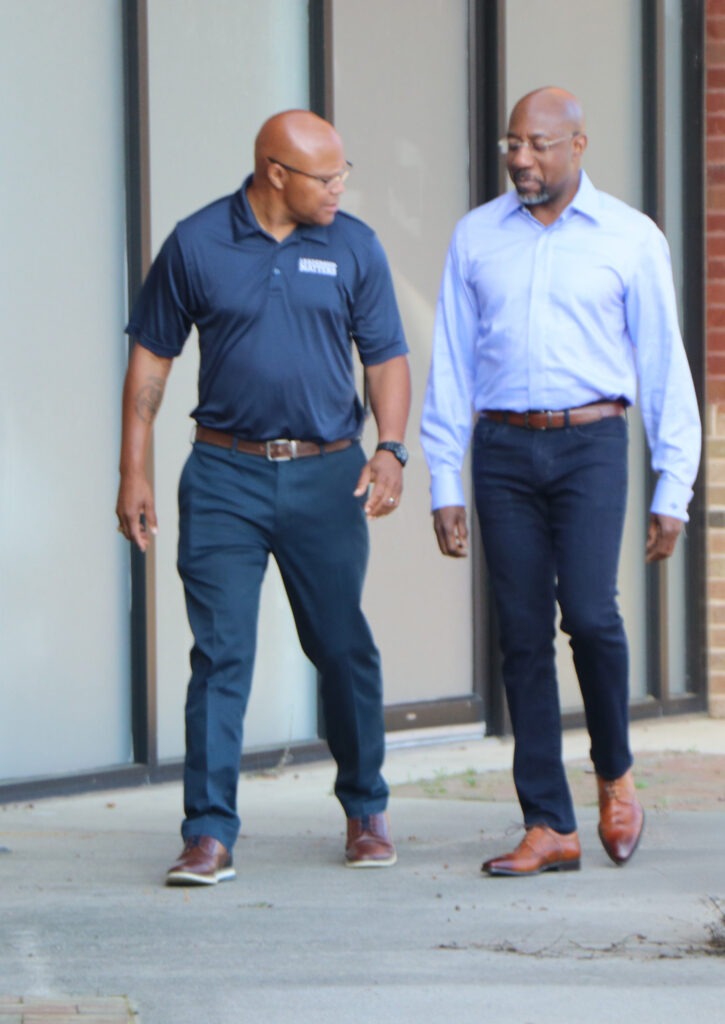
The breakfast event, hosted by the Council for Quality Growth, highlighted the Beltline’s growing economic, cultural, and social impact across the city. Clyde Higgs, President and CEO of Atlanta Beltline, Inc. and 2025 Council Chair, joined Anna Roach of the Atlanta Regional Commission for a fireside chat reflecting on the project’s past and future.

Affordable housing and lasting investment

Higgs credited early visionaries who launched the Beltline in 2005, noting that 76% of its affordable housing target has already been met. The project is on pace to surpass 7,000 units by 2030. He pointed to the City Council’s approval of a Special Service District in 2021, which unlocked $350 million in local and leveraged funding. “That’s how we can now say definitively we will finish the loop by 2030,” Higgs said.

The economic impact is substantial: $800 million in public investment has spurred nearly $10 billion in private development and created over 26,000 permanent jobs. Higgs also announced a $2 million Local Developer Incentive Fund to help small businesses and legacy entrepreneurs remain competitive along the trail. “We need to make sure we are preserving the culture, the legacy of Atlanta, and making sure everyone is winning because of this investment,” he said.

Community connections and mobility

City of Atlanta Chief Operating Officer LaChandra Burks opened the program, recalling the skepticism that surrounded the Beltline’s early years. “Twenty years ago, we were dreamers gathered around the table, determined to reconnect Atlanta,” she said. “With each challenge came another chance to deliver on our promise that every Atlantan will have a place on the Beltline and a stake in the city’s future.”

Atlanta Beltline COO Ruben Brooks shared that 12.8 miles of trail are now complete, with six construction projects in motion. By mid-2026, 18 miles are expected to be open, including the Southside Trail ahead of the World Cup. “We are accelerating like never before, and we do not intend to stop,” Brooks said.

Philanthropy and equity

Rob Brawner, Executive Director of the Atlanta Beltline Partnership, highlighted $225 million in philanthropic support from foundations, corporations, and individuals. He pointed to the Legacy Resident Retention Program, which has helped more than 270 homeowners keep property taxes at 2019 levels. “At its core, the Beltline is about people,” Brawner said.

Looking ahead

Higgs closed by reminding attendees that the Beltline is “the people’s project,” urging continued collaboration. “Don’t assume we’ve got it covered—we still need you. Challenge us, push us, and then when it’s time to make a decision, get behind it and go.”

As the Beltline advances toward its 2030 completion, the project’s trails, parks, housing, and business investments continue to reshape Atlanta, positioning the city for a more equitable and connected future.


Please consider supporting open, independent journalism – no contribution is too small!

The Tyranny of White Racism and Rage: Why America Will Never Be Great

America’s greatness is a myth built on racism, slavery, and genocide. From MAGA chants to Stone Mountain, white rage ensures the nation will never be truly great.

By Lola Renegade | September 24, 2025

Make America Great Again” is not a mere slogan. It is an ancestral curse and love song to racism, a requiem to hate, a demon spirit disguised as patriotism, shouted by the faithful of racism, bankrolled by millionaires and billionaires, paraded by politicians, and stitched into the very skin of those who cannot imagine a world where whiteness does not reign supreme. It is a sales pitch—proof that in America, hate is not merely ideology, it is merchandise. It is a brand stamped on cheap red hats and t-shirts made in China, a bumper-sticker lie sold to the willfully ignorant, and the hateful alike.

But strip away the slogans and the pageantry, and the truth is unavoidable: America will never be great. It has entertained moments of unsustainable greatness. It was never designed to be fully great. Racists and misogynists will make certain it never will be.

Even before the moment America declared independence, it strangled its own promise. George Washington, Thomas Jefferson, James Madison names are etched in marble, their faces carved into mountains. But their hands were never clean. They owned men, women, and children as property. Jefferson could pen the words “all men are created equal” with one hand while raping Sally Hemings with the other, keeping her and the children born of his rape enslaved. Washington could lead a revolution for liberty and then unleash dogs and bounty hunters to drag back those who sought their own freedom. Yet, he was marketed as never telling a lie. All of them were mythologized into saints and branded as paragons of virtue.

Twelve U.S. presidents owned slaves at some point in their lives, with eight of them being slave owners while in office. Some had children by their enslaves and became the first absentee “fathers” of Black children. 

The idea of America’s exceptionalism and the phrase “shining city on a hill” was drenched in murders, sweat, blood, and the cries of enslaved Africans. The greatness they preached was always greatness and wealth for the few, built upon the backs of the many. Before slavery’s chains, there was another crime written in rivers of blood: the genocide of Native peoples. The continent’s first nations were starved, massacred, and driven onto barren reservations. Andrew Jackson—the man Donald Trump idolizes—did not merely sign the Indian Removal Act; he enforced it with satanic smiles, watching families stagger down the Trail of Tears. Sand Creek, Wounded Knee, broken treaties, poisoned water. It is today’s caging of “immigrant” families and separating children from their parents. 

The list of America’s atrocities is endless. Its landscape has been ruined and littered from its inception until now with racist, narcissistic, power-drunk psychopathic and sociopathic white men, the women who support them, and their colored allies.

This is never any great nation’s destiny. It was the extermination of anyone not like them, waged with rifles in one hand and the Bible in the other, baptized in the counterfeit holiness of patriotic Christianity. The soil beneath our feet is still stolen, crying out with the blood of those who first walked it. And yet, the very thieves who built their empire on genocide and chains dare to demonically sneer, “Go back to your country.” What arrogance! The irony rolls across centuries, and we must never be lulled into silence, never forget the truth written in the earth itself: the trespassers are the ones shouting at others to leave.

Fast-forward to January 6, 2021, when the Confederate flag once again marched proudly into battle—this time through the U.S. Capitol. Donald Trump, the barely literate reality-TV demagogue turned tyrant-in-chief, summoned his followers to overthrow democracy. He told them to fight like hell, and they obeyed. Windows shattered, police were beaten and killed, and elected officials fled for their lives. The Republican Party—the self-proclaimed party of law and order—stood by in silent complicity.

That day did not just globally disgrace America—it unmasked and revealed it. A felon, a twice-impeached president, a self-professed sexual predator, a tax cheat, a fraud who built his empire on lies, bankruptcies, and racism—Donald Trump carried every scandal like badges of honor. And still, racist white America crowned him president not once, but twice. Twice, they chose corruption over character. Twice, they elevated a man who bragged about assaulting women, who caged children, who mocked the disabled, who praised dictators, who desecrated democracy itself.

The insurrection was not an aberration. It was not a crack in the system. It was the system laid bare. The Confederate flag flying through the Capitol was not a symbol of the past—it was the present, a banner of white rage and entitlement, carried by racists who refuse to loosen their grip on power. The mob was not a departure from the American project; it was the American project in its purest form: whiteness armed, enraged, and unwilling to yield.

And now we witness the grotesque theater of the absurd, the martyrdom of Charlie Kirk. Kirk, a man who spewed venom about immigrants, women, and Black people, was gunned down by another white man. Yet his death is being blamed on “the left,” polished into sainthood, marketed as if he were some fallen soldier fighting for freedom. America loves nothing more than to crown its hatemongers with halos once they are gone. A racist in life becomes a “patriot” in death, his ideology sanitized and packaged for sale.

Here’s Kirk, the community college dropout in his own words. Many of his comments were documented by Media Matters for America, a progressive non-profit that tracks conservative (aka racists) media.

On race, he said:

If we would have said that Joy Reid and Michelle Obama and Sheila Jackson Lee and Ketanji Brown Jackson were affirmative action picks, we would have been called racists. Now they’re coming out and they’re saying it for us … You do not have the brain processing power to otherwise be taken really seriously. You had to go steal a white person’s slot to go be taken somewhat seriously.

– The Charlie Kirk Show, 13 July 2023

If I see a Black pilot, I’m going to be like, boy, I hope he’s qualified.

– The Charlie Kirk Show, 23 January 2024

If you’re a WNBA, pot-smoking, Black lesbian, do you get treated better than a United States marine?

– The Charlie Kirk Show, 8 December 2022

Happening all the time in urban America, prowling Blacks go around for fun to go target white people, that’s a fact. It’s happening more and more.

– The Charlie Kirk Show, 19 May 2023

If I’m dealing with somebody in customer service who’s a moronic Black woman, I wonder is she there because of her excellence, or is she there because of affirmative action?

– The Charlie Kirk Show, 3 January 2024

Kirk truly believed that his whiteness alone placed him on the same level as Supreme Court Justice Ketanji Brown Jackson—a Harvard University and Harvard Law School graduate—and Michelle Obama, who excelled and graduated from both Princeton University and Harvard Law School. Joy Reid was also a Harvard graduate. Sheila Jackson Lee was a graduate of Yale University and University of Virginia School of Law. In his twisted worldview, their brilliance could only be explained away as “DEI hires,” stealing opportunities that rightfully belonged to mediocre white men like him.

His rise had nothing to do with either education or merit; it was bankrolled by racist millionaires and billionaires eager to underwrite his racism, misogyny, and hate. Strip away their money and his privilege, and Kirk was exposed for what he was—so shallow in intellect that even college freshmen routinely outmatched him in debates. Now the U.S. ( p)Resident felon-in-thief, Donald Trump, squatting at the white house, will posthumously bestow the presidential medal of freedom on Kirk (yes, I am aware some words are not capitalized, both the office and medal are so degraded, elevation is not deserved). Trump also gave another devout racist, Rush Limbaugh, the same medal. Hate speech is lauded as courage, ignorance is achievement, and bigotry is given a standing ovation.

What is America’s true genius? It is not freedom, nor democracy, nor justice. It is advertising. America knows how to brand lies so well that even those poor whites crushed beneath its boot have decided they are better than all people of color. It sells genocide as destiny. It sells slavery as heritage. It sells Trump as a savior. It sells Charlie Kirk as a martyr. It sells racism as conservative. And it sells “greatness” as though it were ever more than a fairy tale written by white supremacists. In a land ruled by lies, hatred is dressed as virtue, and racist traitors are crowned with medals of freedom they never earned.

Greatness requires truth, but America thrives on delusion. Greatness requires justice, but America builds prisons instead and populates them with people of color while white insurrectionists go free. Greatness requires healing, but America only knows how to wound. From plantations to reservations, from lynching trees to prison cells, from drowning and destroying Black thriving cities, from the Oval Office to the riot on the Capitol steps, America has chosen violence as its signature and hypocrisy as its creed.

If you need proof that America prefers its lies monumental, look to Georgia’s Stone Mountain. There, blasted into granite, loom the figures of Jefferson Davis, Robert E. Lee, and Thomas “Stonewall” Jackson—Confederate traitors carved larger than life. It is not history. It is propaganda. Built during Jim Crow and unveiled during the Civil Rights Movement, Stone Mountain is a permanent sneer, a towering reminder to Black America that white supremacy still writes the story.

And so the monument stands: a mountain of lies, visible from miles away, impossible to ignore. America carries that mountain on its back every day, dragging it forward, whistling the song, Dixie, while insisting it is free.

“I wish I was in the land of cotton,
Old times they are not forgotten;
Look away! Look away! Look away! Dixie Land.”

Until this wretched country tears down not only the stone but the systems of structural racism it symbolizes, America will remain what it has always been—powerful, yes. Ruthless, yes. But great? Nah. Never.

MARTA to Close Peachtree Entrance and Federal Tunnel at Five Points Oct. 13

MARTA will close the Peachtree entrance and federal tunnel at Five Points Oct. 13. Riders must use Forsyth Street as transformation work continues

By Milton Kirby | Atlanta, GA | September 23, 2025

MARTA riders will soon face another major change at Five Points Station. On Monday, Oct. 13, 2025, the Peachtree Street entrance and the federal tunnel for employees will officially close.

From that date forward, all access to Five Points will be available through the Forsyth Street entrance. This step, deemed necessary by MARTA officials, is to safely demolish and remove the aging concrete canopy that has loomed over downtown’s busiest station for decades.

Limited Access

When the Peachtree entrance closes, Forsyth Street becomes the single access point. The Alabama Street and Broad Street Plaza entrances remain closed. Restrooms are also closed. Bus riders will continue boarding on Forsyth Street.

Photo by Milton Kirby – MARTA Gold line train

Rest assured, rail service and transfers remain unaffected. Elevators remain open, though MARTA warns of temporary escalator and stair closures as crews erect scaffolding and overhead protection. Signage will direct customers through the changes.

Customer service offices have already relocated temporarily and are scheduled for a permanent move to Ashby Station. MARTA will announce the opening date in the coming months.

Station Transformation

The closures are part of the $230 million Five Points Transformation project. MARTA plans to turn the station into a vibrant hub with improved transit connections, safer infrastructure, and new public spaces.

Phase one focuses on dismantling the existing canopy. Future phases will add a modern canopy, a centralized bus hub, and a pedestrian link to Broad Street. Community spaces, public art, and even agriculture are also in the plans.

The project is funded primarily by the More MARTA half-penny sales tax approved by Atlanta voters, with additional money from the state of Georgia ($13.8 million), a $25 million Federal RAISE Grant, and MARTA’s core penny fund.

Long-Term Vision

Officials say the disruption will pay off with a safer, more connected Five Points at the heart of Atlanta. This is part of a long-term vision for a vibrant hub with improved transit connections, safer infrastructure, and new public spaces. For now, MARTA is urging riders to plan ahead, use Forsyth Street, and be aware of construction-related detours.

More updates and construction details are posted on MARTA’s website.

Please consider supporting open, independent journalism – no contribution is too small!

Cherie Danielle Brings Cultural Work to the Stage in College Park

Atlanta actress Cherie Danielle debuts The Cultural Workers Got Something to Say Oct. 3–5 at PushPush Arts Center, blending art, activism, and community dialogue.

By Milton Kirby | Atlanta, GA | September 22, 2025

When Atlanta-born actress, comedian, and writer Cherie Danielle steps onto the stage at the PushPush Arts Center this October, she will not simply be performing a play. She will be carrying forward a mission — to use art as a weapon for liberation, political education, and collective imagination.

Her one-woman show “Afro Goddess Pt. 2 R/evolutionary Love” and “The Shootout” by Jihad Abdulmumit will be featured in The Cultural Workers Got Something to Say, runs October 3–5, 2025 in College Park. It is the newest expression of her artistic journey, shaped by a lifetime of acting and a recent commitment to redefining herself not as a “creative,” but as a cultural worker. The distinction, inspired by Musa Springer’s essay “A Cultural Worker, Not a Creative,” reflects Danielle’s belief that art must serve the people.

“The role of a cultural worker,” she explained in our interview, “is to open minds, hearts, and actions toward collective liberation.”

Photo by Milton Kirby – Cherie Danielle

From DeKalb to New York

Danielle’s foundation as an artist was laid in Atlanta. She majored in drama and minored in vocal music at DeKalb School of the Arts before moving to New York to study at the American Academy of Dramatic Arts. There, she built a stage résumé that included The Colored Museum, Chains, and Angela’s Justice, while also touring nationally in I Have a Dream.

Her training continued at institutions such as Marishka Phillips Theatrical Preparatory, The Classical Theatre of Harlem, and The Acting Studio. Alongside her theater work, Danielle began to appear on screen, earning credits in Netflix’s Barry, HBO’s The Deuce, and short films featured at festivals worldwide.

The Afro Goddess Legacy

In 2016, Danielle wrote and performed her first solo show, The Diary of an Afro Goddess. Premiering in New York and later staged in Atlanta at the Porter Sanford Performing Arts Center, the play earned an AUDELCO Award nomination for Outstanding Solo Performance. The project also launched Afro Goddess Productions, her vehicle for developing original films and digital content.

That foundation now continues with her latest work, The Cultural Workers Got Something to Say. The production critiques capitalism, empire, and systemic exploitation, while urging audiences to imagine and organize for a liberated world. Danielle performs alongside pieces from other artists, including work by former political prisoner Jihad Abdulmumit.

Atlanta Roots

Danielle’s connection to Atlanta runs deep. She is the daughter of Charles Bythwood, a respected Atlanta architect. Where her father built with concrete and steel, Danielle builds through performance — constructing frameworks of culture, memory, and resistance. Both legacies are grounded in shaping spaces where people can thrive.

Movement Context

Her latest work also situates itself in present-day struggles. Danielle points to the Stop Cop City movement in Atlanta and to global calls for justice as inspiration. For her, art must reflect and respond to these conditions, whether by demanding universal healthcare and basic income or by challenging what she calls “the false promises of Black capitalism.”

Expanding the Audience

Danielle is committed to making sure her work reaches beyond traditional theater spaces. She plans to bring The Cultural Workers Got Something to Say to colleges, community centers, and grassroots organizations, emphasizing political education and dialogue. Each performance will conclude with a community talkback — part of her belief that art should spark collective action, not just reflection.

A Call to Action

As she prepares for her October performances in College Park, Danielle frames her mission in simple but urgent terms: art must open pathways to liberation.

“Getting involved, organizing, and imagining a better world — that’s the work,” she said. “Theater is just the beginning.”


Event Details:

  • The Cultural Workers Got Something to Say!
  • October 3–5, 2025 | PushPush Arts Center, 3716 Main Street, College Park, GA 30337
  • Tickets: $25 general admission (sliding scale available)
  • Presented by Community Movement Builders Atlanta Political Education
  • Two 50-minute plays with intermission, followed by a community talkback
  • 90% of proceeds benefit Community Movement Builders
  • To Purchase Tickets

Please consider supporting open, independent journalism – no contribution is too small!

Uncle Nearest at Legal Crossroads: Debt, Receivership, and What Comes Next

Uncle Nearest faces receivership and $108M debt, but CEO Fawn Weaver rallies support with faith, leadership, and booming sales in Illinois, Florida, Georgia, Maryland, and Alaska.

By Milton Kirby | Shelbyville, TN | September 21, 2025

Uncle Nearest Premium Whiskey, a thriving brand valued at $1.1 billion in 2024 by Forbes and other sources and recognized as the fastest-growing Black-owned spirits brand in the nation, is now embroiled in a federal court battle. A receivership order, linked to a staggering $108 million debt, has handed over the reins of the company’s finances and operations to external parties. This pivotal moment could potentially reshape one of the most celebrated American whiskey stories in recent history.


How the Case Started

On July 28, 2025, Farm Credit Mid-America filed suit, alleging that Uncle Nearest, Nearest Green Distillery, and founders Fawn and Keith Weaver defaulted on over $100 million in loans. The lender accused the company of:

  • Overstating the value of whiskey barrels used as collateral by $21–24 million.
  • Failing to keep a $1.5 million cash balance required under loan agreements.
  • Falling behind on payments and breaching covenants on net worth and net income.
  • Selling or discounting future revenues without proper notice.
Photo by Milton Kirby

Farm Credit also claimed “insufficient internal financial controls” and said defaults date back to 2023. Still, the lender extended additional credit at the time, “in reliance upon Uncle Nearest’s representations as to its success and strategic growth.”


Uncle Nearest Pushes Back

The Weavers argue the picture is more complicated. In sworn filings, Fawn Weaver declared that former CFO Mike Senzaki “was the sole point of contact responsible for inventory reporting and for signing off on all funding requests tied to those barrels.” She maintains that discrepancies surfaced in early 2024, months before Farm Credit sued.

On the Martha’s Vineyard home purchased through UN House MV LLC, Uncle Nearest submitted internal emails showing that Farm Credit executives “were not only aware of the property but also attended an inaugural Gospel Brunch event at the home.” The filing added, “These were not covert maneuvers.”

Weaver has also spoken directly to supporters. In a widely shared Instagram video, she declared:

“Don’t believe the fake news. Some reports claim I no longer own Uncle Nearest and that I’m not running it. Let me be clear. I built this company. I run this company. And my leadership team, who have all been with me for 6 to 8 years, are right here building alongside me. Our team remains unshaken and unmoved.”


Growth & Market Momentum

On August 16, 2025—two days after the court appointed a receiver—Fawn Weaver took to Instagram to rally customers and partners. She emphasized that, despite legal pressures, Uncle Nearest continues to expand in key markets “in a year where spirits are down.” This continued growth and market momentum is a testament to the company’s resilience and a reason for optimism about Uncle Nearest’s future

Photo by Milton Kirby – Uncle Nearest Flight

She pointed to sales surges across the country, noting:

  • Illinois: +216% this month, +21% year-to-date.
  • Florida: +92% this month, +24% year-to-date.
  • Georgia: +31% this month, +53% year-to-date..
  • Maryland: +30% this month, +49% year-to-date.
  • Alaska: +423% this month, +44% year-to-date.
  • South Carolina: +48% this month, +53% year-to-date.
  • Texas: +44% this month, +34% year-to-date.
  • New Mexico: +32% this month, +22% year-to-date.

Her message was pointed:

“Don’t forget, keep clearing them out, leave no doubt, send a loud message that you are behind this brand and the team that built it.”


The Court’s Decision

On August 14, 2025, U.S. District Judge Charles E. Atchley Jr. appointed Phillip G. Young Jr. as receiver, finding that receivership was “necessary under the circumstances” due to questions of solvency, inadequate collateral, and ongoing defaults.

Young, a bankruptcy and business attorney, has hired turnaround specialists Newpoint Advisors Corp. to assess the company’s financial health, with Thoroughbred Spirits Group managing operations. Belcher, Sykes & Harrington has been engaged as counsel for alcohol and beverages, while Young’s firm, Thompson Burton, serves as receivership counsel

The order effectively shifts day-to-day financial and operational control to the receiver, while leaving branding and public-facing work partially in the hands of Uncle Nearest leadership.


Money In and Money Out

Records show that Uncle Nearest made large payments before the lawsuit: $9 million in 2024 and $7.5 million earlier this year. Yet Farm Credit says those payments did not cure defaults or fix repeated covenant breaches.

The dispute over barrel values is especially critical. Farm Credit claims the inventory overstatement inflated its lending exposure. Uncle Nearest insists the problems trace back to one former executive.


Assets in Question

The receivership may extend beyond the distillery and barrels. The receiver has asked the court to clarify whether other Weaver-connected entities should be pulled in, including:

  • Uncle Nearest Real Estate Holdings LLC
  • Shelbyville Barrel House BBQ LLC
  • Humble Baron Inc.
  • Grant Sidney Inc.
  • Uncle Nearest Spurs VI
  • Quill and Cask Owner

Additional law firms are also reviewing potential assets in Massachusetts and France.

Photo by Milton Kirby – Uncle Nearest Horse Barn

Costs of Receivership

The Financial Impact of Receivership oversight comes at a cost. Young has already hired multiple consulting and legal teams to stabilize operations. These include financial consultants, operational managers, and attorneys specializing in alcohol law.

While the exact fees have not been disclosed in public filings, industry observers note that receivership and professional services can be expensive. For a company already under heavy debt, these additional expenses could create new pressure on cash flow and raise the risk of bankruptcy if revenue cannot keep pace.


Local Impact

The distillery in Shelbyville has become a destination in its own right. Reports show that the site attracted 5,000 to 8,000 visitors every weekend in 2023. The company claims it ranked as the seventh-most visited distillery in the world among its peers. This local economic impact is a testament to Uncle Nearest’s importance to its community and the connections it fosters.

Tourism tied to whiskey is a growing sector in Tennessee, part of the Tennessee Whiskey Trail that draws travelers from across the U.S. and abroad. For Shelbyville, the ripple effects include job opportunities, tourism, and spending at local hotels and restaurants.

How the receivership affects visitor traffic and local suppliers remains unclear, but the stakes are high.


A “People’s CEO” Message

Weaver has leaned into her identity as what she calls the “People’s CEO.” She told followers:

“Keep clearing the shelves. Every bottle you move tells our distributors and partners the same thing. We’ve built one of the strongest and most resilient brands in American history.”

“From the start, I’ve shared the ups and downs of building Uncle Nearest, that transparency is a part of my calling. That is what built one of the strongest brand communities in American history.

That’s why they call me the People’s CEO — because I don’t just show the gloss, I show the grind, the grit, and the gunk.”

She also reminded entrepreneurs of the long road:

“Entrepreneurialism will give you a hundred reasons a day to quit, but strong leadership doesn’t panic. It keeps a steady hand and moves forward.”


What to Watch

  • The receiver’s first quarterly report, due October 1, 2025, which should reveal cash flow, solvency, and collateral status.
  • Whether additional Weaver-linked LLCs will be pulled into the receivership.
  • Possible legal action against the former CFO, or counterclaims from Uncle Nearest.

  • The impact of consultant and legal fees on the company’s ability to restructure debt.
  • Continued sales growth in markets like Illinois, Florida, Georgia, Maryland, and Alaska.

A Story Still Unfolding

“What the enemy meant for evil? God meant for good,” Weaver told her audience. That note of faith and defiance now hangs over the courtroom battles and boardroom decisions.

Uncle Nearest’s future is tied to the courts, consultants, and creditors as much as to its whiskey barrels and brand story. The next reports, hearings, and filings will determine whether this is a path toward restructuring or toward deeper financial trouble.

For Shelbyville, for whiskey fans, and for those invested in the legacy of Nearest Green, this is a story to keep watching.

Related stories:

Uncle Nearest: A Billion-Dollar Brand

Receiver’s Report Says Uncle Nearest Can Be Reorganized

Please consider supporting open, independent journalism – no contribution is too small!

Fever Rally Late to Eliminate Dream 87-85

Atlanta Dream fell 87-85 in Game 3 to Indiana, but back-to-back playoff berths show progress and hint at a brighter postseason future ahead.

Atlanta Dream makes second straight playoff appearance, signs of maturing team

By Milton Kirby | College Park, GA | September 19, 2025

College Park was rocking Thursday night, Gateway Center Arena alive with music, dance cams, and hope. The Atlanta Dream faithful came in expecting a fight, and they got one — right down to the last shot.

The scoreboard, though, told the tougher story. The Indiana Fever, a team that never stopped believing, closed on a 7-0 run in the final two minutes and stunned Atlanta, 87-85, in Game 3 of their opening-round playoff series.

Aliyah Boston slipped free under the rim for the go-ahead bucket with just 7.4 seconds to play. Then Lexie Hull poked away an inbounds pass, and when Brionna Jones’ last-second three sailed off target, the Fever swarmed each other in celebration.

The loss ends Atlanta’s season, and it stings — no doubt about it. But it also marks the second straight year the Dream reached the postseason, a sign that progress is real and sustainable under first-year head coach Carl Smesko.


A Gut-Punch Finish

For three quarters, Atlanta looked every bit the higher seed. The Dream pushed tempo, attacked the paint, and leaned on their stars. They piled up 56 first-half points, more than their total from Game 2’s loss.

Photo by Dale Zanine – Brionna Jones (24) passes the ball from the floor

Allisha Gray played with fire, notching her first playoff double-double with 19 points and 12 boards. Jordin Canada ran the offense with pace, dishing 10 assists to go with 18 points. Rhyne Howard had 16, Brionna Jones 12.

When Jones scored inside to give Atlanta an 85-80 cushion with just over two minutes left, the Gateway crowd was on its feet. It felt like the Dream were headed to the semifinal round for the first time since 2016.

But basketball has a way of flipping quick. Indiana’s Shey Peddy drained a three. Brianna Turner muscled in a putback. Then Odyssey Sims found Boston open after a scramble, and just like that, the Fever had the lead.

Atlanta still had a chance, but the late turnovers and hurried final shot sealed the outcome.


Fever Find a Way

To their credit, Indiana never quit. Even without injured star Caitlin Clark, the Fever leaned on balance and grit.

Kelsey Mitchell, who Atlanta keyed on defensively all series, still poured in 24 points. Boston had 14 points, 12 rebounds, and six assists. Sims added 16 and Natasha Howard 12. Every Fever starter hit double figures.

Photo by Dale Zanine – Allisha Gray (15) shoots over Indiana Fever forward Aliyah Boston (7)

Mitchell summed up the night plainly: “I said before the game started, it was gonna be a gut-check type of game. I think you just have to dig deep.”

Head coach Stephanie White praised her group’s resilience: “This group has been through every situation imaginable. Their selflessness, toughness, and grit give us a chance every single night. I love riding with these guys.”

The Fever hadn’t won a playoff series since 2015. Their bench mob danced, their fans cheered, and social media lit up. They’ll take this momentum into a semifinal clash with defending champion Las Vegas.


Dream’s Year of Building

For the Dream, the loss is bitter, but it doesn’t erase the steps forward this team has made.

Last year, Atlanta’s playoff return ended quickly. This year, under a new coach and with a deeper roster, they climbed into the No. 3 seed, pushed their win total higher, and played two elimination games at home before the season’s final whistle.

Photo by Dale Zanine – Jordin Canada Drives Against Aliyah Boston

The franchise has not been this consistently competitive in nearly a decade. The players feel it, the fans sense it, and ownership sees the vision starting to take shape.

From our view, the takeaway is simple: this team has the bones of a contender. The experience of this playoff heartbreak will become the fuel for future runs.


Highlights and Hard Lessons

Atlanta’s high points were clear:

  • Allisha Gray’s first playoff double-double, a showcase of effort and toughness.
  • Canada’s control of the tempo, keeping the Dream organized and aggressive.
  • Howard’s versatility, even under constant defensive pressure.
  • The team’s ability to score inside early, with 40 first-half paint points.

But so were the lessons:

  • The Dream went cold in the fourth quarter, managing just 12 points.
  • Indiana outscored Atlanta 26-12 in the final period.
  • Costly turnovers in the final minute tilted the game.

In our view, this was less about collapse and more about learning the weight of postseason basketball — every possession magnified, every mistake costly.


Fans Showed Out

Even in defeat, Gateway Center Arena showed why College Park has become one of the WNBA’s loudest homes. From kids waving foam fingers to longtime season-ticket holders dancing in the aisles, the energy rarely dipped.

As the final buzzer sounded, there were groans, sighs, and a few tears. But there was also applause. Applause for a season that delivered 23 wins, for a roster that battled through injuries, and for a franchise that has its eyes set higher.


Looking Ahead

The Fever march on to face the Aces. The Dream will head into the offseason knowing they aren’t far away.

Atlanta has talent — Gray, Howard, Canada, Jones — and leadership in Smesko. What they need now is seasoning. A year of playoff heartbreak can turn into fuel.

And here’s our read: this is not the end of the story. Atlanta hasn’t won a playoff series since 2016, but the drought feels closer to ending than ever.

Please consider supporting open, independent journalism – no contribution is too small!

Atlanta BeltLine Marks 20 Years at State of the Beltline Address

Atlanta leaders gather Sept. 24 at The Eastern for the 2025 State of the Beltline, marking 20 years of progress in trails, housing, and community growth.

By Milton Kirby | Atlanta, GA | September 18, 2025

ATLANTA — Atlanta BeltLine, Inc. President and CEO Clyde Higgs will deliver the 2025 State of the Beltline address on September 24, marking 20 years of the transformative project and laying out the next chapter of development.

The event, hosted by the Council for Quality Growth at The Eastern in Atlanta’s Eastside, is expected to draw more than 350 guests. It will close out the Council’s annual series of “State of” addresses, following similar reports on MARTA and regional counties earlier this year.

BeltLine’s Generational Impact

The BeltLine — once a vision of converting rail corridors into trails, transit, and green space — has become one of the most ambitious redevelopment projects in the country. Over the past two decades, it has reshaped neighborhoods, attracted billions in investment, and created new housing and recreation options for Atlanta residents.

This year’s theme, “20 Years of Generational Impact: Dreaming, Doing, Delivering,” reflects both the project’s progress and the challenges that remain.

Clyde Higgs’ Leadership

Higgs, who also serves as the 2025 Board Chair of the Council for Quality Growth, has led BeltLine, Inc. since 2019. Under his tenure, the project has expanded trail mileage, advanced affordable housing initiatives, and deepened partnerships with city leaders and private developers.

“Clyde’s leadership has been pivotal in shaping the BeltLine into what it is today,” the Council for Quality Growth said in its announcement. “His vision continues to push Atlanta toward a more connected and equitable future.”

Photo by Milton Kirby Atlanta Beltline

What’s Next

The upcoming address is expected to spotlight ongoing work to complete the 22-mile loop, expand transit options, and meet affordable housing goals as development pressures mount. Officials also anticipate discussion of how the BeltLine will position Atlanta for the 2026 FIFA World Cup, when the city will host matches at Mercedes-Benz Stadium.

Event Details

  • Date: Tuesday, September 24, 2025
  • Time: 8:00 – 10:30 a.m.
  • Location: The Eastern, 777 Memorial Drive SE, Atlanta, GA
  • Host: Council for Quality Growth & Atlanta BeltLine, Inc.
  • Expected Guests: 350+ business leaders, policymakers, and community stakeholders

Tickets and sponsorship details are available through the Council for Quality Growth

Please consider supporting open, independent journalism – no contribution is too small!

City of Atlanta Launches ATL BIZ: New Platform Set to Simplify Permits, Taxes, and Payments Services

Atlanta launches ATL BIZ, a user-friendly online platform replacing ATL CORE, streamlining business licensing, taxes, permits, and payments with faster processing and a centralized dashboard.

By Milton Kirby | Atlanta, GA | September 17, 2025

The City of Atlanta has launched ATL BIZ, a modern, user-friendly online platform that replaces ATL CORE as the city’s primary portal for business services. With its intuitive design and easy navigation, ATL BIZ is designed to streamline processes and better support the city’s business community. It will serve as a one-stop hub for managing occupational tax certificates, permits, taxes, and payments, making it easier and more convenient for our users.

“We are proud to provide this new way of doing business with the City of Atlanta for our business community. ATL BIZ offers Atlanta businesses a modern, more user-friendly and intuitive way to meet their finance needs,” said Atlanta Mayor Andre Dickens.

“This furthers our Administration’s mission of making it easier to connect with our business community, both large and small, ensuring we are a city built for the future.”

Managed by the Department of Finance’s Office of Revenue, the platform includes several upgrades:

  • A streamlined interface that is easier to navigate
  • Faster processing times for applications and payments
  • Enhanced features to support business needs
  • A centralized dashboard to view balances, credits, and messages
  • The ability to manage multiple revenue types in one place
  • Options to renew occupational tax certificates, pay via ACH, and track status in real time

To ensure a smooth transition, all existing records from ATL CORE are being automatically transferred to ATL BIZ. This convenient feature eliminates the need for manual data migration, providing reassurance and comfort to our users. Step-by-step login instructions are available online, and the system is live at atlbiz.atlantaga.gov.

 Background and Context

Atlanta remains one of the nation’s top hubs for entrepreneurship. Over the past five years, the city has averaged 28.5 new business applications per 1,000 residents — nearly double the national city average. Metro Atlanta is home to more than 150,000 businesses, and across Georgia, business formation filings have surged in recent years, with 323,669 new filings in 2021, a record high. The state now has more than 1.5 million active business entities, from small LLCs to Fortune 500 corporations.

While no public data is available on the number of users who relied on the former ATL CORE platform, city officials emphasized that ATL BIZ is designed to handle the growing demand for online business services more efficiently.

Please consider supporting open, independent journalism – no contribution is too small!

North Carolina A&T Reaches Historic Enrollment of 15,275: Growth Powers Greensboro, Defines HBCU Excellence

North Carolina A&T sets a record with 15,275 students, reinforcing its role as America’s largest HBCU and a cultural, economic, and alumni powerhouse worldwide.


By Milton Kirby | Greensboro, NC | September 17, 2025

Enrollment Growth

North Carolina Agricultural and Technical State University has once again made history. This fall, the Greensboro-based institution surpassed the 15,000-student mark for the first time, enrolling 15,275 students, a nearly 1,000-student increase over last year. That jump of 6.7% represents the single most significant one-year gain in A&T’s long history.

For the 12th consecutive year, A&T holds the title of the largest public historically Black college or university (HBCU) in the nation. And for the fourth year in a row, it stands as the largest HBCU that America has ever produced.

Photo by Milton Kirby NC A&T Williams Cafeteria

“The 2025-26 student body reaffirms our commitment to the people of North Carolina, our national appeal and impact as an exponential, doctoral research HBCU, and the promise that North Carolina A&T holds for students around the world,” said Chancellor James R. Martin II. “We embrace the opportunity to prepare them for a world undergoing seismic knowledge and technology shifts and to guide their development as individuals, ready for lives of achievement and meaning.”

This surge not only reflects national interest in HBCUs but also the powerful draw of A&T’s academic programs, competitive outcomes, and a cultural experience deeply rooted in community and legacy.


Academic Excellence and Student Profile

The university welcomed an entering class of 3,021 first-year students this fall. Their academic credentials tell a story of rising standards and rising demand. The average GPA for the entering class stands at 3.7, while out-of-state freshmen arrived with an impressive 3.93 average GPA. Students came from 36 states plus Washington, D.C., further evidence of A&T’s reach.

NC A&T Enrollment Stats

Once enrolled, students can look forward to opportunities that rival — and often surpass — those of much larger and more established institutions. A&T hosts some of the largest career fairs in America, connecting students with leading employers. Ten years after graduation, an A&T degree pays off. Forbes reports that bachelor’s degree earners from the university enjoy a median salary of $112,000 — second in the University of North Carolina system.


Graduate and Transfer Expansion

This year also marked a watershed moment for graduate education at A&T. For the first time in its history, the Graduate College enrolled more than 2,000 students. The headcount of 2,018 reflects 11.2% growth over last year. Within that, doctoral enrollment surged to 702 students, a 23.4% increase.

The university’s expansion of new master’s and doctoral programs over the past five years is paying clear dividends, both in enrollment and in advancing A&T’s reputation as a research institution.

Transfer students also added to the momentum. 814 new transfers enrolled this fall, a 17% increase. As A&T’s freshman admissions become more competitive, pathways through community colleges and other universities have become vital. These transfers strengthen the student body and underscore A&T’s role as a welcoming, upward-mobility institution.

The university also posted its best-ever freshman-to-sophomore retention rate: 81%. That metric shows more students are not only enrolling but staying and succeeding at A&T.


International and Geographic Reach

Unlike many universities grappling with declining international enrollment, A&T’s global reach is growing. The university enrolled nearly 1,000 international students this fall, a 10.3% increase from last year. Nearly half hail from African nations, underscoring A&T’s global appeal and connections to the African diaspora.

Geographic diversity is also striking. Students come from 97 of North Carolina’s 100 counties, 43 states, and 103 foreign nations. That breadth of representation ensures A&T’s classrooms reflect not just the state’s demographics but also the wider world.

“As interest in A&T continues to grow, our team of enrollment professionals remains dedicated to finding the best and brightest students from North Carolina and beyond for the class of 2030,” said Joseph Montgomery, associate vice provost for Enrollment Management. “We will continue to review all applicants carefully, intentionally, and through a comprehensive, holistic process that aims to identify students who will excel at A&T and become future leaders.”


Economic Impact on Greensboro and North Carolina

The enrollment milestone is not just a number on a spreadsheet; it represents a powerful economic engine for Greensboro, Guilford County, and the state of North Carolina. With over 15,000 students, 2,600 degrees awarded annually, and 65,000 living alumni, A&T stands as one of the region’s most significant contributors to workforce development.

The university’s College of Engineering produces more Black engineers than any other campus in America. Its College of Agricultural and Environmental Sciences leads in producing African American agriculture graduates. Nursing, kinesiology, education, and business programs feed directly into critical industries across the state.

The local impact is also visible during signature cultural moments like Homecoming, famously dubbed “The Greatest Homecoming on Earth” (GHOE). In 2024, GHOE drew over 130,000 attendees, with an estimated $11.3 million economic impact on the Greensboro area. Hotels, restaurants, transportation, and small businesses feel the surge. For many, A&T Homecoming is both a cultural anchor and a financial lifeline.

Daily, students pump dollars into housing, food, and retail. Faculty and staff add stability to Greensboro’s middle class. And A&T’s growing research enterprise — over $78 million annually in academic and scientific research — fuels partnerships with industry and government.


Cultural Significance and the Aggie Spirit

A&T is more than a university. It is a cultural force rooted in history, pride, and resilience. Founded in 1891 as the Agricultural and Mechanical College for the Colored Race, A&T was established under the Morrill Act to provide educational opportunities to people of color who were excluded from other land-grant institutions.

That mission has never faded. From the A&T Four — Ezell Blair (Jibreel Khazan), Joseph McNeil, Franklin McCain, and David Richmond — who ignited the 1960 Greensboro sit-ins, to today’s graduates entering fields in technology, medicine, and public service, Aggies have always stood at the forefront of change.

The phrase “Aggie Pride” is more than a chant at football games. It embodies a community ethos — that success is shared, and that each student carries the hopes of those who came before.


Alumni Legacy and Global Footprint

The university’s alumni footprint stretches far beyond North Carolina. More than 65,000 Aggies are active in business, science, politics, the arts, and community service worldwide.

Among the most notable: Dr. Ronald McNair, the astronaut and physicist who lost his life in the Challenger disaster but left a legacy of courage and scholarship; Rev. Jesse Jackson, civil rights leader and two-time presidential candidate; and Chief Justice Henry Frye, the first African American to serve as chief justice of the North Carolina Supreme Court.

But beyond the famous names, there are countless others: engineers designing next-generation infrastructure, teachers leading classrooms, nurses on the frontlines of care, and entrepreneurs driving small-business growth. The A&T alumni network represents not just success stories, but a living testament to the power of access, opportunity, and determination.


Looking Ahead

As A&T marks this milestone, challenges remain. Housing for a growing student population will need investment. Faculty recruitment and retention must keep pace with enrollment growth. And while graduation rates and retention are improving, the push for even higher student success will continue.

Yet the trajectory is clear. North Carolina A&T is not just growing — it is thriving. In a higher education landscape marked by declining enrollments nationwide, A&T’s expansion underscores the enduring relevance of HBCUs and the unique blend of academic excellence, cultural identity, and community commitment they offer.

“This is our 12th consecutive year of growth, and we continue to be humbled and grateful for the faith that our students place in us to prepare them for lives of meaning and success,” Chancellor Martin said. “North Carolina A&T is setting a national standard as a land-grant HBCU and model for what it means to be a public university in this new millennium.”

As Greensboro celebrates its hometown university’s success, Aggies everywhere — from North Carolina to Nairobi — will see this enrollment milestone not as an end point but as a launching pad. The numbers are historic, yes. But the true measure of A&T’s success lies in the lives its students and alumni continue to shape, and in the pride that echoes, year after year, across generations.

Related articles

MacKenzie Scott Gift to Howard University

MacKenzie Scott Gift to NC A&T State University

MacKenzie Scott Gift to Alabama State University

MacKenzie Scott Gift to Prairie View A&M University

MacKenzie Scott Gift to Bowie State University

MacKenzie Scott Gift to Philander Smith University

Please consider supporting open, independent journalism – no contribution is too small!

Should Black Students Choose College or Trades?

By Quintessa Williams | Word in Black | September 17, 2025

For generations, Black families and their children have viewed a college degree as the ticket to upward mobility, financial security, and success. Then the pandemic happened, and Black college enrollment slumped, before slightly rebounding in recent years.

However, a growing number of Black high-school graduates — alarmed by skyrocketing college costs, stagnant wages for degree-holders, and the Trump administration’s crackdowns on student debt — are seeing trade-school education as a better investment than a four-year bachelor’s degree. Recent data from the National Clearinghouse indicate that Black student enrollment at trade schools has increased overall, particularly among Black men.

“What I actually hear Black students saying right now is, ‘I want to have autonomy. I want to have a choice,” Dr. Alaina Harper, executive director of the nonprofit OneGoal, tells Word In Black. “And I want every option after high school to be available to me.”

Is a College Degree Still Worth It?

Although Black undergraduate enrollment declined sharply over the last decade, new reports show a slight uptick, with enrollment at four-year schools rising more than 10% since spring 2024. 

Recent economic reports also suggest that college degrees still offer significant financial benefits. A 2024 study by the Federal Reserve Bank of New York found that, on average, earning a college degree boosts a person’s annual income by about 12.5% compared to someone without one. Additionally, researchers noted that college graduates tend to earn higher median salaries compared to those with only a high school diploma.

Photo by Milton Kirby Atlanta Technical College

In recent years, however, the value of a college degree has come under scrutiny.

Tuition alone can reach six figures, even for state schools, with no guarantee of a job after graduation. Trump-era cutbacks on federal financial aid — and reports of degree-holders sinking under the weight of student loan debt — has some students thinking college is out of reach. 

On the other hand, trade schools and community college certificate programs typically cost far less than an undergraduate degree, most take just a few years to complete, and jobs are plentiful in high-demand fields, such as dental hygiene and computer technology. 

It’s no surprise, then, that National Clearinghouse data shows trade school enrollment jumped 20% since 2020 — the largest spike in a decade. At North American Trade Schools in Baltimore, Maryland, for example, 74% of the students are Black — with Black men making up more than 70%.

Harper says the decision to pursue college should align with a student’s individual goals and visions for the future: “I truly do believe that a four-year college pathway is the most reliable opportunity for some Black students in some careers,” she says. “But I also think there are lots of other options like trade or credentialing programs — and lots of two-year schools where you can pair those two things together.”

What’s at Stake for Black High Schoolers

As more Black high school students opt out of the traditional college track, Harper cautions that counselors should spend more time with students to understand their goals, so that they do not feel forced into one pathway because another feels out of reach.

“Students need to know they’re not giving something up by choosing a trade,” she says. “But we have to make sure they are actually choosing.”

For Harper, that also includes addressing the financial realities Black students often face. According to a 2023 Federal Reserve Board of Governors report, white families on average hold 6.2 times more wealth than Black families. That typically means Black families are less able to afford resources to help their children get into college, such as admissions test preparation courses and private tutors. 

While Harper urges that postsecondary decisions should be rooted in aspiration and not just affordability — until systems catch up — the cost of college could quietly narrow Black students’ choices, especially those balancing school and other financial responsibilities.

“When we think about how to support academic achievement for Black students, it’s not just about test scores,” Harper adds. “It’s about helping students make informed decisions about their future. That clarity and sense of purpose can be the difference between disengagement and motivation in high school.”

Every Single Pathway is a Career Pathway

Harper says the solution lies in redefining what counts as a “successful” outcome for Black students — and ensuring that all pathways are treated with dignity, investment, and opportunity.

“We have to normalize that every single student is on a career pathway,” she says. “College is one of them. Trade is another. Apprenticeship is another. What matters is that we support them all the way through.”

That means schools and policymakers, Harper says, must stop treating college and career readiness as mutually exclusive. Adding that students should be exposed to both, with real-world mentorship, data-driven advising, and culturally relevant guidance that centers their lives and goals.

“If a student chooses college, we should champion them. If they choose trade, we should champion them. And if they’re not sure yet, we need to give them time, space, and tools to figure it out. The future our students want isn’t either/or. It’s both/and. Our job is to make sure no door is closed to them.”

Please consider supporting open, independent journalism – no contribution is too small!

Exit mobile version