MARTA Interim CEO Charts Course for Safer, Faster, More Reliable Transit Ahead of World Cup

By Milton Kirby | Atlanta, GA | September 16, 2025

MARTA Interim CEO Jonathan Hunt stood before the press last week with a clear message: it’s time for Atlanta’s transit system to deliver “routine excellence.”

At a September 10 briefing, Hunt laid out third-quarter operational updates, customer experience improvements, and a safety strategy from MARTA Police Chief Scott Kreher. He emphasized four priorities: improving operational efficiency, strengthening safety and security, advancing major capital projects, and preparing the system for the 2026 FIFA World Cup.

Staffing and Safety

MARTA plans to be fully staffed with 250 sworn officers by year’s end, adding 30 new officers and 10 Field Protective Specialists (FPS). FPS are customer-facing members of MARTA Police who provide reassurance, assistance, and early response to situations on trains, buses, and at stations.

Hunt said, “Our vision is to deliver safe, clean, and reliable transit through routine excellence every day.

Modern Fare System

Hunt also unveiled details of MARTA’s new fare collection system, AFC 2.0. Riders will soon be able to tap credit or debit cards directly at upgraded faregates or use mobile wallets like Apple Pay and Google Pay. The system will also feature:

  • Faster, more reliable faregates
  • New ticket machines that return exact change in bills
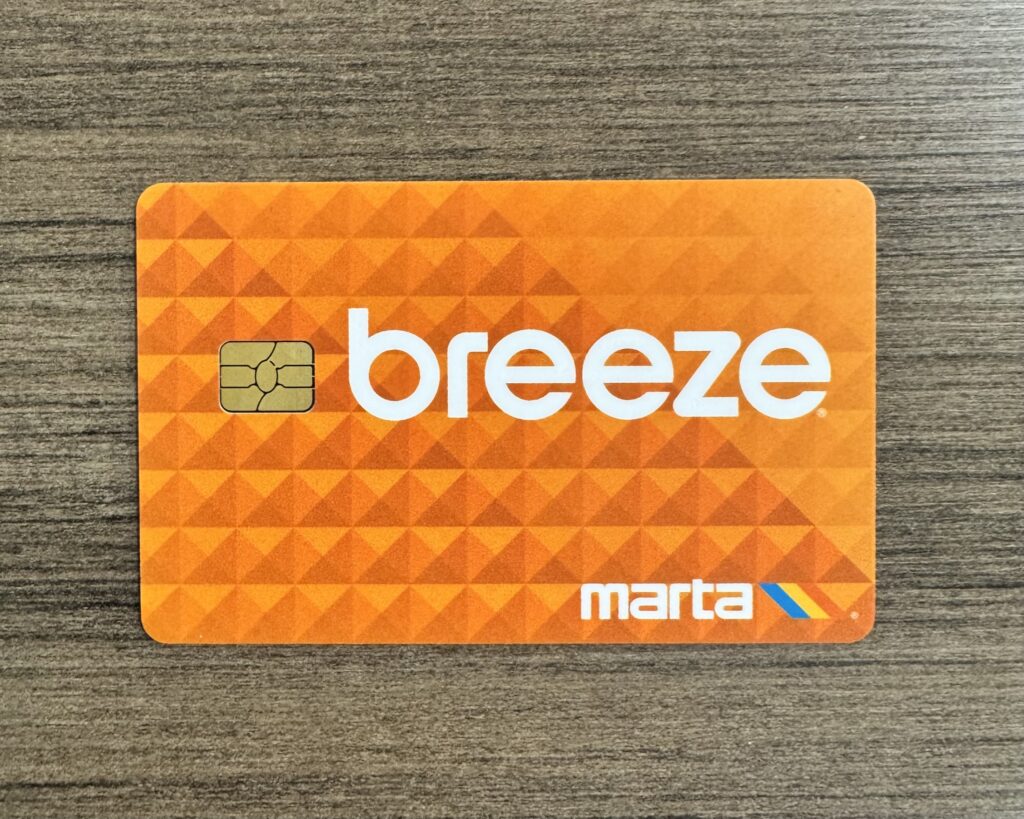
  • Retail partnerships at 240 locations for Breeze card reloads
  • Modernized bus fare boxes for quicker boarding

The transition is expected to improve convenience and reduce bottlenecks across the network.

Capital Projects and Station Rename

Despite some project delays, Hunt reaffirmed MARTA’s commitment to new railcars, a redesigned bus network, and the region’s first rapid bus line. In May, MARTA’s Board approved renaming GWCC/CNN Center Station to the “Sports, Entertainment & Convention District” (SEC) Station. The new name will officially take effect January 1, 2026—just months before Atlanta hosts the World Cup.

Financial Stability

“MARTA’s financial house is in order,” Hunt said, noting the system’s strong ratings: AA+ from Fitch and AAA from both S&P and Crowell. These top-tier ratings, rare in the transit sector, reflect the agency’s financial discipline and steady revenue.

Leadership Re-alignment

Hunt also announced on September 12 a leadership restructuring. Chief Customer Experience Officer Rhonda Allen has been promoted to Deputy General Manager, overseeing Customer Experience, Technology, Operations, Planning, Capital Programs, and MARTA Police Services. Larry Prescott will serve as Interim Chief Capital Officer while a national search begins for a permanent hire. Paul Lopes, head of Operational and Urban Planning, will expand his oversight to include all transit operations—bus, rail, paratransit, and streetcar.

“The way to rebuild public trust in MARTA is by delivering routine excellence every day,” Hunt said. “These organizational changes will strengthen accountability, create space for innovation, and enhance service delivery.” With big projects, leadership changes, and safety upgrades moving forward, Hunt framed MARTA’s mission plainly: show riders—daily—that Atlanta transit can deliver.

Related articles

MARTA rolls out Big Changes with New Fare System Upgrades

MARTA Unwraps the Holidays with Free Rides, Festive Buses, and Gifts for Riders

MARTA Rolls Out an Outkast Tribute Across Atlanta

MARTA Completes Garnett Station Platform Renovation

From Tokens to Tap-to-Pay: MARTA Unveils Better Breeze

MARTA to Close Five Points Peachtree Entrance as Next Phase of Transformation Begins

Atlanta Beltline Nears 2030 Completion with Big Progress and Bigger GoalsWorld-Class Transit for World-Class Soccer: MARTA Steps Up

Please consider supporting open, independent journalism – no contribution is too small!

America’s systems protect white male violence and terrorism at all costs

Got to love America, or should we?

By Lola Renegade | September 15, 2025

Note: Let me be clear—it is not every white person I am naming, but it is the majority. The majority who remain silent, complicit, comfortable, the majority who benefit, the majority who uphold the systems that crush people of color and other marginalized groups. If this does not apply to you, you already know it. But if it unsettles you, then perhaps it does.

Even before the details emerged about the murder of the venomous, wrong-wing racist and misogynist Charlie Kirk, most of us in Black America already knew the trigger had been pulled by another white man. This is their story etched into the blood of this nation: violence as their signature, destruction as their inheritance. Since America’s barbaric founding, violence has been the white race’s unchecked birthright. That is their profile, their rite of passage, their playbook. Violence is the heirloom they polish and pass down—every day, generation to generation.

On September 10, 2025, Kirk was assassinated while speaking at Utah Valley University, a PWI (predominately white institution). Shot in the neck in front of nearly 3,000 people, he died onstage. The alleged shooter, Tyler James Robinson, a 22-year-old white man, was quickly taken into custody. His case is a chilling reminder that white male violence is so normalized in America that it now eats its own prophets. And yet the system will still bend toward verbal dancing, searching for mental health explanations, lone-wolf excuses, anything but naming it what it is—domestic terror. It is a label they are too eager and willing to put on people of color in America and around the world.  Their cults’ response to Kirk’s murder was to call HBCUs (Historically Black Colleges and Universities) and threaten violence and terrorism. Several had to request their students and faculty either shelter in place and/or cancel classes.  

America refuses to stop rehearsing this script—white men killing, white men destroying, white men writing tragedy into our lives, not only in America but across the globe. Mass destruction is in their DNA, passed down through their misplaced and deranged obsessions with guns, distorted Bible scriptures, and sports—the only semblance of acceptance of Black existence as long as they win them championship rings. Violence is poured into the very marrow of their bones. America was built on this truth, and America protects this truth. White men kill, and the system shields them. White men destroy, and the culture excuses them.  White men riot, and they are pardoned. That is why January 6th became a stage for their rage and, somehow, a ticket back to power for their DEI (Dangerous, Entitled and Ignorant), authoritarian leader, Donald Trump. 

In Georgia, fake elector Burt Jones—rather than facing prison for election interference—became lieutenant governor and now campaigns for governor. He is cut from the same cloth as U.S. Representative Preston Brooks, who on May 22, 1856, nearly beat Senator Charles Sumner to death on the Senate floor for daring to speak against slavery. Brooks was not punished; he was celebrated, showered with gifts of canes—the very weapon he wielded—sent from admirers across the country. This is America’s pattern: criminals exalted, violence rewarded. The more the years turn, the more the story stays the same.

The cycle is not accidental—it is curated, defended, and enshrined in law and politics. What happened to Charlie Kirk is not an aberration; it is the continuation of a bloody pattern that America refuses to break.

From its bloody birth to its turbulent present, America has been defined by one constant: the protection of white male violence and terrorism at all costs. The nation was built on it, enshrined in law, excused in culture, and perpetuated in politics. It explains and justifies how millions of people of color were slaughtered, enslaved, and terrorized with near-total impunity for white perpetrators. It explains why unarmed Black people are killed for existing while white men who commit mass shootings, lynchings, insurrections—even political assassinations—are shielded with sympathy, excuses, or outright celebration.

It is evident why white America wants and needs to erase our history.  America’s origin story is soaked in bloody violence. Indigenous nations were massacred under the banner of “manifest destiny.” Africans were kidnapped, enslaved, and subjected to brutalization and death; our entire lives treated as property. Even after emancipation, lynching became a national pastime. Thousands of Black men, women, and children were tortured and murdered while white communities packed meals and gathered to watch, laugh, take photographs to put on postcards and mail across the country. Never was a white perpetrator held accountable. This impunity was never accidental; it was the system working exactly as designed.

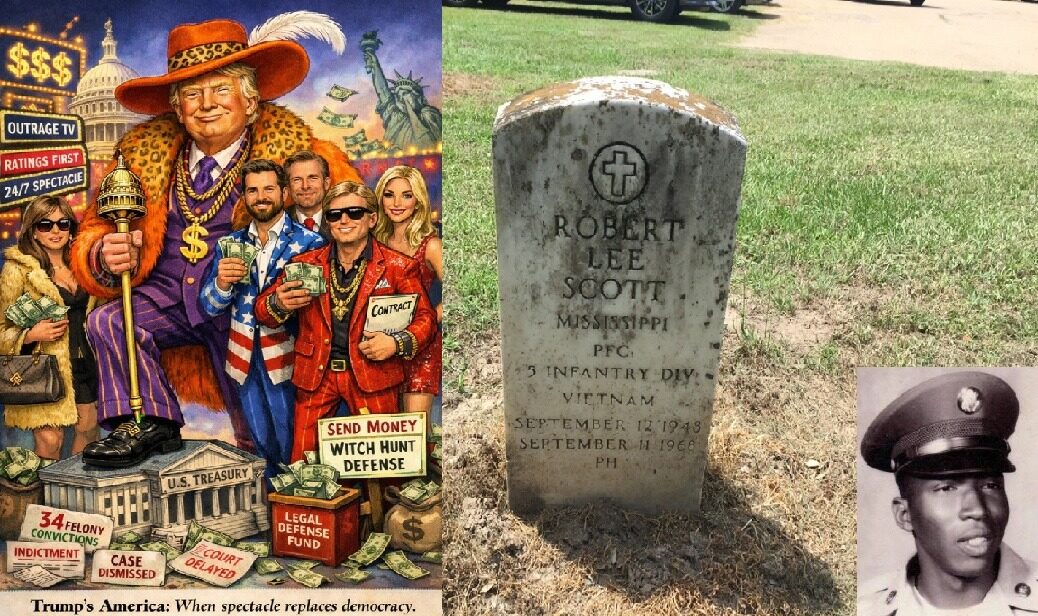
Courts have always stood at the center of America’s protection of white violence. The Dred Scott decision declared that Black people had no rights white people were bound to respect. Jim Crow laws legalized racial terror and called it order. And today, a majority of Supreme Court justices have draped the blood-soaked American flag and the crippled bald eagle in Donald Trump’s hands—the worst president in history. And that says a lot, given the long parade of slave-owning, genocidal, racist presidents before him. These justices have fortified stand-your-ground statutes to shield white men who kill us, while Black men who defend themselves are caged for life. The double standard is staggering: Tamir Rice, a 12-year-old Black boy with a toy gun, was executed in seconds by police, while white mass shooters are escorted calmly into custody, treated to fast food on the way to jail, and described as ‘troubled’ instead of terrorists.

Meanwhile, Donald Trump, upon being newly re-elected, did the unthinkable: on his very first day back in office, he signed a proclamation granting blanket pardons to more than 1,200 individuals convicted for their roles in the January 6th insurrection. Leaders of violent extremist groups like the Proud Boys and Oath Keepers saw their prison sentences vanish overnight. Even those who assaulted and killed police officers and threatened members of Congress walked free. Once again, America’s justice system bent itself to shield white male violence in its most brazen, anti-democratic form. To add insult to injury, the Trump administration agreed to pay nearly $5 million to the family of Ashli Babbitt—the white woman killed while storming the Capitol—transforming her into a martyr rather than an insurrectionist.

Kyle Howard Rittenhouse is not simply an American white male who gained national attention at 17 for killing two people and wounding another during protests in Kenosha, Wisconsin, in August 2020. He is the inevitable product of a nation that nurtures white male violence, wraps it in the language of self-defense, and parades it as patriotism. Rittenhouse carried an AR-15 into the night with impunity, because America has long trained its white sons to believe that Black protest is a threat, that white vigilantism is justice, and that their guns are an extension of their manhood.

His acquittal was not surprising—it was a prophecy fulfilled. From the slave patrols of the 18th century to the police brutality of today, America has built a system where white violence is forgiven, even celebrated, while Black existence is policed, punished, and pathologized. Kyle Rittenhouse did not write this story—he simply stepped into the role America has been casting for white men since its founding.

Yet, John “Grand Master Jay” Johnson, the leader of the Not Fu*king Around Coalition (NFAC), a Black man, is in federal prison. He is serving a sentence of seven years and two months for brandishing a firearm at federal task force officers during a 2020 George Floyd protest in Louisville, Kentucky. Trump did not pardon him. Look up the cases of three Black women, Pamela Mason, Crystal Mason, and Pamela Moses who were convicted of illegal voting and sentenced to prison, even though their full right to vote should have been restored.  Of the three, Moses was wrongly convicted of voter fraud and briefly imprisoned in 2022. Every American should be able to vote if they have served their time and are back in their community. Whatever happened to the American Revolution’s battle cry of taxation without representation is unacceptable?  

Got to love America, or should we? 

And so, a convicted felon, insurrectionist, racist, self-professed sexual predator, misogynist, fraudster, and psycho-sociopath once again occupies the Oval Office as president of the (un)United States. America has made itself the world’s punchline, stripped of credibility to lecture any other nation about democracy being superior to communism, fascism, or any other system it claims to despise.

Compare this with Brazil, where former President Jair Bolsonaro has been sentenced to 27 years in prison for plotting a coup against his government. Brazil, a so-called “developing nation,” has shown more accountability for political violence than the United States, where convicted felon Donald Trump who incited an insurrection not only escaped punishment but reclaimed the presidency and has more than doubled his net worth. America has slipped below the ranks of the so-called Third World; it has entered the new low territory of a fourth-world country, where corruption and lawlessness wear the mask of democracy while shielding violence for those with white faces.
The system is upheld not just by men but also by white women who weaponize their proximity to white male power. Carolyn Bryant’s lie about Emmett Till sparked his lynching. Today’s “Carolyns” (I never embraced the word “Karens” as identifying dangerous, lying white women) deploy police against Black people for existing in public spaces. Their actions ignite the machinery of white male violence while hiding behind fake tears and claims of fragility. Trump and his followers are present-day Roy Bryants and J. W. Milams, the murderers of Till.  They abducted, tortured, and shot the 14-year-old Black boy in Mississippi in 1955 after Carolyn Bryant, Roy’s needy, desperate, and dangerous wife, falsely accused him of harassment.

Protecting white male violence comes at a catastrophic price. It has stolen millions of Black, Brown, and Indigenous lives, shattered families, and destabilized entire communities. It has siphoned billions into prisons and police instead of schools, health care, and housing. It has conditioned generation after generation to accept the lie that white violence is excusable while Black existence itself is criminal. It corrodes democracy, producing a two-tiered system of justice where punishment is not determined by the act committed but by the color of the perpetrator’s skin.
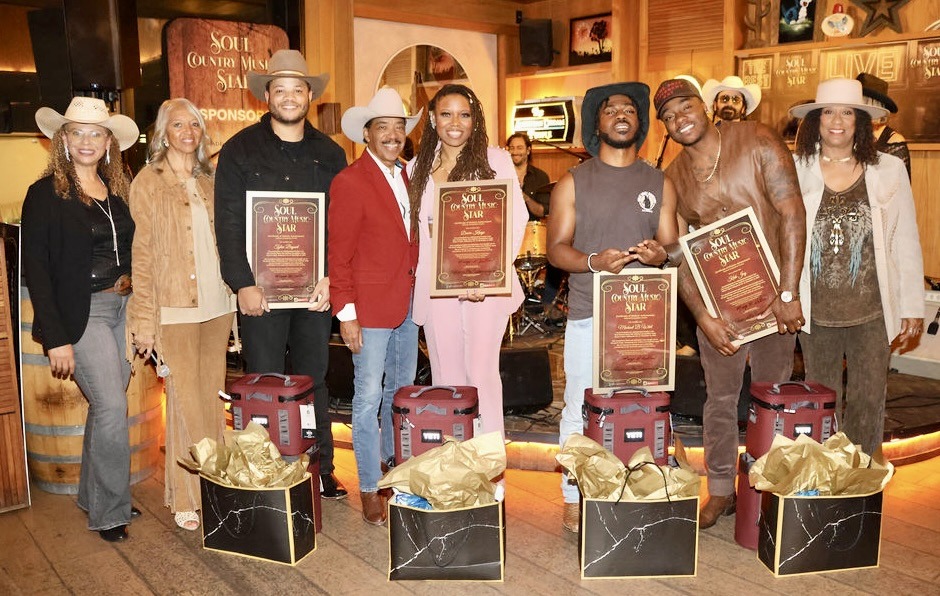
We cannot reform, nor cure, a sickness that America refuses to name. This is not random—it is systemic. And yet, no system of oppression endures without collaborators. Standing guard at the gates of white power—and hell itself—are the Clarence Thomases, the Candace Owenses, the Tim Scotts, the Byron Donalds, the Wesley Hunts, the John Jameses, the Burgess Owenses, the Michael Langleys, and others. They cloak themselves in the language of uplift while fortifying the very forces that strangle their own people. They are not anomalies but willing instruments, preserving white violence with a smile. Hand them a racist white partner and the illusion of inclusion into white circles, and they will dance the jig every time.

Film historian Donald Bogle, in his classic Toms, Coons, Mulattoes, Mammies, and Bucks, exposed how Hollywood trapped Black performers in caricatures: the buffoonish “coon,” the hypersexual “buck,” the servile “tom.” These roles entertained white audiences while ensuring Black visibility never translated into Black power. Today, those old scripts are simply repackaged, performed not only on the silver screen but on the political stage—where Black faces are cast to uphold white supremacy.

This is no accident of history. From the first lash of the whip on enslaved Africans, to the stealing and burning of Native lands, to the lynching trees of the South, America has codified white violence as both natural and necessary. The Fugitive Slave Act, Jim Crow laws, and today’s mass incarceration all function as extensions of the same truth: white violence is forgiven, even rewarded, while Black resistance is punished with the full weight of the state and nation.

White male violence has always been America’s most protected tradition. From lynchings to mass shootings to political assassinations, the shield rarely breaks.  Kirk’s killing shows that even those who champion violent ideologies can be swallowed up by them. Trump’s mass pardons prove that America’s government will excuse and empower insurrectionists when they are white. Bolsonaro’s sentencing in Brazil underscores how far the U.S. has fallen in comparison. Perhaps America can learn a thing or two from Brazil.

Until America confronts this ugly truth—its loyalty to protecting white male violence and terrorism above all else—it will remain a country in decline and collapse, a democracy in name only, sliding further into the ranks even lower than the third world and building its own fourth world.

Got to love America, or should we? 

Please consider supporting open, independent journalism – no contribution is too small!

Presidency Boosts Trump’s Net Worth By $3 Billion In A Year

Donald Trump lost money during his first term. Out of office, he found a formula for profiting off politics—now he’s piling up billions.

By Dan Alexander | Forbes | September 15, 2025

Donald Trump just had the most lucrative year of his life. The president is now worth a record $7.3 billion, up from $4.3 billion in 2024, when he was still running for office. The $3 billion gain vaulted him 118 spots on The Forbes 400, where he lands at No. 201 this year.

No president in U.S. history has used his position of power to profit as immensely as Trump. His primary vehicle for enrichment: cryptocurrency, an asset class full of hype and vulnerable to regulators. Teaming up with his three sons, Trump announced a crypto venture in September 2024 named World Liberty Financial, which initially struggled to gain traction. Then he won the White House.

Crypto entrepreneur Justin Sun, whom the Securities and Exchange Commission had accused of fraud, invested $75 million, routing an estimated $40 million to the president-elect and millions more to his family members, kickstarting a bonanza that has since snowballed. In January, days before reentering the White House, Trump launched a memecoin, adding hundreds of millions to his pile of cash.

In office, Trump rolled back regulatory enforcement of crypto and signed legislation favorable to the industry, ensuring he would personally benefit from conflicts of interest. His memecoins, initially tied up for three months, now unlock daily, freeing tens of millions per week. World Liberty Financial, meanwhile, has continued selling tokens, including to opaque buyers, generating an estimated $1.4 billion so far. A Trump family entity receives a roughly 75% cut of those sales, amounting to more than $1 billion.

The president apparently made plans to sell part of that entity, according to a letter that a court-appointed monitor overseeing the Trump Organization wrote to a New York judge in May. It remains unclear what percentage the president sold or whether the transaction even happened. The identity of the supposed buyer also remains unknown. The Trump Organization did not respond to questions about the deal. (Shortly after a Forbes reporter first exposed it, the president ranted about the journalist on Truth Social.)

With supporters piling into risky assets, Trump deployed his cash conservatively. He paid off $114 million of debt against 40 Wall Street, a troubled New York skyscraper, at the start of the summer. In July, he knocked out a couple of smaller loans, totaling an estimated $15 million, against mansions in New York and Florida. He also loaded up on municipal and corporate bonds. Trump’s balance sheet is now stronger than it has ever been, with an estimated $1.1 billion of liabilities and $8.4 billion of assets, $1.1 billion of which are in liquid holdings.

Cashing in on Crypto

Most of Trump’s jump in net worth comes from his move into cryptocurrency, which provided him with a pile of cash. He still has plenty of coins leftover, set to jump in value as they unlock over the course of his presidency. Below, Forbes highlights which parts of the Trump fortune improved the most over the last year.

Memecoin: +$710 million

Liquid assets: +$660 million

Licensing and management business: +$410 million

Legal victory: +$470 million

World Liberty Financial tokens: +$340 million

Stablecoin business: +$240 million

Almost everything in his portfolio is doing well. Appellate judges in New York threw out a roughly $500 million fraud penalty in August. Trump’s real-estate licensing business, stalled out for years, has come roaring back to life, with new deals in Saudi Arabia, Vietnam, Romania, India, Qatar and the United Arab Emirates. Revenues jumped an estimated 580% in 2024 to $45 million, boosting the value of the business by $400 million. In the United States, the president’s golf-and-club portfolio continues to thrive, as profits jumped an estimated 30% in 2024, adding roughly $325 million to Trump’s net worth.

With so much money coming in, the president may soon get back to his first love, building. He and his family have been making noise for years about constructing small villages at golf resorts in Scotland and Florida. Projects like that require a lot of liquidity, something that has not always been available to Trump. But now, after reclaiming the White House—and cashing in on the power that comes with it—he can pretty much do anything he wants.

—With additional reporting by Kyle-Khan Mullins, Zach Everson and Thomas Gallagher.

Please consider supporting open, independent journalism – no contribution is too small!

Charlie Kirk shooting suspect Tyler Robinson flaunted chilling gun obsession in family photos

Charlie Kirk’s accused assassin, Tyler Robinson, had childhood firearm obsession; investigators cite rooftop sniper attack, political motive, and disturbing family photos in Utah arrest.

By Mataeo Smith | Orem, UT | September 12, 2025 

Investigators claim that the alleged assassin who killed Charlie Kirk had a childhood obsession with firearms.

The 22-year-old Tyler Robinson was identified on Friday as the suspected assailant who shot Kirk during the conservative influencer’s protest on Wednesday at Utah Valley University. Robinson was spotted liking firearms as a child and seemed to regularly visit shooting ranges, according to social media posts from his family.

One photo from when Robinson looked like a teenager showed him holding a scoped rifle, while another showed him with an M2 Browning 50. caliber machine gun. A bazooka was in his hand in a third picture.

His mother shared pictures of Robinson and his two younger siblings at military functions and shooting ranges on Facebook. Amber Robinson was pictured clutching a US Army machine gun with pride in one of her posts.

As his family dressed in similar red clothes for Christmas 2017, Tyler Robinson was spotted with a brand-new iPhone and his brother a “build it yourself” gun kit.

Another photo from that year’s social media posts by Robinson’s mother showed him dressed as Donald Trump for Halloween. FBI Director Kash Patel and other officials identified Robinson as the suspected assassin who killed Kirk from a rooftop about 200 yards away using a Mauser 98 bold-action rifle on Friday.

Robinson was arrested Thursday evening in southern Utah, according to law enforcement authorities who spoke to the Daily Mail. Approximately 260 miles south of Kirk’s killing site in Orem, he resides in a six-bedroom, $600,000 mansion in Washington, Utah.

According to people who spoke to the Mail, the accused murderer confessed to his father, Matt. He was persuaded to talk to a local youth preacher who was also employed by the US Marshals Service after he allegedly told his father that he would rather commit suicide than give himself in.

Amber Robinson, his mother, is employed by Intermountain Support Coordination Services, a state-contracted organization that assists in the care of individuals with disabilities. According to internet records, both of his parents are registered Republicans.

According to individuals who spoke to the Daily Mail, Robinson attended Utah State University on a scholarship for just one semester in 2021.

Robinson attended Utah State University on a scholarship for just one semester in 2021 © Reach Publishing Services Limited

According to a probable cause affidavit, he is charged with aggravated murder, felony discharge of a handgun causing serious bodily damage, and obstruction of justice.

At a press conference Thursday evening, authorities stated that Robinson would be executed if found guilty. Utah Governor Spencer Cox opened his remarks at a press conference Friday morning by saying, “We got him.”

“The question is, what sort of watershed?” Cox said, referring to Kirk’s killing as a ‘watershed point’ in American history.

He stated that Robinson’s relatives had told detectives that he had recently become more political and had told them that he didn’t like Kirk, calling him “full of hate.”

Please consider supporting open, independent journalism – no contribution is too small!

Suspect in Charlie Kirk killing had become ‘more political’ and likely acted alone, authorities say

Charlie Kirk shooting suspect arrested in Utah; political motive suspected. Governor Cox, Trump, and FBI cite targeted attack amid rising U.S. political violence.


By Eric Tucker, Alanna Durkin Richer, Jesse Bedayn & Hannah Schoenbaum | Associated Press | September 12, 2025

The man accused in the Charlie Kirk assassination had earlier expressed to family his opposition to the viewpoints of the conservative activist, the authorities said Friday in announcing an arrest in a targeted killing that raised fresh alarms about political violence in the United States.

Tyler Robinson, 22, had become “more political” in the run-up to the shooting and had indicated to a family friend afterward that he was responsible, Utah Gov. Spencer Cox said. Cox also cited as key pieces of evidence engravings on bullets found in a rifle believed used in the attack as well as chatting app messages attributed to the shooting suspect that a roommate shared with law enforcement.

Cox, a Republican, called Kirk’s killing an “attack on the American experiment,” and he urged a new generation to “choose a different path.”

Robinson is believed to have acted alone, and the investigation is ongoing, Cox said.

Robinson’s arrest early Friday morning was disclosed by President Donald Trump, who said in a Fox News Channel interview that, “With a high degree of certainty, we have him.”

Calls to telephone numbers listed for Robinson in public records rang unanswered.

News of the arrest came hours after the FBI and state officials had pleaded for public help by releasing additional photographs of the suspect, a move that seemed to indicate that law enforcement was uncertain of the person’s whereabouts.

Kirk was killed by a single shot in what police said was a targeted attack and Utah’s governor called a political assassination. Kirk co-founded the nonprofit political organization Turning Point USA, based in Arizona.

Authorities recovered a high-powered, bolt-action rifle near the scene of the shooting and had said the shooter jumped off a roof and vanished into the nearby woods afterward.

Kirk had been speaking at a debate hosted by Turning Point at Utah Valley University at the time of Wednesday’s shooting. He was taken to a local hospital and was pronounced dead hours later.

“He wanted to help young people, and he didn’t deserve this,” Trump said Friday. “He was really a good person.”

Federal investigators and state officials on Thursday had released photos and a video of the person they believe is responsible. Kirk was shot as he spoke to a crowd gathered in a courtyard at the university in Orem.

More than 7,000 leads and tips had poured in, officials said. Authorities have yet to cite a motive in the killing, the latest act of political violence to convulse the United States.

Grisly video shared online

The attack, carried out in broad daylight as Kirk spoke about social issues, was captured on grisly videos that spread on social media.

The videos show Kirk, who was influential in rallying young Republican voters, speaking into a handheld microphone when suddenly a shot rings out. Kirk reaches up with his right hand as blood gushes from the left side of his neck. Stunned spectators gasp and scream before people start running away.

The shooter, who investigators believe blended into the campus crowd because of a college-age appearance, fired one shot from the rooftop, according to authorities. Video released Thursday showed the person then walking through the grass and across the street before disappearing.

“I can tell you this was a targeted event,” said Robert Bohls, the top FBI agent in Salt Lake City.

Trump, who was joined by Democrats in condemning the violence, said he would award Kirk the Presidential Medal of Freedom, the highest civilian honor in the U.S. Vice President JD Vance and his wife, Usha, visited with Kirk’s family Thursday in Salt Lake City. Vance posted a remembrance on X chronicling their friendship, dating back to initial messages in 2017, through Vance’s Senate run and the 2024 election.

“So much of the success we’ve had in this administration traces directly to Charlie’s ability to organize and convene,” Vance wrote. “He didn’t just help us win in 2024, he helped us staff the entire government.”

Kirk’s casket was flown aboard Air Force Two from Utah to Phoenix, where his nonprofit political youth organization is based. Trump told reporters he plans to attend Kirk’s funeral. Details have not been announced.

Kirk was taking questions about gun violence

Kirk was a conservative provocateur who became a powerful political force among young Republicans and was a fixture on college campuses, where he invited sometimes-vehement debate on social issues.

One such provocative exchange played out immediately before the shooting as Kirk was taking questions from an audience member about gun violence.

The debate hosted by Turning Point at the Sorensen Center on campus was billed as the first stop on Kirk’s “American Comeback Tour.”

The event generated a polarizing campus reaction. An online petition calling for university administrators to bar Kirk from appearing received nearly 1,000 signatures. The university issued a statement last week citing First Amendment rights and affirming its “commitment to free speech, intellectual inquiry and constructive dialogue.”

Last week, Kirk posted on X images of news clips showing his visit was sparking controversy. He wrote, “What’s going on in Utah?”

Attendees barricaded themselves in classrooms

Some attendees who bolted after the gunshot rushed into two classrooms full of students. They used tables to barricade the door and to shield themselves in the corners. Someone grabbed an electric pencil sharpener and wrapped the cord tightly around the door handle, then tied the sharpener to a chair leg.

On campus Thursday, the canopy stamped with the slogan Kirk commonly used at his events — “PROVE ME WRONG” — stood, disheveled.

Meanwhile, the shooting continued to draw bipartisan condemnation as Democratic officials joined Trump and other Republican allies of Kirk in decrying the attack, which unfolded during a spike of political violence that has touched a range of ideologies and representatives of both major political parties.

Please consider supporting open, independent journalism – no contribution is too small!

DeKalb CEO  Cochran-Johnson Calls for Focus and Discipline in Reform Rollout

DeKalb CEO Lorraine Cochran-Johnson launches sweeping government overhaul, unveiling 266 reforms from a landmark review to boost efficiency, transparency, and service delivery across county operations.

By Milton Kirby | Decatur, GA | September 10, 2025

DeKalb County CEO Lorraine Cochran-Johnson has unveiled a wide-ranging government reform plan following the release of a landmark organizational assessment conducted by independent consulting firm Mauldin & Jenkins.

The evaluation, commissioned as part of her transition strategy, reviewed 18 county departments and produced 266 actionable recommendations to modernize operations, increase efficiency, and strengthen accountability.

Lorraine Cochran-Johnson

“As I shared in my first budget proposal, this assessment was never about pointing fingers, it was about building a stronger foundation for DeKalb’s future,” Cochran-Johnson said. “With this report, we now have a clear, data-informed roadmap to reimagine how we serve, how we lead, and how we grow.”

The recommendations call for improvements in leadership alignment, service delivery, process modernization, technology integration, workflow optimization, and risk management. To ensure follow-through, the CEO’s office will appoint a Change Manager tasked with coordinating efforts, tracking progress, and reporting updates to the Board of Commissioners and the public.

“This is a pivotal moment for DeKalb County,” Cochran-Johnson added. “We now have the blueprint and the will. What comes next is execution—and that will require focus, discipline, and collaboration at every level of government.”

County officials say implementation will begin immediately, with the goal of building a more transparent and responsive government that can better serve DeKalb’s nearly 800,000 residents.

Atlanta Falcons Fans Tailgating May Be an Official Religion

Atlanta Falcons fans turn tailgating into a weekly ritual at Mercedes-Benz Stadium, blending food, music, and fellowship into one of the NFL’s most vibrant traditions.

By Milton Kirby | Atlanta, GA | September 8, 2025

Long before the coin toss and the first kick-off inside Mercedes-Benz Stadium (MBS), Falcons fans have already claimed their sanctuary. For many in the city, tailgating isn’t just a pastime — it’s a ritual.

When the stadium opened its Home Depot Backyard in 2019, Harry Hynekamp, vice president of fan experience for AMB Sports and Entertainment, put it plainly: “We want to be known throughout the NFL as the toughest place for an opponent to come and play.” That toughness starts outside, where thousands gather in red and black.

The Roots of Tailgating

It’s a tradition that transcends time and space, uniting Falcons fans in a unique bond of camaraderie and shared passion. The American Tailgate Association traces the first gathering back to 1861 at the Battle of Bull Run, where civilians hauled food and booze to the sidelines. A gentler origin credits Yale football in the early 1900s, when fans traveling by bus and train arrived early with baskets and grills. Either way, the tradition has grown into something much bigger — a cultural force, especially in the South.

A Religion in the A

In Atlanta, tailgating is not just a pre-game ritual, it’s a celebration of the Falcons spirit. By 6:00 a.m., the lots are alive with the sizzle of ribs and the aroma of chicken wings. Fans eagerly line up outside the Home Depot Backyard, ready for a day of music, drumlines, cheerleaders, Freddie Falcon, and giveaways. The atmosphere is charged with excitement, as fans of all ages come together for a day of fun and football.

Stories from the Lots

On Sunday, September 7, before the Falcons’ 23-20 season-opening loss to the Tampa Bay Buccaneers, fans from all walks of life made their way to the Backyard and the designated lots surrounding the MBS. Corrie M. and her mother, Ivey L., came up from Eastman to cheer cousin Michael Pinnix as he suited up for the first time in a Falcons jersey.

Enjoying the tailgate

AD, with the Lights Out Tailgators, have been posted up 15 years strong. “It’s about family, food, and fun,” he said.

Reggie Watson, a season ticket holder for 34 years, helps lead the Tailgators 4 Lyfe crew, a group of 50 regulars who run their tailgate like a small business, collecting dues and organizing off-season events. “We are here for each other and the fun of it all.”

For others, it’s about innovation. Bryant Barnes rolled in with EventBox ATL, a tricked-out 20-foot shipping container transformed into a luxury lounge with TVs, a rooftop bar, karaoke station, and Wi-Fi, cell phone charging stations — big enough for 50 people. “We’re taking tailgating to the next level,” he said.

My first tailgate.


Small businesses thrive, too. Kisha, owner of Bartender To You, sets up her mobile bar at every home game. Randy, a barber from Mableton, has been tailgating for three years. Byron proudly introduced his toddler son to the family tradition this season.

Food, Faith, and Falcons

What makes tailgating in Atlanta unique is the mix: charcoal-grilled chicken, ribs, cold beer, whiskey, tequila shots, lounge chairs, DJ jamming, and even axe-throwing contests. It’s folding chairs sinking into the dirt, kids learning the Dirty Bird dance. It’s family. It’s a fellowship, a melting pot of Southern food, community pride, and Dirty Birds loyalty.

For Falcons fans, the tailgate is as essential as kickoff. And whether the Falcons win or fall short, the gospel keeps getting preached outside MBS every Sunday: the church of tailgate is alive and well.

Please consider supporting open, independent journalism – no contribution is too small!

Decatur’s Brian Norman Jr Inks Multi-Year Deal with Top Rank, Eyes Haney Showdown

Decatur’s Brian Norman Jr. extends Top Rank deal, defending his WBO welterweight title against Devin Haney in Riyadh after knockouts in San Diego and Tokyo cemented his rise.

By Milton Kirby | Las Vegas, NV | September 6, 2025

Brian “The Assassin II” Norman Jr. has just signed a new multi-year deal with Top Rank. At only 24, the undefeated welterweight champ is betting on loyalty, staying with the promoter who believed in him from day one.

And now, the stage is set. On Nov. 22, halfway across the world in Riyadh, Saudi Arabia, Norman will defend his WBO crown against none other than Devin “The Dream” Haney.

“This is just the start,” Norman said. “Top Rank believed in me, and I’m building with the home team.”

From Decatur to the desert lights

Folks around Decatur remember Norman as a teenager already packing dynamite in both fists. He turned pro at 17, often fighting in small Mexican rings to stay busy. By 22-0, he caught Top Rank’s eye and inked a deal in 2022.

The rise hasn’t been smooth. In 2024, he walked straight into San Diego and silenced Giovani Santillan’s crowd with a 10th-round stoppage. That win earned him the WBO interim title, which was later upgraded to full champion when Terence Crawford stepped aside.

A hand injury benched him for the rest of that year, but Norman came roaring back. First, a March 2025 knockout of Derrieck Cuevas. Then, a June masterpiece in Tokyo — a left hook that left Jin Sasaki flat on the canvas and fans gasping. Knockout of the Year? No doubt.

A team effort

Behind Norman is a circle that has remained steady from the beginning: his father, Brian Sr.; adviser Adrian Clark; Jolene Mizzone; and veteran matchmakers Brad Goodman and Bruce Trampler.

Clark put it plain: “It’s been a total team effort. We’re proud to keep pushing forward with Top Rank.”

The fight ahead

With 28 wins, 22 by knockout, Norman now faces his biggest test in Devin Haney — a technician known for his slick defense and ring IQ. Riyadh will host the clash, but back home in Decatur, fans will be watching every punch. From the quiet gyms off Candler Road to the bright lights overseas, Brian Norman Jr. carries Atlanta pride with him. This next fight is more than a title defense. It’s a chance to prove he belongs among the legends.

Related articles

Brian Norman, Jr.: The Kid Next Door and World Champion

Norman vs. Haney: Unbeaten Stars Collide for Welterweight Supremacy

Brian Norman Jr. Falls Short as Haney Claims WBO Welterweight Crown in Riyadh

Please consider supporting open, independent journalism – no contribution is too small!


BronzeLens Film Festival Marks 16 Years with Big Wins and Bittersweet Goodbye

BronzeLens Film Festival celebrated 16 years with award-winning films, heartfelt tributes, Deidre McDonald’s retirement, and standout screenings of The Rhythm & The Blues and Rap Dixon.

By Milton Kirby | Atlanta, GA | September 2, 2025

The 16th Annual BronzeLens Film Festival wrapped with triumph and tenderness, spotlighting bold new works while also marking a transition in leadership. Nearly 100 films were submitted and screened at the historic Tara Theatre, with the festival’s grand awards ceremony staged at the Ray Charles Performing Arts Center on Morehouse College’s campus.

A bittersweet note came when Deidre McDonald, the founding Artistic Director, announced her retirement. For 16 years, McDonald has been the guiding force behind BronzeLens, helping the festival grow into an Academy Award®-qualifying event in the Short Film category and a key cultural institution celebrating stories by creators of color.

Winners and Honors

This year’s winners showcased the wide-ranging creativity of filmmakers across genres:

  • Dance Videos: Cut Me Summa Dat Noise
  • Best Music Video: FREEDOM
  • Best Documentary: Mount Mutombo
  • Best Short Documentary: Exodus
  • Best Feature: Color Book
  • Best Student Film: Jean & I
  • Best Web Series: Hogtown / Ainsi Va Manu
  • Short Films: ADO
  • Best of Festival: Color Book
  • Best Actor: Will Catlette (Color Book)
  • Best Actress: Jennifer Lewis (Color Book)
  • The Andrew Young Cinema and Social Justice Award: Following Harry
Dikembe Mutombo -Best Documentary: Mount Mutombo

The feature Color Book emerged as the night’s biggest winner, sweeping top honors including Best Feature, Best of Festival, and both acting awards.

Two Standout Screenings

Of the many films presented, two stood out to me personally: The Rhythm & The Blues and Rap Dixon: Beyond Baseball.

The Rhythm & The Blues, directed by Darryl Pitts, tells the story of guitarist Eddie Taylor, a blues genius whose career was strained by exploitation, family tensions, and cultural appropriation. Leon Robinson’s portrayal of Taylor was both riveting and tender, anchoring a story that has been described as “powerful” and “necessary.” Pitts, who independently financed the project, praised Robinson’s ability to make difficult characters lovable, adding a layer of humanity to a tale about legacy and artistic ownership.

Rap Dixon: Beyond Baseball shed light on one of the Negro Leagues’ greatest yet least remembered outfielders. Dixon’s career from 1922 to 1937 was marked by brilliance, but racism and segregation obscured his legacy. The film’s archival depth and expert commentary from historians like Leslie Heaphy and Lawrence D. Hogan gave Dixon’s story long-overdue recognition. SABR’s Ted Knorr called Dixon “a true five-tool player,” advocating for his Hall of Fame inclusion. Viewers described the documentary as moving and a correction to baseball’s historical record.

Looking Ahead

As the festival closed, anticipation already began for the next edition. Submissions for the 2026 BronzeLens Film Festival open October 15, 2025, promising another year of powerful storytelling, cinematic excellence, and cultural celebration.

From the Tara Theatre screenings to the Morehouse awards stage, this Sweet Sixteen edition re-confirmed BronzeLens’ place as one of the nation’s premier showcases for films by and about people of color—an event where artistry, history, and community converge.

Just Because You Can Doesn’t Mean You Should: The Trappings of Dark Royalty’s Financial Excess in Black America

By Lola Renegade

“Blacks who claim respectability and allow that mirage to keep them quiet and from being actors in the necessary drama needed to change an oppressive society are instruments of continued oppression.” Black Robes White Justice:  Why Our Legal System Doesn’t Work for Blacks by Former New York Supreme Court Justice Bruce Wright.

America has always been a land of contradictions. Mansions rise beside tent cities. Private jets glide over food deserts. Wall Street celebrates record profits while Main Street collapses under debt.

And increasingly, that contradiction lives within Black America itself. While millions of African Americans still struggle to make ends meet—sometimes working two jobs, juggling rent and medicine, fighting to keep the lights on—others, especially our most visible athletes and entertainers, flaunt a level of excess that mimics the worst of a greedy and corrupt white America.

They strut their buffoonery before the cameras, dancing the modern jig for applause. They make it rain in strip clubs while their communities drown in poverty. They drape themselves in overpriced designer clothing spun by the descendants of colonizers, flaunt accessories stitched by exploited hands in foreign sweatshops, and fasten diamond chains around their necks that echo the very iron shackles our ancestors wore during more than four hundred years of bondage.

These are not signs of liberation. They are the trappings of dark royalty—crowns of vanity instead of crowns of vision, thrones built on ego instead of service, castles built for self instead of community.

This obsession with excess did not happen in a vacuum. As film historian Donald Bogle outlined in his classic book Toms, Coons, Mulattoes, Mammies, and Bucks, Hollywood long confined Black performers to degrading roles: the buffoonish “coon,” the hypersexual “buck,” the docile “tom.” These caricatures entertained white audiences while ensuring that Black visibility never translated into Black power.

Fast-forward a century, and the stage has changed—but the performance often looks familiar. Today, far too many rappers, ballplayers, and influencers don’t need burnt cork or minstrel makeup. They willingly step into roles of spectacle, celebrating reckless spending, self-destruction, and bringing shame to the sacrifices and spilled blood of our ancestors.

At the root of it is their illusion of inclusion in white America. Too many believe that sitting at the table with whiteness, wearing their brands, copying their excess, and basking in their temporary approval means we’ve “made it.” But this is not freedom. It is a dependency dressed up in designer labels. It is a desperate chase for white acceptance in a system that has never truly accepted us. It is Black America still allowing whites to define what is beautiful and acceptable.

Yes, athletes earn their contracts. Yes, entertainers reap their royalties. But let’s speak the truth: just because you can purchase in excess doesn’t mean you should.

Because while someone spends $50,000 spraying dollar bills on a nightclub floor, children in their hometowns go to bed hungry. While one star throws a multi-million-dollar birthday party or destination wedding to enrich the colonizers even more, elders in their former cities and towns choose between prescriptions and groceries. While another flaunts cars worth more than houses, entire blocks in our neighborhoods sit boarded up, waiting for investment that never comes until whites decide to move in.

These are not crowns of liberation; they are crowns of mimicry. They replicate the greed of those who once enslaved us and mock the dignity of those still struggling to survive. They leave us stuck in the illusion—confusing visibility with power, mistaking consumption for progress, believing that validation from white America is the same as freedom.

Our ancestors did not fight and die through slavery, Jim Crow, redlining, and gentrification so we could step back into caricatured roles in designer labels and gold-plated chains. They dreamed of freedom, justice, and self-determination. We are the beneficiaries of their suffering and are neck-deep in their sacrifices and the blood they spilled for us. 

The real crown is investing in schools that educate, not prisons that incarcerate.
The real throne is leadership rooted in service, not ego.
The real castle is a community where no child goes hungry, no elder is forgotten, and no youth is left without opportunity.

We already have examples of what that kind of royalty looks like.

Madam C.J. Walker, the first Black woman millionaire in America, didn’t just build an empire for herself—she created jobs and training programs for thousands of Black women. Berry Gordy used Motown not just to make music but to build pride, dignity, and opportunity for generations of Black artists. Now, many in the rap world glorify violence, misogyny, and pure ignorance through their lyrics. 

NBA star LeBron James opened the “I Promise” School in Akron, Ohio, proving that true legacy is measured in students, not sneakers.

And billionaire investor Robert F. Smith stunned the world at Morehouse College in 2019 when he pledged to pay off the entire student debt of the graduating class—some 400 young Black men. The price tag? Roughly $34 million. But the value? Priceless. With one act, Smith erased years of financial bondage, freeing those graduates to pursue careers and dreams without the crushing weight of debt. That gift was more than charity—it was liberation.

And here’s the challenge: if one man could liberate 400 young men with $34 million, imagine what 100 rappers, athletes, and entertainers—each earning millions a year—could do if they pooled just 10% of their earnings. They could wipe out debt for entire generations. They could rebuild neighborhoods, create hospitals, fund Black-owned schools, and guarantee scholarships for thousands. Instead of “making it rain” in strip clubs, they could make it reign—in justice, opportunity, and legacy.

History will not remember what you wore, who iced out their neck the most or who spent the most in a nightclub. History will remember who built legacies that lasted. Who turned their blessings into bridges. Who broke the chains of excess instead of buying them.

Dr. King once said, “Everybody can be great because anybody can serve. You only need a heart full of grace, a soul generated by love.”

That is true royalty. That is the measure of a people who have overcome.

Because the truest royalty is not in what you wear, but in what you build.

And let us never forget – just because you can doesn’t mean you should.


Exit mobile version