Atlanta Dream wins its fifth straight, secures the No. 4 WNBA playoff seed and earns home-court advantage with an 83-65 win over New York.
By Milton Kirby | Brooklyn, NY | September 24, 2026
The Atlanta Dream will open the WNBA playoffs at home.
Atlanta secured the No. 4 seed and home-court advantage in the first round Wednesday night with an 83-65 victory over the New York Liberty at Barclays Center.
The victory was the Dream’s fifth straight and its 30th of the season, tying a franchise record and giving Atlanta consecutive 30-win seasons.
“That was an important win for us,” Dream Head Coach Karl Smesko said. “We wanted to make sure we got home-court advantage for the first round of the playoffs, and we were able to accomplish that.”
The Dream finished the regular season 30-14 and will host its first playoff game Sunday. Atlanta will face either the Indiana Fever or Washington Mystics, with the matchup and game time to be determined after Thursday’s final regular-season games.
For a team that went 15-7 at home during the regular season, securing the fourth seed gives Atlanta something potentially significant when the postseason begins: another game in front of its own crowd.
“Just being able to go home in front of our fans and put on a show, I think that little things matter in the playoffs, and that might be one of them,” forward Naz Hillmon said. “Just having that energy behind us from our fans.”
Defense Makes the Difference
Atlanta did much of the work needed to secure Wednesday’s victory before halftime.
Naz Hillmon is set for two of her 16 points – courtesy photo
The Dream held New York to seven points in the second quarter and 26 points in the first half, both season-best defensive marks for Atlanta.
Despite shooting just 39 percent in the opening half, the Dream took a 41-26 lead into halftime by forcing turnovers and creating scoring opportunities from its defense.
Atlanta forced 12 Liberty turnovers in the first half and converted them into 13 points. By the end of the game, the Dream had forced 20 turnovers, recorded 12 steals and scored 15 points off New York’s mistakes.
“We know that we’re looking forward to the playoffs, and we wanted to play our best basketball,” Hillmon said. “So, whatever that was supposed to look like, that was our focus.”
Allisha Gray led Atlanta with 24 points, four rebounds, five assists, three steals and a block. It was Gray’s 21st game this season with at least 20 points.
Hillmon finished with 16 points, four rebounds and two assists, while Jordin Canada contributed 12 points and five assists.
Rhyne Howard added eight points, four rebounds and a team-high six assists. Angel Reese finished with six points, six rebounds, three assists and three steals.
DeWanna Bonner came off the bench to contribute nine points and eight rebounds.
Atlanta also converted 86.7 percent of its free throws.
The starting lineup of Canada, Gray, Howard, Hillmon and Reese improved to 30-8.
The Playoffs Come to Atlanta
Atlanta’s first-round opponent remains unsettled.
The Dream went 2-2 against Indiana during the regular season and 1-2 against Washington. The first round of the WNBA playoffs is a best-of-three series.
Atlanta will enter that series having won five consecutive games, including back-to-back victories over New York.
More importantly, Wednesday’s victory means the Dream will begin the postseason where it wanted to be — at home.
Thirty wins.
The No. 4 seed.
A home playoff game.
And now, a chance to see how far this season can go.
Support open, independent journalism. Your contribution helps us tell the stories that matter most.
By Ted Knorr | Harrisburg, PA | September 22, 2026
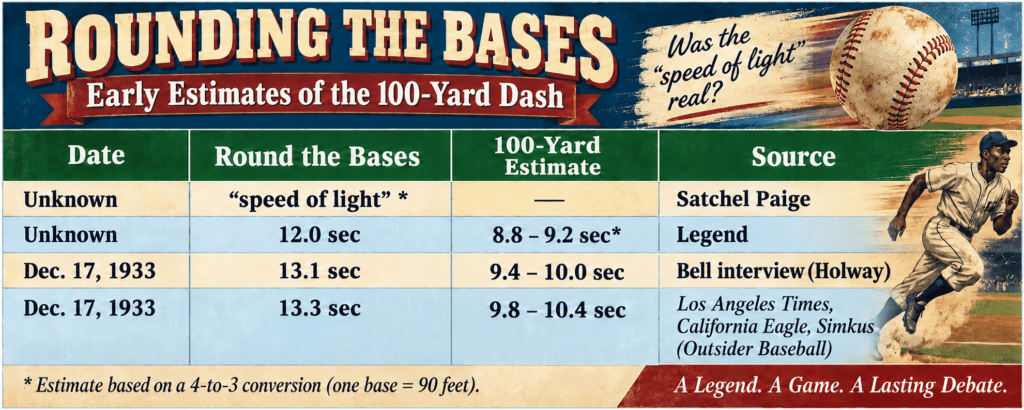
… this column exists for only one purpose and that is to answer your questions on Negro League baseball history. To that end, I need your help … if you are reading this column and enjoy it and want it to continue and you don’t already know everything about Negro League history … then please submit a question on any aspect of Negro League history. Your questions are the lifeblood of Shadow Ball—they shape where we go next.
Nobody asked me but …here is a list of all Major League players that his four triples in one game:
George Strief, Philadelphia Athletics, American Association, on June 25, 1885,against the Brooklyn Grays at Washington Park, Brooklyn, NY
Bill Joyce, New York Giants,National League, on May 18, 1897,against the Pittsburgh Pirates at Exposition Park, Pittsburgh, PA.
Rap Dixon, Baltimore Black Sox, Negro National League I, on Augus6, 1930,against the Birmingham black Barons at Cramton Bowl, Montgomery, AL
Strief and Joyce had long been the only two Major League players to achieve this feat of four triples in one Major League game. However, on December 16, 2020,Baseball Commissioner Rob Manfred announced that “Major League Baseball was correcting a longtime oversight in the game’s history by officially designating seven specific Negro Leagues as ‘Major League’.”One of those seven leagues was the Negro National League I (1920-1931). Making that August 6th game officially a Major League game. Overnight two four triple games became three. The August 7th edition of the Montgomery Advertiser covered the four triple game and noted that feat. No box score has been found so the statistics will not enter into the record book, but the event cannot be excluded.
Major League baseball is just completing its 151st season and only those three players have hit four triples in one game.
There have only been about sixty instances of Major League players striking three triples in one game only three of them resulting in a 4th three bagger.
Of those sixty, 12 were by Hall of Famers: Sam Crawford, Honus Wagner, Ty Cobb, Goose Goslin, Heinie Manush, Jim Bottomley, Earle Combs, Charlie Gehringer, Joe DiMaggio, Roberto Clemente, Willie Mays, and Ernie Banks.
Only one four triple event – the one in Montgomery – occurred in the 20th century. Only one in the past 129 years.
Rap Dixon, the only Major League player with four triples in one game since 1897 has an inordinate amount of “unicornian legends.”In addition to the four triples game, he achieved a potential Major League record with 14 consecutive hits in 1929, those hits were part of another potential “modern” Major League record 16 consecutive reaches, in 1930 he hit the first homerun by an African-American in Yankee Stadium, in 1933 hestole the first base in the first Negro League All Star game, in 1934 he was the first professional manager for future Hall of Famer Leon Day, that same year he was offered straight up for Cool Papa Bell, in 1942.
Last Week’s Shadow Ball Significa Question of the Week
Q: In 1937, Monte Irvin joined the Newark Eagles under an assumed name. What was it? In 1942, Larry Doby joined the Newark Eagles under an assumed name — what was it? No one submitted either answer. Since no one has yet submitted the correct answers, I am going to let this question ride for another couple of weeks.
This Week’s Shadow Ball Significa Questions of the Week
In 1937, Monte Irvin joined the Newark Eagles under an assumed name — what was it? In 1942, Larry Doby joined the Newark Eagles under an assumed name — what was it?
Ted Knorr
Ted Knorr is a Negro League baseball historian, longtime member of the Society for American Baseball Research’s Negro League Committee, and founder of the Jerry Malloy Negro League Conference and several local Negro League Commemorative Nights in central Pennsylvania.
Beyond his research and organizing work, Ted is frequently invited to speak at sporting events, community programs, family gatherings, and educational forums, where he brings Negro League history to life. His deep knowledge of the players, teams, and cultural impact of Black baseball has made him a trusted voice for audiences who want to understand the legacy and significance of the Negro Leagues.
Send questions or Significa answers to shadowball@truthseekersjournal.com or Shadow Ball, 3904 N Druid Hills Rd, Ste 179, Decatur, GA 30033.
Support open, independent journalism, your contribution helps us tell the stories that matter most.
Discover expert insights, practical tips, and trusted solutions designed to boost performance, save time, and deliver lasting results for individuals and businesses worldwide today online
By Florita Bell Griffin, Ph.D. | Houston, TX | September 22, 2026
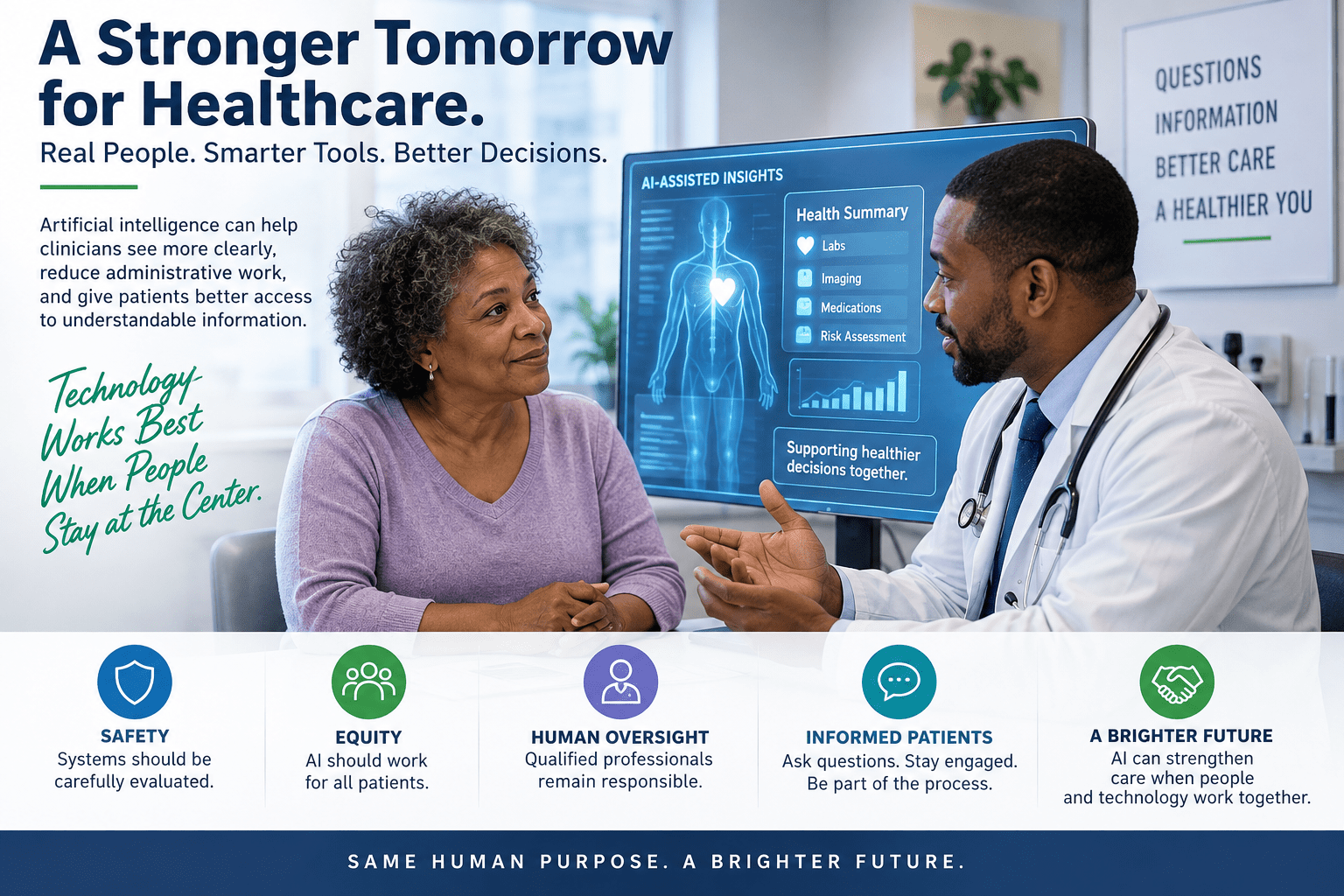
Most patients do not walk into a doctor’s office expecting to meet artificial intelligence. They expect to see a physician, nurse, technician, receptionist, or other healthcare professional. Yet AI may already be involved in parts of the healthcare experience without appearing as a separate machine at all.
Artificial intelligence can assist with medical imaging, record review, risk assessment, scheduling, documentation, monitoring, and other tasks. Software may help identify patterns in scans, organize large amounts of clinical information, or flag something that deserves a professional’s attention. The FDA maintains a public list of AI-enabled medical devices that have met applicable premarket requirements, illustrating that AI is already part of regulated medical technology in the United States.
For patients, this can be encouraging. Healthcare produces enormous amounts of information, and no human being can process every data point instantly. A computer system capable of examining images or recognizing patterns quickly may help clinicians notice something sooner, reduce repetitive work, or bring useful information together before a decision is made.
Consider medical imaging. Radiologists may examine large numbers of X-rays, CT scans, MRIs, mammograms, and other images. AI-assisted systems can help identify patterns or areas that may deserve closer examination. The purpose is not necessarily to remove the radiologist from the process but to provide another analytical tool.
The distinction between assisting and deciding is important. Patients should not imagine healthcare AI as one giant machine that determines whether someone is sick. Many systems perform narrow tasks. One may analyze a particular kind of image, while another helps organize records or predict a specific risk.
AI may also help reduce a less visible burden in medicine: documentation. Doctors and nurses spend significant time recording visits, completing forms, reviewing histories, and navigating electronic medical records. Generative AI tools are increasingly being explored for summarizing conversations and preparing clinical notes, potentially allowing healthcare professionals to spend more of the visit interacting with patients rather than typing.
That could improve the patient experience if it works well. A physician who can maintain eye contact and listen carefully instead of focusing on a computer screen may have a better conversation with the person seeking care. At the same time, a generated medical note must accurately reflect what occurred. A polished summary that leaves out a symptom or incorrectly records a medication could create problems later.
Patients already have a practical tool for dealing with this possibility: read their medical records when they are available. If the summary of a visit contains an error, ask for it to be corrected. This was good advice before AI entered healthcare and becomes even more important as documentation grows more automated.
Personal health devices are another part of the story. Smartwatches and other consumer technologies can collect information about heart rate, movement, sleep, exercise, and other patterns. Some people may discover useful changes and bring them to a doctor’s attention. Others may become anxious about numbers they do not fully understand.
More data is not automatically the same as better health. A device may produce information without understanding the full medical context. Patients should distinguish between wellness information, a medical-device function, and an actual clinical diagnosis.
AI chatbots have added another layer because people increasingly ask them medical questions before speaking with a healthcare professional. Someone may describe a symptom, ask about a laboratory result, or request an explanation of a medical term. This can be enormously helpful when the goal is understanding.
The risk appears when explanation becomes diagnosis or when general information is treated as personalized medical advice. An AI system cannot necessarily examine the patient, feel an abdomen, listen to breathing, observe subtle physical behavior, confirm every medication, or know the entire history unless that information has been reliably provided.
A useful approach is to use AI to become better prepared for medical care. Ask it to explain unfamiliar vocabulary in plain English. Use it to create a list of questions for the doctor. Ask what information might be useful to bring to an appointment. After a visit, use it to help organize instructions while verifying anything important against the official medical record.
Privacy is especially important with health information. A person may be comfortable telling an AI system intimate medical details because the conversation feels private and nonjudgmental. Different services, however, may handle data differently, and not every consumer AI tool operates under the same privacy rules as a physician’s office or hospital.
Before uploading complete medical records, users should understand the service they are using and consider whether names, addresses, dates of birth, identification numbers, and other unnecessary details can be removed. The AI may need the laboratory value to explain what it means, but it usually does not need the patient’s Social Security number.
Patients should also become comfortable asking whether AI played a role in important medical decisions. The question does not need to be confrontational. Someone might simply ask, “Was software used to help interpret this scan?” or “Was this recommendation generated or assisted by an automated system?” Understanding the role of technology can help the patient understand the decision-making process.
The FDA has continued developing regulatory approaches for AI-enabled medical devices and, in August 2026, specifically sought public feedback about generative AI-enabled medical devices, including questions involving risk assessment, premarket evaluation, and monitoring after products reach the market. The fact that regulators are actively examining these systems reflects both their promise and their growing importance.
AI systems can also change over time. Traditional medical equipment may perform essentially the same function each time it is used. Software can be updated, and certain AI systems may be designed to evolve or be modified. This creates important questions about how changes are tested, documented, and monitored.
Patients do not need to understand software engineering to care about the answer. They simply need confidence that the tool influencing their healthcare has been appropriately evaluated and that qualified professionals remain responsible for how it is used.
Bias is another concern because medical data reflects real populations, and populations do not always receive equal care or appear equally in research datasets. An AI system trained on incomplete or unrepresentative information may perform differently across groups. Healthcare professionals and regulators therefore need to evaluate not just whether a system works on average but whether it works reliably for the kinds of patients who will actually depend on it.
The presence of AI does not automatically make a medical decision better or worse. A highly skilled clinician using a well-designed tool may make a better-informed decision. A poorly designed system used without sufficient oversight could create new problems.
The patient’s role remains important. Ask questions. Keep accurate medication lists. Review test results. Correct errors in the medical record. Seek another professional opinion when a major decision remains uncertain. AI does not eliminate any of these traditional forms of patient participation.
It may eventually strengthen them. A patient who once left an appointment confused by unfamiliar language can now receive an explanation in ordinary terms. Someone preparing for surgery can organize questions in advance. A caregiver managing information for an older relative can create a clearer timeline of appointments and instructions.
The best future for healthcare AI is not one in which machines quietly make decisions while patients simply accept them. It is one in which technology helps clinicians see more clearly, reduces unnecessary administrative work, gives patients better access to understandable information, and leaves responsibility where it belongs.
Medicine has always combined science with judgment. Artificial intelligence adds a powerful new source of analysis, but it does not change the basic truth that healthcare involves a real human being whose body, history, fears, goals, and circumstances cannot be reduced to a collection of data points.
Patients do not need to fear the machine entering healthcare, and they should not worship it either. They need to understand when it is present, what role it plays, and who remains responsible for the final decision. That knowledge can help ensure that artificial intelligence becomes a tool that strengthens medical care rather than something that quietly separates patients from the people caring for them.
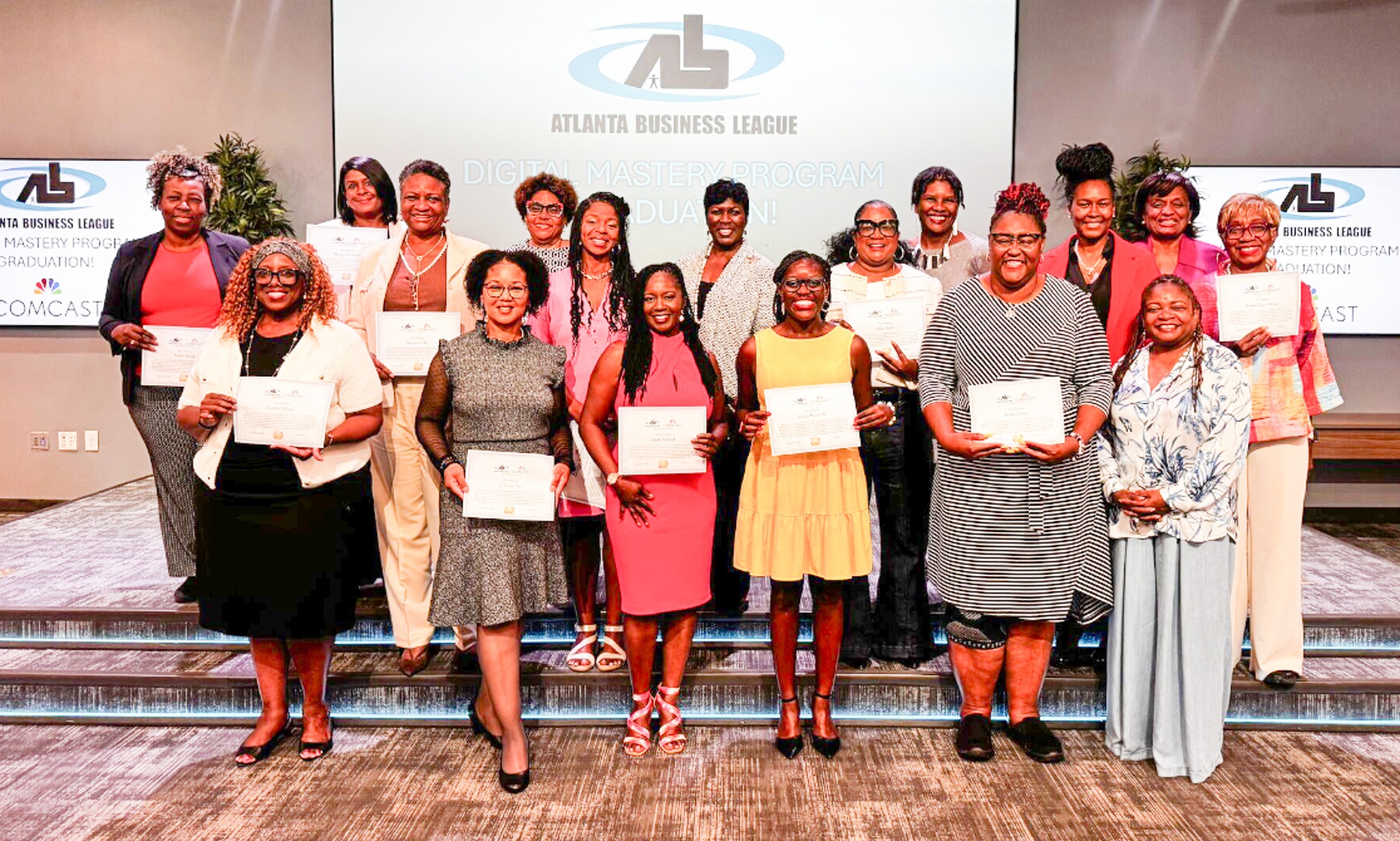
Atlanta entrepreneurs move from AI curiosity to practical application through the Atlanta Business League’s Digital Mastery program, learning technology, strategy, security and business growth.
By Milton Kirby | Atlanta, GA | September 22, 2026
By the time a group of Atlanta-area entrepreneurs gathered at the Russell Innovation Center for Entrepreneurs on July 31, artificial intelligence was no longer simply something to ask questions.
It had become something they were expected to put to work.
For months, participants in the Atlanta Business League’s Digital Mastery program had worked through online visibility, email marketing, social media, automation, data management, cybersecurity, business expenses and artificial intelligence.
Now came the harder question: What were they going to do with it?
The final session was designed to bring the lessons together as participants developed 30-day, 90-day and year-long AI plans for their businesses.
It was the culmination of a 10-session program called “Digital Mastery for Small Business Growth: From Online Presence to AI-Powered Success,” sponsored by Comcast and taught by Dr. Kimberly N. West, founder of Magnum Opus Consulting and an Atlanta Business League board member.
Fifty-three people registered for the 2026 program, following more than 35 business owners and professionals who received certificates of completion in 2025.
Atlanta Business League President CEO Leona Barr Davenport, who attended most of the sessions, said the commitment required from the entrepreneurs was itself significant.
“These are entrepreneurs who, despite being busy, took the time to learn,” Davenport said.
She credited Comcast, West and the participants with making the experience “both valuable and enjoyable.”
The course promised practical instruction aimed at helping entrepreneurs strengthen their online presence, streamline operations and use digital tools and AI to improve visibility, automate workflows and increase revenue. Each session was structured around instruction, hands-on implementation, questions and real-world application.
But learning artificial intelligence turned out to involve considerably more than learning how to write a good prompt.
For some participants, it meant reconsidering how customers find their businesses. For others, it meant discovering where important company information was stored, who had access to it or how much money was disappearing each month into software subscriptions.
And for at least one participant, it began with a more basic question:
What does any of this have to do with running a newspaper?
Learning From Inside the Classroom
Disclosure is important here.
I was not an outside observer of Digital Mastery. I was a participant.
Comcast asked me to document the cohort’s journey in a feature for The Truth Seekers Journal. When I invited classmates to share their experiences, I told them the story would not be written “from the outside looking in,” but from “right here in the trenches” with them.
That gave me an unusual position from which to report the story.
Dr, Kimberly N. West 7-31-26 session – (Milton Kirby)
I was simultaneously learning the material and evaluating whether it had practical value for the newspaper I publish.
Halfway through the course, I wasn’t convinced.
During a May conversation with fellow participant Delphyne Lomax Taylor, we talked about having to go back and watch the Zoom sessions again to fully absorb the material.
“My intentions was to apply the class to the newspaper,” I told her, according to a recording of the conversation. “And so far not much has been covered that actually applies to the newspaper.”
I had asked West for at least “one nugget” each week that could specifically apply to a newspaper because I saw publishing as different from many of the other businesses represented in the class.
Taylor was wrestling with the material in her own way.
She was already using ChatGPT for practical business tasks. She described writing proposals and emails herself and then putting them into AI to have the language tightened. At one point, she said she began paying for ChatGPT after reaching a usage limit while trying to complete her work.
The conversation captured something that could easily be lost in all the excitement surrounding AI.
Using it is one thing.
Understanding how it fits into an actual business is another.
More Than ChatGPT
That distinction was central to West’s approach.
Her course did not treat AI as a stand-alone technology that business owners needed to bolt onto their companies.
In one session, West urged participants to think about technology they were already using. AI capabilities were increasingly appearing inside existing business software, she explained.
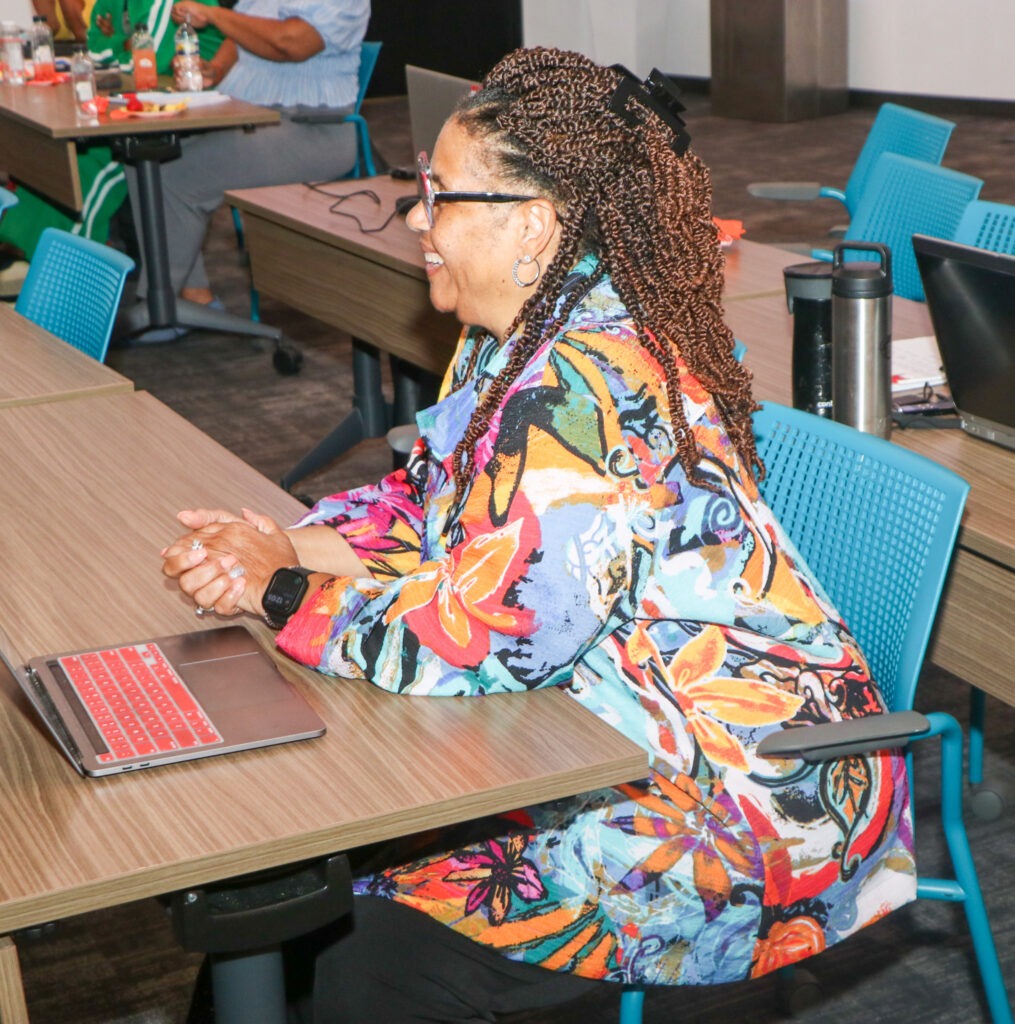
Delphyne Lomax Taylor 7-31-26 session (Milton Kirby)
“The question is not which shiny tool you should chase,” West said. Instead, businesses should ask whether they are using the AI capabilities already available inside their existing tools.
“Because that’s really where the work is actually happening.”
That approach matters at a time when entrepreneurs can be bombarded with new AI applications promising to write, design, automate, analyze or otherwise transform their businesses.
West’s advice was to begin with the business problem.
When one participant asked how many AI tools a business should use, West said there was no universal answer.
“What you need to do is you have to look at your business and look at what the business needs are and then find the tool or tools that are going to satisfy the needs of your business,” she said.
It was a less glamorous lesson than simply demonstrating the newest AI product.
But it may have been one of the course’s most useful.
Getting the House in Order
That became particularly apparent during the May 14 session.
West called it “Get Your House in Order.”
The subjects were money, data and security.
“This is not the sexiest module that we have,” West told the class. “It’s a little boring sometimes. But it is probably one of the most important modules that we will have.”
One exercise was what West called the “seven day disappearance test.”
Suppose the owner became completely unavailable for seven days.
What would break?
What would stall?
What would become confusing?
Participants were told to think about passwords, backups, systems, vendors, approvals, money, data, security and operations. Some said payroll or operational decisions could suffer. Others said their businesses could continue. Taylor said her business partner could step in, but if both were unavailable, most or all of the business could be affected.
Then West turned to data.
“Data is the asset that most business owners do not realize that they own,” she said.
Customer records. Contracts. Vendor records. Receipts. Reports. Standard operating procedures. Content libraries. Training materials.
“Data is business memory.”
For a newspaper publisher wondering how this course applied to journalism, that was one of those nuggets I had been asking for.
A newspaper’s memory is its reporting.
Recordings. Transcripts. Photographs. Source documents. Research. Contacts. Drafts. Published articles.
Lose control of those assets and AI is the least of the problem.
The session also pushed participants to examine recurring technology expenses and security practices. West encouraged them to know what they were paying for, whether tools were actually being used and whether critical accounts had backups, multifactor authentication and recovery plans.
Suzanne Forte, senior director of public relations for Comcast’s Big South Region, said business owners are confronting economic uncertainty, rising costs and a technology environment moving faster than many can track.
At the same time, they are increasingly expected to understand cybersecurity, digital operations and customer experience while still operating their businesses.
The cohort was intended to help entrepreneurs apply technology to customer engagement, operations and business decisions.
“Technology and digital skills help people connect, learn, work, and thrive,” Forte said in written responses to questions from The Truth Seekers Journal.
She said Comcast’s support was intended to help entrepreneurs “access tools and knowledge they can use to adapt, grow, and participate more fully in the digital economy.”
But Forte’s definition of success did not stop at completing a class or receiving a certificate.
“When participants apply what they learn, share those skills, and strengthen their businesses and networks, that demonstrates meaningful progress,” she said.
By that measure, the question becomes not what was taught during the 10 sessions, but what participants did afterward.
From Understanding to Execution
Dr. Patricia Kelly Marsh came to Digital Mastery with a considerable head start.
Marsh is a physician and CEO of Ask Me Your MD, Inc., or AMY MD. Her company was already using AI to support what she described as a scalable telechat care model.
She joined the program because she wanted a better understanding of available AI and digital tools and how they could be strategically applied to healthcare delivery, technology development and company growth.
For Marsh, one of the most significant changes involved digital visibility.
Before the course, she said, digital visibility seemed important but broad. The program helped her become more deliberate about brand awareness, online engagement and the company’s digital footprint.
Marsh reported that after applying lessons from the program, AMY MD experienced more than a 400% increase in engagement across its social media platforms. She also said website events per session increased and the site’s key-event rate nearly tripled.
Those results were reported by Marsh and were not independently verified by The Truth Seekers Journal.
She described the experience as taking her “from basic understanding to bold execution.”
The program, she said, gave her the tools and confidence to use AI and digital strategy to help grow and scale the company.
When the Person Outranks the Business
Yvonne Bryant Johnson found a different lesson.
Johnson said an AI and strategic branding exercise revealed that her own name had greater online visibility and recognition than her company, Bryant & Associates..
“That realization was both humbling and transformational,” Johnson wrote.
It made her reconsider the relationship between her personal brand, the company’s identity and her long-term business strategy.
Johnson said assignments that initially felt like homework became opportunities to sharpen her thinking about branding, search-engine optimization, visibility and trust.
She also praised West’s ability to turn complicated concepts into “practical tools and actionable frameworks.”
Johnson’s perspective comes with relevant context: she has longstanding ties to the Atlanta Business League. She described herself as a founding faculty member of ABL’s Take Your Business 2 the Next Level program and a past ABL board member.
Still, her experience illustrates one of the course’s broader lessons.
AI does not necessarily have to invent something new for a business.
Sometimes its value comes from revealing something about the business that was already there.
Owning the Audience
West also repeatedly pushed participants to distinguish between digital platforms they use and digital assets they own.
After a session devoted to email systems, she reminded participants that social media companies can come and go and algorithms can change.
An email list, however, belongs to the business.
“If you walked away understanding that one thing, Session 2 did its job,” West wrote afterward.
Another session dealt with finding where an audience actually lives online and using AI to create content that sounds like the business rather than like everyone else using the same technology.
For small businesses, those lessons can be easy to overlook amid fascination with generative AI.
The technology may be new.
The underlying business questions are not.
Who are your customers?
How do they find you?
What information do you own?
What are you paying for?
Who has access to your systems?
What happens if you disappear tomorrow?
And what problem are you actually trying to solve?
Consumers or Creators?
By the final session, the conversation had moved beyond simply learning to operate AI tools.
West challenged participants to think about their relationship to the technology itself.
“We are consumers, right?” she said, according to a recording of the session. “We need to be creators or producers.”
She continued: “We need to be decision makers about the data and where it’s used and how it’s used.”
The recording is imperfect, but the larger point is clear: learning to use AI should eventually mean understanding enough to make informed choices about how it fits into a business.
That is a considerably higher standard than learning how to ask ChatGPT a question.
And it helps explain why the final assignment mattered.
Months of individual exercises were supposed to become an operating plan.
Thirty days.
Ninety days.
A year.
The participant now had to decide what deserved to be implemented.
The Work Begins After the Certificate
There is no single way to measure what 53 registrants took away from Digital Mastery.
The written participant responses available to The Truth Seekers Journal do not support claiming that every member of the cohort experienced the same transformation.
They clearly did not enter the program at the same place.
Marsh was already incorporating AI into a healthcare company.
Johnson discovered a branding issue.
Taylor was using AI to tighten proposals and emails while acknowledging that she needed to revisit some of the classes to fully absorb the material.
And I spent part of the program asking how lessons designed for conventional businesses applied to an independent newspaper.
That diversity may be one of the most useful things about looking at the program from inside the classroom.
“AI mastery” does not necessarily mean mastering the same tool.
It can mean understanding which technology a business needs, and which it does not.
It can mean discovering that information scattered across computers is an asset that needs to be organized.
It can mean realizing that another monthly subscription is not automatically an investment.
It can mean securing an account, owning an email list, understanding an audience or recognizing that the business cannot function for seven days without its owner.
And sometimes it can mean recognizing that the best use of artificial intelligence is not allowing it to make a decision, but becoming better prepared to make the decision yourself.
Davenport said the sessions challenged participants to reconsider how they operate their businesses and where new opportunities might exist.
“They challenged our thinking, broadened our perspectives, and opened our eyes to new opportunities for growth and innovation,” she said. “The experience encouraged us to think differently, embrace change, and explore new ways to stay current, strengthen, and grow our businesses.”
For Davenport, that willingness to change may ultimately matter more than mastering any particular technology.
“The future belongs to entrepreneurs who are willing to pivot, learn, adapt, and grow,” she said.
Comcast’s Forte said she hopes participants leave with the confidence to use technology more strategically to reach customers, streamline operations and identify new paths for growth.
The certificates can show that the participants completed the program.
They cannot show whether Digital Mastery worked.
That test began when the laptops closed, the participants left the Russell Innovation Center and returned to their businesses.
What they do differently next will provide the answer.
Truth Seekers Journal thrives because of readers like you. Join us in sustaining independent voices.
Professional dancer Jordan Powell blends discipline, culture and resilience across stages and continents while expanding representation and inspiring the next generation of Black dancers.
A Dancer Shaped by Discipline, Lifted by Culture, and Carried Across Continents
By Milton Kirby | New York, NY | September 20, 2026
There are dancers who learn movement.
Then there are dancers who build a life around it.
For Jordan Powell, dance has become both profession and language, a way of communicating across stages, cultures and, sometimes, barriers that spoken words cannot easily cross.
She has performed contemporary dance in New York. She has worked internationally in China. She has appeared in commercial projects, worked with different companies and choreographers, and earned a place among the Radio City Rockettes.
Yet behind those credentials is something less visible.
Discipline.
Powell grew up in New Jersey and began dancing as a child after her parents enrolled her in classes.
What began as a childhood activity became something more.
“I fell in love with it and haven’t stopped since,” Powell said.
Eventually, she decided to study dance at the University of Southern California, where intensive dance training existed within the larger university environment.
Since graduating in 2022, Powell has built a professional career that does not fit neatly into a single box.
She is a freelance dancer.
That means one performance may belong to one choreographer, the next to another company and another project somewhere else entirely.
Her professional work has crossed contemporary dance, jazz, modern dance, ballet and other styles.
That variety is intentional.
“There are a lot of different realms within dance that you could focus on,” Powell said. “For me, I found that I enjoy aspects of multiple different areas.”
That range has taken her from New York stages to Guangzhou, China.
Jordan Powell – Courtesy photo
When Dance Becomes the Common Language
Powell traveled to China as one of about five American dancers working with a dance company based in Guangzhou.
She did not speak Mandarin.
Some of the Chinese dancers spoke English. A choreographer who spoke both languages helped translate.
But something else began happening inside the rehearsal room.
The dancers watched one another.
They studied movement.
They learned cues.
They communicated through the work itself.
“At the end of the day, it didn’t feel any much different than a rehearsal that I would do in the States,” Powell said. “I think the dance is the dance and the rehearsal is rehearsal.”
That experience revealed something fundamental about the art form.
Movement could bridge what language could not.
Powell and the other dancers eventually performed at the Guangzhou Opera House. She remembers an audience excited not only by the performance, but by the cultural exchange happening onstage.
The production included live musicians and the use of paint on canvas.
For Powell, performing internationally was something more personal.
It was part of a dream she had carried since childhood.
“Doing the thing that I wanted to do since a little girl was really fulfilling,” she said.
But China also placed Powell in another familiar position.
She was the only Black woman in the company.
Being the Only One
That experience did not end when Powell returned to the United States.
In parts of the contemporary concert dance world, she said she has frequently found herself as one of a few Black women in the room—or the only one.
It is not a distinction she seeks.
It is a reality she notices.
“I don’t enjoy” being the only one, she said.
But Powell also understands what her presence can mean to someone watching from the audience.
She remembers wanting to attend performances and see someone who looked like her onstage.
Young Black dancers, she said, may want to explore ballet, contemporary dance or other genres but not always see themselves represented in those spaces.
That makes showing up important.
“It’s important to be in those spaces to remind everyone what Black dancers can do and what Black dancers are capable of,” Powell said.
Her presence, however, should not be mistaken for tokenism.
Powell has worked for it.
Asked whether her career reflects talent, tenacity or some combination of both, she resisted the suggestion that she might simply declare herself the best dancer in New York.
But she did not minimize the work required to get there.
“I have worked extremely hard to get where I am and to perform in all of the pieces that I’ve performed in,” she said. “So I think it does speak to both skill and also tenacity as well.”
What the Audience Doesn’t See
That tenacity matters because professional dance is physically demanding.
The audience sees the finished product.
The costumes.
The music.
The lights.
The bodies moving across a stage.
What it does not necessarily see are the hours of rehearsal, physical conditioning, mental preparation and decisions required to make those moments appear effortless.
“Dancing is extremely physical and intense,” Powell said.
But she said the job demands more than physical strength.
A dancer must understand musicality, timing and choreography. Dancers must communicate with partners and choreographers. They may have to step into a character or emotional state.
They also have to protect the instrument they depend upon most—their bodies.
Powell pays attention to nutrition, injury prevention and conditioning. She cross-trains and incorporates activities such as yoga, cardio and strength training into her routine.
In that respect, professional dancers are athletes.
But unlike many athletes, they are expected to turn all that physical preparation into art.
Then there is the unpredictability of live performance.
A dancer forgets choreography.
A prop fails.
A costume malfunctions.
Someone falls.
The audience may never know.
“You can never start over,” Powell said. “Once the show is going, the show is going.”
So the dancer adjusts.
Improvises.
Gets back up.
And keeps moving.
More Than One Stage
That ability to move between worlds has become part of Powell’s professional identity.
Jordan Powell (Milton Kirby)
She has performed in works by contemporary choreographers such as Benjamin Freedman, including a recent collaborative production with the Seán Curran Company. Earlier in her career, she danced with Gibney Company in New York.
She has also become a Radio City Rockette, a role she describes as exciting and one she enjoys.
But no single company or title fully defines her.
Powell’s career is broader than one stage.
She sees possibilities in film, international performance, dance education and teaching. She wants to perform in places she has not yet reached.
She is also interested in making dance more accessible to communities that may not naturally see themselves connected to the professional dance world.
That matters because Powell believes dance belongs to far more people than those who train professionally.
People dance at family gatherings.
They dance with friends.
They dance as part of cultural and religious traditions.
They move to celebrate.
They move to express emotion.
In that sense, Powell argues, dance is already part of the human experience.
“I think it’s an extremely important part of our life,” she said.
Professional dance simply takes that human instinct and develops it through years of training, technique and discipline.
The Next Dancer
Powell knows there may be a young girl somewhere who loves to dance but cannot imagine making a career from it.
Maybe she does not see dancers who look like her.
Maybe she does not know anyone in the profession.
Maybe someone has already told her that the dream is unrealistic.
Powell has a message for her.
Keep dreaming.
Do not limit what you believe is possible.
Find people whose careers resemble the one you want. Reach out. Ask questions. Seek guidance.
And put in the work.
“There are plenty of people who will try to tell you what is or isn’t possible or what you can and can’t do,” Powell said.
If the passion is real, she believes people owe it to themselves to find out how far it can take them.
Powell is still finding out.
There are stages she has not performed on.
Countries she has not visited.
Films she has not appeared in.
Students she has not taught.
Audiences she has not yet reached.
The little girl from New Jersey who fell in love with dance has already crossed an ocean doing what she once dreamed of doing.
But she is not finished. She keeps dancing.
Please consider supporting open, independent journalism, no contribution is too small!
Atlanta Dream defeat Chicago Sky 106-81 behind Angel Reese’s historic rebounding performance, strengthening their position in a tight race for playoff home-court advantage.
By Milton Kirby | Atlanta, GA | September 20, 2026
The Atlanta Dream have already secured a place in the WNBA playoffs.
Where they will begin the postseason remains unsettled.
Atlanta used a dominant second half Saturday to defeat the Chicago Sky 106-81 in its final regular-season home game at State Farm Arena, improving to 28-14 and strengthening its position in a tightly contested race for home-court advantage.
The Dream entered the final two games of the regular season in fourth place, one-half game behind third place and one-half game ahead of fifth.
“We have to pick up some wins,” Dream Head Coach Karl Smesko said.
Atlanta will finish the regular season with back-to-back road games against the New York Liberty in Brooklyn on Monday and Wednesday.
A Different Team After Halftime
Chicago kept the game competitive through the first half.
Allisha Gray takes a jump shot (Casey Sykes)
Atlanta changed that quickly after halftime.
The Dream scored 32 points in the third quarter and carried an 83-66 lead into the fourth. Allisha Gray scored 10 points during the quarter as Atlanta began creating the separation that had been missing earlier.
“We just came out with a different energy,” Gray said. “We knew we had to punch first.”
Atlanta never gave Chicago an opportunity to recover.
Isobel Borlase helped put the game away in the fourth quarter with three consecutive 3-pointers as the Dream extended their advantage and eventually walked away with a 25-point victory.
The win completed a three-game season sweep of Chicago.
Atlanta shot 52.9 percent from the field and 50 percent from 3-point range while scoring 46 points in the paint. The Dream also received 39 points from its bench.
Five Atlanta players scored in double figures.
Reese Reaches 500
Angel Reese led the Dream with 23 points, 10 rebounds, four assists, two steals and three blocks.
The performance gave Reese her 31st double-double of the season, extending her WNBA single-season record.
It also produced another milestone.
Reese became the first player in WNBA history to collect 500 rebounds in a single season.
She entered the game with 495 rebounds and finished with 505.
The 23-point performance was Reese’s 13th game with at least 20 points this season.
Reese joined Atlanta in April after spending her first two WNBA seasons with Chicago. The Dream acquired the two-time All-Star from the Sky in exchange for Atlanta’s first-round picks in 2027 and 2028, with Atlanta also receiving second-round pick-swap rights in 2028.
Against her former team Saturday, Reese’s rebounding milestone became part of a much broader Atlanta performance.
Production Throughout the Lineup
Borlase scored a career-high 18 points and added three steals.
Gray finished with 17 points, three rebounds, three assists and three steals.
Rhyne Howard added 14 points and four assists. Her fifth made field goal of the night gave her 1,000 for her WNBA career.
Jordin Canada recorded a double-double of her own with 11 points and a game-high 10 assists. It marked Canada’s 10th game this season with at least 10 assists.
The starting combination of Canada, Gray, Howard, Naz Hillmon and Reese improved to 27-8.
Atlanta also continued to generate offense through its defense.
The Dream recorded 13 steals against Chicago, with Borlase and Gray collecting three apiece.
Those steals pushed Atlanta’s season total to 374, establishing a WNBA single-season record and surpassing the previous mark held by the 2009 Indiana Fever. The 374 total was also reported following Saturday’s game as the Dream’s new league record.
Two Games Left
Atlanta’s 106 points and collection of individual milestones made Saturday a memorable regular-season home finale.
But the larger question facing the Dream will be answered away from State Farm Arena.
The playoff berth is secure.
The positioning is not.
DeWanna Bonner – Courtesy photo (Casey Sykes)
Atlanta has two regular-season games remaining, both against New York in Brooklyn. With teams separated by narrow margins in the standings, those games could help determine whether the Dream begin the postseason at home.
Saturday demonstrated what Atlanta can look like when its offense and defense are working together.
The Dream shot better than 50 percent from the field, placed five players in double figures, received 39 points from its bench and forced enough turnovers to add another league record to the season.
Now Atlanta has to take that performance on the road.
As Smesko put it, the assignment is straightforward.
“We have to pick up some wins.”
Truth Seekers Journal thrives because of readers like you. Join us in sustaining independent voices.
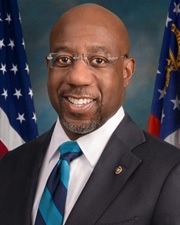
Sen. Raphael Warnock warns about AI misinformation after fabricated health stories fooled constituents, raising questions about artificial intelligence, social media and election integrity.
By Milton Kirby | Atlanta, GA | September 18, 2026
At first, some of the images were almost funny.
One showed Georgia U.S. Sen. Raphael Warnock with a full head of hair. Another claimed he had become the grandfather of twins.
Neither was true.
“I should be so lucky,” Warnock joked about the hair. “I checked the mirror this morning. Not true.”
But other posts appearing on a Facebook page carried claims that were harder to laugh away.
One falsely claimed Warnock had collapsed on stage. Another said he had undergone surgery and was recovering from cancer.
Those stories were convincing enough that some people apparently believed them.
“Some well-meaning constituents and friends, well-wishers, actually called, saying that they were praying for my speedy recovery,” Warnock said.
Warnock had not suffered the health problems described in the posts.
Instead, the fabricated images and stories became the basis for a warning from the Georgia senator about artificial intelligence, misinformation and what could happen when false content becomes increasingly difficult to distinguish from authentic information.
On Sept. 15, Warnock released a video discussing the posts. His Senate office issued a statement the following day.
“What if hours before an election, someone created a page with AI-generated images, fake stories about the candidates?” Warnock asked. “How will voters know what’s true and what’s not true?”
From the Absurd to the Serious
Warnock said he recently encountered a Facebook page containing numerous AI-generated images and stories about him.
Some were strange enough for him to joke about.
There was the newly grown hair.
There were the nonexistent twin grandchildren.
Then came the health claims.
Warnock said posts suggesting that he was experiencing major health problems and had undergone surgery received “thousands of likes, thousands of views.” His Senate office said other fabricated material claimed he had collapsed on stage and was recovering from cancer.
The Facebook page was later taken down after Warnock’s team notified Facebook, according to The Atlanta Journal-Constitution.
Available public reporting has not identified who operated the page or established why the false material was created.
“As these tools become increasingly powerful, it will get harder and harder to distinguish fact from fiction,” Warnock said.
What Happens Just Before an Election?
Warnock’s warning focused particularly on timing.
False information about a public official can be corrected. An artificial image can be identified. A fabricated story can be debunked.
But Warnock raised the possibility of false AI-generated information appearing only hours before voters go to the polls.
That could leave journalists, campaigns, technology companies and voters with limited time to determine whether rapidly circulating information is authentic.
Warnock called on social media companies to move quickly to label AI-generated material. He also called for congressional action.
“We need guardrails. We need regulations. We need to figure this out,” Warnock said. “The future is already here.”
He did not identify a specific piece of legislation in the video or detail precisely what regulations he wants Congress to adopt.
That leaves a larger policy debate unresolved.
Determining whether an image was generated by artificial intelligence is one question. Determining when and how government should regulate AI-generated political material raises additional questions involving technology, enforcement and free expression.
Warnock’s position is that additional safeguards are needed.
AI Concerns Extend Beyond Social Media
The false Facebook posts are not Warnock’s only recent encounter with questions surrounding artificial intelligence.
Weeks earlier, he visited the proposed site of OpenAI’s 3.2-gigawatt data center in Effingham County. After meeting with residents, Warnock announced his support for a statewide moratorium on new data center construction unless projects meet safeguards involving utility costs, transparency and pollution. His Senate office also referenced the data-center issue when announcing his response to the false AI posts.
The issues are different.
One concerns the physical infrastructure needed to support artificial intelligence and large-scale computing.
The other concerns information produced with AI and how that information reaches the public.
Warnock acknowledged that artificial intelligence is already part of everyday life and said policymakers must also address questions involving jobs and safety.
But the false reports about his health gave him another issue to raise: what happens when something created by artificial intelligence is accepted as real.
When the False Story Looks Real
There is still much that is unknown about the Facebook page.
Publicly available reporting has not established who created it, whether the operator had a political or financial motive, or whether the material was produced simply to attract online traffic.
Those distinctions matter.
Without that information, there is no basis to conclude that the posts were created specifically to influence an election or damage Warnock politically.
What is known is more straightforward.
The page contained fabricated images and stories about a sitting United States senator.
Atlanta business owners can strengthen their companies through meaningful relationships, shared knowledge and opportunities available through professional networks such as the ICAN Alumni Network.
By Milton Kirby Publisher of The Truth Seekers Journal, President of Allied Logistics Inc. and Member of the ICAN Atlanta Steering Committee | Atlanta, GA | September 18, 2026
As business owners, we spend a great deal of time focused on operations, customers, contracts, cash flow, technology, and growth. Those things matter. But after years in business, I’ve learned that some of the most valuable opportunities don’t come from a marketing campaign or a proposal.
They come from relationships.
Many of us can point to a conversation, introduction, mentor, or referral that changed the trajectory of our businesses. I certainly can. During my journey building Allied Logistics, some of the most valuable opportunities came not from advertising or cold calls, but from relationships developed through trusted introductions and professional networks.That is why professional networks matter.
Atlanta is one of the nation’s most dynamic entrepreneurial ecosystems. We have innovators, contractors, consultants, logistics firms, professional service providers, manufacturers, technology entrepreneurs, and community leaders building remarkable businesses every day. Yet many business owners continue to operate in silos, carrying challenges and pursuing opportunities without a strong network of peers around them.
My experience with ICIC’s Alumni Network (ICAN) reinforced something I have always believed: business growth is accelerated when entrepreneurs have access to a community that shares knowledge, resources, and opportunities. ICIC works to support business growth and inclusive economic prosperity through programs and initiatives that serve entrepreneurs across the country.
As an alumnus and member of the Atlanta Steering Committee, I have seen firsthand how meaningful connections can lead to collaborations, partnerships, mentorship opportunities, and long-term business relationships.
That is one reason I am excited about the upcoming 2026 ICAN Business Mixer, which will be held in Atlanta on Thursday, September 24 at 6:00 p.m. ET. The event is designed to bring together small business owners, ICIC alumni, and ecosystem partners for authentic conversations and meaningful relationship-building.
What I appreciate most is that these gatherings are not simply about exchanging business cards. They are about engaging with people who understand the challenges and opportunities that entrepreneurs face every day. They are about learning from others, sharing experiences, and discovering ways to help one another succeed.
Whether you are an established business owner, a growing entrepreneur, or someone seeking to expand your professional circle, I encourage you to invest in relationships. The return on that investment is often difficult to measure at first, but it can be transformative over time.
Strong businesses help build strong communities. Strong networks help build strong businesses.
I hope you’ll consider joining us and becoming part of the conversation.
Event Information
Event: 2026 ICAN Business Mixer
Date: Thursday, September 24, 2026
Time: 6:00 p.m. ET
Registration: Available through the official ICIC event page.
Disclosure: The author is Publisher of The Truth Seekers Journal, President of Allied Logistics Inc., an alumnus of ICIC’s Alumni Network (ICAN), and a member of the ICAN Atlanta Steering Committee. This commentary reflects the author’s personal views. Neither the author nor Allied Logistics Inc. has received compensation for promoting this event.
Support open, independent journalism. Your contribution helps us tell the stories that matter most.
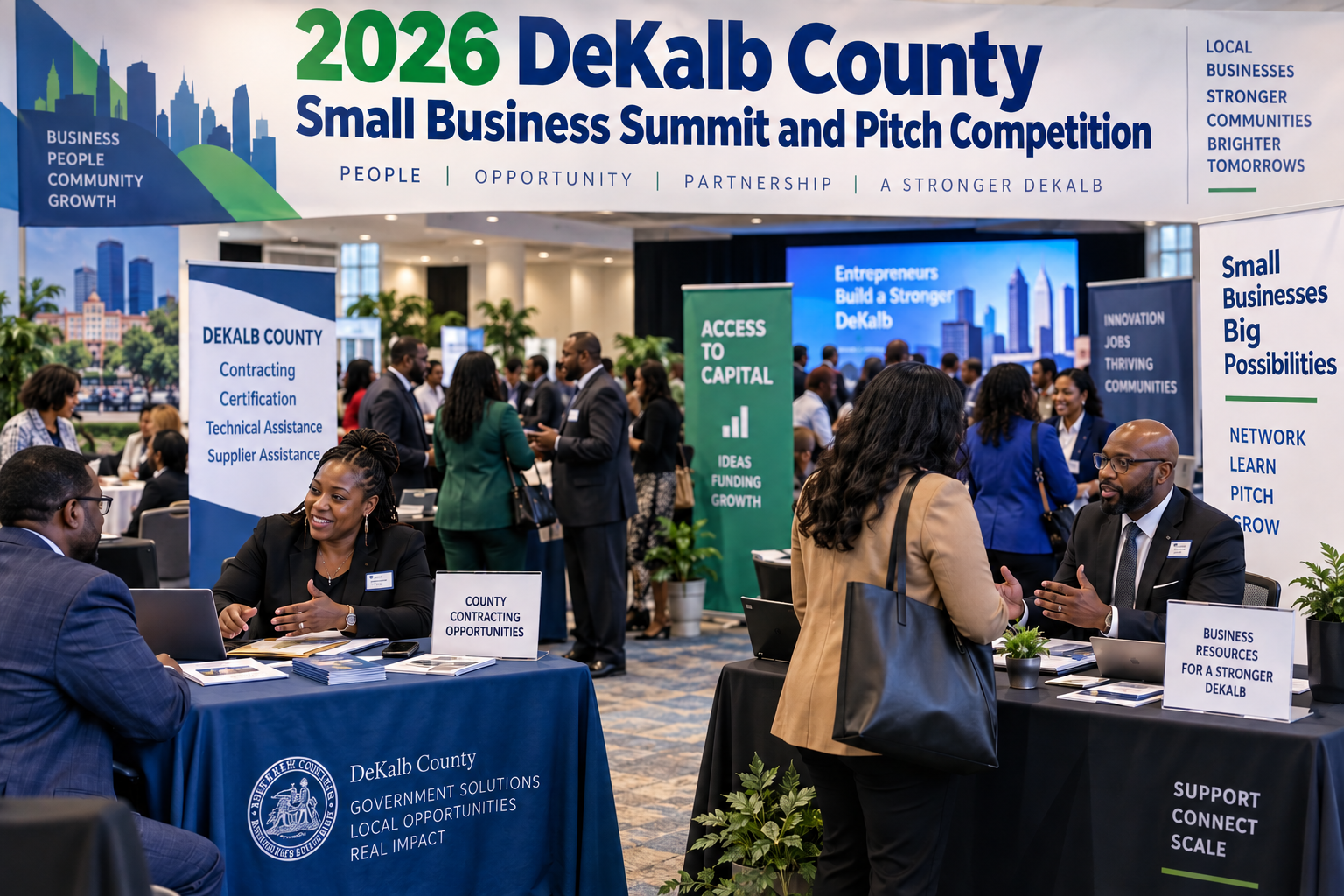
DeKalb County’s 2026 Small Business Summit will connect entrepreneurs with capital, county contracting opportunities, business resources and a live pitch competition on October 14.
By Milton Kirby | Decatur, GA | September 15, 2026
For a small-business owner, knowing that a government contract exists and knowing how to compete for it can be two very different things.
DeKalb County wants to narrow that gap.
The 2026 DeKalb County Small Business Summit and Pitch Competition will bring entrepreneurs, government officials and business-support organizations together October 14 at the Emory Conference Center Hotel in Atlanta.
The day will focus on issues organizers say DeKalb business owners have identified as priorities: access to capital, county contracting, tools that save time and straightforward information about operating a legitimate business.
The summit is sponsored by the DeKalb County Office of the CEO, the DeKalb Chamber of Commerce and the Decide DeKalb Development Authority.
Organizers are making a simple promise to business owners: access.
“You will spend the day with the people who make those decisions, not a list of links to call later,” organizers said in announcing the summit.
Familiar Challenges for Small Businesses
The priorities outlined for this year’s summit are familiar.
At the 2025 gathering, county officials, business leaders and entrepreneurs spoke about many of the same challenges: access to capital, government contracting, business resources, networking and keeping small companies growing during uncertain economic conditions.
Frankie Atwater Sr., president and CEO of the DeKalb Chamber of Commerce, said small businesses make up 99 percent of the businesses in DeKalb County.
“It’s our job at the Chamber to continue to provide that support that they need — that network for them to continue to grow,” Atwater said.
He also emphasized the importance of giving entrepreneurs information they can use.
“Knowledge is power,” Atwater said, pointing to panels, workshops and networking as ways to help business owners build connections and position their companies for growth.
For business owners, the need can be even more immediate.
Dontricia Dunnum, who attended the 2025 summit, said she came looking for both information and connections that could help her business navigate a difficult economic period.
“I’m trying to expand my network, gain more knowledge and insight on how to still keep my business steady and afloat during this economic season,” Dunnum said.
She also hoped to make connections and gain insight into growing the business.
Those concerns help explain why organizers are again emphasizing practical assistance rather than simply networking.
DeKalb Wants More Businesses Competing for County Work
One of the clearest opportunities involves government contracting.
During the 2025 summit, DeKalb County CEO Lorraine Cochran-Johnson emphasized the purchasing power of county government and the wide range of services it requires.
“Governmental entities are the number one procurer of services in the world,” Cochran-Johnson said. “So there’s nothing you can imagine. There’s no business services provided that, in most instances, we don’t need.”
Her message to entrepreneurs was equally direct.
“The doors for business are open in DeKalb County,” Cochran-Johnson said.
She encouraged business owners interested in county opportunities to use DeKalb’s purchasing and contracting system to find solicitations and begin the process of competing for government work.
The 2026 summit returns to that theme by promising business owners a clearer path into county contracting and access to people involved in making business decisions.
For entrepreneurs unfamiliar with government procurement, however, finding an opportunity is only the beginning.
Businesses may have to understand certification requirements, purchasing rules, insurance requirements, bidding procedures and other parts of the procurement process before they can successfully compete.
That makes the value of the summit potentially less about one day of meetings and more about whether entrepreneurs leave knowing what to do next.
Five Businesses Will Take the Stage
The 2026 summit is also adding a competitive element designed to move selected entrepreneurs from instruction to presentation.
Five DeKalb businesses will pitch their companies live during the summit.
The first-place winner will receive a business growth package valued at $16,500.
The competition includes training before finalists reach the stage.
Semifinalists will participate in a two-week Pitch Academy. The five finalists will then participate in a four-week Growth Incubator designed to help prepare them for the competition and continued business development.
Applications for the pitch competition closed September 11.
While the competition will put five companies in the spotlight, the larger summit is designed for a much broader segment of DeKalb’s small-business community.
From Access to Opportunity
Last year’s summit carried a message that DeKalb County was changing the way it worked with local entrepreneurs.
One speaker described the gathering as evidence that county government was “reimagining how business is done” by connecting entrepreneurs with resources intended to help them succeed regardless of the economic climate.
The 2026 summit gives the county another opportunity to demonstrate what that means.
Panels, workshops and networking can introduce entrepreneurs to resources. A pitch competition can put promising companies in front of decision-makers. Procurement sessions can teach business owners where county opportunities exist.
The longer-term measurement will come after the conference.
Do more DeKalb businesses become qualified to compete for county work? Do more submit bids? Do entrepreneurs find financing? And do more locally owned companies ultimately win contracts and grow?
Those outcomes will determine whether access provided during a one-day summit becomes lasting economic opportunity.
The 2026 DeKalb County Small Business Summit and Pitch Competition will be held October 14 at the Emory Conference Center Hotel, 1615 Clifton Road NE in Atlanta. Registration and breakfast begin at 7:30 a.m., with the program scheduled from 9 a.m. to 4 p.m.
Support open, independent journalism. Your contribution helps us tell the stories that matter most.
Atlanta launches a $500 no-interest rent loan pilot aimed at helping vulnerable households address temporary financial hardships before they lead to eviction
By Milton Kirby | Atlanta, GA | September 15, 2026
A few hundred dollars can sometimes separate a family from paying the rent on time and beginning a slide toward eviction.
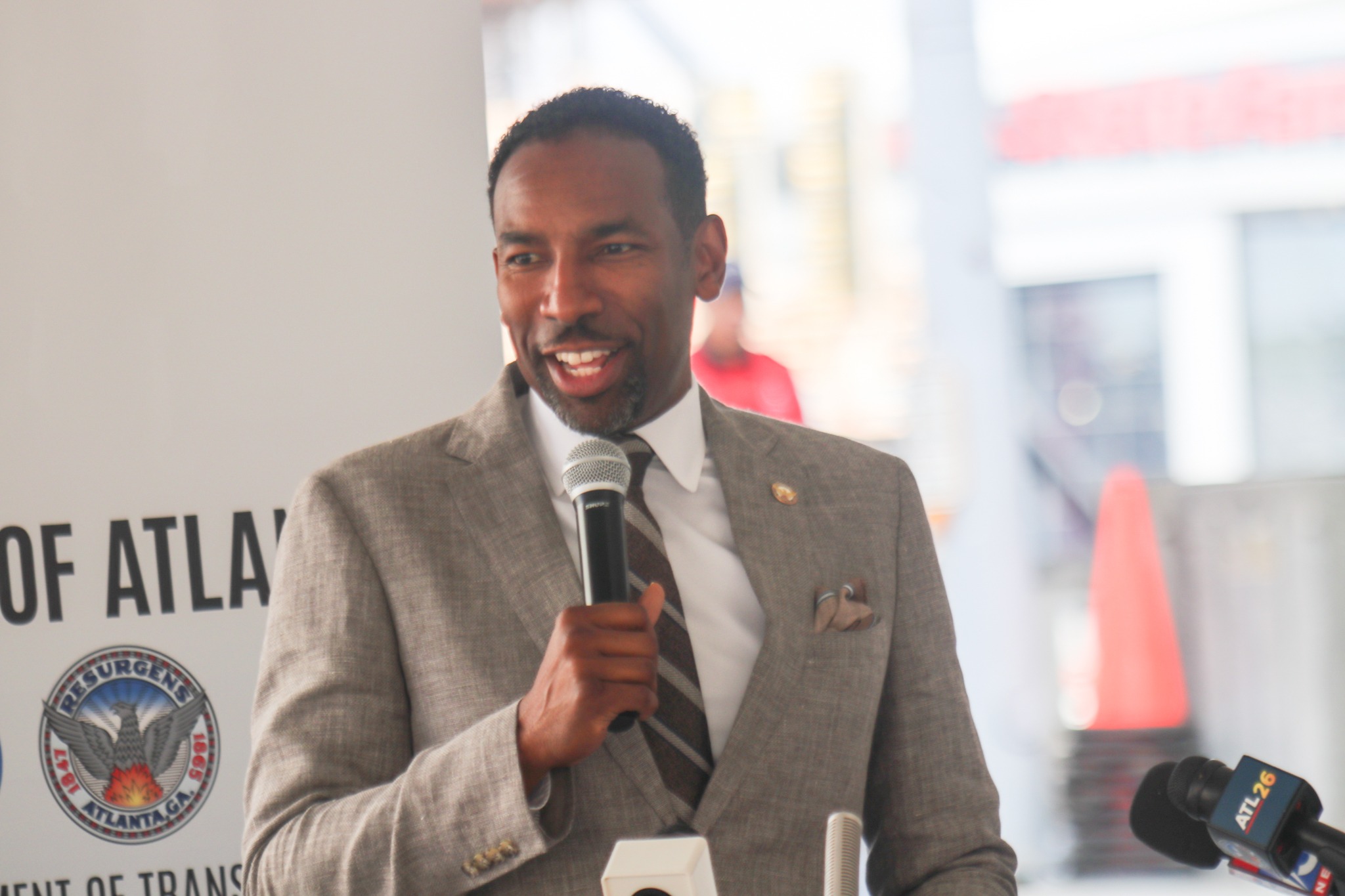
Atlanta Mayor Andre Dickens is betting that intervening before that happens can help more residents remain in their homes.
The City of Atlanta has launched a two-year pilot program offering eligible renters $500 loans with no interest, fees or penalties. The program is part of the Dickens administration’s broader Neighborhood Reinvestment Initiative and is designed to help households facing a temporary financial hardship before they miss a rent payment.
The Flagstone Initiative, a nonprofit organization founded in 2022, will administer the program.
Under the program, an eligible household can receive a $500 Rent Loan that is applied toward rent. The borrower then repays $20 a week for 25 weeks.
There is no collateral, credit check, credit reporting or collection activity associated with the loan, according to the City. Borrowers also pay no interest or fees.
“The Neighborhood Reinvestment Initiative is about investing in communities while making sure the people who have called them home can stay and benefit from that progress,” Dickens said in announcing the program.
“Sometimes the difference between stability and crisis is a few hundred dollars at the wrong time,” he continued. “This pilot gives us another tool to step in early, help families stay in their homes and prevent a temporary setback from becoming an eviction.”
Intervention Before an Eviction
The approach differs from many eviction-prevention programs because assistance is intended to arrive before a renter falls significantly behind.
Flagstone describes its model as “upstream” eviction prevention. Its $500 Rent Loans are intended for residents who are less than a month behind on rent and encounter relatively small financial emergencies, such as a car repair, illness or loss of work hours.
The organization says it currently reaches more than 19,000 households in seven states, with a particular focus on Georgia, Alabama and Kentucky. The City says Flagstone has made more than 1,700 microloans.
Flagstone works with affordable housing providers to make the loans available to residents. In Atlanta, participating housing organizations include PadSplit, Open Doors Atlanta, Golden Door, LDG, Gateway, BDP, TI Management and OaksATL, according to the City.
The Atlanta pilot comes as the Dickens administration moves deeper into its Neighborhood Reinvestment Initiative, a broader effort announced in September 2025 to direct public and private investment toward historically underserved communities, particularly on Atlanta’s South and West sides.
The City has framed keeping existing residents in their neighborhoods as an important part of that effort.
$400,000 Committed to the Pilot
Four public, nonprofit and private-sector sources are contributing a combined $400,000 toward the program.
The City of Atlanta is providing $50,000 in pilot funding. Airbnb is contributing $50,000 toward loan costs.
The Community Foundation for Greater Atlanta and the William Josef Foundation are each providing $150,000 in loan capital.
The William Josef Foundation had previously announced support for Flagstone’s work with Atlanta-area families vulnerable to eviction.
The City’s announcement does not specify how many Atlanta households are expected to receive loans during the two-year pilot or provide detailed income requirements for borrowers.
Those details will be important in measuring the program’s reach.
The $500 loan is not designed to resolve long-term housing unaffordability or months of unpaid rent. Instead, the program is built around a narrower proposition: a relatively small amount of money delivered early may prevent an unexpected expense from becoming a housing crisis.
That makes the pilot one piece of a much larger challenge facing Atlanta as the city directs billions of dollars in planned public and private investment toward neighborhoods that have historically received less investment.
For Dickens, the goal is not simply improving those neighborhoods. It is also making it possible for the people already living there to remain long enough to benefit from the investment.
Households seeking information about the Rent Loan program can contact the City of Atlanta Housing Help Center or the Flagstone Initiative. Housing providers can also apply to participate in the program.
Truth Seekers Journal thrives because of readers like you. Join us in sustaining independent voices.
Artificial intelligence is making deepfakes harder to detect. Learn how to verify photos, videos, and audio recordings before believing, sharing, or acting on them.
By Florita Bell Griffin, Ph.D. | Houston, TX | September 15, 2026
For generations, people were taught that seeing was believing. A photograph seemed to show what happened, a recording preserved what someone said, and a video appeared even more convincing because it combined image, sound, movement, and context. Artificial intelligence has changed that assumption. Today, AI can create realistic photographs, voices, and videos of events that never happened. A person can appear to say words never spoken, endorse a product never used, attend an event never visited, or participate in conduct that never occurred. A familiar voice can be copied, a face can be placed into another scene, and entire people, settings, and conversations can be generated from written instructions.
These creations are commonly called deepfakes. Some are made for entertainment, education, satire, or art, while others are created to deceive, defraud, embarrass, manipulate, or influence public opinion. The important issue is no longer simply whether a photograph or video looks real. We increasingly have to ask whether it can be verified. That represents a major change in the way ordinary people must think about digital evidence.
Deepfakes are especially powerful because human beings naturally trust familiar faces and voices. When we see someone we recognize speaking directly into a camera, our instincts tell us that the person is really there. AI can now reproduce many of those signals of authenticity without reproducing the actual event. A criminal may clone the voice of a child, grandchild, spouse, employer, or business executive and use it to request money. A fabricated video may appear to show a public official making an inflammatory statement. A false image may be used to damage someone’s reputation. AI-generated endorsements can make it appear that doctors, celebrities, or respected public figures support products or claims they have never approved.
The problem can become even more serious during elections, wars, disasters, public emergencies, or fast-moving news events. A convincing false video can travel around the world before journalists, officials, or the person shown in the recording have time to respond. Even after a correction appears, the original content may continue circulating. People often remember the first dramatic image they saw more clearly than the later explanation that proved it false.
Deepfakes also create the opposite problem. Once people know that convincing false media exists, someone caught in an authentic recording can simply claim that it was created by AI. Real evidence may then be dismissed along with fake evidence. Society therefore faces two dangers at once: believing something simply because we saw it and refusing to believe anything because it could have been fabricated. Neither response is useful. The better response is verification.
The first question should be simple: Where did this come from? A dramatic video from an unknown social-media account deserves more scrutiny than material released through an identifiable and accountable source. Look for the original version rather than relying on reposts. Check whether credible news organizations, public agencies, businesses, or other independent sources confirm the event. Context matters as much as appearance. If a video supposedly shows a major public event, are there other recordings? Did witnesses report it? Has the person or organization involved responded? A truly significant event will rarely exist only in one unexplained clip circulating online.
People are often told to look for strange hands, unusual blinking, distorted teeth, poor lip movement, or unnatural lighting when trying to identify a deepfake. Those clues can still be useful, but they are becoming less dependable as AI-generated media improves. A video that looks perfect is not automatically authentic, and a blurry or awkward-looking video is not automatically fake. Visual inspection alone is no longer enough. The source, timing, surrounding evidence, and independent confirmation matter more than ever.
When a familiar person contacts you with an urgent request for money or confidential information, verify the request separately. Call the person using a telephone number you already know rather than a number supplied in the message. Ask a question that would be difficult for an impersonator to answer. In a workplace, unusual financial requests should be confirmed through established procedures even when the voice or face appears to belong to a senior executive. AI can imitate appearance and sound, but it does not automatically possess the full shared history of a real relationship.
Emotional urgency is another warning sign. Messages such as “Send this immediately,” “Share before they remove it,” or “You have to see this” are designed to make people react before thinking. Shock, anger, fear, and excitement can all interfere with careful judgment. A useful habit is to delay sharing anything extraordinary until it has been independently confirmed. In the age of AI, waiting for verification is not being slow. It is being responsible.
Artificial intelligence is not the only way digital media can deceive. A completely genuine photograph can be paired with a false description. A real image from one country can be presented as if it came from another. An old disaster photograph can be circulated as breaking news. A truthful video can be shortened so that viewers never see what happened before or afterward. A real quotation can be placed beside an unrelated image, and a genuine speech can be edited to remove an important sentence. The central question is therefore broader than “Is this AI-generated?” The better question is “Does this accurately represent what happened?”
That distinction matters because an authentic image can still support a false story. Truthseekers should examine the source, date, context, and surrounding evidence rather than relying only on the apparent realism of the content. The goal is not to become suspicious of every photograph or recording. It is to understand that digital evidence now requires more careful judgment than it once did.
Deepfakes do not mean that photographs, recordings, and videos have become useless. They remain valuable forms of evidence. What has changed is the amount of verification we may need before treating them as proof. Seeing something should now be the beginning of the inquiry rather than the end of it. Before believing or sharing important digital content, ask where it originated, whether independent sources confirm it, whether the date and context are correct, and whether the person distributing it has provided enough information to evaluate the claim.
Artificial intelligence has made the creation of convincing false media easier than ever before. Our response should not be fear or permanent distrust. It should be stronger habits of verification. For generations, the saying was “Seeing is believing.” In the age of artificial intelligence, a wiser rule may be that seeing is a reason to look closer.
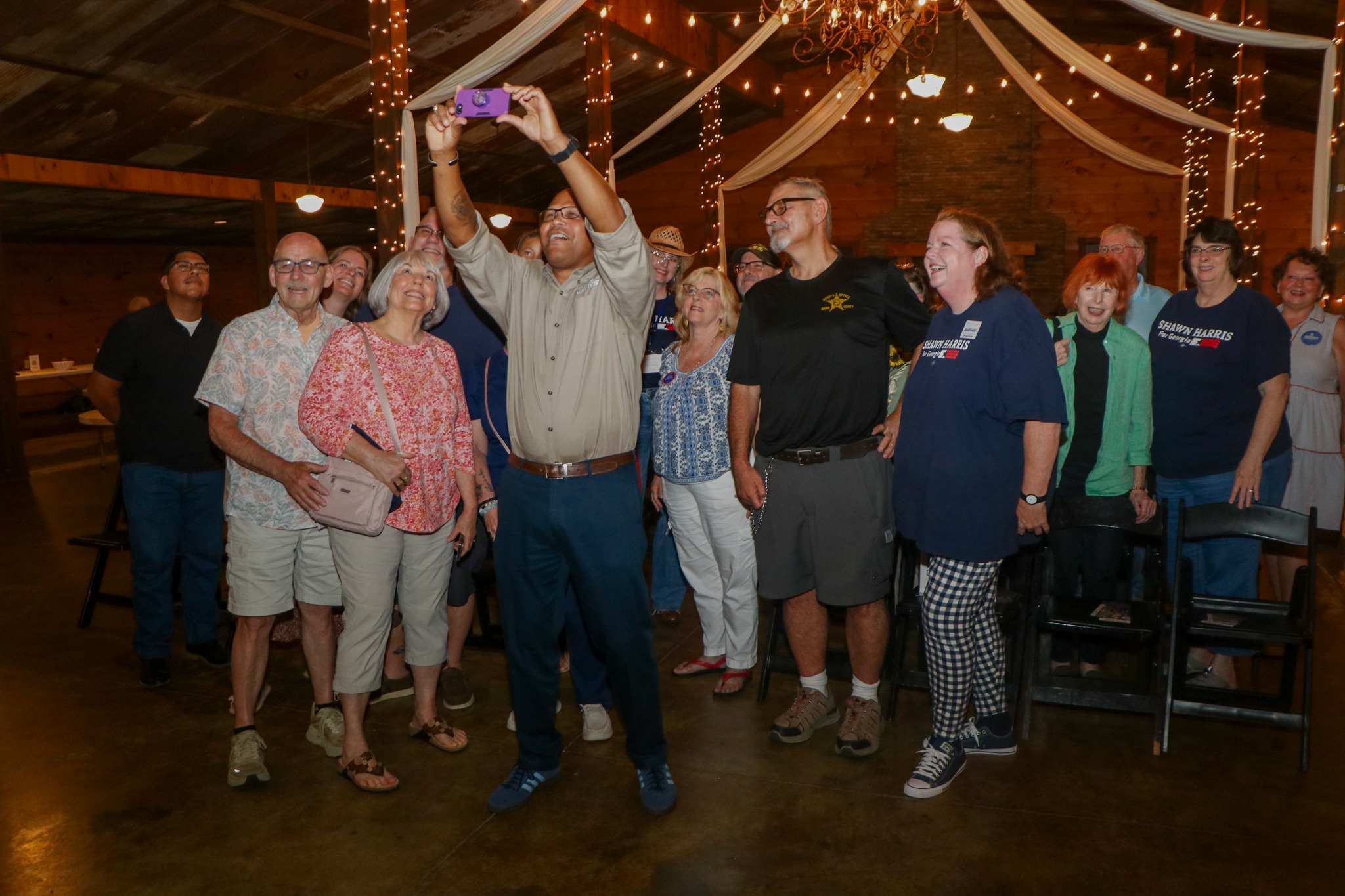
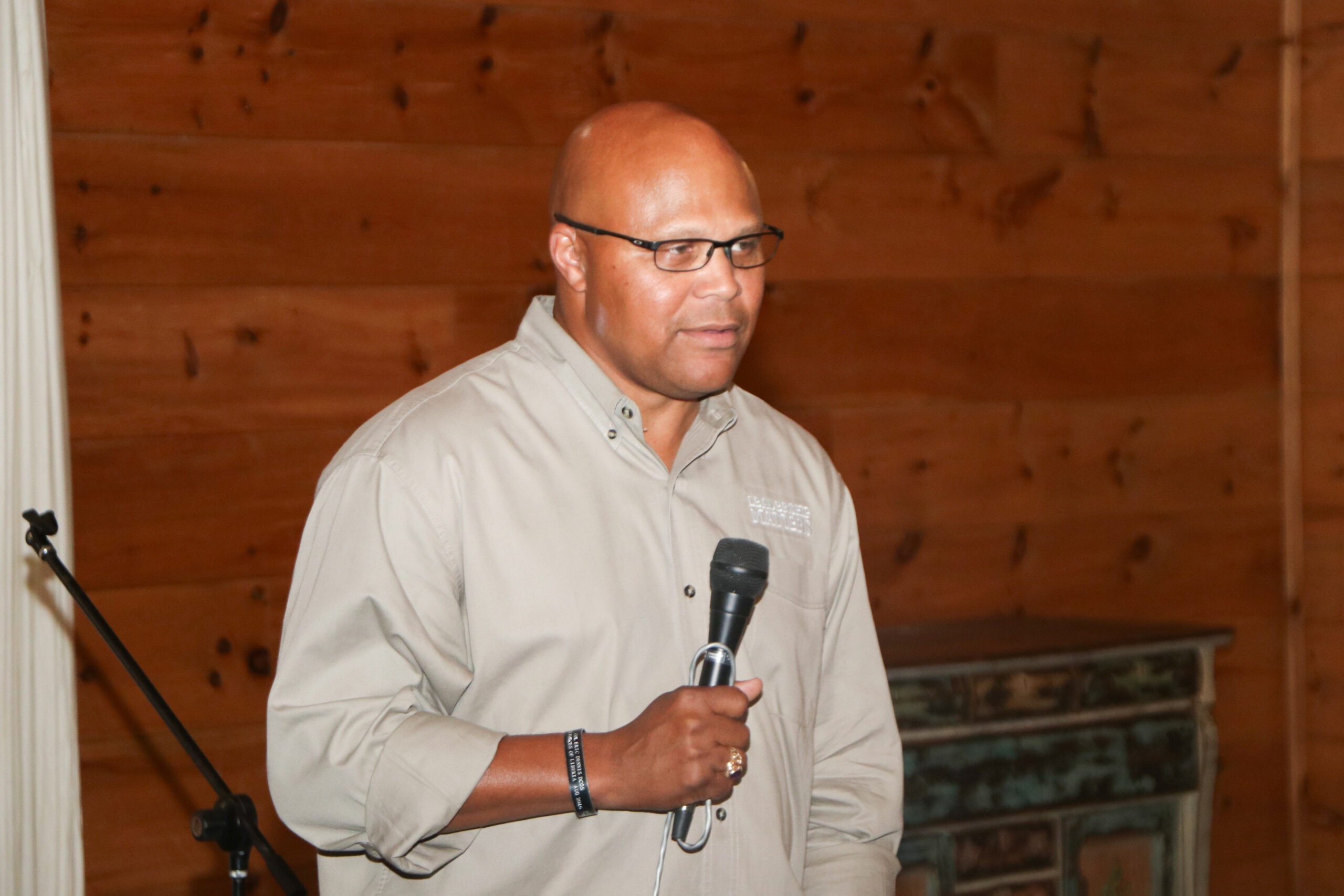
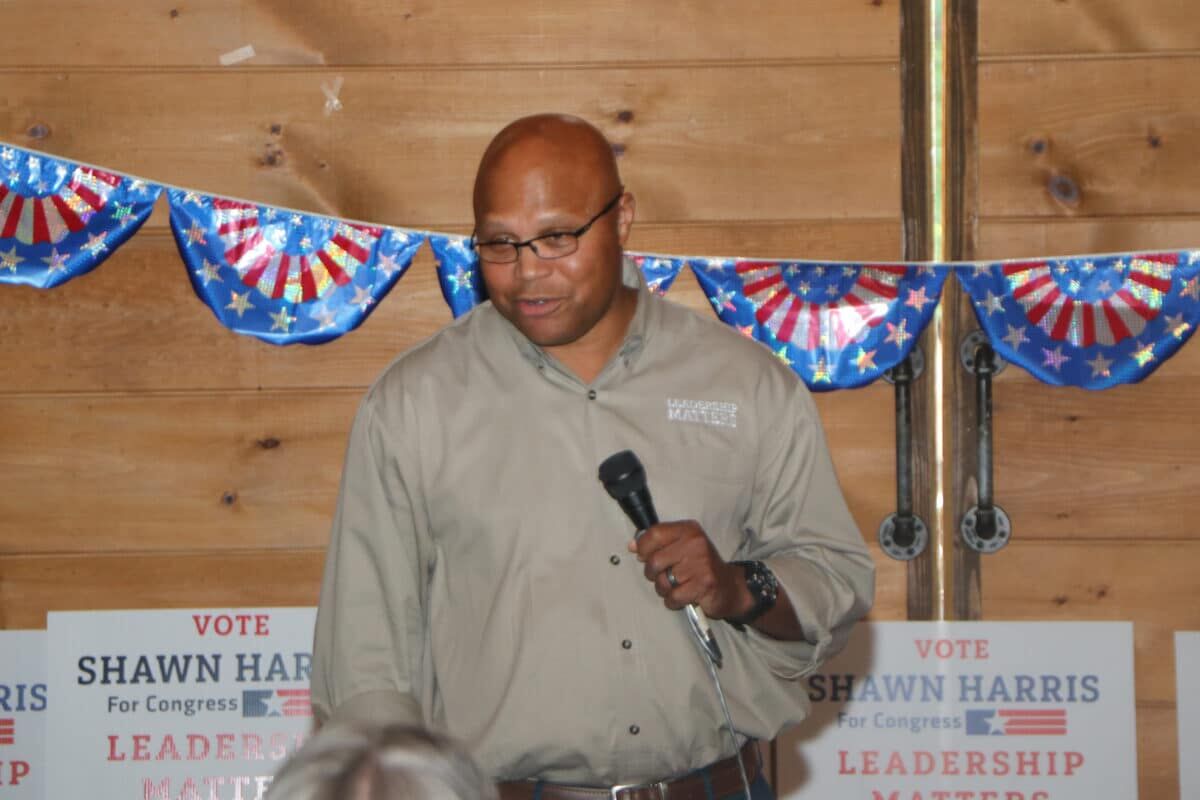
By Brigadier General (Retired) Shawn Harris, Candidate for Congress, Georgia’s 14th Congressional District | Rockmart, GA | September 11, 2026
Twenty-five years ago, our nation was attacked on September 11, 2001. Like millions of Americans, I remember the shock, grief, and uncertainty that followed. We watched our fellow citizens murdered at the World Trade Center, the Pentagon, and aboard United Airlines Flight 93. We watched first responders run toward danger. We watched ordinary Americans come together in an extraordinary time of need.
For those of us who wore the uniform in the years that followed, September 11 was not simply a date on a calendar, but a call to service.
I had already spent years serving our country, first as an enlisted Marine and later as an Army National Guard officer. After the attacks of 9/11, I commanded an Embedded Training Team (ETT) in combat in the mountains of Kapisa, Afghanistan as part of our nation’s prosecution of the Global War on Terror. I saw firsthand the commitment of American service members, young men and women from every background and every corner of the nation who carried out difficult missions far from home because they believed in their oath, their fellow soldiers, and the country they served.
A commander in combat makes decisions knowing that the lives of soldiers, families, and innocent civilians may hang in the balance. The most difficult part of military leadership is not the ceremony, the rank, or the recognition. It is caring for the people entrusted to you, and at times, having to tell a family that someone they love will not be coming home.
Georgia understands the values of service and sacrifice, because Georgia is a state that supports the military. Our state is home to service members, veterans, military families, National Guard members, Reservists, and civilian employees who support America’s defense every day. From Fort Benning and Fort Stewart to Hunter Army Airfield, Robins Air Force Base, Moody Air Force Base, Dobbins Air Reserve Base, Naval Submarine Base Kings Bay, Fort Gordon, and Marine Corps Logistics Base Albany, Georgia’s military communities are woven into the life of our state.
That spirit of service is familiar to me because I grew up on a farm in Blakely, Georgia. I learned early that work must be done, promises must be kept, and people must look after one another. Those lessons carried me from the Marine Corps to the Army, from combat in Afghanistan to senior leadership assignments and eventually to my retirement forty years later as an Army Brigadier General. Today, my wife Karla and I operate a grass-fed cattle farm back home in Rockmart, Georgia, where our neighbors understand that service is not a slogan. It is a way of life.
The lesson of September 11 is not only in how America was attacked. It is in how Americans responded.
We responded when firefighters entered buildings from which others were fleeing. They responded when police officers, medical professionals, construction workers, volunteers, and neighbors came to Ground Zero. We responded when Americans donated blood, raised flags, prayed for strangers, and comforted families they had never met. We responded when more than 250,000 young patriotic Americans joined the military in the year after September 11. In the two decades that followed, millions of Americans served in Afghanistan and Iraq. And thousands never returned home.
Their service is part of the story of September 11. So are the families who waited through deployments, the veterans who came home with visible and invisible wounds, and the Gold Star families who continue to live with an absence no words can fill.
On this anniversary, Georgia should remember that our veterans are not distant figures from history. They are part of every community in the 14th Congressional District and throughout our state.
We honor them best not only with ceremonies, flags, and speeches, but by keeping our promises to them. That means ensuring that veterans receive the health care, benefits, job opportunities, education, and support they earn through their service. It means respecting military families and recognizing the burdens that deployments place on spouses, children, and caregivers. It means sending leaders to Washington who understand the consequences of war, the value of peace, and the lifelong responsibility our nation owes to those who served.
Georgia has always produced citizens willing to serve something greater than themselves. That is who we are. It is what our military communities represent. It is the legacy we must preserve for the next generation.
On September 11, we remember. We honor and recommit ourselves to the country and the people for whom so many have sacrificed.
Targeted ads feel invasive because AI analyzes searches, locations, purchases, and app activity—predicting needs without listening. Digital behavior creates detailed profiles that shape advertising.
By Florita Bell Griffin, Ph.D. | Houston, TX | September 8, 2026
Almost everyone has had the experience. You mention a product in conversation, and later that day an advertisement for something similar appears on your phone. You talk about taking a trip, buying new flooring, changing your diet, or getting a pet, and suddenly related ads seem to follow you everywhere. The experience can feel so specific that many people conclude their phone must have been secretly listening.
Sometimes the explanation is simpler and, in some ways, more unsettling. Modern advertising systems do not need to listen to every conversation in order to learn a great deal about a person. They already receive enormous amounts of information from searches, purchases, location history, website visits, app activity, social-media behavior, loyalty programs, device usage, and the behavior of people with similar interests. Artificial intelligence helps connect those pieces and make predictions about what a person may want next.
Suppose someone begins searching for kitchen cabinets, watches several home-renovation videos, visits a furniture website, and spends time reading about new appliances. Advertising systems can recognize the pattern and conclude that the person may be remodeling. The user may then begin seeing advertisements for flooring, lighting, countertops, contractors, and kitchen equipment. If the person happened to discuss remodeling with a friend that same day, the ad can feel like proof that the conversation was overheard, even though the system may have reached the same conclusion from other digital clues.
Location data can add another layer. A phone may know that its owner visited a car dealership, pharmacy, shopping center, airport, or home-improvement store. Apps can also collect information about device type, browsing habits, approximate age, interests, and previous purchases. Data brokers and advertising networks can combine information from different sources, creating detailed consumer profiles that most people never see.
Artificial intelligence makes those profiles more powerful because it can identify patterns that would be difficult for a human being to notice. It can group people according to likely interests, predict which users may be preparing to move, purchase a vehicle, change jobs, or take a vacation, and decide which advertisement has the best chance of receiving a response. The system does not need to know someone personally in the human sense. It only needs enough data to make a useful prediction.
This is why targeted advertising can feel almost psychic. A person may not have searched directly for a baby stroller, for example, but changes in shopping behavior, location, online reading, and related purchases may cause an advertising system to place that person into a category associated with new parents. Similar predictions can be made about homeownership, travel, education, hobbies, finances, and major purchases.
That does not mean microphones are never used. Many apps request microphone access for legitimate reasons, including voice messaging, calls, video recording, or voice assistants. People should still review which applications have permission to access the microphone, camera, location, contacts, and photographs. An app that does not need a particular permission should not automatically receive it simply because the request appears during installation.
The larger lesson is that privacy in the digital age is not only about whether someone is secretly listening. It is also about how much can be learned from ordinary behavior. A collection of small details can reveal far more than any single piece of information. Search history alone may show what a person is curious about. Location data may show where that person spends time. Shopping data may reveal financial priorities. Social-media activity may reveal interests, relationships, and concerns. When those pieces are combined, they can create a surprisingly accurate picture.
Consumers can reduce some of this tracking by reviewing privacy settings, limiting unnecessary app permissions, turning off location access when it is not needed, clearing advertising identifiers, rejecting optional tracking where possible, and using browser settings that reduce cross-site tracking. It is also wise to pay attention to loyalty programs, free apps, quizzes, and other services that collect information in exchange for convenience.
The goal is not to become afraid of every advertisement or assume that every company is watching every move. The goal is to understand how the modern data economy works. Many digital services are free because attention and personal information have value. Advertising systems are designed to know enough about users to predict what may influence them.
So, is your phone listening to you? Sometimes a device may be using a microphone because you gave an app permission to do so. But in many cases, the more accurate explanation is that the digital world already knows enough about your behavior that it does not need to hear the conversation.
That realization may be even more important. Privacy is no longer only about what we say aloud. It is also about the trail we leave behind every time we click, search, travel, shop, watch, and scroll.
… this column exists for only one purpose and that is to answer your questions on Negro League baseball history. To that end, I need your help … if you are reading this column and enjoy it and want it to continue and you don’t already know everything about Negro League history … then please submit a question on any aspect of Negro League history. Your questions are the lifeblood of Shadow Ball—they shape where we go next.
How Fast Was Cool Papa Bell?
Faster than the speed of light
Faster than Jimmie Lyons, prime v prime
He could cover 100 yards in about 10 seconds
He was, and remains, the fastest baseball player ever
Phil Durnitz of Albuquerque, New Mexico, submitted the question, and I will do my best to answer it. Only one of the multiple‑choice options can be definitively shown to be correct — but each deserves examination.
A. Faster than the speed of light
Satchel Paige was fond of telling this story about his longtime roommate, Cool Papa Bell. In John Holway’s Voices from the Great Black Baseball Leagues (1975), Paige is quoted as saying:
“That man was so fast he could turn out the light and jump in bed before the room got dark.”
Taken literally, Paige is suggesting Bell outran light itself. We’ll file that away for now — in the category of tall tales, but glorious ones.
B. Faster than Jimmie Lyons
In the same Holway interview, Bell recounts one of the stories that helped build his reputation:
“(In 1922 or ’23) Jimmie Lyons was supposed to be the fastest man in the (Negro) League(s)… Rube Foster wanted us to race… So we went out and raced, and I beat Jimmie Lyons… I just ran off from Jimmie Lyons. That’s when I got my reputation.”
Lyons was extremely fast, and beating him was no small feat. But context matters: in 1922–23 Bell was 19 or 20 years old, while Lyons was 32 or 33. It shows Bell was faster than an older Lyons — not necessarily faster than Lyons in his prime.
Bell’s interview continues with stories of scoring from first on bunts, scoring from second on fly balls, and even being “faster than Jesse Owens,” based on the oft‑repeated claim that Bell circled the bases (120 yards) in 12 seconds flat. Holway adds the famous but misleading line that Bell “scored from second on a ground ball to win the 1934 All‑Star Game, 1–0.” The ball, in fact, was hit past the infield and into the outfield for a single. Bell’s recollections are wonderful, but they are unabashed braggadocio.
C. He could run 100 yards in about 10 seconds
We can estimate Bell’s straight‑line speed using his recorded “round‑the‑bases” times. Four such times appear in the historical record:
Shadow Ball Player Speed
Even allowing for exaggeration, all four numbers are spectacularly fast. Paige’s story is entertaining; the 12‑second legend would still be a world record in 2026. But even the slowest verified number — 13.6 seconds, on a wet track, in December 1933, at age 30 — is extraordinary.
For comparison, the fastest Statcast‑measured modern time is Byron Buxton’s 13.85 seconds. A hand‑timed 13.6 and a fully automated 13.85 are essentially identical.
Thus, the record shows Bell was capable of roughly a 10‑second 100‑yard dash at a time when the world record stood at 9.5.
D. He was, and remains, the fastest baseball player ever
Here we enter the realm of opinion — but informed opinion. Using rate statistics from Seamheads (runs scored minus home runs, triples, and stolen bases, prorated per plate appearance), I rank the greatest Negro League speedsters as follows:
Oscar Charleston
Willard Brown
Cool Papa Bell
Bullet Rogan
Jimmie Lyons
Rap Dixon
Hurley McNair
George Shively
Turkey Stearnes
Cristóbal Torriente
Henry Milton, Sam Jethroe, and Doc Dudley would appear here as well but lack sufficient plate appearances to qualify.
Charleston and Bell stand out for combining elite speed with long careers. Bell finishing in the top three of this methodology confirms he was one of the fastest runners in Negro League history. Whether he was the fastest is debatable — Milton, Jethroe, Lyons, Shively, and several Hall of Famers could all stake a claim.
Conclusion
The correct answer is C.
Cool Papa Bell would have been a consistent 10‑flat or better 100‑yard runner at a time when the fastest sprinters in the world were posting 9.6, 9.5, and 9.4. Bell was exactly as fast as legend suggests — and unquestionably one of the fastest players ever to play the game.
Thanks to authors John Holway and Scott Simkus for their excellent work, to Satch and Cool for their stories, and to Mr. Durnitz for his question.
Last Week’s Shadow Ball Significa Question of the Week
Q: What was Atlanta’s most prolific Negro League franchise (in terms of years in the league)? A: The Atlanta Black Crackers — provided by Will Clark of Hackensack, NJ.
This Week’s Shadow Ball Significa Questions of the Week
In 1937, Monte Irvin joined the Newark Eagles under an assumed name — what was it? In 1942, Larry Doby joined the Newark Eagles under an assumed name — what was it?
Ted Knorr
Ted Knorr is a respected Negro League baseball historian, a longtime member of the Society for American Baseball Research’s Negro League Committee, and the founder of the Jerry Malloy Negro League Conference as well as several Negro League Commemorative Nights in central Pennsylvania.
Beyond his research and organizing work, Ted is frequently invited to speak at sporting events, community programs, family gatherings, and educational forums, where he brings Negro League history to life. His deep knowledge of the players, teams, and cultural impact of Black baseball has made him a trusted voice for audiences who want to understand the legacy and significance of the Negro Leagues.
Send questions or Significa answers to shadowball@truthseekersjournal.com or Shadow Ball, 3904 N Druid Hills Rd, Ste 179, Decatur, GA 30033.
Truth Seekers Journal thrives because of readers like you. Join us in sustaining independent voices.
Sens. Raphael Warnock and Ron Wyden opened an inquiry into reports that Trump administration officials may be influencing IRS enforcement against left-leaning nonprofit organizations.
By Milton Kirby | Washington, D.C. | September 5, 2026
More than a decade after the Internal Revenue Service came under fire for subjecting conservative organizations to improper scrutiny, two Democratic senators are asking whether political officials in the Trump administration are attempting to influence IRS enforcement against organizations on the political left.
U.S. Sens. Raphael Warnock of Georgia and Ron Wyden of Oregon have opened an inquiry into reports that senior Treasury officials are considering increased scrutiny of left-leaning tax-exempt organizations and potentially revoking their tax-exempt status.
Warnock is the ranking member of the Senate Finance Subcommittee on Trade, Customs, and Global Competitiveness. Wyden is the ranking member of the Senate Finance Committee.
Their inquiry does not establish that the IRS has improperly targeted any organization. Instead, the senators are seeking documents and answers to determine whether political considerations have influenced or are being used to influence federal tax enforcement.
At the center of the inquiry is a question that reaches beyond the organizations or political party involved: Can Americans trust the IRS to enforce the nation’s tax laws without regard to political ideology?
“Americans of every political persuasion must be able to trust that the IRS applies the tax code objectively under one set of rules,” Warnock and Wyden wrote to Treasury Secretary Scott Bessent and Frank Bisignano, acting head of the IRS.
A Reported ‘Blueprint’
The inquiry follows an Aug. 27 report by the New York Post that Treasury officials were reviewing the tax-exempt status of several organizations, including the Open Society Foundations, Southern Poverty Law Center and Council on American-Islamic Relations, as well as other left-leaning and labor-aligned organizations.
According to the report cited by the senators, members of Bessent’s “inner circle” were developing a “blueprint” that could lead to revocation of some organizations’ tax-exempt status. The newspaper also reported that administration officials wanted to complete “a good chunk of the crackdown” before the November midterm elections.
“If accurate, the New York Post report raises serious questions about whether political officials are influencing IRS decisions concerning particular taxpayers in ways prohibited by federal law,” Warnock and Wyden wrote.
“If accurate” is an important qualification.
The senators’ letter raises questions about what administration officials may be considering or doing. It does not establish that the IRS has been ordered to audit the organizations named in the report or that the agency has decided to revoke their tax-exempt status.
Tax-exempt organizations are not beyond federal enforcement. Organizations operating under Section 501(c)(3) must comply with federal requirements governing their tax-exempt status. Among those restrictions is a prohibition against participating or intervening in political campaigns for or against candidates for public office.
At the same time, IRS guidance allows 501(c)(3) organizations to take positions on public-policy issues, including issues that divide political candidates, as long as their communications do not favor or oppose a candidate.
The issue raised by the Senate inquiry, therefore, is not whether nonprofit organizations can be investigated. It is whether organizations are being selected for scrutiny based on evidence of violations or because of their ideological positions.
Federal Law Restricts Political Intervention
Warnock and Wyden point specifically to Section 7217 of the Internal Revenue Code.
The law makes it unlawful for certain executive branch officials to directly or indirectly request that an IRS employee conduct or terminate an audit or other investigation of a particular taxpayer.
IRS employees who receive prohibited requests are required to report them to the Treasury Inspector General for Tax Administration. A willful violation can result in a fine, imprisonment of up to five years, or both.
The law also contains limited exceptions, including certain requests by the Treasury secretary resulting from implementation of a change in tax policy.
The senators want to know whether Bessent, Treasury political appointees, White House employees or other covered officials communicated with IRS personnel about audits or investigations involving particular taxpayers.
If such communications occurred, they also want to know whether IRS employees reported them to the inspector general and whether Treasury contends any communication was permitted under the tax-policy exception.
Warnock and Wyden additionally raise questions under Section 6103 of the Internal Revenue Code, which generally protects the confidentiality of taxpayer returns and return information.
They ask whether President Donald Trump or White House personnel requested or received taxpayer information concerning tax-exempt organizations connected with the reported initiative and, if so, whether federal requirements governing access to that information were followed.
The letter does not establish that either law has been violated.
National Security Directives Enter the Inquiry
The senators place the reported nonprofit review within a broader series of administration directives.
Their letter points to National Security Presidential Memorandum 7, issued in September 2025, and an executive order directing federal agencies to target financial networks connected to Antifa and domestic terrorism.
Warnock and Wyden contend that those directives extend beyond violent conduct by incorporating ideological viewpoints.
“Rather than targeting actual violence, these directives explicitly conflate terrorism with subjective political viewpoints such as ‘anti-capitalism,’ ‘anti-Christianity,’ and views on race, migration, and gender,” they wrote.
The senators also cite a December 2025 memorandum from then-Attorney General Pam Bondi directing law enforcement to examine financial support for “Antifa-aligned extremists” and pursue applicable tax crimes.
Whether those national-security efforts resulted in improper IRS enforcement against tax-exempt organizations is among the questions the inquiry is seeking to answer.
Ten Questions for the Administration
Warnock and Wyden’s inquiry seeks considerably more than confirmation or denial of the reported “blueprint.”
The senators want the blueprint itself, along with policies, directives, guidance and criteria concerning the selection of tax-exempt organizations for examination or possible revocation.
They want to identify Treasury, IRS, White House and other executive branch officials who developed those policies or recommended particular organizations for review.
They ask whether Treasury, the White House or another executive branch office identified specific organizations for IRS examination, investigation, compliance review or possible revocation.
One question goes directly to the approaching election.
The senators ask whether any executive branch official requested that IRS personnel “accelerate, prioritize, complete, or take enforcement action” concerning particular tax-exempt organizations before the November 2026 elections.
Another asks whether political affiliation, ideological viewpoint, electoral timing or classifications such as “Antifa-aligned” have been used to identify organizations for IRS scrutiny.
The senators also want the administration to explain the legal and evidentiary standards used to determine when a tax-exempt organization has directly or indirectly financed political violence or domestic terrorism and what safeguards prevent officials outside the IRS from directing examinations over the objections of career IRS personnel.
One of their final questions concerns Bessent himself.
Because of Bessent’s previous senior roles at Soros Fund Management and its relationship with the Open Society Foundations, the senators are requesting information about any ethics review, recusal determination, waiver or other safeguards governing his participation in matters involving the foundation.
Warnock and Wyden also instructed Treasury and the IRS to preserve potentially responsive records, including emails, text and encrypted messages, memoranda, notes, calendar entries, meeting materials and draft documents.
They requested answers and documents by Sept. 15.
Echoes of 2013
The inquiry carries particular significance because Washington has confronted questions about political influence over IRS administration before.
In 2013, the Treasury Inspector General for Tax Administration found that the IRS had used inappropriate criteria to identify applications from Tea Party and other organizations for additional scrutiny.
The controversy led the Senate Finance Committee to conduct a bipartisan investigation lasting more than two years.
Republicans and Democrats did not agree on every conclusion. Republicans argued that conservative organizations had been unfairly targeted and that political bias contributed to their treatment. Democrats emphasized serious management failures and noted that the investigation did not establish criminal wrongdoing. The investigation also examined improper treatment and lengthy delays involving some progressive organizations.
But the episode established a broader principle: federal tax administration should not depend upon an organization’s political viewpoint.
Warnock and Wyden invoke that history directly.
“Republican leaders repeatedly argued that tax administration must never be influenced by political bias or viewpoint,” they wrote. “That principle should apply equally regardless of the political views of the organizations involved.”
The comparison provides a standard that does not depend on which political party controls the White House.
If conservative organizations should not face improper IRS scrutiny because of their political views, organizations on the left should receive the same protection.
Enforcement or Political Retaliation?
None of this means nonprofit organizations are immune from government scrutiny.
Organizations granted tax-exempt status must comply with the laws governing that status. Evidence that an organization violated federal tax law can legitimately trigger examination and enforcement.
Warnock and Wyden acknowledge that distinction.
“Organizations that violate section 501(c)(3) should face appropriate enforcement regardless of their politics,” they wrote, “and organizations should never face IRS scrutiny because political officials disapprove of their views.”
That distinction is at the center of the inquiry.
At this stage, publicly available information does not establish that political officials directed the IRS to investigate particular organizations. The inquiry is intended, in part, to determine whether such direction occurred.
It also gives Treasury and the IRS an opportunity to dispute the senators’ premise, explain the purpose of any review of tax-exempt organizations and describe safeguards intended to keep political considerations from influencing IRS enforcement.
The senators have requested answers by Sept. 15.
Those responses could provide the first opportunity to compare the allegations that prompted the inquiry with the administration’s account of what Treasury and the IRS are actually doing.
Until then, the central question remains unanswered: Are organizations being examined because there is evidence they violated federal law, or because political officials disagree with their views?
The answer could determine whether this remains a dispute over tax policy and political rhetoric or becomes a larger examination of the independence of the Internal Revenue Service.
Truth Seekers Journal thrives because of readers like you. Join us in sustaining independent voices.
Shawn Harris’s grassroots campaign tests whether a Black Democrat can compete in deep red rural Georgia, leveraging biography, small dollar fundraising and growing support across northwest communities.
“This story was originally published by Barn Raiser, your independent source for rural and small town news.”
Gap narrows in a district once held by Marjorie Taylor Greene
Lori and Scott Jordan were leaving the Kroger in Dallas, Georgia, on a rainy Tuesday afternoon. They were among the rare people willing to stop and talk politics while others hurried to their cars.
“I got plenty to say,” says Lori. They’ve seen the price of everything go up recently. “The sign right there tells a lot of it. $4.09,” says Scott, pointing to a nearby gas sign. “[The president’s] on TV saying it’s less than $2 per gallon.”
Democrat Shawn Harris speaks to supporters during townhall in Chatsworth, GA July 21, 2026 (Milton Kirby)
The Jordans, a white, middle-aged couple, say they are voting for Shawn Harris, a Black retired brigadier general running as a Democrat for Congress in Georgia’s sprawling 14th Congressional District. The couple frequently finished each other’s sentences while explaining that in the last two years, Scott, 63, who uses a pacemaker, lost his federal health coverage. After the One Big Beautiful Bill rolled back tax credits and imposed new requirements to the Affordable Care Act in 2025, their adult children no longer have access to health insurance, including their daughter, a recent cancer survivor.
“She doesn’t have insurance now,” Lori says quietly.
Dallas, a town of 15,000 more than 30 miles northwest of Atlanta, is the county seat of Paulding County, one of the most competitive parts of a congressional district that spans roughly 3,000 square miles along the northwest corner of Georgia’s state line. In previous years, the district held national attention because of its firebrand Republican representative Marjorie Taylor Greene.
Greene rose to power in 2020, riding a wave of extreme right-wing reaction during the pandemic, during which she compared vaccine requirements to the yellow stars that Nazis forced Jews to wear during the Holocaust. Her unabashed promotion of Donald Trump’s false claims of a rigged 2020 election, QAnon conspiracy theories and Christian Nationalist views enabled her rapid ascent as a central figure of the MAGA movement.
Yet Greene’s subsequent fall from grace in the Republican party has marked one of the more astonishing political reversals in recent memory. By 2025, tensions that emerged between Trump and Greene had turned into a full-blown rift as Greene criticized Trump for his opposition to the Epstein Files Transparency Act and ignoring an “America first” agenda with military interventions in Venezuela and Iran. In November 2025, Greene announced her decision to resign from Congress, leaving power up for grabs in her Georgia seat.
14th US Congressional District
In a March special election to complete Greene’s unexpired term, Democrat Shawn Harris finished first in a crowded field of 17 candidates, 12 of them Republicans, receiving 37% of the vote. Republican Clay Fuller finished second with 35%.
In the April runoff, Fuller, who is white, defeated Harris, with 56% of the vote to Harris’s 44%, a difference of just over 15,000 votes. In Paulding County, population 191,000, Harris lost by just 273 votes, garnering 49.9% of the vote, a dramatic 9-point improvement over his previous run.
Both men subsequently secured their parties’ nominations for the November election (Fuller also received Trump’s endorsement), setting up another Harris-Fuller contest, this time for a full two-year term.
The result could carry implications beyond northwest Georgia. In 2024, Harris challenged Greene and lost decisively, receiving just 36% of the vote. Harris’s 44% in the April runoff could either represent evidence of an electorate becoming more receptive to him or the ceiling for a well-funded Democrat in one of Georgia’s most Republican congressional districts.
At a time when Democrats nationally are searching for ways to compete outside major cities and suburbs, Harris is testing whether biography, small-dollar fundraising, local organizing and a deliberate appeal to independents and Republicans can overcome a district’s deeply established partisan identity.
Soldier, farmer and candidate
For Harris, a retired brigadier general and cattle farmer, places like Paulding may determine whether his latest campaign for Congress ends differently from the ones before it.
He is attempting something Democrats have been unable to accomplish in this deeply Republican corner of Georgia: win a seat in Congress. And he’s attempting it as a Black man in an 88% white district without an ounce of support from the Democratic Congressional Campaign Committee (DCCC).
This time, however, his numbers show his effort is about more than making a statement.
Harris’s appeal to northwest Georgia voters begins with his biography.
He grew up on his family’s farm in southwest Georgia. After high school, he enlisted in the U.S. Marine Corps. He later earned a degree in agribusiness from Tuskegee University, where he met his wife, Karla. He transitioned to the U.S. Army, serving as a combat infantry commander in Afghanistan and rising to the rank of brigadier general before retiring. Today, Harris and his wife operate a first-generation grass-fed cattle farm near Rockmart, 50 miles northwest of Atlanta.
Speaking before voters in rural Chatsworth in July, Harris presented himself as a politician focused on constituent service.
“When I get to D.C., my focus is one hundred percent you, your kids and your grandkids,” Harris told the audience. “I don’t need to be seen on TV. I’m not looking to be some celebrity.”
Shawn Harris speaks to voters at a campaign event in Chatsworth, Georgia, on July 21. (Milton Kirby)
For at least one voter in Chatsworth, that message strikes a chord. Peggy Hobgood voted for Trump 3 times.
“Just seems like this time, I hate to say this, that man’s all about putting his name on a building or a boat or a dollar bill,” Hobgood says. “We don’t need a president like that and we don’t need another one falling in behind him either. I just hate to see people, older people who worked their whole lives and they’ve got nothing.” But Hobgood says she has no plans to vote again because “it’s crooked everywhere.”
Harris calls himself a moderate, “common sense” Democrat and argues that his path to Congress requires a coalition of Democrats, independents and Republicans. He is running on bread-and-butter issues such as better roads, more mental health services, more health clinics, lower grocery prices, expanded broadband and a fully-funded farm bill. Fuller, his opponent, is an attorney who also serves in the Air National Guard. Fuller grew up in north Georgia and was the district attorney for a four-county circuit in northwest Georgia, according to his campaign website. Appointed by Trump as a White House Fellow during the president’s first term, he identifies himself as a Christian conservative who defends the unborn. He espouses America First policies including tougher immigration enforcement and mass deportation.
Donald Trump carried the 14th District by roughly 37 percentage points in 2024. But the president’s polling numbers have sunk to new lows. Democratic candidates across the country are tapping into the economic hardship voters are facing from arbitrary on-and-off tariffs and an unprovoked war on Iran driving up prices while Republicans respond with cries of communism.
Harris sees his campaign’s role in a larger Georgia political landscape where many key races are in play.
Democrat Keisha Lance Bottoms, the former mayor of Atlanta, is in a statistical tie with billionaire newcomer Rick Jackson for the open governor’s seat, according to Georgia-based pollster InsiderAdvantage, WABE public radio reports. Jackson announced last week that he has allocated $87 million in advertising against Lance Bottoms, who has less than $1 million on hand. The same poll also showed Sen. Jon Ossoff, the Democratic incumbent, 7 points ahead of his challenger Mike Collins. Both candidates are multimillionaires, according to the Atlanta Journal Constitution.
“If Jon Ossoff is still our senator, and Keisha Lance Bottoms is our governor, she just made history,” Harris tells Barn Raiser. “And then everybody else below me gets elected, all the way down to the lowest level you can come up with, and I lose, that is still a win.”
Measuring rural support
Harris Campaign Communications Representative Lauren Boone tells Barn Raiser that support is already developing across rural Northwest Georgia.
Boone points to local volunteers, donors, people placing yard signs and residents attending events. The campaign says its volunteer operation extends throughout the district and includes people from rural and agricultural communities.
Boone also claims that campaign canvassing from the special and runoff elections indicated Harris received support from 65% of independents and 20% of Republicans.
Georgia does not register voters by political party, making crossover voting difficult to determine from election returns alone, so the campaign’s numbers do not prove Harris won 20% of Republican voters. But they reveal what Harris’s campaign believes its own voter contacts are telling it, and they help explain the campaign’s strategy.
A yard sign supporting Shawn Harris in Georgia’s 14th Congressional District. (Milton Kirby)
An analysis of the election results offers some insights, though. In more Democratic-leaning parts of the district, Harris was able to hold his own, garnering between 43% and 58% of the vote.
But the numbers change considerably farther into the district’s Republican strongholds. In those areas, support for Harris ran between 24% and 36%, far behind Fuller.
Perhaps most strikingly, Harris received only 31% of the vote in Polk County, where he lives and farms.
Those results show both the opportunity and the problem facing his campaign. Harris has demonstrated significant competitiveness in portions of the district, while a substantial Republican wall remains elsewhere.
Can Harris really win over Republicans?
The narrow margin in a Republican stronghold like Paulding does not mean that Paulding has suddenly become Democratic, nor does it establish that large numbers of Republicans crossed over to Harris.
It does demonstrate something more limited, but important: in at least one populous part of this overwhelmingly rural and Republican district, Harris was able to make the race essentially even.
For Democrats looking nationally at whether deeply Republican territory can still be contested, Harris does not necessarily have to turn every red county blue. Neither does he have to persuade most Republicans to vote Democratic. He just needs enough of them, combined with Democrats and independents, to change the arithmetic in counties where Republican margins have traditionally been overwhelming.
Rural Georgians feeling the economic pain of the Trump administration’s policies combined with inaction by a Republican-led Congress might just tip the scale.
Paulding County offers a glimpse of what that would look like.
An $8 million question
Harris has demonstrated an extraordinary ability to raise money without party support.
Federal Election Commission (FEC) records show his campaign raised approximately $8.1 million from April 2025 through June 30, 2026, four times more than his opponent.
Nearly all came from individual contributions. About $6.22 million of Harris’s individual contributions were reported as unitemized.
Communications Representative Boone says the average contribution is $22.02, although that figure cannot be independently verified by FEC reports. Fewer than 50 contributors have donated more than $3,000. Harris reported no candidate loans and no contributions from party committees.
Campaign records show that Harris hired a Massachusetts campaign consultant called Campaign Industries, founded by a veteran election campaign organizer Mac D’Alessandro and a veteran union organizer John Hennelly. It offers candidates complete campaign services from creating strategy to hiring, firing and managing field staff.
The Harris campaign has dedicated more than $3.2 million to digital fundraising and social media, which explains, in part, the high number of small donors.
Boone says the campaign maintains a small staff, with four regular staffers and several part-time consultants and support staff, allowing it to devote resources to direct voter contact.
“We are very focused on our field program, door knocking, phone calling, town halls, etc. throughout the district,” she says. “Our amazing volunteer corps has played a big part in allowing this model to work so successfully.”
Less than $1 million was spent on campaign staff during the 12-month period, according to Boone. The remainder went toward fundraising, voter contact and persuasion through field operations, social media and paid media.
Boone says that in addition to nearly 200 active volunteers inside the district, the campaign has more than 500 nationwide. Some of those volunteers, she says, are expected to travel to northwest Georgia during the closing days of the campaign. For a congressional candidate receiving no DCCC support, the nationwide volunteer network presents an unusual contrast.
Through June 30, Fuller reported approximately $1.85 million in receipts and $1.78 million in spending. About $1.08 million came from individuals, with his top donors contributing tens of thousands each and another $305,481 from other political committees. Fuller also loaned his campaign $450,000.
The Republican PAC Conservatives for American Excellence has spent nearly $500,000 opposing Harris. Additionally, more than $2.7 million in dark money is backing Fuller.
Fuller’s donor list includes the American Israel Public Affairs Committee (AIPAC), the Koch Foundation, MAGA, Inc., Lockheed Martin and WinRed. His PAC donor list is more than 100 organizations long and totals an estimated $305,000. (By comparison, four PACs have donated just under $14,000 to Harris.)
Fuller has also spent the majority of his funds on media buys and digital strategy. His campaign consultant is Wiregrass Strategies, a firm run by Brandon Phillips, manager of Donald Trump’s 2016 Georgia presidential campaign. There is little indication of major expenditures on field staff in his FEC report. His campaign did not respond to requests for interviews.
The contrast shows Harris is attempting to finance a competitive campaign largely through individual contributions and an enormous small-dollar fundraising operation.
Fuller, on the other hand, is benefiting from a different financial ecosystem, including candidate financing, PAC contributions, major donors and outside spending.
A test bigger than GA-14
Harris frequently tells audiences that “leadership matters.” For him, the phrase extends beyond winning an election.
“Leadership means you know when to get the hell out of the way, so somebody else can get in the seats,” Harris told an audience in July.
He has also framed leadership as something extending beyond himself, talking about helping elect other candidates and building political participation throughout the ticket.
His campaign expenditures show he means it. Not only is the Harris campaign not receiving funds from the Democratic Party, he is donating to them. Federal filings show the Harris campaign donating more than $27,000 to Georgia’s state Democratic party and multiple county Democratic parties in the district for event sponsorships and more.
Georgia’s 14th District is becoming a test of something larger: Can a Black Democrat compete in deep-red rural and white America without waiting for the national party to decide the race is winnable?
Harris is betting millions of dollars, hundreds of volunteers and yet another campaign that the answer is yes.