House Of Representatives Passes 13th Amendment, Abolishing Slavery

Reflecting on the 161st Anniversary of the 13th Amendment – A Nation at War Takes a Defining Step Toward Freedom

By Milton Kirby | Atlanta, GA | January 31, 2026

Today marks a date that should be etched into the mind of every American who values the sanctity of the law and the progress of human liberty. On this day, January 31, 1865, the United States House of Representatives sat in a chamber thick with the scent of tobacco and the heavy weight of history. They were there to decide if the “peculiar institution” of slavery would finally be purged from our national charter.

The amendment’s language was stark in its clarity:
“Neither slavery nor involuntary servitude… shall exist within the United States, or any place subject to their jurisdiction.”

As we at The Truth Seekers Journal spend our days digging through modern court authorizations and federal actions, it is vital to look back at the most significant “court-authorized” action in our history: the passage of the 13th Amendment.

A House Divided, A Gallery Overflowing

The atmosphere in Washington 161 years ago was electric. The Civil War was grinding toward its bloody conclusion, but President Abraham Lincoln knew that his Emancipation Proclamation was merely a wartime measure, a temporary fix that could be undone by a future court or a hostile peace. He needed a “King’s cure,” a permanent constitutional seal that would ensure freedom was not just a policy, but a foundational right.

The vote was far from a sure thing. Just months earlier, the House had failed to reach the necessary two-thirds majority. But through the relentless political maneuvering of James Mitchell Ashley and the unwavering moral clarity of Thaddeus Stevens, the tide began to turn.

When the final tally was announced—119 to 56—the House erupted. Reports from the time describe a “tumult of joy” that broke all decorum. Members wept openly. The galleries cheered so loudly the rafters shook. For the first time, the word “Slavery” was used in the Constitution not to protect it, but to abolish it forever.

The vote came nearly four years into the Civil War, at a moment when the Union’s military fortunes had begun to turn and the moral urgency of abolition had become inseparable from the nation’s survival. President Abraham Lincoln, who had issued the Emancipation Proclamation two years earlier, had long argued that only a constitutional amendment could permanently end slavery across all states including those loyal to the Union.

The Power of the Record

What strikes me, as I review the FBI’s recent confirmations regarding election record custody in Union City, is the parallel of accountability. In 1865, the struggle was over the custody of human lives; today, our struggle is often over the custody of the truth and the integrity of our democratic processes.

The 13th Amendment succeeded because of a transparent, recorded vote. It succeeded because men like Lincoln and Stevens weren’t afraid to push against the status quo to ensure that the law reflected the will of a free people.

Why We Remember

At The Truth Seekers Journal, we believe that history is a living document. When we ask the FBI about the statutory basis for a search warrant, we are standing on the shoulders of those who demanded that the federal government operate under the light of constitutional authority.

The 13th Amendment didn’t just end a dark chapter; it set a precedent that the Constitution belongs to the people, and its amendments are our tools for course correction.

As we continue to investigate the events unfolding at the Fulton County Election Hub, let us remember the lesson of January 31, 1865: Truth and transparency are the only path to a more perfect union.

Truth Seekers Journal thrives because of readers like you. Join us in sustaining independent voices.

FBI Confirms Federal Judicial Authorization in Fulton Election Records Search

Atlanta, GA | January 30, 2026

Editor’s Note: This update follows The Truth Seekers Journal’s earlier reporting on the FBI’s execution of a search warrant at the Fulton County Election Hub and Operations Center and reflects the agency’s first written response to TSJ’s request for clarification.

The Federal Bureau of Investigation has confirmed that Wednesday’s search and seizure at the Fulton County Election Hub and Operations Center was authorized by a federal judge but says no additional details can be released as the investigation continues.

In a written response to The Truth Seekers Journal, FBI Atlanta Public Affairs stated that agents executed a “court authorized law enforcement action” at the county’s elections facility located at 5600 Campbellton Fairburn Road in Union City, Georgia.

The FBI further confirmed that authorization for the search was granted by a judge associated with the U.S. Attorney’s Office for the Northern District of Georgia. No further information was provided regarding the scope of the warrant, the materials sought or seized, or whether any individuals or entities have been identified as targets of the investigation.

“Our investigation into this matter is ongoing so there are no details that we can provide at the moment,” the FBI said.

The search, which involved records related to the 2020 election, has drawn public attention due to ongoing national scrutiny of election administration, record custody, and voter confidence.

The Truth Seekers Journal previously requested clarification on the legal basis and scope of the action. The FBI’s response confirms federal judicial oversight while underscoring that the matter remains active. No timeline was provided for the release of additional information.

Related articles

FBI Executes Search Warrant at Fulton County Election Hub Seeking 2020 Ballots

Fulton County: An Economic, Cultural, and Educational Hub for Georgia

No contribution is too small. Support us today and help keep truth accessible for all.

MARTA Unveils NextGen Bus Network, Reach Service, and Better Breeze Fare System at Rider Open House

MARTA previews major transit upgrades, including Bus Rapid Transit, Reach on-demand service, and the Better Breeze fare system, during a series of rider open houses across metro Atlanta.

By Milton Kirby | Atlanta, GA | January 30, 2026

The Metropolitan Atlanta Rapid Transit Authority opened its doors to riders this week, hosting a systemwide open house aimed at previewing major service upgrades, revised bus routes, and new fare technology that will reshape how Atlantans move across the region beginning this spring.

The open houses are part of MARTA’s outreach around its NextGen Bus Network, the launch of Bus Rapid Transit (BRT) service, the introduction of MARTA Reach, and the transition to the agency’s new Better Breeze fare collection system. Rather than formal presentations, the events feature informational displays and staff available to answer general questions and help riders understand how the changes may affect their daily commutes..

Officials emphasized that the changes are intended to make service faster, more reliable, and more accessible—while addressing long-standing rider concerns around safety, fare evasion, and neighborhood connectivity.


Bus Rapid Transit and New Neighborhood Connections

One of the most visible additions is MARTA’s Bus Rapid Transit service, which will use articulated electric buses operating every 10 to 12 minutes in dedicated lanes. The goal is to deliver rail-like frequency and reliability on major corridors without the cost or disruption of new rail construction with greater flexibility than rail expansion.

Photo by Milton Kirby MARTA Reach Bus

Complementing BRT is MARTA Reach, a new on-demand transit service developed as part of the NextGen Bus Network. Reach will offer shared, curb-to-curb rides within 12 designated zones and serve as a first- or last-mile connection to existing bus routes and rail stations.

Vans are ADA-accessible and available 18 hours per day, seven days a week. Riders can request service through a mobile app or by phone.

Reach zones include West Atlanta, Kirkwood/Candler Park, East Point, Gresham Park, North Fulton, and several South DeKalb and industrial corridors, expanding MARTA’s footprint beyond traditional fixed-route service.


NextGen Bus Network: Nearly Every Route Changes

Beginning April 18, 2026, MARTA’s NextGen Bus Network will bring sweeping changes to nearly every bus route in the system. The redesigned network focuses on simpler routes, fewer transfers, and more frequent service.

Seventeen major corridors—including Buford Highway, Memorial Drive, Campbellton Road, Covington Highway, and Metropolitan Parkway—will see buses arriving every 15 minutes or better. Timed transfer points and more consistent schedules are intended to reduce wait times and improve reliability throughout the day and on weekends.

MARTA officials stressed that while some routes may look different on paper, the redesign is aimed at getting riders to more places, faster, with fewer missed connections.


Budget, Safety, and Fare Evasion Addressed in Writing

Questions regarding fare evasion, station safety, and the budget impact of new services were submitted by The Truth Seekers Journal and addressed in written responses from MARTA officials following the open house.

According to MARTA, the Rapid A-Line BRT service is being funded through the voter-approved More MARTA half-penny sales tax, while MARTA Reach will be supported by the agency’s Core Penny sales tax. Final operating budgets for both programs are currently under development as part of MARTA’s FY2027 budget process and will be presented to the MARTA Board for approval once finalized.

On safety and fare evasion, MARTA officials stated that the new Better Breeze faregates are designed to be more tamper-resistant and can be monitored and adjusted remotely. While MARTA has not yet released system-specific data, officials noted that the agency reviewed case studies from peer transit systems showing significant reductions in fare evasion following the installation of higher, reinforced faregates.

When asked about evidence supporting those claims, MARTA pointed to case studies from other transit systems. Washington Metro has reported fare evasion reductions of more than 70 percent at stations with higher, reinforced faregates, while BART in the Bay Area has documented reductions of roughly 55 to 60 percent following similar upgrades.

MARTA plans to collect and analyze its own fare-evasion data once the new system is fully deployed.


Better Breeze: New Faregates, New Rules

Better Breeze Faregates & Ticketing – Courtesy MARTA

A major focus of rider questions centered on MARTA’s transition to the Better Breeze fare system, which replaces the existing Breeze cards, vending machines, and mobile app.

Beginning March 28, 2026, MARTA will operate both systems during a transition period that runs through May 2. After that date, current Breeze cards and the Breeze Mobile 2.0 app will no longer work, and balances will not carry over.

The new system introduces contactless payments using credit or debit cards, mobile wallets, new Breeze cards, and a redesigned mobile app. Cash will continue to be accepted on local buses.


More Chances for Public Input

MARTA has scheduled more than 20 additional open houses across the region through late February, with stops at rail stations, libraries, recreation centers, and city halls from Alpharetta to College Park and Doraville.

Agency officials encouraged riders to attend, review proposed route changes, ask questions, and prepare for the upcoming fare transition.

For riders navigating a growing region with evolving transportation needs, the message from MARTA was clear: change is coming—and the agency wants the public informed before it arrives.


Upcoming MARTA Open House Dates and Locations

MARTA has scheduled additional open houses across metro Atlanta to provide riders with information about upcoming service changes, new routes, and fare system updates.

February 2026 Open House Schedule

  • Monday, Feb. 2 | 7:00–11:00 a.m.                 Lindbergh Center Station
    2424 Piedmont Rd NE, Atlanta, GA 30324
  • Monday, Feb. 2 | 3:00–6:00 p.m.                   Lindbergh Center Station
    2424 Piedmont Rd NE, Atlanta, GA 30324
  • Tuesday, Feb. 3 | 7:00–11:00 a.m.                 College Park Station
    3800 Main St, College Park, GA 30337
  • Tuesday, Feb. 3 | 3:00–6:00 p.m.                  College Park Station
    3800 Main St, College Park, GA 30337
  • Wednesday, Feb. 4 | 4:00–8:00 p.m.             Alpharetta City Hall
    2 Park Plaza, Alpharetta, GA 30009
  • Monday, Feb. 9 | 4:00–8:00 p.m.                   Northwest Library at Scotts Crossing
    2489 Perry Blvd NW, Atlanta, GA 30318
  • Tuesday, Feb. 10 | 7:00–11:00 a.m.               East Point Station
    2848 East Main St, East Point, GA 30344
  • Tuesday, Feb. 10 | 3:00–6:00 p.m.                East Point Station
    2848 East Main St, East Point, GA 30344
  • Wednesday, Feb. 11 | 4:00–8:00 p.m            Exchange Recreation Center
    2771 Columbia Dr, Decatur, GA 30034
  • Thursday, Feb. 12 | 7:00–11:00 a.m.            North Springs Station
    7010 Peachtree Dunwoody Rd, Sandy Springs, GA 30328
  • Thursday, Feb. 12 | 3:00–6:00 p.m.              North Springs Station
    7010 Peachtree Dunwoody Rd, Sandy Springs, GA 30328
  • Monday, Feb. 16 | 7:00–11:00 a.m.               H.E. Holmes Station
    70 Hamilton E. Holmes Dr NW, Atlanta, GA 30311
  • Monday, Feb. 16 | 3:00–6:00 p.m.                 H.E. Holmes Station
    70 Hamilton E. Holmes Dr NW, Atlanta, GA 30311
  • Tuesday, Feb. 17 | 4:00–8:00 p.m.                Tucker–Reid H. Cofer Library
    5234 Lavista Rd, Tucker, GA 30084
  • Wednesday, Feb. 18 | 4:00–8:00 p.m.           The Gathering Place Community Center
    6280 Bruant St., Union City, GA 30291
  • Thursday, Feb. 19 | 7:00–11:00 a.m.            Kensington Station
    3350 Kensington Rd, Decatur, GA 30032
  • Thursday, Feb. 19 | 3:00–6:00 p.m.              Kensington Station
    3350 Kensington Rd, Decatur, GA 30032
  • Monday, Feb. 23 | 4:00–8:00 p.m.                 Adams Park Library
    2231 Campbellton Rd SW, Atlanta, GA 30311
  • Tuesday, Feb. 24 | 4:00–8:00 p.m.                Carver YMCA
    1600 Pryor Rd SW, Atlanta, GA 30315
  • Wednesday, Feb. 25 | 7:00–11:00 a.m.         Doraville Station
    6000 New Peachtree Rd, Doraville, GA 30340
  • Wednesday, Feb. 25 | 3:00–6:00 p.m.           Doraville Station
    6000 New Peachtree Rd, Doraville, GA 30340
  • Thursday, Feb. 26 | 7:00–11:00 a.m.            Georgia State Station
    170 Piedmont Ave SE, Atlanta, GA 30303
  • Thursday, Feb. 26 | 3:00–6:00 p.m.              Georgia State Station
    170 Piedmont Ave SE, Atlanta, GA 30303

Riders are encouraged to attend an upcoming open house to review route changes, explore new services, and prepare for the upcoming Better Breeze fare transition.

Related articles

New Year, New MARTA: 2026 Upgrades Aim to Boost Safety, Reliability, and the Rider Experience

MARTA rolls out Big Changes with New Fare System Upgrades

MARTA Unwraps the Holidays with Free Rides, Festive Buses, and Gifts for Riders

From Tokens to Tap-to-Pay: MARTA Unveils Better Breeze

World-Class Transit for World-Class Soccer: MARTA Steps Up

MARTA rolls out Big Changes with New Fare System Upgrades

MARTA Unwraps the Holidays with Free Rides, Festive Buses, and Gifts for Riders

MARTA Rolls Out an Outkast Tribute Across Atlanta

MARTA Completes Garnett Station Platform Renovation

From Tokens to Tap-to-Pay: MARTA Unveils Better Breeze

MARTA to Close Five Points Peachtree Entrance as Next Phase of Transformation Begins

Support open, independent journalism—your contribution helps us tell the stories that matter most.

FBI Executes Search Warrant at Fulton County Election Hub Seeking 2020 Ballots

The FBI executed a search warrant at Fulton County’s Election Hub, seizing 2020 ballots and records in a move local officials call alarming and politically charged.

By Milton Kirby | Union City, GA | January 29, 2026

Federal Bureau of Investigation agents executed a court-authorized search warrant Wednesday at the Fulton County Election Hub and Operations Center in Union City, Georgia, seizing records connected to the 2020 presidential election as part of what authorities described as an ongoing federal investigation.

The FBI confirmed it was conducting “court-authorized law enforcement activity” at the county’s primary elections facility south of Atlanta but declined to provide further details. “Our investigation into this matter is ongoing so there are no details that we can provide at the moment,” the agency said in a statement.

Fulton County Elections Hub

Fulton County spokesperson Jessica Corbitt-Dominguez confirmed that the warrant sought 2020 election records but declined further comment while the search was underway. County officials said the FBI remained inside the building into the evening hours.

County Leaders Express Alarm and Compliance

Robb Pitts, chair of the Fulton County Board of Commissioners, told reporters late Wednesday that he did not know where the seized records were being taken.

“All I know is that as long as those boxes had been in the control of the county in this facility, they were safe and secure,” Pitts said. “I can no longer, as chair of this board, satisfy not only the citizens of Atlanta but the citizens of the world that those ballots are still secure.”

Sherri Allen, chair of the Fulton County Board of Registration and Elections, said the board “fully complied” with the FBI and confirmed agents were still on site as of 8 p.m. Eastern Time.

State Sen. Josh McLaurin, a Democrat whose district includes Fulton County, called the search “extremely alarming,” warning that it could further erode public trust in election administration.

Scope of the Warrant and Legal Questions

According to county officials, the FBI sought all ballots from the 2020 election in Fulton County, including tabulator tapes, ballot images, and voter rolls.

Fulton County Commissioner Mo Ivory said the initial warrant presented by agents was “incorrect legally” and challenged by county officials on site. The FBI later returned with a corrected warrant, she said.

The county’s Clerk of Superior Court, Che Alexander, who is the legal custodian of the election materials, was present during the search and inventorying the items taken, Ivory said.

“The commissioners, the chairman, the county attorney are trying to figure out a legal plan,” Ivory said during a press conference outside of the facility. “Maybe an injunction, a motion to quash, something. We’re trying to figure it out.”

Commissioner Marvin Arrington Jr. said the Trump administration had previously attempted to obtain the same 2020 election records through civil litigation. Because the records were sealed as part of earlier investigations, the county did not release them. Arrington noted the records were scheduled for release within months as a result of those civil actions.

He questioned why a criminal investigation—with no named defendant—began only after those civil efforts failed, and why records from the 2024 election were not sought.

Political Context and Renewed Scrutiny

The FBI search comes amid renewed federal attention to Fulton County, a jurisdiction that has remained a focal point of former President Donald Trump’s repeated false claims that the 2020 election was “rigged.”

Speaking last week at the World Economic Forum in Davos, Switzerland, Trump again asserted without evidence that the election was fraudulent and said “people will soon be prosecuted.”

Fulton County was central to Trump’s post-election efforts in Georgia, including a now-infamous January 2021 phone call in which he pressured Georgia Secretary of State Brad Raffensperger to “find 11,780 votes,” roughly President Joe Biden’s margin of victory in the state.

Trump also publicly speculated that ballots had been shredded in Fulton County claims that were repeatedly debunked by audits, recounts, and court rulings.

Pitts said he was not surprised by the federal action. “Fulton County is sort of on a hit list,” he said. “We have complied with the law. The 2020 elections were fair. They were open. Every legal vote was counted, and we will continue to comply with the law.”

DOJ, Intelligence Officials, and Election Security Claims

The search also follows a December Department of Justice complaint requesting extensive 2020 election materials from Fulton County, including used and void ballots, ballot stubs, signature envelopes, and related digital files, citing an investigation into compliance with federal law.

According to a senior Trump administration official, Director of National Intelligence Tulsi Gabbard was also in Fulton County on Wednesday and visited the elections hub the same day the FBI executed the warrant.

“Director Gabbard has a pivotal role in election security and protecting the integrity of our elections,” the official said, adding that she was acting under Trump’s directive to secure elections nationwide.

Pitts said Gabbard had not communicated with the Fulton County Board of Commissioners.

Warnings of Intimidation and Historical Parallels

Several local and state officials warned the federal action could be perceived as intimidation ahead of upcoming elections.

“This is a scare tactic. This is a distraction,” Commissioner Mo Ivory said. “This is about sowing the seeds of fear so that people will not show up at the polls in May and November.”

Georgia State Rep. Saira Draper said Fulton County has undergone repeated audits and investigations since 2020, all of which cleared the county of wrongdoing.

“If this administration had a genuine interest in investigating voter fraud,” Draper said, “they would be investigating Coffee County, a red county, where there is actual evidence of people going into the election office after hours and copying election documents.”

Former special counsel Jack Smith previously documented how false fraud claims targeting Fulton County led to death threats against election workers.

Two of those workers, Ruby Freeman and Wandrea Shaye Moss, were falsely accused by Trump allies of manipulating ballots. Former New York Mayor Rudy Giuliani amplified those claims. A jury awarded Freeman and Moss $148 million in damages in 2023, a judgment Giuliani satisfied in 2025.

National Reactions

U.S. Sen. Raphael Warnock condemned the search, calling it politically motivated.

“The FBI should be focused on going after violent criminals, not carrying out political errands for a vengeful President,” Warnock said. “Republicans and Democrats agree: the 2020 elections were accurate and secure. End of story.”

Meanwhile, Josh McKoon praised the action, saying it marked “a major step toward truth and accountability” and arguing Georgians have waited years for answers about the 2020 election.

A Facility Built for Transparency

The Fulton County Election Hub, which opened in 2023, houses more than 261,000 square feet dedicated to elections staff, operations, and equipment. County officials have repeatedly cited the facility as evidence of enhanced transparency, security, and chain-of-custody controls.

As of Wednesday night, county leaders said they were still assessing legal options and seeking clarity on the scope and implications of the federal seizure.

The Truth Seekers Journal reached out to the FBI seeking additional information regarding the search warrant and scope of the investigation. No response had been received at the time of publication.

Support open, independent journalism—your contribution helps us tell the stories that matter most.
A Letter from the Publisher: Investing in the Truth

To our readers and neighbors,

When we launched The Truth Seekers Journal (TSJ), our mission was simple: to restore trust in local journalism by focusing on verified facts, transparency, and the stories that truly shape our community.

Today, I am proud to share that the “pulse” of this journal is stronger than ever. This past week, we reached a significant turning point in our growth. Our page views have tripled, and most importantly, our Returning Visits have grown by over 1,000%. This tells me that TSJ isn’t just a site you stumble upon. It is becoming a trusted resource you rely on.

National Recognition

I am also honored to announce that The Truth Seekers Journal has been awarded a prestigious rural reporting grant from Grist, following a highly competitive national selection process. Grist is a national leader in environmental and justice journalism.

Furthermore, to ensure we maintain the highest ethical standards, we have been formally accepted as members of the Society of Professional Journalists (SPJ), the Online News Association (ONA), the National Association of Black Journalists (NABJ), and the Atlanta Press Club. These affiliations are our “gold standard” promise to you that our reporting is independent, ethical, and professional.

Expanding Our Expertise

Growth isn’t just about numbers; it’s about the depth of the stories we can tell. I am thrilled to highlight two key pillars of our expanded editorial team:

  • Dr. Florita Bell Griffin has joined us as a Contributing Writer and Systems Analyst. Dr. Griffin will lead our coverage in the AI, Science, and Technology sectors. Her expertise allows us to move beyond the headlines, providing our readers with deep-dive analysis on how emerging technologies and infrastructure projects impact our local economy and daily lives..
  • Ted Knorr, our resident historian, continues to bridge the gap between our past and present through his twice-monthly column, “Shadow Ball: Learning More About Negro League History.” Many of you have already engaged with Ted by submitting questions and sharing family stories, making “Shadow Ball” a true cornerstone of our community dialogue.

The Road Ahead

We are no longer just a news site; we are a growing civic institution. Whether we are investigating DeKalb data centers or documenting the rich history of the South, our goal remains the same: to give you the information you need to understand your community and shape your future.

Thank you for being the most important part of this journey. We are just getting started.

In Truth,

Milton Kirby

Founder & Publisher, The Truth Seekers Journal

Warnock Forces Release of $192M in Delayed Federal Aid for Helene Recovery

Sen. Raphael Warnock secures $192 million in delayed Hurricane Helene relief, pushing total recovered Georgia disaster funds past $500 million amid reimbursement disputes.

By Milton Kirby | Washington, D.C. | January 28, 2026

U.S. Senator Reverend Raphael Warnock announced Tuesday that he has secured an additional $192 million in federal disaster relief funding owed to Georgia communities recovering from Hurricane Helene, marking the latest installment in a months-long effort to force the release of delayed reimbursements.

The funds were released by the Federal Emergency Management Agency (FEMA) after sustained pressure from Warnock’s office, as counties across Georgia particularly in rural areas faced mounting financial strain and the prospect of lawsuits from contractors seeking payment for completed recovery work.

The announcement follows a December 2025 release of $300 million in outstanding Helene payments that Warnock also helped unlock, bringing the total recovered funds to more than $500 million in recent months.

“I am thrilled to announce I have secured an additional $192 million in federal funding owed to Georgia communities recovering from Hurricane Helene,” Warnock said. “Hurricanes and natural disasters are not political; they do not care if you voted red or blue. Georgia counties and cities went right to work recovering from Helene’s destruction with the understanding the federal government would fulfill its promises.”

Warnock emphasized that the fight is not over. In September 2025, he released a report finding that nearly $500 million in promised federal disaster funding remained unpaid. Follow-up reviews later increased that figure to as much as $600 million, raising alarms about the financial exposure of local governments forced to front recovery costs.

The funding stems from a 2024 disaster recovery bill championed by Warnock, designed to reimburse counties and state agencies for emergency work performed after Helene. Despite bipartisan congressional support, Warnock’s office says the delivery of funds was slowed by administrative breakdowns and bureaucratic delays within the Trump Administration.

Among the largest recipients in the latest reimbursement round is the Georgia Department of Transportation, which received $78.3 million. Counties receiving funding include Columbia County ($16.6 million), Emanuel County ($11.3 million), Jefferson County ($10.4 million), Burke County ($6.6 million), and Coffee County ($4.7 million), among others.

Warnock said he will continue pressing federal agencies until Georgia receives every dollar it was promised. “It should not have gotten to this point,” he said. “I will continue fighting until Georgia’s communities especially rural Georgia get every cent they are owed.”

Related Articles

Warnock Leads Bipartisan Push to Speed Up Transit Projects, Cut Red Tape Across Georgia

Warnock, Ossoff Announce $300 Million to Close Georgia’s Digital Divide

Warnock Leads Effort to End Racial Bias in Black Home Appraisals

From Pecans to Hospitals: Warnock Highlights Tariff and Health Care Struggles in Georgia

No contribution is too small. Support us today and help keep truth accessible for all.

From D.C. to Dubai: The Rise of a Global AI Governance Leader

Aliyana Isom is named Global Lead for Security Professionals in AI Governance by WiAIG, marking a milestone in ethical, secure, and inclusive global AI leadership.

By Milton Kirby | Washington, D.C. | January 28, 2026

At 10:00 a.m. Tuesday morning at Dulles International Airport, Aliyana Isom boarded a plane bound for Dubai. The destination is more than a city. It’s a signal. In a matter of hours, she will moderate a global leadership panel at the January 31, 2026 Corporate Women Summit, bringing culture, accountability, and governance into a room where decisions ripple across borders.

That flight marks a milestone. Isom has been named Global Lead for Security Professionals in AI Governance by Women in AI Governance (WiAIG) a role that places her at the center of one of the most consequential conversations shaping technology’s future.

A Role That Signals Trust

This trust underpins WiAIG’s appointment. Their decision recognizes more than résumé lines: it’s confidence in Isom’s ability to translate risk into policy, and policy into practice. As Global Lead, she will grow and support a worldwide community of security practitioners working to ensure AI systems are built and governed with trust at their core.

Security professionals are essential to AI governance because artificial intelligence systems must protect confidentiality, preserve integrity, and remain resilient from design through deployment. Isom’s mandate is to align security risk management with ethical, legal, and operational frameworks so organizations can adopt AI responsibly without sacrificing public trust.

Roots and Resolve

Isom’s path to global leadership is grounded in service and systems. A proud U.S. Air Force veteran and former Senior Cybersecurity Program Manager at Nike, she has spent her career navigating invisible infrastructures that shape real lives.

“I realized it when I saw how invisible systems could directly affect real people’s lives,” Isom says. “Someone had to be accountable for that power.”

Working close to innovation clarified the stakes. “AI can scale harm quickly if governance isn’t built in from the start,” she explains. Mentors trusted her with complexity. Communities reminded her that her voice mattered even when she was the only one in the room.

Making Sense of AI Governance

At its core, AI governance is a framework of policies, procedures, and ethical standards that ensure AI is developed and used responsibly. It addresses bias, privacy, security threats, and accountability—balancing innovation with safety.

Trust, Isom argues, comes from controls, transparency, and accountability especially when systems fail. Governance is not about slowing innovation; it is about building guardrails early so damage does not have to be repaired later..

Representation and Responsibility

Stepping into this role as a Black woman in tech governance carries weight and purpose. “My presence expands what leadership can look like in these spaces,” Isom says. From her community, she carries resilience, discernment, and an awareness that decisions made in global rooms affect people far beyond those in the room.

To young women watching, her message is direct: “You do not need permission to lead. Preparation and competence will open doors.”

Dubai: Leadership in Action

In Dubai, Isom will moderate a session at the Corporate Women Summit from 11:15 a.m. to 12:00 p.m. titled “From the Office Cubicle to Navigating Foreign Territories.” The panel explores what it takes to succeed in a new country, including understanding cultural nuances and building networks from scratch.

She will guide a conversation with Tatjana Markovic, Paulina Mercader, Sophie McBaiden, and Donna Forte-Regis, leaders whose experiences navigating unfamiliar systems mirror the same challenges facing global AI governance.

Cross-cultural leadership, Isom notes, requires the same discipline as governing artificial intelligence: the ability to assess risk in unfamiliar environments, build trust across differences, and design systems that remain accountable even when contexts change.

“The practitioners who are responsible when theory meets reality are often missing from global conversations,” Isom says. In Dubai, she brings those voices forward, grounding dialogue in outcomes rather than abstraction.

The Vision Ahead

Looking ahead, Isom is focused on building a safer AI future, stronger global standards, inclusive leadership pipelines, and systems that protect communities rather than exploit them.

“Responsible AI must be explainable, auditable, and challengeable,” she says. “Innovation can move fast, but trust has to move faster.”

As the plane descends and the heat of Dubai rises, Isom’s journey comes into focus. This is more than her career advancing; it is about bringing accountability and purpose to the forefront of global technology leadership.

This article was first published in The Truth Seekers Journal.

Related articles

How Urban Planning Taught Me to Build Continuity into Intelligent Systems

What is Autolore?

Truth Seekers Journal Welcomes Dr. Florita Bell Griffin as Contributing Writer and Systems Analyst

The Future Works Here: ICRA 2025 Highlights Robotics Jobs and Education

Truth Seekers Journal thrives because of readers like you. Join us in sustaining independent voices.

ARTIST PROFILE: Yovel Riches

By Milton Kirby | Truth Seekers Journal | Artist Profiles Series

Yovel Riches (born Virginia Rodriguez) did not set out simply to succeed in sales. She set out to redeem it.

Writing and publishing under the name Yovel Riches—a pen name that is also her corporate and creative identity—Rodriguez stands at the intersection of entrepreneurship, ethics, and personal transformation. She is the author of I AM, In the Becoming! 28 Days of Healing a reflective work rooted in faith, resilience, and self-discovery, and the founder of Yovel Riches Industries, a company built to restore trust in an industry she once watched become tainted and mistrusted.

From Survival to Purpose

“I was once a young woman, unsure of the answers and far from perfect,” Rodriguez writes. “I didn’t have it all figured out, nor did I pretend to. But deep within, I knew there was more to me than the circumstances I had been born into.”

That belief—quiet, persistent, and rooted in faith—became the throughline of her life’s work.

With more than 23 years of experience in sales, Rodriguez witnessed firsthand how aggressive tactics and opaque practices eroded confidence between businesses and the people meant to serve them. Rather than walk away, she chose to rebuild the model entirely, launching Yovel Riches, LLC with a mission grounded in transparency, advocacy, and restoration.

The name Yovel comes from the Hebrew transliteration of “Jubilee,” symbolizing renewal, release, and financial restoration—principles that anchor both her business philosophy and her personal journey.

A Record of Results—and Responsibility

Rodriguez’s success is not theoretical. Her professional track record includes helping scale and sell a company for $308 million to Tilman Fertitta, owner of the Houston Rockets. Yet she is quick to redirect the spotlight.

Her guiding principle is simple and unwavering:
“What you do for others, God will do for you.”

At Yovel Riches Industries, the focus is on small and medium-sized businesses—the backbone of local economies and communities. Rodriguez recognizes that the first five years of a business are often the most fragile. Entrepreneurs may have vision and skill, but face gaps in operations, compliance, financial management, and strategic planning. Her work exists to bridge those gaps with clarity and care.

Services with Soul

Yovel Riches Industries offers a suite of relationship-driven services designed to protect and empower business owners:

  • Credit Card Processing
    Transparent, ethical, relationship-based processing that prioritizes trust and sustainable growth.
  • Business Capital Loans
    Tailored funding solutions for businesses at every stage, guided by strategy rather than pressure.
  • Sales Development
    Professional guidance to elevate sales operations and long-term growth strategies.
  • Consultations
    Personalized, 100% free assessments rooted in Rodriguez’s experience as a serial entrepreneur and industry expert.

Each offering reflects the same philosophy: when businesses are protected and guided, entire communities flourish.

The Artist Behind the Enterprise

As Yovel Riches, Rodriguez’s artistic voice is inseparable from her entrepreneurial mission. I AM, In the Becoming! 28 Days of Healing is not a departure from her business work—it is its spiritual companion. The book traces the internal work required to move beyond trauma, limitation, and scarcity into purpose and alignment.

Her story is not one of overnight success, but of intentional becoming—faith meeting discipline, experience meeting service.

In redefining sales, Virginia Rodriguez has also redefined success itself: not as accumulation, but as restoration. Not as dominance, but as stewardship. And not as arrival, but as a continual, faithful becoming.

To get your copy of the book:

Amazon

Related video

Yovel Riches in Her Own Words

Related articles

Artist Profile: Lisa Maydwell

Artist Profile: 1 Way Street

Artist Profile: Ntumba

Support open, independent journalism—your contribution helps us tell the stories that matter most.

Sisters by Choice: Ten Years, Ten Women, One Bond

By Milton Kirby | Atlanta, GA | January 27, 2026

Laughter spilled out of the room before the door ever opened. Plates clinked. Voices overlapped. Someone called out a name, and there were cheers. It was a December gathering, hosted just days after Christmas, and it looked like joy – easy, practiced, and familiar.

Tammy was the first to arrive, carrying a three-tier hors d’oeuvre tray. It was intentional. She had another family event to attend and wanted to be sure she was present and did not miss too much. On that particular day, Trakita, Candy’s cousin, was the last to arrive. No one would say that was her MO. They did agree that she is always vibrant and lively, to put it mildly

This December gathering was not a reunion. It was a ritual.

For ten years, ten women have shown up for one another, again and again, across birthdays, trips, losses, and life’s turning points. In a time when friendships often fade under the weight of schedules and responsibilities, their bond has only grown stronger.

Candy started it all with a call to some friends

How It Started

It began simply, with Candy. She invited a small circle of women Erica F. and Erica B. she met through real estate, and Tamela then there was Tammy. They shared work, shared ambition, and shared conversations that stretched beyond business.

An invitation to Tracey led to another. Erica F. invited her mother, Angie. Steady and wise, Angie naturally became the group’s matriarch.

Kim joined through an invitation that felt almost inevitable. LaToya, “the go-to-girl, for all things finance,” rounded out the circle. Melody (Jaz), the youngest, was welcomed with a unanimous nod.

What could have become a loose association became something deliberate instead. They decided early on that everyone mattered, and no one would be left out.

The Rituals That Hold Them Together

Birthdays are sacred. Every woman, every birthday, is celebrated. No exceptions.

Then came the trips vacations. Miami stands out as a recent highlight. Sun, shared rooms, tight schedules, and plenty of laughter were the order of the week.

Traveling together revealed quirks and differences that everyday gatherings never expose. Some moments tested patience. Others deepened trust. A few friendships shifted. Some grew even closer.

Holidays became another anchor. Christmas gatherings. New Year’s plans. Rotating hosts. Group chats that never quite go silent. Showing up became the discipline that kept the circle intact.

Then there is Sunday Funday, hosted by Erica F. It is a bonding experience where laughter comes easily, and sometimes a football game breaks out.

The Glue

Ask what keeps them together, and the answer comes back quickly and without hesitation: “I know these ladies have my back.”

Trust is the foundation. They bring work problems to the group and leave with clarity. They talk through issues at home. They argue, but they do not abandon one another.

Candy recalls the moment she truly understood the depth of the bond when she lost her mother subsequently lost a sister, and brother.

The group did not just send messages, came. They brought food. They filled empty chairs. They offered shoulders to lean on and, when words were unnecessary, they sat in silence.

“That’s when the love really came out,” she said. “In ways I never imagined.”

A Chosen Family

The women represent every season of life: married, single, widowed, cohabitating, and searching. Every category is covered. What unites them is not circumstance, but intention.

Each of these ladies is self-made. Each brings something different to the table. And together, they form what many of them now call family.

Their confidence has grown because they belong to something steady. Their resilience is stronger because they do not face life alone.

L to R LaToya, Candy, Tammy, Erica B, Tamela, Kim, Angie, Jaz, Erica F

Why It Matters

Their story speaks to something larger than ten women in one room. In an age of isolation, their circle is a reminder of the human need for community.

Trakita lively & vibrant was last to arrive at the December gathering

Women’s circles, formal and informal, have existed across cultures and generations, offering support, wisdom, and survival.

Their lesson is simple but powerful: friendships do not last by accident. They last because people choose them.

Looking Ahead

As the December gathering wound down, the ladies pulled their coats on, and hugs lingered a little longer than necessary. Talk turned to what comes next: another birthday, another trip, another holiday together.

“This is for life,” one woman said quietly.

Ten years in, the sisters by choice aren’t just surviving. They are thriving and already building the next chapter.

Thank you for reading The Truth Seekers Journal. Subscribe, share, and support independent community journalism.

Shadow Ball: Learning More About Negro League History

January 27, 2026

Dear Shadow Ball: “Who was the last Negro Leaguer to play in MLB?”
Will Clark, Hackensack, NJ

 … this column exists for only one purpose and that is to answer your questions on Negro League baseball history. To that end, I need your help … if you are reading this column and enjoy it and want it to continue and you don’t already know everything about Negro League history … then please submit a question on any aspect of Negro League history. Your questions are the lifeblood of Shadow Ball—they shape where we go next.

 – players, teams, events, and more – and, in so doing, you will direct where this column goes moving forward. Your participation is important and appreciated. The very existence of this column depends on you. Submit your questions to shadowball@truthseekersjournal.com.

Dear Will: If by play one means debut, according to baseball-reference, the answer is Ike Brown who briefly played for the Kansas City Monarchs in the early sixties before beginning a lengthy stay in the Detroit Tigers system, including four years in the AAA International League, finally debuting with the parent club on June 17, 1969 thereby becoming the last player from the Negro Leagues to break in to MLB.

Ironically, at the time of Brown’s debut only one former Negro Leaguer was active – Hank Aaron who had just two months earlier broke Babe Ruth’s career home run record with a round tripper off Al Downing on April 8, 1974. Hammerin’ Hank would play his MLB final game on October 3, 1976, becoming the last Negro Leaguer to play in MLB.

Late in that 1976 season the Chicago White Sox, under the forever showman Bill Veeck, utilized 52 year old Minnie Minoso, a Negro League All Star third baseman in the 40s, as a designated hitter in three games all preceding Aaron’s finale but four years later Minoso would appear as a pinch hitter on October 5, 1980 in his last appearance in the bigs (and Bill Veeck’s last game as an owner.)

Thus, the last former Negro Leaguer to debut in the Majors is Ike Brown, the last to play regularly is Hank Aaron and the last to appear in any role – gimmicky or otherwise – is Minnie Minoso.

Last week’s Shadow Ball Significa question: Which Negro League team introduced night baseball five years before Major League Baseball adopted it? No one submitted the correct answer, but I will give it because we have a guest with a significa question this week. The Kansas City Monarchs first played night baseball in 1930, using J.L. Wilkinson’s pioneering portable lighting system, the first of its kind.

The Shadow Ball Significa Question of the Week (submitted by Shadowball fan, Will Clark): A Hall of Fame Negro League slugger had a nephew who sang with, and co-founded, a legendary R&B vocal group of the 1940’s and 1950’s. Name that slugger.

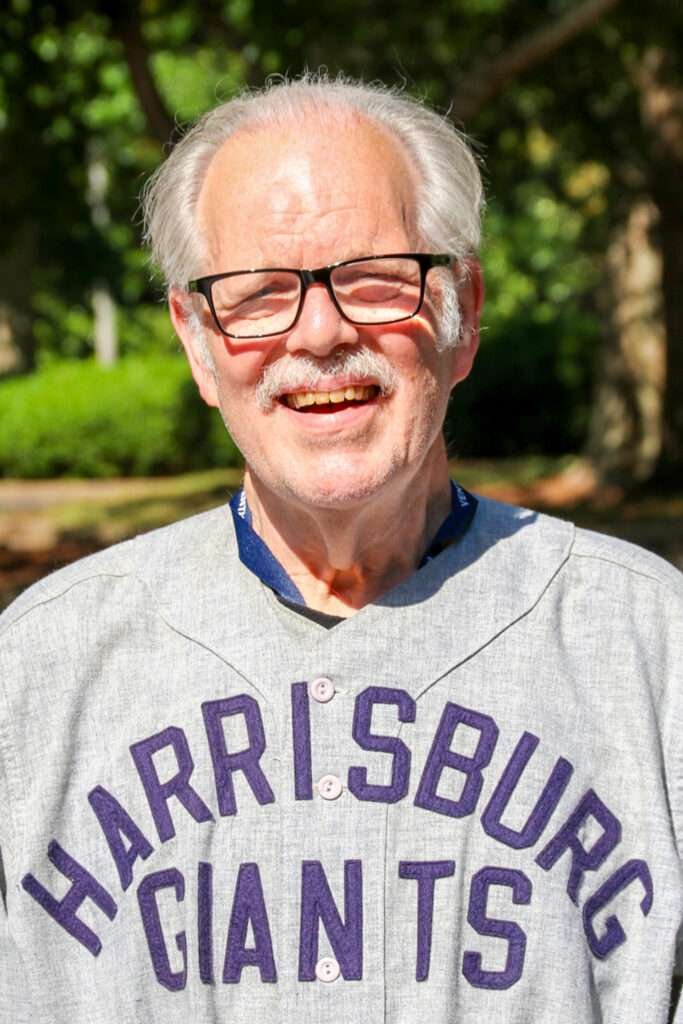
Ted Knorr

Ted Knorr is a Negro League baseball historian, longtime member of the Society for American Baseball Research’s Negro League Committee, and founder of the Jerry Malloy Negro League Conference and several local Negro League Commemorative Nights in central Pennsylvania. You can send questions for Knorr on Negro League topics as well as your answers to the week’s Significa question to shadowball@truthseekersjournal.com or Shadow Ball, 3904 N Druid Hills Rd, Ste 179, Decatur, GA 30033.

Truth Seekers Journal thrives because of readers like you. Join us in sustaining independent voices.

Exit mobile version