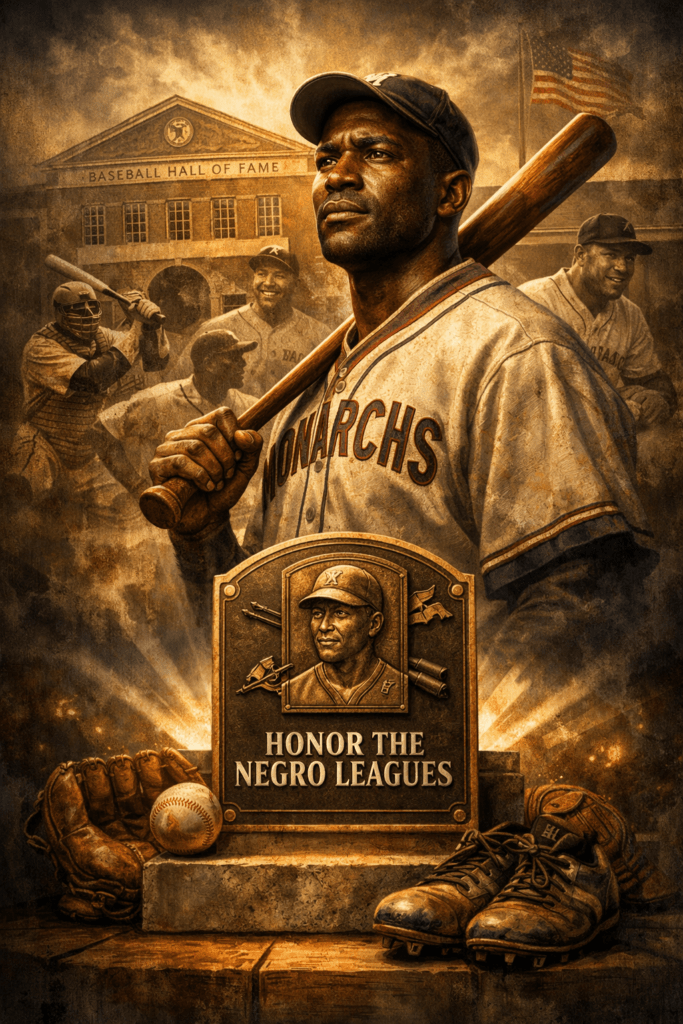
Data and history confirm Negro League teams matched Major League talent. Ted Knorr urges Cooperstown to honor their rightful place in baseball’s Hall of Fame legacy.
By Ted Knorr | Harrisburg, PA | May 26, 2026
“In small cities and small towns across the country, there were other teams and other stars that may have been the greatest of the century, but whose deeds would live only in the memory of those who saw them play. Over the years, Black baseball stars played against White Major League stars at least 438 times in off-season exhibition games. The Whites won 129 of those postseason games. The Blacks won 309 (70.5%).” – Baseball, 5th Inning, Shadow Ball, Ken Burns, 1994
Appendix II of “The Negro Leagues were Major Leagues,” edited by Todd Peterson, pp. 214-226, lists 503 games, dates, and opponents, depicting games between Negro League teams and Major League teams. Negro League teams won 268 (54.6%), while losing 222, with 13 ties.
In addition to Burns and Peterson, I have seen compilations by historians William McNeil (69.8% in the California Winter League) and John Holway (57.1%), and researchers Scott Simkus (52.7%) and bench5 (54.5%). Every one of them finds the “so-called” Negro League teams holding their own (winning as often as losing) against “so-called” Major League teams. Comparable results are reported from both my interpretation of Seamheads Negro League Database (where 67 Negro League pitchers won 54.1% of their decisions against teams made up of Major League players) and Retrosheet’s Database (58.0%), with both showing an edge to the Negro League teams.
I have never seen a compilation showing the Negro League teams losing more than they win. While each of these compilations have their own circumstances (such as, the California Winter League usually featuring one Black team and three or four White teams meaning the White talent was diluted; and Ken Burns compilation is admittedly culled from oral history with few if any box scores.), my claim is unquestionably supported by these compilations and that is the record shows “so called” Negro League teams held their own against “so called” Major League teams.
Further factual evidence supporting my claim is provided with the following data:
Major League and Negro League Regular Season Slash Lines 1920-1948
AVG OBP SLG OPS
Major League .275 .340 .388 .728
Negro League .270 .331 .372 .703
The 29-season slash lines on both sides of the color line are virtually identical.
Source: “The Negro Leagues were Major Leagues,” p. 19, edited by Todd Peterson, McFarland & Company, 2020. Major League data is from baseball-reference.com. Negro League data is from Seamheads.com, NL/RAG, and the Center for Negro League Baseball Research.
In concert with the compilations of games between Negro League and Major League and the regular season data over 29 years being identical, the argument – accepted by Major League Baseball on December 16, 2020 – that the Negro Leagues were (indeed) Major Leagues has now been accepted by those who matter and by a growing number of informed baseball writers, researchers, and fans.
This editorial celebrates that December 2020 decision and advocates for a positive, logical, and similar decision by the National Baseball Hall of Fame and Museum, a 501 (c) (3) educational institution with the responsibility of educating the populace on the history of the National Pastime. In the next issue of Shadow Ball, I hope to be more specific in my “advice” for the National Baseball Hall of Fame and Museum. Here are some points for your pondering over the next couple of weeks:
The National Baseball Hall of Fame & Museum has done spectacular work in telling the history (and quality) of the Negro Leagues in a compelling fashion (as noticed, in my view, by most everyone but themselves).
— In 2021, they reinstalled a procedure, flawed but at least it is an improvement, once again providing the possibility by which Negro League players, executives, managers, and umpires could be elected and, in 2022, for the first time since 2006, successfully inducted two “executives,” Buck O’Neill and Bud Fowler
— In 2022, the Museum launched a Black Baseball Initiative, which involved partnering with Major League Baseball, Major League Baseball Players Association, Negro League Baseball Museum, Jackie Robinson Foundation, and others. This new initiative bore fruit in 2024 with
— in 2024, the Hall erected a new Hank Aaron statue entitled “Keep Swinging”, the new exhibit “The Souls of the Game: Voices of Black Baseball”, the integration of Black baseball accomplishments into existing exhibits throughout the museum was instituted, established an interactive youth activity “We Play” involving K-4 students in baseball history, celebrated the Negro Leagues East-West Classic, in collaboration with Dr. Gerald Early the Hall jointly published a book on, and inviting the Society for American Baseball Research’s Negro League Committee to convene its annual research conference in the Hall.
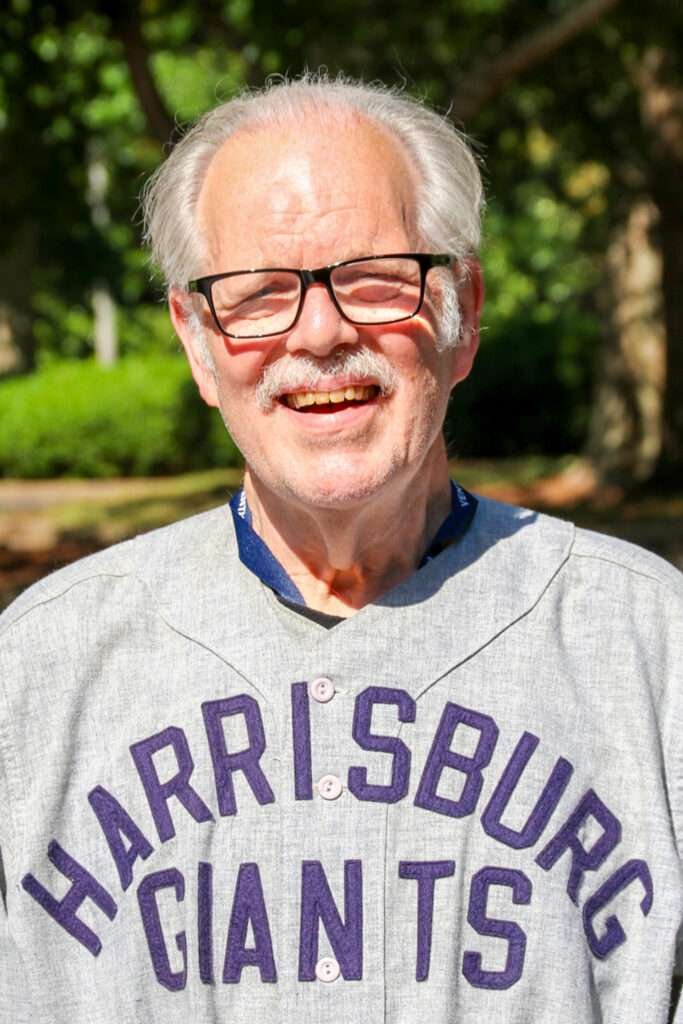
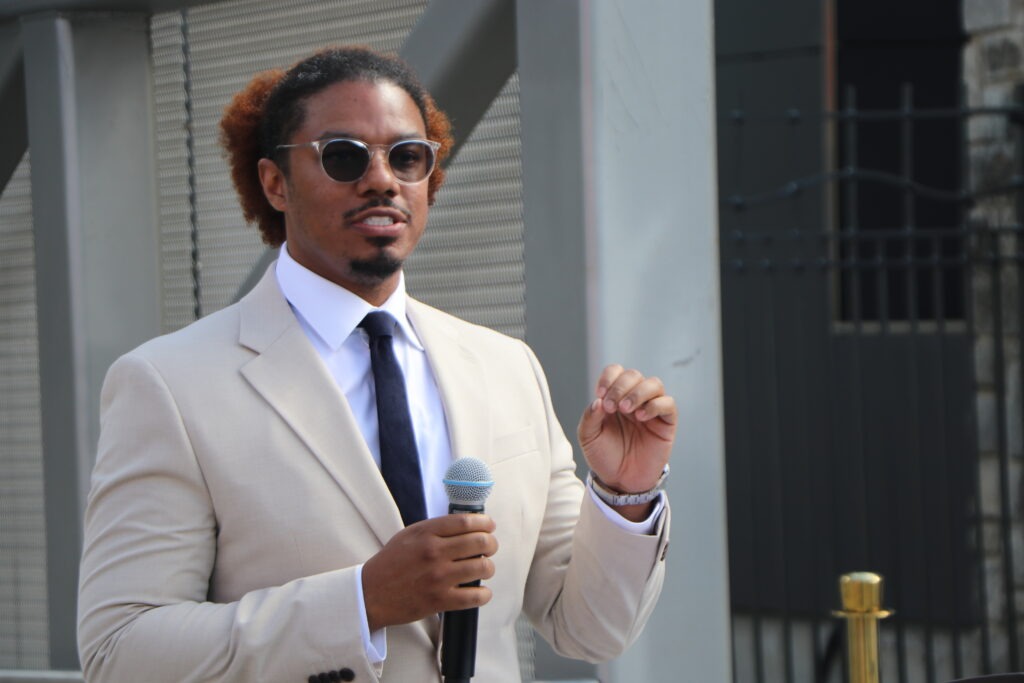
Ted Knorr – photo by Milton Kirby
— This litany tells us that the Hall’s heart is in the right place.
In the right place in every corner of the museum except for its “namesake” Hall of Fame plaque gallery which honored 29 Negro League players twenty years ago and now includes only 28 – Frank Grant’s role having been inexplicably reassigned from player to executive … with no new Negro League players even eligible until the December 2027 election … only 17% of all Hall of Fame players debuting under segregation in that gallery are Negro Leaguers … this contrasts starkly with the parallel fact that just over 45% are players of color (i.e. Negro Leaguers) among players debuting since April 15, 1947. It is time for the Hall of Fame to match achievements with the rest of the museum.
My recommendation to the National Baseball Hall of Fame & Museum is to induct additional Negro League players to the Hall of Fame. I recommend that we once again be focused on the 20 remaining Negro League players, executives, and managers on the 2006 ballot, plus Vic Harris. There is no need to wait until December 2027 … an election should be held in December 2026 with a qualified expert panel – as was done in 2006, a segregated Negro Leaguers only ballot (as in 1971-1977, 1995-2001 and in 2006), with a 75% affirmative vote requirement, but like in 2006 with an up/down vote on all 21 personages and no limit on the number of affirmative votes case by each voter.
If enacted, I can guarantee a great step will have been taken by the Hall and its mission will have been furthered immensely in keeping with the Black Baseball initiative begun in 2022.
Dear Readers, if you agree with my recommendation, please let the Hall of Fame know. It has been long demonstrated that they will not advance without a gentle nudge every now and then. Let them know 28 Negro League players is not enough. They can be reached at:
National Baseball Hall of Fame & Museum * 25 Main Street * Cooperstown, New York 13326
Truth Seekers Journal thrives because of readers like you. Join us in sustaining independent voices.
The Congressional Black Caucus urges corporate America to oppose Republican redistricting that threatens Black representation, calling it a defining test of democracy and corporate integrity.
By Matt Brown | Washington, DC | May 26, 2026
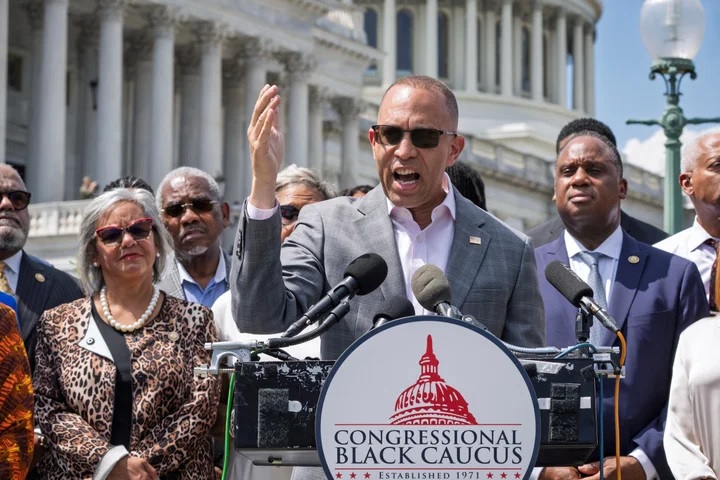
Rep. Yvette Clarke, chair of the Black Caucus, described the letter as “putting corporate America on notice.”
The Congressional Black Caucus on Tuesday called on major corporations across the U.S., including those that previously expressed support for voting rights and racial justice, to oppose redistricting efforts by Republican-led states that seek to eliminate majority-Black U.S. House districts.
In a letter sent to more than 250 companies, members of the Black Caucus urge them to condemn the redistricting efforts, which the lawmakers describe as “coordinated efforts to silence Black voices at the ballot box.” Some of the companies had co-signed their own message to Congress five years ago urging lawmakers to pass the John Lewis Voting Rights Act, a Democratic proposal to restore and update the Voting Rights Act.
That 2021 coalition, Business for Voting Rights, was backed by many of the country’s most valuable and influential companies, including Apple, Amazon, Google, Meta, Microsoft, Tesla, Salesforce, Target, PayPal, Intel and Starbucks.
Tuesday’s letter is the latest effort by the Congressional Black Caucus and its allies to gather support for preventing more Republican-led states from redrawing their legislative maps in ways that would dilute Black political representation. Several states have moved to eliminate congressional districts represented by Black Democratic lawmakers after a U.S. Supreme Court ruling last month that severely weakened a key provision of the Voting Rights Act.
“Corporations that have profited from Black consumers, relied on Black workers, and amassed wealth in part from Black communities cannot look away while Black political power is dismantled in plain sight,” Rep. Yvette Clarke, chair of the Black Caucus, said in an interview.
Clarke described the letter as “putting corporate America on notice,” but she said the caucus was not seeking an adversarial relationship with corporations. Among those receiving Tuesday’s letter were companies based overseas that have a significant presence in the U.S.
The caucus last week called for Black athletes to boycott public universities in states that are gerrymandering their congressional maps to eliminate districts held by Black lawmakers. The 59-member Congressional Black Caucus consists entirely of Democrats, including more than a third from Southern states.
Some lawmakers have said mass protests and federal legislation might be necessary to undo the efforts underway in Republican-led states. Any new federal voting rights law would almost certainly require Democrats to secure majorities in both chambers of Congress and win the presidency.
It is unclear how companies will respond to the demands. The Associated Press was making efforts to contact them.
“Many companies that previously issued statements after the murder of George Floyd, pledged billions toward racial equity initiatives, and spoke forcefully in defense of democracy following January 6 now face a defining test of whether those commitments were rooted in principle or convenience,” the caucus’ letter states.
It also represents the latest instance of the caucus expressing frustrations with corporate America. A 2024 Black Caucus report noted that lawmakers were “troubled that some corporations that made pledges in 2020 have taken several steps in the opposite direction,” such as rolling back or failing to follow through on pledges to diversify their workforces.
“We understand who the occupant in the White House is and the reality of Republicans being in charge,” Democratic Rep. Steven Horsford of Nevada said of the caucus’ message. “But what corporate America also understands is that there will be a shift at some point.”
The letter calls on companies to publicly condemn the redistricting plans, meet with Black Caucus members to discuss corporate America’s role in protecting voting rights and disclose their political donations to Republican politicians in states that are redistricting their congressional maps.
President Donald Trump last year kicked off the unusual mid-decade round of congressional redistricting when he pushed Texas lawmakers to redraw their maps in a way that would add Republican seats. Democratic-led California responded, but it has been mostly Republican states redrawing their lines since as the party tries to maintain its majority in the U.S. House during this year’s midterm elections.
The effort was supercharged by the Supreme Court decision, which allowed even more Republican states to redraw congressional maps that previously had protected minority communities.
Horsford, who chaired the Black Caucus during President Joe Biden’s Democratic administration, said the caucus is demanding that companies “stand on the side of democracy, fairness and equal representation.”
“This is about power, who holds it and what it’s used for,” he said. “And when you’re diluting Black economic and political power, we need to know where these companies stand in this moment, and what side of history they’re on.”
Truth Seekers Journal thrives because of readers like you. Join us in sustaining independent voices.
Artificial intelligence is quietly reshaping work, education, communication, trust, and decision-making as AI tools become increasingly embedded in everyday life across America.
By Florita Bell Griffin | Houston, TX | May 26, 2026
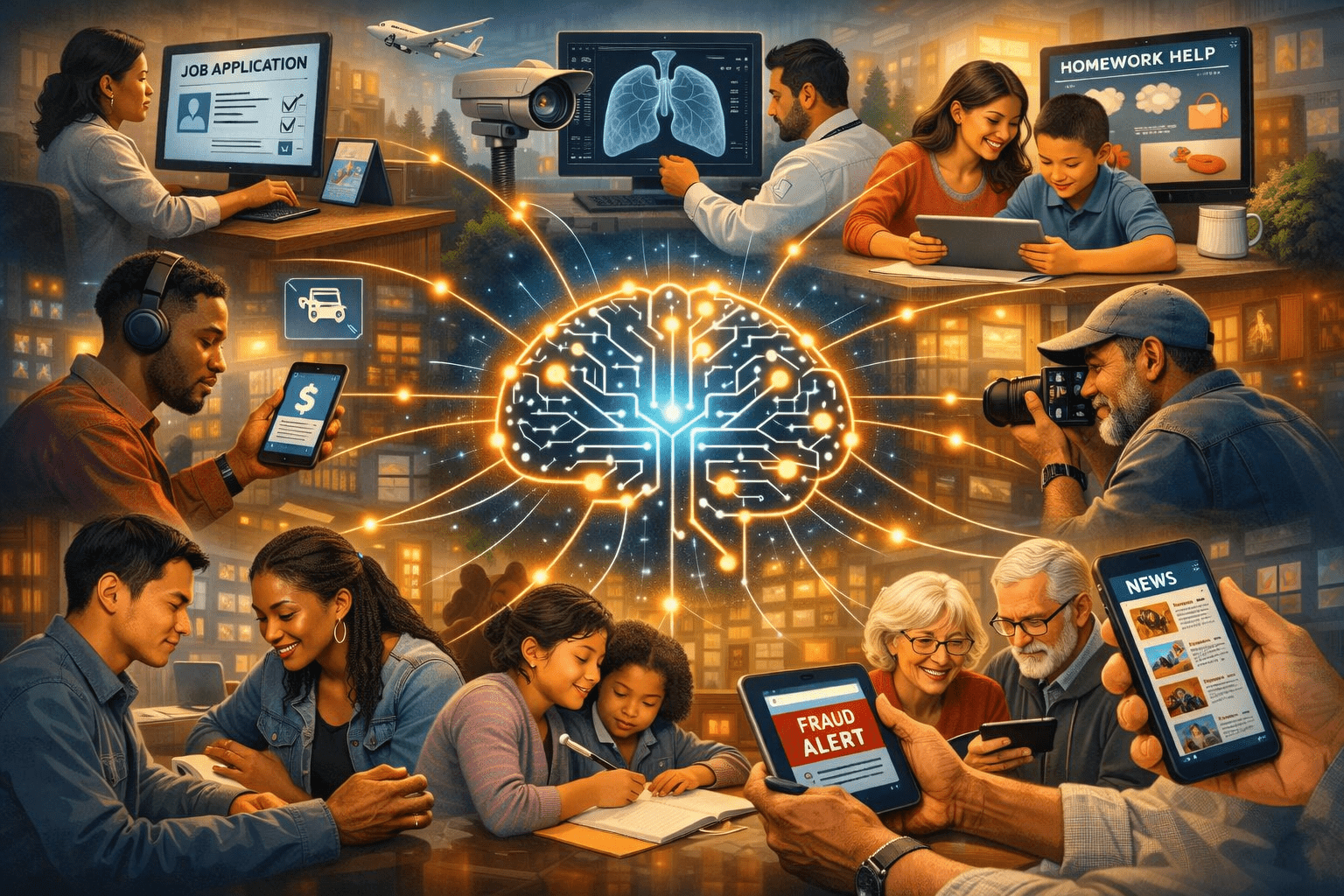
Artificial intelligence has entered daily life with a force that many people felt before they fully understood it. For years, AI lived in public imagination as a distant technology connected to laboratories, robots, and giant technology companies. Today, it sits inside search results, customer service systems, online shopping, banking alerts, writing platforms, medical software, recommendation engines, school tools, hiring systems, maps, and social media feeds. People encounter it while paying bills, reading the news, applying for work, helping children with homework, and trying to decide which information deserves trust. That shift matters because AI has moved from the edge of public awareness to the center of ordinary experience.
Much of the public conversation around AI has been driven by spectacle. Headlines often focus on dramatic predictions, extreme excitement, or sweeping warnings about the future. That language draws attention, yet it can also blur what is already happening around people every day. The more useful question is simpler and more immediate. What is AI actually changing in ordinary life right now? When that question comes into view, the answer becomes far more concrete. AI is changing how people receive information, how they are evaluated, how services respond to them, how quickly decisions move, and how much effort it takes to separate truth from appearance.
One of the clearest changes appears in the way people search for information. Search once meant typing a question and sorting through links, articles, and sources. Increasingly, AI delivers direct responses, summaries, and polished answers that seem to save time. For a busy person, that convenience can feel like progress. Yet the deeper change lies in the shape of understanding itself. When AI gives people a neat response, many will accept the answer without tracing its source, weighing its limits, or examining its confidence. That influences how knowledge is formed. The change reaches beyond speed. It touches the habits of judgment.
Communication is changing as well. AI can draft emails, revise sentences, summarize meetings, write captions, suggest replies, and help people sound more polished than they might feel on their own. That can support workers, students, business owners, and families trying to keep up with a fast-moving digital world. At the same time, AI changes the meaning of communication when language becomes easier to produce than to think through. Words can arrive faster than reflection. Tone can appear stronger than substance. Fluency can begin to outrun wisdom. In everyday life, that matters because people increasingly meet language that sounds confident even when the thinking beneath it remains thin or uncertain.
Workplaces are also shifting under the influence of AI. Many jobs now involve software that can summarize reports, screen applications, analyze trends, monitor patterns, generate first drafts, or assist with customer interaction. For some people, these systems reduce drudgery and free time for more valuable work. For others, they raise the pressure to produce faster, adapt quicker, and compete with tools that operate at machine speed. Everyday workers may find that the role itself has changed before the title changes. A person who once earned value through organization, drafting, basic analysis, or process management may now be expected to supervise or refine AI outputs instead. This creates a new kind of pressure inside ordinary employment, where success depends less on raw effort alone and more on the ability to direct, evaluate, and improve machine-generated work.
Family life and home life are changing too. Parents now face a world where children can use AI to answer questions, generate essays, solve math problems, summarize books, and imitate understanding. This creates both opportunity and tension. On one side, AI can help explain ideas, support practice, and make learning feel more accessible. On the other side, it can quietly weaken patience, struggle, memory, and original thought if it becomes a shortcut around the very work that builds a mind. For families, the issue is larger than homework. It concerns what kind of habits children are forming. A generation raised with instant machine assistance will still need curiosity, discipline, discernment, and the capacity to think beyond the first answer.
Consumer life is also being reshaped. AI influences what people see, what they buy, what gets recommended, and which choices appear most reasonable. Streaming platforms suggest what to watch. Shopping platforms suggest what to purchase. News feeds suggest what to believe is important. Navigation tools suggest where to go. In each case, the system feels helpful because it reduces friction. Yet each recommendation also carries quiet power. It nudges attention. It organizes options. It frames the path of least resistance. Over time, small guided choices can become a larger pattern of influence. Everyday life begins to feel natural while much of its flow has already been arranged by invisible computational preferences.
Trust has become one of the most important issues in this new environment. AI can generate text, images, voice, and video with a level of fluency that can persuade ordinary people in seconds. A polished article, a lifelike image, or a convincing voice clip can travel quickly through homes, churches, workplaces, and communities before anyone pauses long enough to test its truth. This changes the burden placed on the public. People once relied on visual proof or smooth language as signals of credibility. Those signals carry less safety now. The new everyday skill is discernment. People need stronger instincts around source quality, corroboration, motive, and context because appearances have become easier to manufacture.
Healthcare and public services are feeling this shift as well. AI helps process records, flag patterns, route requests, estimate risk, and support administrative flow. That can increase speed and improve coordination. Yet human beings still live inside the consequences of those systems. A patient cares about fairness, clarity, and whether someone can hear their case. A citizen cares about whether a public-facing system can be challenged when it goes astray. An insurance customer cares about whether a decision came from a meaningful review or from a fast automated process shaped by rigid assumptions. When AI enters systems that affect housing, health, transportation, credit, or access to services, everyday life becomes more dependent on processes that people rarely see and often struggle to question.
Another major change concerns the emotional atmosphere of daily life. AI creates a world that feels faster, denser, and more responsive. Messages arrive quicker. Content multiplies faster. Expectations rise. People may feel pressure to keep pace with systems that always have something ready to say. This can create a subtle exhaustion. Human beings still need time to think, rest, read deeply, and make sense of experience. When daily life becomes shaped by machine speed, many people begin to feel that slowness is a weakness. Yet slowness is often where judgment forms. Reflection remains part of wisdom. A society that loses room for reflection becomes easier to move and harder to ground.
So, what is AI really changing in everyday life? It is changing the texture of ordinary decision-making. It is changing the way information reaches people, the way language is produced, the way children learn, the way workers are judged, the way institutions process human cases, and the way trust must be earned. It is changing how influence operates in homes, offices, classrooms, stores, hospitals, and public systems. These changes may appear small in isolation, yet together they form a major shift in how daily life is organized.
This is why public understanding matters so much. People do not need advanced technical credentials to recognize what is at stake. They need clarity, steadiness, and the willingness to ask good questions. Who designed the system? What does it reward? What does it overlook? Where does human review enter? How does error get corrected? What happens when convenience begins to override care? Those questions belong to ordinary people because the effects of AI belong to ordinary life.
Beyond the headlines, beyond the spectacle, and beyond the marketing language, the real story is close at hand. AI is changing everyday life by shaping the conditions under which people search, speak, work, choose, trust, and move through the world. The future of AI will matter, of course, yet the present already matters more than many realize. Everyday people are living inside the change now. The wisest response is clear-eyed attention, grounded judgment, and a public culture strong enough to keep human life at the center of technological power.
New Orleans author M.V. Despenza transforms Hurricane Katrina survival, faith, and resilience into powerful storytelling through Little Miracles of Katrina and her growing literary journey.
By Milton Kirby | Truth Seekers Journal | Artist Profiles Series
For some writers, storytelling begins with publishing contracts, writing workshops, or literary ambition. For M.V. Despenza, it began much earlier, in the music-filled rooms, among singers, artists, dreamers, and everyday people whose stories carried both pain and joy.
Now, decades later, Despenza has transformed those early influences, along with the trauma and resilience born of Hurricane Katrina, into a deeply personal literary voice resonating with readers across the country.
Her breakout work, Little Miracles of Katrina, is more than a disaster memoir. It is a meditation on survival, faith, memory, and the invisible moments of grace that emerge during catastrophe.
“In the aftermath of one of America’s most devastating natural disasters, Little Miracles of Katrina tells the untold stories of survival, compassion, and the small acts of grace that carried people through the storm,” Despenza writes in the book’s description.
But the road to becoming an author was not straightforward.
“I’ve always wanted to write,” Despenza explained during a recent interview. “I wanted to be a journalist when I was young. I didn’t get much encouragement from my family. They wanted me to go into nursing.” Instead, life carried her through unexpected chapters.
She moved to California at age 21 and eventually found work in the music industry, writing artist biographies, press releases, and promotional materials. Later, after returning to Louisiana, she built a career in the legal and corporate sectors, working as a legal secretary and paralegal, and eventually in human resources.
Yet writing remained the thread connecting every phase of her life. “What I learned from being a paralegal was the power of the written word,” she said. “When something is in writing, it has power.” That lesson would eventually shape her approach to storytelling.
For years, Despenza compressed her writing style to fit the demands of corporate America, concise memos, factual emails, streamlined communication. When she finally sat down to write Little Miracles of Katrina, she discovered she had to relearn the art of emotional description and immersive storytelling.
“I had to go back the other way,” she said. “My writing had become ‘She walked in the door. Period.’ I had to learn to make people see it again.”
The result is a book that readers say feels intensely cinematic and emotionally immediate.
One early reader wrote: “I loved the storytelling, so compelling I finished it in two days, even waking up at 5:30 a.m. to keep reading! M.V. Despenza understands the craft.”
Another described the work as capturing “the true spirit of New Orleans, heartbreaking and hopeful all at once.”
Those reactions reflect the emotional terrain Despenza navigates throughout the book.
During the interview, she spoke candidly about the psychological scars left behind by Hurricane Katrina, even for those fortunate enough to survive.
“Any and everybody that went through Katrina suffered some form of PTSD,” she said. She recalled the agony of not knowing whether family members were alive after communication systems collapsed. “I didn’t know where my sister nor my brother were because the cell phones were down,” she said. “That was agony.”
Eventually, she discovered her brother was alive after spotting him briefly in television footage helping rescue elderly residents near Baptist Hospital. “That was how we knew about him,” she said.
Those deeply personal memories became the emotional backbone of Little Miracles of Katrina, which chronicles both physical survival and spiritual endurance during the storm and its aftermath.
But Despenza resists defining the book solely in terms of tragedy.
Again and again, she returns to the theme of “little miracles,” seemingly small moments of intervention, intuition, survival, and grace that altered the course of events during those terrifying days.
“There were five events that happened that let me know I was not alone during those days and weeks,” she explained. Despenza does not frame those moments as religious doctrine as much as lived spiritual experience.
“Whatever you believe, whether it’s God, karma, the universe, or something else, people are not on this earth alone,” she said. “Tomorrow can take your house away. But tomorrow can also give you something really, really good.”
That blend of realism and hope appears to be resonating with readers.
One reader commented: “The little miracles shine as God’s messages of hope, making this a moving and powerful read. Many of us have faced a ‘Katrina’ in our lives, and this book speaks to that universal struggle with faith and survival.”
For Despenza, storytelling is also becoming a form of service.
Recently, she donated signed copies of Little Miracles of Katrina to Big House Books, a nonprofit organization in Jackson, Mississippi, that provides books to incarcerated individuals. She volunteered alongside staff members, helping match books to inmate requests.
“It was a meaningful reminder that books are more than stories,” she wrote afterward. “Sometimes they are connection, encouragement, escape, reflection… and even healing.”
That same spirit carries into her children’s books, including Miracle of the Meow, and From Storm to Scout, both inspired by rescue animals and the emotional connection between pets and people.
One especially emotional section of the interview centered around a black cat left behind during the Katrina evacuation, a story that eventually inspired Miracle of the Meow. Despenza described the guilt, heartbreak, and eventual reunion connected to the animal, underscoring how deeply animals became intertwined with her understanding of survival and healing.
“Animals know things,” she said softly. “They’re so smart.”
In many ways, Despenza’s emergence as an author reflects the same themes that shape her work, survival, reinvention, and finding meaning after devastation.
She notes that she did indeed rescue a cat after Katrina and later rescued a dog after Hurricane Ida, experiences that further deepened the emotional connection between loss, compassion, and healing reflected throughout her writing.
Today, Despenza describes herself not only as an author but also as someone who continues to rediscover purpose later in life.
She speaks openly about balancing creativity, caregiving, stress, reinvention, and delayed dreams.
And perhaps that is part of why her work feels so authentic.
There is no polished literary distance in Despenza’s storytelling. No attempt to sanitize fear, grief, or uncertainty. Instead, her writing embraces the messy emotional truths many people carry silently after surviving hardship.
In many ways, Little Miracles of Katrina is not simply a book about a hurricane. It is a book about what remains after the storm passes. And for M.V. Despenza, that may be the greatest miracle of all.
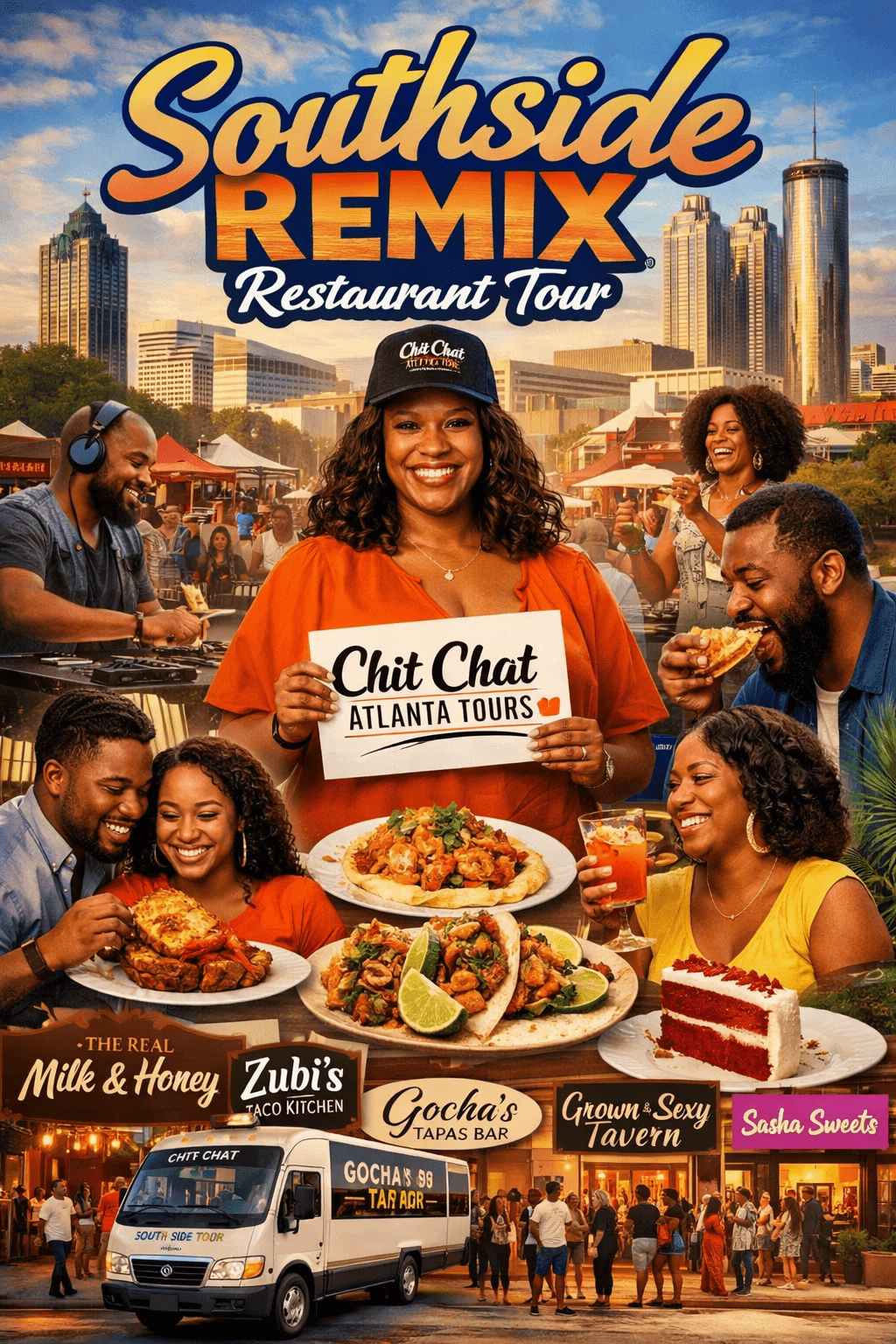
Chit Chat Atlanta Tours launches the Southside Remix Restaurant Tour Experience, spotlighting Black-owned restaurants, culture, and community across South Fulton and College Park.
By Milton Kirby | Atlanta, GA | May 24, 2026
Chit Chat Atlanta Tours is expanding its cultural tourism footprint with the launch of the “Southside Remix Restaurant Tour Experience,” a new culinary and community-centered tour designed to spotlight Black-owned businesses across metro Atlanta’s Southside communities.
Curated by founder Carla Morrison, the immersive experience officially debuts Saturday, May 30, at 12 p.m., taking guests through portions of South Fulton’s Red Oak District and College Park’s Main Street corridor.
According to organizers, the experience blends food, culture, history, and economic empowerment while introducing participants to several Black-owned restaurants that have become staples within the Southside dining scene.
Featured stops on the inaugural tour include The Real Milk & Honey, Zubi’s Taco Kitchen, Gocha’s Tapas Bar, The Standard Kitchen, Grown & Sexy Tavern, and Sasha Sweets.
Morrison said the tour was intentionally created to celebrate both the culinary creativity and economic impact of Black entrepreneurs operating on Atlanta’s Southside.
“With this tour, we’re intentionally spotlighting the culture, the flavor, and the economic power of Black-owned businesses on the Southside,” Morrison said in a statement.
The tour targets food enthusiasts, cultural travelers, tourists, and metro Atlanta residents seeking a more immersive experience beyond traditional dining outings.
The launch reflects a growing trend in Atlanta tourism that centers cultural storytelling and neighborhood-based experiences, particularly in historically Black communities where food, music, entrepreneurship, and local history intersect.
Atlanta’s Southside has increasingly emerged as a destination for both culinary innovation and Black business development, with communities such as South Fulton and College Park attracting new restaurants, entertainment venues, and cultural attractions in recent years.
Organizers say space for the inaugural tour is limited and tickets are currently available online through Chit Chat Communications. An extended promotional video previewing the Southside Remix Restaurant Tour Experience is also available on YouTube.
Keisha Lance Bottoms won Georgia’s Democratic gubernatorial primary outright, avoiding a runoff and positioning herself for a high-stakes November general election battle.
By Milton Kirby | Atlanta, GA | May 20, 2026
Keisha Lance Bottoms captured the Democratic nomination for governor of Georgia Tuesday night without a runoff, delivering a decisive victory in a crowded seven-candidate field and positioning herself as Democrats’ standard-bearer in one of the nation’s most closely watched governor’s races.
With the race called by the Associated Press, Bottoms secured 598,173 votes, or 56.2 percent, easily surpassing the 50 percent threshold needed to avoid a runoff. Jason Esteves finished second with 198,186 votes, or 18.6 percent, while Michael Thurmond received 137,857 votes, or 13.0 percent.
The outright victory represents a significant political achievement for Bottoms, the former Atlanta mayor and former senior advisor to President Joe Biden, as Democrats now look toward a contentious general election battle against the Republican Party closely aligned with Donald Trump.
Speaking before supporters after the race was called, Bottoms framed the election as both personal and historic, repeatedly returning to themes of faith, resilience, civil rights, and economic fairness.
“Georgia sent a clear message tonight that they want a fighter,” Bottoms said during her victory speech. “Someone who will stand up to Donald Trump and all of the chaos that’s raising costs, hurting our economy, and threatening rights generations before us fought and died for.”
Bottoms entered the race with statewide name recognition, national fundraising connections, and deep ties to Georgia Democratic politics. But despite those advantages, avoiding a runoff was viewed by many political observers as far from guaranteed in a field that included multiple established Democratic figures.
Instead, Bottoms consolidated support early and built momentum through strong turnout operations and broad support among Black voters, urban Democrats, and many suburban communities.
In a pre-election interview with the Roland Martin Unfiltered team, Bottoms pointed to record Democratic early voting participation as an encouraging sign.
“It’s been very encouraging to see that we’ve already passed early voting record numbers for turnout,” Bottoms said before Election Day. “What I feel on the ground is that people are realizing the power of their votes.”
She also emphasized that avoiding a runoff was critical to Democratic unity heading into November.
“The earlier we consolidate, the better for all of us on the Democratic side,” she said.
Throughout both her campaign and election-night speech, Bottoms presented herself as a candidate focused on affordability, healthcare access, education, voting rights, and economic opportunity.
Her policy priorities included expanding Medicaid, increasing access to affordable housing, cracking down on corporate landlords, strengthening voting protections, and raising teacher pay.
“It means we must expand Medicaid in this state, making sure everybody has access to healthcare,” Bottoms told supporters. “It means we’ve got to fight to lower costs and ensure families can afford to buy a home or rent a home.”
Bottoms also repeatedly connected her candidacy to Georgia’s civil rights history and her own family legacy.
During her remarks, she referenced her aunt, Ruby Doris Smith Robinson, a prominent student activist in the Student Nonviolent Coordinating Committee, as well as Georgia leaders including Martin Luther King Jr., Jimmy Carter, Raphael Warnock, and Jon Ossoff.
“I am the composition of their dreams and the ones they pushed me to dream for myself,” Bottoms said.
One of the most emotional moments of the speech came as Bottoms reflected on her family’s history in Georgia, tracing her ancestry to enslaved relatives connected to a plantation in Crawfordville once associated with former Confederate Vice President Alexander H. Stephens.
“And here I stand before you,” Bottoms said, “as the Democratic nominee to be the 84th governor of this state.”
The speech also underscored Bottoms’ intention to nationalize the general election around opposition to Trump-aligned Republican policies and what she described as rising economic pressures facing Georgia families.
Without naming a preference in the Republican runoff, Bottoms sharply criticized Republican contenders Bert Jones and Rick Jackson.
“The only people Bert Jones and Rick Jackson have fought for are themselves,” Bottoms said. “Their campaigns are not about Georgians.”
Bottoms’ campaign also leaned heavily into voting rights protections throughout the primary season.
In her Roland Martin interview, she discussed a proposed voting rights agenda named after late Congressman John Lewis that included support for same-day voter registration and opposition to maps she said dilute minority voting power.
She also delivered one of the interview’s most memorable lines while discussing Republicans who have recently attempted to align themselves with Democrats nationally.
“We say that we are the big tent party,” Bottoms said. “But it doesn’t mean that you now need to come up and lead us.”
Then, with a smile, she added: “Welcome to the cookout, but I don’t need you to man the grill right now.”
Bottoms now heads into the general election as Democrats hope to maintain the momentum that has transformed Georgia into one of the nation’s most competitive battleground states over the past decade.
Her victory Tuesday night signals not only strong consolidation inside the Democratic Party, but also the growing influence of a coalition powered by Black voters, suburban organizing, and turnout-focused grassroots operations that have reshaped Georgia politics in recent election cycles.
As supporters celebrated Tuesday night, Bottoms made clear she views the primary as only the beginning.
“So tonight, let’s celebrate,” she told the crowd. “And tomorrow, let’s get back to work.”
Atlanta Mayor Andre Dickens unveiled the Neighborhood Reinvestment Act, a sweeping anti-displacement and redevelopment package targeting equity, housing stability, and economic opportunity
By Milton Kirby | Atlanta, GA | May 20, 2026
Mayor Andre Dickens has introduced what his administration calls the most comprehensive neighborhood investment and anti-displacement legislative package in Atlanta history, a sweeping proposal aimed at reshaping how the city measures redevelopment success in historically underserved communities.
The proposal, titled “Opportunity for All: The Neighborhood Reinvestment Act,” seeks to shift Atlanta’s redevelopment model away from simply measuring construction activity and rising property values and instead focus on whether residents’ quality of life measurably improves.
The legislative package includes six interconnected components: a new Neighborhood Reinvestment Initiative (NRI) Impact Framework, extensions of six existing Tax Allocation Districts (TADs), creation of a City Council-controlled NRI Trust Fund, reforms to TAD Advisory Committees, reauthorization of the Invest Atlanta intergovernmental agreement, and a broad Anti-Displacement Playbook containing more than 20 ordinances and resolutions.
The administration said the legislation is designed to address long-standing disparities across South and West Atlanta neighborhoods, where housing instability, lower educational attainment, food insecurity, public safety concerns, health inequities, and economic barriers have persisted for decades.
“This is about whether the people who stayed through decades of disinvestment get to stay long enough to benefit from the prosperity that is finally arriving,” Dickens said in announcing the legislation. “The first generation of TADs helped transform Atlanta physically, but this legislation recognizes that growth alone is not enough.”
Under the proposal, all future public investments in NRI communities would be evaluated through three primary goals: displacement prevention, neighborhood stabilization, and wealth creation. City officials say future TAD investments, redevelopment projects, and Trust Fund awards would be required to demonstrate measurable alignment with those outcomes.
The legislation also comes amid increased public scrutiny of Atlanta’s redevelopment financing structures and incorporates reforms tied to the City Auditor’s forthcoming review of Atlanta’s Tax Allocation Districts. Proposed reforms include third-party performance reviews, public accountability dashboards, strengthened redevelopment planning requirements, and expanded transparency measures.
“This legislation fundamentally changes how Atlanta measures success,” said Courtney English. “For too long, cities across America have measured progress by cranes, ribbon cuttings and rising property values while failing to ask whether residents themselves were better off.”
Among the most significant financial provisions is the proposed 30-year extension of six existing TADs: Campbellton, Metropolitan, Stadium, Hollowell/MLK, Westside, and Eastside. City officials say those extensions could unlock major long-term bonding capacity for affordable housing, infrastructure improvements, economic development, transit projects, and neighborhood stabilization efforts.
The legislation also proposes creation of a new NRI Trust Fund targeted toward Atlanta’s most economically distressed neighborhoods using Invest Atlanta’s Economic Mobility Index. Projects funded through the Trust Fund would be subject to independent review and public reporting requirements.
Faith and civil rights leader Bernice A. King praised the proposal’s emphasis on intentional investment and accountability.
“Talking isn’t enough if we don’t have policies, practices and infrastructure,” King said. “NRI becomes that first step to putting something in place that reflects intentionality and manifest the beloved community.”
Several Atlanta City Council members also voiced support for the package, emphasizing both the need for investment and protections against displacement.
Marci Collier Overstreet said the package recognizes that investment must include accountability and protections for longtime residents.
Michael Julian Bond described the proposal as a mechanism to ensure investment produces measurable improvements in housing stability, educational opportunity, economic mobility, and community wealth creation.
Andrea L. Boone pointed specifically to neighborhoods like Adamsville, which she said have experienced decades of watching resources bypass their communities.
Antonio Lewis said the legislation is deeply personal as a lifelong South Atlanta resident and Atlanta Public Schools graduate.
“This legislation is about making sure young people growing up in communities like the ones that raised me have access to safe neighborhoods, stable housing, quality schools, and real economic opportunity without being pushed out of the city they call home,” Lewis said.
The package’s Anti-Displacement Playbook includes proposals addressing tenant protections, affordable housing preservation, heirs property assistance, home repair funding, commercial stabilization efforts, community ownership opportunities, and support for legacy businesses and institutions.
Byron Amos said communities on Atlanta’s Westside deserve a comprehensive strategy rather than fragmented investment efforts.
Meanwhile, Wayne Martin said the legislation represents an opportunity to finally align sustained investment with the long-term resilience residents along the Campbellton Road corridor have demonstrated for generations.
The legislative package was formally introduced before the Atlanta City Council on May 18 and is expected to move through committee hearings and public engagement sessions before final consideration later this year.
Truth Seekers Journal thrives because of readers like you. Join us in sustaining independent voices.
MARTA opened a new pedestrian bridge and renovated Indian Creek Station, improving transit access, safety, lighting, and infrastructure for thousands of DeKalb riders daily.
By Milton Kirby | Stone Mountain, GA. | May 19, 2026
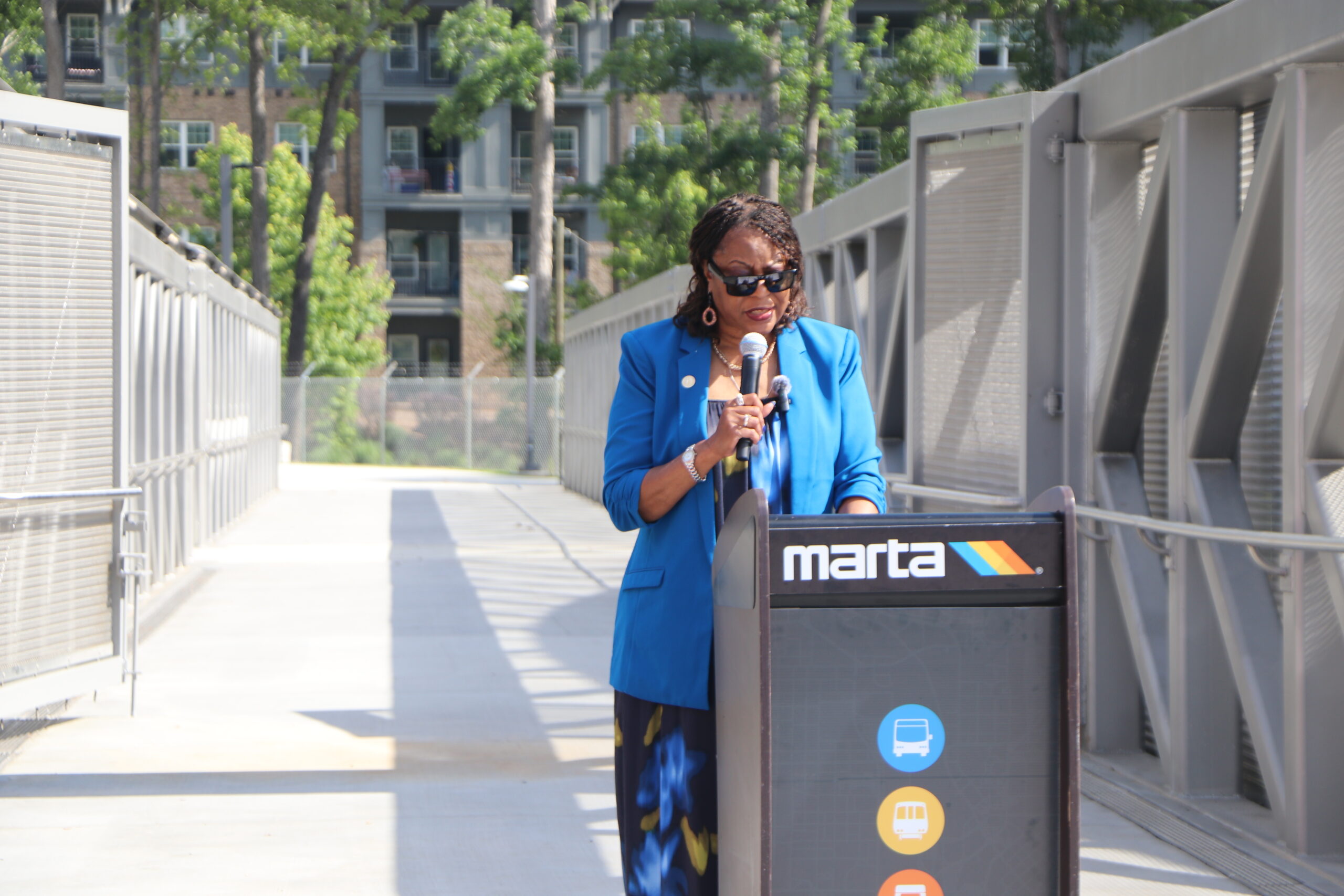
The Metropolitan Atlanta Rapid Transit Authority (MARTA) officially opened a new pedestrian bridge and renovated west plaza at Indian Creek Station on Monday, unveiling what agency leaders described as a transformational investment for eastern DeKalb County and a major milestone in MARTA’s long-term station rehabilitation program.
The ribbon-cutting ceremony celebrated the completion of the pedestrian bridge connecting Durham Park Road to the station, providing residents in nearby Manor at Indian Creek and other neighborhoods with a safer and more direct route into the transit system. The project is part of MARTA’s multi-decade Station Rehabilitation Program, which aims to modernize all 38 rail stations across the system.
“This bridge is transformational,” Interim MARTA General Manager and CEO Jonathan Hunt said during the ceremony. “It provides a safe, accessible route that significantly reduces travel time to the station and removes barriers that once made transit near to their home less convenient to use.”
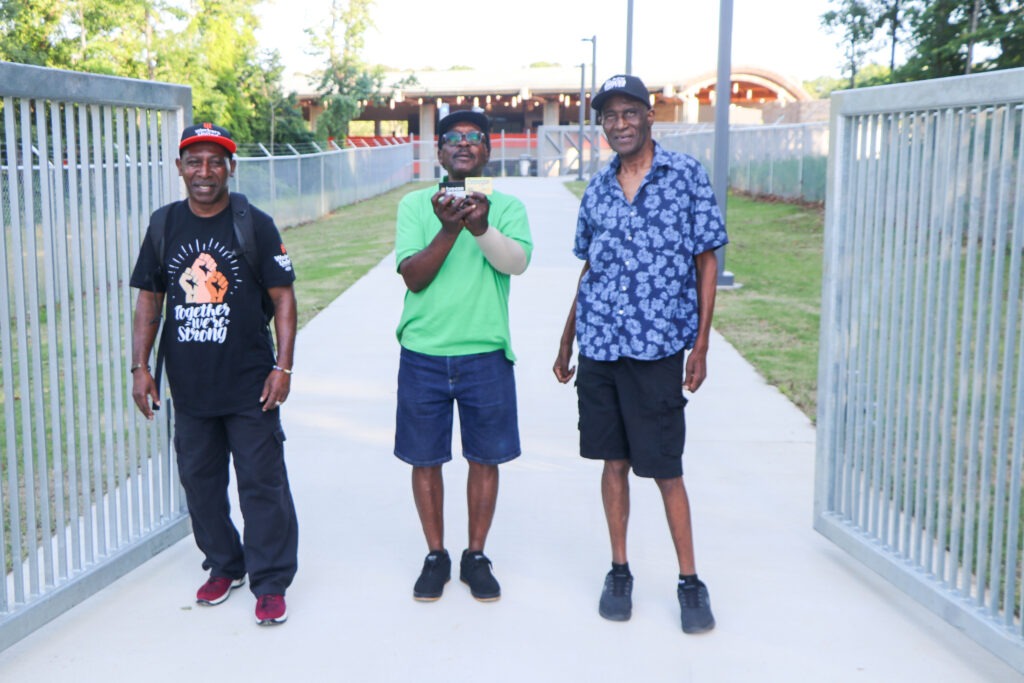
For residents of Manor at Indian Creek, the new bridge represents more than infrastructure. Terry Ross, Jerry Johnson, and Al Mitchell — all regular MARTA riders — said the bridge will shorten their daily trips to the station by 15 to 20 minutes while also making the journey significantly safer.
Indian Creek Station serves as the easternmost terminus of MARTA’s Blue Line and handles approximately 3,000 passengers each weekday, according to MARTA officials.
Hunt described the station as “one of our major stations within MARTA and into DeKalb County,” emphasizing the role public transportation plays in connecting residents to work, schools, medical appointments, and daily necessities.
Manor at Indian Creek Residents – L to R Jerry Johnson, Terry Ross & Al Mitchell
The improvements extend well beyond the new bridge.
The project included resurfacing the station’s bus loop, installing upgraded lighting throughout the station, adding new benches and trash receptacles, enhancing landscaping, modernizing fare gates, and performing deep cleaning and restoration work inside the facility. MARTA also installed new wall panels and architectural concrete features designed to improve long-term durability and reduce maintenance costs.
One of the most visible upgrades inside the station involved restoration of the station’s natural wood ceiling through dry ice cleaning.
“We’ve modernized our customer touch points,” Hunt said, noting the installation of MARTA’s new Better Breeze fare gates and updated ticket vending technology.
The west-side fare gates remain under construction and are expected to open within the next several weeks.
Pedestrian bridge to Indian Creek MARTA Station – Photo by Milton Kirby
The station rehabilitation also included improvements to the traction power substation, which powers MARTA’s third rail system. Hunt said the new exterior wall paneling was designed to be more durable, easier to maintain, and visually appealing.
DeKalb County Commissioner Mereda Davis Johnson praised the project as an important investment in mobility and quality of life for county residents.
“As commissioner of this district, I understand how important public transportation is to the residents I serve,” Davis Johnson said during the ceremony.
“MARTA is more than just a transit system. It is a vital connection to jobs, schools, medical appointments, shopping, and countless opportunities that improve the quality of life for our citizens.”
She called Indian Creek Station “a critical transportation hub” for eastern DeKalb County and said the pedestrian bridge would provide “safer and more convenient access” for residents living near Durham Park Road.
“This project represents a significant investment in infrastructure and community,” she said. “When we invest in transportation, we are investing in our people.”
Construction leaders also emphasized the local significance of the project.
Charles Moody – Photo by Milton Kirby
Representatives from Carroll Daniel Construction Company and C.D. Moody Construction Company highlighted the collaborative effort behind the renovation and the importance of reinvesting in communities connected to MARTA’s transit system.
Charles Moody from C.D. Moody Construction noted the company’s long relationship with MARTA and reflected on growing up in DeKalb County and using Indian Creek Station throughout childhood and adulthood.
“I remember when the station was new,” he said. “I remember the ups and downs. And I love to see when we are revitalizing and putting back in our community because it means so much to someone like me who grew up here.”
The Indian Creek project represents one of MARTA’s earliest major station rehabilitation efforts under a broader modernization strategy that includes station upgrades, new rail cars, improved lighting, upgraded fare technology, and preparations for increased regional activity leading into the 2026 FIFA World Cup.
The ceremony concluded with a ribbon cutting in front of the new bridge as MARTA officials, construction partners, elected leaders, and community members gathered to celebrate the reopening.
“Thank you for staying focused on the vision for this station and taking a moment to take this station from good to great,” Hunt told MARTA employees and project partners.
Support open, independent journalism. Your contribution helps us tell the stories that matter most.
The Obama Foundation announced a free June 18 watch party on Chicago’s Midway Plaisance for the Obama Presidential Center grand opening ceremony.
By Milton Kirby | Chicago, IL | May 19, 2026
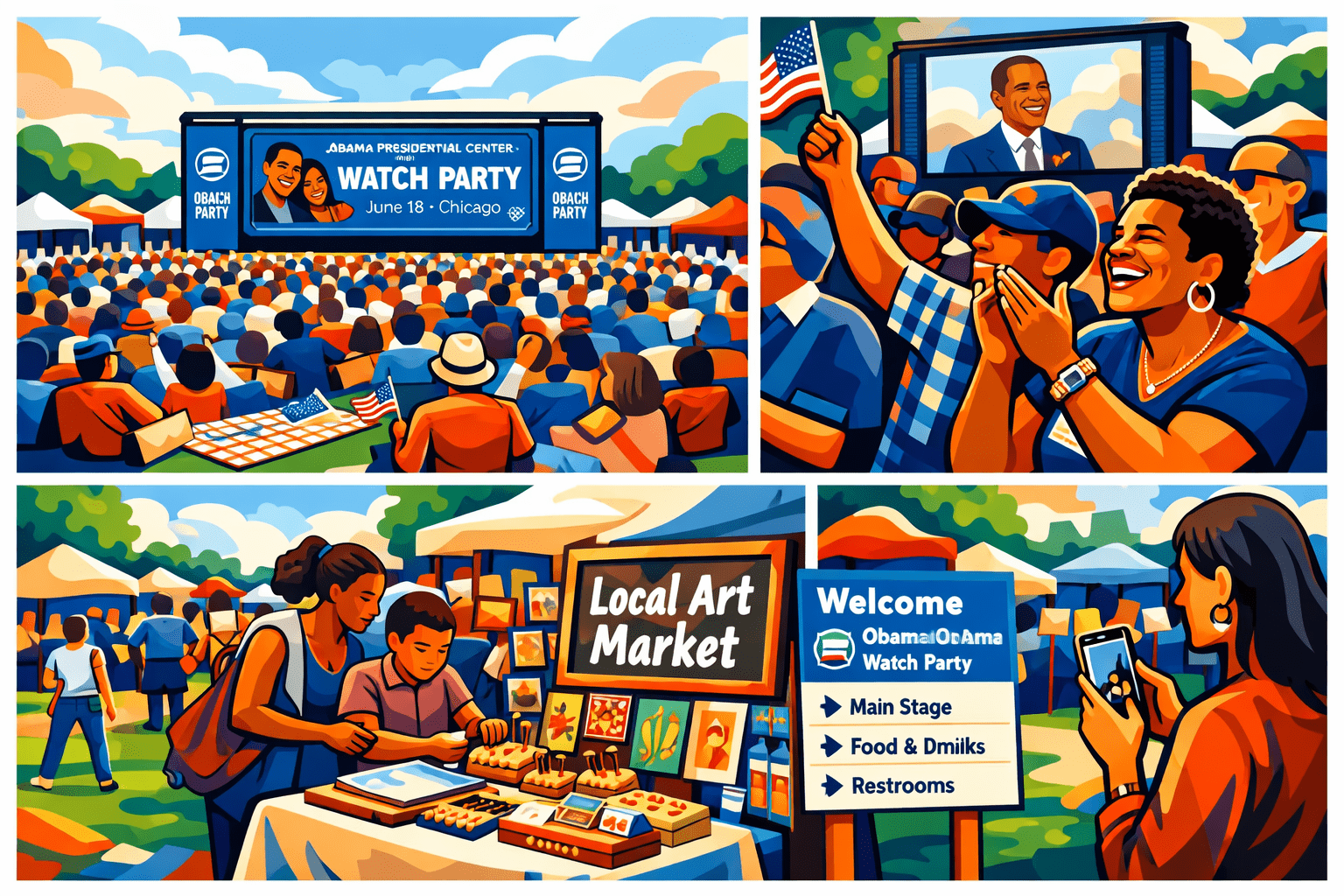
The Obama Foundation announced Tuesday that a free public watch party for the grand opening ceremony of the Obama Presidential Center will be held June 18 on Chicago’s historic Midway Plaisance, inviting residents and visitors to celebrate what organizers describe as a landmark moment for the city’s South Side.
The official watch party will feature a livestream of the Center’s Grand Opening Ceremony in a “picnic-style atmosphere,” along with an art market showcasing local vendors and community organizations.
“This is an historic day for Chicago’s South Side as we welcome the world into our neighborhood,” said Valerie Jarrett in a statement released Tuesday. “We are excited to share this celebration with our extraordinary community and city, who are such an integral part of President and Mrs. Obama’s story, and where they will always call home.”
According to the Foundation, attendees interested in joining the free event must submit a ticket request form through the Foundation’s website by May 26. Requests may include up to 4 tickets, though organizers emphasized that submitting a form does not guarantee admission due to limited space.
The watch party will open at 9 a.m. with a live DJ and pre-ceremony activities ahead of the 11 a.m. Grand Opening Ceremony. Organizers said the event will include accessible viewing areas and ADA-compliant restroom facilities.
The Foundation encourages attendees to use public transportation through the Chicago Transit Authority and Metra systems, as parking will not be available on site.
The June 18 ceremony will officially dedicate the Obama Presidential Center campus through performances, storytelling, and presentations centered on civic engagement and community leadership. The Foundation said the event will feature “global icons” and highlight its broader mission to inspire and connect communities worldwide.
The Center itself officially opens to the public on June 19. While museum tickets for opening weekend have already sold out, the remainder of the campus will remain free and open to visitors.
Located on Chicago’s South Side, the Obama Presidential Center has been envisioned as more than a traditional presidential library. Foundation leaders have described it as a civic and cultural hub designed to encourage community engagement, leadership development, and public participation.
The Foundation also announced that celebratory programming surrounding the opening will continue throughout the weekend.
Sponsors supporting the Grand Opening Ceremony and weekend events include GCM Grosvenor, Abbott, ITW, and Northern Trust.
Artificial intelligence is quietly reshaping everyday decisions through search, recommendations, education, healthcare, and work — influencing how people think, choose, trust, and navigate modern life.
By Florita Bell Griffin | Houston, TX | May 19, 2026
Artificial intelligence has spread through ordinary life in a way that often feels subtle at first and significant only later. Many people still imagine AI as a dramatic technology tied to robots, laboratories, or futuristic machines. In reality, much of its growth has been quieter than that. It has entered daily routines through systems people already use, trust, and depend upon. It appears in search engines, banking alerts, customer service platforms, navigation tools, hiring software, recommendation engines, health systems, fraud detection, school tools, and social media feeds. The expansion feels quiet because it often arrives inside familiar environments. The decision-shaping power becomes visible only after people realize how many ordinary moments are being influenced by systems they rarely see directly.
This is why AI deserves closer public attention. Its importance does not rest only in what it can generate or automate. Its importance rests in how it increasingly enters decisions that shape daily life. Some of those decisions are small. Others carry real consequence. A person may notice which information appears first in a search, which route is recommended on a map, which product is pushed forward on a shopping page, or which customer service answer appears most quickly. Those moments may seem routine. Yet they reveal something larger. AI is moving into the spaces where attention is directed, choices are framed, and outcomes are quietly influenced.
The word decision can sound formal, though daily life is filled with them. People make decisions about what to read, what to trust, where to go, what to buy, how to respond, whom to contact, what medical advice to explore, what financial action to take, how to help a child with schoolwork, or whether a message feels credible. AI now enters many of those moments before a human being fully notices its role. That is what makes the expansion quiet. The technology does not always announce itself with force. It often works through ranking, sorting, summarizing, recommending, predicting, and flagging. These functions can feel helpful because they reduce effort. They can also shape the environment in which a person makes up their mind.
Search is one of the clearest examples. In earlier digital life, people often received a page of links and had to decide what to open, compare, and trust. Increasingly, AI now offers summaries and direct responses that seem ready for immediate use. That convenience can save time, and in many cases it does. Yet the deeper change lies in what happens when the route to an answer becomes narrower and more pre-shaped. A person may accept a polished explanation without asking where it came from, what it left out, or how confidently the system should be trusted. The decision has already been influenced at the point of presentation. AI does not need to force a conclusion in order to shape one. It can simply make one path seem easier, cleaner, and more complete than the alternatives.
Consumer life works in much the same way. Recommendation systems increasingly help determine what people notice first, what they are encouraged to purchase, what entertainment feels most relevant, and what items stay in front of their attention. A shopping platform may suggest products. A streaming service may suggest films. A news feed may suggest stories. A music service may suggest songs. Each recommendation may appear small, though repeated suggestions quietly organize preference and habit over time. The person still experiences the choice as their own, yet the field of visible options has already been shaped. This is one of the most practical ways AI enters everyday decisions. It reduces friction while increasing influence.
Navigation tools provide another familiar example. Many people now rely on digital routing without much second thought. A system suggests the quickest route, warns of delays, and updates conditions in real time. That kind of assistance is useful. It saves time and can reduce stress. Yet even here, AI influences daily decisions by directing movement, prioritizing certain paths, and shaping how people understand efficiency. The recommended route becomes the obvious route. A person may follow it almost automatically because it appears objective, timely, and informed. The decision feels personal, though much of its structure has already been provided.
Workplaces are also experiencing this quiet expansion. AI now helps summarize meetings, organize documents, sort applications, draft communications, analyze patterns, monitor activity, and support customer interaction. For workers and employers, these tools may improve speed and efficiency. At the same time, they enter decisions about hiring, evaluation, workload, communication, and opportunity. A resume may be screened before a person reviews it. A meeting summary may shape what leadership remembers as most important. A productivity system may influence assumptions about effort or value. A draft created by AI may frame the first version of an idea before a human being has fully thought it through. The expansion is quiet because these shifts often occur inside routine processes, though their effects can shape careers and livelihoods.
Education presents a similar pattern. Students can use AI to explain concepts, summarize material, solve problems, and draft assignments. Teachers can use it to assist with planning, organization, and communication. Families can use it to help children with homework or research. These tools can offer genuine support, especially when confusion or time pressure is high. Yet AI also enters educational decisions in less obvious ways. It may shape what a student reads first, how a teacher approaches material, what kind of answer feels sufficient, or how much struggle a child endures before receiving help. Human learning depends on more than arriving at the answer. It depends on memory, reflection, concentration, error, correction, and the slow building of judgment. When AI reduces friction too early, it can influence the decision to stop thinking before understanding has matured.
Trust and public understanding may be the most serious areas of all. AI-generated text, images, and audio can now enter ordinary conversation with great speed and increasing realism. A message may sound authoritative. A voice may sound authentic. An image may look convincing. A video clip may appear emotionally powerful. Ordinary people often make quick decisions about what to believe based on coherence, familiarity, and presentation. AI changes that environment by making persuasive material easier to produce at scale. The decision to trust becomes more difficult because polished surfaces no longer guarantee reliable substance. This means discernment must grow stronger precisely as the informational environment grows more fluid.
Healthcare, finance, insurance, and public services also show how quietly AI enters consequential decisions. Systems may be used to flag transactions, prioritize cases, process requests, identify patterns, or support internal review. These functions may increase speed and reduce administrative burden. Yet ordinary people experience them through outcomes. A family wonders why a request moved slowly. A patient wants to know whether a case received careful attention. A worker worries whether a flagged transaction or automated rating carries lasting implications. A resident navigating a public service wants a clear path to human review if the system falls short. In each case, AI enters the decision environment before the person sees the full logic behind it.
What makes this moment so important is that the quiet expansion of AI can easily be mistaken for neutral modernization. A new feature appears. A system becomes faster. A platform feels more responsive. A workflow becomes smoother. Those changes may indeed reflect progress in some settings. Yet speed alone does not settle the deeper question. The real issue is how many areas of ordinary life are beginning to rely on systems that shape choices without always making their influence visible. Convenience can coexist with loss of transparency. Efficiency can coexist with distorted judgment. Helpfulness can coexist with subtle dependence.
That is why the public needs clear language about AI and decisions. People do not need advanced technical training to recognize what is happening. They need the confidence to ask better questions. What is this system doing. What options is it placing in front of me. What does it reward. What might it be leaving out. Where does human review still matter. How can a person challenge an outcome when the process feels distant or automated. Those are everyday questions because the consequences of AI now belong to everyday life.
The quiet expansion of AI is one of the defining changes of this era. It is quiet because it enters familiar systems rather than arriving as a single dramatic event. It expands through convenience, speed, and helpfulness. It grows through recommendation, ranking, prediction, and automation. And it matters because it increasingly shapes the decisions people make at home, at work, in school, in markets, in institutions, and in public life. The task ahead is not to reject technology. It is to remain clear-minded about where it is entering judgment, how it influences choices, and why human beings must stay awake inside the systems they now depend upon.
Bill Pickett Invitational Rodeo in Memphis showcases Black cowboy culture, Soul Country music, youth programs, and community legacy in a powerful, immersive weekend experience.
More Than a Rodeo: Inside the Enduring Legacy of the Bill Pickett Invitational Rodeo
By Milton Kirby | Atlanta, GA | May 18, 2026
There are stories we tell, and then there are stories we inherit. The Bill Pickett Invitational Rodeo (BPIR) is both. It is an enduring institution, a cultural archive, a family reunion, and a proving ground stitched together by memory, muscle, and music. Over the course of this series, I have walked the dirt, listened to the voices, watched the riders, and felt the pulse of a tradition that refuses to fade. What began as an attempt to document a rodeo became something far deeper, a journey into a tradition that continues to evolve.
The BPIR is not simply an event. It is a record of who we are, who we’ve been, and who we’re becoming. And as this chapter closes, another one opens, a road that leads from Memphis to Los Angeles, where the Soul Country Music Star National Champion will be crowned at the Soul Country Music Festival. But before we get there, we must return to the ground beneath our boots, because that is where it all begins.
I. The Rodeo That Became a Record of Us
Every rodeo has its own rhythm, but the Bill Pickett Invitational Rodeo has a heartbeat. It beats in the laughter of children seeing a horse for the first time. It beats in the confidence of champion riders who carry decades of history in their posture. It beats in the music, the dust, the hoofbeats, and the voices that echo across the arena.
When I arrived in Memphis, I expected a show. What I found was a community, a village built on heritage, discipline, and joy. As I wrote in my field notes, “A great rodeo doesn’t just happen. It’s built piece by piece, decision by decision, tradition by tradition.”
“It begins with the land beneath your boots and ends with the people who carry the tradition forward.”
Memphis, with its perfect dirt and perfect energy, became the lens through which the entire BPIR experience came into focus.
II. Bill Pickett’s Enduring Shadow
To understand the significance of the BPIR, you first have to understand the man whose name stands above the arena gates. Bill Pickett was more than a cowboy. He was an innovator, a showman, and a cultural force. His technique, bulldogging known now as Steer Wrestling, changed rodeo forever. His daring athleticism eventually earned him national recognition and a place among the legends of the Wild West.
His presence changed the way America saw Black cowboys, even when America tried not to see them at all.
But what struck me most over the course of this series is not how often Pickett’s name is spoken. It is how deeply his spirit is lived. The BPIR does not treat him as a relic. It treats him as a foundation.
His influence is not a statue or a plaque. It is the confidence of a Pee Wee rider gripping the reins. It is the precision of a champion entering the chute. It is the courage of a bullfighter stepping between danger and safety. It is the music of Soul Country Music Star artists reclaiming a sound that has always been theirs.
Bill Pickett is not remembered at the BPIR.
He is embodied.
III. The Stewardship of Valeria Howard Cunningham
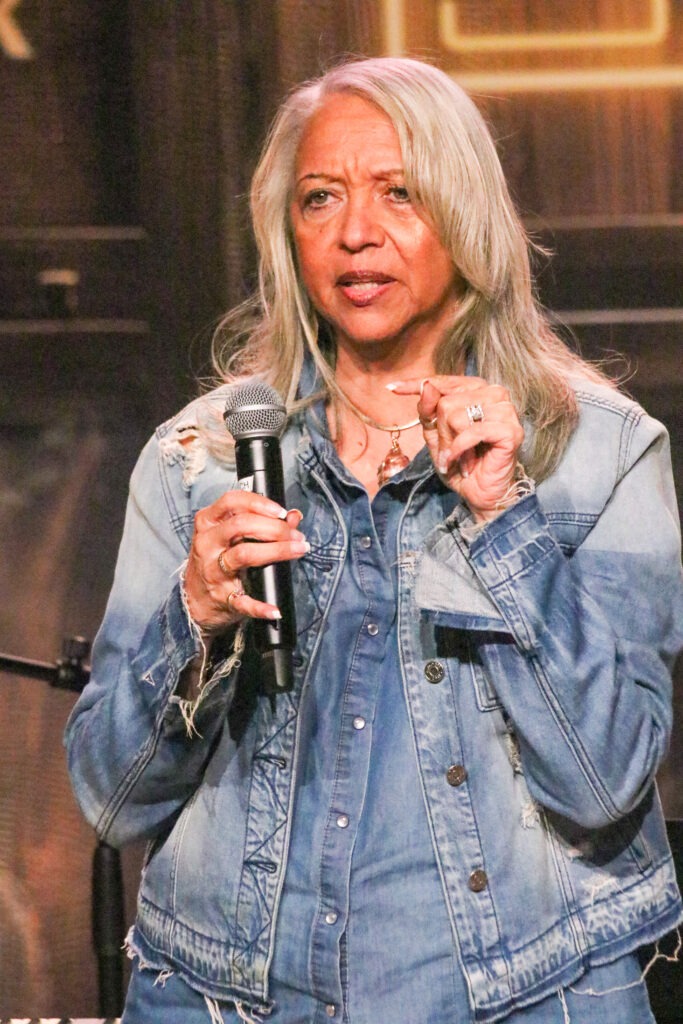
Valeria Howard Cunningham – Photo by Milton Kirby
Founded in 1984 by the late Lu Vason, the rodeo was created not only to showcase Black rodeo talent, but to reclaim historical visibility for Black Western culture itself.
“At the time, Black cowboys remained largely invisible in mainstream rodeo, even though historians estimate they made up nearly one in four working cowboys in the late 19th century.”
Vason saw both the absence and the opportunity. What he built became far more than a single event.
Every enduring tradition needs a steward, someone who understands the weight of history and the necessity of evolution. For the BPIR, that steward is Valeria Howard Cunningham, Producer and CEO.
For more than four decades, the BPIR has grown into the nation’s longest running Black owned touring rodeo association, introducing generations of children to rodeo culture while creating a national gathering place rooted in heritage, competition, education, and celebration.
Valeria’s gift is balance. She protects the heritage while opening the door to the future.
Under her guidance, the BPIR has remained rooted in tradition while embracing new cultural expressions. She has preserved the Lu Vason vision without freezing it in time. She has expanded the rodeo’s reach, deepened its cultural footprint, and ensured that every stop, from Memphis to Los Angeles, carries the same intentionality, extending the BPIR’s presence into community spaces through education, outreach, and engagement.
Valeria understands something essential:
A tradition that refuses to evolve becomes a museum.
A tradition that evolves with integrity becomes a force.
The BPIR has become something larger than sport.
IV. More Than Competition
Spend enough time around the BPIR, whether in Memphis, Atlanta, or Upper Marlboro, and you begin to realize that the rodeo itself is only part of the experience. Yes, there are champions. There are bronc riders, steer wrestlers, barrel racers, bull riders, team ropers and Pee Wee competitors stepping nervously into the arena dirt for the first time.
But surrounding the competition is something larger: a traveling city of culture and community that recreates itself at every stop on the tour.
In Memphis, that ecosystem unfolded across the Agricenter grounds just as vividly as it had in Atlanta and Upper Marlboro. Food vendors sent familiar aromas drifting through the air. Families browsed apparel booths and handcrafted merchandise. Music floated between events. Children wove through crowds dressed in boots, fringe, denim, and cowboy hats, the same joyful choreography I’ve seen repeat itself city after city.
The atmosphere is always the same blend: part sporting event, part family reunion, part cultural festival. People do not come only to watch. They come to reconnect. Again and again, conversations return to memory.
Parents talk about attending the rodeo as children themselves. Grandparents introduce grandchildren to traditions they hope will outlive them. Old friends reunite beside arena rails. Riders greet former competitors like extended family.
What stands out most, no matter the city, is how deeply the rodeo lives inside people’s personal histories. For many families, the BPIR is not an occasional attraction. It is an annual tradition woven into the rhythm of life itself.
BPIR brings sparkles to the eyes of kids in Memphis, TN – photo by Milton Kirby
V. “For Kidz Sake” and the Power of Representation
Perhaps nowhere is the BPIR’s cultural mission more visible than during the “For Kidz Sake” rodeo program.
On Friday morning in Memphis, more than 4,000 children filled the arena. Some had never attended a rodeo before. Some had never touched a horse. Many were encountering the history of Black cowboys for the first time. But inside the arena, history stopped feeling distant. It became visible.
Children watched riders who looked like them compete with confidence and skill. They learned about horsemanship, agriculture, discipline, and Western heritage. They laughed, pointed, cheered, danced and asked questions.
Most importantly, they saw themselves reflected in the tradition. Representation is often discussed in abstract political language. At the BPIR, it felt tangible.
A child watching a Black cowboy ride into the arena is not simply watching entertainment. They are witnessing possibility.
That may be one of the rodeo’s greatest forms of cultural preservation: not simply remembering the past, but making sure the next generation can imagine themselves inside the future.
VI. The Dirt Matters
One of the most unexpected lessons of the series came from something most spectators never think about: the dirt itself.
Champion rider Tim Walker explained it beside the Memphis arena rail with the seriousness of a craftsman discussing tools. Proper rodeo dirt matters.
“Too dry, and it becomes dangerous. Too slick, and horses or riders can lose footing. Proper moisture and texture help animals turn, stop, and run safely while giving competitors confidence beneath their boots.”
Barrel racing – Photo by Milton Kirby
Until that moment, dirt had seemed incidental.
Instead, it revealed itself as foundational.
That realization became symbolic of the BPIR itself.
Much of what makes the rodeo work happens quietly beneath the surface.
The labor.
The planning.
The preparation.
The mentorship.
The institutional memory.
Like the arena dirt, those invisible layers support everything above them.
VII. The Guardians: Bullfighters and Barrelmen
That same principle applies to another group often overlooked by casual fans: the rodeo clowns, barrel men, and bullfighters.
Their role combines athleticism, timing, courage, and instinct.
Bullfighter’s protecting a dismounted rider – photo by Milton Kirby
“Their work is not just theatrical. It is tactical.”
Historically, rodeo clowns began primarily as entertainers. But as bull riding evolved into one of rodeo’s most dangerous events, their responsibilities transformed into something far more serious.
Today’s bullfighters routinely place themselves between riders and charging bulls, protecting competitors during the most dangerous seconds after a fall.
At the BPIR, their presence carries additional historical significance.
According to Valeria Howard Cunningham, BPIR became the first, and remains the only, traveling Black owned rodeo to feature professional arena entertainers.
Even within rodeo culture, representation matters.
The BPIR’s commitment to visibility extends beyond champions and headliners. It includes the workers, performers, and protectors whose contributions are often forgotten yet are essential to the show itself.
BPIR professional entertainer engages the audience – photo by Milton Kirby
Every role matters inside the arena. That truth mirrors the larger BPIR experience.
VIII. The Cultural Evolution: Soul Country Music Star
One of the most powerful evolutions under Valeria’s leadership is the integration of Soul Country Music Star, a showcase that blends Black country artistry with the rodeo’s vibrant atmosphere.
“It wasn’t an add on. It was a natural extension of the culture BPIR has always celebrated.”
Black country music is not new. It is foundational. It is lineage. It is the sound of migration, resilience, and rural memory. The Soul Country Music Star competition does not introduce something foreign to the rodeo; it reveals something that has always been there.
In Memphis, the artists brought grit, melody, and storytelling that echoed the same themes the rodeo embodies: resilience, heritage, and pride. Their performances were not intermissions. They were continuations, another expression of who we are.
The competition itself has also become a reflection of perseverance and artistic growth. Season One elevated Kirk Jay to the national spotlight, while Season Two crowned Nathaniel “Mr. Bow Leggs” Dansby, whose journey embodied the resilience celebrated throughout the BPIR itself.
Dansby did not win during the competition’s inaugural season. Instead, he returned. He refined his craft, sharpened his stage presence, and continued building his connection with audiences across the BPIR tour before emerging as the Season Two champion.
That reality speaks to the depth of talent within Soul Country Music Star. The difference between winning and not winning often has less to do with ability than timing, growth, and the simple fact that only one artist can ultimately claim the title each season.
Like the rodeo itself, the competition rewards endurance as much as talent.
IX. The Road to Los Angeles: Crowning the Soul Country Music Star National Champion
And now, the road leads west.
After traveling city to city alongside the Bill Pickett Invitational Rodeo, the Soul Country Music Star competition will arrive in Los Angeles in October, where one artist will be crowned the National Champion at the Soul Country Music Finals and Festival.
But the journey to Los Angeles has never been only about winning.
Over the course of the season, these artists have performed in rodeo arenas, clubs, theaters, and community spaces filled with audiences who understand the culture they carry. They have traveled long hours between cities, performed night after night, and learned how to connect not only through talent, but through storytelling, authenticity, and resilience.
Like the riders inside the arena, they have had to earn every moment.
Some arrived with polished voices. Others grew stronger with every performance. Some learned how to command a crowd for the first time. Others discovered that the competition was pushing them beyond music into something more personal: confidence, identity, and purpose.
That evolution may be the real story of Soul Country Music Star.
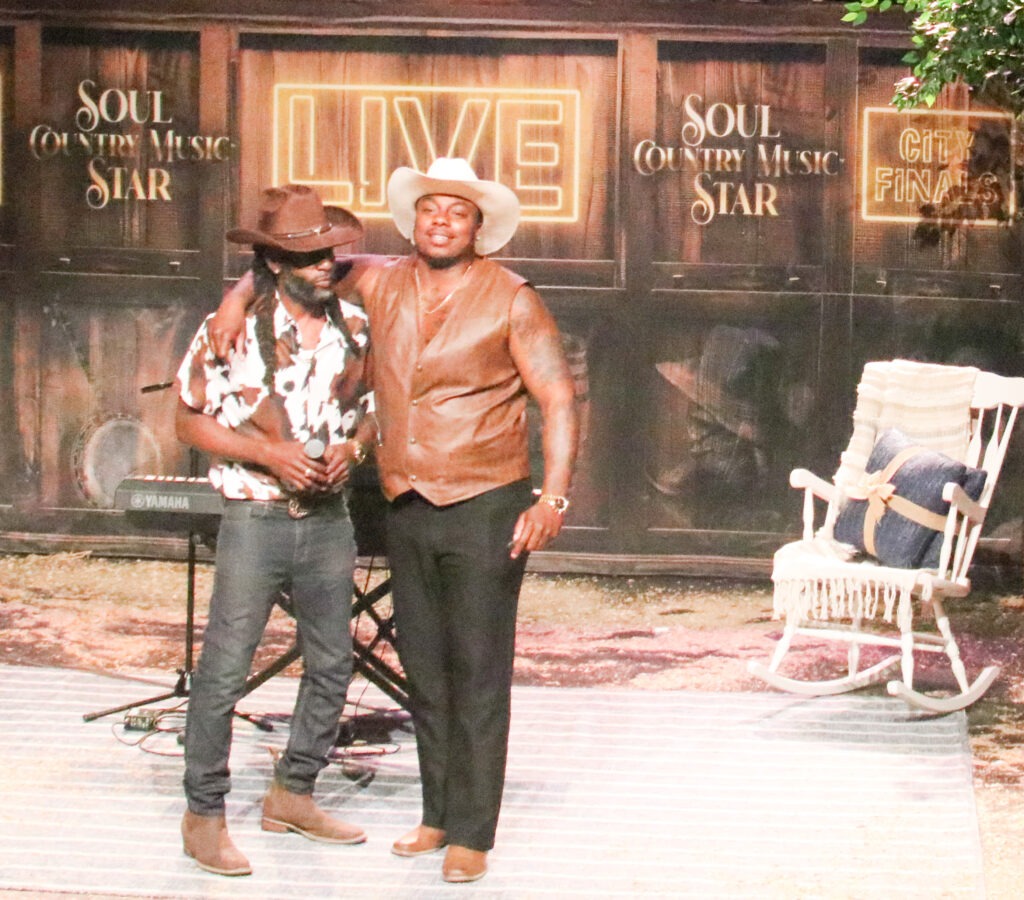
Nathaniel “Bow Leggs” Dansby & Kirk Jay – Photo by Milton Kirby
The competition has become more than a showcase for emerging Black country artists. It has become a space where artists reconnect with a musical tradition that has always belonged to them, even when history and the industry often failed to acknowledge it.
When that journey reaches its final stage in Los Angeles, the crowning of the National Champion will celebrate more than a single performance. It will honor the artists, histories, and cultural influences that helped shape country music long before many of those contributions were fully recognized.
And while one artist will leave Los Angeles with the title, the larger story will continue long after the competition ends.
Because what Soul Country Music Star is building, much like the BPIR itself, is not simply entertainment.
It is visibility. It is opportunity. It is cultural continuity carried forward by a new generation.
Los Angeles is not the end of the road.
It is the beginning of the next chapter.
X. Closing: What the Dirt Remembers
When the last rider leaves the arena and the dust settles, the dirt tells the story.
“It holds the hoofprints of bulls and horses.
It holds the footprints of Pee Wee riders and champions.”
It holds the echoes of children cheering, families laughing, and communities gathering.
It holds the legacy of Bill Pickett and the vision of those who carry his name forward.
The greatest show on dirt is not just a rodeo.
It is a cultural inheritance.
A record carried across generations.
A celebration of who we are and who we’re becoming.
The Bill Pickett Invitational Rodeo is not preserving a dead past. It is shaping the future in real time.
The road ahead will carry that legacy even further as the BPIR and SCMS seasons continue toward two major championship moments celebrating the future of Black rodeo and Soul Country music culture.
In September, the BPIR National Finals will bring top competitors from across the tour to Upper Marlboro, Maryland, where riders will compete for championship titles, prize money, trophy saddles, and honors recognizing excellence throughout the season.
Then, in October, in Los Angeles, regional competition winners from across the country will gather for the Soul Country Music Star National Finals and Music Festival, competing for the national title, $10,000 in cash and prizes, and the opportunity to tour with the BPIR during the 2027 season.
Together, these events represent more than championship weekends. They reflect a growing movement rooted in heritage, resilience, fellowship, visibility, and the next generation carrying these traditions forward.
And as I close this series, what has stood out most throughout this reporting process is how deeply the rodeo remains embedded in people’s memories, the way families organize reunions around it, the way generations return year after year, and the way even a single image, jacket, or song can reopen memories decades later.
That kind of cultural continuity is rare.
And it deserves to be documented with care.
When I began this series, I believed I was covering a rodeo.
What I found instead was an enduring institution built on resilience, creativity, family, and cultural inheritance.
More than anything else, I found evidence that this tradition continues to grow, not as a memory, but as a living force being carried into the future.
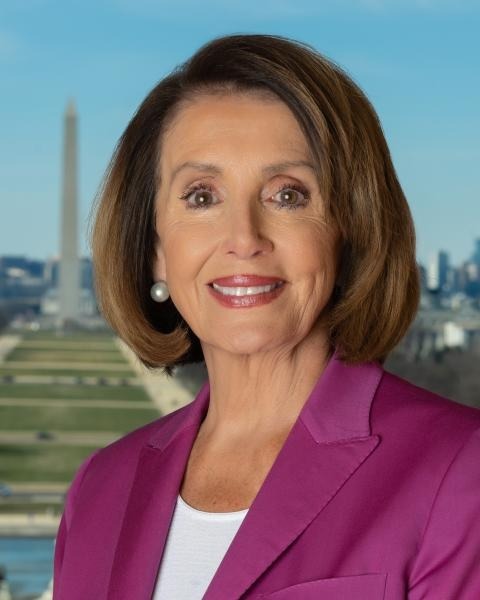
The Obama Foundation announced the Nancy Pelosi Garden Pavilion at the Obama Presidential Center, honoring Pelosi’s historic leadership ahead of the Center’s June 2026 opening.
By Milton Kirby | Chicago, IL | May 12, 2026
The Obama Foundation announced Tuesday that the Garden Pavilion at the forthcoming Obama Presidential Center will be named in honor of Nancy Pelosi, recognizing the historic legacy of the first woman to serve as Speaker of the House and her decades-long influence on American public life.
The announcement is part of a broader unveiling of named spaces throughout the Center honoring civil rights leaders, educators, activists, and public servants whose work helped shape American democracy and civic engagement.
Located along the eastern edge of the Center’s Fruit & Vegetable Garden, the Nancy Pelosi Garden Pavilion will include a garden classroom, workroom, and public restrooms designed to support community programming and public gathering spaces. The pavilion was made possible through a gift from philanthropist and business leader Ron Conway.
Former President Barack Obama praised Pelosi’s role in shaping major legislative victories during his administration, including passage of the Affordable Care Act.
“For almost four decades, Nancy Pelosi served the American people and worked to make our country better,” Obama said. “No one was more skilled at bringing people together and getting legislation passed – and I will always be grateful for her support of the Affordable Care Act.”
Obama said the pavilion will serve not only as a tribute to Pelosi’s leadership, but also as an inspiration for future generations to engage in public service and civic life.
Conway, whose donation funded the pavilion, described the Obama-Pelosi partnership as one of the most consequential political relationships in modern American history.
“In our nation’s entire history, no President and Speaker of the House got more done for our country working together than President Barack Obama and Speaker Nancy Pelosi,” Conway said.
Valerie Jarrett said Pelosi’s career reflects the broader mission of the Presidential Center to encourage civic participation and leadership across generations.
“Nancy Pelosi is one of the foremost leaders of our time,” Jarrett said. “She showed people of any party or background the power of increased involvement of women in our democracy.”
Honoring Leaders Across the Campus
The Pelosi Pavilion is one of several named spaces announced as the Obama Presidential Center prepares for its June 19, 2026 public opening.
Among the newly announced spaces is the Democracy 101 Exhibit honoring Timuel Black, the longtime Chicago educator and civil rights activist who fought segregation in schools and housing.
The Center’s auditorium will bear the name of Holocaust survivor and Nobel laureate Elie Wiesel through support from philanthropists Penny Pritzker and Dr. Bryan Traubert. Foundation leaders said the auditorium will host speakers, performances, and public discussions inspired by the arts and humanities traditions of the Obama White House.
The Fruit & Vegetable Garden itself will honor former First Lady Eleanor Roosevelt, recognizing her advocacy for civil rights and her creation of the White House Victory Garden during World War II.
Other named spaces include the John W. Rogers Jr. Exhibition Gallery honoring the founder of Ariel Investments, the “Imagine Your Impact” exhibit honoring astronaut Mae Jemison, and the Harold Washington Overlook commemorating Chicago’s first Black mayor, Harold Washington.
A Civic Campus Beyond a Museum
Located on Chicago’s South Side near Jackson Park, the Obama Presidential Center is designed as more than a traditional presidential museum. Foundation leaders describe it as a civic campus intended to bring together culture, community, education, and public engagement.
The Foundation said the named spaces are meant to honor what President Obama has often called the “giants” on whose shoulders future generations stand.
“These tributes remind every visitor that they, too, have the power to leave a lasting mark on the world,” the Foundation said.
The Obama Presidential Center officially opens to the public on June 19, 2026, with exhibitions, gardens, educational programming, and community gathering spaces aimed at inspiring the next generation of civic leaders.
Atlanta leaders celebrated the fifth Summer Youth Employment Program Signing Day as nearly 20,000 youth have now been connected to paid work opportunities citywide.
By Milton Kirby | Atlanta, GA | May 12, 2026
Standing inside the historic Fox Theatre, Atlanta leaders, business executives, educators, and students gathered Monday for Mayor Andre Dickens’ fifth annual Summer Youth Employment Program (SYEP) “Signing Day,” celebrating one of the city’s fastest-growing workforce initiatives for young people.
The event brought together employers from across Metro Atlanta who pledged to provide jobs, internships, mentorships, and career exposure opportunities for Atlanta youth this summer.
What began during the Dickens administration as an ambitious workforce initiative has now grown into a citywide program that officials say has connected nearly 20,000 young people to paid work opportunities over the last four years.
“This has truly been a group project,” Dickens told the audience. “Nearly 20,000 young people have been connected to paid work in the city of Atlanta over the past four years.”
The mayor said the city invested more than $23 million in wages through the program during that period, calling it both an economic investment and a public safety strategy.
“We are seeing what happens when we are intentional about our investments in young people,” Dickens said. “When young people are filled with opportunities and busy learning while they earn, they are committed to their future.”
The annual event also highlighted the growing role businesses, nonprofits, cultural institutions, and city agencies are playing in preparing young Atlantans for the workforce.
Representatives from organizations including the Fox Theatre and TIME2GIVE described the program as more than a summer job initiative.
“This is about exposure, readiness, innovation, confidence-building, and ultimately creating real tangible pathways into future careers,” said Dr. Charity Rowe-Marshall, executive director of TIME2GIVE.
Rowe-Marshall said youth participating through the organization’s Innovation Studio Atlanta program are introduced to technology, entrepreneurship, logistics, manufacturing, design, marketing, and artificial intelligence through hands-on projects and workforce experiences.
Jayla Scott Cottman – SYEP participant – Photo by Milton Kirby
“They learn by doing,” she said. “We are empowering them to be builders of technology, not just consumers.”
Officials repeatedly emphasized that the program’s impact extends far beyond temporary employment.
According to the city, nearly 6,000 youth participated in SYEP last summer alone, making it the program’s largest cohort to date. At least 38 participants transitioned from summer placements into permanent career opportunities afterward.
The program is open to Atlanta residents ages 14 to 24 and places participants in industries ranging from healthcare and government to technology, hospitality, logistics, and the arts. Participants can earn up to $15 per hour while gaining workplace training and mentorship.
Atlanta Department of Labor and Employment Services Commissioner Dr. Theresa Austin-Gibbons said the workforce landscape is changing rapidly because of automation, digital technologies, and artificial intelligence.
“That is why SYEP focuses on strong STEM program design while understanding that soft skills and technical skills must work together,” Austin-Gibbons said.
She noted that participants receive financial literacy education, workplace readiness instruction, conflict resolution training, and guidance on responsible AI usage before beginning work placements.
“Our youth are learning not just how to do a job, but how to show up and be successful,” she said.
The event also featured testimony from former participants whose careers began through the program.
Christopher Hobbs SYEP participant – Photo by Milton Kirby
Christopher Hobbs, a graduate of Florida A&M University currently completing his Master of Public Administration degree, described how his internship with the Atlanta Department of Labor and Employment Services helped shape his professional future.
“My experience with ATL DOLS gave me hope,” Hobbs said. “The skills, confidence, professionalism, exposure, and hope I gained in SYEP stayed with me long after the summer ended.”
Hobbs now works as an assistant project manager for Georgia Power.
Atlanta Police Chief Darin Schierbaum connected the program directly to the city’s broader public safety efforts, arguing that youth investment is one of the strongest crime prevention tools available.
“When we attack youth crime in our city, we don’t attack it by handcuffs,” Schierbaum said. “If we’re at the point of handcuffs, we’re standing at the point of failure.”
The chief credited initiatives like SYEP with helping Atlanta continue reductions in violent crime, shootings, and homicides over recent years.
“This is what crime fighting looks like in Atlanta,” Schierbaum said. “This is where we invest in our young people to make sure we are creating citizens.”
Atlanta Police Chief Darin Schierbaum – Photo by Milton Kirby
Fox Theatre CEO Allan C. Vella said the theater’s mission to “preserve and share” and “strengthen communities through theater” closely aligns with the city’s youth employment initiative.
The Fox has participated in the program for years by offering internships and professional development opportunities to students interested in arts and entertainment careers.
“When we create pathways for young people to succeed, we strengthen the future of our city,” Vella said.
The event concluded with employers signing formal pledges to support Atlanta youth this summer as city leaders encouraged additional businesses to participate.
Registration for Atlanta’s 2026 Summer Youth Employment Program remains open for both youth applicants and employer partners. Placements are expected to begin in June.
Support open, independent journalism – your contribution helps us tell the stories that matter most.
By Florita Bell Griffin | Houston, TX | May 12, 2026
Artificial intelligence is often described in ways that make ordinary people feel as though the subject belongs to somebody else. The language can sound technical, distant, and crowded with terms that seem built for specialists rather than citizens, families, workers, or community members. Yet the truth is much simpler than the surrounding noise suggests. AI affects everyone because it has already moved into the systems that shape everyday life. It is present when people search for information, apply for jobs, use maps, interact with customer service, receive banking alerts, shop online, scroll through news feeds, help children with schoolwork, or rely on institutions to process important decisions. In that sense, AI is no longer a narrow technology topic. It has become part of the public environment.
To understand why AI affects everyone, it helps to begin with plain language rather than spectacle. At its core, AI is a type of digital system that can recognize patterns, generate responses, and perform tasks that once required more direct human effort. It can sort information, summarize documents, answer questions, draft language, recommend choices, identify likely patterns, and help automate decisions. Sometimes it does these things well. Sometimes it does them poorly. Sometimes it does them with a tone of confidence that sounds stronger than the truth beneath the answer. That is one of the most important facts ordinary people should understand. AI can be fast, helpful, persuasive, and wrong at the same time.
This matters because modern life already depends on digital systems. Most people do not wake up thinking about databases, software layers, platform architecture, or automated workflows. They wake up thinking about work, bills, appointments, transportation, school, health, family concerns, communication, and the responsibilities of the day. Yet many of those activities now pass through systems that AI influences. A search engine may decide what information appears first. A hiring platform may help sort applicants. A bank may use AI to detect unusual behavior. A school may use software that helps students or teachers generate material quickly. A hospital or insurer may use systems that help process large volumes of records and requests. The reason AI affects everyone is simple. Everyday life now moves through environments where AI is increasingly embedded.
One of the clearest effects can be seen in how people find and receive information. For years, digital search mainly involved typing a question and reviewing links. People had to choose where to click, what to read, and which sources seemed credible. AI changes that experience by offering direct summaries, generated responses, and neatly packaged answers that appear ready for immediate use. That can save time, and in many situations it does. Yet the deeper change lies in what happens to judgment when people stop tracing where information came from. A smooth answer can create the feeling of understanding before real understanding has been tested. In plain language, AI affects everyone because it changes how people come to believe they know something.
Work is another major part of the story. Many employees now use or encounter AI even when they do not think of themselves as working with advanced technology. They may see tools that draft messages, summarize notes, organize data, suggest replies, analyze documents, or support customer interactions. For some workers, this makes parts of the day easier. It can reduce repetition and save time. For others, it creates a new source of pressure. When software can produce something quickly, expectations can shift just as quickly. Employers may want more done in less time. Workers may be expected to supervise, refine, or improve machine-generated content while still carrying full responsibility for quality. In ordinary life, that means AI is changing jobs even before it fully changes job titles.
Families feel the change in a different way. Parents now raise children in a world where machines can answer questions, generate essays, solve equations, summarize reading, and imitate polished expression in seconds. That creates both opportunity and tension. AI can help explain a concept, support practice, and make some tasks more accessible. It can also make it easier for a child to move around the effort that real learning requires. Human growth still depends on patience, concentration, memory, correction, and the slow building of judgment. A polished answer is not the same thing as a developed mind. AI affects everyone because it enters the home, the classroom, and the habits children form long before adulthood.
Communication has changed as well. AI can help people write faster, sound more polished, and organize thoughts more quickly than before. That can feel useful, especially in a world where people are often tired, rushed, and carrying more than one person’s worth of daily responsibility. Yet the ease of generated language also changes what communication feels like. Words can become easier to produce than to mean. Tone can sound thoughtful without much thought behind it. Confidence can appear where knowledge is weak. Ordinary people encounter this every day now, whether they realize it or not, through emails, posts, articles, summaries, scripts, and automated responses that sound human enough to shape perception. AI affects everyone because language itself is one of the main ways people judge trust, seriousness, and intention.
Trust may be the most important part of all. People live in a time when text, images, audio, and video can all be generated or reshaped with growing ease. A realistic voice clip can spread quickly. A convincing image can circulate before anyone checks its source. A smooth explanation can be shared widely because it sounds authoritative on first contact. This changes what ordinary people must do to remain grounded. They need to ask stronger questions. Where did this come from. Who is behind it. Has it been confirmed elsewhere. Does it sound certain because it is true, or because it was designed to sound certain. AI affects everyone because it makes discernment more necessary in everyday life, not less.
Consumer life also helps explain why this technology reaches so broadly. AI influences what people are encouraged to watch, buy, read, notice, or believe matters most. Recommendation systems help shape entertainment. Shopping systems shape purchasing patterns. News feeds shape attention. Navigation tools shape movement. These systems often feel helpful because they reduce effort. Yet they also guide behavior quietly. They create the path of least resistance. Over time, repeated small influences become part of how a person’s daily life is structured. In plain language, AI affects everyone because it helps arrange the options people see and the choices that feel easiest to make.
The same is true in healthcare, finance, insurance, and public services. AI can help identify patterns, flag unusual behavior, process requests, and support administrative flow. These uses may improve speed and efficiency, and in many cases that matters. Still, real people live inside the outcomes of these systems. A patient wants to know whether a case received meaningful attention. A worker wants to know whether a decision can be challenged if a system gets it wrong. A family wants clarity if an insurer or institution relies on automated processing in ways that shape important outcomes. AI affects everyone because people do not experience technology in the abstract. They experience it through consequences.
The most important point is that people do not need technical expertise to understand what is at stake. They do not need to build AI systems in order to ask serious questions about how those systems affect ordinary life. They can ask who designed a tool, what data shaped it, what it rewards, what it overlooks, where human review enters, and how errors are corrected. They can teach children that speed is not wisdom. They can remind schools, businesses, and institutions that convenience carries responsibility. They can preserve the habit of pausing long enough to think before accepting the first polished answer that arrives.
AI in plain language is this: a powerful set of digital tools and systems that now shape how people search, work, communicate, learn, shop, trust, and move through the world. That is why this technology affects everyone. Its importance does not come from futuristic fantasy. Its importance comes from ordinary life. The more clearly people understand that, the better prepared they will be to live with AI wisely, question it responsibly, and keep human judgment at the center of the age now unfolding.
This column exists for only one purpose; that is to answer your questions on Negro League baseball history. To that end, I need your help … if you are reading this column and enjoy it and want it to continue and you do not already know everything about Negro League history … then please submit a question on any aspect of Negro League history. Your questions are the lifeblood of Shadow Ball—they shape where we go next … players, teams, events, and more – and, in so doing, you will direct where this column goes moving forward. Your participation is important and appreciated. The very existence of this column depends on you. Submit your questions to shadowball@truthseekersjournal.com.
Maria Rayburn of Salisbury, NC, posed the following question for me this week: who were the best catchers of the Negro Leagues?
Well, Maria – three are in the Hall of Fame – Josh Gibson, inducted 1972; Biz Mackey, 2006 and Lou Santop, 2006. They are the three best in that order. Roy Campanella, himself with nine years in the Negro Leagues before beginning a Hall of Fame career in the National League also needs to be named as he is arguably the second-best Negro League catcher. The interesting aspect of this answer is the next group. For me (as found in the 42 for ’21 poll) I think Quincey Trouppe, Double Duty Radcliffe, Bruce Petway, Larry Brown and Frank Duncen, Jr., deserve further consideration from the National Baseball Hall of Fame. With Campanella already in for National League play I would like to see at least three of that quintet in and all five given strong consideration.
Last week’s Shadowball Significa Question of the Week: Seven players have appeared in both a Negro League East-West Classic and a National League/American League All Star game, six of them have been inducted in the Baseball Hall of Fame. Name the 7th who is not inducted? … Kevin D. Johnson, of Broken Arrow, OK, was the first to correctly name Jim Gilliam, who appeared in the 1948 East-West Classic representing the Baltimore Elite Giants and the AL/NL All Star game in both 1956, as a Brooklyn Dodger, and 1959, as a Los Angeles Dodger. The other six appearing in both All-Star games include: Ernie Banks, Roy Campanella, Larry Doby, Minnie Minoso, Jackie Robinson, and Satchel Paige.
The Shadowball Significa Question of the Week: What Negro League pitcher, who participated in the Negro National League playoff in 1935, had a son who won two World Series games several decades later. Name this father/son pair. Send your answer and any comments on the Negro Leagues to shadowball@truthseekersjournal.com or Shadow Ball, 3904 N Druid Hills Rd, Ste 179, Decatur, GA 30033
Ted Knorr
Ted Knorr is a respected Negro League baseball historian, a longtime member of the Society for American Baseball Research’s Negro League Committee, and the founder of the Jerry Malloy Negro League Conference as well as several Negro League Commemorative Nights in central Pennsylvania.
Beyond his research and organizing work, Ted is frequently invited to speak at sporting events, community programs, family gatherings, and educational forums, where he brings Negro League history to life. His deep knowledge of the players, teams, and cultural impact of Black baseball has made him a trusted voice for audiences who want to understand the legacy and significance of the Negro Leagues.
Support open, independent journalism—your contribution helps us tell the stories that matter most.
Charlotte Mayor Vi Lyles announces a June 30 resignation months after reelection, citing family priorities and closing a historic five‑term tenure as the city’s first Black female mayor.
By Milton Kirby | Charlotte, NC | May 11, 2026
Vi Lyles, the first Black woman ever elected mayor of Charlotte, will resign from office effective June 30, ending a historic political career that helped reshape leadership in one of America’s fastest‑growing cities.
The announcement comes only months after Lyles won reelection in 2025 by a wide margin a victory she celebrated as a mandate to continue expanding affordable housing, improving public safety, and investing in infrastructure. In July 2025, she told supporters, “Charlotte is a city of opportunity… there is still work to do and I’m ready to keep doing it.”
But on May 7, 2026, Lyles said her priorities had shifted.
“Serving as Charlotte’s mayor has been the honor of my life,” she said. “Now, it is time for the next phase of my life, to spend more time with my grandchildren and for someone new to lead us forward.”
Her resignation closes a remarkable public service career spanning more than three decades — one that began long before she stepped into the mayor’s office.
A Historic Rise: The 2017 Breakthrough
For many Charlotte residents, Lyles’ defining moment came on Election Day 2017.
That year, she defeated Republican City Council member Kenny Smith to become Charlotte’s first African American female mayor a milestone that carried deep symbolic weight in a Southern city still grappling with issues of race, growth, and representation.
Her victory came just one year after the 2016 police shooting of Keith Lamont Scott, an event that sparked days of protest and placed Charlotte under national scrutiny. Against that backdrop, Lyles’ election represented both continuity and change a veteran administrator promising stability while breaking one of the city’s highest political barriers.
In her 2017 victory speech, she told supporters:
“You’ve proven that we are a city of opportunity and inclusiveness. You’ve proven a woman whose father didn’t graduate from high school can become this city’s first female African American mayor.”
It was a moment that signaled a new era in Charlotte politics.
A Tenure Defined by Growth, Equity, and Infrastructure
During her five terms, Charlotte experienced rapid population growth, major corporate relocations, and significant public investment. Lyles championed:
Affordable housing initiatives
Public transit expansion, including a voter‑approved sales tax for infrastructure
Racial equity programs
Violence prevention and public safety reforms
Fiscal stability and long‑term planning
She frequently described Charlotte as “a city of opportunity,” a theme that shaped her policy agenda and her public messaging.
“I am very proud of my record as mayor,” she said, “but I also firmly believe that true leadership includes knowing when it is time to let the next generation of leaders take over.”
A Sudden Transition and a City at a Crossroads
Under North Carolina law, the Charlotte City Council will appoint an interim mayor to serve the remainder of Lyles’ term. The appointee must be a Democrat and reside within Charlotte city limits, but does not have to be a current council member.
The process could trigger a broader reshuffling of city leadership. If a sitting council member is appointed mayor, the council must also fill that vacant seat.
Political speculation has already intensified:
Former Mayor Jennifer Roberts has publicly stated she feels “called” to serve as interim mayor and pledged not to run in 2027.
Councilmember Dante Anderson has urged the council to consider an outsider familiar with city government rather than selecting one of its own members.
At least five current council members are rumored to be considering mayoral campaigns in 2027.
Anderson, who grew up in Charlotte public housing, said she is not seeking the interim appointment but believes the city should choose someone who can “keep the seat warm” without influencing the 2027 race.
“There has already been some politics in play during this term,” she said.
Lyles, for her part, said she does not plan to endorse a successor immediately.
“As in all things politics, I am sure there will be speculation as to why I am making this decision now,” she said. “Simply put, I am going to spend time with my grandchildren.”
A Legacy That Will Shape Charlotte for Decades
At 73, Vi Lyles leaves office as one of the most consequential figures in modern Charlotte politics – a leader whose rise reflected the city’s changing demographics and whose tenure helped define its trajectory during a period of extraordinary growth.
Her imprint is visible across the city: in new housing developments, expanded transit plans, strengthened fiscal policy, and a renewed focus on equity.
And her 2017 breakthrough remains a defining moment in Charlotte’s civic identity – a reminder of what representation can mean in a city still evolving.
As Charlotte prepares for a new chapter, Lyles’ legacy endures: a symbol of opportunity, a steward of growth, and a leader who believed deeply in the city she served.
Truth Seekers Journal thrives because of readers like you. Join us in sustaining independent voices.