
 TSJ
TSJ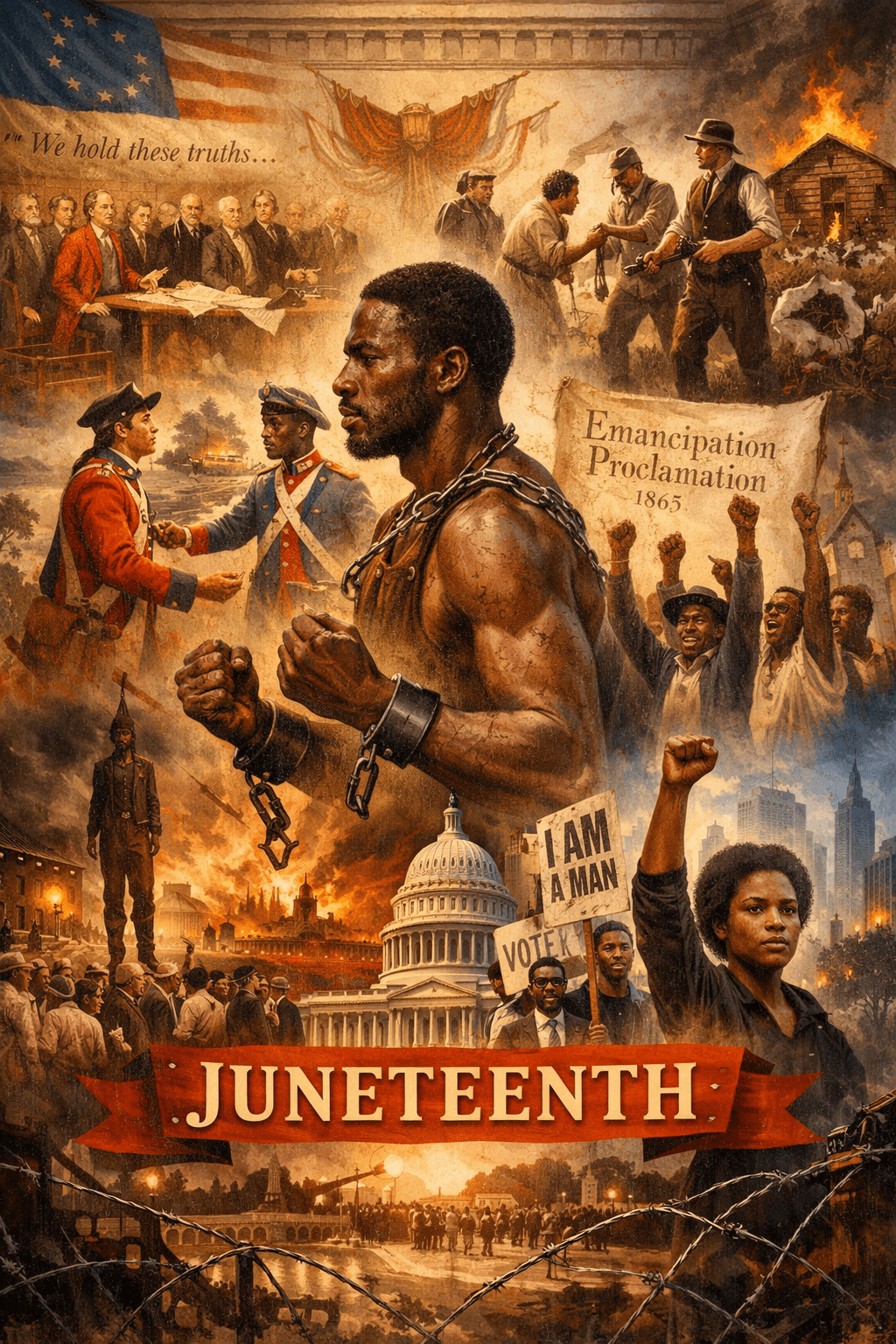
Dr. Marilyn Barnett Waters | Atlanta, GA | June 25, 2026 |
To truly understand why we must speak directly to our truth today, we have to look back to July 4, 1776. While the founders of this nation penned grand words about unalienable rights and liberty, those words rang hollow for the hundreds of thousands of African Americans held in brutal, systemic bondage. We were enslaved people. (Listen to Frederick Douglas’ Speech on the Fourth of July)
The American Revolution was not a war for black liberation; in fact, the promise of freedom often wore a British uniform. Lord Dunmore’s Proclamation of 1775 and the Philipsburg Proclamation of 1779 offered liberty to any enslaved person who fled their rebel masters to fight for the Crown. Estimates suggest that tens of thousands of African Americans risked everything to escape behind British lines, seeking the freedom America denied them. For our ancestors, the Fourth of July was a day that marked the birth of a nation built on their unrequited labor.
True freedom did not arrive with a single declaration, nor did it end when the last enslaved people in Galveston, Texas, finally learned of their emancipation on June 19, 1865—two and a half years after the Emancipation Proclamation. Because of this long, painful delay, Juneteenth is not a holiday for simple celebration; it is a sacred day of commemoration. It is a time to remember that freedom was delayed then, just as justice is delayed now.
From the broken promises of Reconstruction and the terror of Jim Crow lynchings, to the systemic barriers we still confront in 2026, our struggle for true equality has never ceased. Today, we are witnessing a profound cultural and political pushback—an intentional effort to rewrite our history, ban our books, stop us from voting, and silence our truths. By choosing to commemorate Juneteenth, we honor the resilient spirits of those who fought before us, we acknowledge the chains that were broken, and we fiercely confront the modern struggles we still face as America works even now to celebrate its 250-year Anniversary. We speak directly to this truth because a community that remembers its past cannot be stripped of its future. We must wake up to this truth.


 Milton Kirby


Thank you for eloquently sharing your thoughts.