The Obama Foundation has announced new named spaces at the Obama Presidential Center honoring Jane Addams, John Gardner, Eunice Kennedy Shriver, and Paul Farmer.
By Milton Kirby | Chicago, IL | May 29, 2026
As the opening of the Obama Presidential Center approaches, the Obama Foundation has announced a new group of named spaces honoring historic figures whose lives and work inspired generations of Americans to pursue civic engagement, social justice, and public service.
The announcement adds four new tributes to a growing list of exhibits, galleries, courtyards, and public gathering spaces throughout the campus, which opens to the public on June 19.
Foundation leaders say the named spaces reflect a central theme of the Obama Presidential Center: that meaningful change is driven not by a single individual, but by countless people who choose to participate in shaping their communities and the nation.
“President and Mrs. Obama’s story is only possible through the collective action and contributions of people who made their voices heard,” said Valerie Jarrett, CEO of the Obama Foundation. “These honorees each inspired the next generation to see what’s possible and become the newest authors in an ongoing story of progress.”
The latest spaces recognize leaders whose influence stretched across social reform, public health, disability rights, civic participation, and grassroots activism.
Among the newly announced spaces is the Toward A More Perfect Union Exhibit, named in honor of social reformer and Nobel Peace Prize recipient Jane Addams. Located on the museum’s second level, the exhibit will explore the nation’s ongoing pursuit of democratic progress through stories and artifacts from historic labor, civil rights, and social justice movements. The exhibit also highlights Addams’ work advancing labor protections, advocating for immigrants, and improving conditions for vulnerable children through Chicago’s famed Hull House settlement.
Another museum feature, the Yes We Can Exhibit, honors John W. Gardner, the former Secretary of Health, Education, and Welfare whose advocacy for citizen engagement and lifelong learning influenced generations of public servants. The exhibit will capture the grassroots energy of Barack Obama’s 2008 presidential campaign through film, campaign memorabilia, and displays recognizing the volunteers who helped build the movement.
The Obama Foundation also announced the Eunice Kennedy Shriver Lobby at Home Court, the Center’s athletic and youth programming facility. The space honors the founder of the Special Olympics, whose work expanded opportunities and inclusion for people with intellectual disabilities around the world. Visitors entering the facility will encounter a welcoming public space designed to support youth engagement, recreation, and community programming.
A fourth newly named space, the Paul Farmer Special Exhibitions Gallery, recognizes the late physician and global health advocate whose work transformed health care delivery in underserved communities worldwide. Farmer, co-founder of Partners In Health, spent decades championing the idea that quality health care is a fundamental human right. The gallery will host rotating exhibitions designed to deepen visitor engagement with contemporary issues and social challenges.
The new announcements join an extensive roster of previously revealed spaces honoring influential figures from American history, civil rights, politics, science, and public service.
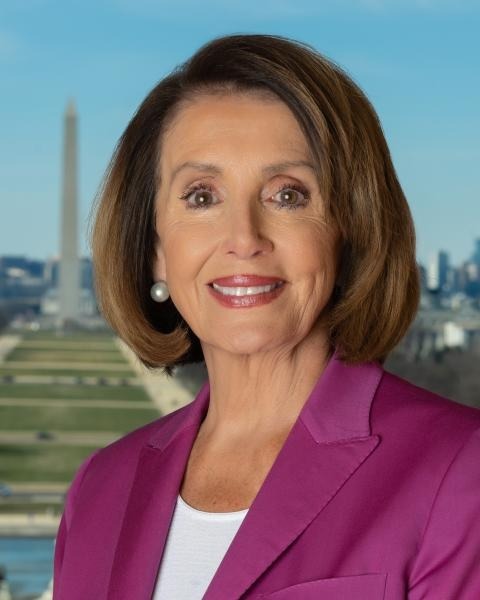
Among them are the John Lewis Plaza, Harriet Tubman Courtyard, Ida B. Wells Program Room, Eleanor Roosevelt Fruit and Vegetable Garden, Sojourner Truth Program Room, Hadiya Pendleton Atrium, Harold Washington Overlook, and the Nancy Pelosi Garden Pavilion. Other spaces recognize trailblazers including Mae Jemison, Timuel Black, Marian Robinson, Herman Petty, Reginald F. Lewis, and Elie Wiesel.
Together, the names create a tapestry of individuals whose work reflects many of the themes central to the Obamas’ public lives: civic participation, community leadership, inclusion, education, health equity, and democratic engagement.
The Obama Presidential Center is being developed on Chicago’s South Side, where Barack Obama began his career as a community organizer. Beyond serving as a presidential library and museum destination, Foundation leaders have emphasized that the Center is intended to function as a civic campus focused on leadership development, public engagement, and community connection.
The naming of these spaces reinforces that vision by linking visitors to stories of people who challenged injustice, expanded opportunity, and encouraged others to become active participants in public life.
When the Center opens June 19, visitors will encounter more than exhibits documenting a presidency. They will also encounter a broader story about the individuals and movements that helped shape modern America and continue to inspire future generations to make a difference.
The Atlanta Hypertension Initiative is bringing health systems, churches, and community groups together to improve blood pressure control for more than 500,000 adults.
By Milton Kirby | Atlanta, GA | May 29, 2026
High blood pressure is often called the “silent killer” because millions of people live with the condition without knowing it. Left untreated, hypertension can lead to heart attacks, strokes, kidney disease, and other serious health complications.
In metro Atlanta, a growing coalition of health care providers, community organizations, faith leaders, public agencies, and national health organizations is working to change that reality through the Atlanta Hypertension Initiative (AHI), an ambitious effort designed to improve blood pressure control for more than 500,000 adults by 2030.
Built on a mission “to advance cardiovascular health for all and reduce related health inequities by building a lasting collaborative effort for Atlanta,” the initiative represents one of the region’s most comprehensive approaches to tackling cardiovascular disease.
Unlike traditional awareness campaigns, AHI combines community outreach, clinical improvement, education, training, and collaboration into a long-term strategy aimed at creating lasting change.
A Region Facing a Serious Health Challenge
The need is substantial.
Nationally, nearly half of U.S. adults have hypertension. Yet only about one in four has the condition under control. The consequences are severe. High blood pressure remains one of the leading causes of heart attacks, strokes, and preventable deaths across the country.
The burden is especially significant in metro Atlanta.
According to AHI data, approximately one-third of adults across the region report having high blood pressure. In some communities, the numbers are even higher. Clayton County reports a self-reported hypertension prevalence of 40.3 percent, while DeKalb County stands at 35.5 percent, Fulton County at 33.7 percent, and Gwinnett County at 32.4 percent.
Health leaders note that the actual burden is likely even greater because many people remain unaware they have hypertension until serious complications develop.
The initiative has identified Fulton, DeKalb, Douglas, Cobb, and Gwinnett counties as priority areas for concentrated engagement and support while continuing to welcome participation from organizations and residents throughout the broader 11-county metropolitan region.
A Collective Effort
The Atlanta Hypertension Initiative is grounded in a simple belief: no single organization can solve the region’s hypertension crisis alone.
The initiative brings together partners from public health, health care, academia, government, faith communities, and community-based organizations to advance equitable hypertension control through collaboration, capacity building, and clinical quality improvement.
AHI is co-led by the CDC Foundation, the Atlanta Regional Collaborative for Health Improvement (ARCHI), the American Medical Association, and the Metro Atlanta American Heart Association, with foundational support from the Centers for Disease Control and Prevention.
Together, these organizations are working to improve awareness, treatment, and blood pressure control while addressing many of the barriers that contribute to health disparities throughout metro Atlanta.
More Than Awareness
One of the initiative’s distinguishing features is its emphasis on providing practical tools and resources that residents can use to improve their health.
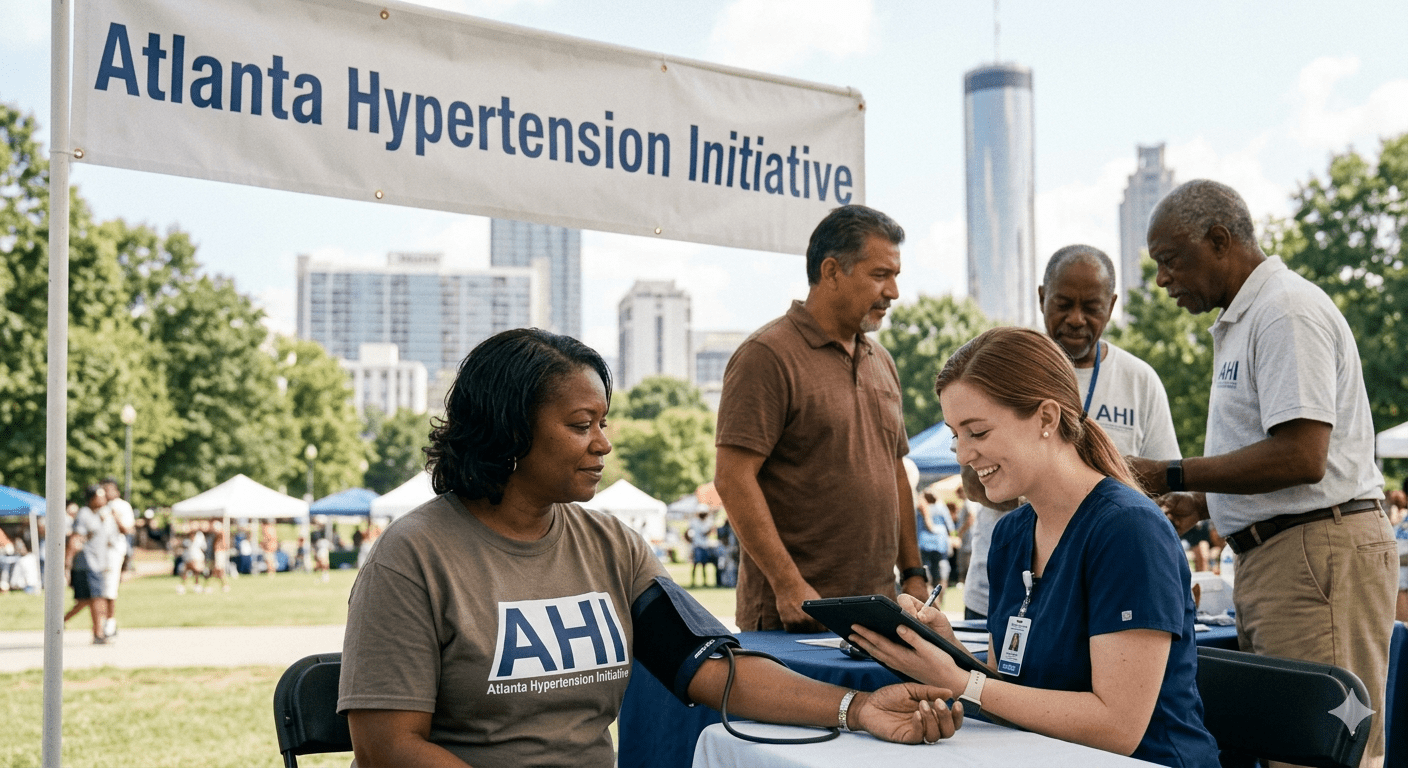
Through community outreach programs, AHI supports blood pressure screenings, patient education programs, health fairs, and community events designed to help residents better understand hypertension and the steps they can take to manage it.
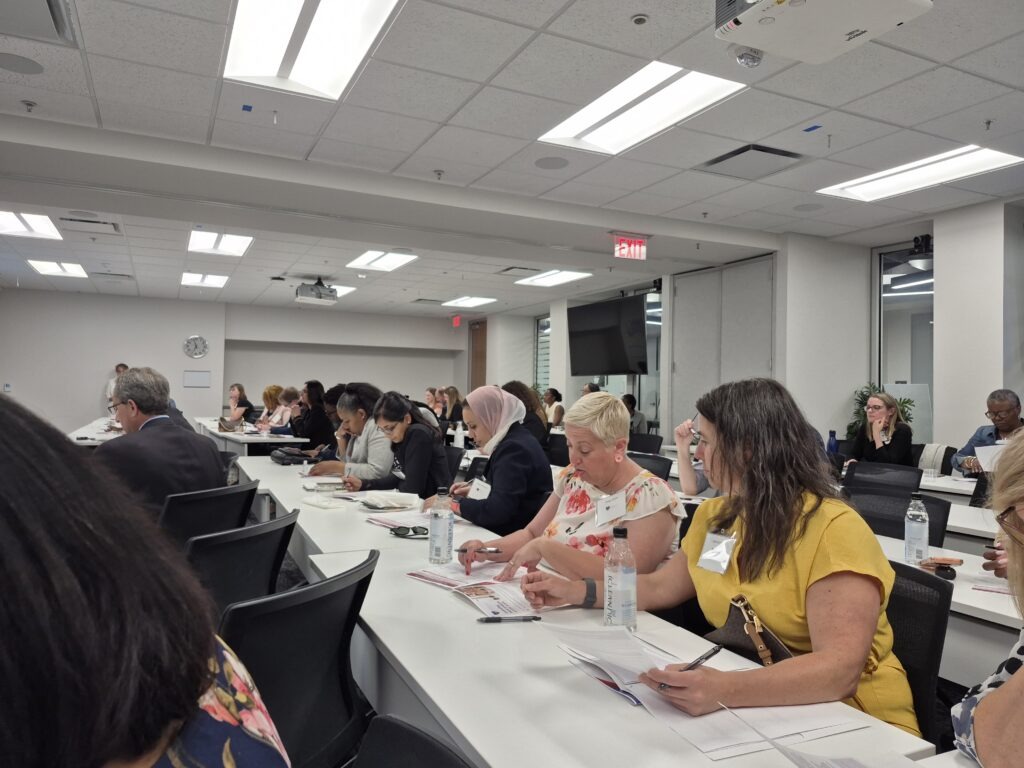
AHI classroom discussion
The initiative also promotes innovative programs such as “Low Pressure Parties,” community-based events that make learning about blood pressure, nutrition, physical activity, and healthy living engaging and accessible.
Residents can also benefit from educational materials, connections to care, and resources that help them navigate the health care system and better manage chronic conditions.
For organizations and health care providers, AHI offers technical assistance, training opportunities, quality improvement resources, peer-learning collaboratives, and implementation support.
Expanding Access to Home Monitoring
A major focus of the initiative is increasing access to self-measured blood pressure monitoring.
Research has shown that individuals who regularly monitor their blood pressure at home are often better able to manage hypertension and work with their health care providers to improve outcomes.
To support that effort, AHI helps distribute validated home blood pressure monitors and provides education on how to use them correctly. The initiative also offers training and technical assistance to organizations interested in implementing self-monitoring programs.
Community health workers play an important role in this strategy by helping residents understand their readings, connect with care, and stay engaged in treatment plans.
Reaching Communities Where They Are
AHI places particular emphasis on reaching populations disproportionately affected by hypertension, especially Black adults.
One of the initiative’s key outreach tools is the Live to the Beat campaign, a national effort designed to encourage Black adults ages 35 to 54 to take small, manageable steps to reduce cardiovascular disease risk factors such as high blood pressure, high cholesterol, and high blood sugar.
By partnering with trusted community leaders, churches, neighborhood organizations, and local events, AHI seeks to bring health education directly into the communities where people live, work, worship, and gather.
Three Strategic Pillars
The initiative’s work is organized around three strategic pillars.
The first pillar, Community Capacity-Building, focuses on strengthening partnerships, infrastructure, and resources that support hypertension prevention and control.
The second pillar, Community Outreach and Campaigns, seeks to increase awareness and understanding of hypertension through culturally relevant education and engagement.
The third pillar, Clinical Quality Improvement Support, helps health systems and providers implement evidence-based practices that improve diagnosis, treatment, and blood pressure control.
Together, these pillars create a coordinated approach that spans both community and clinical settings.
Building a Network of Champions
Organizations can engage with the initiative as Participants or as Champions.
Participants stay informed, attend trainings, and access resources. Champions take a more active role by making measurable commitments to improve hypertension control through education, screenings, outreach, quality improvement efforts, and other evidence-based strategies.
Those commitments form the foundation of the initiative’s collective impact model, allowing organizations to contribute in ways that match their mission, resources, and capacity.
AHI blood pressure testing
Early Results Show Momentum
Although still in its early years, the initiative has already demonstrated significant progress.
According to AHI, more than 300 individual members and champions have joined the effort, representing more than 90 organizations throughout metro Atlanta.
The initiative has conducted more than 5,700 community blood pressure screenings, distributed nearly 300 home blood pressure monitors, secured 229 hypertension-control commitments, hosted dozens of trainings and learning events, and awarded clinic stipends to support self-measured blood pressure programs.
Several participating clinics have also achieved hypertension control rates of 70 percent or higher.
Looking Ahead
The Atlanta Hypertension Initiative’s long-term vision is straightforward but ambitious: a heart-healthy metro Atlanta where every resident has the knowledge, resources, and support needed to achieve and maintain healthy blood pressure.
As the initiative moves forward, leaders plan to expand the number of active champions, strengthen community and clinical interventions, increase public awareness efforts, improve data collection, and deepen collaboration across sectors.
The challenge remains significant. Hypertension often develops without symptoms and can go undetected for years.
Yet AHI leaders believe meaningful progress is possible when health systems, community organizations, churches, employers, and residents work together.
Through education, screenings, home monitoring, quality improvement, and community engagement, the Atlanta Hypertension Initiative is pursuing a simple but ambitious goal: reducing heart attacks and strokes while helping hundreds of thousands of metro Atlantans live longer, healthier lives.
DeKalb County leaders outlined major public safety, housing, infrastructure, and redevelopment initiatives during a wide-ranging quarterly town hall led by CEO Lorraine Cochran-Johnson.
By Milton Kirby | Decatur, GA | May 28, 2026
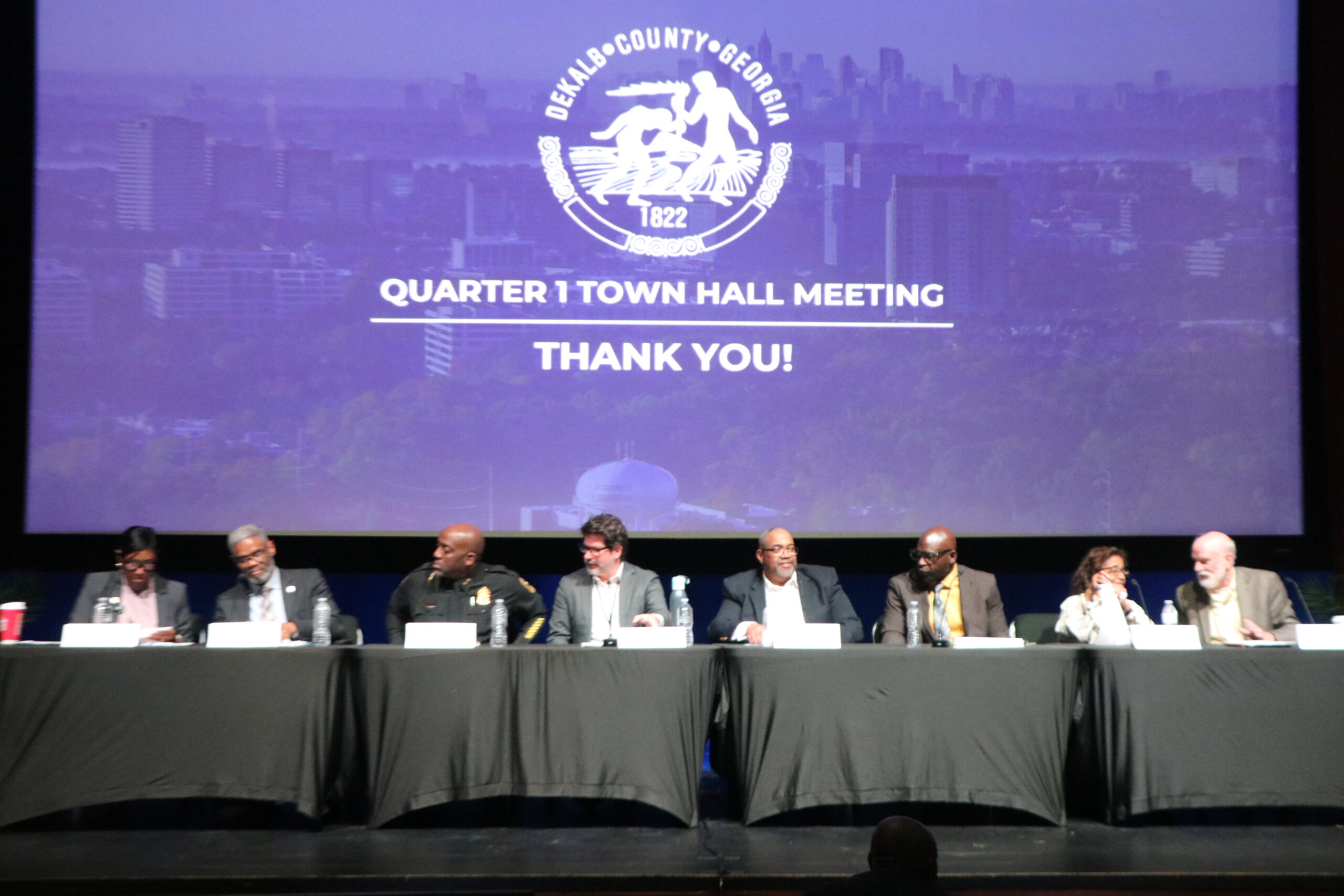
DeKalb County CEO Lorraine Cochran-Johnson and members of her executive leadership team presented an expansive vision and report on progress for modernization, redevelopment, public safety, infrastructure repair, and housing investment during the county’s first-quarter town hall Wednesday evening at the Porter Sanford III Performing Arts & Community Center.
The nearly two-hour meeting combined department updates, resident questions, and long-term planning discussions as county officials outlined efforts aimed at addressing aging infrastructure, blight, housing affordability, crime reduction, and economic development across DeKalb County.
“This evening, you will hear a report directly from all of the individuals that we have here on this stage,” Cochran-Johnson told attendees. “With 34 different divisions, there are a lot of people who are responsible for the work that you experience each and every day.”
Throughout the evening, county leaders repeatedly emphasized what Cochran-Johnson described as a broader effort to “move with purpose” while modernizing county government systems that, in some cases, officials said had been neglected for years.
Public Safety and Crime Reduction
Public safety emerged as one of the town hall’s central themes.
County officials highlighted increased police recruitment, improved retention, investments in technology, and the continued rollout of DeKalb’s Real Time Crime Center.
According to Tony Hughes, Assistant Chief, DeKalb County Police Department, police recruitment has increased by more than 300 percent since Cochran-Johnson took office, while retention rates now stand at approximately 98 percent.
“When I came into office, for over a four-year period, we lost 385 police officers,” Cochran-Johnson said. “We were at a critical level.”
Assistant Chief Tony Hughes said property crimes are down approximately 25 percent while crimes against persons have also declined.
Officials credited part of that reduction to increased officer presence, new compensation packages, surveillance technology, and the county’s growing use of real-time policing tools.
The county formally opened its Real Time Crime Center in December 2025. Officials said the system integrates traffic cameras, Flock safety cameras, business surveillance systems, and drone technology to improve emergency response and investigations.
“We have been intentional in strategically placing drones and technology,” Cochran-Johnson said. “I would like us to get to the point where we’re never more than three minutes away.”
County leaders also discussed the ongoing crackdown on illegal street racing and intersection takeovers.
Officials said the county’s street takeover initiative has resulted in more than 200 citations, 41 arrests, and the impoundment of multiple vehicles connected to illegal racing activity.
“We cannot continue to allow people to be lawless in our communities,” Cochran-Johnson said. “Crime will show up at your front door.”
The county also highlighted upgrades to its E-911 system, including investments in artificial intelligence tools designed to improve call management during high-volume emergencies.
Infrastructure, Roads, and Aging Systems
Road resurfacing, storm water infrastructure, and aging county systems generated some of the evening’s most detailed discussions.
Public Works Deputy Director Peggy Allen explained that DeKalb now uses a pavement condition index system to evaluate more than 7,200 road segments annually. Roads are graded using a “worst first” philosophy to prioritize resurfacing projects.
County officials said DeKalb resurfaced approximately 120 miles of roadway annually through the Special Purpose Local Option Sales Tax program, commonly known as SPLOST.
However, officials acknowledged that rising costs continue to create challenges.
According to Allen, resurfacing costs that averaged approximately $450,000 per mile in 2018 have now increased to as much as $900,000 to $1 million per mile in some cases.
“We can do no more than we have expendable income to do,” Cochran-Johnson said.
Officials also discussed DeKalb’s aging storm water infrastructure, including failing culverts, damaged drainage systems, and deteriorating pipes.
Allen said the county maintains more than 500 miles of storm water pipe, 22,000 catch basins, nearly 1,000 detention ponds, and more than 200 bridges.
“Our inventory is huge, and our inventory is aging,” Allen said.
Recent heavy rainfall has intensified concerns about flooding and infrastructure failures in several areas of the county.
County officials said storm water upgrades and sewer rehabilitation efforts remain ongoing under federally mandated infrastructure improvement programs.
Housing, Redevelopment, and Economic Growth
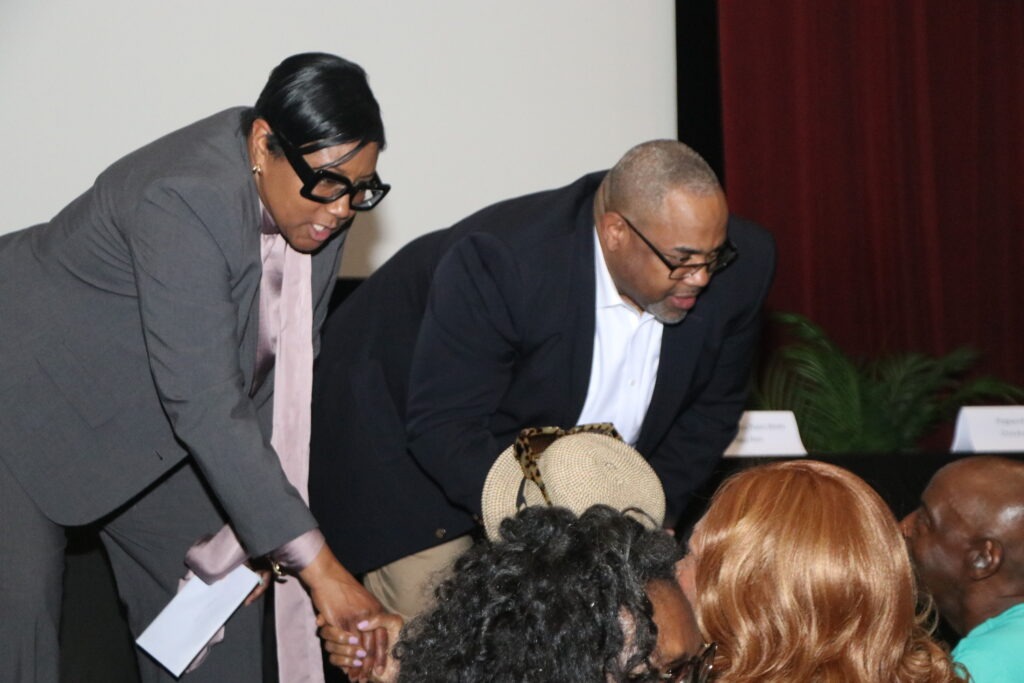
DeKalb CEO Lorraine Cochran-Johnson & Chief Housing Officer Dr. Alan Ferguson greet unidentified residents.
Housing affordability and redevelopment were also major priorities discussed during the town hall.
Chief Housing Officer Dr. Alan Ferguson outlined several new county initiatives aimed at increasing homeownership opportunities and preserving existing housing stock.
Among the initiatives announced:
a new down payment assistance program offering up to $20,000 for eligible homebuyers,
employee homeownership incentives for DeKalb workers,
and home preservation grants providing up to $30,000 in repair assistance for qualifying homeowners.
“We want them to live and enjoy the fruits and benefits within DeKalb County,” Ferguson said regarding county employees.
County officials also announced faith-based housing partnership initiatives designed to help churches and religious institutions develop underutilized property for housing projects.
South DeKalb redevelopment efforts generated strong audience interest throughout the evening.
Chief Development Officer Jacob Vallo confirmed that discussions continue regarding the future redevelopment of South DeKalb Mall, which officials described as a key catalyst project for the area.
“Simply put, it’s mixed use,” Vallo said of the redevelopment vision. “Think restaurants, retail, housing, and green space.”
Officials also discussed ongoing transit-oriented development planning near MARTA stations, including Kensington and Indian Creek, along with major trail and greenway projects connected to the South River corridor.
Cochran-Johnson urged residents to remain open to strategic redevelopment and increased density in some areas if they want to attract additional retail investment and higher-income residential growth.
“Do not always say no,” she said. “Learn when to say yes and be specific on what you want.”
Residents Weigh In on Community Engagement
For some residents attending the town hall, the evening represented more than a government update. It reflected what they described as a more visible and accessible style of leadership.
Beverly Dabney, a retired JP Morgan Chase employee and longtime DeKalb resident, said she was encouraged by the administration’s focus on historically underserved areas of South DeKalb.
“Those are the really hard areas to develop,” Dabney said. “You have to get people on your staff that truly understand and are willing to work in those low-income areas.”
Dabney said she believes Cochran-Johnson’s administration has distinguished itself through communication and direct engagement with residents.
“Communication is key,” Dabney said. “The CEO makes her executive staff available so citizens can get immediate answers right away.”
She also praised the administration for holding regular public meetings that bring residents from multiple districts together in one location.
“This is an opportunity,” Dabney said. “A lot of times people think they have to call the CEO all the time, but she makes her leadership team present so people can address concerns directly.”
Dabney described Cochran-Johnson as “a people CEO,” adding that she believes the administration has shown a strong understanding of both county operations and neighborhood-level concerns.
When asked about the CEO’s command of the facts, Dabney said. “She studies the market, she studies the communities, and she understands what needs to happen in these areas.”
Her comments reflected one of the broader themes that surfaced repeatedly throughout the evening: residents want visible progress, but they also want consistent communication and accountability from county leadership.
Sanitation, Sustainability, and Illegal Dumping
One of the evening’s more animated presentations came from sanitation leadership, which outlined plans to modernize operations and expand sustainability efforts.
Director of Sanitation, Eugene McKinnie announced that the department is preparing a rebranding initiative intended to reflect broader environmental and resource recovery goals.
“Trash is cash,” Cochran-Johnson said while discussing sustainability initiatives.
Officials highlighted efforts to improve recycling education, composting programs, route efficiency, and waste diversion strategies.
The county also detailed its aggressive efforts to combat illegal tire dumping, which continues to affect portions of South DeKalb.
According to officials, DeKalb removed more than 37,000 illegally dumped tires during recent cleanup initiatives.
“These people have become so brazen that they will dump tires in front of a fully operational business in the middle of the night,” Cochran-Johnson said.
County officials said new drone surveillance, camera systems, and enforcement partnerships have helped identify repeat offenders.
The county is also exploring private-sector partnerships aimed at improving tire recycling and reducing long-term cleanup costs.
Residents Raise Concerns
While officials highlighted progress across multiple departments, residents also voiced ongoing frustrations involving potholes, blighted properties, flooding, illegal dumping, sidewalks, crime, and neglected developments.
Several questions focused on long-abandoned apartment and condominium complexes, including Brandon Hills, Walden Pond, and Whitehall Forest.
Cochran-Johnson acknowledged the severity of those issues and said legal action and code enforcement efforts remain ongoing.
“Brandon Hills, Walden Pond, and Whitehall Forest will not exist when I leave,” she said.
Residents also pressed officials on South DeKalb redevelopment, Memorial Drive revitalization, and concerns regarding abandoned commercial properties.
County leaders repeatedly emphasized that revitalization efforts require cooperation between government, residents, and private investment partners.
“We are doing fine in DeKalb County,” Cochran-Johnson told attendees near the conclusion of the meeting. “But we are going to have to work together.”
The town hall closed with county leaders encouraging residents to stay engaged through newsletters, community meetings, and county websites as DeKalb continues implementing long-term infrastructure, housing, and redevelopment initiatives.
Officials said additional public meetings and project updates are expected throughout the year as major initiatives continue moving forward.
Atlanta Mayor Andre Dickens unveiled the Neighborhood Reinvestment Act, a sweeping anti-displacement and redevelopment package targeting equity, housing stability, and economic opportunity
By Milton Kirby | Atlanta, GA | May 20, 2026
Mayor Andre Dickens has introduced what his administration calls the most comprehensive neighborhood investment and anti-displacement legislative package in Atlanta history, a sweeping proposal aimed at reshaping how the city measures redevelopment success in historically underserved communities.
The proposal, titled “Opportunity for All: The Neighborhood Reinvestment Act,” seeks to shift Atlanta’s redevelopment model away from simply measuring construction activity and rising property values and instead focus on whether residents’ quality of life measurably improves.
The legislative package includes six interconnected components: a new Neighborhood Reinvestment Initiative (NRI) Impact Framework, extensions of six existing Tax Allocation Districts (TADs), creation of a City Council-controlled NRI Trust Fund, reforms to TAD Advisory Committees, reauthorization of the Invest Atlanta intergovernmental agreement, and a broad Anti-Displacement Playbook containing more than 20 ordinances and resolutions.
The administration said the legislation is designed to address long-standing disparities across South and West Atlanta neighborhoods, where housing instability, lower educational attainment, food insecurity, public safety concerns, health inequities, and economic barriers have persisted for decades.
“This is about whether the people who stayed through decades of disinvestment get to stay long enough to benefit from the prosperity that is finally arriving,” Dickens said in announcing the legislation. “The first generation of TADs helped transform Atlanta physically, but this legislation recognizes that growth alone is not enough.”
Under the proposal, all future public investments in NRI communities would be evaluated through three primary goals: displacement prevention, neighborhood stabilization, and wealth creation. City officials say future TAD investments, redevelopment projects, and Trust Fund awards would be required to demonstrate measurable alignment with those outcomes.
The legislation also comes amid increased public scrutiny of Atlanta’s redevelopment financing structures and incorporates reforms tied to the City Auditor’s forthcoming review of Atlanta’s Tax Allocation Districts. Proposed reforms include third-party performance reviews, public accountability dashboards, strengthened redevelopment planning requirements, and expanded transparency measures.
“This legislation fundamentally changes how Atlanta measures success,” said Courtney English. “For too long, cities across America have measured progress by cranes, ribbon cuttings and rising property values while failing to ask whether residents themselves were better off.”
Among the most significant financial provisions is the proposed 30-year extension of six existing TADs: Campbellton, Metropolitan, Stadium, Hollowell/MLK, Westside, and Eastside. City officials say those extensions could unlock major long-term bonding capacity for affordable housing, infrastructure improvements, economic development, transit projects, and neighborhood stabilization efforts.
The legislation also proposes creation of a new NRI Trust Fund targeted toward Atlanta’s most economically distressed neighborhoods using Invest Atlanta’s Economic Mobility Index. Projects funded through the Trust Fund would be subject to independent review and public reporting requirements.
Faith and civil rights leader Bernice A. King praised the proposal’s emphasis on intentional investment and accountability.
“Talking isn’t enough if we don’t have policies, practices and infrastructure,” King said. “NRI becomes that first step to putting something in place that reflects intentionality and manifest the beloved community.”
Several Atlanta City Council members also voiced support for the package, emphasizing both the need for investment and protections against displacement.
Marci Collier Overstreet said the package recognizes that investment must include accountability and protections for longtime residents.
Michael Julian Bond described the proposal as a mechanism to ensure investment produces measurable improvements in housing stability, educational opportunity, economic mobility, and community wealth creation.
Andrea L. Boone pointed specifically to neighborhoods like Adamsville, which she said have experienced decades of watching resources bypass their communities.
Antonio Lewis said the legislation is deeply personal as a lifelong South Atlanta resident and Atlanta Public Schools graduate.
“This legislation is about making sure young people growing up in communities like the ones that raised me have access to safe neighborhoods, stable housing, quality schools, and real economic opportunity without being pushed out of the city they call home,” Lewis said.
The package’s Anti-Displacement Playbook includes proposals addressing tenant protections, affordable housing preservation, heirs property assistance, home repair funding, commercial stabilization efforts, community ownership opportunities, and support for legacy businesses and institutions.
Byron Amos said communities on Atlanta’s Westside deserve a comprehensive strategy rather than fragmented investment efforts.
Meanwhile, Wayne Martin said the legislation represents an opportunity to finally align sustained investment with the long-term resilience residents along the Campbellton Road corridor have demonstrated for generations.
The legislative package was formally introduced before the Atlanta City Council on May 18 and is expected to move through committee hearings and public engagement sessions before final consideration later this year.
Truth Seekers Journal thrives because of readers like you. Join us in sustaining independent voices.
MARTA opened a new pedestrian bridge and renovated Indian Creek Station, improving transit access, safety, lighting, and infrastructure for thousands of DeKalb riders daily.
By Milton Kirby | Stone Mountain, GA. | May 19, 2026
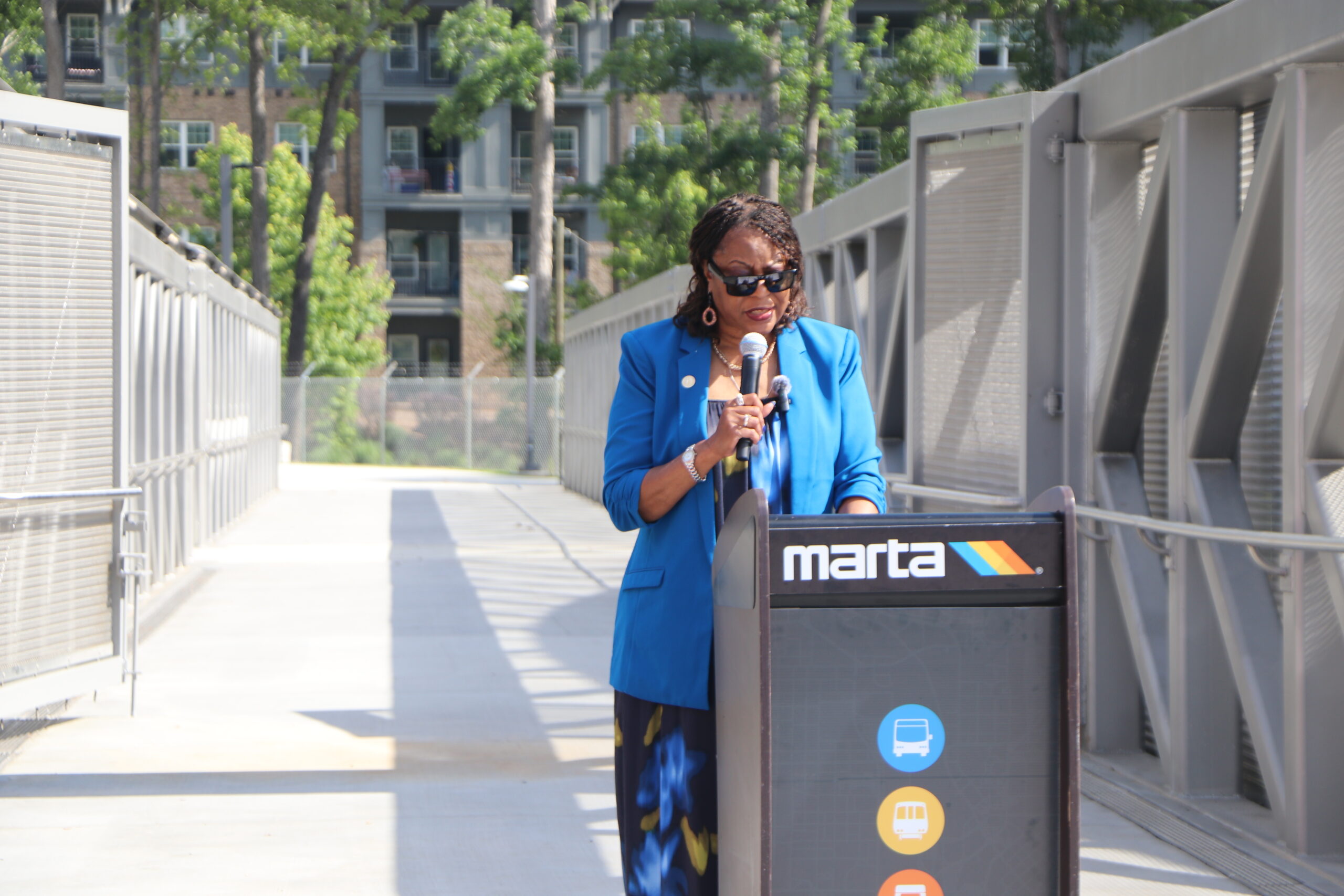
The Metropolitan Atlanta Rapid Transit Authority (MARTA) officially opened a new pedestrian bridge and renovated west plaza at Indian Creek Station on Monday, unveiling what agency leaders described as a transformational investment for eastern DeKalb County and a major milestone in MARTA’s long-term station rehabilitation program.
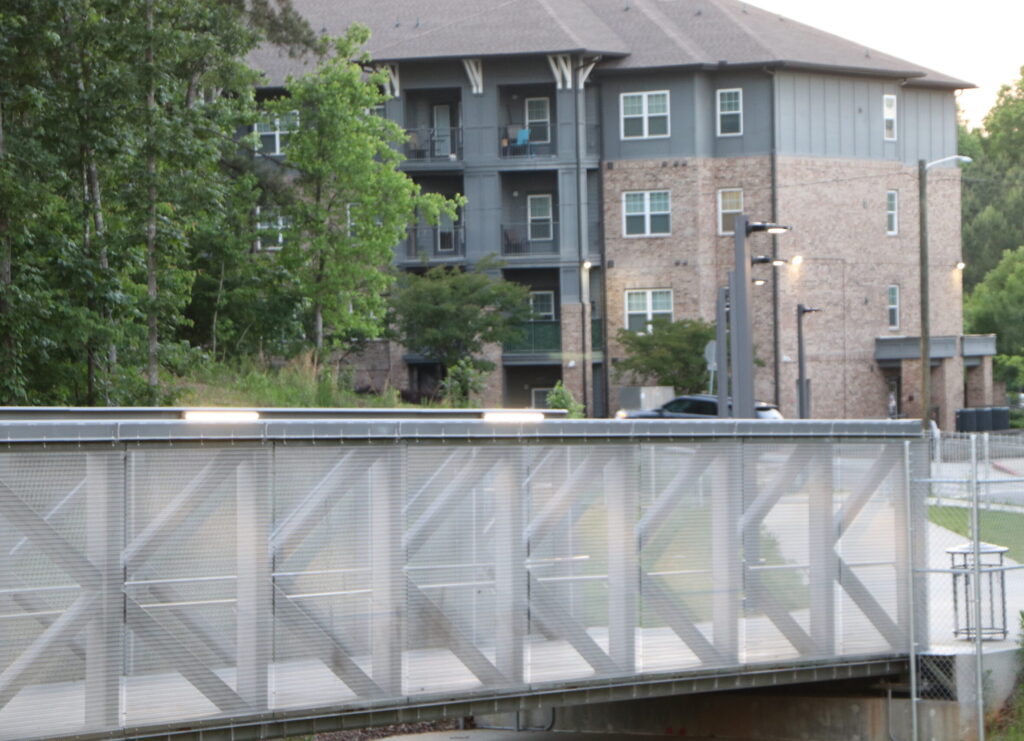
The ribbon-cutting ceremony celebrated the completion of the pedestrian bridge connecting Durham Park Road to the station, providing residents in nearby Manor at Indian Creek and other neighborhoods with a safer and more direct route into the transit system. The project is part of MARTA’s multi-decade Station Rehabilitation Program, which aims to modernize all 38 rail stations across the system.
“This bridge is transformational,” Interim MARTA General Manager and CEO Jonathan Hunt said during the ceremony. “It provides a safe, accessible route that significantly reduces travel time to the station and removes barriers that once made transit near to their home less convenient to use.”
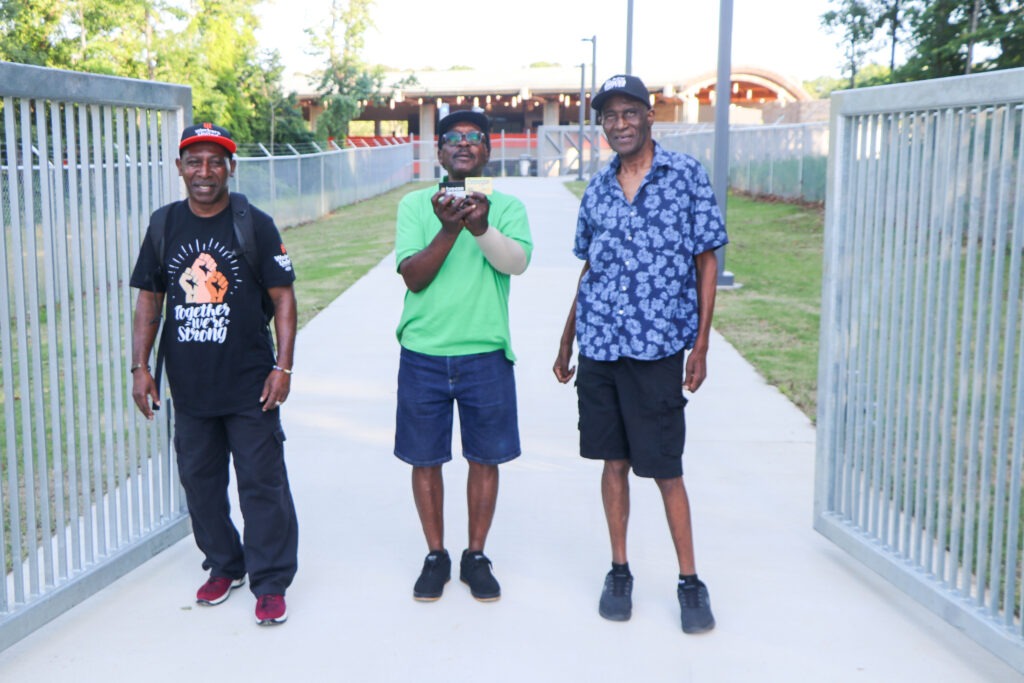
For residents of Manor at Indian Creek, the new bridge represents more than infrastructure. Terry Ross, Jerry Johnson, and Al Mitchell — all regular MARTA riders — said the bridge will shorten their daily trips to the station by 15 to 20 minutes while also making the journey significantly safer.
Indian Creek Station serves as the easternmost terminus of MARTA’s Blue Line and handles approximately 3,000 passengers each weekday, according to MARTA officials.
Hunt described the station as “one of our major stations within MARTA and into DeKalb County,” emphasizing the role public transportation plays in connecting residents to work, schools, medical appointments, and daily necessities.
Manor at Indian Creek Residents – L to R Jerry Johnson, Terry Ross & Al Mitchell
The improvements extend well beyond the new bridge.
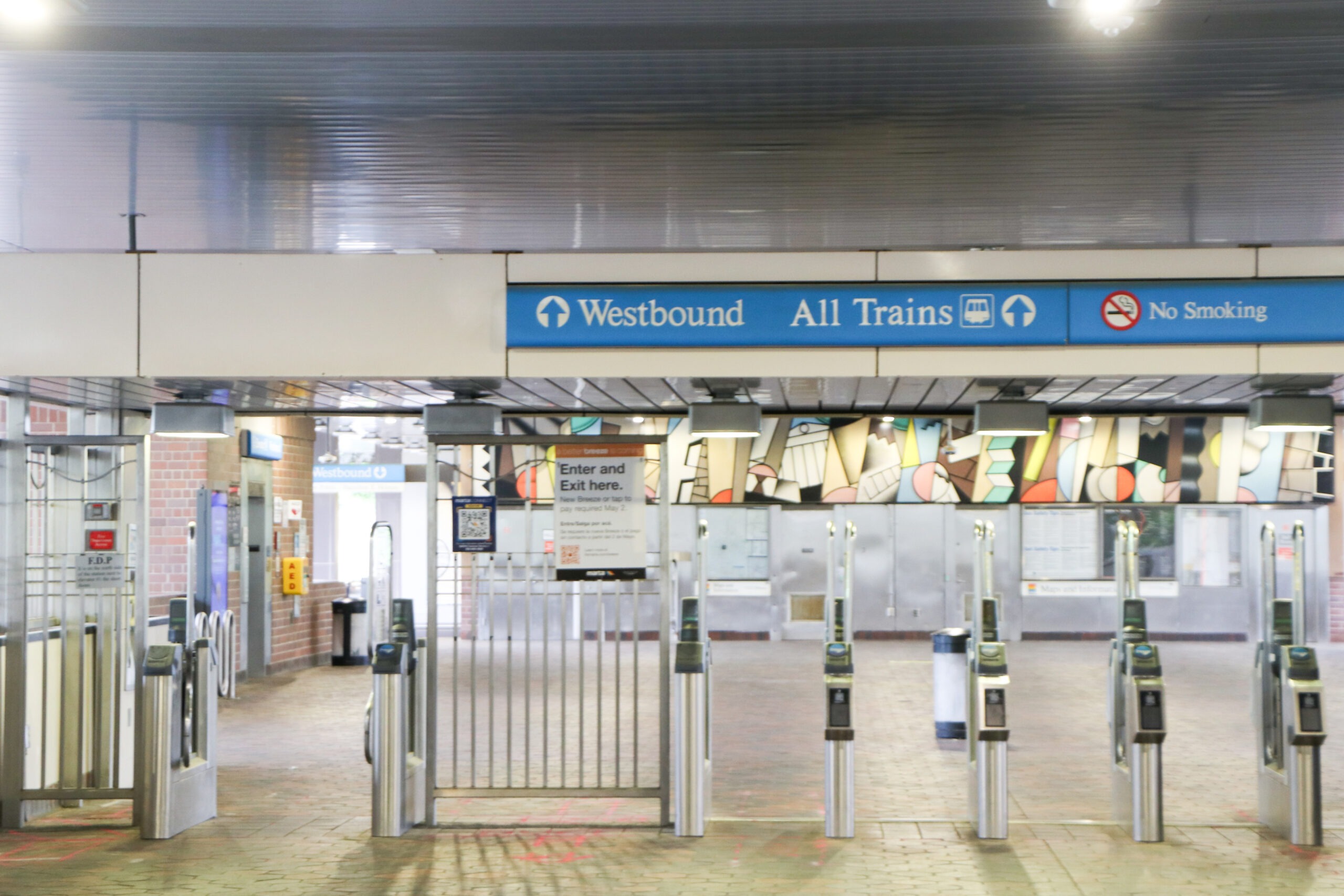
The project included resurfacing the station’s bus loop, installing upgraded lighting throughout the station, adding new benches and trash receptacles, enhancing landscaping, modernizing fare gates, and performing deep cleaning and restoration work inside the facility. MARTA also installed new wall panels and architectural concrete features designed to improve long-term durability and reduce maintenance costs.
One of the most visible upgrades inside the station involved restoration of the station’s natural wood ceiling through dry ice cleaning.
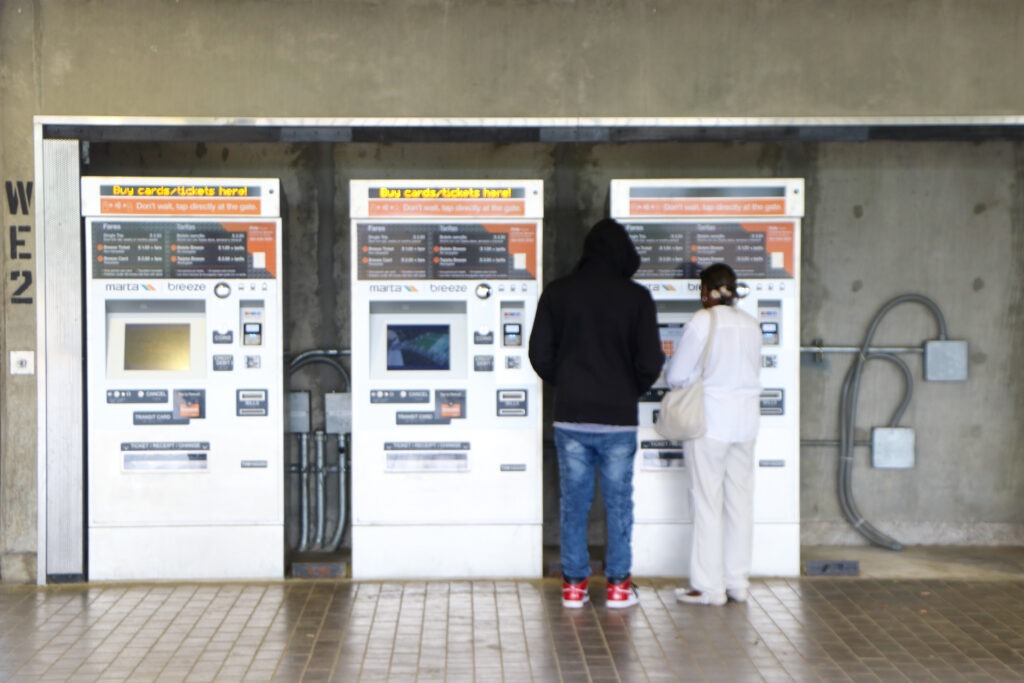
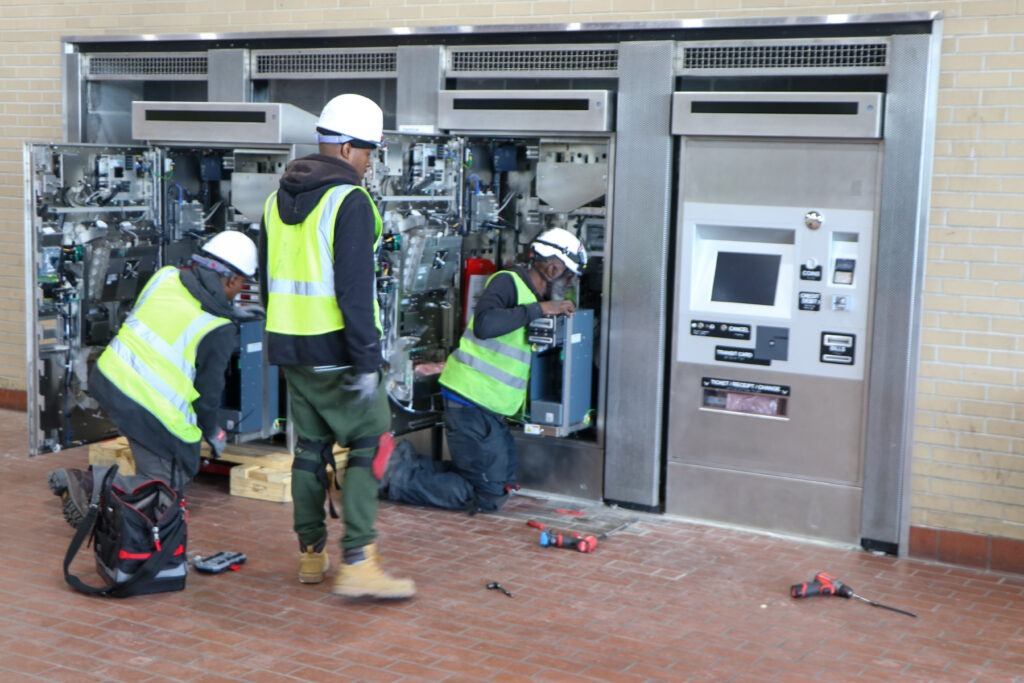
“We’ve modernized our customer touch points,” Hunt said, noting the installation of MARTA’s new Better Breeze fare gates and updated ticket vending technology.
The west-side fare gates remain under construction and are expected to open within the next several weeks.
Pedestrian bridge to Indian Creek MARTA Station – Photo by Milton Kirby
The station rehabilitation also included improvements to the traction power substation, which powers MARTA’s third rail system. Hunt said the new exterior wall paneling was designed to be more durable, easier to maintain, and visually appealing.
DeKalb County Commissioner Mereda Davis Johnson praised the project as an important investment in mobility and quality of life for county residents.
“As commissioner of this district, I understand how important public transportation is to the residents I serve,” Davis Johnson said during the ceremony.
“MARTA is more than just a transit system. It is a vital connection to jobs, schools, medical appointments, shopping, and countless opportunities that improve the quality of life for our citizens.”
She called Indian Creek Station “a critical transportation hub” for eastern DeKalb County and said the pedestrian bridge would provide “safer and more convenient access” for residents living near Durham Park Road.
“This project represents a significant investment in infrastructure and community,” she said. “When we invest in transportation, we are investing in our people.”
Construction leaders also emphasized the local significance of the project.
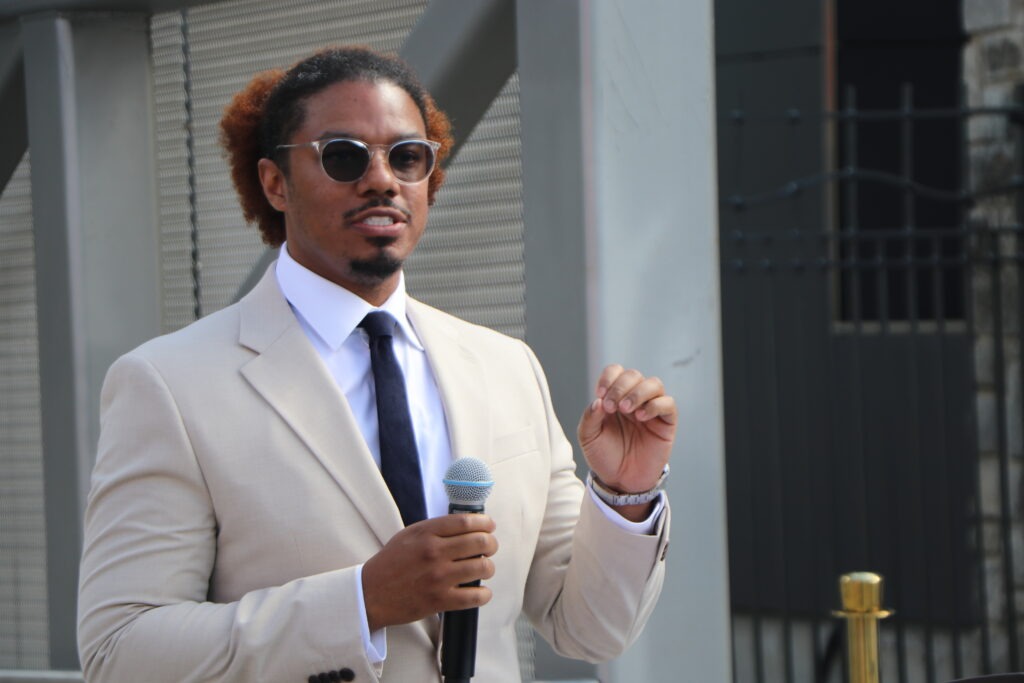
Charles Moody – Photo by Milton Kirby
Representatives from Carroll Daniel Construction Company and C.D. Moody Construction Company highlighted the collaborative effort behind the renovation and the importance of reinvesting in communities connected to MARTA’s transit system.
Charles Moody from C.D. Moody Construction noted the company’s long relationship with MARTA and reflected on growing up in DeKalb County and using Indian Creek Station throughout childhood and adulthood.
“I remember when the station was new,” he said. “I remember the ups and downs. And I love to see when we are revitalizing and putting back in our community because it means so much to someone like me who grew up here.”
The Indian Creek project represents one of MARTA’s earliest major station rehabilitation efforts under a broader modernization strategy that includes station upgrades, new rail cars, improved lighting, upgraded fare technology, and preparations for increased regional activity leading into the 2026 FIFA World Cup.
The ceremony concluded with a ribbon cutting in front of the new bridge as MARTA officials, construction partners, elected leaders, and community members gathered to celebrate the reopening.
“Thank you for staying focused on the vision for this station and taking a moment to take this station from good to great,” Hunt told MARTA employees and project partners.
Support open, independent journalism. Your contribution helps us tell the stories that matter most.
The Obama Foundation announced a free June 18 watch party on Chicago’s Midway Plaisance for the Obama Presidential Center grand opening ceremony.
By Milton Kirby | Chicago, IL | May 19, 2026
The Obama Foundation announced Tuesday that a free public watch party for the grand opening ceremony of the Obama Presidential Center will be held June 18 on Chicago’s historic Midway Plaisance, inviting residents and visitors to celebrate what organizers describe as a landmark moment for the city’s South Side.
The official watch party will feature a livestream of the Center’s Grand Opening Ceremony in a “picnic-style atmosphere,” along with an art market showcasing local vendors and community organizations.
“This is an historic day for Chicago’s South Side as we welcome the world into our neighborhood,” said Valerie Jarrett in a statement released Tuesday. “We are excited to share this celebration with our extraordinary community and city, who are such an integral part of President and Mrs. Obama’s story, and where they will always call home.”
According to the Foundation, attendees interested in joining the free event must submit a ticket request form through the Foundation’s website by May 26. Requests may include up to 4 tickets, though organizers emphasized that submitting a form does not guarantee admission due to limited space.
The watch party will open at 9 a.m. with a live DJ and pre-ceremony activities ahead of the 11 a.m. Grand Opening Ceremony. Organizers said the event will include accessible viewing areas and ADA-compliant restroom facilities.
The Foundation encourages attendees to use public transportation through the Chicago Transit Authority and Metra systems, as parking will not be available on site.
The June 18 ceremony will officially dedicate the Obama Presidential Center campus through performances, storytelling, and presentations centered on civic engagement and community leadership. The Foundation said the event will feature “global icons” and highlight its broader mission to inspire and connect communities worldwide.
The Center itself officially opens to the public on June 19. While museum tickets for opening weekend have already sold out, the remainder of the campus will remain free and open to visitors.
Located on Chicago’s South Side, the Obama Presidential Center has been envisioned as more than a traditional presidential library. Foundation leaders have described it as a civic and cultural hub designed to encourage community engagement, leadership development, and public participation.
The Foundation also announced that celebratory programming surrounding the opening will continue throughout the weekend.
Sponsors supporting the Grand Opening Ceremony and weekend events include GCM Grosvenor, Abbott, ITW, and Northern Trust.
Bill Pickett Invitational Rodeo in Memphis showcases Black cowboy culture, Soul Country music, youth programs, and community legacy in a powerful, immersive weekend experience.
More Than a Rodeo: Inside the Enduring Legacy of the Bill Pickett Invitational Rodeo
By Milton Kirby | Atlanta, GA | May 18, 2026
There are stories we tell, and then there are stories we inherit. The Bill Pickett Invitational Rodeo (BPIR) is both. It is an enduring institution, a cultural archive, a family reunion, and a proving ground stitched together by memory, muscle, and music. Over the course of this series, I have walked the dirt, listened to the voices, watched the riders, and felt the pulse of a tradition that refuses to fade. What began as an attempt to document a rodeo became something far deeper, a journey into a tradition that continues to evolve.
The BPIR is not simply an event. It is a record of who we are, who we’ve been, and who we’re becoming. And as this chapter closes, another one opens, a road that leads from Memphis to Los Angeles, where the Soul Country Music Star National Champion will be crowned at the Soul Country Music Festival. But before we get there, we must return to the ground beneath our boots, because that is where it all begins.
I. The Rodeo That Became a Record of Us
Every rodeo has its own rhythm, but the Bill Pickett Invitational Rodeo has a heartbeat. It beats in the laughter of children seeing a horse for the first time. It beats in the confidence of champion riders who carry decades of history in their posture. It beats in the music, the dust, the hoofbeats, and the voices that echo across the arena.
When I arrived in Memphis, I expected a show. What I found was a community, a village built on heritage, discipline, and joy. As I wrote in my field notes, “A great rodeo doesn’t just happen. It’s built piece by piece, decision by decision, tradition by tradition.”
“It begins with the land beneath your boots and ends with the people who carry the tradition forward.”
Memphis, with its perfect dirt and perfect energy, became the lens through which the entire BPIR experience came into focus.
II. Bill Pickett’s Enduring Shadow
To understand the significance of the BPIR, you first have to understand the man whose name stands above the arena gates. Bill Pickett was more than a cowboy. He was an innovator, a showman, and a cultural force. His technique, bulldogging known now as Steer Wrestling, changed rodeo forever. His daring athleticism eventually earned him national recognition and a place among the legends of the Wild West.
His presence changed the way America saw Black cowboys, even when America tried not to see them at all.
But what struck me most over the course of this series is not how often Pickett’s name is spoken. It is how deeply his spirit is lived. The BPIR does not treat him as a relic. It treats him as a foundation.
His influence is not a statue or a plaque. It is the confidence of a Pee Wee rider gripping the reins. It is the precision of a champion entering the chute. It is the courage of a bullfighter stepping between danger and safety. It is the music of Soul Country Music Star artists reclaiming a sound that has always been theirs.
Bill Pickett is not remembered at the BPIR.
He is embodied.
III. The Stewardship of Valeria Howard Cunningham
Valeria Howard Cunningham – Photo by Milton Kirby
Founded in 1984 by the late Lu Vason, the rodeo was created not only to showcase Black rodeo talent, but to reclaim historical visibility for Black Western culture itself.
“At the time, Black cowboys remained largely invisible in mainstream rodeo, even though historians estimate they made up nearly one in four working cowboys in the late 19th century.”
Vason saw both the absence and the opportunity. What he built became far more than a single event.
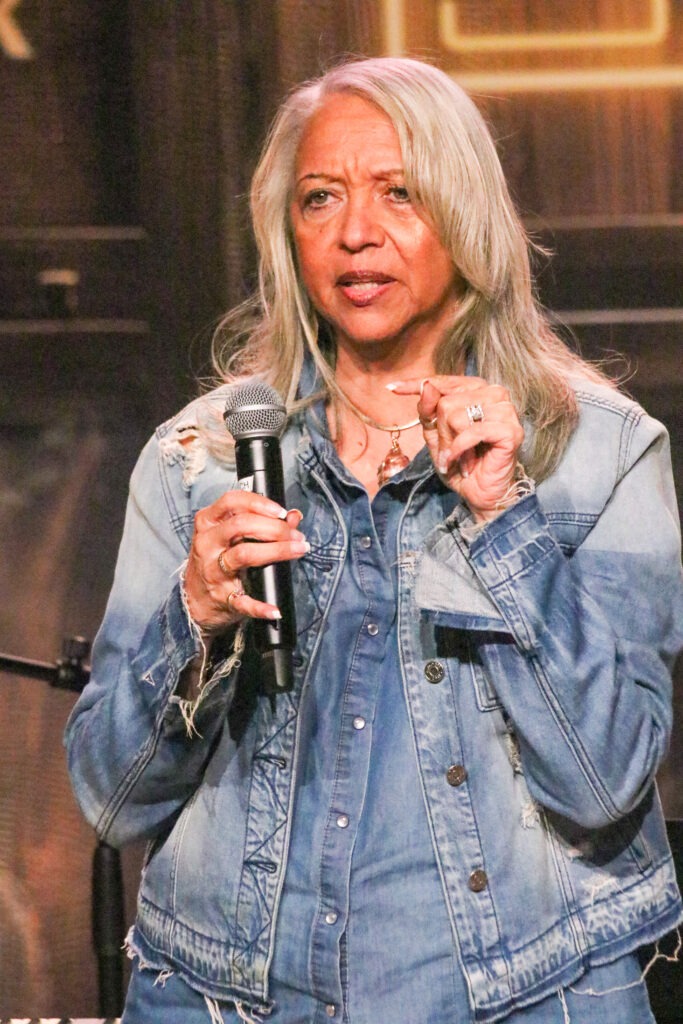
Every enduring tradition needs a steward, someone who understands the weight of history and the necessity of evolution. For the BPIR, that steward is Valeria Howard Cunningham, Producer and CEO.
For more than four decades, the BPIR has grown into the nation’s longest running Black owned touring rodeo association, introducing generations of children to rodeo culture while creating a national gathering place rooted in heritage, competition, education, and celebration.
Valeria’s gift is balance. She protects the heritage while opening the door to the future.
Under her guidance, the BPIR has remained rooted in tradition while embracing new cultural expressions. She has preserved the Lu Vason vision without freezing it in time. She has expanded the rodeo’s reach, deepened its cultural footprint, and ensured that every stop, from Memphis to Los Angeles, carries the same intentionality, extending the BPIR’s presence into community spaces through education, outreach, and engagement.
Valeria understands something essential:
A tradition that refuses to evolve becomes a museum.
A tradition that evolves with integrity becomes a force.
The BPIR has become something larger than sport.
IV. More Than Competition
Spend enough time around the BPIR, whether in Memphis, Atlanta, or Upper Marlboro, and you begin to realize that the rodeo itself is only part of the experience. Yes, there are champions. There are bronc riders, steer wrestlers, barrel racers, bull riders, team ropers and Pee Wee competitors stepping nervously into the arena dirt for the first time.
But surrounding the competition is something larger: a traveling city of culture and community that recreates itself at every stop on the tour.
In Memphis, that ecosystem unfolded across the Agricenter grounds just as vividly as it had in Atlanta and Upper Marlboro. Food vendors sent familiar aromas drifting through the air. Families browsed apparel booths and handcrafted merchandise. Music floated between events. Children wove through crowds dressed in boots, fringe, denim, and cowboy hats, the same joyful choreography I’ve seen repeat itself city after city.
The atmosphere is always the same blend: part sporting event, part family reunion, part cultural festival. People do not come only to watch. They come to reconnect. Again and again, conversations return to memory.
Parents talk about attending the rodeo as children themselves. Grandparents introduce grandchildren to traditions they hope will outlive them. Old friends reunite beside arena rails. Riders greet former competitors like extended family.
What stands out most, no matter the city, is how deeply the rodeo lives inside people’s personal histories. For many families, the BPIR is not an occasional attraction. It is an annual tradition woven into the rhythm of life itself.
BPIR brings sparkles to the eyes of kids in Memphis, TN – photo by Milton Kirby
V. “For Kidz Sake” and the Power of Representation
Perhaps nowhere is the BPIR’s cultural mission more visible than during the “For Kidz Sake” rodeo program.
On Friday morning in Memphis, more than 4,000 children filled the arena. Some had never attended a rodeo before. Some had never touched a horse. Many were encountering the history of Black cowboys for the first time. But inside the arena, history stopped feeling distant. It became visible.
Children watched riders who looked like them compete with confidence and skill. They learned about horsemanship, agriculture, discipline, and Western heritage. They laughed, pointed, cheered, danced and asked questions.
Most importantly, they saw themselves reflected in the tradition. Representation is often discussed in abstract political language. At the BPIR, it felt tangible.
A child watching a Black cowboy ride into the arena is not simply watching entertainment. They are witnessing possibility.
That may be one of the rodeo’s greatest forms of cultural preservation: not simply remembering the past, but making sure the next generation can imagine themselves inside the future.
VI. The Dirt Matters
One of the most unexpected lessons of the series came from something most spectators never think about: the dirt itself.
Champion rider Tim Walker explained it beside the Memphis arena rail with the seriousness of a craftsman discussing tools. Proper rodeo dirt matters.
“Too dry, and it becomes dangerous. Too slick, and horses or riders can lose footing. Proper moisture and texture help animals turn, stop, and run safely while giving competitors confidence beneath their boots.”
Barrel racing – Photo by Milton Kirby
Until that moment, dirt had seemed incidental.
Instead, it revealed itself as foundational.
That realization became symbolic of the BPIR itself.
Much of what makes the rodeo work happens quietly beneath the surface.
The labor.
The planning.
The preparation.
The mentorship.
The institutional memory.
Like the arena dirt, those invisible layers support everything above them.
VII. The Guardians: Bullfighters and Barrelmen
That same principle applies to another group often overlooked by casual fans: the rodeo clowns, barrel men, and bullfighters.
Their role combines athleticism, timing, courage, and instinct.
Bullfighter’s protecting a dismounted rider – photo by Milton Kirby
“Their work is not just theatrical. It is tactical.”
Historically, rodeo clowns began primarily as entertainers. But as bull riding evolved into one of rodeo’s most dangerous events, their responsibilities transformed into something far more serious.
Today’s bullfighters routinely place themselves between riders and charging bulls, protecting competitors during the most dangerous seconds after a fall.
At the BPIR, their presence carries additional historical significance.
According to Valeria Howard Cunningham, BPIR became the first, and remains the only, traveling Black owned rodeo to feature professional arena entertainers.
Even within rodeo culture, representation matters.
The BPIR’s commitment to visibility extends beyond champions and headliners. It includes the workers, performers, and protectors whose contributions are often forgotten yet are essential to the show itself.
BPIR professional entertainer engages the audience – photo by Milton Kirby
Every role matters inside the arena. That truth mirrors the larger BPIR experience.
VIII. The Cultural Evolution: Soul Country Music Star
One of the most powerful evolutions under Valeria’s leadership is the integration of Soul Country Music Star, a showcase that blends Black country artistry with the rodeo’s vibrant atmosphere.
“It wasn’t an add on. It was a natural extension of the culture BPIR has always celebrated.”
Black country music is not new. It is foundational. It is lineage. It is the sound of migration, resilience, and rural memory. The Soul Country Music Star competition does not introduce something foreign to the rodeo; it reveals something that has always been there.
In Memphis, the artists brought grit, melody, and storytelling that echoed the same themes the rodeo embodies: resilience, heritage, and pride. Their performances were not intermissions. They were continuations, another expression of who we are.
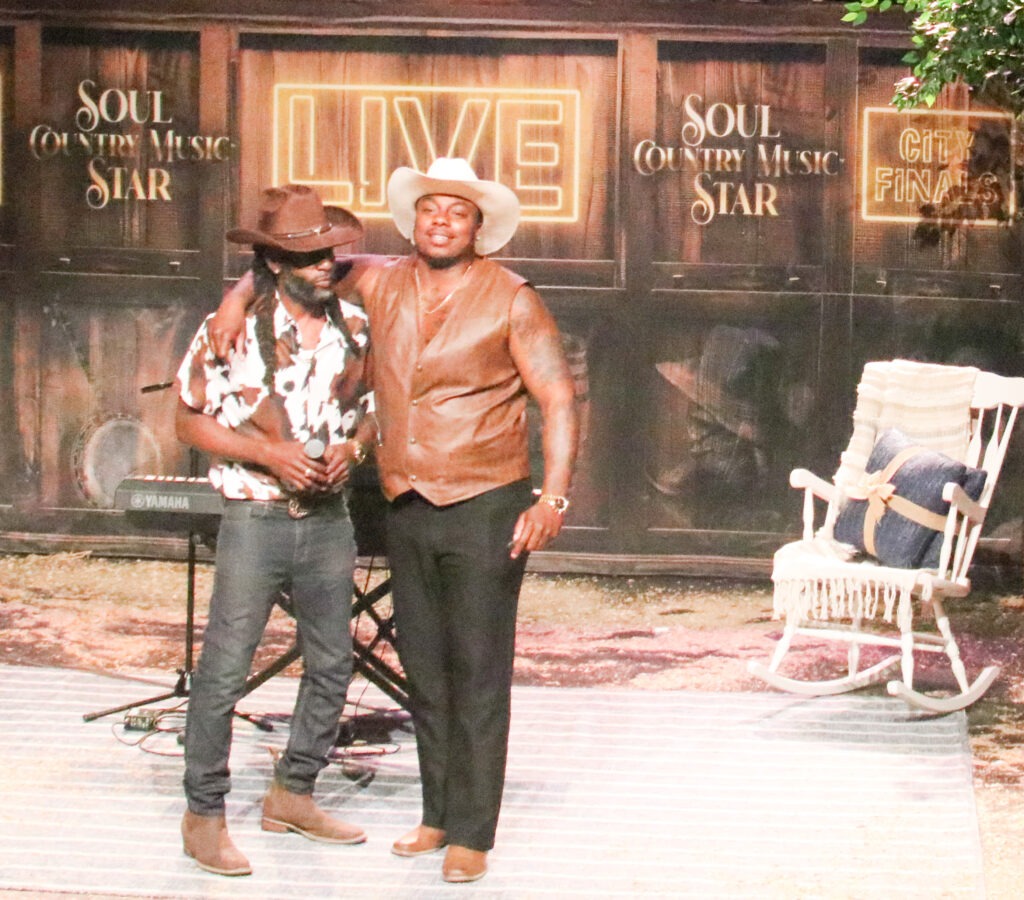
The competition itself has also become a reflection of perseverance and artistic growth. Season One elevated Kirk Jay to the national spotlight, while Season Two crowned Nathaniel “Mr. Bow Leggs” Dansby, whose journey embodied the resilience celebrated throughout the BPIR itself.
Dansby did not win during the competition’s inaugural season. Instead, he returned. He refined his craft, sharpened his stage presence, and continued building his connection with audiences across the BPIR tour before emerging as the Season Two champion.
That reality speaks to the depth of talent within Soul Country Music Star. The difference between winning and not winning often has less to do with ability than timing, growth, and the simple fact that only one artist can ultimately claim the title each season.
Like the rodeo itself, the competition rewards endurance as much as talent.
IX. The Road to Los Angeles: Crowning the Soul Country Music Star National Champion
And now, the road leads west.
After traveling city to city alongside the Bill Pickett Invitational Rodeo, the Soul Country Music Star competition will arrive in Los Angeles in October, where one artist will be crowned the National Champion at the Soul Country Music Finals and Festival.
But the journey to Los Angeles has never been only about winning.
Over the course of the season, these artists have performed in rodeo arenas, clubs, theaters, and community spaces filled with audiences who understand the culture they carry. They have traveled long hours between cities, performed night after night, and learned how to connect not only through talent, but through storytelling, authenticity, and resilience.
Like the riders inside the arena, they have had to earn every moment.
Some arrived with polished voices. Others grew stronger with every performance. Some learned how to command a crowd for the first time. Others discovered that the competition was pushing them beyond music into something more personal: confidence, identity, and purpose.
That evolution may be the real story of Soul Country Music Star.
Nathaniel “Bow Leggs” Dansby & Kirk Jay – Photo by Milton Kirby
The competition has become more than a showcase for emerging Black country artists. It has become a space where artists reconnect with a musical tradition that has always belonged to them, even when history and the industry often failed to acknowledge it.
When that journey reaches its final stage in Los Angeles, the crowning of the National Champion will celebrate more than a single performance. It will honor the artists, histories, and cultural influences that helped shape country music long before many of those contributions were fully recognized.
And while one artist will leave Los Angeles with the title, the larger story will continue long after the competition ends.
Because what Soul Country Music Star is building, much like the BPIR itself, is not simply entertainment.
It is visibility. It is opportunity. It is cultural continuity carried forward by a new generation.
Los Angeles is not the end of the road.
It is the beginning of the next chapter.
X. Closing: What the Dirt Remembers
When the last rider leaves the arena and the dust settles, the dirt tells the story.
“It holds the hoofprints of bulls and horses.
It holds the footprints of Pee Wee riders and champions.”
It holds the echoes of children cheering, families laughing, and communities gathering.
It holds the legacy of Bill Pickett and the vision of those who carry his name forward.
The greatest show on dirt is not just a rodeo.
It is a cultural inheritance.
A record carried across generations.
A celebration of who we are and who we’re becoming.
The Bill Pickett Invitational Rodeo is not preserving a dead past. It is shaping the future in real time.
The road ahead will carry that legacy even further as the BPIR and SCMS seasons continue toward two major championship moments celebrating the future of Black rodeo and Soul Country music culture.
In September, the BPIR National Finals will bring top competitors from across the tour to Upper Marlboro, Maryland, where riders will compete for championship titles, prize money, trophy saddles, and honors recognizing excellence throughout the season.
Then, in October, in Los Angeles, regional competition winners from across the country will gather for the Soul Country Music Star National Finals and Music Festival, competing for the national title, $10,000 in cash and prizes, and the opportunity to tour with the BPIR during the 2027 season.
Together, these events represent more than championship weekends. They reflect a growing movement rooted in heritage, resilience, fellowship, visibility, and the next generation carrying these traditions forward.
And as I close this series, what has stood out most throughout this reporting process is how deeply the rodeo remains embedded in people’s memories, the way families organize reunions around it, the way generations return year after year, and the way even a single image, jacket, or song can reopen memories decades later.
That kind of cultural continuity is rare.
And it deserves to be documented with care.
When I began this series, I believed I was covering a rodeo.
What I found instead was an enduring institution built on resilience, creativity, family, and cultural inheritance.
More than anything else, I found evidence that this tradition continues to grow, not as a memory, but as a living force being carried into the future.
The Obama Foundation announced the Nancy Pelosi Garden Pavilion at the Obama Presidential Center, honoring Pelosi’s historic leadership ahead of the Center’s June 2026 opening.
By Milton Kirby | Chicago, IL | May 12, 2026
The Obama Foundation announced Tuesday that the Garden Pavilion at the forthcoming Obama Presidential Center will be named in honor of Nancy Pelosi, recognizing the historic legacy of the first woman to serve as Speaker of the House and her decades-long influence on American public life.
The announcement is part of a broader unveiling of named spaces throughout the Center honoring civil rights leaders, educators, activists, and public servants whose work helped shape American democracy and civic engagement.
Located along the eastern edge of the Center’s Fruit & Vegetable Garden, the Nancy Pelosi Garden Pavilion will include a garden classroom, workroom, and public restrooms designed to support community programming and public gathering spaces. The pavilion was made possible through a gift from philanthropist and business leader Ron Conway.
Former President Barack Obama praised Pelosi’s role in shaping major legislative victories during his administration, including passage of the Affordable Care Act.
“For almost four decades, Nancy Pelosi served the American people and worked to make our country better,” Obama said. “No one was more skilled at bringing people together and getting legislation passed – and I will always be grateful for her support of the Affordable Care Act.”
Obama said the pavilion will serve not only as a tribute to Pelosi’s leadership, but also as an inspiration for future generations to engage in public service and civic life.
Conway, whose donation funded the pavilion, described the Obama-Pelosi partnership as one of the most consequential political relationships in modern American history.
“In our nation’s entire history, no President and Speaker of the House got more done for our country working together than President Barack Obama and Speaker Nancy Pelosi,” Conway said.
Valerie Jarrett said Pelosi’s career reflects the broader mission of the Presidential Center to encourage civic participation and leadership across generations.
“Nancy Pelosi is one of the foremost leaders of our time,” Jarrett said. “She showed people of any party or background the power of increased involvement of women in our democracy.”
Honoring Leaders Across the Campus
The Pelosi Pavilion is one of several named spaces announced as the Obama Presidential Center prepares for its June 19, 2026 public opening.
Among the newly announced spaces is the Democracy 101 Exhibit honoring Timuel Black, the longtime Chicago educator and civil rights activist who fought segregation in schools and housing.
The Center’s auditorium will bear the name of Holocaust survivor and Nobel laureate Elie Wiesel through support from philanthropists Penny Pritzker and Dr. Bryan Traubert. Foundation leaders said the auditorium will host speakers, performances, and public discussions inspired by the arts and humanities traditions of the Obama White House.
The Fruit & Vegetable Garden itself will honor former First Lady Eleanor Roosevelt, recognizing her advocacy for civil rights and her creation of the White House Victory Garden during World War II.
Other named spaces include the John W. Rogers Jr. Exhibition Gallery honoring the founder of Ariel Investments, the “Imagine Your Impact” exhibit honoring astronaut Mae Jemison, and the Harold Washington Overlook commemorating Chicago’s first Black mayor, Harold Washington.
A Civic Campus Beyond a Museum
Located on Chicago’s South Side near Jackson Park, the Obama Presidential Center is designed as more than a traditional presidential museum. Foundation leaders describe it as a civic campus intended to bring together culture, community, education, and public engagement.
The Foundation said the named spaces are meant to honor what President Obama has often called the “giants” on whose shoulders future generations stand.
“These tributes remind every visitor that they, too, have the power to leave a lasting mark on the world,” the Foundation said.
The Obama Presidential Center officially opens to the public on June 19, 2026, with exhibitions, gardens, educational programming, and community gathering spaces aimed at inspiring the next generation of civic leaders.
Atlanta leaders celebrated the fifth Summer Youth Employment Program Signing Day as nearly 20,000 youth have now been connected to paid work opportunities citywide.
By Milton Kirby | Atlanta, GA | May 12, 2026
Standing inside the historic Fox Theatre, Atlanta leaders, business executives, educators, and students gathered Monday for Mayor Andre Dickens’ fifth annual Summer Youth Employment Program (SYEP) “Signing Day,” celebrating one of the city’s fastest-growing workforce initiatives for young people.
The event brought together employers from across Metro Atlanta who pledged to provide jobs, internships, mentorships, and career exposure opportunities for Atlanta youth this summer.
What began during the Dickens administration as an ambitious workforce initiative has now grown into a citywide program that officials say has connected nearly 20,000 young people to paid work opportunities over the last four years.
“This has truly been a group project,” Dickens told the audience. “Nearly 20,000 young people have been connected to paid work in the city of Atlanta over the past four years.”
The mayor said the city invested more than $23 million in wages through the program during that period, calling it both an economic investment and a public safety strategy.
“We are seeing what happens when we are intentional about our investments in young people,” Dickens said. “When young people are filled with opportunities and busy learning while they earn, they are committed to their future.”
The annual event also highlighted the growing role businesses, nonprofits, cultural institutions, and city agencies are playing in preparing young Atlantans for the workforce.
Representatives from organizations including the Fox Theatre and TIME2GIVE described the program as more than a summer job initiative.
“This is about exposure, readiness, innovation, confidence-building, and ultimately creating real tangible pathways into future careers,” said Dr. Charity Rowe-Marshall, executive director of TIME2GIVE.
Rowe-Marshall said youth participating through the organization’s Innovation Studio Atlanta program are introduced to technology, entrepreneurship, logistics, manufacturing, design, marketing, and artificial intelligence through hands-on projects and workforce experiences.
Jayla Scott Cottman – SYEP participant – Photo by Milton Kirby
“They learn by doing,” she said. “We are empowering them to be builders of technology, not just consumers.”
Officials repeatedly emphasized that the program’s impact extends far beyond temporary employment.
According to the city, nearly 6,000 youth participated in SYEP last summer alone, making it the program’s largest cohort to date. At least 38 participants transitioned from summer placements into permanent career opportunities afterward.
The program is open to Atlanta residents ages 14 to 24 and places participants in industries ranging from healthcare and government to technology, hospitality, logistics, and the arts. Participants can earn up to $15 per hour while gaining workplace training and mentorship.
Atlanta Department of Labor and Employment Services Commissioner Dr. Theresa Austin-Gibbons said the workforce landscape is changing rapidly because of automation, digital technologies, and artificial intelligence.
“That is why SYEP focuses on strong STEM program design while understanding that soft skills and technical skills must work together,” Austin-Gibbons said.
She noted that participants receive financial literacy education, workplace readiness instruction, conflict resolution training, and guidance on responsible AI usage before beginning work placements.
“Our youth are learning not just how to do a job, but how to show up and be successful,” she said.
The event also featured testimony from former participants whose careers began through the program.
Christopher Hobbs SYEP participant – Photo by Milton Kirby
Christopher Hobbs, a graduate of Florida A&M University currently completing his Master of Public Administration degree, described how his internship with the Atlanta Department of Labor and Employment Services helped shape his professional future.
“My experience with ATL DOLS gave me hope,” Hobbs said. “The skills, confidence, professionalism, exposure, and hope I gained in SYEP stayed with me long after the summer ended.”
Hobbs now works as an assistant project manager for Georgia Power.
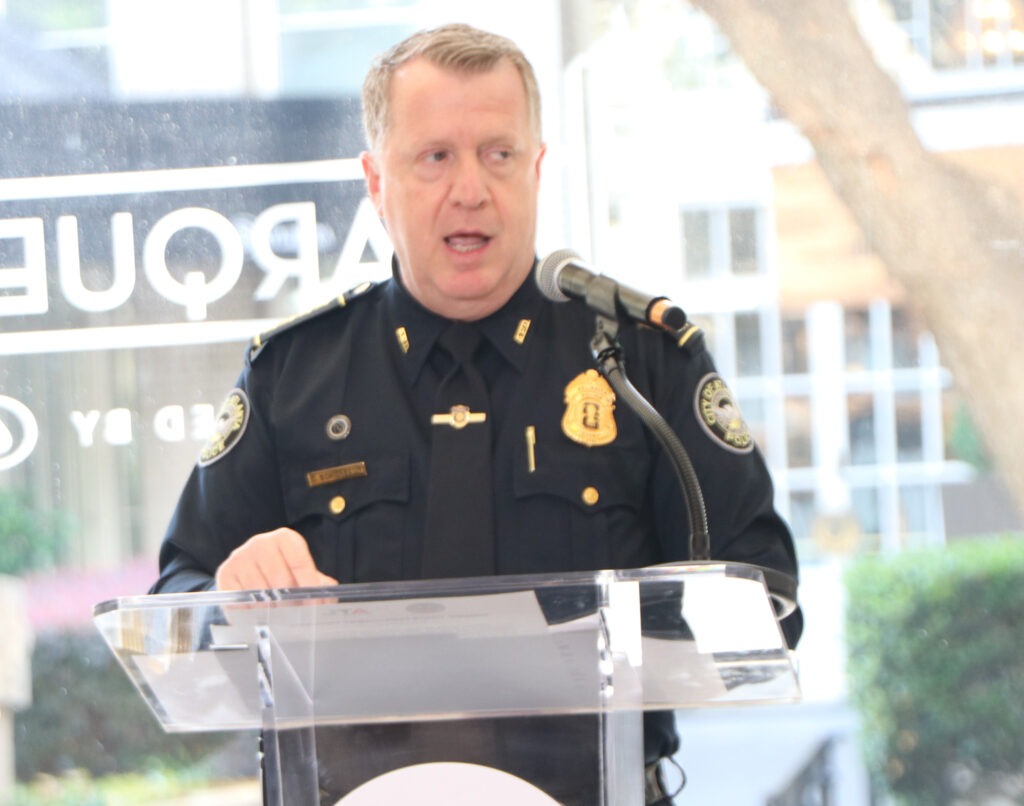
Atlanta Police Chief Darin Schierbaum connected the program directly to the city’s broader public safety efforts, arguing that youth investment is one of the strongest crime prevention tools available.
“When we attack youth crime in our city, we don’t attack it by handcuffs,” Schierbaum said. “If we’re at the point of handcuffs, we’re standing at the point of failure.”
The chief credited initiatives like SYEP with helping Atlanta continue reductions in violent crime, shootings, and homicides over recent years.
“This is what crime fighting looks like in Atlanta,” Schierbaum said. “This is where we invest in our young people to make sure we are creating citizens.”
Atlanta Police Chief Darin Schierbaum – Photo by Milton Kirby
Fox Theatre CEO Allan C. Vella said the theater’s mission to “preserve and share” and “strengthen communities through theater” closely aligns with the city’s youth employment initiative.
The Fox has participated in the program for years by offering internships and professional development opportunities to students interested in arts and entertainment careers.
“When we create pathways for young people to succeed, we strengthen the future of our city,” Vella said.
The event concluded with employers signing formal pledges to support Atlanta youth this summer as city leaders encouraged additional businesses to participate.
Registration for Atlanta’s 2026 Summer Youth Employment Program remains open for both youth applicants and employer partners. Placements are expected to begin in June.
Support open, independent journalism – your contribution helps us tell the stories that matter most.
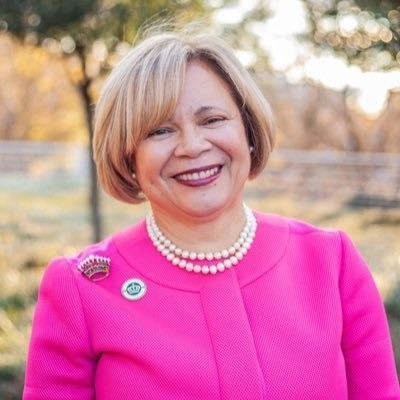
Charlotte Mayor Vi Lyles announces a June 30 resignation months after reelection, citing family priorities and closing a historic five‑term tenure as the city’s first Black female mayor.
By Milton Kirby | Charlotte, NC | May 11, 2026
Vi Lyles, the first Black woman ever elected mayor of Charlotte, will resign from office effective June 30, ending a historic political career that helped reshape leadership in one of America’s fastest‑growing cities.
The announcement comes only months after Lyles won reelection in 2025 by a wide margin a victory she celebrated as a mandate to continue expanding affordable housing, improving public safety, and investing in infrastructure. In July 2025, she told supporters, “Charlotte is a city of opportunity… there is still work to do and I’m ready to keep doing it.”
But on May 7, 2026, Lyles said her priorities had shifted.
“Serving as Charlotte’s mayor has been the honor of my life,” she said. “Now, it is time for the next phase of my life, to spend more time with my grandchildren and for someone new to lead us forward.”
Her resignation closes a remarkable public service career spanning more than three decades — one that began long before she stepped into the mayor’s office.
A Historic Rise: The 2017 Breakthrough
For many Charlotte residents, Lyles’ defining moment came on Election Day 2017.
That year, she defeated Republican City Council member Kenny Smith to become Charlotte’s first African American female mayor a milestone that carried deep symbolic weight in a Southern city still grappling with issues of race, growth, and representation.
Her victory came just one year after the 2016 police shooting of Keith Lamont Scott, an event that sparked days of protest and placed Charlotte under national scrutiny. Against that backdrop, Lyles’ election represented both continuity and change a veteran administrator promising stability while breaking one of the city’s highest political barriers.
In her 2017 victory speech, she told supporters:
“You’ve proven that we are a city of opportunity and inclusiveness. You’ve proven a woman whose father didn’t graduate from high school can become this city’s first female African American mayor.”
It was a moment that signaled a new era in Charlotte politics.
A Tenure Defined by Growth, Equity, and Infrastructure
During her five terms, Charlotte experienced rapid population growth, major corporate relocations, and significant public investment. Lyles championed:
Affordable housing initiatives
Public transit expansion, including a voter‑approved sales tax for infrastructure
Racial equity programs
Violence prevention and public safety reforms
Fiscal stability and long‑term planning
She frequently described Charlotte as “a city of opportunity,” a theme that shaped her policy agenda and her public messaging.
“I am very proud of my record as mayor,” she said, “but I also firmly believe that true leadership includes knowing when it is time to let the next generation of leaders take over.”
A Sudden Transition and a City at a Crossroads
Under North Carolina law, the Charlotte City Council will appoint an interim mayor to serve the remainder of Lyles’ term. The appointee must be a Democrat and reside within Charlotte city limits, but does not have to be a current council member.
The process could trigger a broader reshuffling of city leadership. If a sitting council member is appointed mayor, the council must also fill that vacant seat.
Political speculation has already intensified:
Former Mayor Jennifer Roberts has publicly stated she feels “called” to serve as interim mayor and pledged not to run in 2027.
Councilmember Dante Anderson has urged the council to consider an outsider familiar with city government rather than selecting one of its own members.
At least five current council members are rumored to be considering mayoral campaigns in 2027.
Anderson, who grew up in Charlotte public housing, said she is not seeking the interim appointment but believes the city should choose someone who can “keep the seat warm” without influencing the 2027 race.
“There has already been some politics in play during this term,” she said.
Lyles, for her part, said she does not plan to endorse a successor immediately.
“As in all things politics, I am sure there will be speculation as to why I am making this decision now,” she said. “Simply put, I am going to spend time with my grandchildren.”
A Legacy That Will Shape Charlotte for Decades
At 73, Vi Lyles leaves office as one of the most consequential figures in modern Charlotte politics – a leader whose rise reflected the city’s changing demographics and whose tenure helped define its trajectory during a period of extraordinary growth.
Her imprint is visible across the city: in new housing developments, expanded transit plans, strengthened fiscal policy, and a renewed focus on equity.
And her 2017 breakthrough remains a defining moment in Charlotte’s civic identity – a reminder of what representation can mean in a city still evolving.
As Charlotte prepares for a new chapter, Lyles’ legacy endures: a symbol of opportunity, a steward of growth, and a leader who believed deeply in the city she served.
Truth Seekers Journal thrives because of readers like you. Join us in sustaining independent voices.
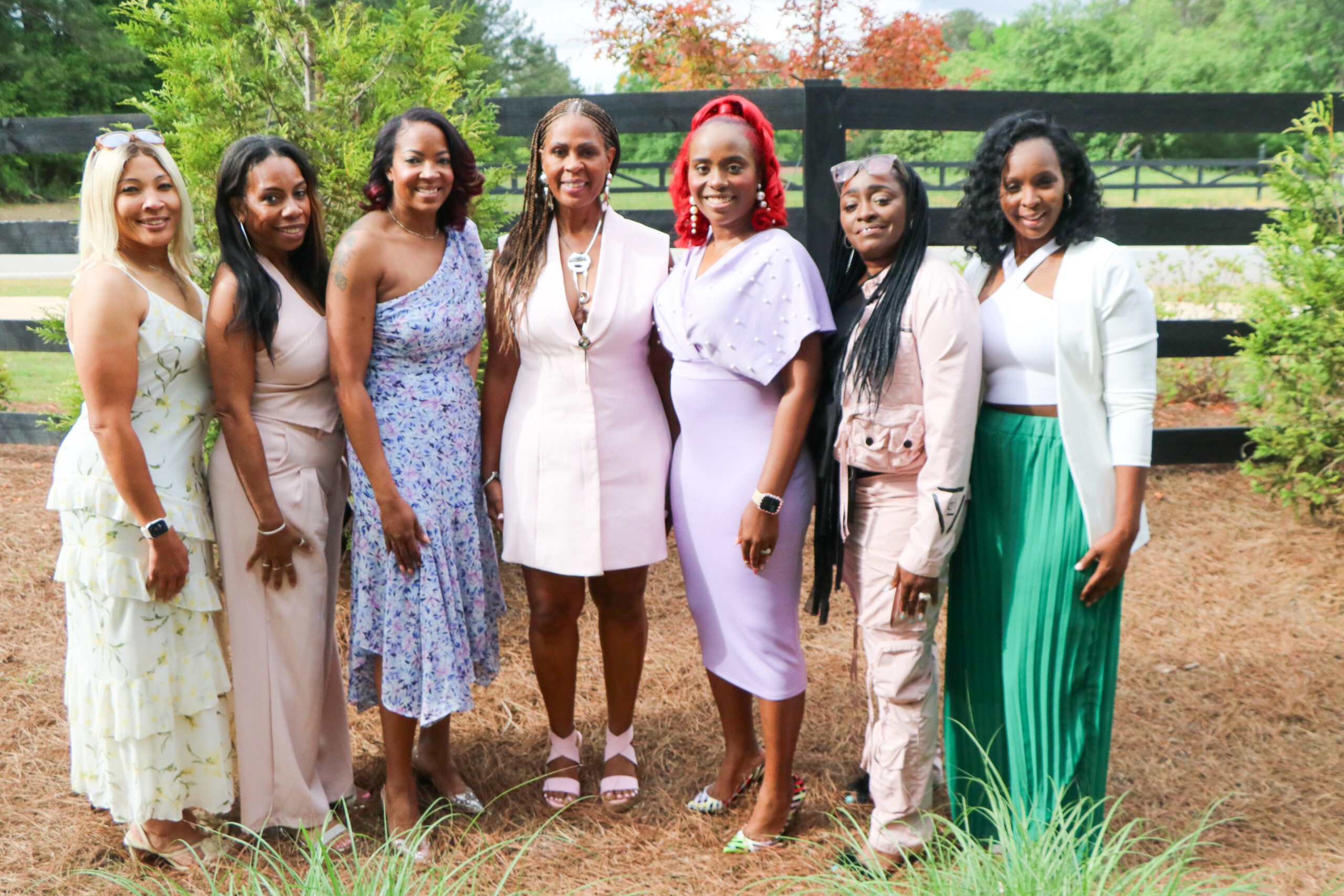
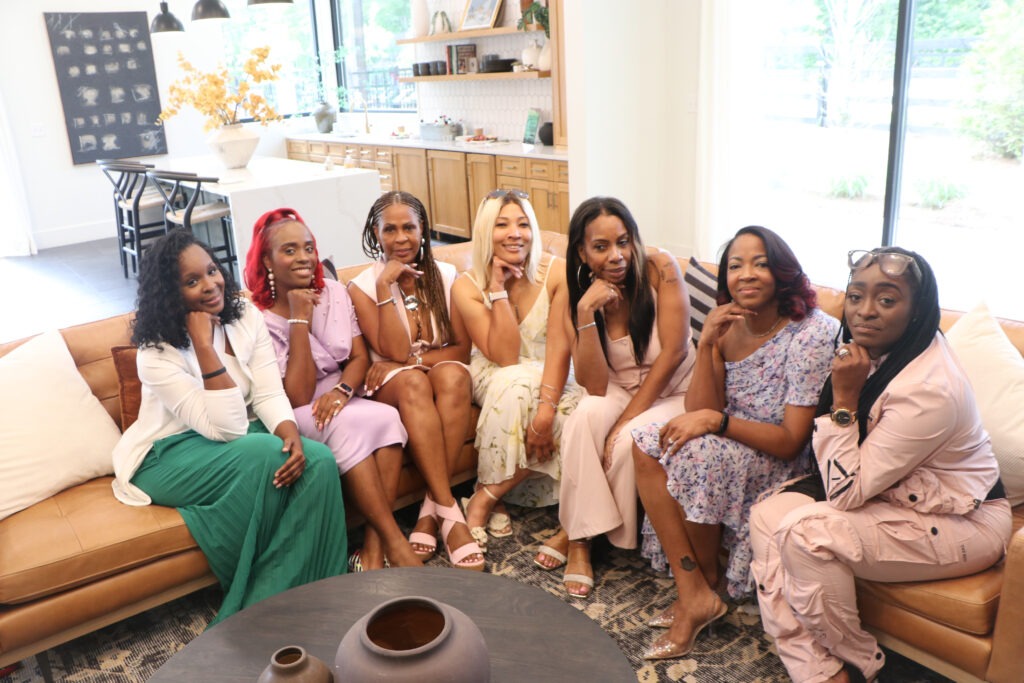
A 30‑year sisterhood of praise dancers reflects on motherhood, faith, survival, and the unbreakable bond that carried them through aneurysms, loss, miracles, and life’s choreography.
A Mother’s Day Story of Seven Women, Thirty Years, and an Unbreakable Circle.
By Milton Kirby | Atlanta, GA | May 10, 2026
For nearly three decades, seven women along with others who have been part of their journey have been moving in harmony, not just across the sanctuary floor but through the unpredictable choreography of life. What began as a praise dance ministry in their youth has become something far deeper: a sisterhood stitched together by motherhood, faith, and the kind of love that shows up when life hits hard.
When we sat down with them recently – Tracey, Shelly, Aundrea, Geraldine, Tonya, Cassandra, and Robyn the laughter came first. The kind that fills a room before anyone speaks. The kind that tells you these women have lived a lot of life together.
“It was a sisterhood from the beginning,” Tracey said, her voice warm with memory.
Shelly nodded. “We watched each other’s kids grow from infants to young adults graduating from college.”
Three decades of birthdays, recitals, heartbreaks, promotions, and prayers – all witnessed in real time.
Aundrea added that they had danced with many people over the years, but the seven women in the room had danced with each other the longest. Their bond wasn’t accidental. It was chosen, nurtured, and protected.
And then there was Geraldine, whose first introduction to Tracey was a playful smack on the butt.
Tracey didn’t think it was real. “Oh, it was real,” Geraldine said, and the room erupted.
The Storm That Tested Them
Their sisterhood has been tested, too – none more than in 2019, when Tonya’s life changed in an instant.
She remembers the moment vividly: “It felt like a sledgehammer hit me in the back of the head.”
It was an aneurysm. For three days, she went untreated. Her mother noticed she was lethargic. By the time she reached the hospital, she was close to death.
The women around her grew quiet as she spoke even after all these years, the memory still trembles.
Tonya gets chills thinking about how they rallied: They brought food. They brought money. They brought love. They brought themselves.
The consensus was that Cassandra was the most animated – the one who sprang into action, the one who refused to let fear win.
Shelly grew emotional recalling those days. Tonya’s sister acted as gatekeeper, limiting visitors. Shelly coped the only way she knew how: “I prayed. And I talked to her like she was right there in the house with me.”
It took Tonya two years to recover.
Tracey calls her “my Miracle Friend.” And the room agreed.
The Complex Choreography of Mothering
The women’s lives outside the sanctuary are as diverse as their personalities. Aundrea, who joined the ministry at just 17, is now 48 and navigating the beautiful, often chaotic waters of raising two daughters, Summer and Winter. She sees her own strength reflected in them one shy, one outgoing, both formidable.
Robyn, one of the youngest in the group, carries her own deep well of experience. She lost her father and husband three years ago, and her mother a few years before that. She is no stranger to grief, but she is also no stranger to testimony.
“I share my bad,” she said. Not for attention, but for healing. Then she quoted Revelation 12:11 because for her, scripture is not just comfort; it is instruction.
Yet, the path to motherhood wasn’t a straight line for everyone. Aundrea, now a successful corporate executive, speaks with raw honesty about the “private storms” she weathered, including five miscarriages. She recalls the harrowing experience of being at work, mentoring a subordinate, while physically enduring the loss of a pregnancy in real-time.
Her first instinct was to look inward, not upward.
Robyn gently added, “When you’re a believer, you trust God – and you question your own actions.”
It was a moment of shared understanding – the kind only Black women can articulate to each other without explanation.
Their answers were as varied as their personalities.
For Geraldine, motherhood is an extension of the sanctuary – it is a ministry. She views her children as a “stewardship,” a holy responsibility placed in her hands by God.
Shelly, the day is “just another day,” a reflection of her own mother’s humble approach to the holiday.
Cassandra sees it as a day of relaxation and reflection.
Robyn finds joy in in the simple observation of her children becoming the people they were destined to be.
When asked what she wishes someone had told her before she became a mother, Tracey smiled: “That I might experience some of the things I put my own mom through.”
And when the question of “Who’s the troublemaker?” came up, the answer was unanimous: Geraldine. No debate. No hesitation. Just laughter.
A Circle That Holds
Even when they aren’t in the same room, even for Aundrea, who admits she sometimes relies on social media to keep tabs on the group the thread remains taut. They have survived aneurysms, miscarriages, grief, and the exhausting beauty of raising children. They have lived their testimonies out loud, sometimes quoting scripture, sometimes letting the reference alone speak for itself — trusting that anyone who needs to look it up will find something meant just for them.
What began as a simple praise dance ministry has evolved into a sacred lifeline. On this Mother’s Day, Tracey, Shelly, Aundrea, Geraldine, Tonya, Cassandra, and Robyn remind us that motherhood isn’t just a biological destiny. It is a communal act. It is the story of the women who raise us, the women who raise our children with us, and the women who refuse to let go of our hands when the music stops. They are still in harmony. They are still in step. And they are still dancing.
Truth Seekers Journal thrives because of readers like you. Join us in sustaining independent voices.
DeKalb CEO Lorraine Cochran-Johnson outlines $4.7B infrastructure plan, housing initiatives, WRAP assistance program, and crime reductions as county addresses growth and affordability challenges.
By Milton Kirby | Doraville, GA | May 8, 2026
More than 800 business leaders, elected officials, and residents gathered at Assembly Studios on Thursday as Lorraine Cochran-Johnson delivered her annual State of the County address an event that underscored both the scale of DeKalb’s ambitions and the complexity of its challenges.
Hosted by the Council for Quality Growth in partnership with DeKalb County Government and the DeKalb Chamber of Commerce, the annual address serves as a key forum connecting the county’s business community with public leadership and regional stakeholders.
Before taking the stage, Cochran-Johnson was introduced through a short, high-energy video inspired by the film Mission: Impossible, featuring the CEO and members of her cabinet as part of a team navigating challenges and “completing the mission” for DeKalb County. The presentation reinforced the administration’s message that progress is intentional, coordinated, and action-driven.
“You cannot build a thriving county on a failing system,”
Former DeKalb CEO Liane Levetan & Former Atlanta Mayor Shirley Franklin – Photo by Milton Kirby
Cochran-Johnson also paused to recognize the legacy of those who previously led the county, acknowledging former CEOs including Manuel Maloof, Liane Levetan, Vernon Jones, Burrell Ellis, Lee May, and Michael Thurmond—a moment that underscored continuity as the county charts its next phase.
In her remarks, Cochran-Johnson outlined an aggressive agenda centered on public safety, infrastructure, housing, and government reform while acknowledging the work ahead.
“We are not just reimagining what’s possible – we are delivering,” she said.
Crime Down as Public Safety Investments Expand
Comcast & CERM Teams – Photo by Milton Kirby
Public safety remains a cornerstone of the administration’s strategy.
DeKalb County has invested more than $30 million into crime prevention through its “Digital Shield Initiative,” which includes a Real-Time Crime Center, drone first responder program, and expanded camera integration.
According to the county:
Police staffing has increased more than 300 percent since Cochran-Johnson took office
Violent crime is down 11 percent
Overall crime has dropped 25 percent
The county has also focused resources on high-crime areas, often working in partnership with local businesses to deploy surveillance technology and targeted enforcement.
“Public safety affects economic development, property values, and quality of life,” Cochran-Johnson said.
Historic $4.7 Billion Infrastructure Investment
The CEO announced a $4.7 billion water infrastructure plan—the largest in county history—aimed at addressing years of underinvestment.
Imani Barnes GA House District 86 – Photo by Milton Kirby
Cochran-Johnson acknowledged that raising water rates to fund improvements was a difficult but necessary decision.
“You cannot build a thriving county on a failing system,” she said.
To support residents, the county launched the Water Rate Assistance Program (WRAP) in partnership with the Urban League of Greater Atlanta, providing relief to households struggling with rising water costs. The county also conducted outreach to more than 250,000 residents.
Officials say the investment will stabilize the system while supporting long-term growth.
Housing Crisis Drives New Policy Direction
Housing affordability has emerged as one of the most urgent challenges facing the county.
A study cited during the address found that a minimum-wage worker in metro Atlanta would need to work 140 hours per week to afford a two-bedroom apartment.
In response, DeKalb County has elevated housing as a central policy priority under Dr. Alan Ferguson Sr., the county’s first Chief Housing Officer.
Key initiatives include:
Expansion and preservation of affordable housing
Activation of underutilized land
Programs to prevent displacement and homelessness
Through a partnership with Neighborhood Assistance Corporation of America, the county has processed more than 7,000 applications and helped create over 900 new homeowners.
Additional actions include:
A 400-bed emergency shelter
A 60-unit rapid housing initiative
In July 2025, the DeKalb County Board of Commissioners approved an $8 million investment to secure 60 units at the Park 500 apartment complex, expanding the county’s capacity to provide stable housing.
“Housing will not be an afterthought in DeKalb County,” Cochran-Johnson said.
Economic Development Focused on Equity
County leaders say economic development must reach every part of DeKalb not just high-performing areas.
Former DeKalb CEO Michael Thurmond & Dr Alieka Anderson-Henry, Chairwoman Clayton County Board of Commissioners – Photo by Milton Kirby
Recent actions include:
Strategic purchase of county property at 4380 Memorial Drive in Decatur, now serving as a central government and tax operations hub
Investment in key redevelopment corridors
Support for mixed-use projects like Kensington Crossing
The acquisition of the Memorial Drive site marks a shift toward long-term asset ownership after decades of leasing, positioning the county to shape future development along a key corridor.
Cochran-Johnson emphasized that DeKalb’s assets including a strong workforce, proximity to Hartsfield-Jackson Atlanta International Airport, and the presence of DeKalb-Peachtree Airport one of the nation’s busiest general aviation airports along with nine colleges and universities, position the county for continued growth.
Blight Removal and Quality of Life Improvements
Efforts to improve neighborhood conditions are accelerating.
The county reports:
More than 30,000 illegally dumped tires removed
Over 240 blighted properties demolished
Expanded code enforcement operations, now averaging more than 200 cases per month
Road resurfacing, park investments, and extended library hours are also part of broader quality-of-life improvements.
Modernizing Government Operations
Cochran-Johnson said internal reform is critical to sustaining progress.
The county has:
Conducted a comprehensive operational assessment
Implemented performance dashboards across departments
Invested in upgraded 911 systems and enterprise technology
Officials also rebuilt the county’s website, eliminating more than 14,000 outdated pages to improve accessibility and transparency.
“You cannot deliver exceptional results without strong systems,” she said.
What Stakeholders Want Next
DeKalb Chamber Board Member Glenn Wallace – Photo by Milton Kirby
While many attendees expressed support for the county’s direction, conversations at the event revealed areas where residents and stakeholders want more clarity.
Glenn Wallace, a business stakeholder, said small business growth and homelessness remain top concerns.
“I would like to hear more about how we’re going to help small businesses,” Wallace said.
Other attendees pointed to emerging issues such as data center development and infrastructure.
Herb McCoy, a DeKalb resident and former library board member, said he wants a clearer understanding of those developments.
“I’d like to get a better sense of where the county stands,” McCoy said.
At the same time, McCoy expressed confidence in the CEO’s leadership.
“She showed up to practically every board meeting,” he said. “I think we’re in good hands right now.”
Residents Express Cautious Optimism
Among residents, the tone was largely supportive but measured.
Dorothy Anderson, a longtime DeKalb County resident, said she has seen progress but understands the timeline required for change.
“I believe in what she’s done and what she says she’s going to do,” Anderson said. “I know it can’t all be done in one day, but I see her making steps forward.”
She also pointed to the importance of community engagement moving forward.
“People have got to get out there,” she said.
A County in Transition
The address made clear that DeKalb County is actively reshaping its future through investment, policy shifts, and structural reform.
But it also highlighted a central reality: progress is uneven, and the success of these initiatives will ultimately be measured by how broadly they are felt.
“We are not waiting for what’s possible,” Cochran-Johnson said. “We are building it.”
Louisiana Republicans eliminate an elected clerk position days before Calvin Duncan takes office, raising concerns over voter disenfranchisement and judicial restructuring
By Sara Cline and Jack Brook | Baton Rouge, LA & New Orleans, LA | May 3, 2026
Louisiana Republicans eliminated an elected position days before an exonerated man who overwhelmingly won the New Orleans-based clerk seat was set to take office.
Republican Gov. Jeff Landry on Thursday quietly signed into law legislation abolishing the long-standing Orleans Parish clerk of criminal court position, according to Louisiana Secretary of State spokesperson Trey Williams.
Republicans say wiping away the office is a consolidation effort meant to make the local judicial system more efficient and cut costs. But Democrats condemn the change as government overreach, arguing that it infringes on a predominantly Black parish’s decision at the polls.
Calvin Duncan, who spent nearly 30 years behind bars for a crime he did not commit, easily won election to the criminal court clerk position in November, beating the incumbent and earning more than two-thirds of the vote. He had been set to take office Monday and has asked a federal judge to allow him to take office as scheduled.
“It’s a sad thing to see the state government repeating what happened to Black public officials during Reconstruction,” Duncan said. “They will do what they do, and I will do whatever I have to do to vindicate the voters of New Orleans and make sure that what happened to me never happens to anybody else.”
Landry did not immediately respond to requests for comment.
Duncan, a Democrat whose murder conviction was vacated in 2021 after evidence emerged that police officers lied in court, has vowed to help fix the system that once failed him.
Duncan, 63, and his supporters say he is being targeted by the most powerful Republicans in the state, including those who have denied his innocence, even though Duncan’s name is listed on the National Registry of Exonerations.
“We’re doing something because powerful people don’t like him,” Rep. Mandie Landry, a New Orleans Democrat, told lawmakers during a legislative committee hearing in April. Landry, who is not related to the governor, described the Republican efforts as “atrocious” and worries what they could mean for other elected positions in the state.
Law consolidates two court clerk positions
Republicans say the legislation consolidates the civil and criminal court clerks’ offices in Orleans Parish, putting it in line with all other parishes in the state, which have a single clerk’s office. The civil clerk position would remain and absorb the criminal clerk’s role.
Eliminating the clerk position saves the state about $27,000 and the city $233,000, according to the office of the legislative auditor, which added that the long-term costs of consolidation are “unknown.” The legislation also shifts about $1.17 million in state expenditures to the parish. The civil and criminal court clerks have separate physical offices and different case management systems.
The governor told the Associated Press that eliminating Duncan’s elected office was about improving government efficiency and “cleaning up a system in Orleans Parish that has been plagued by dysfunction and corruption for years.”
The consolidation is part of a broader GOP effort during the ongoing legislative session to overhaul the judiciary in New Orleans — including bills that propose abolishing several other elected judicial positions in the parish. However, those jobs would be eliminated further down the line, allowing officials to serve out their terms.
The bill’s Republican author, Sen. Jay Morris, who represents a district several hours from New Orleans, said the goal was to implement the clerk consolidation before Duncan takes office, preventing him from starting a four-year term. Morris acknowledged that he expects lawsuits to be filed because of this law but believes the change to be constitutional.
“It’s unfortunate for Mr. Duncan, I concede that,” Morris told lawmakers in April. “He seems very nice, but we don’t make policy around here for just one person.”
Key takeaways
Election Overturned: Republican Gov. Jeff Landry signed a law eliminating the Orleans Parish criminal court clerk position just days before Calvin Duncan, an exonerated Democrat, was set to assume office.
Consolidation & Cost: The law merges civil and criminal clerk offices, aiming to cut costs ($27,000 state, $233,000 city) and improve efficiency, though long-term savings are uncertain.
Voter Concerns: Critics argue the move disenfranchises voters, undermining the will of a predominantly Black electorate that elected Duncan with 68% of the vote.
Concerns of disenfranchisement
Although conversations have revolved around Duncan, many also raise concerns about how the change potentially could disenfranchise voters — a heightened worry in a deeply red state that has been central to efforts to weaken the Voting Rights Act, including the case at issue in a landmark Supreme Court ruling last week. Orleans Parish is a Democratic hub with a predominantly Black electorate.
“Mr. Duncan was elected by 68% of the vote in a city that’s majority African American. This is the will of the people, and what your bill attempts to do is usurp the will of the people,” Rep. Edmond Jordan, a Democrat, told Morris.
Well before the legislation reached the governor’s desk, Duncan said he could see the writing on the wall. Ahead of the outcome, Duncan’s advocates held a ceremonial swearing-in for him. Hundreds of people gathered on the steps of the Orleans Parish criminal courthouse to support him.
Duncan told lawmakers that along the campaign trail last year, he spoke with many people who told him they typically abstain from voting in elections. “Now, this bill tells people exactly what they had believed — that their vote doesn’t count,” he said.
Cline and Brook write for the Associated Press and reported from Baton Rouge, La., and New Orleans, respectively.
This story originally appeared in Los Angeles Times.
Georgia Insurance Commissioner candidate pushes reforms to end credit-based premiums, strengthen consumer protections, and hold insurers accountable while promoting fairness and transparency statewide.
By Milton Kirby | Decatur, GA | May 2, 2026
DeAndre Mathis, candidate for Georgia Insurance Commissioner is building his campaign around a simple but forceful message: the system is not working for everyday policyholders and it needs to change.
Drawing on more than two decades of experience in the insurance industry, Mathis is calling for sweeping reforms aimed at transparency, fairness, and consumer protection. His platform focuses on eliminating what he describes as systemic inequities in how insurance rates are determined, while restoring accountability to both insurers and the regulatory office itself.
At the core of his campaign is a push to end the use of credit scores in determining insurance premiums. He argues that credit-based pricing unfairly penalizes working families, particularly those in historically underserved communities.
“Your premiums should be based on your safety record, not your bank account or ZIP code,” he said, framing the issue as a form of “modern-day redlining.”
Mathis also plans to prioritize enforcement against what he calls “bad faith” practices within the insurance industry. He says the current system too often targets individual policyholders for minor infractions while failing to hold large insurance companies accountable.
“The office should work for the people, not just the providers,” he said, emphasizing the need to rebalance the role of the Insurance Commissioner toward consumer advocacy.
Another key component of his platform is increasing oversight of mutual insurance companies—firms that are technically owned by their policyholders. He argues that many of these companies are not operating in the best interest of those stakeholders, particularly when it comes to sharing profits.
“If companies are profitable, those gains belong to the policyholders—not just executives,” he said.
Beyond financial reforms, Mathis is also highlighting public safety concerns tied to insurance regulation. His campaign includes proposals to modernize fire safety standards across the state, particularly for multi-family housing and high-rise developments. He points to gaps in statewide fire code enforcement as a risk to both urban and rural communities.
“Safety is more than a policy—it’s prevention,” he said, adding that rural fire departments and emergency infrastructure need stronger support.
The campaign’s broader message is rooted in a belief that the Insurance Commissioner’s office has lost critical authority over time. Mathis has pledged to push for legislative changes that would restore regulatory power, including greater oversight of rate increases.
He also plans to use existing enforcement tools—such as fines and investigations—more aggressively, arguing that consistent oversight can deter unfair practices even before new laws are passed.
As the race develops, DeAndre Mathis positions himself as both an industry insider and a reformer—someone who understands the system from within but is willing to challenge it.
“Our priorities are about fairness,” he said. “That means putting people first.”
Support local journalism. Subscribe to The Truth Seekers Journal and help us continue telling the stories that matter.
MARTA riders must switch to the Better Breeze system by May 2 as new fare gates close, ending old cards and introducing tap-to-pay options.
By Milton Kirby | Atlanta, GA | May 1, 2026
MARTA and its regional transit partners are entering a major transition this weekend as the new Better Breeze fare payment system becomes the standard across the network.
Riders on MARTA, ATL Xpress, CobbLinc, Connect Douglas, and Ride Gwinnett must switch to the updated system by Saturday, May 2, when new fare gates begin closing and fare payment becomes mandatory.
The rollout marks MARTA’s largest fare technology upgrade in more than a decade.
Installation is still underway at many stations, prompting MARTA to leave older fare gates open temporarily to maintain access. However, the agency stresses that open gates do not mean free rides. Beginning May 2, all riders must pay using one of the newly approved methods.
Old Breeze cards, paper tickets, and the Breeze Mobile 2.0 app will no longer be accepted.
At stations where construction is ongoing, older fare gates may remain open, but riders should not interpret this as free entry. Fare payment is still required.
New Ways to Pay
MARTA West End – patrons buying Better Breeze fare – Photo by Milton Kirby
The Better Breeze system introduces several payment options designed to speed up boarding and reduce wait times:
Tap-enabled bank cards – Mastercard, Visa, American Express, and Discover can be tapped directly at faregates and validators
Mobile wallets Riders can tap smartphones or smartwatches linked to a bank card
New orange Breeze cards – available at ticket vending machines, Ride Stores, the new Breeze Mobile app, and breezecard.com
Virtual Breeze cards – available in Google Wallet and Samsung Wallet, with Apple Wallet support expected soon
Cash remains an option with limitations. Riders may use cash at ticket vending machines and Ride Stores to purchase cards or tickets. On buses, cash is accepted for one-way fares only and does not include transfers.
Where to Get the New Breeze Cards
Beginning May 2, new ticket vending machines will be active at major stations including Airport, Buckhead, Civic Center, Doraville, East Point, Georgia State, H.E. Holmes, Kensington, Lenox, Lindbergh, Midtown, North Springs, Sandy Springs, Vine City, and West End. Additional machines are being installed daily.
Cards may also be purchased online at breezecard.com or at MARTA Ride Stores located at Airport and Sandy Springs stations.
Specialty cards including Reduced Fare and Mobility cards are being mailed to certified customers. Riders who have not received theirs may visit the Reduced Fare office at MARTA headquarters during extended hours from May 2 through May 7.
What Riders Need to Know About Fare Gates
New fare gates across the system will begin closing on May 2.
At stations still under construction, older gates may remain open. MARTA emphasizes that riders must still pay using one of the new payment methods, regardless of gate status.
Transit ambassadors and signage will be available systemwide to assist riders during the transition.
MARTA King Memorial – Crew installing Better Breeze dispensers
Transferring Old Breeze Balances
Riders with unused balances on old Breeze cards will be able to transfer funds to a new, registered account beginning May 5.
The transfer window will remain open through October 30. MARTA says detailed instructions will be released in the coming days.
Staying Connected
MARTA encourages riders to stay informed through:
Official website and Better Breeze information hub
breezecard.com
Social media: @MARTAservice and @MARTAtransit
Customer service: 404-848-5000
Instructional “how-to” videos available in English and Spanish
Support open, independent journalism—your contribution helps us tell the stories that matter most.
The Bill Pickett Invitational Rodeo expands its legacy of community care through a new partnership with Guardant Health, bringing life‑saving colorectal cancer screening and education directly to Black communities.
Riding for Our Lives: How the Bill Pickett Invitational Rodeo Is Expanding Its Legacy of Community Care Through a New Partnership With Guardant Health
By Milton Kirby | Memphis, TN | May 1, 2026
For forty‑two years, the Bill Pickett Invitational Rodeo (BPIR) has been more than a showcase of Black cowboy excellence. It has been a cultural institution, a traveling classroom, a family reunion, and a lifeline — a place where heritage is preserved, children are affirmed, and communities gather to celebrate themselves. Long before “community engagement” became a corporate buzzword, BPIR was already doing the work: educating youth, supporting families, creating safe spaces, and showing up in cities where resources were thin but hope was abundant.
That legacy continues today through the Bill Pickett Invitational Rodeo Foundation (BPIRF), whose mission is rooted in value‑driven philanthropy and whose vision is clear: preserving heritage, empowering communities, and inspiring generations. Since 1987, the Foundation has delivered health and wellness programs, STEM initiatives, scholarships, senior support, emotional‑intelligence workshops, and anti‑violence education across the country. Its values, generosity, compassion, empathy, equity, inclusion — are not slogans. They are the operating system.
So, when BPIR announced a new partnership with Guardant Health, a trusted leader in blood-based cancer tests for more than a decade, as part of its “Riding Across America for Community Health” initiative, it wasn’t a pivot. It was a continuation. It was BPIR doing what BPIR has always done: meeting the community where it is and bringing life‑saving information directly to the people who need it most.
The Heartbeat of the Mission: Rodeo for Kidz Sake
If you want to understand BPIR’s soul, you start with the children.
The Rodeo for Kidz Sake (RFKS) program is one of the most powerful expressions of BPIR’s values, an immersive, educational, joy‑filled introduction to Black cowboys and cowgirls, Western history, and the “cowboy mystique” that shapes childhood imagination. For many inner‑city students, RFKS is their first time seeing a horse up close, touching an animal, or witnessing Black excellence in a space they never knew belonged to them.
On Friday, April 10, nearly 4,000 students filled the AgriCenter Showplace Arena in Memphis. They laughed, learned, asked questions, and saw themselves reflected in a history that has too often been erased. RFKS events now take place in Denver, Memphis, and Washington, D.C./Maryland and for many children, the experience is life‑changing.
Photo by Milton Kirby – For Kidz Sake
Margo Wade‑LaDrew, National Development / Sponsorship Director told me this as cowboys and cowgirls streamed past us, moving through the lines to enter the arena for Saturday night’s show a reminder that BPIR’s commitment to community isn’t theoretical. It lives in the dust, the boots, the laughter, and the anticipation of families gathering for a night of culture and competition.
“The Bill Pickett Invitational Rodeo is committed to empowering and uplifting communities across the country through dynamic outreach initiatives. We focus on promoting health, education, emotional intelligence, life skills, career development, anti‑bullying, and anti‑violence awareness,” she said. “This new partnership with Guardant Health is in total alignment with that legacy.”
RFKS is the heartbeat of that commitment — a reminder that BPIR’s work is not just about preserving the past, but preparing the next generation to thrive.
A Longstanding Commitment to Health and Healing
BPIRF’s health outreach didn’t begin with Guardant Health. For years, the Foundation has delivered timely education on:
COVID‑19 and flu vaccination
Domestic and community violence prevention
Anti‑bullying and emotional intelligence
Mental health and suicide prevention
Breast cancer, prostate health, diabetes, and high blood pressure
Through partnerships with Anti‑Violence Ventures and the Black Beauty & Wellness Foundation, BPIRF has created safe spaces for emotional expression, healing, and empowerment — reaching both men and women with culturally grounded resources.
This is the context that makes the Guardant partnership meaningful. BPIR wasn’t looking for a sponsor. It was looking for alignment. And it found it.
The Crisis: Colorectal Cancer in Black America
Colorectal cancer is the second‑leading cause of cancer death in the United States.
Photo by Milton Kirby – Guardant Shield
For Black Americans, the burden is even heavier:
20% higher incidence
40% higher mortality
More likely to be diagnosed at a younger age
More likely to be diagnosed at a later stage
The difference between early and late detection is staggering:
91% survival when caught early
13% survival when caught late
We don’t fully understand why colorectal cancer behaves more aggressively in Black patients. But we do know this: early detection saves lives.
And that is where Guardant Health enters the story.
Shield Across America: Innovation Meets the Arena
On April 11, 2026, the Guardant Health mobile colon cancer screening education tour bus rolled into Memphis to join BPIR’s tour stop, marking a milestone in the “Riding Across America for Community Health” initiative. The bus is part of Shield Across America, a nationwide effort to expand access to colorectal cancer screening and education about Shield, the first and only test FDA‑approved as a primary screening option for colorectal cancer for average‑risk adults 45 and older.
Shield is:
non‑invasive
accessible
covered by Medicare, and the VA Community Care Network
designed to meet people where they are
For communities facing systemic barriers to healthcare including Black Americans this partnership is more than symbolic. It is lifesaving.
Courtesy photo – Sam Asgarian, Guardant Health’s vice president of clinical development for screening
The Science Behind Shield: A Conversation With Dr. Sam Asgarian
To understand the test’s impact, I spoke with Dr. Sam Asgarian, Guardant Health’s vice president of clinical development for screening. He explained that Shield’s FDA approval was built on one of the largest colorectal cancer screening studies ever conducted.
In 2019, Guardant launched the ECLIPSE Study, enrolling more than 20,000 Americans across the country. The goal was not just size – it was representation.
“We made sure the study matched the demographics of the United States,” Asgarian said. “Not just white participants, not just white and Black participants — but a true reflection of the country.”
The results were strong:
83% detection ratefor colorectal cancers
10% false‑positive rate
Consistent performance across ethnicities
For Black families who have historically been excluded from clinical trials, this matters.
Cost, Coverage, and the Reality of Access
Eligible Medicare Part B or Fee for Service (FFS) patients will have $0 out-of-pocket cost for the Shield test. Medicare Advantage patients may be subject to co-pays, co-insurances and deductibles, depending on their specific plan. Veterans have zero copay through VA Community Care.
Coverage varies depending on private insurance.
But here’s where Guardant does something unusual: They don’t leave patients to navigate the insurance maze alone.
“Every time a test is ordered, we reach out to patients,” Asgarian said. “We tell them what we think their coverage will be. We work with insurance companies. We help with financial assistance. We don’t want people going through that alone.”
As someone who has had two colonoscopies myself, I asked whether people like me could switch to the blood test going forward.
“It’s entirely up to you and your physician,” he said. “You have options now.”
Optionality saves lives.
Memphis: What Happened on the Ground
The Shield Across America tour launched in Las Vegas in March, Colorectal Cancer Awareness Month. Since then, it has made several stops across the country navigating festivals, charity walks, and any event with enough space to park a 45‑foot mobile lab. The BPIR was a natural partnership for the tour.
Outside the arena, I saw a steady flow of people approaching the Shield Across America. Inside, Guardant had a table set up for conversations, questions, and education. I didn’t see the table myself — I was photographing from the opposite side of the arena — but the team reported strong engagement.
Even a few hundred screenings can shift outcomes in a community.
Looking Ahead: Atlanta and Beyond
When I asked about the next stop, Asgarian said the team was still finalizing the Atlanta layout, but that the latest information could be found at ShieldCancerScreen.com.
BPIR is uniquely positioned to make this work. The rodeo is already a family event. Adding health engagement to the pre‑show atmosphere is a natural fit.
This is not a one‑off partnership. It is the beginning of a sustained health equity effort.
The Human Barrier: Fear, Anxiety, and Avoidance
Asgarian said something that stayed with me:
“People aren’t avoiding screening because they don’t care. They’re afraid. They’ve had bad experiences. They don’t trust the system. They don’t know what’s available.”
This is why meeting people at the rodeo matters. When people are in a space they love — surrounded by culture, joy, and community — they are more open to engaging with healthcare.
BPIR becomes the bridge between fear and action.
The Role of Trusted Media
When I asked what Truth Seekers Journal could do to strengthen the partnership, Asgarian didn’t hesitate:
“There’s so much noise in the world. Breakthroughs get drowned out. When people hear about this from a trusted source — your publication — it means more. It pushes them to act.”
That is the responsibility of Black media: to amplify what saves us, not just what threatens us.
Colorectal cancer is the second‑leading cancer killer. But unlike many cancers, early detection changes everything.
This is breakthrough technology. This is life‑saving access. This is information our community deserves.
Closing: Riding for Our Lives
The Bill Pickett Invitational Rodeo has always been about more than competition. It is about culture, community, and care. It is about honoring the past while protecting the future. It is about showing up; for children, for families, for elders, for each other.
Now, through its partnership with Guardant Health, BPIR is riding for something even deeper: our lives.
Preserving heritage. Empowering communities. Inspiring generations. Protecting futures. One family, one child, one screening, one city at a time.